After floating the idea of US-made laptops last year, Oculus VR headset inventor Palmer Luckey is now pursuing the concept with help from his military tech firm, Anduril, and Qualcomm.
Anduril and Qualcomm today announced BlueChip, “a new product line dedicated to rebuilding American computer manufacturing.” The ultimate goal is to develop a complete domestic supply chain to produce all personal computer components locally.
“Any country that can’t build its own computers, can’t secure them,” Luckey said in a video. “If you don’t control your technology, you can’t control your future.”
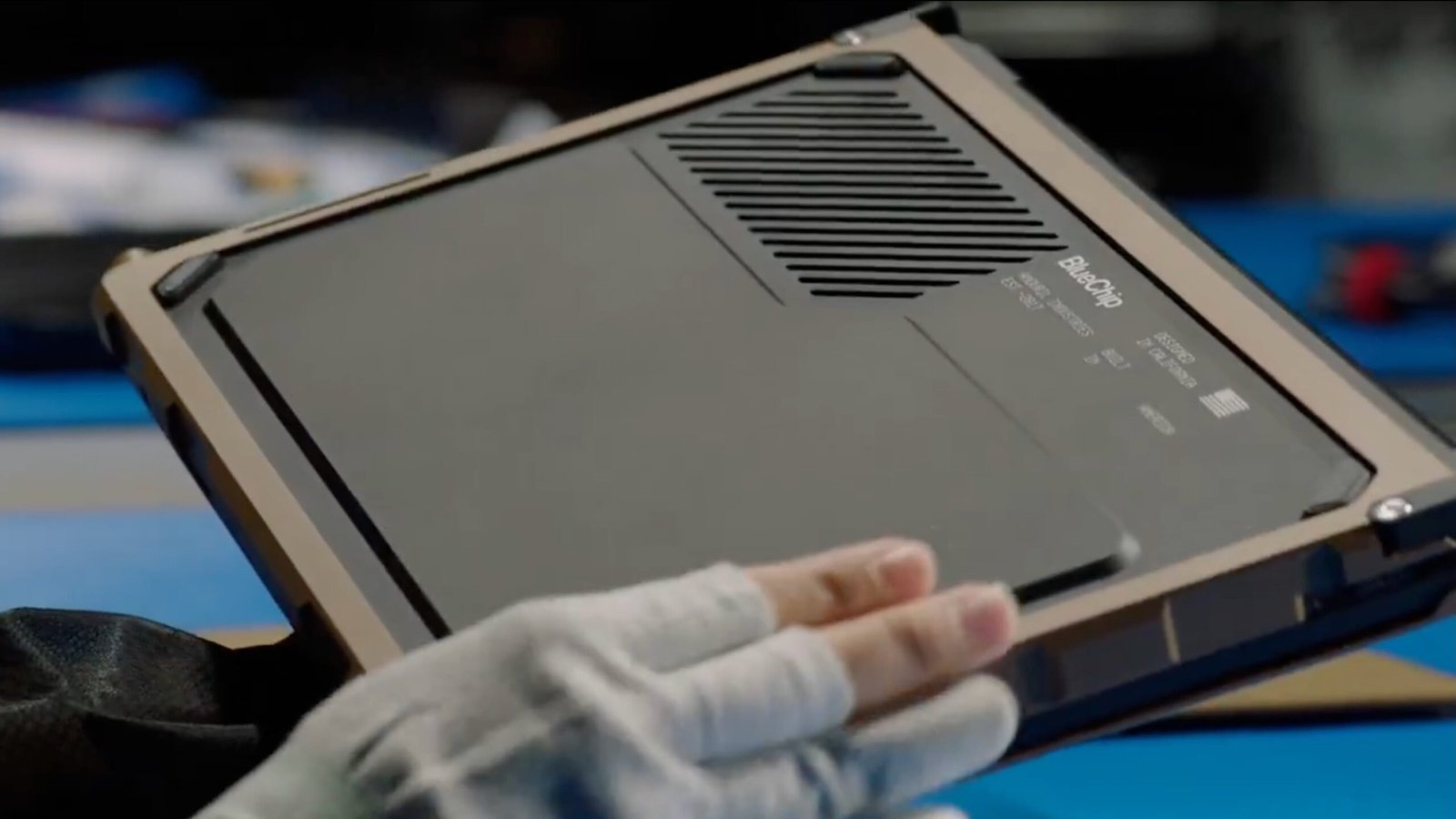
In the short term, BlueChip will start with a laptop designed and assembled in the US, featuring Qualcomm’s Snapdragon X series chips, which are currently found in some Windows laptops. “Anduril has already developed functional prototypes of the first BlueChip laptop and plans to begin taking orders in 2027,” the announcement says.
The BlueChip website and Anduril’s video seem to show off the prototypes. That said, the companies are initially targeting rugged laptops designed for “America’s most critical industries,” such as government, defense, and public safety, rather than mainstream consumers.
This Tweet is currently unavailable. It might be loading or has been removed.
BlueChip arrives over a year after Luckey asked in an X poll whether followers would buy “a Made In America computer from Anduril for 20% more than Chinese-manufactured options from Apple?” Of the 77,287 votes, 63.5% said they would. In today’s announcement, Anduril cites the need to reshore computer manufacturing rather than remain dependent on foreign vendors, largely based in Asia, where low-cost electronics manufacturing has long been concentrated. “This dependence creates a national security vulnerability,” the two companies said.

(Credit: Anduril)
Intel and Taiwan’s TSMC already have chip factories in the US. The major challenge is building up the remaining domestic manufacturing capacity for a wide variety of components, such as circuit boards, displays, and batteries. The effort will likely require billions in investment and take years to pull off. Still, the announcement says the companies are making headway, thanks in part to Anduril already working on domestic manufacturing for its controversial military tech, which spans drones and surveillance towers.
Anduril says it’s already developing US production capabilities “for enclosures, battery components, and other hardware while qualifying suppliers and preparing for production.” Meanwhile, circuit board assembly is planned for the company’s “Arsenal 1” Ohio facility, which is also focused on producing military drones.
Recommended by Our Editors

(Credit: Anduril)
“Components sourced from US and allied-country suppliers account for more than 90% of the BlueChip prototypes’ component procurement cost,” the companies added.
That said, the allied-country suppliers weren’t identified. Currently, a large portion of consumer electronics production is sourced from Vietnam, Taiwan, and Mexico, as many companies have migrated some of their manufacturing away from China.
Despite the challenges, Anduril and Qualcomm say they’re taking a “phased approach, beginning with expanding domestic sourcing and manufacturing, progressing toward eliminating reliance on foreign suppliers, and ultimately establishing an end-to-end American supply chain.” We’ll be curious to see how the BlueChip laptops perform and how much they cost.
About Our Expert

Michael Kan
Principal Reporter
Experience
I’ve been a journalist for over 15 years. I got my start as a schools and cities reporter in Kansas City and joined PCMag in 2017, where I cover satellite internet services, cybersecurity, PC hardware, and more. I’m currently based in San Francisco, but previously spent over five years in China, covering the country’s technology sector.
Since 2020, I’ve covered the launch and explosive growth of SpaceX’s Starlink satellite internet service, writing 600+ stories on availability and feature launches, but also the regulatory battles over the expansion of satellite constellations, fights with rival providers like AST SpaceMobile and Amazon, and the effort to expand into satellite-based mobile service. I’ve combed through FCC filings for the latest news and driven to remote corners of California to test Starlink’s cellular service.
I also cover cyber threats, from ransomware gangs to the emergence of AI-based malware. In 2024 and 2025, the FTC forced Avast to pay consumers $16.5 million for secretly harvesting and selling their personal information to third-party clients, as revealed in my joint investigation with Motherboard.
I also cover the PC graphics card market. Pandemic-era shortages led me to camp out in front of a Best Buy to get an RTX 3000. I’m now following how the AI-driven memory shortage is impacting the entire consumer electronics market. I’m always eager to learn more, so please jump in the comments with feedback and send me tips.
Leave a Reply