Blog

  • T-Mobile and DoorDash Team Up To Deliver Fast 5G Home Internet, Now Delivered the Fastest

    T-Mobile and DoorDash Team Up To Deliver Fast 5G Home Internet, Now Delivered the Fastest

    If you purchase an independently reviewed product or service through a link on our website, Variety may receive an affiliate commission.

    When you move into a new home, you have to deal with so many things — like taking care of your utilities, changing your address or scheduling movers — just to get your life back on track in a new location. However, one of the things you don’t have to worry about is getting your home internet set up and running, thanks to T-Mobile and DoorDash.

    Right now, you can sign up for T-Mobile 5G Home Internet (with speeds up to 498 Mbps down and up to 56 Mbps up) and get everything you need delivered to you powered by DoorDash on the same day. No joke!

    Traditionally, you’d have to have to call your local cable provider and schedule an appointment for home internet. That could be days or weeks after you move into your new home. However, with T-Mobile x DoorDash, you can get your 5G gateway delivered the same day, so you can enjoy fast home internet as soon as you move in. It’s the best home Wi-Fi mesh system that T-Mobile offers.

    Here’s how it works: Order T-Mobile 5G Home Internet through the T-Life app (for Apple iPhone or Android) or on their website and get your 5G gateway delivered the same day — powered by DoorDash. You can track your 5G gateway in real-time at no additional cost. Once it arrives, you can get online within 15 minutes with a single cord.

    T-Mobile 5G Home Internet is delivered via T-Mobile’s 5G cellular network and is built to support everyday streaming, browsing and more. With speeds that can support work, play, and more, the service is positioned as a flexible alternative to traditional wired internet.

    And best of all? Plans start as low as $35/month* with no annual contracts and no hidden fees. You’ll also get T-Mobile’s 5-Year Price Guarantee, which means your monthly price stays the same with no increases for the first five years of service.** Check Eligibility

    *with AutoPay and voice. Plus, taxes and fees.

    **Exclusions like taxes and fees apply.

  • New York Attorney General sues two prediction markets on illegal gambling allegations

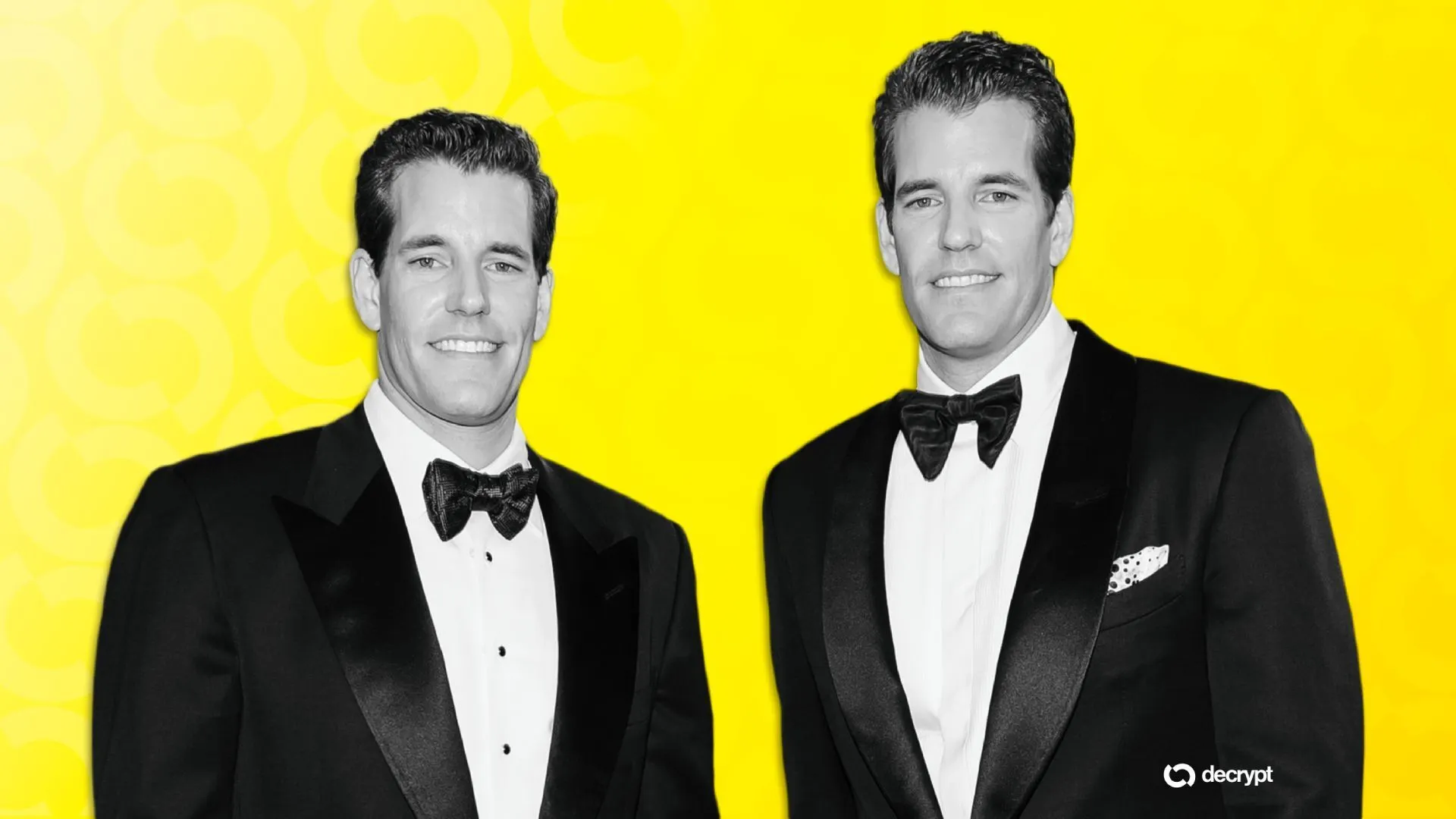
    New York is the latest state to take a stand against prediction markets. Attorney General Letitia James has sued Coinbase Financial Markets and Gemini Titan on charges that both are illegally running unlicensed gambling operations. The suit also claims that these prediction markets violate state laws that prevent betting on games involving New York college sports teams.

    “Gambling by another name is still gambling, and it is not exempt from regulation under our state laws and Constitution,” James said. “Gemini and Coinbase’s so-called prediction markets are just illegal gambling operations, exposing young people to addictive platforms that lack the necessary guardrails.”

    Multiple states have taken similar actions over the proliferation of prediction markets, but they may face a new roadblock at the federal level. Earlier this month, the US Commodity Futures Trading Commission sued three of the states that have charged prediction markets with running unlicensed gambling. The CFTC claimed that it should be the sole regulator for prediction markets and called the efforts by Arizona, Connecticut and Illinois an overreach of authority.

  • Meta has misled users about scam ads on Facebook and Instagram, lawsuit says

    Meta is facing a new lawsuit over its advertising practices. The nonprofit group Consumer Federation of America (CFA) has filed a proposed class-action suit against Meta for “failing to protect users” from scam ads on Facebook and Instagram.

    The lawsuit, which was first reported by Wired, alleges that Meta has run afoul of consumer protection laws in Washington D.C. for misleading Facebook and Instagram users about scams on its apps and that the company has “chased profits rather than protecting its users.” The filing includes numerous examples of alleged scam ads that CFA says it found in Meta’s ad library. These include ads promoting a “free government iPhone,” as well as those claiming to offer $1,400 checks to people born in certain years. Many of the ads use AI videos, according to CFA.

    Some of examples of alleged scam ads CFA includes in its lawsuit.

    Some of examples of alleged scam ads CFA includes in its lawsuit. (CFA)

    Meta’s advertising practices have been in the spotlight since last year when Reuters reported on internal documents that indicated the company was making billions of dollars from ads promoting scams and banned goods. The report also highlighted how Meta’s own processes have at times made it harder for its own employees to fight malicious advertisers.

    “Meta claims it is doing all it can to crack down on scam advertising on its platforms,” CFA’s lawsuit states. “But in reality, Meta has knowingly taken steps and adopted policies that pad its bottom line at the expense of its users’ safety and well-being. In fact, rather than prohibiting advertisers who the company itself has determined pose a higher risk to its users (as other tech companies like Google have), Meta just charges these advertisers more. The perverse result is that the riskier the advertiser, the more money Meta makes.”

    CFA’s allegations “misrepresent the reality of our work and we will fight them,” a Meta spokesperson said in a statement. “We aggressively combat scams across our platforms to protect people and businesses — last year alone, we removed over 159 million scam ads, 92% of which we took down before anyone reported them, and took down 10.9 million accounts on Facebook and Instagram associated with criminal scam centers. We fight scams because they are bad for business — people don’t want them, advertisers don’t want them, and we don’t want them either.”

  • Mob boss John Gotti’s grandson is headed to prison for a $1.1 million Covid fraud and crypto scheme

    Carmine Agnello, the mob boss John Gotti’s grandson, was sentenced to 15 months in prison for defrauding the U.S. government’s Covid relief funding system out of $1.1 million, proceeds which he used to invest in crypto, the Department of Justice said.

    In a statement released Monday, the U.S. Attorney’s Eastern District of New York office said Agnello fraudulently obtained multiple disaster relief loans from the government’s Small Business Administration (SBA) and used the funds in cryptocurrency investments.

    Gotti’s grandson “diverted [the proceeds] for his personal use, including by investing approximately $420,000 in a cryptocurrency business,” the attorney’s office said.

    The fraudster, who will turn himself in for imprisonment on July 1, submitted false information to the SBA between April 2020 and November 2021, stating the proceeds were for his autoparts and recycling business in Queens, including for employee salaries.

    “During the height of the COVID-19 pandemic, the defendant shamefully lined his own pockets with government and taxpayers’ dollars, which he must repay as part of today’s sentence,” United States Attorney Joseph Nocella said.

    “Mr. Agnello defrauded a program designed to assist businesses and employees during the pandemic,” stated United States Postal Inspection Service, New York Division (USPIS) Inspector in Charge Larco-Ward.

    Agnello is not the only individual to have defrauded the government’s Covid relief fund. Among several cases that ended up in court, Bruce Choi’s stands out as he illegally obtained $2 million in pandemic-eric business loans on behalf of non-existent companies and used the money to buy cryptocurrency via Kraken. David T. Hines fraudulently obtained $3.9 million from similar relief funds and used some of the proceeds to purchase a Lamborghini.

    Based on statistics from the U.S. Government Accountability Office (GAO), fraud against Covid-related relief funds was rampant, with roughly $135 billion, or up to 15% of the total funds, lost to scams.

    Agnello’s grandfather exerted power with brutal violence and enjoyed the spotlight. He took over the Gambino, running enterprises that authorities claimed earned him roughly $500 million a year from ventures that included extorting unions, illegal gambling, loan-sharking and stock fraud. In 1992, Gotti was found guilty on 13 criminal counts and sent to federal prison, where he died of cancer at age 61.

  • Amazon Will Invest Up to $25 Billion More in Anthropic as AI Demand Surges

    Amazon Will Invest Up to $25 Billion More in Anthropic as AI Demand Surges

    In brief

    • Amazon announced up to $25 billion in new investment in AI startup Anthropic, with $5 billion committed immediately.
    • Anthropic commits to spending $100 billion on AWS infrastructure over the next 10 years.
    • The AI company secured 5 gigawatts of computing capacity on Amazon’s custom Trainium chips.

    Amazon.com announced an expanded partnership with AI startup Anthropic late Monday, committing up to $25 billion in new investment that includes $5 billion immediately and up to $20 billion more tied to commercial milestones.

    The deal adds to Amazon’s previous $8 billion investment in Anthropic, bringing its total potential stake to $33 billion. In return, Anthropic committed to spending over $100 billion on Amazon Web Services technologies through 2036.

    The AI company will access up to 5 gigawatts of computing capacity for training and deploying its Claude AI models on Amazon’s custom silicon. Anthropic currently uses 1 million AWS Trainium2 chips, and will gain additional Trainium2 and Trainium3 capacity as Amazon brings 1 gigawatt online by the end of 2026.

    “Our custom AI silicon offers high performance at significantly lower cost for customers, which is why it’s in such hot demand,” said Amazon CEO Andy Jassy, in a statement. “Anthropic’s commitment to run its large language models on AWS Trainium for the next decade reflects the progress we’ve made together on custom silicon, as we continue delivering the technology and infrastructure our customers need to build with generative AI.”

    Amazon’s latest AI partnership follows its $50 billion contribution to OpenAI’s $110 billion funding round two months ago, a deal that valued OpenAI at $730 billion pre-money. The e-commerce giant expects to spend $200 billion on capital expenditures this year, with the majority allocated to AI infrastructure development.

    Founded in 2021 by former OpenAI researchers and executives, Anthropic has grown its annualized revenue to over $30 billion. The company’s Claude AI models compete directly with OpenAI’s GPT series and Google’s Gemini.

    Amazon’s custom chip roadmap includes the Trainium3 processors released in December 2025 and the upcoming Trainium4, which AWS says will deliver 2 exaflops of performance for FP4 data processing.

    Daily Debrief Newsletter

    Start every day with the top news stories right now, plus original features, a podcast, videos and more.

  • US forces detain Iran-linked tanker Tifani with ceasefire talks on edge

    US forces detain Iran-linked tanker Tifani with ceasefire talks on edge

    Ship, detained under US policy to stop all Tehran-linked vessels, is under sanctions for smuggling Iranian crude.

    United States forces have detained an oil tanker in the Indian Ocean sanctioned for smuggling Iranian crude oil, the Pentagon says.

    The M/T Tifani was boarded overnight, the US Department of Defense announced on Tuesday. The raid was carried out as a two-week ceasefire between the US and Iran was about to expire and a resumption of their talks was on a knife edge.

    Recommended Stories

    list of 4 itemsend of list

    “Overnight, US forces conducted a right-of-visit, maritime interdiction and boarding of the stateless sanctioned M/T Tifani without incident in the INDOPACOM area of responsibility,” the department posted on social media, referring to the US military’s Indo-Pacific Command.

    The statement said the US is determined “to disrupt illicit networks and interdict sanctioned vessels providing material support to Iran – anywhere they operate”.

    INDOPACOM oversees a broad region that includes the Pacific and Indian oceans. The exact location of the operation was not made clear.

    An unnamed US defence official told The Associated Press news agency that the Tifani was captured in the Bay of Bengal between India and Southeast Asia and was carrying Iranian oil.

    The US military will decide in the coming days what to do with the vessel, for instance, tow it back to the US or turn it over to another country, the official reportedly said.

    Not a refuge

    The Tifani is a Botswana-flagged tanker, according to the intelligence firm Vanguard Tech.

    Its last signal was detected on Tuesday halfway between Sri Lanka and the Strait of Malacca, according to the maritime tracking website Marine Traffic. Its tracking signal indicated it was heading towards Singapore.

    “International waters are not a refuge for sanctioned vessels,” the Pentagon said in its post, which included video footage showing helicopters hovering just above a large, bright orange tanker.

    According to an AFP news agency report citing the energy intelligence firm Kpler, the vessel loaded about 2 million barrels of crude on Iran’s Kharg Island on April 5 and passed through the Strait of Hormuz on April 9 .

    The Tifani has in recent years carried out numerous ship-to-ship oil transfers off Singapore and Malaysia and made multiple round trips between that area and destinations that include Iran and China.


    US President Donald Trump has promised to maintain a blockade on Iran “until there is a deal” to end the war.

    On Monday, however, maritime data firm Lloyd’s List Intelligence said “at least 26 ships from Iran’s ghost fleet [have] circumvented the US blockade” since it was imposed last week.

    Doubts remained on Tuesday regarding whether a second round of negotiations between Tehran and Washington would take place in Pakistan. An initial round ended on April 12 without a breakthrough.

    Pakistan’s attempts to broker the talks were becoming more urgent throughout Tuesday as the expiration of the already tenuous ceasefire between Washington and Tehran approached.

    A spokesperson for Tehran’s Ministry of Foreign Affairs told state television on Tuesday that Iran had still ⁠to decide whether to attend as he described the boarding of the tanker as well as the earlier seizure of a cargo ship, as “piracy at sea and state terrorism”.

    The US Navy attacked and seized an Iranian-flagged cargo ship on Sunday that it said had tried to evade its blockade.

    The Iranian Foreign Ministry spokesman declared that these actions called into question Washington’s seriousness in negotiating.

    Trump, meanwhile, declared that the US military is “raring to go” if an agreement is not reached.

  • Netflix India’s New-Talent Bet Lands Three Films in Global Top 10 as ‘Toaster’ Hits No. 1 (EXCLUSIVE)

    Netflix India’s New-Talent Bet Lands Three Films in Global Top 10 as ‘Toaster’ Hits No. 1 (EXCLUSIVE)

    Indian cinema is having a moment on Netflix — and increasingly, it’s first-timers leading the charge.

    Vivek Das Chaudhary’s debut feature “Toaster” has topped Netflix’s Global Top 10 Non-English Films chart, arriving at No. 1 as part of a broader wave of Indian titles — several of them from debut and early-stage directors — that have been stacking up on the list in recent weeks. It’s the latest evidence that the platform’s long-running strategy of backing emerging Indian filmmakers is generating returns well beyond the subcontinent.

    The dark comedy, produced by actor Rajkummar Rao and his creative partner Patralekhaa under their newly launched KAMPA Films banner, joins “Accused” – directed by Anubhuti Kashyap in only her second feature, which topped the Non-English chart and entered the Top 10 in 74 countries, the widest reach ever recorded for an Indian title on the platform – and “Made in Korea,” Netflix’s first Tamil-language film shot in South Korea, now in its third consecutive week on the Global Top 10.

    For Ruchikaa Kapoor Sheikh, director of original films at Netflix India, the convergence is a direct outcome of how the team approaches creative partnerships. “The more authentic, the more local they’ve been, we’ve actually seen them break out and become far more global,” she tells Variety. “We never wake up saying, ‘This is a global title.’” The philosophy, she explains, is to back filmmakers with distinctive, rooted convictions and trust that the work will travel on its own terms.

    The numbers support the approach. An Indian film or series has appeared in Netflix’s Global Top 10 every week throughout 2024 and 2025, and the volume of Indian titles on that list has grown sixfold since reporting began in July 2021. In 2025 alone, Indian content on the platform was viewed for more than 3.4 billion hours across 75 countries, the equivalent of roughly 65 million hours per week. Over 70% of Netflix viewing globally happens with subtitles or dubs, Kapoor Sheikh notes, and Indian titles are finding audiences in both high- and low-diaspora markets alike – from Argentina and Egypt to South Korea, Morocco, Bolivia and Taiwan.

    “Toaster,” which premiered on the platform April 15, is Das Chaudhary’s first feature and KAMPA’s debut production. The film is set in Mumbai and built around a miserly protagonist whose circumstances spiral into escalating absurdity. Rao, who also stars in the film, says the project came to him and Patralekhaa as a single-page pitch that they developed over several months before bringing it to Netflix. “There’s no formula to it,” he tells Variety. “You’d rather make something that you are really excited about.”

    The title itself was a deliberate choice rather than an accident of development. “Somebody sitting in Japan, in the U.S., U.K., Thailand, India, would know what a toaster is,” he says. The quirk of it, he reasoned, was the point – unusual enough to prompt a click, simple enough to travel anywhere.

    Patralekhaa, who took the lead as a hands-on producer while Rao concentrated on his performance, is at the center of KAMPA’s longer ambition – to tell stories on tightly managed budgets, with a particular emphasis on empowering new directors and writers. For Das Chaudhary, making his first feature, the experience differed from what he had expected of a major platform. “What I appreciated most was the trust they place in a filmmaker’s vision – not just supporting it, but helping it grow,” he tells Variety.

    “Accused” took a different route to the screen. The concept for the film – a thriller centered on a lesbian couple, drawing on themes of sexual harassment and judgment – originated within Netflix India’s own creative team, which then sought out Kashyap for her empathetic handling of dramatic material. “They reached out to me because they were looking for a woman filmmaker,” Kashyap tells Variety. Once on board, she pulled the project toward restraint and a grounded tone, co-produced with Karan Johar’s Dharma Productions. “The packaging of this film in terms of the thriller and the LGBT themes put together” accounts for its global reach, she says.

    Kapoor Sheikh notes that the move toward emerging voices has been intentional from the beginning, and the track record spans several years and genres. The platform has worked with first- and second-time directors including Honey Trehan (“Raat Akeli Hai”), Aditya Nimbalkar (“Sector 36”), Arjun Varain Singh (“Kho Gaye Hum Kahan”), Vivek Soni (“Meenakshi Sundareshwar,” “Aap Jaisa Koi”) and Yashowardhan Mishra, whose “Kathal: A Jackfruit Mystery” became the first Netflix India film to win the Indian National Film Award for best Hindi-language film. The process, she says, now reaches beyond Mumbai to encompass writers turning directors and regional talent moving across language lines. “The hunger that comes from new voices becomes very important to keep the flywheel going,” she says.

    On the Tamil-language side, “Made in Korea” star Priyanka Mohan – whose international profile grew substantially with the film’s extended chart run – says the scale of the response has taken time to absorb. “It’s still sinking in that a simple Tamil story is resonating with audiences around the world,” she tells Variety.

    The current chart performance – which also includes “Border 2” and “Dhurandhar” among Indian titles on the list in recent weeks – reflects what Kapoor Sheikh describes as a deliberate balance between emerging voices and established ones, with the ratio shifting over time. “You’re going to see a lot of interesting writers that make the move” to directing, she says, alongside regional filmmakers crossing into broader markets. The goal, in her framing, is a creative ecosystem fluid enough to hold both the first-time director and the returning marquee-name auteur – and in the current Global Top 10, that balance is visible in real time.

  • ‘Beef’ Season 2 Opens With 2.4 Million Views on Netflix Top 10, Down Nearly 60% From Season 1

    ‘Beef’ Season 2 Opens With 2.4 Million Views on Netflix Top 10, Down Nearly 60% From Season 1

    Beef” Season 2 made its debut at the number 10 spot on the Netflix Top 10 this week, with the second season of the show pulling in 2.4 million views. The second season debuted on April 16, with this week’s Top 10 covering April 13-19.

    By comparison, “Beef” Season 1 opened to 34.1 million hours viewed in its first week back in 2023. Netflix did not release views at that time, but the total hours viewed divided by the total runtime of Season 1 (~5 hours 52 minutes) comes out to 5.8 million views.

    That is a drop off of approximately 58% between the openings of the two seasons. Season 1 peaked in its second week with 70.38 million hours viewed, which is equivalent to 12 million views.

    Elsewhere on the Top 10 English language TV chart, Dan Levy’s new crime comedy “Big Mistakes” rose to the number three spot in its second week with 4.4 million views. That is up from 2.7 million views it clocked in its debut the previous week. “Trust Me: The False Prophet” held onto the number one spot for the second week in a row, with the docuseries clocking 6.9 million views.

    Other entries in that Top 10 this week include “Salish & Jordan Matter” at number two with 5 million views, “XO, Kitty” Season 3 at number four with 3 million views, and “Danny Go!” Season 1 with 2.5 million views.

    On the English language film Top 10, the shark disaster thriller “Thrash” maintained a commanding number one spot for the second straight week, pulling in 34.5 million views. That is down only slightly from the 37.7 million views it managed when it debuted on the chart the previous week.

    The South African film “180” came it at number two on the English language film chart, debuting with a solid 9.5 million views. The comedy film “Roommates” debuted with 8.8 million views, enough to earn it the number three spot.

    In non-English language TV, French Caribbean thriller “Bandi” took the number spot in the Top 10 with 5.2 million views. It was followed by the three part docuseries “Ronaldinho: The One and Only” with 4.7 million views. For non-English language films, the winner for the week was the Indian film “Toaster” with 4.4 million views.

    More to come…

  • The U.S. Army Is Evaluating Bitcoin for National Defense Applications – News Emerged Today

    The U.S. Army Is Evaluating Bitcoin for National Defense Applications – News Emerged Today

    It has emerged that the US military views Bitcoin ($BTC) not only as a financial asset but also as a cyber defense tool from a national security perspective. The issue was formally raised today at the Indo-Pacific hearing of the US Senate Armed Services Committee.

    Commander Samuel Paparo of the US Indo-Pacific Command (INDOPACOM) stated that Bitcoin could play a significant role in cybersecurity, particularly due to its “proof of work” mechanism. Paparo said, “Bitcoin is a reality. Beyond its economic aspects, it offers very important computer science applications in terms of cybersecurity.”

    The main problem highlighted by US officials is that the cost of an attack in cyberspace is almost zero. While an attack in traditional warfare requires significant economic and physical costs, cyberattacks can be carried out at very low costs. This creates a wide range of threats, from spam campaigns to ransomware.

    Related News Trump’s FED Chairman Nominee Kevin Warsh Testifies Before the Senate: Will He Sell His Crypto Assets?

    In this context, Bitcoin’s “proof of work” system has the potential to create a measurable physical cost in cyberspace for the first time. This system requires real energy to be expended to verify each transaction or signal. This theoretically necessitates that the attacker bears a tangible cost for each attempt.

    The academic foundation for this topic was laid by Jason Lowery in a thesis prepared at the Massachusetts Institute of Technology. Lowery defines Bitcoin not as a means of payment, but as an “electrocybersecurity technology.”

    According to this approach, Bitcoin’s true value lies not in its blockchain ledger but in its proof-of-work mechanism. This is because this mechanism makes signal generation in cyberspace costly, thus transferring the classic deterrence theory to the digital world.

    The defensive perspective on Bitcoin has gained even more importance, especially in light of geopolitical tensions in the Indo-Pacific region. In recent years, an indirect competition has emerged between the US and China over Bitcoin mining and assets. The US has risen to a leading position in global Bitcoin hash rate. The US government is estimated to hold approximately 328,000 $BTC. China, on the other hand, is believed to possess approximately 190,000 $BTC obtained from its PlusToken operation.

    *This is not investment advice.

  • ‘Paradise’ Season 3 Adds Julianna Margulies

    Hulu‘s Paradise is adding another Emmy winner to its cast.

    Julianna Margulies will join the post-apocalyptic drama for season three. It will be the former ER and Good Wife star’s first series work since a run on seasons two and three of The Morning Show at Apple TV.

    Per usual with Paradise (and other shows from creator Dan Fogelman), details about the role Margulies is playing are being kept in a library deep inside a mountain.

    Hulu renewed Paradise for a third season in March, in keeping with Fogelman’s plan for a three-season arc for the story. The show’s second season concluded with a major character’s death and a big revelation that led to many more questions (spoilers at both links) about where the show will go in season three.

    In season two, Xavier (Sterling K. Brown) searches for his wife, Teri (Enuka Okuma), in the world outside the bunker and learns how people survived the three years since the world collapsed. The social fabric of Paradise, meanwhile, frays as the bunker deals with the aftermath of season one and new secrets are uncovered about the city’s origins.

    Along with Brown and Okuma, season two of Paradise stars Julianne Nicholson, Sarah Shahi, Nicole Brydon Bloom, Krys Marshall, Enuka Okuma, Aliyah Mastin, Percy Daggs IV and Charlie Evans. James Marsden, Shailene Woodley, Thomas Doherty and Jon Beavers have recurring roles.

    Paradise is produced by 20th Television, where Fogelman is under an overall deal. Fogelman executive produces with Jess Rosenthal, John Hoberg, Brown, Steve Beers, Glenn Ficarra and John Requa.

    Deadline first reported Margulies’ casting.