Blog

  • YouTube is muting push notifications from channels you don’t watch

    YouTube notifications can get messy fast, particularly if you’re subscribed to a lot of different channels. To address that, today the company will begin muting push notifications from creators that you haven’t engaged with in the last month.

    The change to YouTube notifications began as a small trial the company tested out earlier this year. The idea behind it is that if a viewer continually receives notifications about content they don’t engage with, this may eventually cause the user to disable YouTube notifications altogether. Now obviously, this is bad for YouTube. Turning off notifications means people will use the platform less, thereby resulting in lower revenue. However, it’s also bad for content creators, especially the ones you do like, who will have one fewer avenue to keep you updated about new and upcoming videos.

    So starting today, for channels that you have subscribed to and have notifications set to “all,” YouTube will no longer send out push notifications to mobile devices from creators that you haven’t interacted with for one month. That said, these notifications will continue to be available inside the YouTube app in your inbox (the little bell icon in the top right).

    Notably, for those who are clicking on notifications and watching related videos, nothing will change. Additionally, based on info from the test earlier this year, YouTube said “channels that upload infrequently will not have their notifications affected.” This is a good thing, especially for creators who post long-form content that takes extra time to make, as people probably don’t want notifications to go away in case they happen to miss a once-a-month upload.

    The one thing that’s unclear is if you start watching a channel again that you have not interacted with in a while, is if YouTube will automatically restart related push notifications. However, as a way to prevent too many alerts from clogging up your phone, YouTube’s new protocol seems like a good way to cut down on the clutter.

  • L.A. to Cut Film Permit Fees, but Only for Small Projects

    L.A. to Cut Film Permit Fees, but Only for Small Projects

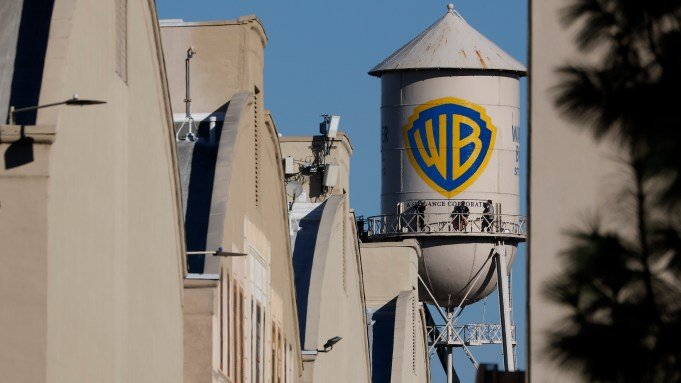
    L.A.’s film office on Tuesday unveiled a six-month pilot program aimed at removing cost barriers for small shoots as outcry over Hollywood’s production downturn has snowballed into a political campaign issue.

    FilmLA’s new “Low Impact Permit Pilot Program” will reduce the city’s typical permit fees for tiny productions with fewer than 30 cast and crew members. The program will only apply to productions that shoot for a maximum of three consecutive days and in a maximum of three locations.

    For those who meet the qualifications, application fees will drop from the typical $931 to $350, and notification fees will drop from $250 per location to $156 per location. L.A. Fire Department spot check fees ($285) will also be waived for these shoots. The initiative will roll out starting April 27.

    That criterion makes the program seem tailor-made for microdramas, small student films and various new media productions, but it will not apply to the majority of professional feature films, television series and commercials.

    The initiative was announced during a press event at Echelon Studios, a sprawling production complex under construction in Hollywood, where Mayor Karen Bass also announced a Department of Transportation pilot program that will reduce city parking lot expenses by 20 percent for all productions — the same perk afforded to Baywatch amid its filming issues at Venice Beach. The city additionally announced that it was working with Echelon’s developers to expedite its permitting process.

    The pilot program emerged out of a June 2025 Board of Public Works hearing over the renewal of FilmLA’s contract with the city. In the wake of the Palisades and Eaton fires, FilmLA had come under fire for, critics said, presenting additional barriers to filmmakers and production teams that made filming in the city too onerous and expensive.

    The Board of Public Works renewed the organization’s contract for five more years, but made requests of the organization after hearing from angry production workers.

    One of them was for a tiered permitting system. ”There was a lot of outcry, at the time, that there is no tiered permitting system in the FilmLA ecosystem,” said Board of Public Works commissioner Steve Kang in an interview on Tuesday. “There was a request from the Board — and of course the mayor at the time, because she’s a big champion of equity — that we should develop a tiered permitting system. So that was the impetus behind this conversation and then the big announcement today from FilmLA and its board.”

    FilmLA’s board has agreed to cover the costs of the new program for up to six months through the organization’s operating reserve. In a statement, FilmLA CEO Denise Gutches — who rose to the position after FilmLA’s previous CEO retired in the fall of 2025 amid sustained controversy over the organization’s role in L.A.’s production exodus — said the organization believes that “when community impact is small, regardless of the project type or production budget, the City and FilmLA review process should be simple.”

    Data will be gathered over the course of the pilot program to determine how to turn it into a longer-term commitment. But the city has larger goals than simply creating a lower-cost tier for tiny shoots, says Kang, who notes that L.A. Councilmember Adrin Nazarian is pushing a motion to remove barriers for shoots with 50 cast and crew members or fewer.

    “Today was all about 30 and under, but we are also working closely with Councilmember Nazarian while the motion goes through its normal legislative process to potentially increase the threshold in the future,” Kang said.

    Asked whether the ultimate ambition is to create a much more sprawling tiered permitting system that would apply to larger productions, Kang said, “Correct.”

  • Mexico’s West Coast: The New Industry Hideouts From Cabo to Costalegre

    Mexico’s West Coast: The New Industry Hideouts From Cabo to Costalegre

    Mexico’s West Coast — despite a brief and now-subsided outbreak of violence in February in Puerto Vallarta — remains a major travel destination for Hollywood, with a host of new resorts casting an allure.
    From Cabo (just a two-hour plane ride from Los Angeles) to spots farther south in the Punta Mita and Costalegre areas, here are top places to check in along the coast.

    Cabo

    A room terrace at Park Hyatt Cabo del Sol, Villa La Paz.

    Courtesy Park Hyatt Cabo del Sol

    Cabo is popping with new and renovated hotels, further bolstering its front-row positioning as a Hollywood travel mainstay. The entire region is experiencing a growth spurt, starting with the recent opening of the first Park Hyatt in Mexico at the Cabo del Sol development. Upcoming openings include the first Soho House in Cabo (coming this fall) and the eagerly anticipated Amanvari (from Aman), which will join Four Seasons in the Costa Palmas development along the East Cape.

    Global brands are not just launching new properties, but are also adding elite services to existing concepts. Zadún, a Ritz-Carlton Reserve, recently partnered with Sensei to offer the luxury well-being company’s highly personalized programs at the property, located near San José del Cabo. Waldorf Astoria Los Cabos Pedregal just completed property-wide renovations and upgrades, including adding a new bubbly and seafood tasting experience at the Champagne Terrace at El Farallon, its cliffside restaurant overlooking the sea.

    Waldorf Astoria Los Cabos Pedregal.

    Courtesy Waldorf Astoria Los Cabos Pedregal

    Responding to a rising demand among affluent second-home buyers for properties that offer resort amenities, it seems that every major hospitality brand operating in Cabo now offers a community-based residential component as well, from Four Seasons Private Residences Los Cabos at Costa Palmas and Park Hyatt Los Cabos Residences at Cabo Del Sol to the in-development Rosewood Residences Old Lighthouse, set on a 550-acre estate.

    Punta de Mita and Riviera Nayarit

    Casa Tesoro, a seven-bedroom private villa, at Four Seasons Resort Punta Mita, Mexico.

    Courtesy Four Seasons Resort Punta Mita


    Punta de Mita in the Riviera Nayarit area was once upon a time a sleepy fishing village north of Puerto Vallarta, but it has been growing exponentially over the past decade. Up until a handful of years ago, Four Seasons and St. Regis dominated the luxury market, drawing repeat celebrity visitors such as John Legend, Lady Gaga and the Kardashian clan. While the area experienced a two-day outbreak of retaliatory violence and road blockades earlier this year following the killing of a drug cartel leader by the government, no international tourists were harmed during the incidents and Puerto Vallarta is by all accounts back to business as usual.

    Covering 1,500 acres with more than 20 residential communities, the sprawling Punta Mita development already includes Four Seasons Resort Punta Mita and The St. Regis Punta Mita Resort. “It has been the pioneer and setting the benchmark in the region because of the Four Seasons and St. Regis, and real estate values have done very well. It created the confidence of other brands to develop in the area after observing the growth over the last few decades,” says Carl Emberson, director marketing and operations for the $700 million Punta Mita development, which is estimated to be completed in 2030. A pair of new hotels from Montage and Pendry will open at Punta Mita in 2027 and 2028, respectively. Elsewhere in the area, Conrad, W and One&Only have opened properties in recent years and fractional luxury home ownership company Pacaso has just debuted Uavi, a four-bedroom penthouse residence near Punta Mita, while Omni and Belmond have plans to debut new resorts there.

    Here are a few other luxury spots — all opened within the past three or so years — to check in to in the area:

    Bonding With Nature: Naviva, A Four Seasons Resort

    Naviva, A Four Seasons Resort, Punta Mita, Mexico.

    Courtesy Naviva, A Four Seasons Resort

    Located next to Four Seasons Resort Punta Mita (with access to all of its amenities including a lazy river), Naviva offers 15 tent-style bungalows surrounded by jungle, set on the edge of a private peninsula. This isn’t glamping, though. Accommodations feature a living room and separate king bedroom, a private plunge pool, a hammock, fire pit, outdoor shower, and oversized bathrooms with deep soaking tubs and skylit showers. This is the brand’s first adult-only, all-inclusive resort in the world with a biophilic design geared toward immersing guests in the natural surroundings. To deepen the relaxation, purify your mind and body during a temescal sweat-lodge ceremony or schedule a treatment in one of the two cocoon-like spa pods, each of which features a private garden.

    Diverse Ecosystems and Local Traditions:  Rosewood Mandarina

    Toppu Sushi Bar at the Rosewood Mandarina, Riviera Nayarit, luxury resort.

    Courtesy Rosewood Mandarina


    The new Rosewood Mandarina is an all-suite sanctuary spread across three distinct ecosystems, from ocean to mountain and flatlands. The grounds include design elements crafted by local artisans found throughout the 134 suites as well as two stand-alone villas with private plunge pool. The culinary offerings range from Mexican fare at La Cocina and Spanish flavors on the beach at Buena Onda to Japanese fine dining at Toppu. Activities on offer include horseback riding, surfing, golf, ziplining and world-class polo at the Mandarina Polo & Equestrian Club. For holistic wellness, Asaya Spa offers treatments and rituals rooted in the healing traditions of the local Huichol and Cora cultures.

    From the Jungle to the Beach: Nauka with Siari Riviera Nayarit, a Ritz-Carlton Reserve

    Rendering of the Spa Exterior at Siari, a Ritz-Carlton Reserve Residence, Nauka, Nayarit, Mexico.

    Courtesy Siari, a Ritz-Carlton Reserve Residence


    Located within the 920-acre Nauka private-member community, Siari Riviera Nayarit, a Ritz-Carlton Reserve, is named for the Uto-Aztecan word siari, meaning green. Set in a landscape of jungles and mangroves near the region’s largest swimmable beach, the resort is perched on the edge of a coastal cliff, featuring 91 suites and rooms and 34 residences, including the five-bedroom Siari Presidential Suite. Guests can enjoy a meal at one of the property’s three restaurants, including Zula from celebrated Mexican chef David Castro Hussong; personalized butler service; and golf at the development’s Tom Fazio-designed course. Siari’s private FBO services means guests can arrive by private jet or helicopter, while Nauka features a rare 400-slip deep-water marina accommodating yachts up to 220 feet.

    Ideal For Families: Susurros del Corazón, Auberge Collection

    Susurros del Corazón, Auberge Collection.

    courtesy Susurros del Corazon, Auberge Collection


    Set between jungled cliffs and a stretch of shoreline overlooking Bahía de Banderas in Punta de Mita, this resort offers 82 ocean-view studios, casitas and suites, along with 30 two to five-bedroom casas and oceanfront residences, plus a seven-bedroom signature villa. Susurros del Corazón is highlighted by three infinity-edge pools that cascade down to the beach; Morritos Kids Club; and four dining options including La Boquita, an open-air taqueria with ceviches and agave-forward cocktails. The ONDA spa will have you covered when it comes to decompressing, from bodywork to breathwork, while activities range from pottery-making and cooking classes to private surf lessons, fishing trips and a healing cacao ceremony.

    Costalegre, Jalisco

    Meaning “the coast of joy,” this coastal stretch farther south along the Pacific Coast is less developed than Riviera Nayarit, making the Costalegre a popular yet low-key destination for creatives seeking downtime. The area may be a little harder to get to than some destinations — many resorts are a 60- or 90-minute drive from Manzanillo airport, while private aircraft can fly into Costalegre COJ Airport. The remote location translates to a landscape that is replete with protected biosphere reserves and marine ecosystems with turtle sanctuaries.

    Careyes, a gated community known for its idiosyncratic architecture, and Cuixmala, an eco-resort with a biodynamic farm, were early pioneers of the Costalegre, which has been a favorite over the years for the likes of Mick Jagger, Kevin Hart, Emily Ratajkowski, Tom Ford and producer Lee Daniels.

    Now larger hospitality brands are in the area as well, with Four Seasons opening a property there in 2022 and Chablé Hotels planning an arrival in 2027. The latter, a Yucatan-based design-driven hotel company, is expanding into branded residential real estate in the Costalegre with a plan for three communities. The Residences at Chablé Costalegre will be part of Reserva Tezcalame, a master-planned development with 19 ocean-view homes and an adjacent 71-key hotel, designed by Cuaik SDS with landscape architecture by Maat Handasa. Planned amenities include three restaurants overseen by chef Jorge Vallejo, a beach club, spa facilities and community event spaces.

    For Privacy and Seclusion: Las Rosadas Private Villas

    Villa pool at Las Rosadas.

    Courtesy Las Rosadas


    Spread out over a 387-acre nature preserve on a quiet, secluded beach, this is an ideal choice for discerning celebrities who crave privacy. Las Rosadas is made up exclusively of seven private homes offering concierge services, including two villa estates, four Ocean Club Villas and one charming beach bungalow. For the ultimate in privacy, book the new four-bedroom Villa Esperanza, with expansive outdoor entertaining areas and stunning ocean views in a secluded area of the resort.

    And while it’s not a hotel, the amenities are abundant. Beside a private ocean cove, you’ll find Bar Mono and lounging areas under a palm-thatched palapa in the sand, not far from the Playa Pool and open-air garden patio of La Terraza restaurant near a palm grove. Michelin-starred French chef Laurent Manrique creates a seasonal menu with farm-to-table fruits and vegetables. At dusk, a tequila tasting might be followed by a shared fresh seafood-themed meal by a beach bonfire. This is not a party place, but one for connecting with family and friends. On-site nature-preserve tours, stand-up paddle boarding, kayaking and yoga classes by the shore can all be arranged. On display throughout the property is an impressive art collection focusing on emerging and established Latin American and international talents with large-scale sculptures, oil paintings, ceramics, mosaics and lithographs.

    Jungle Vibes and Farm-to-Table Fare: Four Seasons Resort Tamarindo  

    Four Seasons Resort Tamarindo, México.

    Courtesy Four Seasons Resort Tamarindo, México


    This luxury jungle-meets-beach resort, which opened in 2022, is adding a collection of Four Seasons Private Residences nestled within a secluded 3,000-acre nature reserve. Now in active sales, the portfolio includes 25 luxury villas and estates. Envisioned by three of Mexico’s most renowned contemporary architects, Victor Legorreta, Mauricio Rocha and Mario Schjetnan — in collaboration with Uribe Krayer and Estudio Esterlina for interior design — each understated, contemporary residence will offer soothing ocean views.

    Owners receive access to the full amenities of Four Seasons Resort Tamarindo, including a full-service spa, fine dining from Michelin-starred chef Elena Reygadas, a private on-site farm, golf at the David Flemming-designed El Tamarindo Course, and a plethora of winding nature trails and hikes to explore the landscapes that are under the care of an on-site team of biologists and conservationists.   

    OG Pioneer: Cuixmala

    Casa La Playa at Cuixmala.

    Davis Gerber/Courtesy Cuixmala


    Once the private home of Sir James Goldsmith, this resort, which opened in the late 1990s, is still owned by the Goldsmith family.

    With 43 lavishly decorated rooms, Cuixmala is situated on a 30,000-acre nature reserve that traverses landscapes of lush jungle, coconut palm groves, lagoons and sweeping grasslands. The property includes Casa Cuixmala, Goldsmith’s former residence, which is perched on a small hill overlooking a 2-mile private beach, lagoons and mountains. Guests staying in any of the Casa’s four suites or in the adjacent Bungalows enjoy access to three ocean-view palapas with outdoor dining and lounge areas, and a saltwater pool.

    The majority of produce for meals comes from the property’s biodynamic gardens and organic ranch, or from sister property Hacienda de San Antonio. Yoga and sound healing are among the wellness offerings, and Cuixmala even has an animal sanctuary where you can see more than 40 zebras and other exotic animals roaming free across the plains.

    One-of-a-Kind Architecture: Villas at Careyes

    Sol de Occidente at Careyes.

    Karla Cifuentes/Courtesy Careyes


    Careyes was inaugurated in the 1970s by visionary Italian developer Gianfranco Brignone, who differentiated the community from other destination resorts with a mix of brightly colored architecture, unique castle-like villas and exciting events.

    The latter includes the Spring Agua Alta Polo Tournament at the Careyes Polo Club (created in 1990 by Brignone) with the two regulation Bermuda grass polo fields (the largest in Mexico); the tourney brings in global brands such as Land Rover Defender and Bulgari along with chic locals and travelers in the know.

    Emmy-nominated producer Mekita Faiye decided to have a birthday party-meets-girls trip with six other friends at the resort recently. She had been looking for somewhere different with a twist and was intrigued by the backstory of the property and its founder. As a lover of the Amalfi Coast, Faiye tells THR she found a similar “Mediterranean elegance, mixed with Mexican vibrancy.” Faiye’s getaway in a butler-attended villa included turtle-release activities, a private boat trip to see whales and local caves, horse-back riding and an “unmatched sound healing experience,” she says.

    “It was an excellent bonding experience, and we are now planning annual trips as a group,” says Faiye. Some of the guests didn’t know each other previously, but now, she says, “the magic of Careyes inspired us to stay connected forever.”

    Casita Azul at Careyes.

    Karla Cifuentes/Courtesy Careyes

    This story appears in The Hollywood Reporter’s 2026 Travel IssueClick here to read more.

    Casita Azul at Careyes

    Karla Cifuentes/Courtesy Careyes

  • Two CIA agents reportedly killed in car crash in Mexican state of Chihuahua

    Two CIA agents reportedly killed in car crash in Mexican state of Chihuahua

    Two agents reportedly from the Central Intelligence Agency (CIA) in the United States have been killed in a car crash in the Mexican state of Chihuahua, leading to questions about their activities in the country.

    On Tuesday, Mexican President Claudia Sheinbaum addressed the matter from the podium at her morning news conference.

    Recommended Stories

    list of 3 itemsend of list

    She underscored that a probe is under way, as Mexican law requires that foreign agents receive federal authorisation to operate in the country.

    US agents, in other words, cannot work directly with state-level Mexican officials without prior approval from Sheinbaum’s government. It is unclear whether that standard was followed in this incident.

    Sheinbaum also acknowledged there were conflicting reports circulating in the aftermath of the crash about the nature of the agents’ presence in Mexico.

    “A full investigation must be conducted by the Attorney General’s Office to determine whether the Constitution or the National Security Law was violated and to ensure that the authorities in the state of Chihuahua have access to all the accurate information,” she said.

    Tensions have been high over the past year over the possibility that the US may seek to unilaterally launch ground operations in Mexico, thereby violating its sovereignty.

    Since returning to the White House for a second term, US President Donald Trump has repeatedly threatened to take military action in Mexico to “eradicate” cartels and other criminal networks.

    But Sheinbaum has rejected any such action as a red line not to be crossed in Mexican-US relations.

    She reiterated that stance in Tuesday’s news conference, while welcoming collaborative efforts to combat crime.

    “Joint ground operations are not permitted,” Sheinbaum said. “What has been agreed upon and stated very clearly with the United States government is that information is shared, and extensive work is conducted regarding joint intelligence.”

    While she described her government’s relationship with the US as “excellent”, she did warn there could be consequences if a violation of Mexico’s laws were to be discovered during the course of the investigation.

    “A formal diplomatic protest would indeed be issued, obviously, along with a request to ensure that such actions do not recur,” she said, adding that she has already been in contact with the US embassy.

    For his part, US Ambassador Ronald Johnson expressed his condolences in a social media post after the crash.

    “This tragedy is a solemn reminder of the risks faced by those Mexican and U.S. officials who are dedicated to protecting our communities,” Johnson wrote.

    “It strengthens our resolve to continue their mission and advance our shared commitment to security and justice, to protect our people.”

    It is unclear if and to what degree US agents were involved in unsanctioned ground operations in Mexico.

    The Washington Post, which broke the story, initially indicated that the two agents were engaged in a counternarcotics operation, citing anonymous officials familiar with the matter.

    Their car appears to have veered off the road and crashed in a ravine early on Sunday. The identities of the two US officials have yet to be confirmed.

    Johnson described the two officials as “embassy personnel”. Media reports, however, have indicated they may have been members of the CIA.

    Contradictory statements from authorities in Chihuahua also compounded the confusion about who was involved in the antidrug operation.

    On Monday, the state attorney general’s office in Chihuahua issued a statement to insist that “only elements of the State Investigation Agency (AEI) and the Mexican army participated” in the sting.

    Chihuahua’s Attorney General Cesar Jauregui Moreno has ruled out “the intervention of foreign elements”, the statement added.

    According to state authorities, “instructors from the United States” were in Chihuahua “for other purposes, such as teaching how to handle drones”.

    Separately, 40 officers from Chihuahua’s AEI and 40 from Mexico’s Secretariat of National Defence led a two-day operation that resulted in the discovery and seizure of a drug lab in the community of El Pinal, the attorney general’s office said.

    The office insists that the Mexican law enforcement agents were simply giving their US counterparts a lift to the airport, nothing more, when the early-morning car crash occurred. The two US officials were expected to catch a flight on Sunday from the city of Chihuahua.

    “We are very respectful of the sovereignty of this country and of the non-intervention of agents of any kind that are not nationals, directly in this type of operation,” Jauregui Moreno said in the statement.

    Since Trump began his second term, the question of whether he might pursue policies that violate Mexican sovereignty has loomed over cross-border relations.

    Last year, he labelled several Mexican cartels “foreign terrorist organisations”, seeming to tee up possible military action.

    Privately, in a notice to Congress, Trump has described cartels and other criminal networks as “unlawful combatants” engaged in an “armed conflict” with the US.

    To that end, he has carried out a campaign to bomb alleged drug-smuggling boats in the Caribbean Sea and eastern Pacific Ocean, killing at least 180 people.

    He has also twice attacked Venezuela — once in December and a second time in early January — culminating in the abduction and imprisonment of the country’s then-leader, President Nicolas Maduro.

    Trump and his officials have described the January 3 attack as a law enforcement operation. Maduro and his wife Cilia Flores currently await trial on drug trafficking and weapons charges in New York.

    Legal experts, however, have described the attack as a violation of international law.

    Shortly after Maduro’s removal, Trump renewed his threats that other countries could likewise face attacks on their soil. Mexico was among the targets he floated.

    “We are going to start now hitting land with regard to the cartels. The cartels are running Mexico,” he told Fox News in January. “It’s very sad to watch.”

    Sheinbaum has rejected that assertion, while increasing her government’s anti-cartel operations.

    In February, for instance, the Mexican military led a high-profile operation that resulted in the shooting death of Nemesio Ruben Oseguera Cervantes, known as “El Mencho”, the leader of the Jalisco New Generation Cartel.

  • Quantum Computers Could Boost AI by Processing Large Datasets More Efficiently

    Quantum Computers Could Boost AI by Processing Large Datasets More Efficiently

    In brief

    • Researchers say quantum computers could process some AI datasets more efficiently than classical machines.
    • A proposed method feeds data into a quantum system in smaller batches instead of loading it all at once.
    • Even relatively small quantum computers could show advantages for certain data-heavy tasks.

    Quantum computers may eventually help process some of the massive datasets used to train artificial intelligence, according to a report by New Scientist.

    Drawing from an earlier study by Caltech, Google Quantum AI, quantum computing startup Oratomic, and MIT, researchers say one challenge has been getting large datasets—often measured in terabytes or petabytes—into a quantum computer. To use quantum effects, data must be converted into a quantum state, and preparing those states has traditionally required significant quantum memory.

    “Machine learning is really utilized everywhere in science and technology, and also everyday life. In a world where we can build this [quantum computing] architecture, I feel like it can be applied whenever there’s massive datasets available,” Hsin-Yuan Huang, CTO at Oratomic, said in a statement.

    The study proposes that, rather than requiring the full dataset to be loaded into quantum memory first, the new method prepares the necessary quantum states during processing, reducing the memory burden. The researchers say this could allow quantum effects such as superposition to be used without extremely large storage systems.

    The researchers say the approach could also allow quantum computers to process large datasets while using less memory than conventional systems, suggesting that a machine with about 300 logical qubits—error-corrected quantum bits that can reliably perform calculations—could outperform classical computers on certain tasks.

    Such a system does not yet exist; however, the researchers estimate that a quantum computer with roughly 60 logical qubits could begin outperforming classical systems on some data-processing tasks used in artificial intelligence, highlighting how advances in quantum computing could threaten fields such as cryptography and blockchain.

    “People are used to quantum computers always being 10 years away,” Oratomic co-founder and CEO Dolev Bluvstein previously told Decrypt. “But when you look at where we were a little over ten years ago, the best estimates of what would be required for Shor’s algorithm were one billion qubits at a time when the best systems we had in the lab were roughly five qubits.”

    Still, researchers say the connection between artificial intelligence and quantum computing is growing closer, as AI tools help scientists analyze and model complex quantum systems that would otherwise be difficult to simulate, accelerating work on quantum hardware and applications.

    “The quantum machine is a very powerful device, but you do need to first feed it,” Professor of Computational Physics at ETH Zurich in Switzerland, Adrián Pérez-Salinas, said in a statement. “This study talks about feeding and how it’s enough to load [data] bit by bit, without overfeeding the beast.”

    Daily Debrief Newsletter

    Start every day with the top news stories right now, plus original features, a podcast, videos and more.

  • Trump’s US Fed nominee Warsh vows independence, says he’s no ‘sock puppet’

    Trump’s US Fed nominee Warsh vows independence, says he’s no ‘sock puppet’

    Kevin Warsh, United States President Donald Trump’s pick to lead the Federal Reserve, has addressed concerns about his independence pending his appointment to the bank amid fears that Trump could sway his decisions on monetary policy.

    On Tuesday, Warsh — who served on the central bank’s Board of Governors from 2006 to 2011 — faced waves of criticism during a confirmation hearing of the Senate Banking Committee where Democrats voiced concerns about the Fed’s independence should he be appointed to lead the organisation.

    Recommended Stories

    list of 4 itemsend of list

    Senator Elizabeth Warren of Massachusetts, the ranking Democrat on the committee, questioned Warsh’s independence, alleging that he would be a “sock puppet” for Trump, concerns he pushed back against and addressed in his opening testimony.

    “I do not believe the operational independence of monetary policy is particularly threatened when elected officials — presidents, senators, or members of the House — state their views on interest rates,” Warsh said.

    “Monetary policy independence is essential. Monetary policymakers must act in the nation’s interest . . . their decisions the product of analytic rigour, meaningful deliberation, and unclouded decision-making.”

    Warsh, 56, also called for “regime change” at the US central bank, including a new approach for controlling inflation and a communications overhaul that may discourage his colleagues from saying too much about the direction of monetary policy.

    Warsh blamed the central bank for an inflation surge after it slashed interest rates to nearly zero in the wake of the COVID-19 pandemic, a move that continues to hurt US households.

    Concerned by the implications of artificial intelligence for jobs – expected to increase productivity – and prices, he said he would move quickly to see if new data tools could provide better insight on inflation, and would also discourage policymakers from saying too much about where interest rates might be heading.

    “What the Fed needs are reforms to its frameworks and reforms to its communications,” the former Fed governor said. “Too many Fed officials opine about where interest rates should be … That is quite unhelpful.”

    Warsh has also long been an advocate for shrinking the Fed’s $6.7 trillion balance sheet. In the Tuesday hearing, he said any such plans would take time and must be publicly discussed well in advance.

    Jai Kedia, a research fellow at the Center for Monetary and Financial Alternatives at the libertarian Cato Institute, told Al Jazeera that there were many “encouraging” signs in Warsh’s candidacy.

    “Warsh is presenting himself as a regime change candidate at a time when the Fed needs serious reform,” Kedia noted. “Particularly encouraging was his understanding of the negative effects of QE and his focus on reducing the balance sheet. He also correctly criticised mission creep and acknowledged that the Fed did better when it kept its focus on the dual mandate [of keeping inflation at 2 percent and increasing employment].”

    Quantitative easing or QE is an unconventional monetary policy under which a central bank lowers interest rates, among other measures, to boost the economy, a step taken by central banks in several developed countries during the pandemic.

    Warsh’s private investments, at well over $100m, are also under scrutiny. Among them are two holdings in the Juggernaut Fund LP, apparently part of his work advising for the Duquesne Family Office, the private investment firm of Stanley Druckenmiller.

    Warsh’s nearly 70-page financial disclosure also showed that his other holdings include investments in Elon Musk’s SpaceX and the prediction trading platform Polymarket.

    “I agreed to divest virtually all of my financial assets, the large majority of which will be divested” before taking office, Warsh said without giving any details.


    Warsh noted that selling his holdings comes with challenges. He said that when that process is completed, he would have “virtually no financial assets” and “we’ll be sitting in something like cash”.

    Warren, however, questioned him about the divestment plan. “Do we have any way to verify that, in fact, these sales will occur if we have no idea what’s in them?” she asked.

    Political hurdles

    The hearing quickly turned contentious, and the pace of Warsh’s confirmation process through the Senate remained in doubt.

    He would not directly say that Trump lost the 2020 election – a statement of fact that Senator Warren said was a litmus test of Warsh’s independence from the Republican president who nominated him for the top Fed job.

    Yet even amidst the focus on independence, Warsh needs 13 votes to clear the 24-member Senate Banking Committee.

    North Carolina Senator Thom Tillis said he would vote against Trump’s nominee and join Democrats, which would create a 12–12 split. The committee has 13 Republican members and 11 Democrats.

    Tillis said he would not vote for any Trump nominee until an investigation into current Fed Governor Jerome Powell, whose term ends May 15, is either concluded or called off. Last month, federal prosecutors said they found no evidence of wrongdoing. But Jeanine Pirro, the US Attorney for the District of Columbia, has not indicated that the investigation will be dropped.

    Tillis said on Tuesday that he would support Warsh’s nomination once the probe into Powell is dropped.

    “Today’s confirmation hearing underscored that Warsh is aiming for independence with guardrails,” noted Selma Hepp, chief Economist of Cotality, a market analytics company. “He rejected being a political ‘sock puppet’ and argued the Fed protects its autonomy by ‘staying in its lane.’ He offered no pre-commitment on rates, while emphasising inflation discipline, a large balance sheet, and a desire for clearer Fed communication.”

    Noel Dixon, senior macro strategist at State Street, said that with Warsh, the US would have a “dovish-leaning Fed”.

    “When a senator asked him if he would lower rates to 1 percent – I guess Trump had indicated that he would like to have rates below 2 percent – Warsh didn’t really say no to that,” Dixon noted. “He didn’t say that it would increase prices. He kind of leaned on it and said there would be a lagged effect, and he was just very noncommittal to that. So it’s almost like – just reading between the lines – he’s giving himself space to maintain possible justification for rate cuts by the end of the year.”

    Trump has continued to pressure the central bank.

    On Tuesday, he said he would be “disappointed” if the Fed did not lower interest rates.

    Tuesday’s remarks follow comments in December, when the US president said he would not appoint anyone to lead the central bank unless they agreed with him.

    “The public needs to know whether Mr. Warsh will have the courage of his convictions or if he’s willing to compromise his independence and accommodate more Wall Street deregulation,” Graham Steele, an academic fellow at the Rock Center for Corporate Governance at Stanford University, told Al Jazeera in an email.

    Warsh has praised the administration for its push for increased bank deregulation. In a November 2025 op-ed for the Wall Street Journal, Warsh claimed that Trump’s “deregulatory agenda” is “the most significant since President Ronald Reagan’s”.

  • Dogecoin Foundation, MoonPay Team to Donate 1 Million DOGE to Dog Charity

    Dogecoin Foundation, MoonPay Team to Donate 1 Million DOGE to Dog Charity

    In brief

    • MoonPay, the Dogecoin Foundation, and House of Doge collectively donated 1 million DOGE to the AKC Humane Fund.
    • The funds support rescue operations, assistance for domestic violence victims with pets, and veterinary care for financially struggling families.
    • MoonPay Commerce now processes Dogecoin donations to the charity, allowing ongoing crypto contributions.

    MoonPay, the Dogecoin Foundation, and its corporate arm House of Doge collectively donated 1 million DOGE—roughly $95,000 worth—to the AKC Humane Fund on Monday, enabling ongoing crypto donations to the dog welfare charity through MoonPay’s payment infrastructure.

    The contribution will fund shelter assistance for pet owners affected by domestic violence, stray dog rescues, and veterinary support for families facing financial hardship across the United States. (Disclosure: MoonPay Ventures is an investor in Dastan, the parent company of an editorially independent Decrypt.)

    “This campaign brings Dogecoin’s purpose to life,” said House of Doge CEO Marco Margiotta, in a statement. “By enabling Dogecoin-powered donations for a cause that directly supports dogs, we’re creating a meaningful connection between our community and making a real-world impact.”

    The partnership extends beyond the initial donation, with MoonPay Commerce processing future crypto contributions—in Dogecoin or other assets—to the AKC Humane Fund. MoonPay President Keith Grossman positioned the initiative as a milestone for crypto adoption.

    “Dogs have always brought out the best in us. Now, with a little help from the Doge community, they are bringing out the best in crypto too,” Grossman said in a statement. “We are proud to partner with the AKC and the Dogecoin Foundation to turn DOGE into real-world impact, powered by MoonPay Commerce.”

    Dogecoin is the original and still most valuable meme coin, recently trading at a price of $0.095 and ranking as the 10th largest cryptocurrency by market cap. While created as a joke, Dogecoin has persisted largely on the back of good vibes, with some community members trumpeting the acronymic ethos, “Do only good every day.”

    “Dogecoin has always been about community and doing good,” said Dogecoin Foundation Director Tim Stebbing, in a statement. “Supporting dogs through the AKC Humane Fund is a natural extension of that ethos, and we’re excited to see the community rally behind this initiative.”

    Daily Debrief Newsletter

    Start every day with the top news stories right now, plus original features, a podcast, videos and more.

  • An Oscar for Rocky? ‘Project Hail Mary’ Puppeteer James Ortiz Is Eligible for Best Supporting Actor (EXCLUSIVE)

    An Oscar for Rocky? ‘Project Hail Mary’ Puppeteer James Ortiz Is Eligible for Best Supporting Actor (EXCLUSIVE)

    Rocky is eligible for the Oscars. Amaze, amaze, amaze.

    James Ortiz, a stage performer and master puppeteer, has been central to one of the year’s most talked-about screen creations: Rocky, the spider-like alien at the heart of Amazon MGM Studios’ space-traveling blockbuster “Project Hail Mary.” Brought to life through intricate puppetry and vocal performance opposite Ryan Gosling, the character has become one of the film’s most celebrated elements, and the studio is already mapping out how to position the work in the fall awards race. Ortiz will be submitted for supporting actor.

    Awards enthusiasts should expect the film to compete across major categories, including best picture and directing for Phil Lord and Christopher Miller, alongside a robust artisans campaign. But Ortiz’s performance raises a more complicated question: Can a nontraditional acting role compete with human performances?

    Variety has learned exclusively that Ortiz’s work is eligible for Academy Award consideration in acting categories, based on current rules. In addition, his work is eligible for the Actor Awards, where puppeteers fall under SAG-AFTRA jurisdiction, which the organization confirmed to his representatives. However, under the Golden Globes’ existing rules, his work will not be eligible. The Critics Choice Awards have no explicit guidelines that would exclude him, suggesting he will be eligible for consideration. At the BAFTAs he would also be eligible given they are the only voting body to ever nominate a voice-acting performance: Eddie Murphy in “Shrek” (2001) for best supporting actor.

    That ambiguity underscores a longstanding industry debate over how to classify achievements that blur the line between acting, voice work and technical artistry. It also points directly to a mechanism the Academy of Motion Picture Arts and Sciences built for exactly this purpose — and one it has largely abandoned for more than three decades.

    The Special Achievement Award, introduced in 1972, was arguably the Academy’s most flexible instrument. It was designed to recognize groundbreaking work that did not fit neatly into existing categories, arriving at a moment when rapid technological and creative innovation was outpacing the Oscars’ rulebook. For more than two decades, it has allowed the Academy to honor achievements that might otherwise go unrecognized.

    The award was most often used to spotlight advancements in sound and visual effects, with 18 films recognized for advancing those crafts. It began with artists L.B. Abbott and A.D. Flowers for the visual effects of the disaster epic “The Poseidon Adventure” (1972), establishing a pattern of honoring artisans whose work redefined what was possible on screen. Among the most enduring examples is sound designer Ben Burtt, who received a Special Achievement Award for creating the alien, creature and voice of R2-D2 in “Star Wars” — a contribution that functions as a performance in every meaningful sense and remains inseparable from the film’s cultural legacy.

    There were also moments when the Academy deployed the award more creatively, extending its reach beyond a single craft category. Richard Williams became the first recipient outside the traditional sound and visual effects lanes for his contributions to “Who Framed Roger Rabbit” (1988). As animation director, he supervised the film’s groundbreaking integration of hand-drawn characters into live action. He also helped design iconic figures including Jessica Rabbit. Though he shared the film’s competitive Oscar for visual effects, the Special Achievement Award allowed the Academy to single out the distinct artistic authorship behind the animation.

    The last recipient was “Toy Story” (1995), honored as the first fully computer-animated feature, five years before the Academy formalized that progress by creating the best animated feature category.

    Looking back at what was absorbed into existing categories rather than singled out, the distinctions become even sharper. H.R. Giger’s design of the xenomorph in Ridley Scott’s “Alien” was recognized as part of the film’s Oscar-winning visual effects team, even though the creature operates as a fully realized character, not merely an effect. That same distinction sits at the heart of what Ortiz has created with Rocky — a presence that is tactile, expressive and alive. The history of the Special Achievement Award makes clear that, at its best, the Academy has found ways to honor this kind of work when its existing categories fall short.

    In recent years, the Academy has largely stepped away from the award. But this could be the right year to revive it.

    Amazon MGM Studios

    “Typically, we talk about puppetry as a technical achievement, and it is,” Ortiz tells Variety. “It’s a spectacle. For me as a performer, however, that’s never my entry point. I’m interested in the heart of the character — what they’re trying to communicate, what they’re feeling underneath all of it. When we can take a medium like puppetry, which is often seen as decorative, and bring to life a character with a beating heart in a way that genuinely affects people, then we’re doing something truly meaningful.”

    Ortiz speaks about his process like an actor — because he is one.

    Whether he is eligible and whether the Oscars will actually nominate him are two fundamentally different questions, and they lead to three the Academy should tackle:

    Will the Academy, which has never formally recognized a voice, motion-capture or hybrid performance in an acting category, ever feel compelled to do so? If not, does a performance like Ortiz’s warrant a Special Achievement Award? And if the acting branch is never going to embrace these artists as actors, does the industry need an entirely new category — a formal home for voice performances, motion-capture and puppetry work that has been without one for 50 years?

    Gosling and Ortiz rehearsed each scene before bringing out the puppet, nailing down the blocking between them first. Despite Rocky’s unconventional appearance — no face, no conventional means of expression — he is the film’s breakout creation. Ortiz, alongside designer Neil Scanlan, solved the central challenge of making a creature feel irresistible. That achievement warrants serious consideration for a Special Achievement Award, if not a place on the ballot outright.

    Early versions of this conversation surfaced around Andy Serkis’ work as Gollum in “The Lord of the Rings: The Two Towers” and as Caesar in “Rise of the Planet of the Apes.” The Critics Choice Awards nominated Serkis for best supporting actor for the latter. They gave him a special prize for best digital acting performance for the former. He resurfaced in the same conversation when he brought “King Kong” to life in 2005. The Oscars passed on all of it.

    The debate continued with James Cameron’s “Avatar” in 2009, with standout performances from cast members including Zoe Saldaña. The industry’s resistance was stated plainly at a 2010 Newsweek Oscars roundtable, where Morgan Freeman said of motion-capture performance: “I think it’s a bit faddish, because it’s really cartoons.”

    Some of Hollywood’s old guard almost certainly still feels that way. That sentiment, however understandable, has cost the industry decades of recognition it cannot get back. The voice acting debate has its own long history. Robin Williams’ work as Genie in “Aladdin” (1992) prompted the Golden Globes to present a one-time Special Achievement Award to the performer. The conversation resurfaced with Ellen DeGeneres as Dory in “Finding Nemo” (2003). It reached a fever pitch with Scarlett Johansson’s turn as the AI Samantha in Spike Jonze’s “Her” (2013), for which she was also nommed for a Critics Choice Award.

    Some of cinema’s most compelling historical precedents deepen the question. Where would Frank Oz’s Yoda from “Star Wars: The Empire Strikes Back” (1980) be classified in today’s awards climate? Jim Henson created an entire performance genre that still thrives — so where would the ensemble from “The Muppets” (2011) fall? Steve Whitmire inhabited Kermit the Frog, Beaker, Statler, Rizzo the Rat, Link Hogthrob, Lips and the Newsman across a single film. If that is not acting, the word needs a better definition.

    The Academy has shown flashes of institutional curiosity. In 2017, after winning back-to-back Oscars for “Birdman” and “The Revenant,” Alejandro G. Iñárritu received a Special Award, distinct from the Special Achievement Oscar, for his large-scale, immersive virtual reality installation “Carne y Arena (Virtually Present, Physically Invisible),” signaling an openness to new storytelling forms. That gesture, however, has not become policy.

    This is precisely where the Academy needs to innovate again, and the Special Achievement Award is the instrument it already possesses. Rocky is not a visual effect or a disembodied voice. The character’s physicality, precision and comedic timing are rooted in Ortiz’s performance, mediated through puppetry and design in the same way a motion-capture performance is mediated through technology. As Hollywood continues to grapple with the perceived existential threat of artificial intelligence, the industry has yet to formally answer the more foundational question sitting directly in front of it: If Ortiz is not acting, then what exactly is he doing?

    The Special Achievement Award exists. The Academy knows how to use it. Fist Rocky’s bump.

  • Neon Adapting Sam Evenson’s Viral Horror Short ‘Mora’ Into Feature Film (EXCLUSIVE)

    Neon Adapting Sam Evenson’s Viral Horror Short ‘Mora’ Into Feature Film (EXCLUSIVE)

    Neon, the independent studio behind “Parasite” and “Anora,” has enlisted Sam Evenson to adapt his viral short film “Mora” into a full-length feature. The film, which Evenson will write and direct, centers around a displaced artist who becomes haunted by a mysterious woman after using an AI model corrupted by dark web images.

    In addition to his work as a filmmaker, Evenson is also a VFX artist, and the creator of Grimoire Horror, a genre-based YouTube channel with over 195,000 subscribers. His viral short films have attracted tens of millions of views on YouTube, and been widely seen across social platforms. He has worked on visual effects on the Academy Award-winning “Dune: Part Two,” HBO’s “The Last Of Us” and Taika Waititi’s “Thor: Love and Thunder.”

    “Mora” will mark Evenson’s feature debut. Steven Schneider (“The Long Walk,” “Late Night With the Devil”) and Roy Lee (“Weapons,” “It”) of Spooky Pictures, Ken Kao and Josh Rosenbaum of Waypoint Entertainment’s Cweature Features (“Longlegs”), and Jessica Biel and Michelle Purple’s Iron Ocean Productions (“The Sinner,” “Candy”) will produce alongside Neon. Ben Ross of Image Nation and Addison Sharp of Iron Ocean Productions will serve as executive producers.

    Neon will represent the worldwide rights to “Mora.” It’s the latest horror feature from Neon, the studio behind “Longlegs,” the highest grossing independent film of 2024 at $75 million domestically, and “The Monkey.” It marks Neon’s third partnership with Spooky Pictures, following Alex Ullom’s “4×4 The Event” and Damian McCarthy’s supernatural horror film “Hokum” starring Adam Scott, which opens on May 1. It also marks the next film in an ongoing partnership slate with Waypoint’s Cweature Features following “Hokum,” Chris Stuckmann’s “Shelby Oaks,” and Osgood Perkins’ “Longlegs” and “Keeper.”

    Evenson is represented by Untitled Entertainment and UTA.

  • The Athletic: Before Hardaway Jr. found the ‘perfect fit’ he had to embrace his mistakes

    The Athletic: Before Hardaway Jr. found the ‘perfect fit’ he had to embrace his mistakes

    “I’ve embraced that role,” Hardaway says of coming off the bench.

    Editor’s Note: Read more NBA coverage from The Athletic here. The views on this page do not necessarily reflect the views of the NBA or its teams. 

    ***

    DENVER — The two words that may have changed the Denver Nuggets’ season were spoken in the summer, during a phone call between head coach David Adelman and free agent Tim Hardaway Jr.

    In search of a catch-and-shoot weapon, some scoring off the bench and a heady veteran as a target for plays after timeouts, Adelman told Hardaway what every shooter dreams of hearing:

    Green light.

    “I just said I was gonna let him be exactly what he is,” Adelman said. “The green light is the green light: If he feels like there’s an inch of him being open, he should shoot the ball.”

    Throughout his 13-year NBA career, Hardaway has to come to realize words matter. Early in his career, then-Atlanta coach Mike Budenholzer bluntly stated he would not play him. In New York, jeers from the Madison Square Garden crowd echoed in his head. And in Dallas, the silence from coach Jason Kidd amid a late-season benching cut so deep that he cried.

    To Hardaway, Adelman’s words felt like more than just a sales pitch from the Nuggets. He felt like he was seen. Appreciated. Valued. His recruitment was over.

    “Him reaching out and saying that, that’s all I really needed,” said Hardaway, who played for the Detroit Pistons last season.

    Nine months later, Hardaway is a finalist for the NBA’s Sixth Man of the Year award, which will be announced Wednesday, and is being regarded as a lifesaver for a Nuggets season that could have easily gone off the rails because of injuries. On Monday, Hardaway was a first-half spark plug against Minnesota in the teams’ first-round series. Adelman said everything he imagined Denver was getting with Hardaway has been exceeded.

    “Beyond what I expected,” Adelman said. “He is one of the main, main reasons why we survived this season. The guy won us games. Flat out. Just really, really impactful.”

    Added Jon Wallace, the Nuggets’ executive vice president of player personnel: “He’s had immense value for us.”

    Adelman and Wallace call Hardaway the “perfect fit” — a description Hardaway revels in because it reminds him of the imperfect path he has taken to Denver. Now here he is at age 34, not only surviving but flourishing on a team with championship aspirations. He sees himself as a testament to humility, perseverance and vulnerability.

    “It’s learning from my mistakes,” Hardaway said. “Embracing those mistakes.”

    Before his career-best 40.7 percent shooting from 3-point range this season, and before he led the NBA with 205 3-pointers off the bench, and before he tied an NBA record with five games of at least seven 3-pointers off the bench, there was Atlanta.

    “Rock bottom?” Hardaway repeated before a long pause. “It was Atlanta. One-thousand percent.”

    It was his third NBA season, in the summer of 2015 after he had been traded to the Hawks from New York, which moved on after taking him with the 24th pick in 2013. After averaging a little more than 23 minutes a game in New York, Hardaway thought he was headed for a bigger role with the Hawks.

    Instead, he found himself sitting in Budenholzer’s office, getting a lecture.

    “Bud was like, ‘You’re not gonna play the first 25 games. I don’t care if people are injured or not. Like, you won’t see the floor. We’re trying to make you into the player we want you to become,’” Hardaway remembered.

    He sensed this was the beginning of the end. He wondered if he was destined for the leagues in Europe. He said he called his agent daily, as well as his Hall of Famer father, point guard Tim Hardaway Sr., fretting about his future.

    “It was my lowest point; I didn’t know if I was going to be sticking around,” Hardaway said.

    Budenholzer’s office sermon played on repeat in his mind. Today, Hardaway remembers the entire conversation as if it was yesterday. Budenholzer wanted him to be in better shape so he could not only shoot, but also defend. He wanted him to be on time. He wanted him to work on his game outside of team practices and shootarounds. He wanted him to start eating better and taking care of his body.

    “He really gave me the blueprint of how to stay in the league,” Hardaway said.

    Budenholzer’s 25-game threat didn’t quite materialize — Hardaway played in the season’s 16th game — but of the first 35 games, he appeared in only four. In the meantime, he had tours in the then-NBA Development League for the Canton Charge and Austin Spurs.

    When he returned to Atlanta, Hardaway had changed. He was arriving at the arena four hours before games and getting in extra work. If he wasn’t on the court, he was on a treadmill or stair climber.

    In the vacant arenas, and amid the rhythmic pounding on the treadmill, he gained a deeper appreciation of the men from his childhood, who worked out and played with his father.

    The younger Hardaway began to understand the league wasn’t just about skill. It was about dedication and work ethic.

    “It made me appreciate the grind and appreciate the people who came before me,” he said.

    Rock bottom morphed into a trampoline. He says his second season in Atlanta is his favorite of his 13 seasons. What used to be a grind — the workouts, the discipline, the punctuality — became his comfort. His scoring vaulted from 6.4 to 14.5 points, and his games played went from 51 to 79, including 30 starts.

    He had become a pro.

    Today, Hardaway says any time he sees Budenholzer, he makes sure he approaches him.

    “Every single time I see him, I thank him,” Hardaway said. “Yes, what he said was harsh. But it’s what made me the player I am today. He wanted me to be the best basketball player I could be. And he wanted me to work and see how hard it is to stay in this league.”

    Ten years later, at the Nuggets’ training camp in San Diego, Hardaway would pay it forward. In September, on the first day of Denver’s training camp, Wallace and Ben Tenzer, the team’s executive vice president of basketball operations, took an Uber to the team’s first practice. When they opened the gym, they froze.

    Practice wasn’t scheduled to start for another 45 minutes. Coaches hadn’t even arrived at the gym. But there was Hardaway, leading shooting drills with Peyton Watson and Bruce Brown.

    “That was the moment where we said, ‘All right, this dude is a cornerstone,’” Wallace said.

    Added Tenzer: “It was really inspiring and exciting to see that.”

    It was a tone-setting moment, borne in part from Hardaway’s Atlanta days, in part from idolizing videos of Ray Allen, who touted the need to get to the arena early, and in part from his youth, when he would attend offseason workouts of his legendary father. Every summer, he would wake up at 6 a.m. and join his dad’s workouts with trainer Tim Grover in Chicago, which included Chicago royalty like Michael Jordan, Michael Finley and Juwan Howard.

    “My dad always said you have to work on your game when no one is watching,” Hardaway said.

    Adelman said subtle touches, like Hardaway showing up early on the first day, how he speaks up in huddles and his overall perspective, has been a major element to the team’s chemistry.

    “It’s so nice to get people who have had success in their career … but who have also failed,” Adelman said. “He’s been a starter, been a sixth man, been the ninth man. Guys like that who have survived all those years and still have an impact yearly, it shows why he’s been around so long. It’s why he has fit so well. It’s just been a perfect fit.”

    In a locker room with matted, business-like personalities like Nikola Jokić, Jamal Murray and Aaron Gordon, Hardaway has been a dash of color. He is loud, often smiling and unafraid to speak his mind.

    “He’s a likable, compatible person, but he’s not afraid to say what he’s thinking … to anybody,” Adelman said. “Conversations I’ve had with him, where he’s frustrated, it’s refreshing to have somebody be emotionally accepting of who they are. A lot of these guys try to hide their emotions nowadays. It’s 2026. Everybody’s on their phone. Everybody’s inside of themselves. But Tim lives life and plays basketball expressively, and I love that about him.”

    Added starter Christian Braun: “He’s a good voice, a good personality. He’s been somebody we’ve kind of rallied around. He’s been one of the most important additions, I think, around the league this year.”

    Hardaway said the end of his 5 1/2-year tenure in Dallas helped shape his outlook on what it means to be a teammate. In 2024, as the Mavericks began their march to the NBA Finals, Hardaway slipped out of Kidd’s rotation after 11-of-44 shooting from 3 in April.

    The demotion staggered him. For weeks, he said he “tried to be a man about it” by internalizing his feelings. But as the playoffs neared, his father visited him, and while the two were at the son’s home, the younger Hardaway could no longer contain his emotions.

    “I just started asking, like … Why? Why? Why?” he said.

    He broke down and cried. And for the first time in his life, he said he felt the presence not of Hall of Famer Tim Hardaway Sr., but rather the connection of Tim Hardaway Sr., the dad.

    “What set me over the top and made me emotional was my dad just being there for me,” Hardaway said. “I mean, you have the father, the pro basketball player, but at that moment, he was dad. He was what I wanted when I was a kid.”

    He told his dad he needed help. He didn’t know how to handle his emotions. His dad told him he couldn’t let his disappointment and anger bring down the team.

    “He put his arm around me. We gave each other a hug, and we talked for hours and hours and hours,” Hardaway said of his father. “He did what I feel a dad should do for his son. It was tremendous. He helped me understand how I can, like, give my energy to others. And it helped me understand that it doesn’t hurt to ask for help.”

    In the playoffs, Kidd didn’t play Hardaway in the final four games of the first-round series against the LA Clippers. In the Western Conference finals, he played 15 minutes combined in the first two games, then was benched for the final three games. In the NBA Finals against Boston, he was an afterthought.

    Even though the elder Hardaway would later criticize Kidd for having no communication with his son about the benching, the younger Hardaway said it became a learning experience. He learned that the team is bigger than a person.

    “I always say this: The decision was made,” Hardaway said. “I could either be a person who sulks and not work, or I could be the person who works and be a great teammate to the guys who are in front of me. If they needed help or have any questions, I was there to help them out.

    “And listen, we went to the finals. So, what can I say, you know?”

    Before the Nuggets’ April 4 game against San Antonio at Ball Arena, the Denver public relations staff circulated a promotional flier touting Hardaway’s accomplishments this season, a campaign to trumpet his case for Sixth Man of the Year. The next day, Hardaway was shown the sheet, and he grinned as he studied the bullet points:

    • Most 3-pointers off the bench in the NBA this season
    • Career-high and best 3-point field goal percentage among reserves
    • Tied for the most games in NBA history with seven or more 3s off the bench
    • A total of 17 games with 20 or more points
    • Career turnover rate the best in NBA history.

    “Crazy,” he said going down the list, his smile still wide, eyes twinkling. “Oh … wow … in history …”

    What is he most proud of on the list?

    “What sticks out is all of these have to do with coming off the bench,” Hardaway said. “It means I’ve embraced that role. I’ve been a star in this league for numerous years, but to go to the bench … first, you gotta embrace it and accept the fact that this is your role; then, you have to be effective. I feel like I’ve done that, and it shows … right here.”

    He flicked the paper with his fingers for emphasis. In his 13 years, no team had promoted him like this. He is a finalist for the award along with Miami’s Jaime Jaquez Jr. and San Antonio’s Keldon Johnson, and there’s something about being in the mix, at this time of his career while working on a veteran’s minimum contract ($3.6 million), that hits differently.

    “Whoever wins that is going to be very deserving,” Hardaway said of the award. “The field is very good this year. We all know what the bigger picture is: Everybody wants to win a championship. But to even be in the conversation for the Sixth Man award, I mean, it’s amazing. I’m happy about it.”

    The next night, he went out and hit three 3-pointers against the Memphis Grizzlies to move past Michael Porter Jr. and into second on Denver’s all-time list for 3-pointers in a season with 224 (Murray holds the record with 245, set this season). Murray after the game proclaimed Hardaway the winner of the Sixth Man award.

    Meanwhile, Adelman says Hardaway’s confidence is as high as any player he has coached, no doubt influenced by the summer conversation on the phone.

    “I’ve said this all season: His green light is as bright as it can be,” Adelman said. “That’s his role on this team … and it’s what he has been doing all year. Like clockwork.”

    ***

    Jason Quick is a senior writer for The Athletic. Based in Portland, he writes about personalties and trends of the NBA, with a focus on human connections. He has been named Oregon sportswriter of the year four times and has won awards from APSE, SPJ, and Pro Basketball Writers Association.