Sofía Vergara has been surrounded by glamorous clothes and dazzling jewelry during Paris Fashion Week, but someone found a different way to impress her.
You may also like
Continue reading
The Colombian actress shared a playful video on Instagram Stories showing off an unexpected gift. A giant croissant that prompted an affectionate message to whoever sent it.
“You know me so well,” the actress said with a smile, seemingly addressing the person who sent her the surprise.
The ‘Modern Family’ star appeared delighted as she sat at a table with the enormous pastry in front of her. Taking up almost an entire silver tray, the croissant was hardly an ordinary snack, and Vergara had a funny explanation for how it ended up in her hands.
“Normal women are wooed with flowers, with necklaces. Me? They send me a giant croissant. I’m going to eat it,” she said in Spanish.
Sofía Vergara showed off the giant croissant she received during her Paris stay, joking that the unexpected gift was the way to win her heart.
Her delivery turned the surprise into a lighthearted confession about the way to her heart. While flowers and jewelry might be classic romantic gestures, an oversized French pastry appeared to be a winning choice for the actress during her Paris stay.
An affectionate message to the mystery sender:
Vergara leaned toward the camera and smiled as she showed off the croissant, with a red heart sticker reading “Paris” decorating the video.
Vergara did not reveal who sent the gift, leaving the identity of the person behind the thoughtful gesture a mystery.
She wore a colorful printed outfit with thin red straps, her long hair falling straight over her shoulders, and accessorized with an eye-shaped necklace, bracelets, and rings. But it was her closing remark that gave the moment a more personal touch.
“You know me so well. You know me so well,” she said in Spanish, seemingly addressing the person behind the delivery.
The oversized pastry nearly filled a silver tray, giving Vergara a delicious break between her Paris Fashion Week outings.
Combined with her joke about being wooed, the affectionate words gave the gift a potentially romantic undertone. Vergara did not, however, identify the sender or say that the surprise came from a romantic partner, leaving that detail a mystery.
What she did make clear was her enthusiasm. From the broad smile to her promise to eat the pastry, the actress seemed thoroughly charmed by the thoughtful delivery.
From the front row to a giant croissant:
The amusing moment came amid a busy Paris itinerary. Vergara attended the Hermès show on October 3, where she joined fellow actress Emmy Rossum among the guests at the Garde Républicaine.
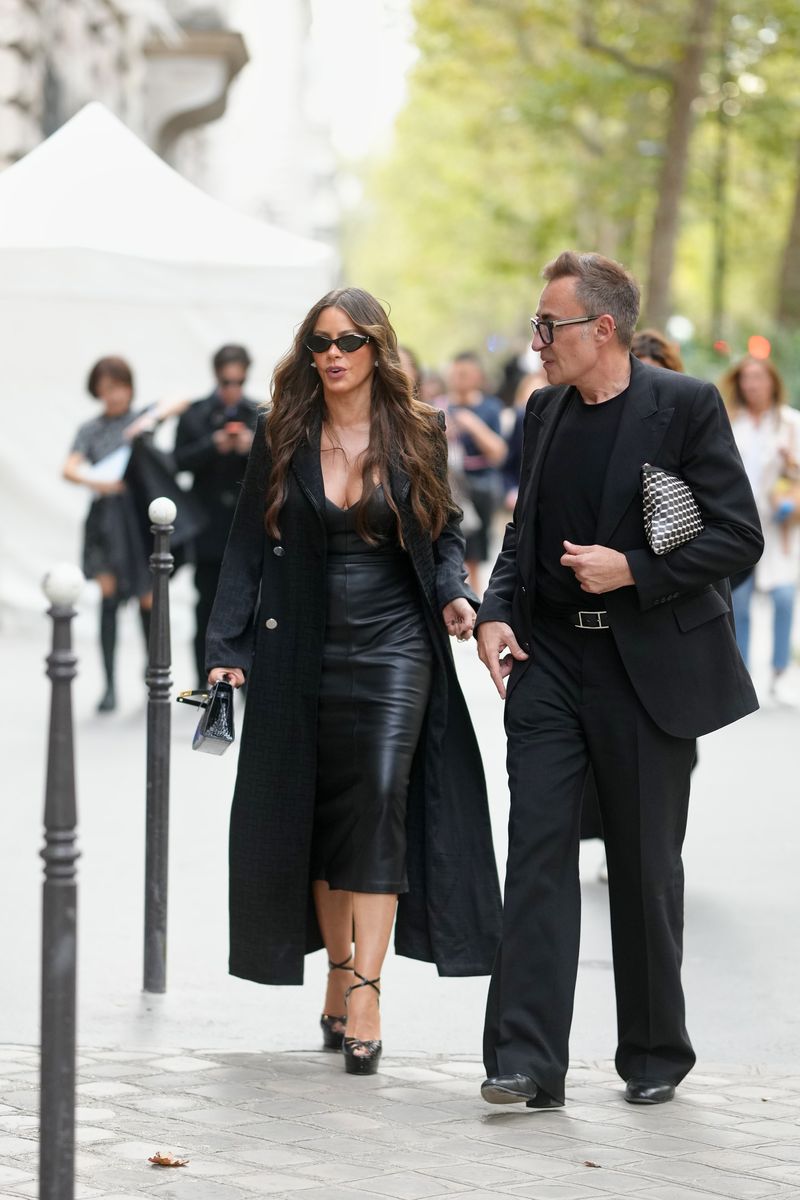
Sofía Vergara stepped out in a black leather midi dress and long coat during Paris Fashion Week, pairing the look with platform sandals, sunglasses and a black handbag.
For her front-row appearance, she chose a fitted black leather dress with a plunging neckline, layering it beneath a long black coat. Platform sandals, dark sunglasses, and statement snake rings completed the look, while loose waves softened the sleek ensemble.
Sofía Vergara’s Paris itinerary included the Bvlgari dinner at Chez Jacques Garcia on October 2, adding another glamorous outing to her Fashion Week stay.
Her trip also included a Bvlgari dinner, where she wore a black evening gown covered in intricate gold motifs and finished the outfit with a sparkling necklace. The appearances showcased the glamorous dressing that has become a signature of her outings.
Germany’s former spy chief, August Hanning, has been arrested on suspicion of passing state secrets to a foreign intelligence service.
Hanning, 80, headed up the Federal Intelligence Service, known by its German acronym BND, from 1998 to 2005.
A federal prosecutor’s statement said it strongly suspected him of “treasonous espionage, obtaining state secrets, attempted treason” through contact with foreign intelligence services since 2010, while working as a private consultant. He is accused of obtaining around 2,000 sensitive documents from a former bureau chief who has also been arrested.
But he isn’t the only high-ranking intelligence officer to have been discovered to have worked for foreign governments over the years.
Here are some of the highlights.
1940s to 1960s – Kim Philby and the ‘Cambridge Five’
Kim Philby was a British intelligence officer who secretly spent decades working for the Soviet Union during World War II and the early Cold War years.
He was recruited by Soviet Intelligence while studying at Cambridge University in the 1930s. He was the most prominent member of the “Cambridge Five” – a spy ring that gave away British secrets to the Soviet Union.
During the war, he joined MI6, where he rose to head its counter-Soviet division, and was later posted to Washington, DC. This gave him access to sensitive information through his close links to the CIA and FBI.
His tip-offs to his Soviet handlers are believed to have scuppered many Western operations and revealed the identities of agents. This included information operations to overthrow Albania’s communist leader Enver Hoxha as part of Western efforts to stop the spread of communism.
Philby came under suspicion in 1951 and was forced out of MI6 when Guy Burgess and Donald Maclean, two other members of the Cambridge Five, defected to the Soviet Union. Philby was suspected of having warned them that British intelligence officers were close to uncovering their identities as double agents for the Soviet Union, before being formally cleared of the allegations in 1955.
Then, in 1963, aware that the net was closing in on him because of his own involvement with Soviet intelligence, he fled to Russia, where he lived with his wife since 1971, Rufina Pukhova, until his death in 1988. Overall, he provided state secrets, the identities of agents, minutes from cabinet meetings, atomic research, diplomatic and military intelligence, and information about counter-intelligence operations to the Soviet Union for nearly 20 years.
Philby is regarded as the most damaging spy in British history.
According to the UK’s National Archives, one of the agents he unmasked to the Soviet Union was Constantin Volkov, a Soviet intelligence officer posted to Turkiye who wanted to defect to the UK in 1945. Volkov and his wife were seized and executed in Moscow as a result. The information he provided to the Soviet Union about a joint CIA-MI6 operation in communist Albania in the late 1940s and early 1950s resulted in the execution of hundreds of anti-communist agents.
Kim Philby, British intelligence agent, laughs with reporters during a 1955 news conference after being formally cleared of tipping off fellow double agents Guy Burgess and Donald Maclean [File: Getty Images]
1970s and 1980s – Oleg Gordievsky
Oleg Gordievsky was a KGB colonel who spied for British intelligence for more than a decade.
He was the son of an officer in the NKVD, which was the Soviet secret police and the direct predecessor to the KGB.
But he was recruited by MI6 in the early 1970s after becoming disillusioned by the Soviet crushing of mass protests during the Prague Spring in Czechoslovakia in 1968 and the building of the Berlin Wall.
While working for the KGB, he was stationed in Copenhagen and later in London, where he became KGB station chief in 1985.
The intelligence he provided to the British is thought to have revealed the KGB’s deep concerns that NATO’s 1983 Able Archer exercise might be cover for a real nuclear strike. This was invaluable for helping the West understand Soviet fears and to de-escalate.
Gordievsky came under suspicion and was recalled to Moscow in 1985. He was drugged and interrogated but had not yet been charged when MI6 ran a daring operation to rescue him and smuggle him out of Russia in the boot of a car across the Finnish border.
Russia sentenced Gordievsky to death in absentia.
He lived in the UK under protection until his death in 2025.
Oleg Gordievsky, the KGB Colonel-turned-British spy, is seen here wearing a disguise at the Marlborough Hotel in London, on October 16, 1990 [File: David Levenson/Getty Images]
1980s and 1990s – Robert Hanssen
Robert Hanssen was a high-ranking agent at the US Federal Bureau of Investigation (FBI) who spied for the Soviet Union and later for Russian intelligence services between 1979 and 2001.
Hanssen initially studied dentistry at Northwestern University before switching courses and receiving a degree in accounting and information systems. He worked as a police officer in Chicago before joining the FBI in 1976.
He approached Soviet military intelligence in 1979, eventually working with the KGB and its successor, the SVR. He operated using the alias “Ramon Garcia”.
Hanssen never met his handlers in person, instead using “dead drops” when he would leave classified documents in prearranged outdoor locations, including parks, wooded areas, under bridges and on street corners in the Washington, DC area, in exchange for cash or diamonds.
He handed over thousands of pages of classified material, including details about US nuclear war plans and the identities of Russian officials working for the US. At least two of those sources, including Dmitri Polyakov and Valery Marynov were executed.
The arrest in 1994 of Aldrich Ames, another US spy caught working for Russian intelligence, eventually led to his arrest in February 2001.
He pleaded guilty to avoid the death penalty and died in prison in 2023.
An undated FBI-issued photograph of Robert Hanssen, a former FBI agent deemed a traitor by the government and considered one of the most damaging spies in US history [File: FBI/Handout HK/SVReuters]
2000s – Alexander Yuk Ching Ma
Alexander Yuk Ching Ma is a former CIA officer who was caught spying for China.
He worked for the CIA from 1982 to 1989 and became a US citizen, living in Honolulu.
In March 2001, officers of China’s Shanghai State Security Bureau asked him to arrange a meeting with a now-deceased former CIA officer who served from 1967 to 1983. The two met in a Hong Kong hotel room for three days. In exchange for $50,000, they provided classified information to China.
The FBI became aware of his ties to Chinese intelligence and hired him as a contract linguist in its Honolulu office so that his activities could be monitored.
He was arrested in a sting after admitting to an undercover FBI employee that he had facilitated the provision of classified information to Chinese intelligence.
Ma pleaded guilty in May 2024 and is currently serving a 10-year prison sentence.
Retail stores in the U.S. are selling 3D-printed meat, as of September.
Rating:
Context
A company called Steakholder Foods has launched a line of products under the brand name Perfecta. While the meat is 3D-printed, it is made from a formulation of plant material like other plant-based meats are. It is not made from cultured animal cells, which is often what people refer to when they mention “lab-grown meat.” It is not clear which grocery stores or retailers are selling Perfecta-branded food, though the company has said its products have reached shelves in certain Northeastern U.S retail locations.
Between September and October, social media users claimed that 3D-printed, lab-grown meat had started being sold in U.S. stores from early September.
For example, one Facebook post (archived) claims the 3D-printed meat “has federal clearance” but will not have a “lab-grown meat” label on its packaging. The post reads, in part:
The first 3D printed ‘meat’ has federal clearance and is about to be sold in the United States.
Packaging will not say ‘lab-grown meat’ because there is not a law that requires the packaging to say it was printed.
3D-printed plant-based food is already on shelves in the U.S.
Federal labels for cell-grown chicken and pork fat must be pre-approved and have used the words “cell-cultivated.”
The printed food was in stores on September 3 of this year.
The company Steakholder Foods put its Perfecta line into Northeast supermarkets.
The rumor has appeared elsewhere on Facebook (archived) and on Instagram (archived). Numerous Snopes readers also emailed us to ask if the story is true.
In short, on Sept. 3, Israeli company Steakholder Foods, which specializes in making 3D-printing technology for plant-based meats, announced the launch of its 3D-printed, plant-based meat products in Northeastern U.S. retailers under the brand name Perfecta. Therefore, the claim is true.
Steakholder Foods’ news release says its “Premium Plant-Based Meat” products were launched at retail locations in the Northeastern United States on Sept. 3, “marking the brand’s first commercial placement on U.S. store shelves.”
According to the webpage, the launch “focuses on building awareness and consumer trial throughout the Northeast U.S. market while establishing a foundation for broader expansion across additional regions.”
It is not clear which grocery stores or retailers have started selling or stocking the products.
Snopes reached out to the company via a contact form on its website for more information. We will update this article if we hear back.
According to Steakholder Foods, the company uses plant-based ingredients and cultivates cells to create what ultimately becomes the 3D-printed meat.
The U.S. Food and Drug Administration and the U.S. Department of Agriculture’s Food Safety and Inspection Service do regulate “lab-grown” meat and require a label for such products. However, this regulation is specifically for food made with cultured animal cells, not for food made with other kinds of cells, which is what Perfecta products consist of.
Snopes reached out to both the FDA via contact form and the FSIS via email to confirm that there are not similar kinds of regulations for food made with other cultured cells, such as plant cells. Additionally, we asked both agencies to confirm if Perfecta products had received federal approval, as the above Facebook post states. We will update this story if we receive responses.
Based on how the product boxes appear on the website, there does not appear to be any text identifying the food as 3D-printed or made with cultured cells. The boxes do clearly identify the meat as “premium plant meat” and “plant-based.”
Manufacturers of plant-based meat products usually have to process their ingredient mixes in a way that allows them to mimic the texture of conventional meat. According to the Good Food Institute’s Asia-Pacific website, the most common processing method requires putting shear stress on the ingredients to align them into a meat-like texture. There are several other methods of processing plant-based meats, including 3D-printing.
For further reading, Snopes previously fact-checked a claim that a plant-based meat manufacturer was 3D-printing meat products in the Netherlands in 2024.
Brett McGurk‘s new book Brink: Inside the Race to Free the October 7th Hostages offers an insider account of the diplomatic rollercoaster to secure a ceasefire and hostage release in the war in Gaza.
The book, published this week, also offers a glimpse at White House messaging about the conflict, including two figures the president turned to in delivering a key speech: Jeffrey Katzenberg and Steven Spielberg.
McGurk, who served as deputy assistant for national security affairs to Biden, wrote of the scene as they prepared the president for his address on May 31, 2024. While Katzenberg and Spielberg’s role have been reported before, McGurk gave a first-hand account in the room, for a speech focused on a proposal to end the fighting and to secure a release of the hostages.
By that point, the Gaza conflict had created divisions within the Democratic coalition, protests at college campuses and presidential appearances and concerns over its impact on the November elections. There was pressure from the campaign for the president to make an address on the crisis, per McGurk.
McGurk wrote of the rehearsal, “In the Map Room, Biden peered at two screens behind me. ‘Jeffrey, Steven, welcome,’ he said. I turned around to see Jeffery Katzenberg and Steven Spielberg on Zoom. They greeted Biden warmly, Spielberg saying this was the speech they wanted to hear.
“It was a reminder that while I saw this speech as a policy address with a functional aim, it had a political purpose, too,” McGurk wrote.
He added, “The speech was timed for Friday night in Israel, when much of the country shuts down, allowing time for us to shape its reception there and around the world. Notably, we did not inform Netanyahu that we were making the speech until shortly before Biden delivered it, as we knew the address would lock Netanyahu into the terms of the deal now on the table.
“Biden said he was ready.
“Katzenberg advised, ‘Remember, slow Joe, let the audience hear every word.’
“Biden smiled, ‘Slow Joe? Don’t let Jill hear that.’
“He read through the draft, pausing at times to ask questions about the text, which we addressed with rewrites.”
McGurk wrote that he found Biden “fully engaged, leaning forward on the podium.”
He wrote, “The moguls told him he looked strong, and he did. There was no sign of the Biden we’d all see on a debate stage with Trump only four weeks later.”
The latter was a reference to Biden’s disastrous debate performance against Trump. What followed were weeks of calls on Biden to drop out, coming from some elected Democrats and prominent donors, until he exited the race on July 19. Katzenberg had played a prominent role as a top adviser to Biden’s re-election campaign.
While the Biden speech focused on a peace proposal, as it turned out, it would take until the next year, a week before Trump returned to office, for a ceasefire agreement to be reached.
If you haven’t heard already, Prime Big Deal Days is happening as we speak, and lucky jetsetters think they might have found the ‘perfect’ cabin bag in Amazon’s sale.
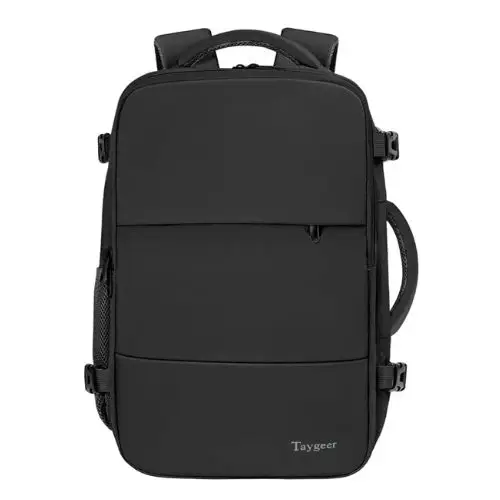
The bestselling Taygeer Backpack has racked up thousands of rave reviews from frequent flyers, and has seen its biggest price drop all year for Prime Big Deal Days.
The timing couldn’t be much better, either.
Whether you’ve got a winter city break booked or you’re already organising holidays for 2027 in the group chat, this deal is definitely worth knowing about.
The popular travel backpack has been reduced to just £16.21 from £29.99, saving shoppers 46 percent for a limited time only.
Yep, you’ll need to be quick to snap up this offer, because Prime Big Deal Days ends at midnight tonight.
The travel backpack is designed to fit neatly under the seat in front of you, allowing you to avoid any hidden fees if you use it as your designated carry-on bag.
Choose between the 40 x 30 x 20cm version, which is designed to fit within Ryanair’s free cabin bag allowance, or the slightly larger 45 x 36 x 20cm option for EasyJet travellers.
Just make sure to check your airline’s luggage policy before you fly, as size restrictions can vary.
So, if you’re looking for a lightweight carry-on option that will fit all of your packing essentials and take with you on your travels, you’ll find the perfect option in the Taygeer Cabin Bag in the Amazon Prime Big Deals Days sale.
As well as black, the stylish backpack comes in 12 different colour iterations such as dark blue, baby blue, pink, grey and more.
The design of the cabin bag allows travellers to get organised before their journey with separate compartments to fit a 15.6 inch laptop, an independent shoe pouch and a wet pocket to store toiletries.
Save big thanks to the Amazon Big Deal Days event from 6-7 October, 2026 (Photo credit: Amazon)
Surprisingly roomy, it also expands fully like a suitcase to fit all of your essentials. Shoppers have even vouched for it for longer trips, commuting to work and everyday life.
One impressed fan wrote: “Hands down the best budget travel hack for budget airlines! It slides effortlessly right under the seat on Ryanair and easyJet flights with zero fuss from gate staff, saving a bundle on extra baggage fees.”
While another commented: “It has a range of different pockets and compartments that help you organise strategically for your holiday. I just used it for going abroad and it let me store my clothes while being separated from my other things.”
It’s easy to see how the Taygeer Backpack has become such a hit. All in all, its spacious design, storage compartments and airline-friendly size will help make your next trip that little bit smoother.
So, while it’s currently discounted in the Amazon Prime Big Deals Days sale, you might as well snap it up before it’s gone for good. Don’t forget, the sale ends at midnight tonight!
Is Big Deal Days for Prime members only?
Deals are exclusively for active Amazon Prime members, so be sure to sign up for a membership.
You can access a Prime membership on a free trial which lasts for 30 days and can be cancelled free of charge within that timeframe. After that, the membership will cost £8.99 for a month.
Photos authentically show a gold-covered statue depicting a naked U.S. President Donald Trump on display at the European Parliament in Strasbourg, France, in early October.
Rating:
Several photos are circulating online purportedly showing a gold-covered statue depicting a naked U.S. President Donald Trump on display at the European Parliament in Strasbourg, France, in early October.
For example, a popular Facebook page that shared one picture of the alleged sculpture wrote (archived):
NEWS: A 2.5-meter-tall statue depicting a naked, gold-covered Donald Trump has been unveiled inside the European Parliament in Strasbourg.
The satirical sculpture, titled “Orange Plague” and also called “King of Injustice,” shows Trump sitting on the shoulders of another man while holding an enormous golf club. It is reportedly covered in 23-karat gold.
In short, the photos are authentic and the statue is real. Danish sculptor Jens Galschiøt created the piece and named it “The Orange Plague.” On Oct. 7, a spokesperson for the European Parliament’s press service confirmed via email that, as of this writing, it is on display at the parliament’s Winston Churchill building in Strasbourg, France. Galschiøt said via email that it is set be taken down on Oct. 8.
The sculpture in the pictures shared online matches the piece that can be seen in photos that Galschiøt and reputable news agency Reuters have published. The photographs spreading online also show no signs of being digitally edited or created. Therefore, those photos are authentic and do truly show a naked statue of Trump on display at the European Parliament.
Snopes contacted the White House for comment and for Trump’s take on Galschiøt’s work. We will update this article if we receive a response.
Why Galschiøt created the statue
On his website, Galschiøt describes “The Orange Plague” as “a satirical out-cry against Trump and the U.S. assault on the green transition and the rule-based world order.”
The artwork is 2.6 meters (approximately 8 feet, 5 inches) tall, made of copper and covered in 23 carat leaf gold, according to the sculptor. Danish author Hans Christian Andersen’s “The Emporer’s New Clothes” tale — in which an emperor parades naked in front of his subjects because he believes he is wearing the finest clothes — inspired Galschiøt to depict Trump as naked.
“The illusion — sustained by fear and flattery — endures until a child cries out, ‘He’s not wearing any clothes’ — and the emperor becomes a figure of ridicule,” Galschiøt’s website says. The page adds that the gold on the sculpture also plays on this illusion, “Like Andersen’s emperor, he [Trump] believes the gold makes him great. It merely makes his nakedness shine brighter.”
Speaking via email on Oct. 7, Galschiøt said he initially approached left-wing Danish politician and European legislator Per Clausen MEP about displaying “The Orange Plague” at the European Parliament. The sculptor added that he was “astonished” the exhibition actually happened.
Galschiøt said he thought the European Parliament was the right place to display the piece because “it fits right into the discussion about whether the superpowers should have the right to bully smaller nations, and here Europe is the key player in standing up to them.”
When asked whether the artist had heard any reaction to the sculpture from Trump or the White House, Galschiøt said he had not heard from the U.S. president but also had not “had time to look” for reactions to his work.
On Oct. 7, a spokesperson for Clausen said via email that the pair had been discussing displaying the statue at the European Parliament for a couple of years. The politician reportedly said of the sculpture:
I know some people think we shouldn’t provoke Trump and therefore shouldn’t exhibit a sculpture like this. To them, I have to say two things: First, we cannot accept living in fear and self-censorship. Second, if someone is so thin-skinned that they cannot handle this sculpture being exhibited in the European Parliament, then they have no business on the world stage.
A European Parliament press service spokesperson said the office could not comment on individual cases but that, in general, its lawmakers, known as MEPs (Members of the European Parliament), could sponsor “two cultural events or exhibitions per parliamentary term.” The spokesperson said:
The rules in place foresee that cultural events and exhibitions shall under no circumstances be offensive or of an inflammatory nature or contradictory to the values on which the Union is founded or likely to give rise to disturbances in the designated exhibition areas.
The spokesperson said all sponsored events must be approved in advance by the College of Quaestors, a political body “responsible for administrative and financial matters directly concerning Members and their working conditions.”
A spokesperson for Clausen said the politician sponsored “The Orange Plague” exhibition at the European Parliament.
Before visiting Strasbourg, the piece was previously on display at the United Nations COP30 climate conference in Brazil. According to Galschiøt’s website, the artwork is also set to be on display at the COP31 climate conference in Turkey in November.
For further reading, Snopes has previously investigated other golden Trump sculptures, and statues the Trump administration coated in gold.
Hair thinning is a normal part of life. As men age, changes in hair growth can be driven by genetics and hormones, which can eventually lead to hair loss.
The NHS says: “In men, hair loss usually begins above the temples causing a receding hairline. This progressing hair loss continues on the top of the head leading to increasingly thin hair then often to baldness.”
However, some men think they might have found an ‘insane’ hair treatment that actually works to regenerate hair that they may have lost in the early stages.
Better yet, the ‘insane’ solution is currently reduced to just £23 on Amazon as part of the Prime Big Deal Days sale.
The deal is running for a limited time only, so you only have until midnight tonight to make the most of it.
This product is not suitable for everyone. Please contact a healthcare provider to determine if the treatment is appropriate for you. Visit the Regaine website here for further information.
Regaine for Men 5% Minoxidil Extra Strength Scalp Solution, Amazon
Allegedly, when used continuously across a couple of months, shoppers are seeing a difference in terms of their hair growth. In turn, it’s massively effected their confidence and wellbeing.
As well as a solution, the treatment also comes in a foam that’s handy to apply. While the solution offers precise scalp application, the foam offers broader coverage and is also formulated with glycerin for added hair styling benefits.
Both treatments aim to target hereditary hair loss, prevent further hair loss and encourage hair regrowth. They’re also available as multipacks to buy as part of a continued treatment.
This product is not suitable for everyone. Please contact a healthcare provider to determine if the treatment is appropriate for you. Visit the Regaine website here for further information.
Regaine For Men Hair Regrowth Foam 3 x 73ml, Amazon
For more information on how to apply the product and to see what real reviews say, keep reading below.
When does Prime Big Deal Days end?
October’s Prime Day will finish tonight 7 October, 2026, at 23:59pm.
With only a limited time to shop the best dehumidifier deals, it’s worth adding your favourites to your basket before the sale ends.
If you want to find out more about the big event, you can read everything you need to know, here.
What do reviews say about the hair loss treatment?
The Regaine Hair Loss treatment can have variable effects, working differently for everyone. It goes without saying, but this isn’t going to be a miracle product and results are certainly not instant.
However, those who’ve had the most success from the treatment have urged reviewers to be patient and stick to the using the treatment consistently.
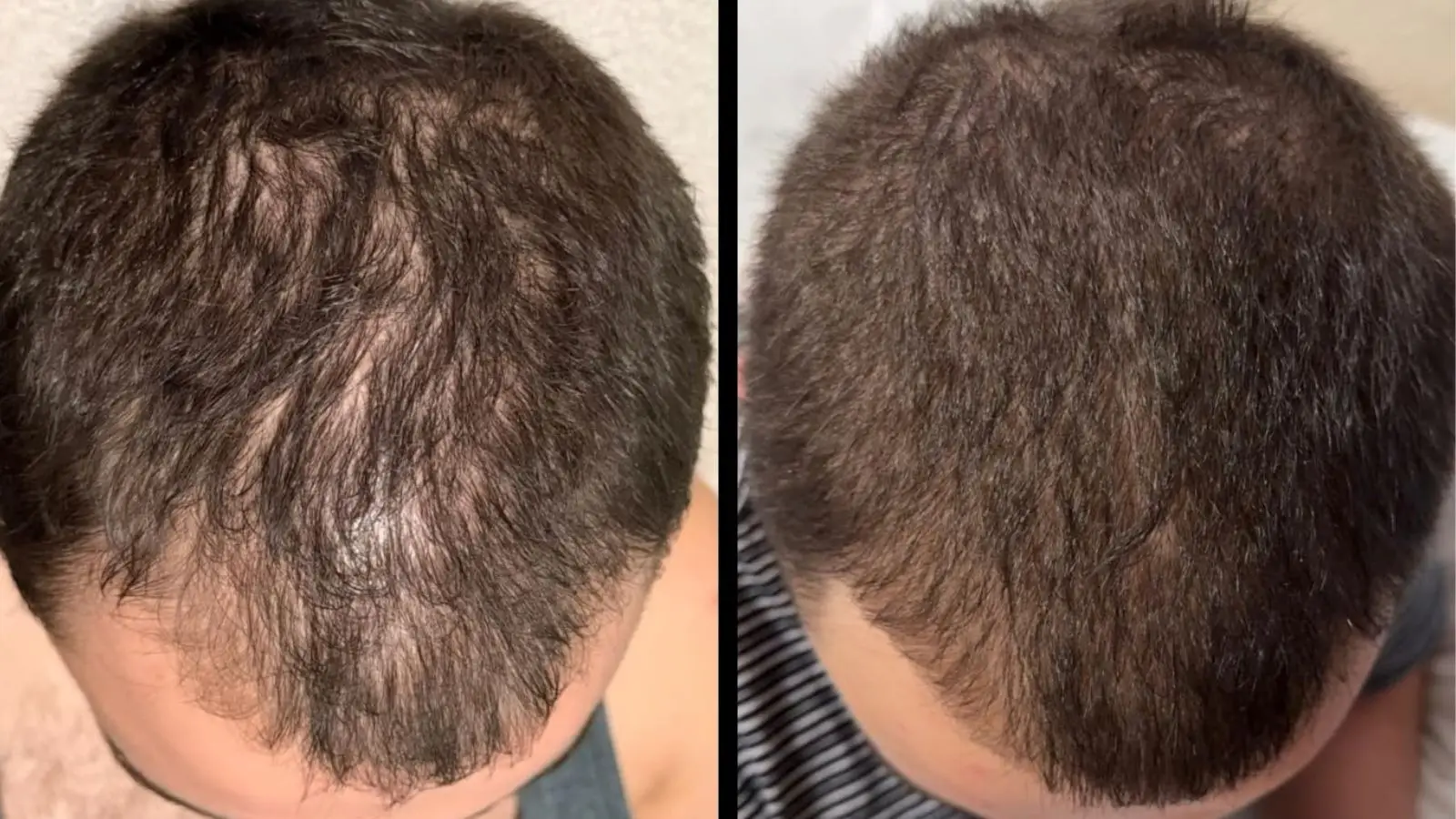
One fan who found the product worked for them commented: “I am 20 years old, my hair started to recede and thin due to stress. After a few days of use, a new line of baby hair began to grow in front of my current hairline.”
Before using the Regaine Hair Treatment (Image credit: JCS / Amazon Reviews)
Five months after using the Regaine Hair Treatment (Image credit: JCS / Amazon Reviews)
While another revealed: “I’m 37 and started to see my hairline receding. After two months use I can see that the hair is starting to grow back. The new hair isn’t that thick and are more like baby hairs, however my overall hairline does look better.”
What are the ingredients?
The active ingredient within the Regaine Hair Loss treatments is minoxidil. It works by widening blood vessels and increasing the blood flow to the hair follicles on the scalp.
This helps deliver more oxygen and nutrients to stimulate and prolong hair growth.
According to the NHS, “minoxidil solution has been used successfully in treating people with hair loss for a variety of reasons.”
How to use the hair loss treatment?
Always read the label and, if necessary, consult with a doctor before use. Read more information and FAQs on Regaine’s site, here.
How to use the Regaine Hair Loss Treatment:
Wash your hands before using
You hair and scalp should be thoroughly dry before application
For the solution, choose between a pump or spray-tip applicator
Apply a 1ml dose of the solution to the affected area
For the foam, dispense a dose of 1g onto your fingers
Massage on to the scalp
Wash your hands thoroughly
Use twice a day, leaving 12 hours between dosages
Where to buy the hair loss treatment now?
You can shop the Regaine hair loss treatment that everyone has been talking about over on Amazon as part of the Prime Big Deal Days sale.
A 20-year cancer survivor has shared her story of resilience after being diagnosed with the disease three times over the course of her life—and an early symptom she chalked up to dietary choices.
Danielle Ripley-Burgess is a communications professional who was first diagnosed with stage three colon cancer when she was 17.
However, her symptoms began three years earlier when she first started to see suspect ‘specks of blood’ in her stool.
Instead of alerting her parents that something could be amiss, the 14-year-old ignored the symptom, believing she was eating ‘too much red food’.
“I put myself on a ‘no red foods diet’ and stopped eating anything that was red in colour: everything from candy to pizza to salsa to raspberry Popsicles,” she confessed to NBC News.
Danielle Ripley-Burgess admitted she ignored an important bowel cancer symptom (Instagram/@DanielleisB)
“It took me a while to accept that I was actually seeing blood, but I still hid it from just about everybody I knew.
“I was already embarrassed about puberty changes happening, so that on top of this thing was just too much. I didn’t want to be sick and I didn’t feel sick at first.’
It took around two years for her to even mention the blood to her mother, with the pair quickly concluding that she must have haemorrhoids.
However, after overhearing her daughter speaking about the blood in her stool to her boyfriend and learning that she was dealing with ‘intense stomach pains’ and fatigue, Ripley-Burgess’ mother called a gastroenterologist.
The American was diagnosed with stage three colon cancer
Weeks after turning 17, the family learned that the blood in her stool was an early indicator of stage three bowel cancer.
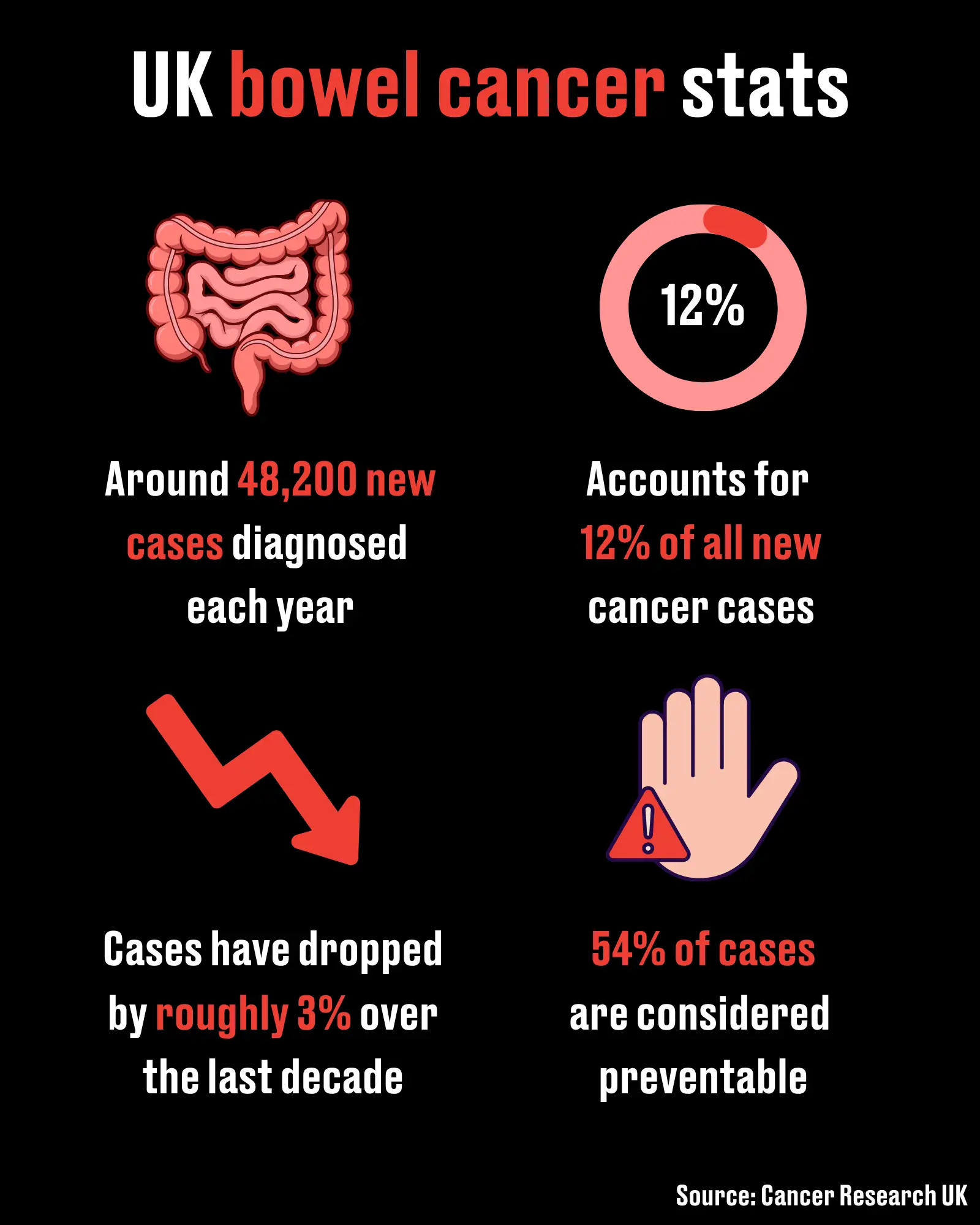
Stats about bowel cancer, which includes colon cancer (LADbible)
After undergoing chemotherapy, radiation and surgery to remove the tumour, doctors also advised Ripley-Burgess to go under the knife to move her ovaries further up into her stomach to ‘preserve hormone function’.
By elevating them, she was told that she would no longer be able to conceive naturally.
Following her first hospital stint, the Kansas City native continued to get a colonoscopy every three years.
“Mentally and emotionally, it was way harder this time”
It was after a routine inspection that Ripley-Burgess learned she had a cancerous polyp, with experts informing her that she had stage one colon cancer at 25.
“Mentally and emotionally, it was way harder this time. I got really angry at a lot of things, but deep down just angry at God — how could you let this happen to me again?
“By this point, I was married, I had a house, I was working on a career, we’d been talking about adopting a child. All of a sudden, I realised I could lose all of these things,” she wrote for NBC News.
(Getty Stock Image)
The author and inspirational speaker learned around this time that she had Lynch syndrome, an inherited genetic condition that greatly increases the risk of developing colorectal, uterine, and several other types of cancer at a young age, as per the Mayo Clinic.
Despite having a hysterectomy, a subtotal colectomy, which took out almost all of her colon, the mother-of-two adopted children was told that doctors had discovered more polyps in 2023.
This led her to undergo a permanent ileostomy, a surgical operation to bring the end of your small bowel through an opening in your tummy to form a stoma, the NHS explained.
“Don’t downplay what you’re seeing”
Speaking about advice she would give to her younger self, the three-time cancer survivor said: “It would be: Don’t be embarrassed about your body.
“If you’re seeing something with your body that’s uncomfortable and weird, and you’re not ready yet to tell a doctor, tell somebody — a friend or family member.”
She added: “Don’t sit in that place of: something is wrong with your body, and you don’t know what it is. Don’t sit there alone. Don’t downplay what you’re seeing.”
Lego’s first live-action musical feature, “Lego Friends: Heartlake the Musical” is set to premiere on streamers across the globe as well as Lego’s YouTube channel.
The 50-minute original story, which is produced by “High School Musical” alum Kenny Ortega, will debut globally on Oct. 16 on Netflix and Lego’s YouTube Channel.
Peacock has also snapped up rights for the Americas with an Oct. 16 drop alongside Tubi, who will debut the film in the U.S., Canada, LatAm, Australia, New Zealand and the U.K. on Nov. 2.
In EMEA, VTM Go have taken the rights for Belgium, the Netherlands, and Luxembourg with an Oct. 19 launch alongside RTL Netherlands (a release date will be set in due course). AMC Networks snapped up the rights for Hungary, Romania, Moldova, Czech Republic and Slovakia from Nov. 1 while DuoMedia will debut the film in the Baltics on Oct. 17.
Czech Republic audiences will also be able to watch “Heartlake the Musical” on Dec. 1 on Czech TV while in Israel it will debut on Zoom/Imagine Kids on Jan. 1. Turkcell will launch the film on Oct. 17 in Turkey.
The all-singing, all-dancing comedy drama will also debut in China on Tencent Kids, Youku Kids and BesTV (dates still to be confirmed).
Based on the toy brand’s Lego Friends line, “Heartlake the Musical” stars Jada Langley (“Sunny Afternoon”) and Gino Ochello (“The Karate Kid: The Musical”) among a cast of theater pros. Langley plays Daisy, a young girl who discovers a magic key to Heartlake City where she teams up with some new friends to save a local treehouse.
Paul Becker directs while Ortega produces and wrote the story. Kirk R. Thatcher and Jeremy Adams wrote the screenplay for the film, which was produced by Final Pixel and shot entirely in the U.K.
“Heartlake City is about to get a whole lot bigger,” said Jill Wilfert, Lego’s SVP for global entertainment partners. “Through our amazing broadcast and streaming partners, we’re bringing ‘Lego Friends: Heartlake The Musical’ to audiences around the world, inviting even more children and families to sing along, celebrate friendship and discover the magic of creative storytelling together. We can’t wait for fans to experience this exciting new chapter for Lego Friends”
Abstract, the Ethereum layer-2 from Pudgy Penguins parent company Igloo Inc., will shut down Dec. 15. Funds not bridged off by then will be inaccessible.
The team blamed a limited DeFi ecosystem, thin liquidity, little institutional crossover and a smaller budget than rivals.
It’s the second Ethereum layer-2 to announce a shutdown in days, following Paradigm-backed Blast.
Abstract, the Ethereum layer-2 network built by Pudgy Penguins parent company Igloo Inc., is shutting down after struggling to scale beyond its consumer crypto niche.
The team announced on X that the chain will go dark on Dec. 15. Users must move their assets off the network before then through Abstract’s Migration Hub or its native bridge, which carries a three-hour delay. Funds left behind after the deadline will be inaccessible, the team warned. Abstract’s engineers will also help projects built on the network migrate to other chains.
Abstract said its growth stalled because of a limited DeFi ecosystem, thin on-chain liquidity, little crossover with institutions and a smaller budget than rivals. “Operating a chain focused exclusively on consumer crypto has ultimately proven to be unsustainable as a standalone model,” the team wrote.
By its own count, Abstract processed more than 325 million transactions, logged over $6 billion in decentralized exchange volume and generated more than $40 million in ecosystem revenue. Users created more than 4 million Abstract Global Wallets, and brands including Red Bull Racing and Disney used the chain to reach audiences.
Abstract is a ZK-rollup, a layer-2 network that bundles transactions and verifies them on Ethereum using zero-knowledge proofs, a type of cryptographic receipt.
Igloo pitched it as a home for “consumer crypto” apps aimed at everyday users. The goal was to replicate the mainstream reach Pudgy Penguins found through toys and social media.
BitcoinBTC · USD
$83,190−0.73%
Sep 30Oct 2Oct 4Oct 5Oct 7
$86.8k$85.6k$84.4k$83.2k
24h HighHigh$86,648
24h LowLow$83,409
VolVol$1.8B
Market projectionsOdds by Myriad
→
Abstract is the second Ethereum layer-2 to announce a shutdown in a matter of days. Blast, the Paradigm-backed network that once drew billions of dollars in deposits, said last week that it would wind down because its operating costs outstripped its revenue.
Abstract also urged users to watch out for impersonators, fake migration sites and direct messages claiming to represent the project.
Daily Debrief Newsletter
Start every day with the top news stories right now, plus original features, a podcast, videos and more.

 © Sofía Vergara
 © Sofia Vergara/IG
 © Sofia Vergara/IG
 © Sofia Vergara/IG
 © 305pics
 © Gilbert Flores