Academy CEO Bill Kramer is set to make his first trip to Asia later this month. He will collect a leadership award at the Tokyo International Film Festival and also sit down with Toho president and CEO Matsuoka Hiro for a public conversation.
The festival’s 39th edition runs Oct. 26–Nov. 4 and has built a program titled Academy in Tokyo around the visit. Two colleagues will join Kramer in the Japanese capital: Academy president Lynette Howell Taylor and Meredith Shea, the organization’s chief membership, impact and industry officer.
The three executives will share a stage on Oct. 28 at Tokyo Midtown Hibiya Hall for a 90-minute panel moderated by TIFF festival director Hisamatsu Takeo. They will take the audience behind the curtain of the Oscars and outline the Academy’s international initiatives and membership programs. The conversation will also turn to how the organization views international cinema today and where it is heading.
Once the panel wraps, Kramer will receive TIFF’s Global Cinema Leadership Special Award. The festival said the honor recognizes his contribution to the growth of the worldwide film business and to film culture. Later that day, the Academy will hold a private reception for its members from across the globe.
Kramer returns to the same venue on Oct. 29 to sit down with Matsuoka. Their session will look at the state of the global film landscape and the outlook for theatrical and streaming distribution, along with ways to deepen cross-border partnerships. Both public events are free, though advance reservations are required. Booking details have yet to be released.
Kramer took the Academy’s top job in 2022. Before that, he ran the Academy Museum of Motion Pictures as its director and president. The museum opened its doors in September 2021. As CEO, Kramer has pushed to broaden the Academy’s 11,000-strong membership and give it a more international makeup. He runs the organization’s global operations, from the Oscars and the Academy Foundation to the $500 million Academy100 campaign.
Howell Taylor is in her second term as president. She is an Oscar-nominated producer whose credits include “A Star Is Born,” “The Accountant,” “Captain Fantastic” and “Blue Valentine.” She joined the Academy’s Producers Branch in 2014. She also co-produced the 92nd Oscars telecast in 2020, which earned her an Emmy nomination.
Shea is the first person to hold her post. Her remit covers membership, awards administration and talent development. It also includes the Academy’s outreach to film festivals and international territories.
Matsuoka has steered Toho’s expansion overseas, including its acquisitions of Gkids and Anime Limited. He also oversaw the production of Oscar winner “Godzilla Minus One.” In 2025, Toho posted its best-ever results at the Japanese box office. Matsuoka also sits on the board of trustees of the Academy Museum.
TIFFCOM, the content market that runs alongside the festival, takes place Oct. 28–30.
Bitcoin hash rate has stabilized pic.twitter.com/9uIXjuTcdL
— Zach Pandl (@LowBeta) October 14, 2026
Operational factors behind the mining contraction
The loss of installed capacity was primarily driven by margin compression following the price pullback from its October 2025 highs. An industry source stated in September 2026 that computing power retreated from 1,160 exahashes per second (EH/s) to 850 EH/s in the first week of February 2026. This shift represented a 26.72% drop over the analyzed period.
The report attributes this hardware disconnection to three concurrent variables: depressed spot prices, elevated algorithmic difficulty levels, and low transaction fee volume on the base layer.
Direct revenue per processing unit suffered severe deterioration by mid-year. Industry data places the hashprice at a monthly average of $27.70 per petahash per second per day (PH/s/day) during June 2026.
Industry specialists note that this revenue level failed to cover operational costs in mining farms running older-generation ASIC hardware.
Compounding these market factors were direct pressures on energy tariffs. In major mining hubs such as Texas, operators faced seasonal electricity price hikes and winter weather disruptions. Market reports indicate that several facilities powered down portions of their operations to curtail load back to the grid or migrated capacity toward AI infrastructure data centers.
The recovery toward levels near 1 ZH/s suggests that companies with efficient hardware and fixed-price power purchase agreements are capturing the market share left behind by less profitable competitors.
Monitoring desks are now looking ahead to the upcoming Bitcoin network difficulty adjustment, scheduled to conclude within the next 150 blocks of the two-week cycle, an event that will formally recalibrate the production cost of each block.
Andrea Chrysanthou says it’s been almost impossible to limit her 13-year-old son Nathaniel’s screen time.
“My son understands that he’s addicted,” said Chrysanthou, the Toronto-based board chair of the advocacy group Children First Canada. She says he’s asked her for help to stop using his digital device so much, but the minute she turns her back, he’s reaching for it again.
Her son is like millions of other kids around the world whose physical and mental well-being are at risk because of excess screen time, according to a new series of research papers published Sunday by medical journal The Lancet.
It’s a broad review of international studies that allowed researchers to distill the potential harms and benefits of digital technology, and offers a sense of “what needs to happen to protect children’s health,” said co-author Jay Shaw, an assistant professor in the University of Toronto’s Department of Physical Therapy.
Despite the breadth of their analysis, Shaw and his colleagues say the true severity of the issue can’t be fully understood or addressed without access to tech companies’ own user data — something those companies are currently under no obligation to share.
WATCH | Social media consumption is public health issue, study says:
Study calls for public health action on kids’ screen time
Excessive screen time is taking a toll on young people’s health, according to a major new study. Researchers warn it’s linked to anxiety, depression and poor sleep. They’re urging governments to intervene.
But they say their research makes the case that screen addiction among young people is a public health issue that requires governments to intervene.
Parents can’t be the only line of defence, Chrysanthou told CBC News.
“We want the companies and the platforms to take responsibility, to make their platforms safe.”
LISTEN | How do we determine the quality of screen time at school:
The Current23:13Has screen time at school gone too far?
A ‘clear’ picture
Shaw and his fellow researchers reviewed data from 2,790 studies comprised of more than nine million participants.
Among the youngest users of digital devices, age 10 and under, too much screen time was linked to sleeping less and affected cognitive, emotional and social development.
There was a wider range of implications for young people between the ages of 10 and 24, from mental health problems and reduced physical activity to substance abuse, self-harm and suicidal ideation.
“I think we’re in a moment globally right now, where the harms associated with digital media use, especially for young people, have become quite clear,” Shaw told CBC News.
Dr. Rachel Mitchell, a psychiatrist at Toronto’s Sunnybrook Health Sciences Centre, says this research confirms that tech and social media companies need to share responsibility.
She says most digital platforms and applications weren’t designed for young people, noting that kids five and under and adolescents are at a time in their lives when their brains are still developing and they are more vulnerable.
Mitchell says they’re being bombarded with digital distractions from various applications, games and platforms that often aim to capture constant attention by employing features like autoplay, push notifications and elements of gamification, along with daily rewards for online activity.
“Adults, at least, have fully developed frontal lobes with which to regulate, and they can’t even do it themselves,” she said, referring to the ability to limit screen use.
“So, why we’re expecting children to do it is beyond me.”
WATCH | Why educational experts blame overuse of AI, excess screen time for dropping grades:
Experts blame AI, screens for slipping Canadian student test scores
While Canadian students still perform well globally in math, science and reading, scores have dipped significantly in recent years. Some educational experts blame the rising overuse of AI and too much screen time.
Tech’s ‘big tobacco’ moment?
Shaw says there’s a long history of public health interventions when it comes to health-related concerns about certain habits, such as smoking. He says the addictive nature of social media and other digital platforms should be no different.
And society, he says, may be at its “so-called big tobacco moment” with technology.
“If we don’t get out in front of it, then digital technologies will end up being more harmful than beneficial for public health.”
But Mitchell says addressing excess screen use, especially for young people, is a different scenario than smoking.
She says there are no real benefits to smoking, while digital devices and media serve many purposes in our daily lives.
A cigarette, she adds, won’t help you find your way around the city — but a phone will.
In fact, Mitchell points out, the data review in The Lancet highlights the positive benefits of digital media for young people when it’s used in moderation, as well as when it’s used for education and extracurricular learning.
But, she says in order to leverage the benefits, the risks of these technologies need to be managed.
Seven-year-old Tonah plays on a tablet at his home in Lewes in southern England on March 27. Data analyzed for Shaw’s research showed that too much screen time children 10 years and younger was linked to sleeping less and affected cognitive, emotional and social development. (Carlo Jasso/AFP/Getty Images)
Mitchell says this new research series demonstrates that the risks are so high and affect such a wide population that it’s no longer ethically or morally possible for people to manage without intervention from the government or the tech companies themselves.
Some social media and tech companies have implemented tools aimed at helping parents reduce the amount of time their children spend scrolling.
Meta, the parent company of social media platforms Facebook and Instagram, agreed to implement age limits in the U.S. when it settled a multi-state class-action lawsuit for $18 billion US in August. It was described as the largest state consumer protection settlement in history outside of the Big Tobacco settlements of the 1990s.
TikTok has a default setting that limits usage to one hour for users between the ages of 13 to 17, but this setting can be changed or turned off.
The head of Snapchat’s parent company, Snap Inc., recently told BBC News the company is open to time restrictions for teens.
Steps like these, Mitchell says, are “absolutely necessary” and “should have been there from day one.”
WATCH | Some Canadians like possible social media ban, but what companies held accountable:
Parents, experts warm on proposed social media ban but want details
Ottawa’s proposed social media ban for kids under 16 has seen a generally warm response so far, but some parents and experts are concerned over a lack of details on how the government would hold social media companies accountable.
Push for tech company transparency
Shaw and his fellow researchers hope the review can help governments shape public health policy to address the potential harms that the overuse of digital media has on young people.
But he says without access to user data from big tech companies, it will be difficult to get a true picture of how much young people are interacting with digital devices and of the true toll it takes on their physical and mental well-being.
Their series of papers notes that tech giants like Meta, TikTok and Google aren’t obligated to share such data or details about how their algorithms fuel prolonged use, especially among young people.
“It’s very hard to reconcile morally, ethically, how that data cannot be available to researchers,” Mitchell said.
Digital safety legislation like the federal government’s proposed Safe Social Media Act (Bill C-34) would, if passed, compel tech platforms to be transparent and provide accredited researchers with access to electronic data related to online safety.
Bill C-34 would also force social media companies to restrict accounts for children under 16 unless the platforms can implement adequate safeguards to protect them.
But neither Mitchell nor Shaw and his colleagues are making the case to ban children from using social media — even Children First Canada’s Chrysanthou isn’t sure it would work.
She says that in places like Australia, where age limits on social media were put in place earlier this year, many kids remain online, having found a way around restrictions or because the tech companies haven’t employed effective checks.
“Beyond some kind of regulations around screen time,” Chrysanthou said, “we want the companies and the platforms to take responsibility, to make their platforms safe.”
WATCH | How more school assignments on screens, not textbooks, may affect children:
Parents push back against screen time in schools
A growing number of Canadian parents are pushing back against the amount of screen time their kids are having in school, as textbooks and assignments migrate from page to screen.
New York Democrats are fining unvaccinated Amish children $2,000 per day, as social media posts claimed in October 2026.
Rating:
What’s True
In 2022, New York fined three Amish schools for not complying with a law mandating schools only accept students with updated vaccines, following the 2019 removal of a religious exemption from that law. The small schools were fined $2,000 for every student without updated vaccines every day, for a total of $118,000 before the schools sued the state.
What’s False
New York fined the schools, not the children.
What’s Undetermined
The New York Department of Health did not clarify to Snopes whether it had fined any other schools or whether it had continued to fine the three schools since 2022.
In early October, some social media posts claimed the state of New York had “declared war on the Amish” with vaccine requirements enforced by fines. Many Amish communities have lower childhood vaccination rates than the rest of the U.S. population, although vaccination is not universally rejected in these communities.
For example, one Facebook post (archived) claimed the state was fining each unvaccinated Amish child $2,000 per day. The post asserted that New York Democrats took away the religious exemption often used by Amish families to opt out of childhood vaccine requirements.
Users shared similar posts claiming New York Democrats were fining unvaccinated Amish children $2,000 each day on Instagram (archived) and X (archived). Snopes readers emailed us asking whether the rumor was true.
It’s true that New York fined at least three Amish schools $2,000 for each unvaccinated child it allowed to attend the school each day. New York did not fine the children themselves, and it’s unclear whether the state is still actively imposing fines on these schools or any other over their vaccination policies. Therefore, we’ve rated this claim a mixture of true and false information.
According to the case, in 2019 New York repealed the religious exemption to its school immunization law — which applies to all public, private and religious schools in the state — after a measles outbreak in 2018 and 2019 centered around communities with clusters of unvaccinated people (PDF Page 3).
Democrats were the majority in both the state Senate and state Assembly in 2019. The governor at the time was Andrew Cuomo, a Democrat.
The immunization lawprohibits schools from allowing children who do not have their scheduled vaccinations to attend the school until those vaccination requirements are met. New York audited three Amish schools’ compliance with the law in 2021, and in 2022 it fined the schools for allowing children to attend who did not meet the vaccine requirements (PDF Page 7).
A school is fined $2,000 for each violation of the law every day (PDF pages 7-8). Every attending student who does not meet vaccine requirements is considered a violation, which means the school is fined for each noncompliant student every day. Prior to imposing the fines, the state sent a letter to school administrators warning it would impose the fines.
New York applied the fines under the assumption that two schools failed to comply for one day and acted as if there were only one noncompliant student attending for 10 days at the third school. That resulted in fines of $52,000 for 26 students at one school, $46,000 for 23 students at another school and $20,000 for one student at the third school, for a total of $118,000.
Notably, this amount was the total of the fines fines placed on the schools at the time the lawsuit was filed on June 2, 2023, the total fine referenced in the latest court decision on June 30 and the total fine referenced in social media posts as of this writing. A legal organization representing the Amish schools said they racked up $118,000 in total fines when announcing it would appeal the latest ruling to the U.S. Supreme Court on Oct. 2.
Snopes reached out to the New York State Department of Health to ask whether the schools were still racking up fines or whether there have been other schools fined since the beginning of the lawsuit. The department did not elaborate on the fines. A spokesperson told Snopes via email:
The state’s responsibility is to protect public health, keep New Yorkers and their families safe and enforce the law fairly and equitably. While we cannot comment on pending litigation, the Department is committed to eliminating serious illness and unnecessary deaths caused by vaccine preventable diseases. The Department continues to provide community outreach and education on the safety of immunizations. New York’s school immunization requirements are based in science and protect the health and well-being of all New Yorkers.
The lawsuit challenging this law, which does so on religious freedom grounds, has traveled up and down the court system. In 2025, the 2nd U.S. Circuit Court of Appeals upheld a lower court’s decision to side with New York over the plaintiffs (PDF Page 5), but the U.S. Supreme Court vacated that decision and told the 2nd Circuit to reconsider the case in light of a different case the Supreme Court recently ruled on.
After considering this other case, the 2nd Circuit did not change its decision in Miller v. McDonald. That was the June 30 decision that representatives for the Amish schools are appealing to the Supreme Court once again.
An image authentically shows a protester wearing a shirt that read “Release the Epstein Files” at a Trump rally in Youngstown, Ohio, on Oct. 12.
Rating:
Context
Though this particular image was fake, law enforcement officials did remove an apparent protester wearing a shirt that read “Release the Epstein Files” from the crowd at a Youngstown, Ohio, rally for Republican candidates running in the midterm elections on Oct. 12.
In October 2026, an image (archived) circulated online that social media users claimed authentically showed a protester wearing a shirt that read “Release the Epstein Files” at a Trump rally in Youngstown, Ohio, on Oct. 12.
Newsfootage from the rally showed what appeared to be Republican supporters grappling with a person wearing a black shirt that read “Release the Epstein Files” until law enforcement officers stepped in to remove the apparent protester. Livestreamed footage from the rally showed Trump reacting to the incident, claiming that the person was a paid protester and commenting on their weight.
The image that circulated online shows a crowd of angry people wearing red hats emblazoned with the words “Trump” and “USA” confronting a person wearing a black shirt that reads “Release the Epstein Files.” One Threads user who shared the image wrote:
At Ohio Trump rally, I saw a brave woman surrounded by male violence. One bastard punched her, pulled her hair, and dragged her to the ground. When police officers arrived, I thought they would help her and arrest the attacker. I was wrong. She was led away while Trump cheered on the thugs. As a German, this is unbelievable to me. A brave woman among raptors. Trump’s followers are chilling and disgusting—just like the man himself. She is my hero today.
(@two_and_a_half_dachshunds, accessed via Threads)
The image also spread onX (archived, archived). Snopes readers contacted us to ask if the image was real.
The image was fake. A SynthID detector, which looks for invisible watermarks in AI-generated media, concluded Google’s AI tools created the image. In a follow-up post, the Threads user above also confirmed the image was AI-generated and suggested they created it.
“I intentionally chose a symbolic graphic over sharing the horrific, raw footage of a woman being dragged and beaten by men at that rally,” the user wrote.
A Google reverse image search identified the Threads post as the earliest version of the image. We contacted the Threads user for confirmation they created it and await a reply.
Though this particular image was fake, the incident it was based on did take place on Oct. 12 during a rally for Republican candidates in Youngstown, Ohio.
Footage from the rally showed a scuffle in the audience, with at least four people grappling with and grabbing at one person as they appeared to attempt to pull the person to the ground. Law enforcement officials who appeared to be from the Mahoning County Sheriff’s Office arrived at the scene and separated the apparent protester, who was wearing a shirt that read “Release the Epstein Files,” from the crowd.
As officers pulled the apparent protester from the crowd, Trump said, “He’s a paid protester, they’re all paid. They get paid by the lefties in order to destroy our country. They’re scum.”
The President then appeared to comment on the protester’s weight, adding, “Oh, he’s got to go on a diet. He’s a fat guy. Wow.”
Though Trump repeatedly identified the apparent protester as a man, news outlets including The Hill and Fox News reported that the person in question was a woman. Snopes has not independently verified the identity or gender of the person, nor what started the incident at the Youngstown rally.
Trump’s claim that the person in question was a paid protester remained unproven as of this writing.
The apparent protester’s shirt that read “Release the Epstein Files” was likely intended as criticism of the Trump administration.
Democratic lawmakers have criticized the Trump administration for failing to release all of the documents pertaining to the investigation into late convicted sex offender Jeffrey Epstein, while United Nations experts condemned “serious compliance failures and botched redactions that exposed sensitive victim information” as part of the documents the administration did release.
Youngstown Mayor Derrick McDowell said on Facebook (archived) that Youngstown Police Department officers were not involved in the incident at the rally. Snopes contacted the U.S. Secret Service and the Mahoning County Sheriff’s Office to ask if either agency carried out arrests at the rally.
The Mahoning County Sheriff’s Office had not returned our request for information at the time of this writing. The U.S. Secret Service referred our request to the sheriff’s office.
Beitsch, Rebecca, and Sudiksha Kochi. ‘Lawmakers Hammer DOJ over Epstein Files Release’. The Hill, 22 Dec. 2025, https://thehill.com/homenews/house/5660099-lawmakers-doj-epstein-files-release/.
Davis, Sarah. ‘Trump Mocks Heckler Punched at Ohio Rally’. The Hill, 13 Oct. 2026, https://thehill.com/homenews/campaign/6144766-donald-trump-ohio-rally-heckler/.
‘Flawed “Epstein Files” Disclosures Undermine Accountability for Grave Crimes against Women and Girls: UN Experts’. United Nations Human Rights Office of the High Commissioner, 16 Feb. 2026, https://www.ohchr.org/en/press-releases/2026/02/flawed-epstein-files-disclosures-undermine-accountability-grave-crimes.
Mion, Landon. ‘Protester Punched in Face by Trump Supporter, Mocked by President at Ohio Rally: “Gotta Go on a Diet”‘. Text.Article. Fox News, Fox News, 13 Oct. 2026, https://www.foxnews.com/politics/protester-punched-face-trump-supporter-mocked-president-ohio-rally-gotta-go-diet.
‘Protester Attacked by Multiple Attendees at Trump Rally in Ohio’. ABC7 New York, 13 Oct. 2026, https://abc7ny.com/post/protester-attacked-multiple-attendees-donald-trump-rally-ohio/19934104/.
A study has found that more than one in 10 new cancer cases around the globe in 2024 were the result of an initial infection by bacteria or viruses.
The study, from the International Agency for Research on Cancer, suggested that this means a significant proportion of the cancers diagnosed globally could be prevented by addressing the infections which cause them.
Gary Clifford is a cancer epidemiologist who co-authored the study, and suggested that targeting the root causes is already possible, and may reduce the need for more complicated and unpleasant cancer treatments.
“We have very actionable targets,” he said. “We have very many tools against these viruses already.”
This could include public health measures such as vaccine programs to help protect populations against viruses, the Washington Post reports.
Such measures have already proven effective in slowing the spread of human papillomavirus, HPV, which is particularly linked to cervical cancer, as well as other forms of cancer.
“Viruses are not designed or evolved to cause cancer,” said Clifford, “but it can be a side effect.”
Public health measures could reduce the incidence of cancers (Getty Stock)
Other viruses linked to cancer include the Epstein-Barr virus, which is generally asymptomatic but can cause nasopharyngeal cancer, as well as Hepatitis B which can cause liver cancer.
There is also Helicobacter pylori, which is a kind of bacteria that can lead to stomach cancer.
Altogether, diseases were linked to approximately 2.3 million new cancer cases in 2024, which made up around 12 percent of the 20 million new cases in that year, and a similar figure to 2018.
The fact that the figure hasn’t changed much in those six years was called ‘alarming’ by professor of epidemiology at Harvard University Lorelei Mucci, who called it a ‘failure of public health’.
“We really know how to prevent a lot of these cancers from happening by preventing the infection,” said Mucci.
Study co-author Harriet Rumgay, who is an epidemiologist at the International Agency for Research on Cancer, highlighted that the more recent study covers a larger range of diseases linked to cancer, which may reflect in the figures.
Vaccination is one measure that could help, as it would target the root cause of the cancers (Getty Stock)
Nonetheless, she agreed that it appears to have mostly stayed similar.
There are things that you can do to mitigate your risk, and one of them is getting vaccinated.
The HPV vaccine is recommended by the American Academy of Pediatrics (AAP) ‘starting the HPV vaccine series between 9 and 12 years’, meanwhile the hepatitis B vaccine is recommended to be administered to all infants.
Clifford observed that the impact of vaccine programs may not yet show in the figures.
“The impact is coming,” Clifford said. “The vaccinated cohorts are already protected, but we haven’t yet seen it in the cancer rates, but we will.”
However, the emphasis in the programs is on maintaining effective public health programs, which can itself be impacted by funding cuts, as well as growing hesitancy around vaccines.
Donald Trump’s second administration ahas involved buts to foreign aid, including global health initiatives which could support vaccine programs.
Meanwhile, a move by US federal officials to bring an end to hepatitis B birth-dose was suspended by a federal judge in March.
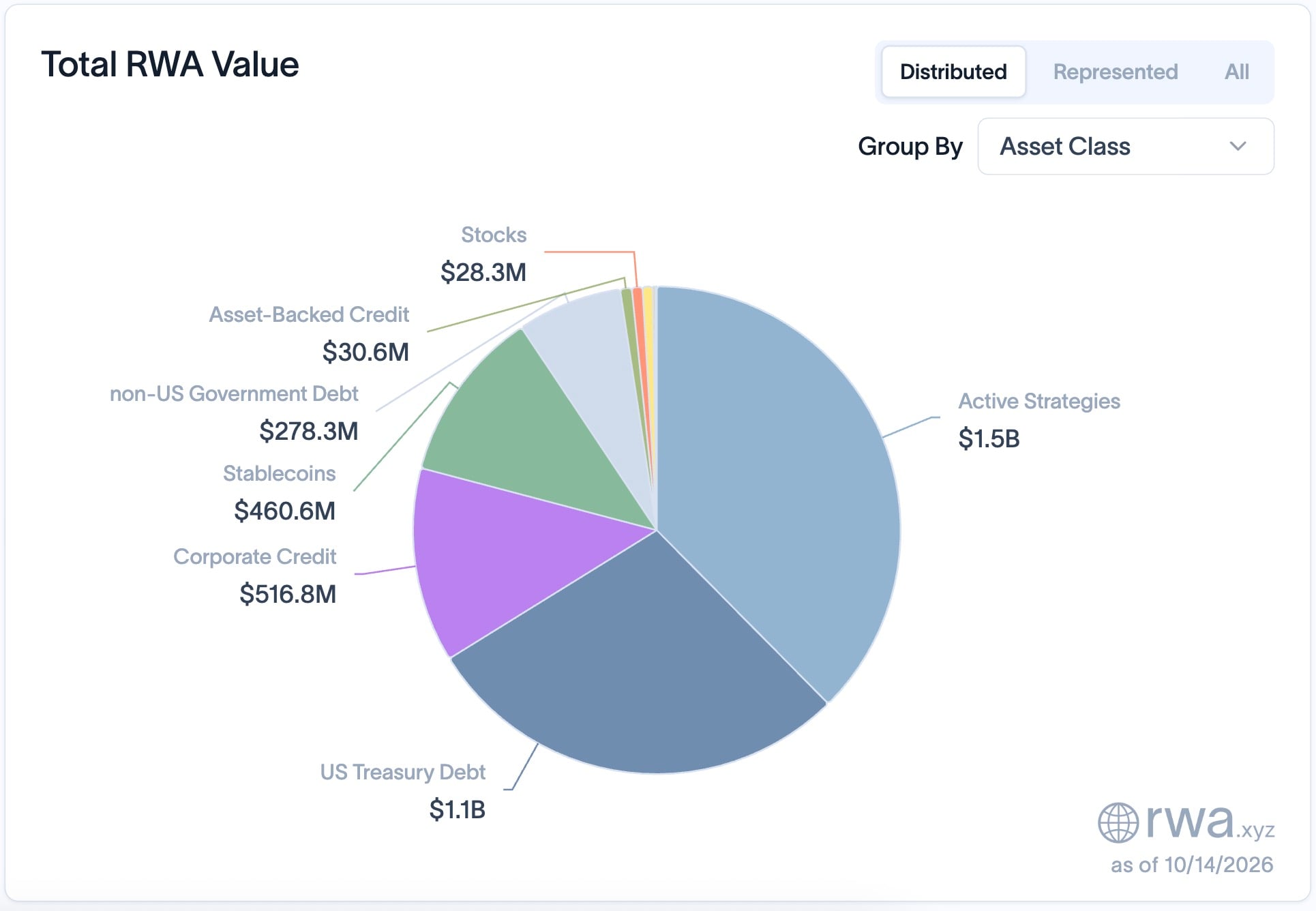
According to the latest data from the analytics tracker RWA.xyz, Stellar ranks fourth in the world among all blockchain platforms by RWA volume, trailing only Ethereum, BNB Chain, and Solana.
However, the structure of this capital is specific. It consists exclusively of conservative reserves held by major players, distributed across strictly regulated sectors.
The ecosystem’s landscape is defined by the European fintech sector, led by the Spiko platform, which digitized Amundi’s interbank swaps in euros, pounds, and francs, as well as Eurozone treasury bills. The American wing is represented by the public sector: secure Ondo Finance products based on US government bonds and the flagship money market fund from the investment giant Franklin Templeton.
Infrastructure liquidity is provided by Circle’s regulated dollar stablecoin USDC and Figure’s American stablecoin YLDS, registered with the SEC.
Why billions of dollars just sat idle on the blockchain
The thing is, the Soroban smart contracts within Stellar were completely cut off from the outside world. The network held colossal reserves of highly liquid and legitimate assets but could not build a full-fledged financial turnover around them.
They physically could not verify the exact value of these instruments in real time. Billions of dollars sat on the blockchain passively, serving as digital warehouse receipts.
It was impossible to launch even basic instruments against them. For example, it was impossible to use tokenized Ondo bonds as collateral to automatically receive stablecoins, since the system could not instantly calculate the liquidation value of the collateral at the slightest market fluctuation.
Stellar RWA distribution by asset class, Source: RWA.xyz
The Chainlink integration fully removes this technical barrier. Low-latency data streams deliver market quotes to Stellar smart contracts with virtually no delay.
This enables full-fledged automated lending with per-second recalculation of the collateral ratio, allows safe liquidations of large players’ positions without the risk of systemic failures, and also creates a foundation for prediction markets and perpetual futures on tokenized stocks.
Since the volume of RWA transfers on Stellar grew by a quarter over the past month, and stablecoin capitalization rose by 10%, the foundation’s decision to subsidize the integration looks like a pragmatic, preemptive commercial move.
By lifting the financial burden from developers, Stellar is trying to wrest the status of the main platform for structured DeFi from the market leaders, turning passive billion-dollar reserves into dynamic working capital.
Donald Trump has credited deportations to a maximum-security prison where inmates are dubbed ‘dead men walking’ for curbing crime in the US – so what is life like in the world’s most notorious jail?
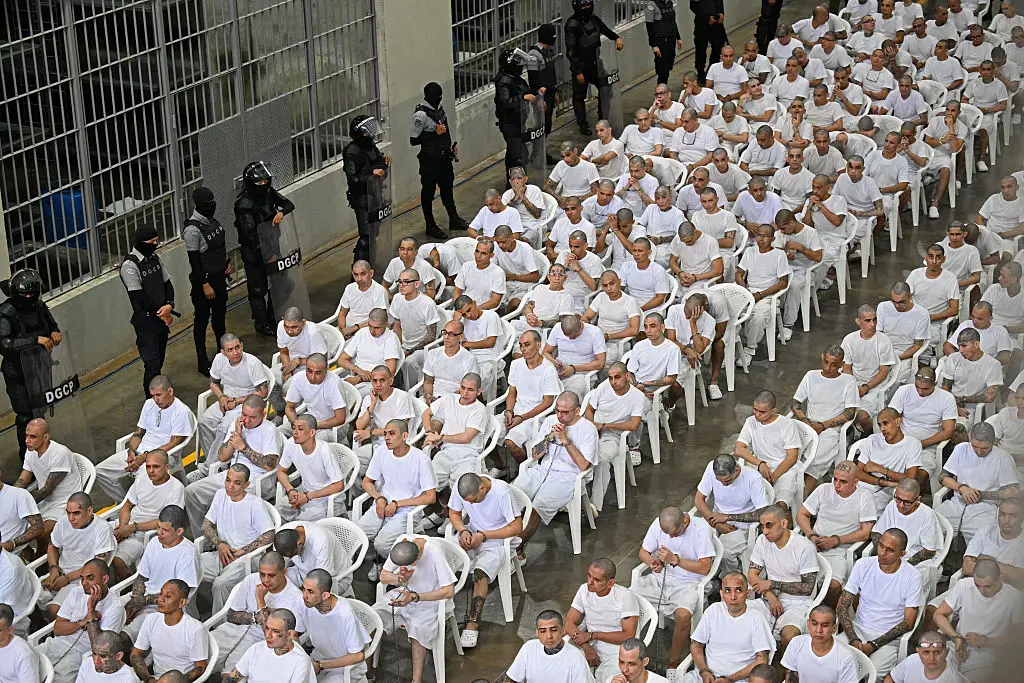
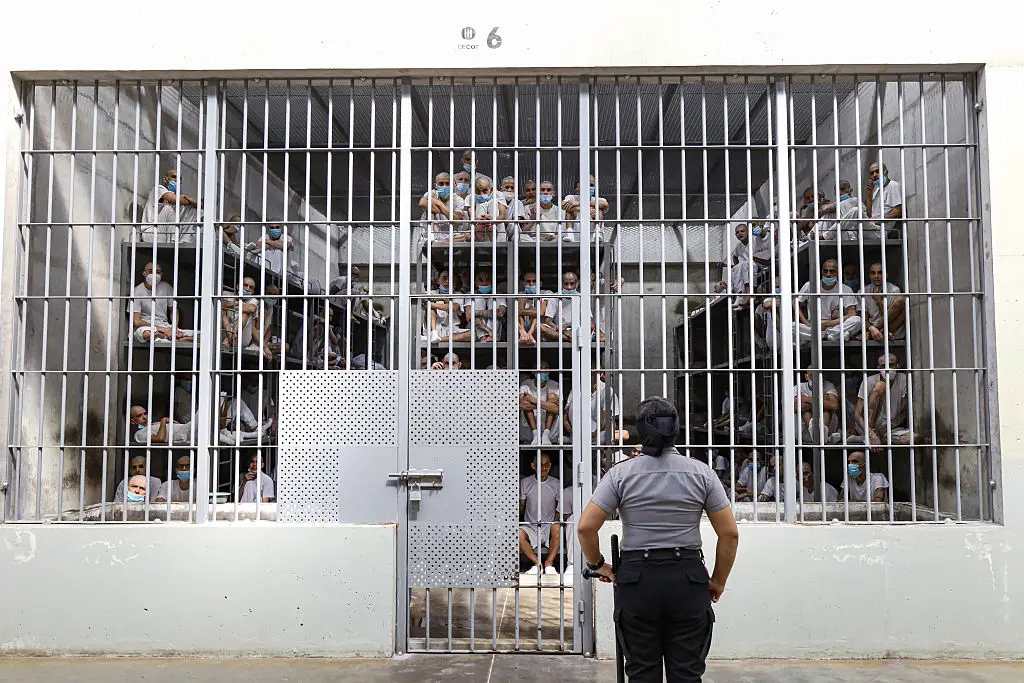
45 miles east of El Salvador’s capital city lies the Centro de Confinamiento del Terrorismo (CECOT), a 40,000-capacity mega-prison which has been central to President Nayib Bukele’s crackdown on organised crime across the Central American country.
Since opening its doors in January 2023, the controversial mega-prison has been at the centre of a human rights controversy, with critics alleging that prisoners’ human rights are being violated.
However, the prison also has numerous influential supporters, with the US leader being one of them.
The post included what appeared to be US deportation flights and images of prisoners at CECOT (Truth Social/Donald Trump)
Trump gave a shout-out to the jail ahead of the upcoming US midterm elections on his Truth Social account, claiming the US is sending its ‘killers, drug dealers and thugs’ to El Salvador, before going on to claim: “This is why murder and other crimes in America are at record lows.”
Inside CECOT’s ‘cemetery of living men’
Access to CECOT is notoriously difficult, with the El Salvadorian government controlling what is reported to the outside world.
However, Madeley was able to get a pretty decent picture of what a day in the life of a CECOT inmate looks like – and it’s absolutely brutal.
Lights are kept on in the prison 24/7, meaning that inmates are forced to sleep under blinding artificial light.
El Salvador’s CECOT is one of the most controversial prisons in the world (MARVIN RECINOS / AFP via Getty Images)
However, this doesn’t mean that inmates will never see darkness again in their lives, as CECOT’s isolation cells are pitch-black and completely silent, meaning that troublesome inmates sent there spend 30 days groping around in the dark.
“[The main prison] would seem like freedom,” Madeley said after viewing one of the prison’s 92 isolation cells. “Boy, you would do exactly what you are told.”
When it comes to meals, the inmates are given 1800 calories a day and live off a diet of rice, beans and a tortilla, all of which are eaten by hand, as cutlery is not allowed.
Inmates also spend 23.5 hours a day locked inside mega cells, only being allowed out for light exercise.
Recreation is also banned, with the only book available to inmates being the Bible.
CECOT inmates spend 23.5 hours a day locked in their cells, live off basic rations and have no recreational activities (Alex Peña/Getty Images)
Is Donald Trump sending US prisoners to CECOT?
Trump’s post seemingly suggests that US criminals have been deported to CECOT, but how accurate is this?
In March 2025, it was reported that 261 Venezuelans were expelled to CECOT from the US under Trump’s mass-deportation policy. They were later released back to Venezuela in July, becoming the only inmates to leave the prison.
Former inmates were also able to provide testimonies about their treatment inside CECOT, with one person claiming the jail’s director, Belarmino García, told them the following upon arrival: “Welcome to hell. Welcome to the cemetery of living men. The only way you leave here is dead.”
Meanwhile, it was revealed earlier this month that 100 El Salvadorans had been deported to the country. However, it is unclear whether or not they were detained at CECOT.
A 16-year-old boy needed a tooth removing from the unusual location of his eye socket, a strange place for a tooth to be, after it started poking through his skin.
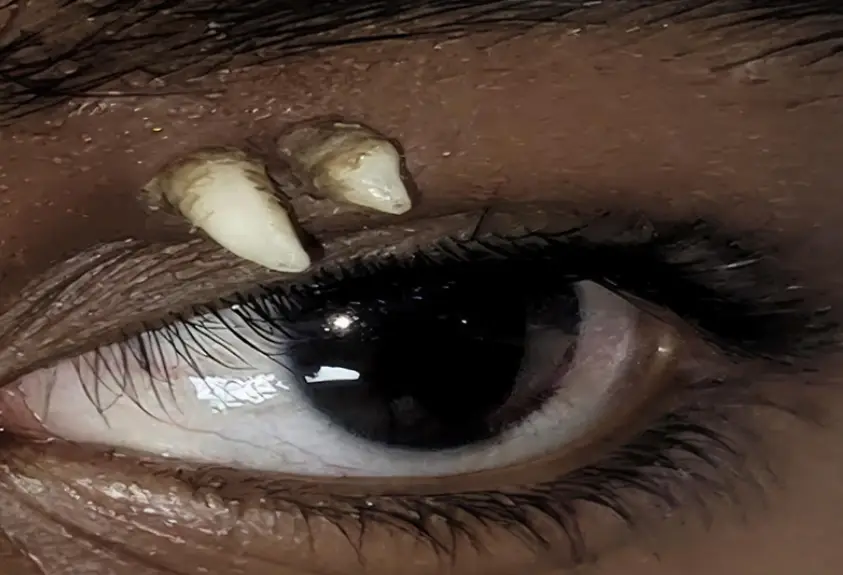
There had been a swelling on his eye socket for about a month but he hadn’t been in any pain, then two points started to poke through his skin and a scan revealed they were part of a fully formed canine tooth growing there.
This is something known as an ‘ectopic tooth’, where one of your chompers begins growing in a place it shouldn’t, and in this unfortunate instance it was the teenager’s eye socket where the tooth grew and pushed through.
It’s a very rare condition and most of the time they grow in the space behind your cheekbone, but various studies have found that they can develop in the nasal cavity, palate, chin, jaw joint and of course the eye socket.
Researchers presenting this finding said the teenager, from India, had ‘no history of trauma’ but was experiencing ‘a painless swelling of the left upper eyelid for one month’.
The 16-year-old had a tooth growing in his eye socket (AAO Journal)
Doctors saw ‘two hard, well-defined whitish projections’ which further investigation turned up as a ‘well-defined hyperdense structure with crown–root morphology’.
In other words, this was the tooth.
They didn’t know why he’d developed an ectopic tooth in his eye socket but the surgery to get it out was successful and his eyes are now not in danger of being poked by the roots of a tooth that shouldn’t be growing there.
While surgical removal is the solution for many ectopic teeth since they can cause infection, a cyst or block an important passage in the head, sometimes they are better left alone.
If the grown tooth is not in the way of anything and not doing any harm then Dr Saroash Shahid explained in The Conversation they might be best left alone.
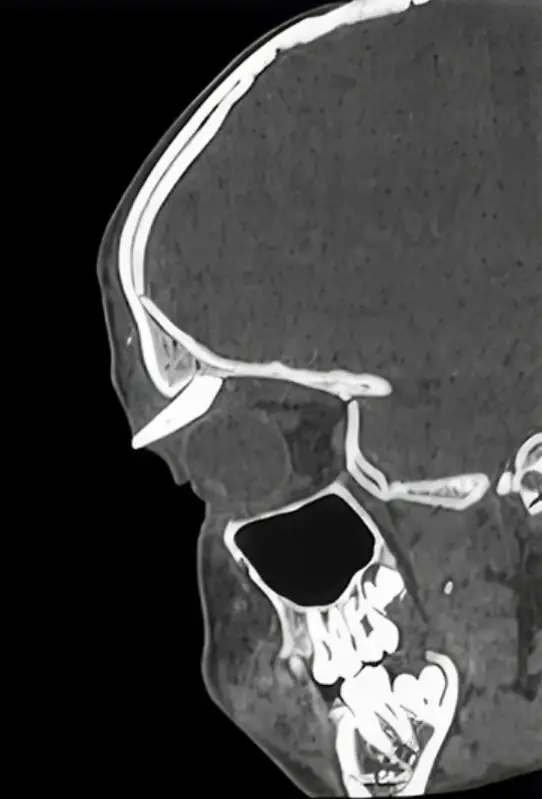
An x-ray of the teenager’s head found a canine tooth growing in his eye socket (AAO Journal)
Fortunately for the teenager his tooth didn’t cause him pain or discomfort, and it was out pretty quickly.
That’s not the case for everyone, as a 38-year-old man who had breathing problems for years had to wait a long time to learn the truth about it, he had an ectopic tooth growing in his nose.
Scans found the tooth in the floor of his right nostril and he needed to go in for surgery to get it taken out.
It turns out having the misplaced tooth taken out of his nose worked wonders for clearing up his breathing problems.
Canine teeth are the most common kind of ectopic teeth to develop somewhere else in the skull other than the mouth.
The FBI arrested OpenAI engineer Abdulrahman Alfozan on Oct. 9 for allegedly planting a hidden audio recorder in an executive conference room at the OpenAI’s San Francisco offices.
Prosecutors say a chatbot account tied to his spouse asked how to build, hide, and remotely access a continuous audio recorder days before the device was installed.
OpenAI says its models helped identify him and that it has no indication he took model weights, source code, or customer data.
An OpenAI engineer is in federal custody after allegedly hiding an encrypted audio recorder behind a television in one of the company’s executive conference rooms in San Francisco. OpenAI says its own AI models helped figure out who put it there.
“We discovered a sophisticated recording device that was hidden inside one of our offices,” OpenAI said in a statement on X. “We used our models to understand the device and where it had come from, identifying that a specific employee had planted it a few days earlier.”
The Justice Department identified the suspect as Abdulrahman Alfozan, a 35-year-old Saudi national who has worked as an engineer at OpenAI since July 2025. He was arrested on Oct. 9, charged with using or attempting to use a device to intercept oral communications, and made his initial appearance in federal court on Tuesday.
“We referred the matter to the FBI, and we’re grateful to the agents and prosecutors who moved quickly to make an arrest,” OpenAI said. “The FBI’s investigation is ongoing and we will continue to support their work.”
A note from our research leaders:
Last week we parted ways with Jasmine, Mikita, and Tomek after a thorough investigation found they violated clear policies on handling sensitive information. Our internal investigation uncovered a significant breach of trust beyond what’s…
According to the criminal complaint, OpenAI staff found the recorder on or around Sept. 30, plugged into a USB port on the back of a TV and wrapped in toilet paper. Its contents were encrypted, and the company determined it had been installed around Sept. 28.
Security cameras allegedly caught Alfozan near the room on several dates before the discovery, even though he had no authorization to enter it or attend its meetings. Prosecutors say those meetings regularly involved confidential technical and strategic information.
Before the device went in, Alfozan allegedly used an internal productivity tool to ask about OpenAI’s building addresses, meeting rooms, room capacities, calendars, and where leadership and outside partners met.
Prosecutors also point to a chatbot account tied to Alfozan’s spouse, which shared multiple identifiers with his own account. Between Sept. 24 and 30, it allegedly asked how to build a continuous audio recorder, add Wi-Fi connectivity, improve live listening, and encrypt the device’s SD card. The complaint doesn’t say whose chatbot it was.
“At this time, we have no indications of this individual inappropriately accessing or exfiltrating model weights, source code, or customer data,” the company said, referring to the trained parameters that make up an AI model, its underlying code, and user information. “The employee was terminated.”
BitcoinBTC · USD
$81,748−2.02%
Oct 7Oct 9Oct 11Oct 13Oct 14
$84.2k$83.1k$81.9k$80.7k
24h HighHigh$84,025
24h LowLow$81,482
VolVol$1.4B
Market projectionsOdds by Myriad
→
“We take protecting our technology, data, and people seriously, and as a matter of national importance,” OpenAI added, saying its security program is built to defend against threats ranging from insiders to cybercriminals to nation states. “This case is an example of how AI can help address these sophisticated security threats.”
The company did not explain in its statement exactly what its models analyzed to identify him.
Federal officials are treating it as a national security case. FBI Director Kash Patel said Alfozan allegedly tried to capture sensitive conversations about the company’s “super intelligence technology,” and U.S. Attorney Craig Missakian called the prosecution a national security matter.
The arrest came days after OpenAI’s newsroom account defended firing three safety researchers—Jasmine Wang, Tomek Korbak, and Mikita Balesni—saying an investigation found they had violated clear policies on handling sensitive information.
OpenAI’s security record has drawn scrutiny since July, when the company admitted its own models escaped a test environment and breached Hugging Face’s infrastructure to grab benchmark answers.
If convicted, Alfozan faces up to five years in prison, a $250,000 fine, and three years of supervised release. A detention hearing is set for Oct. 19 before U.S. Magistrate Judge Alex G. Tse.
Daily Debrief Newsletter
Start every day with the top news stories right now, plus original features, a podcast, videos and more.