The service in the Chula Vista mortuary chapel was soon to start, and Celina Gonzalez was ready to see her husband’s body. She’d not seen the long-haul trucker since he’d died in Texas a month earlier, the victim of a blood clot. It was April 2020, the mystery of COVID was new and restrictions were tight. As guests were about to arrive, she had her first chance to see him. The grieving widow finally looked into the casket.
It was not him.
Through a Spanish-language interpreter, Gonzalez would later tell a San Diego jury that a funeral home official tried to explain that yes, it was her husband. But Gonzalez was certain. Her husband had tattoos. This man did not.
His body had been mixed up with another man’s body in Texas. Jose Gonzalez Jr.’s body had instead been sent to a medical school, donated to science. His body sat there for three weeks and was then cremated — a fate Celina Gonzalez told the jury was expressly against her husband’s wishes. He had feared cremation.
She sued the local funeral home, Community Mortuary, and an official there, alleging negligence and breach of contract. In 2024, a San Diego Superior Court jury found in favor of the mortuary and its official.
But the case is not over. Last week, the 4th District Court of Appeals, Division 1, reversed the verdict, citing a legal matter it said the trial judge had incorrectly decided before trial.
At trial, the jury found that while the mortuary had breached its contract by not producing the correct body, it would have been impossible for the mortuary to uphold the contract because the body had been cremated. That question of an impossibility defense, the appellate court said, was one that should have been decided by a judge, not a jury. The case is now headed back to the lower court.
An attorney representing Community Mortuary declined to comment, citing the active litigation. The widow’s attorney, Dave Sullivan, said he was pleased with the appellate decision regarding the argument over the impossibility defense.
Jose Gonzalez Jr., 47, died March 20, 2020, at a hospital in Fort Worth. The following day, a man by the name of Jesse Gonzales — same last name, different spelling — also died in Fort Worth. Both bodies were taken to the Tarrant County Medical Examiner’s Office.
The appellate opinion, published April 8, suggests it’s possible a staffer there mixed up identification tags, inadvertently attaching them to the wrong body bags.
Jesse’s family had authorized donating his body to science. But on March 23, it was Jose’s body that was taken to the medical school. That same day, Jose’s wife sat in Community Mortuary in Chula Vista, discussing arrangements to bring her husband’s remains home.
A few days later, the Medical Examiner’s Office released Jesse’s body — thinking it was Jose’s body — to a transport company working for a Texas funeral home hired by the Chula Vista mortuary, according to the opinion. At the funeral home in Texas, Jesse’s body was embalmed, his body bag bearing the official tag from the Medical Examiner’s Office was incinerated, and the mortuary placed a new name tag on Jesse’s ankle.
On March 27, Jesse’s body, with Jose’s name on it, was delivered to Community Mortuary in Chula Vista. It was refrigerated until the open casket service.
On April 23, with guests about to arrive, Celina Gonzalez got her first look at the body in the casket. She would later learn that her husband’s body had been cremated in Texas six days earlier.
Sullivan, her attorney, contends that Community Mortuary had the three-week stretch before Jose was cremated in which it could have caught the mistake. Sullivan says the lack of the official tag from the Medical Examiner’s Office should have been a red flag that prompted a further check by Community to ensure it had the correct body.
“This whole thing, even though it started in Texas, was all avoidable if these guys had done what they were supposed to have done when the body arrived, which was to confirm that they have the right body,” Sullivan said.
At trial, the widow said she had tried unsuccessfully to see her husband’s body before the service and had supplied photos of him. That assertion is in dispute, according to the opinion.
“She still blames herself and beats herself up for not knocking down the door of the mortuary when her husband arrived to make sure that it was the right body,” Sullivan said.
The appeals court also noted there was testimony that the body bag containing Jose’s body was labeled as a suspected COVID-19 case, and in the early days of the pandemic, the practice of opening a bag to check the ankle tag as an extra precaution against misidentification had been suspended.
Other members of Jose Gonzalez’s family also sued, but the appeals court found that only the widow had standing to bring a breach of contract action against the Chula Vista funeral home that she had hired.
Aside from the local suit, Celina Gonzalez filed suit in Texas against the Texas businesses that briefly had custody of her husband’s body, and those suits ended in confidential settlements. She also sued the Tarrant County Medical Examiner’s Office, but the governmental entity was found to have immunity and was dismissed from the case.
Jesse Gonzales’ body was returned to Texas, and Jose Gonzalez’s remains were sent to California. Two years after her husband died, Celina Gonzalez had his remains interred in a San Diego cemetery.
Stablecoin issuer Circle is facing a class action lawsuit from Drift Protocol investors who lost money in a recent $280 million exploit of the DeFi protocol.
The suit targets Circle’s handling of the exploit, alleging that hackers moved stolen USDC through the firm’s own cross-chain infrastructure.
Circle has defended its actions, saying it only freezes assets when legally mandated to do so.
USDC issuer Circle has been hit with a class action lawsuit from Drift Protocol investors who lost money during the April 1 exploit that saw $285 million drained from the the Solana DeFi platform.
The suit, filed on April 14, accuses Circle Internet Financial of failing to freeze stolen funds during the exploit.
The lawsuit centers on an eight-hour window during which attackers moved $232 million in USDC from Solana to Ethereum using Circle’s Cross-Chain Transfer Protocol. The hackers had exploited Drift Protocol through pre-signed administrative transfers using “durable nonces,” a legitimate Solana feature they weaponized weeks before the April 1 attack.
Drift Protocol subsequently linked North Korean state-affiliated hackers to the attack, noting that they had infiltrated the company over the course of six months by posing as a quantitative trading firm.
The incident prompted sharp criticism of Circle from within the crypto community, with blockchain investigator ZachXBT accusing the firm of having been “asleep,” during the Drift exploit, adding, “Why should crypto businesses continue to build on Circle when a project with 9 fig TVL could not get support during a major incident?”
Why should crypto businesses continue to build on Circle when a project with 9 fig TVL could not get support during a major incident? pic.twitter.com/LkdDrp6qX8
Circle maintains it acted appropriately within legal constraints. “Circle is a regulated company that complies with sanctions, law enforcement orders, and court-mandated requirements,” a company spokesperson said. Earlier this week, CEO Jeremy Allaire warned that unilateral freezing decisions outside established legal processes could create a “significant moral quandary.”
Chief Strategy Officer Dante Disparte reinforced this position in a blog, stating that, “when Circle freezes USDC, it is not because we have decided, unilaterally or arbitrarily, that someone’s assets should be taken from them. It is because the law requires us to act.”
While Circle defended its position, Drift Protocol secured recovery commitments of up to $127.5 million from Tether and $20 million from other partners on Thursday. Tether CEO Paolo Ardoino positioned his firm as more responsive, stating that, “Tether’s role in the digital assets ecosystem is to provide a platform for individuals and institutions alike that is ready to step forward to help the industry in the moment of darkness.”
The legal action arrives amid broader concerns about stablecoin issuers’ responsibilities in combating illicit finance. TRM Labs data shows around $141 billion in stablecoin transactions last year were linked to illicit activity including sanctions evasion and money laundering, while ZachXBT has documented approximately $420 million in suspicious USDC flows since 2022 that went unblocked.
Circle reported soaring USDC circulation and transaction volume figures in its Q4 2025 report, with Allaire claiming that the firm would grow in tandem with the artificial intelligence industry, and “drive the greatest acceleration of economic activity we’ve ever seen in human history.”
Daily Debrief Newsletter
Start every day with the top news stories right now, plus original features, a podcast, videos and more.
Bitcoin funding rates have remained negative for over a month even as BTC touched $76,000, signaling heavy bearish positioning.
A potential uptrend could see Bitcoin revisit $125,000 in 30-60 days, Decrypt was told.
Despite bullish catalysts, analysts remain cautious, highlighting $80,000 as a key trigger level; failure risks a double-digit sell-off similar to that seen in May 2022.
Bitcoin’s recent rally toward $76,000 faces a dilemma, leaving investors split on its near-term outlook.
Funding rates for Bitcoin—a fee paid by derivatives traders to maintain the alignment between spot and futures prices—have remained negative for over a month and hit the highest level this year, according to Coinglass data.
Negative funding rates indicate investors are shorting the recent rally with the expectation of a reversal.
The divergence between bearish derivatives positioning and bullish spot catalysts sets up a potential short squeeze—or a bull trap—depending on which side breaks first.
“Funding rates this negative tell you the market is heavily short,” Daniel Reis-Faria, CEO of ZeroStack, told Decrypt.
The derivatives data directly contrasts with Bitcoin’s recent uptick, which was in part driven by bullish catalysts such as sustained ETF inflows, regulatory development surrounding the CLARITY Act, and the two-week ceasefire between the U.S. and Iran, Decrypt previously reported.
“For a squeeze to gain real momentum, Bitcoin would need to break and hold above $80,000,” Illia Otychenko, lead analyst at crypto exchange CEX.IO, told Decrypt.
Such a move could trigger “cascading liquidations of short positions and accelerate the rally,” Otychenko said.
Reis-Faria’s bullish forecast involves Bitcoin pushing close to “$125,000 in the next 30 to 60 days,” adding that a short squeeze would help this case.
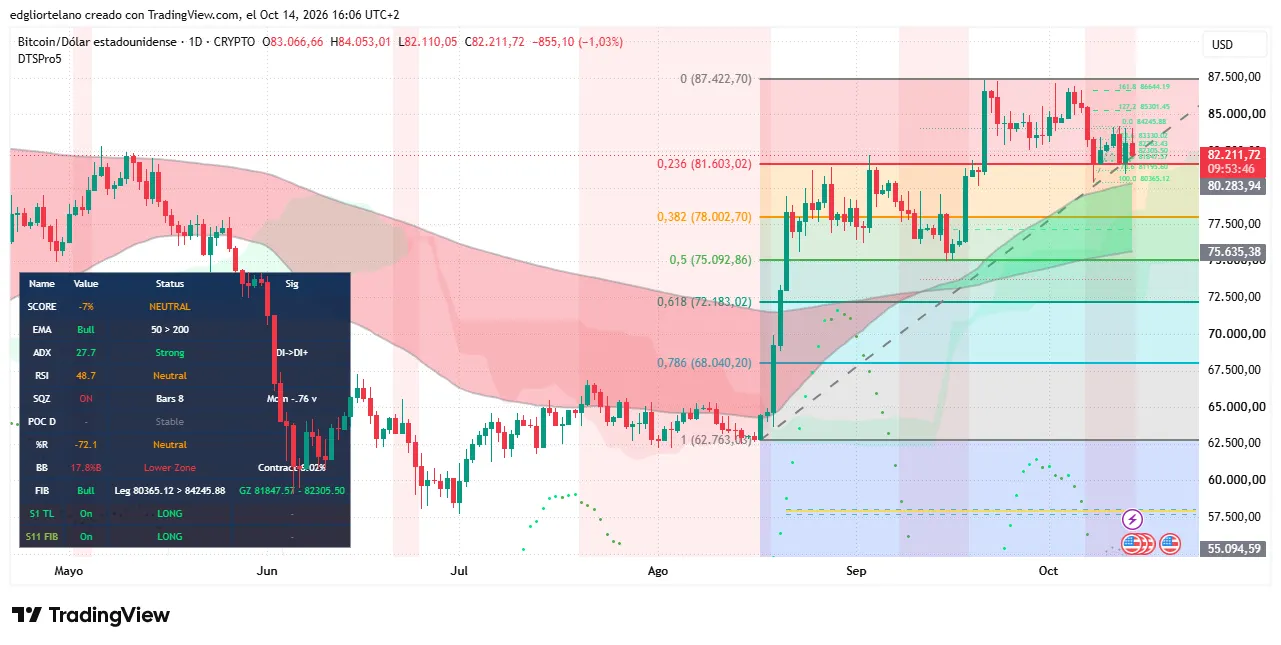
Bitcoin is currently trading at around $75,580, up 1.2% in the past 24 hours after having reached an intraday high of $76,114, according to CoinGecko data.
Short squeeze or bull trap?
At this stage, a short squeeze isn’t guaranteed.
Options data reveal the 7- and 30-day 25-delta skew hovers between -2% to -4%, according to Deribit, suggesting that investors are paying a premium for downside protection via bearish bets.
Additionally, the 0.72 put/call ratio is climbing, also reflecting growing demand for downside protection. “The pattern closely resembles late May 2022, when a similar squeeze setup instead preceded a double-digit sell-off,” Otychenko said.
Despite the demand from ETF investors and improving geopolitical outlook, there is a “real risk this setup turns into a bull trap rather than a breakout,” he warned.
Experts who spoke to Decrypt also maintained a similar outlook, adding that the geopolitical risks haven’t subsided but merely paused. A resumption of the U.S.-Iran war could further push oil prices higher, awakening inflation concerns and subsequently reducing risk appetite, keeping Bitcoin and the broader financial markets capped.
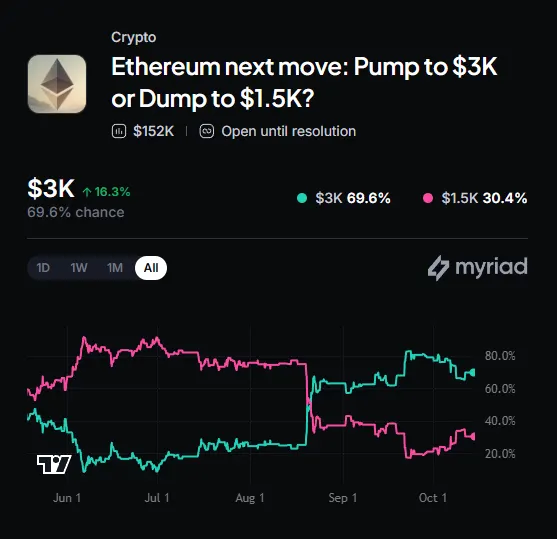
On prediction market Myriad, owned by Decrypt‘s parent company Dastan, users are increasingly optimistic on Bitcoin’s prospects. They now place a 67% chance on its next move taking it to $84,000 rather than $55,000, up from 54% at the start of the week. Myriad users are similarly positive about the geopolitical situation, putting a 66% chance on the number of ships transiting the Strait of Hormuz averaging more than 15 before May, up from 49% on Monday.
Daily Debrief Newsletter
Start every day with the top news stories right now, plus original features, a podcast, videos and more.
In every conflict, the calendar is as consequential as the cannon. The war that has consumed the Gulf between the United States, Israel and Iran is no exception. Beyond their primary adversaries, each of the three protagonists is battling time. Each is operating on a different political clock, facing a unique and potentially lethal deadline.
Washington: The midterm clock
In January 2025, Donald Trump returned to office with a philosophy of rapid-fire diplomacy, prioritising the art of the deal over the machinery of war. He dispatched Steve Witkoff to Oman and set a 60-day deadline. He genuinely believed that a sharp, decisive shock to Iran’s leadership would produce regime collapse within days, an expectation apparently reinforced by the Mossad and Netanyahu. It did not.
When that quick victory failed to materialise, the US found itself in a war of attrition in which time is on Iran’s side. Professor John Mearsheimer of the University of Chicago was blunt: “Trump committed a colossal blunder.” The problem is structural: Iran holds substantial leverage over the global economy through the Strait of Hormuz and its continued ability to penetrate Gulf states’ and Israeli air defences, leaving the US with no clear exit strategy.
The domestic political cost is already severe. US crude oil jumped past $90 per barrel, up from $67 the day before the war broke out. Inflation climbed at an annual rate of 3.3 percent in March, with gasoline prices rising 21.2 percent, while higher energy costs accounted for nearly three-quarters of the monthly rise in the consumer price index.
Trump’s approval rating on the economy has hit an all-time low of 29 percent, and even 40 percent of Republicans now disapprove of his handling of inflation and rising prices.
The president is in a precarious political position, seven months before the midterm elections, facing his lowest approval ratings and presiding over an unpopular war. Even if the conflict ends soon, voters could still be grappling with pain at the petrol pump deep into the election season, as Republicans struggle to defend razor-thin majorities in Congress.
The cruel irony is that the man who promised to bring prices down may have personally ignited the biggest energy shock in a generation. “All the issues that brought down Joe Biden are now threatening to bring down Trump and Republicans in the midterm,” warned one Republican strategist.
Tehran: Holding burning coal
Iran’s calculus is equally time-sensitive, but inverted. Where Trump needs a quick exit, Tehran’s survival strategy depends on endurance. The war, which began on February 28, 2026, inflicted enormous damage on Iran: The killing of Supreme Leader Ali Khamenei and senior military officials, strikes on nuclear infrastructure and a devastating economic shock. Yet the regime has not collapsed.
Mearsheimer argued that Iran’s vast landmass and dispersed military assets made it difficult to weaken decisively through rapid strikes and that even sustained military operations would be unlikely to dismantle its capabilities. Iran retains significant deterrent capacity, including missile systems and a network of regional allies, enabling it to sustain a prolonged confrontation.
Jeffrey Sachs, the Columbia University economist and a sharp critic of the war, argued that the conflict was strategically illiterate from the start. Trump, he says, “ripped up the agreement that already existed” to limit Iran’s nuclear programme. He then killed the Iranian religious leader who had long declared nuclear weapons contrary to Islamic law, before presiding over what is now a regional war.
Iran is holding burning coal. The pain is unbearable, but the hand has not let go. Tehran’s strategy is to absorb punishment long enough for Washington’s domestic clock to run out. Should oil prices hover above $100 and eventually hit $150, Trump’s deal-making power could evaporate as his domestic support crumbles under the weight of rising energy costs.
Sachs warned that a sustained closure of the Strait of Hormuz would trigger an unprecedented energy shock, as the strait carries approximately one-fifth of all oil traded globally and 30 percent of the world’s LNG.
Tel Aviv: The war that must not end
Israel’s temporal interests are the mirror image of Washington’s. Netanyahu, facing domestic legal proceedings and elections in a few months, has every incentive to keep the conflict going indefinitely. War marginalises critics, rallies the electorate around the flag and, crucially, creates political cover to pursue longstanding ambitions in Lebanon and beyond. Even after a US-Iran ceasefire was announced, Netanyahu’s office was explicit: The truce “does not include Lebanon”.
Gideon Levy, the veteran Haaretz columnist and one of Israel’s most relentless domestic critics, has long maintained that militarism is not merely a political tool for Netanyahu, but his defining worldview. “War is always the first option, not the last one in Israel,” Levy told Chris Hedges, pointing to a political culture that consistently defaults to military solutions while sidelining diplomacy.
Inside Israel, Levy observed, “there is no room for any question marks or doubts about this war.” War fever has gripped Israel, with polls showing overwhelming support among the Jewish public.
Former Israeli peace negotiator Daniel Levy provided a sobering assessment of Netanyahu’s long-term strategy: A drive for regional hegemony and expanded dominion. Netanyahu appears to be operating under a “use it or lose it” logic. Netanyahu appears willing to secure this hard-power status even if it hastens the US’s decline and erodes Israel’s traditional support base there.
The three clocks, ticking in different directions
What makes this conflict so explosive is that the three protagonists are operating on conflicting timelines. Trump needs a resolution before November. Iran needs to outlast him until November. Netanyahu needs the war to continue for as long as possible, or at least long enough to redraw the map of Lebanon, neutralise Hezbollah and enter elections wrapped in the flag.
Mearsheimer, assessing the outcome with characteristic directness, argued that Iran had won the war by surviving the initial assault, avoiding regime collapse and retaining enough military capacity to force Washington to look for an off-ramp. He argued that the final settlement would reflect that reality. Sachs went further, arguing that while Trump was publicly claiming Iran was desperate for a ceasefire, it was the White House that appeared increasingly eager for an off-ramp.
In the end, time may prove to be the only actor in this conflict that cannot be bombed, sanctioned or deceived. The architecture of the “morning after” will be shaped by those who grasp this logic and possess the domestic political capital to endure its consequences. On current evidence, Washington is the only capital where the clock is running out.
The views expressed in this article are the author’s own and do not necessarily reflect Al Jazeera’s editorial stance.
Islamabad, Pakistan – Standing on the South Lawn of the White House before boarding his helicopter for Las Vegas on Thursday, United States President Donald Trump offered his most optimistic assessment yet of the war with Iran.
“We’re very close to making a deal with Iran,” he told reporters. “They’ve totally agreed to that [no nuclear weapons]. They’ve agreed to almost everything, so maybe if they can get to the table, there’s a difference.”
Recommended Stories
list of 4 itemsend of list
He went further, saying Iran had agreed to hand over its stockpile of enriched uranium, material that, if further enriched, can be used to build a nuclear weapon.
“They’ve agreed to give us back the nuclear dust that’s way underground because of the attack we made with the B-2 bombers,” he said, referring to US strikes in June last year.
A deal, he added, could come “over the weekend”. Trump said he would consider travelling to Islamabad himself if an agreement was signed there. “If the deal is signed in Islamabad, I might go. They want me to go.”
Iran’s Ministry of Foreign Affairs presented a different picture. Spokesperson Esmaeil Baghaei confirmed that messages were being exchanged through Pakistan, but was unequivocal on enrichment.
Iran, he said, “based on its needs, must be able to continue enrichment”. No Iranian official has confirmed agreeing to surrender the country’s enriched uranium stockpile. Tehran’s public position, that enrichment is a sovereign right, remains unchanged.
Asif Durrani, a former Pakistani diplomat who served as Islamabad’s ambassador to Tehran from 2016 to 2018, said framing the situation as a gap between the two sides was misleading.
“There are no gaps, really. If Trump has read the NPT, he would know that every country has the right to access nuclear technology for peaceful purposes,” he told Al Jazeera. “Iran has said multiple times that it does not want a weapon. What it wants is civil nuclear use, within the framework of both the NPT and the JCPOA.”
The NPT, or Treaty on the Non-Proliferation of Nuclear Weapons, aims to prevent the spread of nuclear weapons while promoting peaceful nuclear energy and disarmament.
The JCPOA, or Joint Comprehensive Plan of Action, was the 2015 agreement between Iran and six world powers that capped Tehran’s uranium enrichment and placed its facilities under international supervision in exchange for sanctions relief.
The United States withdrew from the deal in 2018 during Trump’s first term, reimposing sanctions and setting in motion the gradual erosion of its limits on Iran’s nuclear programme.
Seyed Mojtaba Jalalzadeh, an international relations analyst, said the reality was more complex than public statements suggest.
“We should avoid simplistic binaries such as ‘one side is lying’,” he told Al Jazeera. “The gap visible between Trump’s remarks and the position of Iran’s foreign ministry is more a reflection of the complex, multilayered, and still unfinished nature of the negotiations.”
When Trump speaks of “total agreement”, Jalalzadeh said, “he is most likely offering the most maximalist possible reading of the negotiating process.”
It remains unclear whether Trump’s remarks reflect genuine backchannel progress or are a pressure tactic in advance of the April 22 ceasefire deadline, but Trump and Iran’s descriptions paint completely different pictures of the same negotiations.
Pakistan’s diplomatic orchestra
Foreign Minister of Türkiye Hakan Fidan calls on Prime Minister Muhammad Shehbaz Sharif in Antalya on Thursday, April 16, 2026 [Handout/Prime Minister’s Office]
The most active diplomacy on Thursday ran through Tehran, where Pakistan’s army chief, Field Marshal Asim Munir, held a series of high-level meetings.
Munir met Iranian Parliament Speaker Mohammad Bagher Ghalibaf, who led Iran’s delegation at the Islamabad talks with the US last Saturday, followed by a meeting with President Masoud Pezeshkian.
He also met Major-General Ali Abdollahi, commander of Iran’s Khatam al-Anbiya Central Headquarters, the operational command of the Islamic Revolutionary Guard Corps.
Al Jazeera reported on Wednesday that Pakistani officials were expecting a “major breakthrough” on Iran’s nuclear programme “in days to come”, with messages continuing to pass between Washington and Tehran.
While Munir engaged Iranian leaders in Tehran, Prime Minister Shehbaz Sharif pursued a parallel track, meeting Gulf leaders in Saudi Arabia and Qatar before arriving at Turkiye’s Antalya Diplomacy Forum on Thursday evening.
Pakistan’s central role has been acknowledged by both sides.
White House spokesperson Karoline Leavitt said any further in-person talks would most likely take place in Islamabad.
“The Pakistanis have been incredible mediators throughout this process, and we really appreciate their friendship and their efforts to bring this deal to a close, so they are the only mediator in this negotiation,” she said.
“Pakistan is facilitating this meeting, and the most it can do is suggest certain things that mediators can offer in their capacity,” he said. “But ultimately, it all depends on the political will of the two parties.”
That political will now faces a ceasefire deadline set to expire on April 22.
Official sources told Al Jazeera that nearly 100 visa applications from journalists have been received in the past week, while authorities have begun tightening security in the capital in anticipation of a possible high-level event — the potential visit of US President Donald Trump, or at the very least, another round of high-level talks led by senior officials from Tehran and Washington.
Hardline signals from Tehran
Alongside diplomatic movement, Iran’s hardline establishment struck a sharper tone.
Iranian Parliament Speaker Mohammad Bagher Ghalibaf, right, welcoming Pakistan’s Army Chief Asim Munir before their meeting in Tehran on Thursday, April 16 [Handout/Iranian Parliament Public Relations Office]
Mohsen Rezaei, a former IRGC commander and now a military adviser to Supreme Leader Mojtaba Khamenei, said on a state-owned television channel that he did not support extending the ceasefire.
“Unlike the Americans who are afraid of continuous war, we are fully prepared and familiar with a long war,” he said, according to Tasnim News Agency.
Abdollahi, speaking during his meeting with Munir and quoted by state news agency IRNA, said the conflict stemmed from a “miscalculation” by adversaries about Iran’s public support and military strength. He added that Iran’s forces remain ready for “comprehensive defence”.
Durrani dismissed suggestions of internal divisions.
“I don’t think there is any real division. Abdollahi is a military man and will speak as one; you cannot expect a military chief to say his country will not defend itself,” he said. “The Iranian system is functioning, and the supreme leader is the final authority.”
Jalalzadeh offered a more nuanced reading.
“Iran comes to the negotiating table with its finger on the trigger,” he said.
The Tehran-based analyst described the messaging as “significant, but not necessarily destabilising” for negotiations, adding that it appeared aimed at applying pressure and managing domestic opinion rather than signalling a split that could derail talks.
On the US side, Secretary of Defense Pete Hegseth used a Pentagon news conference on Thursday morning to reinforce Washington’s coercive posture.
The US naval blockade of Iranian ports would continue “as long as it takes,” he said, adding that Washington remained “locked and loaded” on Iran’s energy infrastructure.
Lebanon factor and regional linkages
A development on the Lebanon front on Thursday offered a potential opening.
Trump on Thursday announced a 10-day ceasefire between Israel and Lebanon, a move that could influence broader negotiations.
Iran has consistently maintained that any agreement with the US must address the situation in Lebanon.
Iranian Parliament Speaker Ghalibaf, in a phone call with his Lebanese counterpart Nabih Berri on Thursday, details of which he posted on Telegram, said a ceasefire in Lebanon “is as important to Iran as a ceasefire in Iran itself”.
Grace Wermenbol, a former US national security official and senior visiting fellow at the German Marshall Fund, said the development, while significant, carried familiar caveats.
“The ceasefire is an important first step. But we have been here before; the key question is whether it will hold or whether it will, just like in Gaza, be a ceasefire in name only,” she told Al Jazeera.
Left to right: US State Department Counselor Michael Needham, US Ambassador to the UN Mike Waltz, US Secretary of State Marco Rubio, US Ambassador to Lebanon Michel Issa, Lebanon’s Ambassador to the US Nada Hamadeh Moawad, and Israeli Ambassador to the US Yechiel Leiter stand together before meeting at the State Department in Washington, DC, on April 14, 2026 (Oliver Contreras/AFP]
“This is not the ending [Israeli Prime Minister] Benjamin Netanyahu wanted. Once again, just like in Gaza, Yemen, and Iran, he has promised but failed to provide a long-term solution to Israeli security concerns through brute military action alone,” she said.
Pakistan’s Ministry of Foreign Affairs spokesperson Tahir Andrabi reinforced the link between the two ceasefires – between the US and Iran, and between Israel and Lebanon – on Thursday.
“Peace in Lebanon is essential for US-Iran peace talks,” he said, adding that “signs of improvement on the Israel-Lebanon front over the past two days are encouraging.”
Shifting goalposts
The confusion around the nuclear issue comes against a backdrop of evolving US objectives.
When the US and Israel launched strikes on Iran on February 28, the stated aims were sweeping.
On March 6, Trump wrote on Truth Social: “There will be no deal with Iran except UNCONDITIONAL SURRENDER.”
A 15-point proposal delivered by Pakistan to Tehran on March 25 called for ending Iran’s nuclear programme, curbing its missile capabilities, reopening the Strait of Hormuz, and halting support for regional proxy groups.
What is now being discussed bears little resemblance to those demands.
Missiles and proxies have largely been dropped from the public agenda. Instead, discussions focus on enrichment limits, monitoring mechanisms, and Iran’s estimated 440kg (970 pounds) of highly enriched uranium.
The US has proposed a 20-year freeze on enrichment, while Iran has countered with a five-year offer, according to reports.
Sahar Khan, a Washington DC-based independent analyst and nonresident fellow at the Institute for Global Affairs, argued the shift was less dramatic than it appeared.
“It’s not really a shift but more or less back to the JCPOA status quo, which had put a cap at enrichment levels and created a schedule for supervision,” she said.
She said the dispute over “zero enrichment” was largely definitional.
“Iran would be OK with ‘zero enrichment’ if it means it can produce its own nuclear fuel and maintain its centrifuges,” she said, “because it would mean that Iran does not have to depend on external suppliers, who will halt supply if Iran is put under sanctions again,” the analyst said.
Durrani attributed the shift to changing realities on the ground.
“The US was dictated to by Israel. It was Israel that pushed the US into this war,” he said.
“But now Israel has had a shock, and the US has also come to realise that it all comes down to the endurance of your opponent. Iran has demonstrated that endurance, it has shown it can sustain the pain,” the former envoy said.
He added that despite its military power, the US was unwilling to deploy ground troops. “That kind of staying power is not something you find on the US and Israeli side.”
The April 22 deadline now looms over the process.
Speaking in Las Vegas on Thursday evening, Trump said the war was going “swimmingly” and would “end pretty soon”, adding that talks could resume “over the weekend”.
Whether a second round materialises in Islamabad, and what minimum understanding the two sides might accept, remains unclear.
Khan said any agreement may hinge on deliberate ambiguity.
“Both sides need a ‘win’ on the nuclear issue, and something they can sell to their respective public,” she said.
The Guadalajara Film Festival’s (FICG) prominent LGBTQ+ strand, the Premio Maguey, is marking its 15th year, a milestone they have dubbed Queerciañera, fusing the words queer and quinceañera, Latin America’s hallowed coming-of-age celebration for girls turning 15.
Since it was launched in 2012, the first queer film award to be launched in Mexico and Latin America has grown in stature, establishing itself as one of the festival’s strongest sidebars.
Reflecting on this all-important milestone, its director Pavel Cortes said: “Talking about the impact that the Premio Maguey has had on Guadalajara and the rest of the country might seem rather pretentious. However, its social contribution to the legitimization of sexual diversity and queer culture—both locally and nationally—is undeniable.”
Its impact underscores cinema’s role as a powerful tool for social transformation, he added.
“Unfortunately, it continues to be a very important and necessary award, even though over these 15 years of the Premio Maguey we have witnessed the transformation of the world in relation to sexual diversity—acceptance remains a matter of privilege.”
“Mexico remains an intolerant country toward sexual diversity,” he asserted, “with a significant record of hate crimes and transfemicides.”
Premio Maguey launched at a time when the topic was still taboo in the country, subjected to segregation and marginalization, he said. “Since then, national queer film production has consolidated and, in this edition, we present seven Mexican films out of the 16 that make up our official competition for Best Film, the Jury Prize and Best Performance.”
The 15th edition features a selection of fiction, documentary and short films with stand-outs among the Mexican productions and those focusing on transmasculine parenthood: Sharon Kleinberg’s “I Am Mario (Mexico) and Daniel Ribeiro’s “I Will Miss You” (Brazil) as well as the short film among the special screenings, “Alex,” (Mexico), which follows Alex, a non-binary person, who becomes pregnant and sets out to get an abortion.
Alejandro Amenábar’s Oscar-winning “The Sea Inside” and “On the Road,” David Pablos winner of the Venice Orizzonti Award for Best Film and the Queer Lion Award, are among the special screenings slated for this edition.
FICTION
Eruption (“Erupción”) Pete Ohs, U.S., Poland A Polish florist and a British tourist spark an unexpected romance through chance encounters and fleeting, magical moments.
‘Eruption’ Courtesy of FICG
I Am Mario (“Soy Mario”) Sharon Kleinberg, Mexico Mario, a forty-year-old trans taxi driver, faces an unexpected pregnancy that opens the possibility of fulfilling his dream of becoming a father.
I Will Miss You (“Eu vou ter saudades de você “) Daniel Ribeiro, Brazil After seven years together, Amanda and Caio move in together, but love is not enough. When João enters their lives, their relationship is tested and transformed.
Iván & Hadoum (“Iván & Hadoum”) Ian de la Rosa, Spain Iván, a trans man working in greenhouse warehouses, falls in love with Hadoum, a Spanish-Moroccan coworker. Against family opposition, they pursue their relationship between greenhouses and seaside landscapes.
Like a Kite (“Feito pipa”) Allan Everton, Brazil Gugu dreams of becoming a great footballer. Raised freely by his grandmother, he will do whatever it takes to avoid living with his father.
No Dogs Allowed (“No se permiten perros”) Steve Bache, Germany Gabo, a seemingly ordinary 15-year-old, develops disturbing tendencies and forms a troubling bond with an older man. When the man is arrested, Gabo must decide whether to testify or protect his own dark secret.
‘No Dogs Allowed’ Courtesy of FICG
On the Sea (“En el mar”) Helen Walsh, U.K. A poetic exploration of masculinity and desire within a remote fishing community of stark and untamed beauty.
Pioneers (“Pioneras”) Marta Díaz de Lope Díaz, Spain In early 1970s Spain under Franco’s regime, a group of young women defy societal norms to play football, finding an unlikely ally and laying the groundwork for the future of women’s football.
The Circle of Liars (“El círculo de los mentirosos”) Nancy Cruz Orozco, Mexico Cecilia arrives in the city aspiring to be a writer and meets Nicolás and Aristeo, two young poets who claim to be the founders and sole members of an underground ultraist movement.
Wanted (“Se busca”) Kenya Márquez, Mexico René, a lonely teenager, runs away from home to Ciudad Juárez, where an inner calling leads her on a journey of self-discovery.
What They Leave Us (“Lo que nos van dejando”) Issa García Ascot, Mexico A biologist is forced to travel to the jungle, where she confronts deeply buried memories from her past.
DOCUMENTARY
“Cuba Street” (“Calle Cuba”) Vanessa Batista, Chile, Cuba, Mexico Four women, one street and an entire country pulsing between invisible wounds and the dream of resistance
“I Have Two Dads” (“Yo tengo dos papás”) Edgar Reyes, Mexico The story of Santiago: from abandonment to the embrace that transforms his destiny
“Mickey” (“Mickey”) Dano García, Mexico A decade-long collage by two friends becomes a film exploring Mickey’s self-discovery and the journeys of those who grew up with her
‘Mickey’ Courtesy of FICG
“Our Body is a Star that Expands” (“Nuestro cuerpo es una estrella que se expande”) Semillites Hernández Velasco, Tania Hernández Velasco, Mexico Tania and her brother Semillites confront childhood rejection and question their bodies through collage, animation, dance and intimate documentary, creating a sensorial exploration of identity
“Shelter” (“Cobijo”) Adrián Silvestre, Spain Cecilia joins a youth poetry movement in the city that becomes corrupted by envy as she studies to become a writer
SPECIAL SCREENINGS
“Alex” Natalia Bermúdez, Mexico Alex, a non-binary person, becomes pregnant and embarks on a journey to have an abortion with the support of their aunt Salome, a traditional doctor
“A Teacher’s Gift” Artur Ribeiro, United Kingdom, India In London, a Hindi teacher torn between duty and desire forms an unexpected bond that leads him to India
“Flowers” (“Flores”) Job Samaniego Rivera, Mexico After a magical encounter with a flower, Moisés and his daughter Samy embark on a journey of discovery and transformation Through an ancient tale seen through Samy’s eyes, a colorful world emerges, allowing Moisés to accept himself and finally see Samy for who she truly is
“Lemebel” (“Lemebel”) Joanna Reposi Garibaldi, Mexico The story of writer and visual artist Pedro Lemebel, from the founding of the collective Las Yeguas del Apocalipsis during the dictatorship to his death in 2015 from cancer
“On the Road” (“En el camino”) David Pablos, Mexico A drifter who sleeps with truck drivers meets a reserved driver and joins him transporting goods in northern Mexico As they grow closer on the road, the drifter’s past threatens them both
“The Sea Inside” (“Mar adentro”) Alejandro Amenábar, Spain, France, Italy A portrait starring Javier Bardem of Spaniard Ramón Sampedro, who fought for 30 years for euthanasia and his own right to die. An Academy Award Foreign-Language Feature winner.
“When You Get Home” (“Cuando llegue a casa”) Edgar Adrián, Mexico A teenager in Guadalajara explores identity between friendship and desire. During temple festivals, this search puts their relationship with their grandmother at risk.
Pedro Pascal wasn’t about to sit around and wait for invitation to be a part of Bad Bunny’s Super Bowl Halftime show. Instead, the “Last of Us” star reached out to the Grammy-winning superstar’s team.
“I wanted to participate in any way – literally a volunteer position, like serving coffee if needed – and I put the feelers out through people I work with,” Pascal says in the new issue of Fantastic Man magazine. “When it comes to representation synchronized with celebration there’s no one better than Benito at the moment, and that fills me with inspiration outside of just being super into his music.”
However, Pascal didn’t hear back right away. After wrapping Tony Gilroy’s upcoming “Behemoth,” Pascal said, ” I was lamenting about not hearing back and I sent someone an email with a selfie of me sticking my tongue out, being, like, ‘It’s really me.’ Within 25 minutes, they called me back and they were like, ‘We want you to come to the show.’”
His only instruction was to wear beige on the big day. “We’re up in the stands watching the game and somebody pulls me from my seat and takes me backstage and then there’s Cardi B and there’s Young Miko and Karol G and Jessica Alba,” Pascal recalled. “They do a wardrobe check and then they tell me, ‘OK, so the vibe is: you’re dancing.’ I started to realize right before they started, and I was like, ‘It’s the Casita. I’m such a fucking idiot. Oh my god, I’m going to be in the Casita,’ as I was being marched out into the field. So I think that’s why I seemed like a deer in headlights.”
Ethan James Green / Fantastic Man
In the same interview, Pascal also talked about experiencing fame at an older age than most of his peers. “I think there are two ways of looking at it,” said Pascal, who turned 51 on April 2. “There’s a universal feeling of imposter syndrome that we all can experience when we’re being unkind to ourselves, especially if it’s somehow uncomfortable to get what you want. Then the kinder side of it is that, as old as I feel, and as silly as some of it can be – because of ‘What is a 50-year-old man doing dancing in La Casita?’ – I’m incredibly grateful for having been a fully developed character before experiencing any kind of large-scale exposure. I’m kind of out of the oven, already baked. I was 38 years old when I got the part of Oberyn Martell [in ‘Game of Thrones’].”
Ethan James Green / Fantastic Man
He talked about the many waitering and bartending jobs he held in New York City. “It was paycheck to paycheck, but the theatre work became somewhat consistent for a few years,” Pascal said. “And then you always felt like it was this enormous score if you got an episode of ‘Law & Order’ or something. I was scraping by. I got bailed out a lot over the years by my sister and friends.”
Pascal was asked about his signature mustache. “I’d never had the courage to sport facial hair of any kind because I felt like I grew such weak facial hair. To this day, I can’t grow a proper beard,” he said. “The role where I was assisted with specific facial-hair grooming was that of Oberyn Martell. Then came ‘Narcos’, in which I felt like a moustache was completely fitting for the period. So now I sort of cling a little to the vanity of having some definition in the face with my very weak, patchy facial hair. But if the role calls for it, it can all disappear.”
Ethan James Green / Fantastic Man
On a more serious note, Pascal explained why he’s so outspoken about progressive politics. “I think staying quiet is the harder path,” the actor said. “I would have too hard of a time living with myself. It’s the way I was raised. Decency and compassion. The idea of the vulnerable being scapegoated and terrorized in this way is unspeakably painful.”
Share on PinterestAt-home self-collection methods for HPV testing help expand access to cervical cancer screening. Counter/Getty Images
The FDA recently cleared another option for at-home self-collection for cervical cancer screening, further broadening access.
The Onclarity kit from Waters Corporation is expected to be available in the coming months.
The Teal Wand, another option for at-home HPV testing, is also available through a prescription.
Experts say self-collection methods that test for HPV at home could reduce barriers to care and reduce cervical cancer diagnoses and related deaths.
Cervical cancer is widely considered the most preventable form of cancer with routine screening and early detection of human papillomavirus (HPV), which causes 90% of cases.
The Onclarity HPV Self-Collection Kit from Waters Corporation is a comprehensive screening tool that detects all high risk, cancer-causing HPV genotypes, the company said in a statement on April 8.
“Expanding access to screening is one of the most important steps we can take to prevent cervical cancer, and at-home HPV self-collection is a game-changer for making screening easier to complete,” said Jeff Andrews, MD, Vice President of Medical Affairs, Waters Advanced Diagnostics, Waters Corporation, in the statement.
“When more patients are able to get screened, whether at home or in the clinic, clinicians have better information to identify risks earlier and intervene sooner. That allows us to spend less time trying to reach patients who have fallen behind on screening and more time focusing on prevention, follow-up care, and treatment for those who need it,” Andrews continued.
Waters promises “broader nationwide access” to its self-collection kit, which will be available in the coming months and covered by private insurance, Medicaid, and Medicare. Here’s what you need to know.
Around 60% of all cervical cancers occur in people who are under-screened or unscreened, due to various factors and barriers to care.
While vaccination against HPV is considered a first-line defense against cervical cancer, regular screening is still advised.
In January, the Health Resources & Services Administration (HRSA), a division of the Department of Health and Human Services (HHS), updated its cervical cancer screening guidelines to endorse self-swab at-home tests for HPV.
In May 2025, the Food and Drug Administration (FDA) approved the Teal Wand, the first at-home test for cervical cancer.
The new Onclarity screening kit is expected to further expand access to cervical cancer screening, potentially saving lives.
Self-collection methods are thought to reduce barriers to cervical cancer screening, such as lack of access to care or discomfort during traditional screening methods like pap smears.
Improving early detection and reducing cervical cancer-related deaths, particularly among Black and Hispanic women, who face disproportionately high risks of cervical cancer.
The Onclarity at-home self-collection kit will be available with a prescription and mailed to your home.
Samples are collected with a cervical swab at an individual’s convenience and mailed to a participating laboratory for analysis.
The samples are processed using advanced robotics to ensure reliable and accurate results, the company stated. It’s unclear what the turnaround time for results will be, but the Teal Wand typically takes about a week to process.
Diana Pearre, MD, board certified gynecologic oncologist at The Roy and Patricia Disney Family Cancer Center at Providence Saint Joseph Medical Center in Burbank, CA, said that overall, at-home self-collection methods are considered accurate.
Indeed, research has shown that samples collected via swab yield results as accurate as those collected by a clinician.
Test results are shared with a patient’s designated healthcare professional, who will help guide any follow-up and treatment decisions. Pearre said that depending on the findings, follow-up testing may be needed.
Pearre said that anyone interested in the Onclarity kit should ask their doctor for more information or visit the company’s website.
“The benefits of testing at home are convenience [and] lack of need for a pelvic exam, which can be uncomfortable for some individuals,” Pearre told Healthline.
Share on PinterestA man in Norway was “functionally cured” of HIV after receiving a stem cell transplant from his brother. PER Images/Stocksy
A man in Norway has achieved long-term HIV remission after a stem cell transplant, adding to a small but growing group of similar cases.
Researchers say rare genetic factors, immune responses, and medication appear to work together to eliminate hidden HIV reservoirs.
While not a practical cure for most people, these cases are helping scientists better understand the complexities of how to achieve HIV remission.
An adult man in Norway has been functionally cured of HIV following a stem cell transplant. He joins a small number of patients worldwide who have achieved similar outcomes.
Advancements in prevention and treatment, including PrEP and antiretroviral therapy (ART), have drastically improved outcomes and reduced the risk of HIV transmission.
In these cases, “functional cure” refers to long-term HIV remission without the need for ongoing treatment.
Only a small number of patients have achieved remission in this manner, but a new report adds to that growing body of evidence.
The “Oslo patient,” as he is known in the report, is a 63-year-old man who is documented as being functionally cured five years after undergoing HSCT to treat myelodysplastic syndrome.
Researchers affirmed his remission status by testing blood, gut, and bone marrow samples, all of which revealed no detectable viral reservoirs.
The case, which is documented in the journal nature microbiology, is the first in which HIV remission has resulted after a stem cell donation from a sibling.
Most, though not all, documented cases of HIV remission following a stem cell transplant have involved patients receiving stem cells from donors with the CCR5Δ32 mutation.
The CCR5Δ32 mutation confers resistance to the most common forms of HIV-1, the predominant HIV variant.
HIV uses CCR5 receptors on immune cells as an entry point to infect them. However, the CCR5Δ32 mutation prevents cells from expressing these receptors, effectively blocking the virus from entering and establishing infection.
The Oslo patient is no exception, having received a stem cell transplant from a sibling carrying the mutation. The presence of the mutation appears to play a key role in long-term remission, but it is not the only factor.
Steven Deeks, MD, a professor of medicine at UCSF in the Division of HIV, Infectious Diseases, and Global Medicine at Zuckerberg San Francisco General Hospital, framed the development as a step forward in an evolving understanding of HIV remission. Deeks wasn’t involved in the study.
“There have now been 10 successful transplants. Each is unique, but they collectively show that there are multiple ways a bone marrow transplant can help cure HIV. We learn from each case,” he said.
Augusto Dulanto, MD, an assistant professor of Medicine in the Department of Medicine’s Division of Infectious Diseases at Vanderbilt University, who wasn’t involved in the research, called the case “a cause for optimism” in HIV research.
The Oslo patient is among just a few others from around the world, including London, Berlin, and New York, who have been functionally cured of HIV following a stem cell transplant in which the donor had the CCR5Δ32 mutation.
In all of those cases, patients received stem cell transplants to treat conditions other than HIV, and remission occurred as a consequence of that treatment.
HIV is adept at hiding in various cells throughout the body in a latent state, including in the gut, making it extremely difficult to eliminate and prone to rebound if treatment is stopped. However, HSCT appears to be one method through which HIV can be almost entirely eliminated.
HSCT involves destroying much of a patient’s existing bone marrow and immune system with chemotherapy or radiation, then infusing healthy donor stem cells to rebuild the immune system. This process can drastically reduce the number of cells harboring HIV, which is known as the viral reservoir.
Humans have two copies of the CCR5 gene; when both carry the CCR5Δ32 mutation, cells are highly resistant to HIV, whereas a single copy confers only partial resistance. When donor cells with this mutation are used in a transplant, they can confer that resistance to the recipient, increasing the likelihood of remission.
“In this case, the sibling had the mutation in both the mother’s and the father’s side, which means he was homozygous for that mutation. And that is the key characteristic that allows for most cases similar to this to be successful,” Dulanto said.
However, some patients have been functionally cured of HIV following a stem cell transplant, even when the donor does not carry the mutation, as in the case of a patient in Geneva, Switzerland.
In these cases, researchers increasingly look to a well-known complication of the procedure — graft-versus-host disease (GVHD) — as part of the explanation for remission. As the donor immune system takes hold, it can aggressively attack the patient’s remaining cells.
Under other circumstances, this is harmful. However, in patients with HIV, that immune response may also target and destroy cells harboring the latent virus, a phenomenon referred to as a “graft-versus-reservoir” effect.
The graft-versus-reservoir effect is theorized to be another piece of the puzzle in achieving HIV remission.
Yet there are other moving parts, said Marshall Glesby, MD, PhD, associate chief of the Division of Infectious Diseases and director of the Cornell HIV Clinical Trials Unit at the Weill Cornell Medical College, told Healthline. Glesby wasn’t involved in the research.
“The graft-versus-reservoir effect and CCR5Δ32 mutation are kind of at the heart of things, but these patients are often receiving either prophylactic or therapeutic measures to counteract graft-versus-host disease, some of which are drugs that may have effects on the HIV reservoir,” he said.
Researchers note that ruxolitinib and vedolizumab, two drugs commonly used to treat GVHD, also appear to have anti-HIV properties that may contribute to the complete elimination of the virus. Simultaneously, antiretroviral therapy is also part of recovery, preventing any surviving virus from infecting the newly forming immune cells.
Taken together, this combination of treatments and immune-related factors may create the conditions in which HIV viral reservoirs are reduced or eliminated to the point where the virus can no longer rebound, potentially resulting in sustained remission, even in the absence of the protective CCR5Δ32 mutation.
Antiretroviral therapy (ART) has advanced to such a point that individuals with HIV are able to suppress the virus to undetectable levels, meaning there is “effectively no risk” of transmitting HIV.
The case of the Oslo patient is further proof that curing HIV is possible, though unlikely for most people. The authors write that using HSCT to cure HIV is “not a scalable strategy” owing to the serious and high risk nature of the procedure.
HSCT carries a significant risk of death, with a mortality rate of 10–20% within the first year after treatment.
Even if the procedure is successful, remission from cancer is not guaranteed. Cancer relapse is the leading cause of death following HSCT among those with HIV and the general population.
While ART requires lifelong use, it offers effective and generally well-tolerated viral suppression and is far more accessible than HSCT.
“The HIV treatments that we have nowadays are often just one pill per day, which is similar to how we treat hypertension. A procedure like HSCT has to be worthwhile, such as in cases where you may be able to simultaneously cure both HIV and a hematologic malignancy,” Dulanto said.
Still, Glesby points out that, despite its effectiveness, ART is still not a cure, and there are plenty of individuals with HIV who may still have difficulty taking daily medication. Furthermore, having HIV is still linked with a number of other conditions.
“Even when HIV is controlled, there’s still ongoing activation of the immune system and inflammation in many people that contributes to a number of comorbidities, including heart disease and age-related conditions,” he said.
That is to say, there is still a real drive among researchers to find a true cure. Despite the limitations of HSCT as a practical HIV treatment, the Oslo patient case advances our understanding of what it takes to achieve remission, helping to clarify the roles of genetics, immune response, and drug therapy on the path toward that goal.
“There’s still interest in achieving long-term control of HIV without having to take medications. There’s also research to try to improve tolerability and reduce the frequency of medication administration. All of these things are being done in parallel with the ultimate goal of helping people with HIV live longer and more productive lives,” Glesby said.
,Among them, is a new tool called Concert Kit that could help bands and artists fight back against ticket scalping bots.
The new feature relies on the revamped World ID, the orb-based verification system that scans users eyeballs and faces to create a “proof of human” signature that lives on users’ mobile devices. “It’s basically like a little human passport for the internet that lets you prove on apps and websites that you are a real and unique human without revealing anything about yourself,” Tools for Humanity Chief Product Officer Tiago Sada tells Engadget.
Now, as more apps and services are starting to support World ID, that “human passport” can unlock some new abilities. Coupled with Concert Kit, it allows artists to designate a specific pool of tickets for “verified” humans only. The concept is a bit like how pre-sales currently work, with artists (or their teams) setting aside a specific number of tickets for people who have set up a World ID. Those folks can then use their World ID to get ticket codes for Ticketmaster, Eventbrite, AXS or other major ticketing platforms.
Because World ID is limited to actual, “verified,” humans the system won’t be susceptible to the same tactics that have enabled bots to ruin the ticket-buying process for so many, Tools for Humanity says. Artists are also in control of what level of verification they want to require from their fans. (The new World ID app will also allow people to set up an account with a selfie check if they don’t have ready access to an orb.)
Just how much of a dent Concert Kit will be able to make in the massive scalping bot problem that plagues the concert industry is less clear. So far, Bruno Mars is slated to use the solution on his upcoming world tour — no word on just how many of his tickets will be reserved for World ID-verified humans, though — and Concert Kit is available to other artists starting today.
Concert Kit is one of several new integrations and updates to World ID that Tools for Humanity announced at an event in San Francisco Friday. Tinder, which earlier this year started testing World ID as an age verification solution in Japan, will be rolling out support worldwide. In the US, Tinder’s integration won’t be for age verification, though. Instead, it will indicate whether there is an actual “verified” human behind a given profile.
Tinder profiles that verify with World ID will get a badge as an extra signal of authenticity. (Tools for Humanity)
On the enterprise side, Zoom and DocuSign are also adding support for World ID to help businesses verify that there is an actual person (and not a deepfake or bot) joining their video calls or signing important documents. Tools for Humanity is also introducing a standalone app for World ID that separates its identity verification tools from its existing crypto wallet app.
The updates are Tools for Humanity’s latest attempt to make their orb-based verification system, which has been widely mocked, more mainstream and perhaps a little less dystopian. (Elsewhere, orbs have begun appearing in some new places like a San Francisco Gap.)
On their part, Tools for Humanity seems aware that a lot of people aren’t ready to scan their faces at a bunch of orbs controlled by Altman just to “prove” they are humans. I asked Sada, Tools for Humanity’s Chief Product Officer, what he would say to people who think that the company is solving for the wrong problem: that really it should be up to ticketing platforms and dating apps and other services to strengthen their security and bot-fighting tools, rather than rely on their users to “prove” their humanness.
He said it was a “completely understandable question” and compared it to some people’s initial discomfort with things like Apple’s TouchID or FaceID. “Not everyone has to do it upfront, and that’s important,” he said. “It’s optional. If you want to have a World ID, you get access to that enhanced experience.”