Blog

  • Freddy Cannon, Rock and Roller Behind Hits “Palisades Park” and “Tallahassee Lassie,” Dies at 89

    Freddy Cannon, Rock and Roller Behind Hits “Palisades Park” and “Tallahassee Lassie,” Dies at 89

    Freddy Cannon, the rock and roller whose hits include “Palisades Park” and “Tallahassee Lassie,” has died. He was 89.

    Cannon died Friday at a hospice facility in California, his friend, iHeart Radio’s Tom Cuddy, announced. Cuddy said that Cannon was scheduled to interview with DJ Cousin Brucie Morrow on July 11, however he was taken to the hospital a day before the appearance.

    The rocker, who was nicknamed Freddy “Boom Boom” Cannon, was born on Dec. 4, 1936, in Lynn, Massachusetts, where he started his music career. An early recording of the soon-to-be hit track “Tallahassee Lassie” intrigued Dick Clark. He and his wife, Jeanette, then moved moved to Philadelphia in his late teens, partly thanks to Clark who urged him to do so.

    The track later came out in 1959, peaking at No. 6 on Billboard’s Hot 100; it became Cannon’s first song to grace the Billboard charts. One year later, he appeared on Clark’s American Bandstand for this first time. Cannon went on to appear on the weekly dance show a multitude of times over the years, with a record-setting 110 apperances.

    “Palisades Park” was released in 1962, becoming his highest charing track (it landed at No. 3). Cannon’s additional hits included 1960’s “Jump Over” and “Chattanooga Shoe Shine Boy,” 1964’s “Abigail Beecher,” 1965’s “Action” and 1966’s “The Dedication Song,” among many others.

    Cannon released his memoir, Where the Action Is!, in 2011, which is a television series he also appeared in. His screen credits also included No Time for Sergeants, Village of the Giants, Never Too Young and Svengoolie.

    He is survived by his children Conny Weber and Billy Cannon; his sister Mary Lou; son-in-law Jim; daughter-in-law Beth; five grandchildren and seven great grandchildren. Cannon was pre-deceased by his son John, who died in April, and his wife Jeanette, who died in 2024.

  • Sales Continue in the Hacked Altcoin: The Hacker Still Holds a Large Number of Tokens

    Sales Continue in the Hacked Altcoin: The Hacker Still Holds a Large Number of Tokens

    The trader who legally withdrew 4.426 trillion $BONK tokens from the $BONK treasury through the governance process is reportedly continuing to sell.

    According to on-chain data shared via X, the trader in question sold another 800 billion $BONK tokens today. The sale is said to be worth approximately $2.48 million.

    In the incident on July 6th, the trader gained control of a total of 4.426 trillion $BONK tokens from the $BONK treasury, worth approximately $21.2 million. Since then, the price of $BONK has fallen by about 40%.

    Related News An Altcoin Is Heading to a Vote That Will Have Numerous Implications, Including a Token Burn

    According to the shared data, the trader still holds 2.4 trillion $BONK tokens in their wallet. This amount is said to be worth approximately $6.94 million at current prices.

    $BONK, once one of the largest memecoins in the Solana ecosystem, is experiencing difficult times due to the decline in the memecoin movement and the recent cyberattack. The token continued its losses today, experiencing a 14% drop. Having reached a peak market capitalization exceeding $4 billion, the token currently holds a market capitalization of $243 million at the time of writing.

    *This is not investment advice.

  • MIFFest Opens Ninth Edition in Kuala Lumpur, Earns ASEAN Records Recognition

    MIFFest Opens Ninth Edition in Kuala Lumpur, Earns ASEAN Records Recognition

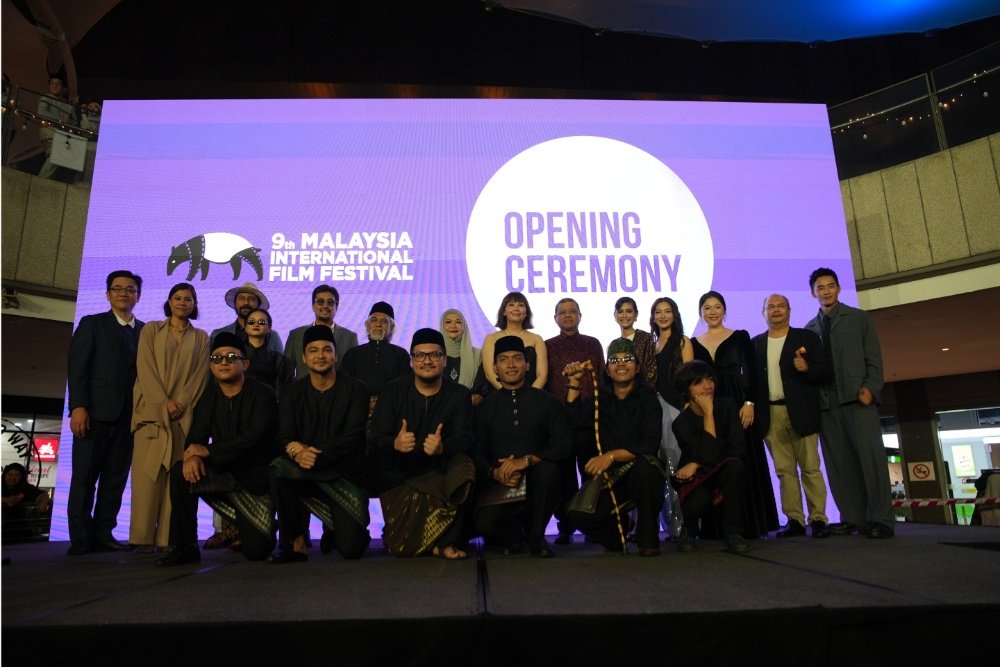
    The ninth Malaysia International Film Festival (MIFFest) opened on July 18 at MyTown Shopping Centre, kicking off an eight-day showcase of international cinema and marking the festival’s official recognition from ASEAN Records.

    The opening ceremony drew filmmakers, industry leaders and stars to a red carpet ahead of the evening’s program.

    Joanne Goh, founder and president of MIFFest, delivered the welcome address alongside this year’s festival ambassadors, Bront Palarae, Daiyan Trisha and Jack Tan. Goh outlined the inspiration behind the festival’s 2026 theme.

    “This year, our theme is Resonance. Resonance is the lasting echo of a story. It is the emotion that remains long after the credits roll, the conversations that continue beyond the cinema, and the connections that film creates across cultures, generations, and borders,” Goh said.

    Datuk Manoharan Periasamy, chair of Tourism Malaysia, addressed the audience, reaffirming support for MIFFest’s role in strengthening the country’s creative industry and cultural diplomacy. Datuk Bahria Mohd Tamil, deputy secretary general (strategic communications and creative industry) at the Ministry of Communications, and Datuk Azmir Saifuddin Mutalib, CEO of the National Film Development Corporation Malaysia (FINAS), also attended. Goh presented tokens of appreciation to the festival ambassadors during the ceremony.

    The evening’s centerpiece was the presentation of the ASEAN Records title to MIFFest, recognizing the festival’s ASEAN On Screen platform and its Malaysia Golden Global Awards (MGGA) program as a lasting hub for Southeast Asian cinema. Goh accepted the recognition on behalf of the festival.

    “When we introduced ASEAN On Screen, our vision was to create a lasting platform where the stories of Southeast Asia could be celebrated, discovered, and shared with the world. Through cinema, we hope to continue connecting our diverse voices with international audiences and inspiring future generations of storytellers,” Goh said.

    ASEAN On Screen launched in 2025 during Malaysia’s ASEAN chairship and has since become a permanent annual program at MIFFest. The ceremony also recognized the festival’s preliminary selection committee and the jury panels for the semi-final and final stages.

    Following the ceremony, guests moved to GSC MyTown for the world premiere of the festival’s opening film, “Baga: Tomorrow Belongs To No One,” directed by Ariff Zulkarnain. The film unfolds in a devout fishing community on Malaysia’s East Coast, following two young lovers, Jani and Melur, whose plans for the future are upended by an unplanned pregnancy, poverty and addiction, pushing Jani toward the drug trade. Zulkarnain drew on his own upbringing for the story.

    Leading the delegation for this year’s opening film were executive producer Shafiq Yusof, director Zulkarnain and Malaysian actor Syafiq Kyle, alongside Cambodian actress Sarita Reth. Also in attendance were Jojo Goh, actor-director Nam Ron and actress June Lojong, among other guests from Malaysia and abroad.

    This year’s program also includes Russian Film Week, presented with the Ministry of Culture of the Russian Federation, Roskino and Mosfilm, offering free screenings of four Russian films. Additional strands include ASEAN On Screen, Hong Kong Cinema in Flux, New Rhythms of Indian Cinema, Open Air Cinema, masterclasses and industry forums.

    The festival runs through July 25.

  • The Debate Over BIP 110 in Bitcoin Is Intensifying: Michael Saylor Has Published a 110-Point Objection

    The Debate Over BIP 110 in Bitcoin Is Intensifying: Michael Saylor Has Published a 110-Point Objection

    Strategy founder Michael Saylor has published a comprehensive assessment of the BIP 110 proposal, which aims to limit data usage on the Bitcoin network. Saylor notes that while supporters of the proposal share the goals of reducing node running costs, keeping payments accessible, and preserving Bitcoin’s sound money focus, he opposes changing consensus rules as a solution.

    Saylor added that those supporting BIP 110 were acting in good faith, stating that the debate stemmed not from individuals but from the technical and governance risks posed by the proposal. While not defending every inscription, token, file, or application, Saylor said the fundamental question was whether transactions that are valid and payable under existing rules should be blocked at the consensus level on the grounds of controversial use.

    BIP 110 is projected to introduce seven new restrictions to Bitcoin’s consensus rules during its approximately one-year active period. The proposal aims to limit new scriptPubKey sizes, certain payloads, Taproot control blocks, and some Tapscript functionality, while also temporarily disabling the use of the Taproot annex, OP_SUCCESSx, and future witness and Tapleaf versions.

    The proposal also includes an activation model that differs from the standard BIP 9 mechanism. It plans to lower the miner signal threshold from the usual 95% to 55%, implement a mandatory signal period, and eliminate the classic timeout mechanism. According to Saylor, opting for a lower activation threshold in a controversial consensus change increases the risk of chain breakage and economic uncertainty.

    At the heart of Saylor’s objections was Bitcoin’s neutrality. He argued that the BTC network cannot discern whether the data in a transaction is visual, a contract, an authentication record, proof of reserve, or another application to be developed in the future, and therefore, restrictions based on technical forms could also affect legitimate use cases.

    Saylor argued that the concept of “spam” cannot be objectively defined by consensus rules, and that a transaction being deemed meaningless, speculative, or controversial does not invalidate it. According to Saylor, if a transaction complies with existing rules and pays the required fee, societal dissatisfaction with its intended use does not constitute sufficient justification for a change in consensus.

    Saylor noted that BIP 110 does not offer measurable targets regarding node costs, decentralization, transaction fees, and benefits for payment users, adding that bandwidth, storage, UTXO growth, validation overhead, and fee impacts need to be analyzed separately.

    Saylor pointed out that the proposal would close areas reserved for future Bitcoin software updates, such as the Taproot annex, future witness releases, Tapleaf releases, and OP_SUCCESSx. He stated that the fact that these features aren’t actively used today doesn’t mean they’re redundant, adding that these areas were deliberately reserved for future needs.

    Saylor noted that the proposal could affect advanced off-chain contracts similar to BitVM, some builds generated by Miniscript, and custom Taproot scenarios, adding that even a temporary restriction could significantly alter developers’ plans, wallet software, and institutional risk policies for a long time.

    According to Saylor, the temporary nature of BIP 110 does not eliminate the risk. He argues that the activation and expiration dates will create two separate critical consensus thresholds, and that the exemptions granted to historical UTXOs will make the validation rules more complex.

    Saylor stated that although BIP 110 aims to reduce payment fees by limiting data processing, the economic consequences are uncertain, noting that demand could shift to more complex methods or that total transaction fee revenue could decrease.

    Saylor, noting that transaction fees are becoming increasingly important for miner revenue due to the decrease in the Bitcoin block reward with each halving, argued that a decrease in total fee demand could weaken investments in hash power, all other things being equal.

    Saylor also noted that Bitcoin already distributes scarce block space neutrally through its block weight cap and fee market. He said users aren’t required to disclose the purpose of their transactions, and miners can decide which transactions to add to their blocks according to their own policies.

    Related News Chief Market Strategist Reveals Two Predictions in Favor of a Major Bitcoin Bull Run

    Saylor proposed using node, relay, and mining policies instead of consensus changes to address controversial data transactions. He noted that data transport policies in Bitcoin Core are configurable, arguing that miners have the freedom to exclude certain transaction types from their blocks, but that this differs from the entire network invalidating the same transactions.

    He said that if resource usage is proven to be truly disproportionate, narrower regulations based on measurable technical costs rather than transaction intent could be considered. He also suggested working on pruning, on-demand data storage, Layer 2 solutions, and more advanced fee market tools.

    According to Saylor, the most dangerous consequence of BIP 110 will not be the temporary rules, but the permanent precedent it will create. He argued that changing the consensus today to block certain data uses could pave the way for similar demands in the future for privacy tools, new storage methods, stablecoin consensus, token systems, or enterprise applications.

    Saylor stated that no single group in Bitcoin has exclusive authority over consensus, emphasizing the need for broad collaboration among developers, node operators, miners, investors, exchanges, wallet providers, custodians, and institutions.

    Saylor, who also argued that institutional participation is legitimate for Bitcoin, said that companies provide capital, scale, accountability, and continuity, but this does not give institutions special authority to reach a consensus.

    Saylor concluded his 110-point assessment with the view that the solution proposed by BIP 110 is more dangerous than the problem it addresses. He characterized the proposal as the “Bitcoin Iatrogenic Proposal,” meaning that the treatment applied to Bitcoin causes greater harm.

    *This is not investment advice.

  • Bitcoin’s quantum problem gets a recovery tool, but not for Satoshi’s 1.1 million coins

    Bitcoin’s quantum problem gets a recovery tool, but not for Satoshi’s 1.1 million coins

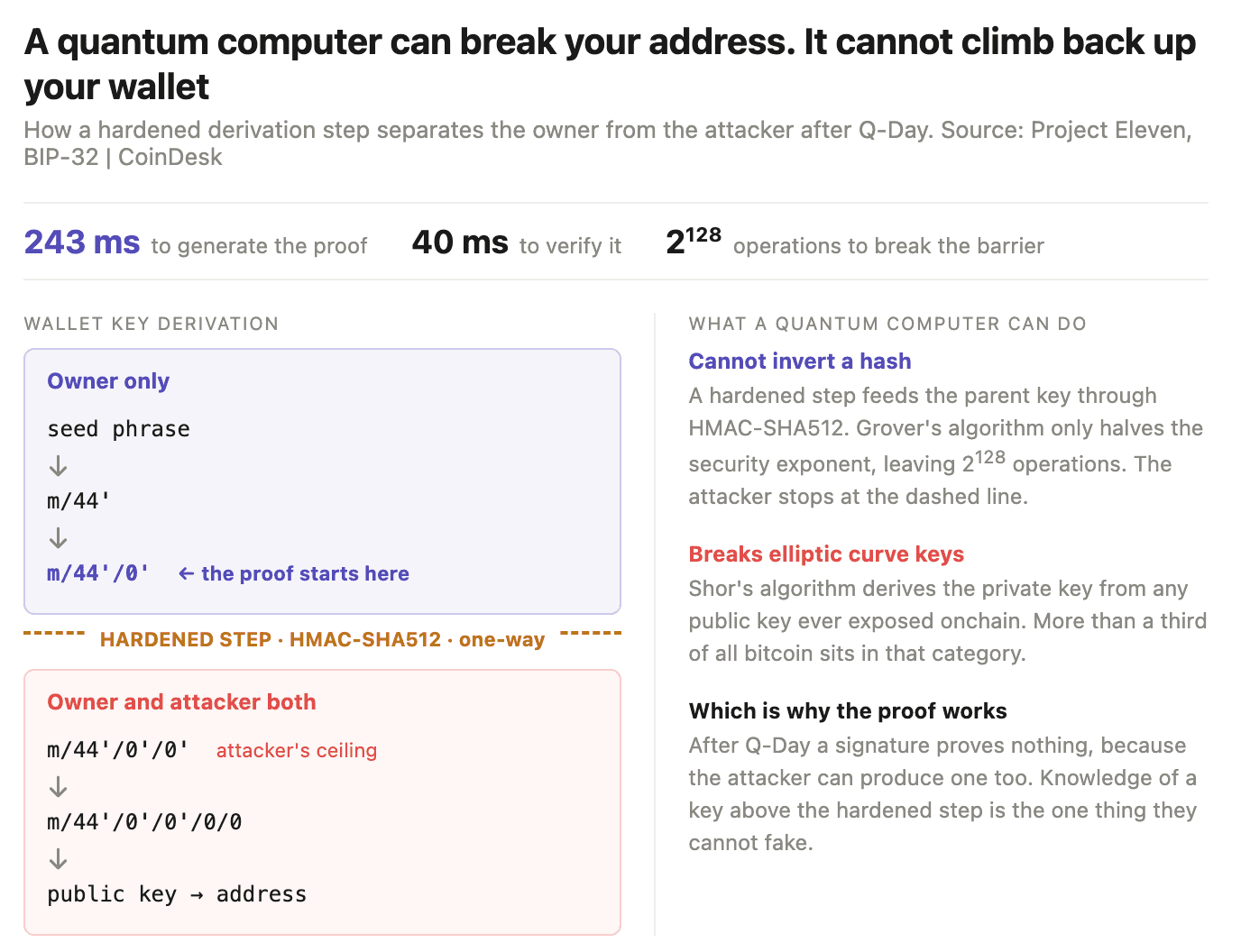
    Bitcoin signatures rely on elliptic curve cryptography, a system in which a private key generates a public key through math that runs only one way. Anyone can check the public key, but nobody can work backward to the private one. However, Shor’s algorithm, a quantum method published in 1994 for problems that ordinary computers cannot crack, can be fed a public key and return the private key that generated it.

    Hashing is a different kind of problem. A hash scrambles an input into a fixed-length fingerprint and cannot be run backward, and the best quantum attack on it, called Grover’s algorithm, only halves the exponent rather than collapsing it, taking a 256-bit hash from 2^256 guesses down to 2^128.

    That is still more guesses than a machine making a billion a second could get through in the lifetime of the universe.

    Modern wallets are built on hashing. A wallet generates addresses in a tree, deriving each key from its parent, and a “hardened” derivation step feeds the parent’s private key through HMAC-SHA512 to produce the child key.

    That is a one-way function. An attacker who breaks an address after Q-Day ends up holding exactly the key held, and cannot climb the tree to the key it came from.

  • Spain fans bring the party to New York before World Cup final

    Spain fans bring the party to New York before World Cup final

    NewsFeed

    ‘King [Messi] abdicates, but the prince [Lamine Yamal] takes the throne!’
    Spain fans filled the streets of New York with chants and songs ahead of the World Cup final against defending champions Argentina. Spain’s supporters are confident a new generation can bring the trophy home.

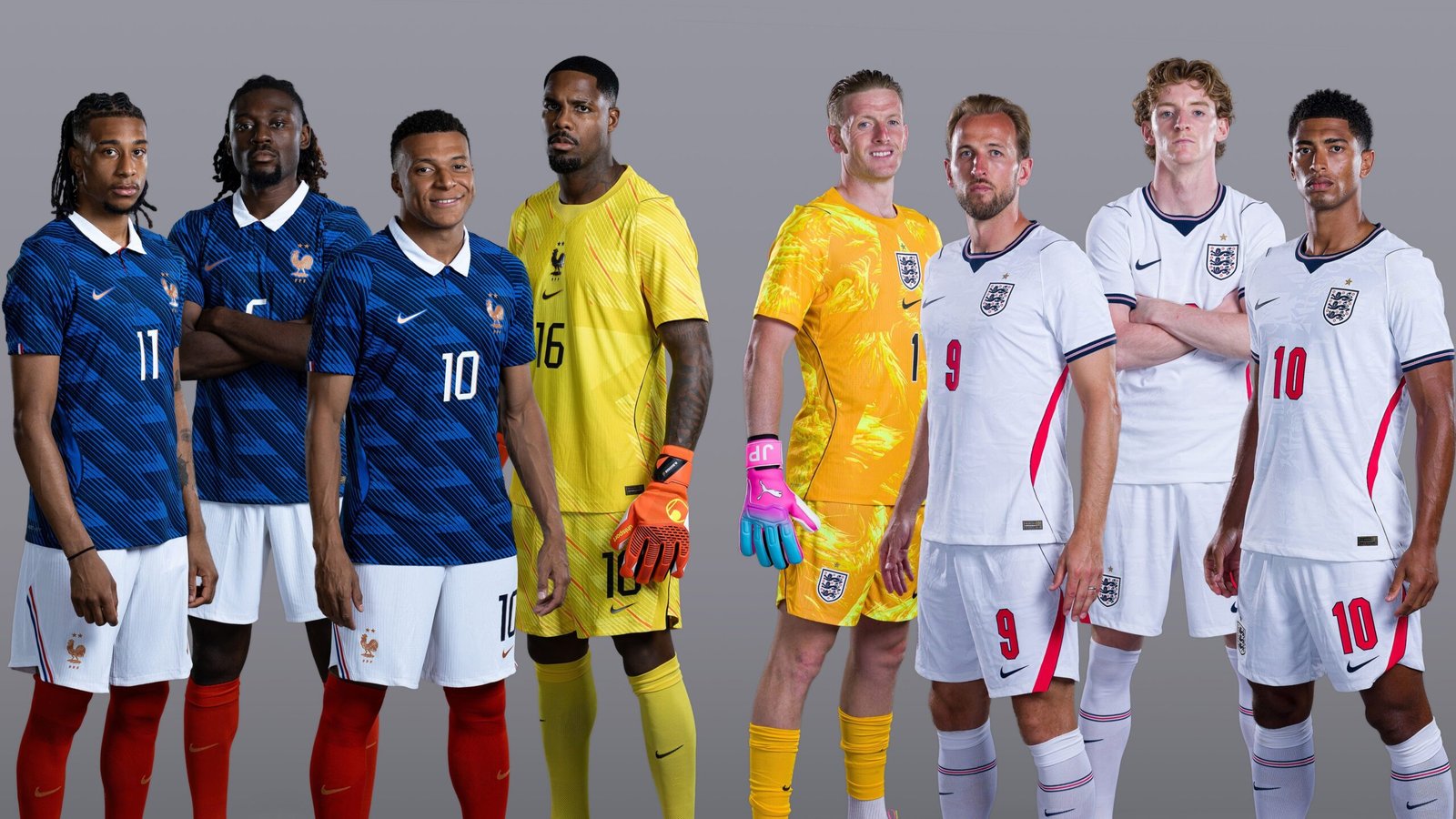
  • How to Watch the France vs. England World Cup Third-Place Match Live for Free

    How to Watch the France vs. England World Cup Third-Place Match Live for Free

    How to watch for free: Today’s bronze final will air for free on global channels like BBC iPlayer/ITV. You can use a VPN like ExpressVPN, our pick for location spoofing, to connect to a UK server to tune in for free. You may also be able to watch for free with a streaming trial from DirecTV, FuboTV, or YouTube TV.


    After a month of adrenaline-pumping action, the 2026 FIFA World Cup draws to a close this weekend with two exciting finals. Argentina and Spain will fight for the sport’s ultimate achievement on Sunday, while France take on England in the bronze final today.

    There have been debates about whether FIFA should continue its third-place competition, but today we’ll find out whether France or England will take home the bronze. It’s also a chance for France’s Kylian Mbappé, England’s Harry Kane, and Jude Bellingham to still aim for the Golden Boot. Mbappé is tied with Lionel Messi at eight goals, while Kane and Bellingham are just behind with six goals each.

    It will be interesting to see if all of them start, as coaches do have a habit of playing rested players for this dead rubber. Whether you’re tuning in to back your team or to see how the Golden Boot race unfolds, here’s how you can watch the France vs. England third-place playoff live using a streaming subscription or for free using a VPN or free trial.


    When Is the France vs. England Third-Place Play-Off?

    The FIFA World Cup bronze final between France and England kicks off at 5:00 p.m. ET on Saturday, July 18, at Miami Stadium in Miami, Florida.


    How to Watch France vs. England Live in the US

    You can watch France vs. England live on Fox or Telemundo. If you don’t have cable and you live in the US, you can watch with a sports streaming subscription, such as DirecTV, Fox One, Fubo, Peacock, Sling, YouTube TV, and more. If you don’t have a live TV or streaming service, you may be able to watch the game with a free trial:


    How to Watch France vs. England Online for Free

    The France vs. England bronze final will air live for free on several streaming platforms across the globe, including:

    These platforms are geo-locked to their respective countries, but you can use a virtual private network (VPN) to watch matches for free from the US or elsewhere. For the France vs. England World Cup bronze final, we recommend ExpressVPN, our top pick for location spoofing. ExpressVPN has servers across the globe, making it easy to mask your actual location so you can access region-locked content. Additionally, ExpressVPN is also an official supporter of the 2026 FIFA World Cup.

    Editors’ Choice

    4.0

    Excellent


    ExpressVPN


    $3.49 Per Month (73% Off for 28 Months)
    at ExpressVPN

    $12.99 Per Month


    Learn More

    Here’s how you can access the France vs. England match with a VPN using BBC iPlayer as an example:

    1. Sign up for a streaming-friendly VPN (like ExpressVPN).

    2. Download the VPN app on your computer, phone, or preferred device.

    3. Connect to a server in the UK.

    4. Visit BBC iPlayer or ITV to start streaming.

    Note: If you’re new to BBC, you may be asked to create an account to access iPlayer. Add a UK postal code on the sign-up page to avoid possible disruptions. I tested this earlier this week to make sure it was still working.

    Usually, the top VPNs that let you connect to servers in other countries aren’t free. But if you already have a VPN subscription or qualify for a free trial, you may be able to use one to watch the FIFA World Cup third-place play-off between France and England at no additional cost.


    France: Road to Third-Place Playoff, Team News

    France's playing XI vs Spain in the 2026 World Cup semifinal

    (Credit: Omar Vega/Getty Images)

    France were the team to beat at this World Cup and played every game until the semifinal as if they were here to rule. In the semifinal, however, they were outclassed, outrun, and left stunned by a Spanish team that had mastered the art of moving the ball with pace and accuracy.

    That said, they have plenty of positives to take from this campaign, especially with regard to their roster’s potential. Kylian Mbappé, their best player, is still just 27 years old. He is second on the all-time World Cup scorers list, has already won the trophy once, and could end up being the greatest World Cup performer ever. Michael Olise, aged 24, is another young player who set the tournament on fire and could serve the country for many years to come. Similar hopes can be rested on several other young talents, such as Bradley Barcola, Aurélien Tchouaméni, William Saliba, Jules Koundé, Désiré Doué, and Manu Koné.

    • Group Games: Beat Senegal 3-1; Beat Iraq 3-0; Beat Norway 4-1

    • Round of 32: Beat Sweden, 3-0

    • Round of 16: Beat Paraguay, 1-0

    • Quarter-final: Beat Morocco, 2-0

    • Semi-final: Lost to Spain, 2-0

    • Top Scorer: Kylian Mbappé (8 goals) | Most Assists: Michael Olise (5)

    Expected lineup: As mentioned earlier, coaches often rotate their squad for this game, so all regulars may not start. That said, this is also Didier Deschamps’ final game as head coach. He is the only Frenchman to win the World Cup both as a player (1998) and a coach (2018), and he may want to wrap up his national career with yet another meaningful achievement.

    If that’s the case, he could play Maignan in goal; Koundé, Upamecano, Lacroix, and Hernández/Digne in defense; Tchouaméni/Kone and Rabiot in defensive midfield; Dembélé, Olise, Doué/Barcola as attacking midfielders; and Mbappé as the lone striker.


    England: Road to Third-Place Playoff, Team News

    England's Playing XI vs Argentina in the 2026 World Cup Semifinal

    (Credit: MAURICE VAN STEEN / ANP via Getty Images)

    England put up some stellar performances throughout the tournament, with Harry Kane and Jude Bellingham in the form of their lives. Against Argentina, though, soccer pundits say that coach Thomas Tuchel made some tactical errors that led to their defeat. England took the lead in the 55th minute with a clinical finish from Anthony Gordon, but Tuchel’s substitutions thereafter focused on guarding their narrow lead instead of increasing it. Argentina then attacked persistently and were rewarded with two goals that clinched a spot in the final.

    Looking back at England’s campaign, this felt like one of the few World Cups where it indeed looked like “it’s coming home.” If it wasn’t for the genius of Lionel Messi, they probably would be in the final with Spain.

    • Group Game 1: Beat Croatia 4-2; Drew Ghana 0-0; Beat Panama 2-0

    • Round of 32: Beat DR Congo, 2-1

    • Round of 16: Beat Mexico, 3-2

    • Quarter-final: Beat Norway, 2-1

    • Semi-final: Lost to Argentina, 2-1

    • Top Scorers: Jude Bellingham, Harry Kane (6 goals) | Most Assists: Bukayo Saka, Anthony Gordon (3)

    Expected lineup: Tuchel will have the services of Jarell Quansah again, following his two-game suspension for dangerous play against Mexico. If the coach picks Quansah, here’s what the playing XI could look like: Pickford in goal; Quansah, Stones, Guéhi, and Spence in defense; Rice, Anderson, and Bellingham in the midfield; and Rogers, Gordon, and Kane up front.


    2026 FIFA World Cup Schedule

    The 2026 FIFA World Cup runs from June 11 to July 19 and will be co-hosted by the US, Canada, and Mexico. This year, the tournament has expanded to 48 participating nations for a total of 104 games.

    • June 11 to June 27: Group stage

    • June 28 to July 2: The knockout stage begins with the first-ever Round of 32 at a FIFA World Cup. The eventual champion will have to win five consecutive knockout games, instead of the former four.

    • July 3 to July 7: Round of 16

    • July 9, 10, 11: Quarterfinals

    • July 14-15: Semifinals

    • July 18: Bronze final

    • July 19: Final

    We’ll be following the World Cup through this weekend, so stay tuned for more.

    The World Cup Has a Secret AI Command Center

    PCMag Logo

    The World Cup Has a Secret AI Command Center

    About Our Expert

  • ‘Call of Duty’ Movie From Taylor Sheridan and Peter Berg Will Be Set in ‘Modern Warfare’ Universe

    ‘Call of Duty’ Movie From Taylor Sheridan and Peter Berg Will Be Set in ‘Modern Warfare’ Universe

    Paramount and Activision’s upcoming Call of Duty movie will be set in the Modern Warfare universe.

    Director and co-writer Peter Berg announced the news Saturday during Fanatics Fest in New York City, confirming that the film will adapt the franchise’s most popular and recognizable subseries.

    Taylor Sheridan, the creator of Landman, the Yellowstone universe, Lioness and more, is co-writing the screenplay for the studio alongside Berg, whose directing credits include Friday Night Lights, Battleship, Lone Survivor and Deepwater Horizon. Sheridan, Berg and David Glasser of 101 Studios are also producing.

    During its CinemaCon presentation in April, it was revealed that the planned theatrical release date was slated for June 30, 2028. The release will coincide with the 25th anniversary of the Call of Duty franchise, which debuted in 2003.

    “I told everyone we were only going to make a movie if it’s right. In David Ellison, we found that partnership,” Activision head Rob Kostich said at the time. “We want to make sure that the authenticity of it is captured on a human level so that it feels really real and infuse that with epic scope.”

    Call of Duty is one of the best-selling video game franchises of all time, with more than 500 million copies sold worldwide. Past installments of the franchise have spanned wars from World War II to Vietnam to the present and future. The latest installment, Call of Duty: Modern Warfare 4, is scheduled to launch on Oct. 23 and follows a war between North and South Korea.

  • Bill Would Ban Chinese Connected Cars in the US—From Sale and on the Streets

    Bill Would Ban Chinese Connected Cars in the US—From Sale and on the Streets

    A bipartisan group of legislators is trying to advance a bill that would essentially put square wheels on Chinese cars in the US. 

    The Connected Vehicle Security Act of 2026 would go miles beyond past moves to make China’s booming auto industry unwelcome in the US and ban the “importation, manufacture, sale, resale, or introduction into interstate commerce” of connected cars made or designed by firms in the PRC as well as Iran, North Korea, or Russia.

    Backers of this measure–starting with Sens. Bernie Moreno (R-OH) and Elissa Slotkin (D-MI), who introduced it as S.4429, and Reps. Debbie Dingell (D-MI) and John Moolenaar (R-MI), who then sponsored a companion bill as H.R.8730–invoke the risk of the Chinese Communist Party requiring surveillance through these vehicles and its history of subsidizing its auto industry.

    “These cars have enormous amounts of data-collection capabilities,” Moreno said on a panel hosted Monday at the American Enterprise Institute in Washington, moderated by AEI fellow Chris Miller. “Imagine TikTok, but on steroids.” 

    (Allegations of Chinese surveillance via the social platform now controlled by a US-led group of investors remain unproven; the Supreme Court only held those concerns credible last January when it upheld a law banning app-store and hosting transactions with TikTok.)

    Citing scenarios of Beijing directing Chinese carmakers to exfiltrate data from connected cars or take control of them remotely, Moreno called these vehicles “obviously an insane national security threat.”

    Sitting alongside Moreno, Moolenaar backed up his risk assessment. “Their national security laws basically require anyone to do the bidding of the CCP,” he said of Chinese carmakers. 

    The Biden administration thought this enough of a risk to issue a regulation in its last days restricting connected-car systems from China. In June, the Commerce Department used that authority to deny Polestar, partly owned by the Chinese automotive giant Zhejiang Geely Holding Group and Geely-owned Volvo, permission to sell its EVs in the US after the 2026 model year.

    A May 15 AEI report noted a report by Norwegian researchers who found that Chinese-made battery-electric buses in use in that country had a component allowing remote shutoff. That conservative think tank highlighted restrictions imposed on Chinese cars by the UK, Israel, Norway, and Poland–for example, barring them from the vicinity of military bases–but did not call for a ban on their import. 

    An Unyielding Statute

    The Connected Vehicle Security Act, like the existing connected-car rule, would allow the Secretary of Commerce to issue waivers to the ban. But at AEI, Moolenaar and Moreno did not suggest that any would be forthcoming as long as China’s current government holds power.

    “We hermetically seal our market,” the senator said. “We go way beyond the current connected vehicle rule to go through the entire supply chain.”

    Moreno brought up Waymo as one company that would have to comply by parking its new Ojai minivans, based on Geely’s Zeekr model. “We’ve had great conversations with Waymo,” he said. “I think as a result of this bill they’re going to shift gears, hopefully […] to a Detroit-based vehicle.” 

    Waymo declined to comment on the record, but that Alphabet subsidiary has already emphasized how connected parts in its robotaxis don’t come from or talk back to China.

    “The technology that collects data and makes our vehicles autonomous—the software, sensors, and computing systems—is developed in the US,” spokesperson Sandy Karp told PCMag contributor Rakesh Agrawal as part of an Ojai test drive in San Francisco last month. “Waymo installs the autonomous driving technology on stripped-down, disconnected OEM-provided vehicles in our Arizona manufacturing facility.”

    The seal that Moreno described would meet land borders with Canada and Mexico, since the statute uses a legal definition of “import” that includes “any bringing in” of a product. The senator said a driver rolling up to a US border crossing in a Chinese vehicle would meet a U-turn sign: “They’ll have to buy another car, because their car will not be allowed in the United States of America.”

    A separate bill, the Protecting America from Chinese Cars Act introduced by Slotkin and Rep. Haley Stevens (D-MI), would make that no-crossings rule explicit, but it has yet to draw more sponsors.

    Cooling Towards China

    Chinese vehicles are off to a fast start in Mexico, with estimates putting the share of PRC-manufactured vehicles in 2025 at 15% to 19% of the total market. But those imports have since plunged after Mexico imposed a 50% tariff starting in January.

    In Canada, meanwhile, Prime Minister Mark Carney has responded to US unfriendliness–including tariffs on its exports and repeated threats of annexation by President Trump–by inking new deals with China that include allowing the import of 49,000 Chinese EVs at a 6.1% tariff. 

    Moreno called Canada’s slight opening of its EV market a “totally crazy move” but did not mention the things Trump has done to earn Canadian ire.

    Canada had begun charging a 100% tariff on Chinese vehicles in 2024, matching President Biden’s imposition of the same rate earlier that year. Governments have usually cited China’s auto subsidies as the reason for these taxes, and Moolenaar and Moreno agreed that they represent unfair competition. “They’ll use trade practices to drive our businesses out of business,” the congressman said.

    In Europe, the continued growth of Chinese EVs has recently led to calls for higher tariffs for the same reason.

    Recommended by Our Editors

    But China’s progress isn’t just a matter of prices. Automakers like BYD, the largest EV manufacturer in the world, have been doing innovative work that has earned recognition from competitors. Last year, Ford CEO Jim Farley, who had a Xiaomi SU7 sedan specially imported for him to drive–called China’s rapid progress as “the most humbling thing I have ever seen.” 

    Moreno, however, suggested that China’s success in EVs was part of a plot to make American expertise in building internal combustion engines irrelevant: “They pulled off the greatest scam on Earth.”

    Privacy, Please

    The House and Senate versions of the connected-vehicle bill have drawn dozens of co-sponsors, but it’s unclear if that will mean anything in a historically unproductive Congress. Moreno said backers hope to get this measure added to the must-pass National Defense Authorization Act spending bill. 

    Meanwhile, people already have good reasons to worry about the privacy of connected cars regardless of the national flag on the sticker. 

    A 2023 report by Mozilla flunked all 25 car brands evaluated on privacy standards, and a 2024 investigation by researchers for Sens. Ron Wyden (D-OR) and Ed Markey (D-MA) found weak data-protection practices across the industry, including at American automakers. 

    Neither lawmaker at AEI mentioned this, so I asked if they had plans to address those anxieties.

    “We should have guardrails to make sure we’re protecting people’s privacy,” Moolenaar said. “But there’s a huge difference between the American government and the Chinese government.”

    Moreno decried defaults that require a customer to “go through 17 different screens” to opt out of having their data circulated. “It should be no unless I actually say yes,” he said. “Let the person choose.”

    Congress as a whole has not acted as if that is a priority, year after year failing to enact any sort of comprehensive privacy statute. This year’s attempt, a Republican-written measure called the SECURE Data Act, is narrower than previous tries, has only been introduced in the House so far, and has only eight co-sponsors listed. Moolenaar is not among them.

    About Our Expert