Uniswap management is preparing to vote on a proposal that would enable protocol fees for the first time in select Uniswap v4 liquidity pools. Separately, a proposal plans to extend the fee mechanism implemented in Uniswap v2 and v3 to Robinhood Chain.
The final on-chain voting process has begun for both proposals. Voting opens on Sunday and will continue until July 26th. Uniswap founder Hayden Adams said they expect the proposals to have a significant impact on the $UNI burning mechanism, particularly highlighting the current trading volumes on Robinhood Chain.
The Uniswap v4 proposal calls for enabling protocol fees in fixed-fee pools, pools created through perpetual swap auctions, and pools using aggregator hooks. The regulation will cover Ethereum, Arbitrum, Base, BNB Chain, Polygon, Optimism, and Robinhood Chain networks.
According to the proposal text, a second vote will be held later for the remaining five networks. This is because Uniswap’s GovernorBravo governance agreement allows a maximum of 10 on-chain transactions in a single offer.
A separate Robinhood Chain proposal by Hayden Adams aims to enable fees on Uniswap v2 and v3 pools on the network. All three protocol versions of Uniswap were made available with Robinhood Chain’s mainnet launch on July 1st.
Related NewsAnalyst: “The Leverage Cleanup in XRP Is Complete; Conditions Are Similar to the Period When It Surged 8x”
According to data included in the proposal, the total exchange volume of Uniswap applications on Robinhood Chain exceeded $6 billion as of July 10th. The Ethereum Layer 2 network, developed with Arbitrum infrastructure, recorded approximately $3.1 billion in decentralized exchange volume in its first week. It was noted that memecoins were predominantly traded in the initial transactions.
The protocol fees collected under both proposals will be transferred to the $UNI combustion mechanism, which was established by the UNIfication governance regulation approved with 99.9% support in December.
With this governance change, protocol fees were enabled in the Uniswap v2 and v3 pools on the Ethereum mainnet, and 100 million $UNI were burned in the Uniswap treasury. However, the implementation of v4 fees was postponed to a later proposal pending the completion of the necessary technical infrastructure.
The fee mechanism has reportedly been expanded to 11 different networks to date. According to the Uniswap v4 proposal, the protocol set a daily record last month by burning 186,000 $UNI in a single day.
Enabling fees in Uniswap v4 requires a more complex infrastructure compared to previous versions. While v2 and v3 used fixed fee tiers, v4’s hook architecture allows pools to change their fees from block to block.
The new proposal creates a management-controlled system that categorizes pools under specific “families” and calculates the fee for each pool according to predefined rules, rather than setting the fee individually.
Both proposals utilize the accelerated governance process adopted under UNification. This process skips the request for comments phase and proceeds directly to on-chain voting after a five-day Snapshot voting period.
Evidence of that shift is growing. Visa’s stablecoin tracker recorded $6.6 billion in volume across 132.4 million retail-sized transactions (those worth less than $250) during the latest 30-day period. Standard Chartered expects stablecoin circulation to increase about sevenfold to roughly $2 trillion by 2028, while agent-led purchases could rise from 1% of e-commerce in 2025 to 12% in 2029. Neobanks capture nearly 40% of new banking accounts globally, boasting over 1.4 billion users.
A step further
Naveen Mallela, Standard Chartered’s global head of payments, also expects the traditional account-based model to change. He believes people will eventually use a wallet tied to their identity instead of separate bank and brokerage accounts.
“Rather than having bank accounts with individual banks or having separate brokerage accounts, you would have a wallet where you’ll have cash, tokenized deposits of some sort issued by different banks, stablecoins, tokenized money market funds, crypto and funds, all of that in one app, one wallet,” he said, clarifying that this was his personal opinion, not a formal Standard Chartered position.
His forecast does not remove banks from the system. The wallet he described could hold deposits and tokens issued by several banks, which would continue providing much of the money, infrastructure and controls behind the services.
As long as we’ve had smartphones, we’ve wanted to charge them faster. Each year, the newest phones come out with incredible advancements in fast charging technology. While a 30W charger used to feel incredibly fast, it’s now a pretty standard charging speed, replaced by blistering figures over 100W in the fastest phones. A few years back, Realme debuted a 150W phone capable of charging to 50% in just five minutes. The iPhone 17 Pro Max’s 40W charger can reach a 50% charge in 20 minutes.
But as phone makers experiment with faster charging, concerns about overheating and battery degradation have risen. Is the device in my pocket just one fast charge away from exploding? In short: probably not, but there are still a few things to know.
Why Phone Batteries Lose Charge Capacity Over Time
Ever wonder how a phone actually charges? Lithium-ion batteries (the type used in iPhone and Android devices) have two layers—lithium cobalt oxide and graphite. When lithium ions move from the graphite layer to the lithium cobalt layer through an electrolyte solution, electrons get released. When you charge the battery, the ions move back in the other direction and are stored to be released later.
Your Phone’s Battery Sucks. Here’s How to Fix It
That release of energy creates the heat you may feel radiating from the back of your phone after a long charging session or heavy use. And, yes, that heat can damage the battery in the long term. However, I need to stress that li-ion batteries have become smaller and more efficient over the years. They can handle more charge cycles—going from depleted, to full, and back down again—before they begin to lose their charge capacity.
For a visual breakdown, I think the below video from tech YouTube channel Branch Education offers a helpful representation.
As your smartphone goes through charge cycle after charge cycle, it degrades naturally. This is unavoidable. Over time, the salts in the electrolyte solution within the battery can crystallize, forming solids that block the transmission of ions through the solution. If fewer ions get through, fewer electrons are released, and the battery can’t provide as much power as it did when it was new.
Additionally, if you put more power into the battery than it’s designed to accept, it can disrupt the delicate balance inside a Li-ion cell. This can remove too many lithium ions from the battery’s internal structure. And once that lithium’s gone, you can’t really put it back.
These processes can happen more quickly if your phone is exposed to excessive heat, such as when you draw a lot of power from the battery at once with a fast charger. However, it’s worth noting that the same thing can happen just by leaving your phone in a car on a hot summer day.
(Credit: Samsung)
How Phones Mitigate Battery Damage
In the early days of fast charging, batteries got very hot when charging quickly. Phones weren’t built to vent excess heat from the battery effectively, so they were more prone to overheating. But guess what? Current phones are now much better at ventilation and don’t have this issue. For instance, phones now have heat shields, thermal layers, and even cooling pipes to move heat away from the battery. I’ve even seen some gaming phones with cooling fans.
Apple’s iPhone has battery optimization settings (Credit: Apple)
Plus, phones are now built with features that manage the flow of power going to the battery during a charge. Your phone will stop taking in power once the battery is full, even if it remains plugged in, which is why I’m not worried about my phone bursting into flames when I charge it overnight.
Adaptive charging features also help optimize things by “learning” your behavior so the phone holds off on charging to 100% until closer to when you actually need it. Multi-stage charging means more power is directed into the battery at first, but trickles off as it approaches 100%, so you’re not getting 80W of power the entire time.
Manufacturers are also always developing new charging protocols and battery designs to help get more juice to phone batteries in less time. In recent years, Apple has added a collection of battery performance settings and Google introduced a Battery Health Assistant to its line of Pixel phones that can automatically adjust voltage and charging speeds. More advanced batteries, cables, and power supplies will help manage heat and cut down on any adverse effects, too. So, really, don’t worry about using fast charging.
Older phones have fewer options, but if you have an iPhone 15 or later running iOS 17.4, I recommend checking Cycle Count, which can help you track how heavily the battery’s capacity has been used up. On iOS 26, you also get a redesigned Battery Settings page with improved battery usage statistics and a new feature to extend battery life.
Android users have fewer options. To see cycle counts, open Settings > About phone > Battery information on Google’s Pixel 8a and later. Samsung users will need the Samsung Members app to see cycle counts and other battery health information. If your device isn’t compatible, I recommend using one of several third-party diagnostic apps to find the information you need.
(Credit: Apple)
Should You Use Fast Charging?
So, is fast charging really that bad for your phone? Well, yes and no. It can be hard on your battery, especially if it runs for a long time at high power. But modern phones are now designed with battery charging management features to make serious damage far less likely. But keep in mind that, as YouTuber Marques Brownlee points out, a lot of these advancements are still too new to know whether they work the way they should in the long term.
Right now, I’m comfortable knowing my phone has features that are supposed to help keep it running as intended. However, I’ll admit that we do ultimately need more data to answer the question definitively, and not just take the manufacturer’s word for it. For now, if you take care of the battery (and follow our advice), this degradation will happen more slowly. Just remember this happens to all Li-ion batteries eventually, no matter what you do, so don’t beat yourself up too much over it.
About Our Expert
Experience
John is a writer/photographer currently based in Houston, Texas. He’s written on everything from politics to crypto wallets and worked as a photojournalist covering notable events like the Astros Victory Parade and the Day for Night Music Festival. Current hobbies include learning to shoot 35mm film, building Spotify playlists, and working his way through that menacing TBR stack on the nightstand.
Paying for Microsoft 365 every month is unnecessary. Microsoft Office 2024 Professional Plus offers a stupidly cheap route with a one-time purchase, installed directly on your PC, for less than $60.
Office 2024 Includes
Word, Excel, PowerPoint, Outlook, OneNote, and Access on one Windows 10 or 11 PC
A refined dark mode and a cleaner, more modern interface
Stronger security and compliance tools compared with older versions
Built for Reliability
Runs fully offline once activated, no internet connection needed to open a document or build a spreadsheet
Saves in standard Office formats (.docx, .xlsx, .pptx), so files open cleanly whether you share them with someone on Microsoft 365 or an older copy of Office
Installs locally, so there are no recurring payments, renewal reminders, or surprise price hikes down the line
The license key and download link arrive by email right after checkout
License ties to your device rather than a Microsoft account, so there’s no ongoing sign-in required just to keep using it
For anyone still deciding between renting Office each year and owning it outright, this is as low as the newest version gets.
Prices subject to change. PCMag editors select and review products independently. If you buy through StackSocial affiliate links, we may earn commissions, which help support our testing.
About Our Expert
StackCommerce Team (Sponsored)
Experience
Products featured in these stories are selected by our partners at StackCommerce. If you buy something through links on our site, PCMag may earn an affiliate commission.
If you purchase an independently reviewed product or service through a link on our website, The Hollywood Reporter may receive an affiliate commission.
A great handbag can instantly elevate any wardrobe, but finding a designer style on sale is a rare opportunity. Nordstrom’s Anniversary Sale is giving shoppers the chance to save on luxury handbags, with limited-time discounts on coveted styles that rarely receive markdowns throughout the year.
The annual shopping event is back with some of the retailer’s biggest savings across fashion, beauty and accessories. Early access for Nordstrom’s Anniversary Sale began Tuesday, July 14, while the sale opens to all shoppers on Saturday, July 18 and runs through Sunday, Aug. 9.
This year, the sale features some of its steepest discounts yet on sought-after designer handbags from luxury labels like Tory Burch, Marc Jacobs, Coach and Tory Burch. With select styles marked down by more than $500 and many luxury bags reaching nearly $1,500 off in total, shoppers have a rare opportunity to add coveted pieces to their collections before the best deals sell out.
Nordstrom’s Anniversary Sale 2026 Dates
Nordstrom’s Anniversary Sale opens to the public on Saturday, July 18 and ends Sunday, Aug. 9. Since designer handbags are among the most popular categories during the annual savings event, shopping early is a major advantage for those looking to secure their favorite styles.
Why Nordstrom’s Anniversary Sale Is the Best Time to Buy a Designer Handbag
A designer handbag is more than just an accessory — it’s a wardrobe investment, which makes finding one on sale even more exciting. Nordstrom’s Anniversary Sale offers a rare chance to save on current-season styles and elevated designs that don’t typically receive major discounts.
Whether you’ve been eyeing an everyday crossbody, a polished work tote or a statement handbag, the annual sale brings together some of the most sought-after styles at a lower price point. For anyone looking to add a luxury accessory to their collection, it’s one shopping event worth watching before prices go back to normal on Aug.10.
Nordstrom Anniversary Sale 2026: Best Designer Handbag Deals
Limited Edition
Tory Burch Convertible Crossbody Bag
Clean lines and a convertible design make this minimalist bag an easy pick for everyday wear and nights out alike.
a nordstrom Exclusive
Coach Pebbled Crossbody Bag
If you haven’t already, it’s time to snag a sleek Coach bag made from richly pebbled leather.
Vince Medium Vivian Raffia Hobo Bag
The woven raffia and smooth leather trim give this slouchy hobo bag an effortless summer look, while the removable zip pouch keeps your essentials organized.
AllSaints Alba Shine Leather Shoulder Bag
Channeling a sleek aesthetic with a hint of rocker influence, this shiny leather tote features another slouchy east-west silhouette that feels both timeless and trendy.
Longchamp Le Foulonné Leather Crossbody Bag
Crafted from supple cowhide leather, Longchamp’s Le Foulonné crossbody has been a wardrobe staple since its 1978 debut.
Major Savings
Stella McCartney Raffia Trim Crossbody Bag
With its woven raffia finish and handcrafted Italian design, this crossbody is made for warm-weather outings. The nearly 50 percent discount is just the icing on the cake.
Kurt Geiger London Medium Chelsea Slouch Hobo Bag
With eagle-head hardware and a slouchy silhouette, this hobo bag make the ’70s design look sleek and elegant.
Marc Jacobs The Leather Snapshot Shoulder Bag
Looking for an everyday shoulder bag? This compact Marc Jacobs style combines a modern barrel silhouette with understated logo hardware.
On May 1, the Academy of Motion Picture Arts and Sciences announced a major change to the eligibility rules for the best international feature film. No longer would a film have to be nominated by the country of origin; henceforth, it could land in the pool of nominees by winning an award from a list of high-profile international film festivals. Moreover, in recognition of the fact that a person not a nation actually directs the film, the director’s name and not the country’s will be engraved for posterity on the statuette plaque.
The new protocols for the best international film category, née best foreign language film, are the latest rejiggering in what has historically been one of the more contentious and confusing Oscar categories. Of course, under whatever rules, Oscar validation can mean the difference between multi-platform distribution and oblivion in the American marketplace.
So, despite the provincialism of allotting a mere five slots to the output of the rest of the planet, foreign filmmakers have been eager to perform due obeisance before the Academy, which since 1957 has granted offshore films a regular seat at the festivities. (The first winner was Federico Fellini’s La Strada.) Before that, the Academy doled out an Honorary Oscar when the impact and excellence of a foreign film became too conspicuous to ignore, as with Italy’s The Bicycle Thief in 1949 or Japan’s Rashomon in 1952. The honor was voted on by the Board of Governors, to save the full Academy membership from reading subtitles. (Today the nominees are chosen by an Academy-approved Select Committee). Costa-Gavras’s Z (1969), nominated for best picture and best foreign language Film (it won the latter), was a landmark border crossing and, in 2020, Bong Joon Ho’s Parasite broke the language barrier by becoming the first non-English language film to win best picture.
However, of all the foreign-born incursions into top-tier Oscar territory, the first breakthrough is the most curious. At a time when subtitled films were a species of exotica, and with no major studio backing, Jean Renoir’s antiwar classic La Grande Illusion (1937) — easily translated as Grand Illusion — landed a nomination in the best picture slot, which was then called outstanding production and included ten candidates. (The other nominees were Boys Town, The Citadel, Pygmalion, Test Pilot [all MGM], Four Daughters, The Adventures of Robin Hood, Jezebel [Warner Bros.], Alexander’s Ragtime Band [20th Century-Fox] and You Can’t Take It with You [Columbia]. The last, directed by Frank Capra, won.) To be sure, in 1949 a British invader, Laurence Olivier’s Hamlet, won best picture, but it was at least in English and credited to an A-list screenwriter. But how did Grand Illusion manage to crash the exclusive party?
Poster art for ‘La Grande Illusion’ circa 1937.
In 1938, Jean Renoir was not a known name in the US, much less a world-famous auteur. It seems unbelievable that two of his early masterpieces — Boudu Saved from Drowning (1932) and The Crime of Monsieur Lange (1936) were not released in the US until 1967 and 1964 respectively. Renoir’s version of Maxim Gorky’s The Lower Depths (1936) and his Popular Front documentary The People of France (1936) got only modest arthouse circulation and critical attention, with reviewers sure to identify the director as “the son of the famous French impressionist Auguste Renoir.” Only after Grand Illusion was Renoir acknowledged in his own right as a French master in another medium.
Made in Paris by Les Realisation d’Art Cinematographyque, Grand Illusion was distributed stateside by World Pictures Corp., operated by the legendary foreign film magnate Irvin Shapiro, who began his career importing The Cabinet of Dr. Caligari (1920) and capped it by exporting The Evil Dead (1985). Like almost all films about the Great War made in its aftermath but before its sequel, it is somber in tone and pacificist in sentiment. There are no scenes of thrilling aerial combat or over-the-top attacks in no man’s land. “A War Story without War Scenes!” warned the advertising. Renoir knew the material first hand, having served as both a cavalry officer and a pilot in the Great War and been wounded twice.
Two French pilots — Captain de Boeldieu (Pierre Fresnay), a white-gloved aristocrat, and Lieutenant Maréchal (Jean Gabin), a gruff former machinist — are shot down over German lines by the ramrod-straight Prussian aviator Captain von Rauffenstein (Erich von Stroheim). A chivalric knight of the air, von Rauffenstein plays the gracious host to his prisoner-guests before they must depart for a prison camp. The accommodations in the German POW camp are not half bad and the company is great. De Boeldieu and Marechal encounter a diverse crew of colorful countrymen — a comedian, a literary scholar, and the son of a wealthy Jewish family, Lieutenant Rosenthal (Marcel Dalio), a stalwart solider who generously shares his bountiful food parcels. (The affirmative portrait of Rosenthal was certainly by way of apology for the treatment of the most famous Jew in French military history, Captain Alfred Dreyfus, who had just died in 1935.)
Of course, the prisoners are digging a tunnel to escape. “A golf course is for golf, a tennis court for tennis, a prison camp for escape,” observes de Boeldieu. When not excavating and eating Rosenthal’s bread and cheese, the men rehearse for a musical comedy performance featuring a chorus line of men in drag. The shenanigans are interrupted by news that the French have retaken Fort Douaumont, marking the end of the carnage at Verdun. In an outburst of patriotism, the prisoners rise to sing “La Marseillaise,” a scene that ranks as the second most stirring rendition of the French National anthem in motion picture history.
As recidivist would-be escapees, de Boeldieu, Marechal, and Rosenthal are transferred to an impregnable medieval fortress, commanded by Captain von Rauffenstein, now burnt, broken in body, and wearing a neck brace. Knowing their days of bloodline privilege are numbered, the German and the French aristocrat bond, their class affinities binding them more tightly than the uniforms that separate them. Renoir told film historian Arthur Knight that if a French farmer and a French financier dined together, they would sit in uncomfortable silence, but if a French farmer and a Chinese farmer dined together, they would find plenty to talk about.
Still, a French prisoner must do his duty: de Boeldieu gallantly stages a diversion so Maréchal and Rosenthal can escape, during which a reluctant von Rauffenstein is forced to shoot his class comrade. On his death bed, de Boeldieu accepts the fortunes of war as Von Ruffenstein grieves.
The third act finds Maréchal and Rosenthal scurrying through the woods and fields, squabbling and miserable, until they come upon a farmhouse run by a fetching German war widow (Dita Parlo) with an adorable daughter. She takes them in, gives them shelter and food, and falls hard for Marechal, 1937 being the year of peak Jean Gabin. In too short a time, though, the pair must leave the idyll. Against odds, they escape into Switzerland. The guards on the German side see no point in firing as, in the distance, the men plod through the snow to freedom. In Great War territory, this counts as a happy ending.
Marcel Dalio, Jean Gabin and Pierre Fresnay in ‘La Grande Illusion.’
Everett
On June 8, 1937, LaGrande Illusion premiered at the 1250-seat Marivaux Theater in Paris, to a packed house made up of “members of Paris society, Paris cinema and theater circles, writers and press representatives” who, at the end, “gave long and loud applause.” The French critics, then as now a surly and hard-to-please lot, were unanimous in praise: “an important and extremely happy event in French cinema history” (Le Temps); “a masterpiece of cinema”; (Mariane); and “a very fine film, a beautiful human work” (Oeuvre). In the theater that night was Pierre Autre, Motion Picture Herald’s man in Paris, who first sent word back to American readers, a rave that has stood the test of time. “La Grande Illusion is, by far, the best French film of the year, up to date — in fact, it is one of the best French films ever made.” The Hollywood Reporter also predicted that “the smash hit” should “go well in the States.”
It did better than well. In America, Grand Illusion became the most widely circulated and highly praised foreign film of the 1930s.
On Sept. 12, 1938, Grand Illusion opened at the newly refurbished Filmarte Theater in New York with columnist Dorothy Thompson, novelist Fannie Hurst, playwright Clifford Odets, and actress Aline MacMahon in attendance. The Filmarte was run by a pioneering importer of foreign film, Jean H. Lenauer, whose arthouse was emblematic of what were called “sure seaters” in the trade because a small but devoted clientele was sure to buy a ticket to whatever foreign film happened to be booked. Grand Illusion played the Filmarte for a record-breaking 27 weeks. The lobby was decorated with reproductions of Impressionist paintings by Auguste Renoir.
Meanwhile, the word on Grand Illusion was getting out beyond the insular arthouse crowd. Samuel Goldwyn called it “the most brilliantly directed film I have seen in years — a challenge to Hollywood.” Producer Walter Wanger, director Mervyn LeRoy, and the actresses Lillian Gish and Helen Hayes also offered endorsements. The New York Film Critics named Grand Illusion the year’s best foreign film. The National Board of Review dispensed with qualifiers and named it “the best film of the year from any country.” The Film Daily ran out of superlatives and finally just said, “you owe it to yourself to see this picture — it will send you out thinking.”
Some of the best notices went to von Stroheim, basically radioactive in Hollywood since Joseph P. Kennedy booted him off the set of Queen Kelly in 1929. In TheNew York Times, Frank Nugent chided Hollywood for its “folly in permitting so fine an actor to remain idle and unwanted.” Von Stroheim responded in character. “You can’t expect a director to enjoy acting when directing is the nearest thing to being God,” he said. “I have enjoyed acting in pictures directed by a director called Eric von Stroheim, and written by a writer called Eric von Stroheim.”
To break out of the arthouse ghetto, however, Grand Illusion needed a transit visa into the mainstream exhibition market, namely a Production Code seal. On July 29, 1938, Irvin Shapiro duly applied for the imprimatur from Hollywood’s censorship regime. Unsurprisingly, the Code guardians asked for a few “slight deletions” — a shot of a prisoner rubbing a pair of silk underwear, the use of the word “damn,” and a reference to a prisoner who tries to escape dressed as a woman (“Quite amusing,” comments a friend. ”Not so amusing when a sergeant mistook me for one,” he replies.). Also concerning was “the racial angle in reference to Rosenthal” — that is, an antisemitic insult aimed at him once in anger, once in jest, by Maréchal. But this was a matter left “solely for [Shapiro] to decide.” Shapiro decided to keep the insults. On Nov. 23, 1938, after the requested cuts were made, the PCA issued Grand Illusion a Code seal. The Roman Catholic Legion of Decency also gave it clean bill of health, rating it “AI: unobjectionable for adults.”
With the Code imprimatur, Grand Illusion spread out beyond the arthouses and played the RKO, Warner, and Publix circuits. Reviews and ads were careful to explain to the first-time foreign filmgoers that “English titles translate the dialogue.” The box office thrived on word of mouth, repeat business, and high school French teachers dragging their classes to screenings.
Grand Illusion was also fortunate to hit the crest of an antiwar zeitgeist. Another great war, with less chivalric Germans, was looming on the horizon: in March 1938, the Nazis annexed Austria; October saw the invasion of the Sudetenland, and on Nov. 9-10 the Reich-wide pogrom now known as Kristallnacht was launched. For many Americans, a film about what Variety called “the futility of mankind’s armed conflict” had ominous relevance.
Not that the antiwar message was universally embraced. Though Grand Illusion won “the most artistic ensemble” award at the Venice Film Festival in 1937, it was banned by the Italians under pressure from Nazi Germany on the grounds that the film “has an anti-German tendency and offends Germany’s honor.” Actually, what offended the Nazis was the sympathetic portrayal of Rosenthal. The Nazis also took more active measures to suppress the film. In 1938, film historian Herman G. Weinberg reported that on the very day that the Nazis moved in to Vienna [March 13, 1938], “Grand Illusion was taken off the screen in the middle of a reel by the storm troopers.” Renoir regarded the shut-down “as a signal honor — and a decoration.”
Jean Gabin, (left), Pierre Fresnay, (center), Marcel Dalio, (right) in ‘La Grande Illusion.’
In America, the reception of Grand Illusion was less violent but still passionate: isolationists and anti-Nazis alike adopted the film for their cause. On Jan. 12, 1939, a special “Congressional Night” screening of Grand Illusion at the Belasco Theater in Washington, DC was arranged for senators and congressmen because, said the management, “the picture’s indictment of warfare will be a message of interest to not only the Committees of Foreign Affairs and Foreign Relations, but to legislators generally.” The ardent isolationist Congressman Hamilton Fish (R-NY) blurbed the film as “an antidote to war hysteria.” From the other side of the ideological spectrum, anti-Nazis interpreted the tolerant and pacifist spirit of the film as a rebuke to Nazi eugenics and militarism. “It will give you hope for humanity and patience and inspiration in the fight against the Nazi syphilis,” said Mike Gold in the Daily Worker. In Los Angeles, the Hollywood Anti-Nazi League sponsored screenings of Grand Illusion.
Ultimately, the critical buzz and cultural impact of Grand Illusion reached into the ranks of the Academy voting pool. The timing was fortuitous. In accord with newly agreed to protocols adopted by the Academy Rules Committee on Dec. 20, 1937, selection of the nominees for Outstanding Production was now open to all eligible voters (whereas only directors selected the best director nominees and actors the Best Actor and Actress nominees and so on).
On Jan. 23, 1939, the nomination ballots were sent out to 4,000 Academy members; they had to be returned by February 3. By then Grand Illusion had been playing in New York since its premiere in July and in Los Angeles since November 1938. When the voting went down, every savvy person in the motion picture industry had certainly seen it. Its resonant timeliness and manifest excellence (everyone knew it was a work of genius on sight) catapulted Grand Illusion into the top ten. For Jean Renoir and Irvin Shapiro, the cliché was true: it was an honor just to be nominated.
Jean Gabin and Marcel Dalio in ‘La Grande Illusion.’
The recognition from the Academy kept Grand Illusion circulating. In New York, after ending its run at the Filmarte, it moved over to the 68th Street Playhouse, another landmark arthouse.
In September 1939, upon the outbreak of the war in Europe, World Pictures Corp. re-released Grand Illusion with a new publicity campaign tailored to the moment. “Never so timely!” exclaimed the ads. “They said the Europe of 1914-1918 would never happen again—but!” Renoir’s response — you can picture him giving a resigned Gallic shrug — was laconic. “In 1936, I made a picture in which I tried to express all my deep feelings for the cause of peace. It was very successful. Three years later the war broke out.”
By then, von Stroheim had offered his services to the French army, which thanked him politely but declined. Back in Hollywood, he played sinister Nazis in Five Graves to Cairo (1943) and The North Star (1944). In 1941, Renoir also came to Hollywood. Darryl F. Zanuck, a great admirer of Grand Illusion, signed him to a deal at 20th Century-Fox, but after an unhappy experience with the Tobacco Road-ish Swamp Water (1942), Renoir moved to RKO for This Land Is Mine (1943), about French resistance under the Nazi occupation, and United Artists for The Southerner (1945), a social realist drama about sharecroppers that was a genuine hit. After TheWoman on the Beach (RKO, 1947), a moody noir with Joan Bennett as the woman, he returned to Europe for a postwar blossoming in Technicolor that included The Golden Couch (1952), which exposed Americans to the Commedia dell Arte, and French Can Can (1955), set during the Belle Epoque. He later made his home in Los Angeles, where he died in 1979, still tormented by a leg wound from the Great War.
The story of Grand Illusion has a coda that Captain de Boeldieu and Captain Von Ruffenstein might have appreciated.
In June 1940, when the Nazis barreled in to Paris, Henri Langlois, the archivist-programmer of the Cinematheque Francaise, was desperate to protect his collection of French cinema — including the original 35mm negative of Grand Illusion which Nazi Propaganda Minister Joseph Goebbels ordered seized and destroyed. Before the war, however, at the first meeting of the International Federation of Film Archives, held at the Museum of Modern Art in 1939, Langlois had made friends with Franz Hensel, head archivist for the Reichsfilmkammer, the motion picture branch of Goebbels’s propaganda ministry. Hensel was now a Nazi major stationed in Paris during the Occupation. Going seriously rogue, he collaborated with Langlois to safeguard the treasures of the Cinémathèque Française, which Langlois had hidden in the basement of the Palais de Chaillot Hotel. Described by TheHollywood Reporter as “a Nazi who apparently cared more for cinema than party allegiance,” Hensel rescued the negative of Grand Illusion despite the film being deemed “cinematic public enemy No. 1” by Goebbels. When the Nazis confiscated the negative and shipped it back to Berlin, Hensel safeguarded it in the Reichsfilmarchiv vaults in Berlin until the Allied victory.
Berlin was in the Soviet sector. In 1945, according to an account by Stuart Klawans in TheNation, the Russians transported the negative back to Moscow and deposited it at Gosfilmofund, the Soviet film archive, unaware of its value. Eventually, Soviet and French film archivists realized what they had. In 1999, a clean print of Grand Illusion was struck from the original negative and released by Rialto Pictures. This is the definitive version currently in circulation.
It probably never happened but I like to think it is just possible that in 1939 Langlois and Hensel cut out from the film conference at MoMA and wandered up to the 68th Street Playhouse to catch a screening of Grand Illusion.
*** Author’s note: I want to thank the indispensable Louise Hilton, archivist at the Margaret Herrick Library, for facilitating access to the Production Code files on Grand Illusion.
On the eve of the $GENIUS Act’s first anniversary, the stablecoin market holds about $310 billion, including roughly $184 billion in $USDT and $73 billion in $USDC.
President Donald Trump signed the law on July 18, 2025, creating a federal framework with one-for-one liquid reserves, redemption rights, and monthly reserve disclosures for a market that moved faster than the rulebook.
Federal Reserve researchers measured stablecoin capitalization at $317 billion on Apr. 6, up more than 50% from early 2025, and recorded a 50% increase in Ethereum stablecoin transaction volume since enactment. As of July 17, core implementation measures are still in proposal form.
Kyle Sonlin, president and co-founder of Global Settlement Network, said his conversations with governments and institutions now start from acceptance of stablecoins as financial infrastructure, and his team spends “far less time explaining why stablecoins matter.”
Permission reached the sales desk
Sonlin described $GENIUS as a credible federal direction that let banks, payment companies, and infrastructure providers commit money to longer-term plans.
He said that financial infrastructure rarely reorganizes within 12 months, and companies kept preparing for a regulated stablecoin market as agencies worked through implementation.
Triple-A CEO Eric Barbier sees the commercial result inside the enterprise sales funnel. His payment company has recorded more businesses moving from evaluation toward implementation, plus a “marked reduction” in sales cycles for enterprise customers that enable stablecoin payments through its platform.
Barbier’s evidence covers Triple-A’s own pipeline, providing the legitimacy thesis with a concrete operational measure.
Visa’s expansion offers a larger institutional reference point, as its stablecoin settlement pilot supported nine blockchains by April and reached a $7 billion annualized settlement run rate, up 50% from the previous quarter.
On July 16, Visa introduced an enterprise platform that provides financial institutions and fintech firms with access to stablecoin storage, redemption, minting, and burning through a single Visa-managed environment.
The sales environment now has a recognized product, a federal direction, and payment incumbents building access layers.
Deployment depends on banks, custody arrangements, reserve operations, and compliance teams that interpret unfinished rules for each relationship.
Banking friction survives
Diogo Cassinelli, sales and partnerships manager at Trace Finance, said that clarity on issuance addressed half of the operating problem.
Cross-border payment companies still need each banking partner to make an independent compliance judgment about how stablecoins enter accounts, leave accounts and settle across jurisdictions.
Cassinelli said those reviews add “months to timelines that should take weeks,” and the cost repeats whenever an operator enters a new country or adds another bank.
Stablecoin providers can close a customer faster under $GENIUS, then spend longer connecting that customer to the banks and payment providers that move the money.
The $GENIUS Act shortened customer sales cycles as bank-by-bank compliance, custody and settlement reviews continued to slow stablecoin integration.
Enterprise buyers now understand the use case and accept the federal direction. Banking partners still need a shared legal and supervisory standard that lets compliance teams approve the same activity consistently.
Edwin Mata, CEO and co-founder of Brickken, placed that plumbing inside a larger capital-markets architecture.
Regulated dollars can provide the cash leg for tokenized securities, private credit, investment funds, and asset servicing. The US opportunity extends from payment acceptance into issuance, distribution, and settlement across on-chain financial products.
Regulatory access sets the field
Alex Witt, general partner at Verda Ventures, gave the first-year verdict a harder edge. He credited $GENIUS with legitimizing the sector and drawing institutional firms into the federal perimeter.
Witt also argued that charter decisions and product launches can give selected firms an early advantage before regulators complete the operating rules.
The Office of the Comptroller of the Currency conditionally approved national trust bank applications or conversions involving Ripple, Fidelity Digital Assets, BitGo, Paxos, and First National Digital Currency Bank in December 2025.
Tether launched USA₮ in January 2026, with Anchorage Digital Bank as the issuer and Cantor Fitzgerald as the reserve custodian and preferred primary dealer.
Those moves show companies building toward $GENIUS before its effective date. They also concentrate early access among firms that already have capital, legal teams, banking partners, and federal relationships.
Startups face the same unfinished framework with fewer resources to absorb repeated compliance reviews.
The OCC opened its broad implementation proposal in February, and Federal agencies published an interagency customer-identification proposal in June. Public comments stay open through Aug. 21, more than a month beyond the anniversary deadline Congress set for regulations.
The January test
The Senate Banking Committee advanced the CLARITY Act 15-9 on May 14, leaving the bill short of a floor vote.
In the bull case, final $GENIUS rules and further CLARITY progress give banks a common compliance reference, contract integration timelines, and turn regulated stablecoins into routine settlement assets for payments and tokenized markets.
The bear case gives early access durable value, as conditional charter approvals, incumbent payment networks, and established banking partnerships let a small group define distribution before smaller firms can comply at comparable speed.
$GENIUS then legitimizes the category and channels much of its commercial value toward companies that entered the federal perimeter first.
The statute takes effect on the earlier of Jan. 18, 2027, or 120 days from the date federal regulators issue final implementing regulations.
The first year lowered the cost of persuasion, and the six months through Jan. 18 will show whether federal rules can lower the cost of connection too.
Activision wants “Call of Duty: Modern Warfare 4” to be your new obsession. Its first big step in that plan involves a sports fan convention and “Obsession” star Inde Navarrette.
Taking place at the Javits Center in New York City this weekend, Fanatics Fest 2026 will welcome 150,000 attendees between its kick-off Thursday through Sunday’s closing day. During that time, sports from Formula One to FIFA to the NBA will be showcased through panels, events and athlete meet-and-greets. And featured right alongside those top brands will be the Xbox-produced “Call of Duty: Modern Warfare 4,” the first-ever video game to take a headlining spot at Fanatics Fest.
While “CoD” players may not be the first group you think of attending a sports fan convention (with all due respect to the massive esports industry), Activision chief marketing officer Tyler Bahl says there’s a clear logic to the choice.
“It started with an insight: A lot of people that buy our game, they usually buy one or two games a year; us and maybe a sports game,” Bahl tells Variety. “And the overlap between us and sports is really powerful. It’s always been there. We see the players shouting us out in interviews, on podcasts. We see them talking about the communication. That when they play together, it actually helps their communication on the field. We saw that with the Chiefs. We heard that with the Knicks players.”
Following two years of back-to-back “Black Ops” releases, Bahl and the Activision team wanted to approach the marketing for this year’s new “Call of Duty” installment — a “Modern Warfare” game from Xbox’s Infinity Ward studio — differently by getting as many fans to demo the game as possible before its Oct. 23 release.
“We were thinking about how one thing we really wanted to do this year that was different is we haven’t put the game in people’s hands before it came out,” Bahl says. “We have betas and things like that. But I think getting back to those days of going to events, going to experiences, and allowing people to play — we knew we wanted to do that.”
Because the “Venn diagram is so strong” between “Call of Duty” gamers and sports fans, Bahl and co. thought of Fanatics Fest as one option that would give them easy access to thousands of players. But the Activision CMO says even the event organizers weren’t anticipating what the “Modern Warfare 4″ team had in mind.
“I don’t think they were thinking that we’d come as big as we’re coming,” Bahl says. “I can remember the first conversation, and I think they thought we’re just gonna have a small little booth someplace, and maybe somebody playing some video games. But I think in a lot of ways, we made it very clear that we wanted to be there and really have a presence. It’s F1, FIFA and us as you walk in.”
For “CoD,” going “big” at Fanatics Fest includes activations with Aston Martin and Polaris, celebrity grudge matches between Knicks, Yankees and WWE stars, tons of swag and a live panel featuring Bahl, NBA star and “Call of Duty: Mobile” actor Kevin Durant, Infinity Ward director Mark Grigsby and “Obsession” star Inde Navarrette.
Yes, Navarrette, who was asked to join Saturday’s panel about the impact “Call of Duty” has had on pop culture because the actress is a hard core “Call of Duty” player who has spent years streaming her gameplay.
“We just want to celebrate her and the amazing success of ‘Obsession’ and to see her blow up,” Bahl says. “We’ve been following her, we’ve seen her streams and she’s super competitive. So what’s been fascinating for me to watch is, as we’ve made the announcement, you look in the comments, and some people might not know that she was a ‘CoD’ streamer, and all of her fans are coming out and kind of defending her and going, ‘She’s legit. Go back, watch the streams. She was super competitive.’”
That’s not to say a formal partnership or project between Navarrette and the “CoD” franchise is “off the table,” per Bahl, but this event is about having the star “come back and connect with the ‘Call of Duty’ community, given that that’s how she got her start.”
“My older brother started playing ‘CoD’ when I was seven or eight years old, I believe,” Navarrette tells Variety in an email interview. “He started me on ‘Modern Warfare 2.’ We would play Local Party and duo each other. My favorite map was Rust, with my primary being the SCAR and my secondary being the THUMPER … He would usually win.”
Navarrette adds: “For me, ‘Call of Duty’ completely overtakes my mind. There are so many moving parts that you constantly have to keep your head on a swivel. It almost turns off my brain in a way and I don’t think about anything else. It’s also such a nostalgic part of my childhood that I love to return to.”
Along with drawing a connection between sports, pop culture and “CoD,” Activision’s mission this weekend is to capitalize heavily on Fanatics Fest’s location in New York City — a setting in “Modern Warfare 4.” Bahl wants to highlight how much NYC culture, including the Wu-Tang Clan’s music, will be included in the game that’s primarily about a war that breaks out between North and South Korea.
“This game is two stories: One is the South Korean/North Korean narrative, but the other one is our iconic characters of Task Force 141. And [‘Modern Warfare’ character Captain John] Price starts the whole story in New York City, and he’s in a nightclub and he’s on the run but he’s also chasing [‘Warfare’ villain Vladimir] Makarov,” Bahl says. (Don’t worry, he’s not giving anything away ahead of Saturday’s “Modern Warfare 4″ panel — that was featured in previously released footage.)
“So to have that scene in our trailer to be in New York City, with so much going on, it was really serendipitous,” Bahl says. “You have the World Cup final. You have the Knicks winning the championship. We have Yankees-Dodgers going on. We have Jay-Z doing Yankee Stadium. You have Price in New York in [‘Modern Warfare 4’]. I think all of those connections — you have the Wu-Tang connection and stuff — it just made sense for us.”
It’s a bold new strategy for the “Call of Duty” franchise, which has seen lackluster sales over the past few years but appears to have a renewed energy leading into the release of “Modern Warfare 4″ and amid buzz for Taylor Sheridan’s “Call of Duty” movie. Bahl is remaining tight-lipped about any news regarding that Paramount Pictures project, directed by Peter Berg, that might be revealed this weekend.
“There might be a small announcement or association with the film,” Bahl says. “Well, it’s a big announcement for us. I think the fans will be really excited. But I think we’re saving that for Saturday.”
When asked if she’s interested in becoming involved with the “CoD” movie, Navarrette said: “I am excited to see what direction they decide to go. Especially since there are so many stories already inside the game with the campaign aspect. I would love to join as a computer voice for sure!”
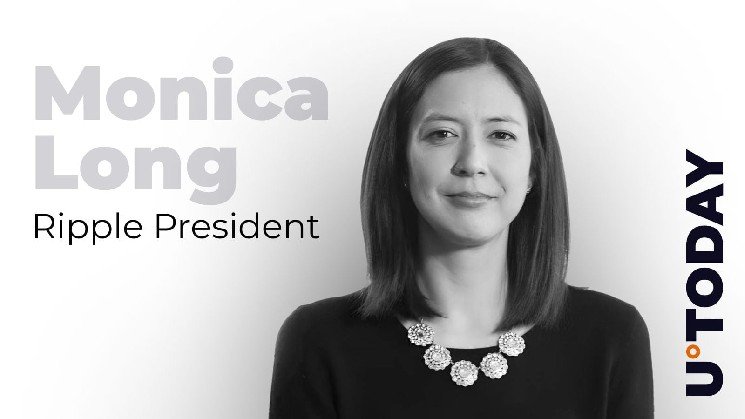
As Ripple continues to emerge as one of the top names in the crypto industry, its President, Monica Long, has also made the list of the top leaders in the stablecoin market this year, curated by Stablecon.
Following the recent release of its annual leadership recognition list, Stablecon has named Monica Long among the honorees on Stablecon’s Most Influential 2026 list.
Monica Long as a Top Woman in Stablecoins
Following Long’s addition to Stablecon’s Most Influential list this year, the Ripple president has earned recognition in two categories, which include Issuer & Protocol Leaders and Top Women in Stablecoins.
The list is curated every year to recognize leaders across multiple crypto sectors such as stablecoin issuance, blockchain infrastructure, investing, regulation, and ecosystem development.
Stablecon explained that honorees who make it to the list are evaluated based on five criteria, which include ecosystem influence, impact and reach, innovation, momentum, and peer recognition.
Notably, Monica Long was listed alongside executives from several major stablecoin and digital asset firms, including Paxos, Ondo Finance, Frax Finance, Custodia Bank, Anchorage Digital, and Monerium in the Issuer & Protocol Leaders category.
Also, Long made the list in the Top Women in Stablecoins category, being one of only two Ripple-associated executives celebrated as female leaders making major contributions to the stablecoin industry.
$RLUSD in spotlight as Ripple pushes for wider adoption
It is not surprising that Monica Long has been recognized as a top leader in the stablecoin sector, as Ripple continues to advance its native stablecoin, $RLUSD, while expanding its use cases.
Apparently, Monica Long’s recognition as a Top Woman in Stablecoins comes following Ripple’s consistent developments targeted at expanding its presence in the stablecoin market through $RLUSD.
As Ripple’s president, Long has played a key role in bringing $RLUSD to the global market and driving its adoption for real-world payments and financial applications.
On-chain analytics company CryptoQuant stated that Strategy’s recently announced new capital management framework significantly alleviates the company’s immediate liquidity concerns, but a more disciplined model for Bitcoin buying and selling is needed.
In a report he published, CryptoQuant Research Director Julio Moreno assessed Strategy’s new plan, called the “Digital Credit Capital Framework,” as a significant shift in direction.
Moreno stated, “The Digital Credit Capital Framework is a real course correction. However, for this change to be complete, Strategy needs to clarify two more issues: a systematic model for timing Bitcoin purchases and a disciplined framework for selling during bullish periods.”
Strategy announced its five-part digital credit capital management framework on June 29. As part of the plan, the company created a US dollar reserve that can only be used for preferred stock dividends and interest payments.
The company has set a coverage target to meet at least 12 months of payment obligations for this reserve. Additionally, the dividend rate for STRC preferred shares has been increased to 12%, subject to monthly review. This step aims to bring the STRC price closer to its nominal value of $100.
The new framework also allows for the repurchase of up to $1 billion worth of preferred shares if company management deems the repurchase to be a value-enhancing activity. STRC shares are planned to be given first priority under this program.
Strategy will also be able to repurchase up to $1 billion worth of common shares of MSTR during periods when it believes the company’s shares are undervalued.
A separate Bitcoin cash-out program created as part of the plan authorizes the company to sell up to $1.25 billion worth of Bitcoin. The funds raised can be used to strengthen dollar reserves, finance dividend and interest payments, and fund share buybacks.
The company also announced that it will issue shares more cautiously when its mNAV indicator, known as the market value/net asset value ratio, approaches the 1 level.
Strategy’s new plan was announced just days after CryptoQuant released its recommendations for the company.
CryptoQuant had previously urged Strategy to pause Bitcoin purchases until its cash reserves and dividend coverage ratio were strengthened. The company also suggested developing a systematic model for timing future Bitcoin purchases and preparing a plan for selling a portion of its assets during bull markets.
According to Moreno, Strategy has largely followed the first of these recommendations.
Between June 29 and July 5, the company sold approximately 3,588 Bitcoin, generating around $216 million in revenue. These funds were used to pay preferred stock dividends and strengthen the dollar reserve.
Strategy raised $466.7 million from the sale of MSTR shares between July 6 and 12. The company did not make any new Bitcoin purchases or sales during this period.
Related NewsAnalyst Who Claimed to Have Predicted the Previous Drop Reveals New Bitcoin Forecast – “The Fed Will Be Forced to Print $20 Trillion; Bitcoin…”
Following these steps, Strategy’s dollar reserves increased from $1.44 billion to $3 billion. The company’s dividend coverage period also extended from approximately 14 months to 29 months.
Strategy’s Bitcoin holdings remained unchanged at 843,775 BTC, and the company has yet to conduct any preferred or common share buybacks.
STRC shares had fallen to a historical low of around $75 at the end of June. Following the announcement of the new framework and the increase in the dividend rate, the share price rose to approximately $88.
Despite this, STRC continues to trade below its nominal value of $100.
Moreno said the discount indicated that investors wanted to see Strategy sustainably implement its new financial discipline.
Moreno said, “The sustained discount indicates that the market wants to see the reserve strengthened and the new discipline maintained before fully repricing the security.”
According to CryptoQuant, two key questions remain unanswered in Strategy’s Bitcoin strategy.
The first is when the company will resume Bitcoin purchases.
Moreno stated that pausing Bitcoin purchases offered a solution to the short-term liquidity problem, but the new framework lacked a model-based rule for when accumulation should resume.
Strategy’s announced equity issuance policy, which it will implement when its mNAV ratio approaches 1, defines how the company will raise capital. However, according to Moreno, this rule does not explain when capital should be invested in Bitcoin.
Moreno stated, “Without a clear and valuation-focused model, the company risks repeating its tendency to buy Bitcoin at consistently local peaks whenever market conditions improve.”
The second point CryptoQuant highlights is whether Strategy will sell Bitcoin in the next bull market and under what rules those sales will be conducted.
Moreno stated that the current Bitcoin cash-out program has a defensive structure. The program allows Bitcoin sales to be used to finance dividends, interest, and share buybacks.
However, according to CryptoQuant, this plan does not offer a strategy for staggered selling or hedging positions as the market cycle approaches its peak.
Moreno said that such a sales framework could help the company reduce its debt, create value for shareholders, and build up cash reserves to repurchase Bitcoin during periods when the price falls to lower levels.
Moreno stated, “The disciplined selling approach throughout the market cycle, which constitutes the other half of active capital management, is still not defined.”