Blog

  • HBO Max Leads the Emmy Drama and Comedy Races for the First Time Since 2017. How Often Do Both Frontrunners Win?

    HBO Max wants it all.

    The most-nominated network enters Phase 2 of the Emmy race with the year’s two most-nominated series, giving the platform a rare opportunity to capture television’s top drama and comedy prizes, and potentially make history across three major program categories.

    “The Pitt,” the sophomore season of the breakout medical drama, leads all programs with 25 nominations. Close behind is “Hacks,” which earned 24 nominations, making it the most-nominated comedy series in Emmy history. The next closest is Apple TV’s horror-comedy “Widow’s Bay,” with 19.

    It’s an uncommon achievement for a single network or platform to produce both the most-nominated drama and comedy series in the same year.

    Apple TV accomplished the feat last year with “Severance” and “The Studio,” the latter of which became another comedy record-breaker. A year earlier, FX earned the distinction with “Shōgun” and “The Bear,” which at the time also became the most-nominated comedy series in Emmy history before ultimately losing the top comedy prize to Season 3 of “Hacks.”

    And now, it is HBO Max’s turn.

    The platform’s current dominance marks its first time leading both genres since 2017. (I misstated this distinction on this week’s episode of the Variety Awards Circuit Podcast.)

    For HBO, however, this territory is familiar. The premium network led both drama and comedy nominations in consecutive years, in 2003 and 2004, with “The Sopranos,” “Six Feet Under” and “Sex and the City.” It repeated the feat during the latter half of the 2010s with “Game of Thrones,” “Westworld” and “Veep.”

    Few programmers in Emmy history have consistently produced the leading drama and comedy contenders in the same ceremony. History, however, shows that nomination dominance does not always translate into Emmy glory.

    Among the 18 instances in which a single network led the Emmy nominations in both drama and comedy, the series ultimately won only four times (22%).

    Those successful double victories came twice for NBC with “Hill Street Blues” and “Cheers” in 1983 and 1984, again for NBC in 1987 with “L.A. Law” and “The Golden Girls,” and, finally, for HBO in 2016 with “Game of Thrones” and “Veep.”

    Leading both genres reflects passion for programs for sure, but hardly guarantees a path to the big stage. Campaign strategy, momentum and voter sentiment during final-round voting will ultimately determine whether HBO Max can capitalize on its historic position and not fall to some of its closest competitors like Apple’s “Pluribus” in drama series and “Widow’s Bay” in comedy.

    Notably, one statistic strongly favors another win for “The Pitt.”

    The most-nominated program series of the Emmy year has won its corresponding top series category 41 times across 73 eligible ceremonies (56%).

    Last year provided a rare exception when “Severance,” with 27 nominations, lost drama series to “The Pitt.” Before that upset, the most-nominated series had won its corresponding top category every year from 2015 through 2024.

    “The Pitt” enters this part of the season not only with the largest nomination haul but also as the reigning champion after winning its debut season. Only four shows have won drama series for both their first and second seasons: “Hill Street Blues,” “Picket Fences,” “The West Wing” and “Mad Men.” Three of those four — except “Picket” — ultimately won at least four drama series Emmys overall.

    (CBS’ “Mission: Impossible” and “The Defenders” also won the top drama prize in their first two seasons when the category carried different titles: “Outstanding Dramatic Series” and “Outstanding Program Achievement in the Field of Drama,” respectively.)

    WIDOW’S BAY, Matthew Rhys, ‘Welcome to Widow’s Bay!’, (Season 1, ep. 101, aired April 29, 2026). photo: ©Apple TV+ / Courtesy Everett Collection

    ©Apple TV/Courtesy Everett Collection

    The stats suggest “Hacks” faces a slightly steeper climb.

    While the series leads the comedy field in nominations and already owns the comedy series trophy for its third season, the most-nominated comedy has historically converted at a lower rate than its drama counterpart.

    The most-nominated comedy series has won 25 out of 59 times in the current category format (or 42%). The frontrunner has been especially vulnerable in recent years, losing five of the past eight ceremonies, including 2023, when “The Bear” fell to “Hacks.”

    Also worth noting: the last comedy series to win in non-consecutive years was “Everybody Loves Raymond,” which won for its seventh season in 2003 and again for its ninth and final season in 2005, with “Arrested Development” winning in between. Other comedies to accomplish the feat include “Murphy Brown,” “Cheers,” “All in the Family” and, in the category’s earliest years, “The Jack Benny Show.”

    So, if HBO Max completes the coveted drama-comedy double, “The Pitt” appears to be the safer bet for a repeat victory, while “Hacks” will need to overcome some more historical statistics.

    The streamer also has its sights set on an even rarer accomplishment.

    Beef. (L to R) Oscar Isaac as Josh Martin, Carey Mulligan as Lindsay Crane-Martin in episode 201 of Beef. Cr. Courtesy of Netflix © 2026

    COURTESY OF NETFLIX

    In limited series, HBO Max’s “DTF St. Louis” earned 13 nominations, including directing, writing and supporting acting recognition for David Harbour, Jason Bateman, Richard Jenkins, Linda Cardellini and Joy Sunday. The network hopes to overtake Netflix’s “Beef,” which leads the limited series field with 16 nominations. The first iteration won this category.

    “Beef” stars Oscar Isaac and Carey Mulligan appear well-positioned in the lead acting categories, while Harbour and Cardellini face a more crowded supporting field because of their co-stars nominated from the same series. Meanwhile, Charles Melton and Yuh-jung Youn enter their respective races without internal competition. That could be helpful down the road.

    But here are some more numbers to consider. The limited series frontrunner has been the least reliable of the three major program categories. The most-nominated limited series has won 16 of 45 times (or 36%) — compared with 45% for drama and 42% for comedy.

    Since 2021, the nomination leader for miniseries has lost four out of five times: “WandaVision” (2021), “Dahmer – Monster: The Jeffrey Dahmer Story” (2023), “True Detective: Night Country” (2024) and “The Penguin” (2025), which led with 23 nominations but lost to “Adolescence.” Only “The White Lotus” (2022) managed a victory.

    The category has long produced “frontrunner” collapses, including HBO’s “Mildred Pierce” (20 nominations, 2011), which lost to “Downton Abbey,” and CBS’ “Lonesome Dove” (15 nominations, 1989), which fell to “War and Remembrance.”

    Winning the top series prizes in drama, comedy and limited series in the same year remains one of the rarest accomplishments in Emmy history. It has happened only three times: HBO achieved the feat in 2015 with “Game of Thrones,” “Veep” and “Olive Kitteridge,” while NBC accomplished it twice, in 1996 with “ER,” “Frasier” and “Gulliver’s Travels,” and in 1987 with “L.A. Law,” “The Golden Girls” and “A Year in the Life.”

    So in fairness, HBO has done it before. But can they do it again? That remains to be determined. But it is still early in Phase 2, and plenty can change before ballots are finalized.

    Final-round voting runs Aug. 17-26 ahead of the Creative Arts Emmy Awards and Governors Gala on Sept. 5-6. The 78th Primetime Emmy Awards will air Sept. 14 on NBC.

    Top series Leaderboard: “Widow’s Bay” (11); “The Pitt” (7); “The Apple Music Super Bowl LX Halftime Show Starring Bad Bunny” and “Beef” (6); “Love on the Spectrum” and “Wednesday” (4); “DTF St. Louis,” “Hacks,” “The Late Show With Stephen Colbert,” “A Knight of the Seven Kingdoms,” “Spider-Noir” and “Survivor” (3)

    Top Networks Leaderboard: HBO Max (28); Netflix (25); Apple TV (16); NBC (9); ABC and Prime Video (7); CBS and Comedy Central (6); FX (5); Disney+ (3); National Geographic (2)

    Jason Bateman and Harbour in “DTF St. Louis”

    HBO

    Drama Series: “The Pitt” (HBO Max)
    Comedy Series: “Widow’s Bay” (Apple TV)
    Limited or Anthology Series: “Beef” (Netflix)
    Outstanding Movie: “Remarkably Bright Creatures” (Netflix)
    Lead Actor (Drama): Noah Wyle, “The Pitt” (HBO Max)
    Lead Actor (Comedy): Matthew Rhys, “Widow’s Bay” (Apple TV)
    Lead Actor (Limited/Movie): Oscar Isaac, “Beef” (Netflix)
    Lead Actress (Drama): Rhea Seehorn, “Pluribus” (Apple TV)
    Lead Actress (Comedy): Jean Smart, “Hacks” (HBO Max)
    Lead Actress (Limited/Movie): Carey Mulligan, “Beef” (Netflix)
    Supporting Actor (Drama): Tom Pelphrey, “Task” (HBO Max)
    Supporting Actor (Comedy): Stephen Root, “Widow’s Bay” (Apple TV)
    Supporting Actor (Limited/Movie): David Harbour, “DTF St. Louis” (HBO Max)
    Supporting Actress (Drama): Katherine LaNasa, “The Pitt” (HBO Max)
    Supporting Actress (Comedy): Kate O’Flynn, “Widow’s Bay” (Apple TV)
    Supporting Actress (Limited/Movie): Constance Zimmer, “Love Story: John F. Kennedy Jr. and Carolyn Bessette” (FX)
    Guest Actor (Drama): Colman Domingo, “Euphoria” (HBO Max)
    Guest Actress (Drama): Brittany Allen, “The Pitt” (HBO Max)
    Guest Actor (Comedy): Rob Reiner, “The Bear” (FX)
    Guest Actress (Comedy): Betty Gilpin, “Widow’s Bay” (Apple TV)
    Variety Series: “The Daily Show” (Comedy Central), “Jimmy Kimmel Live!” (ABC), “Last Week Tonight with John Oliver” (HBO Max) and “The Late Show With Stephen Colbert” (CBS)
    Variety Special (Live): “The Apple Music Super Bowl LX Halftime Show Starring Bad Bunny” (NBC)
    Variety Special (Pre-Recorded): “The Muppet Show” (Disney+)
    Directing (Drama): Vince Gilligan, “Pluribus” (Apple TV) — “We Is Us”
    Directing (Comedy): Hiro Murai, “Widow’s Bay” (Apple TV) — “Welcome to Widow’s Bay!”
    Directing (Limited/Movie): Lee Sung Jin, “Beef” (Netflix) — “Oh, the Comfort, the Inexpressible Comfort”
    Directing (Documentary/Nonfiction): Mariska Hargitay, “My Mom Jayne: A Film by Mariska Hargitay” (HBO Max)
    Directing (Variety Series): Yvonne De Mare, “The Late Show With Stephen Colbert” (CBS) — “The Late Show with Stephen Colbert Series Finale”
    Directing (Variety Special): Hamish Hamilton, “The Apple Music Super Bowl LX Halftime Show Starring Bad Bunny” (NBC)
    Directing (Reality Program): Cian O’Clery, “Love on the Spectrum” (Netflix) — “Episode 1”
    Writing (Drama): “Task” (HBO Max) — “A Still Small Voice” by Brad Inglesby
    Writing (Comedy): “Hacks” (HBO Max) — “Hacks (Finale)” by Lucia Aniello, Paul W. Downs and Jen Statsky
    Writing (Limited/Movie): “DTF St. Louis” (HBO Max) by Steven Conrad
    Writing (Variety Series): “The Late Show With Stephen Colbert” (CBS)
    Writing (Variety Special): “The Muppet Show” (Disney+) by Albertina Rizzo, Gabe Liedman, Nedaa Sweiss, Kelly Younger and Andrew Williams
    Writing (Nonfiction): “The Daily Show Presents: Jordan Klepper Fingers the Pulse: Give the Man a Prize” (Comedy Central)
    Game Show: “Jeopardy!” (ABC)
    Host (Reality or Reality Competition): Jeff Probst, “Survivor” (CBS)
    Host (Game Show): Martin Short, “Match Game” (ABC)
    Competition Program: “Survivor” (CBS)
    Structured Reality Program: “Love is Blind” (Netflix)
    Unstructured Reality Program: “Love on the Spectrum” (Netflix)
    Documentary or Nonfiction Special: “My Mom Jayne: A Film by Mariska Hargitay” (HBO Max)
    Documentary or Nonfiction Series: “Sean Combs: The Reckoning” (Netflix)
    Hosted Nonfiction Series or Special: “My Next Guest Needs No Introduction With David Letterman” (Netflix)
    Exceptional Merit in Documentary Filmmaking: “The Librarians” (PBS)
    Animated Program: “South Park” (Comedy Central) — “Sermon on the ‘Mount”

  • Stocks Just Topped Crypto on Hyperliquid. ARK Says That Changes Everything

    Stocks Just Topped Crypto on Hyperliquid. ARK Says That Changes Everything

    In brief

    • Real-world assets (RWAs)—tokenized versions of traditional financial instruments like company stocks, crude oil, and market indices traded as blockchain contracts—accounted for 54% of Hyperliquid’s weekly trading volume during July 13–19, the first time non-crypto assets have dominated the exchange.
    • ARK Invest’s director of digital assets research Lorenzo Valente said Hyperliquid’s $26 billion in RWA trading last week surpassed the combined crypto perpetual volume of every other decentralized exchange on earth.
    • South Korean chipmaker SK Hynix—a direct rival to Samsung in AI memory production—drove most of the interest on Hyperliquid’s third-party market platform.

    For the first time, traders on Hyperliquid moved more money through stocks and commodities than through crypto. Lorenzo Valente, director of digital assets research at ARK Invest, announced the milestone Thursday on X: “We are entering a new era for DeFi.” Hyperliquid, he said, had for the first time generated more trading volume from so-called real-world assets, or RWAs, than from crypto in a single week.

    RWAs—meaning tokenized versions of traditional financial instruments like company shares, crude oil, or the S&P 500, converted into blockchain-based contracts that traders can buy and sell around the clock—totaled $25.1 billion during July 13–19, or 52% of Hyperliquid’s $48.2 billion in weekly volume, per Blockworks data. Valente put the latest running figure at $26 billion and 54%.

    The context makes that number land harder. Total perpetual DEX volume across the industry last week was $79 billion. Hyperliquid processed $50 billion of it. The $26 billion in RWA trading alone—just the stock bets, the oil contracts, the index plays—was larger than the combined crypto perpetual volume of every other decentralized exchange on the market.

    How stocks ended up on a crypto exchange

    The mechanism behind this is HIP-3, a framework Hyperliquid launched in October 2025 that lets outside teams build their own perpetual markets—contracts that track an asset’s price with no expiry date, letting traders bet on it going up or down with borrowed money—using Hyperliquid’s existing infrastructure. Builders stake 500,000 HYPE tokens, currently worth roughly $30 million, to access the system.

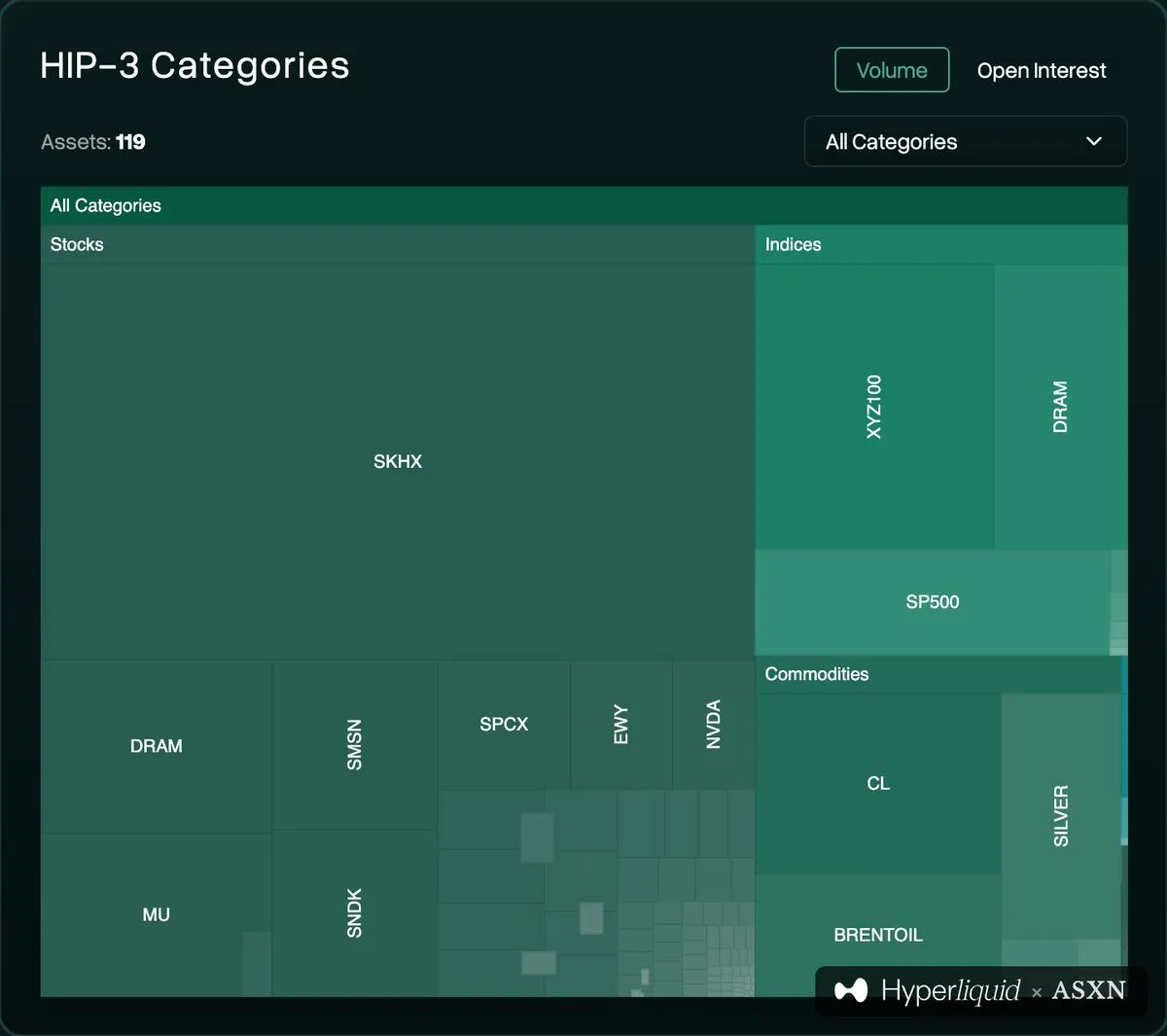
    Since June, individual stocks have overtaken indices and commodities inside HIP-3, with single-stock perpetuals now making up 61% of all RWA trading. The HIP-3 platform has already hosted pre-IPO markets for SpaceX, Anthropic, and OpenAI. “RWAs accounted for 54% of total trading volume,” Valente noted.

    The most-traded stock is SK Hynix, the South Korean memory chipmaker that competes with Samsung in supplying DRAM and high-bandwidth memory for AI systems.

    ARK’s interest in Hyperliquid goes back further. In September 2025, CEO Cathie Wood told the Master Investor podcast that the platform “reminds me of Solana in the earlier days,” adding that Solana had proven its worth and earned its place with the biggest names in crypto. She called Hyperliquid “the new kid on the block,” and ARK has not confirmed any position since.

    Now one of ARK’s own analysts is raising a harder question for the whole industry. “I’m no longer convinced RWA trading will naturally aggregate on the same venue as crypto,” Valente wrote, predicting that dedicated category leaders may emerge within RWA—and that a platform’s grip on Bitcoin and Ethereum flow may prove “far less important than many people assume.”

    Traders still focused only on crypto tokens, he added, “are focusing on the wrong market.”

    Daily Debrief Newsletter

    Start every day with the top news stories right now, plus original features, a podcast, videos and more.

  • Strive’s SATA recovers most of June decline, trades within 3% of par

    Strive’s SATA recovers most of June decline, trades within 3% of par

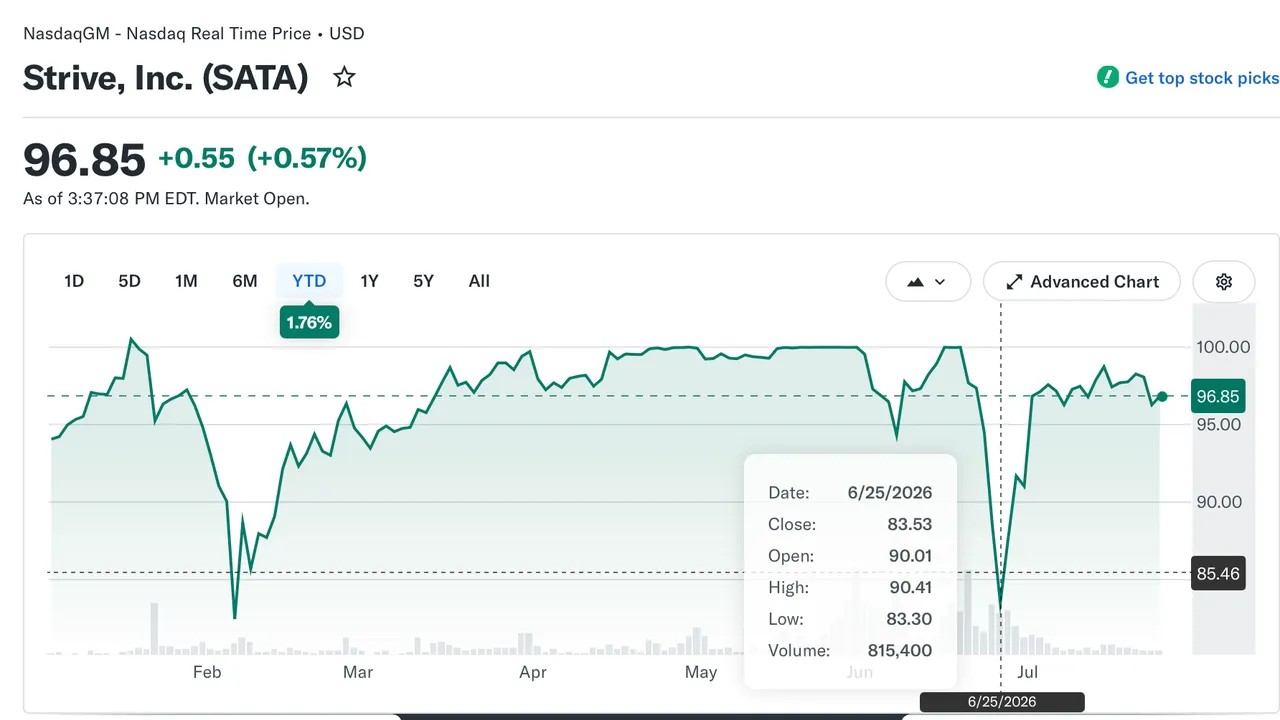
    Strive’s SATA preferred shares have rebounded from a June low of $83.30 to about $97, recovering most of the selloff and moving back within roughly 3% of their $100 par value, according to Yahoo Finance data.

    Strive introduced SATA in November 2025 as part of its strategy to finance the expansion of its Bitcoin treasury through preferred equity. The variable-rate perpetual preferred stock is intended to trade near its $100 par value by adjusting its dividend rate, allowing Strive to raise capital for its Bitcoin ($BTC) treasury without issuing additional common shares.

    SATA is one of a growing number of preferred-share products tied to Bitcoin treasury strategies, an emerging segment that companies such as Strategy describe as “digital credit.”

    Strategy’s STRC, launched in 2025 with a similar objective of maintaining a $100 share price through a variable dividend, also fell sharply during the late-June selloff before recovering, though it continues to trade below par at around $87.

    SATA year-to-date price chart. Source: Yahoo Finance

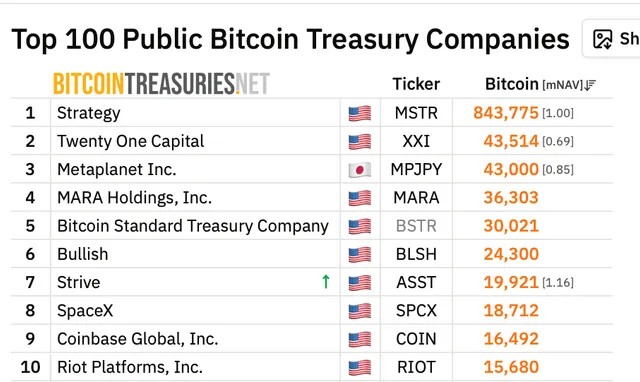
    While Strategy remains the world’s largest public corporate Bitcoin holder with 843,775 $BTC, Strive has climbed to seventh place with 19,921 $BTC, according to BitcoinTreasuries.NET.

    Top 10 Bitcoin treasury companies. Source: BitcoinTreasuries.NET

    SATA recovery could help lift Strategy’s STRC, says Mow

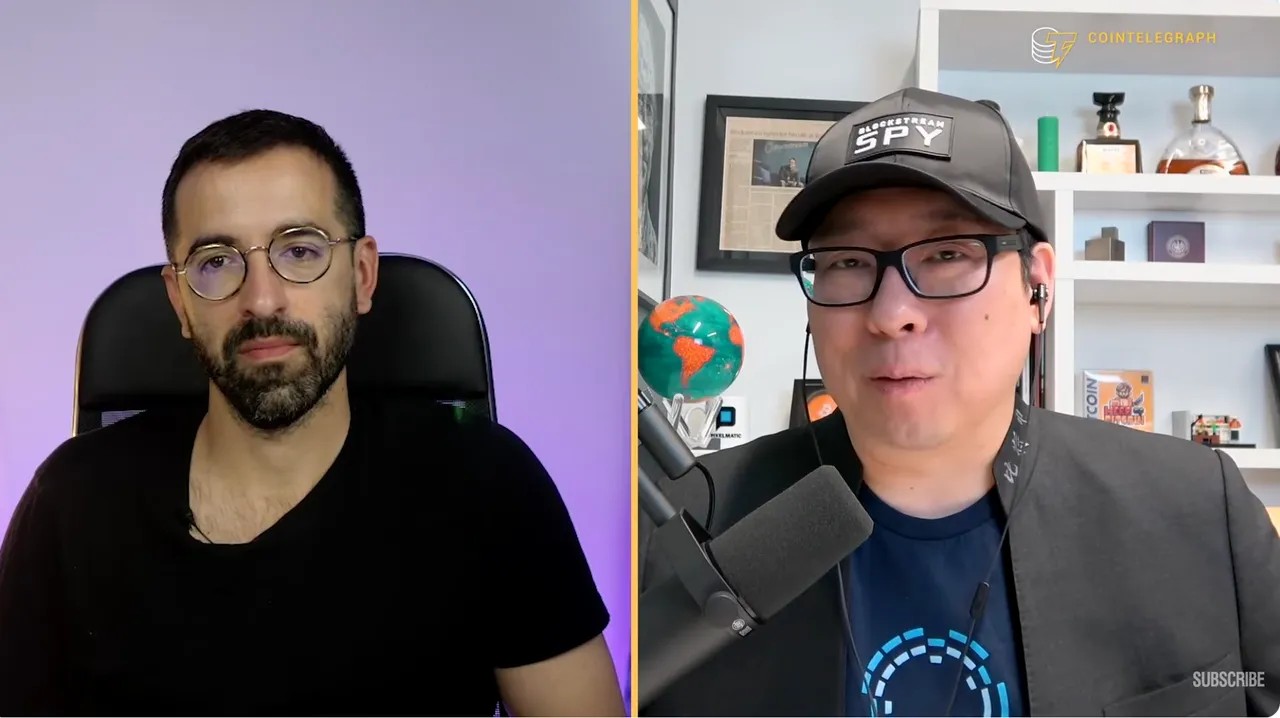
    Jan3 founder and CEO Samson Mow told Cointelegraph that recent adjustments by Bitcoin treasury companies are beginning to restore confidence in preferred-share products, supporting his view that Bitcoin has already found its bottom.

    “I think every action that Strategy has undertaken to strengthen their balance sheet and encourage STRC to go back to par is also working,” Mow said, adding:

    But everything sort of works in tandem. I think as SATA returns to par, you’re going to see STRC return to par too, because people say, ‘OK, this model’s not broken.’ Everyone is capitalized for three or more years of dividend payments… there was no reason to panic all along.

    Mow said the improving performance of preferred-share products is part of a broader shift in the Bitcoin treasury sector, where companies have continued refining their capital-raising strategies.

    He pointed to Lyn Alden’s Orange Juice treasury company, which launched on July 15 with plans to operate a Bitcoin treasury, as another example of firms entering the market with different approaches and a lower Bitcoin cost basis.

    Samson Mow interview with Cointelegraph. Source: Cointelegraph

  • ‘Crutch’ Canceled After One Season at Paramount+

    The Paramount+ multi-cam comedy “Crutch” is done after just one season, Variety has learned.

    The series, which starred Tracy Morgan in the title role, originally debuted on Paramount+ back in November 2025.

    News of the series ending comes as little surprise, as it failed to find a significant audience upon its debut and considering Morgan’s commitment to other projects. Most notably, Morgan now stars in the NBC comedy “The Fall and Rise of Reggie Dinkins.” That show debuted on NBC in January 2026 and was renewed for a second season in May. In addition, cast options expired some time ago with many moving on to other projects.

    With the cancellation, Paramount+ just one live-action comedy on its current slate, with that being the Australian import “Colin from Accounts.” The streamer is instead focused on its dramas like Taylor Sheridan’s “Landman” and “Yellowstone” spinoff “Dutton Ranch” as well as the British crime drama “MobLand” among others.

    “Crutch” follows its titular character Francois “Frank” Crutchfield (Morgan), who goes by “Crutch,” who is described as “a brash, yet beloved Harlem shop owner who finds his world turned upside down when his highbrow son and free-spirited daughter move back into the Crutchfield family home.”

    The series was set in the world of “The Neighborhood,” one of CBS’ original comedy series, with Morgan appearing in a crossover episode of that show the same day that “Crutch” debuted on Paramount+.

    Additional cast members for “Crutch” included Jermaine Fowler, Kecia Lewis, Adrianna Mitchell, Adrian Martinez, Braxton Paul, and Finn Maloney.

    “Crutch” hailed from Cedric The Entertainer and his production company, A Bird and a Bear Entertainment. The series is executive produced by Cedric The Entertainer and Eric C. Rhone and created by Owen Smith who served as executive producer and showrunner. Executive producers for “Crutch” included Aaron Kaplan for Kapital Entertainment, Wendi Trilling for TrillTV, Mike Mariano and, Morgan. The series was produced by CBS Studios and distributed by Paramount Global Content Distribution outside of Paramount+ markets.

  • Strategy Demands Corporate Bitcoin Transparency with MSTR-BTC Dashboard Revealing $54.88B in Holdings

    Strategy Demands Corporate Bitcoin Transparency with MSTR-BTC Dashboard Revealing $54.88B in Holdings

    Michael Saylor didn’t just announce a dashboard. He published a balance sheet with an address. Strategy’s new MSTR-$BTC interface, unveiled Thursday, is less a tool for shareholders and more a declaration: corporate Bitcoin holders no longer get to hide behind opaque treasury disclosures. The numbers, pulled straight from the blockchain, are unambiguous. The company holds 843,775 $BTC valued at $54.88 billion, priced at $65,035 per coin, according to the original report.

    This isn’t a marketing splash. It’s a structural shift in how public companies can verify digital asset reserves. The dashboard doesn’t rely on quarterly attestations or delayed SEC filings. It ties the treasury directly to on-chain data and capital structure metrics, displaying gross reserves of $58.1 billion, net reserves of $35.88 billion, and a market-based net asset value (mNAV) ratio of exactly 1.00x. For CFOs watching from the sidelines, that level of granularity changes the conversation.

    A Corporate Treasury Built on Public Verification

    Strategy’s move arrives at a moment when institutional Bitcoin adoption is accelerating, yet regulatory uncertainty still hangs over how companies account for digital assets. The dashboard’s numbers tell a specific story: year-to-date $BTC yield sits at 5.8%, representing a gain of 39,325 $BTC — roughly $2.56 billion in dollar terms since January. That’s not paper profit from a rising price; it’s net Bitcoin accumulation relative to diluted shares outstanding.

    Saylor has spent years framing Bitcoin as a superior treasury reserve asset. Now the company is proving the thesis with data that anyone can audit. The dashboard scrubs away the vagueness that once made corporate Bitcoin holdings a black box. If more firms follow this model, the market’s understanding of treasury risk shifts from trust-me filings to verifiable on-chain proof.

    But this transparency cuts both ways. A 1.00x mNAV tells investors the market values Strategy’s Bitcoin holdings at their spot price, with zero premium for the operating business or future acquisitions. That’s a signal the market is pricing the company purely as a levered Bitcoin play — not a software firm. For longtime bulls, that’s validating; for those waiting for a diversification narrative, it’s a reality check.

    The Transparency Standard Nobody Asked For

    Corporate Bitcoin treasuries are still a niche. Tesla, Block, and a handful of public miners hold significant positions, but none publish a live dashboard with this level of detail. Strategy is essentially setting the benchmark without any regulatory mandate, creating a market expectation that could pressure other firms to follow. If a company holds over $1 billion in Bitcoin and doesn’t provide comparable on-chain verification, that silence might start to look strategic.

    This dynamic parallels what happened with stablecoin reserves a few years ago. Transparency became a competitive advantage, then a baseline requirement. In the corporate treasury arena, Strategy is doing the same. The dashboard’s timing also matters. A recent push for clearer crypto accounting rules in the U.S. has been stalled by banking interests, a conflict detailed in our coverage of the biggest crypto bill facing Senate resistance. Until legislation resolves, voluntary transparency becomes the strongest signal.

    The dashboard doesn’t just list holdings; it connects debt structure to Bitcoin assets. Net reserves subtract obligations, giving bondholders and equity investors a clearer view of leverage. That’s especially relevant as tokenized real-world assets expand, with on-chain RWA markets crossing $20 billion and blurring the line between traditional finance and crypto collateral. When a corporate Bitcoin treasury is that transparent, using it as collateral becomes easier — and more dangerous if over-leveraged.

    The Parts the Dashboard Can’t Show

    What’s missing from the MSTR-$BTC interface is a volatility adjustment for the underlying asset. Bitcoin’s price at $65,035 gives a clean valuation, but anyone who watched the 2022 drawdown knows that $54.88 billion can quickly become $35 billion without any change in Strategy’s conduct. The dashboard’s elegance might obscure the fact that the reserve value is a moving target, not a stable number.

    There’s also a governance question. The dashboard assumes Bitcoin is a permanent treasury asset, but strategy shifts happen. If a future board decides to sell part of the stack, the real-time nature of the interface could amplify market panic. Transparency is a double-edged sword when the underlying asset is that volatile and that liquid.

    Still, for an asset class still fighting for legitimacy among corporate treasurers, Strategy’s move is aggressively normalizing. It’s borrowing the language of public company investor relations and applying it to an asset that many still dismiss. And it’s happening while institutions are quietly building out infrastructure — from institutional staking surges on networks like Sui to tier-one banks testing tokenized settlement. The dashboard fits into that larger picture, whether regulators are ready or not.

    Strategy didn’t invent corporate Bitcoin holding. But with one interface, it just made holding it quietly look like a decision not to be transparent. That might be the dashboard’s biggest impact: not the data it shows, but the standard it imposes on everyone else.

  • Paramount Agrees To Not Close Warner Bros. Discovery Transaction Until Next Year Or Until Lawsuit Merits Are Resolved

    Paramount Agrees To Not Close Warner Bros. Discovery Transaction Until Next Year Or Until Lawsuit Merits Are Resolved

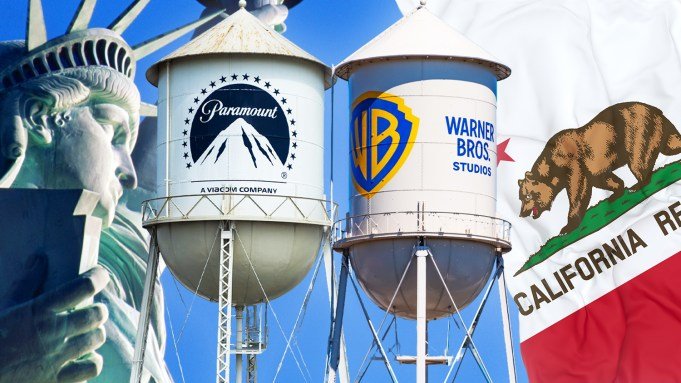
    Paramount has agreed not to close its proposed merger with Warner Bros. Discovery until June 1, 2027, or until shortly after the merits of lawsuits brought by state attorneys general and the Writers Guild of America are resolved.

    The agreement is an extraordinary new development in the merger transaction, which has won regulatory approval from the federal government and European regulators.

    After a court filing spelling out the agreement came during the last hour of trading on Wall Street, shares in Paramount added to what was already a lackluster day. They fell 3.3% on the day to finish at $8.21 after touching a 52-week low of $8.17. The stock slid another penny in after-hours trading.

    Read Paramount’s agreement not to close the transaction as legal proceedings take place.

    U.S. District Judge Araceli Martinez-Olguin this week granted the states a temporary restraining order pausing the transaction for 14 days to hold a hearing on whether to grant a lengthier preliminary injunction. She later extended the TRO by another 14 days, through Aug. 17. Now both sides have indicated that they want to schedule a trial.

    California Attorney General Rob Bonta, in a statement on social media, called the agreement “a major victory for a free and fair economy, for the entertainment industry, for workers, for consumers, and for affordability.” He planned to share additional thoughts with the media at a Friday afternoon press briefing.

    Hanging over the legal proceedings has been the prospect that Paramount would be on the hook to pay a $7 million-per-day “ticking fee” to Warner Bros. Discovery for every day that the transaction does not close past Sept. 30. The agreement opens the very real possibility that legal proceedings will extend well beyond that date. There is a $7 billion breakup fee if the deal falls apart.

    In their filing in federal court on Friday, the attorneys for the parties wrote, “The transaction at issue in State of California and Writers Guild shall not close, be consummated, or otherwise be completed and Defendants will not take any steps, directly or indirectly, to integrate or consolidate their operations pursuant to the Transaction until the earlier of (1) five days after the merits determination in these matters, or (2) June 1, 2027. This stipulation and order extends to Defendants’ agents, officers, servants, employees, attorneys, and other persons who are in active concert or participation with Defendants.”

    A Paramount spokesperson said, “Today’s agreement is a significant win because the result is exactly what we have sought from the outset: a direct path to a trial based on the evidence. This is the fastest and clearest way to prove that this transaction is good for competition, good for consumers, and good for creators, a conclusion dozens of competition authorities around the world have already reached. Plaintiffs’ market definitions bear no relationship to the realities of today’s marketplace and cannot withstand scrutiny. We look forward to proving our case at trial.”

    The judge still has to sign off on the plan, but she had asked attorneys for the plaintiffs and defendants to meet to try to agree to a schedule.

    In a joint statement on the agreement, the WGA West and WGA East said, “Paramount and Warner Bros. Discovery today agreed to what the state Attorneys General and the WGA both sought from the court: the merger will be put on hold pending the outcome of the states’ and the WGA’s cases or until June 1, 2027, whichever comes first. It remains our view that this merger is unlawful, and we will continue the fight to block it.  

    New York Attorney General Letitia James, representing one of a dozen seeking to block the transaction, said in a statement, “From the workers and artists who bring stories to life to the families who buy tickets at the box office, Paramount’s illegal takeover of Warner Bros. is a bad deal for all those who count on a competitive entertainment industry. Halting this merger while our case proceeds is a critical victory in our efforts to uphold the law and protect the film and television industries. I look forward to continuing our case to stop this illegal merger.”

    The sides also agreed to scrap the current briefing schedule, as well as an Aug 3 hearing on the motion for a preliminary injunction. They also agreed to file a joint statement regarding the scheduling of a trial by July 31.

    The state attorneys general sued on July 13 to block the transaction, claiming that it would stifle competition for wide release theatrical film distribution, anticipated big budget blockbusters, and basic cable television channel licensing. The WGA filed its own suit a day later, contending that the merger would illegally limit competition for writers services.

    Paramount called the state AGs lawsuit a “flawed application of the antitrust laws and is wrong on both the facts and the law. We will vigorously defend the transaction and demonstrate that this challenge is inconsistent with sound competition policy and the competitive realities of the media marketplace.”

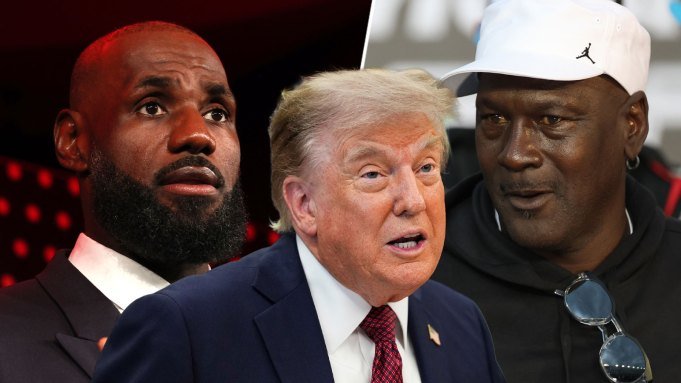
  • Donald Trump Says LeBron James Is “Maybe A Racist” After 76ers Move & Prefers Michael Jordan: “I Only Like People Who Like Me”

    Donald Trump Says LeBron James Is “Maybe A Racist” After 76ers Move & Prefers Michael Jordan: “I Only Like People Who Like Me”

    Donald Trump is weighing in on LeBron James signing with the Philadelphia 76ers as he continues his NBA career after leaving the Los Angeles Lakers.

    During a press conference Friday at the White House, a reporter asked Trump where he stood on the James versus Michael Jordan debate.

    “Well, Michael Jordan is a guy who is a friend of mine — play golf with him. He’s a really good guy,” Trump said.

    He continued, “I think LeBron is… Maybe he’s a racist. Maybe he doesn’t like Trump. I don’t know, but I only like people that like me. So I would say Michael Jordan all the way.”

    James has been open about his political choices, voicing his support for Joe Biden and Kamala Harris in the 2020 election; for the 2024 election, James endorsed Harris in her presidential run. Claims that Jordan endorsed Trump for the last presidential election were debunked by his management team, who said “there is absolutely no truth” that the former NBA star publicly endorsed a candidate.

    James made news earlier in the day after he confirmed he was headed to the 76ers for “a chance at the feeling of winning another championship.”

    “I thought I was done when the season ended. I wasn’t ready to announce it, and I knew I needed some time to really decide, but I was pretty sure I played my last game,” James posted on X. “I was honest at that last press conference when I said I needed to look at myself and decide if I still love this game. I still truly love this game, and I have more to give.”

    ESPN reported that James signed an $8 million, two-year deal with the 76ers. The basketball star made almost $53 million playing with the Lakers last year.

    Watch Trump make the comments about James in the video below.

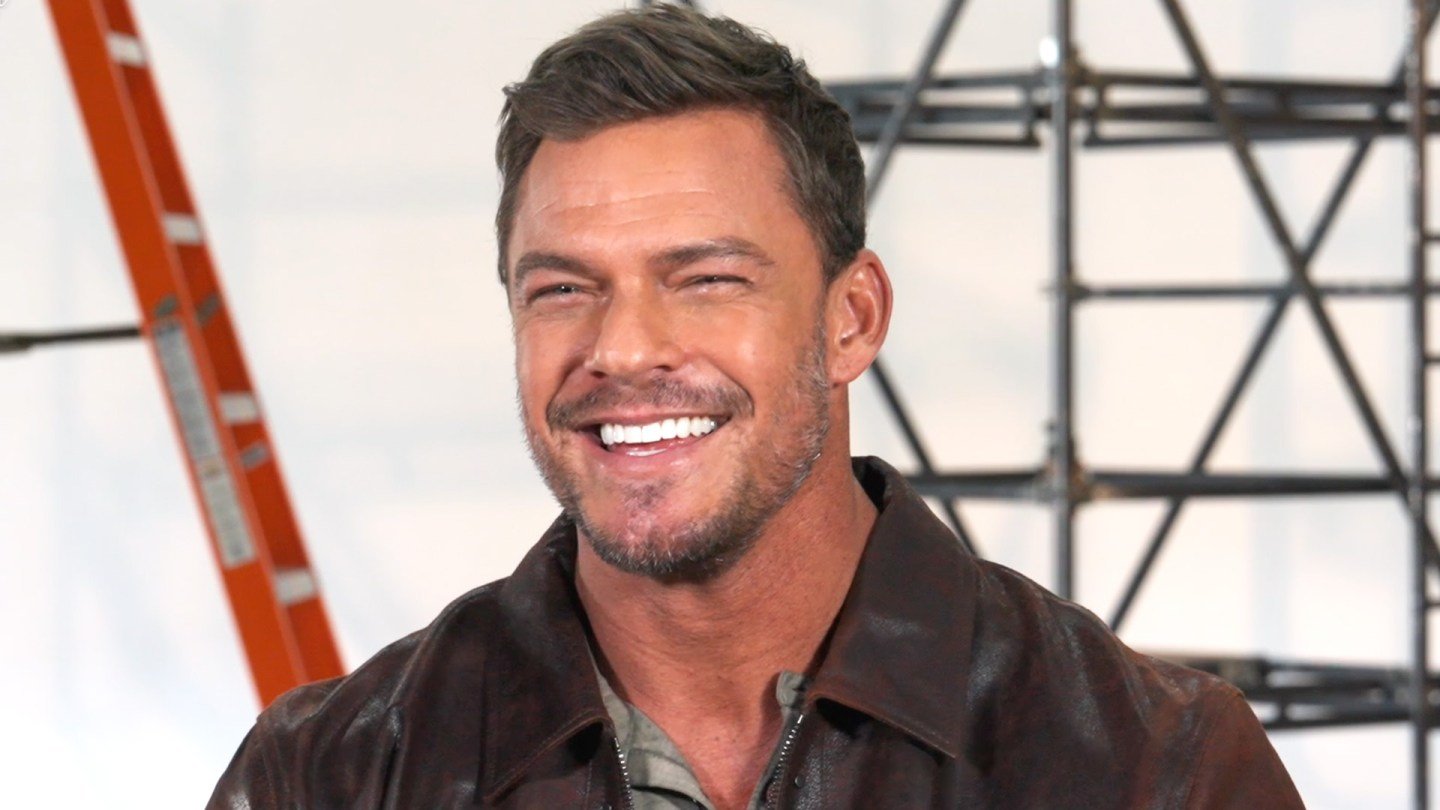
  • ‘Reacher’ Star Alan Ritchson Appears to Blast Trump on Epstein Files

    ‘Reacher’ Star Alan Ritchson Appears to Blast Trump on Epstein Files

    Alan Ritchson went there.

    The Reacher and War Machine action star seemingly blasted President Trump over the Epstein files during an eye-opening f-bomb filled rant on Happy Sad Confused podcast this week.

    “I think people are a little bit afraid of me because they’re like, ‘He’s a loose cannon,’ and I’m not,” Ritchson began, a bit ironically. “I’m just saying the shit that everybody should say if they give a shit about humanity. Everybody else should feel like I feel.”

    “The world is on fire,” encouraged host Josh Horowitz.

    “Yeah, about the way things are and the abuses that are happening — the Epstein files, the fucking Epstein files!” Ritchson continued, angrily but with a smile. “Goddamn it! Where are they? It’s a fucking law, bitch. Show it. You fucking pedophiles! I shouldn’t say ‘fuck’ because I’m a Christian, and people are gonna be like, ‘How can you say fuck?’ Because that is something that should make you want to say ‘fuck.’”

    “Sorry, God, I’m sweating now,” he continued. “This is my fucking politics, dude. I would fucking railroad these fuckers. I would get those Epstein files out in two seconds. Fucking move out of the way. I don’t care what room they’re in, bitch move. Give me the fucking manila envelope. I will get you the Epstein files.”

    “You got my vote,” Horowitz said. “Whatever you want to run for, you got it.”

    “Don’t you want to see what’s in there so that we can hold people accountable?” Ritchson asked. “These fucking rapists. We’re just cool with it. That bitch has the keys to the nuclear codes. He’s like all up into 13-year-olds. Like dude, what? Go to jail.”

    The Trump administration has released 3.5 million pages related to the late disgraced Jeffrey Epstein, though whether more files exist remains under scrutiny. Trump was directly mentioned roughly 1,000 times in the files released so far, though references in themselves do not equate to wrongdoing. The Epstein files contain an allegation that Trump sexually assaulted a minor, but the releases do not establish that the allegation was true, and Trump has not been criminally charged or found civilly liable for any Epstein-related abuse. Trump was separately found civilly liable for sexually abusing E. Jean Carroll.

    While Ritchson has become one of the hottest action stars in Hollywood and has two major releases coming this year — the action thriller Runner, which is released Sept. 11, and the holiday film The Man With the Bag, co-starring with Arnold Schwarzenegger.

  • Editor’s Letter: Eyes on the Prize(s)

    Editor’s Letter: Eyes on the Prize(s)

    Awards have always been a bedrock of our coverage at The Hollywood Reporter. We devote an enormous amount of time, energy and ink to the Oscars, the Emmys and the many other statuettes that crowd the Hollywood calendar each year.

    When I first arrived at THR a few years ago, fresh to the trades, I was struck by the money, manpower and near-religious fervor Hollywood devotes to awards. Was this simply another symptom of an industry endlessly fascinated with itself?

    I’m no longer so sure.

    At a moment of profound uncertainty — for Hollywood and for journalism — recognition from your readers and your peers can mean more than another trophy for the shelf. It can be a sign that the work is connecting, that it matters and that somebody out there is still paying attention.

    Over the past few years, we’ve worked to make THR newsier, sharper and more ambitious: breaking the daily news of Hollywood while going deeper on the people and institutions reshaping it. We’ve launched popular newsletters devoted to style and the London entertainment industry, opened our pages to provocative new columnists and brought rigor, wit and urgency to everything from boardroom upheavals to the Taylor Swift nuptials.

    The work is paying off. While AI and the collapse of social and search referrals have battered digital media, THR has bucked the trend, posting year-over-year audience growth in six months this year and replacing fleeting traffic from Google, Facebook and Instagram with something far more valuable: readers who seek us out and come to us directly.

    Team THR’s Award Winners, clockwise from top left: Jackie Strause; Tony Maglio, Julian Sancton, David Rooney, Caitlin Huston, Laura Tucker, Lexi Carson, Alex Weprin, Erik Hayden, Kevin Dolak and Hilary Lewis; Gary Baum and Seth Abramovitch; Aaron Couch, Ryan Gajewski, Seija Rankin, Scott Feinberg, Katie Kilkenny, Nicole Fell, Darah Head, Mary Franz, Alison Edmond, Kirsten Hageleit and Ash Barhamand; Lexy Perez; Jason Rovou, Tiffany Taylor and Harry Buerkle; Abid Rahman; Carly Thomas and McKinley Franklin; Kimberly Nordyke

    Our peers have noticed, too. THR won the Webby People’s Voice Award for best website and an ASME for our “Stuck” cover. And just last month, we enjoyed a record night at the Los Angeles Press Club’s Southern California Journalism Awards, taking home 44 prizes — including 20 first-place honors, more than any other publication.

    The honors reflected the remarkable range of the newsroom. Gary Baum was named print journalist of the year, Seth Abramovitch entertainment journalist of the year, David Rooney best film critic and Scott Feinberg best audio host. THR was also named best website, while creative director Ada Guerin took first place for cover art. Our video team won for both its Actresses Roundtable and a feature on the video-store owner defying the streaming era — and, just recently, Off Script With The Hollywood Reporter received a Daytime Emmy nomination.

    And we’re not done. New video franchises, a provocative slate of podcasts and newsletters devoted to Canada, AI and music are all coming soon. Of course, none of this would have been possible without the extraordinary staff pictured here: journalists who are curious, experienced, fiercely competitive and, despite everything, still excited by the work. None of this happens without them.

    After decades as a journalist, I still think there’s nothing more fun and rewarding than being first on a story, scoring that impossible interview, producing the cover that everyone’s talking about. But posing with 20 first-place prizes at the Biltmore ain’t so bad, either. It’s the kind of fun you can brag about to your mom or (tastefully!) show off in your office. And even a staff full of skeptics will find it hard to be blasé about that.

    This story appeared in the July 22 issue of The Hollywood Reporter magazine. Click here to subscribe.

  • Genesis House and Gotham Shorts Fellowship Unveils Inaugural Winners, Featuring ‘Dìdi’ and ‘All Dirt Roads Taste of Salt’ Directors as Mentors (EXCLUSIVE)

    Genesis House and Gotham Shorts Fellowship Unveils Inaugural Winners, Featuring ‘Dìdi’ and ‘All Dirt Roads Taste of Salt’ Directors as Mentors (EXCLUSIVE)

    As part of Genesis House and The Gotham Film & Media Institute’s inaugural shorts fellowship program, three emerging New York City-based filmmakers have been chosen to receive $10,000, including  Shanice Brette (“Mumma”), Annie Ning (“The Only Man to Ever Exist”) and April Wen (“A Natural History”).

    In addition to the stipend going toward finishing funds for their narrative shorts, the three chosen filmmakers will receive specialized one-on-one mentorship sessions, access to Genesis House programming and events, industry screenings and panels during Gotham Week, and networking opportunities with established filmmakers.

    “These filmmakers embody the kind of bold creativity and fresh perspective that Genesis House was created to champion,” Genesis Motor North America’s chief operating officer Tedros Mengiste said in a statement. “Through this fellowship, we’re proud to support emerging storytellers at a pivotal moment in their creative journey while fostering a community where ambitious ideas, meaningful collaboration and new voices can thrive.”

    This year’s mentors include “Dìdi” director Sean Wang, “All Dirt Roads Taste of Salt” director Raven Jackson, “Madeline’s Madeline” director Josephine Decker and Authentic Brands Group producer Matthew Gross.

    “By pairing these emerging filmmakers with distinguished mentors, we’re providing additional resources at a pivotal moment in the filmmaking process,” Gotham Film & Media Institute’s executive producer Jeffrey Sharp added in a statement. “We’re proud to partner with Genesis House on an initiative that reflects our shared commitment to expanding opportunity and elevating distinctive voices in film and media.”

    The fellowship recipients were celebrated at a cocktail event on July 22 at Genesis House in Manhattan.