Sumaya Yaghi returns to what’s left of her destroyed home in southern Lebanon after Israeli troops withdrew from her ‘pilot zone’ village under a US-backed agreement.
Published On 26 Jul 2026

Sumaya Yaghi returns to what’s left of her destroyed home in southern Lebanon after Israeli troops withdrew from her ‘pilot zone’ village under a US-backed agreement.
Published On 26 Jul 2026
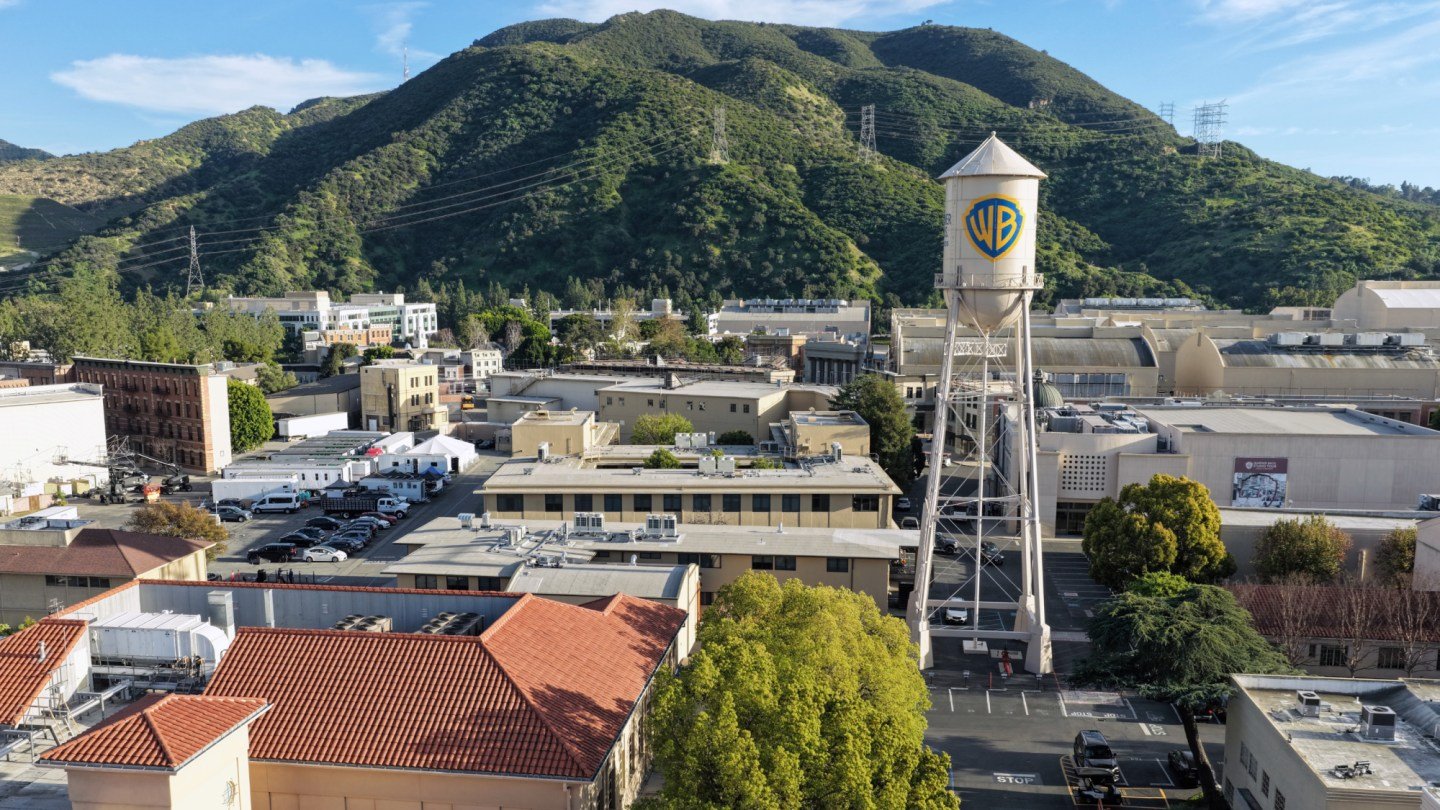
Warner Bros. Discovery has filed a lawsuit against Amazon for “hurriedly seeking to pirate away a number of contracted employees,” citing the recent hiring of Pia Barlow as a “better example of Amazon’s lawless employee shopping spree.”
Warner Bros. alleges intentional interference with contractual relations, breach of contract, intentional interference with prospective economic advance and unfair competition against Amazon in the suit that was filed on Tuesday. In using Barlow, HBO Max’s former EVP originals marketing, as an example, the company notes that her contract was not set to expire until Oct. 31, 2027. Barlow was announced as Amazon MGM Studios‘ new head of original series marketing on Friday, when most outlets began reporting on the suit.
“Though it was aware of Barlow’s ongoing contractual commitment to WMS, of which WBD is a beneficiary, Amazon has brazenly and deliberately induced Barlow to breach the employment agreement by packing up and decamping to Amazon more than 16 months before its expiration,” the suit reads.
Warner Bros. also alleges in the filing that “Barlow is not the first (nor, apparently, the last) WBD employee that Amazon has targeted or will target in the future.” The suit alleges that “a few weeks before Amazon’s interference with Barlow’s term employment contract with WMS, Amazon similarly endeavored to tortiously induce another WBD employee to breach their term employment agreement, which was not set to expire until December 2027.”
“Fortunately, in that instance, Amazon ultimately was unsuccessful in its efforts to raid WBD’s workforce as to that particular executive,” the suit continues.
Warner Bros. is seeking compensatory damages, punitive damages and injunctive relief.
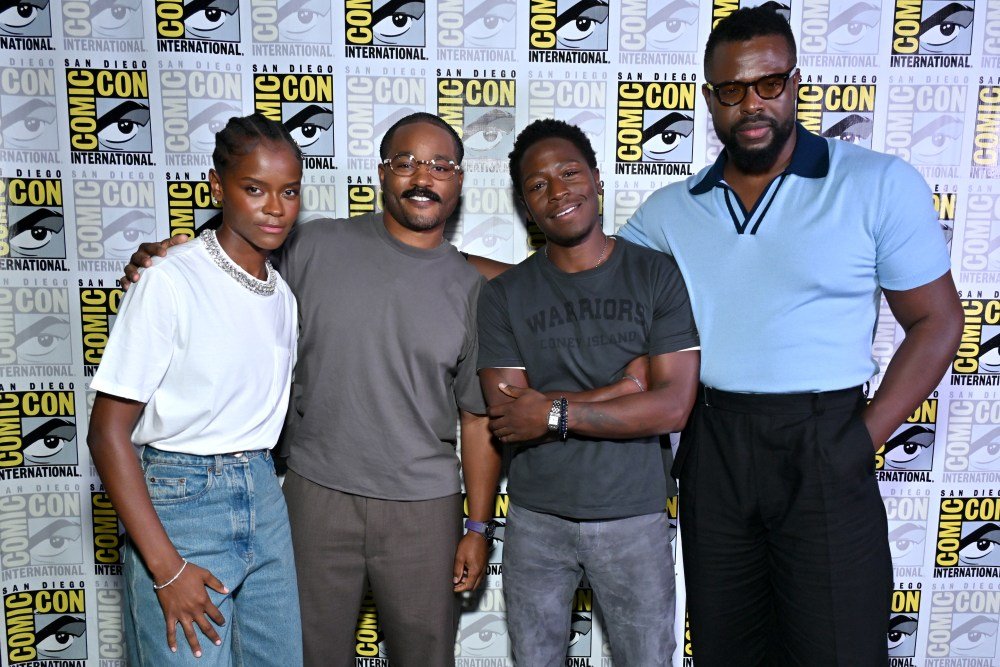
Winston Duke is officially returning to Wakanda for “Black Panther 3”, and David Jonsson is coming along with him.
Marvel teased the third “Black Panther” at San Diego Comic-Con, which releases Dec. 15, 2028. Jonsson will play T’Challa’s son, Prince T’Challa II, continuing the late Chadwick Boseman’s legacy.
“I trust him as an artist. I also trust the people who chose him,” Winston told Variety about Jonsson joining the franchise. “I trust Ryan [Coogler]. I trust the entire MCU executive team. I think it’s going to be great.”
“Black Panther” was Duke’s first film, and he said he hopes to create a similarly welcoming experience for Jonsson. “How I was greeted and received into this world – which was with a lot of grace, being told it’s a safe space to work, to play — that’s what I wanted to extend to him,” he said. “I don’t have any advice. I know what I have to do with him, which is to play with him. I have to trust him. I have to give him the same grace that was extended to me.”
Ryan Coogler will return to direct the film following “Black Panther: Wakanda Forever,” with Leticia Wright reprising her role as Shuri.
Winston will also appear as M’Baku in the highly anticipated “Avengers: Doomsday,” which premieres Dec. 18. The film’s trailer has been viewed 503 million times since being released on Monday.
“What I know is that we have their attention,” Winston said when asked about fans’ interest in the future of the MCU. “I think we have their attention because of so much trust that they have for the MCU. We’ve created and delivered so many movies over the years, and it’s never about any one director. It’s about the cohort.”
The first “Black Panther” film released in 2018 and earned $1.3 billion at the worldwide box office, also receiving seven Oscar nominations and three wins.
After years of massive Comic-Con panels with full Avengers casts, it didn’t seem possible that Marvel Studios could go bigger. But, boy, did they.
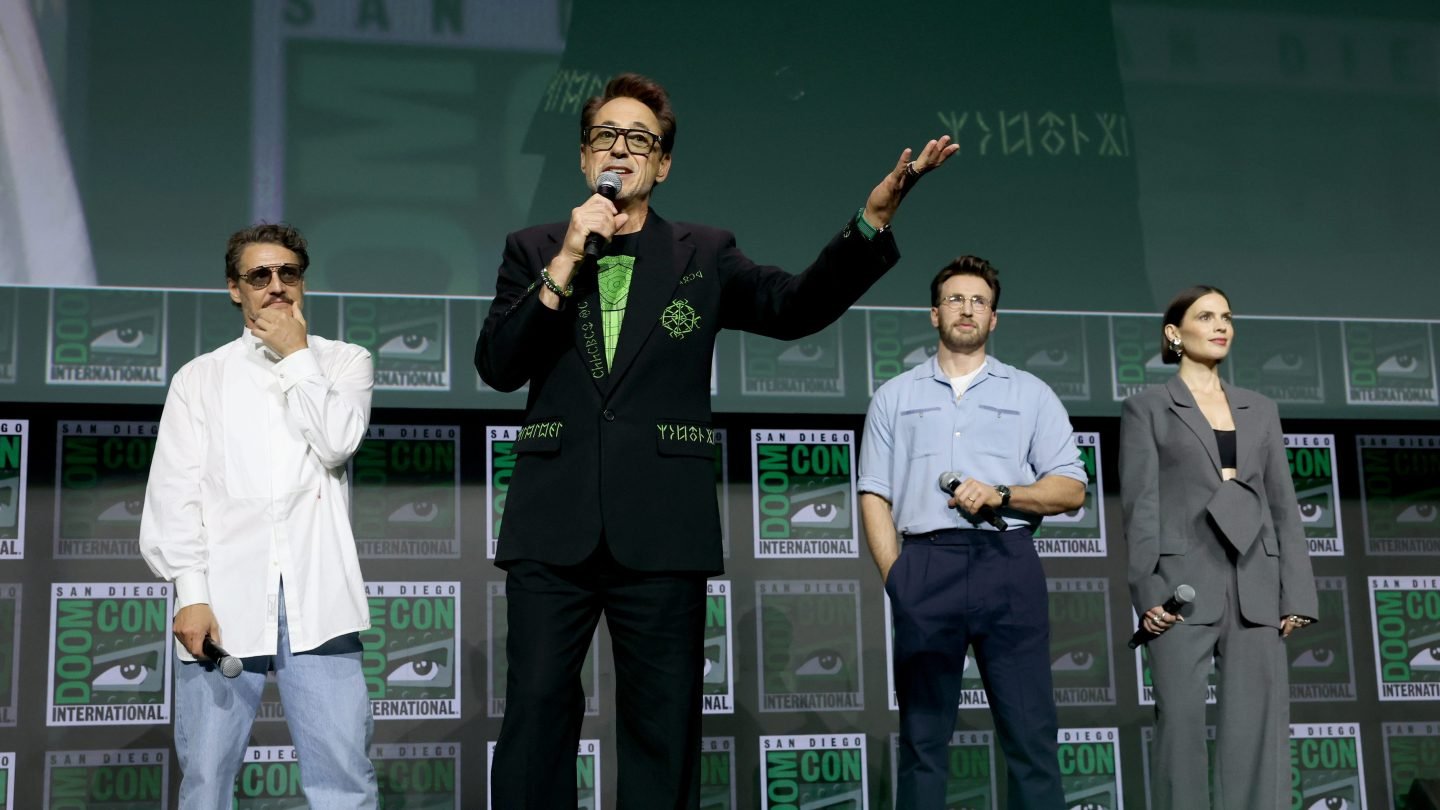
In a first for Hall H, the studio surprised the 7,000-strong crowd by revealing a hidden stage in the back of the cavernous room, with castmembers from Thunderbolts* and the 2000s X-Men movies appearing.
After giving brief speeches, the actors made their way from the back, through the entire hall, high-fiving fans along the way and the crowd screaming like it was a Beatles or BTS concert. They joined the main stage already populated by Pedro Pascal, Chris Evans, Hayley Atwell, and the star attraction, Robert Downey Jr.
It was just one part of supersized panel, that included the startling revelations that Alien: Romulus breakout David Jonsson would play the son of T’Challa (the late Chadwick Boseman) in Black Panther 3 for a Dec. 15, 2028 release. He will take the mantle of the Black Panther.
Another bombshell: not only would Ryan Gosling play Ghost Rider in a new movie, but Deadpool & Wolverine and Gosling’s Star Wars: Starfighter director Shawn Levy would direct for a 2028 release.
Even Ryan Reynolds, who had not attended Apple TV’s presentation of his upcoming action comedy Mayday earlier in the day, crashed the proceedings — in costume as a cosplayer named Ricky, but really as Deadpool. He pointedly asked if production had begun. (Apparently he wasn’t invited.) Downey was having none of it, jokingly seeming annoyed with the Merc with the Mouth.
“It’s in the can, bro. Look around you. Did you bump your head?” Downey told Deadpool, who then asked about possible additional photography to add new people to the mix. The crowd “awwed” in sadness.
On some level, there had been pressure all week for Marvel to pull out all the stops for its Comic-Con presentation. On Monday, it released the trailer for Doomsday, and while it racked up record views showing a lot of interest, reaction was not enthusiastic. And with a checkered slate since 2019’s mega-event Avengers: Endgame, the company needed to show that Doomsday isn’t a grasp at past glories. And while not indicative of future quality, Saturday’s panel demolished any negativity from days prior.
In addition to the big news drops and the sheer force of actors, it was a massive spectacle with light shows and pop music. And, oh yes, costumes. Each attendee received a Doom mask and cape that they donned when asked by Downey, who in his Doom accent, asked the assembled legion to join his cause. Marvel, with this panel, continued to up the ante. The crowd was continually on its feet; every time it would sit down, some reveal would jolt them back up, to see, to yell, to record on their phones.
And in a bit of a redo, Marvel showed a Hall H-only reel that it called an extended look but was, to many fans, what the initial trailer should have been: something that clearly delineated the stakes and the threat. “Victor, did you do this?!” yells Pascal’s Richards to Doom. Doom says, “All of you have lived stolen lives” at one point and raises an army of giant mutant-killing robots known as Sentinels out of the ground. He tosses Thor aside like a doll. And begins with Susan Storm (aka The Invisible Woman) explaining Doom’s motivation, saying “Everything he loved was taken from him.”
Ahead of the panel, the feeling in the room was electric. Hundreds, if not thousands, of people camped overnight for a chance at Comic-Con’s hottest ticket. Marvel gave away Doctor Doom masks and capes, while the Fantastic Four robot H.E.R.B.I.E. was onstage.
And it began with a sizzle reel of Marvel’s greatest hits — not just of Marvel Studios, but of films made before Iron Man kicked off the MCU in 2008. There was footage of Tobey Maguire’s Spider-Man and Patrick Stewart’s Prof. X. Feige, with the help of Jon Bernthal, also showed an action sequence from Spider-Man: Brand New Day, which opens next week and for which little has been shown.
Marvel boss Kevin Feige, a confident and loose speaker, began his talk by giving due to the source of all things at Marvel Studios, the comics. He referred to the change in leadership at the publishing division, thanking outgoing editor-in-chief C.B. Cebulski for his work and giving a shout out for the new chief, Stephen Wacker.
“Without the comics, no MCU, no movies, no TV shows, no animation,” Feige said. “Nothing.”
Kalshi wants the trailer pulled and a public retraction issued before the film premieres Sunday, July 26. The company says the trailer uses a fabricated trade slip to suggest Kalshi allowed sports betting in Nevada in violation of a state court order, according to reports from The Hollywood Reporter and CNN, which obtained the cease and desist letter.
The upcoming documentary tracks the rise of prediction markets, platforms where people trade contracts tied to real events. Netflix says more than $5.6 billion moved through Kalshi and Polymarket alone on the 2026 FIFA World Cup final. Reports state that CFTC Chairman Michael Selig, Kalshi CEO Tarek Mansour, and Polymarket CEO Shayne Coplan all appear in the film, which comes from producer Words + Pictures with Steve Yaccino as showrunner.
The trailer, released earlier this week, shows a private gathering in Las Vegas during World Cup final weekend. It has been claimed that one guest in the trailer holds up a phone displaying what looks like a Kalshi trade slip and describes a $5,000 bet on Spain, which beat Argentina 1-0 in the July 19 final.
Kalshi says the image tells a different story than the trailer implies. The receipt is dated May 16, 2025, more than a year before the events shown on screen. The phone display reads “crop,” which Kalshi says shows the person was viewing a saved image rather than an active trade. The company also says the slip does not match its interface and uses the phrase “bet slip,” language it claims has never appeared on its platform.
Kalshi marketing head Brandon Beckhardt said the company flagged the issue to Netflix before the trailer went out. “We flagged the fake trade slip to Netflix. They said they’d pull the trailer. They haven’t,” Beckhardt said in a statement on X. He described the people in the scene as influencers rather than Kalshi traders.
Beckhardt stated:
“Netflix had a chance to make a genuinely interesting documentary about prediction markets. Instead, they made a sensationalized film built on fiction.”
Kalshi has told Netflix it has barred sports event contracts in Nevada since May 4, 2026, and argues the trailer puts that legal position at risk during active litigation with the state.
Netflix denies fabricating footage in a statement shared with The Hollywood Reporter. A Netflix spokesperson said the disputed trade was placed in May 2025, before any Nevada restrictions on Kalshi existed, and that the scene was filmed at a private Winible World Cup Watch Weekend event in Las Vegas. Winible, a platform tied to sports content creators, said the trade was placed outside Nevada and that tracking a position from any location is legal.
The dispute sits inside a longer battle between Kalshi and the Nevada Gaming Control Board. A temporary restraining order arrived in March 2026, followed by a preliminary injunction and an amended order on May 18, requiring geofencing to block Nevada users from prohibited contracts.
Kalshi recently reached a deal with Nevada to deploy a multi-source geofencing system through a provider such as Geocomply. The company has until August 12, 2026, to finish the rollout or face penalties of $120,000 per day.
Gaming attorney Daniel Wallach pointed to a timing problem. He noted Kalshi told Netflix it has barred Nevada sports trading since early May, while court filings around the same period referenced trades that got through during the injunction period. Wallach said the overlap could weaken parts of Kalshi’s defamation claim, which depends on the trailer’s implication being entirely false.
Prediction markets grew fast in 2025 and 2026 on the back of federal clarity for event contracts and high-profile moments like elections and the World Cup. Kalshi and Polymarket now lead the U.S. market, while state gaming regulators in Nevada, Michigan, Washington and Massachusetts have pushed back with lawsuits and restrictions.
The unresolved question of CFTC authority over state gaming law now sits behind a documentary dispute with real legal weight. Kalshi cooperated with the film’s production, yet moved to block the trailer once it aired. As of July 25, the trailer was still circulating and Netflix had not confirmed any changes ahead of the Sunday premiere.
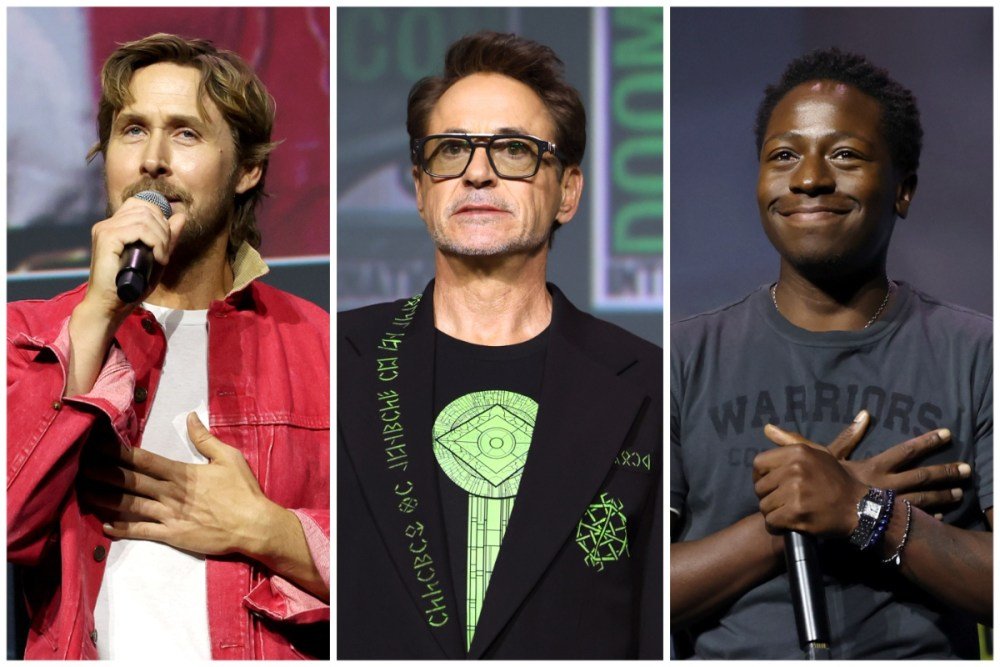
Diehard Marvel fans packed into San Diego Comic Con’s massive Hall H Saturday night, some even camping out for more than 30 hours. But as the 40-minute panel wrapped up with just two surprise announcements — a Ghost Rider movie starring Ryan Gosling and “Black Panther 3” — it’s hard not to feel like, “Is that it?”
After a 30-minute delay, the panel got underway with Marvel Studios chief Kevin Feige acknowledging writer and producer Stephen Wacker’s new role as Marvel Comics editor-in-chief. He then rolled out a trailer for the “Avengers: Endgame” re-release, dubbed “Endgame Encore,” which will have an exclusive sneak peek at “Doomsday.” But fans were hungry for new announcements, not a re-edited trailer for a movie they’ve likely seen multiple times (and no doubt will see again).
Gosling and director Shawn Levy re-teaming for a Ghost Rider movie was a surprise, albeit one that the actor has been attracted to for years. The announcement capped off an extended bit with “Happy Sad Confused” host Josh Horowitz, who recalled all the times he’s asked Gosling about the long-rumored movie in interviews. Unless fans have been glued to every MCU rumor, Gosling’s introduction from Horowitz didn’t track well on stage. After Marvel’s “Blade” movie never fully materialized, it’s hard not to take an “I’ll believe it when I see it” stance on the “Ghost Rider” — despite the fact that “Deadpool and Wolverine” director Shawn Levy is already locked in.
The other awkward moment from Marvel’s panel came during an confusing Deadpool cameo. As the sprawling “Doomsday” cast joined the stage, a very recognizable voice called out from the sea of fans. Deadpool, clad in his gray X-Force costume, appeared in the crowd — but never removed his mask to show who was underneath. It certainly sounded like Ryan Reynolds begging for a role in the movie, but it wasn’t clear if Reynolds himself was in the suit. Joe and Anthony Russo joked that production had wrapped on “Doomsday” but then…that was it. While it’s been highly speculated that Deadpool may cameo in both “Doomsday” and 2027’s “Secret Wars,” Feige skipped the opportunity to confirm Reynolds’ return to the MCU.
Instead, Feige and the Russos moved straight into showing an exclusive trailer for “Doomsday,” which featured more backstory for Downey’s villain, but also some recycled footage from the last teaser. We learn more about Doom’s complicated history with the Fantastic Four and his seemingly tortured past, but much of the plot is still shrouded. The most exciting moment came when Doom resurrected a fleet of giant Sentinel robots — robotic villains from the “X-Men” universe — to battle the heroes.
The panel ended with another long-rumored announcement, Ryan Coogler’s “Black Panther 3,” but with a major surprise: “Alien: Romulus” actor David Jonsson is taking over the title role. He’ll play T’Challa II, the son of the late Chadwick Boseman’s hero, in what will no doubt be another emotional film for Coogler and the Wakanda crew. Jonsson is an exciting young actor on the rise and was excellent in last year’s adaptation of Stephen King’s “The Long Walk.” It will be impossible to fill Boseman’s shoes, but Jonsson stands to be one of the major pieces in the next era of Marvel.
So far, “Ghost Rider” and “Black Panther 3,” both slated for 2028, are the only movies in Marvel’s next phase after “Doomsday” and “Secret Wars.” Fans have long expected — and Feige has stated that — the X-Men to help steer the MCU’s future, but there wasn’t a single X-announcement on stage Saturday. Several of Fox’s “X-Men” stars are returning for “Doomsday,” but there was no indication if they’ll be back for “Secret Wars” or beyond. Rumors about the next cast of X-Men have swirled online, but at the panel, all the focus was on “Doomsday” — not whatever may come next.
Maybe expectations were set too high. Last time Marvel attended Comic Con was in 2024, when the studio made the bombshell reveal that Robert Downey Jr., the actor who carried the MCU on his back for over a decade, would return as its next major villain: Doctor Doom. That announcement nearly blew the roof off of Hall H, but nothing matched that intensity this year. Seeing the crowd of fans dressed in Doom costumes was fun for a few seconds, but watching everyone crowd together for a selfie — and not getting more information on “Doomsday” — was not.
Luckily, Disney has its D23 event in just three weeks, where more news will surely come. However, Comic-Con has usually been a film-centric event, where D23 has more TV shows. Everyone expects “Doomsday” to be a much-needed hit for the MCU later this year, but can it ascend to the two billion-dollar heights of “Endgame”? And how will it fare against Warner Bros.’ “Dune: Part 3,” which is hitting theaters the same day on Dec. 18? As the “Dunesday” showdown approaches, Marvel needs every bit of hype it can get to pave the way for its future, and Comic-Con could’ve used a few more major announcements to cement it as a must-see cultural event.
StableChain’s product is Tether’s dollar: gas in $USDT, transfers in $USDT, yield in $USDT. Its native token does none of that, and holders own governance and staking rights over a network whose every cash flow is denominated in someone else’s asset. This is crypto’s value-accrual question in its purest form yet, and it deserves a straight answer.
Every blockchain token answers one question with its existence: why does this network need me? Bitcoin’s answer is total; the token is the point. Ethereum’s answer is functional: the token is the fuel and the bond. And the new generation of stablecoin chains has produced the strangest answer yet, embodied most cleanly by $STABLE, the native token of the Tether-ecosystem chain whose entire design philosophy is that users should never have to touch it.
On StableChain, gas is paid in USDT0, the omnichain version of Tether’s dollar. Balances are $USDT. Simple transfers are exempt from fees entirely. The yield products pay in dollar terms. A user can onboard, transact, build, and exit without ever knowing $STABLE exists, and that is not an oversight; it is the pitch: a payments chain where the volatile native token has been engineered out of the user’s path completely, which leaves the token itself standing in an interesting place.
$STABLE launched alongside the mainnet in December with two stated jobs, governance and staking, and a market price that implies belief in a third: that owning the token means owning something about the network’s future economics. This guide takes the question seriously from both directions: what the token actually does, mechanically, today, and what it would need to become for the belief to be right, because the gap between those two is where every dual-token chain’s story is decided.
Start with the mechanical inventory, because it is short, real, and frequently misdescribed.
Job one: security. StableChain is a proof-of-stake network, and its validators stake $STABLE as the bond that makes consensus honest; misbehavior risks the stake, and diligence earns rewards. This is the token’s hardest, least dismissible function: every proof-of-stake chain needs a bonding asset whose value is endogenous to the network, because a chain secured by staking someone else’s asset, $USDT, say, would let an attacker rent security from outside the system it attacks.
The security budget, the total value staked and the rewards paid to maintain it, is denominated in $STABLE, funded today primarily through emissions, and it is the one place where the token is structurally irreplaceable. The dual-token design’s honest logic lives here: the payment medium should be stable and external, the security bond should be volatile and internal, and one asset cannot be both.
Job two: governance. $STABLE carries voting rights in the network’s governance through the framework stewarded by the Stable Foundation, the independent body launched with the mainnet to run grants, ecosystem programs, and protocol votes. Tokenholder governance over a payments chain means influence over real parameters: fee policy for the non-exempt tiers, the scope of the gas-exempt allowlist, validator-set rules, upgrade schedules, treasury allocation. Governance rights are the token’s most commonly mocked function, crypto’s history is thick with governance tokens whose votes govern nothing consequential, and the mockery should be calibrated: on a chain with a patron as dominant as Tether’s ecosystem, the live question is not whether votes happen but how much of consequence is actually delegated to them, and the honest answer this early is: it is being determined, vote by vote, and the record so far is thin because the chain is young.
And that is the complete mechanical list. $STABLE is not gas, not the settlement asset, not the unit of account for the chain’s products, not required to hold, send, or build. The inventory’s brevity is the design, and everything else about the token is a question about the future.
A token’s price is a claim on future usefulness, so state precisely what a $STABLE holder owns a claim on, and what they do not.
They do not own the chain’s product. The product is $USDT mobility, and its economics flow elsewhere: the float income on the dollars flows to Tether, the fee revenue on non-exempt transactions accrues in $USDT terms, and the network’s growth, more users, more transfers, more integrations, grows the patron’s business directly, the mechanism this publication’s gasless-economics guide details. A million new users transacting entirely in the free tier generate, mechanically, zero fee demand for $STABLE, precisely because the design removed the token from their path.
This is the sharpest version yet of the value-accrual gap that runs through crypto’s whole history, Ethereum’s L2s paying pennies to mainnet, XRPL’s agents settling in RLUSD, adoption compounding while the associated token watches, except that on those networks the gap emerged; here it was drafted, deliberately, as a feature.
What holders do own is three claims, in ascending order of speculativeness.
First, security demand: as the value settled on the chain grows, the security budget must grow with it; a chain moving billions cannot be secured by a token worth millions without inviting attack, so a successful StableChain structurally requires a valuable $STABLE, with validators and delegators buying and locking it to earn the staking yield. This is real, and it has a known weakness: security demand sets a floor proportional to what attackers could steal, not a valuation proportional to what users transact, and the two numbers can diverge by orders of magnitude.
Second, governance premium: if the parameters tokenholders control become commercially consequential, which fee tiers exist, who gets allowlisted, how the treasury deploys, then influence over them is worth paying for, particularly to businesses building on the chain.
Third, and decisive: the fee switch, the question of whether the network’s $USDT-denominated cash flows are ever routed to the token, through staking rewards paid from real fees instead of emissions, buy-and-burn mechanics, or revenue sharing. Every dual-token network eventually faces this fork, and the whole investment case compresses into it: a $STABLE whose staking yield is funded by growing $USDT fee revenue is equity-like, a claim on a payments business; a $STABLE whose yield is funded by its own emissions is a dilution machine wearing a yield costume, paying holders with their own money.
Which fork this chain takes is not yet determined, is squarely within what governance and the Foundation will decide, and is, far more than any adoption metric, the number to watch.
One structural detail deserves its own paragraph before the arithmetic: where $STABLE sits in the chain’s launch history, because the token’s distribution is part of its value question. The network arrived through a pre-deposit campaign that drew more than $2 billion from over 24,000 wallets before mainnet, a mechanism this publication’s stablechain coverage has examined as its own fundraising genre, and the token generation that followed allocated $STABLE across the founding ecosystem, investors from the $28 million seed round, the Foundation’s treasury, and the community programs the Foundation administers.
The composition matters for both of the token’s jobs. For governance, initial concentration among ecosystem insiders means early votes measure the founding coalition’s intentions more than any community’s, and the decentralization of the holder base is itself one of the signals the grading framework below should track.
For security, the same concentration cuts the other way, benignly: a validator set staked by aligned parties is resistant to hostile accumulation precisely because so much supply sits with the ecosystem, which is the standard early-chain trade: security through concentration now, credibility through distribution later. The unlock and emission schedules, as they publish, convert this from description to data: the float’s growth path determines how quickly the dilution ratio bites, and whose tokens are doing the diluting.
The token’s hardest function deserves its numbers worked in public, because security demand is the one claim $STABLE holders own unconditionally, and its arithmetic is both the case’s floor and its ceiling.
A proof-of-stake chain’s security budget must answer one question: what does it cost to attack the network, and is that cost comfortably above what an attacker could gain? The attack cost is a function of the staked value, acquiring or corrupting a controlling share of stake, and the gain is a function of what the chain settles: double-spendable balances, censorable payments, extractable value in flight.
For a payments chain aspiring to carry institutional $USDT settlement, the gains side scales with throughput and float parked on-chain, which is why the design community’s rule of thumb holds that staked value must grow roughly in line with the value the chain secures, and why a successful StableChain mechanically requires a substantially valuable $STABLE: billions settled daily cannot sit on security worth tens of millions without the mismatch itself becoming the vulnerability.
That is the floor argument, and it is real. Its limits are equally arithmetic.
First, security demand prices the bond, not the business: a chain can secure ten billion dollars of daily settlement with, say, low single-digit billions of staked value, generous by current industry ratios, and that number is a ceiling on security-driven token demand no matter how large the payment volumes above it grow. The token’s security case, in other words, scales with the square footage of the vault, not the traffic through the lobby.
Second, the demand is circular at the margin: validators acquire $STABLE to earn staking rewards, and if the rewards are emissions, the demand is buying dilution, a loop that adds lock-up but not exogenous value, which is again why the fee-switch question dominates everything; real-fee rewards are the only input that breaks the circle.
Third, the floor is contingent on decentralization actually mattering: a young chain whose validator set is effectively permissioned within a patron’s ecosystem is secured, in practice, by the patron’s reputation as much as by the bond, and the bond’s economic necessity, along with the token’s, grows only as that training-wheel arrangement is genuinely retired.
The security argument for $STABLE is therefore best held precisely: it guarantees the token a job, sized to the vault; it does not guarantee the token a valuation, sized to the network; and the distance between those two is, once more, a decision waiting in governance, not a mechanism waiting in code.
Three adjacent cases put boundaries on how this can go, and each maps onto a live possibility for $STABLE.
The cautionary case is the pure governance token: assets whose networks succeeded while the token’s claims never matured, votes over nothing binding, fees never routed, value asymptoting toward the governance premium alone, which history prices low. Crypto’s graveyard of DeFi governance tokens trading at fractions of their launch against thriving protocols shows the failure mode is not network failure; it is the network succeeding around the token.
The constructive case is the modern fee-sharing turn: protocols that activated their fee switches, Maker’s burn against DAI revenues in its era, the newer generation of staking modules paying real revenue, and repriced accordingly. The mechanics exist, are well understood, and require only the governance will, which on a patron-dominated chain means the patron’s will: routing $USDT fees to $STABLE stakers is a decision to share the rail’s economics with tokenholders instead of concentrating them in the ecosystem, and patrons make that decision when tokenholder alignment is worth more to them than the revenue, typically as the validator set decentralizes and the chain’s credibility requires it.
And the sobering case is the gas-token contrast: Ethereum’s $ETH, whatever its troubles, is bought by every user by necessity, a demand floor $STABLE’s design explicitly forgoes. The dual-token chain trades away that mandatory bid for a better product, stable fees, and the trade’s honesty should be admired even as its consequence is priced: on this architecture, nothing is automatic; every path from network success to token value runs through an explicit decision, by governance, by the Foundation, by the patron, to build the connection.
$STABLE is, in that sense, the cleanest experiment yet run on crypto’s oldest question. The chain can succeed enormously; the token participates only if someone decides it should; and the entire due diligence of holding it reduces to a judgment about whether, when, and how generously that decision gets made.
Watch the emission schedule against real fee revenue, watch the first governance votes that touch money, and watch for any fee-switch proposal in the Foundation’s pipeline, because on a chain that engineered the token out of the product, the only thing that can engineer it back in is a vote.
A closing note on how this experiment will actually be graded, because the token’s design guarantees the verdict arrives as a series of documents, not a moment.
The first grading event is every emissions disclosure: the schedule’s dollar value against the chain’s real $USDT fee revenue is the dilution ratio, and its trend is the single most information-dense number the token will ever print.
The second is the first governance vote that moves money, a fee-tier change, a treasury deployment, an allowlist decision, because it will reveal whether tokenholder governance on a patron chain is a legislature or a suggestion box, and markets will reprice the governance premium accordingly within the week.
The third is any fee-routing proposal, the fork this guide has argued everything reduces to, and its absence is also information: each quarter the network grows while staking yield remains emission-funded is a quarter of evidence about which fork the ecosystem intends.
And the last is the slow one, validator-set composition, because the security argument matures only as the set opens beyond the founding ecosystem, converting the bond from ceremony into necessity.
None of these events is a price target, and that is the point: $STABLE is a claim whose value will be legislated into existence, or not, by identifiable decisions on a public calendar, which makes it, whatever else it becomes, one of the most watchable experiments in token design now running. The chain’s users will never notice any of it, by design. The holders should notice nothing else.
One comparison from outside crypto rounds out the calibration, because the dual-token structure has a traditional-finance cousin worth naming: the exchange operator. A stock exchange’s product is other people’s securities, its fees are denominated in ordinary money, and its own listed shares confer exactly what $STABLE confers, governance over the venue and a claim on whatever economics the operator chooses to route to shareholders.
Nobody needs exchange shares to trade on the exchange, and the shares are valuable anyway, because the operator routes real fee revenue to them; the fee switch, permanently on, is the entire business model. The analogy clarifies both what $STABLE could become and what it is not yet: exchange operators are valuable because the routing decision was made at incorporation, in the corporate form itself, while a dual-token chain makes the same decision later, optionally, through governance, under a patron whose interests may prefer the revenue concentrated elsewhere.
The distance between $STABLE today and the exchange-share model is exactly one decision wide, which is both the bull case’s simplicity and the bear case’s, and it returns the analysis to where the mechanical inventory left it: a token whose two real jobs are secure and decide, holding an option on a third job, collect, that only the second job can exercise.
$STABLE is the native governance and staking token of StableChain, the Tether-ecosystem Layer 1: validators stake it to secure the network, and holders vote with it on protocol matters, while all user-facing activity, gas, transfers, and settlement, runs in $USDT and USDT0, deliberately excluding the native token from the payment path.
Because volatile gas is a payments-product defect. Requiring users to hold a fluctuating native asset to move stable dollars adds friction, unpredictable costs, and onboarding failure, so stablechains denominate fees in the stablecoin itself and exempt simple transfers entirely. The dual-token structure separates roles: stable asset for payments, native token for the security bond and governance, each doing what the other cannot.
Three sources. Security demand: validators and delegators must acquire and lock $STABLE to earn staking rewards, and a chain settling large value structurally needs a large security budget. Governance demand: influence over commercially meaningful parameters, fee tiers, allowlists, treasury, is worth acquiring if those votes bind. And prospectively, fee routing: any future mechanism directing the chain’s $USDT-denominated revenues to stakers, the fee-switch question that dominates the token’s long-term case.
A fee switch routes a network’s real revenues to its tokenholders, through revenue-funded staking rewards, buybacks, or burns. It matters acutely for $STABLE because the chain’s cash flows are all denominated in $USDT: without routing, staking yield comes from $STABLE emissions, which is dilution recycled as yield; with routing, the token becomes a claim on an actual payments business. The decision sits with governance and the Foundation, and no commitment has been made either way.
They occupy opposite ends of the design space. $ETH is mandatory: every Ethereum user buys it for gas, creating an automatic demand floor tied to usage, and it doubles as the staking bond. $STABLE forgoes the mandatory bid entirely for a better payments experience, keeping only the bond and governance roles. The trade means StableChain’s success does not automatically create $STABLE demand; every connection must be built by explicit decision.
The governance-token failure mode: the network thriving while the token’s claims never mature, with emissions diluting holders faster than security and governance demand grow. Concentration risk: a patron-dominated ecosystem may keep economically consequential decisions outside tokenholder reach. And the structural gap between security-budget demand, which scales with what attackers could steal, and the network’s transaction volume, which can be orders of magnitude larger without touching the token.
Real-fee staking yield: rewards funded by $USDT fee revenue rather than emissions. Binding votes on money: governance decisions that actually set fee policy, allowlists, or treasury deployment. A published emission schedule declining against growing fee revenue. And validator-set decentralization that increases the security bond’s importance. The inverse signals, emission-funded yield, ceremonial votes, widening dilution, mark the cautionary path.
It is honest design with a hard consequence. Separating the payment asset from the security bond solves real problems: stable fees, spam-resistant security, and the world’s largest stablecoin gets a purpose-built rail from it. The consequence is that token value becomes a policy outcome rather than a mechanical one, decided by governance rather than usage. Holders are underwriting that policy process, which is a different investment than underwriting the network. This is educational information, not investment advice.
Disclaimer: This article is for information and educational purposes only and does not constitute financial or investment advice. Token designs, governance frameworks, and reward mechanisms described here can change through protocol decisions. Nothing here is a recommendation to buy, sell, or hold any asset. Always do your own research. Information is accurate as of July 24, 2026.
PBS SoCal (KOCE and KCET) was the big winner Saturday night at the L.A. Area Emmy Awards, landing eight — including for live events-programming, entertainment, crime/social issues and arts. Univision’s KMEX was next, with seven, followed by Telemundo’s KVEA with six.
KVEA once again won the newscast Emmys for daily daytime (11 a.m. to 7 p.m.) and daily evening (7 p.m. to 12 a.m.). Last year, KVEA won all three — also picking up daily morning (4 a.m. to 11 a.m.). But this year, KABC/ABC7 won that morning newscast Emmy.
The 2026 Los Angeles Area Emmy Awards were held Saturday at the Skirball Cultural Center in Los Angeles, hosted by KABC entertainment reporter George Pennacchio. KABC’s David Ono received the 2026 Los Angeles Area Emmy Governors Award, “recognizing his more than three decades of broadcasting and his passion for in-depth storytelling.” Ono’s KABC co-anchor, Jovana Lara, presented him the honor.
Bob Bain and Bob Bain Productions produced the ceremony, while Greg Taylor and Brian DeCloux are the Los Angeles Area Governors. Categories included Live and Breaking News Coverage, Crime and Social Issues, Culture and History, the Arts, Health and Science, Human Interest, Music, Sports and the Environment.
Beyond PBS SoCal, KMEX and KVEA, other outlet winners included KABC/ABC7 (four), KNBC/NBC4 (four), Spectrum News 1 (two), Spectrum SportsNet (two), LA36 (one), Spectrum SportsNet LA (one) and USC football (one).
As for this year’s nominee totals, PBS SoCal landed 29 nominations; KABC/ABC7 received 21, Univision outlet KMEX received 20, Telemundo’s KVEA had 18, KNBC/NBC4 landed 15 and Spectrum News 1 had 10.
For the station newscast awards, every TV station that submits is eligible. This year’s eligibility period was for the 2025 calendar year, which means many of the news categories winners focused on the devastating wildfires that ripped through the region last January.
Here are this year’s winners (see all nominees here):
Station awards do not have nominations; rather, all entrants are candidates for the Emmy statuette.
Regularly Scheduled Daily Morning Newscast: 4:00am-11:00am
“Eyewitness News at 6am” (ABC7)
Regularly Scheduled Daily Daytime Newscast: 11:00am-4:00pm
“Noticiero Telemundo 52 Al Mediodía” (KVEA)
Regularly Scheduled Daily Evening Newscast: 4:00pm-12:00am
“Noticiero Telemundo 52 A las 11pm” (KVEA)
L.A. Local Color
“Hispanic Heritage Month – Candelas Guitars” (Spectrum News 1)
Independent Programming
No nominations
Education/Information
“For Dear Life: Art, Medicine & Disability (PST ART)” (PBS SoCal)
Angela Boisvert, Producer
Nic Cha Kim, Executive Producer
Tamara Gould, Executive Producer
Matt Pappas, Director of Photography
Suzanne Méjean Pinney, Editor
Robert McDonnell, Supervising Producer
Crime/Social Issues
“Aging in America: Survive or Thrive” (PBS SoCal)
Neil Steinberg, Director, Executive Producer
Mark Jonathan Harris, Producer
Steve Purcell, Co-Producer, Editor
Karin Hayes, Co-Producer
Martin Sheen, Host
Michelle Merker, Producer
Arts
“Aretha! with Sheléa and the Pacific Symphony” (PBS SoCal)
Maura Daly Phinney, Executive Producer
Andy Trimlett, Producer
Steve Purcell, Director
Keena Levert, Associate Producer
Sheléa Melody McDonald, On-Camera Talent
Culture/History
“Somos de Aquí” (KMEX-TV)
William Negrón, Executive Producer
Julio Octavio Valdez, Anchor
Carlos Leonardo Gonzalez, Camera
Juan Ramirez, Editor
Marco A. Flores, Executive Producer
Informational Series (more than 50% remote)
“Tu Voz LA” (KMEX-TV)
Informational Series (more than 50% studio)
“Al Punto California” (KMEX-TV)
Entertainment
“Color in Motion: Chromatic Explorations of Cinema (PST ART)” (PBS SoCal)
Jaime Morgan Muñoz, Producer
Nic Cha Kim, Producer
Angela Boisvert, Executive Producer
Tamara Gould, Executive Producer
Matt Bass, Director of Photography
Ben Boyd, Editor
Robert McDonnell, Supervising Producer
Music Composition
“Art & Science Collide” (PBS SoCal)
Dan Deacon, Composer
News Series
“Black Heritage: Altadena Roots And Resilience” (NBC4)
Sports Special
“竜巻 – The Story of Nomomania” (Spectrum SportsNet LA)
Aaron Minderhout, Producer
Greg Taylor, Executive Producer
Erick Vazquez, Producer
Cary Osborne, Associate Producer
Logan Montane, Camera
Matthew Blum, Camera
Joseph Forquer, Camera
Brandon Cervantes, Camera
Margie Carson, Camera
Sports Series – Programming
“Backstage: Lakers” (Spectrum SportsNet)
Live Sports Coverage
“Nuestra Copa, Nuestra Pasión” (KVEA)
Sports Feature
“After the Fire (Backstage Dodgers)” (Spectrum SportsNet)
Sports Tease
“Shohei Ohtani: Baseball’s Solar Eclipse” (Spectrum News 1)
Taylor Schaub, Producer
Live Special Events – Programming
“66th Annual LA County Holiday Celebration” (PBS SoCal)
Taylor Comen, Executive Producer
Letitia Fernandez Ivins, Executive Producer
Michelle Merker, Producer
Jennifer Chang, Writer
Cristina Lucio, Associate Producer
Patrick Traylor, Associate Producer
Madeleine Ciano, Associate Producer
Aloe Blacc, Host
Maya Jupiter, Host
Live Special Events – News
“ABC7 Presents the 40th Annual Kingdom Day Parade” (ABC7)
Feature Segment
“Indispensables, Pero Invisibles: Manos que Reconstruyen (Al Punto California)” (KMEX-TV)
Arturo Quezada, Camera, Editor, Producer
Dina Rodriguez, Producer
Information Segment
“Combating Climate Change with Trees (Earth Focus)” (PBS SoCal)
Daniel H. Birman, Director of Photography, Executive Producer, Producer, Writer, Director
Megan E. Chao, Editor, Executive Producer, Producer
Angela Boisvert, Executive Producer
Tamara Gould, Executive Producer
Clarissa Guy, Producer
Jaime Morgan Muñoz, Producer
Susy Garciasalas Barkley, Producer
Jason Janocko, Director of Photography
Erik C. Andersen, Editor
Robert McDonnell, Senior Supervising Producer
Live Coverage of an Unscheduled News Event
“Breaking News: SoCal Firestorms” (ABC7)
Entertainment News Story
“Bob’s Brush with Fame” (NBC4 News at 5) (NBC4)
Michael Brownlee, Producer, Reporter, Writer
Business/Consumer News Story
“Ausentismo en los Campos de Cultivo” (Noticiero Telemundo 52 a las 6pm) (KVEA)
Enrique Chiabra, Producer, Reporter
Luis Enrique Rivera, Producer
Manuel Pineda, Camera
Yolimar Aquino, Editor
Yansily Reyes, Editor
Crime/Social Issues News Story
“Infierno en Adelanto” (Noticias 34 6pm) (KMEX-TV)
Candela Martinez, Reporter, Writer
Art/Cultural/Historical News Story
“L.A. Cumbia” (Noticias 34 6pm) (KMEX-TV)
Arturo Quezada, Camera, Editor, Producer
Dina Rodriguez, Producer
Alvaro Corzo Virviescas, Co-Producer
Environment News Story
“Cryo-Rescue: Race to Preserve Life” (NBC4 News at 5pm) (NBC4)
Enrique Roman, Camera
Annette Arreola, Reporter
Health/Science News Story
“Inteligencia Artificial y la Ciencia Del Cambio Climático” (Noticias 34 6pm) (KMEX-TV)
Gabriela Teissier, Producer, Reporter, Writer
Andres Fernando Pruna, Camera, Editor, Producer
Human Interest News Story
“KVEA Repartidor de fresas detenido” (Noticias Telemundo 52 A las 6pm) (KVEA)
Enrique Chiabra, Anchor
Investigative News Story
“SoCal Firestorms 6 months later: Palisades Fire Investigation” (Eyewitness News at 5pm) (ABC7)
Sports News Story
“La Huella Del Fútbol” (Noticiero Telemundo 52 A las 5:30pm) (KVEA)
Alejandro Navarro, Anchor
Short Promo – Sports
“War Time” (USC Football)
Eric Michael, Camera, Director, Executive Producer
Sanay Saboo, Director, Editor, Producer
Luke Cuellar, Graphic Designer
Mic Ferrante, Editor
Michael Malara, Editor
Geo Robinson, Editor
Ezekiel Wagner, Editor
Zahir Martin, Editor
Douson Yuan, Editor
George Tyler Heley, Editor
Radmen Niven, Associate Producer
Cody Worsham, Associate Producer
Short Promo – News
“NBC4: Picking Up the Pieces” (NBC4)
Short Promo – Programming
“Climate & Environment (PBS SoCal)” (PBS SoCal)
Olivia Cox, Editor, Producer
Public Service Announcement
“Emergency Lights? Pull to the Right” (LA36)
Vance Kotrla, Director, Producer, Writer
“As it uses existing rules, it’s going to be much less like a standalone framework,” Lightstone said. “A crypto firm will be treated like any normal traditional financial institution,” adding that “it will still be hard to get FCA authorization.”
For established banks and investment firms already operating under those rules, adapting to crypto may be relatively straightforward. For newer crypto businesses, however, the cost of building governance, capital and custody systems from scratch could prove considerably more burdensome.
That challenge is particularly evident in the FCA’s proposed client asset regime, applying the Clients Asset Sourcebook (CASS) framework, which would require firms to segregate customer crypto assets from company funds under trust arrangements while introducing crypto-specific operational safeguards around private keys and reconciliations.
“The CASS requirements are very onerous,” Lightstone said. “That could encourage those newcomers to merge [with], be acquired by, a traditional firm that’s already subject to CASS and has those controls in place.”
The prospect of consolidation comes as banks themselves appear more willing to enter digital assets now that regulatory uncertainty is beginning to lift.
“As of today, there is less than 20% of all the banks in Europe [that] offer today any type of crypto services, so it’s heavily underserved,” said Simon Schneider, CEO of Sygnum Europe.

The US military has released footage it says shows forces boarding one tanker and disabling another accused of attempting to breach its naval blockade of Iran. CENTCOM says 12 commercial vessels have been redirected and two disabled for failing to comply.
Published On 26 Jul 2026