The biggest prediction market in the U.S. is teaming up with the biggest TV news channel in the U.S.
Kalshi, the betting platform that lets users put their money on the line to predict the outcome of world events (from elections and sporting events to unemployment rates, Oscar winners and updates in the Iran war), has inked a wide-ranging deal with Fox Corp. that will see its forecasts integrated into Fox News, Fox Business Network, Fox One and Fox Weather.
Kalsi has been aggressive about inking deals with media partners: It has similar arrangements with both CNN and CNBC, with the goal to get Kalshi-branded forecasts and predictions onscreen. Viewers may be tempted to join and trade based on that placement.
The company frames it as a service, given the information overload most people find themselves in, and the unbiased goal of prediction markets. However, prediction markets are controversial for their abaility to turn essentially anything into a form of betting, with many states arguing that they should be able to set ground rules on that behavior.
That is especially true for sports betting, which is tightly regulated in the states where it is allowed (and where it is barred in many other states… except on prediction markets like Kalshi.
“More people are watching Kalshi’s forecasts than trading them, which says a lot: our data effectively complements news and polls,” said Tarek Mansour, co-founder and CEO of Kalshi, in a statement. “As misinformation grows more common, Kalshi offers accurate, unbiased data to help people better understand what’s going on in the world.”
But media companies have found prediction markets to be an intriguing new source of revenue and data, and with sports so fully embracing gambling sites, news outlets partnering with prediction markets is a logical, if uncomfortable, next step, for many of them.
“Prediction markets have quickly become an essential data point and a compelling new experience across our live content portfolio,” said Paul Cheesbrough, CEO, Tubi Media Group. “By integrating Kalshi’s real-time data into our fast-growing streaming platform Fox One and across Fox News Media’s leading networks, we’re giving audiences both deeper insights and a more engaging way to follow the stories that matter most.”
Marcus Theatres, the fourth largest movie theater chain stateside following AMC, Regal and Cinemark, has found its new chief in a longtime executive.
The Milwaukee-based exhibitor has named Jeffry F. Tomachek as president, succeeding Mark A. Gramz who had spent 55 years with the company before formally retiring at the end of March. Tomachek is a relative newcomer to Marcus comparably, he’s only been with the theater chain for three decades, most recently serving as CFO of the company.
Marcus Theatres operates 985 screens at 78 locations in 17 states and has been viewed as more financially insulated from box office downturns given it’s housed in a parent company with large real estate holdings (vs. leasing large numbers of theater locations in pricey locales).
“Following a thorough national search for this critical role, it became abundantly clear that the combination of Jeff’s financial acumen, operational expertise, strategic mindset, and long history with our company set him apart as the best candidate,” stated Gregory S. Marcus, CEO of parent company Marcus Corporation.
Theater chains have had some breathing room early this year: Domestic box office is up about 26 percent so far from the same comparable frame in 2025, Comscore numbers show. Grosses have hit $2 billion so far this year.
And the Easter holiday frame has helped power records as well, with all major chains touting gains made as Universal and Nintendo’s The Super Mario Galaxy Movie blasted off to $190 million over five days. Marcus had disclosed that Mario leveled up so much that it delivered the chain’s highest sales for combined concessions, merchandise and food & beverage for the holiday weekend since 2019.
Agyemang has been diagnosed with an Achilles tendon injury after he was stretchered off during a game for Derby.
By Reuters and The Associated Press
Published On 7 Apr 20267 Apr 2026
USA striker Patrick Agyemang will miss the upcoming FIFA World Cup after suffering an Achilles tendon injury, his English club Derby County has said.
“The club will provide Patrick with the highest level of medical care and rehabilitation throughout his recovery,” the club said in a statement on Tuesday.
Recommended Stories
list of 4 itemsend of list
Agyemang’s home World Cup hopes were thrown into doubt after he was carried off on a stretcher while playing for Derby in the English second-tier football league.
The 25-year-old landed awkwardly while bringing the ball down on his chest and collapsed to the grass during the English Championship match on Monday. He was visibly emotional as he was taken away, his right leg strapped.
“As a result of this injury, Patrick will unfortunately miss this summer’s FIFA World Cup. At this stage, it would be wrong to put a timeline on his recovery,” Derby said.
Agyemang has helped Derby rise into contention for promotion from the Championship thanks to a team-leading 10 goals since arriving last summer from Charlotte in Major League Soccer.
During the recent international break, he came off the bench for USA and scored in a loss against Belgium and got minutes against Portugal.
Those were his first appearances for the national team since starting in the semifinal and final of the 2025 Gold Cup in July. Overall, he has recorded six goals in 14 caps for the national side.
USA coach Mauricio Pochettino must name his World Cup squad by June 1. The United States is cohosting the tournament with Canada and Mexico. The home side will face Paraguay, Australia and Turkiye in Group D.
The US-Israel war on Iran has resulted in the widespread destruction of its cultural heritage sites, as well as educational institutions and science and research centres.
While the United States and Israel maintain they are striking military targets, the Iranian government’s data tells a story of cultural and scientific loss. At least 56 heritage sites, 30 universities and 55 libraries have been damaged so far, according to local media reports.
Recommended Stories
list of 3 itemsend of list
In an interview with Al Jazeera on April 1, Reza Salehi Amiri, Iran’s minister of culture and tourism, described the destruction during the US-Israel war on Iran as a “deliberate and conscious attack” on Iranian identity.
As the war continues to rage, we break down some of the key Iranian cultural and education centres targeted by the US and Israel so far.
Schools
The war on Iran began on February 28 with a strike on an elementary girls’ school, Shajareh Tayyebeh, in the city of Minab in southern Iran. At least 170 people, most of them girls aged between seven and 12 years, were killed when the missiles struck the school.
President Donald Trump initially denied that the US had attacked the school.
However, several independent investigations by media organisations, including Al Jazeera, and rights groups, including Amnesty International, have said the attack was likely deliberate and that a US-manufactured Tomahawk missile was used in it.
Universities and research centres
At least 30 Iranian universities have been attacked by the US and Israel since the war began on February 28.
On March 28, the Iran University of Science and Technology (IUST) was hit by what local media said were targeted Israeli-US strikes. It remains unclear what the damage and casualties from the strike look like.
A day later, a university in Iran’s central city of Isfahan said it was hit by US-Israeli air raids for the second time since the war erupted, leaving four university staff members wounded.
On April 4, the Laser and Plasma Research Institute of the Shahid Beheshti University in northern Tehran was bombed by US and Israeli warplanes.
“This hostile act not only targets the security of academics and the country’s scientific environment, but is also a clear attack on reason, research, and freedom of thought,” the university said in a statement, calling on international peers to raise awareness about similar strikes.
Hossein Simaei Saraf, Iran’s minister of science, research and technology, told reporters at the research centre on Saturday that Iranian scientists have been targets for decades. He pointed out that several Shahid Beheshti University professors were assassinated by Israel during the 12-day war in June 2025.
“Attacking universities and research centres means returning to the Stone Age,” the minister said, in reference to a threat by Trump to bomb Iran “back to the Stone Ages” by systematically hitting its infrastructure, including power plants.
A man takes pictures of the destroyed study equipment lying amid the debris of a damaged building of the Shahid Beheshti University following an attack, in Tehran [File: AFP]
The attacks on Tehran’s IUST saw one of its research centres reduced to rubble and other departments damaged in late March. The facility worked on developing domestically made satellites.
The US and Israel also attacked the Pasteur Institute in downtown Tehran, which was founded more than 100 years ago in collaboration with the internationally renowned Institut Pasteur in Paris, France, but now operates independently. The institute works on infectious diseases, producing vaccines and biological products and providing advanced diagnostics.
On April 6, 2026, US-Israeli attacks hit Sharif University of Technology in Tehran, one of Iran’s leading scientific universities, often compared with the US’s Massachusetts Institute of Technology (MIT).
Al Jazeera’s Tohid Asadi, reporting from Tehran, said the facility was severely hit, with extensive damage reported in the compound’s mosque and laboratories.
“The Sharif area has witnessed other attacks, including one on a gas facility,” Asadi said, adding that other civil facilities, including roads, power plants and bridges, were attacked across Iran.
“Iran’s Ministry of Science and Technology told us that at least 30 universities have been hit” since the beginning of the war on February 28, he added.
Mohammad Reza Aref, Iran’s first vice president, accused the US of deploying a “bunker-buster” bomb to target the university.
“The bunker-buster bomb attack on Sharif University is a symbol of Trump’s madness and ignorance,” Aref said in a post on X.
“He fails to understand that Iran’s knowledge is not embedded in concrete to be destroyed by bombs; the true fortress is the will of our professors and elites,” Aref, a Stanford University-educated engineer, said of Trump.
Libraries
Besides schools, universities and science and research centres, libraries have also been hit.
The head of Iran’s public libraries’ association said on April 4 that at least 55 libraries have been damaged, including two that have been destroyed by US-Israeli strikes, Iran’s Tasnim news agency reported.
Cultural heritage sites
Since the war on Iran began, the Ministry of Cultural Heritage, Tourism and Handicrafts has recorded damage to at least 56 museums, historical monuments and cultural sites. In Tehran alone, 19 locations have been hit. These included Golestan Palace, the Grand Bazaar and the former senate building.
The Golestan Palace, which was damaged on March 2, dates to the Qajar era. This 1789-1925 period was marked by the rule of a Turkic dynasty that unified Iran after decades of civil unrest. The Qajar dynasty made Tehran the capital of Iran.
Golestan is a walled palace built combining Persian craft and architecture with European motifs and styles. It features gardens, pools and ornaments. In Persian, “golestan” means “flower garden”.
Tehran’s Grand Bazaar, which was also hit, is a historic marketplace. Parts of it date back to the Qajar era.
The aftermath of the bombing that struck Golestan Palace [File: Al Jazeera]
Beyond the capital, the strikes have reached the heart of Iran’s Islamic golden age.
In early March, in Isfahan, the 17th-century Chehel Sotoun Palace and the Masjed-e Jame – Iran’s oldest Friday mosque – were also hit. According to UNESCO, the mosque “illustrates a sequence of architectural construction and decorative styles of different periods in Iranian Islamic architecture, covering 12 centuries”.
“Restoration, no matter how perfect, can never return an artefact to its starting point,” Amiri, Iran’s minister for culture and tourism, told Al Jazeera on April 1.
“When you lose the original stone of a Qajar palace or the 17th-century tilework of an Isfahan mosque, you lose a physical layer of history that cannot be manufactured again. Every crack is a permanent scar.”
On March 8, the Falak-ol-Aflak Castle in Khorramabad in Lorestan province was also damaged, according to the head of Lorestan’s heritage department, Ata Hassanpour, who added that the main structure of the castle remained intact.
Amiri, in his interview with Al Jazeera, also condemned the international community’s silence and explicitly called out UNESCO for failing to intervene, despite having the geographical coordinates of all heritage sites.
UNESCO has confirmed that it has verified damage to historic sites in Iran.
The UN agency said, before the war, it had provided all parties with the geographical coordinates of heritage sites so they could “take all feasible precautions to avoid damage”, The Associated Press news agency reported on March 12.
Is this all part of the US and Israel’s broader strategy in Iran?
Ali Vaez, the International Crisis Group’s Iran project director, told Al Jazeera that what Israel and the US are seeking by destroying Iran’s industrial and educational capacity is to prevent reconstruction in a bid to turn the country of 92 million people into a failed state.
But he added that “a civilisation that has survived several millennia cannot be erased with aerial bombardment”.
Christopher Featherstone, associate lecturer of politics and international relations at the University of York, said Washington’s public statements amid the US-Israeli air raids on cultural monuments and educational institutions were also a break from the past.
A different administration, he suggested, would have tried to portray such attacks “as exceptional and accidental”, he told Al Jazeera.
“For this administration, Trump’s extreme rhetoric is almost seeking to normalise them. Trump’s blatant attempts to suggest someone else was responsible for the strikes on the girls’ school a few weeks ago also show just how little effort he is putting in to establishing a narrative to justify this war,” he added.
Do the US and Israel have a history of such attacks in the Middle East?
Yes. The US and Israel have carried out similar attacks in the past, particularly in Gaza and Iraq.
Iraq
The 2003 US‑led invasion of Iraq set the stage for the looting of the Iraq Museum in Baghdad, where thousands of artefacts were stolen or destroyed.
The same year, US troops watched as looters plundered the Iraq National Library and Archive in Baghdad and set the building on fire. More than 90 percent of the rare books in the library were destroyed.
Gaza
In Gaza, according to UNESCO’s data this year, Israel destroyed or damaged nearly 200 heritage sites during its genocidal war on the Palestinian enclave, which began in October 2023. While a “ceasefire” has been in place since October 2025, Israeli attacks on Gaza continue.
Some of the heritage sites damaged include the Byzantine Church of Jabalia, which was built in 444 and whose floor was once decorated with colourful mosaics depicting animals, hunting scenes and palm trees. The church was destroyed in October 2023. The Anthedon Harbour, built in 800 BC, was destroyed by Israel in November 2023. After Roman temple ruins and mosaic floors were discovered on the 5-acre (2-hectare) archaeological site, it was placed by UNESCO on its Tentative World Heritage list in 2012.
Gaza City’s Great Omari Mosque, its largest and oldest, established in the seventh century, was also destroyed by Israel in December 2024.
A Rome court has ruled that Netflix price hikes in Italy are illegal. The decision sides with a consumer advocacy group which claims the streaming giant broke local rules by raising prices to its service between 2017 and 2024 and said customers are entitled to a refund.
The Rome ruling comes days after Netflix announced on March 26 that it was raising prices for its three plans in the U.S. for the second time in a little over a year.
In a statement, Netflix said it will appeal the April 1 Rome court decision that does not have any immediate effect.
Italy’s Movimento Consumatori consumer advocacy group said in a statement the Rome court had ruled in its favor because it considered Netflix’s price increases in Italy between 2017 and 2024 as a breach to the country’s national consumer code. That code states that price changes cannot be made unilaterally without stating a valid reason in advance. Italy’s consumer protection laws place a limit on the discretionary power companies have to raise prices to ensure it is fair.
The Rome ruling also said Netflix Italia subscribers are entitled to a reduction in their current subscription price and should be refunded for unduly paid past subscription costs.
It ordered the ruling to be published on Netflix Italia’s website and in the country’s top newspapers to inform consumers that their current contractual clauses were void and that they were entitled to a refund.
“For the Premium Plan, the unlawful increases applied in 2017, 2019, 2021 and 2024 amount to €8 ($9.22) a month, while for the Standard Plan the total is €4 a month,” said lawyers Paolo Fiorio and Riccardo Pinna, who represented consumers in the case. “A Premium subscriber who has paid for Netflix continuously from 2017 to the present day is entitled to a refund of about €500 ($577), while a standard subscriber is due a refund of about €250 ($288).”
The Rome court said Netflix now has 90 days to comply with the ruling, after which a penalty of €700 ($800) will be imposed for each day of delay.
However, the streamer’s appeal is likely to either delay or stop that process.
The Rome ruling could become a landmark case in Europe where similar legal action against the streamer’s price hikes has been taken in Germany, the Netherlands and Poland, to little or no consequences so far.
In May 2025, a single Netflix customer in Germany won a case against Netflix price increases in a Cologne regional court that ruled he should be refunded. But that case has so far not had wider implications.
“At Netflix, our members come first. We take consumer rights very seriously, and we believe our terms have always been in line with Italian law and practices,” Netflix said in a statement.
According to latest numbers from Italy’s media watchdog, Netflix had just over 8 million unique users in Italy in 2024, while subscribers stood at 5.4 million in 2025.
Cheryl Ladd chuckled as she remembered being called a “troublemaker” by “Charlie’s Angels” producer Aaron Spelling. Ladd said Spelling liked her being in a bikini on the hit 1970s series — but she was having to wear one on screen so often “that it was starting to piss me off.”
Speaking on stage Monday at the Paley Center’s PaleyFest L.A. panel celebrating the 50th anniversary of “Charlie’s Angels,” Ladd recounted how she sent the show’s producers a message: “I went out and bought the tiniest little bikini ever seen on television!” Something that wouldn’t pass muster with ABC censors.
“We filmed, and Aaron was not happy,” she said. “So he said to someone, ‘tell the little troublemaker that she’s never going to do that again!’ And I didn’t, but I did make my point. And after that, I was wearing swimsuits I felt comfortable in.”
Added co-star Jaclyn Smith: “And our ratings went up!”
Ladd, Smith and Kate Jackson — who was instrumental in first getting “Charlie’s Angels” up and running — shared stories about the show’s origins, their favorite moments and other memories to a packed PaleyFest crowd at the Dolby Theatre in Hollywood.
“I knew the show was different, special and unique,” Smith said. “Three women chasing danger instead of being rescued from danger… our show was the first of its kind. It gave women permission to be independent and break out of the mold and not be defined by men.”
The panel also turned serious as Ladd revealed publicly for the first time that she had been recovering from breast cancer — a diagnosis that Jackson and Smith have also faced.
“It’s always a shock, and mine was an aggressive form,” Ladd said of her cancer. “It’s a humbling experience, and yet I had wonderful doctors and a wonderful husband who helped me fight all through it.”
Ladd said she struggled with going bald due to chemotherapy, but as sprouts of hair returned, she rallied. “It was a long, hard road,” she said.
Smith said she credited “the power of girlfriends” and her family for supporting her during her own breast cancer treatment, and passed that message along to Ladd: “When Cheryl called me, the first thing I did was send her my wigs. She was so brave.”
Smith recounted also being at Jackson’s bedside when she underwent treatment for breast cancer.
“It’s really important to understand and embrace not being afraid of getting a mammogram,” Jackson told the audience. “Early detection is key. Find it early enough and you’ll probably be all right.”
Added Ladd: “If you find something, don’t ignore it.”
The “Charlie’s Angels” panel opened with a highlight reel from “Charlie’s Angels,” showcasing clips from episodes like Season 1’s “Angels in Chains” (including the iconic strip search scene); Season 2’s “Angel Flight” (when Kelly lands a jet plane); and Season 3’s “Angel Come Home” (marking the guest return of Farrah Fawcett).
Jackson then recounted the story of how “Charlie’s Angels” came to be: She was starring on “The Rookies,” from Aaron Spelling and Leonard Goldberg, and as that show was winding down, Spelling/Goldberg Prods. had a right of first refusal on Jackson’s next project. Goldberg brought her a project titled “Alley Cats,” about three women who were private investigators but also wore whips and chains.
“Len said, ‘It’s available because all three networks have already passed it over,’” Jackson recalled. “That sounds like a real winner! He tells me the story of ‘Alley Cats,’ and I’m thinking that’s the worst idea I ever heard in my life.”
Spelling also wasn’t keen on the show, but asked Jackson if she had any ideas — and that’s when she pitched the concept that would turn into “Charlie’s Angels.” An oil painting on angels on Spelling’s wall inspired the show title, and the speaker box on Spelling’s desk morphed into the idea of Charlie’s speaker.
Jackson was originally planning to play Kelly Garrett, but she eventually swapped roles to play Sabrina Duncan instead. In hiring Smith, at first the producers were looking for a redhead to play Kelly. At the time, Smith was in the show “Switch” with Robert Wagner, when she auditioned for Spelling.
Smith remembered ABC being less than enthused about the prospects for “Charlie’s Angels” at first. “They thought it was a fluke, that it didn’t have endurance,” she said. “They thought these women in men’s roles, it wasn’t going to work. Once we remained in the top 10, they believed.”
Farah Fawcett (who died in 2009) played Jill Munroe that first season and became a superstar — but when she left after the first year, that caused a legal fight. Jackson admitted she was disappointed to see Fawcett leave; as did Smith: “I was sad, confused, yeah, and I knew there were a lot of people in her ear,” she said. “But she’s in our collective memory, she’s here.”
Among their favorite Fawcett moments, the stars remembered shooting “Angels in Chains,” which was filmed in Taos. Jackson and Smith said Fawcett was displeased with how cold it was at their location, and later found her hiding in the prop master’s closet with a gas stove on, drinking vodka to stay warm. “It was all so funny,” Jackson said.
With Fawcett gone by the following year, Ladd joined the show to replace her as Kris Munroe. “She stepped right in and didn’t miss a beat,” Jackson said. At first, Ladd wasn’t interested in trying to fill Fawcett’s shoes, and turned down the offer several times. But then Spelling sold Ladd on the idea that she’d be playing the younger sister of Fawcett’s character. “He said, ‘if you’re Farrah’s little sister, you’re part of the family,’ and I said, ‘I’m in!’” Ladd famously wore a “”Farrah Fawcett-Minor” t-shirt on her first day of filming (in reference to Fawcett’s then-last name “Fawcett-Majors”) in a bid to win over the crew.
At the height of the show’s popularity, “Charlie’s Angels” also became a marketing bonanza. But Jackson said she has seen virtually no money from that over the last 50 years. “In 2000, I got a check from Sony for 80something dollars. For merchandising from inception of ‘Charlie’s Angels’ to present day. Thank you, Sony Pictures.”
The stars also recalled the projects that had to pass on because they were committed to “Charlie’s Angels.” For Jackson, it meant having to drop out of “Kramer vs. Kramer” when production on that film kept shifting, and she had to return to the “Charlie’s Angels” set. Smith, meanwhile, had the chance to be a “Bond girl” in a James Bond movie, but also had a contract that prevented her from doing it.
“Things happen for a reason,” Smith said.
Among other “could’ve beens” for the stars, but unrelated to “Charlie’s Angels,” Ladd noted she was up for “The Burning Bed,” a role that coincidentally eventually went to Fawcett. And Smith said she was considered for the film “Beetlejuice,” but “I just didn’t understand it. My husband regrets that! But sometimes you read a script, and it doesn’t always ring true to you.”
As for what’s next, Smith plans to release a new memoir in September, “I Once Knew a Guy Named Charlie,” about her time on the show, and also about her family. Ladd is frequently seen in Christmas movies these days (“I got a thing for Jesus, I’m just saying!” she said).
And then there’s Jackson, who hasn’t done much acting in the last two decades, opting to focus on raising her family. “I was directing, I came home, and my son was very little,” she said. “I realized I couldn’t be a good director and good mom at the same time. So I walked away and became a full-time mom. I’m glad I did it.” But now, the news: “I’m ready to go back!” she exclaimed.
KABC-TV entertainment reporter George Pennacchio moderated the conversation, which publicity exec Jay Schwartz helped organize with PaleyFest. Jackson, Smith and Ladd will also be recognized at the Paley Honors Spring Gala in New York on May 14.
Kanye West has offered to meet members of the Jewish community in the U.K. following the furore over his headline booking at this year’s Wireless Festival, as sponsors continued to flee and politicians maintained their pressure on the government to bar his entry.
In a statement obtained by Variety, the rapper – who also goes by Ye – said he had been “following the conversation around Wireless and want to address it directly.” He said his “only goal is to come to London and present a show of change, bringing unity, peace, and love through my music,” and offered to meet community members in person “to listen,” adding: “I know words aren’t enough – I’ll have to show change through my actions. If you’re open, I’m here.”
The U.K. government is reviewing whether West should be permitted to enter the country at all. The offer of dialogue came as the commercial fallout from his July 10–12 booking at Finsbury Park showed no sign of slowing. Presenting partner Pepsi – which had co-branded the event as “Pepsi MAX Presents Wireless” for over a decade – confirmed its withdrawal, followed by Diageo, Rockstar Energy and PayPal, which will no longer allow its branding in the festival’s promotional materials.
West published a full-page apology in the Wall Street Journal in January, attributing his behavior to manic episodes caused by bipolar disorder. But the gesture has not satisfied critics. Phil Rosenberg, president of the Board of Deputies of British Jews, said that a statement from Wireless managing director Melvin Benn defending the booking “will not reassure many within the Jewish or other communities.” Benn, who issued his defense to Variety, described himself as a “deeply committed anti-fascist” and urged the public to offer West “forgiveness and hope” – a stance the Campaign Against Antisemitism rejected, accusing the promoter of “profiteering from racism.”
Actor David Schwimmer also weighed in, thanking Pepsi, PayPal and Diageo on Instagram for withdrawing and urging remaining sponsors to follow. “I believe in forgiveness, but it takes much more than this,” he told Variety in a follow-up email.
Separately, Jonah Hill told “The Zane Lowe Show” it was “bizarre” when West posted in 2023 that watching Hill’s performance in “21 Jump Street” had made him “like Jewish people again” – while also calling West “the greatest artist to ever live.”
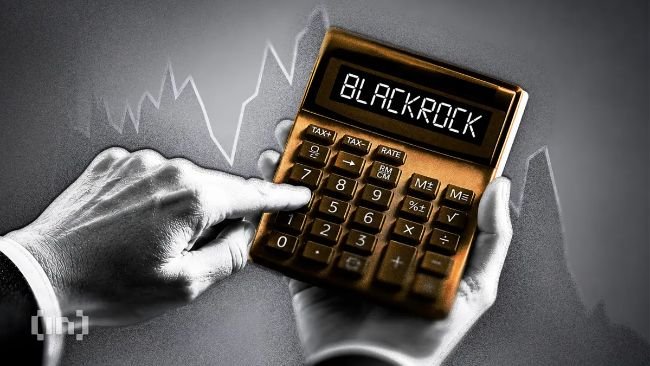
Investor interest in spot ETFs in the cryptocurrency market continues to grow. According to the latest data, Bitcoin spot ETFs recorded a total net inflow of $471 million on April 6th. The data was shared by the market analysis platform SoSoValue.
The highest daily net inflow was recorded in the IBIT ETF offered by BlackRock. IBIT topped the list with a net inflow of $182 million in a single day, bringing its total cumulative net inflow to $63.29 billion. It was followed by the FBTC ETF managed by Fidelity. FBTC generated a net inflow of $147 million on the same day, bringing its total net inflow to over $11.1 billion.
Looking at the overall picture, the total net asset value of Bitcoin spot ETFs has risen to $90.25 billion. This figure represents approximately 6.46% of Bitcoin’s total market capitalization. Furthermore, it has been reported that the historical total net inflow into these products has reached $56.4 billion.
On the other hand, Ethereum spot ETFs also performed strongly. A total net inflow of $120 million was recorded on the same day, with no outflows reported in any of the 10 ETFs in the market. BlackRock’s ETHA ETF again saw the highest inflow of the day with $60.8 million, while Fidelity’s FETH product came in second with $40 million.
Ethereum spot ETFs have reached a total net asset value of $12.28 billion, representing approximately 4.74% of Ethereum’s market capitalization. Experts note that strong inflows into ETFs indicate continued institutional investor interest.
Apple has run into “more issues than expected” with its foldable iPhone that may set back its release, according to Nikkei. The engineering problems reportedly cropped up during the device’s early test production phase and may delay first shipments by months, according to multiple sources briefed on the matter.
“The current situation could put the mass production timeline at risk,” one of the sources said. “April will mark a crucial stage of the engineering verification test, and this month till early may is extremely critical.” Component suppliers have supposedly been notified that the foldable iPhone’s production schedule will be delayed, and Apple is working to address the problems.
A foldable iPhone has been rumored since 2017, and Apple’s biggest rival, Samsung, released its first one back in 2019. According to multiple sources, Apple was aiming to launch its debut foldable iPhone in fall 2026 alongside the iPhone 18. However, as we detailed in an explainer last month, “the project could slip into 2027 if Apple runs into manufacturing or durability issues, particularly around the hinge or display.”
Apple was reportedly prioritizing the foldable iPhone and other premium models for its September event this year due to constrained supplies of components like memory chips. However, the foldable’s engineering issues could throw a wrench into those plans. “Apple and the supply chain are working under a pressured timeline and the current solutions are not enough to completely solve the engineering challenge… more time is needed,” Nikkei’s source stated.
The problems reportedly arose during Apple’s production verification tests. That’s the fourth of six steps the company’s new products must go through before shipping, prior to the key pilot production and mass production phases. Since the foldable would be an all-new design, it would have to pass each stage with flying colors before proceeding to the next.
Though likely to account for less than 10 percent of iPhone production, the foldable will be a key product for Apple designed to boost interest in iPhones across its range. Apple reportedly plans to produce seven to eight million of the devices initially, Nikkei reported. Apple has not yet officially announced the device and declined to commented on the reported engineering issues.
As hacking incidents continue to increase in the cryptocurrency sector, projects are still trying to take precautions against them.
At this point, the latest move came from Solana. Accordingly, the Solana Foundation launched its new initiatives aimed at ecosystem security.
The Solana (SOL) Foundation has partnered with Asymmetric Research to launch two new initiatives, STRIDE and SIRN, to strengthen DeFi security.
“The Solana Foundation has a long history of allocating resources to ensure the provision of security services and tools to the ecosystem, and today’s announcement further reinforces that commitment.”
According to the official statement, STRIDE is a security program that assesses and monitors the security level of Solana-based projects, and also provides intervention capabilities in the event of an incident.
Stride evaluates projects based on a total of eight criteria: “program security, governance and access control, oracle and dependency risk, infrastructure security, supply chain security, operational security, monitoring and incident response, and log management and forensic analysis.”
The Solana Foundation added that the evaluation results would be transparently communicated to users and investors regarding the protocol’s security level.
SIRN is a network of professional security firms established to provide immediate response to security incidents.
This measure was taken following a recent major cyberattack. As is known, Drift Protocol, a Solana-based derivatives trading protocol, suffered approximately $280 million in losses due to an attack carried out by an organization believed to be linked to North Korea.