The Oscar nominee, who played Smith’s on-screen wife as the mother of Venus and Serena Williams in the biopic, told The Daily Beast’s “Obsessed” podcast that she understands why Smith stormed the stage in 2022 and smacked Chris Rock after he made a joke about Jada Pinkett Smith’s shaved head.
“I know that he wanted to protect his wife,” Ellis-Taylor said of Smith. “I stand by that. I stand with him for that.”
After Rock made a joke comparing Pinkett Smith (who has alopecia) to G.I. Jane, Smith slapped Rock and returned to his seat, yelling, “Keep my wife’s name out your fucking mouth!” Very shortly after, Smith won the Academy Award for best actor, but the surprise act of violence later earned him a 10-year ban from all events hosted by the Academy of Motion Picture Arts and Sciences.
Ellis-Taylor continued, “I think that, you know, this idea that First Amendment rights should protect everybody? I don’t think it should necessarily protect assholes. I don’t. I don’t. I really don’t, especially if you’re causing harm.”
Being from Mississippi, the actor said she is used to hearing protected speech defending the Confederate flag. “I know blanket First Amendment valorization. I don’t buy into that. I just don’t,” she added. “To say the least, it needs to be nuanced. You can’t use it as an excuse to harm someone.”
Because it was caught on live television, the Oscars slap became a national scandal that affected Smith’s career. He was banned from attending the Oscars for a decade, and his film “Emancipation” was delayed.
Smith issued a formal apology in a video posted to social media the day after the Oscars, calling his actions “unacceptable” and “inexcusable.” He addressed Rock directly: “I am embarrassed and my actions were not indicative of the man I want to be. There is no place for violence in a world of love and kindness.”
On the “Obsessed” podcast, Ellis-Taylor made a point to praise Smith for how he “took care of everybody” on the set of “King Richard.”
“He just would not allow anybody to be treated poorly in his presence. He would just not allow it. And I cannot tell you how rare that is in this job,” she said. “I will always have a great deal of affection and care for him because he acted that way.”
Intel CEO Lip Bu-Tan has hinted that Intel might return to the memory industry it famously exited in the mid-80s when Japanese firms rose to prominence.
During an appearance on Michael Marks’ TechSurge podcast, Tan said one of his pet projects is exploring new memory architectures. He noted that he recently hired former SK Hynix CEO Seok-Hee Lee as EVP of Intel Foundry, “so you kind of know something that I’m thinking about.”
Intel started out as a memory manufacturer in the 1960s, and even after shuttering its main memory business decades ago, it’s dabbled in NAND and Optane. Now, though, it’s clearly considering a return to more mainstream manufacturing, as memory is no longer a commodity, but a strategic asset. Indeed, alongside Nvidia, memory makers Micron, SK Hynix, Samsung, and CXMT have made enormous profits from the AI boom.
Tan joked that talking about memory is a “little bit of Back to the Future.” But he argued that there’s a way to “do stacking” with the CPU and memory. He’s been reluctant to invest in memory, but says “there’s a lot of new technology” coming out that could be interesting.
Producing its own memory would also give Intel greater autonomy, especially if it integrates it into its CPUs. Considering Intel recently filed a patent for XBM that removes the interposer from HBM, it may be that any memory production goes to enterprise solutions.
Recommended by Our Editors
Building a new fab would cost billions, though, and represent a risky investment for a company that has struggled in recent years. Following investments from Nvidia and the US government, and a strong response to its latest consumer CPUs, things are looking a little brighter. Enough to build a competitive fab, though? I’m not so sure.
If Intel does jump back in, any additional fabrication capacity would be welcome. Maxed-out production lines are one of the key reasons memory and storage—and everything they require—are so expensive in 2026. Although CXMT is ramping up production and new Micron and SK Hynix facilities are under construction, they aren’t expected to dent memory demand for at least another year or two.
About Our Expert
Jon Martindale
Contributor
Experience
Jon Martindale is a tech journalist from the UK, with 20 years of experience covering all manner of PC components and associated gadgets. He’s written for a range of publications, including ExtremeTech, Digital Trends, Forbes, U.S. News & World Report, and Lifewire, among others. When not writing, he’s a big board gamer and reader, with a particular habit of speed-reading through long manga sagas.
Jon covers the latest PC components, as well as how-to guides on everything from how to take a screenshot to how to set up your cryptocurrency wallet. He particularly enjoys the battles between the top tech giants in CPUs and GPUs, and tries his best not to take sides.
Jon’s gaming PC is built around the iconic 7950X3D CPU, with a 7900XTX backing it up. That’s all the power he needs to play lightweight indie and casual games, as well as more demanding sim titles like Kerbal Space Program. He uses a pair of Jabra Active 8 earbuds and a SteelSeries Arctis Pro wireless headset, and types all day on a Logitech G915 mechanical keyboard.
It was just three years ago when Bela Bajaria revealed the internal label for Netflix’s programming ideal, the gourmet cheeseburger. Evoking populist fare with a garnish of prestige, it seemed like the only dining-related descriptor the TV industry would ever need. But there’s a new moniker on the rise, which I learned when a screenwriter friend recently shared their concerns about a project never getting out of development. The rationale? “Oh, they’re only buying white wine thrillers.”
This trio of words is so evocative that it barely needs a definition. Let’s establish one, just to be safe. A white wine thriller can get dark but not too dark. The body count is kept low. A few murders, nothing too graphic. There must be aspirational elements, typically wealthy characters wearing Brunello Cucinelli while emotionally unraveling in Nancy Meyers-worthy kitchens. White wine thrillers are often adaptations of books. And, pivotally, they are centered on female protagonists and marketed with a female audience in mind. The characters may drink white wine. They frequently do. The real implication is that the viewer is drinking it as they watch.
Roots of this label can be traced to Peacock. “It was just after All Her Fault, we were talking about female-led thrillers, and one of the executives called them white wine thrillers,” says Lisa Katz, president of scripted content at NBC and Peacock. “I don’t know what that conjures for you, but I like wine. To me, white wine feels lighter, refreshing, enjoyable. It goes down easy. You don’t feel bad the next day.”
For every person I’ve approached who claims to have never heard the term, there are at least another two who trill with excitement at its mention. And not because the white wine thriller is anything revelatory or new. It’s because there are finally the words to articulate a kind of show we’ve been watching for years. Look back at the female-driven hits of the past decade, and so many fit the bill. Netflix’s adaptation of Elin Hilderbrand’s The Perfect Couple? Quintessential white wine thriller. Hulu’s NinePerfect Strangers? Big white wine energy. HBO’s The Undoing? Pour another glass of Grüner. In short: If Nicole Kidman is in the mix, keep a corkscrew within arm’s reach. This brings me to Big Little Lies. No series better encapsulates the tenets of the white wine thriller. HBO assembled The Avengers of A-list actresses, put them in stunning homes on the California coast, asked viewers which one killed the shitbag husband played by Alexander Skarsgard, and our cups ran over.
All Her Fault is the latest industry standard for white wine thrillers. The 2025 miniseries, which stars Sarah Snook as a mother unraveling the cashmere mystery of her missing son, is nominated for seven Emmys. It’s a watershed hit for Peacock. Until the recent launch of the Jennifer Garner drama Five Star Weekend, All Her Fault ranked as the most watched original in the streamer’s history. The fact that, in the wake of All Her Fault’s success, Peacock announced in July that it was finally profitable certainly suggests that white wine thrillers are worth the investment.
“It’s such a good phrase because you immediately understand exactly what it means,” says Tessa Coates, the comedian turned showrunner behind Prime Video’s Ride or Die. “But thrillers, when correctly done, are incredibly difficult to pull off. The fact that you enjoy them with a white wine is not a damning thing. White wine makes it clear that we’re here for a bit of fun. If you wanted to be truly damning, you would call it a prosecco thriller. That says, ‘We’re sugar. We’re sweet. We’re silly.’ “
Coates’ series starring Octavia Spencer and Hannah Waddingham skews too comedy and too action to satisfy the white wine criteria, the most comedic-skewing example of the genre likely being Kaley Cuoco’s The Flight Attendant, but Ride or Die is part of a wave of female-fronted hits setting the summer TV narrative. Apple TV has the Anya Taylor-Joy-fronted Lucky, which is said to skew too male to be a white wine. The aforementioned Five Star Weekend is deliberately short on thrills (“It’s possibly more of a rosé,” jokes Katz). And then there’s Furious, on Hulu, a red wine thriller.
Red wine thrillers check many of the same boxes as their sauvignon blanc counterparts. The biggest differences are higher body counts and a bit of grime where you’d normally find the aspiration. Picture Amy Adams in Sharp Objects. Her alcoholic character may have been quaffing vodka from Evian bottles, but that was a red wine thriller all the way. A red wine thriller demands a stronger constitution, a willingness to wake up the next morning with some lingering effects. Those watching Furious — Liz Meriwether and Emmy Rossum’s cat-and-mouse thriller about an Epstein-esque victim taking out her rapists one by one — know the series is not so easy to shake.
“A red wine thriller stains your teeth, it’s tannic,” one producer tells me, noting that white wine thrillers are in higher demand but that some buyers have developed a taste for red. “Peacock and Hulu are definitely looking for white wine thrillers. Netflix and HBO Max might skew more red. And Paramount has absolutely no idea what it wants.”
Paramount appears to be, as a recent THR report detailed, finally turning its attention to women after so many years relying on the work of Taylor Sheridan and his abundant testosterone. All this serves as a reminder that programming for or about women is still spoken of in terms that would almost never be used for men. Male-skewing series don’t suffer such labels, as much as I’d argue for Shane Gillis’ Tires being dubbed a Kirkland Signature comedy. Calling something a white wine thriller could be interpreted as pejorative, if not sexist.
“Looking at these female-fronted shows that are doing so well, they’re all different,” says Larry Salz, an agent and partner at UTA. “I think the danger of boxing them in is the notion of a network going, ‘Well, we already have our female thriller.’ “
Taxonomies, even cheeky ones, can also be helpful. In a marketplace so often defined by confusion, calling something a white wine thriller offers a rare bit of clarity for all parties. “People want to categorize because people are always trying to figure out what audiences want,” says Katz. “What I’ve learned is that you never know what they want. So the only way to approach this is to make something entertaining, something well-executed that will connect no matter the genre.”
This story appeared in the Aug. 12 issue of The Hollywood Reporter magazine. Click here to subscribe.
Slow Horses, Apple TV’s wry cult spy series, isn’t planning on, well, slowing down anytime soon.
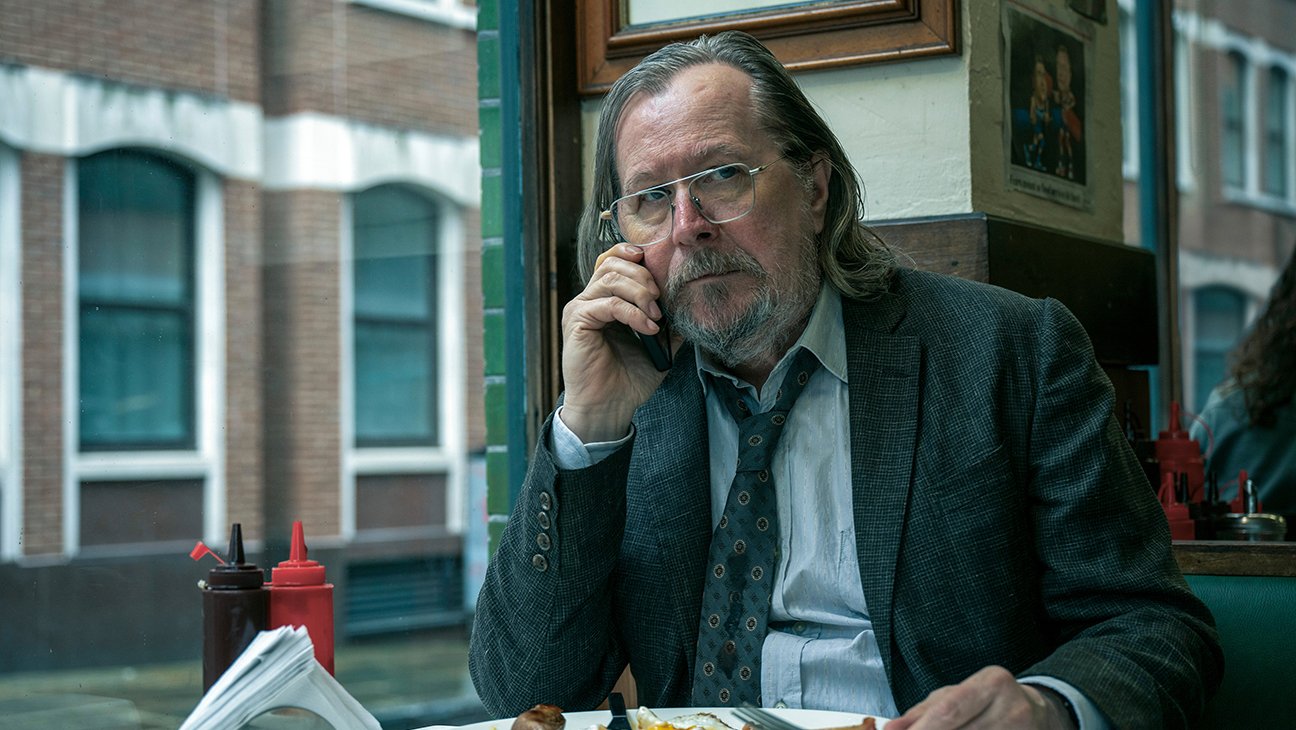
The show, starring Gary Oldman as the crotchety and flatulent Jackson Lamb; Jack Lowden as River Cartwright; and Kristin Scott Thomas as MI5 director Diana Taverner, hit a bit of a snag at the end of its most recent fifth season, when lead writer and executive producer Will Smith walked away from the show for other pursuits.
While Slow Horses, which films in Britain, doesn’t operate with a traditional showrunner, Smith served as the de facto captain at the helm. His departure raised some questions about the future of the slow-burn series. However, executive producer Doug Urbanski says the production, in part because there isn’t a lone showrunner, had built up a creative foundation that meant if they couldn’t figure out the best way forward, they should all resign.
“Will leaving really meant that we just had to solve it, and I think we did, as you will see with season six about to premiere,” Urbanski says. “Some people have seen it already and have said they think it’s the best season yet. Now we’ve heard that season after season, but it is very good.”
After the first couple of seasons flew under the radar, Slow Horses has in recent years cemented itself among shows consistently vying for critical recognition. For its most recent season, the show nabbed nine Emmy noms, including lead and supporting actor nods for Oldman and Lowden, as well as best drama series.
“There’s not one award that I’ve been nominated for that I haven’t been surprised by, and the same goes for Gary,” Urbanski reveals. “Awards add another sort of pressure to the whole thing. … So we don’t really think about awards, and we don’t make the show for awards. But the recognition is nice.”
The sixth season of Slow Horses is set to premiere Sept. 16. Co-executive producer Gaby Chiappe was tapped to serve as lead writer for the season, which will be the first in the series to adapt two of author Mick Herron’s books for a single season — usually one book nets out to one six-hour run of a season.
Urbanski says in order to keep the character and story momentum of previous seasons going, combining the sixth and seventh books in Herron’s series made the most sense. “We thought the two books each were thin enough,” he explains, adding that Herron’s novels remain the creative foundation for the series. “Often some of the best dialogue and scenes you see in the show are stuff that Mick Herron has already authored.”
With nine books on the shelf and a seventh season of TV based on the eighth novel already in production, the runway for the series after that point remains a question for fans. Urbanski says, however, the creative team is committed to keeping the show going, so long as they’re able to continue balancing its delicate tone and everyone involved — Apple, Oldman, etc. — wants to keep showing up.
“We’re all having the family conversation,” Urbanski says. “But get this: Most TV shows don’t have books, so we can figure this out. … And there’s another thing: Mick Herron hasn’t stopped writing. I can’t speak for Mick, but you never know, more books might be coming.”
This story first appeared in an August stand-alone issue of The Hollywood Reporter magazine. To receive the magazine, click here to subscribe.
This deal proves bigger is indeed better. Amazon has the Toshiba 75-inch Class M450 Series 4K smart TV on sale for $489.99, down from its regular $789.99 list price. This gives you a 38% discount on a giant home theater display featuring Regza QLED Color, the Regza AI Engine ZRi Gen3, Dolby Vision, Dolby Atmos, and Fire TV with Alexa.
Bringing home a massive 75-inch smart television equipped with Regza Power Audio, HDR10+ Adaptive contrast, and low-latency gaming features for under $490 is an extraordinary value, making it easier to build an affordable living room theater.
This $300 price cut completely removes the financial tax usually tied to giant 75-inch screens, giving movie lovers, sports fans, and console gamers a rare opportunity to capture rich QLED color depth and AI scene optimization without the standard retail price strain. Add this to your cart now!
AMAZON DEAL ALERT
Toshiba 75-inch Class M450 Series 4K Smart TV
75-inch QLED 4K, REGZA AI engine, Dolby Vision/Atmos, HDR10+ adaptive, Fire TV, game mode VRR/ALLM
The Toshiba 75-inch M450 TV elevates your home entertainment with Regza QLED Color and the Regza AI Engine ZRi Gen3. It uses Dolby Vision, HDR10+ Adaptive, and AI 4K Clarity upscaling, along with Regza Power Audio with Dolby Atmos sound, Game Mode with ALLM/VRR, and Fire TV streaming with Alexa, to transform your movie nights to the next level. But if you need more options, check out PCMag expert Will Greenwald’s list of the best 75-inches and above TVs for 2026.
The Toshiba 75-inch M450 Series sets a high benchmark for big-screen value, combining Regza QLED color depth with Fire TV smart convenience. At almost 40% off, it takes the cost out of 75-inch home cinema displays, and treats you with AI 4K upscaling, Dolby Atmos audio, and Alexa voice search. Your eyes will thank you for this.
[This story contains MAJOR spoilers from the House of the Dragon season three finale.]
Exiting the penultimate season of House of the Dragon, several season one alums who started the series are no long with us: Rhys Ifans as Otto Hightower, Harry Collett as Jacerys Targaryen, Fabien Frankel as Criston Cole, just to name a few. One original cast member, however, is very much still with us, even if it looked pretty touch-and-go for a while there: Corlys Velaryon, the Sea Snake, played with royal gravitas by Steve Toussaint.
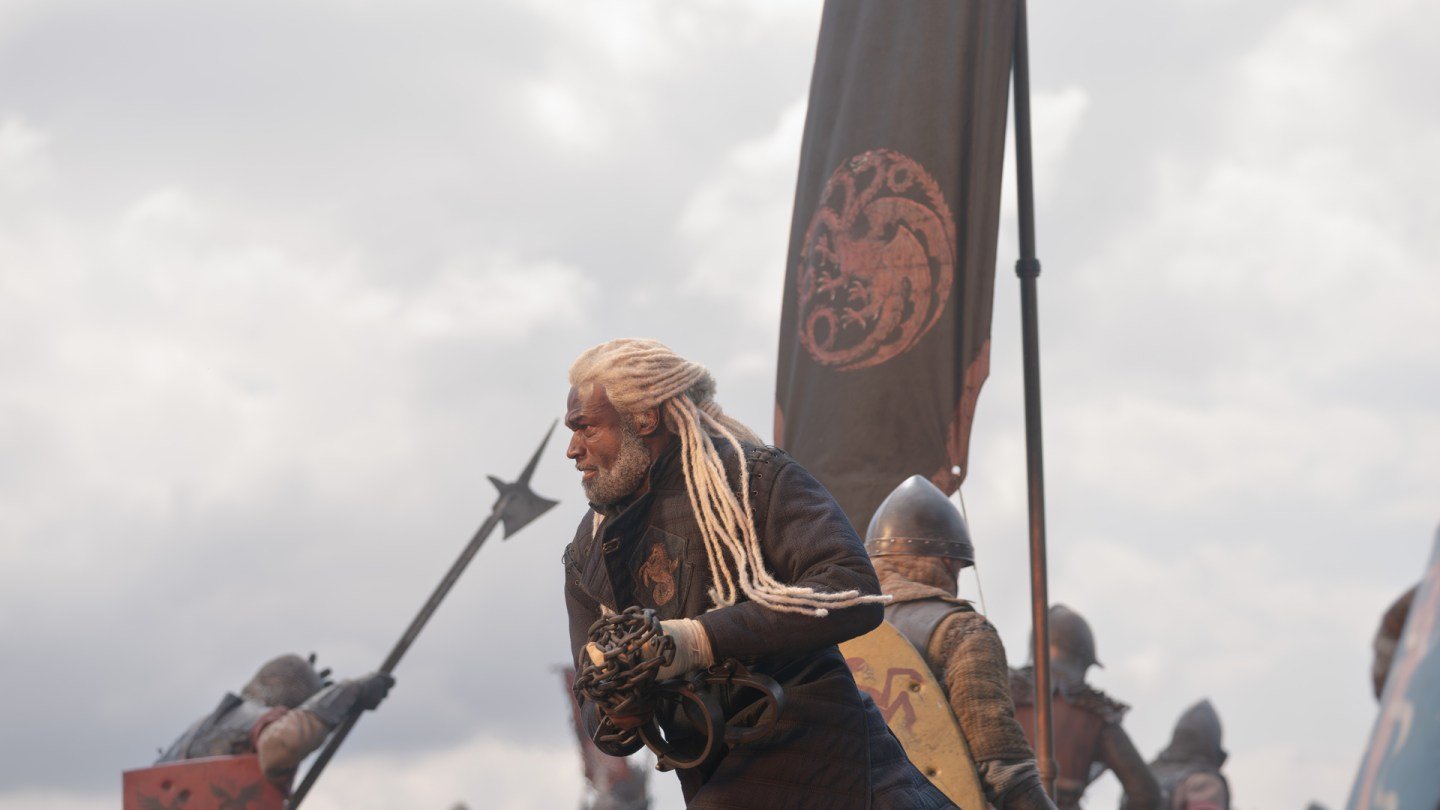
The Sea Snake started season three in the midst of the largest naval battle ever seen in the Game of Thrones universe. He survived that, despite a brief period where it appeared he’d been killed in action. Later, after Rhaenyra (Emma D’Arcy) refused to legitimize his bastard sons, Corlys publicly calls out the queen’s hypocrisy with her own children, and somehow manages to keep his head on his shoulders. Later still, after waging a private war against the crown’s defectors, Corlys ends up in the hands of the Hightowers in Tumbleton — and he survives that only by the good grace of Gwayne (Freddie Fox) exchanging Corlys to Daemon (Matt Smith) as a peace offering.
Alas, the peace does not hold even for a minute, as Daemon takes Corlys back as a prisoner, and embarks on a fiery campaign against Tumbleton. By the end of it, Daemon faces death’s door, but is pulled away just in the nick of time by — you guessed it — the Sea Snake himself.
If that felt like a rollercoaster to ride, imagine living it. Better yet, imagine being Toussaint, one of the most stalwart cast members of the Game of Thrones prequel, inhabiting that ride. Below, the actor speaks with The Hollywood Reporter about all of that and more.
***
I have spoken to a lot of actors this season about their character’s deaths. It’s a nice change of pace to speak with an actor who still has some HOTD job security!
So far! (Laughs.) You never know how long it’s going to last. I kept getting stuff from friends and family and social media going, “Are you still alive? Do you live? Come and tell me.” So it’s nice that I can say that yes, for now, I’m still here. Who knows what tomorrow may bring. But for now, I’m still employed. They can’t get rid of me that easy.
Corlys begins the season fighting for Rhaenyra’s cause, and ends the season as a prisoner of that same cause. It’s quite the journey for the Sea Snake.
It is. There have been so many different facets to him that we’ve had a chance to explore this season, particularly him showing humility and vulnerability with his son, Alyn. One of the big things, of course, is that he apologizes for his earlier actions to Alyn in that scene in episode one. The other thing that’s consistent about him is, of course, taht Corlys is so steadfast in doing what he considers to be the right thing, no matter the personal cost. That’s been fascinating about him.
Then at the same time — and this is from Corlys’s point of view — when he then says to the queen, “Look, I’ve lost all of this stuff. I’ve lost my wife. I’ve lost my kids. I now have lost my home and much of my fleet. Could you at least legitimize my two sons?” She sort of goes, “Not just yet.” There is a sense of righteous indignation on his part because I think for him, the only thing he can do is to try and put his sons in a position where they can better themselves, where carrying his name will help them.
So it has been fascinating to see how he’s dealt with what he considers to be a betrayal by the realm. Of course, initially, he avoids King’s Landing and goes off on this rampage mopping up dead pirates and trying to calm his rage. It was a really lovely journey and lovely to explore these different facets of this character.
You’re at the heart of my favorite scene of the finale: the hostage negotiation between Daemon and Gwayne, with you as the bargaining chip. What was it like, inside the scene?
It was lovely. What was so good about it was you don’t quite know where Corlys is going to come down. Several times when I read the scene through, and then when we rehearsed it, I said to both Andrij Parekh who directed the scene, and then to David Hancock, one of our execs, “What is it that Corlys has said here that’s so bad?” Because when we were shooting it, Matt obviously plays the lines, but sometimes he likes to ad lib some stuff as well. He was just going wild with some of the insults he was throwing at me.
Tommy Flanagan, Freddie Fox, Steve Toussaint and Matt Smith in the House of the Dragon finale.
HBO
Do we want to know?
I don’t know. (Laughs.) I was like, well, I don’t know what he said that’s so bad, because it made sense to me! Corlys is at a point where he’s seen so many battles, seen the futility of war, and there is actually no need for him to shed any more blood than is necessary. So it’s unfortunate for him, of course, that he’s up against Daemon who’s like, “Oh no, everybody has to die.” It was lovely. We had a lot of fun. I don’t know how many times we actually shot that in the end, but the peaks and troughs of the scene were really lovely to play. They’re two wonderful actors to work with anyway. So yeah, it was a lot of fun.
Were you disappointed to miss out on the big battle at the end of the season, or was the sea battle in the premiere hard enough work for you?
I was happy to take a break. The premiere battle was so tough. We must have shot something like three or four weeks, maybe longer, of the battle itself, which ends up being about 10 minutes. I was quite happy just to be watching the dragons flying over and then doing a bit of running and jumping [in the finale]. That was good for me. I wouldn’t have minded cutting somebody up from the navel to the throat just to show that Corlys can! But no, I leave it to those guys to do that stuff.
By the end of the season, Corlys — freshly imprisoned by Daemon — actually seeks out Daemon and is the one to talk sense into him: We’ve lost, and it is time to go. Where is the Sea Snake’s head at when he convinces Daemon to leave?
What I saw when I watched the scene is what happens to Daemon after that explosion where he suddenly comes to. I think Daemon realizes they’re not going to win. So he starts looking for fights because I think he wants to go down fighting. He’s just looking to fight until somebody chops him down. It’s a death wish, I believe. Corlys saves him from himself. He sees in Daemon someone who is formidable, someone who is worthy and someone who is a vital instrument for the queen’s cause. I think that’s what Corlys is thinking when he saves Daemon. Their relationship has always been a bit up and down. Where will it go after they leave this scene? I’m not sure.
It should be an interesting return to King’s Landing, at the very least.
Right, because the last time Corlys was with Rhaenyra, he called her out in public. And normally, people die for that. Now of course, at that stage, Corlys still had some use to the queen, but I’m as interested as anybody else to see what the relationship is like between him, Rhaenyra and Daemon. I do not have a clue, frankly.
You could always read the book and find out! But if you’re going purely on instinct, as the man who inhabits this character, what’s your feeling on how things will shake out for you in season four?
I feel like he comes back and is like, “Let’s put that shit behind us or let’s deal with that later. Right now we have a war to win, and that’s more important than anything else.” As you said, I haven’t read the books. I made that decision very early on that I wasn’t going to read the book while I was playing this. And I have tried in the past or just saddled up to Ryan [Condal] and sort of go, “What’s the story?” And he’s like, “I can’t tell you, but it’s good stuff. You’ll like it.”
What do you want to see when it comes to that good stuff? Is there anything left on the bucket list to make sure you achieve in the final season?
(Pauses.) No, not really. We’ve seen him angry, we’ve seen him sad, seen him loving with his wife. I can’t think of any one particular thing that I’m like, “Oh yeah, we have to do that.” I’m just happy to be surprised.
Is it too late to go for a dragon ride?
Oh, you’re right.
Maybe he’s just a late bloomer!
Exactly. Or even he goes for a joyride with his son, Addam. Yes, that’s it. You’re right. That’s the one. I’m going to have to start putting that into Ryan’s ear.
I’m picturing Corlys on one dragon, Addam and Alyn on the other, and you part ways across the Narrow Sea like the Westeros version of the end of Furious 7.
From your mouth to Ryan Condal’s ears!
***
House of the Dragon season three is now streaming on HBO Max; read THR‘s finale coverage.
Netflix has set the release date for “The Altruists,” inspired by Sam Bankman-Fried and Caroline Ellison’s rise and fall from financial power.
“The Altruists” hits Netflix November 19. Netflix has also released the first-look photos for the drama, which can be seen below.
The logline for the show reads, “The story of Sam Bankman-Fried and Caroline Ellison, two hyper-smart, ambitious young idealists who tried to remake the global financial system in the blink of an eye – before they were accused of stealing $8 billion and became Gen Z’s own Bonnie & Clyde.”
At his peak, Bankman-Fried was listed as the 41st-richest American in the Forbes 400. (He was on the 2021 Forbes 30 Under 30 list, but also included on its 2023 Hall of Shame list as a selection Forbes wished it could take back.) In November 2022, evidence of fraud surfaced and FTX was forced to go bankrupt. Bankman-Fried was arrested in December 2022.
Ellison was the CEO of Alameda Research, a trading firm affiliated with FTX. She lost that job after FTX and Alameda filed for bankruptcy. Prior to their fall from grace, Bankman-Fried and Ellison were in a relationship. She later went on to testify against Bankman-Fried in court.
The eight-episode series stars Julia Garner as Caroline Ellison and Anthony Boyle as Sam Bankman-Fried. Joining them are Alex Lawther as Sam Trabucco, Karan Soni as Nishad Singh, Naomi Okada as Claire Watanabe, Madison Hu as Constance Wang, Matt Rife as Ryan Salame and Eugene Young as Gary Wang.
Hudson Williams, Paul Reiser, Robin Weigert, Maddie Hasson, Marianna Phung, Jennifer Grey, Terry Chen, William Mapother, Jack Greenlees, Elizabeth Adams, Hannah Galway, Donald Heng, David James Lewis and Jasmine Lukuku also star.
“The Altruists” is created by Graham Moore and inspired by the New York Magazine articles written by Kevin T. Dugan and Jen Wieczner.
Moore serves as writer and showrunner along with Jacqueline Hoyt. James Ponsoldt, Kyle Patrick Alvarez, Mairzee Almas, Moore and Silver Tree are directors.
Moore, Hoyt and Barack and Michelle Obama are executive producers. Jessie Dicovitsky and Vinnie Malhotra executive produced for Higher Ground Productions, with Scoop Wasserstein for New York Magazine/Vox Media Studios. Tonia Davis, Ponsoldt, Lauren Morelli and Garner are also executive producers.
Read this article on Variety’s sister website Sportico.
The record-breaking Los Angeles Lakerssale, announced Wednesday to a largely unsuspecting audience, is packed with intrigue.
The seller, Mark Walter, is facing federal investigations across his business empire. The buyer, Joshua Kushner, is Trump family-adjacent, recently tried to invest in FIFA in what became a true international scandal and could soon become the youngest control owner in the NBA. The deal, which is still a long way from closing, has implications for the NBA’s potential multibillion-dollar sale of an expansion franchise 300 miles east of LA, the ownership future of baseball’s richest team and much more.
To unpack the biggest topics, Sportico complied six things to know about the agreement and its fallout:
1. The price
Yes, $12.5 billion is the highest valuation ever for control of a sports team in a transaction, but Kushner’s group is not forking over $12.5 billion to make it happen. Nor did Walter actually pay $10 billion when he consolidated control less than a year ago. It’s important context, particularly as sports team values soar to numbers unfathomable for all but the world’s absolutely richest people.
Walter and Todd Boehly already owned 27% of the Lakers before they agreed to that “$10 billion takeover,” a slice they purchased in 2021 at a $5.5 billion valuation. What’s more, the team’s long-time control owners, the Buss family, retained an approximately 15% stake in the club. In rough math, that $10 billion transaction was really less than $6 billion, and that’s before you get into the debt and the financing specifics.
For this deal, Kushner has already clarified that the Buss family will remain involved. So right off the bat, that lowers the transaction to $10.6 billion. The team’s exact cap table is not public and it is unclear who is exiting, so that number is an absolute max. The NBA’s debt limit is $475 million, and the league allows teams to have up to 30% of their equity held by institutional funds (no one fund can have more than 20%), which means more than $3.5 billion of this total could come via private equity funds like Kushner’s Thrive.
That back-of-napkin math helps explain how Kushner and Bob Iger—who have a combined net worth of about $6 billion—can buy an NBA team in a $12.5 billion deal.
2. The buyer
As team prices have skyrocketed, there’s been lots of chatter about who is rich enough to actually own these franchises. Tech has seemingly come to the rescue.
Venture investor Vinod Khosla is leading the $9.6 billion takeover of the Seattle Seahawks. Jeff Bezos is reportedly a notable part of a consortium looking to buy a significant minority stake in Liverpool, along with Facebook co-founder Eduardo Saverin.
Earlier generations of Silicon Valley leaders largely turned their noses up at sports. But no longer. The development of AI in particular appears to have increased tech billionaires’ interest in the artificially scarce entertainment assets that will continue to draw attention (and dollars), even if other segments of the economy are turned upside down by sudden surplus. Khosla has predicted a world in which today’s 5-year-olds won’t ever need jobs. That would give them more time for football.
AI can produce information and entertainment for basically free. But it can’t match the local team when it comes to generating passion.
Kushner, 41, has overseen Thrive’s investments in tech companies including Instagram, Spotify and OpenAI. He explained his philosophy for a new Thrive Eternal fund this spring alongside an investment in the San Francisco Giants.
“These are assets with qualities that cannot be replicated by technology,” he said at the time. “In a world shaped by abundant intelligence where creation scales and distribution fragments, we believe they will matter even more.”
Potential OpenAI and Anthropic IPOs could mint a new generation of billionaires—and sports investors.
3. The politics
Kushner isn’t just known as a tech investor these days. He’s also recognized as the brother of Jared Kushner, President Donald Trump’s son-in-law who remains active in global relations after serving as a top advisor during Trump’s first term in office. Jared divested from Thrive Capital after Trump’s election in 2016. Their father serves as the U.S. ambassador to France.
Joshua Kushner reportedly donated $250,000 to the Growth Democrats political action committee during the 2024 election cycle. Iger was briefly considered a potential 2020 presidential candidate after switching his party affiliation from Democrat to no party preference in 2016. He largely avoided direct confrontation with the President during his recent stint as Disney CEO, which ended in March, even as the company and administration collided over allegations of defamation and concerns over press freedom at ABC.
Iger has long been a power player within the sports world and is known to be close with NBA commissioner Adam Silver.
4. The financing
There’s been very little disclosed about how this deal is being financed. Sportico’s assumption is that it’s being backstopped by Thrive, which has more than $60 billion under management, and that Kushner and Iger will now begin the process of building a group of investors—almost certainly a mix of wealthy individuals and institutional funds, likely with notable celebrities mixed in too.
Fifteen years ago, this timeline would have felt backwards, but this is largely how modern sports transactions unfold today. It’s what happened with the sales of the Boston Celtics and Portland Trail Blazers, and it’s currently underway for the pending acquisitions of the San Diego Padres and Seattle Seahawks. The sale agreement comes first, then the financing comes together.
That helps explain at least part of what is perhaps the most shocking piece of this very shocking story. Iger said Wednesday that the deal came together in just three days. But that’s really just an agreement on a price. Now the much harder work begins to syndicate a group that has the money and can pass the NBA’s background checks.
That will all have to be wrapped up before the deal is officially approved by the NBA, in a process that could take a few months. The exact close date has big ramifications on the level of taxes Walter will owe for the deal.
5. The seller
Walter flipping the Lakers in less than a year, for a tidy 25% profit, came as a shock to the sports business industry. If he sells another team from his portfolio, it will be less of a surprise.
Walter is “in talks with investors to raise money to help pay down loans on the books of its insurers that had drawn scrutiny from the Justice Department,” according to recent reporting from Bloomberg. The DOJ is reportedly investigating loans Walter-owned insurance firms made to holdings of his within the TWG Global holding company, which also includes his sports portfolio.
“Mark Walter and TWG have always acted in good faith, and those who have done business with Mark know him as honest and straightforward,” TWG Global said in a statement in July. “We are cooperating with authorities, and we are confident these matters will be resolved favorably.”
Those investigations have put an extra spotlight on Walter’s relationship to The White House. Walter visited 1600 Pennsylvania Ave. in July with the Los Angeles Dodgers, delivering a personalized World Series ring to Trump on behalf of the team.
Walter is the Dodgers’ controlling owner. He also owns part of the Chelsea Football Club, Cadillac Formula 1 Team and the WNBA’s Los Angeles Sparks. He is the primary backer of the Professional Women’s Hockey League.
6. NBA expansion
The NBA formally launched its expansion process in May with only two cities under consideration: Las Vegas and Seattle. Adam Silver has been clear that expansion is not guaranteed, and the league might choose only one market.
The Vegas opportunity has attracted more interest, with four known groups interested and more unknown parties certainly kicking the tires. Kushner and Iger hired an investment bank and spent months exploring a Vegas bid. Their group and one fronted by Nancy Walton Laurie and Bill Laurie were considered the frontrunners, according to multiple sources.
Kushner and Iger pivoting to Los Angeles reshapes the bidding and potentially clears the path for Walton Laurie, a Walmart heiress who brings deep pockets and a local flavor to the Vegas process. She and her husband live just outside Sin City in Henderson, Nev., and are worth $18.4 billion, according to Forbes.
Other known contenders in Las Vegas include a bid fronted by Vegas Golden Knights owner Bill Foley. A group dubbed the Las Vegas Jacks revealed plans to bid with a cap table that includes former Phoenix Suns owner Jerry Colangelo, former Turner Sports executive David Levy, American Century Investments CEO Jonathan Thomas and Prime Capital Financial chairman Scott Colangelo.
The Blockchain Association filed an amicus brief supporting Custodia Bank’s petition for Supreme Court review.
Custodia is challenging a ruling that upheld the Fed’s denial of its master account application.
The group says the case could shape how much power federal regulators have over state-chartered banks.
The Blockchain Association is urging the Supreme Court to take up Custodia Bank’s fight with the Federal Reserve, arguing the central bank should not have the broad power to deny payment system access to eligible state-chartered banks.
In the amicus brief filed on Wednesday supporting Custodia’s petition, the crypto trade group said a lower court ruling in favor of the Fed gives federal regulators a quiet way to cut lawful businesses out of the banking system.
“The decision ratifies the Fed’s misuse of its payment services to further an impermissible policy goal—debanking the digital-asset industry,” the Blockchain Association wrote.
An amicus brief is a legal filing from someone who is not a party to a case but wants to give the court additional arguments or context. Here, the Blockchain Association is supporting Custodia’s request that the Supreme Court review the dispute.
At issue is Custodia’s bid for a Federal Reserve “master account.” Custodia is a so-called crypto bank based in Wyoming, offering services including digital-asset custody, payments and settlement infrastructure, and dollar-backed stablecoin-related products to institutional clients. It has spent years seeking a master account, which would allow it to settle payments directly with the central bank. In October, an appeals panel ruled that eligibility alone did not entitle Custodia to an account. In December, the bank asked the full Tenth Circuit to rehear the case.
The Blockchain Association argues the Fed’s denial threatens the dual banking system, where both state and federal authorities can charter banks. If the ruling stands, the association says, federal regulators could override state banking decisions by denying access to the payments system.
“Whether federal regulators, based on their own discretionary whims, can intrude on state prerogatives and debank lawful businesses is a question of exceptional importance with broad consequences for the national economy,” they wrote.
The brief said Custodia’s fight is the latest phase of Operation Choke Point 2.0, invoking the Obama and Biden-era program critics said pressured banks to cut ties with unfavorable industries.
“In a well-documented campaign termed Operation Choke Point 2.0, the federal government under the prior administration ‘used vague rules, excessive discretion, informal guidance, and aggressive enforcement actions to pressure banks away from serving digital asset clients’ and engaging with digital assets,” the brief said.
While the Supreme Court has not agreed to hear the case, for now, the brief asks the justices to decide how much control the Fed should have over access to the U.S. payments system.
Daily Debrief Newsletter
Start every day with the top news stories right now, plus original features, a podcast, videos and more.
Barça Mobile, the telecom platform linked to FC Barcelona, is adding a digital wallet to its mobile app through partnerships with Wirex, Crossmint and the Stellar Development Foundation. New Era Visionary Group, the official telecom operator and partner of FC Barcelona, is working with the three companies to build the wallet infrastructure. The new feature will combine mobile services with payments, rewards, travel and other digital services for users worldwide.
Wirex will provide payment and card infrastructure for the wallet. Crossmint will provide wallet infrastructure and onboarding technology. Stellar will serve as the blockchain layer for the wallet. Its network will support digital transactions and cross-border value transfers, allowing Barça Mobile to build services for users in different markets.
The wallet will not operate as a separate product. Instead, it will become part of the existing Barça Mobile app. The initiative is part of Barça Mobile’s broader plan to develop a global connectivity platform. The company says the service is aimed at FC Barcelona fans, travelers, and mobile subscribers looking for access to telecom and digital services through a single interface.