Blog

  • Neutrl pauses NUSD redemptions over undisclosed reserve issue

    Neutrl pauses NUSD redemptions over undisclosed reserve issue

    Decentralized finance (DeFi) protocol Neutrl has suspended minting and redemptions for its NUSD synthetic dollar after unspecified circumstances affected protocol reserves, leaving the cause and scale of any potential impairment unclear.

    On Thursday, Neutrl said it had also paused other protocol functions on legal advice while it assesses the impact. The protocol did not identify the affected asset or counterparty, say whether reserves suffered a realized loss or provide a timeline for resuming operations.

    Structured-yield protocol Strata later said it paused minting, redemptions and related functions for contracts in its Neutrl market, which supports several NUSD-linked products. Strata said its other markets remained operational.

    With about $53.6 million in NUSD in circulation, the suspension prevents approved counterparties from exchanging the token for its backing assets while Neutrl determines whether its reserves have been impaired. Neutrl said it would provide timing and next steps when available.

    Cointelegraph contacted Neutrl for comment but had not received a response by publication.

    NUSD supply falls 18% over 30 days

    According to RWA.xyz, NUSD had a market capitalization of about $53.6 million on Friday, down 18.4% over 30 days, while monthly transfer volume fell 72.4% to $71.4 million. However, the data does not establish that the earlier contraction was related to the reserve issue.

    The synthetic dollar is designed to track the US dollar using yield-bearing crypto assets and market-neutral strategies rather than deposits held in a bank. RWA.xyz showed NUSD trading at about $0.9984, with 615 holders and 347 active addresses over the preceding 30 days.

    On May 25, verification platform Accountable said its Neutrl dashboard provided continuous cryptographic proof that NUSD reserves matched the protocol’s liabilities.

    A February assessment by risk-advisory team BA Labs nevertheless classified a proposed Neutrl integration as higher risk because of counterparty, operational and liquidity exposure. It said direct redemptions were limited to KYC or KYB-approved counterparties and that requests exceeding the liquid buffer could enter a queue targeted for completion within 48 hours, without a guarantee.

    BA Labs estimated NUSD supply at $226 million and reserves at $233.7 million at the time, implying a 103.6% collateralization ratio. It said more than 87% of reserves were held through Fireblocks, while smaller amounts sat on centralized exchanges.
  • Water supply for three US states drips down, Lake Mead at record low

    Water supply for three US states drips down, Lake Mead at record low

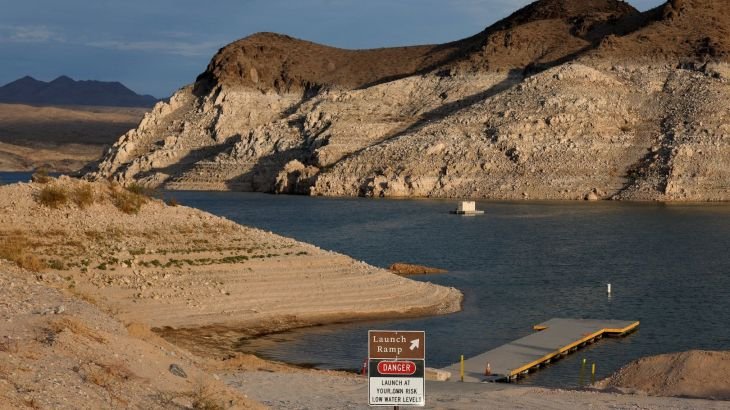
    The largest reservoir in the United States, located on the border of Arizona and Nevada, just hit a record low. Lake Mead’s water levels are down by two-thirds, potentially impacting supplies of water and energy for millions across the western United States.

  • Parties Lay Out Key Discovery And Other Dates For Pending Paramount-WBD Antitrust Trial

    Parties Lay Out Key Discovery And Other Dates For Pending Paramount-WBD Antitrust Trial

    This week has been dominated by headlines about Paramount‘s threat to leave California, by unions and other officials urging a settlement and by Capitol Hill Democrats warning of investigations.

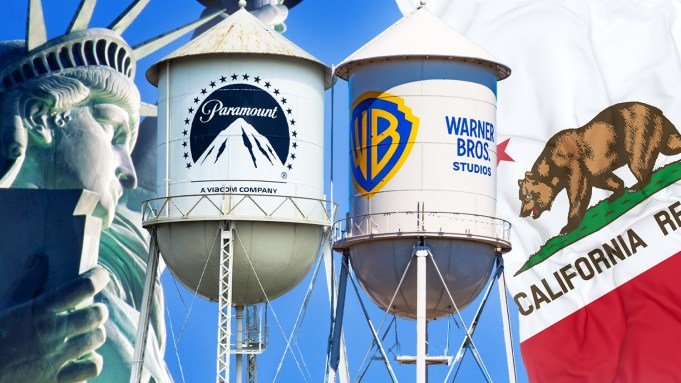
    But on Thursday, attorneys completed the rather routine step of proposing key dates and deadlines in advance of an antitrust trial over the proposed merger of Paramount with Warner Bros. Discovery.

    A joint case management statement was filed by the plaintiffs — 12 state attorneys general and the Writers Guild of America — and the defendants, Paramount and WBD. The fact discovery is proposed to start on Aug. 17, and to close on Jan. 8, a key element of trial preparation that typically generates disputes.

    Last week, U.S. District Judge Araceli Martínez-Olguín set a trial for March 2-19, a timeline that stands to cost Paramount more than $1 billion in “ticking fees” due. As part of their deal, Paramount agreed to pay WBD $7 million for each day that the transaction doesn’t close after Sept. 30. They also face a June 4 deadline for the expiration of a deal, with Paramount on the hook for a $7 billion termination fee.

    Figures including Xavier Becerra, the Democratic nominee for California governor, have called for a settlement, while the Directors Guild of America and IATSE urged one with a list of proposed conditions on the transaction.

    Per the latest filing to the judge, the parties say they “are having constructive discussions regarding the identification of two alternative magistrate judges to preside over a settlement conference for the Actions and will provide a further update to the Court as soon as possible.” Such settlement talks also are not unusual before a trial.

    Among the disputed points, per the filing, are how much time each side will be given during the March proceedings. The state AGs and the WGA propose eight of the 12 trial days, noting that they are two different cases; Paramount and WBD say that time should be split equally.

    The judge has not said when she would make a decision after the trial, but set a deadline of April 5 for filing of proposed findings of fact and conclusions of law. The final pretrial conference would be on Feb. 24.

    More from this Story Arc

    Paramount WB

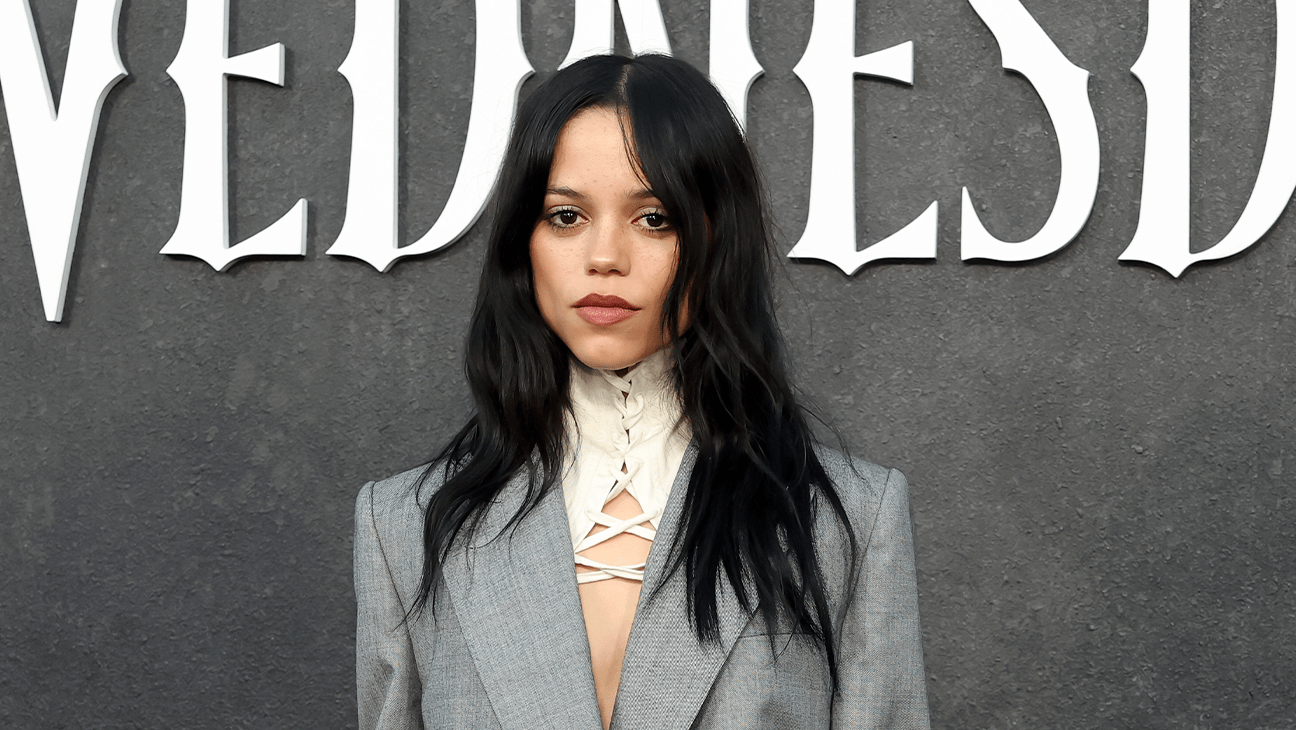
  • Jenna Ortega’s Sister Reacts to Public Discourse Over ‘Wednesday’ Star’s Appearance

    Jenna Ortega’s Sister Reacts to Public Discourse Over ‘Wednesday’ Star’s Appearance

    Amid the recent online commentary surrounding Jenna Ortega‘s health and body, her younger sister is coming to her defense.

    On Wednesday, a fan of the Emmy-nominated actress took to Instagram to tell people to “mind their own business and leave @jennaortega alone, especially after her recent interview has created so many questions and assumptions about her health.”

    The fan’s comments were in response to the wave of discourse on social media about Ortega’s appearance in a recent Esquire video interview, with many fans pointing out her noticeably thinner physique in the footage, comparing it to past videos and photos of the actress.

    “She doesn’t owe anyone an explanation her life is her life, and her body belongs to her,” the fan, named Amrita Singh, continued in their lengthy post. “She has every right to make whatever decisions she feels are best for herself without being judged, discriminated against, or subjected to unnecessary speculation. We don’t know what she may be going through, and we shouldn’t assume anything based on appearances or a few comments from an interview. Sometimes the most respectful thing we can do is simply give someone privacy, support them, and let them be.”

    “Please, For God’s sake, she is a human being first, before she is a celebrity in the public eye, and I think that’s what people tend to forget. She deserves privacy, peace, and the freedom to live her life without constantly being questioned or analyzed. Stop concerning yourselves with her personal life and asking intrusive, unnecessary, and random questions just leave Jenna alone and allow her to live her life on her own terms,” they added.

    Ortega’s sister, Aliyah Ortega, commented on the post, “!!!,” seemingly emphasizing that she agrees with the fan’s perspective. Her sister didn’t appear to add any additional remarks.

    The Wednesday star isn’t the only celebrity to be battling online commentary about their body recently, as Ariana Grande has also been at the center of the conversation, especially after the release of her “Petal” music video.

    Earlier this month, it was revealed that Grande would be “taking a step back from visibility after she completes the Eternal Sunshine Tour” and “taking a much-deserved break from public-facing work and appearances, which has led to endless, ongoing public scrutiny.”

    The singer later clarified that the announcement “was not a reactive or impulsive thing. It was something that I have decided. A plan that I had quietly made a long time ago.”

    Ortega is currently busy filming Wednesday season three for Netflix and will next be heading out on the press tour for the dystopian sci-fi adaptation Klara and the Sun, which hits theaters on Oct. 23.

  • Alexa Nikolas Wins Key Ruling In Defamation Case Against Bryan Freedman Over Smear Claims

    Alexa Nikolas Wins Key Ruling In Defamation Case Against Bryan Freedman Over Smear Claims

    Months after a resolution to the sprawling legal battle over the filming of It Ends With Us, Hollywood power lawyer Bryan Freedman is still dealing with fallout from the case.

    Zoey 101 alum Alexa Nikolas won a key ruling on Wednesday in a defamation lawsuit against Freedman, with a court finding that she’s established a probability of prevailing on defamation claims accusing him and those in his orbit of marshaling a smear campaign against her.

    Nikolas, founder of advocacy organization Eat Predators, has a long and contentious history with Freedman, who had represented her ex-husband Michael Milosh when she sued the musician for sexual abuse. She had organized protests outside of his offices in 2022 after discovering that he had also been accused of sexual assault in a case that resulted in a no-fault settlement in 1991. Around the time of these protests, a smear site that aimed to undermine her activism — including through assertions that her current husband was a predator — popped up about her.

    Nikolas didn’t connect Freedman to the site until Lively sued It Ends With Us director Justin Baldoni and his production company Wayfarer. The thrust of Lively’s lawsuit focused on alleged sexual harassment on the set of the film, but it also accused Baldoni and his public relations team — led by top crisis publicist Melissa Nathan and digital fixer Jed Wallace — of spawning a smear machine that threatened her reputation. This led to sister lawsuits, including one from publicist Stephanie Jones, who claimed that Nathan and Wallace have long engaged in creating smear sites targeting women. That gave Nikolas the ammunition to file a lawsuit, which points to alleged data identifying Freedman as involved in the generation of some of the sites.

    In Wednesday’s ruling, Los Angeles Superior Court judge Michael Whitaker rebuffed Freedman’s bid to dismiss the case. He concluded that Nikolas has produced enough evidence to potentially prove the alleged campaign was defamatory.

    Among the findings: Nikolas sufficiently demonstrated a probability of proving the allegedly defamatory statements were untrue. This includes a claim on a second smear site about her that she partnered with former California senator Joe Dunn to push others into making false accusations of sexual assault.

    Whitaker also pointed to court records across multiple cases in which several plaintiffs describe a “similar modus operandi and common website traffic optimization tactics.”

    Freedman had argued that Nikolas can’t prove the assertions advanced in the sites were false and that some were simply statements of opinion, which can’t give rise to a defamation claim. On this front, the court said that the allegations in the site “all imply provably false assertions of fact” that Nikolas is “either a criminal who has committed criminal acts, or she is not.”

    Multiple smear sites identified in the case between Jones and Baldoni appear to have evidence of common authorship, including Alexanikolas.net, which claimed she extorted multiple ex-boyfriends by threatening them with manufacturing sexual abuse claims, among other things. In Jones’ case, a cybersecurity expert submitted an expert report indicating that those who created the site about Nikolas may have also created ones about Amanda Ghost, who’s engaged in a defamation battle against Rebel Wilson.

    “There is a tangled web of connections between these sites and numerous others in addition to that authored about plaintiff,” Whitaker wrote, noting a “conspiracy to smear various individuals” who had adversarial connections to Freedman’s clients. That not only suggests a motive, the court found, but also indicates that the lawyer may have been “involved in directing or otherwise effectuating all of those alleged smear campaigns.”

    Earlier this year, Wilson’s crisis public relations team — comprised of Nathan and Wallace — was heard discussing plans to create anonymous sites that accused Ghost of sex trafficking as part of an alleged smear campaign solicited by the actress against The Deb producer. In a recording obtained by The Hollywood Reporter, Wallace instructed Nathan to assert without evidence that Ghost is a “madame” whose work involves procuring young women for wealthy and powerful men.

    “We can’t just do, like, oh, she’s a bitch, she sucks,” Wallace says in the recording. “It’s, like, it’s got to be really, really heavy and connected to something that heavy.”

    At one point in the conversation, Wallace referenced the involvement of Freedman, Wilson’s then-counsel in the case. Freedman and Nathan didn’t respond to requests for comment, though they’ve previously denied involvement in the creation of the smear sites.

  • ‘House of the Dragon’ Season 3 Finale Hits 21 Million Viewers in Three Days

    “House of the Dragon” concluded its third season on HBO on Sunday night, with the finale reaching 21 million viewers in its first three days of availability. More than 11 million of those viewers were in the U.S.

    That total comes from a combination of Nielsen’s measurement of linear viewers on the HBO cable channel plus Warner Bros. Discovery’s own tally of streams on HBO Max. It represents a mostly steady trajectory for the season, with a slight decrease of 2% from the Season 3 premiere’s 21.5 million viewers. (WBD did not disclose viewership totals for Episodes 2-7.)

    Overall, the season is averaging 34 million viewers per episode thus far, nearly matching Season 2’s 35 million-viewer average. According to HBO, this puts it among the HBO Max’s top three most-watched returning seasons ever.

    Sunday also marked the seventh and final episode of “Life, Larry and the Pursuit of Unhappiness.” The sketch series, created by and starring Larry David, is averaging approximately 4 million viewers per episode in the U.S.

    More to come…

  • Warner Bros. Discovery’s Gerhard Zeiler to Recieve Directorate Award at This Year’s International Emmys

    Warner Bros. Discovery president of international Gerhard Zeiler has been tapped to receive the 2026 International Emmy Directorate Award. He joins Netflix chief content officer Bela Bajaria, who was previously announced as this year’s honoree for the org’s founders award. Zeiler and Bajaria will acceot their awards at the 54th International Emmy Awards Gala on Monday, Nov. 23, in New York.

    “Gerhard Zeiler has built and led some of the world’s most influential media businesses, helping shape the international television industry through periods of profound change,” said International Academy of Television Arts & Sciences president/CEO Bruce L. Paisner in a statement. “Throughout his career, his commercial acumen has been grounded in a deep appreciation for the creative talent and storytelling that define our business.”

    Per the International Emmys, the directorate award “is presented to organizations or individuals in management, administration, engineering, news, programming, and/or international relations for outstanding contributions over a period of time to the arts and sciences of international television.”

    Recent winners include Grupo Globo president João Roberto Marinho (2025), Gaumont CEO Sidonie Dumas (2024), Balaji Telefilms’ Ekta Kapoor (2023), CJ ENM’s Miky Lee (2022) and ZDF’s Thomas Bellut (2021).

    Zeiler first joined Time Warner’s Turner in 2012, expanding the company’s international operations, including its regional sports and pay-TV businesses. He was named WarnerMedia International presidnet in 2020, and as president of international for Warner Bros. Discovery, Zeiler has expanded HBO Max footprint to more than 130 countries in just over three years and helped oversee the integration of WarnerMedia and Discovery.

    Prior to Turner, he was CEO of RTL, and earlier in his career held senior leadership roles at Austria’s public broadcaster, ORF.

    “I am deeply honored to be recognized by the International Academy with the International Emmy Directorate Award,” Zeiler said in a statement. “My passion for media began before I can even remember, and from a young age I understood the power of television to bring people together and open a window into different cultures and ideas. The role of media in connecting the world requires a deep understanding of distinct cultures – global trends and local nuances alike – and I feel very fortunate to have had a career filled with learnings and perspectives across the world on what makes compelling television. This is an industry like no other, driven by passion, ambition, and the desire to create stories that audiences can connect with. I receive this recognition with great appreciation for the colleagues, partners and creative talent who have inspired that journey.”

  • Anthropic Is Quietly Watermarking Every Claude AI Output. Builders Are Already Trying to Break It

    Anthropic Is Quietly Watermarking Every Claude AI Output. Builders Are Already Trying to Break It

    In brief

    • New Claude models launched in the EU on or after August 2, 2026 embed a machine-readable watermark in every piece of generated text, applied at the model level.
    • The markings apply worldwide across Claude, the API, Claude Code, and cloud partners.
    • Open-source projects to remove them appeared within days.

    Anthropic has begun embedding an imperceptible watermark in all text its newest Claude models generate. The change took effect for models launched in the EU on August 2, 2026, and Anthropic says it will apply worldwide.

    Anthropic laid out the plan in a support article after signing the EU AI Act’s Code of Practice on transparency. In other words, it’s not exactly volunteering to do this. The mark reaches every Claude surface, from the chatbot and API to Claude Code and cloud partners such as AWS, Google Cloud, and Microsoft Foundry.

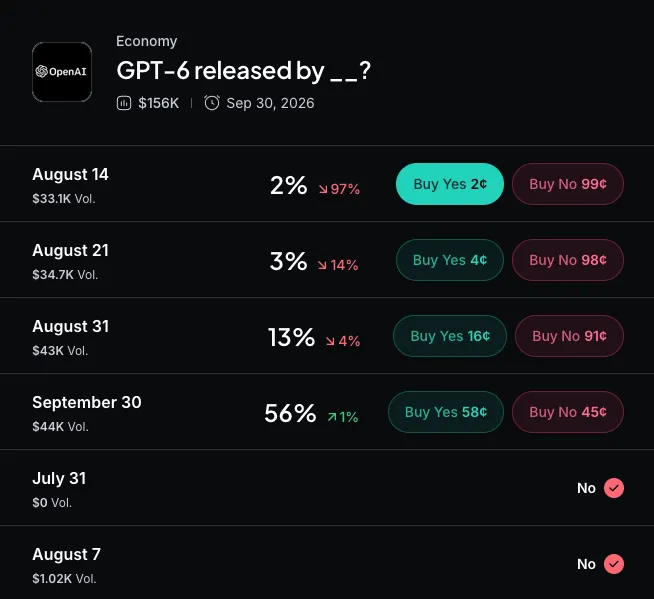
    Myriad: When will OpenAI release GPT-6? Click to make your prediction.
    Myriad: When will OpenAI release GPT-6? Click to make your prediction.

    “When a supported Claude model generates text, it weaves an imperceptible watermark directly into the text itself. You won’t see it, and it doesn’t change the meaning, quality, or readability of Claude’s response,” Anthropic said. “Because the watermark is part of the text, it will travel with the text when it’s copied and pasted elsewhere, and may persist through some editing.”

    So it’s a bit more complex than the usual methods users tend to think about. When a supported Claude model writes text, it weaves an imperceptible watermark directly into the words, with no visible tag. Because the mark is part of the text, it survives copy-paste and, Anthropic admits, “may persist through some editing.” Files get a second layer: signed metadata under the C2PA open standard (think a digital shipping manifest that records who produced a file and whether anyone altered it afterward).

    The method stays secret

    Anthropic hasn’t said how the watermark is made. The support article calls it model-level (the model is trained with it) and text-native (it’s not an external tool like metadata generator, for example), but the detection documentation and the exact technique aren’t out yet.

    Researchers infer it’s a statistical signature: The model nudges its word choices toward a faint, detectable bias, the same family of approach Google uses in SynthID Text. That remains a guess until Anthropic publishes the detector.

    But that isn’t pushing privacy enthusiasts back, and some experts are already working on methods to break Anthropic’s secret watermarking. mikiane/claude-watermark-cleaner (106 stars on Github) scrubs invisible Unicode, then rewrites text with a non-Claude model to disturb the token pattern.

    A larger project, guillaumemeyer/watermarks-remover (4.6k stars on Githum), strips Claude text marks plus C2PA and SynthID-class signals across PNG, JPEG, SVG, PDF, and DOCX. The authors argue a statistical text mark is “not a reliable way to prove origin” and mostly pushes users to spend a second model pass cleaning their own writing. No removal can be guaranteed until Anthropic ships its detector and thresholds.

    Anthropic’s own history makes the privacy reaction sharper. The company removed a hidden Claude Code tracker in March after researchers found it tagging some users’ location and proxy use through undisclosed Unicode markers—the same quiet-marking technique now at the center of the watermark plan.

    The mark proves Claude had a hand in text, not that it wrote the whole thing, so it will treat an original writing with a small edit the same as a fully AI-generated text. Ask Claude to proofread or translate your paragraph and the output can still carry the signal. Anthropic is upfront that heavy editing can strip it, and that a missing mark doesn’t prove a human wrote something.

    A U.S. bill, the COPIED Act, pushes the same idea: a standardized way to watermark AI content so platforms can trace its origin. As Claude’s blackmail problem showed, the company’s models already draw intense scrutiny over what they do with the text they touch.

    Anthropic hasn’t said when it will publish the detection tools that would let anyone verify the mark.

    Daily Debrief Newsletter

    Start every day with the top news stories right now, plus original features, a podcast, videos and more.

  • Market Experts: “85 Percent of the Bear Market in Bitcoin and Altcoins Is Over”

    Market Experts: “85 Percent of the Bear Market in Bitcoin and Altcoins Is Over”

    The DeFi Report, a cryptocurrency and macroeconomics analysis company, announced in its latest assessment of Bitcoin and the overall cryptocurrency market that the bear market has now entered its final phase. The analysis stated that approximately 85% of the bear cycle is behind us, and the remaining 15%, which will determine the market’s fate, largely depends on global macroeconomic developments.

    According to the company’s on-chain cost base analysis, the leading cryptocurrency Bitcoin is exhibiting movements quite similar to previous cycle bases in terms of on-chain data. However, it was noted that spot and futures trading volumes have fallen to their lowest levels since the end of 2019, which was described as a clear indication of a “time-spread capitulation” process taking place on the chain. Furthermore, asset sales by miners, redirecting their energy capacity to AI firms, were also cited as factors increasing pressure on the market.

    The analysis stated that whether Bitcoin will fall to the “deep value” region of $55,000 and below will depend on macroeconomic liquidity conditions in the coming weeks. The fact that US 30-year Treasury yields have surpassed 5.2%, reaching a 20-year high, and the Fed’s move towards higher interest rates were highlighted as key factors putting pressure on risky assets.

    Another notable development in global markets was the covert liquidity measures implemented by the US Treasury Department and the Bank of Japan to strengthen the Yen. Analysts described this mechanism, which allows foreign institutions to provide liquidity by collateralizing US bonds instead of selling them, as “QE Light” (Quantitative Easing). The 15% increase in gold prices due to this covert liquidity injection and the impact of global risks suggests that investors are positioning themselves against inflationary pressures, and a similar liquidity flow could shift to Bitcoin in the future.

    Analysts evaluating technical levels and strategies consider the 200-week moving average, currently at $63,800, a critical threshold. If Bitcoin closes the month above the $68,700-$69,800 range, the scenario that the bottom has been reached will gain strength.

    *This is not investment advice.

  • 44 Billion SHIB in Hours: Shiba Inu May Head for Rebound

    44 Billion SHIB in Hours: Shiba Inu May Head for Rebound

    Shiba Inu has continued to trade on a downward trajectory amid prolonged broader market volatility. However, its exchange activity over the last 24 hours has provided a different signal.

    With its price still struggling to reclaim its recent high around the $0.000005 mark, the latest data from crypto analytics platform CryptoQuant has provided investors with a glimpse of hope for a possible price recovery soon.

    44 billion $SHIB in demand

    Per the data, the Shiba Inu exchange netflow has drawn attention amid the market downturn after projecting a negative balance of 44.1 billion $SHIB as of Thursday, August 13.

    While a netflow of 44 billion $SHIB may seem modest, its timing makes it significant as it shows a major divergence between the $SHIB trading price and its exchange activity.

    Notably, the metric shows that the amount of $SHIB tokens moved out of exchanges amid growing demand is significantly greater than the amount of $SHIB returned to exchanges for sell-off purposes over the last day.

    While the difference in both activities stands at -44 billion $SHIB, it means that the amount of $SHIB available for sale on exchanges has been reduced substantially, gradually cooling the intense sell pressure facing the Shiba Inu ecosystem.

    Where’s $SHIB headed?

    Although the Shiba Inu exchange flow provides a bullish outlook for $SHIB, the asset is still struggling to recover near its recent high, consistently trading in the red zone.

    However, analysts believe there is still a chance for a potential price reversal for $SHIB if investors remain resilient and it is able to sustain demand even amid such weak market conditions.