Volume, meanwhile, is dead simple as it measures the number of contracts that changed hands during a given period. Think of it as measuring how many times the front door of that exclusive club opened and closed over a given period, regardless of who stayed. It thus represents the degree of churn or liquidity available to manage positions.
So, the latest case of volume falling far behind OI is like a large club with a tiny exit door. What happens if a large number of people try to rush out?
Because overall investor positioning is massive, a sudden catalyst could trigger a wave of contract closures, such as forced liquidations due to margin shortages. Without the underlying daily volume to provide liquidity, the market may not be able to absorb the rush smoothly, leading to volatile, exaggerated price swings.
“The risk is mechanical. When open interest towers over daily volume, liquidations meet little resting flow to absorb them, and adverse moves extend further than they otherwise would. Traders have added substantial risk, most of it long, into a market that shows no matching demand,” blockchain analytics firm Glassnode said in a report.
The risk of an exaggerated move is particularly likely to the downside because of weakening demand and a lack of resting bids or buy orders at lower price levels.
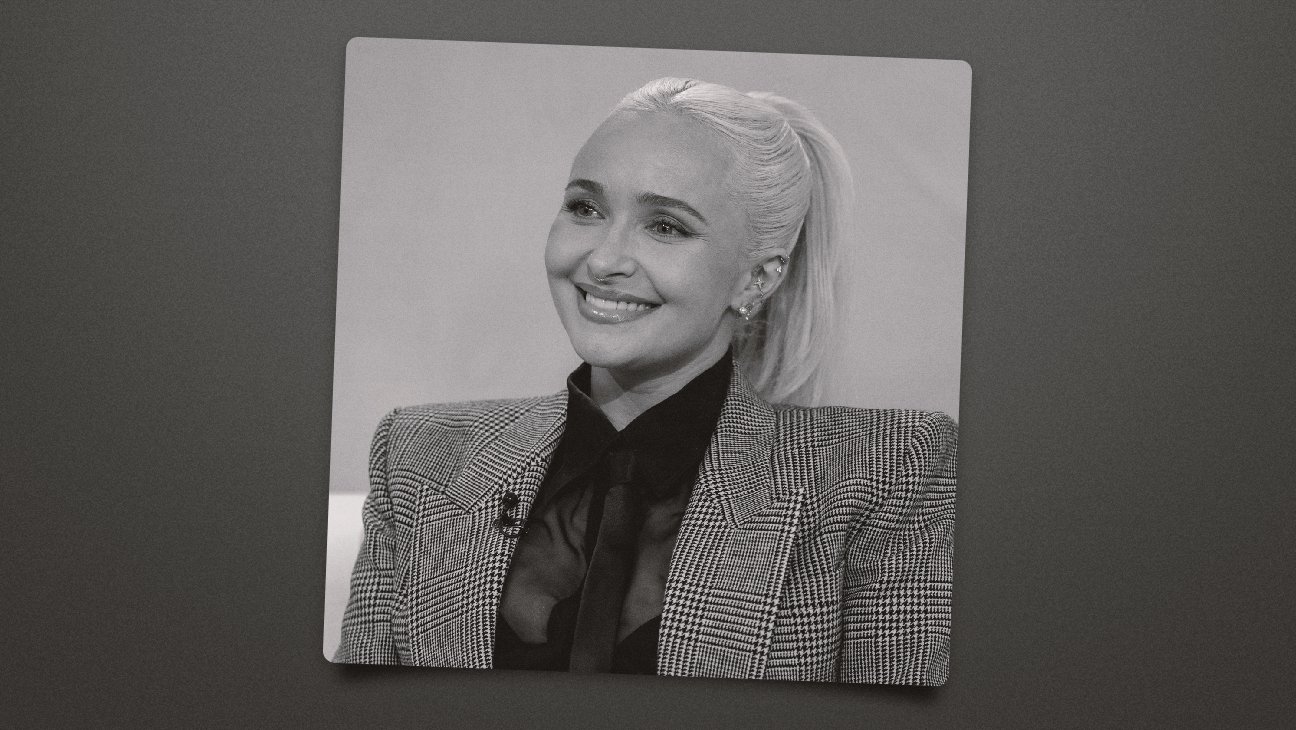
Hayden Panettiere, known for her roles on shows such as Heroes and Nashville, has died, her father told ABC News on Sunday. She was 36.
“It is with profound sadness that we share the tragic passing of our beloved Hayden. She was an incredible light and a force of nature who brought immeasurable love and joy to all who knew her — and to the millions who watched her onscreen,” her father, Skip Panettiere, told ABC News in a statement. He also asked for privacy “as our family takes time to process this unimaginable loss.”
The details around her death are unknown. The Hollywood Reporter has reached out to her rep.
Panettiere’s credits also include the films I Love You, Beth Cooper (2009), Scream 4 (2011) and Scream VI (2023) and the 2025 Lifetime movie Amanda Knox.
Hayden Panettiere and Milo Ventimiglia on NBC’s Heroes.
TCDHERO_EC275
She was involved in a relationship with Ukrainian champion heavyweight boxer Wladimir Klitschko from 2009-11 and 2013–18, and they had a daughter, daughter, Kaya, in 2014. Her younger brother, actor Jansen Panettiere, died in February 2023 of aortic valve complications at age 28.
In May, Panettiere had published her raw and candid memoir, This Is Me: A Reckoning, where she opened up about growing up in the spotlight as a child star, her battles with addiction, postpartum depression and more.
“I was fiercely protective of people in my writing,” she said. “I felt very strongly about my ability to tell my stories and make them entertaining enough to put in a book, without having to drag people through the mud. I had members of my team that I would bounce ideas off of, or ask their opinions about things like that I was writing.”
She added: “I mean, my publicist is also my dear friend and I trust her, so I leaned on her to know. And then I made sure that Vlad [Klitschko, Panettiere’s ex-fiancé and father of her daughter] wasn’t going to be upset with me. But other than that, I just had to speak my truth — and it’s mine alone.”
Hayden Panettiere with Connie Britton (left) on ABC’s Nashville.
Everett
Panettiere earned her breakout role in 2006, playing the indestructible cheerleader Claire Bennet on the NBC sci-fi series Heroes. She starred on the series for four seasons.
She garnered more fame playing Juliette Barnes on the series Nashville from 2012-18 and then as Kirby Reed in the Scream horror franchise, including Scream 4 and Scream VI.
In her memoir, she also opened up about her struggles with Nashville, specifically how Juliette’s storyline started to resemble your own personal strife, such as her character’s postpartum depression and alcoholism.
Earlier credits included One Life to Live, Guiding Light, Malcolm in the Middle, The Object of My Affection, A Bug’s Life and Message in a Bottle.
Born on Aug. 21, 1989, Panettiere was raised in Palisades, New York, by her parents, actress-producer Lesley R. Vogel, who managed her daughter’s career, and Alan Lee “Skip” Panettiere, a retired captain in the New York City Fire Department.
“My introduction to acting was actually at 11 months old,” she toldEntertainment Tonight in 2023. “Playskool Toy Train was my first commercial, but, I don’t know if that would really be an introduction to acting, because I don’t think acting was involved at that point. I didn’t have lines, I was just playing.”
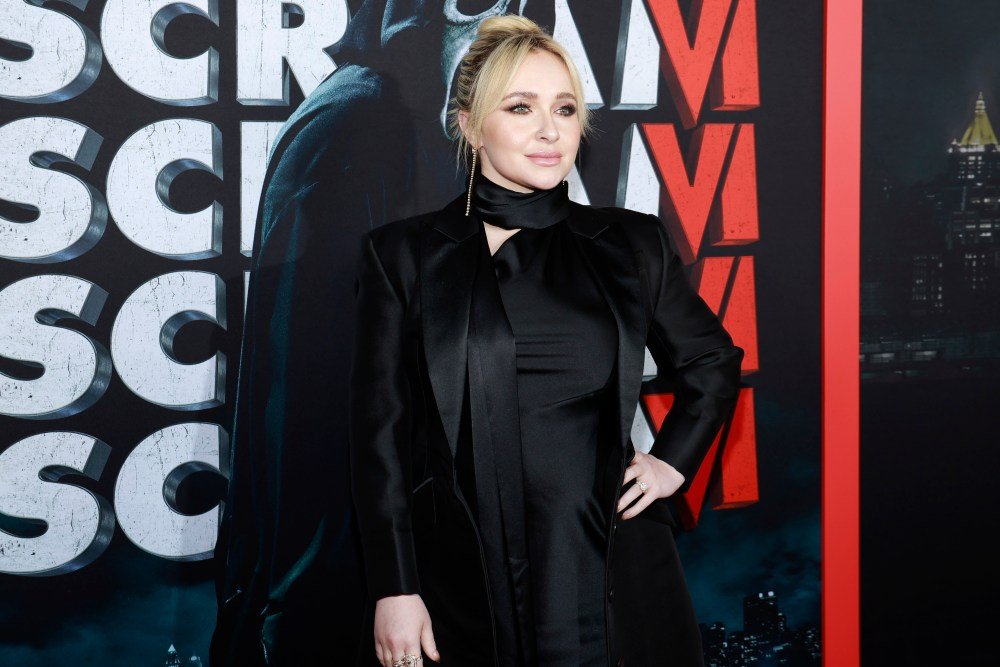
Hayden Panettiere in Scream VI.
Everett Collection
She also shared that her favorite experience was working on Remember the Titans (2000).
“This movie was my favorite movie to film; what an incredible time in my life,” she said. “That’s just pure me that look. That is like from, oh my gosh — I mean, I was 10 years old. I had such cute boys around me, I was surrounded by the cutest boys. Kate Bosworth was like my big sister, was close to everyone. … I mean, you have no idea how many times in my life I have wished and prayed — if I had wished to go back to any time in my life, it would be going back to Remember the Titans.”
Panettiere earned noms at the Golden Globes, Critics Choice Television Awards, Teen Choice Awards and People’s Choice Awards for her role in Nashville. Her performance in Heroes landed her Teen Choice noms and a Young Artist Award. She also won a Young Artist Award for her role in Remember the Titans.
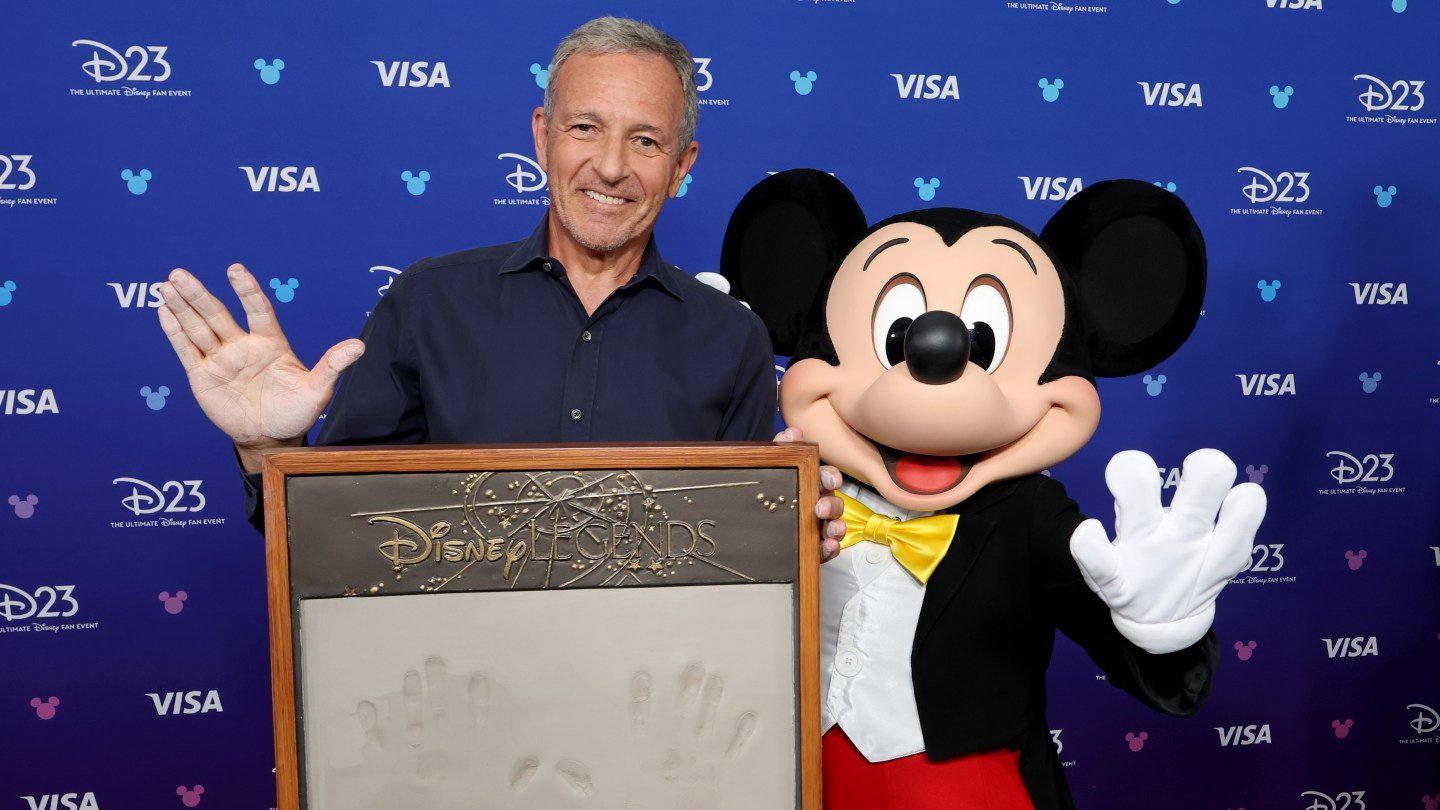
Just days after it was revealed that the former Disney CEO was joining investor Joshua Kushner to buy the Los Angeles Lakers, Iger was honored as a Disney Legend at the company’s D23 fan event on Sunday. He joined a class that included Chris Berman, Jerry Bruckheimer, Susan Egan, Eric Goldberg, Anne Hathaway, Kim Irvine, Dwayne Johnson, the Jonas Brothers, Lin-Manuel Miranda and Alan Tudyk, in a ceremony at the Honda Center in Anaheim.
A number of big names also came out to support the exec, with Al Michaels, Diane Sawyer, Ellen Pompeo, Robert Downey Jr. and Harrison Ford all on hand to present Iger with the final award of the night.
“Over the years, I’ve had the privilege of giving this award out to dozens and dozens of truly worthy people, unbelievably talented people who contributed so much to this company, and so it is an incredible honor for me to receive that same award, particularly with this unbelievable class,” Iger told the crowd. “And I must say, following you up here is a little rough — Lin you make me feel talentless, Anne you make me feel stiff, Dwayne you make me feel small. I was going to ask if I could hold the Legends Trophy, but my biceps couldn’t handle it.”
He joked that even though the years of giving out the Legends awards were fun, “getting one, it’s even fun.” Iger also took a moment to address new Disney CEO Josh D’Amaro — who has been holding court at D23 events all weekend — saying, “Josh, you’re wearing that title really well, and I am so proud to call you my successor.”
Later in his speech, Iger noted, “Having the privilege of entertaining the world the way Disney does is quite a unique experience in life and a lot of responsibility. To have the ability just to make the world a better place is truly an exceptional life experience, and obviously, I am unbelievably grateful to have had that experience.” He went on to thank the company’s talent for their years of partnership as well as “the thousands and thousands of cast members who make this company really what it is.”
In closing, Iger reflected on how “20 years ago, I was named CEO of this remarkable company, and I must say, no pun intended, it was a ride of a lifetime,” referencing his memoir of the same name. “Today is a vivid reminder of just what a wonderful ride that was. From the bottom of my heart, to all of you: to our audiences, to our subscribers, to our moviegoers, to our park guests, to our D23 members. Thank you very much.”
Hayden Panettiere, known for her roles on “Heroes,” “Nashville” and in “Scream 4” and “Scream VI,” died on Sunday. Her rep confirmed her death to ABC News. A cause of death was not immediately known.
“It is with profound sadness that we share the tragic passing of our beloved Hayden. She was an incredible light and a force of nature who brought immeasurable love and joy to all who knew her — and to the millions who watched her onscreen,” her rep told ABC.
Panettiere had been on screen since 1994, at age 5, starting on soap operas “One Life to Live” — appearing on 27 episodes — and later, “Guiding Light,” starring on 45. In 2000, she landed a breakout role in “Remember the Titans,” and in 2006, she joined the cast of “Heroes” as Claire Bennett, portraying the cheerleader in 73 episodes of the NBC drama.
Panettiere later earned two Golden Globe nominations for playing Juliette Barnes on “Nashville.” She starred in 128 episodes from 2012 to 2018.
On the film side, she is most known for her role as Kirby in 2011’s “Scream 4.” She became such a fan favorite that she was then asked to return for 2023’s “Scream VI.” She also co-starred with Michelle Trachtenberg in “Ice Princess” and appeared in “Bring It On: All or Nothing.”
Raised in Palisades, N.Y., her mother was a soap opera actress and her father was a fire captain. As a child, she appeared on shows including “Ally McBeal” and “Malcolm in the Middle.”
Panettiere published her first book, “This Is Me: A Reckoning,” in May of this year. In it, she shared many stories from her life in the limelight, including details of her troubled relationship with her mother and abuse she endured through her life in Hollywood.
She had also been open through the years about her struggle with alcohol and drugs. In 2020, she spent time at a rehab facility and got sober. In 2023, her younger brother Jansen died unexpectedly of a heart condition at 28. “When something that massive has happened to you, you really learn to pick your fights and just not let the little things upset you,” she told People magazine in 2024 about the death. “Because once something so horrific, so deep, so catastrophic happens in your life, there’s not much that can really rock you.”
She made headlines following the People interview, when fans voiced concerns over her slurred speech, something she later spoke about via an Instagram post. “I hadn’t slept for two days prior to the shoot due to one of my dogs who was recovering from an emergency surgical procedure,” she shared at the time, also responding to claims about medication she may be on. “I was exhausted. My rep stopped the interview early as it became obvious that I was fading — especially as the subject matter became heavier… Grief looks different on everyone. Whether or not I am on medication is none of anyone’s business and is between me and my doctor.”
She continued, “Mental health is so important, and I hope those reading this now understand that what you say hiding behind a computer screen can have a detrimental impact on someone.”
She had a daughter, Kaya, with boxer Wladimir Klitschko, who retained custody due to Panettiere’s struggles with addiction and postpartum depression.
“The Iran War dragged on with a series of humiliating news headlines including this revelation about Trump’s trip home from last month’s NATO summit,” offered Oliver.
Yes, Trump’s plane was secretly swapped out on his return trip from Turkey owing to intelligence regarding a possible Iranian attempt on his Qatari-gifted Air Force One plane. Trump reportedly snuck out of the plane and onto a catering truck that whisked him off to a smaller military jet for the return flight.
“Fantastic. The only problem I can see there is: Next time he needs to escape, he’s not going to be able to use the catering truck trick again because everyone knows about it now,” cracked Oliver. “People are going to be suspicious from now on if they see a plane go one way, a catering truck go another and an enormous man-sized cake get wheeled away by two suspiciously-jacked chefs.”
“While it clearly doesn’t look great for a president to be emergency-hiding in a catering truck, it looks even worse when you remember that a lot of other people were still on that plane that he was smuggled off of,” continued Oliver.
Yes, a number of journalists and White House staffers, including Secretary of State Marco Rubio and Treasury Secretary Scott Bessent, were left onboard Air Force One after Trump escaped.
“Not great!” exclaimed Oliver. “There were a lot of innocent people on that plane — and Marco Rubio.”
Coincidentally — or not — Trump’s White House Press Secretary Karoline Leavitt announced her resignation shortly after the airplane-swap incident.
SafePal, a cryptocurrency wallet provider, has disclosed a data breach that exposed the personal information of approximately 39,798 customers. The company announced the incident via its official X account, stating that names, email addresses, shipping addresses, phone numbers, and purchase histories were compromised. The breach affected customers who placed orders between March 2, 2025, and April 11, 2026.
What Caused the Breach?
SafePal attributed the breach to a code flaw in an order-tracking plugin. The company said it has since fixed the vulnerability and completed additional security measures to prevent similar incidents. While the exposed data includes sensitive personal details, SafePal emphasized that wallet systems, seed phrases, and private keys remain securely protected. This distinction is crucial for users concerned about the safety of their crypto assets.
Implications for Affected Users
Although the breach did not compromise funds, the exposure of personal information poses significant risks. Cybercriminals could use the stolen data for phishing attacks, identity theft, or social engineering schemes. SafePal urged affected users to remain vigilant against phishing or impersonation attempts. This incident highlights the broader challenges of data security in the cryptocurrency industry, where customer trust is paramount.
Why This Matters to the Crypto Community
For crypto users, this breach serves as a reminder that even non-financial data can be a target. The fact that SafePal’s core wallet infrastructure remained secure is reassuring, but the leak of personal details can still lead to targeted scams. Users should be cautious of unsolicited communications that reference their SafePal orders or request sensitive information. This event also underscores the importance of using strong, unique passwords and enabling two-factor authentication across all accounts.
Conclusion
SafePal’s data breach is a serious incident that exposed personal information of nearly 40,000 customers. While the company has fixed the vulnerability and assures that funds are safe, affected users must stay alert to phishing risks. This event serves as a critical reminder of the importance of robust security practices in the crypto space. SafePal’s response, including the swift fix and communication, is a positive step, but ongoing vigilance is essential.
FAQs
Q1: What data was exposed in the SafePal breach? Personal information such as names, email addresses, shipping addresses, phone numbers, and purchase histories of customers who ordered between March 2, 2025, and April 11, 2026, was exposed.
Q2: Are my crypto funds at risk after the SafePal breach? No, SafePal has confirmed that wallet systems, seed phrases, and private keys remain securely protected. The breach only affected personal information, not financial assets.
Q3: What should I do if I was affected by the SafePal data breach? Stay alert for phishing or impersonation attempts. Do not click on suspicious links or provide personal information in response to unsolicited messages. Consider changing your passwords and enabling two-factor authentication for added security.
Cardano ($ADA), the layer-one blockchain, has officially released a phased roadmap for its upcoming ‘Dijkstra’ hard fork era, outlining key technical milestones and tentative timelines. The roadmap, published through the project’s official channels, sets a target for completing code development by the fourth quarter of 2026, followed by a mainnet upgrade preparation phase. This first phase includes an upgrade to protocol version 12 and the introduction of related features designed to enhance the network’s capabilities.
Understanding the Dijkstra Era and its technical phases
The Dijkstra era is named after the renowned computer scientist Edsger Dijkstra, reflecting Cardano’s focus on rigorous, research-driven development. The roadmap divides the upgrade into two main phases. The first phase concentrates on foundational code completion and protocol upgrades, aiming to have all necessary components ready for a mainnet launch by the end of 2026. However, the actual deployment will depend on approval through Cardano’s on-chain governance mechanism, a key feature of the network’s decentralized decision-making process.
The second phase, targeted for the second quarter of 2027, involves the activation of Ouroboros Peras through an internal hard fork. Ouroboros Peras is a consensus protocol enhancement designed to significantly increase transaction finality speed, a critical factor for scalability and user experience. This phase builds on the groundwork laid in the first phase, integrating the new consensus mechanism into the live network.
Implications for $ADA and the broader blockchain ecosystem
This roadmap is significant for Cardano stakeholders and the wider blockchain industry. The Dijkstra upgrade represents a substantial technical evolution, aiming to address long-standing challenges such as transaction speed and finality. For developers and projects building on Cardano, the upgrade promises improved performance and a more robust infrastructure. The emphasis on on-chain governance also underscores Cardano’s commitment to community-driven development, ensuring that major network changes are transparent and democratically approved.
For the broader market, Cardano’s progress is a notable indicator of ongoing innovation in the layer-one space. While other blockchains pursue different scaling solutions, Cardano’s methodical, peer-reviewed approach continues to differentiate it. The timeline, extending into 2027, suggests a long-term vision rather than a rushed deployment, which may appeal to investors and enterprises looking for stability and thoroughness.
Why this roadmap matters to $ADA holders and developers
For $ADA holders, the roadmap provides clarity on the network’s future direction, potentially influencing sentiment and long-term value perception. The successful implementation of Ouroboros Peras could enhance Cardano’s competitive position by offering faster finality, a feature increasingly important for DeFi and other time-sensitive applications. Developers, meanwhile, can begin planning for the protocol version 12 upgrade, ensuring their applications remain compatible and leverage new features.
It is crucial to note that the announced dates are targets for code completion and readiness, not guaranteed deployment dates. The actual mainnet activation will require governance approval, which introduces a layer of community oversight and potential timeline adjustments. This governance-first approach is a hallmark of Cardano’s philosophy, but it also means that the roadmap is subject to change based on community consensus and technical readiness.
Conclusion
Cardano’s Dijkstra hard fork roadmap outlines a clear, phased path toward enhanced network performance, with code completion targeted for Q4 2026 and Ouroboros Peras activation planned for Q2 2027. The upgrade, subject to on-chain governance, aims to improve transaction finality and protocol capabilities, reinforcing Cardano’s commitment to rigorous, community-driven development. As the timeline unfolds, stakeholders will be watching closely for governance decisions and technical milestones that will shape the network’s future.
FAQs
Q1: What is the Dijkstra hard fork? The Dijkstra hard fork is a planned upgrade to the Cardano blockchain, named after computer scientist Edsger Dijkstra. It introduces protocol version 12 and the Ouroboros Peras consensus mechanism, aiming to improve transaction finality and overall network performance.
Q2: When will the Dijkstra upgrade be deployed? Code development is targeted for completion by Q4 2026, with mainnet readiness preparation following. The activation of Ouroboros Peras is targeted for Q2 2027. However, actual deployment requires approval through Cardano’s on-chain governance, so dates may shift.
Q3: How will Ouroboros Peras benefit Cardano users? Ouroboros Peras is designed to significantly increase transaction finality speed, meaning transactions are confirmed faster and more securely. This can improve user experience and enable more efficient decentralized applications, particularly in areas like DeFi where speed is critical.
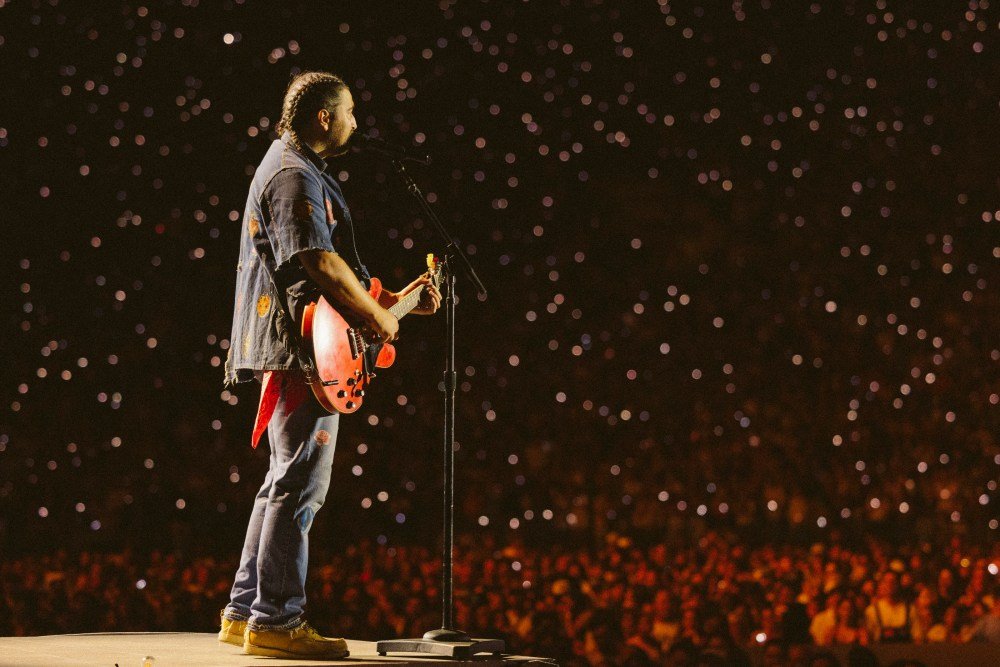
“My name is Noah Kahan and I am here to make you fucking miserable!” the biggest male rock star on the charts right now announced almost at the outset of his sold-out show Saturday night at Pasadena’s Rose Bowl Stadium. In this, he was unsuccessful, but to Kahan’s credit, he did not really try very hard to turn the 57,000-strong crowd into a miserablists’ convention. There was some truth ungirding Kahan’s introductory joke, given how much of the song catalog that has made him a superstar is devoted to what he would call “intrusive thoughts” about disconnection, loneliness and unworthiness. But the celebrative spirit of the two-and-a-half-hour show kept all of those undercurrents at bay, to maybe be better experienced when you’re back home, just the records and you and your neurodivergence. In concert, Kahan’s about nothing but putting on a pure jubilee — as good a time as you’re likely to have in any concert venue, large or small, in 2026.
L.A. locals will remember that he was easily selling out two nights at the Hollywood Bowl in mid-2024, so his instantaneous sellout of the Rose Bowl isn’t that much further of a leap. (He probably could have sold out two here, too, if the tour planners had left room for multi-nighters in his schedule.) But this wave of Kahan-mania hasn’t been going on for so long that we can’t still be impressed and maybe even puzzled by the sheer unlikeliness of it. Humble singer-songwriter comes along singing about bare trees, cold morning drives, dead friends, divorced parents and all the uncertainties anyone in his twenties in the most forlorn parts of the Northeast could face, and suddenly he’s as big as BTS? Go figure. You get the sense from Kahan that he hasn’t completely figured out himself what went so right in singing so much feel-wrong music: “I remember playing at the Troubadour and being happy if that was the rest of my career,” he told the massive crowd. “I’m grateful as fuck to be here with y’all.” That’s a common sentiment from a touring superstar, but there’s a sense that Kahan really might be as happily bewildered as the rest of us about how songs this personal and cloudy came to captivate even sunny California.
Anyway, he’s good — really, really, really good – so that’s a gift horse we won’t look in the mouth. As far as pop stars who happen to also be thoughtful and excellent songwriters go, Kahan is in the upper ranks. If anything, he’s underrated, at least by some of the cognoscenti, who tend not to know how to think about it when something that falls loosely under the rubrick of Americana makes it big, other than to mark it down as some sort of curious throwback to Mumford & Sons’ stomp-and-holler folk-rock mini-revolution. It is partially that, but Kahan is also really a contemporary to Taylor Swift, in the way that he fills his songs with peculiarly personal details that leave fans hanging on every lyric, on the way to doing satisfying stadium romps where the faithful will shout back every long-memorized random aside. (Not right in your ear, if you’re lucky.) He’d probably get more credit for just how strong the writing is if he’d stayed in a proper niche, but some overnight sensations can’t be helped.
Noah Kahan performs with Chappell Roan at Rose Bowl Stadium in Pasadena, California on August 15, 2026.
Patrick McCormack
His most recent album, “The Great Divide,” is one of the year’s most commercially sturdy records, not having been out of the top 10 since it debuted in April and not likely to leave any time soon. The 20-track (in its deluxe version) set might be even stronger in its storytelling than the star-making “Stick Season,” so it was not to the Rose Bowl set’s detriment at all that he performed 14 of its tracks. One of those songs, “Orbiter,” is about his experience at the 2024 Grammys, feeling like a loser when he lost the best new artist category to Victoria Monet. (Remarkably, that’s one of just two Grammy categories Kahan has even been up for, the other being as a featured artist on someone else’s country song. ) Being back in the greater L.A. area for this show, he used the Rose Bowl as his confessional.
“This is not gonna endear me to the crowd,” Kahan said, gearing up to explain why this is not his favorite city. “L.A. has been home to some of the worst days of my life and my music career. I’m sorry, it’s not your guys’ fault, but I’ve always felt a little out of place here… I always felt like when I came here I was auditioning for something, even though I wasn’t. I never felt like I fit… I got my feelings so hurt by losing awards and losing things and feeling like I was entitled to shit that I wasn’t entitled to. None of us are entitled to anything in this business, or in our lives, really. Um, and I thought about why I wanted to keep going, and it was for my wife, my mom, and it was for you all. So this is a song about you three — my three best friends.”
Noah Kahan performs at Rose Bowl Stadium in Pasadena, California on August 15, 2026.
Patrick McCormack
In the fairy-tale version of this story, his team would submit his song about losing a Grammy, and it would win a Grammy. That won’t happen, not least of all because there are more obvious focus tracks than “Orbiter” to put in for possible nominations. Even then, who knows if Recording Academy voters will be yet ready to give him his due? If “The Great Divide” doesn’t get much Grammy love, it might only help further drive his art. Kahan seems to thrive, on this latest album, on exploring some of the vagaries that come with getting a lot of attention, and how it affects relationships with family and old friends and even (maybe) especially his own self-image. And it’s pretty interesting stuff. There have been a number of albums this year that go into the side effects of fame — Ariana Grande’s in a big way, Phoebe Bridgers’ to a lesser extent — but no one is quite so humble or conflicted about it as Kahan. He projects himself onto old acquaintances or family members, laying into him in ways it’s unlikely very many of them have in real life. One song that was a big hit Saturday night, “Dashboard,” is a song in which, effectively, he inhabits the role of someone who is calling Noah Kahan an asshole for four minutes. It’s endearing and very catchy, even if perhaps the asshole in question doth protest too much.
In reality, Kahan’s ascent strikes people as a case of good guys finishing first… as they always do, right? I was struck by how Chappell Roan characterized him when he brought her out to duet at the Rose Bowl. Her surprise appearance late in the set was so that they could trade verses and harmonize on the choruses of her song “California,” a ballad that shares some themes of dislocation and dissociation that are common to Kahan’s own geographically specific songs. As recognition of her red tresses turned into a roar, Kahan sang Roan’s praises, describing “California” as “the first song I ever heard of Kayleigh’s, and the reason I fell in love with her music. And I’m just really proud of her.”
Noah Kahan and Chappell Roan at the Rose Bowl Stadium
Patrick McCormack
Roan returned the appreciation, saying, “Noah always stands up for me, seriously.” (Fans likely understood this to reference how, in March, Kahan publicly had her back when Roan was taking some flack for protesting the aggressiveness of professional autograph scalpers.) Roan doubled down on Kahan’s virtue: “He’s a good person — for real.” Now, “good person” may not be as reliable a way to trump up a rock star as something, like, say, “bad-ass,” but we have the feeling his career will survive the rumors of his virtue.
A few things have changed since Kahan headlined the Bowl two years ago, besides the major infusion of “Great Divide” songs. For one thing, there were fewer extended comic monologues, which I missed, though I wouldn’t argue that any of the 27 songs in the set should be tossed out for the sake of a funny story. Kahan may be figuring that he gets to exercise that muscle enough on social media, or that his fans have already heard plenty abut his family dynamics, whether in past tour patter or in his excellent recent Netflix documentary, “Noah Kahan: Out of Body,” which went in a lot deeper than a moment’s anecdote could. Anyway, he was witty enough, and telling enough, in passing. In “All My Love,” a new song where he catches an old friend or lover up on recent developments in his life, he sings of his amicably divorced parents, “My folks still talk, but they speak in these two-word sentences.” In concert, he found time before the next line to quickly add: “And now they’re up to seven-word sentences!”
Kahan’s voice is one of the things about him that may be underrated. He sounds like he’s constantly on the verge of breaking into a falsetto, but not quite needing to go there, although if he does, it’s as sweet and expressive as you’d hope. As with a lot of singers we take for granted, you don’t really think about how strong he is until something goes amiss. There was just such a moment in Saturday’s show, when he went to sing “Pain Is Cold Water” — a touching acoustic song that he only does occasionally, acoustically, on the C-stage — and his voice cracked in the very first line. “Oh my God!” he blurted, stopping it and starting again to give it a fighting chance. It proceeded flawlessly from there, with Kahan almost apologizing for how slick it turned out. “Sorry to go all Christina Aguilera on you after sounding like a 13-year-old boy,” he joked.
The biggest difference from his “Stick Season” touring, anyhow, is — surprise — production values. This tour has a nifty conceit: a physical rooftop that cyclically fell and rose to provide the roofline for different structures that changed as a result of digital projections combined with pillars and/or porches that stagehands would bring out. At first it was a cabin he and his six-piece band would perform in front of, with an old beater of a Volvo parked outside. Later on, the cabin became a general store, and the car turned into a Vermont police cruiser — just in time, inevitably, for one of his signature songs, “Dial Drunk.” This presumably fictional tale of a DUI arrest was dramatized (or comedicized) with a trooper actually slamming Kahan against the hood, followed by cameras catching just the right angle on him inside the vehicle as he lamented the girlfriend who would not pick up. Aside from a few agreeable band poses, “Dial Drunk” was the only time of the night there was anything that might be considered schtick… and in a stadium setting, it’s hard to begrudge that crowd-pleasing of a moment.
By contrast, when the braided star went up onto the hovering rooftop to sing a single number atop the prop with his acoustic guitar, “Willing and Able,” he seemed to be having a genuinely emotional moment, which much of the quieted crowd definitely observed. If he was just acting his way through that number, no harm done. Either way, it says a lot that Kahan would take one of the quietest numbers from the sprawling “Great Divide” and make a somber, solitary place for it in his big rock show, trusting that the subtle storytelling about two old friends uneasily dancing around their resentments and suspicions will be intutively understood or embraced by a crowd of tens of thousands. Violin player Nina de Vitry provided an especially tasteful complement on this ballad, making one fiddle sound like a whole string section.
Kahan also made sure to give solo spots to the rest of his accomplished ensemble — Zubin Thakkar, Dylan Jones, Alex Bachari, Marcos Valles and Mike Harris. The six-piece backing crew turned into a nine-piece when they were joined for the three encore numbers by a three-person horn section, allowing the music to take on a Springsteenian/”Wrecking Ball” quality for the extended finale.
Noah Kahan performs at Rose Bowl Stadium in Pasadena, California on August 15, 2026.
Patrick McCormack
The way Kahan was able to choreograph this fiddle- and banjo-laden group across different parts of the stage to visually elongate the party was reminiscent of what another player in the superstar-Americana space, Zach Bryan, has done with the players at his stadium shows. But any thinking about similarities along those lines inevitably leads to thinking about how fundamentally different Bryan’s and Kahan’s personalities are. Bryan is sympathetic but still surly… or at least his offstage shenanigans lead you to feel he could pop off without a lot of provocation. Kahan, on the other hand, is absolutely your BFF… and the worst thing he is going to do is ghost you, and then come back to town and apologize for ghosting you, and then write a song about how he knows you resent him for patronizing you, because he’s empathetic that way. Very important distinction there.
Kahan is one of the good guys not least of all because of the honest ways in which he talks about substance abuse recovery and mental health, with songs that do such a bravura job of exploring what it is like to, as he says, have a busy head. We probably shouldn’t judge artists by the signs that fans bring to their performances, but I had to take some amusement when the cameras at the Rose Bowl began showing glimpses of the fans down front during some of the final songs of Saturday’s show. Instead of asking for a request or a hug or a birthday shout-out, the camera caught a young woman holding up a big, wordy sign that read, in part: “Thank you for breaking the chain of generational trauma!”
A different kind of artist calls for a different kind of fandom… a therapeutized one that knows manic elation when they see it.
SPOILER ALERT:This article contains spoilers for the Season 1 premiere of “Lanterns,” now streaming on HBO Max.
What kind of superhero show has the guts to kill off its lead character in the first episode?
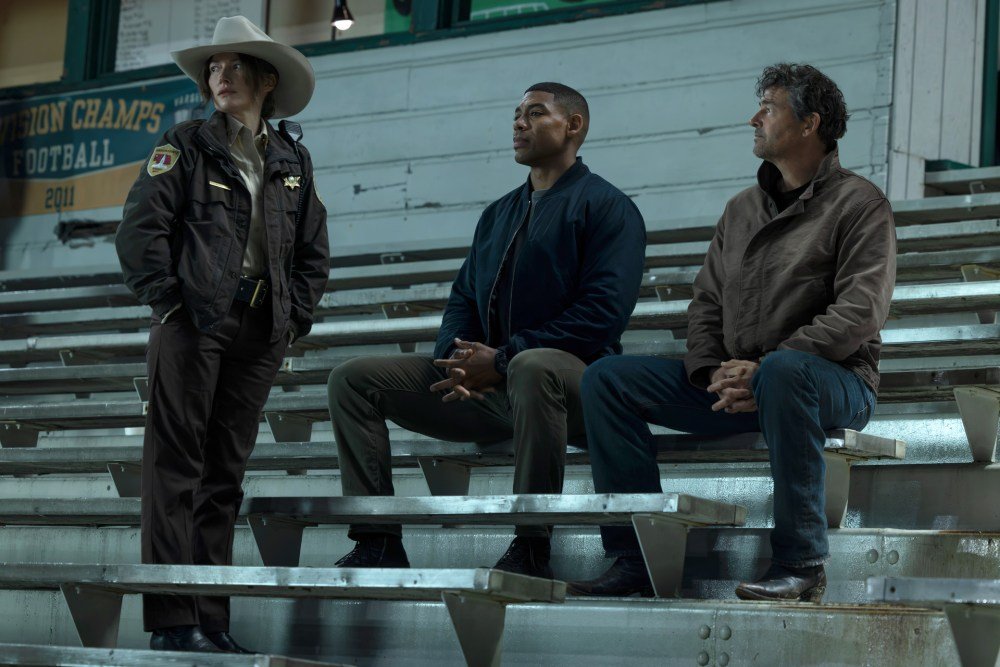
Of course, just because Hal Jordan (Kyle Chandler) is found dead in the bleachers by John Stewart (Aaron Pierre) and town sheriff Kerry (Kelly MacDonald) in the middle of a brutal 2026 winter doesn’t mean audiences won’t get to see Green Lantern in action in future episodes — the show sets up a non-linear structure that jumps among different storylines from the very opening scene, which begins in 1996 and sets up a young John’s connection to taking the Green Lantern mantle.
But clueing audiences in on the fact that the show’s protagonist’s days are numbered is bold for the comic book genre. And it makes for one hell of a cliffhanger for the series premiere.
“Whether it’s the right cliffhanger or not is basically in the hands of the audience now,” “Lanterns” co-creator Damon Lindelof tells Variety. “But one of the very first things that was part of the premise was that this is a murder mystery with Green Lantern solving it, and then you sort of start at, ‘Well, who gets murdered and why are we supposed to care about them?’ The more that we talked about it, the more that it kept coming back to the idea of, ‘What if it was one of them?’”
“Lanterns,” the latest show under James Gunn and Peter Safran’s newly expanded DCU, follows Hal as he is forced to take John under his wing. As the Green Lantern, Hal has the power to create material items through his ring, and acts as an intergalactic space officer protecting humanity from extraterrestrial threats. Things take a dark turn, however, after a series of unexplainable deaths draw Hal and John to a small town in Nebraska.
When Chandler first read the ending of the episode, he “cheered” at Hal’s demise.
“Not just for the storyline and all that, but what a way great way to end the first episode of this show,” Chandler says.
MacDonald, who says Frances McDormand’s Oscar-winning performance in “Fargo” informed the way she played the sheriff just trying to keep her small town from falling apart, dreaded filming the scene when she discovers Hal’s dead body. “Just the thought of what was going to happen, I did not look forward to it. It was quite emotional, seeing him like that,” she says.
Lindelof, who created HBO’s Emmy-winning “Watchmen” TV series that released in 2019 — bringing a grounded approach to it — recognizes the opportunity to subvert audience expectations from what they’ve come to expect in the genre.
“That you basically watched eight episodes and everybody had an adventure, and then at the end of the adventure, it’s just time for the next adventure,” Lindelof says. “So the idea that it would have real emotional stakes [was important]. But most importantly, this is a story about a guy who doesn’t want to give up the ring — and a guy who wants the ring. And it was important for us to message to the audience that we weren’t gonna try to have our cake and eat it too.”
The episode sets up Hal and John’s budding mentor-mentee dynamic in a 2016 timeline, with Hal being a reluctant teacher. The tension between them comes to a head after the two arrive in Nebraska and begin investigating a school shooting that Hal believes is a front for aliens.
“There’s a moment where we’re in the stands and we were literally this close. And it was a moment very early in their dynamic. Everything in John wants to just rumble in that moment, but he can’t and Hal knows he can’t,” Pierre says. “It was just so fun.”
“It’s like making fun of the animals at the zoo behind the plate of glass,” Chandler adds with a laugh. “He’s can’t touch me, but I can do what I want!”
Chandler says Hal has a deep respect for John from the beginning, even if it’s unspoken. “I knew that he could literally grab my neck and snap it,” he says.
Seeing Chandler sit up on a pair of bleachers overlooking a football field may give viewers who were introduced to the Emmy-winning actor with “Friday Night Lights” a feeling of déjà vu. Chandler felt those memories for the series that turns 20 this fall.
“There’s no doubt when I walked out there, it was a lot of different thoughts and emotions going through me,” Chandler says — although he never asked the writers if the callback was intentional.
Overall, Pierre commends the “Lanterns” writers’ room, and is excited to see how the show’s weekly release model will play into the conversations fans have online.
“They leave you — ‘want’ doesn’t even feel like a strong enough word. It’s needing to know what happens next,” Pierre says, teasingly. “I imagine there are going to be a few weeks where audiences are, in the healthiest, most excitable way, furious that they don’t know what is coming next.”