Blog

  • Mad Solutions and Haitham Dabbour’s Irth Platform Announce Strategic Pan-Arab Content Partnership in Venice

    Mad Solutions and Haitham Dabbour’s Irth Platform Announce Strategic Pan-Arab Content Partnership in Venice

    Pan-Arab distributor Mad Solutions and Egyptian multihyphenate Haitham Dabbour’s Irth platform dedicated to supporting standout writers across the Arab world announced a strategic partnership on Saturday at the Venice Film Festival that aims to boost quality content output from the region.

    Under the pact, Mad Solutions and Irth will jointly “develop, package and support film, television and other entertainment projects from across the Arab world for regional and international markets,” they said in a statement.

    The Irth platform initiative – that was officially launched during the 2025 Red Sea International Film Festival in Saudi Arabia – is the first collaborative writers’ room bringing together writers from Egypt and Saudi Arabia and beyond.

    Cairo-based Mad Solutions, which was established in 2010 by its two co-founders, Alaa Karkouti and Maher Diab, comprises a network of specialized outfits that include Mad World, focussed on international sales of Arab films; Mad Distribution, which handles sales and distribution of Arab films across the Arab world; and Mad Celebrity, providing full talent management and representation for both on-and off-screen Arab talent.

    MAD Solutions and Irth are now developing a pipeline spanning original Arabic projects, some of which are talent-driven, as well as third-party development and consultancy assignments. The first projects germinated from the partnership will be announced, they said.

    The partnership announcement comes just as Mad Solutions marks a significant presence in Venice this year, with two films launching on the Lido. “Al Baraneya,” a rural Egyptian family’s story directed by Egypt’s Ashgan El-Hamus, screening in Venice Days, and Palestinian drama “Conversations with the Sea,” directed by Muayad Alayan, screening in the Venice Spotlight section. 

    MAD will also present its annual award at the Final Cut in Venice platform, which supports films from Africa and the Arab world through post-production and international industry opportunities.

    Dabbour is a bestselling Egyptian author whoser novels include “Devoured by Seven Lean Cows” and “Moses Cross.” His screenwriting credits include Egypt’s El Gouna Film Festival prizewinner “Gunshot” and “The Tale of Ahl El Daye,” which in 2025 had its European bow in the Berlinale’s Generation section.

    “Irth has always been about bringing strong writers and different Arab voices together and giving ideas the development they need,” Dabbour in a statement. “Mad’s regional and international reach gives us the opportunity to take that work further and open new possibilities for the projects and writers we work with.”

    Commented Mad Solutions co-founders Alaa Karkouti and Maher Diab: “Development is a key part of Mad’s regional and international expansion, and Irth brings a strong creative infrastructure and a diverse network of Arab writers to that strategy. Together, we can originate projects while also offering filmmakers and producers the development support they need to strengthen existing ones.”

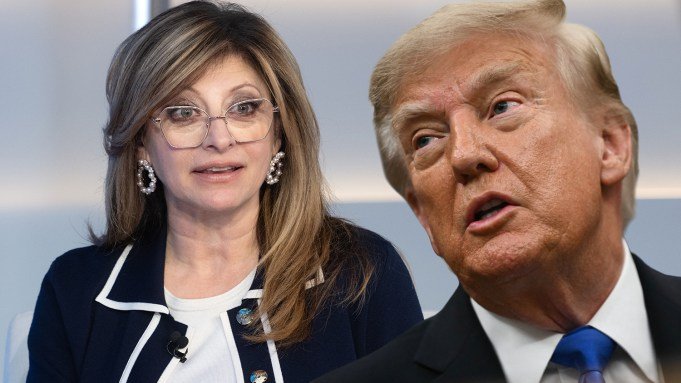
  • Maria Bartiromo’s Fox Exit “Self-Inflicted Wound”; Trump Praises “True Warrior” As Legal Threats & Accusations Of Host Sharing Insider Info Fly

    Maria Bartiromo’s Fox Exit “Self-Inflicted Wound”; Trump Praises “True Warrior” As Legal Threats & Accusations Of Host Sharing Insider Info Fly

    EXCLUSIVE: The coup de grâce that caused Fox to announce this week that Maria Bartiromo would “no longer be with” the conservative news outlet was a case of “very bad judgment” and a long time coming, sources say.

    The assertions come Friday despite Bartiromo’s Hollywood attorney Bryan Freedman insisting the veteran Wall Street anchor is still “an employee” of Fox and threatening legal action. Adding to the burgeoning media mess surrounding the so-called “Money Honey,” Donald Trump had thrown serious shade on Fox for taking good pal Bartiromo off the air.

    That shade could set the stage for yet another showdown between Trump and his once favorite media buddies at the Murdoch-ruled Fox.

    “I can’t believe Maria Bartiromo is no longer going to have her great show(s) on FoxNews/Business,” Trump, a frequent Bartiromo guest, posted Thursday night, about 12 hours after Fox announced “effective today” that the Mornings With Maria host was out. “Three different shows, always number one. Maria is a total professional, and a true warrior. Her fans, of which there are many, will not be happy. God bless you, Maria!”

    Bartiromo hadn’t been on the air for almost a month, with Deadline confirming that Fox brass had enough of the MAGA-friendly Bartiromo after they learned she passed corporate-guidance missives to the White House in recent months. However, carving her own way at Fox Business and Fox News for more than a decade, those communications were just the latest minefield that Fox execs feared could blow up in everyone’s faces.

    “Her indiscretion was just the latest in a series of self-inflicted wounds,” a cable news insider says of Bartiromo and her close ties with Trump. “This has been a concern for a while, Maria being too cozy with the White House. She crossed a line, and she’s suffered the consequences.”

    Weary of addressing allegations of similar conduct over the years by Sean Hannity and other Fox hosts, or Bartiromo’s contract specifics, the source added: “She’s no longer with Fox. Take that for what it is.”

    Deadline hears that while there may be “technical truth” to Freedman’s remarks today that Bartiromo still works at Fox because of contracts and other paperwork, she is not returning to her Fox Business or Fox News roles — full stop.

    Long a passionate defender of POTUS and offering him a platform over the years, Bartiromo’s apparent sharing of internal edicts with Trump administration officials, first reported by Status, made her pink-slipping inevitable.

    Digging a little deeper and a few years back, the seeds of Bartiromo’s downfall were evident if you connect the red string.

    In April 2023, Fox agreed to pay $787 million to settle a lawsuit filed by Dominion Voting Systems, one of the technology firms singled out in Fox’s coverage of the 2020 election results. Citied in volumes of court filings and the high-stakes trial that had just begun when Fox settled, Bartiromo was one of the main hosts on Fox promoting the false claims of irregularities with the election Trump lost and Joe Biden won. At the time, the top-rated Tucker Carlson was pulled off the air at Fox in a move that resulted in a Freedman-handled legal dust-up between Carlson and the media company.

    No word from ex-Apprentice host Trump if Bartiromo is in the running to be the new White House Press Secretary, but sharp-elbowed lawyer Freedman says his client actually isn’t looking for a new job because she still has her old one.

    “For many years, Maria Bartiromo hosted three number one rated television shows on Fox channels,” Freedman said Friday, as my colleague Dade Hayes noted earlier. “She has been, without question, one of the hardest working journalists throughout her award winning career.”

    The lawyer for the likes of Carlson and Megyn Kelly, as well as Don Lemon, then unsheathed the knife that may lead to a bloody affair down the line.

    “The irresponsible reports that have been published stating that Maria Bartiromo was fired or is no longer an employee of Fox are absolutely and unequivocally false,” Freedman said. “Make no mistake, we have the receipts and witnesses and they will come out whether through the courthouse or otherwise. Those reporting her firing or the incredulous facts supporting that fiction have exhibited a complete and utter reckless disregard for the truth.”

    When Deadline asked Fox for a response to Freedman’s statement about his client’s employment situation, the company said: “the release speaks for itself.” The White House did not respond to Deadline’s request for comment.

  • ‘The Gentlemen’ Star Theo James Is Ready to Talk About That Bloody Season 2 Ending

    ‘The Gentlemen’ Star Theo James Is Ready to Talk About That Bloody Season 2 Ending

    [This story contains MAJOR spoilers from season two of The Gentlemen.]

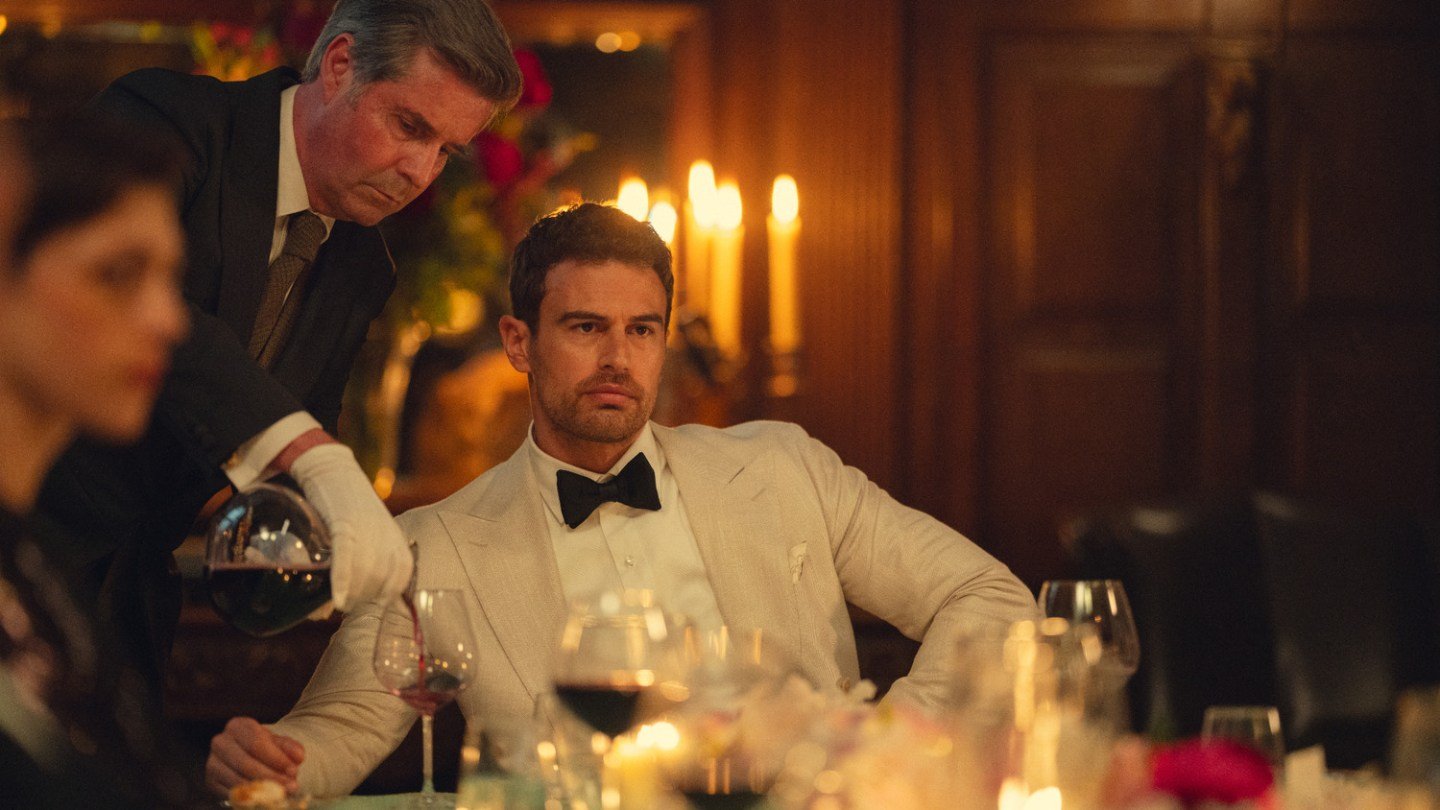
    When The Gentlemen first introduced Eddie Horniman (Theo James), he was a reluctant aristocrat who unexpectedly inherited his late father’s dukedom, only to discover that his old man had been involved in a vast weed empire for years. Back then, the dutiful former Army captain was just trying to extricate his family from the criminal enterprise and protect the Halstead country estate. But by the time the dust settles at the end of the newly released second season, Eddie has transformed into a ruthless mob boss in the vein of Michael Corleone.

    In the sophomore season of the Guy Ritchie-created action dramedy series, which launched Thursday on Netflix, Eddie and his business partner Susie Glass (Kaya Scodelario) — on the instructions of Susie’s imprisoned crime boss father Bobby (Ray Winstone) — expand their weed operations beyond the U.K. into Italy. The moves puts Eddie and Susie in direct conflict with the elegant but lethal Italian Mafia boss Marco Moretti (Sergio Castellitto) and an ego-driven local fixer named Cico Maldini (Michele Morrone), whose slippery nature ultimately leads to his demise at the hands of Marco’s pet tiger. Yikes!

    Wanting to seek more independence, Eddie quietly distances himself from Susie and Bobby to work directly with Marco, even going as far as to carry out a hit on an innocent accountant as a demonstration of his loyalty to their partnership. During that time, Eddie quickly becomes enamored with and marries Marco’s goddaughter, Countess Isabella “Bella” Soranza de Parme (Benedetta Porcaroli) — another aristocrat who understands the dangerous criminal underworld because of her familial connections, but is not personally interested in that lifestyle.

    However, Eddie and Bella’s marital bliss is cut short. Following their wedding at Lake Maggiore in episode six, the couple sets off on their honeymoon, with Bella piloting a scenic seaplane alone while Eddie drives along the road below. Tragically, a hidden bomb detonates on the aircraft mid-flight, killing Bella instantly and plunging a devastated Eddie into a quest for vengeance. Although Eddie initially suspects Bobby or other criminal rivals for the attack, the finale reveals that the ultimate betrayal came from within Eddie’s own family.

    While staying at a religious rehab center, Eddie’s mercurial older brother, Freddy (Daniel Ings), falls under the spiritual and toxic influence of Gospel John (Pearce Quigley) — the fantastical crime lord who sought revenge on Freddy in season one for killing his brother. Feeding into Freddy’s deep-seated resentment over losing the Halstead inheritance to Eddie, Gospel John convinces Freddy to help orchestrate an armed assault on the Halstead estate, an attack that results in an attempted kidnapping of Eddie and Freddy’s younger sister Charly’s (Jasmine Blackborow) newborn baby in episode seven.

    After uncovering Freddy’s complicity, Eddie enlists Susie to help capture Gospel John and wipe out the rest of his syndicate. Eddie then goes to confront Freddy himself — beating him up and even holding a gun to his head. But instead of executing his own flesh and blood, Eddie orders his traumatized brother into the back of a black van, where Gospel John is tied up and another man is holding a chainsaw. “Someone’s gotta die, Freddy,” Eddie tells him. To save his own life, Freddy is forced to behead Gospel John. The season concludes with a blood-soaked Freddy holding the severed head, while Eddie lights a cigar and coldly calls his brother a “good boy.”

    Eddie’s descent into an unhinged crime lord was particularly appealing to James, who has long been interested in examining the corruptibility of power among the most privileged. “It often happens with kings or leaders of religious cults,” James tells The Hollywood Reporter in the conversation below. “They kind of start off in a version of trying to help, but by the end, power degrades their sense of self so much that they become poisoned by it and become numb to violence and everything that happens around them.”

    Calling in from London earlier this week, star and co-executive producer James opened up to THR about collaborating with Ritchie on a thematically deeper and darker second season (and how that shocking ending sets up the already renewed season three), why he thinks an Eddie-Susie romance may never be in the cards — and, yes, the rumored casting of the real-life Duchess of Sussex.

    ***

    What kinds of creative conversations did you have with Guy Ritchie to figure out how you all wanted to evolve the story in season two?

    After season one, and honestly while I was doing it, I felt we had a great conceit, a really good story and some great actors, but there were perhaps depths that we hadn’t yet plumbed. With] season one, there’s a world where [the story’s] kind of wrapped up. So if you’re going to go back for a second bite of the apple, the reason is to try and make it better and more complex, take bigger swings and learn from the things that worked from season one and evolve as much as possible.

    The methodology with Guy and [executive producer] Matthew [Read] and I is a pretty complex one, but good in the sense that there are a lot of conversations. We start with a sitdown in London, and we have a four-hour conversation that ranges from everything from the existential to the minutiae. But we start with an initial big-picture chat. We don’t solve everything in that single chat, but we start thinking about the larger themes.

    But the ability to understand Eddie a bit more, to have him be challenged, to have him have more emotional depth, to have him fall in love, to have him broken both spiritually and physically, and then have him completely betrayed — those were the touch points we started with and then carried on developing. It’s a unique process — one I have never done in another job — in that we are tinkering in the trailer in the morning and during the scene, so it’s an ever-evolving process.

    You have spoken in the past about how Eddie was very much on the back foot in the first season. He was not exactly a fish out of water, but he was still trying to get his bearings in this criminal enterprise that his father was involved in. This season, he seems to really embrace and almost become seduced by the promises and trappings of wealth that he was born into — and he is left to wrestle with the cost of his actions. How do you think his moral compass bends over the course of the season? Do you think he believes the end justifies the means?

    I think he believes that the end ultimately justifies the means. What I was interested in exploring is a story of ascension — like some of the great stories and the classic stories, from biblical to Walter White — and what cost that incurs on a person. In season one, in many ways, he’s a moral man. He’s a civilian adapting to scenarios on the back foot and being thrown into a world he doesn’t understand with a bunch of characters who are larger than life. His job is to navigate through it and come out the other end with an ability to save his family from the clutches of poverty and villainy. [But] what happens is, he realizes he’s fairly adept at it.

    What I wanted to do in season two is to take a man filled with privilege because of multiple centuries of landed gentry — and what that [familial background] gives him is ego and entitlement. There’s an ascension story where he thinks [rising to a higher state of power] should be granted to him because he thinks it’s his kind of right. That’s a kind of ego story, and also a kingship story. That’s a story that Guy’s interested, in too.

    In terms of playing with morality, episode two is the moment he steps over the edge and commits a crime to ostensibly an innocent man for his own means. He justifies it as the end justifies the means for him, but ultimately it has corroded some of his moral purity. He’s a good person and now he’s far from it, and that is going to weigh on his conscience for the rest of the season.

    But what I also like playing with — and this is all within the caveat of entertaining in a slightly heightened world, so not to be too portentous about it, but [I’m interested in] privilege, power and the idea that there’s an apathy and an erosion of empathy that comes with that. It often happens with kings or leaders of religious cults. They kind of start off in a version of trying to help, but by the end, power degrades their sense of self so much that they become poisoned by it and become numb to violence and everything that happens around them. We’re going to do another season, and in that season I want to continue exploring that: How far has he lost himself, and how much has he corroded his soul?

    One of the people who remarks just how much Eddie has changed is Susie. Multiple characters start to question the nature of Eddie and Susie’s relationship — whether their connection is purely platonic and professional, or something more. How consciously have you, Kaya and the rest of the creative team tried to play up the will-they-won’t-they of that relationship?

    Our touching point in the beginning was always Moonlighting — Cybill Shepherd and Bruce Willis — and the idea of two people who kind of are in love, but never quite get together. That’s a baseline. But in season two, we like the idea that they’re connected, but their distance is one of mistrust. On one hand, they’re the other’s greatest ally. But they are also heading to a path where one of them has to usurp the other because we’re talking about a kind of ascension story and how that’s going to happen, and who’s going to fail and who’s going to win.

    Then beyond that, I think the realities of an indentured Duke and then peer of the realm getting with a gangster’s daughter who runs a criminal empire is pretty unlikely. (Laughs.) There’s a sadness [to the relationship] because maybe they would, but ultimately they probably never can.

    Eddie’s relationship with Susie briefly takes a back seat to his unexpected romance with an Italian countess named Bella. Eddie and Bella quickly get married, which helps strengthen Eddie’s standing in his expanding international operations, but she is killed instantly when a bomb explodes on the seaplane that she was piloting on her way to her and Eddie’s honeymoon. How did you think about playing Eddie’s reaction to her death?

    I like that storyline. It touches on what’s happened for centuries in European aristocracy and nobility. People marry strategically — they marry for alliance, they marry for land mass, for power. This [show] has got a modern touch on that. Is he marrying to consolidate his power? Yes. But is he marrying for love? Of course. He’s also from landed gentry, from aristocracy, so he’s seen that world of being presented a marriage for reasons beyond love, for one’s strategy. I think ultimately he does kind of fall in love with her, but perhaps he doesn’t expect to.

    In terms of the ending [of episode six], we actually shot a bunch of [versions]. Eddie sees what’s happened, and there’s an aftermath. Guy wanted a bit more mystery, so we don’t understand where he is or what’s happening to him until the end of episode seven — and then he starts this story of ultimate revenge fueled by anger.

    That’s the fun as well of being able to do a third season. He’s betrayed by his brother [who was involved in Bella’s killing]. He loses his wife on his wedding day, but he also ascends to a higher place of power, so he’s going to be more ruthless and deadly. And at what point is the barrier between a vaguely good person or a complete monster? Kaya’s character says that she thinks he’s evolving into something else, and I think that’s fun territory to be in.

    The ending of the season feels particularly shocking.

    That was something we had talked about with Guy and Matthew for a long time. He can’t murder his brother straight up and straight out because then he loses his family, but he has to have some semblance of revenge. So that [ending] came from trying to figure out: How do you do both in one? How do you punish him without killing him? [We settled on] forcing [Freddy] to do the most atrocious crime and also removing the head of his God in a way. He looks up to this man as a man of faith and then he has to fucking chainsaw his head off. (Laughs.)

    Earlier in the finale, Eddie’s own mother, Sabrina (Joely Richardson), remarks that he has become almost unrecognizable to her. What does that tell you about where he’s going — and where the story will go — in season three?

    From an audience perspective, I think he’s beginning to wander into territory of rich and problematic darkness and moral quandary. But in terms of the reality of his family, he’s just about saved himself because he hasn’t had to murder his own brother, and he’ll be able to still remain a semblance of himself.

    Ultimately, he’s on a path to surpass Bobby [as a drug lord], but also get complete vengeance from his brother. How that enacts itself is still in the process [of being determined]. But on top of that, I think we’re going to expand the world further. We’ll be touching on lots of different countries and new countries. I won’t spoil it because it’s a big part of the storyline, but we’ll be in a very different cinematic planet, shall we say.

    The Gentlemen was officially renewed for season three last week, but you and your creative team had reportedly known about the renewal for a while. Do you know when you will begin production for the next season? Are you going to be filming later this year or early next year?

    Yeah, pretty soon. It’s very soon to the point where I’m like, “Fuck, we need to really get this shit together before we start filming.” (Laughs.) So, yes, it’s happening very soon because I think we’re also cognizant of the fact that nowadays you don’t want massive lulls. There was a large break between season one and two, and I think we don’t want to be in that position again. That happened because people were available and then they weren’t. Then I did a film, then Guy would do a film, and [schedules didn’t align]. But I think we’re all aligned with the fact that if we want to keep momentum and also just tell the story and finish the story, then we should leave less of a gap between the seasons.

    The show has obviously made headlines in the last couple of weeks because of the potential casting of a certain real-life duchess, Meghan Markle, in season three. As both a star and a producer, how privy are you to those kinds of casting conversations, and what do you know about her involvement at this point?

    I think that’s mostly hot air. To me, it’s fascinating how [those reports] exploded that much, and how intrigued people are, and how much kind of cultural significance [Meghan and Harry] have. I guess it’s inevitable in some way. We talk about casting all the time, but, I mean, the practicalities of that are also complex for a show like ours. Can you imagine the amount of attention, paparazzi, and so forth you’d have? So I would say it’s pretty unlikely.

    ***

    The first two seasons of The Gentlemen are now streaming on Netflix.

  • ‘Tender Loving Care’ Review: Kate O’Flynn Lights Up Mike Leigh’s Warm, Gently Wrenching Study of Solace and Solidarity

    ‘Tender Loving Care’ Review: Kate O’Flynn Lights Up Mike Leigh’s Warm, Gently Wrenching Study of Solace and Solidarity

    A drama dotted with laughs (or a comedy blotted with pain?) in which everyday problems are confronted, and avoided, over steaming cuppas and brimming glasses of white wine, Tender Loving Care explores friendship, family dynamics and England’s fraying social safety net. In other words, it’s a Mike Leigh film, and a lovely one at that.

    If it ends up being his last, as the 83-year-old writer-director has indicated, it’s a fitting and stealthily powerful way to go out — a low-key mic drop of sorts. The movie is warm and inviting, filled with giggles and gossip and gentle gallows humor; it’s also wrenching, with a topical urgency simmering just beneath the jovial surface. While Leigh’s left-wing politics inform the story, the filmmaker, unlike his contemporary Ken Loach, mostly avoids playing ventriloquist; the chit-chatting, chortling, sobbing, seething souls who populate his work tend to be too complicated, too insistently human to serve as mere spokespeople for their creator’s ideas.

    Tender Loving Care

    The Bottom Line

    A lovely addition — and likely conclusion — to an exceptional career.

    Venue: Telluride Film Festival
    Cast: Marion Bailey, Paul Jesson, Kate O’Flynn, Alice Bailey Johnson
    Director-screenwriter: Mike Leigh

    1 hour 47 minutes

    In Tender Loving Care, those ideas concern compassion, solidarity and support — what it means to look out for one another at this (angry, angering) point in history, specifically in a country whose public services have been eroded by an ethos of self-reliance codified by Thatcher and further cemented, or perverted, by Brexit. As is often the case in Leigh’s films, the thematic framework is conspicuous; characters, on occasion, turn subtext into text, delivering mini-disquisitions on the failures of the state and the isolation of urban life today.

    Those statements might register as distractingly didactic if they didn’t sound wholly believable coming out of these particular people’s mouths; two of the four central figures, childhood BFFs Amy (Kate O’Flynn, Widow’s Bay scene-stealer) and Rosie (Alice Bailey Johnson), are overextended, underappreciated social workers — and seasoned compartmentalizers, lest the despondency they witness daily on the job pull them under.

    Amy and Rosie, as well as Amy’s kindly parents Birdie (Marion Bailey, Leigh’s longtime partner) and Geoff (Paul Jesson), arrive onscreen fully formed, alive with personal and relational histories we can intuit beyond what’s in the frame. If it feels like we’ve known these folks forever — from Amy and Rosie’s mutual hype sessions to Birdie and Geoff’s puttering and banter — that’s a credit to Leigh’s legendary rehearsal process, during which he and his actors build the characters from scratch through weeks of improvisation and discussion.

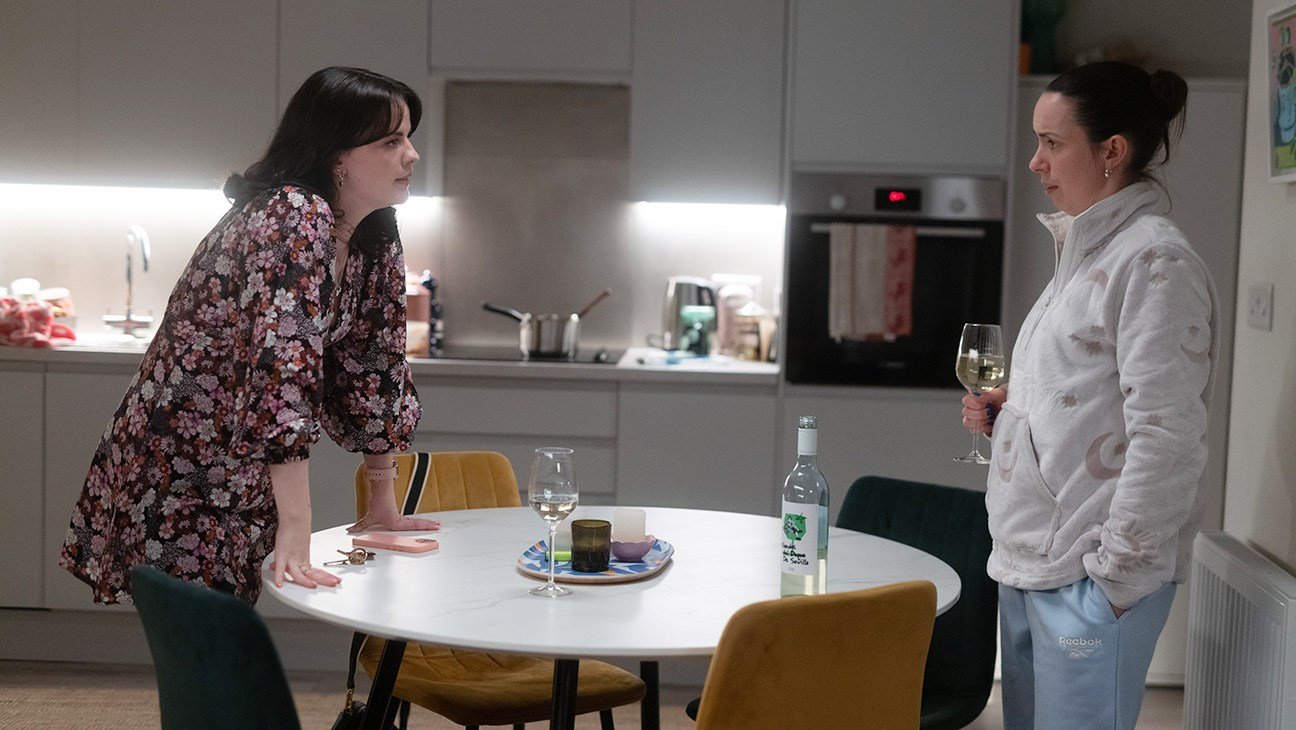
    Nothing and everything happens over the course of Tender Loving Care. Unceremoniously dumped by a boyfriend who’s gone back to his wife and child, Amy moves in with single-and-mingling Rosie. Birdie frets about Amy’s romantic and reproductive prospects, though she and Geoff console themselves with their certainty that she’s better off sans her ex. Amy and Rosie endure stressful days on the job (Amy works mainly with children, Rosie with the elderly), retreating to their flat in the evenings to swap horror stories or decompress over girl talk, dance-offs and other bursts of booze-infused silliness. Geoff’s health takes a sudden turn for the worse.

    The tone here is mellower, the pitch less heightened than in Leigh’s more volatile domestic tragicomedies, like Secrets & Lies and Life Is Sweet, to say nothing of the bludgeoning All or Nothing. That’s in large part a reflection of the new film’s main quartet, who sit at the opposite end of the temperamental spectrum from Pansy, the ferocious protagonist of Leigh’s previous effort, 2024’s Hard Truths. Amy, Rosie, Birdie and Geoff are indeed among the most amiable characters Leigh has ever created, their darker feelings — loneliness, jealousy, rage, dread — tucked safely beneath chipper smiles and cheerful pleasantries.

    But Leigh has never been one to flinch at life’s cruelties. The simplicity of Tender Loving Care’s narrative, the sweetness of the people it portrays, and the ticklish good vibes they generate belie a toughmindedness about both the private disappointments and the larger societal injustices that shake our respective worlds. When moments of anguish arrive — a neighbor’s tormented account of her husband’s funeral; a tirade by a paranoia-gripped hoarder Rosie is assigned to visit; a hard-drinking mother’s fury at the foster care system for which Amy is assessing her — they have a rawness and force that slice right through the movie’s congeniality.

    The film is in direct conversation with Hard Truths, as well as Leigh standouts Another Year and Happy-Go-Lucky, in its consideration of what determines happiness — the degrees to which choice, disposition, luck and broader structural or socioeconomic forces play a part. Like so much of Leigh’s work, Tender Loving Care ponders how people of different circumstances and constitutions coexist: how we make each other feel and act, how our perception of each other’s lives shapes our perception of our own.

    It’s also about how we proceed with the business of living amid hardships both mundane and momentous. Like Ozu, a clear influence, Leigh is one of the medium’s great observers of human behavior, from the small talk that drowns out the terror of our worst anxieties to the self-delusions that sustain us during our most vulnerable moments to the way we accept or refuse help — the latter sometimes misguidedly. “I can’t put it on them,” Amy tells Rosie, explaining her reluctance to let her parents know of her break-up. Like all the film’s principals, Amy is an expert practitioner of Britain’s famed stiff upper lip, but here she’s sparing Birdie and Geoff a burden they’re more than ready to share.

    O’Flynn is an expressive marvel, her kooky lightheartedness periodically clouding over with a melancholy that cuts to the bone. The swirl of conflicting emotions that play out across Amy’s face as she gulps champagne while listening to her mother reminisce about her courtship with Geoff is astonishing — a piercing pantomime of the oft-cited notion that millennials are the first generation to have fewer opportunities than their parents.

    Bailey Johnson, a casual charisma bomb, makes Rosie so radiant and grounded and fun that you may realize only late in the film — when she reveals she no longer speaks to her own mom and dad — that her generosity toward the other characters is more symbiotic than selfless. Rosie is the very definition of a ride-or-die, but she needs Amy and her family as much as they need her.

    The beautifully synced Bailey and Jesson, meanwhile, offer a duet of endearments, confidences, worries and innocuous shit-talk, conjuring the ineffable mix of intimacy and distance that makes a long-term marriage. When the rhythm of their relationship is disrupted in the film’s second half, the effect is devastating.

    Visually, Tender Loving Care is characterized by Leigh’s typical unfussiness, with Lucy Bristow taking over DP duties from frequent Leigh collaborator Dick Pope, who died in 2024. As usual, there’s mastery in how the filmmaker uses facial close-ups to add notes of tension, encouraging the viewer to locate truths undisclosed by the dialogue. Ditto in how he deploys a single overhead shot — serene but conspicuous — to foreshadow an unlucky swerve in the story.  

    A touching penultimate scene feels like a natural conclusion to this portrait of people devotedly closing ranks when crisis strikes. But Leigh doesn’t stop there, instead punctuating his film with a final image of uncommon bluntness and despair. At first impression, it seems an incongruously — if not unjustifiably — hopeless way to go out. Yet given the dogged humanism that is the throughline of Leigh’s extraordinary filmography, perhaps a less pessimistic reading is due: Leigh is ending his movie, possibly his career, with a plea for individuals to lift up those they know and love, of course, but also to fight for a society that lifts up those they don’t.

  • Meet Topic, the Indie Studio Dominating the Festival Circuit With ‘The Debut,’ ‘Club Kid,’ ‘Wicker’

    Meet Topic, the Indie Studio Dominating the Festival Circuit With ‘The Debut,’ ‘Club Kid,’ ‘Wicker’

    Movies developed and financed outside of the major studios and streamers have a massive hill to climb. It happens that Topic Studios, one such independent shop, has made it all the way up the Rockies — with some of the year’s buzziest films in tow. 

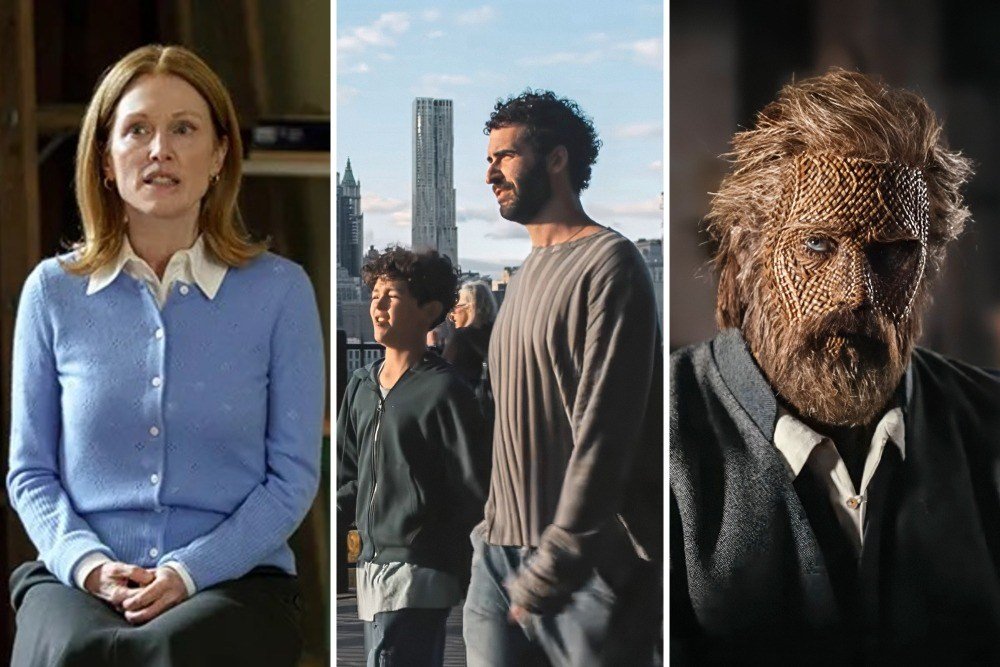
    On the ground at this weekend’s Telluride Film Festival in Colorado, Topic will show Jesse Eisenberg’s anticipated follow-up to “A Real Pain,” the Julianne Moore and Paul Giamatti dramedy “The Debut.” The studio will also let Jordan Firstman’s “Club Kid” out of the gate for the second time after enchanting the Cannes Film Festival in May. In a month, Black Bear will release Topic’s “Wicker” after a successful bow at Sundance in January. 

    Founded in 2017, the company is a division of First Look Media and has been behind some of the most acclaimed projects of the past decade (including Pablo Larrain’s “Spencer,” Michael Angelo Covino’s “The Climb” and the Oscar-winning “Spotlight”). Variety caught up with Topic film and documentary head Ryan Heller to discuss the company’s secret sauce, surviving without M&A and what’s next. 

    Topic is on a roll. How did you get here?

    Ryan Heller: We’ve worked hard over the last few years to identify things that we feel uniquely suited to make happen. In this post-COVID period, which we’re all still living in, we’re figuring out what new the behaviors look like and how movie culture has changed. We’ve leaned into things that resonate with us – on the filmmaker and story level. Things that have a communal aspect. We never take anyone showing up to a movie theater for granted, so we’ve tried to earn their trust.

    How do you think movie culture has changed?

    RH: It seems like audiences are showing up for specific movies now, instead of walking into theaters [looking to discover]. We approach the projects we take on by asking how we’re uniquely suited to help. That means projects that are independent as a feature, not a bug. Our responsibility is to figure out how to guide those things to market with a shot at getting the audience they deserve.

    How would you define your palate for story?

    RH: Distinctive and filmmaker-driven. Movies that may have to fight to be seen, but in execution can find a sizable audience. We want movies that drive conversation. We’re mostly developing or financing projects on the way to production or financing them through, and we gravitate toward writer-directors. We love that sort of intimacy.

    There seems to be something confrontational about each of these movies, which isn’t necessarily a bad thing. “Splitsville” confronts the terrors of insecurity and marriage. “Club Kid” is about acknowledging self-destruction, in a way, and realizing that better decisions mean more happiness.

    RH: I’m sure there’s truth to that, but it’s not intentional. The hardest thing for us is finding the projects. So, when we see something we fall for it’s the greatest thing. Some of what you’re saying is just inherent to what gets made in the independent system.

    So what makes you “fall for” a project?

    RH: I think we gravitate toward big laughs and big feelings. We love comedies that have the stakes of a drama. That’s why we love “Club Kid” so much. That script knocked us out. We all had expectations of what it was going to be, and every single person at Topic who read that script ended it in tears. And it was all earned. Getting to have a front row seat to how Jordan pulled that off at every stage of production while also acting in almost every scene was really special. It was a career highlight. The same goes for “The Debut” and “Wicker.” They really got us.

    “The Debut” is the hottest ticket in Telluride this year, it seems.

    RH: The expectations are hard to control. I don’t know that we think about them too much. We are truly over the moon excited for people to see this movie. We’ve been working on it since the release of “A Real Pain.” We’ll lean on our great partners at A24 to figure out how we how we get as many people to see the film as possible. We’re counting down the minutes to let this thing loose in front of audiences.

    So you’ve got the hot hand. Are people talking to you about sales and mergers and acquisitions, or are you tuning that out?

    RH: We love where we are, and we’ve built such great relationships with so many partners. We focus on being deliberate and going in on things finding ways to be self-reliant. What we’ve built is an internal capability to make a movie from start to finish. There’s a real value to companies like Topic supplying certain kinds of movies to distribution partners. They have different economics than we do. I think we’re part of a healthy ecosystem. We love where we are and want to keep doing it.

    What’s next?

    RH: We have some stuff we haven’t announced yet, but we’re in postproduction on a movie called “Scorn.” It’s from a writer-director named Sarah Bliss, who co-created the series “Search Party.” That’s a house favorite over here. She’s incredible, and it gave a chance to reteam with the incredible Adria Arjona, who we worked with on “Splitsville.” It’s a surprising and very modern take on the psychological erotic thriller. It goes to very unexpected places.

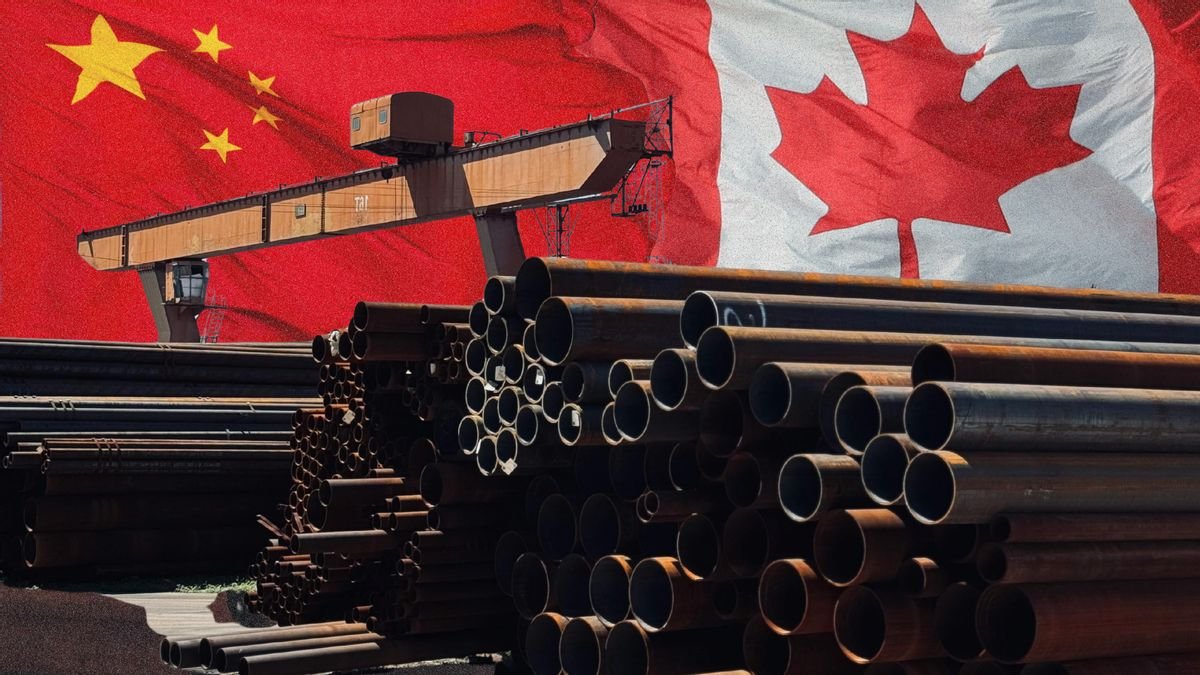
  • Did Canada import Chinese steel and resell it to US to avoid tariffs? What we know

    Did Canada import Chinese steel and resell it to US to avoid tariffs? What we know

    • The claim that Canada assisted China in avoiding U.S. tariffs by reselling Chinese steel as Canadian is still under investigation. 
    • U.S. businesses and the U.S. government have accused Canadian companies of acting as a “backdoor” funneling Chinese steel into the United States. President Donald Trump’s administration also has accused Canada of being one of China’s “biggest enablers” in efforts to avoid tariffs in general. 
    • In May, the Department of Justice reached a settlement with two Canadian companies accused of falsely labeling Chinese steel as Canadian to avoid customs duties. However, the companies did not admit fault as part of the settlement. 
    • Some trade experts have expressed skepticism that Canada is enabling Chinese efforts to avoid tariffs on steel. Canada’s government also has enacted a number of measures in an attempt to prevent Chinese steel from flooding the Canadian market.  
    • We have not rated this claim due to a lack of verifiable evidence. We reached out to offices of the U.S. and Canadian trade representatives and will update this story if we hear back.

    In the fall and summer of 2026, social media users claimed that Canada resold Chinese steel as Canadian to help China avoid U.S. tariffs. 

    The rumor spread on Facebook and X (screenshot, screenshot). Snopes readers also contacted us to investigate its legitimacy. 

    It is true that American businesses have accused Canadian companies — not the country’s government — of skirting tariffs by selling Chinese goods, including steel, as Canadian. In an August report, Trump’s administration also accused Canada of being one of “China’s biggest enablers” in helping evade tariffs in general through “transshipment,” or the shipment of goods from one country to another via a stop in yet another country.

    In May, the Department of Justice reached a $19 million settlement with two Canadian companies over allegations that they “knowingly and improperly” failed to pay duties owed on steel manufactured in European and Asian countries, including China. The defendants denied the allegations and the settlement is not an admission of fault, but it also does not mean the United States’ allegations were unfounded, according to the court documents (Page 2). 

    Snopes relies on independent verification and primary evidence for all of our conclusions. As of this writing, the courts have not determined that any Canadian company or government official has attempted to evade tariffs or help China avoid tariffs through this supposed scheme. Furthermore, there is not enough publicly available evidence that such a scheme has happened or is happening. As such, we have not rated this claim. 

    We reached out to U.S. Trade Representative Jamieson Greer and Canada’s trade minister for the U.S., Dominc LeBlanc, for more information and await a response. 

    It is also worth noting that the claims connected these allegations to the breakdown in U.S.-Canada trade talks in late summer 2026. That may be because Greer reportedly raised concerns to Canadian officials about the transshipment of Chinese steel through countries Canada is seeking new free-trade deals with.

    Here’s what we know about the allegations:

    US businesses accuse Canadian firms of avoiding tariffs

    In December 2025, American industry leaders accused Canadian and Mexican firms of using cheap Chinese materials in ways that undercut U.S. businesses during a public hearing on the future of the U.S.-Mexico-Canada trade agreement. 

    For example, here’s what Brandon Farris, vice president of the Steel Manufacturers Association, said, according to Page 135 of the official transcript for the Dec. 4, 2025 hearing:

    Some producers of steel-intensive goods in both countries continue to rely on steel sourced from non-market, excess capacity nations such as China. From 2020 to 2024, Mexico’s steel imports from China rose by 59 percent, while Canada’s increased by nearly 75 percent. Just as Canada and Mexico have experienced rising imports from countries with chronic excess steel capacity, the U.S. has faced its own surge of steel products from both neighbors. 

    Michael Salmon, CEO of Specialty Steel Works in Indiana, said that “China in particular continues to use Mexico as back door access to key U.S. markets, including steel” (Page 139). And Bob Wahlin, CEO of Stoughton Trailers, an American trailer manufacturer, said the United States must “close loopholes in the agreement” allowing “highly subsidized” Chinese steel to “enter the U.S. market from Canada and Mexico” (Page 244). 

    DOJ, US government accusations against Canada 

    The best publicly available evidence that at least some Canadian firms may be skirting tariffs on Chinese steel appears to be the previously mentioned Department of Justice settlement with two Canadian companies, Farjess and Royal Canadian Steel. 

    According to the Justice Department’s complaint, the same people oversee Royal Canadian Steel and Farjess. Royal Canadian Steel imported steel into Canada and supplied that steel to Farjess (PDF pages 4 and 5).   

    The DOJ alleged that Farjess and/or Royal Canadian Steel personnel removed labels on steel referencing a Chinese company in order to conceal the origin of the steel from customs officials (PDF pages 13 to 15). Allegedly, the companies replaced the Chinese labels with their own. Evidence submitted in court included scans of those labels (see Exhibits 7 and 8). 

    While this scheme may have helped Chinese companies avoid tariffs, the Justice Department’s allegations focused on the benefits to the two Canadian firms — specifically, that they experienced “windfall profits” from the allegedly fraudulent activity (PDF Page 22). 

    Skepticism of US claims and Canada’s response 

    CBC reported in 2025 that Eric Miller, an expert on Canada-U.S. trade policy with the Canadian Global Affairs Institute, said Canada is “nowhere near as much of a back door for Chinese steel as the American companies make it out to be.” 

    Miller reportedly said Canada is “quite militant” about prevention of Chinese transshipment because it wants to protect its own access to the U.S. market. 

    “Any objective look at Canada’s track record would say that repeatedly over the last decade, Canada has seriously put in place measures to try to control imports of Chinese steel,” the CBC quoted Miller as saying. 

    Indeed, in July 2025, Canadian Prime Minister Mark Carney announced measures to restrict and reduce foreign steel from entering the Canadian market amid fears from Canada’s steel industry that it would be overwhelmed by an influx of Chinese steel newly subject to U.S. tariffs.

  • Telluride Film Fest Kicks Off with Brunch, ‘Wild Horse Nine’ North American Premiere

    Telluride Film Fest Kicks Off with Brunch, ‘Wild Horse Nine’ North American Premiere

    The 53rd Telluride Film Festival got underway on Friday with its annual Patron Brunch, a gathering of the fest’s biggest-name talent and highest-dollar supporters, followed by the annual Patron Preview, a screening of one of the fest’s most anticipated titles.

    Among the big names on hand for the brunch were Elsinore star Andrew Scott, The Debut director Jesse Eisenberg and star Julianne Moore, The Man I Love star Rami Malek, Wild Horse Nine stars John Malkovich and Sam Rockwell, Ink director Danny Boyle and star Jack O’Connell, Fatherland and Rose star Sandra Hüller, Avedon director Ron Howard and Léa Seydoux, star of a record-breaking three fest films, Alpha Gang, Gentle Monster and The Unknown.

    A large contingent of the Club Kid team were also present, including director/star Jordan Firstman, stars Cara Delevingne and Diego Calva and scene-stealer Colleen Camp, who many know for hosting swanky awards season shindigs of her own.

    Tender Loving Care’s legendary writer/director Mike Leigh, who is 83 and in fragile health, was not able to make it to this year’s fest, but his film is being represented here by its entire principal cast, save for Kate O’Flynn. Leigh was present, in a way, via “A Film by Mike Leigh” hats that Tender Loving Care distributor Bleecker Street handed out to brunch attendees.

    Some who were at the brunch, like Boyle, are festival regulars — he previously was here with Slumdog Millionaire, 127 Hours and Steve Jobs. Others, such as Moore, had gone decades since their last visit — she said she was last here in 1994 with Vanya on 42nd Street. And, surprisingly enough, a few veteran makers of high-quality films were at the fest for the first time — among them, the legendary cinematographer Caleb Deschanel, here as part of the team behind the not-yet-completed animated film Wildwood, clips of which are being shown at the fest.

    The Ink and Wild Horse Nine teams were still acclimating to the high altitude after flying in directly from Venice, where their films were greeted with lengthy standing ovations. They, like most other talent at the fest, will have little time to rest or watch movies, as the fest’s official Q&As and panels, and adjacent press opportunities, will consume most of their waking hours. Eisenberg lamented to THR about being so close to screenings of so many top-notch movies, but not having time to see them. Elsinore’s Scott, however, said he would try to see as many of the “gay movies” at this year’s fest as possible, citing La Bola Negra, Club Kid and A Long Winter as top priorities.

    The belles of the ball, or at least two of them, were “Los Javis,” the exes who co-directed La Bola Negra, for which they were honored at Cannes, and which is Netflix’s primary contender this season. Speaking of Netflix, the streamer held a listening party late Thursday night celebrating its documentary feature The Disciple, which is about the Wu-Tang-Clan’s infamous Once Upon a Time in Shaolin album. Only one copy of the album was ever produced, and it has rarely been played, but an arrangement was strucky whereby it was blasted at this cool gathering.

    The first big screening at the fest is always the Patron Preview, the title of which is not revealed until festivalgoers are seated inside the Werner Herzog Theatre. This year, it turned out to be Wild Horse Nine, hot off its world premiere in Venice. The film is screening now, and it will screen again on Saturday night at the Palm Theatre, after which THR will moderate an on-stage Q&A with McDonagh, Malkovich, Rockwell, supporting actors Steve Buscemi and Mariana di Girolamo and producer Graham Broadbent.