Blog

  • Blockchain sleuth accuses RaveDAO of knowing who manipulated the price of its token

    Blockchain sleuth accuses RaveDAO of knowing who manipulated the price of its token

    Blockchain sleuth ZachXBT wrote on Sunday that the team behind RaveDAO is at least aware of who manipulated the price of its token, which saw an impossible 11,000% surge in price followed by a near immediate collapse.

    “I found suspicious CEX (centralized crypto exchanges) activity on April 26 tied to RaveDAO team addresses onchain, which potentially contradicts their recent statements,” the blockchain investigator said.

    In a separate post, ZachXBT flagged a transfer from a $RAVE address used for “initial distribution” by RaveDAO from which roughly $23 million worth of tokens were transferred to two Bitget deposit addresses causing the price to drop 40% from $1 to $0.6.

    RaveDAO posted a six-part X thread on Saturday, previously reported by CoinDesk, stating “we are aware of the rumors and accusations circulating regarding $RAVE and the RaveDAO team. We want to be clear: RaveDAO team is not engaged in, nor responsible for, recent price action.”

    However, ZachXBT said, “given the supply concentration, the team at minimum knows who is responsible for this price action.”

    In a separate X post, the investigator said, “you expect the community to believe $RAVE went $60M -> $6B mkt cap organically in nine days with little to no utility? Considering your team handled the initial distribution with a low float it’s unlikely you do not know the party responsible for it.”

    The RaveDAO token, which increased by nearly 11,000% in nine days from about $0.25 to $27.33, then plunged by over 90%, losing roughly $5.7 billion in market capitalization in just 48 hours. Its price currently hovers around $0.67.

    The sleuth also said $RAVE is not the only token with manipulation “we have seen on major centralized exchanges. It’s just the most blatant.” He also said it was highly unlikely the CEXs did not spot the massive $RAVE token price movements.

  • UK gas-investment firm weighs bitcoin mining, draws criticism

    UK gas-investment firm weighs bitcoin mining, draws criticism

    Reabold Resources, an investment company focused on developing European gas projects, said it is considering establishing a gas-powered bitcoin mining station in northern England.

    The London-based company is exploring the potential to deploy a small power plant as a pilot for future target=”_blank”>it said in a statement on Monday.

    Bitcoin production from the company’s West Newton A well site will be used to demonstrate the ability to use the gas to fuel target=”_blank”>Telegraph article criticizing the plan at a time when the country could face gas shortages because of the war between Iran and the U.S. and Israel.

    Concerns of potential gas shortage are unfounded according to a U.K. government statement in late March, which said gas supply will not be affected.

    “Only about 1% of the U.K.’s gas supply in 2025 came from Qatar. We have no reason to expect it would be significantly different in 2026,” it said.

    The Telegraph’s article said Reabold’s West Newton gas field is so large it could theoretically power the creation of 50,000 bitcoin tokens.

    “A private gas supply means we can run a data centre to mine bitcoin relatively cheaply,” said Sachin Oza, the co-CEO of Reabold Resources, which has a drilling license by the Environment Agency.

    “Initially, this would help fund the further development of the gas field and prove the concept – meaning it could become the precursor to a far larger data center.”

    But, the firm said, “the significant onshore natural gas resource at the West Newton site in Yorkshire has and will continue to be progressed for the benefit of U.K. energy security, which is particularly important at this time of significant geopolitical uncertainty.”

    Reabold’s plan for a bitcoin mining operation to broaden into a data center comes bitcoin mining is undergoing a transformation, with many companies diverting into high-performance computing and support for the AI industry.

  • ESPN Pulls Boston Marathon Doc ‘Rachel, Breathe’; Director Frank Marshall Cites Rights Disagreement and Says Lawyers Told Him ‘Sign It Now or We Are Pulling the Show’

    ESPN Pulls Boston Marathon Doc ‘Rachel, Breathe’; Director Frank Marshall Cites Rights Disagreement and Says Lawyers Told Him ‘Sign It Now or We Are Pulling the Show’

    According to prolific director and producer Frank Marshall, ESPN pulled his new documentary “Rachel, Breathe” an hour before it was set to premiere due to a rights disagreement.

    “I’m sad to report that RACHEL, BREATHE, will not premiere on ESPN2 today,” he wrote on X on Sunday night. “After several days of negotiations that should have been very simple and were not about money, but rights, the ESPN lawyers stopped talking to us an hour before broadcast and said, ‘sign it now or we are pulling the show’. I’m extremely disappointed for Rachel and John and entire team that spent 2 years making this film about hope, love and friendship. We remain genuinely excited for the day this documentary reaches the world, it is simply not tonight. And just like Rachel, we remain resilient and the moment I know where and when the premiere is, you will hear from me. And thanks to Dick’s Sporting Goods for fighting the fight.”

    “Rachel, Breathe” tells the story of marathon runner Rachel Foster, who made headlines in 2023 for her athletic chievements after a major medical hardship. The official logline reads, “Five months after waking up from a coma no one expected her to emerge from, Rachel accomplished the unthinkable and completed the 2023 Boston Marathon. Despite the victory of that moment and feeling like she was on the path to a full recovery of her life as it was, new challenges arise. The film follows Rachel, now preparing to run the 2025 Boston Marathon as a reclamation of self, to prove that though her reality has changed, her essence remains the same. Interweaving Rachel’s journey to run Boston past and present, the film explores themes of loss, love, grit, friendship, redemption and transcendence.”

    ESPN did not immediately respond to Variety‘s request for comment.

  • FBI Director Kash Patel Files $250 Million Defamation Lawsuit Against the Atlantic, Which Calls Suit ‘Meritless’

    Kash Patel, the director of the FBI, filed a lawsuit against the Atlantic over a story alleging that he “has alarmed colleagues with episodes of excessive drinking and unexplained absences.” Patel’s suit seeks $250 million in damages.

    In a statement Monday, the Atlantic said: “We stand by our reporting on Kash Patel, and we will vigorously defend The Atlantic and our journalists against this meritless lawsuit.”

    “Kashyap P. Patel, the Director of the Federal Bureau of Investigation, brings this lawsuit to hold Defendants The Atlantic Monthly Group LLC and its staff writer, Sarah Fitzpatrick, accountable for a sweeping, malicious, and defamatory hit piece published on April 17, 2026,” the complaint reads. “Defendants are of course free to criticize the leadership of the FBI, but they crossed the legal line by publishing an article replete with false and obviously fabricated allegations designed to destroy Director Patel’s reputation and drive him from office.”

    A copy of Patel’s lawsuit, filed Monday in the U.S. District Court for the District of Columbia, is available at this link.

    The Atlantic, Patel asserts in the suit, “published the Article with actual malice, despite being expressly warned, hours before publication, that the central allegations were categorically false; despite having abundant publicly available information contradicting those allegations; despite obvious and fatal defects in their own sourcing; despite The Atlantic’s well-documented, long-running editorial animus toward Director Patel; despite a request for additional time to respond that Defendants refused to honor; and despite deliberately structuring the pre-publication process to avoid receiving information that would refute their narrative.”

    In the article, “The FBI Director Is MIA,” Fitzpatrick cited more than two dozen anonymous “witnesses” who, among other things, alleged that Patel had engaged in “bouts of excessive drinking” and “unexplained absences” that “often alarmed officials at the FBI and the Department of Justice.”

    “Several officials told me that Patel’s drinking has been a recurring source of concern across the government. They said that he is known to drink to the point of obvious intoxication,” Fitzpatrick reported in the Atlantic article. “Early in his tenure, meetings and briefings had to be rescheduled for later in the day as a result of his alcohol-fueled nights, six current and former officials and others familiar with Patel’s schedule told me.”

    Fitzpatrick’s piece also said that “on multiple occasions in the past year,” members of the FBI director’s security detail “had difficulty waking Patel because he was seemingly intoxicated, according to information supplied to Justice Department and White House officials.” In addition, according to the Atlantic article, “A request for ‘breaching equipment’ — normally used by SWAT and hostage-rescue teams to quickly gain entry into buildings — was made last year because Patel had been unreachable behind locked doors, according to multiple people familiar with the request.” The Atlantic story also said that “some of Patel’s colleagues at the FBI worry that his personal behavior has become a threat to public safety.”

  • Apple could be fined up to $38 billion by Indian antitrust regulator

    Apple’s refusal to provide financial data to an Indian regulatory agency as part of an antitrust case will culminate in a final hearing on May 21, as first reported by Reuters. According to the Competition Commission of India (CCI), Apple still hasn’t submitted information about its financials and its views on an antitrust investigation that started in October 2024.

    The case revolves around the CCI accusing Apple of exploiting its dominant position with the App Store, arguing that developers are forced to use Apple’s proprietary system for in-app purchases. Apple countered that Android was the more dominant smartphone operating system in India and that iPhones held a smaller market share in India. However, Apple has slowly been gaining momentum with its share of the Indian smartphone market, hitting nine percent in 2025, according to data from Counterpoint Research.

    Reuters reported that the latest CCI order said that Apple had plenty of opportunities to file objections or suggestions, but added that the company still hadn’t submitted the “requisite financial information,” which is used to determine the amount of a potential penalty. Apple argued that the penalties could be up to $38 billion and responded to the order by citing a separate case where the tech giant challenged the country’s antitrust penalty law.

    It’s not the first time Apple has butted heads with the Indian government, as it previously refused to pre-install a state-owned app called Sanchar Saathi onto its smartphones. The Indian government later decided to withdraw its mandate requiring smartphone makers to install the app, but it’s much less willing to budge on this antitrust case. According to Reuters, the CCI offered Apple two more weeks to file any responses before the final hearing date next month.

  • Kelp DAO claims LayerZero’s ‘default’ settings are what actually caused the massive $290 million disaster

    Kelp DAO claims LayerZero’s ‘default’ settings are what actually caused the massive $290 million disaster

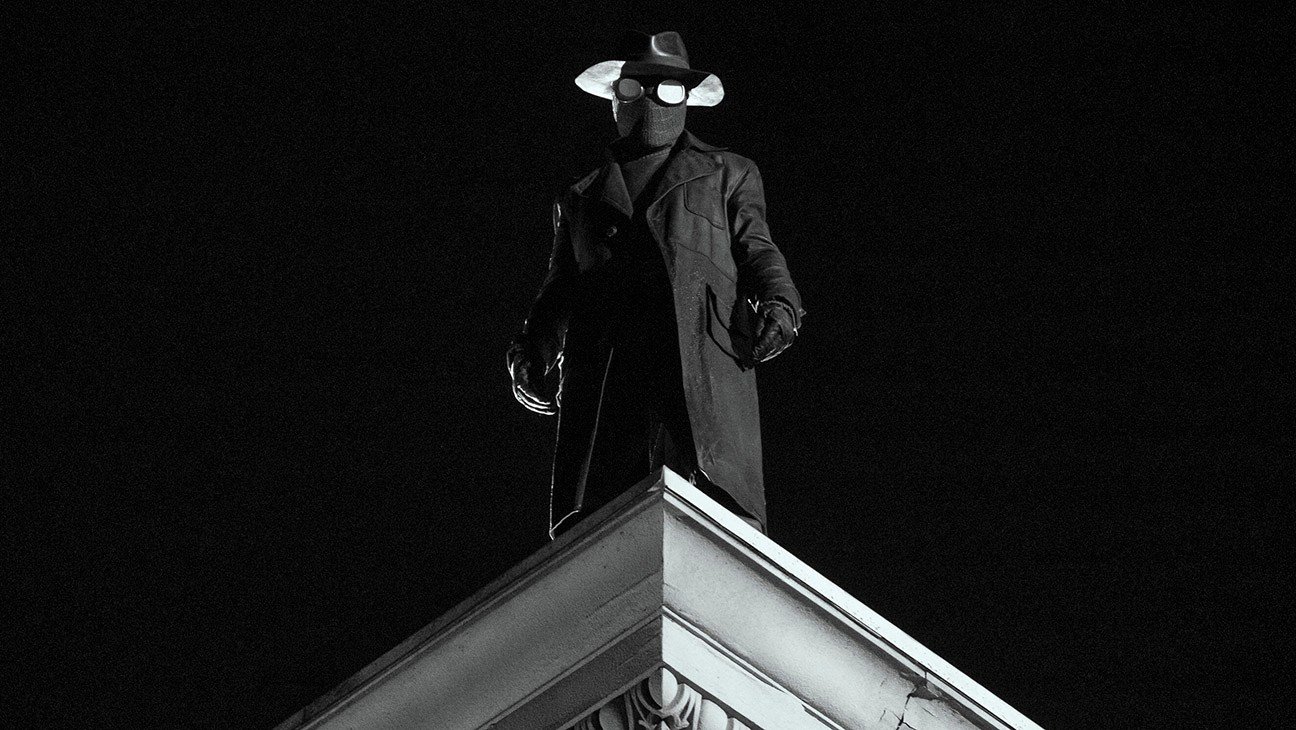
    The popular Spiderman meme showing three identical superheroes pointing fingers at each other is having its crypto moment today.

    Kelp DAO is set to push back on LayerZero’s post-mortem of Sunday’s $290 million exploit, which essentially blames Kelp, a L2 source familiar with the matter told CoinDesk. Kelp plans to dispute the cross-chain messaging firm’s claim that it ignored repeated warnings to move away from a single-verifier setup. CoinDesk has reviewed and verified the memo Kelp plans to publish.

    Kelp is a liquid restaking protocol that takes user-deposited ether, routes it through a yield-generating system called EigenLayer, and issues a receipt token, rsETH, in exchange.

    LayerZero is the cross-chain messaging infrastructure that moves rsETH between blockchains, using entities called DVNs (decentralized verifier networks) to verify whether a cross-chain transfer is valid.

    On Saturday, attackers drained 116,500 rsETH, worth about $290 million, from Kelp’s LayerZero-powered bridge by poisoning the servers that LayerZero’s verifier relied on to check transactions.

    Kelp, the source said, is planning on saying the DVN that was compromised via what it calls a “sophisticated state-sponsored attack” was LayerZero’s own infrastructure, not a third-party verifier.

    Attackers compromised two of LayerZero’s own servers that check whether cross-chain transactions are legitimate, then flooded the backup servers with junk traffic to force LayerZero’s verifier onto the compromised ones.

    All of that infrastructure was built and run by LayerZero, not Kelp, the sourceclaimed.

    The source contested LayerZero’s framing of the “1/1 configuration” as a fringe choice made against guidance. LayerZero’s post-mortem said KelpDAO chose a 1-of-1 DVN setup despite expressing recommendations to configure multi-DVN redundancy.

    A “1/1 configuration” means only a single validator must sign off on a cross-chain message for the bridge to act on it, leaving the system with no second check to catch a compromised or forged instruction. A multi-validator configuration (such as 2/3, 3/5, etc.) ensures there is no single point of failure that can approve a forged message on its own.

    They added that, through a direct communications channel with LayerZero, which has been open since July 2024, they produced no specific recommendation for Kelp to change the rsETH DVN configuration.

    LayerZero’s own quickstart guide and default GitHub configuration point to a 1/1 DVN setup, the source told CoinDesk, adding 40% of protocols on LayerZero are currently using the same configuration.

    The configuration Kelp ran also appears in LayerZero’s own V2 OApp Quickstart, where the sample layerzero.config.ts wires every pathway with one required DVN and no optional DVNs. That’s the same 1/1 structure.

    Kelp’s core restaking contracts were not touched, and the exploit was isolated to the bridge layer, they added. Its emergency pause, 46 minutes after the drain, blocked two follow-up attempts that would have released an additional ~$200 million in rsETH.

    CoinDesk reached out to LayerZero for comment on the story and didn’t hear back by the time of publication.

    ‘Deflecting responsibility’

    Security researchers are also not buying LayerZero’s isolated framing, which pinned the blame on Kelp.

    Kelp is a liquid restaking protocol. Its core competency is staking infrastructure, EigenLayer integration, and liquid staking token management. When integrating with LayerZero, Kelp relied on LayerZero’s documentation, their defaults, and their team’s guidance to make configuration decisions, the source claimed.

    Yearn Finance core team developer Artem K, who is popularly known as @banteg on X, posted a technical review of LayerZero’s public deployment code and said that the reference setup ships with single-source verification defaults across every major chain, including Ethereum, BSC, Polygon, Arbitrum and Optimism.

    That deployment also leaves a public endpoint exposed that leaks the list of configured servers to anyone who queries it.

    Banteg flagged in his analysis that he can’t prove which configuration Kelp used, but noted that LayerZero usually asks new operators to use its default setup, which its post-mortem criticized.

    Chainlink community manager Zach Rynes put it bluntly on X, alleging that LayerZero was “deflecting responsibility” for its own compromised infrastructure and accused the company of throwing Kelp under the bus for trusting a setup LayerZero itself supported.

    As such, LayerZero has said it will no longer sign messages for any application running a single-verifier setup, forcing a protocol-wide migration.

    Read more: ‘DeFi is dead’: crypto community scrambles after this year’s biggest hack exposes contagion risk

  • Binance says platform, funds safe after Vercel supply chain breach

    Binance says platform, funds safe after Vercel supply chain breach

    Binance says users and funds are safe after Vercel’s $2m data breach, spotlighting how a single SaaS compromise can ripple across Web3 front ends.

    Vercel, a widely used cloud hosting and front‑end deployment platform in the crypto ecosystem, disclosed a “limited” security incident after attackers gained unauthorized access to some internal systems and began offering alleged internal data for sale for $2 million. According to incident summaries, the dataset advertised on underground forums purportedly includes internal databases, access keys, source code, employee accounts, API keys, NPM tokens, and GitHub tokens, with hackers claiming it could be used for “global supply chain attacks.”

    Vercel said services remain operational and that only “a limited subset” of customers appears affected, but it has urged teams to rotate secrets and is working with law enforcement and external incident response specialists. The company traced the intrusion to a compromised Google Workspace OAuth application belonging to a third‑party AI tool, turning what began as an upstream SaaS breach into a downstream infrastructure problem for any project depending on Vercel.

    Binance, which relies on Vercel for some front‑end components, moved quickly to calm users’ nerves as details of the breach circulated through the market. According to Binance’s security update, the exchange’s “platform and user assets were not impacted” by the Vercel incident, and its security team launched an emergency response to assess potential exposure across “all Binance front‑end products.” The exchange said it contacted Vercel directly to validate the scope of the breach and completed an internal risk assessment while continuing to monitor for any signs of compromise.

    Vercel chief executive Guillermo Rauch emphasized that the firm had “analyzed our supply chain” and that core open‑source projects such as Next.js and Turbopack remain safe for developers, even as investigations into the internal systems breach continue. Nonetheless, with Vercel sitting behind front ends for many DeFi protocols, exchanges and Web3 infrastructure providers, security researchers warn the episode is likely to trigger a wave of secret rotations, credential audits and deployment reviews across the sector as teams reassess how much trust they place in shared hosting providers.

    With attackers explicitly marketing Vercel’s alleged internal data as a springboard for supply‑chain attacks, the incident highlights how a single compromised SaaS integration can ripple across dozens of crypto projects at once. For now, no major blockchain platforms have publicly confirmed direct impact, but exchanges and protocol teams are being pushed into a live‑fire test of their own incident‑response playbooks and assumptions about third‑party risk.

  • Trespassing rattlesnake makes late night visit to Texas bedroom

    Trespassing rattlesnake makes late night visit to Texas bedroom

    Odd News // 3 weeks ago

    Circus performer pulls 2,184-pound carriage with his nipples

    March 24 (UPI) — A Finnish man used his body piercings to break the Guinness World Record for the heaviest vehicle pulled by the nipples — 2,184 pounds.

  • Vatican to Host Private Screening of Scorsese-Produced Pope Documentary ‘Aldeas’

    Vatican to Host Private Screening of Scorsese-Produced Pope Documentary ‘Aldeas’

    Martin Scorsese, it’s fair to say, is team Pope.

    The Vatican on Monday announced it would be hosting a private screening of the Scorsese-produced documentary Aldeas, The Final Dream of Pope Francis, in Rome on April 21, to mark the one-year anniversary of Francis’ death.

    Aldeas is the community cinema project run by Pope Francis’ global educational movement Scholas Occurrentes which holds workshops around the world to help local communities create scripted short films celebrating “their unique identities, histories, and values.” The documentary follows the cinema initiative across Italy, Indonesia, and The Gambia, and includes a visit by Scorsese to his grandfather’s village in Sicily, where he works with local young people to make a film of their own. It includes Pope Francis’s last in-depth on-camera interview shortly before his death and several behind-the-scenes conversations between the Pope and the Oscar-winning director.

    “This film is a tribute to the Holy Father,” said Scorsese in a statement. “It honors his memory by embodying the spirit of his ministry and his dream of creating an ever more human culture. At this moment in history, I believe that is not only a dream, but a necessity.”

    The Vatican will hold a private screening of the film on Tuesday, April 21, a year after Pope Francis’ death, just steps from where he lived and died.

    On Monday, the Vatican unveiled several first-look images from the film (see below).

    The new film lands amid a weeks-long dispute between the current pontiff, Pope Leo XIV, and U.S. President Donald Trump over the U.S.-Israel war against Iran. After Leo called Trump’s threat that a “whole civilization will die” to be “truly unacceptable,” POTUS lashed out, posting on Truth Social that the first U.S.-born Pope was “WEAK on Crime, and terrible for Foreign Policy.” Trump also posted an AI-generated image of himself as a Jesus-like figure, which he later removed amid a backlash from American Christians.

    On the new episode of Last Week Tonight on Sunday, host John Oliver mocked Trump for taking on the leader of the Catholic Church, saying the President was “on a epic run of picking losing fights.”

    Vice President JD Vance, a Catholic convert, also weighed in, suggesting the Pope should be “careful when he talks about matters of theology.

    Over the weekend, the Pope, currently on a tour of Africa, said it was “not in my interest at all” to debate Trump about the Iran war, but that he would continue preaching the Gospel message of peace.

    Clare Tavernor and Johnny Shipley directed Aldeas, The Final Dream of Pope Francis, which was produced by Aldeas Scholas Films in association with Sikelia Productions and Massive Owl Productions. LBI Entertainment and Double Agent are handling sales of the film, with all proceeds to be reinvested in the Aldeas initiative.

    Aldeas, The Final Dream of Pope Francis.

    Aldeas Scholas Films

    Aldeas The Final Dream of Pope Francis.

    Aldeas Scholas Films

  • Cloud over US-Iran talks: What are the key sticking points?

    Cloud over US-Iran talks: What are the key sticking points?

    United States President Donald Trump has claimed a second round of negotiations with Iran will take place in Pakistan on Tuesday as mediators try to revive negotiations before the end of an ongoing yet fragile two-week ceasefire.

    The announcement on Sunday came alongside a sharp escalation in rhetoric. Trump warned that Iran must agree to a deal “one way or another – the nice way or the hard way” and threatened to target key infrastructure if negotiations fail. He also renewed his threat of striking “bridges and power plants”, which experts said could amount to war crimes under international law.

    Recommended Stories

    list of 3 itemsend of list

    Iran, however, has so far denied it will participate in the talks, accusing the US of “armed piracy” after US forces struck and seized an Iran-linked tanker on Sunday, further heightening tensions between the longtime adversaries.

    What has the US said?

    On Sunday, Trump announced that US negotiators would travel to the Pakistani capital, Islamabad, on Monday for talks aimed at ending the US-Israel war on Iran.

    In a social media post, the president did not say which officials would be sent to the talks. Last weekend’s first round of talks, at which Vice President JD Vance led the US delegation, ended without a deal.

    Trump accused Iran of violating their two-week ceasefire, which is due to expire on Wednesday, by opening fire on Saturday in the Strait of Hormuz. The US president threatened to destroy civilian infrastructure in Iran if it doesn’t accept the terms of the deal being offered by the US.

    “We’re offering a very fair and reasonable deal, and I hope they take it because, if they don’t, the United States is going to knock out every single power plant, and every single bridge, in Iran,” Trump wrote on his Truth Social platform.

    In a further escalation, Trump said an Iranian-flagged ship called the Touska was “stopped” by US forces in the Gulf of Oman “by blowing a hole in the engine room”. He said it was trying to get past the US naval blockade of Iranian ports.

    US forces boarded the ship and took physical control of the vessel.

    How has Iran responded?

    Iran’s Khatam al-Anbiya military headquarters confirmed the US attack on the Iranian-flagged tanker and said it would “respond soon”.

    Then, Iran’s Tasnim News Agency reported that Iranian forces had sent drones in the direction of US military ships.

    Ebrahim Azizi, the head of the Iranian parliament’s National Security Committee, told Al Jazeera that Iran’s actions during talks with the US are strictly guided by national interests and security.

    When asked if Tehran intends to participate in the talks in Islamabad, he said, “Iran acts based on national interests.”

    “We see the current negotiations as a continuation of the battlefield, and we see nothing other than the battlefield in this,” he said. “If it yields achievements that sustain those of the battlefield, then the negotiation arena is also an opportunity for us … but not if the Americans intend to turn this into a field of excessive demands based on their bullying approach.”

    What are the key points of friction now?

    Since the start of the war on February 28, a number of new sticking points have emerged – alongside old challenges:

    Strait of Hormuz

    A central dispute is over the Strait of Hormuz, a critical global shipping route linking the Gulf to the Arabian Sea. One-fifth of the world’s oil and liquefied natural gas (LNG) supplies were shipped through the strait before the war began.

    Iran insists on sovereignty over the waterway, which lies within the territorial waters of Iran and Oman and does not fall into international waters, and stated that only “nonhostile” ships could pass. It has also floated the idea of levying tolls while Washington demands full freedom of navigation.

    After the war began, Iran in effect closed the strait by forbidding transits, attacking ships and reportedly laying sea mines. Shipping traffic has since dropped by 95 percent.

    A week ago, the US implemented a blockade of its own. Its Navy has been blocking Iranian ports to pressure Tehran to reopen the vital waterway, adding another obstacle to the talks.

    According to Rob Geist Pinfold, a lecturer in international security at King’s College London, Trump’s stance on the strait has shifted during the conflict and remains unclear.

    “We’ve had Trump say that he would be open to jointly controlling the Strait of Hormuz with Iran, where both sides collect a toll for shipping,” Geist Pinfold noted, calling this “completely different to the demands of the US on paper but also the demands of the US’s regional allies like the Gulf states and Israel, … who would regard any deal that entrenches Iranian control of the Strait of Hormuz … as a stab in the back”.

    “This isn’t just between the US and Iran. It’s about the US having to keep its regional allies on side,” Geist Pinfold told Al Jazeera.

    INTERACTIVE - Alternative route throughthe Strait of Hormuz - APRIL 14, 2026-1776162674

    Enriched uranium

    Another core issue is Iran’s nuclear programme, particularly its stock of enriched uranium.

    The US and Israel are pushing for zero uranium enrichment and have accused Iran of working towards building a nuclear weapon while providing no evidence for their claims.

    Iran has insisted its enrichment effort is for civilian purposes only. It is a signatory to the 1970 Treaty on the Non-Proliferation of Nuclear Weapons (NPT).

    In 2015, the US was a signatory to the Joint Comprehensive Plan of Action (JCPOA) under then-US President Barack Obama. In that agreement, Iran pledged to limit its uranium enrichment to 3.67 per cent, which is substantially below weapons grade, and to comply with inspections by the International Atomic Energy Agency (IAEA) to insure it wasn’t developing nuclear weapons. In return, international sanctions on Iran were lifted.

    However, in 2018, during his first term, Trump withdrew the US from the JCPOA despite the IAEA saying Iran had complied with the agreement up to that point.

    In March 2025, Tulsi Gabbard, the US director of national intelligence, testified to Congress that the US “continues to assess that Iran is not building a nuclear weapon”.

    A month later, the IAEA estimated that Iran had 440kg (970lb) of 60-percent enriched uranium. While that is also below weapons grade, it is a short jump to achieve the 90-percent purity needed for atomic weapons production.

    On Sunday, in strongly worded comments, Iranian President Masoud Pezeshkian said Trump had no justification to ⁠⁠”deprive” Iran of its nuclear ⁠⁠rights.

    Maryam Jamshidi, a law professor at the University of Colorado in Boulder, said Iran’s position on enrichment is based on Article IV of the NPT, “which recognises that all state parties [to the treaty] have the inalienable right to research, develop and use nuclear energy for peaceful purposes”.

    “In demanding that Iran have no enrichment, the United States is denying Iran its rights under this treaty,” she told Al Jazeera.

    “In insisting that its right to enrichment be preserved, Iran is expressing a reasonable desire to be treated the same as any other state under international law.”

    Lebanon

    Two days after the first US-Israeli strikes on Tehran on February 28, in which Supreme Leader Ali Khamanei was killed, the Iran-backed Hezbollah group in Lebanon began firing rockets and drones into northern Israel, and Israel struck back, launching an invasion into southern Lebanon.

    Iran is adamant that its ceasefire with the US extends to Lebanon and is demanding Israel end its offensive against its ally Hezbollah and its invasion of Lebanon.

    After initially denying the two-week ceasefire included Lebanon, Israel accepted a 10-day truce starting on Thursday night after direct Israel-Lebanon talks. However, that ceasefire is also teetering on collapse amid renewed hostilities.

    On Monday, the Israeli military claimed that it struck a loaded launch system in the Kfarkela area of southern Lebanon overnight while Hezbollah claimed responsibility for multiple explosions that it said hit a convoy of eight Israeli armoured vehicles, also in southern Lebanon.

    Hezbollah is Tehran’s most powerful ally in the region and a central part of its “axis of resistance”, a network of armed groups across the Middle East aligned with Iran against Israel. The network also includes Yemen’s Houthis and a collection of armed groups in Iraq.

    Which of the US demands have changed during the conflict?

    Ballistic missiles

    Before the US-Israeli war on Iran, Tehran had always insisted negotiations be exclusively focused on Iran’s nuclear programme.

    US demands, however, have extended beyond the nuclear file. Before the war, Washington and Israel demanded severe restrictions on Iran’s ballistic missile programme. Iran has said its ability to maintain its missile capabilities is non-negotiable.

    On February 25, US Secretary of State Marco Rubio warned that Iran’s refusal to discuss its missile programme was a “big problem”.

    Yet, since the two-week ceasefire was announced on April 8 and the Pakistan-brokered negotiations began, the US has not made any mention of Iran’s ballistic missiles, which have been a major feature in Iran’s retaliation against US and Israeli forces.

    A change in Iran’s government

    The US and Israel have also made no secret of their desire for a change in Iran’s government. Asked two weeks before the war began if he wished for a toppling of the government in Tehran, Trump said: “Seems like that would be the best thing that could happen.”

    After the killing of Khamenei and multiple other senior Iranian leaders, Trump claimed the US-Israel war had in effect brought about “regime change”, claiming key leadership layers were “decimated”.

    Experts, however, disputed Trump’s assertions, saying the government was very much intact, if not stronger.

    Salar Mohandesi, a professor at Bowdoin College in Maine, argued that despite US claims, what is happening in Iran does not meet any serious definition of “regime change”.

    “The fundamental structures of the Islamic Republic are intact, and the new leaders are regime loyalists who are arguably more hardline than their assassinated predecessors,” he told Al Jazeera.

    Mohandesi said the war has arguably strengthened the Islamic Revolutionary Guard Corps (IRGC), something that is an “acceleration of an existing” trend and does not necessarily amount to regime change, “certainly not in the way Trump means it”.

    “Trump’s declaration that he has succeeded in ‘regime change’ is just a rhetorical move to try to claim victory where none exists,” he added.

    Ending support for proxy groups

    Three days before the war began during his State of the Union address to the US Congress, Trump accused Iran and “its murderous proxies” of spreading “nothing but terrorism and death and hate”.

    The US and Israel have long demanded Iran stop supporting its nonstate allies – primarily Hezbollah in Lebanon, the Houthis in Yemen and a number of groups in Iraq.

    Tehran to date has refused to enter into any dialogue about limiting its support for these armed groups.

    But on Friday, Trump claimed Iran had agreed to almost all of the US demands, including support for its proxies.

    A statement by Iran’s Ministry of Foreign Affairs rejected that any such agreement was in place, saying: “The Americans talk excessively and create noise around the situation. Do not be misled!”

    Can the divide be bridged?

    On Sunday, Iran’s top negotiator and speaker of its parliament, Mohammad Bagher Ghalibaf, acknowledged that while “conclusions” had been reached on some issues, “we are far from a final agreement.”

    Analyst Geist Pinfold told Al Jazeera that deep divisions between the US and Iran make a comprehensive deal unlikely in the near term despite some openings created by Trump’s shifting positions.

    “The primary complication that would mean a deal is less likely but also one of the potential curveballs that would make a deal more likely is the Trump administration’s equivocations regarding what its red lines actually are,” he said.

    “At the moment, the gaps look insurmountable,” Geist Pinfold added, noting that “the best-case scenario would be the extension of the ceasefire rather than the actual deal.”

    The US-Iran talks face major structural obstacles despite growing speculation about a negotiated end to the current crisis, according to Bowdoin College’s Mohandesi.

    “Donald Trump feels that he needs to somehow convert this disastrous defeat into some sort of win,” he noted, adding: “It’s unclear what that would look like at the negotiating table.”

    On the Iranian side, Mohandesi sees little room for compromise on the core strategic issues. “Iran will absolutely not abandon its missile programme. It will not stop supporting its allies in the region, and it will almost certainly not agree to zero enrichment,” he said.

    The academic questioned whether even a restoration of maritime traffic would constitute meaningful success for Washington. Even if Trump “were to somehow convince Iran to return the Strait of Hormuz to the pre-war status quo, it’s unclear how that would be a major win since the strait was open before he started the war”, Mohandesi said.