Blog

  • Referee Ben Taylor injured, replaced by alternate during SoFi Play-In Tournament game

    Referee Ben Taylor injured, replaced by alternate during SoFi Play-In Tournament game

    Referee Ben Taylor left Wednesday’s game between the Clippers and Warriors early due to injury.

    INGLEWOOD, Calif. (AP) — Referee Ben Taylor left the play-in tournament game between the Golden State Warriors and the Los Angeles Clippers with an injury on Wednesday night.

    Taylor walked stiffly off the court and went up the tunnel behind one basket at Intuit Dome with 8:51 left in the third quarter. He was replaced by alternate referee Sean Corbin after a brief delay.

    The NBA sends a fourth alternate referee to every postseason game for exactly such a situation.

    Taylor is an 11-year NBA veteran referee, while Corbin is in his 31st season on the job.

    The ninth-seeded Clippers led the 10th-seeded Warriors 61-53 at halftime of the elimination game.

  • Stephen Curry, Al Horford lead Warriors in epic comeback to win SoFi Play-In Tournament game

    Stephen Curry, Al Horford lead Warriors in epic comeback to win SoFi Play-In Tournament game

    Stephen Curry scores 27 second-half points to lead the Warriors to a comeback win over the Clippers.

    INGLEWOOD, Calif. (AP) — Stephen Curry scored 27 of his 35 points in the second half, Al Horford hit four 3-pointers during Golden State’s electrifying fourth-quarter comeback, and the Warriors advanced in the NBA’s play-in tournament with a 126-121 victory over the Los Angeles Clippers on Wednesday night.

    Curry’s seventh 3-pointer broke a tie with 50.4 seconds to play for the 10th-seeded Warriors, who erased a 13-point deficit in the fourth quarter.

    Golden State finished on a 16-6 run and held Kawhi Leonard scoreless in the fourth until the final 16 seconds.

    After this time-defying rally, Curry, Draymond Green and the postseason-tested Warriors are one game from another playoff berth despite going 37-45 in the regular season and losing Jimmy Butler for the season in January.

    The Warriors will travel to face Phoenix on Friday, with the winner moving on to face defending champion Oklahoma City in the first round.

    Leonard scored 21 points for the Clippers, who missed the playoffs for the first time since 2022 and only the third time during their streak of 15 consecutive winning seasons. Bennedict Mathurin led Los Angeles with 23 points and Darius Garland had 21 points and eight assists while battling foul trouble.

  • ‘The Price of the Sun’ Director on What He Did to Give Viewers the Impression of “Being in the Desert With Nomads” Affected by Our Energy Consumption

    ‘The Price of the Sun’ Director on What He Did to Give Viewers the Impression of “Being in the Desert With Nomads” Affected by Our Energy Consumption

    It’s complicated! The world’s largest solar power plant is being built in Morocco, with the aim of turning arid land into a “green energy source.” So far, so good, you say? But wait, there’s a catch! After all, barriers go up, and access to water becomes difficult. And members of the local Berber tribe, the indigenous Nomad population, are given no choice but to work for the power plant.

    In The Price of the Sun (Du soleil et du plomb), Belgian director Jérôme le Maire (Burning Out, Tea or Electricity) zooms in on the ambiguities and hidden costs of progress and “the resilience and adaptability of a community forced to reinvent itself in the shadow of the renewable energy revolution.” The film world premieres on Saturday, April 18 in the international feature film competition program of the 57th edition of the Visions du Réel documentary festival in Nyon, Switzerland.

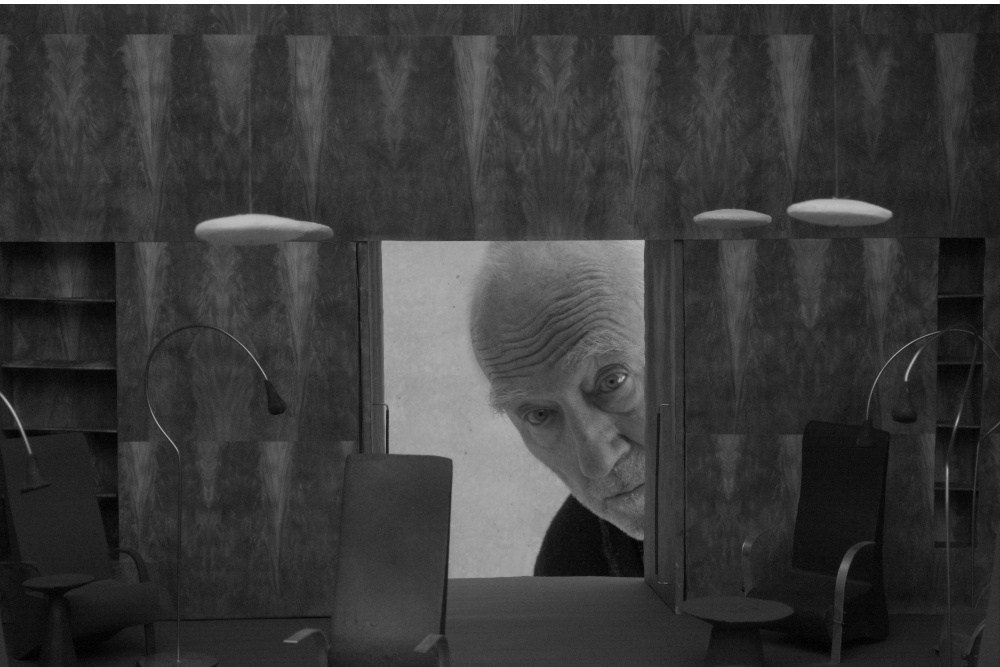
    With cinematography from Olivier Boonjing and le Maire and editing by Matyas Veress, The Price of the Sun shows us how the nomads’ traditions exist in quiet conflict with the drive to supply renewable solar and wind energy to the world. “Ironically, the fight for resource control to connect the world may ultimately destroy a society that, by definition, shares resources and is obliged to be connected,” highlight the press notes for the doc. “Can there be enough sun and wind for everyone, or is the price too high?”

    Or as le Maire mentions in a director’s statement: “I strove to achieve precise and intimate observation of these nomads and the values they cultivate, up until the moment they are confronted with the arrival of an unavoidable event that will lead them toward an unexpected future.”

    ‘The Price of the Sun,’ courtesy of Jérôme le Maire

    Ahead of the world premiere of the film, le Maire shared with THR how The Price of the Sun came about, his focus on the potential cultural ambiguities of renewable energy, and what’s next for him.

    How long did you work on this film, and how did you get access to the Berber tribe and the power plant workers? There must have been so much trust!

    In short : The shoot consisted of 12 two-week stays spread across six years (January 2019 to September 2025), totaling approximately 168 shooting days. But location research began in 2017 with a year-long investigation around the Noor Ouarzazate power plant, followed by four two-week stays in 2018 – getting to know the Ait Merghrad community and exploring the region around the future Midelt plant site.  So the film was in production for approximately eight years, from initial scouting in 2017 through the final shoot in September 2025. 

    The secret to making this kind of film is to take your time. To take the time to introduce yourself. Who am I, and what am I doing in this region? What can I do for you? Before I say what I want to film, I listen to what these people have to say, where their words come from. And in doing so, I discover myself, too, gradually.

    The first time I went to this desert to scout locations, I was with my wife. She just adores these regions of southern Morocco. Another time, I was with my daughter. To gain someone’s trust, you have to offer an exchange. I’ll show you who I am, and you show me who you are.
     
    And then we talked about the power station. The tribe had its opinion. I had mine. We discussed at length what was unfolding before us. We were trying to make sense of it all. We were trying to understand one another. On one side, you have those who need energy, and on the other, those who will produce it, or enable its production.

    The nomads quickly realized that what interested me was less the power station itself than the ecosystem in which it was to be built. As a result, they became part of the story. It is rare for them that an “outsider,” someone who is not one of them, takes an interest in their lives. They were touched by my proposal to make a film about them, amidst the turmoil that was looming.

    I also built a relationship of trust with the plant’s management. Here, it is first and foremost an institution. I know how this sort of organization operates, and in such cases, you must first prove your credentials. You have to show who you know, what your credentials are. So, I show the films I’ve made and the success they’ve had. Then, I use the connections I have in high places. But in the end, it’s always the same: you find yourself face to face with a human being, and at that point, you have to be yourself and clearly show who you are. Face to face, I don’t put on an act. I connect with the person and speak to them very sincerely. In high society, people aren’t really used to that sort of frankness, so it works very well.

    For this film, I had the opportunity to meet Morocco’s Minister for Energy Transition, and we hit it off immediately. I introduced myself very simply, being completely myself. I didn’t really follow protocol; I focused on frankness and spontaneity. During the meeting, she and I came up with a plan where she would come to the site to meet the nomads I’d been telling her about in person. Unfortunately, it didn’t happen. It’s a shame, as they were looking forward to welcoming her. But the most important thing for me was to speak directly to the minister about these ordinary people. She knows they exist and that she’s welcome in their homes!

    ‘The Price of the Sun,’ courtesy of Jérôme le Maire

    How would you describe your approach to doc-making in general? Do you always look for an observational/vérité approach and why?

    All my films are made in the cinéma vérité style, which we also call “direct cinema” here. Personally, I really enjoy immersing myself in worlds that are very different from those I know. I act as if I were a resident of a remote mountain village, as in Tea or Electricity, or as a member of an operating theater team, as in Burning Out. I become part of the community, whether or not I appear as a character in the film. I chart the path myself, and I invite the audience to follow it. And I film in such a way that it creates this impression. The impression of being there yourself in the desert with the nomads.

    The audience loves this kind of documentary because a story is told to them and, just like in fiction films, they are allowed to navigate the narrative. They are free to form a bond with a particular character and to think whatever they like about what is happening. There is no voice-over to explain, inform or dictate a particular way of thinking. In cinéma vérité/cinéma du réel, viewers are fully immersed in a world; they experience emotions, and they interact internally with the characters and with what happens to them.

    This kind of cinematic experience can leave a deep impression on us. What matters to me, as a director, is to connect the audience intimately with people who are experiencing very different things thousands of miles away. To ensure that those who watch my film can, for a moment, put themselves in the other person’s shoes – and thus, perhaps, shift their perspective away from the dominant narrative.

    You show us all sorts of ambiguities, such as the benefits of building renewable energy plants, but also the downside of cultural imposition on a native tribe. How did you approach how to balance the good and the bad, and how did you think about taking sides or not?

    This has been a long journey for me, documenting how these energy projects have displaced nomadic people from their traditional lands, disrupted their way of life, and highlighted the broader implications of modern renewable energy development. The nomadic way of life emphasizes the importance of simplicity and respect for the environment. I want this film to question the philosophical dimension of this new “green energy,” described as “clean” and undeniably “sustainable.”

    I want to shine a spotlight on the vision and question the transaction [involved in it]. I hope audiences become more aware of the invisible people and businesses affected by their energy consumption, and that will urge them to reconsider their reliance on both electricity and technology.

    But what this film, in essence, shows is that clean energy does not exist. It is sold to us as such so that we consume ever more, without a twinge of conscience. Yet today, it has become absolutely vital to take energy-saving measures – both at an individual level and at a public level. We absolutely must consume less. It is the only lever that guarantees 100 percent positive effects for the planet and the common good.

    When you use artificial intelligence, when you charge your electric car or when you flick the light switch in your living room, there is someone at the other end of the power cable who will be affected by that consumption. It is not about guilt, but about awareness and responsibility!

    ‘The Price of the Sun,’ courtesy of Jérôme le Maire

    What was the hardest part of making this doc?

    Filming in the lead mines was difficult! These places are extremely dangerous, so filming there is a very delicate matter. We had to ensure there were no accidents. Yet accidents are common in these mines because the work is unsupervised. It involves just a few dozen poor people who have taken it upon themselves to work as miners. They have no equipment whatsoever. And whilst they know the place well, they have only a very limited understanding of the work involved. In fact, they can rely only on their courage and the solidarity between them. So that’s where I started.

    It’s this “set-up” that I had to fit into. The sound engineer didn’t feel comfortable going down with me. My daughter, who was the assistant director, didn’t want to go down either. So I went down alone, with the lads. These were intense moments because at that point, I was completely united with them. We helped each other; we each had a goal, but the path we were taking was the same.

    I’m very pleased with these scenes. You really feel that descent into the bowels of the earth. The imagery is flawless; the camera work was superb. What’s more, the story this part tells is truly incredible. As I filmed Aziz hammering away like a madman to extract lead from the rock, I thought of him – just a few months earlier, he was still a shepherd. I was really moved. I sincerely hope this film can help improve his situation!

    What are you working on next?

    I’m currently working on a very different project: I’d like to cross the High Atlas mountains in Morocco all alone, on foot, with a mule! So I’m preparing for this expedition, which is likely to take me several months. I need to recharge my batteries. To reflect on the meaning of life. To disconnect from this fast-paced, talkative world… and from this culture of overconsumption!

    I’m going to walk a thousand kilometers along this magnificent mountain range, dotted with little villages that seem to exist in another world, in another time. Perhaps I’ll take a camera with me and end up making a film…

  • ‘Beef’ Review: Prime Performances by Oscar Isaac and Carey Mulligan Make for a Juicy Season 2 of Netflix’s Smash

    ‘Beef’ Review: Prime Performances by Oscar Isaac and Carey Mulligan Make for a Juicy Season 2 of Netflix’s Smash

    The philosopher Biggie Smalls once pondered the nature of dangerously escalating rivalries.

    In a song of the same name, Biggie asked, “What’s beef?”

    Beef

    The Bottom Line

    A bold, well-acted, slightly over-extended follow-up.

    Airdate: Thursday, April 16 (Netflix)
    Cast: Oscar Isaac, Carey Mulligan, Charles Melton, Cailee Spaeny, Youn Yuh-jung
    Creator: Lee Sung Jin

    His answers included the straightforward “Beef is when you need two gats to go to sleep,” and the playful “Beef is when I see you, guaranteed to be in I-C-U.”

    Christopher Wallace passed away, likely a victim of a beef, long before the rise of the limited series, so Lee Sung Jin had the exploratory lane all to himself when he released the eight-episode bleak comedy Beef back in 2023. The series, about the unforeseen consequences erupting from a relatively minor instance of road rage, dominated the Emmys and eventually was picked up for a second season, transitioning from limited series to anthology and reframing Biggie’s question as: “What’s Beef?” Or, put a different way, what is the Beef brand? And could a second season, sans the extraordinary talents of Steven Yeun and Ali Wong, deliver a story and themes in keeping with that brand, without sullying what was so deviously tricky about the original series and its tone?

    The answer, for the most part, is “Yes.” The second season of Beef can’t reproduce the sneak-up-on-you brilliance of the first, but without many direct connections this eight-episode story feels very much of a piece.

    Once again, Jin has big ideas to play with and trenchant aspects of contemporary American culture to pick apart and, once again, he has assembled an exceptional cast in service of a story that begins tightly contained and spins wildly and intentionally out of control.

    It’s possible that Jin actually has too much on his mind this time around, layering the central conflict with generational, economic and cultural divides, alternatingly poking fun and staring in jaw-agape horror at the modern condition in ways that don’t always come together. But if the thing that keeps season two of Beef from equalling its predecessor is an excess of ambition, I have no beef with that.

    This time around, our featured characters — Beef doesn’t have traditional antagonists and protagonists, since its core concern is that niceties like situational ethics and morality are a fungible construct — are a pair of couples, separated in age by little over a decade but in status by a seemingly greater distance.

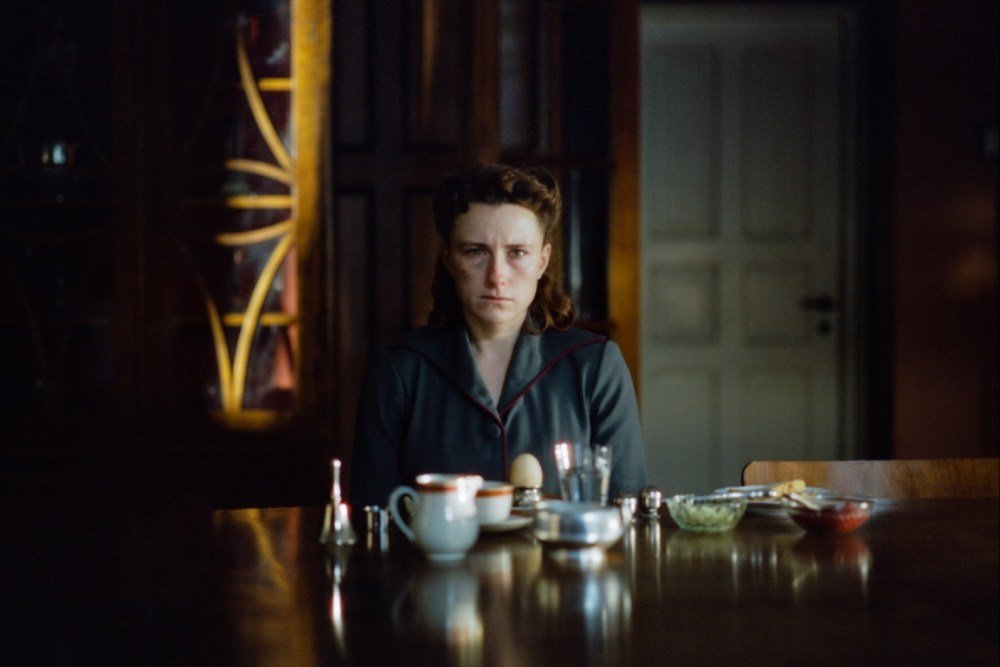
    Josh (Oscar Isaac) is the general manager at the Monte Vista Point Country Club near tony Montecito, north of Los Angeles. His job is to be accommodating to the club’s wealthy clientele, embodied by William Fichtner’s Troy, a wildly rich music industry mogul (or something to that effect). Josh is married to Lindsay (Carey Mulligan), an upper-crust Brit who has all the external status markers that Josh lacks, but perhaps not his obsequious gifts or ambition. They’ve been talking for years about starting an upscale bed-and-breakfast, without evident progress, one of several factors adding volatility to their marriage.

    At the other end of the volatility spectrum are newly engaged 20-somethings Austin (Charles Melton) and Ashley (Cailee Spaeny), two of Josh’s underlings at the club. Ashley is a beverage cart girl on the club’s golf course, while Austin works part-time as a trainer. Austin and Ashley don’t have much money, but they’re so deeply in love that they never fight.

    On the night of a fundraiser at the club, Josh forgets his wallet and Austin and Ashley are tasked with returning it, walking in at the end of a heated argument between Josh and Lindsay — a fight that reaches a violent climax that Ashley films on her phone. Ashley and Austin experience this blow-up out of context, and the video captures it with even less context. But the younger couple sees an opportunity for professional advancement, to score a win in a game they’re convinced is rigged against them.

    But in this clash of haves and have-nots, are Josh and Lindsay really among the privileged? Their position is made precarious by the arrival of Chairwoman Park (Youn Yuh-jung), Korean billionaire and the club’s new owner. Park puts new pressure on Josh in part because of the pressure she herself is feeling back in Seoul under circumstances related to her plastic surgeon husband (Song Kang-ho, wonderful if very underused).

    Soon, a cycle of blackmail, extortion and fraud ensues, borne of desperate grasping for power and a potentially fatal lack of empathy on all fronts. Meanwhile, the lines between exploiter and exploited, powerful and powerless, hero and villain blur in ways that are sometimes satirical, sometimes sad and occasionally thrilling.

    There’s a lot happening in the second season of Beef. Although the episode count has gone from 10 to eight, the length of episodes have expanded from under 40 minutes to as many as 54 minutes for the season two finale, which has a relatively epic scale but gets bogged down in at least three different monologues from characters telling viewers what the season was about.

    Though Beef isn’t exclusively a dark comedy, its comic beats thrive with a tighter pace and stricter focus. This best two episodes (directed by Jin and Kitao Sakurai) come midseason — a hilarious nightmare in a hospital emergency room and a differently hilarious nightmare of a search for a missing dachshund named Burberry — and they’re the two shortest episodes of the season, dedicated primarily to tracking just one of the couples on a single misadventure. One takes a scathing look at the absurdities of the American healthcare industry, while the other reinforces the season’s nature-out-of-balance themes. They’re both fast-moving and dazzlingly absurd.

    Those two standout episodes are also largely separated from the country club settling, which too often opens the door for slightly superficial jabs at the club’s vapid members. They’re a perfectly worthy target, but one that invites inevitable comparisons to The White Lotus (and allows for some very odd and very unexpected celebrity cameos that I won’t spoil here).

    It’s possible that Beef is actually parodying The White Lotus at times, especially with the younger couple, a high-school dropout and a former Arizona State football star — Gen Z strivers who know the buzzwords of capitalist critique (“It’s unfair. Globally. There’s gotta be a redistribution of the wealth,” Austin declares, apropos of nothing) without any substance to back it up. They simply see an opportunity to grab for the brass ring, ready to do whatever it takes to get what they believe they deserve, until they discover what “whatever it takes” means. Or maybe until they discover what Reddit tells them it means, because Beef is particularly harsh toward the online proxies for nourishing social relationships — uncaring cam girls, hollow DM flirtations and help forums that only make things worse.

    As was the case in the first season, Beef is a machine driven by unintended consequences, some violent, some scatological and all designed to crush the souls of characters who might not have souls to begin with.

    Even more than the first season, this round of Beef makes it difficult to root for anybody. I felt a real pendulum the first time around between Danny (Yeun) and Amy (Wong), each doing the wrong things for ostensibly justifiable reasons. Here, it’s a struggle between two flawed couples, easier to pity, if only because they don’t realize that there’s nothing the aristocracy wants more than for them to fight to the death rather than pay attention to who actually has the power.

    Performance-wise, I sided with the younger couple. I thought Riverdale veteran Melton’s May December performance was more tantalizing promise than talent confirmed, but there’s evidence of comic genius in how soulfully silly he makes Austin. Spaeny’s Ashley is half Lady Macbeth, half innocent child, fully oblivious to how her ambitions are changing her and changing a relationship that seems nourishing as long as it’s based on a shared appreciation of Hot Pockets. Going back to Priscilla, I admire how Spaeny uses the height disparity with her leading men as a source of both humor and sweetness.

    The show perhaps has sympathy for Ashley and Austin because they don’t know any better. Lindsay and Josh have been together long enough to realize their shared toxicity, but they’re giddy when their new rivals given them fresh targets for their simmering resentments. Mulligan delivers lacerating fragility, while Isaac turns Josh’s accommodating nature into a pathology, but both characters are littered with backstory details that Beef leaves hanging. It’s a plot point that these are both mixed-race couples that are rarely forced to confront their differences, but the show does better with Austin’s confrontation of his Korean roots than with Josh’s Cuban background.

    Youn, whose presence reminds me that I’m still mad about Apple’s treatment of Pachinko, projects kindness with a glint of scheming malevolence, and I really wish the series had given us more of Youn and Song together. Several other characters on the Korean side of the story, which grows in importance as the finale approaches, could have used a little more depth — including Seoyeon Jang’s overqualified translator Eunice and rapper BM’s Woosh, a tennis instructor with aspirations of his own.

    As was the case in the first season as well, the finale escalates to a place of thrilling zaniness, with a little less ultimate emotional gravitas this time around. The concluding punch isn’t as potent, but the show left me with so much to think about and so many details to be amused by that I hope Lee Sung Jin has the opportunity to show us what else Beef can be.

  • Curry scores 35 as Warriors upset Clippers to extend playoff run

    Curry scores 35 as Warriors upset Clippers to extend playoff run

    Stephen Curry’s Golden State Warriors keep their NBA playoff hopes alive, eliminating LA Clippers from the play-in.Al Horford connected on four 3-pointers ‌in the final 5:37 of a Western Conference play-in game, lifting the 10th-place Golden ⁠State Warriors to ⁠a 126-121 win over the ninth-place Los Angeles Clippers on Wednesday in Inglewood, California.

    Golden State advances to a sudden-death matchup against the Suns in Phoenix on Friday to ⁠determine the West’s No 8 seed and the Oklahoma City Thunder’s first-round playoff opponent. The loss ends the Clippers’ season.

    Recommended Stories

    list of 4 itemsend of list

    Horford’s late-game hot streak was part of a game-ending, 27-13 Golden ⁠State run. Stephen Curry punctuated a 35-point night by burying a deep 3-pointer with 50.4 seconds remaining, putting the Warriors ahead to stay, 120-117. Curry’s seven makes on 12 attempts from beyond the arc paced the Warriors to a 19-of-41 long-range barrage (46.3 percent).

    Despite Curry’s contributions, it was Horford who stole the ‌show.

    The 39-year-old veteran had just two points off the bench before his late onslaught. He finished with 14 points, set up for his pivotal baskets off two assists from Gui Santos, sandwiched between a pair of assists from Curry.

    Santos played a key all-around role for the Warriors, finishing with 20 points, six rebounds and five assists. Golden State also got 20 points from Kristaps Porzingis, including six straight points over one ⁠stretch in the fourth quarter.

    Porzingis followed up converting a successful and-one ⁠opportunity with a 3-pointer, the sequence trimming a nine-point Clippers lead to three with 8:17 to go.

    Los Angeles answered when Darius Garland converted his own and-one, then Garland fed Brook Lopez for an interior bucket. Garland wrapped up his ⁠big stretch with a 3-pointer that pushed the Los Angeles’ lead back to nine with 6:37 left.

    That was the last point the Clippers ⁠appeared in control during a game that they led for most ⁠of the way.

    Garland and Kawhi Leonard, who each finished with 21 points, helped Los Angeles build an advantage of as many as 13 points. The Clippers couldn’t shake the Warriors in the second half, however, particularly as Leonard ‌went cold on offence.

    Leonard committed a pair of turnovers in the fourth quarter and scored his only points of the period on a dunk in the final seconds after Golden State had ‌essentially ‌wrapped up the win. Leonard scored 14 of his points in the first half, including going coast-to-coast for a slam just before halftime.

    Bennedict Mathurin led Los Angeles with 23 points off the bench.

    Stephen Curry in action.
    Curry #30 scored a game-high 35 points against the Clippers [Juan Ocampo/Getty Images via AFP]

    Maxey sends 76ers into playoffs

    Earlier, Tyrese Maxey scored 11 of his ‌team-high 31 points in the fourth quarter for the host ⁠Philadelphia 76ers, who ⁠advanced to the Eastern Conference playoffs by beating the Orlando Magic 109-97 in a play-in game.

    The 76ers, who finished in seventh place in ⁠the Eastern Conference with a 45-37 record, will be the seventh seed and will face the second-seeded Boston Celtics in a best-of-seven series starting on Sunday.

    The Magic, who ⁠were also 45-37 but lost the home-court tiebreaker to the 76ers via Philadelphia’s 2-1 record in the season series, will face the ninth-place Charlotte Hornets in a play-in game to determine the eighth seed on Friday. The Hornets edged the 10th-place Miami Heat 127-126 ‌in overtime on Tuesday.

    Starter VJ Edgecombe (19 points, 11 rebounds) and reserve Andre Drummond (14 points, 10 rebounds) each had a double-double for the 76ers, who are headed to the playoffs for the eighth time in nine years.

    Philadelphia’s Kelly Oubre Jr scored 19 points while Paul George added 16 points.

    Desmond Bane put up 34 points for the Magic, who are aiming for their third straight playoff appearance. ⁠Paolo Banchero had 18 points while Anthony Black collected 13 ⁠points off the bench. Franz Wagner added 12 points.

    Neither team led by more than six in the first half, which ended with the 76ers ahead 59-55. Bane and Banchero combined for the first ⁠five points of the third quarter before Edgecombe hit a 3-pointer to put Philadelphia ahead for good at 62-60 with 10:54 ⁠left, prompting a 14-2 run. The Magic ended ⁠the quarter on a 12-6 surge to close within 79-74.

    Bane’s 3-pointer pulled the Magic within 83-81 with 9:47 remaining, after which George missed a 3-point attempt. But Bane also missed a potential go-ahead 3-pointer with 9:16 left, ‌and Maxey answered with a layup to extend the 76ers’ lead to 85-81.

    Orlando pulled within one or two points twice more, but Edgecombe and Maxey responded with ‌jumpers ‌on those occasions. Maxey scored seven unanswered points to give the 76ers a 94-86 edge with 6:25 left. The hosts led by at least four the rest of the way.

    Tyrese Maxey in action.
    Philadelphia 76ers’ Tyrese Maxey scored a team-high 31 points and dished out six assists against the Orlando Magic in their 109-97 victory in a NBA play-in tournament game on April 15, 2026, in Philadelphia, US [Matt Slocum/AP]
  • US military kills three in new Eastern Pacific boat strike

    US military kills three in new Eastern Pacific boat strike

    The attack is the latest in a string of killings by the United States that rights groups say are ‘unlawful’.

    The United States military says it has attacked a new vessel in the Eastern Pacific, killing three people it accuses of “narco-trafficking”.

    The attack announced on Wednesday is the latest in dozens of such strikes carried out by the US military in recent months, a pattern rights groups have slammed as “extrajudicial killings”.

    Recommended Stories

    list of 3 itemsend of list

    US Southern Command said the latest vessel targeted was operated by unnamed “Designated Terrorist Organizations” who were “transiting along known narco-trafficking routes” in the region.

    It shared a video of an air strike appearing to tear into the vessel, which burst into flames.

    The US military said none of its forces was harmed in the operation.

    The attack comes a day after the US military said another of its strikes ⁠in the eastern Pacific killed four ⁠people, while a separate strike on Monday in the region had killed two.

    In total, US attacks on vessels accused of narco-trafficking have killed at least 178 people since September, when US President Donald Trump ordered the attacks to stop what the White House claims are Latin American cartels transporting drugs to the US.

    ‘US cannot summarily kill people’

    Experts and human rights advocates, both in the US and globally, have questioned the legality of the strikes, some of which they say have targeted civilian fishing boats.

    Human Rights Watch has ‌said the strikes amount to “unlawful extrajudicial killings”, while the American Civil Liberties Union has cast the assertions by ‌the ‌Trump administration against those it targets as “unsubstantiated, fear-mongering claims”.

    Legal experts have said that if some vessels were involved in drug trafficking, those on board should face the law, rather than deadly attacks.

    “US officials cannot summarily kill people they accuse of smuggling drugs,” said Sarah Yager, Washington director at Human Rights Watch.

    “The problem of narcotics entering the United States is not an armed conflict, and US officials cannot circumvent their human rights obligations by pretending otherwise.”

    Critics have also questioned the effectiveness of the US military operation in part because the fentanyl behind many fatal overdoses in the US, which Trump has used to justify his campaign, is typically trafficked to the US over land from Mexico, where it is produced with chemicals imported from China and India.

  • Oasis’ Comeback Outing Wins ‘Major Tour of the Year’ Prize at Pollstar Awards, as Kendrick Lamar/SZA, Benson Boone and the Weeknd Also Score Top Honors

    Oasis’ Comeback Outing Wins ‘Major Tour of the Year’ Prize at Pollstar Awards, as Kendrick Lamar/SZA, Benson Boone and the Weeknd Also Score Top Honors

    Oasis‘ 2025 reunion tour won the Major Tour of the Year award at the 2026 Pollstar Awards, held Wednesday night in Hollywood as the centerpiece event of the annual Pollstar Live! conference, hosted by the primary trade magazine focused on the live music business..

    Other top winners in genre-based categories included Metallica (for rock tour of the year), Kendrick Lamar/SZA (hip-hop tour of the year), the Weeknd (R&B tour of the year), Benson Boone (pop tour of the year), Bad Bunny (Latin tour of the year), Adam Sandler (comedy tour of the year), and Chris Stapleton and Lainey Wilson (who tied for country tour of the year).

    Olivia Dean continued her recent awards streak by winning in the category of support/special guest of the year, for her stint as opening act on Sabrina Carpenter’s “Short n’ Sweet Tour.” With a sold-out arena headlining tour commencing in May, it’s safe to say Dean will probably never be eligible for a repeat win in that category.

    Other artists who came out on top in the Pollstar voting included the Eagles, for residency of the year (at their recurring Sphere gig in Las Vegas), and Teddy Swims, as new headliner of the year.

    Many of the categories were set aside for venues or festivals. Austin City Limits and Ohana were named festivals of the year (in over 30,000 and under 30,000 attendance divisions, respectively). L.A. came out on top with the wins for nightclub of the year, the Troubadour, and outdoor venue of the year, the Hollywood Bowl. Las Vegas venues prevailed for arena of the year, which went to Sphere, and U.S. stadium of the year, a win for Allegiant Stadium. Nashville’s Pinnacle picked up the prize for new concert venue of the year.

    Among the awards going to individuals were the award for promoter of the year, which went to Live Nation’s Arthur Fogel, a bit of good news amid a tough day for that company, plus Barclay Center’s Laurie Jacoby as venue executive of the year, Red Light’s Coran Capshaw as personal manager of the year, Shore Fire’s Rebecca Shapiro as publicist of the year, CAA’s Allison McGregor as marketing executive of the year, and another CAA honoree, Darryl Eaton, as agent of the year. CAA scored an additional win as booking agency of the year.

    All of the awards are voted upon within the music industry except for one fan-voted honor that was added this year, in connection with a media sponsor — the first iHeartRadio Pollstar Fan Favorite Award for Live Performer of the Year, which went to country superstar Morgan Wallen.

    The 37th annual Pollstar Awards were hosted by iHeartRadio personality Valentine and held at the conference’s new location for 2026, the Loews Hollywood Hotel.

    A full list of winners follows:

    37th Annual Pollstar Awards Winners

    Major Tour of the Year:
    Oasis, “Oasis Live ’25 Tour”

    Rock Tour of the Year:
    Metallica, “M72 World Tour”

    Hip-Hop Tour of the Year:
    Kendrick Lamar/SZA, “Grand National Tour”

    R&B Tour of the Year:
    The Weeknd, “After Hours Til Dawn Stadium Tour”

    Pop Tour of the Year:
    Benson Boone, “American Heart World Tour”

    Country Tour of the Year:
    Chris Stapleton, “All-American Road Show” (TIE)
    Lainey Wilson, “Whirlwind World Tour” (TIE)

    Latin Tour of the Year:
    Bad Bunny, “Debí Tirar Más Fotos World Tour”

    Comedy Tour of the Year:
    Adam Sandler, “You’re My Best Friend Tour”

    Support/Special Guest of the Year:
    Olivia Dean, “Sabrina Carpenter: Short n’ Sweet Tour”

    Residency of the Year:
    Eagles, Sphere, Las Vegas, NV

    Family, Event or Non-Music Tour of the Year:
    Dancing With the Stars

    New Headliner of the Year:
    Teddy Swims

    Music Festival of The Year (Global; over 30K attendance):
    Austin City Limits Music Festival, Austin, TX

    Music Festival of The Year (Global; under 30K attendance):
    Ohana Festival, Dana Point, CA

    International Music Festival of The Year:
    Glastonbury Festival, Pilton, UK

    Nightclub of the Year:
    Troubadour, West Hollywood, CA

    Theatre of the Year:
    Radio City Music Hall, New York, NY

    Arena of the Year (U.S. Only):
    Sphere, Las Vegas, NV

    Arena of the Year (Outside the U.S.):
    The O2 – London, London, UK

    Red Rocks Award – Outdoor Concert Venue of the Year:
    Hollywood Bowl, Hollywood, CA

    Stadium of the Year (U.S. Only):
    Allegiant Stadium, Las Vegas, NV

    Stadium of the Year (Outside the U.S.):
    Wembley Stadium, London, UK

    Casino/Resort Venue of the Year:
    Mohegan Sun Arena, Uncasville, CT

    New Concert Venue of the Year:
    The Pinnacle, Nashville, TN

    Venue Executive of the Year:
    Laurie Jacoby, Barclays Center, Brooklyn, NY

    Talent Buyer of the Year:
    Del Williams, Danny Wimmer Presents

    Small Venue Talent Buyer of the Year (Under 10,000 Capacity):
    Joe Moallempour, Danny Wimmer Presents

    Bill Graham Award / Promoter of the Year:
    Arthur Fogel, Live Nation

    International Promoter of the Year:
    Erik Hoffman, Live Nation Canada

    Bobby Brooks Award – Agent of the Year:
    Darryl Eaton, Creative Artists Agency

    International Booking Agent of the Year:
    Emma Banks, Creative Artists Agency UK

    Booking Agency of the Year:
    Creative Artists Agency

    Independent Booking Agency of the Year (Global):
    Independent Artist Group (IAG)

    Rising Star Award:
    Gade Raftery, Live Nation

    Personal Manager of the Year:
    Coran Capshaw, Red Light Management

    Maxie Solters Award – Touring Publicist of the Year:
    Rebecca Shapiro, Shore Fire Media

    Marketing Executive of the Year:
    Allison McGregor, Creative Artists Agency

    Road Warrior of the Year:
    Chris Risner, Metallica

    Transportation Company of the Year:
    Upstaging

    Concert Visuals Company of the Year:
    4Wall Entertainment

    Concert Sound Company of the Year:
    L-Acoustics

    Tour Services Company of the Year:
    Master Tour

  • ‘Beef’ Is Overcrowded and Unfocused in an Unnecessary Season 2: TV Review

    ‘Beef’ Is Overcrowded and Unfocused in an Unnecessary Season 2: TV Review

    In transitioning from a standalone story to a multi-season anthology, all shows in the genre Ryan Murphy took mainstream with “American Horror Story” face the same existential question. If a series isn’t defined by a stable set of characters or locations, what does define it? For HBO’s “The White Lotus,” the answer is wealthy people trying and failing to outrun their problems at various outposts of a luxury hotel chain. For FX’s “Fargo,” it’s the battle between moral turpitude and folksy common decency across the American Midwest. 

    For Netflix’s “Beef,” the 2023 hit and Emmys darling that starred Ali Wong and Steven Yeun as enraged enemies, its core essence appears to be right there in the name. Wherever creator Lee Sung Jin took the concept next, a bitter rivalry would presumably be its driving force, just as Wong and Yeun’s searing anti-platonic chemistry powered Season 1 through some tonal bumps and big swings. And unlike “Feud,” the Murphy show with a confusingly similar name and concept, “Beef” could do so without the constricting tethers of a real-life inspiration. 

    Three years later, Season 2 seems to reintroduce itself along these established lines. The biggest difference, in line with all the attention and acclaim received by Season 1, is one of scale: rather than two individuals on a collision course across class and gender lines, we now have two couples. Josh (Oscar Isaac) and Lindsay (Carey Mulligan) are aging hipsters who’ve traded cool, creative careers in music and interior design for a cushy gig running a Montecito beach club — Josh as general manager, Lindsay as his de facto lieutenant. Austin (Charles Melton) and Ashley (Cailee Spaeny) are two low-level employees at the club who decide to blackmail the older couple into promotions when they catch the pair on video in a nasty, violent fight. The millennial-Gen Z generational divide, both sides fighting over scraps of a shrinking pie while still in smiling, obsequious service to aging boomers, is an enticing hook made more so by meta casting. Isaac and Mulligan are experienced film stars, while Melton and Spaeny are more recent breakouts. All four are executive producers. 

    But over eight episodes, “Beef” loses focus and overcrowds this already expanded premise. By the closing credits, Season 2 is no longer mainly about the acrimony between its antiheroes and what it brings out from within them. Which begs the question: even if a follow-up allows Lee to attract bigger names and film in far-flung locations (more on that shortly), was “Beef” ultimately worth turning into a franchise?

    Doubling the personalities would be a tall enough order in itself. Yet Season 2 soon reveals it’s not really the story of two couples, but three. The club has recently been acquired by a South Korean billionaire, Chairwoman Park (Oscar winner Youn Yuh-Jung of “Minari”), who’s less preoccupied with her new toy than the hand tremors threatening the livelihood of her much younger husband, plastic surgeon Dr. Kim (“Parasite” star Song Kang-ho, so rarely seen that the role is a glorified cameo). The new bosses’ high-class problems are always tertiary to the Josh-Lindsay-Ashley-Austin quadfecta and never stop feeling tacked-on, even when plot contrivances transport the entire ensemble to Seoul for the finale. But they’re just present enough to distract from the core conflict, transforming the season from a group character study into a corporate espionage thriller such that neither half feels fully fleshed-out.

    It’s a shame, because before they peter out, there are threads worth following. Lee has a gift for crafting characters who ride the edge between loathsome and pathetic; you feel just enough for these people to keep watching, and enjoying, their self-inflicted suffering. Josh and Lindsay’s carefree youth has curdled into a tangle of resentments over squandered money and lost potential, with their dachshund Burberry  — it’s a good joke! — the thin layer of glue keeping the sexless relationship together. Ashley and Austin are only 18 months into their courtship and newly engaged, but there are already cracks in their freshly laid foundation. A former college football player, Austin is struggling to reinvent himself as a personal trainer, while Ashley clings to the prospect of motherhood as a salve for her abandonment issues. (Her extortion of Josh is motivated by a need for health insurance to fund an ovarian cyst surgery.) Both seem more anxious about holding onto their first love than actually enamored with each other. 

    Just as Season 1 was a sociological cross section of Asian-American Los Angeles and its many subcultures, Season 2 gets specific with another corner of Southern California. Josh and Lindsay live in Ojai, the hippie mountain town turned increasingly yuppie enclave; Austin and Ashley are in more working-class Oxnard. None of them can actually afford to live near their jobs around Santa Barbara, a common trend with service workers employed in what’s increasingly a retirement community for well-heeled baby boomers. 

    But rather than dig into this dynamic, Season 2 represents the club’s clientele through a single VIP, Troy (William Fichtner), and his trophy wife Ava (Mikaela Hoover). Most of “Beef”’s satirical ire is instead reserved for those lower down the food chain: Josh’s unctuous sycophancy (Lindsay says he’s good at his job as an insult), Lindsay’s posh permafrost (she thinks Park deeming her aesthetic “colonial” is a compliment), and most uncomfortably, Austin and Ashley’s stupidity. (He thinks “misc.” on an invoice is a typo for “mist”; she makes sense of a 1 to 10 pain scale by reasoning it’s “like Letterboxd.”) 

    Given their youth and economic precarity, the show’s contempt for Austin and Ashley can tip into the mean-spirited, even if it’s not exclusive to them. Ashley complains that she worked “nine whole hours” at her new job, a “kids these days” stereotype that’s the most basic form of generational humor. Regardless, the performances are uniformly, and unsurprisingly, excellent. There are no great discoveries here, á la Young Mazino in Season 1 — just professionals demonstrating why their success is so justified. Melton, for example, follows up his revelatory turn in “May December” with another young man in a toxic relationship whose emotions are inscrutable to himself but painfully obvious to the viewer.

    In fact, this expanded version of “Beef” has so many centers of gravity that the whole enterprise starts feeling adrift. At the season’s halfway mark, Ashley vows to “take” Josh “down” by any means necessary. The line gives the feeling of the plot locking into place. (Where’s the beef? Here!) Except little ever comes of it. “Beef” has to attend to the internal dynamics of the marriages, plus the initially vestigial but increasingly overpowering storyline about Park and Kim’s plastic surgery clinic. A finale set piece there is riveting and directed with flair by series stalwart Jake Schreier; the scene still feels disconnected from the preceding buildup. Dr. Kim and his physical decline are introduced at the end of Episode 2 in an abrupt escalation of stakes. Despite some gestures at Austin exploring his half-Korean heritage through a flirtation with Park’s assistant Eunice (Seoyeon Jang), the subplot is never smoothly incorporated.

    Once the animosity between Josh, Ashley and their significant others fades into the background, it’s increasingly difficult to discern what Lee wanted to say with their juxtaposition. Is it that all couples outside the 0.01% will crack under financial pressure in time? Is it that the middle-aged envy and want to sabotage the innocence of fresh-faced twentysomethings? Or is it that Season 1 was successful enough to demand a sequel, regardless of how much Lee’s current interests aligned with the “Beef” framework? Season 1 of “Beef” was an original idea that took off on the strength of its own merits, not a brand name. Perhaps that was the magic worth attempting to replicate.

    All eight episodes of ‘Beef’ Season 2 are now streaming on Netflix. 

  • Bitcoin Exchange Binance Announces It Will List This Altcoin on Its Futures Trading Platform! Here Are the Details

    Bitcoin Exchange Binance Announces It Will List This Altcoin on Its Futures Trading Platform! Here Are the Details

    Binance Futures, one of the world’s largest crypto derivatives platforms, has announced a new step to expand its trading options. According to the announcement, the platform will make the USDⓈ-margined GENIUSUSDT perpetual futures contract available to users starting April 16, 2026, at 06:30 AM.

    The newly listed contract will offer investors leverage of up to 20x. The underlying asset will be the $GENIUS token. The project, described as “Genius Terminal,” stands out as a dedicated on-chain terminal solution.

    The GENIUSUSDT contract will use $USDT as the settlement asset. The minimum transaction amount is set at 1 $GENIUS, while the minimum denomination is 5 $USDT. The tick size (price increment) is announced as 0.0001. The platform will also limit the funding rate to between +2% and -2%, and funding payments will be made every four hours.

    The contract will offer 24/7 trading, like other Binance Futures products, and will support Multi-Assets Mode. This will allow users to develop more flexible trading strategies by using different assets as collateral.

    Binance states that with the launch of new products, it aims to improve the user experience and offer greater diversity to investors. However, experts warn investors to be cautious, noting that while high leverage trading can increase potential gains, it can also increase risks.

    *This is not investment advice.

  • Bitcoin is testing a level that capped its rally in January, CryptoQuant says

    Bitcoin is testing a level that capped its rally in January, CryptoQuant says

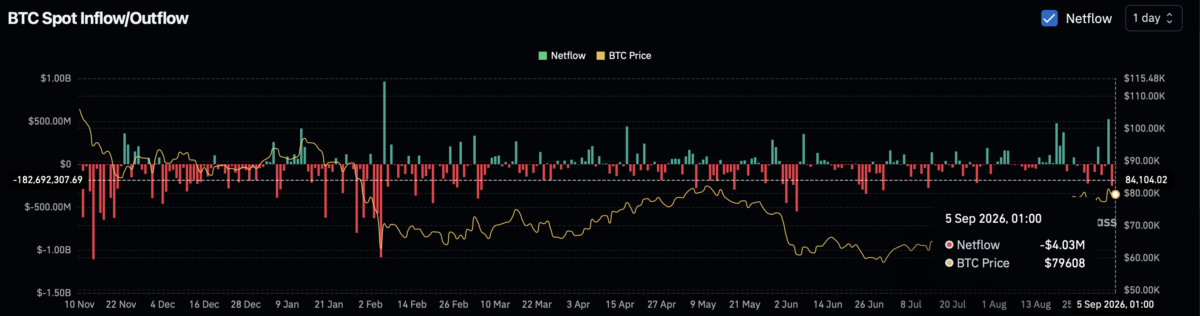
    Bitcoin’s rally toward $75,000 is running into a wall of supply just as institutional demand is holding steady.

    The move higher has been driven largely by macro flows rather than a broad surge in speculative activity. U.S.-listed spot bitcoin ETFs have continued to draw consistent inflows this month, including roughly $240 million in a single session following geopolitical tensions in the Middle East, according to market maker Enflux.

    That bid helped lift $BTC from around $71,000 to the mid-$70,000s, even as traditional markets absorbed rising oil prices and shifting rate expectations. The pattern, Enflux noted, reflects allocation behavior rather than momentum chasing.

    But as bitcoin pushes higher, the character of the market is starting to change.

    On-chain data suggests supply is beginning to emerge more aggressively as prices approach a key cost-basis level for short-term holders. Around $76,800 sits the so-called realized price for recent buyers, effectively the average entry point for traders who accumulated during the last phase of the drawdown, according to CryptoQuant. In weaker market regimes, that level has often acted as resistance, as investors who were previously underwater use rallies to exit at breakeven.

    It should be noted that the same band capped January’s bounce almost to the dollar before prices reversed toward $60,000.

    CryptoQuant said bitcoin exchange inflows spiked to roughly 11,000 $BTC per hour, the highest since late December, as prices tested the $75,000 to $76,000 range.

    At the same time, the average deposit size rose to about 2.25 $BTC, the highest daily reading since mid-2024, suggesting that larger holders are driving the move. The share of large transfers jumped from below 10% to above 40% of total inflows within days, a shift the firm said has historically coincided with increased distribution pressure.

    That sets up a two-sided market.

    On one side, ETF flows and macro tailwinds continue to provide a steady source of demand. On the other, large holders appear to be using the rally to reduce exposure, feeding liquidity into the market as prices approach a widely watched breakeven zone.

    What emerges is less a standoff than a handoff. Long-term holders appear to be distributing coins directly into ETF demand — the exchange inflows CryptoQuant flags and the ETF inflows Enflux tracks are, in effect, two sides of the same transaction, visible in different datasets.

    Whether that handoff clears depends on whether the new holders prove stickier than the ones exiting. That is a late-cycle pattern, and it resolves in one of two ways.

    The result is a market that can move higher quickly on inflows, but struggles to sustain those gains once supply builds. A sustained break above the mid-$70,000s would likely require demand to absorb a growing wave of sell pressure. Failing that, the balance could tilt the other way, CryptoQuant writes, leaving bitcoin vulnerable to a pullback toward the low-$70,000s, where the latest leg of the rally began.