Blog

  • ‘You Can See Everything’ Review: Nathan Fielder’s Documentary About Elizabeth Holmes Is a Shameless, Fascinating, Reality-TV-Eats-Its-Tale Look at Entitled Duplicity

    ‘You Can See Everything’ Review: Nathan Fielder’s Documentary About Elizabeth Holmes Is a Shameless, Fascinating, Reality-TV-Eats-Its-Tale Look at Entitled Duplicity

    In a world where Lindsay Clancy can inspire an onslaught of sympathetic voyeuristic fascination, why not Elizabeth Holmes? Earlier tonight, the screening of an unannounced mystery movie at the Telluride Film Festival generated every bit as much pre-screening buzz as any of the big movies programmed here. And when the film was revealed to be “You Can See Everything,” a 174-minute documentary, co-directed by the cult comedian Nathan Fielder, about Elizabeth Holmes, the former CEO of Theranos who is now serving an 11-year prison sentence after being convicted of defrauding her investors, the sensation of “WTF? I’ve got to watch this!” did not subside as the movie went on. It only intensified.

    “You Can See Everything” is just about the furthest thing from a “pure” documentary you’ve seen. That’s part of its appeal — it’s a one-of-a-kind reality-TV-as-hangout-movie psychodrama circus. Yet it’s been made with a spirit of true inquiry, driven by Fielder’s acidly quizzical personality (as an onscreen interviewer, he’s got the most drop-dead deadpan since Steven Wright), and it gets its hooks in you.

    Fielder isn’t here to throw open the question of Elizabeth Holmes’ guilt. He wants to know what made her tick. But why, you may ask, is the comedian behind shows like “The Curse” and “The Rehearsal” making a three-hour movie about the woman who became America’s youngest self-made female billionaire by convincing the world that she’d created a revolutionary new means of blood testing? Holmes, after her conviction, stayed out of the public eye, but shortly before her prison sentence was set to begin she decided she wanted someone to document her last days of freedom. Maybe she wanted to have her say?

    Whatever the motivation, Fielder, who has often operated in a nether zone between fiction and reality, was looking for a project to collaborate on with Lance Oppenheim, a documentarian he’d become friendly with. And so, with the support of A24, and without quite knowing what they were after (or, by their own admission, what the hell they were doing), the two of them stepped into the breach. Thirty-five days before the start of Holmes’ prison sentence, in 2023, they brought a camera crew to the spacious wood-paneled beachside home in Del Mar where she was living with her partner, the California hotel heir Billy Evans, and their two children (including an infant daughter). Fielder was there to hang out, observe, and interview Holmes, trying to get inside her mind. That proved to be a weirder and wilder journey than anyone might have imagined.

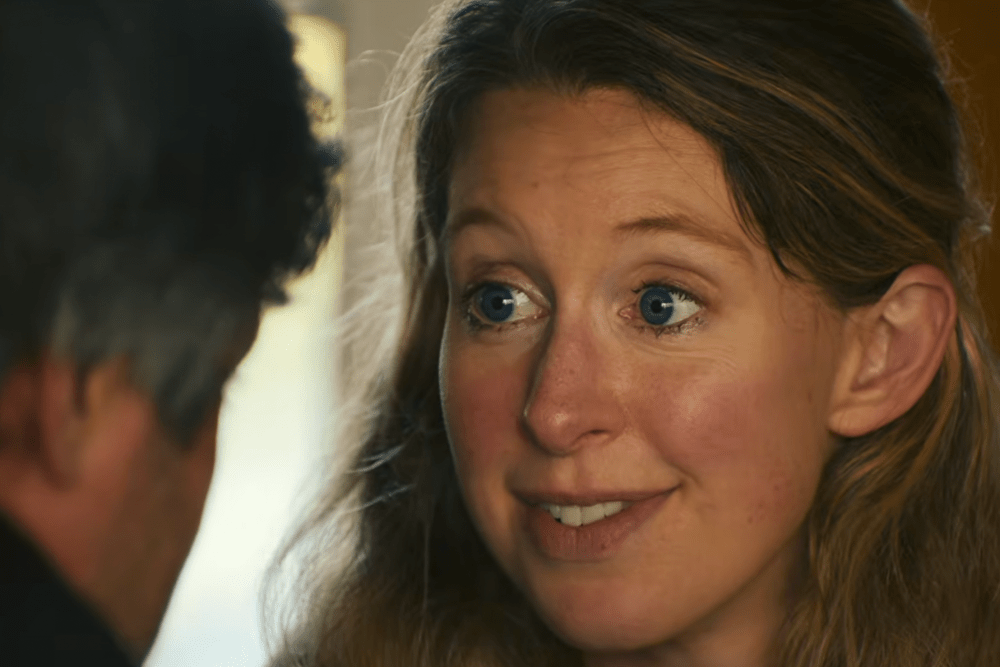
    The Elizabeth Holmes we see has a winsome soft presence, with a Cupid’s-bow grin and eyes that beam without blinking too much. She resembles the ’80s and ’90s actress Kim Greist, and has a manner that’s disarming in its gentleness. Yet when Fielder asks about the crimes she was convicted of, she pleads a strange kind of ignorance. She claims she did nothing wrong, and it’s clear she believes it. But how is that possible?

    In 2015, Holmes had become a celebrity entrepreneur, based on the $9 billion valuation of her health technology company, Theranos — a company that turned out to have been built on a complete scam. For a brief time, Holmes convinced the world that she’d developed a revolutionary device for blood testing that required very small volumes of blood, such as the amount you’d get from a pinprick. She convinced top-drawer investors (including Rupert Murdoch and Larry Ellison) to pour millions of dollars into the company. For credibility, she assembled a board of directors that included such ancient luminaries as George P. Shultz, Henry Kissinger, and James Mattis. There was only one problem: the “revolutionary” technology didn’t exist.

    Numerous experts, starting with the Stanford medical professor Phyllis Gardner, told Holmes that her idea wouldn’t work; you couldn’t mine voluminous amounts of data from just a few droplets of blood. But Holmes, along with her business partner, Ramesh “Sunny” Balwani (who was also her romantic partner), sold the deception anyway. For a short while they were quite “successful” at it, though in hindsight it’s clear that the castle in the air they built — all spun out of the trendy idea that medical science could be democratized — was destined to crash and burn. Because it was all made up! Holmes had spun the pinprick idea out of her own fear of needles. This was her fantasy, elevated into an invention that didn’t actually exist.

    So how can she defend herself now? What she tells Fielder, with an implacable conviction that suggests a belief in her own narrative that’s nothing short of monomaniacal, is that the device patented by Theranos, which she sold as “the iPod of health care,” could, in fact, host any blood test that existed. The only thing they hadn’t quite worked out was the chemistry that would go into the tests. In other words, the device was based on the projection of a technology that didn’t exist yet. But the more Holmes talks to Fielder, the more he teases out her unhinged rationale, which is: The device works fine! We just had to figure out that pesky chemistry stuff! The strange thing is that Holmes has such a corporate mindset that she treats the chemistry stuff…that hadn’t been invented yet…as just another glitchy small problem that could easily be solved. (Have the solution on my desk Monday morning!)

    She believes her version of reality. But Fielder, who is not taken in by any of this (his questions remain rigorous in their skepticism), at one point gives vent to his impish side by showing Elizabeth and Billy the famous Abbott and Costello routine “Who’s on First?” When it ends, he tries to get Holmes to explain what the joke is (that “Who” is the first baseman’s name, but the name sounds like a question — hence the routine’s glorious verbal slapstick). And she can’t do it; she can’t grasp the joke. It’s not just that she lacks a sense of humor (though frankly, she kind of does). It’s that she’s got the malignant narcissist’s need to have words mean only what she decrees them to mean. She can’t hear any other meaning. Hence: her device did “work,” and still does (it can run any test!). That’s why she and Bobby, years after her conviction, are still pitching Theranos to other investors (as if anyone would go near her). This is a highly rarefied level of delusional thinking.

    Holmes says to Fielder that she’s never told a lie in her life. Her whole vibe is “sincerity.” (Though it’s also one of passive-aggressive unbroken-eye-contact creepiness.) The lesson of her legal case isn’t just that she was found guilty of defrauding investors, but that her faulty device, had it been put on the market, would have hurt people. That’s why the real question “You Can See Everything” is asking isn’t: Is she guilty? Rather, it’s: What makes people like Elizabeth Holmes tick? (And how many of them are out there?) Fielder and Elizabeth and Bobby sit down to watch the 2022 Hulu miniseries “The Dropout,” which was based on the case, with Amanda Seyfried giving a pointed performance as Holmes. Holmes suggests that the series is a TV-movie crock. But is it?  

    The documentary’s first half ends with Holmes saying goodbye to her family and going off to the minimum-security Bryan Prison in Texas. The prison won’t allow anyone to interview her, so that’s more or less the last we’ll see of her. And we’ve pretty much gotten the skinny on her, which is that she has a brick wall standing between herself and the truth, and an indifference to the harm she might have caused, that borders on the sociopathic. So what is there left to discover?

    Plenty, it turns out. With Holmes out of the picture, Fielder needs someone to sustain her presence. So he calls Amanda Seyfried, who sits and watches the scene we’ve just seen of Holmes sitting and watching Seyfried portray her. Are you feeling the meta of it all? That sounds gimmicky, but as the documentary goes on, and Fielder creates transcripts of things that Holmes has spoken (including a phone chat he has with her in prison), who better to read the transcripts — to turn this reality into theater, and by doing so to turn it back into reality — than Amanda Seyfried? She gives an increasingly accurate performance as Holmes, getting inside her head, to the point that Seyfried starts to sympathize with her, at least when it comes to what a glowering aggro control freak Holmes’ partner Bobby is. As Bobby continues to make himself accessible to the filmmakers, exposing his dark side at every turn, I was afraid the movie might use him to create a kind of toxic excuse for what Holmes did.

    But part of the jaunty power of “You Can See Everything” is that the film never mounts an apologia for Elizabeth Holmes. Bobby may be repugnant in his cockiness, and in the way he takes control of Holmes’ image, allowing the iconic photograph of her making the “OK” sign to be used on billboards, tweeting out hostile tweets under her name, and striking a deal with the A24 executives — yes, there’s a meeting with them in the movie, at which point we’re either in meta heaven or hell — that will give him some of the profits from the movie. Does Holmes know about the deal? No. But she claims to want it that way. Her grand assertion is that she never cared about the money. And yet the money — the value of her company — became the very core of her identity. “You Can See Everything” overlaps reality, performance, deception, and mental illness, and by the end it brings you to the enigmatic space where every one of those things meet.

  • This cat memecoin has paid holders $2.8 million in Zcash as ZEC tops $1,200

    This cat memecoin has paid holders $2.8 million in Zcash as ZEC tops $1,200

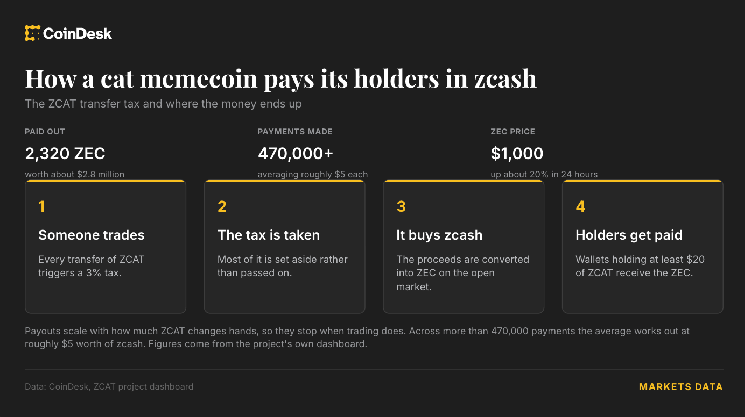
    A cat memecoin on Solana has paid its holders nearly $3 million worth of zcash as a rally in both tokens turned an unusual reward mechanism into a substantial payout.

    Anonymous Cat, or ZCAT, charges a 3% tax whenever the token is transferred. Most of that money is converted into zcash ($ZEC) and distributed to wallets holding at least $20 worth of ZCAT, according to the project’s dashboard.

    Because $ZEC prices have recently surged, rewards paid to CAT holders have gone through the roof. About 2,320 $ZEC, worth roughly $2.8 million as of Monday morning in Asia, has been distributed across more than 470,000 payouts, the data show.

    Note that the $ZEC rewards come from other people buying, selling, and transferring ZCAT, not from a business or investment that produces income. So if trading dries up, the payouts will be vastly reduced.

    $ZEC has gained more than 2,300% over the past year and passed $1,200 late Sunday amid renewed demand for privacy-focused cryptocurrencies. Zcash allows users to hide details, including the sender, receiver, and amount of a transaction — making it the most direct way to bet on the privacy sector returning as a key narrative among crypto traders.

  • ‘The Inbetweeners’ Original Lead Cast Confirmed for Netflix Reunion Movie as Production Kicks Off in U.K.

    ‘The Inbetweeners’ Original Lead Cast Confirmed for Netflix Reunion Movie as Production Kicks Off in U.K.

    The original lead cast of cult Brit teen comedy series “The Inbetweeners” are officially back for the upcoming reunion movie at Netflix, which the streamer has confirmed is now in production.

    First reported last month, the new film has now been given the title “Inbetweeners 3,” following on from the hit show’s two record-breaking spin-off features.

    Simon Bird, James Buckley, Blake Harrison and Joe Thomas will reprise their roles as Will McKenzie, Jay Cartwright, Neil Sutherland and Simon Cooper, with “The Inbetweeners” creators Damon Beesley and Iain Morris returning to write and direct the film.

    “It’s been super-fun hanging out with our friends again, and we’re going to work hard every week to ensure there are no problemos making this new film for humans,” said the directors.

    The film will be produced by Claire Jones alongside Banijay’s Patrick Holland and Fudge Park Production’s Mark Lesbirel. Caroline Levy, Caroline Leddy, Phil Gilbert, Suzanne Knight, Tom Jordan, Farhana Bhula, Morris and Beesley will serve as executive producers.

    Originally broadcast on E4 in the U.K. between 2008 and 2010, “The Inbetweeners” followed the misadventures of suburban teenager MacKenzie (Bird) and his friends Cooper (Thomas), Sutherland (Harrison) and Cartwright (Buckley) at the fictional Rudge Park Comprehensive as they navigated school life, friendship, male bonding, lad culture and failed sexual encounters. It was originally conceived as a more realistic counterpoint to fellow hit Brit teen show “Skins.”

    After three seasons, two hit movies followed, released in 2011 and 2014 respectively. The first set a record for the biggest opening weekend for a U.K. comedy at the time of its release while the sequel also broke box office records.

    The news comes less than a year after rights holders Banijay U.K. revealed that it had struck a deal with Morris and Beesley and their Fudge Park Productions that, at the time, they said “paves the way for the return of the hit comedy title.”

  • This Coinbase-Backed Altcoin Announces It Will Cease Operations by September 30th! Here Are the Details

    This Coinbase-Backed Altcoin Announces It Will Cease Operations by September 30th! Here Are the Details

    Router Protocol, a cross-chain infrastructure project backed by Coinbase, announced it will completely cease operations by September 30. The project team stated that attempts to commercialize their products, secure a sustainable position in the highly competitive blockchain bridging sector, or find a buyer had been unsuccessful.

    Router Protocol announced its decision to shut down after more than four years of development via a statement on X. The team stated that they had spent the last year conducting commercialization, licensing, and acquisition talks, but were unable to create a model that would allow them to continue operations.

    The company stated that key issues include the shift of capital from the crypto market towards the AI sector and the decrease in asset transfer fees between blockchains. It also noted a decline in demand for router services as activity becomes more concentrated on fewer networks and standardized infrastructures.

    As part of its closing strategy, Router plans to permanently burn 303,333,198 ROUTE tokens held in its treasury. This amount represents approximately 30% of the total supply of about 1 billion tokens. The project will also work with centralized exchanges to end support for ROUTE.

    Router announced that no new ROUTE programs will be launched and that it will remain independent of any market or liquidity pools created after the delisting process. However, the team will open-source some components so that developers can use the work done over the past four years.

    Router had raised $4.1 million in funding in 2021 from investors such as Coinbase Ventures and Polygon. The project, which launched its own Layer 1 network, Router Chain, in July 2024, decided to shut down this network in September 2025 due to infrastructure costs, security risks, and validator inflation.

    The team also revealed that two security incidents occurred in 2025, and in one of them, 80% of the lost value was recovered.

    *This is not investment advice.

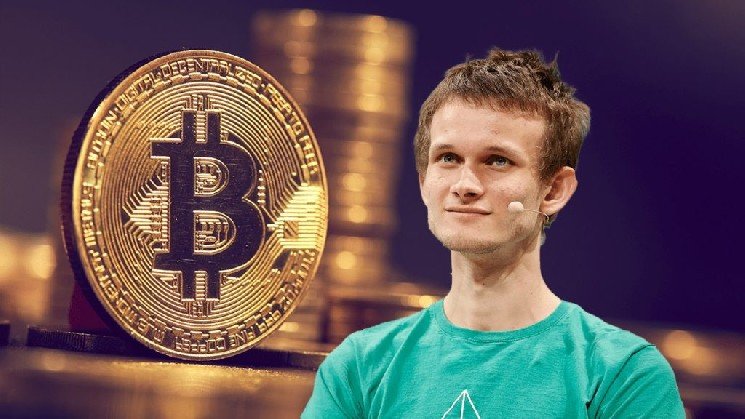
  • Ethereum Founder Vitalik Buterin Explains There Won’t Be an AI-Driven Bitcoin Crash! Here Are the Details

    Ethereum Founder Vitalik Buterin Explains There Won’t Be an AI-Driven Bitcoin Crash! Here Are the Details

    Ethereum founder Vitalik Buterin has countered assessments that long-term advancements in artificial intelligence and security technologies could compromise Bitcoin’s security system, leading to a price drop of more than 50% in $BTC. Buterin stated that the Bitcoin network’s fundamental security mechanisms are significantly resilient to such threats.

    According to Buterin, potential attacks on Bitcoin’s network layer can be addressed by updating client software and mining pools. Therefore, the network’s current structure is not expected to become completely vulnerable to technological advancements.

    Ethereum founder Buterin also stated that the likelihood of Bitcoin’s hash function or Proof-of-Work (PoW) mechanism being seriously compromised is extremely low. He noted that these systems form the basis of Bitcoin’s security model and argued that these mechanisms will continue to play a crucial role in protecting the network in the future.

    Buterin specifically stated that he did not agree with the view that artificial intelligence could significantly weaken Bitcoin’s security, leading to a more than 50% drop in the $BTC price over the next two years.

    The recent rapid advancements in artificial intelligence have sparked debate about their potential impact on the security of cryptocurrency networks, with some assessments suggesting that advanced AI systems could pose risks to cryptographic security mechanisms.

    However, Buterin’s statements suggest that it is unlikely these risks will reach a level that threatens Bitcoin’s fundamental security structure in the short term. According to him, while software and infrastructure updates can be made to counter potential attacks, the complete failure of Bitcoin’s hash function and PoW system is considered highly improbable.

    *This is not investment advice.

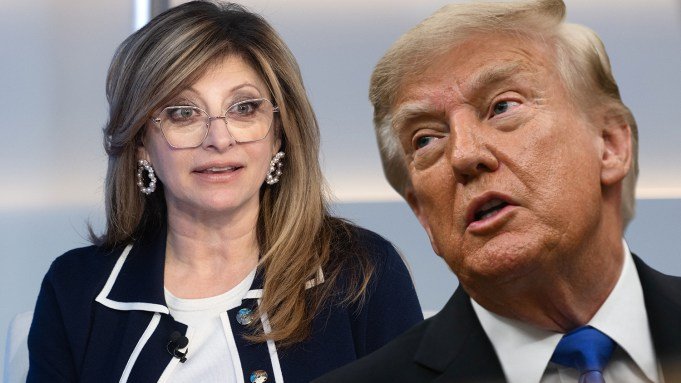
  • Maria Bartiromo’s Fox Exit “Self-Inflicted Wound”; Trump Praises “True Warrior” As Legal Threats & Accusations Of Host Sharing Insider Info Fly

    Maria Bartiromo’s Fox Exit “Self-Inflicted Wound”; Trump Praises “True Warrior” As Legal Threats & Accusations Of Host Sharing Insider Info Fly

    EXCLUSIVE: The coup de grâce that caused Fox to announce this week that Maria Bartiromo would “no longer be with” the conservative news outlet was a case of “very bad judgment” and a long time coming, sources say.

    The assertions come Friday despite Bartiromo’s Hollywood attorney Bryan Freedman insisting the veteran Wall Street anchor is still “an employee” of Fox and threatening legal action. Adding to the burgeoning media mess surrounding the so-called “Money Honey,” Donald Trump had thrown serious shade on Fox for taking good pal Bartiromo off the air.

    That shade could set the stage for yet another showdown between Trump and his once favorite media buddies at the Murdoch-ruled Fox.

    “I can’t believe Maria Bartiromo is no longer going to have her great show(s) on FoxNews/Business,” Trump, a frequent Bartiromo guest, posted Thursday night, about 12 hours after Fox announced “effective today” that the Mornings With Maria host was out. “Three different shows, always number one. Maria is a total professional, and a true warrior. Her fans, of which there are many, will not be happy. God bless you, Maria!”

    Bartiromo hadn’t been on the air for almost a month, with Deadline confirming that Fox brass had enough of the MAGA-friendly Bartiromo after they learned she passed corporate-guidance missives to the White House in recent months. However, carving her own way at Fox Business and Fox News for more than a decade, those communications were just the latest minefield that Fox execs feared could blow up in everyone’s faces.

    “Her indiscretion was just the latest in a series of self-inflicted wounds,” a cable news insider says of Bartiromo and her close ties with Trump. “This has been a concern for a while, Maria being too cozy with the White House. She crossed a line, and she’s suffered the consequences.”

    Weary of addressing allegations of similar conduct over the years by Sean Hannity and other Fox hosts, or Bartiromo’s contract specifics, the source added: “She’s no longer with Fox. Take that for what it is.”

    Deadline hears that while there may be “technical truth” to Freedman’s remarks today that Bartiromo still works at Fox because of contracts and other paperwork, she is not returning to her Fox Business or Fox News roles — full stop.

    Long a passionate defender of POTUS and offering him a platform over the years, Bartiromo’s apparent sharing of internal edicts with Trump administration officials, first reported by Status, made her pink-slipping inevitable.

    Digging a little deeper and a few years back, the seeds of Bartiromo’s downfall were evident if you connect the red string.

    In April 2023, Fox agreed to pay $787 million to settle a lawsuit filed by Dominion Voting Systems, one of the technology firms singled out in Fox’s coverage of the 2020 election results. Citied in volumes of court filings and the high-stakes trial that had just begun when Fox settled, Bartiromo was one of the main hosts on Fox promoting the false claims of irregularities with the election Trump lost and Joe Biden won. At the time, the top-rated Tucker Carlson was pulled off the air at Fox in a move that resulted in a Freedman-handled legal dust-up between Carlson and the media company.

    No word from ex-Apprentice host Trump if Bartiromo is in the running to be the new White House Press Secretary, but sharp-elbowed lawyer Freedman says his client actually isn’t looking for a new job because she still has her old one.

    “For many years, Maria Bartiromo hosted three number one rated television shows on Fox channels,” Freedman said Friday, as my colleague Dade Hayes noted earlier. “She has been, without question, one of the hardest working journalists throughout her award winning career.”

    The lawyer for the likes of Carlson and Megyn Kelly, as well as Don Lemon, then unsheathed the knife that may lead to a bloody affair down the line.

    “The irresponsible reports that have been published stating that Maria Bartiromo was fired or is no longer an employee of Fox are absolutely and unequivocally false,” Freedman said. “Make no mistake, we have the receipts and witnesses and they will come out whether through the courthouse or otherwise. Those reporting her firing or the incredulous facts supporting that fiction have exhibited a complete and utter reckless disregard for the truth.”

    When Deadline asked Fox for a response to Freedman’s statement about his client’s employment situation, the company said: “the release speaks for itself.” The White House did not respond to Deadline’s request for comment.

  • Why federal judge ruled First Amendment protects certain AI-generated child sex abuse material

    Why federal judge ruled First Amendment protects certain AI-generated child sex abuse material

    Claim:

    A federal judge rule certain AI-generated child sex abuse material is protected by First Amendment.

    Rating:

    True

    Context

    In his decision, Judge John Z. Lee of the U.S. Court of Appeals for the 7th Circuit, referred to two U.S. Supreme Court decisions from 1969 and 2002. The first says people have the right to keep obscenity in the privacy of their homes and the second says child sex abuse material that does not depict real children is not child pornography and is protected by the First Amendment of the U.S. Constitution. The judge also said that while he is bound by precedent, he is concerned by “the lines these cases draw.”

    A rumor spread in late summer 2026 that a federal judge ruled the First Amendment of the U.S. Constitution, which establishes the right to free speech, protects certain artificial intelligence-generated child sex abuse material. 

    A number of Snopes readers emailed to share an image that relayed the story. “A federal judge has ruled that the First Amendment protects an individual’s right to privately possess child sexual abuse content created using Al if it does not depict a real person and remains in the home,” the image read. Meanwhile, one X post shared a screenshot of a post by The Washington Post making the claim, saying the judge’s decision “normalises child sexual abuse” and “feeds the depravity” (archived):

    In sum, the claim was true, but it lacked crucial context. In his Aug. 25, 2026, decision, Judge John Z. Lee of the U.S. Court of Appeals for the 7th Circuit, said precedent forced him to make this ruling, pointing to two U.S. Supreme Court decisions. He added that the current state of technological advance meant the court had “concerns” about the “lines” set by these two Supreme Court decisions.

    The U.S. Department of Justice declined to comment on whether the agency intends to take the case to the Supreme Court.

    Law hasn’t caught up with AI, judge suggested

    In 2024, a man named Steven Anderegg was arrested on charges of fabricating, possessing and distributing AI-generated child sex abuse material, as well as sending some of this material to a minor. Anderegg asked for the charges of production and possession to be dismissed, which a federal district court in Wisconsin granted on grounds that these counts ran against decided caselaw.

    The prosecutors then appealed this decision, but Lee agreed with the lower court, citing two decisions the Supreme Court rendered in 1969 and 2002. 

    The first decision, Stanley v. Georgia, said the First Amendment protects people who privately keep obscene material. “The First Amendment does not allow a state to criminalize the private possession of obscene matter,” read the summary of the case on the Justia website, a free online collection of all U.S. Supreme Court decisions.

    The second decision — Ashcroft v. Free Speech Coalition — came six years after the Child Pornography Prevention Act of 1996. It ruled that child sex abuse material that does not depict real children is not child pornography, and that it is protected by the First Amendment. This decision explicitly covered digital images.

    “The statute sought to outlaw all speech that was related to the possibility of child pornography, including images of adults who look like children and computer-generated images,” the case’s Justia page reads.

    While Lee said he was compelled by judicial precedent to make this ruling, he also expressed “concerns about the lines these cases draw,” given how quickly AI technology is evolving. The judge also said that fabricated child sex abuse material that does not depict real persons was becoming more and more difficult to distinguish from such material that showed real children, making law enforcement more difficult.

    “Recent data suggests that the influx of AI-generated images reported to the NCMEC [National Center for Missing and Exploited Children] CyberTipline imposes increasing burdens on law enforcement,” the judge wrote in his decision.

    A paragraph in Lee’s decision summarized his rationale (Page 3 of this document):

    We now live in an age where GenAI [generative AI] models can render images depicting the abuse of virtual children that are virtually indistinguishable from those depicting the abuse of actual children. This case illuminates how this evolving technology complicates the lines drawn by the Supreme Court in Stanley, Osborne, and Free Speech Coalition. Indeed, in Free Speech Coalition, the Supreme Court addressed the scope of First Amendment protections for virtual CSAM, but that was nearly twenty-five years ago, and the image-generation technology available today was likely unimaginable back then. Given the relentless advancement in artificial intelligence models, we have some concerns about the lines these cases draw, but we are not free to redraw them ourselves.

    In other words, Lee said he could not on his own change a precedent set by the Supreme Court. It would therefore fall upon the Supreme Court to change the interpretation of the law to account for current technology and its consequences. 

    For further reading, Snopes examined the claim that 17 Republican Colorado lawmakers voted against banning AI-generated child sex abuse material.

  • Are you concerned about contaminated food? Here are 15 rumors we’ve inspected

    Are you concerned about contaminated food? Here are 15 rumors we’ve inspected

    Posts claim Texas Roadhouse servers contaminated Black customers’ food. Here’s what we know

    Read More

  • Oklahoma inmates made $2 an hour working for political call centers, documents show

    Oklahoma inmates made $2 an hour working for political call centers, documents show

    Claim:

    The Oklahoma Department of Corrections contracted inmates to work for a call center company that handled making calls for a conservative super PAC.

    Rating:

    True

    A rumor circulated in early September 2026 that incarcerated people in the state of Oklahoma were contracted to work for a call center company that handled telemarketing for a conservative super PAC. 

    Users on social media shared the rumor, with some claiming the Oklahoma Department of Corrections earned $10 per hour from the vendor but that prison laborers were getting paid only $2 per hour. 

    The rumors circulated as the United States approached the Labor Day holiday, which has celebrated the labor movement since the late 1800s. 

    The claim was true, according to a service contract between the state prison department and telemarketing company HBW Leads, embedded below.

    The document originated in reporting by Oklahoma Watch, a nonprofit investigative journalism outlet, which published the article on Aug. 24, 2026. 

    One current inmate, Steve Wilbanks, was named as a source. Snopes confirmed Wilbanks was a prisoner at the James Crabtree Correctional Center in Helena and has been in state custody since 2015. Oklahoma Watch cited three other inmates used as sources anonymously.

    According to the report, inmates earned $2 per hour at call centers located at four state prisons: James Crabtree, Mabel Bassett in McLoud and Lexington Correctional and Joseph Harp, both in Lexington.

    According to the service contract, tasks inmates could perform were:

    1. outbound calls related to marketing lead generation; and
    2. conducting or assisting with political opinion polling, subject to applicable laws and regulations.

    The contract further says Oklahoma Correctional Industries, a division of the Oklahoma Department of Corrections whose website says it “employs offenders who lack marketable job skills,” would earn $10 per hour of work per inmate. However, the contract states the corrections department can “withhold up to but not to exceed 80 percent of the wage rate per inmate hour worked,” which matches the rates reported. 

    The Oklahoma Watch piece stated: 

    BW Leads agreed to pay the Department of Corrections $10 per inmate hour worked. Prisoners employed at the call centers earn $2 per hour, plus possible bonuses for generating leads or completing surveys. 

    The remaining $8 per hour is allocated as overhead for Oklahoma Correctional Industries, a self-supporting sub-entity of the Department of Corrections that provides work programs and job training to inmates.

    We reached out to the Oklahoma Department of Corrections for further comment on the report. We also asked for the specific reasoning behind inmate pay structure and why telemarketing doesn’t appear on the list of services provided by Oklahoma Correctional Industries. We’ll update this article if we hear back.

    HBW Leads’ website identified the Oregon-based company as generating “insurance leads” gained through telemarketing on behalf of the clients who hire them. The website said, “Our lead specialists spend, on average, 4-7 minutes with each potential prospect asking them a series of qualifying questions on your behalf.”

    HBW Leads made no mention of political calling on its website, but a subsidiary company operating out of Toledo, Ohio, Visible Trends, specializes in “polling, fundraising, legislative outreach, or GOTV,” referring to get-out-the-vote efforts.

    A business search on the Ohio Secretary of State’s website confirmed Visible Trends to be registered by HBW Leads in January 2025.

    (Ohio Secretary of State)

    One of Oklahoma Watch’s sources said some of the statements they read during their telemarketing jobs specified that the calls were paid for by conservative super PAC Make Liberty Win, whose website described them as specializing “in mobilizing voters to engage in primary and general elections through direct voter contact.”

    An FEC filing (archived) showed at least 38 payments totaling more than $400,000 from Make Liberty Win to Visible Trends between from March 2026 and June 2026, the same term length shown in the service contract between HBW Leads and the corrections department.

    Though it was clear the Oklahoma Department of Corrections and HBW Leads had established a contract to use inmates as telemarketers, Snopes couldn’t independently verify whether the inmates made political calls on behalf of Make Liberty Win specifically. 

    Oklahoma Watch’s reported one of its sources said they made political calls that resembled push-polling, in which the caller purports to be asking survey questions but actually aims to influence voters, a practice generally frowned upon in campaigning.

    We reached out to Make Liberty Win to ask whether it was aware of Visible Trends using prison laborers and will update this article if we hear back. 

    Oklahoma Watch reported that the super PAC’s executive director, Barrett Young, told the outlet that the group was unaware of the use of prison labor and has since canceled the contract for performance reasons.

  • ‘La Bola Negra’ Fever Hits Telluride: “Let’s Make the Gayest War Movie Ever”

    ‘La Bola Negra’ Fever Hits Telluride: “Let’s Make the Gayest War Movie Ever”

    It was hard for La Bola Negra to make much noise over the whole of Cannes, if only because the gay Spanish epic did not premiere until the very end of the film festival — at which point, it promptly emerged as one of its clear breakouts. Directed by creative (and, previously life) partners Javier Ambrossi and Javier Calvo — known colloquially as Los Javis — the film earned strong reviews, was acquired by Netflix in a splashy deal, and won the festival’s coveted best-director prize (in a tie with Fatherland’s Pawel Pawlikowski). It was a smash hit, at least for those who remained on the Croisette in those final days.

    So Telluride, where La Bola Negra made its North American premiere this weekend, has represented the moment for the movie to prove itself as a true word-of-mouth hit. It’s done that and more. On gondolas and in line for premieres, around cafés and passersby on Colorado Avenue, it’s among the films I’ve heard about the most — a sweeping emotional experience that doubles as a deftly ambitious and subversive exploration of Spanish queer history.

    The filmmakers, alongside star Carlos González, gathered on Sunday for a post-screening Q&A (moderated by yours truly) at the Palm Theater on the town’s western edge, where they met an electric response. As Calvo summed up the grand vision behind the movie: “Let’s give all the straight people the war movie they want, but let’s give our community the love story that they want — why can’t we have it all?”

    (From left) Interpreter Lorna Silva, star Carlos González, directors Javier Calvo and Javier Ambrossi, and moderator David Canfield at Telluride’s North American premiere of La Bola Negra on Sunday.

    Vivien Killilea/Getty Images

    La Bola Negra, loosely adapted from Alberto Conejero’s play La piedra oscura, tells its story in three separate timelines that gradually converge. The 1937 section is drawn most directly from Conejero’s work (Conejero also co-wrote the screenplay), set during the Spanish Civil War. The modern strand, set in 2017, follows a young man named Alberto (González) investigating his family history while negotiating complex relationships with his partner (Julio Torres) and mother (Lola Dueñas). And the final third, taking place in 1932, marks La Bola Negra’s most audacious gambit: It imagines the entirety of Federico García Lorca’s great unfinished work, also called La Bola Negra (translated to The Black Ball) — its themes of lust, shame and legacy rippling through the stories that follow.

    Made for under $15 million, the Spanish-language drama offers immense scope, which was by design. “We thought, ‘Let’s make the gayest war movie ever,’” Ambrossi said. “That’s the politics behind this. And no one told us to change it a bit. And now, here we are.” The movie was made, per Calvo, with reverence for great war films like Apocalypse Now, using minimal CGI and making the most of every practical location, extra and visual effect they had at their disposal. La Bola Negra was also shot on 35mm, and brought in starpower via small but pivotal roles for Glenn Close and Penélope Cruz (whose mere mention elicited loud applause from the audience). 

    The movie’s emotional pull is anchored by a bracing examination of gay identity, of what’s inherited and passed on between generations. “It made me understand the importance of art in a physical way — the things that come to us, the pieces of art from past generations that tell us about who we were and what happened to us,” Calvo said of Lorca’s work. “At a time when art is being questioned, we have to remind ourselves that it speaks the best language.” 

    “He represents the war, all the dead…in our country that remains hard to talk about,” González added, noting that when he was taught García Lorca in school in Spain, the legendary writer’s sexuality was never discussed. 

    La Bola Negra lifts the veil on that silence — immersing audiences in its impassioned, maximalist filmmaking. “It’s very visceral. This is the black ball that is inside all of us as LGBTQ+ members of the community,” Ambrossi said. “We’ve been rejected.” La Bola Negra offers the chance, he then explained, to be seen. 

    **

    Netflix will release La Bola Negra in theaters on Oct. 16 before streaming 47 days later on Dec. 2, the longest theatrical-exclusive window in the company’s history.