Blog

  • ‘Virginia Woolf’s Night and Day,’ Starring Haley Bennett, Jack Whitehall and Lily Allen, to Open SXSW London Film Lineup

    ‘Virginia Woolf’s Night and Day,’ Starring Haley Bennett, Jack Whitehall and Lily Allen, to Open SXSW London Film Lineup

    Virginia Woolf’s Night and Day, starring Haley Bennett, Jack Whitehall, Lily Allen, Timothy Spall, Jennifer Saunders, Sally Phillips, Misia Butler and Elyas M’Barek, will open the 2026 SXSW London film lineup, organizers unveiled on Monday.

    The rom-com from director Tina Ghavari and screenwriter Justine Waddell is an adaptation of Virginia Woolf’s novel Night and Day. Talent so far confirmed to attend the film’s world premiere at SXSW London, which runs June 1-6, are Bennett, Whitehall, Phillips, Butler, Ghavari and Waddell. 

    Also set for the event is the darkly satirical Savage House, whose cast includes Richard E. Grant, Claire Foy, Bel Powley and Jack Farthing. 
     
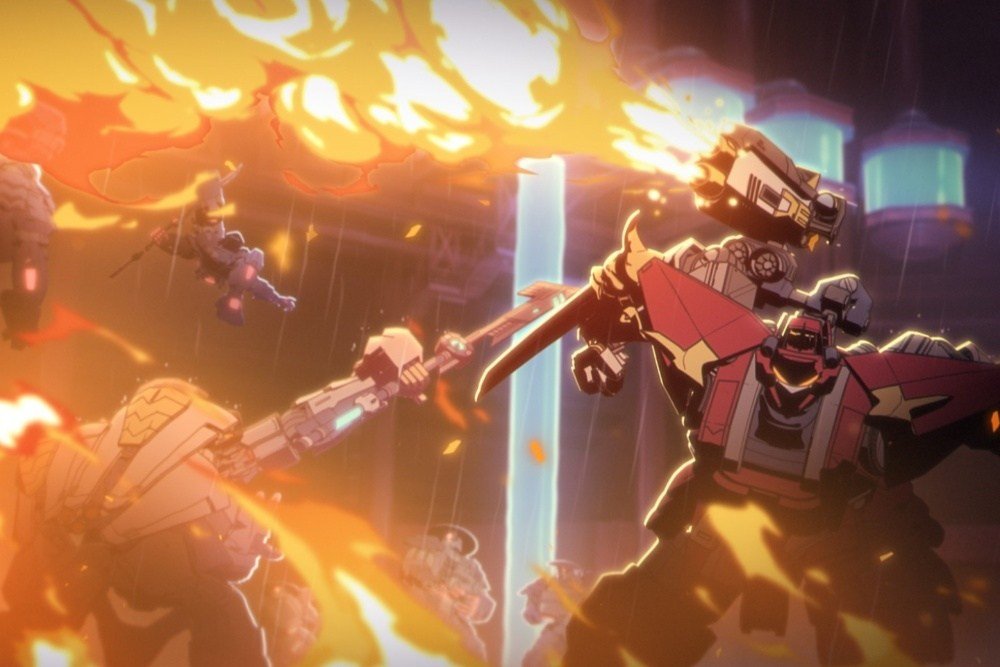
    Joining these films will be an exclusive first-look screening of an Adult Swim animated series from Warner Bros. Animation, Get Jiro, based on the DC/Vertigo graphic novel from Anthony Bourdain. Executive produced by Brian Gatewood, Alessandro Tanaka, Jordan Blum, Anthony Bourdain, Joel Rose, and Sam Register, the show stars Brian Tee (A House of Dynamite). It is set in a not-too-distant future Los Angeles where master chefs rule the town and people literally kill for a seat at the best restaurants. 
     
    SXSW London on Monday also unveiled six films, all making their U.K. premieres, selected for this year’s official competition. They are The Other Side of the Sun, directed by Tawfik Sabouni, Juan Pablo Sallato‘s The Red HangarRoya by director Mahnaz Mohammadi, Vladlena Sandu’s Memory, Remake from director Ross McElwee, and Only Rebels Win by director Danielle Arbid.

    Said Anna Bogutskaya, head of screen at SXSW London: “The films in our official competition embody what we are most excited about in contemporary cinema: no-holds-barred, deeply human and formally audacious films that provoke and challenge us to think wider, deeper and more empathetically.”

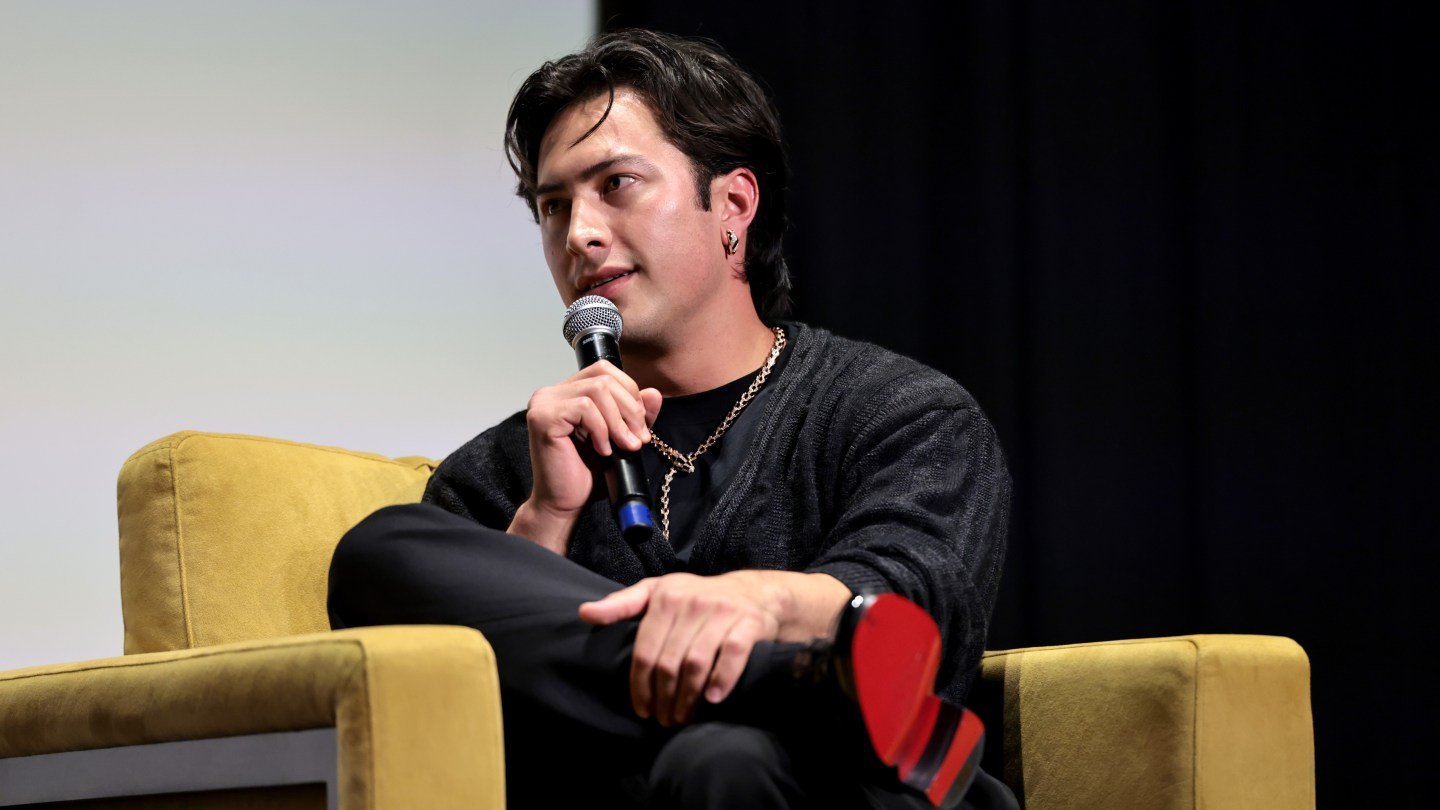
    SXSW also added to its industry speakers and panel lineup on Monday. New sessions include “Toy Meets Tech: The New Technologies of Toy Story 5” with Thomas Jordan (Toy Story 5 VFX supervisor), “BookTok to Screen: Making Hits Out of Views” with Tara Erer, head of originals, U.K. & Europe at Prime Video, and Hannah Griffiths, head of adaptations at Banijay, “The Beyond the Audition: Casting Directors” with casting directors Sophie Holland (The Witcher, Wednesday) and BAFTA winner Lucy Pardee (Aftersun, Die My Love), “Responsibilities of Creative Leadership” with Mia Bays of the BFI Filmmaking Fund and Nadia Fall of The Young Vic, and “Big Stories, No Borders” with Samuel Kissous of Pernel Media and Claire Mundell of Synchronicity Films.

    SXSW is majority-controlled by THR parent company PMC.

  • ‘Technofascism’: Critics accuse Palantir of pushing AI war doctrine

    ‘Technofascism’: Critics accuse Palantir of pushing AI war doctrine

    Palantir CEO Alexander Karp’s book The Technological Republic advocates for Western ‘hard power … built on software’.

    A book coauthored by a cofounder of Palantir, a leading defence and intelligence software firm in the United States, has prompted outcry from detractors who say it lays out a “manifesto” for the weaponisation of artificial intelligence by the US and its allies.

    Palantir, which has multibillion-dollar contracts with multiple US government agencies, including the US Army, and partnerships with the Israeli military, recently summarised the key arguments of The Technological Republic – written by the company’s chief executive, Alexander Karp, and Nicholas W Zamiska, the head of its corporate affairs – in a post on X.

    Recommended Stories

    list of 3 itemsend of list

    The book argues that leading US tech firms have a “moral debt” to the United States, which needs “hard power” fuelled by cutting-edge software to maintain global dominance.

    “If a US Marine asks for a better rifle, we should build it; and the same goes for software,” Palantir wrote in the summary of the book.

    It also contends that future deterrence will be based on AI, not nuclear power, and that US adversaries will not hesitate to build AI weapons. “The question is not whether AI weapons will be built; it is who will build them and for what purpose,” the company said in its summary.

    The framing drew sharp criticism from academics and commentators.

    Mark Coeckelbergh, a Belgian philosopher of technology who teaches at the University of Vienna, described the message as an “example of technofascism”.

    Greek economist and former Finance Minister Yanis Varoufakis said Palantir had effectively signalled a willingness “to add to nuclear Armageddon the AI-driven threat to humanity’s existence”.

    “AI-powered killer robots are coming,” wrote Varoufakis on X.

    ‘Destructive clash-of-civilisations crusade’

    Palantir’s summary of the book also argues the US and its Western partners should resist “a vacant and hollow pluralism”, claiming “some cultures have produced vital advances; others remain dysfunctional”.

    Entrepreneur and geopolitical commentator Arnaud Bertrand said the message reveals a dangerous “ideological agenda”.

    “They’re effectively saying ‘our tools aren’t meant to serve your foreign policy. They’re meant to enforce ours,” said Bertrand in a post on X.

    Bertrand also pointed to the book’s argument that “the postwar neutering of Germany and Japan must be undone”, an allusion to the two states’ historically restrained defence postures resulting from the second world war.

    He said Palantir’s motivation to “overturn the security architecture of two continents” is both commercial and ideological.

    “A remilitarised Germany and Japan are massive new defense-software markets,” said Bertrand. “But the more troubling answer is that [it] fits into the ideological project the rest of the manifesto lays out – a civilisational contest requires a consolidated Western bloc, and pacifist members are a liability in such a contest.”

    On top of its ties to the US government, Palantir contracts with numerous foreign government agencies, including Israel’s military, to which it has provided technology during Israel’s genocidal war on Gaza.

    In a statement to Al Jazeera earlier this year, Palantir UK reiterated the company’s support for Israel, and the country’s broader alliance with “the West”.

    Bertrand said: “Every government still running Palantir software in its intelligence, security, or public-service infrastructure needs to start ripping it out, now!”

    “Lest they want to be embarked on the delusional and deeply destructive clash-of-civilizations crusade Palantir has now openly committed itself to.”

  • WHCA Urged to ‘Demonstrate Opposition’ to Trump at Annual Dinner

    WHCA Urged to ‘Demonstrate Opposition’ to Trump at Annual Dinner

    Some people want Washington’s annual “nerd prom” to feature a little more backbone.

    A bevy of journalism advocacy organizations and former journalists such as Sam Donaldson, Lynn Sherr and Linda Douglass urged the White House Correspondents Association to “demonstrate opposition” when President Donald Trump makes his first appearance at the group’s annual dinner, which takes place Saturday, April 25.

    “The dinner has long served as a symbol of the vital and irreplaceable role of a free press in American democracy and a celebration of the First Amendment and the journalists who uphold it. President Trump’s systematic, sustained, and unprecedented attacks on the free press render his presence at such an event a
    profound contradiction of its purpose,” reads a letter addressed to WHCA member and board of directors.,

    The signatories include the Society of Professional Journalists; the National Association of Black Journalists; the National Press Photographers Association; the Freedom of the Press Association;. the Coalition for Women in Journalism; and the Radio Television Digital News Association.

    The Trump administration and the media covering it enjoy a strained relationship at best. The group’s letter cited a bevy of efforts to undermine the press, including banning the Associated Press from White House pool reporting and taking office space away from credible press outlets covering the Pentagon. Many of these efforts have ended up being litigated in court.

    The schism between President Trump and the media has been years in the making. During his first term, he declined to attend the WHCA event, a longtime happening on the D.C. calendar, and the organization has in recent years retreated from business as usual, which calls for a comedian to deliver a few hot takes about the current occupant of the Oval Office. Last year, the WHCA pulled an invite to comic Amber Ruffin, who was scheduled to be featured at the annual dinner. Plans for 2026 call for a demonstration by a mentalist instead of a comic’s routine.

    The WHCA has faced difficulties in figuring out how to respond to Trump, who only likes one kind of criticism: none. During Trump’s first term, the WHCA undermined its invited comedian, Michelle Wolf, who led a blistering routine at the 2018 dinner.  “I think she’s very resourceful, like she burns facts and then she uses that ash to create a perfect smokey eye,” said Wolf of Sarah Huckabee Sanders, the White House Press Secretary, who attended the event. “Maybe she’s born with it, maybe it’s lies,” the comedian said, echoing the popular Maybelline advertising slogan. Within a day, the WHCA issued a statement saying that Wolf’s performance “was not in the spirit” of the group’s mission to call attention to the value of a free press as well as great journalism.

    Some journalists attending this year’s dinner have unveiled plans to wear pocket handkerchiefs or lapel pins with the words of the First Amendment. But the backers urged the WHCA to “take stronger action by issuing — from the podium — a forceful defense of freedom of the press and condemnation of those
    who threaten that freedom, followed by a standing toast to the First Amendment and a pledge to continue upholding such a critical cornerstone of our democracy.” The letter continued: ” Speak forcefully, in front of the man who seeks to undermine our country’s long tradition of an independent, strong, and free press. We also urge the WHCA to reaffirm, without equivocation, that freedom of the press is not a partisan issue and that the Association will not normalize this behavior but instead fight back against any officeholder who has waged systematic war against the journalists whose work the dinner celebrates.”

    Whether anyone takes the group up on its counsel won’t be known, most likely, until Saturday night.

  • Laura Poitras Backs Push Against Paramount-Warner Deal, Warns of U.S. Doc Funding Crisis

    Laura Poitras Backs Push Against Paramount-Warner Deal, Warns of U.S. Doc Funding Crisis

    Opening the industry section of Swiss doc festival Visions du Réel, with her latest Netflix-produced feature “Cover-Up” serving as the festival’s opening film, Oscar-winning filmmaker Laura Poitras pointed to a documentary sector that is not only under pressure but increasingly mobilized – including around opposition to the Paramount-Warner Bros. Discovery deal.

    Citing an open letter signed by more than 1,000 industry professionals, she said: “There’s recently been a letter calling to block the merger – I know behind the scenes a lot of documentary filmmakers were involved in that, there’s that kind of engagement.”

    More broadly, she described a sector defined as much by solidarity as by strain, noting, “It’s no secret that this is a really dire time in the documentary landscape, if we’re talking about funding and distribution, but I also think it’s a time documentary filmmakers are actually showing up for each other and doing risk-taking work that is filling gaps where some of our institutions are failing us.”

    Signed by directors including Alex Gibney and Davis Guggenheim, alongside Hollywood figures such as Mark Ruffalo, Kristen Stewart and Jane Fonda, the letter has drawn significant backing across the industry.

    The question of funding surfaced sharply following a clip from “My Country, My Country,” the first of Poitras’ 9/11 trilogy, set in Iraq, which was backed by U.S. public television. Asked whether such a project on the current war in Iran could still be financed today, the answer was a clear ‘No.’

    “Our public funding is now being completely decimated. The Corporation for Public Broadcasting, ITVS – one of the organizations that have been key in supporting first-time filmmakers – to lose that is completely devastating, both for funding and for distribution,” she said, referring to a U.S Congress vote last summer to defund the Corporation for Public Broadcasting, which led to the shutdown of key grant programs, reducing support for independent and politically engaged films.

    Even beyond public support, she suggested, the space for politically sensitive work has narrowed across the board: “It’s going to be hard if you’re trying to go to a corporation,” she said, before adding that pitching such material to major platforms also has its limits. “I haven’t tried, but I think it’s going to be hard for a filmmaker to go to Netflix or HBO and say, ‘I want to make a film about the U.S. government’s regime change strategies in Venezuela and Iran.’”

    Much of the focus of the conversation centered on Poitras’ long-standing interest in power and surveillance. Recalling the origins of her Oscar-winning film “Citizenfour,” about U.S. national security whistleblower Edward Snowden, she described trying to address a subject that, at the time, struggled to register with the public.

    “I was very interested in how to make a film about [state] surveillance in a society that didn’t really seem to give a shit about surveillance.” Around 2010, she added, “people were in love with the internet, their phones, Facebook,” even as she felt, “Wow, this feels really scary and dangerous,” referring to the “long relationship between state power and surveillance.”

    Acknowledging that it was “a very hard film to make – very hard to translate into cinematic language because it’s abstract,” Poitras turned directly to the audience: “How many people are worried about being surveilled?” she asked, before following with, “How many of you have engaged in political protests?,” drawing a direct line between fear of surveillance and political action.

    Addressing Snowden’s exile to Moscow in 2013, Poitras was keen to underline what she described as a “full-throated effort” by the U.S. to prevent him from being granted asylum in Europe. “His passport was rescinded. He was trying to go someplace else. And he did try to get asylum in every European country. And every European country was pressured by the United States not to give him asylum,” she said.

    While Poitras declined to discuss current projects, she returned repeatedly to what she described as a recurrent political pattern in U.S. political history – one that underpins “Cover-Up” – which she describes as “cycles of power and cycles of impunity”: “You have exposure of wrongdoing followed by denials and cover-ups, and ultimately impunity – nobody’s held accountable.”

    In a Q&A with the industry audience, Poitras closed by defending freedom of expression at a time of increasing pressure on U.S. institutions. “I fully believe that we have the right to freedom of expression – and to use it,” she said, criticizing universities for “capitulating to pressure” and, in particular, their “silencing” of student protests over the situation in Gaza and Palestine. Calling the situation “shameful,” she added that the response must be to “use these rights that we have to resist and talk about the world that we live in.”

    VdR-Industry runs alongside Visions du Réel in Nyon, Switzerland until April 22.

  • Bitcoin drops from recent highs as traders watch CME gap, DeFi hack fallout

    Bitcoin drops from recent highs as traders watch CME gap, DeFi hack fallout

    The crypto market is trading back in familiar territory following a short-lived spike to its highest point since early February on Friday.

    Bitcoin is trading a hair under $75,000 while ether ($ETH) is at $2,300, both significantly lower than Friday’s highs of $78,300 and $2,460.

    One reason for traders to be bullish is that the bitcoin futures market on the CME, a venue favored by institutions, closed at $77,540 on Friday and opened at $74,600 to create “CME gap” that spans 3.8% to the upside. A similar gap occurred last week and was filled before the end of the day on Monday.

    The first steps have been taken: Bitcoin’s gained 1.5% since midnight UTC, suggesting sentiment is warming following a volatile weekend.

    The market tumbled over the weekend as shipping through the Strait of Hormuz came to a halt after opening on Friday. The renewed closure led to a jump in the price of crude oil from $78 to $88 per barrel.

    This weighed on risk assets, with Nasdaq 100 and S&P 500 futures both down by 0.59% since midnight.

    Derivatives positioning

    • Marketwide, crypto open interest (OI) held steady near $120 billion over the past 24 hours. Trading volume, in contrast, jumped 30%, suggesting a surge in activity without a corresponding increase in new positions. That potentially points to increased turnover, short-term positioning or traders rotating risk rather than deploying fresh capital.
    • OI in solana (SOL), bitcoin , ether ($ETH) and $XRP ($XRP) held largely steady. OI in HYPE futures declined by 3% alongside as the price fell, pointing to capital outflows. Elsewhere, OI in AVAX and SP 500 perpetuals rose by 6% to 10%, respectively.
    • OI in $AAVE futures surged to a record high of 3.46 million tokens as collateral damage from the weekend exploit of KelpDAO led to rapid withdrawals of from the Aave lending platform.
    • Funding rates tied to $BTC, $ETH and several other tokens flipped negative, indicating a bias for short positions that would benefit from a price drop in these tokens.
    • $BTC and $ETH options on Deribit continue to trade pricier than calls in a sign of lingering downside concern.
    • Block flows featured bias for $BTC call spreads, which are directional bets, and ether straddles, a volatility play.

    Token talk

    • The altcoin sector was rocked by a $292 million exploit of Kelp DAO’s rsETH token over the weekend, leading to contagion risks across the DeFi market.
    • Total value locked (TVL) on Aave dropped from $26.5 billion to $17.5 billion as a result, with the exploit sparking fears of bad debt hitting Aave’s WETH pool, triggering heavy withdrawals and a liquidity crunch.
    • Aave’s token, $AAVE, rose 2.2% on Monday after tumbling 22% on Saturday.
    • The bitcoin-dominant CoinDesk 20 (CD20) Index advanced 1% on Monday, outperforming the altcoin-weighted CoinDesk 80 (CD80) and the DeFi Select Index (DFX), which are up by 0.6% and 0.9%, respectively.
    • One particularly volatile token is celestia (TIA), which remains 3.9% down over the past 24 hours even after surging by more than 4% since midnight.
    • CoinMarketCap’s “Altcoin Season” indicator is at 36/100, demonstrating investor preference for bitcoin following Friday’s short-lived breakout.
  • Expert Analyst Delves Deep into Bitcoin: “Both Rises and Falls Aren’t What They Used to Be!”

    Expert Analyst Delves Deep into Bitcoin: “Both Rises and Falls Aren’t What They Used to Be!”

    Although the price of Bitcoin ($BTC) increases numerically in each cycle, its actual upward momentum and potential are decreasing.

    Galaxy Digital research head Alex Thorn argues that the current Bitcoin market cycle is dramatically weaker compared to the previous three cycles.

    At this point, Thorn compared the price movements since the Bitcoin halving in April 2024 to the 2012, 2016, and 2020 cycles.

    The study concluded that volatility has significantly decreased in the current cycle and the upside potential is lower.

    Although Bitcoin reached its all-time high of over $125,000 on October 5, 2025, it only managed to surpass 97% of its 2024 halving price of approximately $63,000. According to the analyst, this indicates that the peak of the cycle so far has been significantly calmer compared to other cycles.

    This increase is quite small compared to other cycles. According to historical data, in the 2012 halving cycle, the $BTC price increased by approximately 9,294%, rising to $1,163. In 2016, it approached $19,891 with an increase of approximately 2,950%, and finally, in the 2020 cycle, a gain of approximately 761% was observed.

    According to the analyst, the decreasing volatility with each new $BTC halving cycle indicates that traditional market dynamics are changing and that the price is becoming more influenced by factors other than the four-year halving cycle theory.

    While bull cycles in Bitcoin are becoming less frequent, Fidelity analysts also note that with decreasing volatility, Bitcoin declines are becoming less severe.

    At this point, according to Zack Wainwright, research analyst at Fidelity Digital Assets, declines in previous Bitcoin bear markets ranged from 80% to 90%. However, in the latest cycle, Bitcoin’s drop from its all-time high of $125,000 to $60,000 represents a decline of approximately 50%.

    *This is not investment advice.

  • Second round in Islamabad: Who are the main US-Iran negotiators?

    Second round in Islamabad: Who are the main US-Iran negotiators?

    Fresh talks between the US and Iran are uncertain. But these are the key figures who have driven negotiations so far.

    Negotiators from the United States are expected to arrive in Pakistan’s capital, Islamabad, for a second round of talks with Iran aimed at extending a two-week ceasefire that is set to expire on Wednesday.

    The diplomatic efforts are unfolding amid sharp military escalation, hours after the US Navy intercepted and captured the Touska, a 294m (965 feet) long Iranian-flagged container ship in the Gulf of Oman.

    The negotiations follow a period of heightened rhetoric, with US President Donald Trump threatening to destroy Iran and wipe out power plants and civilian infrastructure if a deal is not reached. Tehran has labelled the ship’s seizure “piracy” and has expressed uncertainty regarding its participation in the sessions while the naval blockade remains.

    The current diplomatic track predates the outbreak of the US-Israel war on Iran, which began on February 28. While some figures at the table led indirect talks before the conflict, another key Iranian negotiator has been permanently silenced.

    The absent negotiator

    Just weeks before the war broke out, Ali Larijani, the secretary of Iran’s Supreme National Security Council, was engaged in indirect negotiations with Washington, mediated by Oman. Born in 1958, Larijani was widely viewed as the pragmatic face of the Iranian establishment. A mathematician and philosopher who wrote his university thesis on Immanuel Kant, he served as the country’s chief nuclear negotiator and was a bridge between the security apparatus and the political establishment. He was killed in an Israeli air attack in early March, removing one of Tehran’s most experienced strategic minds from the current diplomatic equation.

    The US delegation

    • JD Vance: The 41-year-old US vice president has been tapped to lead the American delegation, having previously led the first round of talks in Islamabad on April 11. Born in August 1984, Vance is a former Marine and Yale Law School graduate who served in Iraq before entering politics. Once a fierce critic of US President Donald Trump, he has evolved into a staunch loyalist known for his unwavering support for Israel and his advocacy for an “America First” foreign policy.
    • Jared Kushner: Trump’s 45-year-old son-in-law currently holds no official government title but remains a highly influential, unofficial player in US foreign policy. Kushner, who built his wealth in real estate, co-led indirect negotiations with Iran in Oman early in 2026, just before the conflict erupted. He previously served as a senior adviser in the White House, where he was a primary architect of the Abraham Accords and recently participated in ceasefire negotiations for Gaza.
    • Steve Witkoff: The 69-year-old US Special Envoy to the Middle East is a New York real estate investor and a long-time golfing companion of Trump. Witkoff partnered with Kushner to spearhead the pre-war backchannel talks with Tehran, giving him crucial prior experience with the Iranian delegation. He has been described by Trump as an “unrelenting voice for peace”.

    The Iranian delegation

    • Mohammad Bagher Ghalibaf: Iran’s 64-year-old parliament speaker led Tehran’s team during the first round of talks and is a conservative political heavyweight. Born in August 1961, Ghalibaf has a deep military and security background, having served as the commander of the Islamic Revolutionary Guard Corps Air Force, national police chief and mayor of Tehran.
    • Abbas Araghchi: Iran’s 63-year-old foreign minister is a veteran pragmatist and academic holding a doctorate from the United Kingdom’s University of Kent. Born in December 1962, Araghchi is best known as the chief negotiator who successfully navigated the complex technical talks leading to the 2015 landmark nuclear deal. He has served under both reformist and conservative administrations, establishing a reputation as one of Tehran’s most skilled diplomats.

    As the Wednesday deadline nears, the prospect of a lasting agreement remains deeply uncertain. Millions of people, in the Gulf and beyond, are watching how the talks play out. They also fear the escalation that could follow if Iran and the US do not reach a peace deal, and how the prospects of a prolonged conflict directly impacts their daily lives.

  • ‘Virginia Woolf’s Night and Day,’ Starring Haley Bennett, to Open SXSW London’s Screen Program

    ‘Virginia Woolf’s Night and Day,’ Starring Haley Bennett, to Open SXSW London’s Screen Program

    The second edition of SXSW London has unveiled the lineup of films and speakers for its screen program, which will open with the world premiere of “Virginia Woolf’s Night and Day.”

    From BAFTA-nominated director Tina Ghavari and screenwriter Justine Waddell, the adaptation features a cast including Haley Bennett, Jack Whitehall, Jennifer Saunders, Lily Allen, Sally Phillips and Misia Butler, with Bennett and Whitehall among those expected to attend.

    The darkly satirical “Savage House” — featuring Richard E. Grant and Claire Foy, Bel Powley and Jack Farthing — is also getting its world premiere at the festival, with Grant and Foy reported to be hitting the red carpet.

    Elsewhere, SXSW London will feature an exclusive first-look screening of the Adult Swim animated series “Get Jiro,” based on The New York Times bestselling DC/Vertigo graphic novel from renowned chef Anthony Bourdain.

    SXSW London has also unveiled six films selected for this year’s Official Competition section, including “The Other Side of the Sun” (Dir: Tawfik Sabouni), “The Red Hangar” (Juan Pablo Sallato), “Roya” (Mahnaz Mohammadi), “Memory” (Vladlena Sandu), “Remake” (Ross Mcelwee) and “Only Rebels Win” (Danielle Arbid).

    “The films in our Official Competition embody what we are most excited about in contemporary cinema: no-holds-barred, deeply human and formally audacious films that provoke and challenge us to think wider, deeper and more empathetically,” said Anna Bogutskaya, head of screen at SXSW London.

    Alongside the film, the festival has also announced its lineup of panels and speakers. Among them are “Toy Meets Tech: The New Technologies of Toy Story 5” with Thomas Jordan, VFX supervisor on “Toy Story 5” and “BookTok to Screen,” about transforming viral literary trends to streaming, with Prime Video’s head of originals UK and Europe Tara Erer and Banijay’s head of adaptations Hannah Griffiths.

  • Neo Foundation committee launches funding transparency portal

    Neo Foundation committee launches funding transparency portal

    Neo co-founder Erik Zhang has launched transparency.neo.org, a public disclosure portal that commits the Neo Foundation’s temporary committee to continuously publishing every on-chain use of funds under its control. The portal delivers on a financial-transparency commitment Zhang made when he announced the committee earlier this month.

    The site operationalizes Zhang’s April 14 disclosure of the primary NF fund address he controls, NVg7LjGcUSrgxgjX3zEgqaksfMaiS8Z6e1. When Zhang announced the temporary committee, he pledged to publicly disclose every funding decision it makes. In his announcement on X, Zhang wrote:

    After disclosing the address, the next step is to disclose the spending records. I have already launched a public page to continuously disclose every use of funds promoted by, or decided with the participation of, the temporary committee, subject to community oversight.

    Four disclosure principles guide the site:

    • Timeliness,
    • Clear purpose, with each expenditure having its purpose, amount, asset type, and relevant context noted,
    • On-chain verifiability, with address or transaction details provided where applicable, and
    • Community oversight, including the ability for the community to raise inquiries based on the public records

    Records can be filtered by date, status (executed, pending, or under review), asset type, and keyword. The Update Policy holds the committee accountable to record-by-record disclosure and states that the portal may become a location for long-term financial transparency once a new governance mechanism is established.

    Initial records

    As of April 19, the portal lists two executed records, covering 280,000 $NEO and 1 $GAS, drawn from the single disclosed address.

    The first is a 1 $GAS administrative transfer described as “1 $GAS used to activate the temporary committee account, as transfers cannot be executed without $GAS.”

    The second is a 280,000 $NEO disbursement categorized as Payroll & Operations. It is described as operating expenses and staff salaries covering the period from October 2025 to April 2026.

    The seven-month coverage period coincides with Zhang’s earlier public statement that NF staff, community members, and his own compensation had gone unpaid for an extended period before the committee’s formation. The portal does not break down the 280,000 $NEO figure by recipient or role. The make up of the committee has not been disclosed.

    Context

    The launch arrives amid an unresolved governance dispute between Zhang and Neo co-founder Da Hongfei, each of whom has published NF reform proposals.

    The temporary NF committee established by Zhang is expected to be dissolved once the community accepts a new governance mechanism. Until then, new records on the NF financial transparency website will document how the committee uses funds during the interim.

    Zhang noted, “Financial transparency cannot remain at the level of statements. It must be reflected in public records that are verifiable, traceable, and continuously updated.”

    The full announcement can be found at the link below:
    https://x.com/erikzhang/status/2045434833825042652

  • LayerZero Team Explains the Reason Behind the Recent $290 Million Hack! Here Are the Details

    LayerZero, in its statement regarding the Kelp DAO attack worth approximately $290 million, stated that the root cause of the incident was vulnerabilities in Kelp’s security architecture.

    The company highlighted that the liquid restaking protocol Kelp DAO uses a single-verifier system instead of a multi-verifier system, despite prior warnings.

    According to LayerZero, the attackers used a new method that focused on the infrastructure layer instead of targeting the protocol code. The statement indicated that the attack was most likely carried out by the North Korea-linked Lazarus Group and its subgroup, TraderTraitor. The attackers reportedly compromised two RPC nodes used in the verification process, making fraudulent transactions appear as if they had been verified.

    However, the attackers manipulated the system by launching distributed denial-of-service (DDoS) attacks against other intact RPC nodes. This ensured that the validator system only received data from the compromised nodes, and 116,500 rsETH fell under the attackers’ control via the bridge.

    LayerZero emphasized that the incident was only possible due to Kelp’s “1-of-1” validator configuration. The company stated that such an attack would not be successful in systems using multiple validators. They also noted that other applications running on the protocol were not affected and that there was no overall system vulnerability.

    According to experts, this incident highlights the importance of infrastructure security in the DeFi ecosystem and points to increasingly sophisticated methods being developed by attacker groups.

    *This is not investment advice.