Matt Hougan says tokenization is entering a longer phase of financial adoption, comparing its early trajectory with NVIDIA’s AI rise.
His view comes as the SEC opens a regulated route for tokenized stocks and S&P Global agrees to acquire OpenZeppelin.
Together, the developments show how blockchain infrastructure is moving deeper into traditional markets while DeFi and onchain assets gain institutional attention.
Tokenization has moved closer to the center of U.S. financial-market development, giving Bitwise CIO Matt Hougan a fresh reason to compare the sector with the early stages of the artificial-intelligence boom. On September 17, Hougan argued that the world is moving onchain and described tokenization as a multi-year transformation rather than a short-lived market theme.
His comparison focuses on timing. ChatGPT launched in November 2022 while NVIDIA traded around $16. About a year later, NVIDIA had reached $46, a 176% increase, making the scale of the AI opportunity more visible. Hougan noted that NVIDIA now trades around $219 and used that progression to argue that recognizing a major shift does not mean the opportunity has already passed.
Tokenization is a mega trend. Just today, the SEC created a pathway for tokenized stocks to trade in the US, S&P acquired @OpenZeppelin, and DeFi assets are ripping. If you had doubts before, today should put them to rest. The world is moving onchain.
The thing about…
— Matt Hougan (@Matt_Hougan) September 17, 2026
For tokenization, he pointed to recent developments as evidence that adoption is moving beyond experimentation. The SEC’s latest action provides a regulated path for certain venues to trade tokenized U.S. stocks on blockchain-based infrastructure. The framework covers tokenized NMS stocks that preserve shareholder rights such as dividends and voting, while synthetic products that only track stock prices remain outside the exemption. Issuers also receive a 30-day period to object to third-party tokenization.
Tokenization Gains A U.S. Regulatory Path
The SEC’s temporary exemption lasts up to five years and applies under specific conditions, including limits around participating venues, securities and trading activity. The agency said the framework is intended to facilitate innovation while it considers broader policy. This creates a clearer lane for companies developing blockchain-based equity infrastructure.
The regulatory move arrived alongside S&P Global’s agreement to acquire OpenZeppelin, adding another institutional signal. OpenZeppelin’s smart-contract technology supports major stablecoins, tokenized funds and DeFi applications. The company says its contracts have facilitated more than $37 trillion in transferred value and that it has completed more than 900 security engagements.
NVIDIA Parallel Highlights Tokenization’s Early Stage
Hougan’s analogy rests on the idea that technology megatrends can continue expanding after investors first recognize them. He argues that tokenization has already attracted attention, but its broader financial impact may still be developing as regulated trading, security standards and institutional infrastructure converge.
The comparison does not establish that tokenization will follow NVIDIA’s price path. Instead, it highlights Hougan’s view that blockchain-based financial rails can become a long-duration market transition. As traditional financial firms add tokenized products and established infrastructure providers enter the sector, the onchain model is gaining more connections to conventional capital markets.
Paramount has disclosed that total foreign ownership of the combined company would be 49.5%, including 38.5% from investment funds from Saudi Arabia, Qatar and Abu Dhabi. Paramount had petitioned the FCC to sign off on the foreign investment, as any foreign ownership stake above 25% requires agency approval.
In its declaratory ruling, the FCC said that it believed that the “public interest would be served by granting the Petition.” Foreign owners are restricted from holding broadcast licenses, so the FCC had a role in the regulatory review of the transaction because of Paramount’s holding of CBS stations.
Paramount contends that the foreign investments do not pose national security, law enforcement, foreign policy or trade policy concerns. They noted that the Ellison family will retain a majority of the voting interests and control, while the foreign investors will not have voting control or governance.
The FCC ruling included a provision that the company said must obtain permission if “Paramount’s foreign voting interests in the aggregate exceed 25%, or if it proposes to change the voting interests of any of the approved Foreign Investors under this Declaratory Ruling.”
Anna Gomez, the sole Democrat on the FCC, along with Democrats on Capitol Hill, have raised issues about the foreign ownership stake in the transaction.
A Paramount spokesperson said, “When the proposed transaction with Warner Bros. Discovery closes, the Ellison family and RedBird will collectively hold the largest equity stake in the combined company and 100% of the voting shares, with no other equity participant having any governance rights.”
The spokesperson noted that the ruling came after a national security review by the Committee for the Assessment of Foreign Participation in the United States Telecommunications Services Sector. Paramount submitted a letter of agreement related to protections for data and provisions that formalize restrictions on the rights and access of foreign investors.
In a statement, Gomez said, “The FCC just let some of the most repressive governments in the world indirectly control nearly all of a combined Paramount-Warner Bros. An investment this large in one of America’s biggest media companies doesn’t just buy equity, it secures influence over what gets said and what gets made.
“That’s why I called for this new and novel issue to go to a full Commission vote given what’s at stake. Instead, the FCC snuck this ruling out as a staff-level decision, with no public vote and no accountability for a call of this magnitude.”
Tushar Jain, co-founder of cryptocurrency investment firm Multicoin Capital, said that prolonged periods of decline weaken investors’ faith in strong bull market movements. According to Jain, Bitcoin ($BTC) and Ethereum ($ETH) lagging behind the market in this cycle could lead to capital shifting towards high-quality altcoins, resulting in much sharper gains in these assets.
Jain stated that one of the common mistakes investors make is “bear market trauma,” forgetting how powerful price movements can be in a bull market after a long and painful period of decline. He cited Ethereum’s rise from $10 to $1,000 in 2017 and Solana’s (SOL) increase from $2 to $250 in 2021 as examples.
Jain stated that he believes $BTC and $ETH will underperform significantly compared to other high-quality crypto assets in the current market cycle. Therefore, he argued that the total cryptocurrency market capitalization may not need to increase as much as in the previous cycle for altcoins to experience significant price increases.
Citing CoinGecko data, Jain noted that the total cryptocurrency market capitalization nearly quadrupled, growing from approximately $770 billion in 2021 to $3 trillion. He stated that if the market were to grow only twofold this time, the total value could reach $4.2 trillion from $2.1 trillion.
The Pentagon publicly lists 18 US military deaths since the Iran war began. But, The Washington Post has cited six unnamed Pentagon officials who say the toll is at least 22. The Pentagon has declined to explain the discrepancy and Pete Hegseth has called the report ‘a complete lie’.
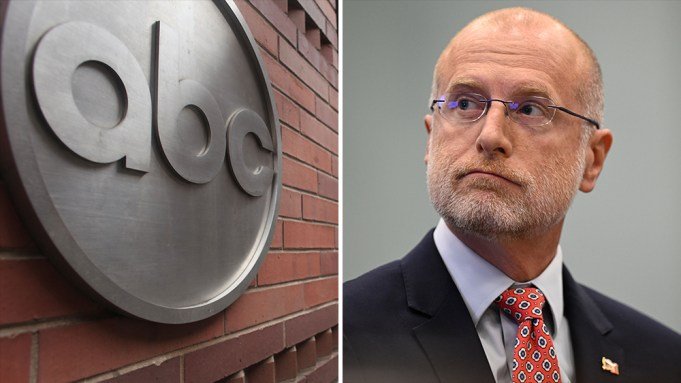
ABC responded to the FCC‘s justification for calling in its eight owned station licenses for early renewal, arguing in a new legal filing that the agency had failed to refute “substantial evidence” of a Trump administration “retaliatory motive.”
The network filed a First Amendment lawsuit against the FCC in August, claiming that its rare order that the stations’ licenses be reviewed early was part of an effort to chill its speech, citing statements made by President Donald Trump attacking its news coverage and late-night host Jimmy Kimmel, and warnings from FCC Chairman Brendan Carr, who was appointed by the president.
The FCC is seeking to dismiss the lawsuit, arguing, among other things, that its early renewal order was tied to an investigation of Disney’s diversity, equity and inclusion practices. ABC is seeking an injunction to halt the early renewal proceeding.
U.S. District Judge Loren L. AliKhanhas has set a hearing for Oct. 6.
In its filing, ABC’s legal team wrote that FCC officials “again improperly conflate the nature of Plaintiffs’ retaliation claims with the underlying substance of the early license renewal proceeding.”
ABC does “not ask this court to determine whether there was any violation of FCC rules. Instead, plaintiffs contend that the commission initiated the early renewal proceeding to retaliate against plaintiffs in violation of the First Amendment. And defendants have not legitimate expertise on that issue.”
The network’s legal team wrote, “The Commission ordered an unprecedented early license renewal proceeding to punish Plaintiffs for media coverage that the Administration dislikes. Defendants do not—and cannot—dispute that the First Amendment prohibits the government from exercising its regulatory powers to retaliate against a media organization for disfavored speech. And nothing in their brief refutes the substantial evidence of Defendants’ retaliatory motive.”
In complaining about network content, Trump has called for the revocation of ABC’s licenses and that of other broadcasters.
The network’s lawyers contend that the FCC offers “no response” to Carr’s own “statements indicating that he will use the early license renewal proceedings to review” ABC’s editorial decisions, including its decision not to broadcast Trump’s presidential address in July.
As for the DEI investigation, the network’s legal team argued that in response to a routine discovery dispute, the agency ordered the license review, an “unprecedented proceeding” that is the “broadcaster equivalent of the death penalty.” The first of the ABC licenses was not scheduled to come up for renewal until 2028.
Carr has launched multiple investigations of the broadcast networks, but has issued few if any actual sanctions or resolution. The network’s brief said that the regulatory threat has continued to have a “chilling effect,” noting that last week, Kimmel’s “interview of Texas candidate for U.S. Senate James Talarico was made available on YouTube rather than as part of the normal broadcast, with Kimmel specifically citing the FCC’s retaliatory campaign against Plaintiffs as the reason for this decision.”
Carr has said that he is enforcing an equal time rule that doesn’t prevent network talk shows from featuring candidates; they just may be on the hook for providing time to those candidates’ rivals. An FCC spokesperson did not immediately respond to a request for comment.
Several groups have filed amicus briefs in support of ABC, including the Foundation for Equal Rights and Expression, and another amicus brief from a group of former FCC chairmen, commissioners and staffers. They include Dennis Patrick, chairman under President Ronald Reagan: Al Sikes, chair under George H.W. Bush; and Tom Wheeler, chair under Barack Obama.
Their brief argued, “Woven throughout the Chairman’s specific retaliatory actions are broad threats and ominous warnings to the entire media ecosystem. Invoking a deliberately vague notion of licensee’s ‘public interest obligations,’ the Chairman has created a regulatory regime in which any broadcaster, including ABC, can be found guilty of transgressions at any time for seemingly any thing. The effect is an unconstitutional chilling of the broadcast press.”
In September 2026, footwear company Converse published an ad that social media users said evoked Ku Klux Klan and lynching imagery.
Rating:
In September 2026, a rumor circulated online that the footwear company Converse had allegedly released an advertisement that some social media users believed evoked Ku Klux Klan and lynching imagery.
The advertisement that Converse purportedly published showed the bottom half of a person in white holding Converse shoes. The shadows and lighting in the ad create an optical illusion that looked, to some, like a Ku Klux Klan hood and the feet of a hanging person.
Snopes readers asked us if the ad was real and searched the website for “racist Converse ad” and if there was a “Nike Converse commercial” that “looked like a lynching.” (Nike owns Converse.)
Converse did, in fact, publish the advertisement (archived) in question as part of its campaign with singer Karina, a member of the K-pop girl group Aespa, to promote the “Chuck 70 X,” a newer version of the company’s classic Chuck 70 shoes. As such, we have rated this claim as true.
The footwear company did not immediately return an inquiry for more information about its design and approval process, as well as whether Converse plans to pull the ad following online backlash.
A spokesperson for Converse sent the following statement over email when we asked about the ad:
We’re sorry. We understand why this image is deeply upsetting and recognize that we got this wrong. We removed it from our channels and are working to remove it everywhere it appeared. This should not have happened, and we will do better.
Footwear News — part of Women’s Wear Daily, a reputable fashion industry news outlet — first reported Converse’s apology statement.
As of this writing, a link connected to Converse’s official Threads account still shows the image in a Sept. 3 post. However, the post does not show up on Converse’s main Threads page (archived), suggesting the company may have archived the post to hide it from viewers.
(Converse on Threads)
Per the Wayback Machine archive, an earlier, Aug. 22 version of Converse’s U.S. page advertising the Karina and Chuck 70 X collaboration showed that the company had at one point used the image in question on its website. It has since been removed and replaced with a clip of Karina modeling the shoes while wearing a white skirt — presumably the same skirt shown in the controversial picture.
An Aug. 22 version of the Converse page promoting Chuck 70 X shoes in collaboration with Karina. (Converse/Wayback Machine)
Was the campaign created outside US?
Some of the claim posts also said the campaign was created in Malaysia, and thus the team behind it might not have had the cultural and historical context necessary to understand why those in the U.S. might feel that the image evoked white supremacist symbolism and violence against Black people.
Social media users shared screenshots indicating that the image may have initially been posted on the Converse Malaysia Instagram page.
Without more information from Converse, it was not possible to verify whether any members of the creative team were based in or from the U.S. That image was not on Converse Malaysia’s Instagram account. A search of the Converse Malaysia website for “Chuck 70 X” returned an error message.
Some posts also shared another advertisement showing a person on a ladder holding Converse shoes, which some social media users similarly thought evoked lynching imagery.
However, the image of the person on the ladder came from a separate campaign that was shot in Italy, according to a LinkedIn post from the founder of Palmes, a tennis and menswear company that collaborated with Converse on it.
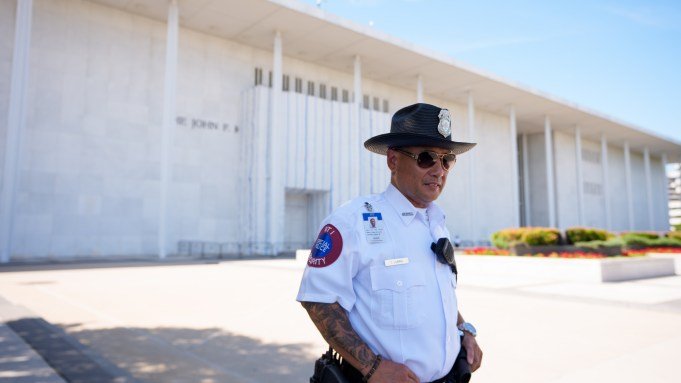
UPDATED, with judge’s order: A federal judge said that the Kennedy Center must give the court 30 days notice before proceeding on any demolition of the complex.
U.S. District Judge Christopher Cooper issued his order after President Donald Trump told reporters that the Kennedy Center may be “ripped down” unless a renovation plan is carried out and his administration gets recognition for it.
Speaking to reporters on Wednesday, Trump cited the center’s financial woes and need for repairs and revitalization.
“For me to get involved, and to take on long term, and to carry it, I think the Trump administration should certainly have recognition,” Trump said. “Because frankly, if we don’t do that, it’s going to close. It will end up being ripped down.”
Trump posted on Truth Social earlier in the week that the renovation will not take place unless courts lift a judge’s order that has prohibited his name from being inscribed on the facade of the complex.
Attorneys for Rep. Joyce Beatty (D-OH), an ex officio member of the Kennedy Center board who has been challenging its Trump naming plan and its plans for a two-year closure, noted Trump’s comments in a court filing early Thursday. They also submitted a photo of Trump in which he appeared to be reading a placard that read, “Kennedy Center demolished.”
After the center’s main building was closed on Wednesday, and Beatty filed a motion for an emergency hearing on the action. Her attorneys wrote that the closure may violate Cooper’s order that the center not shutter for two years unless the board has more fully considered its impact. But Cooper denied the request for an emergency hearing.
On Thursday, the center’s DOJ attorneys wrote that this week’s closure was temporary. They submitted a declaration from the center’s executive director and chief operating officer, Matthew Floca, who stated that the closure was due to “acute risks to public safety resulting from continued structural deterioration at the center.” He stated that the closure will last for seven days, unless extended, to assess the safety risks.
The center has pointed to a recent incident in which a five-by-four-foot piece of one-inch-thick ceiling plaster fell due to water damage following recent heavy rains. They also pointed to an assessment from engineering firm Walter P. Moore that there was more advanced deterioration of 2,500 pound soffit panels that hang above the center’s exterior.
“This court did not enjoin the center from temporarily closing the building to address significant safety hazards,” the attorneys wrote.
The DOJ attorneys also indicated that they plan to move to lift the judge’s order prohibiting the two-year closure plan.
Beatty’s legal team responded by claiming that the “rationale that they are only temporarily closing” the main building “is a plain pretext to justify shutting down the center permanently. The facts before the court are deeply concerning. Defendants announced the closure directly after the president stated that the center would close ‘immediately’ — not temporarily but in response to a board vote held” on Tuesday.
The congresswoman also asked the judge to “make crystal clear” that his order also prohibits demolishing the structure.
After his order for 30 days notice, she said in a statement, “It is simply outrageous that we have gotten to the point of consistent judicial intervention to protect this historic institution from getting bulldozed by the president.”
PREVIOUSLY: After fencing went up around the Kennedy Center and the main building was closed to the public, a House lawmaker on Thursday called for an emergency hearing, warning that the shutdown violates a judge’s order.
The board, dominated by allies of President Donald Trump, voted Tuesday for a resolution to close the main building of the complex, citing safety issues while the center has been working on plans for a large-scale renovation. The resolution also pointed to a recent incident in which a portion of the ceiling collapsed to the floor following a recent rainstorm.
But attorneys for Rep. Joyce Beatty (D-OH), an ex officio member of the center board who has been challenging the closure plan, noted that U.S. District Judge Christopher Cooper’s order prohibits a shutdown until he lifted a preliminary injunction, something that he has yet to do. The judge has ruled that renovations could proceed, but a closure could come only after the board made a fuller analysis of its impact.
Per a court filing, a staffer at a law firm representing Beatty sought to enter the main building on Wednesday but was advised by security that it was closed to the public.
Cooper has given the center until Thursday morning to respond to Beatty’s motion for an emergency hearing.
The judge on Tuesday prohibited the board’s latest plan to return Trump’s name to the façade of the complex or to designate its grounds for him. Trump, who serves as the center’s chair, posted on Truth Social that they would seek an expedited appeal, but that the renovation would not proceed if courts rule against the naming plan.
Beatty has said that she is not opposed to a renovation, but previous plans were to keep the center open as the rehab was carried out in phases.
Editor’s note: This article contains graphic and violent content.
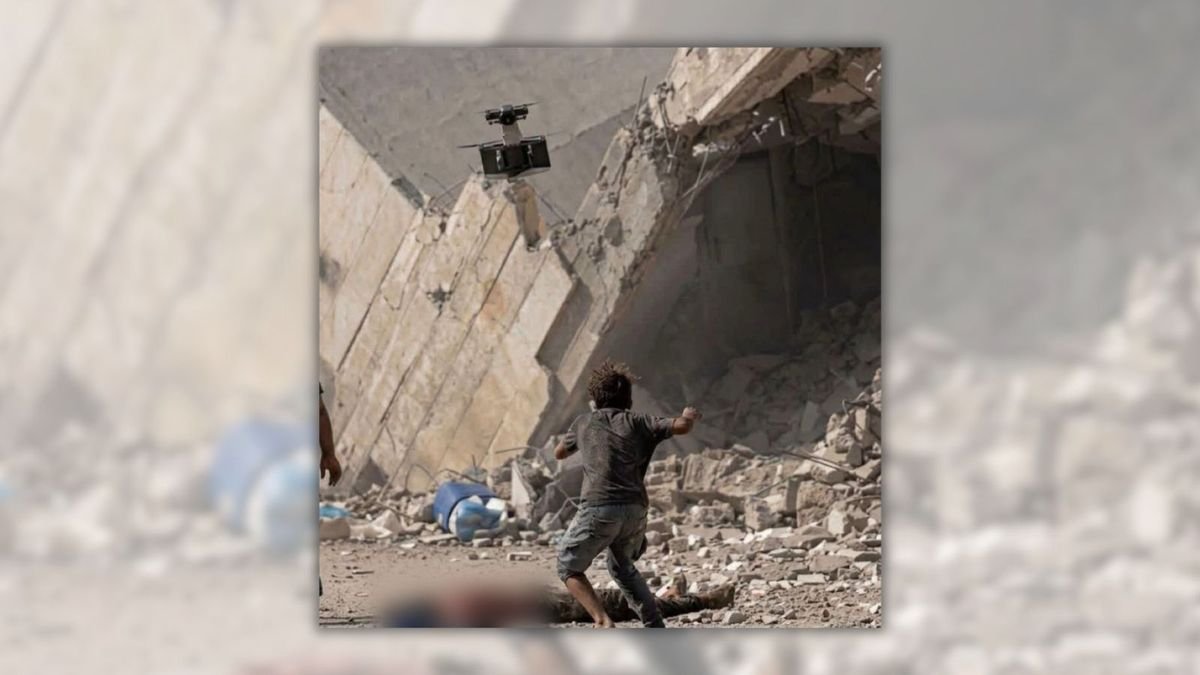
A rumor circulated online in September 2026 allegingseveralimages show the moment immediately before an Israeli “double tap” airstrike reportedly killed a Gazan child attempting to help a wounded person.
Research on this subject concluded the images were enhanced, likely with artificial intelligence. However, further examination found an authentic video served as the reference point for the enhanced images.
According to news reports, the video shows a boy named Muhammad al-Zinati dying in an airstrike that took place moments after an earlier strike injured or killed a man in the Sheikh Radwan neighborhood in Gaza City on Sept. 15. Getty Images hostsauthenticphotos that appear to match the same neighborhood, date and story.
We contacted Palestinian news agencies reporting on the matter, as well as the Israeli government, Israeli military, Pentagon and White House, to ask about the incident. The Pentagon referred us to the Israeli military. We will update this article if we receive further information.
In September 2026, people sharedvariousimages online allegedly showing the moment immediately before an Israeli “double tap” airstrike reportedly killed a Gazan child who was attempting to help a wounded person. The images show one adult lying on the ground and the child, a boy, reacting to an incoming missile or other type of aerial weapon about to strike the ground.
A Snopes reader emailed an X post attachment, asking, “Very curious to understand if this picture posted to X is real. Stating it’s a missile about to hit a child in Gaza.”
The same reverse image search located posts of a third image showing the same scene, including on Instagram (archived) and X (archived) — also with differences in the appearance of the aerial object, the building debris and the person lying on the ground.
(@hasoonmasre via X)
In sum, the images provided a cropped and enhanced look at a real moment sourced from an authentic video, likely achieved with the help of artificial intelligence. One low-quality, blurry frame of that same genuine video, highlighted in otherposts, truly appears to show a missile or other aerial weaponry right before a fiery explosion. For example, this post (archived) shows the authentic, unaltered moment:
(@Hakeam via X)
Twocomparisons of the enhanced and original (blurry) frames confirm they were shot from the same perspective, ruling out the idea a photographer also separately captured a still picture at the exact same moment.
A Threads post hosts the authentic (and graphic) video. That post also displays one of the altered and enhanced images to the left of the genuine clip. The video itself doesn’t display any signs of AI. The clip’s one-minute length serves as a credible indicator of its authenticity (most AI-generated videos on social media are extremely short, lasting only seconds).
Snopes emailed the Israeli government (including the Israeli military) to pose questions about its purported participation in the airstrike. We also emailed the Pentagon, whose spokesperson referred us to the Israeli military, and emailed the White House, as well as news media outlets reporting out of Gaza, for comment. We will update this story if we receive further details.
Some of these outlets shared the enhanced images without making note of the alterations, reporting the location of the incident as the Sheikh Radwan neighborhood of Gaza City, the date as Sept. 15 and the identity of the young victim as Muhammad al-Zinati (الل محمد الزيناتي), a boy described as “no more than 15 years old” who was reportedly walking from a Quran memorization circle. According to the outlets, the video shows him approaching the man lying on the ground, identified as Sharif Shadi Labd (شريف شادي لبد), who was injured by an Israeli airstrike moments earlier.
The Shehab article and that publication’s Telegram feed host other videos of al-Zinati’s death, including clips reportedly showing his body covered in blood at the scene of the airstrike, as well as several moments with his father crying over him (longer video).
Getty Images hostsphotos of the purported father, identified as a relative in several of the pictures, crying over a body, possibly al-Zinati. Its caption and otherimages match the neighborhood and date. The media-licensing company credited the pictures to photographers Ahmed Younis and Saeed M. M. T. Jaras.
Some of Shehab’s still-image content appear to feature AI editing, for example the overly smooth look of an image showing the two victims posing together, possibly created from two authentic photos. The Al Jazeera (Palestine) Facebook page also featured (archived) one of the enhanced images, as well as other video clips allegedly from the same scene.
Via Messenger, we contacted Al-Resalah (archived) and Al Jazeera (Palestine) (archived) to inquire about the altered images in their Facebook posts, as well as Shehab News Agency via X to ask about another enhanced image in one of its posts (archived) — mainly whether the images were edited with AI or reposted from elsewhere. Al-Resalah and Shehab are both affiliated with the militant and political group Hamas, according to The New York Times and BBC News. We will update this article if we receive further information.
We found some of the aforementioned reporting by using Google Translate to search for the victims’ Arabic-language names, a research strategy that can display results that may not show up in an English-only search.
Circelli, Ruben. “Is That Video Real? 7 Telltale Signs It’s an AI Deepfake.” PCMAG, 6 Jan. 2026, https://www.pcmag.com/explainers/is-that-video-real-7-telltale-signs-its-an-ai-deepfake.
Doulah, Dana, and Kaylan Geiger. “Explainer: The Evolution of Hamas Media Operations.” BBC News, 11 Oct. 2023, https://monitoring.bbc.co.uk/product/c204nudc.
Google Translate. https://translate.google.com/.
“His Heart Is Bigger than His Age…” Facebook, Al-Resalah, 15 Sept. 2026, https://www.facebook.com/alresalahps/posts/pfbid0Gjk36NirNpkYUs43jk1fk6VnH5Gw7nAt6VVunMVWRagNFZTwwXgTbe7X1ng5brwYl.
“How did Israeli occupation missiles kill the pride of a child in Gaza?” AlJazeera.net, 16 Sept. 2026, https://www.aljazeera.net/.
Kershner, Isabel. “Hamas Appoints Hard-Line Militant as Gaza Leader.” The New York Times, 13 Feb. 2017, https://www.nytimes.com/2017/02/13/world/middleeast/yehya-sinwar-hamas-gaza.html.
PerryCook, Taija. “What Is Hamas and What Is Its Role in Gaza?” Snopes, 15 Dec. 2023, https://www.snopes.com//articles/465785/what-is-hamas-gaza/.
“The Story of the Child Muhammad Al-Zinati: From Quranic Study Circle to Rescuing the Injured, Then Martyred by a Missile before the Eyes of the World.” Shehab News Agency, 15 Sept. 2026, https://shehabnews.com/post/164146/.
Younis, Jomaa. “Mohammed Al-Zinati: The story of a child in Gaza who was killed by Israel while rescuing a wounded person (Profile).” Anadolu, 16 Sept. 2026, https://www.aa.com.tr/.
Best-selling novels like Jean Hanff Korelitz’s The Plot and stage thrillers like Ira Levin’s Deathtrap, among many other works, have demonstrated that stealing another writer’s work can have fateful if not deadly consequences. Neil LaBute (In the Company of Men, Nurse Betty) delivers another variation on the familiar theme with his latest effort, receiving its world premiere at the Oldenburg Film Festival.
Taking place in a single location and featuring but three lead performers, Murderous carries a strong whiff of such LaBute-cited influences as Joseph L. Mankiewicz’s Sleuth and Hitchcock’s Rope. Unfortunately, itdoesn’t live up to those predecessors, feeling like an undernourished stage thriller whose plot machinations are far too obvious.
Murderous
The Bottom Line
Stagy and contrived.
Venue: Oldenburg International Film Festival Cast: Gia Crovatin, Thomas Sadoski, Jordan Baker Director-screenwriter: Neil LaBute
1 hour 47 minutes
The story, beginning with a first chapter titled “Him,” revolves around Marian (frequent LaBute collaborator Gia Crovatin), a filmmaker who made a splash with her debut effort, a femme-oriented horror film entitled “Murderous.” With her financial success signified by her gorgeously rustic home, a former mill, and the vintage red Porsche in her driveway, she’s surprised one day by the unexpected arrival of Norman (Thomas Sadoski), who announces that he wants to have a talk. And that he’s driven all the way from Iowa to do it.
Clearly made uncomfortable by the intrusion, she eventually agrees to invite him in. It turns out that they were both students at the same time — he was a teacher’s assistant, he reminds her — and had a brief romantic relationship. He compliments her expensive new home, commenting that she seems to have no personal items or photographs. What she does have are valuable knick-knacks previously owned by such famed writers as Truman Capote and Willa Cather. Not to mention Shirley Jackson’s letter opener. It’s a wonder she doesn’t have Chekhov’s gun on display.
After brief small talk in which Norman’s sorry lot in life is made clear — he has no job and no girlfriend, he admits — he finally gets to the point.
“Did you think I wasn’t going to see it?” he asks about her film that won awards and put her on the map. It turns out that he had originally devised the film’s premise and the two had worked on the idea together and even collaborated on flipbooks of individual sequences, which he claims to still have “somewhere” in his possession. Needless to say, he thinks they need to come to some sort of agreement on compensation.
Despite the tension, things, as they tend to do in LaBute’s works, turn sexual. When he reminds her that she cheated on him during their relationship, she takes it as a cue.
“Is that what you want to make up for things? A blow job?” she asks. Norman thinks carefully for a moment before replying, “I wouldn’t hate it.”
To reveal more about what happens next during the charged encounter would be too much of a spoiler. Suffice it to say that things end … abruptly.
Another unexpected visitor, this time an older woman, arrives in the second chapter, “Her.” She’s Lila (Jordan Baker), who declares herself to be a big fan and simply wants some DVDs autographed, including one for her son. Again, Marian reluctantly invites the stranger in, and the two engage in a lengthy discussion about Marian’s film and the film business in general. It provides the opportunity for Marian to launch into a diatribe about the frustrations of working with clueless movie distributors and marketers, which, coming from LaBute, feels like the most personal and honest part of the film.
The film drops hints about Lila’s true identity, or at least Marian’s perception of it, with the subtlety of a sledgehammer. Onstage, these plot machinations might have worked with a live audience eager to be manipulated. But they come across as forced and artificial here, and despite the best efforts of the performers Murderous feels more like an actors’ exercise than an organically plotted thriller. It never transcends its air of narrative claustrophobia and, considering its thin premise, would have benefited from a sharp cutting of its overlong 107-minute running time.