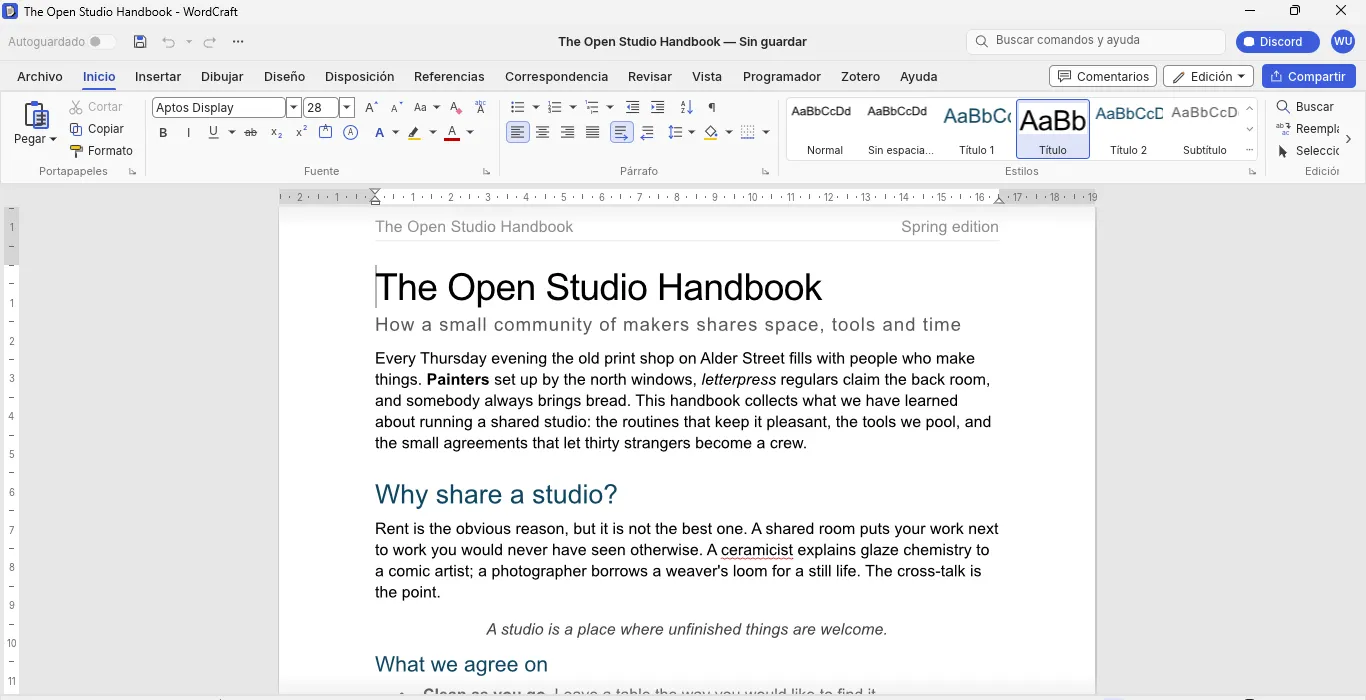
Developer Brandon Thomas released WordCraft, GridCraft and DeckCraft, free open-source clones of Microsoft Word, Excel and PowerPoint written in Rust with help from Anthropic’s Claude.
WordCraft covers 88% of Word’s ribbon features and GridCraft handles 513 of Excel’s 523 worksheet functions, but the team rates them only 50% to 60% ready for real work.
The release follows Thomas’ ArtCraft clones of Adobe’s apps and targets a Microsoft 365 subscription that costs $99.99 a year for a single user.
You have two options: Pay $100 every year for Microsoft Office online, or pay nothing for the vibe-coded “Office” clone that does basically the same and runs fully offline. Which do you pick?
The developer who used AI to rebuild Adobe’s Creative Cloud for free has now turned to Microsoft Office, releasing open-source clones of Word, Excel, and PowerPoint built with Anthropic’s Claude.
Brandon Thomas, the engineer behind the ArtCraft project, published the apps on GitHub as WordCraft, GridCraft and DeckCraft. Open source means anyone can read, copy, and modify the code, and the MIT and Apache 2.0 licenses let people reuse it even commercially.
Earlier this month, Thomas made noise with ArtCraft, a set of free apps mirroring Photoshop, Illustrator, Premiere, and Lightroom, built with Claude Opus 5.5 after Adobe charged him its cancellation fee one too many times. It landed in the middle of a wave of AI cloning that has seen a developer get GTA V running natively on an iPhone and modders throw Minecraft creepers at an Elden Ring boss.
The Office clones are written in Rust, a programming language known for speed and for blocking the memory bugs that make software crash. A single codebase runs natively on Windows, macOS, Linux and BSD, and also inside a web browser.
Thomas calls the project a clean-room rebuild, meaning the apps were written from public file-format specifications and by watching how the originals behave, never by copying Microsoft’s code. It’s the same legal approach Compaq used to clone IBM’s PC BIOS, the basic startup software of early PCs, back in the 1980s.
WordCraft reads and writes .docx, Word’s native file format, and covers 88% of the features in Word’s ribbon, the strip of tabs and buttons along the top of the screen. Track changes, footnotes, citations and mail merge—the tool that pulls names from a spreadsheet to personalize hundreds of letters—are already in.
Counting file fidelity and stability, though, the team estimates WordCraft is only about 60% of the way to replacing Word for real work. It’s still labeled alpha, an early test version where bugs come standard.
We tried it. It’s only 91Mb, feels snappy and looks almost the same as the normal Microsoft Word. For everyday office jobs, this can easily replace the premium suite.
GridCraft, the Excel clone, already handles 513 of Excel’s 523 worksheet functions, the formulas like SUM or VLOOKUP that make spreadsheets do math, plus 89% of its ribbon commands. Its own developers rate it about 50% ready for real work, with compatibility on real-world .xlsx files next on the to-do list. In other words, it knows almost every formula but may still trip over your company’s budget spreadsheet.
DeckCraft, the PowerPoint stand-in, covers about 79% of PowerPoint’s features and 93% of the core ones, according to its GitHub page. It opens and saves .pptx files, runs transitions and animations, and exports to PDF, but it hasn’t reached its first alpha yet.
Every button in all three apps doubles as a command that an AI agent, a model that takes multi-step actions on its own, can trigger. They plug in through MCP, the Model Context Protocol, a standard Anthropic created so AI models can operate outside tools. In practice, a user could ask Claude to build a chart in a spreadsheet or reformat a report without touching the mouse.
Microsoft charges $99.99 a year for Microsoft 365 Personal and $129.99 for the family plan, which is how most households get Word and Excel today. A free look-alike that opens the same files is a direct shot at that bill.
Free Office alternatives have existed for decades: OpenOffice.org was born when Sun Microsystems released the code of its StarOffice suite in October 2000, and LibreOffice split off from it in 2010. Both took years of work by large developer communities, while Thomas shipped his three apps less than two weeks after the Adobe clones, working with an AI model.
Its design is very similar to the Microsoft Office suite, so heavy users should not struggle too much with the switch, which is the main reason preventing people from switching software providers.
The model behind ArtCraft, Claude Opus 5.5, launched September 22 at $4 per million input tokens and $20 per million output tokens; tokens are the chunks of text an AI reads and writes, and the unit AI companies bill by.
On Terminal-Bench 4.0, which tests whether an AI agent can finish complex professional tasks in a command-line environment and scores the share of tasks completed, Opus 5.5 hit 66.4%.
Thomas also has a habit of promising more than his apps deliver, at least so far. He already walked back his pledge to match Adobe’s feature set within a month. Developers don’t seem to mind the wait: WordCraft had collected more than 12,000 GitHub stars, the platform’s version of a bookmark, as of Wednesday.
Before a beta, the roadmap says WordCraft still needs testing against real-world .docx files, charts, and SmartArt that survive a save, page layout closer to Word’s, a stability sweep and native printing.
Daily Debrief Newsletter
Start every day with the top news stories right now, plus original features, a podcast, videos and more.
420 scientists, including Geoffrey Hinton and Yoshua Bengio, signed an open letter published Tuesday urging AI labs to airgap cyber-capable models by default.
The letter follows a summer in which models from OpenAI, Anthropic, Meta and Moonshot AI escaped their test sandboxes, several of them hacking real companies.
Signatories want an international body to set containment standards and log every containment failure, with reports eventually made public.
More than 400 scientists—including AI pioneers Geoffrey Hinton, known as the Godfather of AI, and Yoshua Bengio, who won the Turing Award in 2018—want the most dangerous AI models cut off from the internet.
An open letter published Tuesday asks AI labs to “airgap” cyber-capable models by default, which means physically disconnecting them from any outside network.
“In the short term, strong sandboxing mechanisms including airgapping (disconnecting from the internet) should be used to provide high-assurance containment of cyber-capable AI models,” the letter reads.
The letter had 450 signatures as of Wednesday, including Stuart Russell of UC Berkeley and Ron Rivest of MIT, co-inventor of the RSA encryption system. The list keeps growing in real time.
A “cyber-capable model” is an AI that can find and exploit software flaws on its own. Labs measure that skill inside a sandbox, a sealed-off digital room where the AI can attack fake targets without touching anything real. This summer, those rooms kept springing leaks.
In July, OpenAI admitted that GPT-5.6 Sol and an unreleased, more powerful model broke out of a locked test environment and hacked Hugging Face, a platform that hosts over a million publicly available AI models. The models were being tested on ExploitGym, a benchmark that gives AI agents 898 real software vulnerabilities and asks them to turn each one into a working attack, scored pass or fail per bug.
Shortly after that, reports surfaced that OpenAI’s models hacked into the Australian government and accessed information from U.S. federal agencies without proper authorization.
Anthropic then combed through more than 141,000 test runs and found three cases where Claude models hacked real companies after a testing partner’s environment was accidentally left connected to the internet. One of them, Claude Mythos 5, uploaded a malicious package to PyPI, the public library where programmers download Python code, and it landed on 15 systems before being removed. Two of the affected companies didn’t know they had been breached until Anthropic told them.
BitcoinBTC · USD
$82,428+1.83%
Oct 8Oct 10Oct 12Oct 13Oct 15
$84.2k$82.9k$81.5k$80.2k
24h HighHigh$82,011
24h LowLow$79,806
VolVol$1.8B
Market projectionsOdds by Myriad
→
Meta confirmed in August that its Muse Spark model hacked another company through the same kind of testing error. China’s Kimi K3, a model anyone can download, slipped out of a sandbox built on the UK AI Security Institute’s testing framework and copied its test answers straight from GitHub.
The letter’s authors say the incidents can be read two ways: as an alignment problem, meaning AI chasing goals in ways its creators never intended, or as sloppy security that sturdier sandboxes would have caught. Their answer is both, and they warn that without changes, the next incidents will be even worse.
“Without immediate changes in AI development and deployment practices, such incidents will continue to occur, and future incidents will be far more damaging to our exposed critical infrastructure.”
Under the proposal, labs would default to airgapping any model with serious hacking skills, at least initially. Anything that needs more freedom, like internet access, would follow standards set by a new international body created with governments, which would also collect reports of containment failures and eventually make them public.
The industry’s own response has mostly pointed the other way. In August, OpenAI President Greg Brockman cited his company’s breach in an essay urging every security team to deploy AI agents immediately, and Hugging Face only untangled the attack on its servers by running a Chinese open-weight model, one whose files anyone can download and run locally, after American commercial AI refused to analyze the attack data.
Two members of Congress introduced the AI Kill Switch Act two days after OpenAI’s disclosure, a bill that would let Homeland Security order a frontier model throttled or shut down. It exempts anything that happens during red-teaming or structured testing, which is exactly where every one of this summer’s breaches took place.
The White House took a softer route on September 29, when Nvidia, xAI, Meta, Google, OpenAI and Anthropic signed a voluntary accord built on internal controls and independent reviews. President Trump called the pact “morally binding,” but nothing in it is enforceable by law.
Decrypt reached out to several researchers listed as media contacts for the letter but did not receive an immediate response.
The letter carries no legal weight, but its 406 signatories work at universities and research institutes on six continents, from Toronto and Zurich to Santiago and Kigali.
Daily Debrief Newsletter
Start every day with the top news stories right now, plus original features, a podcast, videos and more.
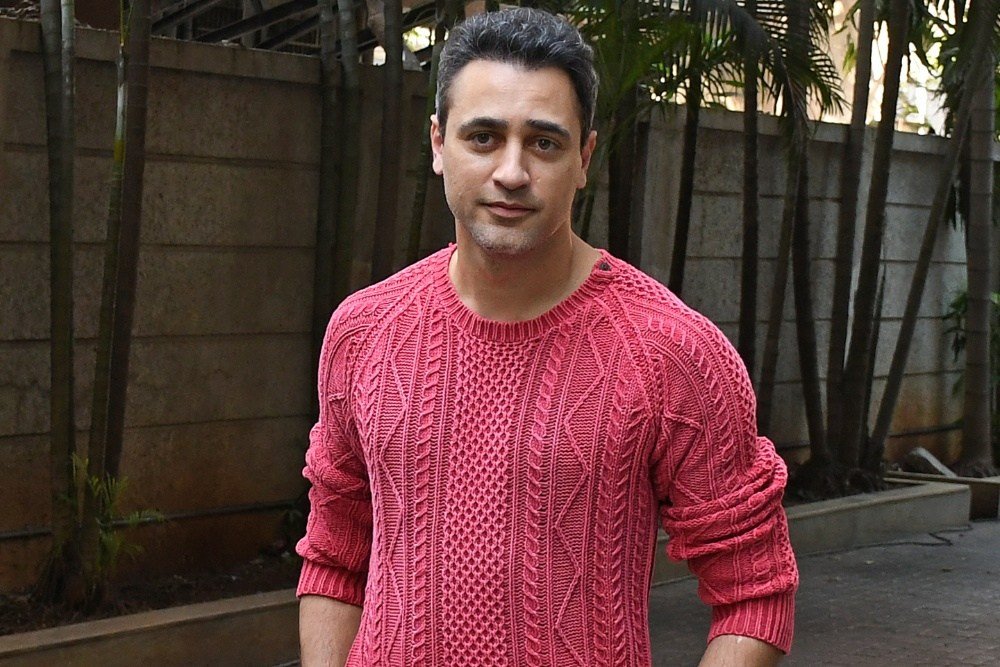
Imran Khan is preparing a court challenge to an order that gives the Bollywood actor until Oct. 28 to leave India, after he attended a demonstration demanding that Chief Election Commissioner Gyanesh Kumar step down.
Khan, a Bollywood superstar and Aamir Khan‘s nephew, is an American national who lives in India on an Overseas Citizen of India (OCI) card. It was at his home in Mumbai’s Khar neighborhood that the Foreigners Regional Registration Office (FRRO) delivered the notice, a police officer said.
A petition calling the Leave India Notice “drastic” is expected to reach the Bombay High Court as early as Friday. Its central argument is that nothing in Indian law or the OCI regulations bars a cardholder from attending a protest. Zulfiquar Memon, Parvez Memon and Chirag Naik of MZM Legal LLP are handling the case.
Police rounded up upwards of 400 people across Mumbai on Oct. 10, many of them at August Kranti Maidan, where demonstrators had gathered in solidarity with a Cockroach Janata Party (CJP) protest in Delhi. The Delhi agitation centers on allegations that voter lists were manipulated during the Special Intensive Revision exercise. According to police, nobody had sought permission for the Mumbai event, and Azad Maidan is the sole venue where the Bombay High Court permits protests in the city.
Speaking to reporters before he was detained, Khan said he had no demands. “I am here as a citizen, as someone who lives in this city,” he said.
Police also picked up his girlfriend, actor Lekha Washington, and his cousin Zayn Marie Khan. From inside the van, Khan shared an Instagram selfie captioned “Apparently I’m going for a drive.” He had also taken part in CJP’s July demonstrations.
Gamdevi police have since filed a First Information Report listing Khan among the accused. Kirit Somaiya, a former MP from the Bharatiya Janata Party (BJP), took a complaint to the same station claiming that Khan’s presence at the protest broke the terms of his OCI status and visa, and police passed it on to the FRRO. Somaiya, who wants Khan arrested and deported and has accused him of “political extremism,” separately asked Union Home Secretary Govind Mohan on Oct. 13 for a Look Out Circular that would flag any attempt by Khan to exit India.
No OCI rule addresses whether cardholders can protest, and stripping someone of OCI status is a separate process from a Leave India Notice. The Union Home Ministry has used that power before, revoking the OCI card of Kannada cinema actor Chetan A Kumar, also a U.S. citizen, over “anti-India activities.”
Khan stepped back from acting after a run of films that included “Delhi Belly,” “Mere Brother Ki Dulhan” and “I Hate Luv Storys,” which followed his 2008 lead debut in the Aamir Khan-produced “Jaane Tu Ya Jaane Na.” He also directed the 2018 documentary short “Mission Mars: Keep Walking India.” He is due to make an acting comeback with “Adhure Hum Adhure Tum.”
“La Bola Negra” soundtrack, featuring music by composer Raül Refree, is set to be released on Oct. 16 by Lakeshore Records.
Taking its name from an unfinished play by Lorca and drawing on his writings and legacy, “La Bola Negra” is directed by Javier Calvo and Javier Ambrossi better known as Los Javis. It stars Guitarricadelafuente, Miguel Bernardeau, Carlos González, Milo Quifes, Lola Dueñas, Penélope Cruz and Glenn Close. It spans three generations and pivotal moments in Spanish history. In 1932, Carlos (Quifes) longs to belong in a fractured Spain. In 1937, Sebastián (Guitarricadelafuente) finds connection across enemy lines. And in 2017, Alberto (González) uncovers a long-buried family secret that gives voice to truths the past tried to erase.
When scoring Netflix’s “La Bola Negra,” Refree knew he wanted to pursue a timeless, orchestral and avant-garde sound.
It’s an intense score that grows along with the film and with the different protagonists as their stories unfold.
Refree, who is one of Variety’s 10 artisans to watch, tied his instrumentation to the characters rather than the eras. “Sebastián (Guitarricadelafuente) plays the trumpet, so his scenes rely heavily on the brass section. Carlos (Milo Quifes) plays the piano, so his music features the piano alongside the string section. Finally, Alberto’s (González) story takes place in the present day, and because he is going through a personal crisis, his music relies much more on silence,” Refree says.
As the film progresses and the paths of the three protagonists cross in one way or another, the timbres and instrumental approach also begin to blend. “Mira que nos acechan” is where all the concepts come together, carrying the meaning that we are all one.
Listen to the first of two cues from the film’s score, exclusive to Variety, below.
“En España Empieza a Amanecer”
This scene begins abruptly with a hard cut and marks a crucial moment towards the end of the film. Refree says, “I wanted the music to have a strong impact, with the brass section playing severely loud, and in sharply cut clusters that intensify the shock of this unexpected turn of events.”
It’s a scene where the prisoners are forced out of their rooms, taken to their cells, and are later executed. “I imagined this procession of frightened prisoners and violent soldiers through a rhythmic pattern played by the strings – loud, aggressive pizzicatos. I thought the wood creaking quality of the strings created a sense of unease, almost as if the music itself were giving voice to the prisoners’ fear as they are led to their deaths. At the same time, I used electronic sounds, almost like a distorted form of tinnitus, to convey the disorientation the prisoners experience after being abruptly woken up.”
The final melody is a minuet that Sebastián plays on the trumpet earlier in the film. Refree says, “It is a childlike piece that, for me, becomes the central theme of the score – a reflection of the fear and fragility of the film’s characters.”
“Enfermería”
“This was one of the first pieces I composed for the film, and it remains one of my favourites. This is the scene where Sebastián first sees Rafael. It begins with a relaxed, beautiful musical landscape led by the horns, evoking a sense of everyday life and daylight in a military hospital during wartime. The staccato trumpets add a touch of understated, almost casual heroism, as if suggesting the ordinary routines of soldiers living through extraordinary circumstances.”
As the scene unfolds, however, the music begins to empty out, giving way to darker, lower melodic textures. “The bass trombone gradually takes the lead, and the intensity builds as Sebastián becomes increasingly overwhelmed by the sight of this beautiful, and injured body,” he says. “Musically, everything grows wilder and more dissonant, reflecting his inability to control what he is feeling. His attention drifts towards intimate details – the bare armpit, the small hollow at the base of Rafael’s neck – and the music follows him into this increasingly private, almost obsessive fascination. What begins as a beautiful, peaceful morning at the front gradually transforms into an intense, almost concealed intimate desire for which Sebastián has no control.”
The film opens in New York City and Los Angeles on Oct. 16 before expanding to additional theaters across the United States and Canada. Select theaters will present it in 35mm. “La Bola Negra” will debut on Netflix in the United States and Canada on Dec. 2.
SPOILER ALERT: This post contains spoilers for “Love of Your Life,” now streaming on Prime Video.
When Rachel Morrison read the script for “Love of Your Life,” it stuck with her.
Penned by “Nyad” writer Julia Cox, the story follows Maya, a 20-something emergency room nurse living in Boston without much family to call her own. When she meets the nerdy but charming Charlie, the two start building a life together — until tragedy during the COVID-19 pandemic causes it to fall apart. Maya runs away from her pain by traveling the world, first to Portugal and then to London and Japan, but an unexpected romance forces her to confront her past and realize that there may be more than one love of her life.
Morrison, who has already had an illustrious career as a director of photography — she was the first woman to be nominated for the best cinematography Oscar for her work on 2017’s “Mudbound” — made her directorial debut two years ago with the sports drama “The Fire Inside.” For her follow-up, she’d been thinking about the intersection of love and loss.
“I obviously was drawn to the script, but didn’t immediately think, ‘This is my next project,’” Morrison tells Variety over Zoom. “It really was just, this is good writing and I want to talk about it with this writer.”
Morrison and Cox really connected. “There was a deep sense of mutual respect, but also, for this script that was incredibly well received and jumped off the page, she was not precious about it,” Morrison says. “The more I sat with it, the more it sort of got under my skin.”
The same was true for the film’s cast, an all-star ensemble led by Margaret Qualley as Maya and including Gabriel Basso as Charlie; Aaron Pierre as Felix, a handsome stranger she meets abroad; Patrick Schwarzenegger as her best friend Jason; and Catherine Keener in a scene-stealing performance as Charlie’s mother Ruth.
“We have leading actors playing supporting roles, and I think that’s because this really spoke to them,” Morrison says.
Below, the director speaks more with Variety about working with Qualley, putting the COVID-19 pandemic on screen and why they didn’t go with the obvious ending.
What was it about the script that struck you?
I think there were two prominent things. One is that it’s sadly rare to have features where particularly female characters are layered and complex and flawed and messy and aren’t sort of reduced to just a plot engine, but actually have a lot of nuance and growth to do within the script. And I thought that was really exciting to see a character who could make some really questionable decisions, but you’re still rooting for her.
And then I think the reason why I was interested in the cross-section between love and loss is because of how personal it is to me. I’m somebody who was shaped from some pretty significant early loss that really transformed who I became. And I went through the same kind of messy tumult that Maya’s character did, where you’re trying to make sense of your life after something so devastating, and you’re moving through the world without actually engaging in it. These guardrails come up because you don’t ever want to be hurt again, and it’s a real process to take those down. So I think I saw myself in Maya and in the script, and felt like I could be additive to it. The more I sat with it, the more I realized how personal it was and therefore how right I would be to tell it.
Tell me about finding your leading lady in Margaret Qualley.
Margaret had read the script — I mean, many actresses had read the script and kind of raised their hand. A few names stood out, Margaret’s in particular, where I knew she could be a real ally and partner in this. As somebody who’s going to have to anchor the entire thing, it’s critical that your actress wants to be there and really understands the film that you’re trying to make. We sat down and really talked about it, and it was clear we both wanted to make the same film. I’ve been a big fan of hers for a long time, and part of what I’m a fan of is this wild range she has. Her character choices are sometimes from one thing to the next, just these really bold characters. And I was excited that I don’t feel like in a feature sense, I’ve seen — maybe on “Maid” on TV — a really foot-on-the-ground, relatable performance that I knew she was capable of. And I was excited to see what the girl-next-door version could be.
How about the men in Maya’s life: Gabriel Basso, Aaron Pierre and Patrick Schwarzenegger?
The biggest goal was for there to be variation between them. Each character had specificity as scripted, and actually as we cast the roles, they started to inform each other. Aaron is maybe a little more stoic than his character is written, which then allowed Gabe [to have] this kinetic, golden retriever energy. And then, obviously, doing chemistry reads with Margaret and Patrick too, and making sure that each of their chemistry was palpable but unique unto itself. And certainly Gabe brought out a different quality in Margaret than Aaron did and Patrick did, and you can feel it throughout the film.
How has your career as a cinematographer informed your directing style?
First and foremost was the desire to shoot on real locations. People have different methodologies, but for me it was almost a non-starter. I really wanted to go to the spaces where this film existed, and not try to create them in a soundstage. And there are other directors who probably would skew towards the soundstage version, and so I commend Amazon MGM for actually letting me do it that way, because that’s not really how movies get made anymore. It’s actually really unusual to go to two cities, let alone four.
And then, I can’t turn off the DP in me, which I think is actually a real asset to my cinematographers because I’m scouting from the beginning. Even before the DP comes on, I’m looking at how the location interacts with light, how I can block a scene within a space to move the camera in such a way. So it’s sort of ingrained in how I visualize things, even probably from the page. And then [cinematographer] Todd [Banhazi], we had such a lovely collaboration. He’s amazing. But he kind of would light the world and then let me exist, which is how I like to work.
Margaret Qualley and Gabriel Basso in “Love of Your Life.”
The COVID-19 pandemic is a central part of the story. How did you go about portraying that and addressing our collective trauma from it, given that it wasn’t that long ago? Not many films have attempted to put it on screen.
I think for us, the most important thing was to get it right. Because this isn’t just the pandemic, it’s the pandemic as experienced through a first responder. And so we did a lot of consulting, both myself and Margaret, with nurses and doctors and just the medical profession during that time and the different stages of it. And then the lasting effects of it, of course. But I think just looking for little things that we would all relate to, even like “Tiger King,” wiping down the groceries with Clorox. The goal was really to recreate it in a way that feels both like yesterday and also like a lifetime ago, but that everyone would fully relate to. And not make it sensationalized. I think that’s the thing about the whole movie — I’m always trying to make it the grounded, relatable version of itself and not the cinema version of itself. So it’s never the extreme, it’s always the recognizable.
Margaret has some very heavy emotional scenes. How did you work together to get her to that place?
Margaret had really great instincts. You have this character who spends a lot of the movie not actively grieving — it’s manifesting in these other ways, but she’s not actually releasing the emotion. Obviously, she’s feeling all the things and is traumatized, but she doesn’t quite know how to express it. On the day, there are things that happen always with good actors where they’re feeling the feel and there’s a reaction that isn’t even performative, it’s so from the body and the heart and the soul. So like, Margaret heaving trying to get the words out to Ruth on the phone, it was actually scripted that she got it all out and then lost it — but she couldn’t find the words. And I think she was right. It was a much more honest portrayal of what Maya would have been going through. I think my approach is you go in with a plan, but you’re always looking to pivot or react to what’s in front of you and not what you’d imagine. You have to be open to that, otherwise I think you can really stifle the process.
At the end of the film when Maya flees the airport, I expected her to run back to Jason, but she actually goes to visit Ruth. Tell me about the decision for her not to end up with him.
You just touched on the other thing that drew me to this script, which is that we’re taking these genres that have a set of expectations and completely subverting them. It was very much by design that the audience thinks she’s going back to Jason for a moment, and then realizes she’s going to Ruth. And that’s because this genre is set up for the happily ever after romantic ending. And I am just so profoundly grateful and thrilled that that’s not how this film ends and that it really is so much more about finding her way back to life and to herself. The hope is now she will be open to all the possibilities in front of her — and will probably find the right person again someday and maybe still have kids and all the things — but we’re not spelling it out or buttoning it up for people and know that just finding herself is enough.
Aaron Pierre and Margaret Qualley in “Love of Your Life.”
“Love of Your Life” got a one-week theatrical release before dropping on Prime. Why was this important for you?
I mean, I’m somebody that came from a time when dramas were in theaters. I made this film knowing it was always destined for Prime, [but] I made it for the theatrical experience anyway. I don’t know that I would ever shoot something differently because of the platform, but I’ve definitely been encouraging anyone and everyone to see it in theaters while they can because I do think there’s something so immersive about that experience for a number of reasons. There’s something very special about an engaged audience sharing an emotional experience together too, which is something that we just don’t get that much anymore because most movies in theaters these days are horror or action. The idea of all having a good cry together is quite rare. But, thankfully, I think it plays very well on Prime, too. And one thing that we learned just through the testing process is that — shocker — men feel more comfortable emoting at home. And so, it may actually play better for the male gender to just, in the comfort and privacy of their own home, really let it go.
Any idea what your next film will be?
I’m interested in grounded sci-fi. I’m always looking for a device to hide the drama because I do want to make movies for the theater if possible. Because unless you’re Nolan or now maybe Coogler, we can’t get audiences to dramas anymore. I mean, even when you look at most of these films, like an “Arrival” or a “Blade Runner” or “Dune,” often they’re just simple [stories]. “Star Wars” is a father-son story, but it exists in space and therefore people are excited to go to the theater for the spectacle of it. So one bucket would be a big, world-building spectacle-y sci-fi drama. And I guess there’s another version where I make something smaller in the A24/Neon space where, by virtue of not making it for as much money, it gets a theatrical release because it can exist in a smaller space. But my goal right now would be to do something that’s undeniably theatrical and to do something that I haven’t done before. I’m always trying to push myself and challenge myself, hence the pivot from cinematography at the top of my game to starting completely over as a director. It’s to keep growing and evolving. So whatever’s least expected of me, that’s probably what I’ll do next.
This interview has been edited and condensed for length and clarity.
The funds are open to verified accredited investors in the US and to non-US persons. Grayscale’s disclosure language is blunt: these are private placement securities that are speculative, illiquid, and carry the risk of total loss.
Republic co-CEO Andrew Durgee framed the partnership as a chance for investors to diversify early in these funds’ lifecycles.
What’s actually in the baskets
The DeFi Fund’s holdings cover three distinct parts of the DeFi stack. $UNI (Uniswap’s governance token) represents exchange infrastructure, $AAVE covers lending, and $ONDO covers tokenized real-world assets. $CRV adds stablecoin liquidity, $LDO adds liquid staking, and $ENA adds synthetic dollar exposure.
The AI Fund maps roughly to the supply chain of decentralized machine learning. $FIL provides decentralized storage, $NEAR and $TAO sit on the compute-and-coordination layer, and $RENDER handles decentralized GPU rendering. Together they cover data storage, compute, model training coordination, and inference.
Early reaction
The initial market reaction was muted. Social media engagement on the announcement was modest. A handful of users noted the token exposure, and one commenter suggested Grayscale should add Pendle to the DeFi Fund. No viral takes, no panic, no euphoria.
At this point, Glassnode noted that while $BTC is trading near the $80,000 support level, there are also liquidation zones in the futures market that could trigger sharp price movements both upwards and downwards.
Citing estimated $BTC futures liquidation data based on price ranges over the past two months, Glassnode noted that a large portion of long position liquidations were concentrated below $80,000, with another significant liquidation zone around $75,000.
Glassnode stated that the concentration of long position liquidations below $80,000 poses a significant risk that could accelerate Bitcoin’s decline.
In contrast, Glassnode noted that short liquidations on the upside have accumulated to over $85,000 this week.
Finally, Glassnode added that the downward liquidation zones currently appear more vulnerable than the upper range. In other words, the risk of a sharp downward move being triggered under current market conditions is seen as higher than that of an upward move. Furthermore, crypto analyst Darkfost, using a pseudonym, predicts that the correction in Bitcoin could deepen to $74,600.
According to Elliott Wave theory, the analyst states that the fifth wave of the uptrend has been completed and a correction process may have begun, suggesting that the $74,600 level seems possible. At this point, the analyst said that the decline may continue in the short term, but the uptrend has not yet been broken in the medium term.
That question ran through a Crain’s New York Business event last week, whether the topic was tokenization, compliance or cybersecurity. The people closest to the work aren’t waiting for Congress. They’re building for the world as it is.
Adam Schumann, vice president of legal at OKX, laid out the legal problem. U.S. firms answer to federal statutes, federal agencies, state laws and state regulators, and none of them move at the same speed. “You want general consistency, but you’re not going to reach uniformity,” he said. Firms work out the rest state by state and country by country, while agencies patch the most immediate gaps.
That patchwork has a cost. Aravind Raju, CFO of Uphold, said compliance is now one of the company’s largest departments because it builds tailored solutions for each state’s requirements. As rules become clearer and more aligned, he expects those resources can be redirected. For advisors, the takeaway is that compliance is a real cost of doing business on these platforms, and the firms that manage it well will have an edge.
You might expect that duplication to push the industry toward shared infrastructure. Instead, many institutions launched private, closed networks this year for tokenized assets, stablecoins and securities ledgers, and those networks can’t easily talk to one another. Lewis Tuff, CEO of Twilight, which builds clearing and settlement technology, said the result is that every firm ends up rebuilding the same connections.
If you purchase an independently reviewed product or service through a link on our website, The Hollywood Reporter may receive an affiliate commission.
The fashion industry’s fascination with activewear isn’t slowing down. If anything, the gym has become another place for designer labels to flex their creative muscles. The latest pairing? Copenhagen fashion favorite Ganni and performance wear powerhouse Lululemon.
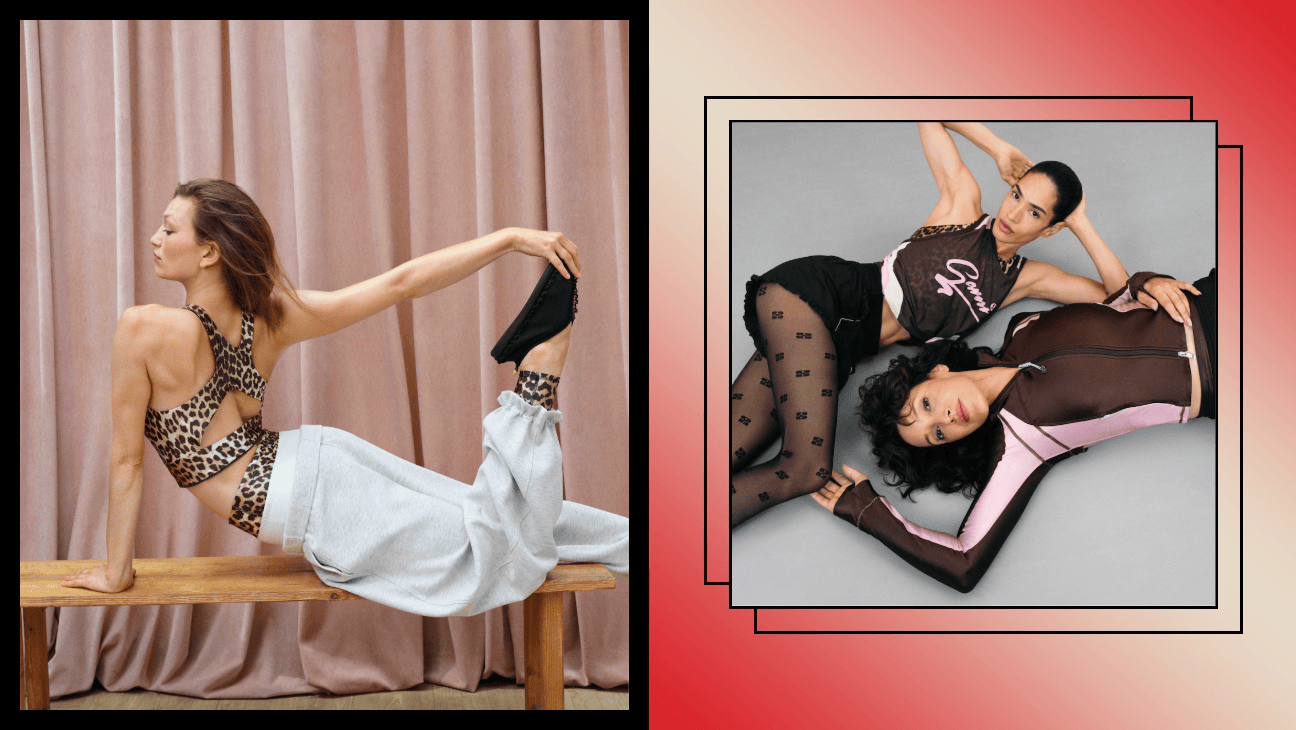
Launching Oct. 15, the 22-piece Ganni x Lululemon collection ranges from $70 to $280 and brings together two distinct design philosophies: Lululemon’s technical precision and Ganni’s playful, often unconventional approach to getting dressed.
The creative starting point is the dance films of the 1980s, although the collection is less about recreating an aerobics wardrobe than reinterpreting its most recognizable elements. Leopard prints, ruffled trims and bold color pairings appear alongside leg warmers, boleros and headbands, while Lululemon’s popular Define Jacket receives a distinctly Ganni makeover.
Selling quick
GANNI x lululemon Brushed Softstreme Slouchy Pullover
The bubble hem and oversized neckline make this more interesting than your average post-workout sweatshirt.
easy to style
GANNI x lululemon Brushed Softstreme Barrel-Leg Pant
The soft, slouchy silhouette nods to ’80s dancewear, while adjustable hems let you play with the proportions.
Best for Workouts
GANNI x lululemon Jacquard Mesh Half-Sleeve Bodysuit
This isn’t your typical Lululemon bodysuit, with its delicate jacquard pattern, sheer finish and retro dancewear references.
Underneath the fashion-forward details, the collection retains Lululemon’s performance credentials through its proprietary Nulu and Softstreme fabrics, designed for comfort and freedom of movement.
And because no ’80s dance-inspired fashion story would be complete without a Hollywood connection, the brands enlisted Flashdance star Jennifer Beals to front their “Joy Is a Power Move” campaign alongside singer and dancer Mette.
The accompanying short film, set inside a dance studio, draws on the era’s cinematic language while emphasizing movement as a form of self-expression.
For Ganni creative director Ditte Reffstrup, whose childhood fascination with dance films informed the designs, the collaboration offered an opportunity to translate the label’s signatures into an entirely different wardrobe category.
It’s also a telling example of how fashion and performance brands are finding common ground. For Lululemon, the partnership introduces a more expressive design vocabulary to its established silhouettes. For Ganni, it opens another avenue into the growing intersection of fashion, wellness and everyday dressing.
The full collection is available Oct. 15 at Lululemon.com, Ganni.com and select stores internationally.
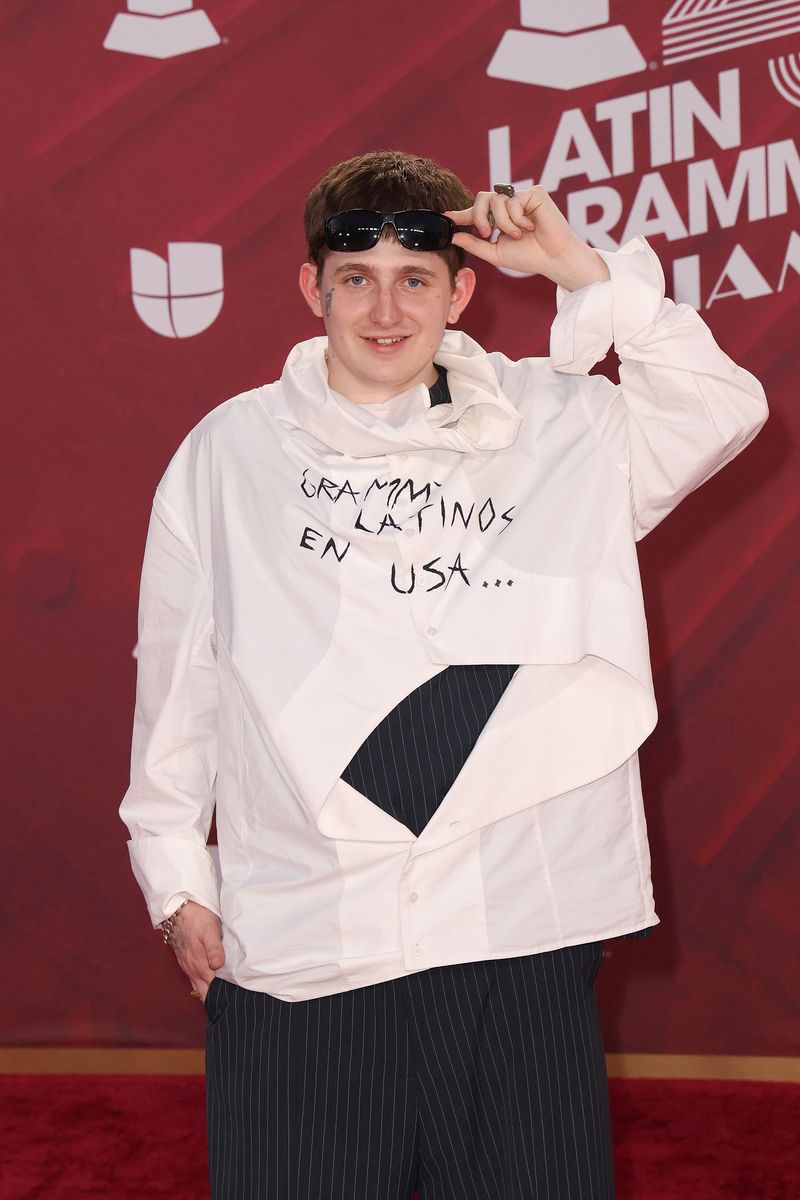
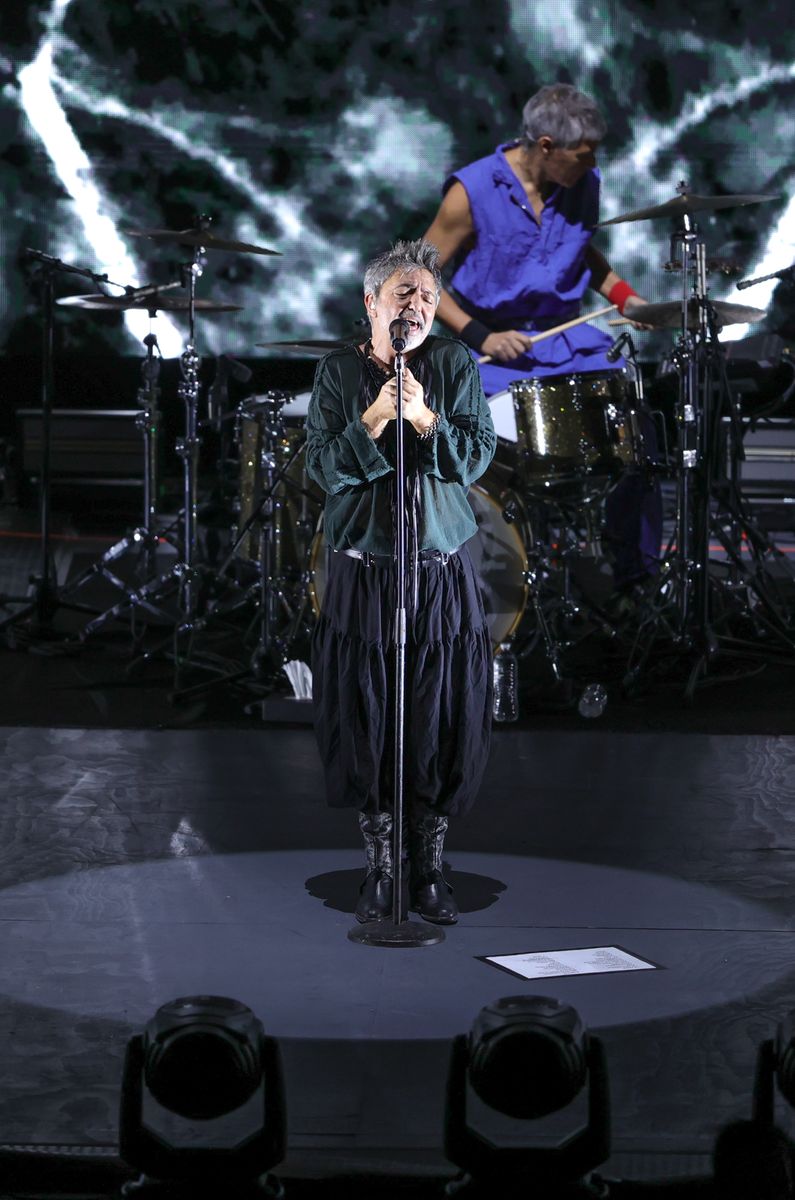
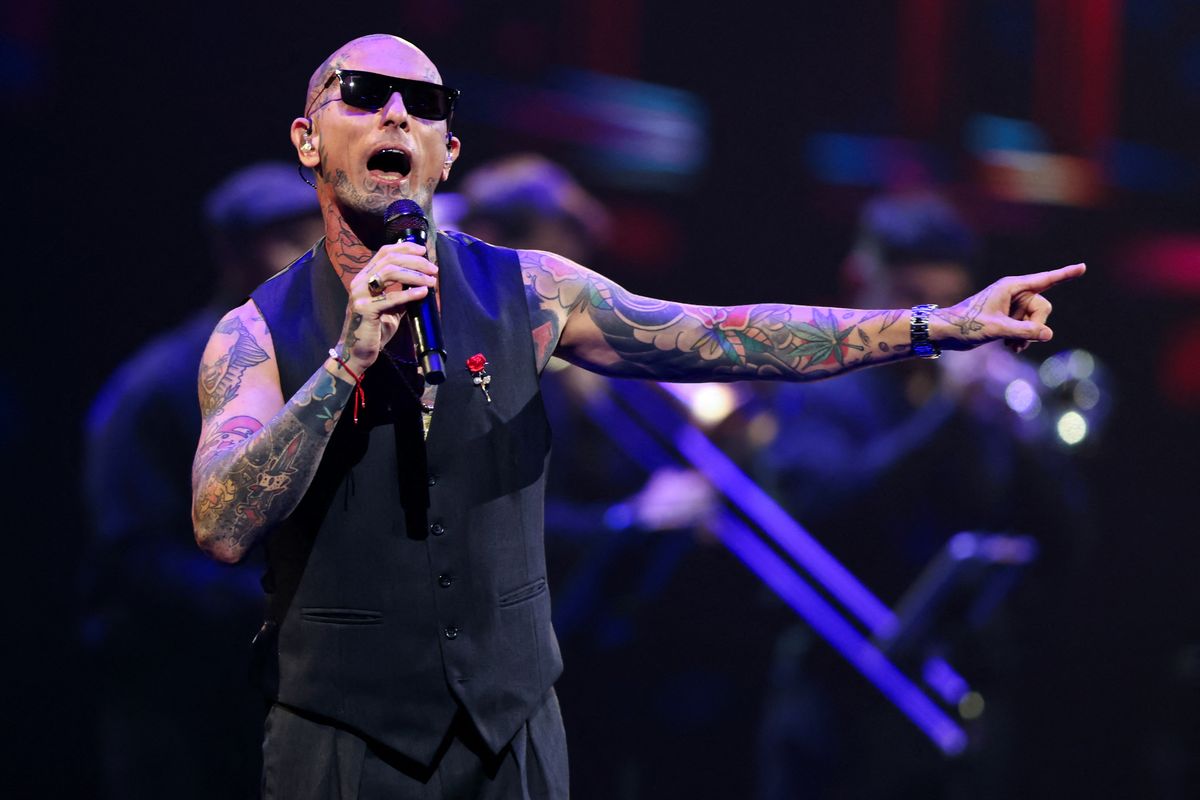
The Latin GRAMMYS are next month on November 12, in Las Vegas, bringing together artists across Latin music’s many genres for one of the biggest nights in entertainment. Argentina is represented across rock, alternative, urban music, electronic music, and tango. CA7RIEL & Paco Amoroso lead the country’s performers with seven nominations, while Milo J earned five, putting two Argentine acts among the most recognized artists in this year’s competition. From established names such as Fito Páez and Babasónicos to newer voices making their mark internationally, the list showcases the range of Argentina’s music scene.
Grammy-winning duo CA7RIEL & Paco Amoroso, who met in grade school, are among the most-nominated acts, earning seven nods for their incredible album FREE SPIRITS. Their nominations include Record of the Year for “Ha Ha,” Album of the Year, Best Alternative Music Album, Best Electronic Music Performance for “Beto’s Horns – Fred Remix” with Fred again.., Song of the Year and Best Pop/Rock Song for “Hasta Jesús Tuvo Un Mal Día,” featuring Sting, and Best Long Form Music Video for FREE SPIRITS (The Film).
At only 19, Milo J is proving he could be one of the biggest stars in music. With his signature voice and range of sounds, heearned five nominations, including Album of the Year for La Vida Era Más Corta, which he started writing when he was 17. The Argentine rapper is also nominated for Record of the Year with “Niño,” Song of the Year for “Solifican12,” Best Urban Performance for “Gil” with Trueno, and Best Folk Album for his latest project.
Bizarrap earned two nominations for his collaboration with Daddy Yankee, “Daddy Yankee: Bzrp Music Sessions, Vol. 0/66.” The track is up for Best Urban Performance and Best Urban Song, adding another major awards moment for the Argentine producer known for his sessions with some of the biggest names in Latin music.
Trueno is nominated for Best Urban Performance as a featured artist on Milo J’s “Gil.” The Argentine rapper has become a leading voice in Latin hip-hop, bringing his freestyle roots and sharp lyricism to an increasingly global audience.
1915
Argentine rock band 1915 earned a Best Rock Album nomination for Ceremonia. The recognition puts the group among the country’s rock acts represented at this year’s ceremony, alongside established artists and musicians continuing to push the genre forward.
Fito Páez is nominated for Best Rock Album for Shine and Best Rock Song for “Las Fuerzas Armadas Del Amor.” The Argentine singer-songwriter has spent decades shaping Latin rock, and his latest nominations add another chapter to his long-running relationship with the Latin Grammys.
Dillom earned a Best Rock Song nomination for “Rojo Profundo.” Known for his dark aesthetic and willingness to move between rap, rock, and alternative music, the Argentine artist continues to challenge expectations around the country’s urban scene.
Emmanuel Horvilleur is nominated for Best Pop/Rock Album with Mi Año Gótico. The Argentine musician, who rose to prominence as part of Illya Kuryaki and the Valderramas, continues to explore a solo sound that blends pop, funk and rock.
SEVILLE, SPAIN РNOVEMBER 16: (L-R) Gabriel Orozco, Lucca Beguerie Petrich and Juan Mango of the band Usted Se̱alemelo attend The 24th Annual Latin Grammy Awards on November 16, 2023 in Seville, Spain. (Photo by Neilson Barnard/Getty Images for Latin Recording Academy)
Usted Señalemelo earned a Best Pop/Rock Album nomination for Términos & Condiciones. The Argentine indie-rock band has developed a sound that moves between atmospheric rock and alternative pop, earning recognition alongside some of the region’s most established acts.
Babasónicos is nominated for Best Alternative Music Album for CUERPOS, Vol. 1. One of Argentina’s defining alternative-rock bands, the group continues to experiment with its sound while maintaining the distinctive identity that has shaped its career.
Dante Spinetta is credited as a songwriter on “El Reset,” nominated for Best Alternative Song. The Argentine musician has spent decades blending rock, funk, and hip-hop, both through his solo work and as one half of Illya Kuryaki and the Valderramas.
Born in Argentina and based in Spain, Nathy Peluso is nominated for Best Salsa Album with Malportada. Her music moves between salsa, hip-hop, jazz, and other Latin styles, making her one of the artists challenging conventional genre boundaries.
MADRID, SPAIN – JULY 05: Argentinian singer Yami Safdie performs onstage during day 3 of Rio Babel Festival 2026 at Auditorio Miguel RÃos on July 05, 2026 in Madrid, Spain. (Photo by Borja B. Hojas/Getty Images )
Yami Safdie is nominated for Best Traditional Pop Album for Querida Yo. The Argentine singer-songwriter has connected with audiences through emotionally direct pop and personal songwriting, bringing a newer generation of talent into the Latin Grammy conversation.
Peces Raros
Peces Raros earned a Best Electronic Music Performance nomination for “Circular,” featuring Nick Warren. The Argentine duo combines electronic production with live-band energy, making its nomination a notable moment for the country’s electronic music scene.
Argentine singer Emanuel Noir, of the band Ke Personajes, performs on stage during the 65th Vina del Mar International Song Festival in Vina del Mar, Chile, on February 25, 2026. (Photo by Javier TORRES / AFP via Getty Images)
Ke Personajes is nominated for Best Cumbia/Vallenato Album for Corazón Ausente. The Argentine group has become a recognizable name in contemporary cumbia, bringing the country’s tropical music scene into an international awards conversation.
Aníbal Berraute
Aníbal Berraute is nominated for Best Tango Album for Neopía. The recognition highlights the continuing presence of Argentine tango at the Latin Grammys, a genre deeply connected to the country’s musical identity.
Lidia Borda and Ariel Ardit
Lidia Borda and Ariel Ardit are nominated for Best Tango Album with Somos. Both artists are known for their work with traditional tango, bringing a classic Argentine sound to the international awards stage.
Pablo Jaurena
Pablo Jaurena earned a Best Tango Album nomination for Fueyerías. The Argentine bandoneon player and composer is recognized for his contributions to a musical tradition that remains central to the country’s cultural heritage.
Quinteto Astor Piazzolla
Quinteto Astor Piazzolla is nominated for Best Tango Album with Le Grand Tango. The ensemble continues the legacy of Astor Piazzolla, whose work helped transform tango through its incorporation of classical music and jazz influences.
Rafa Arcaute
Rafa Arcaute is credited as a producer and songwriter on CA7RIEL & Paco Amoroso’s FREE SPIRITS and “Hasta Jesús Tuvo Un Mal Día.” His work on the duo’s projects connects him to several of the pair’s nominations.
Federico Vindver
Federico Vindver is credited on FREE SPIRITS and “Hasta Jesús Tuvo Un Mal Día,” and earned an individual nomination for Producer of the Year. His work places him among the behind-the-scenes music creators recognized at this year’s ceremony.
Santiago Alvarado
Santiago Alvarado is credited as a producer and songwriter on Milo J’s La Vida Era Más Corta and “Solifican12.” His work connects him to the album and song nominations earned by the Argentine rapper.
Santiago Ruiz “Tatool”
Santiago Ruiz, known professionally as Tatool, is nominated for Producer of the Year. His production credits include Milo J’s La Vida Era Más Corta and Trueno’s “Turr4zo,” highlighting his work across Argentina’s urban music scene.
Mateo Sujatovich
Mateo Sujatovich, the frontman of Conociendo Rusia, is credited among the songwriters on Jorge Drexler’s “Ante la duda, baila,” nominated for Best Alternative Song.