Ever want to shut down your PC when you’re not nearby? A new update to the Link to Windows app for Android will soon let you remotely control your computer’s shutdown process.
As spotted by Android Authority, the latest beta version of Microsoft’s Link to Windows app has introduced new options to shut down, restart, or put your device to sleep. A previous version of the software let you lock your computer remotely, but the new beta tools give you much more control.
This is part of Android beta version 1.26101.103.0, and it’s expected to be included in the final software at a later date. Microsoft offers a Link to Windows app for iPhone, but there’s currently no evidence of this feature being in development for Apple devices.
If you download the latest Android beta, you’ll find a Power button in the software. Tapping this gives four options: Lock PC, Sleep PC, Shut down, and Restart. Activating these will show a message which says, “You may have unsaved data on your device. Make sure you’ve saved any open work on your PC,” alongside a reminder that you can’t do so remotely.
If you’ve forgotten to save important work, you can put your device to sleep instead. That option includes a note stating that you won’t be able to reactivate your PC remotely and that you’ll need to activate it again in person.
Recommended by Our Editors
You can also turn on Windows updates through the app when they’re available for your PC, with options for Update and shut down and Update and restart appearing when new software is pending.
Link to Windows is built to better connect your phone with your computer, letting you easily transfer files or access your device’s other features, such as phone calls and messages. However, the app isn’t anywhere near as in-depth as the latest Googlebook OS software, which seamlessly ties your computer to your Android phone and is available across five new laptops.
About Our Expert
Experience
I’ve been a journalist for over a decade after getting my start in tech reporting back in 2013. I joined PCMag in 2025, where I cover the latest developments across the tech sphere, writing about the gadgets and services you use every day. Be sure to send me any tips you think PCMag would be interested in.
After years of anticipation, it’s finally almost time for Grand Theft Auto VI, 2026’s most hyped video game. We’ve heard the rumors, we’ve seen the screenshots, we’ve analyzed the Netflix extended look that showcased lots of gameplay. All that’s left is to drive into Vice City’s open-world crime paradise for ourselves once the Nov. 19 release date arrives.
In the meantime, you have an important decision to make: How will you play GTA 6? If you already own a console, that decision is made, and all that’s left to do is preorder the game. But if you’re still on the fence about which platform to pick, I’m here to help with this information-packed guide that explains what you should expect in terms of price and power.
The Best Consoles for Playing GTA 6
GTA 6: PlayStation 5 vs. Xbox Series X
GTA 6 has been primarily advertised as a PlayStation 5 title. In fact, Rockstar Games states that the Netflix showcase was captured on Sony’s hardware. That said, GTA 6 will simultaneously launch on both current-gen platforms: PlayStation 5 and Xbox Series X. So, if you don’t already own either system, you should consider the pros and cons.
GTA 6 costs the same on both platforms: $79.99 for the Standard edition and $99.99 for the Ultimate edition, which includes extra content like new vehicles and missions. The base PS5 and Xbox Series X are roughly equivalent in power, so you don’t need to worry about major performance differences between those two.
PREORDER GTA 6
Grand Theft Auto VI (for PlayStation 5)
With everything else equal, you should look at the price. The current economic shenanigans, from tariffs to RAM shortages, have led console manufacturers to raise prices over time rather than lower them, as was the norm. Currently, a PlayStation 5 with 1TB of storage costs $649.99, while an equivalent Xbox Series X costs $799.99. Meanwhile, the all-digital PS5, which lacks a disc drive, costs slightly less at $599.99; its Xbox counterpart is $749.99.
Right now, GTA 6 is only available digitally. That’s an incredibly controversial move, but it makes a cheaper digital console more appealing. Keep in mind that these prices may rise, especially if platform owners anticipate massive holiday hardware sales. They may anticipate consumers willing to pay any price to get their GTA 6 fix.
Regardless, if you’re shopping on price and GTA 6 performance, the PS5 is the clear winner between the two base consoles. However, there’s more to the story.
PREORDER GRAND THEFT AUTO VI
Grand Theft Auto VI (for Xbox Series X/S)
GTA 6: PS5 Pro vs. Xbox Series S
PlayStation and Xbox also offer alternative consoles that can play GTA 6, each with its own strengths and weaknesses. The PlayStation 5 Pro has increased horsepower, enabling it to play games at higher resolutions and with better frame rates. Right now, expect GTA 6 to run at 30 frames per second on standard consoles.
There’s no word on the performance improvements the PS5 Pro may offer, but it’s a safe bet that the system will run the most beautiful version of GTA 6 at launch. You’ll just need to shell out a hefty $899.99 for the console.
Recommended by Our Editors
On the other hand, if you just want to play GTA 6 and don’t care too much about graphics, you could save money by purchasing the $499.99 Xbox Series S. This budget console has lower specs, but it can deliver respectable current-gen experiences. Remember that Rockstar Games made the gorgeous Red Dead Redemption 2 on last-gen consoles. So you should still be able to lose yourself in Vice City, even on the lower-powered Xbox Series S.
GTA 6: PC vs. Nintendo Switch 2
Currently, GTA 6 is only slated for PlayStation and Xbox consoles. Given that Rockstar Games intends to sell millions of GTA VI copies, the game will likely move to new systems at some point. It’s basically a guarantee that GTA VI will eventually come to PC. This has been the case with every modern Rockstar Games title: launch first on console and encourage a consumer double-dip on PC about a year later. Expect that version to take advantage of all the hardware power and mod support PC players can throw at it.
But what about the Nintendo Switch 2? Nintendo’s hybrid system is breaking sales records and scooping up mainstream hits like Call of Duty and Madden. Plus, it already has classic Rockstar Games releases, such as the GTA Trilogy and Red Dead Redemption. Will GTA 6 come to Nintendo Switch 2? Considering that Rockstar Games made a GTA 6 version that runs on the weaker Xbox Series S hardware, a Switch 2 port is possible, given all the financial incentives. But nothing is confirmed at this point.
Verdict
So, for now, when it comes to playing Grand Theft Auto VI at launch, the real choice is between Microsoft and Sony’s consoles. And considering power, price, and popularity, the PlayStation 5 (whether base, all-digital, or Pro) is the best option for most gamers.
About Our Expert
Jordan Minor
Principal Writer, Software
Experience
My PCMag career began in 2013 as an intern. Now, I’m a senior writer, using the skills I acquired at Northwestern University to write about dating apps, meal kits, programming software, website builders, video streaming services, and video games. I was previously a senior editor at Geek.com and have written for The A.V. Club, Kotaku, and Paste Magazine. I’m the author of the gaming history book Video Game of the Year: A Year-by-Year Guide to the Best, Boldest, and Most Bizarre Games from Every Year Since 1977, and the reason everything you know about Street Sharks is a lie.
Recent US-Greenland-Denmark agreement excludes mining or drilling rights while reinforcing Greenland’s sovereignty.
Published On 14 Oct 202614 Oct 2026
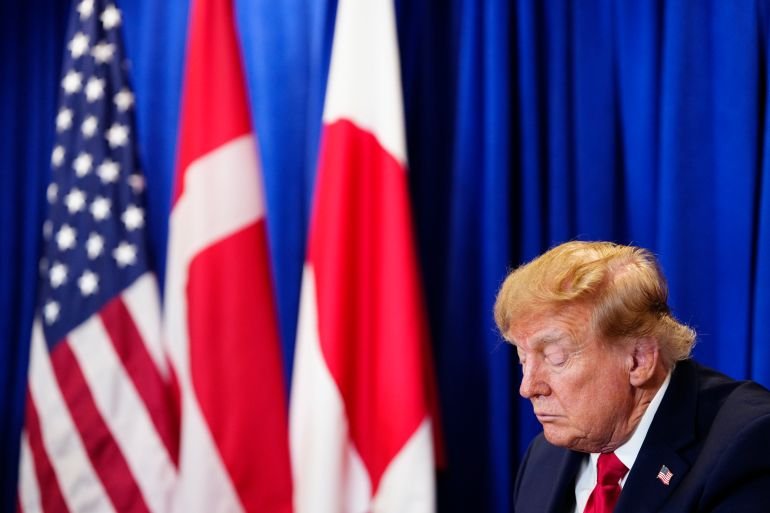
Denmark has demanded that US resource exploration in Greenland respect the island’s laws amid President Donald Trump’s claim that oil, gas and mineral extraction will soon begin there.
The Danish Foreign Ministry reaffirmed on Wednesday that last month’s agreement between Denmark, Greenland and the US did not alter the rules for extraction.
Recommended Stories
list of 3 itemsend of list
The agreement “does not grant investors from the US any preferential treatment” over investors from other NATO and EU countries when it comes to access to natural resources in Greenland, the ministry said.
In a post on Truth Social, US President Trump called the semi-autonomous Danish territory “our new and beautiful Greenland”.
“Massive Oil, Gas, and Mineral Exploration is getting ready to begin,” he wrote, without providing details.
What the deal covers
Trump, Danish Prime Minister Mette Frederiksen and Greenland’s Prime Minister Jens-Frederik Nielsen signed the 10-page agreement on the sidelines of the United Nations General Assembly in New York on September 22, ending months of tensions over Trump’s threats to control Greenland.
The deal allows the US to “modernise and expand” its activities at the Pituffik Space Base, a remote US military installation in northwest Greenland.
It also paved the way for two new military bases and Trump’s “Golden Dome” missile defence system, while reaffirming Danish sovereignty and Greenlanders’ right to self-determination.
It did not allocate any rights for mining or drilling.
Greenland’s ban
Greenland banned uranium mining and all future oil exploration in 2021.
Its government is reviewing whether a Texas firm, Greenland Energy, can use permits that predate the ban.
The company said in August it planned to drill for oil in 2027 at an untested basin on Greenland’s east coast, although it lacked its own permit.
Danish security policy adviser Jacob Kaarsbo said Trump’s comments could signal that his desire to control Greenland remains unchanged.
“It is extremely dangerous to view this agreement between the Trump administration and Denmark as something that has altered Trump’s intentions,” he said.
Mikkel Olesen, a senior researcher at the Danish Institute for International Studies, told Al Jazeera that details regarding mining and exploration rights remained unclear and that information coming mostly from the US side should be taken “with a grain of salt”.
Richard Weitz, a fellow at the NATO Defense College in Rome, said Trump “backed down and settled for less” than he sought, but still “got pretty much everything he wanted, except formal annexation”.
The US president has long been unhappy with inside information about his administration being leaked to the media.
United States President Donald Trump has suggested that those who leak information to the news media should be shot as punishment.
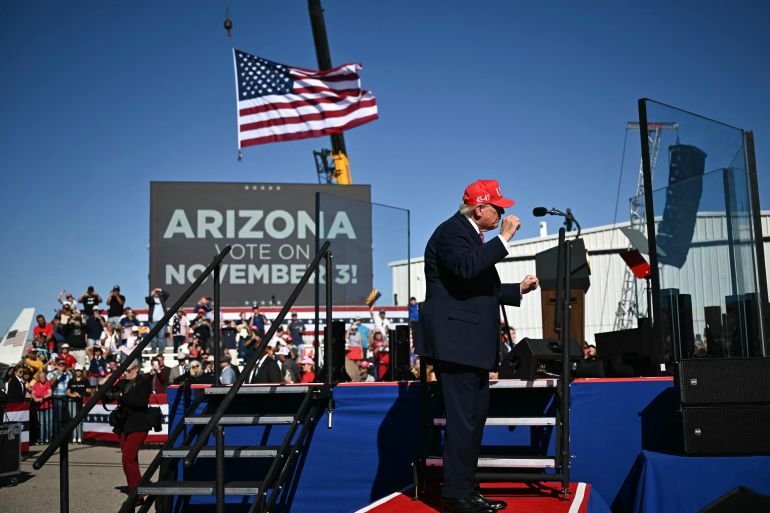
Trump made the remarks at a campaign rally in Bullhead City, Arizona, as he urged supporters to vote in the November 3 midterm elections.
Recommended Stories
list of 3 itemsend of list
“In my opinion, leakers should be shot,” Trump told the crowd. “In the old days, we used to shoot leakers, you know, when they leak what time you’re going to attack a country.”
Trump made the statement in an apparent reference to Operation Midnight Hammer, which saw the US launch a surprise attack on Iran in June 2025 during the 12-day war between Israel and Iran.
In the aftermath of the attack, several media outlets published findings from a preliminary report by the US Defense Intelligence Agency.
That report – which had not yet been released to the public – indicated that Iran was able to move some of its enriched uranium away from the sites the US had bombed.
It also suggested that the extent of the damage to Iran’s nuclear facilities was more modest than what Trump had asserted.
Trump, however, appeared to signal that the timing of the US attacks was among the leaked information. He accused the news media of putting military members in danger, calling out The New York Times and CNN in particular.
“They leaked the time we were leaving, the time we were arriving,” Trump said, claiming he had to reschedule the bombing campaign two days later as a result.
“Somebody leaked. Some sleaze-bag, they ought to go to jail or be shot. For the rest of their life, they should be in jail.”
Trump has long had an adversarial relationship with the news media, and he has previously called for harsh punishment against any official who passes on confidential information to news outlets.
After parts of the Defense Intelligence Agency report became public, he blamed lawmakers in the Democratic Party for its release.
“The Democrats are the ones who leaked the information on the PERFECT FLIGHT to the Nuclear Sites in Iran,” Trump wrote on social media at the time. “They should be prosecuted!”
Under Trump, the White House has taken aggressive action to track down the source of leaks.
Staff in his administration, as well as officers in the military, have also been asked to take polygraph tests.
Journalists at several news outlets, including The New York Times, The Washington Post and The Wall Street Journal, have also received subpoenas aimed at determining the sources of internal information made public.
The newspapers had reported on stories such as a botched Navy SEALs raid in North Korea and how Trump ignored internal Pentagon warnings against launching the Iran war.
Last year, the Department of Defense demanded that journalists who wished to access the Pentagon sign an agreement not to publish unauthorised material.
Much of the Pentagon press corps refused to agree, and a federal court struck down many of the new demands made on journalists at the department.
Trump has long raged against leakers, going back to his first term as president from 2017 to 2021.
Former White House official Alyssa Farah Griffin told a podcast in 2024 that Trump had called for leakers to be executed, after media outlets reported that he had taken shelter in a White House bunker during racial justice protests in 2020.
Trump appeared to reprise that sentiment in his speech to Arizona voters on Wednesday, less than three weeks before the November 3 midterms.
“Leakers should be dealt with very, very strongly,” Trump said. “To me, they are the scum of the earth.”
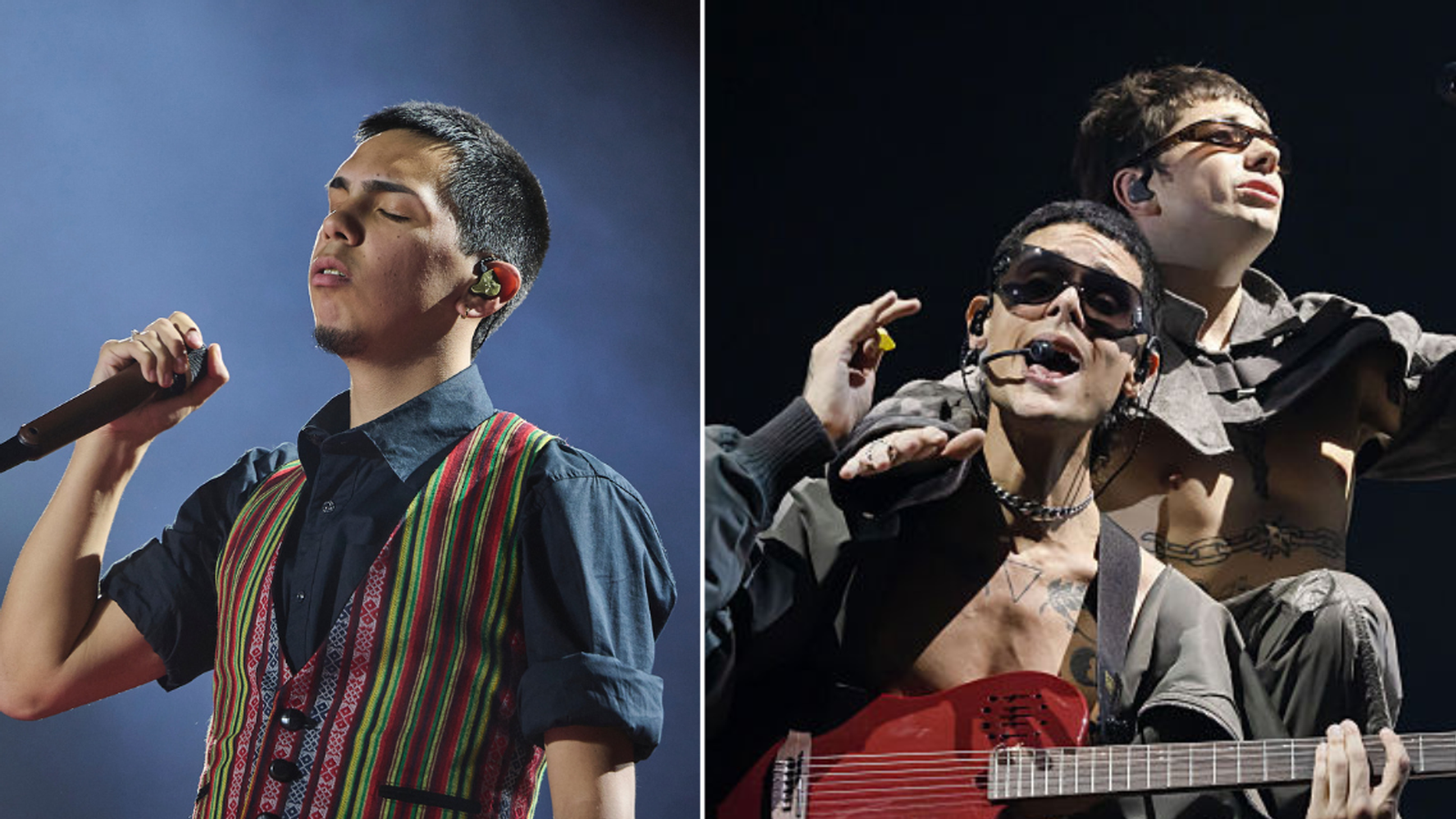
The Latin GRAMMYS are next month on November 12, in Las Vegas, bringing together artists across Latin music’s many genres for one of the biggest nights in entertainment. Argentina is represented across rock, alternative, urban music, electronic music, and tango. CA7RIEL & Paco Amoroso lead the country’s performers with seven nominations, while Milo J earned five, putting two Argentine acts among the most recognized artists in this year’s competition. From established names such as Fito Páez and Babasónicos to newer voices making their mark internationally, the list showcases the range of Argentina’s music scene.
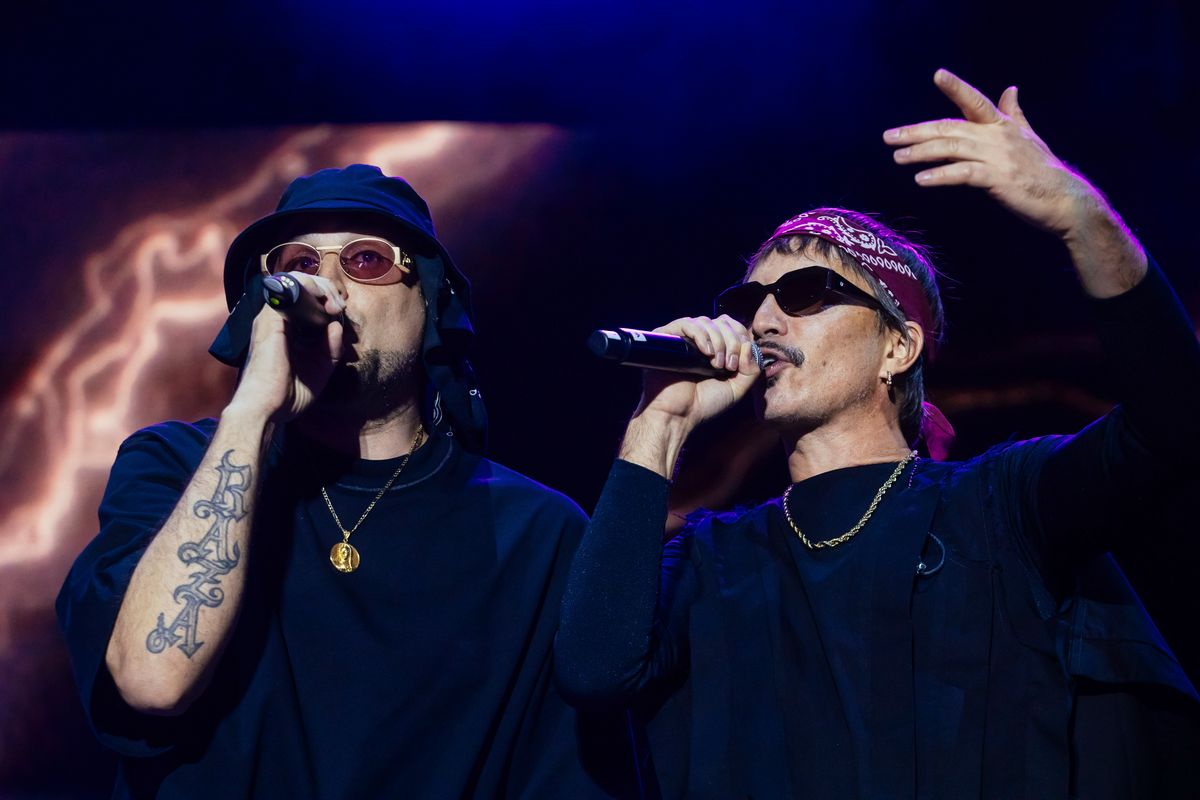
Grammy-winning duo CA7RIEL & Paco Amoroso, who met in grade school, are among the most-nominated acts, earning seven nods for their incredible album FREE SPIRITS. Their nominations include Record of the Year for “Ha Ha,” Album of the Year, Best Alternative Music Album, Best Electronic Music Performance for “Beto’s Horns – Fred Remix” with Fred again.., Song of the Year and Best Pop/Rock Song for “Hasta Jesús Tuvo Un Mal Día,” featuring Sting, and Best Long Form Music Video for FREE SPIRITS (The Film).
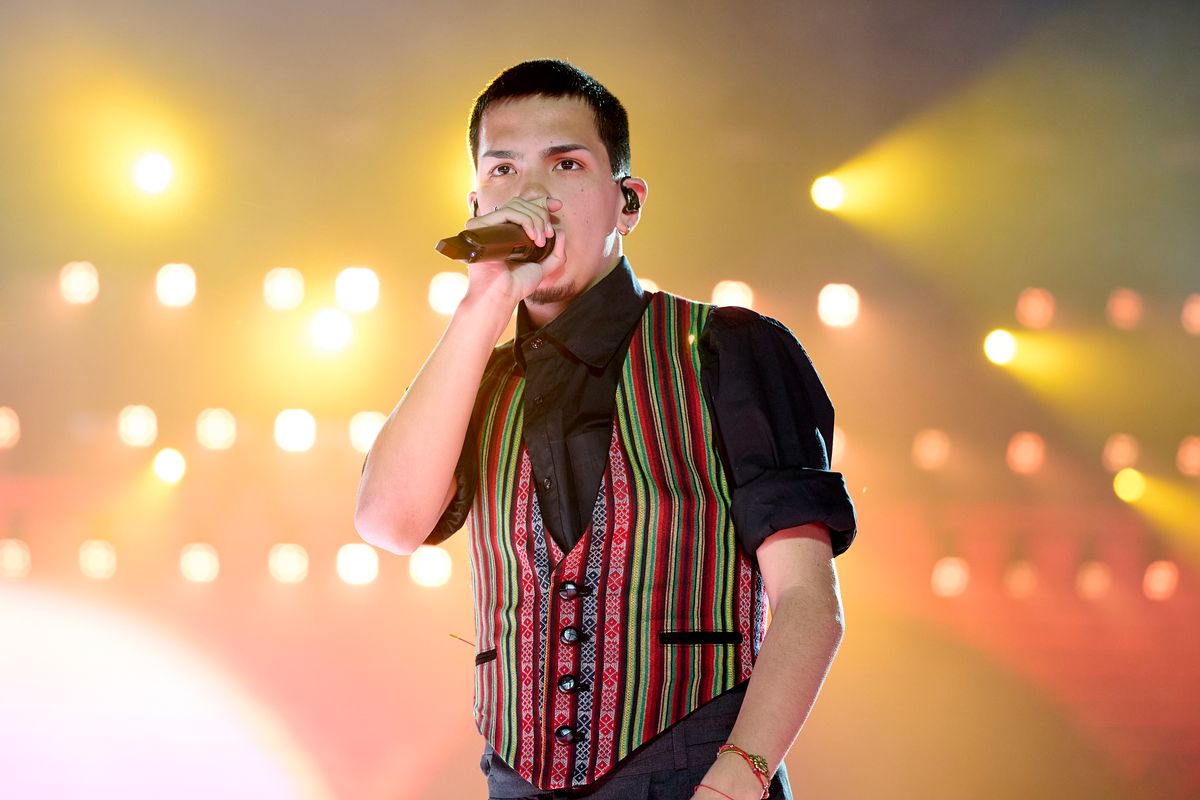
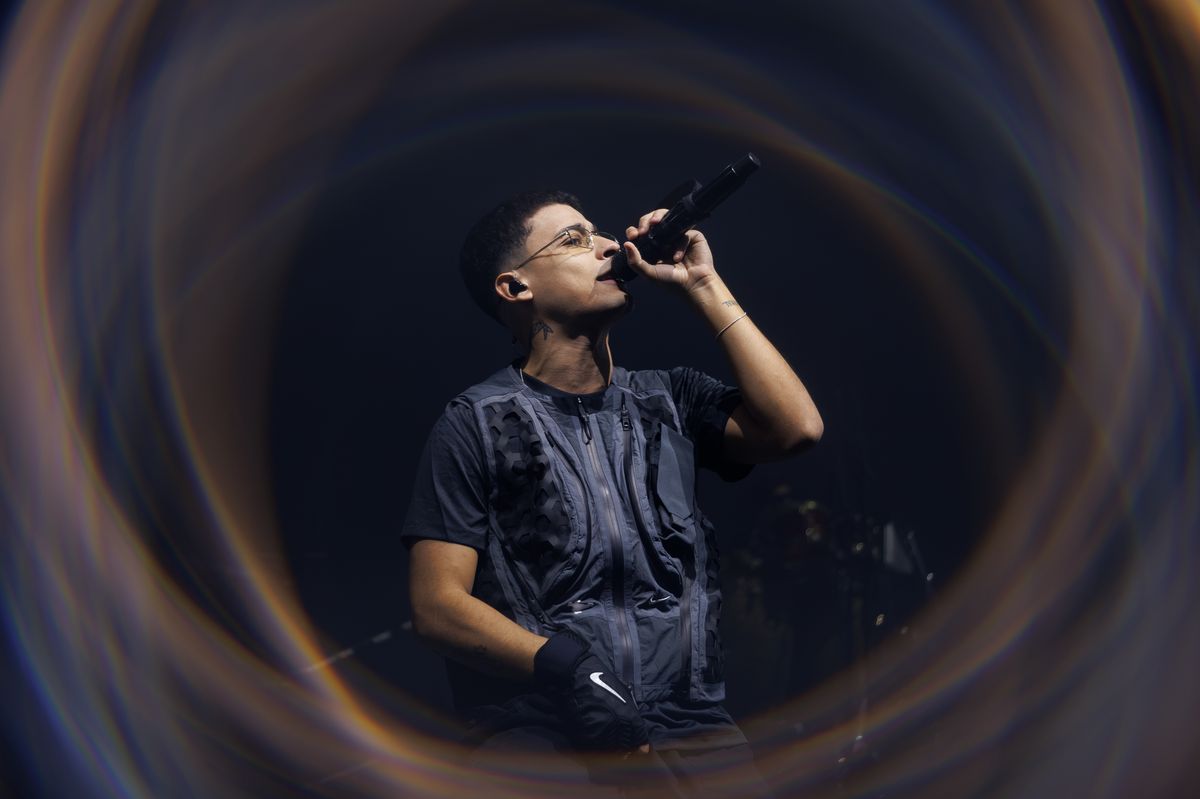
At only 19, Milo J is proving he could be one of the biggest stars in music. With his signature voice and range of sounds, heearned five nominations, including Album of the Year for La Vida Era Más Corta, which he started writing when he was 17. The Argentine rapper is also nominated for Record of the Year with “Niño,” Song of the Year for “Solifican12,” Best Urban Performance for “Gil” with Trueno, and Best Folk Album for his latest project.
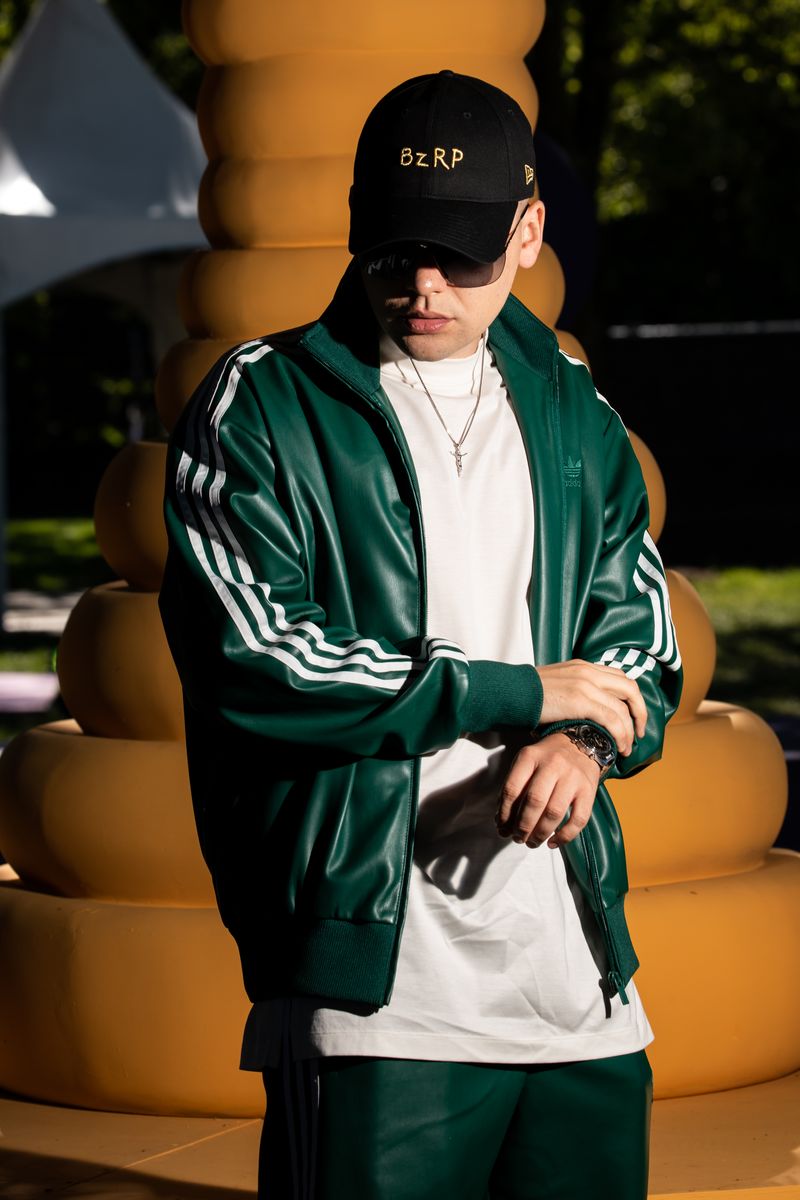
Bizarrap earned two nominations for his collaboration with Daddy Yankee, “Daddy Yankee: Bzrp Music Sessions, Vol. 0/66.” The track is up for Best Urban Performance and Best Urban Song, adding another major awards moment for the Argentine producer known for his sessions with some of the biggest names in Latin music.
Trueno is nominated for Best Urban Performance as a featured artist on Milo J’s “Gil.” The Argentine rapper has become a leading voice in Latin hip-hop, bringing his freestyle roots and sharp lyricism to an increasingly global audience.
1915
Argentine rock band 1915 earned a Best Rock Album nomination for Ceremonia. The recognition puts the group among the country’s rock acts represented at this year’s ceremony, alongside established artists and musicians continuing to push the genre forward.
Fito Páez is nominated for Best Rock Album for Shine and Best Rock Song for “Las Fuerzas Armadas Del Amor.” The Argentine singer-songwriter has spent decades shaping Latin rock, and his latest nominations add another chapter to his long-running relationship with the Latin Grammys.
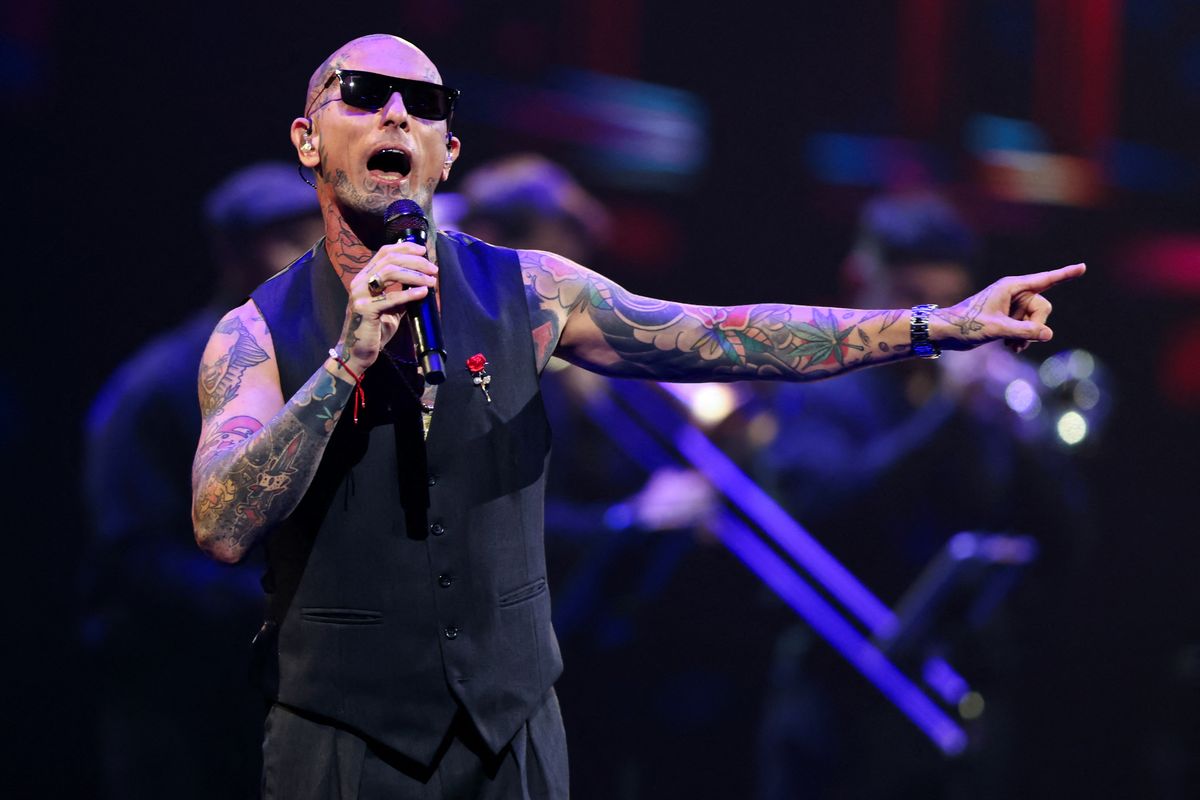
Dillom earned a Best Rock Song nomination for “Rojo Profundo.” Known for his dark aesthetic and willingness to move between rap, rock, and alternative music, the Argentine artist continues to challenge expectations around the country’s urban scene.
Emmanuel Horvilleur is nominated for Best Pop/Rock Album with Mi Año Gótico. The Argentine musician, who rose to prominence as part of Illya Kuryaki and the Valderramas, continues to explore a solo sound that blends pop, funk and rock.
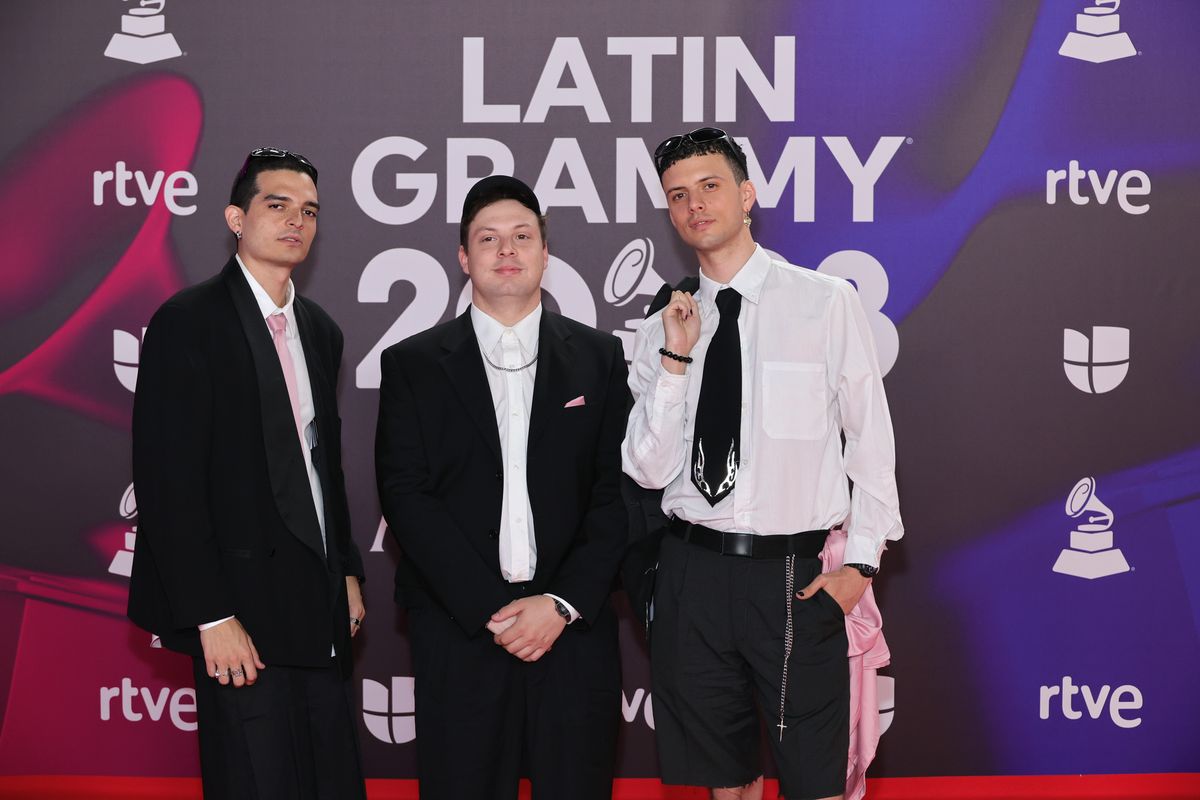
SEVILLE, SPAIN РNOVEMBER 16: (L-R) Gabriel Orozco, Lucca Beguerie Petrich and Juan Mango of the band Usted Se̱alemelo attend The 24th Annual Latin Grammy Awards on November 16, 2023 in Seville, Spain. (Photo by Neilson Barnard/Getty Images for Latin Recording Academy)
Usted Señalemelo earned a Best Pop/Rock Album nomination for Términos & Condiciones. The Argentine indie-rock band has developed a sound that moves between atmospheric rock and alternative pop, earning recognition alongside some of the region’s most established acts.
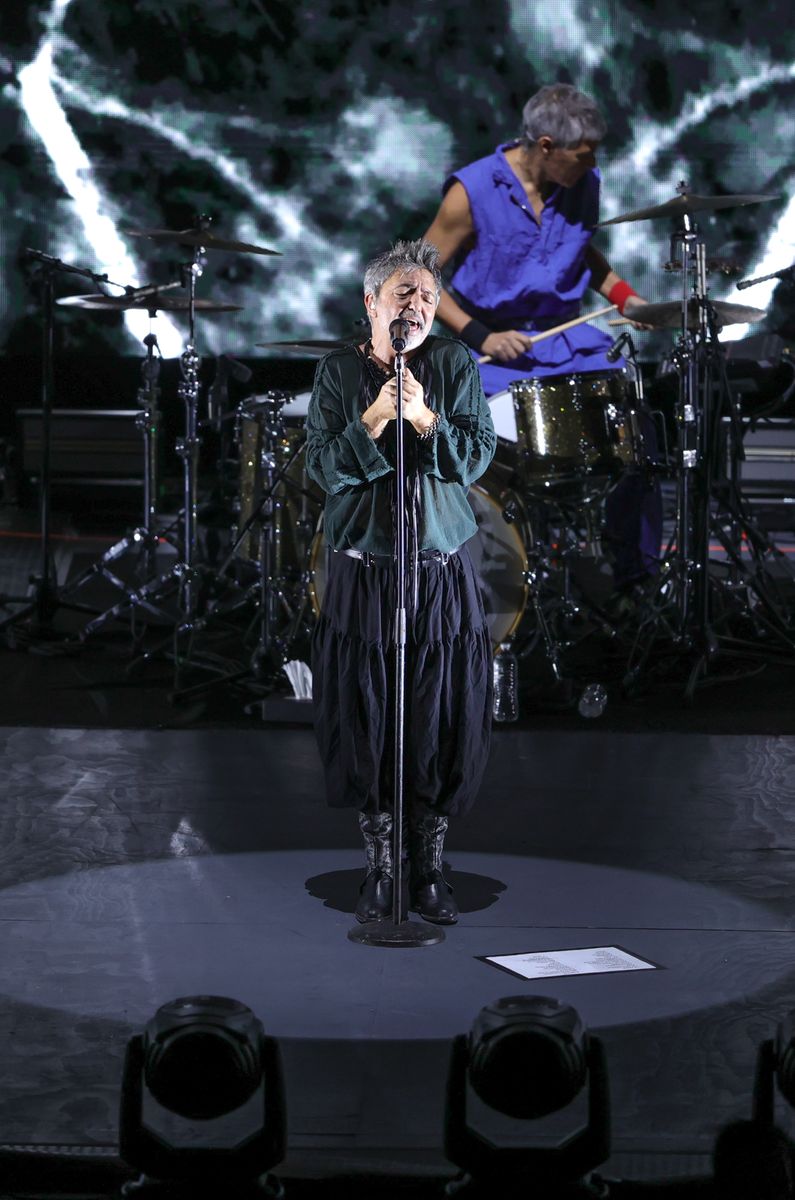
Babasónicos is nominated for Best Alternative Music Album for CUERPOS, Vol. 1. One of Argentina’s defining alternative-rock bands, the group continues to experiment with its sound while maintaining the distinctive identity that has shaped its career.
Dante Spinetta is credited as a songwriter on “El Reset,” nominated for Best Alternative Song. The Argentine musician has spent decades blending rock, funk, and hip-hop, both through his solo work and as one half of Illya Kuryaki and the Valderramas.
Born in Argentina and based in Spain, Nathy Peluso is nominated for Best Salsa Album with Malportada. Her music moves between salsa, hip-hop, jazz, and other Latin styles, making her one of the artists challenging conventional genre boundaries.
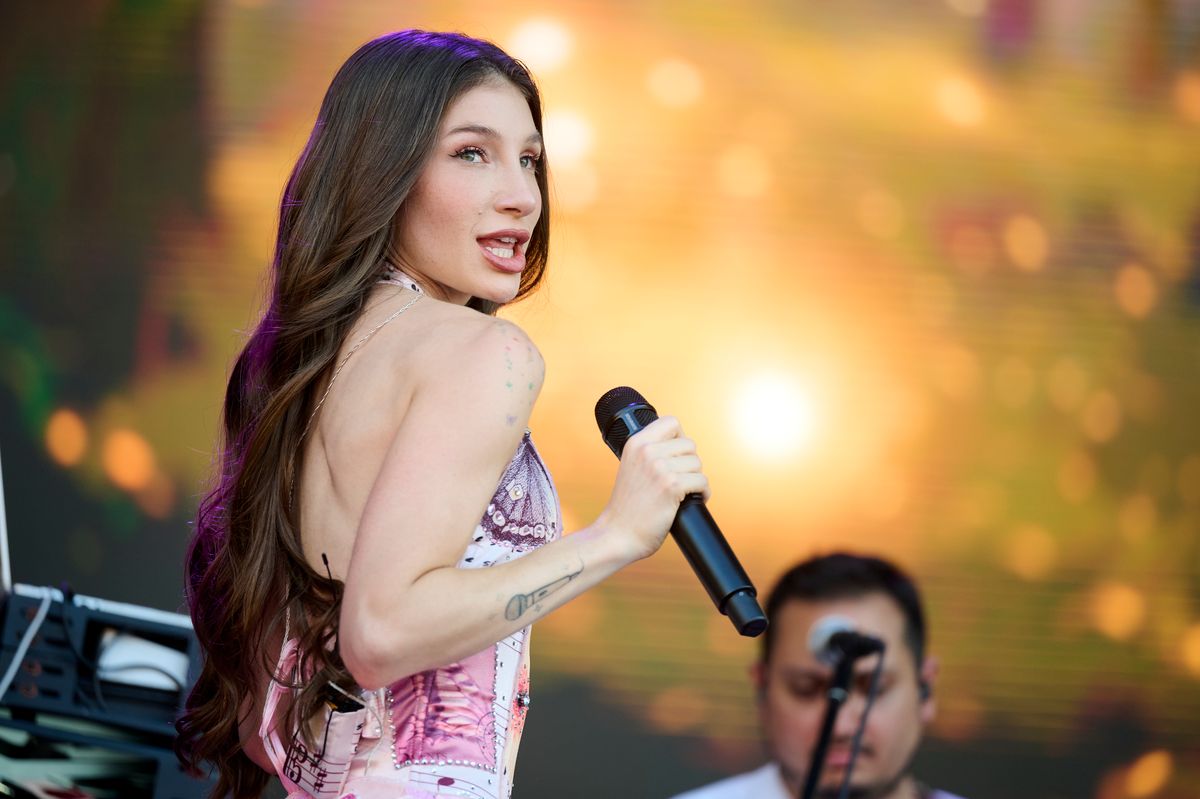
MADRID, SPAIN – JULY 05: Argentinian singer Yami Safdie performs onstage during day 3 of Rio Babel Festival 2026 at Auditorio Miguel RÃos on July 05, 2026 in Madrid, Spain. (Photo by Borja B. Hojas/Getty Images )
Yami Safdie is nominated for Best Traditional Pop Album for Querida Yo. The Argentine singer-songwriter has connected with audiences through emotionally direct pop and personal songwriting, bringing a newer generation of talent into the Latin Grammy conversation.
Peces Raros
Peces Raros earned a Best Electronic Music Performance nomination for “Circular,” featuring Nick Warren. The Argentine duo combines electronic production with live-band energy, making its nomination a notable moment for the country’s electronic music scene.
Argentine singer Emanuel Noir, of the band Ke Personajes, performs on stage during the 65th Vina del Mar International Song Festival in Vina del Mar, Chile, on February 25, 2026. (Photo by Javier TORRES / AFP via Getty Images)
Ke Personajes is nominated for Best Cumbia/Vallenato Album for Corazón Ausente. The Argentine group has become a recognizable name in contemporary cumbia, bringing the country’s tropical music scene into an international awards conversation.
Aníbal Berraute
Aníbal Berraute is nominated for Best Tango Album for Neopía. The recognition highlights the continuing presence of Argentine tango at the Latin Grammys, a genre deeply connected to the country’s musical identity.
Lidia Borda and Ariel Ardit
Lidia Borda and Ariel Ardit are nominated for Best Tango Album with Somos. Both artists are known for their work with traditional tango, bringing a classic Argentine sound to the international awards stage.
Pablo Jaurena
Pablo Jaurena earned a Best Tango Album nomination for Fueyerías. The Argentine bandoneon player and composer is recognized for his contributions to a musical tradition that remains central to the country’s cultural heritage.
Quinteto Astor Piazzolla
Quinteto Astor Piazzolla is nominated for Best Tango Album with Le Grand Tango. The ensemble continues the legacy of Astor Piazzolla, whose work helped transform tango through its incorporation of classical music and jazz influences.
Rafa Arcaute
Rafa Arcaute is credited as a producer and songwriter on CA7RIEL & Paco Amoroso’s FREE SPIRITS and “Hasta Jesús Tuvo Un Mal Día.” His work on the duo’s projects connects him to several of the pair’s nominations.
Federico Vindver
Federico Vindver is credited on FREE SPIRITS and “Hasta Jesús Tuvo Un Mal Día,” and earned an individual nomination for Producer of the Year. His work places him among the behind-the-scenes music creators recognized at this year’s ceremony.
Santiago Alvarado
Santiago Alvarado is credited as a producer and songwriter on Milo J’s La Vida Era Más Corta and “Solifican12.” His work connects him to the album and song nominations earned by the Argentine rapper.
Santiago Ruiz “Tatool”
Santiago Ruiz, known professionally as Tatool, is nominated for Producer of the Year. His production credits include Milo J’s La Vida Era Más Corta and Trueno’s “Turr4zo,” highlighting his work across Argentina’s urban music scene.
Mateo Sujatovich
Mateo Sujatovich, the frontman of Conociendo Rusia, is credited among the songwriters on Jorge Drexler’s “Ante la duda, baila,” nominated for Best Alternative Song.
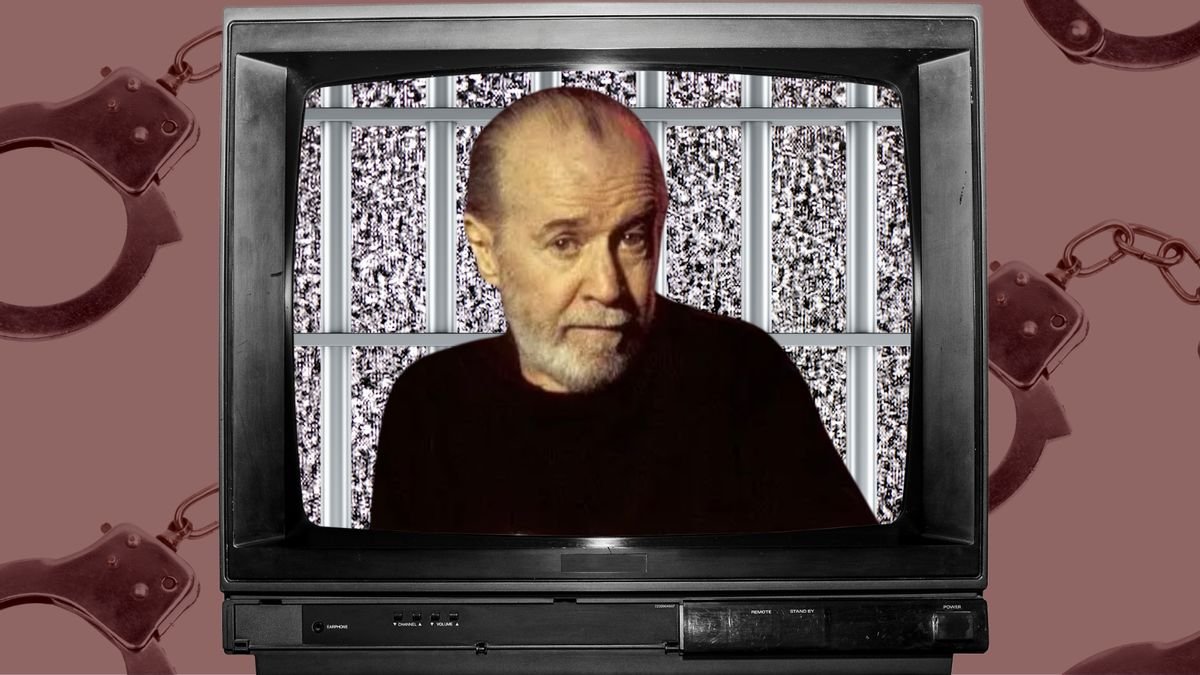
In 1996, comedian George Carlin performed a comedy bit about televised capital punishment, 30 years before the Pentagon announced its plan to livestream the execution of Fort Hood shooter Nidal Malik Hasan.
Rating:
A rumor that legendary comedian and satirist George Carlin once performed a comedy bit that involved jokes about televised public executions circulated online in October.
Carlin, who died in 2008, was known for his scathing political takedowns and clever wordplay.
People on social mediashared a clip that appears to be from one of Carlin’s standup comedy TV specials, in which the comic allegedly waxed poetic about using public executions to help balance the United States’ budget.
The clip circulated as the Pentagon announced its plan to livestream the execution of Nidal Malik Hasan, who was sentenced to death in 2013 for killing 13 people and injuring more than 30 during a shooting at the Army’s Fort Hood post in Texas.
Some users suggested Carlin “predicted” the Pentagon’s move with his comedy bit from decades earlier.
The video was authentic and clipped from Carlin’s 1996 HBO special, “George Carlin: Back in Town,” recorded at The Beacon Theater in New York City on March 30 of that year. The special is available to stream for free on Tubi and was also released as an album on Sept. 17, 1996.
The clip in question is part of a segment titled “Capital Punishment,” which begins around the 14:30 mark in the full special. The clip was also available to viewon Carlin’s official website.
During the special, Carlin joked about performing crucifixions during “Monday Night Football” in a satirical bit about executing white collar criminals facilitating the laundering of drug money.
The joke leads into the moment shown in the viral clip, beginning around the 15:15 mark. Carlin said (emphasis ours):
I don’t care about capital punishment one way or another, because I know it doesn’t do anything. It doesn’t do anything except maybe satisfy a Biblical need for revenge. You know, if you read the Bible, you see that it’s full of retribution and revenge. So really, capital punishment is kind of a religious ritual. It’s a purification rite. It’s a modern sacrament. And as long as that’s true, I say, let’s liven it up a little!
I honestly believe that if you make the death penalty a little more entertaining, and learn to market it correctly, you just might be able to raise enough money to balance the stupid f***ing budget!
And don’t forget, the polls show the American people want capital punishment and they want a balanced budget. And I think even in a fake democracy people ought to get what they want once in a while. Just to feed this illusion that they’re really in charge.
Let’s use capital punishment the same way we use sports and television in this country, to distract people and take their minds off how bad they’re being f***ed by the upper 1 percent. Now, unfortunately, “Monday Night Football” doesn’t last long enough. What we really need is year-round capital punishment on TV every night with sponsors! Gotta have sponsors. I’m sure as long as we’re killing people, Marlboro cigarettes and Dow Chemical will be proud to participate.
To say Carlin “predicted” the Pentagon’s planned livestream of an execution was a stretch, but it’s accurate to say he joked about televised capital punishment 30 years earlier.
The special also featured Carlin’s takes on other hot-button issues that continue to be part of the national discourse in 2026, including abortion and the prison system.
“Back in Town” was Carlin’s ninth HBO comedy special, of which he would do 14 before his death in 2008.
Standard Chartered launched direct Bitcoin and Ethereum trading for affluent UAE clients on Wednesday after receiving licensing approval from Dubai’s Virtual Assets Regulatory Authority.
Eligible Professional Investor clients can buy and sell BTC and ETH through their existing bank accounts, with the bank handling custody and settlement in a closed-loop model built with SC Ventures-backed Zodia Markets.
The bank called the service a global first for Standard Chartered and plans to expand it to other markets, though it gave no timeline.
Standard Chartered will now let its wealthier clients in the United Arab Emirates buy and sell Bitcoin and Ethereum straight from their bank accounts, the British lender announced Wednesday.
The move eliminates the need for its affluent clients to rely on separate wallets or third-party platforms, the bank said.
The service opens first to clients classified as Professional Investors and runs under licensing approval from Dubai’s Virtual Assets Regulatory Authority, or VARA. The bank called it a global first for Standard Chartered and the first crypto trading offering from an international bank in the UAE.
Trades are executed inside the bank’s own ecosystem, and Standard Chartered handles custody and settlement end-to-end through what it calls a closed-loop model, which the bank says reduces clients’ exposure to third-party wallet risk.
The bank built the product across its Wealth and Retail Banking and Corporate and Investment Banking units, working with Zodia Markets, a digital asset trading firm backed by Standard Chartered’s venture arm, SC Ventures.
“As client interest in digital assets continues to grow, this launch represents a significant milestone for Standard Chartered as we bring digital assets into our core wealth offering” Samir Subberwal, the bank’s global head of wealth solutions, retail products, data and analytics, said. He argued that clients now want more than access, and are looking for the security that comes with buying through a regulated institution.
BitcoinBTC · USD
$80,882−1.73%
Oct 8Oct 10Oct 12Oct 13Oct 15
$84.2k$83.0k$81.8k$80.6k
24h HighHigh$83,791
24h LowLow$80,444
VolVol$1.9B
Market projectionsOdds by Myriad
→
Rola Abu Manneh, Standard Chartered’s CEO for the UAE, Middle East and Pakistan, said the country was a natural choice given its regulatory environment and its role as one of the bank’s four global wealth hubs.
Until now, Standard Chartered’s crypto trading business had catered to institutions. In July 2025, it became the first global systemically important bank—one of the lenders regulators consider too big to fail—to offer spot trading in Bitcoin and Ethereum to institutional clients, through its U.K. branch.
It brought that institutional desk to the UAE last month through its unit in the Dubai International Financial Centre, which is overseen by a different watchdog, the Dubai Financial Services Authority. The bank’s crypto custody service had already gone live in the UAE in September 2024, and in the European Union through a Luxembourg entity a few months later.
Wealth clients previously had indirect routes into crypto at the bank: crypto exchange-traded funds on its cash equities platform, structured products, and over-the-counter derivatives tied to crypto prices. The new service lets them own the coins themselves, held by the bank, rather than a product that tracks their price.
The bank has historically been very bullish towards crypto, with frequent calls from its analysts for Bitcoin to extend to new highs.
In June, Geoff Kendrick, Standard Chartered’s global head of digital asset research, declared crypto winter over after Bitcoin slid to nearly $59,000, a 53% drop from its October 2025 peak of $126,000. The bank has held onto a $100,000 year-end target for BTC.
Daily Debrief Newsletter
Start every day with the top news stories right now, plus original features, a podcast, videos and more.
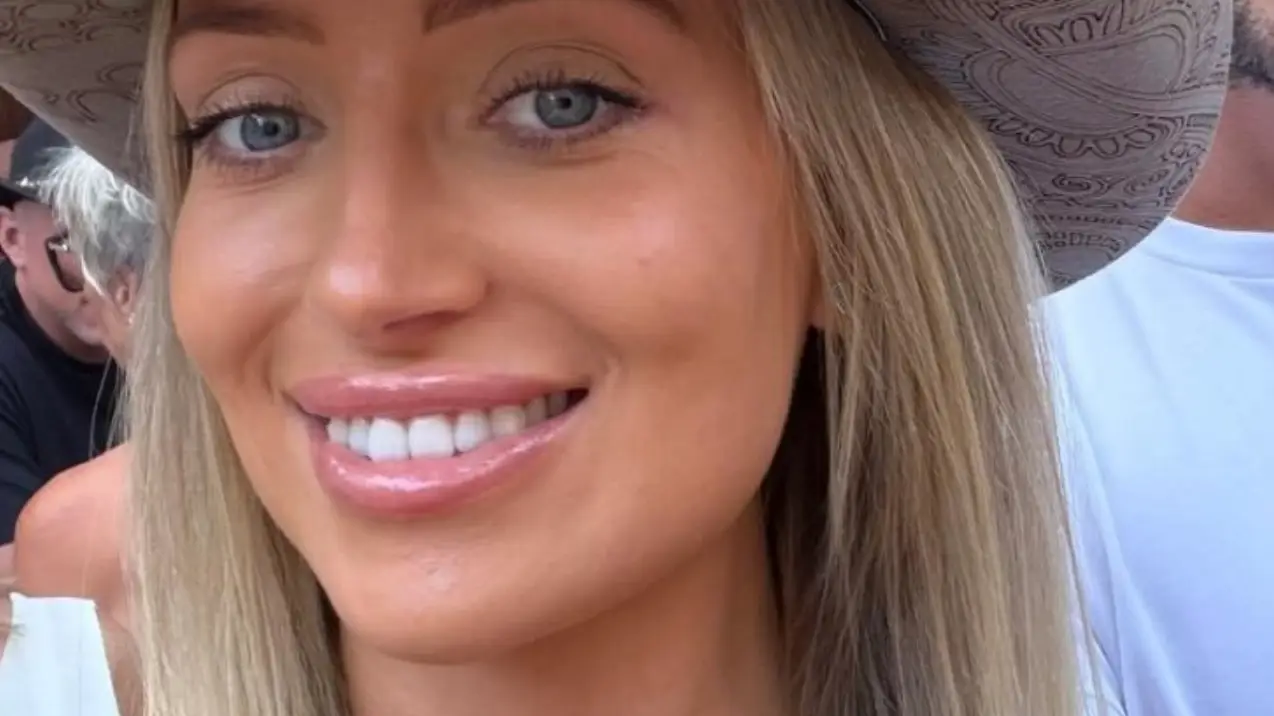
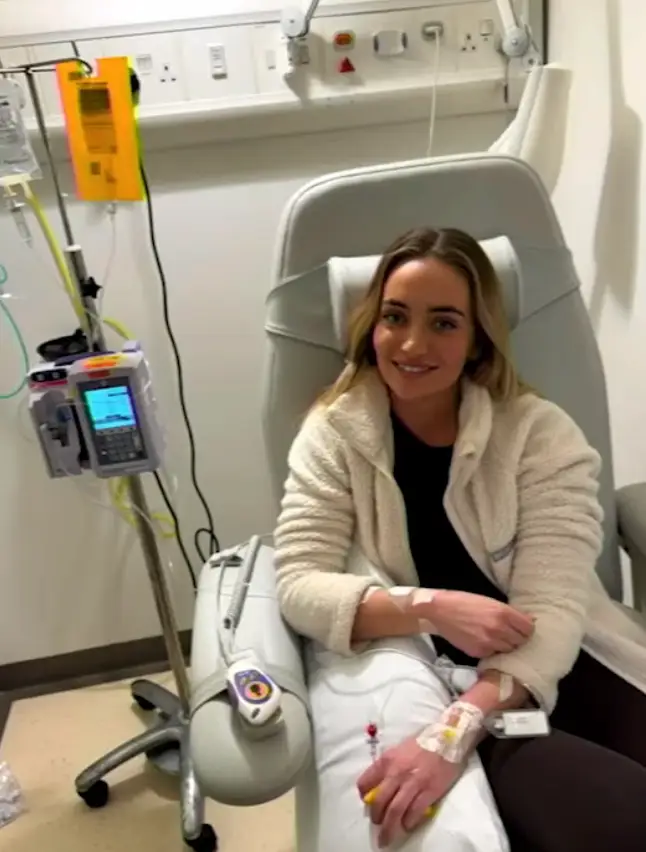
A woman who opened up about her regular use of tanning beds since she was 15 has tragically died of skin cancer aged just 30.
Chelsea Tantum was 28 years old when she was diagnosed with an advanced melanoma, having spent years using the tanning beds.
Following her diagnosis Chelsea worked to warn others of the dangers of tanning beds and urged people to always get checked.
“If sharing my story helps even one person get a mole checked earlier, recognise warning signs, stop using sunbeds or understand how serious melanoma truly is, then speaking up is worth it,” she wrote in a public appeal on Just Giving.
Chelsea used her condition to raise awareness of the dangers of tanning beds (Chelsea Tantum)
“If you’re able to donate — no matter how small — you’ll be helping to raise awareness, fund research, and support others walking this same path.”
Chelsea had previously told of how she was just 15 years old when she started to use tanning beds alongside her friends, and that they would compete to see who could be the darkest, despite not being old enough.
She would continue using tanning beds into her 20s, before being diagnosed with cancer when she was 28. At first she was diagnosed with melanoma which was stage 3C.
When the cancer was diagnosed it had spread to her breast, ribs, femurs, lungs, liver, pelvis, and spine, and when she turned 30, Chelsea revealed that it had spread to her brain, reaching ‘stage 4D’.
Chelsea died aged 30 (Facebook)
“As I approached my 30th birthday, I truly believed I was about to hear the words I had been waiting so long for: ‘no evidence of disease‘,” she wrote on the funding page.
“Instead, I received devastating news. The melanoma had metastasised to my brain. I am now stage 4D. While there is currently no evidence of disease elsewhere in my body, melanoma has once again found a new place to appear.”
“This is why awareness matters so deeply to me. Melanoma is not just skin cancer. It spreads fast. It spreads aggressively. And it can change — or end — lives far quicker than people realise.”
Chelsea died on 30 September, and her funeral is now scheduled for 23 October.
Tributes were also paid to her following her death on social media, as one person penned on 30 September: “We won’t ever understand why this has happened to the most beautiful person in the world.
“You have fought so hard and you didn’t ever give up hope. Your grit and determination with your utter dedication to beat this disease is something I’ll never forget.”
Chelsea was diagnosed when she was 28 (Chelsea Tantum)
Chelsea used her illness to call for tighter controls on tanning bed use, including mandatory ID checks, and to support charities that research the disease.
This included raising £4,210 at the time of writing on a Just Giving page, which is to support the charity Melanoma Focus that supports people who have the condition, as well as helping to make people aware of the dangers associated with tanning bed use.
Back in May the UK government has announced plans to introduce the very policy that Chelsea had been fighting for, saying that it wants to introduce essential ID checks for customers at tanning salons.
While there is a ban on people under 18 using tanning beds, there were concerns that under-18s are still able to access them, something which Chelsea’s case very clearly indicated.
UV-emitting tanning devices are also classified as a Group 1 carcinogen by the World Health Organization’s International Agency for Research on Cancer.
A consultation on the policy closed back in August 2026, and the new rules could come into effect in 2027.
Gracie Bon insists that she was ‘not posing’ after being accused of doing so in the midst of the Panama earthquake rubble.
UNICEF estimates that 38,000 people, including 8,300 children, are in need of humanitarian assistance following the 7.7 and 6.6 magnitude earthquakes that struck Panama on Friday (9 October).
On Sunday, the content creator, who has 12 million followers on Instagram, posted pictures of her standing in the rubble to showcase the ‘reality of my country’.
“After the earthquake, we’re reminded that material things can be replaced, but life is priceless,” she penned in the caption.
“Hug your loved ones a little tighter, be grateful for what you have, live in the moment, and show up for those who need it most.”
Her photos, however, were hit with a wave of criticism in the comments, such as ‘Help? No. Have a photo shoot? Yes’, as another said, ‘Unbelievable.. Just for looking for likes’.
Bon’s photoshoot got 203k likes on Instagram (Instagram/@graciebon)
Responding to the backlash, Bon said: “There are people who get more outraged by a photo than by seeing families lose everything.
“Sometimes the problem is not what we do, but the eyes with which you decide to see it.”
She continued: “My intention was to help with resources and find two families that I could help rebuild their homes.
“I asked my team to document everything. I do appear in the photo, I am not posing. I simply decided to post a photo of myself in it because I know it will give my followers a better reach and attention.
“Panama needs us united; it’s not time for division or criticizing each other. The affected areas need our help.”
Bon has responded to the backlash (Instagram/@graciebon)
It comes after Olga Isaza, a UNICEF Representative in Panama, said that the thousands affected are in need of humanitarian assistance.
“Three days after the earthquake, children and families continue to experience fear and distress as aftershocks persist, with thousands of children in the hardest-hit communities facing disruptions to essential services, including safe water and education,” said Isaza, as nearly 900 homes have been damaged.
“UNICEF is working closely with the Government of Panama and partners to support affected children and families in the weeks ahead.”
The agency added that ‘according to preliminary government reports, 656 educational facilities have sustained damage nationwide, and classes were suspended on 12 October while structural safety inspections continue. Authorities have also reported damage to at least 25 health facilities’.
“Along with the Ministry of Health, UNICEF has deployed 72 m² tents to support the continuity of health services at facilities affected by the earthquake,” UNICEF said.
“UNICEF has made 16 tents available to health authorities and continues to assess additional needs to help maintain essential services for children and adolescents.”
Alpenglow activates on Solana mainnet in epoch 1064, which starts on Wednesday, October 21, at approximately 15:00 UTC, according to the Solana Foundation.
The upgrade replaces TowerBFT and targets transaction finality of roughly 150 milliseconds, down from about 12.8 seconds today.
Vote transactions will leave blocks, so Solana’s headline transaction counts and TPS figures will drop sharply without any drop in real activity.
Solana has locked in October 21 for Alpenglow, a full replacement of the system its validators use to reach consensus. The switch is tied to epoch 1064, which the Solana Foundation expects to begin around 15:00 UTC that Wednesday.
Alpenglow retires TowerBFT, the current system the network uses, and aims to make transactions final in roughly 150 milliseconds. Finality is the moment a transaction becomes irreversible, and under TowerBFT that currently takes about 12.8 seconds.
On Solana today, a payment is confirmed pretty quickly, but that’s not a guarantee. Until TowerBFT runs out its 13 second clock, the block could in theory still be dropped.
That small doubt is why anyone handling real money tends to wait out the full window. With finality at around 150ms, the irreversible answer arrives almost as fast as the optimistic one, which is what a checkout counter taking SOL or a DeFI application, or a trading desk settling a position actually needs.
TowerBFT works by having validators post their votes as on-chain transactions, and a block only counts as final once 32 slots’ worth of those votes pile up. Votor, the voting protocol shipping with Alpenglow, takes votes off the chain, so validators message each other directly, package the votes into certificates, and can lock in a block after a single round of voting, or two at most.
When 80% or more of stake backs a block in the first round, it finalizes on the spot. If support lands between 60% and 80%, a second round with 60% thresholds decides whether the block is finalized or skipped, and the Foundation says the design tolerates 20% malicious stake plus another 20% offline.
It’s time.
Alpenglow goes live on mainnet-beta Wednesday, October 21, ~14:50 UTC.
18 months of work for a migration that happens in one slot. Finality drops from seconds to ~150ms.
Make sure to follow us @anza_xyz as we countdown to go-live.
Ordinary users don’t need to do anything, and wallets and apps should behave as they do now. The Solana Virtual Machine, transaction formats, programs, and fees are left alone, while for developers the “confirmed” and “finalized” commitment levels become one and the same.
Each vote account also needs 0.8 SOL on top of its rent-exempt balance to pay the new Validator Admission Ticket, a per-epoch fee of the same size that gets burned. It replaces the roughly 1 SOL per epoch validators spent on vote transaction fees under TowerBFT, and a validator that can’t cover it sits out voting and block production for the following epoch.
The feature gate turns on as epoch 1064 begins, yet TowerBFT stays in charge for another 5,000 slots, roughly 18 minutes, before Alpenglow takes control at slot 459,653,000. This assures stability and prevents any issues during transition.
Validators approved Alpenglow in September 2025, when the SIMD-0326 proposal passed with 98.27% of votes cast in favor. In May, Anza Lead Economist Max Resnick told Decrypt the team was looking at a late Q3 or early Q4 mainnet activation, so everything is going according to schedule.
October 21 delivers only Votor, the first half of Alpenglow. Rotor, a replacement for Turbine, the system Solana uses to broadcast block data between validators, comes later and still has no date.
Daily Debrief Newsletter
Start every day with the top news stories right now, plus original features, a podcast, videos and more.