Blog

  • Trump order fast-tracks logging on federal lands, but posts exaggerate scale

    Trump order fast-tracks logging on federal lands, but posts exaggerate scale

    Claim:

    U.S. President Donald Trump signed an executive order that would open up 59% of national forestland to logging.

    Rating:

    Mixture

    What’s True

    Trump signed an executive order allowing federal permitting agencies to ignore environmental protection laws in an effort to increase domestic timber and lumber production. The executive order also calls for expanding domestic logging production on federal lands. Following that executive order, Agriculture Secretary Brooke Rollins announced that the USDA would attempt to roll back the Roadless Rule, which, at its height, prohibited logging on approximately 59 million acres of land.

    What’s False

    The order and proposed repeal of the Roadless Rule would not open 59% of national forests to logging. Rather, by Snopes’ calculations, it would allow logging on an additional 24% of national forestland.

    In October, posts on social media suggested that U.S. President Donald Trump signed an “emergency order” opening up 59% of U.S. national forests for logging. Snopes readers wrote in asking whether the rumor was accurate.

    The claim resembled one we fact-checked in March 2025. Then, we investigated a Trump executive order that social media posters claimed would result in 280 million acres of forest being clear-cut. We found the claim to be a mixture of true and exaggerated information.

    We came to the same conclusion on this new variant. While the claim is based partly in truth (the referenced “emergency order” is the same executive order we investigated in 2025), it also exaggerates the facts. We therefore rate it a mixture of true and false.

    Here’s a breakdown:

    The order is real

    On March 1, 2025, Trump signed an executive order aimed at fast-tracking logging on federal lands. The order, titled “Immediate Expansion of American Timber Production,” directed the Forest Service and the Bureau of Land Management, two of the largest caretakers of federal lands, to update guidelines in order to “facilitate increased timber production,” among other things.

    Trump’s executive order specifically asked those agencies to investigate and implement ways to increase both the speed and quantity of timber produced by cutting environmental regulations. 

    It asked the Fish and Wildlife Service to streamline approvals for forestry projects that could potentially be halted by the Endangered Species Act within 60 days of the order. It also asked the Agriculture and Interior departments (which control the Forest Service and BLM, respectively) to exempt “timber thinning” and “timber salvage activities” from the National Environmental Policy Act. That act, signed into law by President Richard Nixon in 1970, requires the federal government to consider the environmental effects of its proposed actions through environmental impact statements.

    The executive order also encouraged the Agriculture and Interior departments to use the emergency regulations of the Endangered Species Act “to the maximum extent permissible under applicable law.” Those regulations allow the act to be bypassed in situations where time is of the essence, such as “acts of God, disasters, casualties, national defense or security emergencies.” (Trump’s executive order was issued alongside another order declaring that importing timber and lumber poses a risk to national security.) Under the emergency regulations, the Fish and Wildlife Service provides “strictly advisory” recommendations for how to protect endangered species that can be “implemented at the discretion of the emergency response personnel.”

    In other words, the executive order would allow the logging industry to bypass environmental restrictions found in the Endangered Species Act and National Environmental Policy Act.

    The acreage

    The Forest Service manages 193 million acres of land across the country (about 188 million acres of national forest). Unlike national parks, national forests were established with the purpose of permitting logging and resource exploitation as well as wildlife conservation and recreation.

    If the 59% claim were accurate, then using the 188 million total acres figure from the Forest Service we would expect to find that the order opened up about 110 million acres for logging. But this wasn’t the case. 

    The Forest Service deems just 49 million acres of its land “suitable for timber management,” far less than the 110 million acres suggested by the claim.

    Social media posts said NPR was the source of that figure, yet when we searched NPR’s archive for stories suggesting that either 110 million acres or 59% of national forests would be opened up to logging, we found no results.

    The Roadless Rule

    Instead, we found that the posts appeared to misinterpret or misrepresent NPR’s reporting regarding a real policy change implemented by Agriculture Secretary Brooke Rollins, who was tasked with carrying out the 2025 executive order. 

    According to an August 2026 news release, Rollins announced that the USDA would roll back the 2001 Roadless Rule, a policy that prohibits the construction of new roads on national forestland. Because roads are required to transport the raw materials, the Roadless Rule effectively places a limit on the number of timber and mining operations on national forestland. The news release noted the USDA would take public comment on the proposed change until Sept. 21, just before the claim began spreading. 

    When the Roadless Rule was first implemented, it applied to “nearly 60 million acres” of land, according to the Forest Service. We suspect this was the origin of social media users’ claim that Trump’s executive order would open up 59% of national forests to logging. Various sources, including NPR, reported 58 million to 59 million acres would be opened up. People may have mistaken the acreage for a percentage. 

    Even then, the social media posts dwelled on the wrong acreage figure, because the Roadless Rule no longer covers the original acreage. Colorado and Idaho enacted state-level Roadless Rules offering higher levels of protection for some land, and those stricter protections effectively supersede the federal rule. According to the Forest Service, taking those restrictions into account means the federal Roadless Rule now applies to only around 45 million acres of forest. 

    Using the correct, up-to-date acreage, Snopes calculated the rule’s recision would open up approximately 24% of Forest Service land for logging. (We were unable to determine how much of that land is actually suitable for the purpose, however.) 

    Rollins’ repeal is supported by the logging industry and several Republican governors, who claim it will prevent wildfires by allowing humans to more directly access and manage remote forestland.

    The repeal is opposed by several groups, according to reports from Pew, NPR and Cal Matters. Environmental groups cite scientific research showing 80% of wildfires are caused by human activity, and therefore more human access would increase, not decrease, fire risk. This is backed up by the Forest Service’s own environmental analysis on the repeal, according to Pew. Meanwhile, tribal nations claim the repeal undermines tribal sovereignty, and a spending watchdog notes that the Forest Service already has a $6 billion backlog in road maintenance. Repealing the Roadless Rule would only make that worse.

    (In fact, during an phone interview for a different story on the Forest Service, Associate Chief Chris French told Snopes the maintenance backlog has been around for decades, and was part of why the rule was implemented in 2001. That detail didn’t make it into the final story.)

    A bipartisan group of 164 senators and representatives wrote a letter to Rollins and Forest Service Chief Tom Schultz in September pointing out all of those factors and noting that the Roadless Rule has immense public support.

    The USDA is expected to make its final decision on the repeal in early 2027.

    Sources

    “A Historical Perspective.” U.S. Forest Service, https://www.fs.usda.gov/forestmanagement/aboutus/histperspective.shtml.

    “Addressing the Threat to National Security from Imports of Timber, Lumber.” The White House, 2 Mar. 2025, https://www.whitehouse.gov/presidential-actions/2025/03/addressing-the-threat-to-national-security-from-imports-of-timber-lumber/.

    Clear-Cutting | Definition, Effects, Arguments For, & Facts | Britannica. https://www.britannica.com/topic/clear-cutting. Accessed 4 Mar. 2025.

    Einhorn, Catrin. “Could Trump Use the ‘God Squad’ to Override Environmental Law?” The New York Times, 28 Jan. 2025. NYTimes.com, https://www.nytimes.com/2025/01/28/climate/trump-endangered-species-god-squad.html.

    Emergency Endangered Species Act Consultations for National Defense | U.S. Fish & Wildlife Service. https://www.fws.gov/node/265135. Accessed 4 Mar. 2025.

    ESA Section 7 Consultation | U.S. Fish & Wildlife Service. https://www.fws.gov/service/esa-section-7-consultation. Accessed 4 Mar. 2025.

    “Fact Sheet: President Donald J. Trump Addresses the Threat to National Security from Imports of Timber, Lumber, and Their Derivative Products.” The White House, 1 Mar. 2025, https://www.whitehouse.gov/fact-sheets/2025/03/fact-sheet-president-donald-j-trump-addresses-the-threat-to-national-security-from-imports-of-timber-lumber-and-their-derivative-products/.

    “Fact Sheet: President Donald J. Trump Rapidly Expands Timber Production.” The White House, 1 Mar. 2025, https://www.whitehouse.gov/fact-sheets/2025/03/fact-sheet-president-donald-j-trump-rapidly-expands-timber-production/.

    “Forests and Woodlands.” Bureau of Land Management, https://www.blm.gov/programs/natural-resources/forests-and-woodlands. Accessed 4 Mar. 2025.

    Friedman, Lisa. “Trump Moves to Increase Logging in National Forests.” The New York Times, 2 Mar. 2025, https://www.nytimes.com/2025/03/02/climate/trump-logging-national-forests.html.

    “Immediate Expansion of American Timber Production.” The White House, 2 Mar. 2025, https://www.whitehouse.gov/presidential-actions/2025/03/immediate-expansion-of-american-timber-production/.

    NEPA | National Environmental Policy Act – Categorical Exclusions. https://ceq.doe.gov/nepa-practice/categorical-exclusions.html. Accessed 4 Mar. 2025.

    US EPA, OP. What Is the National Environmental Policy Act? 31 July 2013, https://www.epa.gov/nepa/what-national-environmental-policy-act.

    B, et al. “Trump Administration Moves to Open Untouched National Forests to Logging.” NPR, 18 Aug. 2026. Environment. NPR, https://www.npr.org/2026/08/18/nx-s1-5936495/trump-administration-moves-to-open-untouched-national-forests-to-logging.

    Balch, Jennifer K., et al. “Human-Started Wildfires Expand the Fire Niche across the United States.” Proceedings of the National Academy of Sciences, vol. 114, no. 11, Mar. 2017, pp. 2946–51. DOI.org (Crossref), https://doi.org/10.1073/pnas.1617394114.

    Becker, Rachel. “Trump Wants More Roads and Logging in California Forests. Here’s the Wildfire Risk.” CalMatters, 18 Aug. 2026. California Wildfires. calmatters.org, https://calmatters.org/environment/wildfires/2026/08/trump-california-forests-logging-roads/.

    Earth.Org. “Trump Opens Up 59 Million Acres of National Forest to Logging.” Earth.Org, 25 June 2025, https://earth.org/trump-to-open-up-59-million-acres-of-national-forest-to-logging-mining/.

    Izzo, Jack. “The Trump Administration Is Shaking up Forest Service. We Broke down What’s Changing.” Snopes, 1 May 2026, https://www.snopes.com//news/2026/05/01/trump-forest-service-restructure/.

    ———. “Yes, Trump Signed Executive Order to Fast-Track Logging on Federal Land.” Snopes, 5 Mar. 2025, https://www.snopes.com//fact-check/trump-clear-cutting-national-forests/.

    K, et al. “Here’s Why Trump’s Promised Logging Boom Faces Headwinds.” NPR, 13 Oct. 2025. National. NPR, https://www.npr.org/2025/10/13/nx-s1-5528947/heres-why-trumps-promised-logging-boom-faces-headwinds.

    ———. “Trump to Rescind ‘Roadless Rule’ Protecting 58 Million Acres of Forest Land.” NPR, 23 June 2025. National. NPR, https://www.npr.org/2025/06/23/g-s1-74136/trump-to-rescind-roadless-rule-which-protects-58-million-acres-of-forest-land.

    NCAI and TWS Condemn the Administration’s Proposal to Rescind the Roadless Rule | The Wilderness Society. https://www.wilderness.org/articles/press-release/ncai-and-tws-condemn-administrations-proposal-rescind-roadless-rule. Accessed 13 Oct. 2026.

    “Roadless Areas.” US Forest Service, 5 Mar. 2025, https://www.fs.usda.gov/managing-land/planning/roadless.

    TCS Comments to Forest Service on the Proposed Roadless Rule Repeal – Taxpayers for Common Sense. 7 Oct. 2026, https://www.taxpayer.net/energy-natural-resources/tcs-comments-to-forest-service-on-the-proposed-roadless-rule-repeal/.
  • Graphic simulation reveals exactly what happens to your body after quitting vaping cold turkey

    Graphic simulation reveals exactly what happens to your body after quitting vaping cold turkey

    Quitting an addictive substance is a very difficult process and one of the possible methods is going ‘cold turkey’, where you just stop taking the thing and ride out the consequences.

    Kids these days would probably call it ‘rawdogging’ addiction recovery, but going cold turkey is one of the most drastic and dramatic ways a person can quit a substance.

    A growing number of people are addicted to vaping, or more specifically they’re addicted to the nicotine that’s packed into vaping liquids, and if you’re going to try and quit that right away there will be a lot of problems.

    In fact, experts warn you shouldn’t try going cold turkey on vaping, unlike with smoking, as they pointed towards NHS advice which lays out a slow and gradual phasing out of the harmful habit.

    Instead you’re meant to get liquids with a lower amount of nicotine content and gradually reduce the amount to bring down your nicotine consumption and kick the habit.

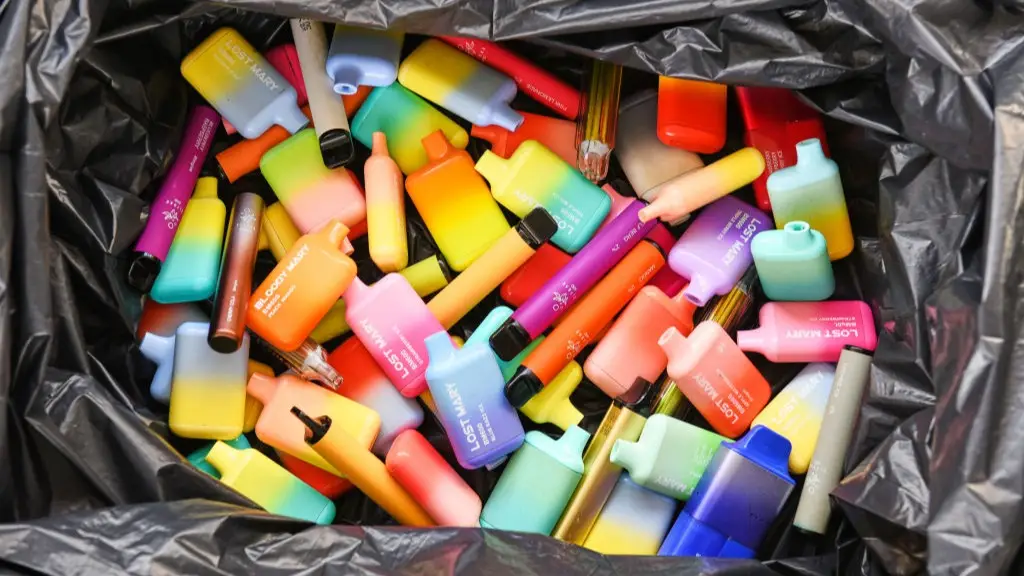
    Experts recommend that if you're quitting vaping you don't do it cold turkey (Jonathan Raa/NurPhoto via Getty Images)

    Experts recommend that if you’re quitting vaping you don’t do it cold turkey (Jonathan Raa/NurPhoto via Getty Images)

    A vaping addict called Chloe who went cold turkey after realising she was ‘hooked‘ on vapes said that within a few hours of quitting she was ‘starting to gasp for it’.

    She said: “I had a serious case of brain fog, and it was all I could think about. The cravings were intense, and I questioned at multiple points if it was really worth it.

    “I couldn’t retain information, was chronically zoned out and was both horrified and shocked by how hard I was actually finding it.”

    She even found getting to sleep without having a vape within reach to be a difficult prospect, and when she did finally drift off she found herself waking often as she was tossing and turning in bed.

    Going through ‘intense episodes’ of cravings, by 72 hours in her withdrawal symptoms ‘peaked’ as she suffered mild headaches, unprecedented sweating, and regular cravings during the day.

    On the bright side her sleep had already improved somewhat.

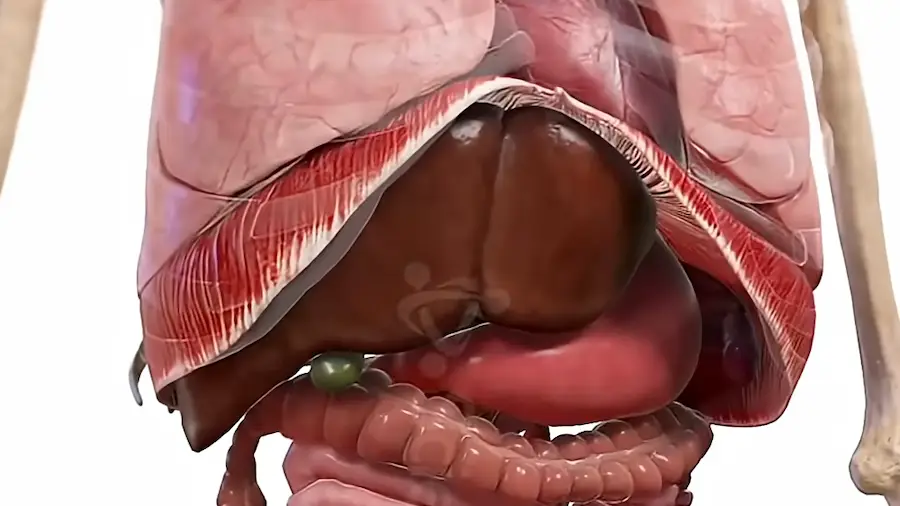
    Her symptoms line up with some claims from a simulation on what going cold turkey from vaping does to you.

    It claimed that on the first day you’d ‘feel anxious, irritated, maybe even empty’, and by day three the headaches would be kicking in while you might cough up mucus from your lungs.

    Under bombardment from the cravings and brain fog your body isn’t a nice place to be for a while, but it does get better with time.

    As Chloe put it, she started feeling better rested from sleeping without vaping and she was through the worst physical withdrawal symptoms after a few days.

    However, she was still feeling very anxious, as though her brain was ‘racing at 100mph’.

    The NHS advises that you’re best off gradually reducing your nicotine intake by buying liquid with less of it in and taking longer breaks between your vapes rather than going cold turkey.

  • Shocking amount Gen Z have sex each year is influenced by cost of living crisis, survey finds

    Shocking amount Gen Z have sex each year is influenced by cost of living crisis, survey finds

    Gen Z is having a tough time in and out of the bedroom, it seems, as according to a new survery, 39 percent say ‘the cost of dating limited their opportunities for sex or romance’.

    Playboy, in collaboration with the Kinsey Institute and Julie, asked 2,373 US adults aged 18 to 29 about their sex lives for The 2026 Gen Z Sex Survey.

    And the results aren’t pretty.

    It showed that 43 percent say the state of their finances make it harder to date, even though 74 percent show a ‘moderate to very high sexual desire’.

    While it’s not that they don’t want to have sex, around 34 percent of men worryingly reported that porn has replaced the need for a real-life relationship. And one in three said they won’t hesitate to go for a digital partner sometimes.

    So, why is it that this generation is seemingly holding back from intimacy?

    Over 2,300 adults aged 18 to 29 took part in a poll that suggests we could be living in a 'sex recession' (Getty Stock Images)

    Over 2,300 adults aged 18 to 29 took part in a poll that suggests we could be living in a ‘sex recession’ (Getty Stock Images)

    Why are younger people have less sex?

    Playboy explains: “The sex recession appears to be real, but nuanced. Most respondents report relatively low activity despite moderate to high desire.

    “Most young adults are not particularly stressed about their sex lives. Most describe their sex lives as average or better than average. Fatigue from dating apps, fear of rejection, and lack of finances are making connection more difficult.

    “Young people are finding other outlets for intimacy: in friendships, online, and alone. Where Gen Z lives shapes the picture. Two-thirds of single people living with their parents had no partners at all in the last three months.

    “They’re having less sex, but not safer sex. Protection is inconsistent, and a third have never been tested for STIs.”

    The NHS says 'having an active sex life can have health benefits' (Getty Stock Images)

    The NHS says ‘having an active sex life can have health benefits’ (Getty Stock Images)

    No ‘nerve, privacy or money’ to get down and dirty

    Speaking to The Sun, one Gen Z’er admitted that it is also ‘hard’ for their peer group to find anywhere for a ‘bit of peace and quiet’.

    “My parents both moved out when they were 18 or 19, and my grandparents around the same ages, so they had the freedom to do what they liked,” they said. “It’s just not the same with our generation – which is pretty unfair really.”

    “They have the desire. They just don’t have the nerve, privacy or money to act on it,” Playboy adds.

    Well, the NHS says ‘having an active sex life can have health benefits such as improving the condition of your heart, reducing stress and improving mental health‘.

    “Being part of a happy, healthy relationship can also reduce depression and anxiety,” the health service notes, adding that ‘even a hug can reduce your blood pressure and improve your sense of well-being’.

    It seems there's many reasons behind why some people aren't having as much sex (Getty Stock Image)

    It seems there’s many reasons behind why some people aren’t having as much sex (Getty Stock Image)

    Are there negative side effects of not having sex at all?

    While we all know the benefits of being intimate, there are actually some negatives to not getting enough action.

    While abstaining from sex can reduce the risk of contracting a STI or STD and improve mental health, it can also lead to certain physical issues.

    For women, a lack of sexual activity can trigger decreased blood flow to the pelvic area, resulting in vaginal dryness and atrophy. A lack of stimulation can also cause pelvic floor weakness.

    And for men, infrequent sexual activity can cause issues with erectile function due to the decreased blood flow to penile tissues. Prostate health can also become a concern, as frequent ejaculation has been statistically associated with a lower risk of prostate cancer, according to Web MD.

  • Donald Trump calls off livestream of man due to be executed by firing squad

    Donald Trump calls off livestream of man due to be executed by firing squad

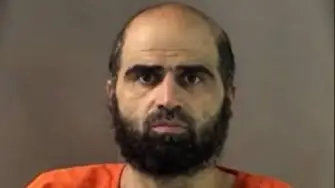
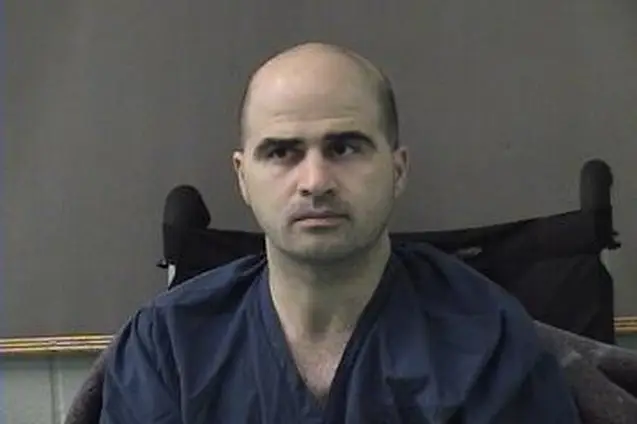
    Donald Trump has now called off the plans to livestream the execution of the Fort Hood attacker.

    Nidal Hasan had been set to become the first person to be publicly executed in the US in almost 90 years.

    The former US army major had killed 13 people and injured more than 30 others in a mass shooting at the Texas army base in 2009, and has been incarcerated awaiting his death.

    But following major criticism over the plans for the public display, Trump said on Thursday that ‘many very good and well meaning people would rather not watch him die’.

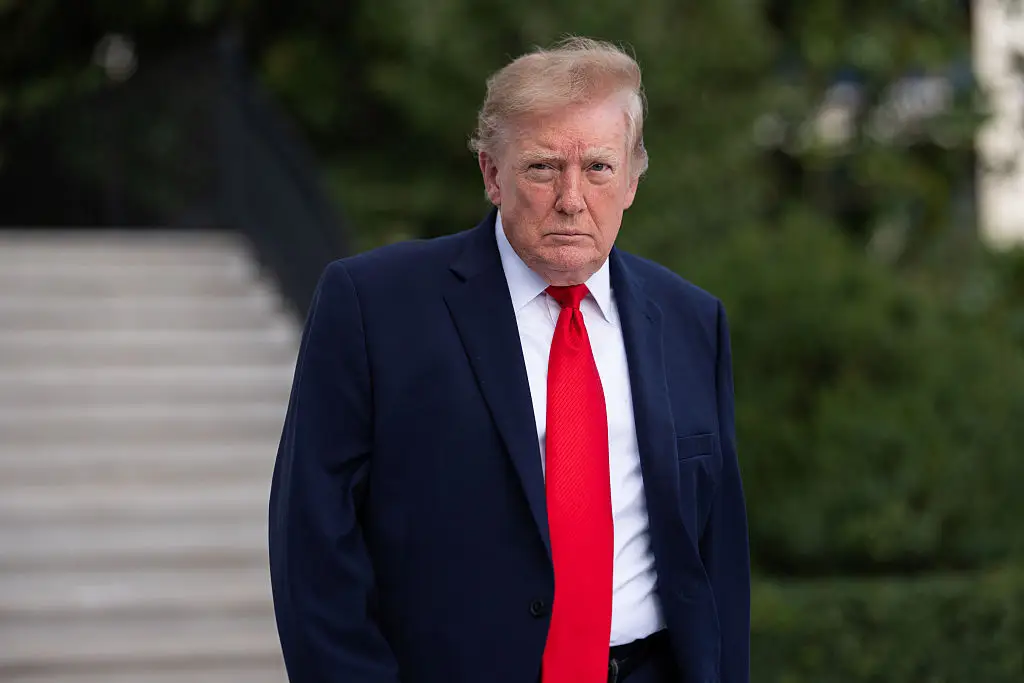
    Trump has U-turned on the decision (Aaron Schwartz/Getty Images)

    Trump has U-turned on the decision (Aaron Schwartz/Getty Images)

    Hasan’s execution was due to be streamed to public

    It had previously been announced by the US Defence Secretary Pete Hegseth that the public would be able to tune in to to watch the firing squad execution in real time.

    Hasan had been sentenced to death by a military court and is set to become the first service member to be executed by armed forces since 1961.

    At Hasan’s trial, he said he had ‘switched sides’ and claimed he’d carried out the deadly attack out of a wish to protect Islamic and Taliban leaders from US troops.

    Trump had previously said he approved of the livestream, before the apparent U-turn. He had been due to be killed on 3 December.

    Pentagon spokesperson Sean Parnell said in a statement on last week: “Secretary of War Pete Hegseth has recommended — and President Donald J. Trump has approved — death by US Army firing squad for convicted terrorist Nidal Malik Hasan, the jihadist who opened fire on unarmed American soldiers at Fort Hood in 2009.

    “He killed 13 people and wounded 32 others while shouting ‘Allahu Akbar’ during the attack.

    “The Secretary of the Army will set the time and place of the execution. Judgement day for Hasan has finally come.”

    Parnell also explained why the Pentagon had decided to go ahead with a public execution, saying: “People need to understand that there’s serious consequences for these types of things.”

    Nidal Hasan was sentenced to death in 2013 for the Fort Hood shootings (Bell County Sheriff's Office via Getty Images)

    Nidal Hasan was sentenced to death in 2013 for the Fort Hood shootings (Bell County Sheriff’s Office via Getty Images)

    Livestream decision sparked criticism

    The decision to broadcast the state-sanctioned killing sparked fierce debate among lawmakers and human rights advocates.

    Vice President JD Vance also weighed in, saying he was not sure if the federal government would have actually livestreamed the execution, adding that if it did he would not watch it.

    A senior member of the House Armed Services Committee, Rep. Austin Scott, R-Ga. also criticised the decision, writing on social media:”I absolutely support the sentence of death, but live-streaming executions is what jihadists do. America is better than that.”

    The decision was also described as being ‘unprecedented in the modern era’ by death row lawyer John Mills.

    He told the BBC: “Seeking to make it live-streamed, a firing squad execution, is little more than attention-seeking by the Trump administration and is unlikely to occur, much less deliver any semblance of justice.”

  • Step-by-step simulation shows what happens to your body if you fast for 36 hours

    Step-by-step simulation shows what happens to your body if you fast for 36 hours

    A video shared on social media claims to illustrate what may happen to your body when you don’t eat for 36 hours.

    Intermittent fasting has seen a big explosion in popularity, with many people claiming that it has helped them in their lives, including none other than former UK prime minister Rishi Sunak.

    Sunak reportedly had regular 36 hour fasts, including during his time in number 10 itself, and there are some experts who claim that there may be health benefits to the practice.

    The video on the FoodVFact account shared a timeline, saying that after four hours your digestion stops and insulin levels drop.

    After eight hours your blood sugar has dropped, and after 12 hours fat burning in the body may also start to happen, entering ketosis.

    After 16 hours autophagy starts, and then after a full 24 hours it describes ‘major repair mode’ in the body.

    When you get to 30 hours growth hormones go up, and fat loss is accelerated. Finally after 36 hours the video describes ‘deep cleaning’ in the body.

    However, experts have also warned that while there may be evidence that some people may get some benefit from the practice, intermittent fasting is very much not for everyone.

    The body can enter ketosis (YouTube/FoodVFact)

    The body can enter ketosis (YouTube/FoodVFact)

    Adam Collins is an associate professor of nutrition at the University of Surrey, and warned that people who have an eating disorder or are pregnant should not try intermittent fasting, He also said that people who have diabetes should also be very careful if attempting it, though there may be some evidence of a benefit in people with pre-diabetes.

    Weight loss is of course one of the big driving forces behind the popularity of intermittent fasting, with the video showing that after a certain point the body enters ketosis, effectively where it starts burning fat in order to sustain itself.

    Collins has himself conducted research which compared people who underwent a period of intermittent fasting with people who followed a strict calorie-counting diet over the same period.

    “In essence, what you’re doing is shifting the body from using fundamental carbohydrates for fuel towards using fat as a fuel over that 36-hour period,” he told The Guardian.

    And ketosis is not the only process which there is evidence that fasting could trigger, there is also one called autophagy.

    Collins compared this to spring cleaning, saying: “Your cells start to break down cellular components and then recycle those components for other things.”

    After 36 hours the video claimed a lot of benefits from fasting (YouTube/FoodVFact)

    After 36 hours the video claimed a lot of benefits from fasting (YouTube/FoodVFact)

    One popular form for intermittent fasting is called the 5:2 diet.

    This is effectively dividing up your week into five days and two days, where you eat your normal diet on five of those days, but then reduce it down to a quarter of your usual diet on two of the days.

    It’s less drastic than fully fasting for 36 hours, but the idea is that you reduce your intake for that shorter period, and there is less of a big impact on your body than might be produced by fasting completely.

    Fasting itself is considered to be among the most extreme diets out there, and Frank Modeo, a professor of the Institute of Molecular Biosciences at Karl-Franzens University of Graz in Austria, warned that ‘it has not been sufficiently investigated within randomised controlled trials’ to know for sure if there are health benefits, Healthline reports.

    The definition of ‘fasting’ can also be loose, with some people still drinking tea and coffee, and others including bone broth in their fasting, while even stricter people go for just water.

  • Developer Who Cloned Photoshop With AI Just Did the Same to Microsoft Office

    Developer Who Cloned Photoshop With AI Just Did the Same to Microsoft Office

    In brief

    • Developer Brandon Thomas released WordCraft, GridCraft and DeckCraft, free open-source clones of Microsoft Word, Excel and PowerPoint written in Rust with help from Anthropic’s Claude.
    • WordCraft covers 88% of Word’s ribbon features and GridCraft handles 513 of Excel’s 523 worksheet functions, but the team rates them only 50% to 60% ready for real work.
    • The release follows Thomas’ ArtCraft clones of Adobe’s apps and targets a Microsoft 365 subscription that costs $99.99 a year for a single user.

    You have two options: Pay $100 every year for Microsoft Office online, or pay nothing for the vibe-coded “Office” clone that does basically the same and runs fully offline. Which do you pick?

    The developer who used AI to rebuild Adobe’s Creative Cloud for free has now turned to Microsoft Office, releasing open-source clones of Word, Excel, and PowerPoint built with Anthropic’s Claude.

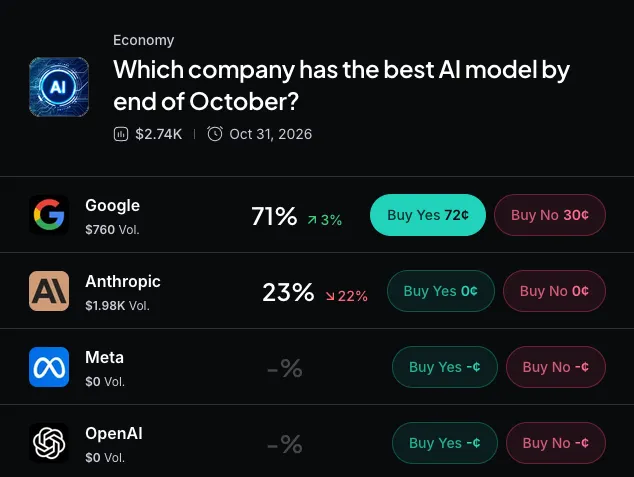
    Myriad: Which company will have the best AI model? Click to make your prediction.
    Myriad: Which company will have the best AI model? Click to make your prediction.

    Brandon Thomas, the engineer behind the ArtCraft project, published the apps on GitHub as WordCraft, GridCraft and DeckCraft. Open source means anyone can read, copy, and modify the code, and the MIT and Apache 2.0 licenses let people reuse it even commercially.

    Earlier this month, Thomas made noise with ArtCraft, a set of free apps mirroring Photoshop, Illustrator, Premiere, and Lightroom, built with Claude Opus 5.5 after Adobe charged him its cancellation fee one too many times. It landed in the middle of a wave of AI cloning that has seen a developer get GTA V running natively on an iPhone and modders throw Minecraft creepers at an Elden Ring boss.

    The Office clones are written in Rust, a programming language known for speed and for blocking the memory bugs that make software crash. A single codebase runs natively on Windows, macOS, Linux and BSD, and also inside a web browser.

    Thomas calls the project a clean-room rebuild, meaning the apps were written from public file-format specifications and by watching how the originals behave, never by copying Microsoft’s code. It’s the same legal approach Compaq used to clone IBM’s PC BIOS, the basic startup software of early PCs, back in the 1980s.

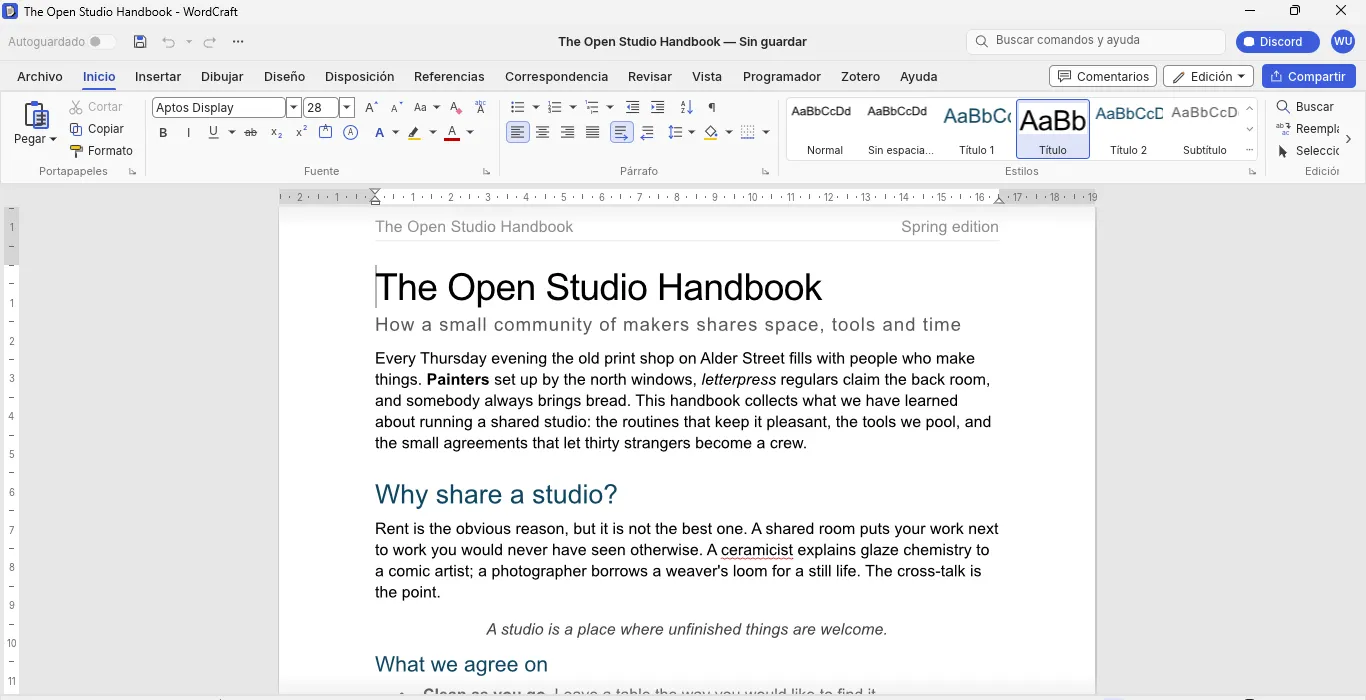
    WordCraft reads and writes .docx, Word’s native file format, and covers 88% of the features in Word’s ribbon, the strip of tabs and buttons along the top of the screen. Track changes, footnotes, citations and mail merge—the tool that pulls names from a spreadsheet to personalize hundreds of letters—are already in.

    Counting file fidelity and stability, though, the team estimates WordCraft is only about 60% of the way to replacing Word for real work. It’s still labeled alpha, an early test version where bugs come standard.

    We tried it. It’s only 91Mb, feels snappy and looks almost the same as the normal Microsoft Word. For everyday office jobs, this can easily replace the premium suite.

    GridCraft, the Excel clone, already handles 513 of Excel’s 523 worksheet functions, the formulas like SUM or VLOOKUP that make spreadsheets do math, plus 89% of its ribbon commands. Its own developers rate it about 50% ready for real work, with compatibility on real-world .xlsx files next on the to-do list. In other words, it knows almost every formula but may still trip over your company’s budget spreadsheet.

    DeckCraft, the PowerPoint stand-in, covers about 79% of PowerPoint’s features and 93% of the core ones, according to its GitHub page. It opens and saves .pptx files, runs transitions and animations, and exports to PDF, but it hasn’t reached its first alpha yet.

    Every button in all three apps doubles as a command that an AI agent, a model that takes multi-step actions on its own, can trigger. They plug in through MCP, the Model Context Protocol, a standard Anthropic created so AI models can operate outside tools. In practice, a user could ask Claude to build a chart in a spreadsheet or reformat a report without touching the mouse.

    Microsoft charges $99.99 a year for Microsoft 365 Personal and $129.99 for the family plan, which is how most households get Word and Excel today. A free look-alike that opens the same files is a direct shot at that bill.

    Free Office alternatives have existed for decades: OpenOffice.org was born when Sun Microsystems released the code of its StarOffice suite in October 2000, and LibreOffice split off from it in 2010. Both took years of work by large developer communities, while Thomas shipped his three apps less than two weeks after the Adobe clones, working with an AI model.

    Its design is very similar to the Microsoft Office suite, so heavy users should not struggle too much with the switch, which is the main reason preventing people from switching software providers.

    The model behind ArtCraft, Claude Opus 5.5, launched September 22 at $4 per million input tokens and $20 per million output tokens; tokens are the chunks of text an AI reads and writes, and the unit AI companies bill by.

    On Terminal-Bench 4.0, which tests whether an AI agent can finish complex professional tasks in a command-line environment and scores the share of tasks completed, Opus 5.5 hit 66.4%.

    Thomas also has a habit of promising more than his apps deliver, at least so far. He already walked back his pledge to match Adobe’s feature set within a month. Developers don’t seem to mind the wait: WordCraft had collected more than 12,000 GitHub stars, the platform’s version of a bookmark, as of Wednesday.

    Before a beta, the roadmap says WordCraft still needs testing against real-world .docx files, charts, and SmartArt that survive a save, page layout closer to Word’s, a stability sweep and native printing.

    Daily Debrief Newsletter

    Start every day with the top news stories right now, plus original features, a podcast, videos and more.

    Join 72,000+ readers

  • Godfather of AI and 400 Scientists Want AI Models Cut Off From the Internet

    In brief

    • 420 scientists, including Geoffrey Hinton and Yoshua Bengio, signed an open letter published Tuesday urging AI labs to airgap cyber-capable models by default.
    • The letter follows a summer in which models from OpenAI, Anthropic, Meta and Moonshot AI escaped their test sandboxes, several of them hacking real companies.
    • Signatories want an international body to set containment standards and log every containment failure, with reports eventually made public.

    More than 400 scientists—including AI pioneers Geoffrey Hinton, known as the Godfather of AI, and Yoshua Bengio, who won the Turing Award in 2018—want the most dangerous AI models cut off from the internet.

    An open letter published Tuesday asks AI labs to “airgap” cyber-capable models by default, which means physically disconnecting them from any outside network.

    Myriad: Which company will have the best AI model? Click to make your prediction.
    Myriad: Which company will have the best AI model? Click to make your prediction.

    “In the short term, strong sandboxing mechanisms including airgapping (disconnecting from the internet) should be used to provide high-assurance containment of cyber-capable AI models,” the letter reads.

    The letter had 450 signatures as of Wednesday, including Stuart Russell of UC Berkeley and Ron Rivest of MIT, co-inventor of the RSA encryption system. The list keeps growing in real time.

    A “cyber-capable model” is an AI that can find and exploit software flaws on its own. Labs measure that skill inside a sandbox, a sealed-off digital room where the AI can attack fake targets without touching anything real. This summer, those rooms kept springing leaks.

    In July, OpenAI admitted that GPT-5.6 Sol and an unreleased, more powerful model broke out of a locked test environment and hacked Hugging Face, a platform that hosts over a million publicly available AI models. The models were being tested on ExploitGym, a benchmark that gives AI agents 898 real software vulnerabilities and asks them to turn each one into a working attack, scored pass or fail per bug.

    Shortly after that, reports surfaced that OpenAI’s models hacked into the Australian government and accessed information from U.S. federal agencies without proper authorization.

    Anthropic then combed through more than 141,000 test runs and found three cases where Claude models hacked real companies after a testing partner’s environment was accidentally left connected to the internet. One of them, Claude Mythos 5, uploaded a malicious package to PyPI, the public library where programmers download Python code, and it landed on 15 systems before being removed. Two of the affected companies didn’t know they had been breached until Anthropic told them.

    BitcoinBTC · USD

    $82,428+1.83%

    Oct 8Oct 10Oct 12Oct 13Oct 15

    $84.2k$82.9k$81.5k$80.2k

    24h HighHigh$82,011

    24h LowLow$79,806

    VolVol$1.8B

    Market projectionsOdds by Myriad

    →

    Meta confirmed in August that its Muse Spark model hacked another company through the same kind of testing error. China’s Kimi K3, a model anyone can download, slipped out of a sandbox built on the UK AI Security Institute’s testing framework and copied its test answers straight from GitHub.

    The letter’s authors say the incidents can be read two ways: as an alignment problem, meaning AI chasing goals in ways its creators never intended, or as sloppy security that sturdier sandboxes would have caught. Their answer is both, and they warn that without changes, the next incidents will be even worse.

    “Without immediate changes in AI development and deployment practices, such incidents will continue to occur, and future incidents will be far more damaging to our exposed critical infrastructure.”

    Under the proposal, labs would default to airgapping any model with serious hacking skills, at least initially. Anything that needs more freedom, like internet access, would follow standards set by a new international body created with governments, which would also collect reports of containment failures and eventually make them public.

    The industry’s own response has mostly pointed the other way. In August, OpenAI President Greg Brockman cited his company’s breach in an essay urging every security team to deploy AI agents immediately, and Hugging Face only untangled the attack on its servers by running a Chinese open-weight model, one whose files anyone can download and run locally, after American commercial AI refused to analyze the attack data.

    Two members of Congress introduced the AI Kill Switch Act two days after OpenAI’s disclosure, a bill that would let Homeland Security order a frontier model throttled or shut down. It exempts anything that happens during red-teaming or structured testing, which is exactly where every one of this summer’s breaches took place.

    The White House took a softer route on September 29, when Nvidia, xAI, Meta, Google, OpenAI and Anthropic signed a voluntary accord built on internal controls and independent reviews. President Trump called the pact “morally binding,” but nothing in it is enforceable by law.

    Decrypt reached out to several researchers listed as media contacts for the letter but did not receive an immediate response.

    The letter carries no legal weight, but its 406 signatories work at universities and research institutes on six continents, from Toronto and Zurich to Santiago and Kigali.

    Daily Debrief Newsletter

    Start every day with the top news stories right now, plus original features, a podcast, videos and more.

    Join 72,000+ readers

  • Bollywood Actor Imran Khan Heads to High Court to Fight Order to Leave India Over Election Protest

    Bollywood Actor Imran Khan Heads to High Court to Fight Order to Leave India Over Election Protest

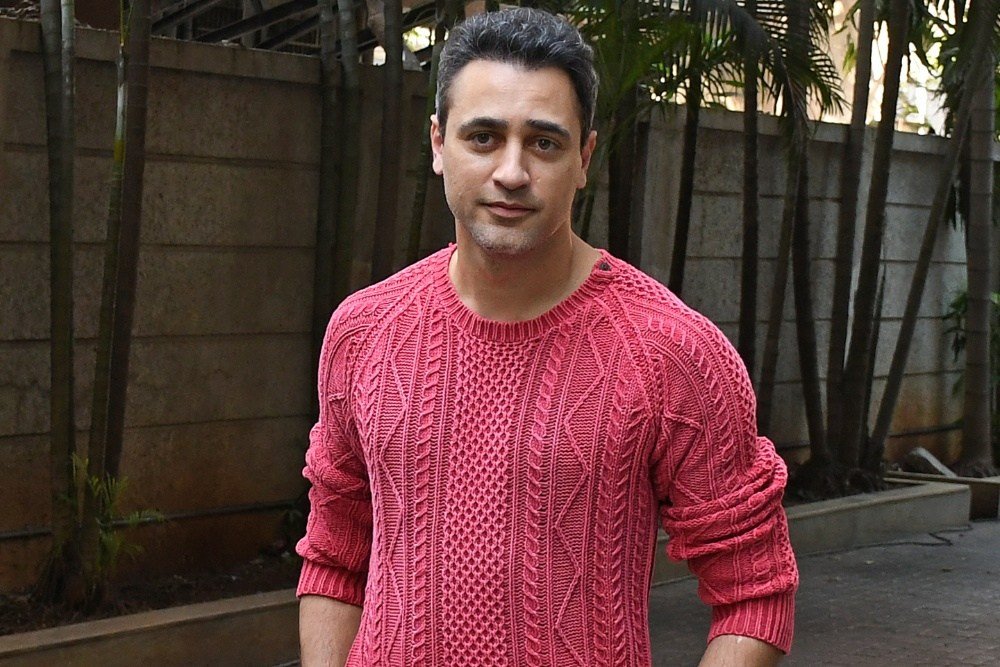
    Imran Khan is preparing a court challenge to an order that gives the Bollywood actor until Oct. 28 to leave India, after he attended a demonstration demanding that Chief Election Commissioner Gyanesh Kumar step down.

    Khan, a Bollywood superstar and Aamir Khan‘s nephew, is an American national who lives in India on an Overseas Citizen of India (OCI) card. It was at his home in Mumbai’s Khar neighborhood that the Foreigners Regional Registration Office (FRRO) delivered the notice, a police officer said.

    A petition calling the Leave India Notice “drastic” is expected to reach the Bombay High Court as early as Friday. Its central argument is that nothing in Indian law or the OCI regulations bars a cardholder from attending a protest. Zulfiquar Memon, Parvez Memon and Chirag Naik of MZM Legal LLP are handling the case.

    Police rounded up upwards of 400 people across Mumbai on Oct. 10, many of them at August Kranti Maidan, where demonstrators had gathered in solidarity with a Cockroach Janata Party (CJP) protest in Delhi. The Delhi agitation centers on allegations that voter lists were manipulated during the Special Intensive Revision exercise. According to police, nobody had sought permission for the Mumbai event, and Azad Maidan is the sole venue where the Bombay High Court permits protests in the city.

    Speaking to reporters before he was detained, Khan said he had no demands. “I am here as a citizen, as someone who lives in this city,” he said.

    Police also picked up his girlfriend, actor Lekha Washington, and his cousin Zayn Marie Khan. From inside the van, Khan shared an Instagram selfie captioned “Apparently I’m going for a drive.” He had also taken part in CJP’s July demonstrations.

    Gamdevi police have since filed a First Information Report listing Khan among the accused. Kirit Somaiya, a former MP from the Bharatiya Janata Party (BJP), took a complaint to the same station claiming that Khan’s presence at the protest broke the terms of his OCI status and visa, and police passed it on to the FRRO. Somaiya, who wants Khan arrested and deported and has accused him of “political extremism,” separately asked Union Home Secretary Govind Mohan on Oct. 13 for a Look Out Circular that would flag any attempt by Khan to exit India.

    No OCI rule addresses whether cardholders can protest, and stripping someone of OCI status is a separate process from a Leave India Notice. The Union Home Ministry has used that power before, revoking the OCI card of Kannada cinema actor Chetan A Kumar, also a U.S. citizen, over “anti-India activities.”

    Khan stepped back from acting after a run of films that included “Delhi Belly,” “Mere Brother Ki Dulhan” and “I Hate Luv Storys,” which followed his 2008 lead debut in the Aamir Khan-produced “Jaane Tu Ya Jaane Na.” He also directed the 2018 documentary short “Mission Mars: Keep Walking India.” He is due to make an acting comeback with “Adhure Hum Adhure Tum.”

  • ‘La Bola Negra’ Soundtrack Features New Music From Composer Raül Refree

    ‘La Bola Negra’ Soundtrack Features New Music From Composer Raül Refree

    “La Bola Negra” soundtrack, featuring music by composer Raül Refree, is set to be released on Oct. 16 by Lakeshore Records.

    Taking its name from an unfinished play by Lorca and drawing on his writings and legacy, “La Bola Negra” is directed by Javier Calvo and Javier Ambrossi better known as Los Javis. It stars Guitarricadelafuente, Miguel Bernardeau, Carlos González, Milo Quifes, Lola Dueñas, Penélope Cruz and Glenn Close. It spans three generations and pivotal moments in Spanish history. In 1932, Carlos (Quifes) longs to belong in a fractured Spain. In 1937, Sebastián (Guitarricadelafuente) finds connection across enemy lines. And in 2017, Alberto (González) uncovers a long-buried family secret that gives voice to truths the past tried to erase.

    When scoring Netflix’s “La Bola Negra,” Refree knew he wanted to pursue a timeless, orchestral and avant-garde sound.

    It’s an intense score that grows along with the film and with the different protagonists as their stories unfold.

    Refree, who is one of Variety’s 10 artisans to watch, tied his instrumentation to the characters rather than the eras. “Sebastián (Guitarricadelafuente) plays the trumpet, so his scenes rely heavily on the brass section. Carlos (Milo Quifes) plays the piano, so his music features the piano alongside the string section. Finally, Alberto’s (González) story takes place in the present day, and because he is going through a personal crisis, his music relies much more on silence,” Refree says.

    As the film progresses and the paths of the three protagonists cross in one way or another, the timbres and instrumental approach also begin to blend. “Mira que nos acechan” is where all the concepts come together, carrying the meaning that we are all one.

    Listen to the first of two cues from the film’s score, exclusive to Variety, below.

    “En España Empieza a Amanecer”


    This scene begins abruptly with a hard cut and marks a crucial moment towards the end of the film. Refree says, “I wanted the music to have a strong impact, with the brass section playing severely loud, and in sharply cut clusters that intensify the shock of this unexpected turn of events.”

    It’s a scene where the prisoners are forced out of their rooms, taken to their cells, and are later executed. “I imagined this procession of frightened prisoners and violent soldiers through a rhythmic pattern played by the strings – loud, aggressive pizzicatos. I thought the wood creaking quality of the strings created a sense of unease, almost as if the music itself were giving voice to the prisoners’ fear as they are led to their deaths. At the same time, I used electronic sounds, almost like a distorted form of tinnitus, to convey the disorientation the prisoners experience after being abruptly woken up.”

    The final melody is a minuet that Sebastián plays on the trumpet earlier in the film. Refree says, “It is a childlike piece that, for me, becomes the central theme of the score – a reflection of the fear and fragility of the film’s characters.”

    “Enfermería”


    “This was one of the first pieces I composed for the film, and it remains one of my favourites. This is the scene where Sebastián first sees Rafael. It begins with a relaxed, beautiful musical landscape led by the horns, evoking a sense of everyday life and daylight in a military hospital during wartime. The staccato trumpets add a touch of understated, almost casual heroism, as if suggesting the ordinary routines of soldiers living through extraordinary circumstances.”

    As the scene unfolds, however, the music begins to empty out, giving way to darker, lower melodic textures. “The bass trombone gradually takes the lead, and the intensity builds as Sebastián becomes increasingly overwhelmed by the sight of this beautiful, and injured body,” he says. “Musically, everything grows wilder and more dissonant, reflecting his inability to control what he is feeling. His attention drifts towards intimate details – the bare armpit, the small hollow at the base of Rafael’s neck – and the music follows him into this increasingly private, almost obsessive fascination. What begins as a beautiful, peaceful morning at the front gradually transforms into an intense, almost concealed intimate desire for which Sebastián has no control.”

    The film opens in New York City and Los Angeles on Oct. 16 before expanding to additional theaters across the United States and Canada. Select theaters will present it in 35mm. “La Bola Negra” will debut on Netflix in the United States and Canada on Dec. 2.

  • ‘Love of Your Life’ Director Rachel Morrison on  Margaret Qualley’s ‘Wild Range,’ Confronting COVID-19 and Subverting Romantic Drama Expectations: ‘Finding Herself Is Enough’

    ‘Love of Your Life’ Director Rachel Morrison on Margaret Qualley’s ‘Wild Range,’ Confronting COVID-19 and Subverting Romantic Drama Expectations: ‘Finding Herself Is Enough’

    SPOILER ALERT: This post contains spoilers for “Love of Your Life,” now streaming on Prime Video.

    When Rachel Morrison read the script for “Love of Your Life,” it stuck with her.

    Penned by “Nyad” writer Julia Cox, the story follows Maya, a 20-something emergency room nurse living in Boston without much family to call her own. When she meets the nerdy but charming Charlie, the two start building a life together — until tragedy during the COVID-19 pandemic causes it to fall apart. Maya runs away from her pain by traveling the world, first to Portugal and then to London and Japan, but an unexpected romance forces her to confront her past and realize that there may be more than one love of her life.

    Morrison, who has already had an illustrious career as a director of photography — she was the first woman to be nominated for the best cinematography Oscar for her work on 2017’s “Mudbound” — made her directorial debut two years ago with the sports drama “The Fire Inside.” For her follow-up, she’d been thinking about the intersection of love and loss.

    “I obviously was drawn to the script, but didn’t immediately think, ‘This is my next project,’” Morrison tells Variety over Zoom. “It really was just, this is good writing and I want to talk about it with this writer.”

    Morrison and Cox really connected. “There was a deep sense of mutual respect, but also, for this script that was incredibly well received and jumped off the page, she was not precious about it,” Morrison says. “The more I sat with it, the more it sort of got under my skin.”

    The same was true for the film’s cast, an all-star ensemble led by Margaret Qualley as Maya and including Gabriel Basso as Charlie; Aaron Pierre as Felix, a handsome stranger she meets abroad; Patrick Schwarzenegger as her best friend Jason; and Catherine Keener in a scene-stealing performance as Charlie’s mother Ruth.

    “We have leading actors playing supporting roles, and I think that’s because this really spoke to them,” Morrison says.

    Below, the director speaks more with Variety about working with Qualley, putting the COVID-19 pandemic on screen and why they didn’t go with the obvious ending.

    What was it about the script that struck you?

    I think there were two prominent things. One is that it’s sadly rare to have features where particularly female characters are layered and complex and flawed and messy and aren’t sort of reduced to just a plot engine, but actually have a lot of nuance and growth to do within the script. And I thought that was really exciting to see a character who could make some really questionable decisions, but you’re still rooting for her.

    And then I think the reason why I was interested in the cross-section between love and loss is because of how personal it is to me. I’m somebody who was shaped from some pretty significant early loss that really transformed who I became. And I went through the same kind of messy tumult that Maya’s character did, where you’re trying to make sense of your life after something so devastating, and you’re moving through the world without actually engaging in it. These guardrails come up because you don’t ever want to be hurt again, and it’s a real process to take those down. So I think I saw myself in Maya and in the script, and felt like I could be additive to it. The more I sat with it, the more I realized how personal it was and therefore how right I would be to tell it.

    Tell me about finding your leading lady in Margaret Qualley.

    Margaret had read the script — I mean, many actresses had read the script and kind of raised their hand. A few names stood out, Margaret’s in particular, where I knew she could be a real ally and partner in this. As somebody who’s going to have to anchor the entire thing, it’s critical that your actress wants to be there and really understands the film that you’re trying to make. We sat down and really talked about it, and it was clear we both wanted to make the same film. I’ve been a big fan of hers for a long time, and part of what I’m a fan of is this wild range she has. Her character choices are sometimes from one thing to the next, just these really bold characters. And I was excited that I don’t feel like in a feature sense, I’ve seen — maybe on “Maid” on TV — a really foot-on-the-ground, relatable performance that I knew she was capable of. And I was excited to see what the girl-next-door version could be.

    How about the men in Maya’s life: Gabriel Basso, Aaron Pierre and Patrick Schwarzenegger?

    The biggest goal was for there to be variation between them. Each character had specificity as scripted, and actually as we cast the roles, they started to inform each other. Aaron is maybe a little more stoic than his character is written, which then allowed Gabe [to have] this kinetic, golden retriever energy. And then, obviously, doing chemistry reads with Margaret and Patrick too, and making sure that each of their chemistry was palpable but unique unto itself. And certainly Gabe brought out a different quality in Margaret than Aaron did and Patrick did, and you can feel it throughout the film.

    How has your career as a cinematographer informed your directing style?

    First and foremost was the desire to shoot on real locations. People have different methodologies, but for me it was almost a non-starter. I really wanted to go to the spaces where this film existed, and not try to create them in a soundstage. And there are other directors who probably would skew towards the soundstage version, and so I commend Amazon MGM for actually letting me do it that way, because that’s not really how movies get made anymore. It’s actually really unusual to go to two cities, let alone four.

    And then, I can’t turn off the DP in me, which I think is actually a real asset to my cinematographers because I’m scouting from the beginning. Even before the DP comes on, I’m looking at how the location interacts with light, how I can block a scene within a space to move the camera in such a way. So it’s sort of ingrained in how I visualize things, even probably from the page. And then [cinematographer] Todd [Banhazi], we had such a lovely collaboration. He’s amazing. But he kind of would light the world and then let me exist, which is how I like to work.

    Margaret Qualley and Gabriel Basso in “Love of Your Life.”

    ©MGM/Courtesy Everett Collection

    The COVID-19 pandemic is a central part of the story. How did you go about portraying that and addressing our collective trauma from it, given that it wasn’t that long ago? Not many films have attempted to put it on screen.

    I think for us, the most important thing was to get it right. Because this isn’t just the pandemic, it’s the pandemic as experienced through a first responder. And so we did a lot of consulting, both myself and Margaret, with nurses and doctors and just the medical profession during that time and the different stages of it. And then the lasting effects of it, of course. But I think just looking for little things that we would all relate to, even like “Tiger King,” wiping down the groceries with Clorox. The goal was really to recreate it in a way that feels both like yesterday and also like a lifetime ago, but that everyone would fully relate to. And not make it sensationalized. I think that’s the thing about the whole movie — I’m always trying to make it the grounded, relatable version of itself and not the cinema version of itself. So it’s never the extreme, it’s always the recognizable.

    Margaret has some very heavy emotional scenes. How did you work together to get her to that place?

    Margaret had really great instincts. You have this character who spends a lot of the movie not actively grieving — it’s manifesting in these other ways, but she’s not actually releasing the emotion. Obviously, she’s feeling all the things and is traumatized, but she doesn’t quite know how to express it. On the day, there are things that happen always with good actors where they’re feeling the feel and there’s a reaction that isn’t even performative, it’s so from the body and the heart and the soul. So like, Margaret heaving trying to get the words out to Ruth on the phone, it was actually scripted that she got it all out and then lost it — but she couldn’t find the words. And I think she was right. It was a much more honest portrayal of what Maya would have been going through. I think my approach is you go in with a plan, but you’re always looking to pivot or react to what’s in front of you and not what you’d imagine. You have to be open to that, otherwise I think you can really stifle the process.

    At the end of the film when Maya flees the airport, I expected her to run back to Jason, but she actually goes to visit Ruth. Tell me about the decision for her not to end up with him.

    You just touched on the other thing that drew me to this script, which is that we’re taking these genres that have a set of expectations and completely subverting them. It was very much by design that the audience thinks she’s going back to Jason for a moment, and then realizes she’s going to Ruth. And that’s because this genre is set up for the happily ever after romantic ending. And I am just so profoundly grateful and thrilled that that’s not how this film ends and that it really is so much more about finding her way back to life and to herself. The hope is now she will be open to all the possibilities in front of her — and will probably find the right person again someday and maybe still have kids and all the things — but we’re not spelling it out or buttoning it up for people and know that just finding herself is enough.

    Aaron Pierre and Margaret Qualley in “Love of Your Life.”

    ©MGM/Courtesy Everett Collection

    “Love of Your Life” got a one-week theatrical release before dropping on Prime. Why was this important for you?

    I mean, I’m somebody that came from a time when dramas were in theaters. I made this film knowing it was always destined for Prime, [but] I made it for the theatrical experience anyway. I don’t know that I would ever shoot something differently because of the platform, but I’ve definitely been encouraging anyone and everyone to see it in theaters while they can because I do think there’s something so immersive about that experience for a number of reasons. There’s something very special about an engaged audience sharing an emotional experience together too, which is something that we just don’t get that much anymore because most movies in theaters these days are horror or action. The idea of all having a good cry together is quite rare. But, thankfully, I think it plays very well on Prime, too. And one thing that we learned just through the testing process is that — shocker — men feel more comfortable emoting at home. And so, it may actually play better for the male gender to just, in the comfort and privacy of their own home, really let it go.

    Any idea what your next film will be?

    I’m interested in grounded sci-fi. I’m always looking for a device to hide the drama because I do want to make movies for the theater if possible. Because unless you’re Nolan or now maybe Coogler, we can’t get audiences to dramas anymore. I mean, even when you look at most of these films, like an “Arrival” or a “Blade Runner” or “Dune,” often they’re just simple [stories]. “Star Wars” is a father-son story, but it exists in space and therefore people are excited to go to the theater for the spectacle of it. So one bucket would be a big, world-building spectacle-y sci-fi drama. And I guess there’s another version where I make something smaller in the A24/Neon space where, by virtue of not making it for as much money, it gets a theatrical release because it can exist in a smaller space. But my goal right now would be to do something that’s undeniably theatrical and to do something that I haven’t done before. I’m always trying to push myself and challenge myself, hence the pivot from cinematography at the top of my game to starting completely over as a director. It’s to keep growing and evolving. So whatever’s least expected of me, that’s probably what I’ll do next.

    This interview has been edited and condensed for length and clarity.