Blog

  • Kumail Nanjiani, Jim Belushi, Brittany O’Grady and Taylor John Smith Join Sci-Fi Thriller ‘Green Bank’ (Exclusive)

    Kumail Nanjiani, Jim Belushi, Brittany O’Grady and Taylor John Smith Join Sci-Fi Thriller ‘Green Bank’ (Exclusive)

    Kumail Nanjiani, Jim Belushi, Brittany O’Grady and Taylor John Smith have joined Tatiana Maslany in Green Bank, an independent sci-fi horror thriller Pangaea Studios, Big Swell Entertainment and Nocturnal Kid.

    Josh Ruben, who previously helmed the rom-com slasher Heart Eyes, is directing the feature, which is begins production this week at Pangaea Studios in Atlanta.

    Written by Aaron Horwitz (The Cleansing Hour), Green Bank is set in Green Bank, West Virginia, a real world town that has been known since the late 1950s for having a “quiet zone” that severely limits radio and electronic transmissions due to scientific research being conducted in the area. It has since been expanded to include Wi-Fi and cell service.

    O’Grady is playing the lead of the story, which follows infant sleep-trainer who discovers that the parents of the child she is caring for are far more than the clueless yuppies they appear to be.

    Producing are Andy Horwitz (Suicide Squad, Triple Frontier) of Big Swell Entertainment, Jack Greenberg (Speed The Plow) of Pangaea Studios, and Ruben via his Nocturnal Kid banner. Steve Greenberg is executive producing.

    The below-the-line team includes director of photography Magdalena Górka (Star Trek: Strange New Worlds, Marvel Studios’ Echo), production designers Hillary and Courtney Andujar (I Know What You Did Last Summer); VFX producer Chris LeDoux (La La Land, 12 Years A Slave), and casting director Chrissy Fiorilli-Ellington (Die Hart).

    Spoiler! There are creatures in this feature. And the creature effects are being overseen by legendary effects artist Greg Nicotero and team at KNB EFX Group, who are known for their work on The Walking Dead and Fallout, among a host of award-winning work.

    UTA Independent Film Group is repping the feature.

    Nanjiani last year appeared in James L. Brooks’ Ella McCay and Amazon’s hit series Fallout. He is repped by UTA and Mosaic.

    Belushi last year appeared with Kate Hudson in Song Sung Blue and in Kristen Stewart’s feature directorial debut, The Chronology of Water. He is repped by CAA, Brillstein Entertainment Partners and LBI.

    O’Grady is best known for starring in Fox’s musical series Star as well as being one of the leads on the first season of HBO’s White Lotus. She will next be seen in the next Jumanji movie, Jumanji: Open World, which is due to open Dec. 25. She is repped by CAA and Suskin/Karshan Management.

    Smith appeared in 2022’s Where the Crawdads Sing as well as Alex Garland’s Warfare. She is repped by CAA and Vybe Trybe.

  • The Athletic: Rudy Gobert stands taller than ever in Game 2 showdown

    The Athletic: Rudy Gobert stands taller than ever in Game 2 showdown

    Rudy Gobert was up to the challenge of defending Nikola Jokić one-on-one on Monday night.

    Editor’s Note: Read more NBA coverage from The Athletic here. The views on this page do not necessarily reflect the views of the NBA or its teams. 

    ***

    DENVER — Rudy Gobert knows you don’t believe in him.

    He knows that nothing delights you more than opening your phone to see video of that one time a guard caught him in an ISO and hit a step-back 3 over him. He knows you chortle so loudly that the Cheetos dust sprays from your mouth as you repost the clip and comment in all caps, “THIS Y’ALL’S DPOY?!?”

    He knows because he hears you. Some NBA players mute the volume on social media. They couldn’t care less about what anyone says about them because the money and the stats and the wins do all the talking. Gobert is not one of those players. He is keenly aware of his place in the NBA discourse. His pride won’t let him look the other way as the disrespect flows in.

    Rudy Gobert knows you do not appreciate him.

    The Minnesota Timberwolves big man knows that no matter how overwhelming his on/off splits are, it will never be enough for many of you to look past the missed layups or the fumbled passes to see him for who he is — one of the greatest defensive players to ever play the game.

    He knows because he sees you. He examined the vote tallies for the Defensive Player of the Year award, which were released on Monday. That Victor Wembanyama won it unanimously was not a surprise to anyone, including Gobert. That Gobert finished a distant fourth, 19 points behind the Detroit Pistons’ Ausar Thompson for third place, rippled through the Timberwolves’ locker room before, during and after one of the best quarters of defense he has ever played in Monday’s 119-114 victory over the Denver Nuggets in Game 2 of their first-round playoff series.

    Gobert — in Year 13, with a record-tying four DPOYs on his resume and more than $250 million in salary earned — is finally starting to realize that you don’t matter. Not when he has almost single-handedly turned a franchise long known for defensive ineptitude into one of the stingiest groups in the league. Not when he has been a primary figure in the golden age of Timberwolves basketball, which includes playoff appearances in all four of his seasons in Minnesota and back-to-back runs to the Western Conference finals.

    Not when Anthony Edwards pulls him aside before the start of Monday’s fourth quarter, knowing the Timberwolves’ season essentially hinged on the next 12 minutes, and looks to Gobert to be the one to save them. In that moment, the Wolves were down 93-90 in the game and 1-0 in the series. Falling behind 2-0 in a best-of-seven against the high-octane Nuggets would have meant almost certain death. In that moment, Edwards craned his neck up to stare the 7-foot-1 Gobert in the eyes and deliver a challenge that bordered on the impossible.

    Nikola Jokić, the three-time MVP who averaged a triple-double and became the first player since Wilt Chamberlain in 1968 to lead the league in rebounds and assists in the same season, was on the other sideline. He may be the most unstoppable offensive player the game has ever seen. He has made mincemeat of every big put in front of him, including Wembanyama, and including Gobert on many a night. But unlike you, Edwards knew Gobert was up to the task.

    “We ain’t bringing no double team,” Edwards told him. “You gonna guard him one-on-one all night.”

    That would seem to be as close to basketball heresy as a team could get. Jokić put up 56 points, 16 rebounds and 15 assists against the Wolves in a Christmas Day win. Last season, Joker went for 61 points, 10 rebounds and 10 assists in a loss to Minnesota.

    But Edwards, and the rest of the Timberwolves, know more than you. Truth be told, some of them get as frustrated as you do when Gobert turns the ball over or flubs a layup. They also see the impact he has made in Minnesota since he was acquired from Utah in 2022 in what many of you, at the time, called the worst trade in NBA history. They have watched him turn the Wolves into a top-five defense. They have seen how opposing drivers don’t even think about going to the rim with Gobert in the vicinity.

    So they didn’t hesitate to put a generational defensive player on a generational offensive player and tell him to go to work. Gobert responded with one of the best performances of his life. After being mired in foul trouble for much of the first three quarters, Gobert held Jokić to 1-of-7 shooting in the fourth. Jokić missed both of his 3-pointers, including one airball, didn’t get to the free-throw line and had one assist. The Timberwolves outscored the Nuggets by 10 points in Jokić’s eight fourth-quarter minutes, outscored the best offense in the league 29-21 in the quarter and completed a comeback from 19 points down early in the second quarter to even the series at 1-1.

    “I think Rudy’s probably the most misunderstood player in the history of the game,” said Wolves point guard Mike Conley, who has played 7 1/2 seasons with Gobert in Minnesota and Utah. “The way that he impacts winning, just because it doesn’t look pretty all the time or is not the sexiest thing, people bypass the other 95 things he does for our team.”

    Gobert said the fourth-place finish in DPOY didn’t give him any extra juice. But he wasn’t very convincing.

    “I know who I am,” he said. “Not the first time I get disrespected, probably not the last. I’m going to keep being myself. If they want to disrespect greatness, you can just take it for granted, whatever. Sooner or later, they realize the impact.”

    The Nuggets have seen it first-hand in this series. Jokić had 25 points, 13 rebounds and 11 assists in the Game 1 win, but he also turned the ball over five times and was 2 of 7 on 3s. On Monday, he finished with 24 points, 15 rebounds and eight assists, but he turned it over three times and scored just four points on 1-of-8 shooting with zero offensive rebounds in 21 minutes with Gobert on the floor.

    As absurd as it sounds, Gobert may have had Jokić shook. In the closing seconds, with the Nuggets down 115-113, Jokić finally got a little bit of space. As he lumbered down the lane, he had a clear look at the kind of short floater that he makes in his sleep, which would have tied the game. Instead, he hesitated and dumped the ball to Christian Braun, who was fouled. Braun only made one of the two free throws.

    That’s like striking out Barry Bonds four times with the bases loaded. That’s stuffing Earl Campbell at the goal line on three straight runs. That’s knocking Taylor Swift off the top of the charts a week after she released her latest album.

    “He’s making me make tough shots,” Jokić said. “He’s big, long, he can reach the ball from any kind of angle or position. He’s a really good defensive player.”

    The 30th meeting between these two rivals in the last four years was as unhinged as so many of the ones that have preceded it. The Timberwolves opened the game with a 12-minute brain fart in the first quarter. They shot 33 percent from the field, refused to drive against Denver’s non-existent rim protection and allowed the Nuggets to shoot 67 percent from the field, 67 percent from 3 and 90 percent from the line. At one point, they fouled Denver shooters on three straight 3-pointers, and the Nuggets turned all of them into four-point plays.

    Less than one minute into the second quarter, the Wolves were down 19 points. Bones Hyland committed three fouls in four minutes, including an inexplicable decision on a three-on-one when he declined to give the ball up to either Randle or Reid and instead plowed into Tim Hardaway Jr. for an offensive foul.

    But the Wolves have been here before, in this building, against the devastating two-man game of Jokić and Jamal Murray, down big. Just like in Game 7 of the 2024 West semifinals, they never succumbed. When they finally started attacking the basket, turning Jokić into a turnstile and blowing by any perimeter defenders the Nuggets put out there, the game turned in their favor.

    “Go at Jokić, Jamal, all the bad defenders,” said Jaden McDaniels, who scored 14 points. “Tim Hardaway, Cam Johnson, Aaron Gordon, the whole team. Like, just go at them.”

    There was more spice where that came from. Edwards and Jokić got into a brief shoving match in the fourth quarter. Braun barked at the Wolves bench after hitting a 3.

    Julius Randle bounced back from an awful Game 1 with a bully ball Game 2, hammering the Nuggets around the rim and scoring 24 points with nine rebounds and six assists. Playing on one leg, Edwards put up 30 points, 10 rebounds and two blocks, and Donte DiVincenzo had 16 points, seven rebounds and six assists. Hyland overcame the foul trouble for 13 points in 10 minutes, and Naz Reid had 11 points and nine boards.

    After trailing 44-25 early in the second, the Wolves outscored Denver 94-70 over the final 35 minutes.

    “We was on one cord, I feel like, on the defensive end tonight,” Edwards said. “Especially once they went on those runs.”

    After the game, the Timberwolves couldn’t stop talking about Gobert’s performance against Jokić. They know how much criticism he takes from players and league observers. Even if they might utter some similar annoyances under their breath every once in a while, Gobert is one of their brothers. It is OK for them to go at him in private. But any time someone outside the family starts insulting him, they fight for their brother.

    “Everybody’s gonna say this about Rudy. He’s this. He’s that,” Edwards said. “They don’t understand what he means to us when he’s on the floor. People don’t want to lay the ball up around him. People just don’t want to go at Rudy. Regardless of what they say about him on the offensive end of the floor, he’s a four-time Defensive Player of the Year for a reason. He’s been doing it at a high level for a long time, and we need him on the floor.”

    When the rest of the league was laughing at president of basketball operations Tim Connelly for trading all those draft picks and players for Gobert in 2022, the Wolves paid them no mind. They knew what they were getting and what they needed, a culture changer on defense and one of the hardest workers in the league to ensure that the young core of Edwards, McDaniels, Reid and, at the time, Karl-Anthony Towns, could get some real playoff experience.

    Gobert has been all that and more for Minnesota. There have been times when he has struggled, when it looked like this experiment wasn’t going to work. But in aggregate, over the course of four years, with all of the playoff games he has helped deliver, he has been worth every pick, every player, every joke made at their expense along the way.

    “He’s an outstanding defender, he’s an outstanding professional, he’s an outstanding human,” Minnesota coach Chris Finch said. “He’s about the right things, and it’s just laughable, small-minded and petty all the crap that people decide to give Rudy.”

    Gobert has opened this rubber match with two excellent games, including a 17-point, 10-rebound effort in the Game 1 that slipped away from the Wolves in the final five minutes.

    “He knows, in his mind, he’s the best defensive player in the world,” Conley said. “He approaches every game that way. He wants every matchup. He wants to guard the best, regardless if that means some nights they score a lot on him, he’s taking that challenge. A lot of people run from that. He’s somebody that doesn’t run.”

    Game 3 is Thursday night in Minnesota. Gobert knows that Jokić will probably get the better of him sooner or later. He is far too talented not to have an explosion at some point. But he will keep throwing everything he has at the best player in the world.

    You may have given up on him a long time ago, but Gobert knows his teammates and his coaches stand shoulder to shoulder in his corner. And that is all that matters to him anymore.

    ***

    Jon Krawczynski is a senior writer for The Athletic covering the Minnesota Timberwolves, the NBA and the Minnesota Vikings. Jon joined The Athletic after 16 years at The Associated Press, where he covered three Olympics, three NBA Finals, two Ryder Cups and the 2009 NFC Championship Game.

  • Bank of Korea’s New Governor Prioritizes CBDCs Over Stablecoins in First Policy Address

    Bank of Korea’s New Governor Prioritizes CBDCs Over Stablecoins in First Policy Address

    In brief

    • New Bank of Korea Governor Shin Hyun-song emphasized central bank digital currencies and bank-issued deposit tokens in his first policy address.
    • The governor highlighted payment system stability through Project Hangang while notably omitting any mention of stablecoins.
    • The address comes amid ongoing legislative debates over stablecoin regulation in South Korea.

    Bank of Korea Governor Shin Hyun-song, who began his four-year term Tuesday, delivered his first address in office prioritizing central bank digital currencies and bank-issued deposit tokens while omitting any mention of stablecoins.

    Per reports in local media, the governor opened his address by declaring, “In this time of transition, we must again ask what the role of the Central Bank is.”

    Shin stated that through the second phase of its retail CBDC and deposit token pilot Project Hangang, the bank would, “increase the usability of CBDC and deposit tokens,” while also highlighting its role in cross-border tokenization effort Project Agora.

    Silence on stablecoins

    The omission of stablecoins marks a shift from Shin’s earlier position. During his confirmation hearings, he acknowledged a role for private stablecoins, stating that they would, “be able to coexist complementarily and competitively with deposit tokens” and would play a “sufficient role” within the future currency ecosystem.

    Meanwhile, KRW1 debuted in February as South Korea’s first fully regulated stablecoin through a partnership between crypto custody service provider BDACS and Woori Bank. The country’s proposed Digital Asset Basic Act, which remains under legislative consideration, would set rules for digital assets including stablecoin issuance.

    The governor’s silence on stablecoins comes amid an ongoing tussle between ruling and opposition parties over stablecoin regulation. The Bank of Korea has been actively engaging with the digital currency debate, with Shin previously meeting with bank chiefs in mid-2025 as discussions intensified. In 2023, the central bank partnered with Samsung to explore offline CBDC payments, signaling its commitment to state-backed digital currency solutions.

    Beyond digital currencies, Shin outlined sweeping financial market reforms. The governor, who will chair his first policy meeting on May 28, announced plans to actively promote the internationalization of the Korean won, including pushing for 24-hour operation of the foreign exchange market and establishing an offshore won payment system, according to local reports.

    On monetary policy, Shin signaled caution, after the central bank maintained its benchmark rate at 2.50% amid geopolitical uncertainties earlier this month. “Given the uncertainty in inflation and growth paths, monetary policy should be conducted in a cautious and flexible manner to ensure stability in prices and financial markets,” Shin said.

    Daily Debrief Newsletter

    Start every day with the top news stories right now, plus original features, a podcast, videos and more.

  • Optimism Bills ‘Privacy Boost’ as Turning Point for Enterprises on Ethereum

    Optimism Bills ‘Privacy Boost’ as Turning Point for Enterprises on Ethereum

    In brief

    • OP Labs debuted a privacy offering that it says is expected to expand to additional blockchains in the coming weeks.
    • The technology, dubbed Privacy Boost, supports self-custody while enabling enterprises to build auditable environments that work with Know Your Customer rules.
    • The hope is that enterprises use the technology to build real-world applications, while incumbents are flocking to competitors like Canton.

    OP Labs debuted a privacy offering on Tuesday that’s aimed at bringing more enterprises to Ethereum’s ecosystem, starting with the OP Mainnet, the layer-2 scaling network it created.

    The network formerly called Optimism now supports “Privacy Boost,” OP Labs said in an announcement, describing the product as technology that enables private transfers and discreet interactions with decentralized finance applications—while supporting regulatory needs.

    Privacy Boost functions as a software development kit and interface allowing software programs to communicate and share data, also known as an API, OP Labs said. The hope is that enterprises use the technology to build real-world applications, the firm added. Additional networks are slated for an expansion of Privacy Boost in the coming weeks, it said.

    Renewed interest in digital assets like Zcash may underscore how privacy has returned to vogue within the cryptosphere. Still, for many traditional firms eager to experiment on-chain, the notion that transaction amounts, counterparties, and balances are fully public has always been unworkable, OP Labs co-founder and CTO Karl Floersch told Decrypt.

    “We were talking to a payments provider about their public-chain vision, and ultimately, compliance killed their architecture,” he said. “We can’t bring a bunch of these institutions on-chain until we have a very clear-cut solution for privacy.”

    In the announcement, OP Labs said its goal is to create a privacy layer that any protocol can plug into, signaling that its ambitions extend beyond its associated network, which already supports leading DeFi applications like lending protocol Aave.

    OP Labs’ latest offering comes as networks like Canton, where transaction visibility is limited to relevant parties, court financial incumbents. Last month, for example, Visa declared that it had become the first major payments company to join the DTCC-backed network.

    Privacy Boost supports self-custody through zero-knowledge proofs, a cryptographic method for proving that something is true without revealing the known information directly. The technology also leans on Trusted Execution Environments, or TEEs, that allow for fast and private transactions, OP Labs said.

    The offering’s TEEs can be tailored to Know Your Customer (KYC) rules—which enterprises often need to abide by—and audit requirements, the firm said. The team behind Starknet, an OP Labs competitor, has touted similar functionality in enabling “private Bitcoin transactions.”

    Floersch said a study conducted by OP Labs indicated that, even within crypto, privacy is ranked above other priorities for blockchains, such as fees or throughput. Addressing that gap has been historically difficult, considering that Ethereum was built on an ethos of transparency.

    OP Labs said Privacy Boost is the “synthesis” of years of engineering. Last month, the firm said that it was letting go of 20 employees to narrow its focus. Meanwhile, the price of OP Mainnet’s OP token has plunged about 83% to just over $0.12 in the past year, according to CoinGecko.

    For institutions, a lack of privacy exposes portfolio positions and trading strategies, OP Labs said. For consumer-facing applications, spending habits and transaction history become public for anyone with an internet connection to see.

    “Full transparency introduces legal, competitive, and operational risks,” OP Labs added. “Privacy is no longer an optional feature—it is a prerequisite for mainstream adoption.”

    That sentiment is far from new. Last year, Danny Ryan, president of Etherealize, an institutional marketing and product arm for Ethereum’s ecosystem, told Decrypt that Wall Street’s need for on-chain privacy would eventually yield similar fruit for crypto’s Average Joe.

    Daily Debrief Newsletter

    Start every day with the top news stories right now, plus original features, a podcast, videos and more.

  • SEC Commissioner Hester Peirce Admits: “We Were Wrong About Cryptocurrencies”

    SEC Commissioner Hester Peirce Admits: “We Were Wrong About Cryptocurrencies”

    SEC member Hester Peirce, also known as “Crypto Mom,” discussed the agency’s past policies regarding crypto assets and the future of the sector in an interview.

    Peirce stated that the approach taken during former chairman Gary Gensler’s tenure was “wrong in method, even if the intention was right,” and that this slowed down industry development.

    Peirce argued that the SEC has not made sufficient efforts to understand the cryptocurrency world in past years. He stated that the regulator should engage in more dialogue with industry stakeholders before taking action, adding:

    “I think we took the wrong approach in the past. While some intentions were good, the execution wasn’t right, and that’s why we wasted time. If we had established a framework from the very beginning, we could be in a much more productive place today.”

    Related News Aave Releases Detailed Report on the KelpDAO Hack: How Will the Losses Be Covered? Is Aave at Risk?

    Peirce also addressed malicious activity in the crypto market, arguing that it’s important for a regulator to know its limits. He stated that not every issue falls within the SEC’s jurisdiction, saying, “Just because there’s a problem doesn’t necessarily mean it’s ‘my problem.’ Congress doesn’t want us to overstep our jurisdiction.”

    Peirce, speaking specifically about “memecoins” and assets that are not considered securities, reminded investors to be cautious.

    Peirce issued a clear warning that the SEC’s protective shield would not apply to losses in non-security assets: “I want people to be alert because our regulatory regime isn’t there to support them.”

    Peirce pointed to a future (DeFi Mullet) where the crypto world and traditional finance are intertwined. He noted the increasing interest in the tokenization of real-world assets (RWA) and argued that the institution’s focus should always be on “transparency and disclosure.”

    Peirce, whose term ends at the end of the year, said that his successor will have a very broad and interesting agenda. He stated that stablecoin integration, tokenization of money market funds, and custody issues will be key topics for the future.

    *This is not investment advice.

  • Kevin Warsh says he would protect Fed independence and could cut rates at confirmation hearing

    Kevin Warsh told senators at his Senate confirmation hearing on Tuesday that he would keep monetary policy independent from the White House and signaled openness to lower interest rates as he seeks to succeed Jerome Powell as Federal Reserve chair.

    His appearance before the committee comes as Trump has intensified his attacks on Powell for being too slow to cut rates, putting Warsh at the center of a growing political fight over the Fed. Trump formally sent Warsh’s nomination to the Senate in March for a four year term as chair and a separate 14 year term on the Board of Governors.

    At his Senate Banking Committee hearing, Warsh said he would be independent of Trump, argued that Fed independence ultimately depends on the central bank itself, and said elected officials questioning the Fed does not by itself destroy that independence.

    In prepared remarks and testimony, he also said the Fed’s credibility has been damaged by its failure to contain inflation and by what he sees as mission drift beyond core goals such as price stability.

    Warsh also used the hearing to sketch out a different policy framework from the current Fed leadership. He said tariffs were not the reason inflation is running high, argued the economy is improving and has room to improve further, and criticized the Fed’s balance sheet as having played an unhelpful role in meeting its mandates.

    He said he would prefer interest rates to be the dominant policy tool and argued that if rates were cut, the benefits would reach a broader range of Americans. Warsh has also pointed to productivity gains, including from AI, as support for lower rates, even as other Fed officials have been more cautious.

    Warsh also addressed digital assets during the hearing. Asked by Sen. Cynthia Lummis whether digital assets should be incorporated into the financial industry so Americans have new investment opportunities and consumer protections, Warsh said digital assets are already part of the fabric of the US financial services industry.

    The backdrop is Trump’s increasingly public clash with Powell. Trump originally elevated Powell during his first term, but has repeatedly attacked him since, pressing for faster rate cuts and criticizing the Fed’s restraint even as inflation risks remain elevated.

    On Tuesday morning, the White House published remarks from Trump’s CNBC interview, underscoring that the issue remains live just as Warsh faces senators. Powell has also become entangled in a Justice Department probe after resisting Trump’s pressure, adding more political weight to the succession fight.

    Warsh is not a newcomer to the institution he would lead. He served as a Fed governor from February 2006 through March 2011, spanning the global financial crisis, and later built a profile as one of the central bank’s most persistent outside critics.

    In recent years he has argued that the Fed grew too large, leaned too far into areas like climate and other noncore issues, and relied too heavily on its balance sheet rather than sticking tightly to inflation control and rule bound monetary policy.

    Before joining the Fed, Warsh worked at Morgan Stanley and served in the George W. Bush White House as a special assistant to the president for economic policy and executive secretary of the National Economic Council. Since leaving the Fed, he has held roles at the Hoover Institution and Stanford Graduate School of Business, while also working in private finance.

  • Virginia man’s before-bed routine leads to a $200,000 lottery prize

    Virginia man’s before-bed routine leads to a $200,000 lottery prize

    Odd News // 3 weeks ago

    Virginia man’s before-bed routine leads to a $200,000 lottery prize

    March 26 (UPI) — A Virginia man’s routine of playing online lottery games to relax after putting his kids to bed resulted in his winning a $200,000 jackpot.

  • How the ‘#SkyKing’ Director Poached Film’s Storytelling Device from Werner Herzog

    How the ‘#SkyKing’ Director Poached Film’s Storytelling Device from Werner Herzog

    Richard Russell is a folk hero to some folks — including more than a few of the wrong ones — but he’s just “Beebo” to the loved ones he left behind.

    In 2018, the 28-year-old Horizon Air (a subsidiary of Alaska Air) ground service agent clocked into work wearing a shirt that said “The sky’s no limit,” stole a $33 million plane (a Bombardier Q400), and took off into the skies of the Pacific Northwest. There was just one problem (OK, so there were numerous problems, but starting with) … Russell did not know how to fly an airplane. Or at least how to land one.

    After a few-hour joyride (as joyous as one can be on a suicide flight) around the mountains and over the water, Russell crashed into the side of a sparsely populated island. He did not attempt to land — Russell chose death over prison, and as a way to escape his personal prison of depression.

    Along the way, Russell made a few statements to air traffic control that have lived on. One in particular has completely clouded reality, #SkyKing director Patricia E. Gillespie tells The Hollywood Reporter, turning a mental health issue into a race issue.

    Read our Q&A below.

    ***

    I either never heard this story or it went in one ear and out there other — what does that say about me? Or perhaps about society if it’s not just me?

    You know what’s interesting? My friends back home — I grew up working class — and my friends back home all knew it. My friends from, you know, the city and the industry and college — I was really lucky, I got to go to NYU and do all that — they did not know it. And so I think it actually says something about the echo chambers we all live in, where the stories gain traction and where they’re discussed, and what some of us that are higher up on the economic ladder don’t hear versus those of us who are in the trenches hear.

    Is that simply because Beebo is something of a blue-collar folk hero?

    Well, he’s a lot of different things to a lot of people. This film really tries to emphasize that he was a human man, and though you can use him in all these different contexts — some of them true and fair, some of them untrue, some of them productive, some of them quite dangerous — at the end of the day, none of those things really encompass his humanity. Our documentary tries to do that.

    I’ve seen some criticism online like, “So he steals an airplane, commits suicide … and gets a documentary?!?” What is your response to that take?

    I hope they take a moment to watch the film because the film works very hard to address the fact that suicide — it’s not the end of your pain. It passes the pain on to people who love you the most.

    The film also — I hope on some level, for people who are willing to engage with it — highlights the fact that when we do have these hot takes, a lot of the time we miss the deeper story. In this case, people were so quick to sensationalize and politicize and quick to take a stand before they have facts. As a result, you missed a really important story about class and its intersection with mental health. The media approaches these stories in kind of an uncurious way. When we approach these things with curiosity instead of judgment, a lot more story narrative — and frankly, facts — emerge.

    You mentioned the politics. For readers, during his conversation with the tower, Beebo says he was passed up for a promotion at work because he’s “just a white guy,” so that’s a DEI dig that has inspired some unsavory speech online. Also, one of Beebo’s brothers wears a Trump cap throughout your interview with him. But neither of them seem racist or hateful.

    I think the fam— what I hope people take away is that there are people with very diverse political opinions and life experiences in this film. The sort of mainstream narrative that’s going around on social media and in some mainstream media says these people shouldn’t be able to get along on anything, but they actually have a lot of things in common when it comes to the realities of the American economy. When it comes to the reality of a working life in this country and its intersection with mental health, we have a lot more in common. There’s this phrase that comes from my childhood where it’s like, “Anybody who knows what a bread sandwich tastes like is my friend,” right? If you’re down there on that level, scrapping, people that the world will tell you you have nothing in common with, you actually have a lot more in common with them than you think.

    Richard “Beebo” Russell’s car lives on via an annual road trip, now eight years removed from his death by suicide in 2018.

    ABC News Studio

    In terms of mental health, and I’m probably not correct here, but my understanding is there are two ways somebody can “snap.” One is instantaneous, the brain just flips into unrecognizable thoughts, and the other is a deterioration over time. Which do you believe led Beebo to make his fatal choices?

    You know, I could not diagnose him. And the tragedy is, because he ended his life and because he didn’t feel he had the space to discuss what he was feeling, no one will ever be able to. Of course, we all have our opinions or what-ifs or maybe-because — but I don’t think it’s fair to guess. I think the only person who had that answer was him, and it’s a real tragedy that Beebo and guys like him, you know, shuffle off this mortal coil without ever being able to tell anyone exactly what was going on. I do think that if he understood how much his death was going to hurt the people who loved him, who he loved very much, he wouldn’t have done it. I think depression is a monster that hides that truth from you.

    Is it fair to say his suicide was premeditated, since Beebo says he researched how to take off but not land?

    I think he had never taken flying lessons and he knew how to get the plane to take off. I think people can infer what they want from that, but again, I’ll never be able to live inside his head. As a filmmaker, I try to be just really open to the information that comes to me and not draw any conclusions that don’t have a factual basis or can’t be corroborated. And sadly, the inside of his mind is not a place I was ever able to go.

    Beebo was firm that he was not trying to hurt anyone, but then when he finally crashed it wasn’t into a mountain he circled or the water he spent so much time over — he hit an island, albeit not a very populated one. Is the belief that he was trying to land at the last second?

    If you look at the— I believe it’s the FBI report, might be the FAA report, I can’t remember. But it does say “controlled descent.” He worked at the airport, he lived in the area. He knew the terrain, and he knew where people lived and where they didn’t. I’m inferring, but I would imagine if you hit the edge of a sparsely populated island where people do not live, you would imagine you were going to die and die quickly. He also said on the flight he didn’t want to drown.

    I don’t think you die from drowning if you crash an airplane into water.

    But if you don’t know how to fly the airplane, who knows? He was running out of gas, he says that on the call. Again, I can’t speculate on what’s in his mind, but imagine if you run out of gas and you’re not choosing where to crash the airplane? Something really bad could have happened. So again, can’t live in his mind, but I think [crashing into the side of a sparsely populated island] would be what you would do to try to ensure you didn’t harm anyone.

    Beebo’s mom Karen visits the beach in ABC News documentary ‘#SkyKing’

    ABC News Studio

    There is a card at the end of the doc that states Beebo’s wife declined to participate. Totally understandable of course, but did you get a specific explanation from her as to why?

    I didn’t, and I don’t think she owes me one. My heart really goes out to her. I think this had to be devastating, and I respect that she didn’t want to comment on it, and I hope the audience respects that. I do want to say there was nothing in our years of copious research that suggested anything other than these were two people who loved each other very much [and existed in] an incredibly difficult, broader cultural context.

    You interviewed his boss, Colleen, but did you speak with the FAA tower guy, Andrew?

    I did speak to Andrew a great deal. And similarly, it just wasn’t— I think everybody who was involved with this story went through a lot, and it was not the right thing for him to revisit this, to participate, but he’s a lovely, lovely guy. And, again, I support his decision to not want to comment.

    Colleen was great.

    Colleen is incredible. She is incredible. If you’re ever in a bad situation in the sky, Colleen is the lady you want running the room.

    Those you interviewed said or suggested that Beebo’s motive here was to draw attention to the airline paying its workers less than minimum wage. In your research, was that true? And if so, how could they get away with that?

    They were factually paying less than Seattle minimum wage, and it was legal that they were doing that. I really encourage people who have those questions, which I’m thrilled to hear raised, to read about the long legal battle over this in Seattle and wherever you live. Be a little more curious about the lives of people working at your airport or, working in service positions around you. There are a lot of rules you’d be surprised to learn.

    Is this specific to the airline industry?

    I think it’s specific to all working people. And that’s sort of why, at the beginning of our conversation, I was talking about how, even though there are a lot of things we might rightfully disagree on — like firmly, truly disagree on — we have to kind of come together and address this stuff. The more there’s infighting that prevents working people from talking, the more that disadvantageous legislation or court rulings can happen that do pay people less, that do create difficult work environments, that do disentitle us from, you know, the sort of basics of reasonably comfortable American life.

    Grizzly Man, Timothy Treadwell, 2005

    Lionsgate/Courtesy Everett Collection

    You had your interview subjects listen to the full conversation between Beebo and air-traffic control — or as much as they could stand — and comment along the way. It’s a very effective device that takes viewers through the story. Was that always the plan?

    Thank you so much for asking that, That was baked in very early on. I thought that was the most responsible way to tell a story about suicide, because I never wanted the audience to lose track of how much this incident affected these people. How much it hurt, much it was painful to listen to for some of these people even eight years later. Karen (Beebo’s mom) didn’t, at the time, want to listen to it, and I respected that decision. I can’t imagine listening to the last 70 minutes of your son’s life. When we premiered at SXSW she decided to listen to it, and she sat between me and my husband and watched the film. It obviously was very tragic to see her watch this, but it was also— I was so happy that she could see herself and this sacrifice she made of opening up her pain to share with so many people, to see it take shape and see people respond to it.

    The device itself is borrowed, or inspired, I guess I should say, from the movie Grizzly Man. I’m a Werner Herzog super fan, and the film is a masterpiece. It’s about this guy who’s a naturalist, and he’s filming himself interacting with bears, and it ends badly for him. There’s this tape with audio of the incident where the bear kills him and his partner, and you see in the film Werner Herzog listen to it, but you don’t hear the audio. And he says, “No one should ever listen to this.” I remember that being so affecting. And I said, “OK, well, what about if we use these people, and we are hearing the audio? And we are seeing the context of what is making that tear fall down the cheek, or what is making that gasp in her lungs?” What they say in those those moments is powerful indeed, but what’s most powerful to me is that look on their faces, yeah. I hope people who are struggling, who are thinking, “Maybe it’s time to end it,” or whatever, see that and think, “I don’t want my mom to look that way, or my sister.”

    More from our Zoom conversation with Gillespie will be in our June 11 magazine.

  • ‘Agon’ Review: Science and Sports Collide in a Haunting High-Art Study of Three Female Athletes Facing Calamity

    ‘Agon’ Review: Science and Sports Collide in a Haunting High-Art Study of Three Female Athletes Facing Calamity

    Add a “y” to the title of Italian director Giulio Bertelli’s haunting high-art debut and you’ll get a good idea of what’s in store: plenty of agony, both physical and mental, in an eerily life-like account of three female athletes facing major catastrophes.

    Not exactly a documentary, yet far from a typical work of fiction, Agon places its trio of heroines in situations ripped from the hard-knocks, highly engineered world of professional sports, pushing them to the limit and then some. After months of intense physical therapy and state-of-the-art training, all three of them wind up competing in a mock Olympic Games known as “Ludoj 2024.” But their chances of going gold are challenged by calamities they have little ability to control, putting their careers at risk.

    Agon

    The Bottom Line

    A fascinating fusion of the physical and technological.

    Release date: Friday, April 24
    Cast: Alice Bellandi, Yile Vianello, Sofjia Zobina, Michela Cescon, Francesco Acquaroli, Chiara Caseli, Louis Hoffman
    Director: Giulio Bertelli

    1 hour 40 minutes

    Decidedly dark, though not necessarily bleak, Bertelli’s hybrid docu-fiction is an unflinching look at the trials and travails of contemporary sports. It’s also a visually seductive meditation on the many ways in which science — whether biological or technological — now plays a pivotal role in any serious athletic endeavor. The director, who’s the son of billionaire fashion designer Miuccia Prada (heir to the famous Italian brand and creator of Miu Miu), is no stranger to such a world, having spent years as a professional sailor before he began designing sailboats and other things himself.

    Indeed, Agon lies somewhere at the intersection of athleticism and various forms of design, whether natural or artificial, real or virtual. The human body is ultimately the film’s main protagonist, put through punishing and sometimes deadly exercises to reach its apex, which in this case means winning gold at the Olympics.

    Unfortunately — and quite deliberately — the three fictional athletes Bertelli chronicles find themselves facing tragic, career-changing setbacks on their way to the podium.

    In the case of judo star Alice Bellandi, who plays herself here, that would be a recurring knee problem requiring invasive surgery — witnessed up close in gruesome operating room footage — followed by months of painful PT. For the sharpshooter Alex Sokolov (Sofija Zobina, La Chimera), who’s considered number one in her field during the run up to Ludoj, a leaked video of her hunting wolves turns into an online scandal. And for the fencer Giovanna Falconetti (Yile Vianello, Corpo Celeste), all seems to be going smoothly until a freak accident suddenly has her facing expulsion from the games.

    What happens to each of them is pretty much as bad as it gets in their respective fields, underscoring how the best coaches and most sophisticated gear on the planet cannot prevent either the unexpected or the inevitable from occurring. Bertelli definitely puts his characters through the wringer: He doesn’t seem to be directing them as much as dissecting them, as if they were human specimens subjected to endless testing — which, in a way, is what it’s like nowadays to be a pro athlete of the highest order.

    Somber and clinical, Agon plays at times like an anti-Chariots of Fire, revealing the dehumanizing underside of the world’s premiere athletic competition. But there’s also plenty of beauty in the way Bertelli captures bodies and technology at work, with DP Mauro Chiarello’s razor-sharp images highlighting the incredible skills needed to rise to such feats of excellence. Bellandi, whose long and grueling post-op recovery serves as the film’s main throughline, can be transfixing to watch — even if she hardly utters a word and spends a fair amount of time either cringing or crying out in pain.

    Certain moments recall scenes from the queasy medical doc De Humani Corporis Fabrica, while others resemble the coldly observed planetary studies of Austrian filmmaker Nikolaus Geyrhalter (Homo Sapiens). But Bertelli has also created his own aesthetic here, finding new correlations between the organic and the mechanic. Bodies in motion are intercut with a bespoke gun factory’s grinding gears; human combats are juxtaposed with VR imagery or first-person shooter games. In one chilling scene, the sharpshooter Sokolov masturbates alone in her hotel room while watching a video of Japanese anime porn on her telephone, relieving weeks of stress and suffering.

    Nobody winds up a winner in Agon, let alone makes it out of these faux Olympics unscathed. And yet, this fascinating fictional study reveals the extent to which athletes will keep on testing themselves, even if they risk breaking in the process. After so much blood, sweat and tears — all of which feature prominently at different points in the movie — we’re left wondering whether it’s really worth it.

  • Morning Minute: Saylor’s $2.54B Buy Buoys Bitcoin

    Morning Minute: Saylor’s $2.54B Buy Buoys Bitcoin

    Morning Minute is a daily newsletter written by Tyler Warner. The analysis and opinions expressed are his own and do not necessarily reflect those of Decrypt. And check out our new daily news show covering all of the top stories in 5 minutes or less, downloadable on Apple Pod or Spotify.

    GM!

    Today’s top news:

    • Crypto majors continue grind up, led by Bitcoin; BTC +2% at $76,480
    • Saylor buys $2.54B in BTC, 3rd biggest buy ever; 85% powered by STRC
    • AAVE publishes full incident report; losses range $120M-$230M
    • Curve founder pushes for shared security standards across DeFi
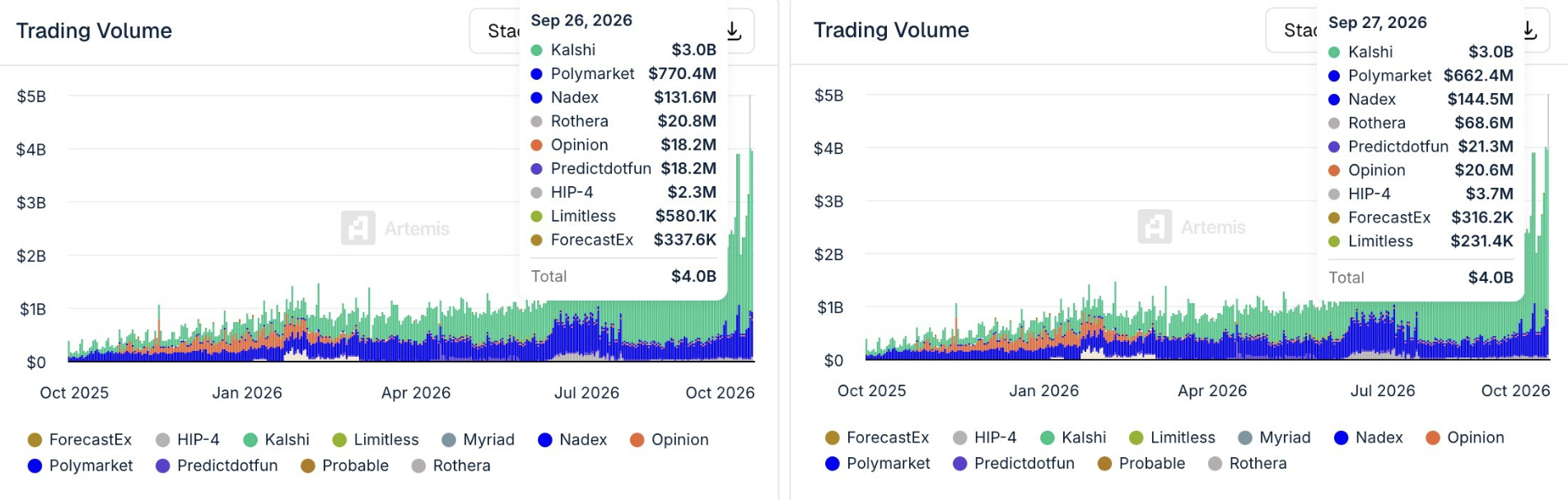
    • Polymarket raising $400M at $15B valuation, behind Kalshi’s $22B

    🟠 Saylor Just Made His Third-Largest Bitcoin Buy Ever

    Strategy purchased 34,164 BTC for $2.54 billion last week – its largest single-week buy in over 16 months and third largest in company history behind two November 2024 purchases.

    Saylor’s Strategy now holds 815,061 BTC acquired for $61.56 billion at an average cost of $75,527. With BTC around $76K, the entire treasury is back in the green.

    STRC did the heavy lifting again this week, as $2.18 billion of the $2.54 billion came from STRC preferred stock sales. And notably, this is the week Saylor also proposed moving STRC dividends to semi-monthly.

    The thesis: a more stable STRC price means the stock trades closer to par for longer, which means more issuance capacity, which means more Bitcoin. And with Saylor now even 15% of the way through his latest $50B ATM, expect the Bitcoin buying to continue. In size.

    Key Details:

    • Strategy purchased 34,164 BTC for $2.54 billion last week – third-largest single-week purchase in company history; holdings now at 815,061 BTC at an average cost of $75,527; BTC yield 9.5% YTD
    • The funding: $2.18 billion raised via STRC preferred stock sales; $366 million from MSTR common stock; 85.7% STRC-funded
    • Where things stand: 815,061 BTC at ~$75K = roughly breakeven on $61.56 billion invested; Saylor’s stated goal is 1 million BTC by end of 2026; $1.62B in STRF capacity and $26.73B in MSTR ATM capacity still available

    🔵 Tom Lee Isn’t Sweating The Kelp Dip

    Tom Lee’s Bitmine disclosed Monday that it purchased 101,627 ETH for $235 million last week, its largest single-week ETH acquisition of 2026. On a market cap adjusted basis, that buy is equivalent to Saylor buying $1.35B in Bitcoin. It’s a big purchase.

    Bitmine’s total holdings are now at 4.976 million ETH, representing 4.12% of total circulating supply, and is now 82% of the way to its self-declared “5% alchemy” target.

    Tom Lee commented: “While many believe the crypto winter may last through the fall of 2026, our view remains that the crypto winter is much closer to ending.”

    He cited ETH being up 41% from its early February lows as evidence, and called it “the best wartime store of value.” He also noted ETH benefits from two tailwinds simultaneously: institutional tokenization flows and demand from agentic AI systems that need a neutral public ledger.

    We will see if that bull case indeed plays out for ETH the token, but at least Tom is doing his part to help.

    🎯 Polymarket Is Raising $400M at $15B, Now Chasing Kalshi

    Polymarket is in talks to raise $400 million at a $15 billion valuation, Bloomberg and The Information reported Monday.

    The round could grow to $1 billion with additional strategic investors beyond NYSE parent ICE, which completed its $600M tranche last month bringing total ICE commitment to $1.6 billion.

    Notably, Kalshi just raised $1 billion at $22 billion, nearly 50% higher, and leads on both volume ($13B vs Polymarket’s $10.57B) and revenue (estimated $1.5B annually). Historically, these 2 prediction market giants have conducted raises in line with each other. This would be the first time Kalshi seemingly has pulled ahead. Apparently, Kalshi being the US regulated body (vs Polymarket still not live in the US) is the differentiator.

    🔴 Aave Update: Contained, But Not Resolved

    Aave published its full incident report on Monday. The picture is more contained than Saturday’s panic suggested, but far from closed. And potential losses now range from $120M to $230M.

    Here’s how the exploit went down: the attacker forged a LayerZero packet (nonce 308) accepted by Kelp’s single-DVN bridge with no corresponding burn on Unichain releasing 116,500 rsETH. Then 89,567 of that ended up on Aave as collateral across 7 wallets, which borrowed 82,650 WETH and 821 wstETH against it. All 7 attacker positions currently sit at health factors between 1.01 and 1.03 and haven’t been liquidated yet.

    The key problem is that the adapter that backs all remote-chain rsETH across every L2 currently holds only 40,373 rsETH, against total remote claims of 152,577. That’s a 112,204 rsETH gap.

    How Kelp socializes the losses determines how bad this gets for Aave. If the haircut is spread across all rsETH holders globally, the token depegs roughly 15% and Aave absorbs around $124M in bad debt. If losses are isolated to the affected L2 chains instead, the impact concentrates on Arbitrum and Mantle and Aave’s bad debt swells to roughly $230M.

    Aave is running scenarios but can’t close the book until Kelp makes a public decision. Thus the holding pattern continues, and unfortunately, confidence in these protocols is seemingly dropping by the hour…

    🌎 Macro Crypto and Markets

    • Crypto majors are very green; BTC +2% at $76.5k; ETH +1% at $2,320; SOL +1% at $86; HYPE -1% at $40.90
    • XLM (+8%), ZEC (+8%), and XMR (+6%) led top movers
    • Oil -1% at $87; Gold even at $4,790
    • Stock futures are green again after falling slightly on Monday
    • Curve Finance founder Michael Egorov is pushing for shared security standards across DeFi following a wave of exploits he says stem from avoidable centralization risks like single-verifier bridge setups
    • Arbitrum’s Security Council voted to freeze 30,766 ETH (~$71.5M) tied to the Kelp DAO exploit; the funds were moved to a protocol-controlled intermediary wallet on April 20 before the attacker could bridge them back to ETH mainnet
    • Ripple published a four-phase roadmap Monday to make the XRP Ledger quantum-resistant by 2028; active testing of NIST-standardized post-quantum algorithms begins in H1 2026
    • Coinbase launched Bitcoin and Ethereum-backed loans for UK usersallowing customers to borrow against their crypto holdings without selling their positions
    • Coinbase and Bybit are reportedly working together on tokenization, custody, and global distribution of US public and pre-IPO stocks; the plan is Coinbase provides US asset access and compliance infrastructure, Bybit provides the global distribution

    Corporate Treasuries & ETFs

    Meme Coin Tracker

    • Meme leaders were green on the day; DOGE +1%, SHIB +2%, PEPE +2%, TRUMP +2%, BONK +2%, PENGU +8%, SPX +10%, FARTCOIN +5%
    • MAGA (+250%), Either (+25%), Belief (+20%), and unc (+30%) led notable movers
    • Asteroid briefly sold off to $100M before rebounding to $200M and a new ATH (now $170M)
    • A federal judge ruled that Caitlyn Jenner’s $JENNER memecoin is not a security given there was no “common enterprise” when evaluating the Howey Test

    💰 Token, Airdrop & Protocol Tracker

    🚚 What is happening in NFTs?

    • NFT leaders were mostly even; Punks even at 26.6 ETH, Pudgy -1% at 4.26 ETH, BAYC +1% at 7.88 ETH; Hypurr’s even at 386 HYPE
    • mfers (+19%) and Normies (+14%) led notable movers
    • A Skull of Luci sold for 166 ETH, a new record in ETH terms

    Daily Debrief Newsletter

    Start every day with the top news stories right now, plus original features, a podcast, videos and more.