Blog

  • Prime Video Releases First Look at Mike Flanagan’s ‘Carrie’ Series

    Prime Video Releases First Look at Mike Flanagan’s ‘Carrie’ Series

    Prime Video is teasing the first look at the upcoming new original series, Carrie, based on Stephen King’s classic debut novel.

    The series, which marks the first time the story has been adapted for television, is reimagined by showrunner Mike Flanagan (Midnight Mass, The Haunting of Hill House).

    Carrie will premiere exclusively on Prime Video this fall in more than 240 countries and territories worldwide.

    The series will be comprised of eight episodes, expanding on King’s original story about a high school girl with telekinetic powers by “deepening its characters and tensions” and chronicling a “deeply human story about kindness versus cruelty, and whether we’re witnessing the making of a hero, a monster, or something far more complicated.”

    Summer Howell stars as the series’ title character Carrie White.

    The show synopsis reads: “Misfit high‑schooler Carrie White (Howell) has spent her life hidden away inside the walls of her home with her fiercely protective mother, Margaret (Samantha Sloyan). After her father’s sudden, untimely death thrusts her into the unforgiving ecosystem of public high school, Carrie is forced to navigate a viral bullying scandal that tears through her community, the relentless pressure and casual cruelty of the social‑media age, and the awakening of mysterious telekinetic powers that rise alongside her adolescence.”

    Sloyan (The Pitt) stars as Margaret White, Siena Agudong (Resident Evil) as Sue Snell, Alison Thornton (Fire Country) as Chris Hargensen, Joel Oulette (My Life with the Walter Boys) as Tommy Ross, Josie Tota (The Buccaneers) as Tina, Arthur Conti (Beetlejuice Beetlejuice) as Billy, Thalia Dudek (The Running Man) as Emaline, Amber Midthunder (Prey) as Miss Desjardin, and Matthew Lillard (Man of Tomorrow) as Principal Grayle.

    In addition to being the showrunner, Flanagan also writes and exec produces the series. He also directs four episodes.

    King serves as executive producer on the series from Amazon MGM Studios production.

    The author’s debut novel was published in 1974, spent 14 weeks on The New York Times bestseller list and has been translated into more than 35 languages.

    Brian De Palma’s 1976 film adaptation of Carrie, which starred Sissy Spacek and Piper Laurie, earned an Academy Award nomination for best actress for Spacek and best supporting actress for Laurie. This year marks the film’s 50th anniversary.

    Summer H. Howell in Carrie.

    Robert Falconer/Prime

    From left: Siena Agudong and Joel Oulette.

    Robert Falconer/Prime

    From left: Thalia Dudek, Summer H. Howell, Alison Thornton.

    Robert Falconer/Prime

    Amber Midthunder in Carrie.

    Robert Falconer/Prime

    Samantha Sloyan in Carrie.

    Robert Falconer/Prime

    From left: Arthur Conti and Alison Thornton.

    Robert Falconer/Prime

  • Paramount Sued By States In Bid to Block $111 Billion Warner Bros. Merger

    Paramount Sued By States In Bid to Block $111 Billion Warner Bros. Merger

    A coalition of state attorneys general have sued Paramount to stop its $111 billion takeover of Warner Bros. Discovery, a sweeping legal challenge to a merger that threatens to reshape Hollywood amid the absence of the Trump administration’s intervention in big deals.

    In a much-anticipated lawsuit filed in California federal court on Monday, the states allege that the acquisition will substantially throttle competition in wide-release and top-grossing theatrical distribution and cable licensing in violation of antitrust laws. They argue that the merger will combine two of the two five studios in Hollywood, leading to higher prices, fewer movies in theaters and a reduction in the variety and quality of content.

    The states allege a violation of the Clayton Act, an antitrust law accounting for potential monopolies. They’ve asked Paramount not to close the deal until the case is decided. If not, they say they’ll file a temporary restraining order. The coalition is comprised of Arizona, Colorado, Connecticut, Massachusetts, Minnesota, Nevada, New Jersey, New Mexico, New York, Oregon and Washington.

    “The unlawful merger of these two entertainment behemoths would lead to higher prices, lower quality, and less content for film and television, harming movie theaters, basic cable distributors, and ultimately, audiences on every sofa and movie theater seat in the U.S.,” said California Attorney General Bonta in a statement. “California’s film and entertainment industry touches the lives of Americans daily — it comes into the living rooms of families, has a starring role in many young people’s first dates, and is a point of immense pride and employment for Californians up and down our state.”

    The lawsuit, which may stretch on for years, marks another effort by state attorneys general to oppose major mergers as the government embraces a more lenient view on consolidation, particularly in media and entertainment. The Justice Department in June signed off on Paramount’s bid to purchase Warner, finding that the merger will increase competition in the markets for streaming, linear TV and the development, production or distribution of films for theatrical release. The green light doesn’t require any divestitures, behavioral remedies or concessions.

    The approval and absence of concessions have magnified speculation of Trump putting his thumb on the scales for Paramount CEO David Ellison’s plans to assemble a media conglomerate. His father, Oracle scion Larry Ellison, has leveraged a symbiotic relationship with Trump, who has been critical of most mainstream coverage, to aid that effort. A merger between Paramount and Warner will bring CNN under the family’s control.

    At the forefront of Paramount’s multipronged defense: tech giants like Netflix, Amazon and Google cornering Hollywood such that the only way to compete is through consolidation. Paramount chief Makan Delrahim has repeatedly pointed to “tech monopolies” threatening consumers, talent and labor across the industry.

    So far, antitrust enforcers in China, South Africa, Saudi Arabia, Ukraine, Serbia and North Macedonia have found that the deal doesn’t violate antitrust laws. Regulators probing foreign investments from Gulf sovereign wealth funds in Germany, Italy, France, Romani, Slovenia, Belgium, Czechia, New Zealand and Spain have also approved the merger.

    Paramount awaits regulatory approvals from the Federal Communications Commission, U.K. antitrust regulators and the European Commission, which is expected to sign off on the merger ahead of an upcoming deadline to open an in-depth probe.

    Another obstacle is posed by consumers who’ve sued to block the deal. In a lawsuit filed in April, Paramount subscribers alleged that the acquisition will substantially reduce competition in streaming, news and theatrical distribution. The merger will consolidate “Paramount’s ability and incentive to raise prices, reduce output, narrow slates, reduce quality, and worsen consumer-facing terms, including through control of distribution, exclusivity, windowing, and licensing,” stated the complaint.

    If the deal is consummated, the combined company would have the third largest streaming platform behind Netflix and Disney and control roughly 24 percent of theatrical distribution, per the lawsuit.

    To curry favor for the merger and quell concerns, David Ellison has pledged to release at least 30 movies a year theatrically with minimum 45-day theatrical windows and operate Paramount and Warner Bros. as independent studios. The former commitment has drawn criticism from some in the industry who are skeptical the company can maintain that output. A major concern is the estimated $79 billion in debt the combined company would carry if the deal is completed, with only $3 billion in annual free cash flow.

  • BitMine Buys $49 Million in Ethereum as Tom Lee Hails Early Robinhood Chain Demand

    BitMine Buys $49 Million in Ethereum as Tom Lee Hails Early Robinhood Chain Demand

    In brief

    • BitMine added $49 million worth of Ethereum in the last week, bumping its total holdings to nearly 4.8% of the circulating token supply.
    • Chairman Tom Lee said that ETH has showcased its product-market fit thanks to the success of Robinhood’s layer-2 network, Robinhood Chain.
    • BitMine’s stash is now worth more than $10.1 billion as ETH trades around $1,780.

    Publicly traded Ethereum treasury firm BitMine Immersion Technologies added another $49 million worth of ETH to its stash last week, acquiring 27,801 ETH. 

    The firm now holds 5,770,038 ETH, nearly 4.8% of the token’s circulating supply, valued around $10.1 billion as Ethereum trades around $1,780 on Monday. 

    BitMine’s latest purchase comes amid a strong week for the underlying Ethereum network, according to its chairman Tom Lee, who pointed to the strong public debut for Robinhood’s Ethereum layer-2 network, Robinhood Chain(Disclaimer: Tom Lee is an investor in Dastan, the parent company of Decrypt). 

    “One of the biggest crypto success stories in 2026 is the breakaway success of the Robinhood Chain L2 mainnet on July 1, built on Arbitrum,” said Lee in a statement.

    “Already, dollar volumes have exceeded $1 billion, and Robinhood Chain now has more trading volume than any other decentralized exchange (DEX), demonstrating the outstanding utility and product market fit for Ethereum, which is the underlying chain,” he added. 

    DEX volumes on the chain in the last week have surpassed $3 billion according to data from DeFi Llama, but it still trails more established networks like Ethereum and Solana, which have registered $7.27 billion and $12.34 billion worth of DEX volume over the same time period, respectively. 

    Robinhood Chain, which finalizes on Ethereum and uses ETH as its native gas token, has blossomed in the early going, creating small fortunes for some early meme coin traders on the blockchain—like one individual who turned $85 into more than $2 million in paper gains.

    “Robinhood’s 27 million users are paying crypto fees denominated in ETH,” said Lee. “In other words, everyday users are starting to see ETH as money,” he added. 

    While the mobile brokerage may boast millions of users, data gathered by Token Terminal points to just 788,000 active addresses on Robinhood Chain thus far. 

    Despite the activity, ETH has dropped around 2% in the last 24 hours and has only gained around 1.3% in the last week of trading. That marks significant outperformance of shares in BitMine (BMNR), though, which have dipped 5.7% in the last five trading days. 

    BitMine shares are trading around $14.65 shortly after the opening bell on Monday, down more than 2.2% since trading began. 

    Daily Debrief Newsletter

    Start every day with the top news stories right now, plus original features, a podcast, videos and more.

  • Puerto Rico Film Festival Welcomes Costa Rica as Official Country in Focus (EXCLUSIVE)

    Puerto Rico Film Festival Welcomes Costa Rica as Official Country in Focus (EXCLUSIVE)

    The Puerto Rico Film Festival has announced Costa Rica as the official country in focus for its upcoming 17th edition, taking place August 19–23. The announcement marks the first time the festival elects a country of honor, and comes ahead of this year’s Costa Rica Media Market, a leading industry event taking place in San José on July 14-15.

    According to the festival, the choice reflects a “growing relationship between both territories and opening new opportunities for artistic and industry collaboration.” The special spotlight will see a series of dedicated initiatives, including welcoming a delegation of Costa Rican filmmakers and a showcase of contemporary Costa Rican cinema. Costa Rica Film Commissioner Marysela Zamora-Villalobos will also attend the festival, where she will take part in industry activities focused on international collaboration, production incentives and regional partnerships.

    A festival statement highlighted how having Costa Rica as the festival’s country in focus emphasizes the event’s “long-term commitment to building stronger bridges between Caribbean and Latin American film industries at a time when international co-productions, shared funding opportunities and cross-border distribution have become increasingly important for independent filmmakers.”

    “The partnership offers an opportunity to deepen ties with Puerto Rico while introducing audiences and industry professionals to a new generation of Costa Rican storytellers,” the statement continued. “For Puerto Rico, it reinforces the island’s ambition to become a strategic hub where Caribbean and Latin American cinema can collaborate, develop projects and create sustainable industry relationships.”

    Lester Rivé, founder and festival director of the Puerto Rico Film Festival said: “For Puerto Rico, having Costa Rica as our Country in Focus represents much more than a cultural exchange. It creates new opportunities for our filmmakers to connect internationally, showcase their work, develop co-productions and explore new business and distribution opportunities across Latin America. Building these relationships today will strengthen the future of our regional film industry.”

    Speaking with Variety, Zamora said the festival’s invitation “reflects the growing recognition of Costa Rica as an active player in the regional audiovisual ecosystem.” 

    “It gives our filmmakers, producers, and companies another platform to build international partnerships and showcase the quality of the work being created in the country,” she added. “It’s also a sign that Costa Rica is increasingly contributing to regional conversations—not only through its locations, but through its talent, stories and industry initiatives.”

    Costa Rica’s audiovisual industry has grown exponentially in the last decade, with breakout films by directors such as Valentina Maurel, Antonella Sudasassi Furniss, Paz Fábrega and Sofía Quirós Ubeda making waves at major festivals such as Cannes, Berlin and Rotterdam.

    Well-known for stunning landscapes and rich biodiversity, the small but mighty Central American country has also emerged as a hungry player on the international production scene. In 2021, the country introduced its Law of Attraction of Film Investments, consolidating VAT refunds and tax exemptions for foreign productions. Today, the country offers an up-to-90% VAT refund on local services for qualifying projects, which equates to an around 11.7% tax rebate with a promise to repay within 90 days. 

    Last year, Costa Rica attracted $11.2 million in audiovisual investment through 87 international business opportunities, more than double the 41 from the year prior. The country lured projects from Warner Bros. Discovery, Universal and BBC Studios, with the film commission closely supporting their production by minimizing bureaucracy and expediting technical documents.  

    Beyond the Costa Rica-tied activities and a full program of screenings, the Puerto Rico Film Festival has become known for a growing industry platform designed to connect Puerto Rico with the global film community while celebrating diverse voices and emerging talent from around the world. This year’s full program is yet to be announced. 

  • ‘Nightmare on Elm Street’ Getting Rebooted by Paramount in Deal With Wes Craven Estate

    ‘Nightmare on Elm Street’ Getting Rebooted by Paramount in Deal With Wes Craven Estate

    Freddy Krueger is ready for another close up.

    Paramount has closed a deal for the U.S. rights to adapt the original screenplay for “A Nightmare on Elm Street,” under its new genre label Paramount Primal. Domestic rights are being licensed from the Wes Craven estate, which includes Craven’s widow Iya Labunka and son Jonathan Craven. The duo will produce the film with Marc Toberoff, an attorney who helped the filmmaker’s family regain ownership of the kickoff film.

    The yet untitled film is in development under Paramount Primal. Plot details have yet to be revealed, but it will be set in the world of “A Nightmare on Elm Street” and based on the first 1984 film. That means more of Kruger, the iconic child killer with the burned face and metal claws.

    Paramount’s new genre label is being led by J.D. Lifshitz and Raphael Margules, the producing team behind “Weapons,” “Barbarian,” “Companion” and “Friendship.”

    “Jonathan and I are so excited to be partnering with J.D. and Rafi along with the terrific team they’ve assembled at Paramount Primal,” Labunka said in a statement. “We look forward to bringing the world of Wes Craven’s ‘Nightmare on Elm Street’ to a new and completely engaged generation of fans. We know that Wes would have been thrilled to see how horror is taking its long overdue place in the cultural canon. We can’t wait for all of us to sit together in a dark theater — around the campfire of today — as the next chapter of the ‘Nightmare’ story unfolds.”

    Paramount Pictures also revealed that its previously announced label will be known as Paramount Primal. The label will partner with up-and-coming storytellers and established filmmakers to produce smartly budgeted films across the horror, comedy, action and science fiction genres.

    Lifshitz and Margules will executive produce for Paramount Primal. WME, Industry Entertainment and Ziffren Brittenham LLP represent the Wes Craven estate.

    Kruger has appeared in nine films, as well as a TV series and video games. He was last seen slicing and dicing on screen in 2010’s reboot, “A Nightmare on Elm Street,” which grossed more than $117 million on a $35 million budget. New Line previously released the “Elm Street” movies and retains international rights to the series. Paramount is in the process of buying New Line’s parent company Warner Bros. Discovery.

  • Bitcoin panic-selling may be ending as sellers’ profit margins disappear

    Bitcoin panic-selling may be ending as sellers’ profit margins disappear

    Dessislava Ianeva, an analyst at Nexo, made a similar point in an email to CoinDesk.

    “ETF flows confirm it from another angle. The past ten days split between inflow and outflow, netting slightly positive,” Ianeva said.

    “Glassnode data shows spot selling pressure has faded. June’s net selling averaged nearly 2,000 $BTC a day; July’s has slowed to just 53 $BTC a day, the calmest month of 2026 outside April.”

    The relative calm, however, may not indicate a rapid turnaround.

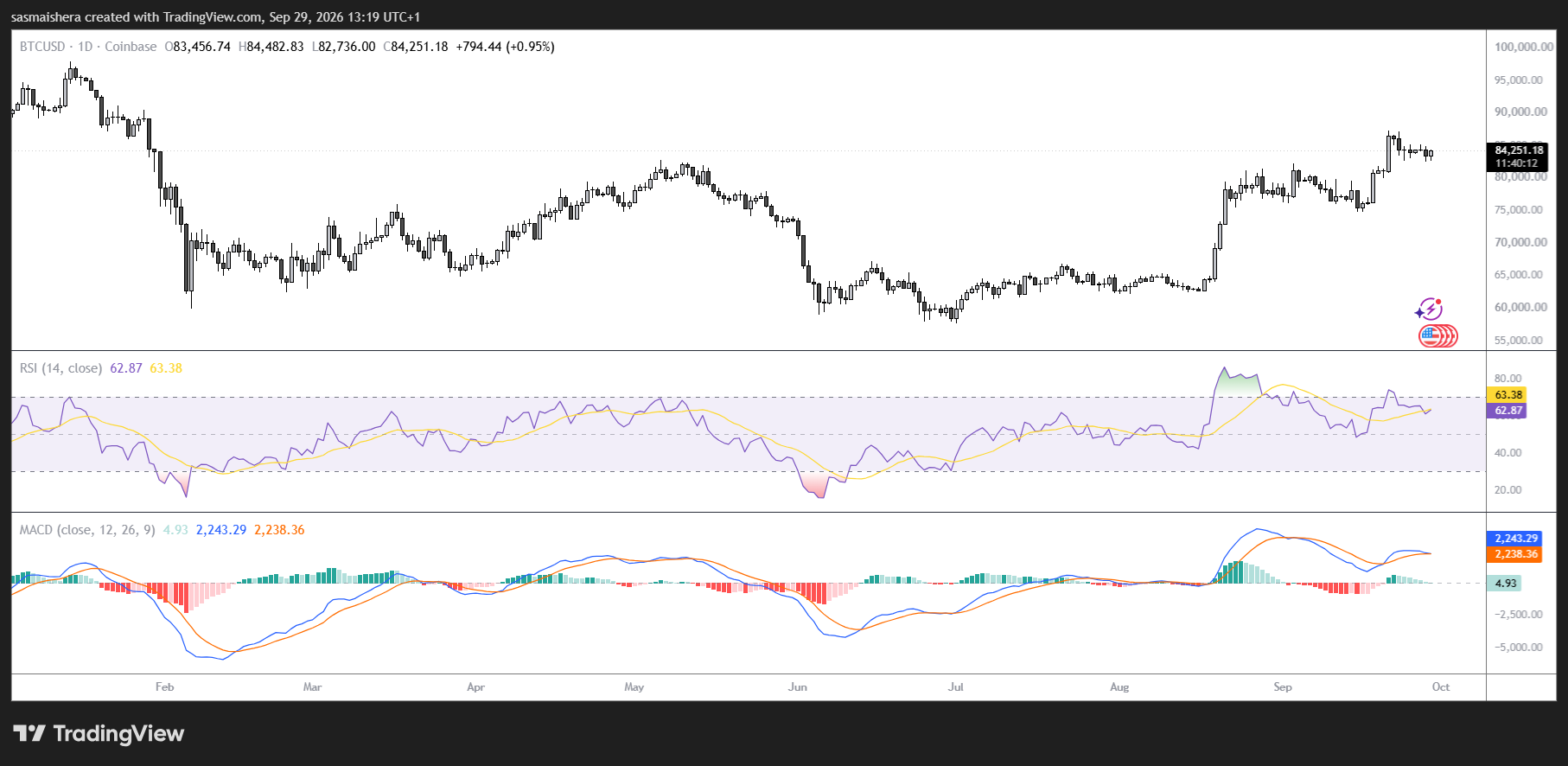
    The price recovery from the year’s low of $57,700, hit earlier this month, is largely driven by derivatives traders and not spot buyers, according to Alex Kuptsikevich, FxPro’s chief market analyst.

    “Demand for Bitcoin is recovering rapidly, though the growth is currently being driven mainly by retail traders in the speculative futures market. At the same time, the situation in the spot market remains less positive,” he said.

    Without a strong return of buy-side liquidity, prices could remain in a sideways trend for months to come, he said.

    Caution is understandable ahead of macroeconomic data that may influence interest-rate decisions and the appetite for risk.

    U.S. CPI for June is scheduled for release Tuesday and Fed Chair Kevin Warsh’s first Congressional testimony is due this week. These events could influence the market trajectory and make, or break, the recovery.

  • President Donald Trump Sends China-Related Crypto Message: Hints at US Clarity Act, a Bullish Cryptocurrency Law!

    President Donald Trump Sends China-Related Crypto Message: Hints at US Clarity Act, a Bullish Cryptocurrency Law!

    Uncertainty continues in the Clarity Act process, one of the most important legislative bills aimed at regulating cryptocurrencies in the US.

    At this point, the passage of the Clarity Act, also known as the Transparency Act, is eagerly awaited, and US President Donald Trump has also called for its enactment.

    At this point, Donald Trump, in a post on Truth Social, pointed out that many countries, including China, were trying to get their hands on this “important financial event.”

    He added that the US is currently in a leading position, but it should not allow China to win in either the AI or cryptocurrency sectors.

    “…China and many other countries want to completely and entirely seize control of these major financial phenomena and artificial intelligence.”

    We are currently ahead in artificial intelligence, but they are also competing fiercely.

    Don’t let China win in both areas.”

    With Trump making a critical call regarding the CLARITY Act, according to CryptoInAmerica host Eleanor Terrett, the next four weeks, coinciding with the reconvening of the US Senate, are seen as a critical turning point for the passage of the CLARITY Act this year.

    Terrett stated that the market views the period before the August congressional recess as the last realistic opportunity this year to pass the cryptocurrency market structure bill.

    However, the bill needs 60 votes to pass the entire Senate, making the cooperation of the Democrats essential.

    In this context, a revised version of the bill incorporating the proposals of the Senate Banking and Agriculture Committees is expected to be released this week. According to Terrett, this will determine the progress of negotiations and how to proceed on the remaining points of contention.

    The biggest problem remains the ethical issue, as the White House has yet to reach an agreement on conflict of interest measures regarding President Trump’s cryptocurrency businesses. Democrats and some Republicans are demanding stricter ethical guidelines for the president’s crypto ventures.

    *This is not investment advice.

  • Jito proposes token-centric model, pledging JTX revenue to JTO buybacks and burns

    Jito proposes token-centric model, pledging JTX revenue to JTO buybacks and burns

    Jito has published JIP-38, a governance proposal that would formally designate the protocol as a token-centric network, under which all major network revenues will flow to the DAO and be governed by $JTO token holders.

    The only exception is 20% of JTX platform fees, which will continue to be reinvested in JTX development, according to the proposal posted on July 13.

    JIP-38 is now live.

    Value should live with the Network. This proposal formally establishes Jito as a token-centric network, committing 100% of the Jito DAO’s revenue share from @JTX_trade to programmatic buyback and burns of $JTO for at least 1 year from JTX launch.

    — Jito (@jito_sol) July 13, 2026

    The plan would commit 100% of the DAO’s JTX revenue share to open-market $JTO buybacks and permanent token burns for a minimum of one year through Q4 2027.

    As noted, buybacks would be executed automatically through a Rev Splitter mechanism overseen by the Dev Council, while governance documentation would be updated to reflect the network’s token-centric policy.

    JIP-38 also outlines governance and implementation measures including updating official governance documentation to reflect Jito’s token-centric model, progressively automating the Rev Splitter, and completing existing revenue allocation mandates before conducting a comprehensive review of all protocol fee streams in Q4 2027.

    That review will evaluate the effectiveness of buybacks, growth incentives, and other capital deployment strategies, after which $JTO holders will determine the network’s next long-term revenue allocation framework through governance voting.

    According to the proposal, this framework is intended to ensure that the value generated by the network accrues to the token rather than external corporate entities.

    $JTO surged as much as 8% shortly after the team unveiled JIP-38, per CoinGecko.

  • Oregon AG Drops Demand For Records & Motion To Delay Paramount-Warner Bros. Discovery Merger

    Oregon AG Drops Demand For Records & Motion To Delay Paramount-Warner Bros. Discovery Merger

    UPDATED, with comment from AG: Oregon‘s attorney general has dropped a civil investigative demand for Paramount to turn over records related to its efforts to secure federal approval for its merger with Warner Bros. Discovery.

    Oregon Attorney General Dan Rayfield also had asked a state circuit court judge to order Paramount to turn over the materials and to delay Paramount’s closing of its proposed acquisition of Warner Bros. Discovery by 60 days so the documents could be reviewed. A hearing has been scheduled for Monday in Multnomah County Circuit Court.

    A Paramount spokesperson said, “We are pleased that the Oregon Attorney General has withdrawn its motion to delay this transaction. It was the right decision and avoids an unwarranted effort to delay a lawful, pro-competitive merger.

    “Antitrust authorities around the world have carefully reviewed this transaction, clearing it or concluding that it does not violate any competition laws. That regulatory record underscores what the facts, the law and the economics make clear: this transaction will create a stronger challenger to dominant global streaming and technology platforms, expand consumer choice, increase investment in premium content and theatrical distribution, and create more opportunities for creators and workers. We look forward to completing the transaction and delivering those benefits.”

    Jenny Hansson, communications director for Rayfield, said in a statement, “Paramount made it clear that they weren’t going to comply with the investigative demand, and that they think they’re above the law. We’re not going to let them waste Oregonians’ resources on these games. We’ve withdrawn the motion to consider our next steps.”

    California Attorney General Rob Bonta and other state attorneys general are said to be considering a legal challenge to the transaction.

    Rayfield sought Paramount records of lobbying of federal officials, as well as its role in a statement that the DOJ released in support of the transaction. The attorney general also sought documents “related to the formulation and execution of lobbying strategies aimed at obtaining regulatory approval of the proposed merger, which Respond as internally named ‘Project Warrior.’”

    In a court filing, Paramount has objected to the document requests, arguing, among other things, that they impose “burdens and demands which are disproportionate” to the Oregon investigation and are “of such marginal relevance that the value of any materials sought is outweighed by the burden imposed on Paramount in having to provide such information.”

    “Lobbying activities and related communications are wholly irrelevant to whether the proposed acquisition ‘violates Oregon’s antitrust laws,’” the company’s legal team wrote.

  • Meta Plans Huge Data Center Expansion. How Will It Use That Excess Compute?

    Meta Plans Huge Data Center Expansion. How Will It Use That Excess Compute?

    Meta is expanding its planned Hyperion data center project in Louisiana from 2 gigawatts of computing capacity to 5 gigawatts, according to Reuters. This leap in power will require a sizeable investment, almost doubling the initial planned $27 billion price tag to $50 billion.

    Until the recent AI data center buildout, the largest data centers in the world were in the 10s to hundreds of megawatts. However, since project Stargate was announced in early 2025, ambitions have risen dramatically. Even in mid-2026, though, xAI’s twin Colossus and Colossus 2 data centers reportedly still provide only a combined 1 gigawatt of compute capacity. And Elon Musk has been selling some of that capacity to Anthropic.

    Protestors in London rally against data centers.

    Data center protests (Credit: Vuk Valcic/SOPA Images/LightRocket via Getty Images)

    This raises two important questions about Meta’s plans: Can it even build a data center with a 5-gigawatt capacity, given the memory crunch, let alone cool or power it? Meta is also reportedly exploring the sale of its spare AI compute capacity. So, what will it do with this excess compute, unless it’s expecting an enormous expansion in its existing AI businesses?

    In a memo to staff following recent layoffs, CEO Mark Zuckerberg said he is “optimistic about delivering personal superintelligence to everyone,” which is no small feat, compute-wise.

    That said, OpenAI and Anthropic have absorbed hundreds of billions of investment to get where they are, and they’re still having to discount the AI compute they sell. Many of their biggest customers are cutting back on AI use, too.

    Recommended by Our Editors

    This is all assuming Meta’s mega data center project is even completed. The first promised 2 gigawatts isn’t expected to come online in full until 2030, with the additional 3 gigawatts potentially coming years after that. Data centers are also facing enormous political and community pushback due to their egregious use of local power and water resources.

    Meta has said it will invest over $1 billion in local roads, water, and wastewater systems as part of the project, but environmental law firms are already looking to investigate its finances.

    About Our Expert