Blog

  • Paramount-Warner Bros Discovery: Emergency Motions, A Showdown Hearing And Next Steps In Challenge To Mega-Merger

    Paramount-Warner Bros Discovery: Emergency Motions, A Showdown Hearing And Next Steps In Challenge To Mega-Merger

    If you want an early indication of the strength of a dozen states’ effort to stop Paramount‘s proposed acquisition of Warner Bros Discovery, it will come soon.

    That’s because California Attorney General Rob Bonta and 11 of his colleagues filed a motion for a a request for emergency relief, or a request for temporary restraining order and preliminary injunction. If it is granted, a TRO would put a halt to the $110 billion transaction for at least a couple weeks, while a preliminary injunction would go longer as the legal process plays out.

    In weighing an injunction during the proceedings, a judge will weigh a number of factors – among them, whether there would be irreparable harm if the merger were to close, whether the states would be likely to succeed on the merits, and whether such an order is in the public interest. The judgment would not be a final one for the case itself – that would be left to a trial – but a preliminary injunction would give the states leverage, perhaps for a settlement.

    Paramount has touted the federal Department of Justice and a number of other regulatory approvals already in place, but opponents have waged a very vocal campaign against it, with figures ranging from Jane Fonda to Sen. Elizabeth Warren (D-MA) warning of dire consequences from the transaction. There has been considerable focus on the impact of the merger on CBS News and CNN, which will be under one corporate entity. Given the changes and tumult at CBS News since Skydance took ownership last year, there is plenty of consternation over what may be in store for CNN.

    Yet a number of the concerns expressed won’t be part of the next legal steps. Instead, the focus will be on antitrust law and precedent – an area that can be exceedingly wonkish. On Tuesday, the case was assigned to U.S. District Judge P. Casey Pitts, who is being asked to rule on the emergency motion before July 22. A hearing has been set for Friday. There also is a potentially related case, the Writers Guild of America’s separate legal challenge to the merger that was filed today, litigation that focuses on the impact on the labor market.

    In their lawsuit, the states claim that the merger would stifle competition in areas of wide-release theatrical distribution, anticipated top-grossing blockbusters and basic cable channel licensing.

    In their argument for a TRO, the states claim that the merger is “presumptively unlawful,” pointing, among other things, to market share. They argued that a Supreme Court precedent did not specify a threshold for “undue concentration”; instead, “it was satisfied that 30% sufficed.” But they also noted that courts have applied the presumption of undue concentration to figures below that.

    That’s important, because some of the figures from the states are in the ballpark of 30%, but not quite at it. The states noted in their filing, “The merger would give the combined entity approximately 27% of the wide-release theatrical film distribution market – as measured by the 600+ theatre release threshold – and approximately 30% of the anticipated top-grossing theatrical film distribution market – as measured by the 3,000+ theatre release threshold.” The AGs also noted that two companies – Paramount-WBD and Disney – would together control 59% of the market for the top-grossing films. The companies, they wrote, also would control 27% of the basic cable channel market, based on affiliate fees, and 34% as measured by viewership.

    Some antitrust experts see the plaintiffs facing certain challenges in the case, but by no means do they consider the litigation to be frivolous.

    “The complaint of the states is good enough to give Paramount and Warner Brothers a hard time,” William Kovacic, professor of law and director of the Competition Law Center at the George Washington University, wrote via email. “The companies know that they must take this challenge seriously. That is why they have mobilized a high-powered legal team (including Paul Clement and Jeff Kessler) to fight off the lawsuit. The states also have a capable team, so both sides are well represented.”

    Kovacic, former chair of the Federal Trade Commission, noted that a “protracted contest does the companies no good. This leads me to think that they will pursue a settlement that takes the spoken promises of the company executives and backs them up with a binding order, and perhaps includes other concessions designed to strengthen the position of the traditional theater distribution channel.”

    The states’ lawsuit does not include a claim about the potential loss of jobs – a key concern of guilds and unions, especially given the $6 billion target for cost savings from the merger – but it does make mention of the potential adverse effects, Kovacic noted.

    “This concern also could be addressed with funding commitments not to reduce the workforce for some period of time,” he wrote.

    Defining The Market

    A key part of antitrust cases is how a judge decides what the relevant market is. In other words, if the market is narrow, that makes it more difficult for combining firms to make the case that their transaction will not harm competition.

    What quickly got a lot of attention was the states’ claim that one of the markets was that for “anticipated top grossing films,” a submarket of wide theatrical distribution that they say is the “backbone of the movie theatre business.”

    Paramount contends that the state AGs’ lawsuit is a “flawed application of antitrust laws” and “is inconsistent with sound competition policy and the competitive realities of the media marketplace.”

    While Paramount and other critics may characterize the market for anticipated blockbusters as a legal contrivance, it did bring to mind a claim that the Justice Department brought in its challenge to the proposed combination of Penguin Random House with Simon & Schuster. In that case, the government focused on the market for anticipated top-selling books and, more specifically, to the harm to author payments due to the reduced competition. After a trial that featured testimony from figures including Stephen King, the government prevailed, and the merger was abandoned.

    “Some might also wonder (and Defendants will also argue that) ‘anticipated top-grossing’ is just a made-up qualifier to yield an artificially narrow submarket. But there’s good, recent support for that in the case law,” John Mark Newman, law professor at the University of Memphis, wrote on X as he singled out the Penguin-Simon & Schuster case.

    Diana Moss, vice president and director of competition policy at the Progressive Policy Institute, wrote via email that she “would expect controversy over the definition of the wide-release and top-grossing film distribution markets.”

    She added, “Streaming has expanded dramatically in the last several years. A judge will need to decide if film distribution should be defined narrowly around theaters only, or more broadly around theaters and streaming. If a judge is convinced of a larger market, then the state claim might be in jeopardy, so the AGs should be prepared to vigorously defend their argument.”

    Battling Big Tech

    Paramount has leaned heavily into the argument that the merger would be “pro-competitive,” a common talking point in any major transaction. In this case, though, the company points to the dominance of Netflix and the need for a robust rival in the streaming space.

    Today on CNBC, Jeffrey Kessler, who is helping to lead its defense, said, “The company believes strongly in this, and they would take this up to the Supreme Court if they had to.”

    RELATED: Paramount Lawyer Expects The Company To Close WBD Merger On Time Despite Lawsuits; Supreme Court Appeal In Play

    He said, “This is an antitrust case. To stop a merger, the merger has to be anti-competitive. This merger is pro-competitive. Anybody who knows the entertainment industry knows it is in deep trouble.”

    A recent report from Stephen Moore, economic adviser to Donald Trump, and Robert Wolf, economic adviser to Barack Obama, made the case that the rapidly changing nature of the business cannot be ignored. “The available evidence, including the breadth of entertainment choices, the scale of larger technology-backed rivals, and Paramount’s commitments to increase theatrical output – suggests consumers would not be harmed by the merger,” they wrote.

    The look-to-the-future arguments were part of AT&T’s case as it faced a DOJ challenge to its acquisition of Time Warner in 2018. A judge ruled for AT&T-Time Warner, and the company also won an appeal.

    Moss wrote, “Even though that was a vertical merger and this is a horizontal one, if a judge gives credence to these arguments (as in AT&T-Time Warner), the states might have a uphill battle defending the claim that the merger is presumptively anticompetitive and, therefore, illegal. Of course, the unwinding of AT&T-Time Warner three years after the merger was consummated indicates that there were no efficiencies at all! The states should use examples like this to defend their case.”

    The state AGs also cite the impact of other recent mergers, including Disney’s acquisition of Fox assets in 2018, claiming it more than halved theatrical output, with thousands of jobs lost. Paramount has argued that the numbers were impacted by the Covid pandemic and the pending launch of Disney+, a contrast to its strategy of getting more films into wider distribution.

    Then, as now, the influence of Trump hung over the legal proceedings. The judge in the AT&T case declined to go down that route, and the Paramount-WBD case likewise focuses on the legal arguments, not politics. But in his Monday press conference announcing the case, California Attorney General Rob Bonta accused the White House of influence over the Justice Department’s sign-off on the merger. Oregon Attorney General Dan Rayfield told reporters that he still may seek Paramount records of its lobbying campaign to win favor for the transaction.

    In the immediate term, though, all eyes will be on Pitts. His decision on the states’ TRO and injunction requests could set the stage for a lengthy legal battle, or a small blip on the way to one of the largest media mergers in history.

  • Denis Villeneuve and Artist Vija Celmins to Be Honored at LACMA’s Art+Film Gala

    Denis Villeneuve and Artist Vija Celmins to Be Honored at LACMA’s Art+Film Gala

    This fall’s edition of LACMA’s Art+Film Gala has a date and a pair of honorees.

    The milestone 15th annual fundraiser will take place at the museum on Nov. 7, and will honor Vija Celmins from the art side and Dune visionary Denis Villeneuve for the film set.

    “This year, we are honoring two icons of visual creativity,” praised LACMA CEO Michael Govan, who also serves as Wallis Annenberg director. “Whether in painting, drawing, printmaking or other media, Vija Celmin’s exacting renderings of the natural world blend realism and imagination, resulting in sublimely beautiful works. Likewise, Denis Villeneuve’s meticulously crafted worlds give his films an unforgettable visual impact, from contemplative and cerebral stories to global blockbusters. It will be a privilege to honor both of these artists and their extraordinary careers in November.”

    Added Chow: “I’m excited to bring together an amazing group of people once again to recognize the incredible work of Vija Celmins and Denis Villeneuve, and to support LACMA’s art and film initiatives. I’m deeply grateful that our longstanding partner Gucci has returned as presenting sponsor. This event would not be possible without their continued generosity to the museum.”

    Gucci’s generosity is also on display on the red carpet, as many of the A-list guests who attend the museum are outfitted by the fashion house setting the stage for what is always a stylish night in Los Angeles. Proceeds from Art+Film are funneled to LACMA’s focus to make film central to the museum’s curatorial program while also supporting its broader mission with exhibitions, acquisitions, educational programming and more.

    Vija Celmins

    Laurie Lambrecht

    The shine for Villeneuve comes as he’s prepping for the release of the third installment of his blockbuster Dune franchise starring Timothée Chalamet, Zendaya, Robert Pattinson, Javier Bardem, Rebecca Ferguson, Anya Taylor-Joy, Florence Pugh, Jason Momoa, Josh Brolin and others. It comes out via Warner Bros. Pictures on Dec. 18. His other credits include Blade Runner 2049, Arrival, Sicario, Enemy and Prisoners. He’s set to direct the anticipated next James Bond installment for Amazon MGM Studios.

    Celmins is hailed for her work with natural imagery like ocean waves, desert floors and night skies. She paints, sculpts and draws, and has seen her work featured in exhibitions at major institutions like the Institute of Contemporary Art in Philadelphia, San Franscisco Museum of Modern Art, the Metropolitan Museum of Art in New York, Fondation Beyeler in Basel, Centre Pompidou in Paris and Menil Collection in Houston. She received a MacArthur Fellowship in 1997.

  • OpenAI’s First Hardware Product Could Be a Portable AI Smart Speaker

    OpenAI’s First Hardware Product Could Be a Portable AI Smart Speaker

    OpenAI has been tight-lipped about the AI hardware it’s building with former Apple design chief Jony Ive, but a new leak reveals their first product could be a smart home speaker.

    The speaker is reportedly designed to work as an AI companion at home. In addition to querying, the speaker could be used to control smart home appliances, play music, respond to messages, and support a range of other ChatGPT capabilities, Bloomberg’s Mark Gurman reports.

    Sources describe the device as “mobile” and “screen-free,” suggesting most operations would be voice-based. This would also make the rumored product a competitor to Alexa, Siri, and Gemini-based smart speakers from Amazon, Apple, and Google, respectively.

    OpenAI hopes to stand out by positioning its AI as an expert on matters and equipping it with a personality that can customize its responses and connect with the user on a human level, the report adds. The speaker is likely to use ChatGPT’s new GPT-Live voice model. Barring any legal hurdles, OpenAI could unveil the device this year and begin shipping it to users in 2027, Bloomberg says.

    Apple has been rumored to be developing AI-powered smart home devices. Bloomberg’s report arrives after the iPhone-maker sued OpenAI for allegedly stealing its trade secrets. The lawsuit claims that after acquiring Ive’s io Products, OpenAI poached Apple employees or pressured them to divulge their work during job interviews

    Recommended by Our Editors

    The complaint primarily targets Tang Yew Tan and Chang Liu, two former Apple employees who have now joined OpenAI. Tan is OpenAI’s current hardware chief, and he has been accused of conducting these interviews. Liu, meanwhile, has been accused of failing to return an Apple-issued laptop and exploiting a software bug to gain unauthorized access to Apple’s systems.

    Disclosure: Ziff Davis, PCMag’s parent company, filed a lawsuit against OpenAI in April 2025, alleging it infringed Ziff Davis copyrights in training and operating its AI systems.

    About Our Expert

  • UTA Promotes James Wright Co-Head of Its U.K. Music Group

    UTA Promotes James Wright Co-Head of Its U.K. Music Group

    Global talent, entertainment, sports, and advisory company UTA has promoted James Wright to co-head of its U.K. music group. Wright will lead the London-based music team alongside long-standing U.K. co-head Neil Warnock, “steering the department’s short and long-term strategies and overall industry positioning.”

    Wright joined UTA in 2015 following the company’s acquisition of The Agency Group. Prior to that, he served as an agent at Elastic Artists. Before moving into the live music sector in 2009, Wright was A&R manager for Candid Records, where he signed acts, released records and launched an in-house live booking agency offering contracts to the label’s artists.

    “His formidable and eclectic roster spans pop, adult contemporary, jazz, electronic, and hip-hop, and includes artists such as Lizzo, Take That, John Legend, David Byrne, Jacob Collier, Underworld, The Marías, Rita Ora and Jon Batiste,” UTA said.

    UTA’s global music co-heads Sam Kirby Yoh and David Zedek said: “UTA’s global music business is built on collaboration across genres, disciplines and territories, and London is a cornerstone of that network. The team there is critical to everything from identifying the next wave of international touring talent to executing complex global runs for established stars. By elevating James, we’re investing further in London as a strategic base for our worldwide touring ambitions and unlocking even more opportunity for our artists.”

    Said Wright: “Leading the London music group with Neil at such a pivotal time is incredibly exciting. Our focus is on signing exceptional artists and continuing to build a team culture that is inclusive, collaborative and accountable, where a colleague’s win or an artist’s success genuinely feels like a win for everyone.”

    And Warnock added“It’s been a privilege to watch James grow into not only a first-class agent but a thoughtful, trusted leader. His intelligence, self-deprecating humour and razor‑sharp instincts will be instrumental in shaping the next chapter of UTA’s global music business.”

  • Spotify Is the Latest App to Get an AI Chatbot. Here’s What It Can Do

    Spotify Is the Latest App to Get an AI Chatbot. Here’s What It Can Do

    Spotify is doubling down on its AI push with a new dedicated chatbot that creates custom playlists and answers questions about songs, audiobooks, podcasts, and your listening history.

    The “Talk to Spotify” prompt bar is now available on the Home and Now Playing pages for Premium subscribers in select regions. To get started, tap the bar, add a prompt using text or voice, and let the AI open a new chat window for back-and-forth conversations.

    For example, you could say, “Play some artists I haven’t heard before,” or “Play a mix of hits from my top artist.” When the chatbot responds, you can fine-tune the playlist by providing additional instructions, including “just his recent stuff” or “make it more upbeat.” You can also use prompts to perform a few other Spotify actions, such as saving a song or following an artist.

    From the Now Playing screen, you can ask the AI for trivia and other details about the song that’s playing, including the inspiration behind a tune, when the album was released, or what a song’s genre is. You can also ask Spotify to guide you toward similar artists and songs.

    The “Talk to Spotify” feature also extends to audiobooks and podcasts. It can answer questions about other books an author has written, or podcast shows where a certain guest has appeared.

    You can also use the AI to learn more about your listening habits. Ask the chatbot how many times you’ve listened to a song, when you played it for the first time, or what genres you’ve been listening to lately.

    Recommended by Our Editors

    “The new conversational experience is part of our ongoing work to make Spotify more personal and useful for every listener, giving people more ways to get the most out of every moment,” Spotify says.

    To use the feature, you’ll need a Premium subscription, be 18 or above, and live in the US, Ireland, or Sweden. It’s still in beta and limited to Android and iOS devices in English. “Like any beta, it’s a work in progress: responses won’t always be perfect,” Spotify warns.

    About Our Expert

  • ‘I Play Rocky’ Trailer: Anthony Ippolito Becomes Sylvester Stallone in This Inside Look at the Making of a Movie Classic

    ‘I Play Rocky’ Trailer: Anthony Ippolito Becomes Sylvester Stallone in This Inside Look at the Making of a Movie Classic

    Ever wonder how Sylvester Stallone became Rocky? Peter Farrelly’s upcoming biographical drama “I Play Rocky” will answer the question as “Grand Army” actor Anthony Ippolito takes on the role of Stallone in this behind-the-scenes dramatization of the making of the classic 1976 sports drama.

    The official synopsis for “I Play Rocky” from Amazon MGM reads: “The film tells the true story of Sylvester Stallone and his unshakable belief that he wasn’t just meant to write Rocky, he was meant to be Rocky Balboa.”

    The film’s supporting cast includes Stephan James as Carl Weathers, plus AnnaSophia Robb, Matt Dillon, Toby Kebbell, Tracy Letts Jay Duplass and Robert Morgan. Farrelly, who directed Best Picture winner “Green Back,” returns to more dramatic territory with “I Play Rocky” following his R-rated Amazon comedies “Ricky Stanicky” and “Balls Up.”

    Ippolito has experience playing acting icons of the 1970s. He starred as Al Pacino in the Paramount+ limited series “The Offer,” which recounted the making of “The Godfather.” Now he takes on the role of Stallone, who famously got “Rocky” made for under $1 million. The movie became the biggest box office hit of 1976 and won the Oscar for best picture. After cementing its place in Hollywood history, the original “Rocky” spawned several sequels as well as the “Creed” spinoff series.

    “I Play Rocky” opens in theaters this November from Amazon MGM. Watch the trailer below.

  • The Streaming Revolution No One Talks About: Viewers Are Getting Older

    The Streaming Revolution No One Talks About: Viewers Are Getting Older

    The notable thing about The Boroughs — other than Netflix’s quick decision to cancel the series — was the composition of its audience.

    The show, about a group of retirees stalked by something supernatural in their 55-plus community, drew about 4.05 billion minutes of watch time in the United States in its first four weeks, according to Nielsen’s streaming ratings — with a large portion of that coming from people over the age of 50. In The Boroughspremiere week, people over 50 accounted for 57 percent of the show’s 1.2 billion viewing minutes. The percentage of younger viewers ticked up in subsequent weeks, the greatest concentration of viewers remained in the demographic similar to that of the on-screen characters, played by (among others) Alfred Molina, Geena Davis, Alfre Woodard, Clarke Peters, Bill Pullman and Denis O’Hare.

    To be clear, having an older-skewing audience was not the reason The Boroughs was canceled. It was a relatively expensive show, with eight-figure episodic budgets. Matt and Ross Duffer, the Stranger Things creators who executive produced the series, also left Netflix for Paramount earlier this year.

    One other thing: Having an audience that skews toward viewers 50 and older is pretty commonplace now. The median streaming viewer is still 15 to 20 years younger than the median network or cable viewer, but the gap has started to narrow some.

    In the first quarter of 2026, Paramount+’s Landman and Netflix’s The Night Agent, The Lincoln Lawyer and Virgin River all got 60 percent or more of their watch time from viewers 50 or older. That demographic also accounted for almost half of viewing time for HBO Max’s The Pitt and Netflix’s miniseries His & Hers.

    “It used to be unusual because older viewers made up a smaller percentage of the streaming population,” Brian Fuhrer, senior vp product strategy at Nielsen, told The Hollywood Reporter.

    Now? Not so much. “In 2008, 18- to 24-year-olds were going away to college, and between Netflix and other services, they were really streaming first,” said Fuhrer. “Now those 18- to 24-year-olds, they’re over 40 [or almost there]. It’s just the demography of an aging population.”

    Here are the the top 10 original series with the most watch time from viewers 50 and older in the first quarter of this year.

    The outlier on that list is Stranger Things, which had such a massive audience across all age groups that it ranks highly among older viewers as well. Notably, though, the percentage of viewing from people 50 and older is lower than any other show in the top 10. The Traitors and Fallout are in a similar situation, where large total audiences mean a sizable amount of viewing but relatively low percentages among the 50-plus demo.

    Looking at all titles (including library series and movies) brings in a few long-running network and cable shows — including Gunsmoke, the oldest series ever to make Nielsen’s weekly top 10 streaming rankings.

    In addition to early adopters getting older, streaming has also, obviously, become much more widely adopted among all age groups in the the past decade-plus. It now accounts for almost half of all TV use, per Nielsen, and that doesn’t happen just with younger viewers. Furher also noted that Disney, NBCUniversal and Paramount have all seen the percentage of their streaming users over 65 grow in the past three years; those viewers make up at least 10 percent of streaming viewing on the companies’ respective platforms. At Fox, thanks largely to free streamer Tubi, viewers 65 and older account for 20 percent of streaming viewing.

    More recently, Dutton Ranch, Paramount+’s latest Yellowstone spinoff, has also attracted a large set of 50-plus viewers. Over its first five weeks, the series drew 3.83 billion minutes of viewing, with about 2.4 billion of those minutes — 63 percent — coming from people 50 and older.

    “That’s by no means anything to be ashamed of,” said Fuhrer. “It’s commanding huge audiences, and it’s bringing a lot more people over.”

    One of the initial lures of streaming for writers and creators was that in an ad-free business, they wouldn’t have to worry about living and dying by weekly ratings or whether enough people in a certain age group were watching their show. Now that most streamers offer ad-supported versions of their product, there’s a non-zero chance that those platforms might start scrutinizing demographic data more closely. (And, while correlation is not causation, it’s hard not to notice that The Night Agent and The Lincoln Lawyer, two of the shows with the highest amount and percentage of 50-plus viewing last quarter, will be ending with their next seasons.)

    Furher, however, takes a more optimistic view: “I think it’s less ad sales driving cancellations than it is using the normal ways of analyzing programs [via demographics] helps these platforms make sure they’ve got content that’s engaging the broadest potential groups of of subscribers.”

  • Dave Kendall, Creator and Longtime Host of MTV’s 120 Minutes, Dies

    Dave Kendall, creator and former host of MTV’s “120 Minutes,” has died, according to a post from his friend and latter-day host of the show, Matt Pinfield. No caused of death or age were cited, although he was likely in his sixties.

    From scrappy beginnings, the show launched on March 10, 1986 and quickly became a high-profile platform for the rising wave of indie and left-of-center musicians that would soon be dubbed “alternative.” While Kendall, a British-born music journalist, was sometimes seen as an emissary of the “establishment” by the snooty intelligentsia of the indie-sphere, his knowledge of and passion for the music he presented was obvious and genuine.

    “At the beginning it was pure chaos,” he said in a SiriusXM documentary video on the show. “I wanted to play music that I thought was cool and original, but the programming department wanted to include all the videos that were in light rotation, folks like Michael Barnes and Jermaine Jackson.

    “I had zero experience as a tv producer,” he added.

    Regardless, Kendall was hired and his vision won out, and he made the show happen his way. The MTV management team realized he was onto something, and artists from Sonic Youth to the Mighty Lemon Drops and beyond received big looks on the show at a time when there was no email or internet, let alone social media and YouTube, and few televised outlets for that type of music.

    Originally its producer, Kendall hosted the show from 1989 until 1992 — ironically, just as the genres of music he’d championed were reaching peak popularity — and worked as a DJ and video host for SiriusXM and a number of outlets. In recent years he lived in Thailand and Indonesia, working as a correspondent for the Bangkok Post and championing environmental causes.

    “Dave was one of the true believers,” Pinfield wrote. “Long before alternative music found its way into the mainstream, he was there every week on ‘120 Minutes,’ introducing people to bands that would go on to define an era. He didn’t just host a show. He gave a home to music that deserved to be heard.

    “He loved the music, respected the artists, and connected with fans in a way that always felt authentic,” he concluded. “That’s a rare gift.”

  • Morning Minute: Crypto Rips on Cool CPI

    Morning Minute: Crypto Rips on Cool CPI

    Morning Minute is a daily newsletter written by Tyler Warner. The analysis and opinions expressed are his own and do not necessarily reflect those of Decrypt. And check out our new daily news show covering all of the top stories in 5 minutes, downloadable on Apple Pod or Spotify.

    GM!

    Today’s top news:

    • Crypto majors are up 3-6% after a cold CPI print; BTC at $64.6k
    • HYPE jumps 7% to $68 as SEC Crypto Task Force meets with HPC team
    • Mizuho downgrades Circle to $50 target, cites OpenUSD competition
    • Pump.fun hits first major unlock as $86M in PUMP hits market (PUMP +15%)
    • Robinhood Chain sees major rotation from memes to protocols

    📈 Crypto Rips on Cool CPI, but Warsh Won’t Call It a Win

    The soft inflation print crypto was waiting for finally landed.

    June CPI fell 0.4% month over month, the biggest monthly decline since April 2020, dropping the annual rate to 3.5% from May’s 4.2% and coming in under the 3.8% expected. Core CPI cooled to 2.6%, below forecasts, and was flat on the month.

    Crypto squeezed higher within minutes. Bitcoin jumped from around $62,000 to reclaim $64,900, ETH surged 7% to $1,884, and roughly $300 million in short positions were liquidated as bears got run over.

    Notably, this was the last major inflation read before the Fed’s July 28-29 meeting, and it undercuts the rate-hike case that’s been capping the market all summer. The odds of a July rate cut fell from 35% on Polymarket to just 6% in the wake of CPI + Warsh’s commentary. Though odds of at least 1 hike are still ~80% by end of year (down from 90%).

    Within hours of the CPI print, Fed Chair Kevin Warsh testified to Congress, his first appearance since taking over from Powell. The major takeaway from his testimony was his comment that if the Fed gets policy right, the inflation surge of the last five years “will be a thing of the past.” He leaned hard into the AI story too, calling business investment the most striking feature of the economy and predicting that what’s now called “AI investment” will soon just be called “investment,” a view that AI is fundamentally disinflationary.

    That said, when asked directly about the morning’s CPI data, he pushed back on the optimism, saying some might look at it and declare “mission accomplished,” and then adding flatly, “that is not my view.” He gave no forward guidance, no signal on the next move, and reminded lawmakers the committee has “no tolerance” for elevated inflation. Some (myself included) may interpret that as a bit hawkish, and it does still feel like a rate hike may very well come in 2026.

    Perhaps we will learn more at FOMC in 2 weeks. Until then, enjoy the pump…

    🌎 Macro Crypto and Markets

    • Crypto majors are very green after a cold CPI print; BTC +3% at $64.6k; ETH +5% at $1,880; SOL +3% at $77; HYPE +7% at $68
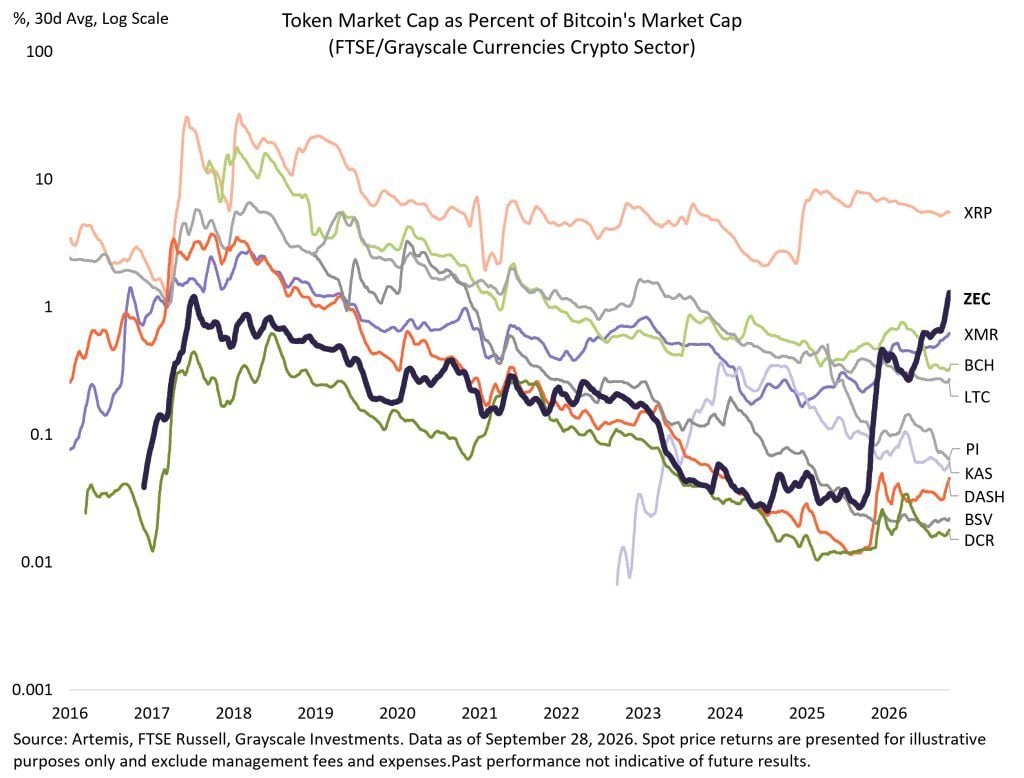
    • PI (+15%), PUMP (+14%) and ZEC (+13%) led top movers
    • Oil -1% at $80; Gold -1% at $4,035
    • Stock futures are slightly green; DOW flat, Nasdaq +0.4%
    • The SEC Crypto Task Force met with Hyperliquid’s Policy Center on Tuesday to discuss crypto regulation and how Hyperliquid fits in
    • Several Senate Democrats came out against the CLARITY Actcalling it a “corrupt bill” at a press conference, escalating opposition over its failure to bar Trump and his family from profiting off crypto
    • The CFTC moved to stop Kalshi from canceling trades as ordered by a Michigan court, siding with the prediction-market platform in a jurisdictional clash between the federal regulator and the state
    • The US and UK moved to align rules for tokenized financelinking the world’s two largest financial markets in a coordinated push to set shared standards as tokenization scales
    • JPMorgan said Hyperliquid’s rise threatens Circle’s USDC economicscreating a “prisoner’s dilemma” that pits Circle and Coinbase against each other for distribution
    • Mizuho downgraded Circle to underperform and cut its price target to $50 on the Open USD threat, warning the 140-backer consortium endangers USDC’s core reserve-yield economics
    • Meanwhile, Circle signed an MOU with JCB, Japan’s largest card networkto explore stablecoin payments across roughly 40 million merchants
    • Coinbase’s Head of Platform said that 95-100% of its code is now written by AI or AI-assisted

    Corporate Treasuries & ETFs

    • The Bitcoin ETFs saw $181M in net inflows on Tuesday; the ETH ETFs saw $58M in inflows
    • Tom Lee’s Bitmine generated $45M from ETH staking in Q2 according to their latest filing

    Meme Coin Tracker

    • Meme leaders were mostly green up 2-3%; DOGE +2%, SHIB +3%, PEPE +2%, PENGU +7%, TRUMP +2%, BONK -3%
    • Robinhood chain memes had a volatile day as previous leaders sold off with Cashcat -30%, Juggernaut -38% and Hoodrat -47%, while new launchpad PONS jumped 13x and new RWA protocol INDEX jumped 400%
    • No notable action on Solana

    📈 Myriad Market of the Day

    💰 Token, Airdrop & Protocol Tracker

    • Pump.fun completed its first major unlock at the 1-year mark, with $86M in team and investor PUMP tokens hitting the market
    • Binance is betting on becoming a crypto “super-app” as stablecoins reshape its growth, expanding beyond trading into payments and financial services.

    🚚 What is happening in NFTs?

    • NFT leaders were mostly flat; Punks even at 32.4 ETH, BAYC +1% at 8.94 ETH, Pudgy +1% at 4.37 ETH; Hypurr’s -2% at 175 HYPE
    • Cryptoadz (+22%) and Trolls (+26%) led top movers
    • New Robinhood NFT sets jumped including RDEGEN Hood (+450%) and Post Mortem (+60%)

    Daily Debrief Newsletter

    Start every day with the top news stories right now, plus original features, a podcast, videos and more.

  • BREAKING! US PPI Data Released! Here’s Bitcoin’s (BTC) Initial Reaction!

    BREAKING! US PPI Data Released! Here’s Bitcoin’s (BTC) Initial Reaction!

    Yesterday’s lower-than-expected CPI data triggered an upward movement in Bitcoin and altcoins. In this context, $BTC rose above $64,000, while Ethereum and other altcoins also saw significant increases.

    The lower-than-expected CPI data marks the strongest monthly decline since April 2020, with experts noting that the drop in energy prices is the most significant reason for the slowdown in inflation.

    Related News BREAKING! Critical US Inflation Data Released! What Was Bitcoin’s ($BTC) Initial Reaction?

    Following the CPI data, investors’ expectations regarding the Fed’s monetary policy have been reshaped. Prior to the CPI release, the probability of a Fed interest rate hike in July was priced at 40%, but this figure dropped to 16% after the data.

    At this point, the weakening likelihood of a tighter monetary policy from the Fed increased appetite for risky assets like Bitcoin and pushed the $BTC price higher.

    After Bitcoin rose above $64,000 following the CPI data, attention is now focused on the US PPI data.

    In this context, the June data for the US Producer Price Index (PPI), one of the indicators that the FED closely monitors when making its decisions, has also been released.

    The data released is as follows:

    Core Producer Price Index (Monthly): Announced 0.2% – Expected 0.3% – Previous 0.4%

    Core Producer Price Index (Annual): Announced 4.7% – Expected 5.2% – Previous 4.9%

    Producer Price Index (Monthly): Announced -0.3% – Expectation 0.0% – Previous 1.1%

    Producer Price Index (Annual): Announced 5.5% – Expected 6.2% – Previous 6.5%

    Bitcoin’s initial reaction after the release of the PPI data was as follows:

    *This is not investment advice.