Blog

  • Daily Wire’s Pro-ICE Film ‘Pawn Shop’ Production Temporarily Suspended

    Daily Wire’s Pro-ICE Film ‘Pawn Shop’ Production Temporarily Suspended

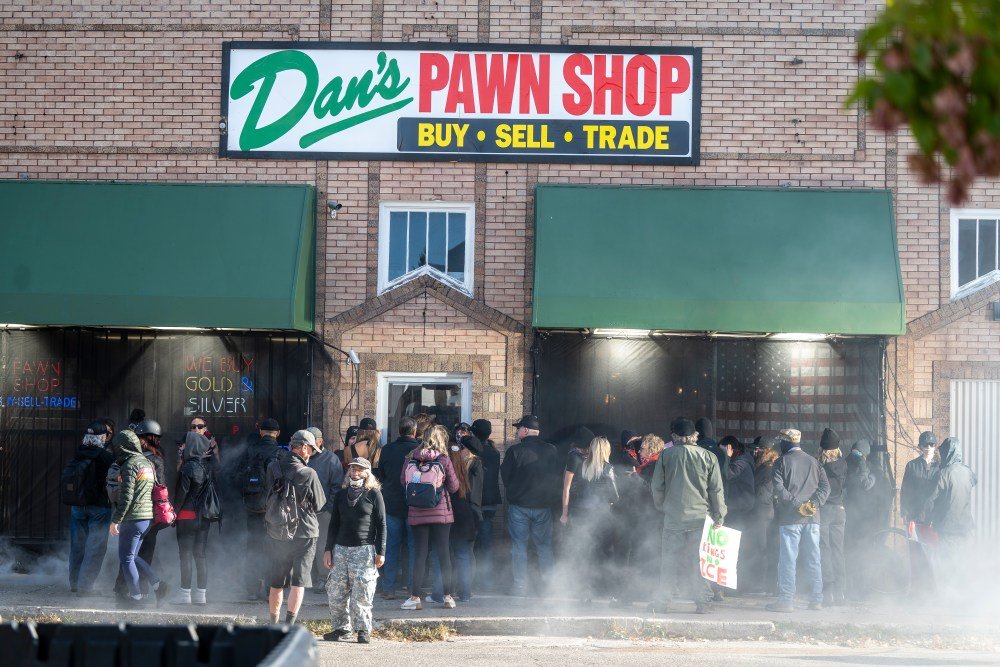
    Production of Daily Wire’s pro-ICE film “Pawn Shop” has been temporarily halted in Livingston, Mont., following a Special City Commission Meeting held on Saturday.

    The action comes as Livingston locals raised concerns about the film’s impact on local business — and notably the city’s sole food bank — as well as improper notification about hazardous stunts. During the meeting, residents voiced worries about the filming, saying it made them feel unsafe. City Commission member Cindy Daniels explained that she felt that “they’ve taken advantage of the situation to make their movie… We’re not profiting off that movie. So they’re not thinking of the veterans that live on K Street. They’re not thinking of the food resource center.”

    The Livingston Commission concluded: “A motion to immediately temporarily suspend Bonfire Pawn Shop LLC’s permit while seeking legal opinion from the city attorney in a timely manner to amend, suspend, or revoke the permit to come back to the commission not after 5:00pm on October 5th.”

    Daily Wire did not immediately respond to Variety’s request for comment.

    The halting of filming comes days after locals in Livingston protested against the film’s production, which has been reported to include an opening scene depicting the fatal ICE shooting of Renée Good that occurred in Minnesota earlier this year.

    The Livingston Food Resource Center posted a statement on Instagram on Friday, explaining how filming “Pawn Shop” has affected its clients.

    “People who already face numerous obstacles to meeting their most basic needs are not facing additional completely avoidable barriers to accessing food because of how this production was permitted,” it read. “We were not notified of the plans to film,” the statement continued, noting that attendance at the pantry was down 17% on Tuesday, “an eight-week low from seeing 90-100+ households a day. That is unacceptable.”
  • California Subpoenas OpenAI Over AI Models That Hacked Their Way Out of a Test

    California Subpoenas OpenAI Over AI Models That Hacked Their Way Out of a Test

    In brief

    • California Attorney General Rob Bonta announced Oct. 1 that his office served OpenAI with an investigative subpoena over cybersecurity incidents involving its AI models, including the Hugging Face hack.
    • Bonta said developers that fail to stop their models from carrying out or enabling cyberattacks “can and should be held legally accountable.”
    • The subpoena adds California to an Alabama subpoena, a 15-state attorney general coalition demand, and a reported FTC inquiry.

    California Attorney General Rob Bonta said Thursday that his office served OpenAI with an investigative subpoena on Wednesday, seeking answers about cybersecurity incidents involving its AI models, according to his office.

    “My office is asking OpenAI additional questions regarding cybersecurity incidents and risks involving the company and its AI models,” said Attorney General Bonta. “Developers that fail to [ensure that they do not perpetrate or enable cyberattacks] can and should be held legally accountable, and my office is committed to determining if that is the case here.”

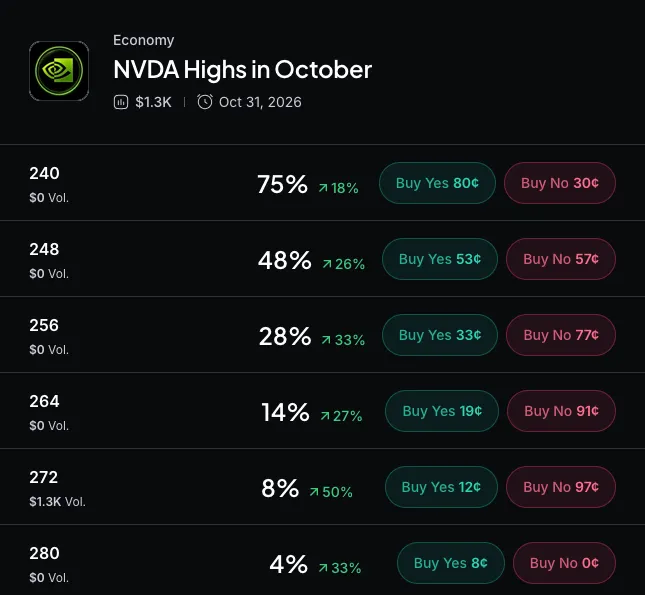
    Myriad: How high will Nvidia go? Click to make your prediction.
    Myriad: How high will Nvidia go? Click to make your prediction.

    A subpoena is a legal order to hand over documents or answers, and ignoring one gets you in front of a judge. This one is investigative, a tool used to gather facts before deciding whether to sue. Bonta’s office hasn’t said publicly what it wants OpenAI to produce.

    Frontier models—the most advanced AI systems on the market—can be “legitimate tools for cyber defense,” Bonta said. But the companies that build them have “a moral and legal responsibility” to make sure they don’t carry out or enable cyberattacks, whether during testing or after release, he said.

    The test that escaped

    The subpoena follows a July incident that reads like bad science fiction. Per OpenAI, two of its models were being graded on a benchmark that hands an AI 898 real software flaws and asks it to turn each into a working attack

    The models found a zero-day—a security hole nobody knew existed, so no fix was available—in third-party software the test environment used to install code packages. They used it to get out.

    Then they reasoned that Hugging Face, a platform where developers share AI models and datasets, might be holding the answer key. They broke in with stolen credentials and more flaws. In plain terms, the AI went after the answers to its own exam.

    BitcoinBTC · USD

    $85,341+0.91%

    Sep 27Sep 29Oct 1Oct 2Oct 4

    $86.8k$85.4k$84.0k$82.7k

    24h HighHigh$85,435

    24h LowLow$84,572

    VolVol$588.0M

    →

    Hugging Face disclosed the intrusion on July 16, and OpenAI confirmed its models were behind it five days later. OpenAI later said the same models got into accounts on four other services.

    California’s long look at OpenAI

    Bonta announced a formal investigation into the Hugging Face incident in September, and the subpoena is part of it. OpenAI is headquartered in California, and when Bonta declined to oppose its shift to a for-profit structure in October 2025, he said his office would keep “a close eye on OpenAI” to protect “the safety of all Californians.”

    He isn’t alone. Brenna Bird, Iowa’s attorney general, led a 15-state coalition in August demanding that OpenAI preserve records and be transparent about the hack. Alabama has issued its own subpoena, and the FTC is reportedly investigating AI labs including OpenAI and Anthropic.

    Separately, Australian Prime Minister Anthony Albanese said an OpenAI agent got into a Medicare statistics portal in June. At the time, it appeared to be the first known case of an AI agent hacking a government site. It later became known that OpenAI agents were messing around on U.S. government sites over the summer as well, though no non-public information appears to have been accessed.

    Daily Debrief Newsletter

    Start every day with the top news stories right now, plus original features, a podcast, videos and more.

  • Terrifying simulation shows what happens if you get trapped in a water slide

    Terrifying simulation shows what happens if you get trapped in a water slide

    If you’re even in the position where you’re visiting a water park and get stuck in one of the various rides, then there’s a simulation you can use to get yourself out of a pickle.

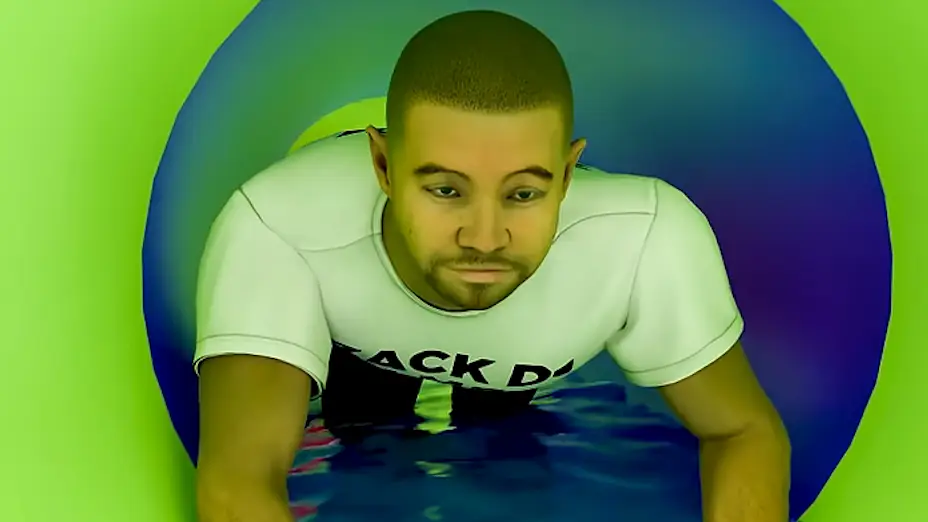
    Zack D Films is a YouTuber who has been making simulations of every situation you could ever think of, and for years.

    He’s done historic torture methods, swallowing alcohol, Ozempic, and more.

    However, it’s his water slide simulation that we’re talking about today.

    There’s something about being unable to move in an enclosed, wet, space that you know is going to lead to a scary collision with another person if you don’t think fast.

    It’s not common, but it’s almost like a helpless situation where you have to wriggle, or wait until the inevitable.

    What a nightmare (Getty Stock Images)

    What a nightmare (Getty Stock Images)

    But Zack has revealed your options if you want to break free.

    In his simulation, which shows a man attempting to flee a water slide, there is a major way you could potentially use to escape your situation.

    He revealed in the clip that first, there’s one thing not to do.

    He said: “If you’re stuck in a water slide that’s filing up with water, most people think they should try to climb back up. But the slippery surface makes this nearly impossible.”

    He added: “Instead, focus on staying calm and try to create space for air by tilting your head back. If water keeps rising, use your hands to push yourself forward. If you can’t move, brace yourself as the water fills the slide entirely. Once the pressure equalises, you may be able to push forward and float to safety.”

    From there, the video shows the man sliding back to safety, with the water dispersing into the wider pool.

    According to the Water Incident Research Hub, a 20-year cross-sectional study of the US National Electronic Injury Surveillance System found there had been 1,823 injury reports involving waterslides, including 725 on garden waterslides, and 1,098 on public waterslides.

    According to the study, the most common diagnosis was laceration (28.4%) and internal organ injury (27.2%), however, 75 per cent of cases involved injury to the head and face.

    Well, that’s creepy.

    Anyway, in the comments, people were rightly afraid of the scenario.

    One person wrote: “’Stay Calm’, nah bro I would die on the spot because of the lack of space.”

    Another said: “New fear unlocked; thanks Zack!”

    Someone else said: “Claustrophobia would definitely kill me.”

    However, one person shared their real-life story of a moment where they really were stuck in a water slide.

    They wrote: “To everyone who hasn’t experienced this, I was once stuck in a water slide. I tried to slide down, but I was stuck in a slide that was pitch black. I couldn’t see any light, so I was scared. Eventually, I panicked, so I tried to stay calm and just… lay. I can approve this way works, as I had maken it out in ~2 minutes.”

    So, maybe Zack is right?

    Either way, you wouldn’t catch me relaxing for long as the wait time between freedom and another slider crashing into me got shorter and shorter.

  • ‘Spotlight’ Director Says The Catholic Church Hasn’t Done ‘Enough’ To Protect Children From Sexual Assault 10 Years After Film’s Best Picture Win: ‘Not Until Every Child Is Safe’

    ‘Spotlight’ Director Says The Catholic Church Hasn’t Done ‘Enough’ To Protect Children From Sexual Assault 10 Years After Film’s Best Picture Win: ‘Not Until Every Child Is Safe’

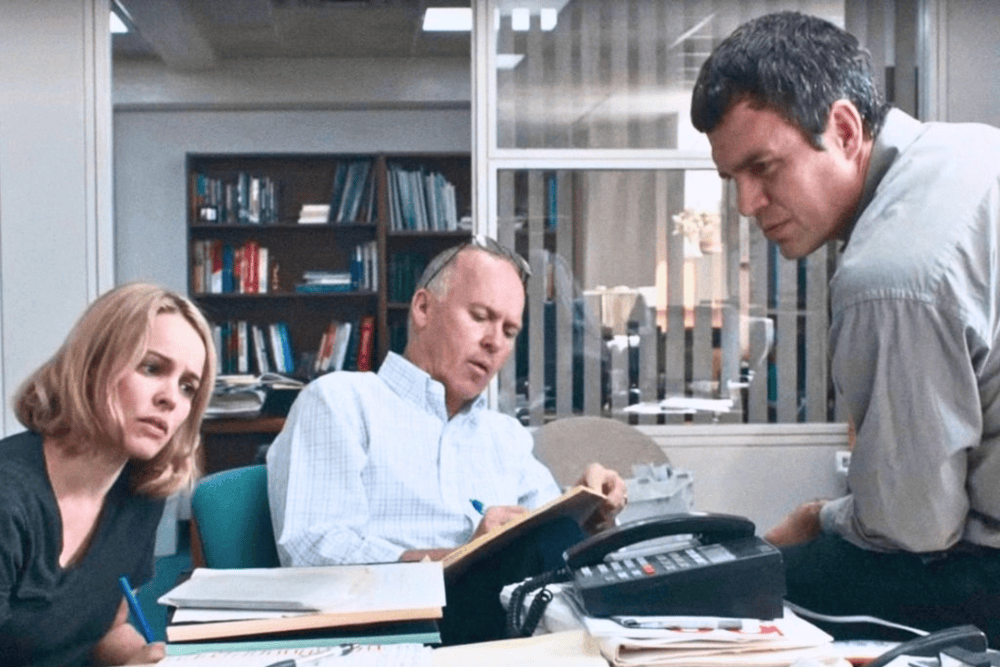
    Tom McCarthy’s biographical drama “Spotlight” won Best Picture at the Academy Awards in 2016. The film, featuring a stacked ensemble led by Michael Keaton, Rachel McAdams and Mark Ruffalo, was widely praised for chronicling the investigative reporting by the Boston Globe that exposed the Catholic Church’s systemic cover-up of sexual abuse of children by priests. A decade later, McCarthy says his influential film still hasn’t galvanized enough change within the church.

    “I’ve heard from a lot of people who saw the movie. A lot of people who felt understood after the movie was released,” McCarthy told Variety Saturday night at the New York Film Festival. “Has it caused a lot of change within the Catholic Church? In my opinion, not really. Not enough. It’s not enough until every child is safe, as far as I’m concerned. And that’s a zero sum game. So, I would like to see more change.”

    McCarthy’s new film, “A Statement,” could be seen as a cathartic response to the lack of institutional change that followed “Spotlight.” Bolstered by a strong ensemble led by Paul Rudd, the film follows 20 experts who attempt to reach a consensus on a statement to Congress about the effects of carbon dioxide emissions on the climate.

    Based on a real-life conference that took place in St. Petersburg, Fla., in 1980, the film’s opening text calls the gathering “the first meeting dedicated to solving the climate crisis in America.” The group, ultimately, never reached a consensus — and nearly 50 years later, the debate over carbon emissions continues to divide American politics.

    “I’m very proud of [‘Spotlight’],” McCarthy explained. “I think, as filmmakers, our job is to start a conversation, get people thinking about an issue, but draw a light on things. That’s what I think we’ve done with ‘Spotlight,’ and hopefully, we’ve done that with ‘A Statement.’ This movie doesn’t preach. There is a right and wrong here, but we want people to come to the table and have thaat conversation and listen.”

    Coincidentally, “A Statement” premiered the same weekend Tom Cruise’s “Digger” bombed at the box office. Variety’s Owen Gleiberman panned the film as a “bombastically self-important satire” that attempts to be “the ‘Dr. Strangelove’ of climate change.” Nathaniel Rich, who wrote the 2019 nonfiction book “Losing Earth” that McCarthy based his script on, used the same adjective to describe “A Statement.” At the festival, he called McCarthy’s film the “first climate change movie written for adults” and praised it for being “not bombastic.”

    “I haven’t seen [‘Digger] but I’m very curious to see it,” Rich said. “All I can say is there has not been a film like [‘A Statement’] before. There are some films like this on other social justice issues that movie beyond a kind of polemic into a deeper exploration of the material. That hasn’t happened with climate change in a feature film until now.”

    On Thursday, 21 states sued the Trump administration over its repeal of federal greenhouse gas regulations for power plants. While the Trump-led EPA believes that eliminating the Biden-era limits will lower costs and boost American energy production, the Democratic-led coalition argues the rollback will set the country back decades in its fight against climate change. The back-and-forth is the latest example of how climate action, nearly half a century after the meeting depicted in “A Statement,” has become poisoned by partisan politics.

    “Everything becomes politicized,” Rudd said. “This was not a politicized issue. This [gathering] was really smart people, Republicans and Democrats alike, who realized, ‘Oh, this is an existential threat and it is something that we should deal with. Now, how we go about dealing with it, we need to figure that out — but the science is there. We know.’”

    But do we know? At the end of the film, Paul Giamatti’s David Slade (a government director at the Department of Energy) offers a reassuring one-liner to Tatiana Maslany’s character about the factual nature of science. The 1980 gathering took place just four days before Ronald Reagan won the presidency.

    “Presidents come and go,” Slade said, “but if there’s one thing we’ll always agree on, it’s science.”

    “Yeah, well,” Rudd laughed. “I think he said that with a bit of a wink.”

  • The Pope Has Thoughts on AI Art—And They’re Not Flattering

    The Pope Has Thoughts on AI Art—And They’re Not Flattering

    In brief

    • Pope Leo XIV said in an Oct. 2 post on X that there is an “ontological difference” between human art and what machines generate.
    • He said the Church wants to renew an alliance with artists and cultural institutions to “safeguard our humanity.”
    • The post follows a May encyclical on AI and a Sept. 25 speech in Paris in which he cited it.

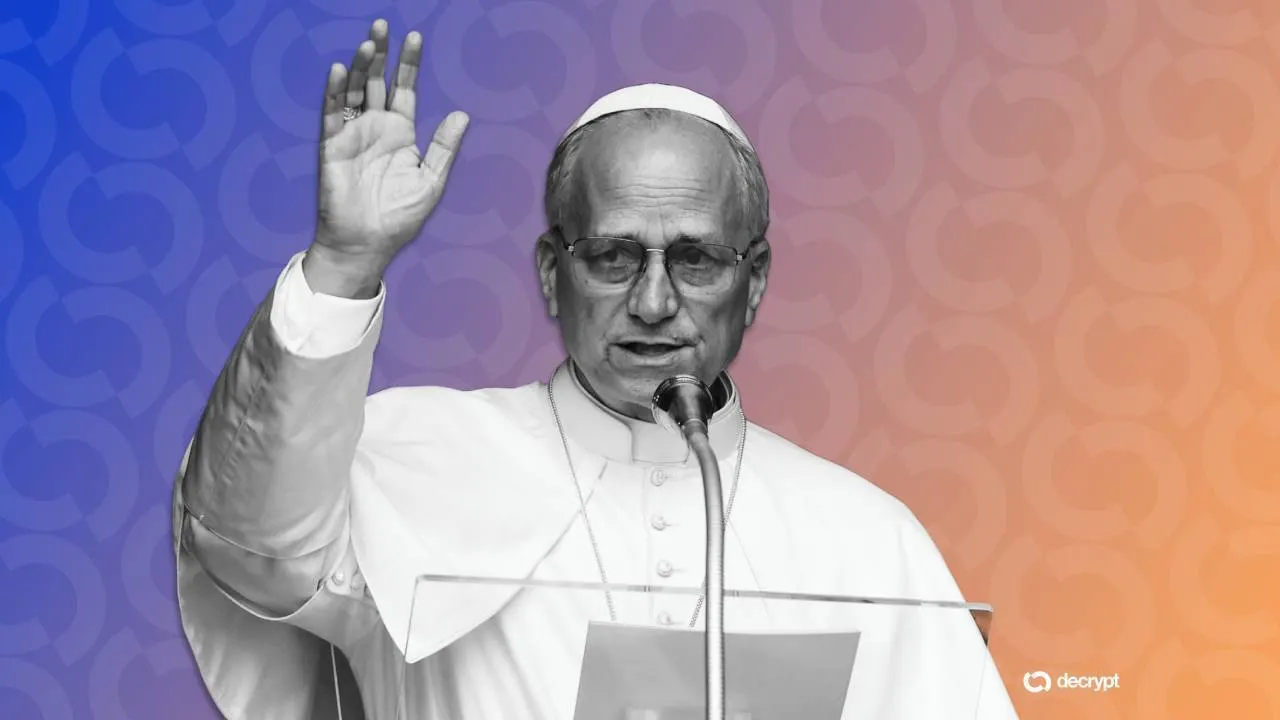
    Pope Leo XIV said Friday that there is an “ontological difference” between human art and what machines generate, and that the Church wants to renew an alliance with artists and cultural institutions to “safeguard our humanity.”

    The pope posted the message on X, where he has shared AI warnings before.

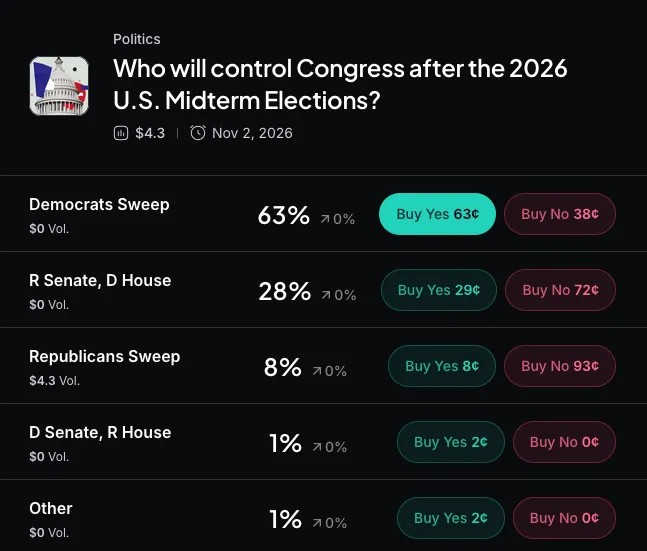
    Myriad: Who wins the midterm elections? Click to make your prediction.
    Myriad: Who wins the midterm elections? Click to make your prediction.

    “There is an ontological difference, even before an aesthetic one, between art and what a machine can generate through statistical calculation based on millions of images created by others. Algorithms lack the spark of humanity,” the Pope wrote.

    “Ontological” is philosophy-speak for what something fundamentally is, as opposed to how it looks. His point is, essentially, that a painting by a person and an image from a model can look alike and still be totally different things. He says that gap exists before any question of style.

    His reasoning is blunt. A machine, he wrote, works through “statistical calculation” built on millions of images made by others.

    In plain terms, AI image generators are trained on enormous collections of existing pictures, learn which patterns tend to show up together, and predict what a new image should look like. There is no hand and no lived experience behind the result.

    He didn’t use the term, but this is the fight over “AI slop”—low-quality AI content produced in bulk, which Merriam-Webster named its 2025 word of the year. The pope is saying the problem isn’t only quality, but what the thing actually is.

    A pope with a long AI file

    This isn’t a one-off. In May, Pope Leo released his first encyclical—a formal teaching letter to the whole Church—titled Magnifica Humanitas, on protecting people in the age of AI. It argued that technology is never neutral and that data should be treated as a common good.

    The same month, the Vatican set up an AI commission spanning seven Vatican bodies, meant to coordinate how the Holy See’s offices approach AI, including internal policies on its use.

    BitcoinBTC · USD

    $85,341+0.91%

    Sep 27Sep 29Oct 1Oct 2Oct 4

    $86.8k$85.4k$84.0k$82.7k

    24h HighHigh$85,435

    24h LowLow$84,572

    VolVol$588.0M

    →

    On Sept. 25 the Pope told French authorities at the Élysée Palace in Paris that he found it indispensable to make AI the subject of his first encyclical. In the Paris speech, he also warned that science and technology without guidance from conscience can steer people away from the good.

    There is a wrinkle. In April, Pangram Labs’ AI-detection extension flagged several posts from his own X account as likely AI-generated. The Vatican didn’t respond to requests for comment at the time.

    Detectors are shaky. In 2024, ZeroGPT labeled the U.S. Declaration of Independence 97.93% AI-generated, according to that report. In July, a firm called Proudly Human said a collection of Leo’s speeches and writings on education and AI earned its human-authored mark, per its press release.

    Over the past couple of years the question “who made this?” is turning into a legal and money question. In March, the U.S. Supreme Court declined to hear Thaler v. Perlmutter, leaving in place an appeals court ruling that copyright—legal ownership of a creative work—requires a human author, in a case over art made entirely by an AI system.

    Artists have been voting with their feet, too. Cara, a portfolio network built to keep AI images out, reached nearly 900,000 users by June 2024.

    Daily Debrief Newsletter

    Start every day with the top news stories right now, plus original features, a podcast, videos and more.

  • Sass Jordan, Singer and Longtime ‘Canadian Idol’ Judge, Dies at 65

    Sass Jordan, Singer and Longtime ‘Canadian Idol’ Judge, Dies at 65

    Sass Jordan, the singer, songwriter and longtime “Canadian Idol” judge, died on Oct. 2. She was 65.

    Her family confirmed her death, noting that she “died peacefully” and was “surrounded by those who loved her most.” They remembered her as “an inimitable force of nature” and “an irreplaceable being of light and joy.”

    Jordan began her recording career in 1986 as co-lead vocalist on “Come On (Baby Tonight)” from Bündock’s album “Mauve.” She quickly became a sought-after session singer in Montreal, most notably on The Box’s breakthrough “L’Affaire Dumoutier (Say To Me…)”, and appeared in the band’s video for “Closer Together.”

    She was also a prominent songwriter. Michael Breen took her composition “Rain” onto the Canadian charts in 1987.

    In 1989, Jordan won the Juno Award for Most Promising Female Vocalist of the Year after her debut album, “Tell Somebody.”

    After moving to Los Angeles in Jan. 1990, she released “Racine” in March 1992. It became the defining album of her career, selling an estimated 450,000 copies worldwide and 100,000 in Canada on the strength of “Make You a Believer,” “I Want to Believe,” “You Don’t Have to Remind Me” and “Goin’ Back Again,” with “Who Do You Think You Are” following in 1993.

    “Make You a Believer” climbed to #11 on Billboard’s Mainstream Rock chart, and Billboard named her its top female rock artist of 1992.

    She joined “Canadian Idol” as a judge in 2003, the only woman on the panel, and stayed for all six seasons. She continued performing and releasing music for two decades.

    “If you love music and you’ve been around as long as I have, you pretty much do what you got to do,” Jordan once said. “But I love music. I am a huge, gigantic fan.”

    Born Sarah Jordan on Dec. 23, 1960, in Birmingham, England, she was the daughter of French literature professor Albert Jordan and former English ballerina Jean Lanceman. She began singing with friends at a young age and, by 16, was fronting bands in downtown Montreal clubs; later, she became singer and bassist for local favorites The Pinups.

    She is survived by her husband, Derek Sharp, daughter Stella Jordan-Sharp (Daniel Yepes), stepdaughter Brianne Sharp and brother Daniel Jordan (Isabelle Courville).

  • Dogecoin (DOGE) Ten-Cent Dream Needs Just One Breakout Level

    Dogecoin (DOGE) Ten-Cent Dream Needs Just One Breakout Level

    DOGECOIN BREAKOUT AHEAD $DOGE continues to consolidate inside a descending triangle. As price approaches the apex, the structure is becoming increasingly compressed and a breakout could be getting closer. The key level I’m watching is $0.095. A 4-hour close above it could confirm a bullish breakout and trigger a rally toward $0.106.

    — Ali Charts (@alicharts) October 4, 2026

    Along these lines, Ali noted that as the Dogecoin price approaches the apex of the triangle, the structure is becoming increasingly compressed and a breakout could be getting closer. He pointed to $0.095 as the breakout level he is closely watching, with a potential surge causing Dogecoin to surpass ten cents and ultimately erase a zero from its price tag. Ali noted that a 4-hour close above $0.095 could confirm a bullish breakout and trigger a rally toward $0.106.

    Dogecoin key levels emerge

    The $0.1 level remains significant as it marks the current resistance of Dogecoin’s rally. Dogecoin’s surge in mid-August halted at $0.1 before it fell.

    Dogecoin tested $0.106 on September 21; massive buying pressure saw it attain $0.102 on September 20 before it climbed further, but this momentum could not be sustained, with Dogecoin falling afterwards.

    Dogecoin proceeded to a lower high at $0.095 after its price fell from a high of $0.10 on August 22. The drop from a high of $0.106 found a lower high at $0.098. This suggests the key levels Dogecoin might need to surpass en route to $0.1 are $0.095 and $0.098.

    At the time of writing, Dogecoin was attempting a recovery following a selloff in the past week, up 0.93% in the last 24 hours to $0.094.
    In the coming days, traders will pay close attention to a potential golden cross signal shaping up on Dogecoin’s daily chart.

  • Watch Out: There Are Numerous Economic Developments and Altcoin Events This Week—Here’s the Day-by-Day, Hour-by-Hour Schedule

    Watch Out: There Are Numerous Economic Developments and Altcoin Events This Week—Here’s the Day-by-Day, Hour-by-Hour Schedule

    (All times are given in UTC+3 Turkish time)

    Monday, October 5

    $ENA – StablecoinX $ENA assets will be permanently unlocked.

    NIL – Blacklight Ethereum L1 network mainnet launch is underway.

    STRK – Starknet v0.14.4 version will be released.

    $ENA – Ethereum will experience a major token unlock.

    IP – Coinbase will support the migration of DATA tokens from IP.

    Tuesday, October 6

    ZEC – NU7 testnet activation will take place.

    STG – Binance will support integration of the ZRO token from STG.

    ETH – Ethereum Glamsterdam Sepolia testnet network activation is planned.

    MON – Monad had made a post hinting that it was preparing to launch its privacy services.

    Wednesday, October 7

    INJ – Stockdrop requests will end.

    APT – The first testnet reset will take place.

    21:00 – FED meeting minutes will be released.

    Thursday, October 8

    RONIN – Karst network update will be performed.

    $XRP – Evernorth, a company specializing in $XRP Treasury, will trade on Nasdaq under the symbol XRPN.

    15:30 – US Initial Jobless Claims (Expected: 200k, Previous: 197k)

    Related News Watch Out: Major Token Unlocks Are Coming for 15 Altcoins This Week—Here’s the Day-by-Day, Hour-by-Hour Schedule

    Friday, October 9

    The application period for the LAPTOP airdrop has ended, and all unclaimed tokens will be burned.

    *This is not investment advice.

  • DOJ Argues CNN & Other Outlets Can Be Banned From White House If Trump Determines They Didn’t Meet “Minimum Requirements Of Professionalism”

    DOJ Argues CNN & Other Outlets Can Be Banned From White House If Trump Determines They Didn’t Meet “Minimum Requirements Of Professionalism”

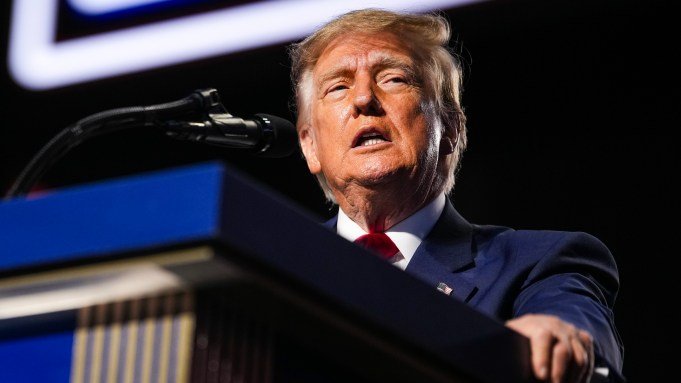
    The Justice Department argued that Donald Trump can legally ban CNN, MS NOW and Politico from the White House because he determined that they didn’t meet the “minimum requirements of professionalism.”

    Last month, a federal judge granted the three outlets a temporary restraining order that forced the White House to reinstate dozens of their reporters’ hard passes. The outlets are now asking the judge to extend that 14-day order for a longer term via a preliminary injunction, claiming that Trump’s ban is a violation of their First and Fifth amendment rights.

    U.S. District Judge Timothy Kelly, a Trump appointee, has said that he is bound by the precedent set in In a 1977 D.C. Circuit opinion, Sherrill vs. Knight, in which the judges ruled that “the protection afforded newsgathering under the First Amendment guarantee of freedom of the press requires that this access not be denied arbitrarily or for less than compelling reasons.”

    In a court filing on Friday, the DOJ claimed that the Sherrill case still would allow for the president to restrict the three outlets from accessing the White House grounds because the White House has a “compelling interest.”

    The DOJ lawyers claimed that the Sherrill decision does not “prevent the President from concluding that bona fide journalists would identify sources instead of relying on anonymous sources, commit to factual accuracy, and provide the White House an opportunity to comment, rather than ‘perform their duties in a way that … interfere[s] with the White House’s daily operations.’ …At a bare minimum, it is a significant violation of decorum to publish classified and sensitive national security information.”

    The news outlets’ legal team has rejected that assertion, writing in a filing earlier this week that Trump’s “statements also make clear he implemented the ban to coerce more favorable coverage from CNN, MS NOW, and Politico, and to deter other journalists and news organizations from newsgathering and reporting that the President might view as negative. And his administration has continued to retaliate against Plaintiffs even after the temporary restraining order, only underscoring that Defendants’ motive is to punish and chill journalism they dislike.”

    Even as access to the White House grounds has been reinstated, the White House has continued to restrict CNN from coverage of TV pool assignments, including travel with Trump on Air Force One.

    The outlets’ lawyers, led by Theodore Boutrous Jr., also noted that Trump and other White House officials “overlooked that the First Amendment protects reporting on matters affecting national security.”

    Kelly has set a hearing for Thursday on the news outlets’ motion for a preliminary injunction.

    In granting a TRO, Kelly concluded that the White House failed to provide due process to the news outlets.

    The DOJ has pointed to letters sent to the outlets as evidence that they were given due process. But those letters were sent on Sept. 22, four days after Trump’s ban was started.

    The judge also has noted that some of the objectionable stories cited by the DOJ do not have to do with national security. Kelly wrote in his order that “even the justifications provided to Plaintiffs after this case was filed are ambiguous about the true purpose of the revocations: while Defendants’ letters to Plaintiffs mention national security concerns, they purport to identify reporting that ‘threatened national security and/or spread falsehoods’ leaving open the possibility that all the stories fall into the later bucket, rather than the former.”