Blog

  • ‘All We Imagine as Light’ Director Payal Kapadia Heads Up Cannes Critics’ Week Jury

    ‘All We Imagine as Light’ Director Payal Kapadia Heads Up Cannes Critics’ Week Jury

    Payal Kapadia, the Indian filmmaker whose All We Imagine as Light won the Grand Prix at Cannes in 2024, will serve as president of the jury for the 65th Cannes Critics’ Week, running May 13-21 alongside the main festival.

    Kapadia will be joined on the jury by Canadian actor Théodore Pellerin (Lurker), French singer-songwriter Oklou, Ghanaian-British producer Ama Ampadu (My Father’s Shadow) and journalist and Bangkok World Film Festival director Donsaron Kovitvanitcha.

    Kapadia’s short films Afternoon Clouds and And What is the Summer Saying were selected at the Cinéfondation and the Berlinale, before her debut feature documentary A Night of Knowing Nothing went to Cannes in 2021, and won the L’Oeil d’Or for Best Documentary.

    All We Imagine as Light, her second feature, was a standout at the 2024 Cannes festival, and marked her arrival as one of the most exciting voices in contemporary world cinema.

    “My own journey as a filmmaker was supported early on because of film festival selections,” Kapadia said in a statement. “Through these, I had the opportunity to meet others like myself from across the world and helped me build a community of future collaborators.”

    Kapadia said she embraced the jury role at a time when independent cinema is “being eroded in every country,” adding that supporting first films is “almost a resistance to market forces.” With a nod to the Cannes Critics’ Week’s Raison d’être, she called film criticism “one of the key components of the independent and art house film ecosystem. The first films are often freer, more daring and fearless, having an individual voice and to champion those is absolutely essential. First films are also fragile, and to be nurtured in a section like Critics’ Week helps them blossom amongst already established filmmakers’ work.”

    The Critics’ Week jury will award the Ami Paris Grand Prize for best feature, the Louis Roederer Foundation Rising Star Award for best actor or actress, and the Sony Discovery Prize for best short film.

  • 4 takeaways: LeBron James defies age as Lakers limit Kevin Durant to take 2-0 lead

    Game Recap: Lakers 101, Rockets 94

    • Download the NBA App

    Kevin Durant returned to the Houston Rockets’ starting lineup in Game 2 against the Los Angeles Lakers after missing Game 1 with a bruised right knee.

    His presence was welcomed by the Rockets, but it still wasn’t enough to defeat the shorthanded Lakers.

    Playing without Luka Dončić and Austin Reaves – both sidelined by injuries – the Lakers took a 2-0 series lead with a 101-94 victory against Houston on Tuesday in a first-round Western Conference playoff game.

    Game 3 is Friday in Houston (8 p.m. ET, Prime Video).

    Here are four takeaways from Game 2:


    1. Is James 41 … or 21?

    LeBron James continues to defy the effects of aging on professional athletes.

    In a playoff game in 2026, the 41-year-old James led all scorers with 28 points and added eight rebounds and seven assists in 39 minutes.

    He scored nine points in the fourth quarter – two on a soaring two-handed dunk that gave the Lakers a 99-92 lead with 55.3 seconds remaining in the fourth quarter.

    James was aggressive, getting to the free-throw line 14 times.

    “He brought a level of physicality, and he’s done it throughout his career,” Lakers coach JJ Redick said. “He’s just really comfortable playing that way whether it’s him on a back-down, getting to the basket or him drawing fouls. He forces you to match his physicality.”

    After the game, James told NBC he is “super blessed, super humbled” to play that way at his age. The Lakers need it, too, without Dončić and Reaves, and will need that kind of effort from him to win the series.

    2. Smart, Kennard rule in Lakers’ backcourt

    No Dončić, no Reaves, no big deal.

    Just add Luke Kennard and Marcus Smart to the starting lineup.

    Kennard followed up his 27-point performance in Game 1 with 23 points, six rebounds and three steals, and Smart produced 25 points, seven assists and five steals.

    Kennard, who led the league in 3-point shooting percentage (47.8%), and Smart were a combined 16-for-26 shooting from the field and 8-for-13 on 3-pointers – including five 3s from Smart.

    “He just had a killer game tonight,” Redick said of Smart.

    3. Lakers slow Durant after big first half

    Durant, who sustained a bruised knee last week in practice, was a game-time decision entering Game 2 and was cleared to play after going through pregame warmups.

    Durant looked good in the first half, scoring 20 points. However, he had just three points in the second half and committed nine turnovers.

    The Lakers often sent two defenders to Durant when he had the basketball, forcing him into a difficult shot or pass.

    “Glad to be out there, playing in high-pressure moments,” Durant said. “But bad game for me tonight.”

    Durant took just 12 shots and indicated he needs to shoot more even with the double-teams. “When two, three people are on me and I shoot, we can get an offensive rebound. …I’ve got to shoot more of those and put my teammates in better position,” he said.

    Redick and his coaching staff deserve credit for holding the Rockets to under 100 points in each of the first two games. Redick isn’t taking any credit.

    “We’re just getting this thing started,” he said. “He’s the type of player who can take over a series. We just have to continue to have great team defense and great activity.”

    4. Statistical oddities in this series

    The 3-ball is playing a role in the series. Through the first two games, the Lakers are shooting 48.9% on 3s and the Rockets are at 29%. Houston had one more made 3 in Game 1, but the Lakers had six more made 3s in Game 2.

    Also in Game 2, just two reserves scored – one from each team. Tari Eason scored 10 points for Houston, and Jaxson Hayes had six points for Los Angeles.

    * * *

    Jeff Zillgitt has covered the NBA since 2008. You can email him at jzillgitt@nba.com, find his archive here and follow him on X.

  • Revolut Targeting $200 Billion Valuation in IPO—But Not Until 2028: FT

    Revolut Targeting $200 Billion Valuation in IPO—But Not Until 2028: FT

    In brief

    • Revolut is seeking a $200 billion valuation via an IPO, according to the Financial Times.
    • The report cited investors briefed on the firm’s plans, though it doesn’t intend to IPO until 2028 according to its CEO.
    • The firm last raised funding in November at a $75 billion valuation.

    Fintech firm Revolut aims to command a $200 billion valuation when it goes public, according to a new report from the Financial Times, citing investors briefed on the firm’s plans. 

    At that mark, the firm’s valuation would have jumped more than 160% since its November fundraise, when it completed a share sale that valued it around $75 billion. People at the firm told Financial Times that executives had discussed a target range of $150-200 billion when it goes public.

    Earlier this week, though, the firm’s CEO and co-founder Nik Storonsky told Bloomberg’s David Rubenstein that the event won’t take place for another “two years time.”

    A source close to the firm told Decrypt no formal valuation target has been made. Revolut declined to comment.

    Revenues for the global firm surged to a record $6 billion last year, representing a 46% jump year-over-year as it netted pre-tax profits of $2.3 billion, buoyed by its global market expansion. 

    As it stands, the firm now operates a licensed bank in 30 of its 40 geographies, including its home country, the United Kingdom. In March, it cleared the regulatory hurdles necessary to become a bank in the UK, earning approval from the Prudential Regulation Authority (PRA) amid its $4 billion commitment to invest in the country. 

    Prior to that, it launched full banking operations in Mexico and later applied for a U.S. bank charter, with Storonsky calling the U.S. “a key pillar of our global growth strategy.”

    At this time, though, the firm does not offer any crypto services to its U.S. customers, but users in eligible jurisdictions can make use of its crypto exchange and custody solutions. In February, it was selected as one of four UK firms to participate in an exploratory stablecoin sandbox ahead of the nation’s launch of stablecoin regulations later this year.

    Last year, sources told Decrypt that the firm was actively exploring the launch of its own stablecoin product. It has not yet done so, and predictors on Myriad—the prediction market platform operated by Decrypt’s parent company, Dastan—place odds of the firm launching a stablecoin before July at just 16%

    Daily Debrief Newsletter

    Start every day with the top news stories right now, plus original features, a podcast, videos and more.

  • YouTube Inks Deal Making SiriusXM Exclusive Audio Advertising Rep in U.S.

    YouTube Inks Deal Making SiriusXM Exclusive Audio Advertising Rep in U.S.

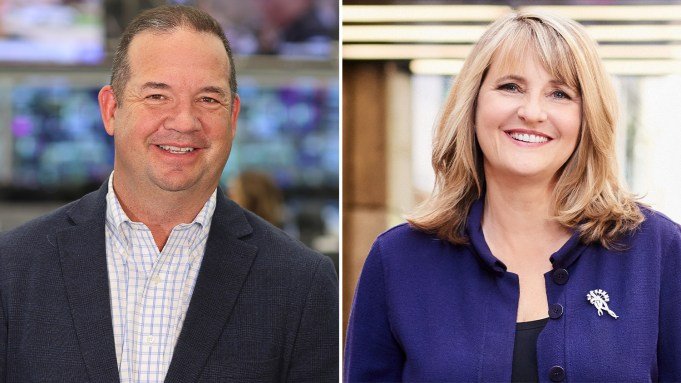
    Google and YouTube sell billions in advertising every month. But now they’re partnering with SiriusXM to handle a specific bucket of inventory: audio ads that run against YouTube content like podcasts, talk shows and music.

    SiriusXM struck a deal with Google making SiriusXM Media, the group that represents SiriusXM, Pandora and the company’s network of streaming and podcast networks, the exclusive advertising representative of YouTube audio advertising inventory in the U.S.

    More than 212 million monthly listeners in the U.S. engage in “audio-first” content or environments on YouTube, per a study by Edison Research commissioned by SiriusXM Media. The YouTube-SiriusXM deal will give advertisers access to “guaranteed impressions at scale” of audio spots for the first time, with targeting and measurement capabilities akin to YouTube, according to SiriusXM.

    Starting in the fall of 2026, advertisers will be able to buy guaranteed audio ad impressions against YouTube audiences for the first time directly through SiriusXM Media, powered by AdsWizz’s ad-tech platform.

    “YouTube has become a primary destination for audio-first content, where fans engage with their favorite podcasts, music, and creators,” Romana Pawar, senior director of product for YouTube Ads, said in a statement. “By partnering with SiriusXM Media, we are making it easier than ever for advertisers to tap into these high-attention moments.”

    Scott Walker, SiriusXM’s chief advertising revenue officer, commented, “By partnering with YouTube, a true leader in ad-supported content consumption, we’re uniting our unique skillset with their audience, creating an unparalleled opportunity for marketers and creators to grow their businesses.”

    Overall, SiriusXM Media now offers marketers access to 255 million monthly listeners, reaching nearly 90% of the U.S. population 13 and older, the company said.

  • Wall Street turns to ‘always-on’ RWA trading platforms as global conflicts escalate

    Wall Street turns to ‘always-on’ RWA trading platforms as global conflicts escalate

    The ongoing conflict between the U.S. and Iran is accelerating Wall Street’s transition into tokenized real-world assets (RWAs) to allay the risk of geopolitical volatility. The crisis has solidified RWAs as essential “always-on” infrastructure for Wall Street, exposing the limitations of traditional financial markets that close during weekends.

    As of April 2026, financial institutions are increasingly adopting blockchain-based tokenized trading to reduce the risks posed by 24/7 geopolitical tensions that traditional markets are ill-equipped to handle.

    Closing on weekends when many geopolitical escalations occur has emerged as a critical vulnerability in traditional financial markets. Major attacks, such as the U.S. strikes on Iran in February 2026, have frequently happened during off-market hours.

    Accordingly, Wall Street desks now use tokenized assets and perpetual futures on platforms like Hyperliquid as the only open window for pricing gold, oil, and war risk when legacy exchanges are offline. The disruption of physical trade routes, particularly in the Strait of Hormuz, has accelerated the shift toward instant “atomic” settlement.

    Tokenized U.S. Treasuries market surges to over $12B in April

    The tokenized U.S. Treasuries market has surged to $12.78 billion as of April 2026, as investors seek liquid collateral that can be moved instantly across borders. Tokenized commodities like gold and oil have also seen surging volumes as traders seek around-the-clock hedges against energy supply shocks.

    Meanwhile, institutional players are also transitioning from pilot programs to full-scale deployment of tokenized assets. Major firms like BlackRock and Franklin Templeton have integrated tokenized funds into their core offerings to avoid the bottlenecks of the traditional banking system during crises.

    These firms provide a digital-native structure that remains operational even as physical infrastructure, like in the Gulf, faces drone threats. As of April 2026, BlackRock has accumulated approximately $1.9 billion in tokenized U.S. Treasuries within its BUIDL fund.

    On the other hand, some nations, including Iran, are experimenting with blockchain to exchange value outside the U.S.-dollar-denominated system to bypass sanctions and naval blockades. Crypto-native platforms effectively became “the market” during critical moments, such as the February 2026 airstrikes. Legacy exchanges are now under intense pressure to adopt 24/7 trading models to compete with these digital-native structures, according to media reports.

    Consequently, on-chain perpetual futures for commodities like gold and oil now account for more than 67% of builder-deployed contracts on decentralized exchanges, with weekend volumes increasing ninefold since the beginning of 2026. The need for blockchain-based instant settlement has become a structural necessity, providing products that remain liquid even when physical trade routes are disrupted.

    IMF chief economist says U.S.-Iran war creates bigger risk than Trump’s tariffs

    IMF chief economist Pierre-Olivier Gourinchas has emphasized that the U.S.-Iran conflict creates a far bigger risk to the global economy than President Donald Trump’s initial wave of steep tariffs a year ago.

    He further notes that several countries are likely to undergo outright recessions under this scenario, with oil prices averaging $110 per barrel in 2026 and $125 in 2027.

    “What’s happening in the Gulf is potentially much, much larger, and that’s what our scenarios are kind of documenting.”

    Pierre-Olivier Gourinchas, Chief Economist at the IMF

    Based on these claims, the U.S.-Iran war is prompting investors to turn to tokenized oil and decentralized finance (DeFi) platforms for hedging, with major financial players fast-tracking the launch of tokenized securities platforms. Traders are using 24/7 crypto-native markets to hedge against oil price volatility stemming from the conflict.

    The IMF also predicts that global GDP growth could fall to 2.5% under an adverse scenario of a longer conflict that would keep oil prices around $100 per barrel this year. The fund’s worst-case scenario assumes a deepening, prolonged conflict that could drive oil prices higher, prompting major financial market dislocations and tighter financial conditions, slashing global growth to 2%.

  • Bill Regarding Bitcoin (BTC) Cryptocurrencies in Russia Receives First Official Approval!

    Bill Regarding Bitcoin (BTC) Cryptocurrencies in Russia Receives First Official Approval!

    Russia, where the use of Bitcoin (BTC) and cryptocurrencies is very high, continues to take regulatory steps.

    According to the Russian local news agency TASS, the Russian State Duma has approved a bill on cryptocurrencies in its first reading.

    At this point, the Duma approved a bill titled “On Digital Currency and Digital Rights”.

    The essence of the bill is to appoint the Central Bank of Russia as the regulatory authority for cryptocurrencies and to allow the use of cryptocurrencies in foreign trade payments.

    According to the draft law, the Central Bank of Russia will be designated as the key institution overseeing the cryptocurrency market, granting broad powers to issue licenses, approve or prohibit transactions, and determine legality.

    The bill also defines the procedures for banks and brokerage firms to enter the cryptocurrency market. Accordingly, regulations regarding cryptocurrency investment will be applied differently depending on the eligibility criteria.

    Specifically, the limit for purchasing cryptocurrency is capped at 300,000 rubles per person for unqualified investors. However, this limitation will not apply to qualified investors.

    The bill also recognizes cryptocurrencies as property under the Russian legal system.

    Finally, the bill needs to pass second and third readings in the State Duma before being submitted to the Federal Council and ultimately to the President for approval. According to the report, if officially approved, the bill is expected to come into effect on July 1, 2026.

    *This is not investment advice.

  • Kyrie Irving changes Instagram photo to show solidarity with Palestine

    Kyrie Irving changes Instagram photo to show solidarity with Palestine

    NBA player’s profile image shows a Palestinian child blocked from school by Israeli soldiers in the occupied West Bank.

    Famed basketball player Kyrie Irving changed his social media profile picture to an image of a Palestinian child blocked from attending school by Israeli soldiers in the Israeli-occupied West Bank.

    The picture on Irving’s Instagram, which boasts 20.2 million followers, shows a young Palestinian boy sitting with a book as he turns around to look at Israeli soldiers standing behind a barbed wire fence just behind him.

    Recommended Stories

    list of 4 itemsend of list

    Earlier this month, Palestinian schoolchildren in Umm al-Khair, in the occupied West Bank, found a barbed wire fence blocking their route to school roughly 1km (0.6 miles) away. Despite the barrier being erected by settlers without legal authorisation, soldiers have refused to take down the barrier in a community that faces imminent Israeli demolition orders later this month due to a lack of building permits. Such permits are rarely granted to Palestinians in Area C of the West Bank, which is entirely under the control of Israel.

    When the children, some as young as five years old, tried to go around the fence, soldiers launched tear gas and sound grenades at them. Shortly after the fence went up, a large Star of David was built with stones by settlers on the side of the fence that the Palestinian schoolchildren can no longer access.

    The community subsequently launched a march as part of a new initiative – “the Umm al-Khair Freedom School” – walking alongside the schoolchildren right up to the fence as the children banged on drums and sang defiant songs while soldiers watched from metres away.

    For stretches of time, the children sat down on rocks adjacent to the barbed wire, took out their books and began working on schoolwork they have been deprived of for more than 50 days.

    The social media update was not the first time Irving, 34, has voiced support for Palestinians in Gaza.

    In February, he attended an NBA All-Star game wearing a shirt that read “PRESS” to honour journalists covering Israel’s genocidal war against Palestinians in the Gaza Strip.

    In a pre-game interview in November 2024, he was seen wearing a chain with the Palestine flag in the shape of Israel’s land mass.

    A year earlier, he made headlines by attending a post-match news conference wearing a keffiyeh, a cotton headdress with a distinctive chequered pattern worn in many parts of the Arab world that represents Palestinian identity.

    Since the declaration of a ceasefire in the Gaza Strip on October 10, 2025, Israel has violated the agreement with near-daily attacks, killing hundreds of people.

    Israel violated the ceasefire agreement at least 2,400 times from October 10, 2025, to April 14, 2026, through the continuation of attacks by air, artillery and direct shootings, the Government Media Office in Gaza reports.

    Israel has also continued to block vital humanitarian aid and destroy homes and infrastructure across the Strip.

  • Google Fixes AI Coding Tool Flaw That Let Attackers Execute Malicious Code: Report

    Google Fixes AI Coding Tool Flaw That Let Attackers Execute Malicious Code: Report

    In brief

    • Researchers found a prompt injection vulnerability in Google’s Antigravity AI coding platform.
    • The flaw could allow attackers to execute commands even with the platform’s Secure Mode enabled.
    • Google fixed the issue Feb. 28 after researchers disclosed it in January, Pillar Security said.

    Google has patched a vulnerability in its Antigravity AI coding platform that researchers say could allow attackers to run commands on a developer’s machine through a prompt injection attack.

    According to a report by Cybersecurity firm Pillar Security, the flaw involved Antigravity’s find_by_name file search tool, which passed user input directly to an underlying command-line utility without validation. That allowed malicious input to convert a file search into a command execution task, enabling remote code execution.

    “Combined with Antigravity’s ability to create files as a permitted action, this enables a full attack chain: stage a malicious script, then trigger it through a seemingly legitimate search, all without additional user interaction once the prompt injection lands,” Pillar Security researchers wrote.

    Launched last November, Antigravity is Google’s AI-powered development environment designed to help programmers write, test, and manage code with the assistance of autonomous software agents. Pillar Security disclosed the issue to Google on January 7, and Google acknowledged the report the same day, marking the issue as fixed on February 28.

    Google did not immediately respond to a request for comment by Decrypt.

    Prompt injection attacks occur when hidden instructions embedded in content cause an AI system to perform unintended actions. Because AI tools often process external files or text as part of normal workflows, the system may interpret those instructions as legitimate commands, allowing an attacker to trigger actions on a user’s machine without direct access or additional interaction.

    The threat of prompt injection attacks for large language models came into renewed focus last summer when ChatGPT developer OpenAI warned that its new ChatGPT agent could be compromised.

    “When you sign ChatGPT agent into websites or enable connectors, it will be able to access sensitive data from those sources, such as emails, files, or account information,” OpenAI wrote in a blog post.

    To demonstrate the Antigravity issue, the researchers created a test script inside a project workspace and triggered it through the search tool. When executed, the script opened the computer’s calculator application, showing that the search function could be turned into a command execution mechanism.

    “Critically, this vulnerability bypasses Antigravity’s Secure Mode, the product’s most restrictive security configuration,” the report said.

    The findings highlight a broader security challenge facing AI-powered development tools as they begin to execute tasks autonomously.

    “The industry must move beyond sanitization-based controls toward execution isolation. Every native tool parameter that reaches a shell command is a potential injection point,” Pillar Security said. “Auditing for this class of vulnerability is no longer optional, and it is a prerequisite for shipping agentic features safely.”

    Daily Debrief Newsletter

    Start every day with the top news stories right now, plus original features, a podcast, videos and more.

  • Shivendra Singh Dungarpur on Saving India’s Film Past: ‘There’s Not a Single Moment When I’m Not Thinking About Cinema’

    Shivendra Singh Dungarpur on Saving India’s Film Past: ‘There’s Not a Single Moment When I’m Not Thinking About Cinema’

    Seventy per cent of India’s films made before 1950 are gone forever. Film Heritage Foundation founder Shivendra Singh Dungarpur is trying to save the rest.

    Not long ago, a food-delivery worker turned up at Mumbai’s Regal Cinema on a Thursday evening, caught a screening between shifts, and handed INR1,000 ($10.65) to the wife of Dungarpur. The man told her he could never get to see films like these at a multiplex, Dungarpur recalls, but here the 6:30 show fit between his deliveries – and he wanted to contribute.

    For Dungarpur, it was the kind of moment that makes the rest of it worthwhile – the years of chasing deteriorating prints across continents, the workshops, the fundraising, the slow work of persuading a country that its cinema was worth saving. “I believe in showing films to the common man, to people on the street, to anyone who wants to watch cinema,” he says. “There’s not a single moment when I’m not thinking about cinema.”

    The packed weekly screenings at Regal – free, open to all, with a capacity of 1,400, every Thursday night – are one expression of that belief. The other is the work itself: Film Heritage Foundation, which Dungarpur founded in 2014, has titles premiering at Cannes, Venice, Berlin and Toronto, workshops that have trained close to 500 archivists, and a reach that now extends to Sri Lanka, Nepal and Afghanistan. It remains the only non-governmental body in India doing this work.

    The journey to all of this began at a festival in Italy. Dungarpur was a graduate of the Film and Television Institute of India who had moved into advertising – over 1,500 commercials, by his count – when he read an interview in which Martin Scorsese spoke about the Il Cinema Ritrovato, Bologna’s annual celebration of restored and rediscovered cinema.. He went. He saw what other countries were doing to preserve and celebrate their film heritage. And he came home asking a question he couldn’t stop asking. It dawned upon him, he says, what was happening to India’s heritage. “What about India? What about myself?”

    The experience led directly to “Celluloid Man,” his documentary portrait of P.K. Nair, the founding director of the National Film Archive of India, and to his involvement in locating the elements that would allow Martin Scorsese’s The Film Foundation to restore Uday Shankar’s “Kalpana” (1948) – a film that had its world premiere at Cannes in 2012. Two years later, FHF was born.

    From the beginning, Dungarpur was clear about what kind of organization it would be. Not a repository for Bollywood’s Hindi-language cinema alone, but a defender of India’s full linguistic and regional range. “Our regional cinema is the cinema which represents our country the best,” he says. Restored FHF titles have come from the Indian states of Manipur, Karnataka, Odisha and Kerala, alongside Hindi and Bengali-language productions. He is also director of the Mumbai Film Festival, where he has introduced a strand called MAMI Independent devoted to films from across the country – from Meghalaya, from Sikkim, from wherever the work is rooted in a particular place and time.

    The work is as much a detective story as it is preservation. For “Sholay – The Final Cut,” FHF’s restoration of Ramesh Sippy’s 1975 classic that features in the Las Palmas de Gran Canaria Film Festival program, there was no original camera negative to work from. The search for usable elements, conducted through the FIAF international archive network, eventually turned up material in London that contained something no one had seen since the film’s original release: the censored climax, and two deleted scenes. Dungarpur was six years old when “Sholay” first opened. His mother thought it too violent for him to watch. “All of us knew the dialogs, we knew the characters, we knew each and every scene,” he says. “And believe me, when I was restoring the film” – he pauses – “there was no negative.”

    “Sholay”

    Sippy Films

    The personal charge runs through much of the slate. FHF is currently restoring Kamal Amrohi’s “Pakeezah,” a film Dungarpur first encountered as a child through his grandmother, the Maharani of Dumraon, who introduced him to cinema. Shyam Benegal’s “Bhumika” is also in progress – a particular challenge, as only a single print survives. Dev Benegal’s “English, August” is in the pipeline. “You take it like a child,” he says. “You want to show it to the young generation. These great films found a new home, and a new generation views it differently.”

    The Las Palmas de Gran Canaria Film Festival program also includes Satyajit Ray’s “Days and Nights in the Forest” (Aranyer Din Ratri, 1970), which had its restored world premiere at Cannes 2025 with filmmaker Wes Anderson presenting it. Anderson called it a near-forgotten gem and another masterpiece from Ray. “Anything signed Satyajit Ray must be cherished and preserved,” he said.

    “Days and Nights in the Forest” (Aranyer Din Ratri) before and after restoration.

    Film Heritage Foundation

    It is that discovery – the encounter between a great film and an audience that has never seen it – that drives the Las Palmas showcase, where FHF is presenting six restorations across Hindi, Malayalam, Bengali and Sinhala, and where Dungarpur is serving on the jury. The selection runs from Benegal’s “The Churning (Manthan, 1976) and Bimal Roy’s “Two Acres of Land’ (Do Bigha Zamin, 1953) to Aravindan Govindan’s “The Circus Tent” (Thampu, 1978) and Sumitra Peries’ “The Girls” (Gehenu Lamai, 1978) – the latter now the first Sri Lankan film to have been released theatrically in France. “It’s a great feeling – almost – that some part of the world, a restoration of ours is getting screened, whether it’s in Cairo or Brazil or Poland or Taiwan,” Dungarpur says. “The journey we took from 2014, when people didn’t even understand what film preservation and restoration was – it’s just incredible.”

    “Two Acres of Land” (Do Bigha Zamin) before and after restoration.

    Film Heritage Foundation

    What comes next is the Moving Image Centre, which FHF has been building in Mumbai since 2024. Its conservation spaces are already operational; a library is under construction. The vision is a public hub where anyone can walk in and get lost in the history of Indian cinema – not unlike a Thursday night at Regal, but permanent. “I grew up watching stars on the large screen, not straight up but looking up,” Dungarpur says. “And that’s what I feel like, even now, when I go into that theater. I’m like a child. I’m lost in that world. And I want to give back that love and that feeling.”

  • US Giant Bank SoFi Makes New Bullish Announcement Regarding XRP!

    US Giant Bank SoFi Makes New Bullish Announcement Regarding XRP!

    As $XRP continues to expand globally, it has received positive news from the US.

    According to The Block, US-based fintech platform SoFi has announced that it has enabled $XRP investment.

    However, SoFi has enabled $XRP deposits and portfolio tracking support in its application, allowing users to manage their $XRP directly in their accounts.

    “We are excited to now support $XRP deposits, alongside some of the most popular coins like Bitcoin (BTC), Ethereum (ETH), and Solana (SOL).”

    This has expanded access to regulated cryptocurrencies for individual users in the US.

    Furthermore, SoFi’s move has brought $XRP onto a nationally licensed banking platform.

    In contrast, while SoFi announced support for $XRP deposits, it faced user complaints for not enabling withdrawals to external wallets. Users criticized SoFi for not allowing its customers to withdraw their cryptocurrencies to external wallets.

    One user, X, stated that the service offered by SoFi is essentially no different from spot ETFs.

    The user commented, “SoFi doesn’t allow $XRP withdrawals. It’s basically just a spot ETF. It doesn’t benefit the $XRP ecosystem at all.”

    In response to these criticisms, the company stated that they also plan to support withdrawal functionality in the future.

    Ripple celebrated this move with the following statement:

    “With SoFi, increased access to $XRP means more people can participate, and that’s exactly how the benefit increases.”

    More access to $XRP with @SoFi means more people can participate, and that’s exactly how utility grows. 📶 https://t.co/IqxZGvM4cJ

    — Ripple (@Ripple) April 21, 2026

    *This is not investment advice.