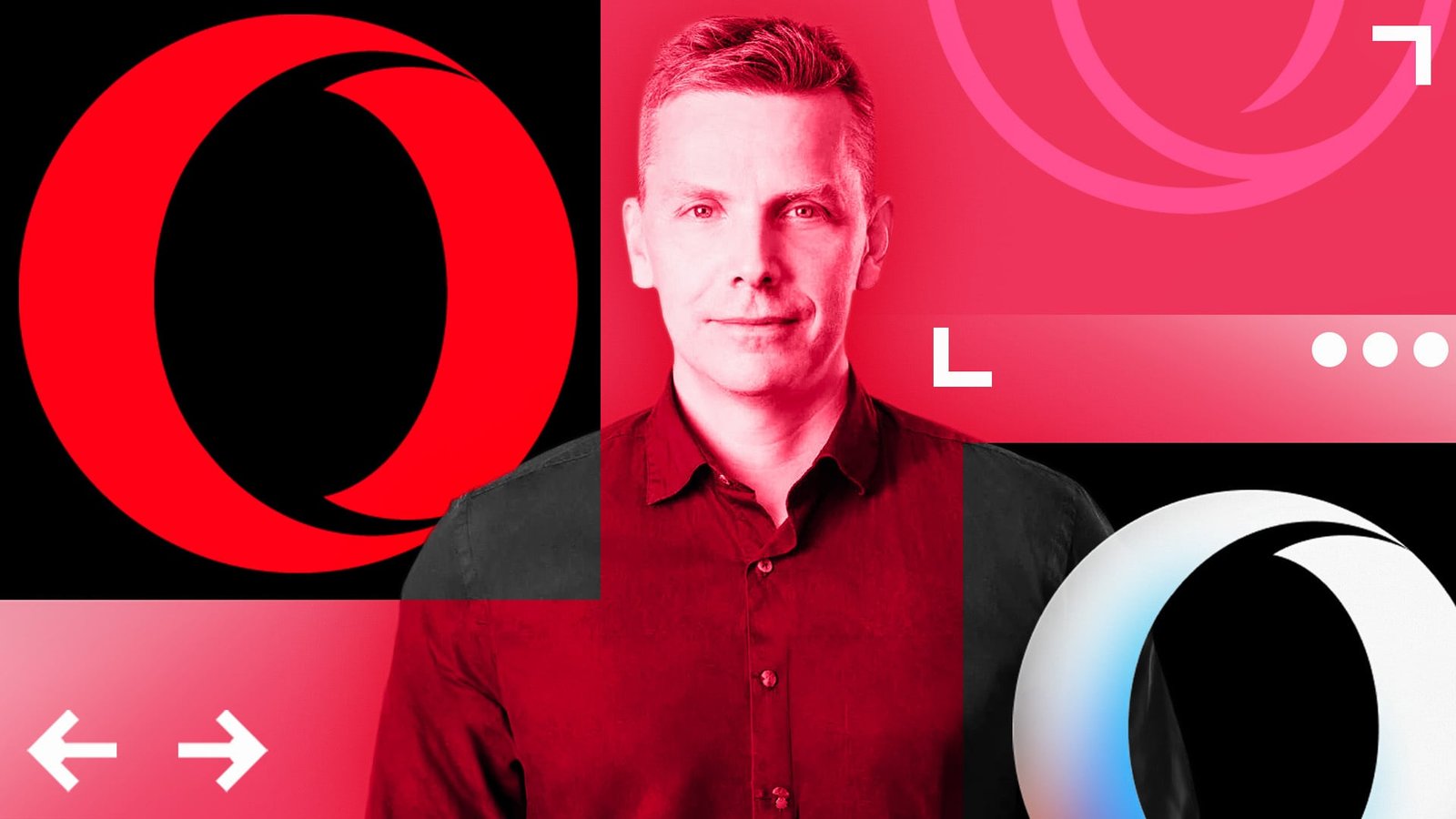
“We don’t have all the answers.” That’s how Jan Standal, Opera’s senior vice president of marketing and communications, replied to a question I asked about the future of the web during a recent conversation. But rather than inject its mainline browser with a hodgepodge of ideas that might never be relevant, Opera says it’s building several experimental browsers for targeted audiences.
Neon, for instance, is the company’s AI browser for people who want an agentic web experience. It notably lets you use the AI tools you prefer, even including local models that run on your computer. I like that Neon promotes user choice, especially when other browsers prioritize their parent companies’ AI services. And the fact that Neon is separate from the standard Opera browser plays into that same idea; the company isn’t forcing you to use AI features. “These things are always opt-in,” adds Standal.
Read on for how Opera is building browsers in volatile times, along with details about its approach to Neon. I still don’t find Neon all that useful after testing it, but I do think Opera has the right idea about making products for specific types of users.
Opera Says Its Specialized Browser Strategy Is Working
Aside from its standard browser and Neon, Opera also makes Opera Air (a minimalist browser with mindfulness features), Opera GX (a gaming browser), and Opera Mini (a data-saving mobile browser). Standal says the advantage of the company’s multi-browser approach is that it can tailor products to specialized audiences, whereas Google has to build Chrome for everyone. He points out Opera GX’s integration with RGB lighting on gaming mice and keyboards as a feature that mainstream browsers would never add.
He further explains that because Opera is more focused on its browser business than bigger companies like Apple, Google, and Microsoft, it can deliver better products for its users. “This is what we do. This is the only reason we exist,” he states. I’ve heard a similar argument from other independent browser makers I’ve spoken to this year, including Mozilla and Vivaldi.

Opera GX can tie your browser theme to RGB gaming peripherals (Credit: Opera/PCMag)
Interestingly, the company says that the average Opera user switches between multiple browsers, which is another point in favor of the multi-browser approach. Standal claims Opera has more than 300 million global users across its products, including browsers for legacy feature phones. That legacy business makes up a large portion of Opera’s audience, and it’s likely to decline as smartphones replace feature phones in emerging markets around the world. However, he also says Opera’s user base is increasing in Western markets, likely due to the company’s focus on dedicated browsers for specific audiences. For reference, StatCounter shows Opera’s browser market share as relatively flat across all platforms in the US.
Standal says Opera always dives into new technologies and tries to shape them. To that point, he claims that Opera was the first browser to ship with ChatGPT support, noting that it was optional, like all of the browser’s other AI features. But Standal tells me the company decided not to turn the standard Opera into a full-on AI browser, which led to the launch of Neon for testing experimental agentic features, among other things.
Still, in describing the agentic browsing craze of summer 2025, which saw the launch of OpenAI’s now-canceled Atlas and Perplexity’s Comet, Standal is up front about how the industry failed to deliver on the hype. His comparison of early agentic browsers to self-driving cars that “can only drive really slow” matches my experience at that time.
Now, he says Opera is focusing on connecting Neon to existing AI tools with MCP servers, a feature I’ve never seen in a browser before. This feature lets you connect an AI chatbot you prefer, such as Claude, and grant it access to and control over your web browser. If you don’t want to bring in an AI model, Neon still offers a $19.90-per-month subscription that enables the Neon AI agents.
He further notes that Opera will eventually use efficient, on-device AI models. “That addresses a lot of issues people have with AI today,” he says, highlighting that these models don’t send your data to a company’s cloud server. Firefox head Ajit Varma also told me Mozilla will integrate more local AI models in Firefox. Even Vivaldi’s Jon Stephenson von Tetzchner told me local models could work for on-device translation, although he says Vivaldi is not integrating AI features.
Standal reiterates that Opera is betting on user choice, too, pointing out that Neon doesn’t require the company’s AI, unlike Chrome, Edge, and Safari.
The Flaws With AI Browsers Are All Too Familiar
My colleague Ruben Circelli tested Neon a year ago, and he wasn’t sold on the concept. Nonetheless, I decided to test the browser after Opera gave me access to the paid Standard version with Neon AI agents.
So, how well does it work? The agentic features seem a bit more reliable now because the underlying models have improved, but many of the same problems with AI browsers remain.
Recommended by Our Editors
For example, the Neon AI agent takes much longer to accomplish tasks than others I’ve tried. I found it often spends several minutes clicking from web page to web page, for example, when trying to complete a job. Similarly, research is much slower with the Neon AI agent than with a standard AI chatbot. When I tasked it with finding the cheapest place to buy a MacBook Pro, for instance, it took over four minutes to navigate web pages before finally informing me that it couldn’t load all the pages it needed.

Opera Neon has an AI prompt box on its New Tab page (Credit: Opera/PCMag)
Opera Neon has also suffered from prompt injection flaws, which, admittedly, no AI company provides infallible protection against. I simply don’t feel comfortable giving an AI agent access to my logged-in browser session if it might compromise my financial accounts or make purchases without my permission.
On the bright side, Opera says it doesn’t train AI models on your data, and that Neon never sends passwords, credit card details, or cookies to its cloud AI service. However, if you connect a cloud-based AI service, Neon still obviously sends data to those companies’ servers. I can see why Opera is focusing on local AI capabilities, since they would eliminate some major privacy concerns.
Given my unenthusiastic view of the AI features currently available in Neon, I appreciate that Opera is keeping them away from its main browser (which still has an optional AI chatbot feature in its sidebar). I also think Opera’s approach gives it more flexibility than Firefox’s, which tells me it’s attempting to make the best browser for both AI lovers and skeptics.
I Love Opera’s Willingness to Experiment, Even If All Its Projects Aren’t Successful
No one knows what the future of the web will bring, but even if agentic browsing does take off, I believe there will always be a need for human-centric browsers. That’s why I find Opera’s strategy compelling; the company is experimenting with AI browsers in a user-friendly way without alienating users who don’t want to deal with them. Opera’s status as an independent browser maker certainly helps it pursue those goals, too, as it has no other competing interests.
Still, I remain slightly unconvinced about the Neon browser specifically because it doesn’t yet provide a compelling experience, and Opera has a history of shutting down experimental browsers. True to Standal’s point about Opera moving early on new technology, Opera was quick to embrace Web3 and make its Crypto Browser, which it discontinued in 2023. Standal maintains that blockchain and Web3 features are useful outside the browser, but that they are currently “not a focus for Opera.” Neon might very well fail for the same reason, but I nonetheless appreciate Opera’s eagerness to put in serious effort to figure out what works for its users.
About Our Expert

Chris Hoffman
Senior Writer, Software
Experience
I’ve been writing about technology for more than 15 years and using it in earnest for over twice as long. As a member of PCMag’s software team, I focus on Windows coverage, but also write about other key desktop operating systems and system apps. (I used Windows 3.1 upon its release and have followed every subsequent release closely).
Prior to joining PCMag, I wrote for How-To Geek starting in 2011, and my articles amassed over a billion page views. I went on to run the publication as editor-in-chief for four and a half years. I have also contributed to Computerworld, Fast Company, PCWorld, Reader’s Digest, The New York Times, and many other outlets about everything from AI to PC hardware to Windows. I founded and ran my own direct-to-reader Windows-focused newsletters, Windows Intelligence and The Windows ReadMe, working in partnership with Thurrott.com.
Leave a Reply