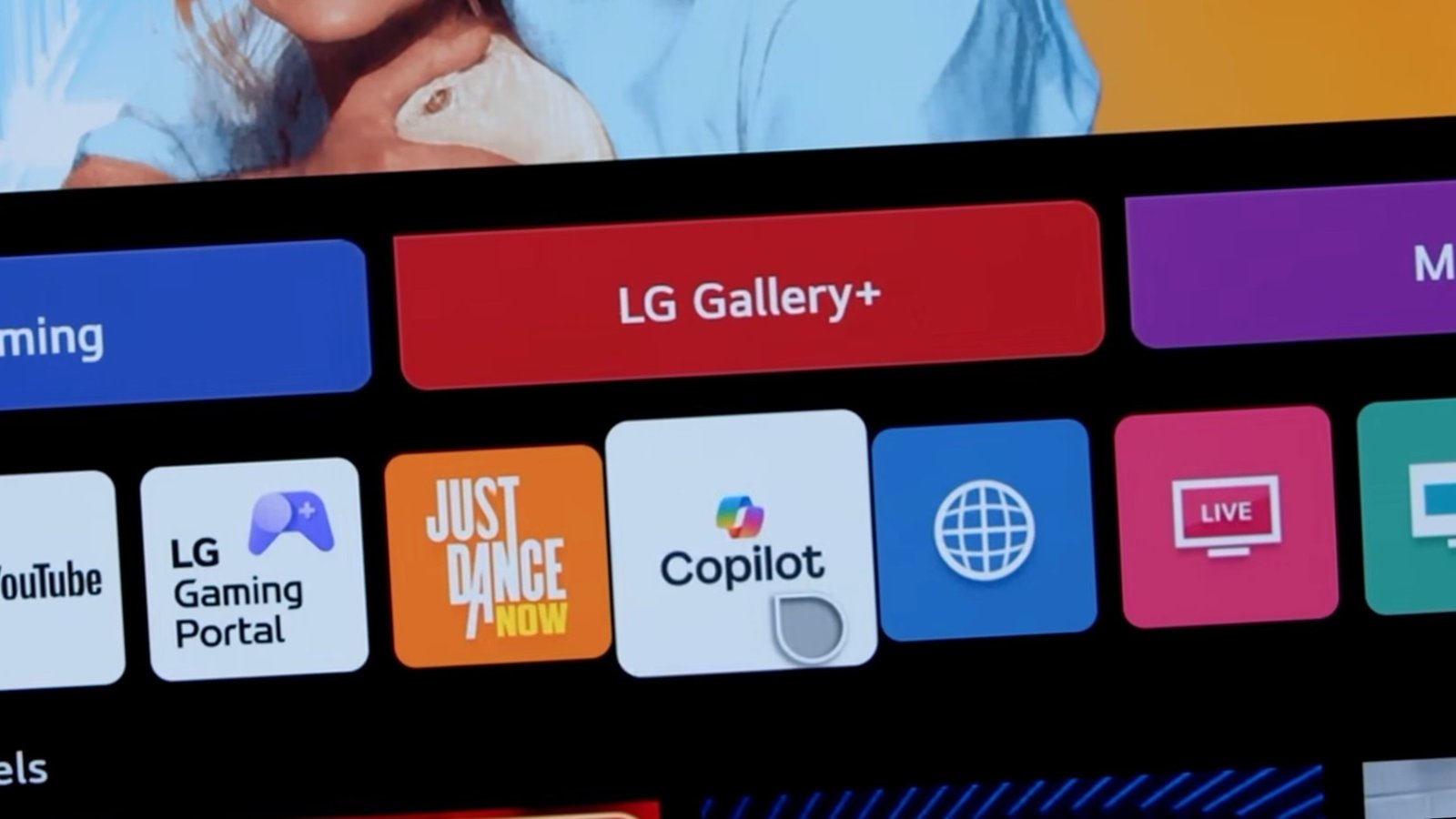
It looks like Microsoft is killing off the Copilot app on LG TVs, nearly a year after the AI assistant’s launch sparked customer complaints.
On Wednesday morning, affected consumers spotted a pop-up on their LG TVs that said: “Notice of Microsoft Copilot Service Termination.” Windows Central first reported the news.
“We would like to inform you that Microsoft has recently decided to end support for Copilot functionality on all TVs, including the Copilot-enabled feature available on our LG TVs,” the notification says. “As a result, the Copilot-enabled feature on your TV is no longer available and may stop functioning shortly.”
The Copilot app is slated for discontinuation later this year. “The specific date is subject to Microsoft’s timeline,” the notification adds.

(Credit: Eric Zeman/PCMag)
Microsoft didn’t immediately respond to a request for comment. But the Copilot app’s introduction on LG TVs faced immediate backlash in December after it was automatically pinned to the TV’s home screen and initially couldn’t be deleted.
Some said the app was another example of the tech industry needlessly forcing AI and bloatware on consumers. In response, LG created a way for users to delete the app. We suspect the Copilot app wasn’t very popular; it was actually just a shortcut to the website for Microsoft’s assistant and opened on the TV’s web browser, rather than as a native experience.
Recommended by Our Editors
Last year, Samsung announced a Copilot integration for its AI-powered TVs and smart monitors, including 2025 TV models like Micro RGB, Neo QLED, OLED, The Frame Pro, and The Frame, as well as smart monitors like M7, M8, and M9.
As for Microsoft, the company has already been rolling out Copilot experiences on Windows 11 to clean up the OS amid user complaints about bloatware. However, in other areas, it’s doubling down on AI, particularly with getting AI models to run locally on higher-end PCs.
About Our Experts

Michael Kan
Principal Reporter
Experience
I’ve been a journalist for over 15 years. I got my start as a schools and cities reporter in Kansas City and joined PCMag in 2017, where I cover satellite internet services, cybersecurity, PC hardware, and more. I’m currently based in San Francisco, but previously spent over five years in China, covering the country’s technology sector.
Since 2020, I’ve covered the launch and explosive growth of SpaceX’s Starlink satellite internet service, writing 600+ stories on availability and feature launches, but also the regulatory battles over the expansion of satellite constellations, fights with rival providers like AST SpaceMobile and Amazon, and the effort to expand into satellite-based mobile service. I’ve combed through FCC filings for the latest news and driven to remote corners of California to test Starlink’s cellular service.
I also cover cyber threats, from ransomware gangs to the emergence of AI-based malware. In 2024 and 2025, the FTC forced Avast to pay consumers $16.5 million for secretly harvesting and selling their personal information to third-party clients, as revealed in my joint investigation with Motherboard.
I also cover the PC graphics card market. Pandemic-era shortages led me to camp out in front of a Best Buy to get an RTX 3000. I’m now following how the AI-driven memory shortage is impacting the entire consumer electronics market. I’m always eager to learn more, so please jump in the comments with feedback and send me tips.

Eric Zeman
Managing Editor, Consumer Electronics
Experience
I’m PCMag’s Managing Editor for Consumer Electronics content, overseeing an experienced team of reviewers and product testers. I’ve been covering technology for more than 25 years. Prior to PCMag, I worked at outlets such as Android Authority, Fortune, InformationWeek, and Phonescoop.
Leave a Reply