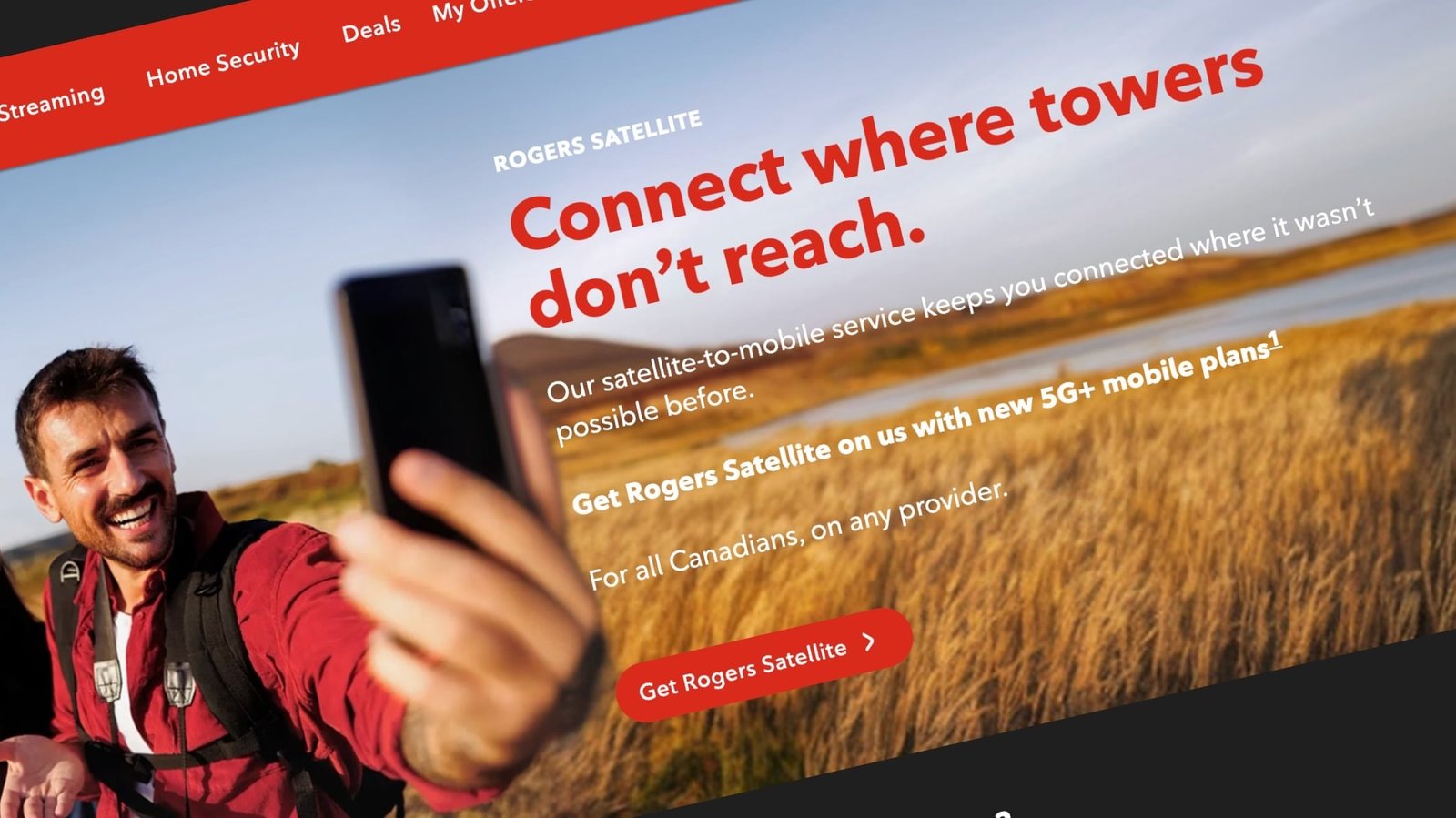
The big three carriers in the US already oppose SpaceX’s cellular ambitions. But in Canada, Rogers Communications wants to expand its work with SpaceX on satellite-to-phone services.
“We’re proactively deepening our collaboration with Starlink on sat-to-mobile connectivity,” CEO Tony Staffieri said in an earnings call on Friday. “And Rogers intends to lead Canada as we work with Starlink Mobile to bring expanded coverage and capability to Canadians.”
Like T-Mobile, Rogers has already partnered with SpaceX on the first version of Starlink Mobile, giving customers a way to receive service in cellular dead zones. But since SpaceX floated the idea of becoming a US carrier, T-Mobile has been downplaying satellite connectivity and even suggested working with other satellite partners. On Oct. 8, SpaceX made its intentions clear by announcing that Starlink Mobile is working to become a major carrier in the US.
On Rogers’ earnings call, an analyst asked whether Starlink Mobile threatens to alter the competitive landscape in Canada, but Staffieri noted that there’s limited radio spectrum available for SpaceX to acquire. “From a technology standpoint, the spectrum quantity that’s available in Canada is much less than that in the US,” he said.
“We have a different population size, much smaller here in Canada, and the distribution is a lot different with the concentration in key urban markets,” he added. “We have a different regulatory framework here with foreign ownership, which includes ownership of spectrum, and there’s a process for that.”
Staffieri also noted that SpaceX has indicated to Canadian regulators it’s focused on partnering, rather than becoming a carrier in the country. Earlier this year, SpaceX wrote to the Innovation, Science and Economic Development Canada: “Critically, Starlink will use this time to work with Canadian mobile carriers to provide service to their customers—Starlink does not plan to offer its own standalone service nor does it plan to deal exclusively with any one carrier. Instead, Starlink plans to offer services available to all interested mobile carriers and their customers.”
Recommended by Our Editors
Hence, customers with Rogers can expect the carrier to continue offering Starlink Mobile as an additional service alongside its terrestrial cell service. Other carriers outside the US, including Japanese operator KDDI and T-Mobile’s parent, Deutsche Telekom, plan to even offer version two of Starlink Mobile, which promises 5G speeds via a constellation of 15,000 next-gen satellites. In contrast, the current version of Starlink Mobile consists of 650 satellites and offers speeds closer to 4Mbps.
In an earnings call this week, SpaceX indicated that it plans to activate version two of Starlink Mobile in early 2028. But in the US, analysts expect the company to spend tens of billions of dollars to build out the cellular network for nationwide coverage, which could take considerable time. Outside T-Mobile, EchoStar’s Boost Mobile and prepaid carrier US Mobile also plan to offer Starlink Mobile in the US.
About Our Expert

Michael Kan
Principal Reporter
Experience
I’ve been a journalist for over 15 years. I got my start as a schools and cities reporter in Kansas City and joined PCMag in 2017, where I cover satellite internet services, cybersecurity, PC hardware, and more. I’m currently based in San Francisco, but previously spent over five years in China, covering the country’s technology sector.
Since 2020, I’ve covered the launch and explosive growth of SpaceX’s Starlink satellite internet service, writing 600+ stories on availability and feature launches, but also the regulatory battles over the expansion of satellite constellations, fights with rival providers like AST SpaceMobile and Amazon, and the effort to expand into satellite-based mobile service. I’ve combed through FCC filings for the latest news and driven to remote corners of California to test Starlink’s cellular service.
I also cover cyber threats, from ransomware gangs to the emergence of AI-based malware. In 2024 and 2025, the FTC forced Avast to pay consumers $16.5 million for secretly harvesting and selling their personal information to third-party clients, as revealed in my joint investigation with Motherboard.
I also cover the PC graphics card market. Pandemic-era shortages led me to camp out in front of a Best Buy to get an RTX 3000. I’m now following how the AI-driven memory shortage is impacting the entire consumer electronics market. I’m always eager to learn more, so please jump in the comments with feedback and send me tips.
Leave a Reply