
Microsoft 365, not Windows, is at the heart of Microsoft’s corporate AI efforts. That much was clear from the opening keynote at Ignite, the company’s annual business- and IT-focused conference, which runs through Nov. 20. Redmond showed far less interest in selling enterprise customers on its desktop operating system than in promoting its cloud services, including Copilot, Microsoft IQ, and a number of other agentic AI tools, as core infrastructure for the people who use them. And at the center of all those services sits the collaborative Microsoft 365 platform.
The conference (and its focus on Microsoft 365) comes at an especially awkward time, since the service recently suffered one of the longest outages in its history. CEO Satya Nadella acknowledged that the company has to do better on reliability, but he quickly moved on to the platform’s role in powering a staggering number of other AI services and initiatives.
The keynote ran more than two and a half hours, so I’ve boiled it down to what I find most intriguing for workers and consumers alike.
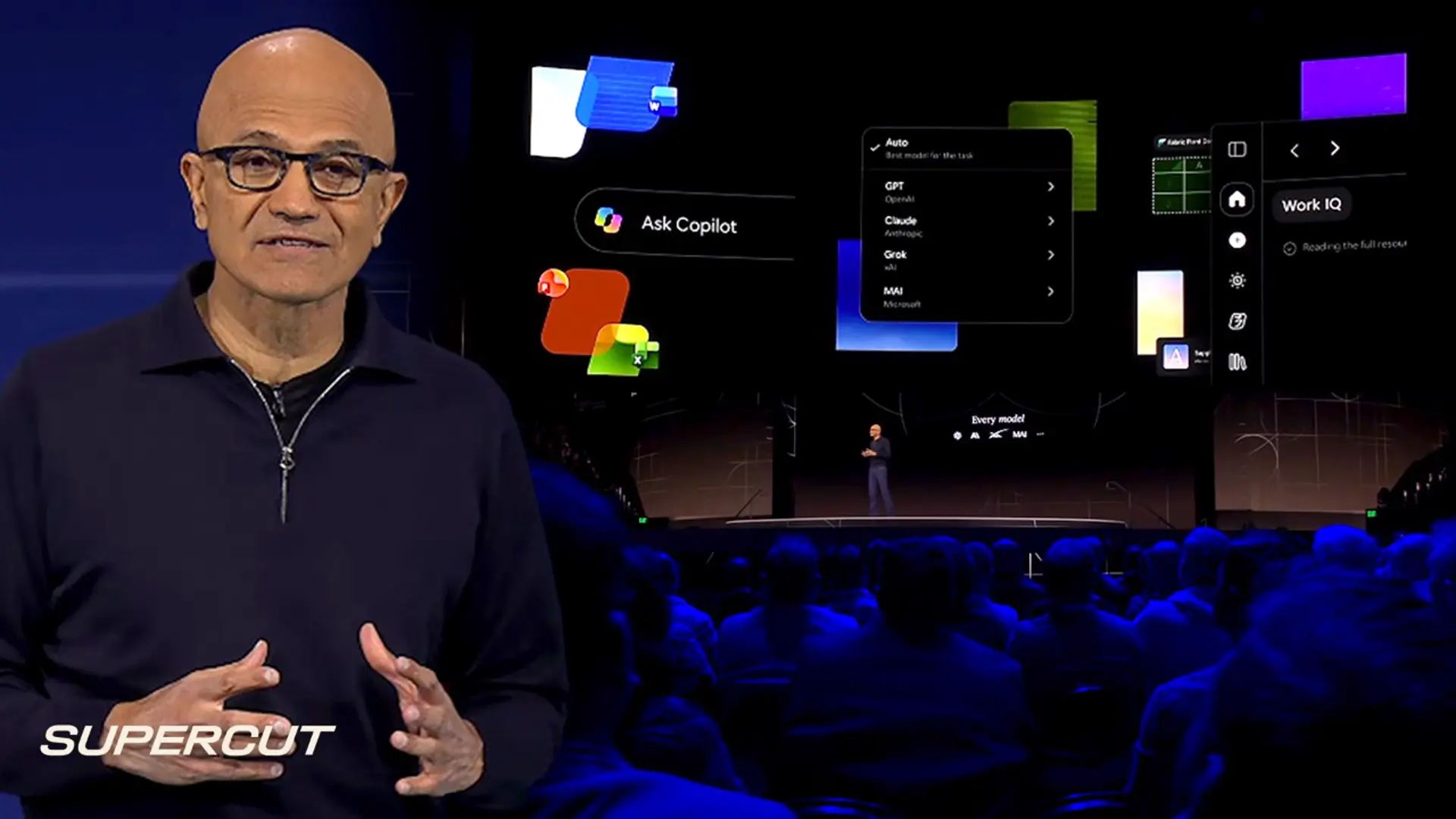

Everything Microsoft announced at Ignite in 14 minutes
Copilot Is the New OS, and Office Is Its Secret Weapon
Nadella once again described Copilot as Microsoft’s new OS for work, highlighting Office in Copilot as a core advantage. Microsoft conceded that ChatGPT and Claude have simplified tools for documents, slides, and spreadsheets, but pointed out how much more powerful its Office apps are. “Knowledge work already lives in Word, Excel, and PowerPoint,” claimed Jacob Andreou, executive vice president of Copilot. As part of the presentation, Microsoft showed off the Copilot app opening documents directly in full versions of Office apps.
“The best part is all of Office and Copilot is included in your Copilot subscription,” explained Andreou. The company is bullish on this idea, increasingly phasing out plans for both businesses and consumers that don’t combine Copilot and the traditional Office apps.

Microsoft showed “the full-blown Office” running embedded in the Copilot app (Credit: Microsoft)
Copilot Workspaces Put Humans and AI Agents in the Same Room
With the launch of Copilot Workspaces, Nadella positioned Copilot as a centralized, multiplayer space where real people and AI agents can converse and collaborate. Microsoft demoed people and Autopilot agents working together on a PowerPoint presentation embedded in the Copilot app, for example, modifying it in real time. The output was a document stored in OneDrive that you could discuss with an Autopilot agent in Teams and share with other people in your organization. Of course, none of this can happen without the Microsoft 365 apps and their related services tying this all together.

Copilot Workspaces lets a team collaborate in a shared space (Credit: Microsoft)
Microsoft Wants Its AI Agents to See Everything
Microsoft also brought up Work IQ during the Ignite keynote. Work IQ extracts business data from Microsoft 365 and external services, making it accessible to agents and AI tools. The company wants to capture business data, including documents in Office, email in Outlook, and messages in Teams, and organize it in one place where AI tools can see it.
But Redmond expanded on this idea with the announcement of Microsoft IQ, which combines Work IQ with several other business data sources (Fabric IQ, Foundry IQ, Web IQ, and third-party IQ sources) to provide even more business context and data for AI agents. Representatives from Unilever demonstrated a claims agent that drew on its organization’s data sources to cross-check invoices before paying them.
Recommended by Our Editors
Windows Is No Longer the Point
As mentioned, Microsoft executives didn’t cite Windows very often during the keynote. They did highlight a few Hybrid Intelligence AI features for Copilot+ PCs in a blog post that went live during the event, but none of the onstage demos really required Windows. Businesses might realistically be using Chromebooks, Macs, iPads, or phones, so this is an important win for accessibility.
All of this is to point out that Microsoft is well prepared for a future in which people don’t use Windows—and perhaps one in which businesses interact with AI systems through specialized devices like the Project Solara prototypes it revealed at Build.
None of This Matters If Microsoft 365 Goes Down
Of course, none of the forward-thinking features it showed off matter if Microsoft 365 goes down. First and foremost, the company needs to deliver a stable platform for businesses. It’s hard to say whether the latest outage signals deeper problems or is just a temporary setback. Either way, I would have liked to hear more about how Redmond plans to keep the service running smoothly, given how central it is to the company’s business ambitions.
About Our Expert

Chris Hoffman
Senior Writer, Software
Experience
I’ve been writing about technology for more than 15 years and using it in earnest for over twice as long. As a member of PCMag’s software team, I focus on Windows coverage, but also write about other key desktop operating systems and system apps. (I used Windows 3.1 upon its release and have followed every subsequent release closely).
Prior to joining PCMag, I wrote for How-To Geek starting in 2011, and my articles amassed over a billion page views. I went on to run the publication as editor-in-chief for four and a half years. I have also contributed to Computerworld, Fast Company, PCWorld, Reader’s Digest, The New York Times, and many other outlets about everything from AI to PC hardware to Windows. I founded and ran my own direct-to-reader Windows-focused newsletters, Windows Intelligence and The Windows ReadMe, working in partnership with Thurrott.com.
Leave a Reply