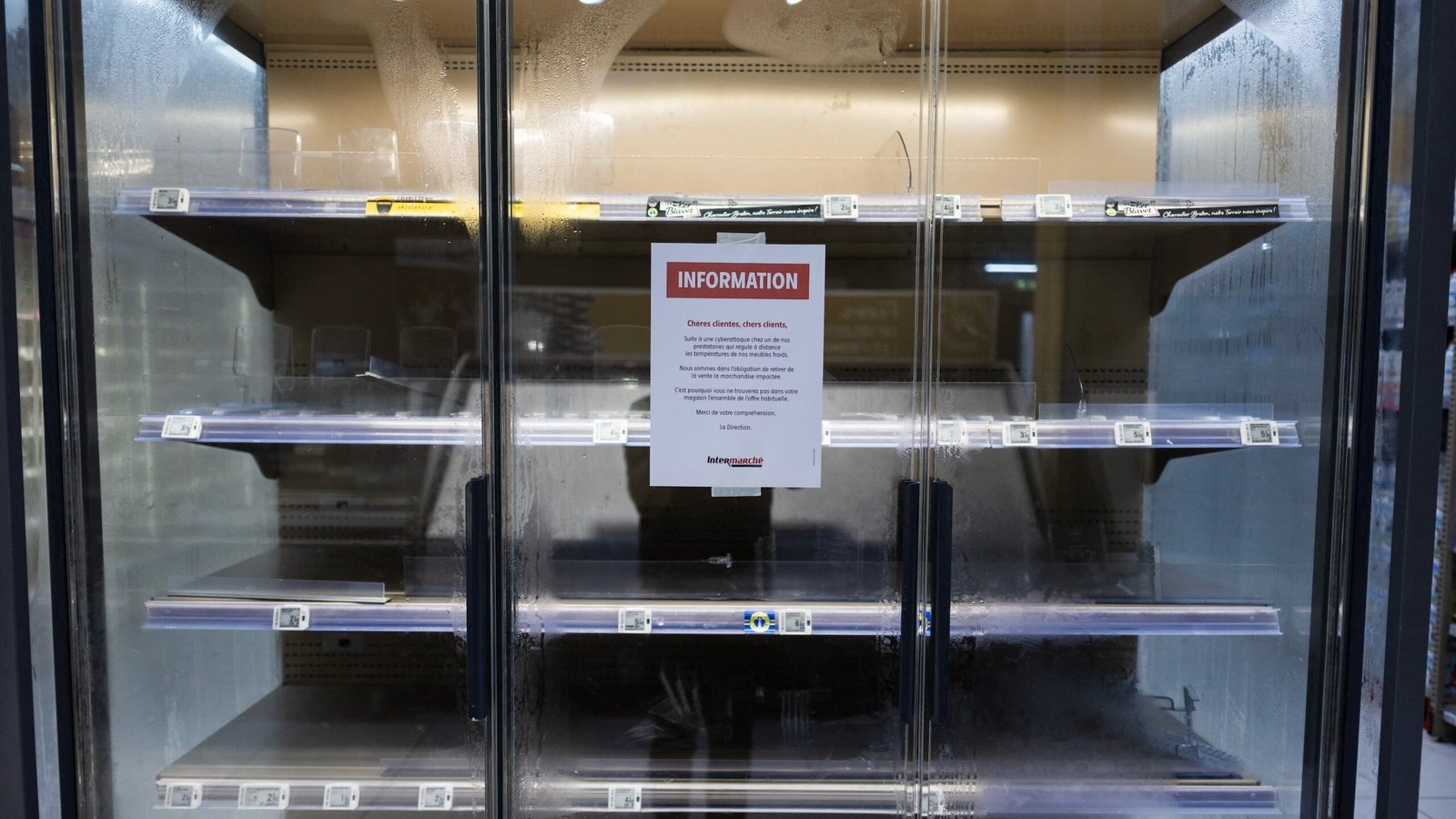
France is pointing fingers at the Iranian government for last month’s hack of refrigerators at hundreds of supermarkets, which caused them to defrost and spoil the food stored inside.
On Monday, France’s National Cybersecurity Agency (ANSSI) formally blamed a cyber unit of Iran’s Islamic Revolutionary Guard Corps, a military arm of the country. It also confirmed that the hacks targeted 700 large retail sites in France, and even caused 15 fires. The hackers pulled off the tampering by targeting out-of-date and end-of-life systems from Danfoss, which sells smart refrigeration systems to retailers.
“These cyberattacks caused considerable material damage, fires, and food losses estimated at tens of millions of euros,” added France’s ministry for Europe and foreign affairs. Iran’s alleged goal has been to destabilize the country. Last week, Europe also faced a second wave of refrigerator-related hacks targeting frozen blood supplies.
ANSSI connected the cyberattacks to the “Shahid Kaveh cyber-offensive unit,” which it says is affiliated with Iran’s military. Without elaborating, France cited “infrastructure characteristics, use of signing tools,” as well as the fact that a propaganda organ linked to the Iranian group promoted the hacks. This suggests the refrigerator hacks came from internet addresses and domains previously linked to other activities by Iranian state-sponsored hackers.
ANSSI further warns that the Iranian hackers also tried to tamper with small hydroelectric installations in the country “with moderate effects on the targeted equipment.”
Recommended by Our Editors
France is proposing Europe impose new sanctions against Iranian entities and individuals involved in this cyberattack against it, as well as in other malicious cyber activities. “Finally, France reserves the right to take any additional measures, public and non-public, deemed necessary and proportionate to respond to these cyberattacks,” the country’s foreign ministry also said. So far, though, other European countries have refrained from linking the hacks to Iran.
In the meantime, the US has been warning companies about hackers targeting refrigeration units, and urging them to bolster their cybersecurity, or even disconnect the relevant hardware from remote access.
About Our Expert

Michael Kan
Principal Reporter
Experience
I’ve been a journalist for over 15 years. I got my start as a schools and cities reporter in Kansas City and joined PCMag in 2017, where I cover satellite internet services, cybersecurity, PC hardware, and more. I’m currently based in San Francisco, but previously spent over five years in China, covering the country’s technology sector.
Since 2020, I’ve covered the launch and explosive growth of SpaceX’s Starlink satellite internet service, writing 600+ stories on availability and feature launches, but also the regulatory battles over the expansion of satellite constellations, fights with rival providers like AST SpaceMobile and Amazon, and the effort to expand into satellite-based mobile service. I’ve combed through FCC filings for the latest news and driven to remote corners of California to test Starlink’s cellular service.
I also cover cyber threats, from ransomware gangs to the emergence of AI-based malware. In 2024 and 2025, the FTC forced Avast to pay consumers $16.5 million for secretly harvesting and selling their personal information to third-party clients, as revealed in my joint investigation with Motherboard.
I also cover the PC graphics card market. Pandemic-era shortages led me to camp out in front of a Best Buy to get an RTX 3000. I’m now following how the AI-driven memory shortage is impacting the entire consumer electronics market. I’m always eager to learn more, so please jump in the comments with feedback and send me tips.
Leave a Reply