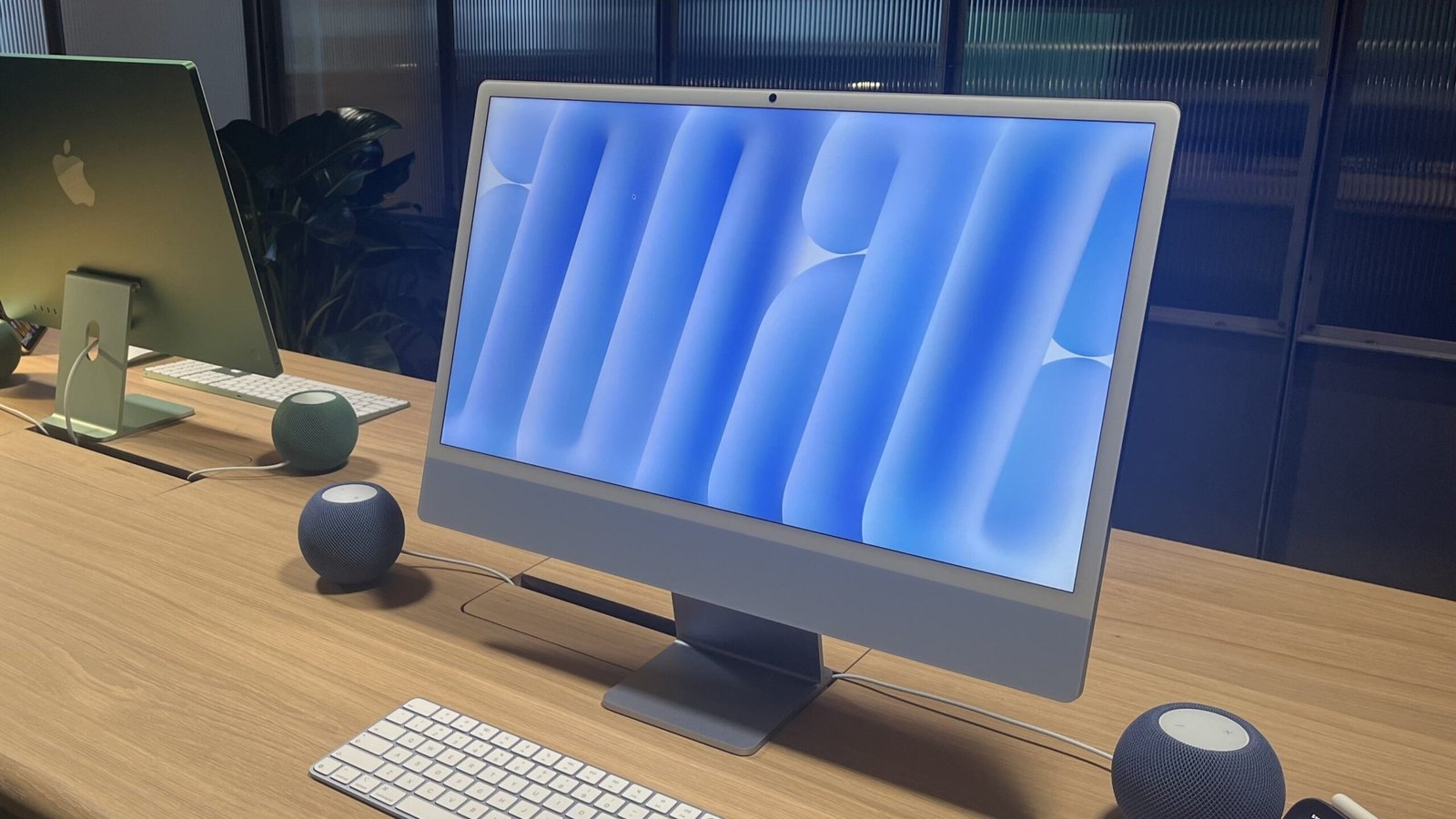
LOS ANGELES—The iMac is back, but you wouldn’t know it just by looking at it. Yes, this is the same iMac all-in-one (AIO) design that debuted back in 2021 and was later updated with M4 silicon in 2024, this time with the new M6 processor and a few more internal component bumps to keep up with the Joneses.
I was at Apple’s “Pro and Tell” event here on Wednesday, and I’ve combed through the company’s iMac press release and its online store materials to discover exactly what’s new in the 2026 iMac. (I also got to take a look at it in the flesh.) With Apple sticking to the same pricing as the outgoing model ($1,499 to start), it’s not really a lot of change.
However, what has changed will likely push the 2026 iMac to the top of the AIO heap—at least in terms of performance. Regardless, with preorders live now and regular sales starting next week, you should know as much as you possibly can before hitting the “buy” button. Read on for my early analysis of the new machine.
Design and Display: Still Going at 24
Apple has opted to stick with the current iMac design that debuted in 2021 and was reiterated in 2024 with the M4 update. This applies to every external aspect of the system, including dimensions, weight, screen size, and resolution.

(Credit: Joe Osborne)
The iMac is still a 24-inch all-in-one desktop with a razor-thin 0.45-inch profile (not counting the base) that weighs 9.7 or 9.8 pounds, depending on the chip you choose. The 23.5-inch Retina display continues to be a 4.5K (4,480-by-2,520-pixel) panel, amounting to 218 pixels per inch. The wait for the return of a larger-screen iMac goes on.

(Credit: Joe Osborne)
Apple’s display still shines at up to 500 nits of brightness and supports the P3 wide color gamut, all the while using the True Tone automated color adjustment system that works based on ambient light. Still, the display is only tilt-adjustable; you can’t tweak the height.
The 12MP Center Stage camera returns with the nifty Desk View feature and 1080p video recording. Likewise, your option of two or four Thunderbolt 4 ports is back; these ports depend on the chip you choose at checkout. You also get a 3.5mm headphone jack.

(Credit: Joe Osborne)
Finally, all of the iMac’s fun colors return, and with color-matched accessories in the box. The choices are blue, purple, pink, orange, yellow, green, and silver. However, the upgrades to the Magic Trackpad and Magic Keyboard with Touch ID are pricier now, at $50 and $80, respectively.

(Credit: Apple)
The M6 Chip: What’s at the Heart of the iMac Update?
What Apple wants you to focus on with this iMac upgrade is the M6 processor inside, but you wouldn’t be wrong for questioning whether that’s worth spending $1,500 or more all over again if you have a recent iMac already. The starting model comes with a pared-down version of the M6 chip, housing a 10-core CPU (two super cores, three performance cores, and five efficiency cores) and a 10-core GPU with built-in Neural Accelerators.
This is a step down from the M6 originally introduced in the Mac mini I recently reviewed, which comes with a 12‑core CPU featuring two super cores, four performance cores, and six efficiency cores, along with a 12-core GPU at the baseline. You can also buy an iMac with this 12-core version of the processor, but it costs $200 extra.

(Credit: Joe Osborne)
Note that both versions of the M6 chip have the new Dual Neural Engine coprocessor, which doubles the AI processing core count from 16 to 32.
Compared with the outgoing M4 iMac model, the M6 processor’s core counts start at the same 10 as the upgraded M4 chip, which is a plus. The M6 is manufactured on a 2-nanometer lithography process, theoretically delivering performance gains of up to 1.5 times in some apps, as Apple described in its announcement.
Of course, the GPU improvements are even more dramatic, thanks to those additional Neural Accelerators. Apple’s claims there is around a twofold increase in photo-editing speed via Affinity. The same goes for raw AI speeds, with Apple claiming up to a five-times increase in prompt processing times in LM Studio. Doubling the Neural Engine core counts will do that.
Recommended by Our Editors

(Credit: Joe Osborne)
Although I haven’t been able to confirm these claims yet, they are credible on paper, given advances in lithography and the increase in total cores in either configuration.
For the record, the iMac still starts with 16GB of unified memory in its base model, which you can configure up to 32GB. The starting configuration still comes with a 256GB solid-state drive, which you can kick up to 1TB. Capacity aside, Apple notes that the storage speeds have doubled versus the SSDs of the previous-gen iMac.
Finally, Apple’s changes also include its latest N1 wireless coprocessor, which includes Wi-Fi 7 and Bluetooth 6 radios, supporting the newest standards in internet and device-connection speeds.
My Early Verdict for Upgraders and Preorder Time
Is a relatively sizable bump in silicon resources and faster storage enough to warrant an upgrade from the iMac you may have bought just two years ago? I don’t think so. However, if you’re coming from an older model, especially an Intel-based iMac, this might feel like a much more substantial update.

(Credit: Joe Osborne)
Regardless, it’s about time for a meatier upgrade to the iMac. The stand would be so much better with an adjustable-height feature; the panel could use an OLED upgrade like so many of Apple’s existing products have already received; and either configuration (especially the base model) would sing with a few more unique ports, such as HDMI or built-in Ethernet—not that Ethernet jack in the power adapter. And I’m sure some buyers would thrill to a 27-inch or even 32-inch XXL version!
At any rate, come back soon for our fully tested review of the latest iMac to decide for yourself whether it’s worth the upgrade from your current system.
About Our Expert

Joe Osborne
Deputy Managing Editor, Hardware
Experience
After starting my career at PCMag as an intern 16 years ago, I’m back as one of its editors, focused on managing laptops, desktops, and components coverage. With more than 15 years of experience, I have been on staff and published in technology review publications, including PCMag (of course!), Laptop Magazine, Tom’s Guide, TechRadar, and IGN. Along the way, I’ve tested and reviewed hundreds of laptops and helped develop testing protocols. I have expertise in testing all forms of laptops and desktops using the latest tools. I’m also well-versed in video game hardware and software coverage.
Leave a Reply