Category: News

  • Why are sandwiches more regulated than AI?

    Futurist Max Tegmark wonders why sandwiches are more regulated than artificial intelligence in the US.

    The biggest danger facing mankind is a machine that can “outsmart the whole species”, argues Max Tegmark, professor of physics at the Massachusetts Institute of Technology and founder of the Future of Life Institute.

    Tegmark tells host Steve Clemons that governments and tech companies are in a “race to replace” human labour, instead of solving human problems. “It’s aimed at getting more money and power to a very small number of individuals,” he says.

    But a slew of suicides and murders committed by people chatting with AI chatbots has led to pushback against the Silicon Valley “don’t regulate us” lobby.

  • Doctor describes amputating girl’s leg in Gaza without anaesthesia

    Doctor describes amputating girl’s leg in Gaza without anaesthesia

    ‘We were praying for her to faint’.
    Orthopedic surgeon Mark Perlmutter recounts amputating the leg of a five-year-old girl in Gaza without anaesthesia after supplies ran out during Israel’s genocidal war. He says doctors sang to her as she remained awake through the procedure.

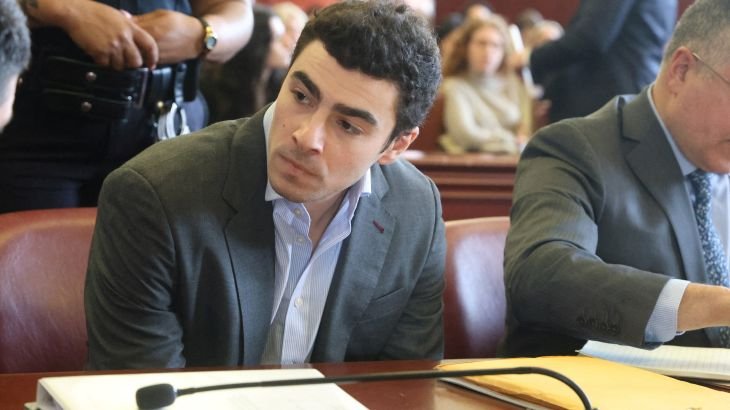
  • Mangione pleads guilty as polarising CEO killing reaches new phase

    Mangione pleads guilty as polarising CEO killing reaches new phase

    Luigi Mangione pleaded guilty to federal charges over the fatal shooting of UnitedHealthcare CEO Brian Thompson in 2024. Mangione became a polarising figure amid wider anger over the US health insurance system.

  • Could Trump actually run for a third term as president?

    Could Trump actually run for a third term as president?

    Donald Trump says the law stopping him from seeking a third presidential term is ‘very strong’, but he keeps teasing the idea.

    Al Jazeera’s @avawarrinerr explains why US presidents are limited to two terms, and whether Trump could find a way around it.

  • Water supply for three US states drips down, Lake Mead at record low

    Water supply for three US states drips down, Lake Mead at record low

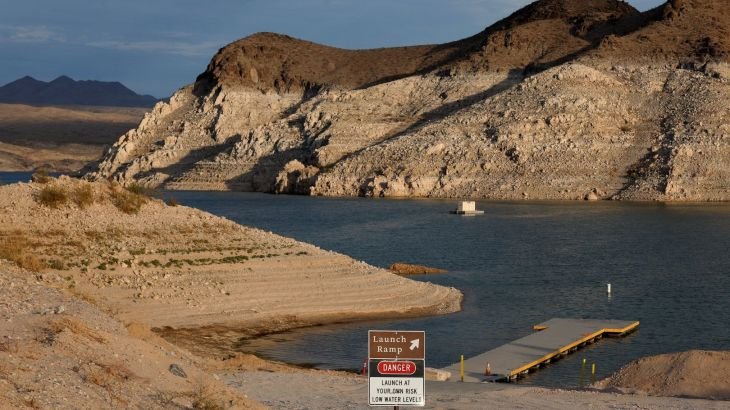
    The largest reservoir in the United States, located on the border of Arizona and Nevada, just hit a record low. Lake Mead’s water levels are down by two-thirds, potentially impacting supplies of water and energy for millions across the western United States.

  • Parties Lay Out Key Discovery And Other Dates For Pending Paramount-WBD Antitrust Trial

    Parties Lay Out Key Discovery And Other Dates For Pending Paramount-WBD Antitrust Trial

    This week has been dominated by headlines about Paramount‘s threat to leave California, by unions and other officials urging a settlement and by Capitol Hill Democrats warning of investigations.

    But on Thursday, attorneys completed the rather routine step of proposing key dates and deadlines in advance of an antitrust trial over the proposed merger of Paramount with Warner Bros. Discovery.

    A joint case management statement was filed by the plaintiffs — 12 state attorneys general and the Writers Guild of America — and the defendants, Paramount and WBD. The fact discovery is proposed to start on Aug. 17, and to close on Jan. 8, a key element of trial preparation that typically generates disputes.

    Last week, U.S. District Judge Araceli Martínez-Olguín set a trial for March 2-19, a timeline that stands to cost Paramount more than $1 billion in “ticking fees” due. As part of their deal, Paramount agreed to pay WBD $7 million for each day that the transaction doesn’t close after Sept. 30. They also face a June 4 deadline for the expiration of a deal, with Paramount on the hook for a $7 billion termination fee.

    Figures including Xavier Becerra, the Democratic nominee for California governor, have called for a settlement, while the Directors Guild of America and IATSE urged one with a list of proposed conditions on the transaction.

    Per the latest filing to the judge, the parties say they “are having constructive discussions regarding the identification of two alternative magistrate judges to preside over a settlement conference for the Actions and will provide a further update to the Court as soon as possible.” Such settlement talks also are not unusual before a trial.

    Among the disputed points, per the filing, are how much time each side will be given during the March proceedings. The state AGs and the WGA propose eight of the 12 trial days, noting that they are two different cases; Paramount and WBD say that time should be split equally.

    The judge has not said when she would make a decision after the trial, but set a deadline of April 5 for filing of proposed findings of fact and conclusions of law. The final pretrial conference would be on Feb. 24.

    More from this Story Arc

    Paramount WB

  • Gaza mural for Burger King worker fired for shouting ‘Free Palestine’

    Gaza mural for Burger King worker fired for shouting ‘Free Palestine’

    Artists in Gaza painted a mural honouring former Burger King employee Arianna Hamilton, who was reportedly fired after saying “Free Palestine” to an Israeli-American customer at a drive-through window in Breinigsville, Pennsylvania.

  • Kennedy Center Board Votes To Return Donald Trump’s Name To Front Facade Of Complex, Again Approves Plan To Close For Two Years For Renovations

    Kennedy Center Board Votes To Return Donald Trump’s Name To Front Facade Of Complex, Again Approves Plan To Close For Two Years For Renovations

    The Kennedy Center board voted on Thursday to return Donald Trump‘s name to the front of the complex, amid a judge’s order that only Congress could change the official designation of the arts institution.

    The Trump-controlled board voted to add a phrase below the center’s official name, The John F. Kennedy Memorial Center for the Performing Arts, that reads, “Restored and Renovated by President Donald J. Trump,” according to Rep. Joyce Beatty (D-OH), an ex officio member of the board, and her attorneys. The board also voted to rename the physical site “the President Donald J. Trump Plaza,” her legal team said.

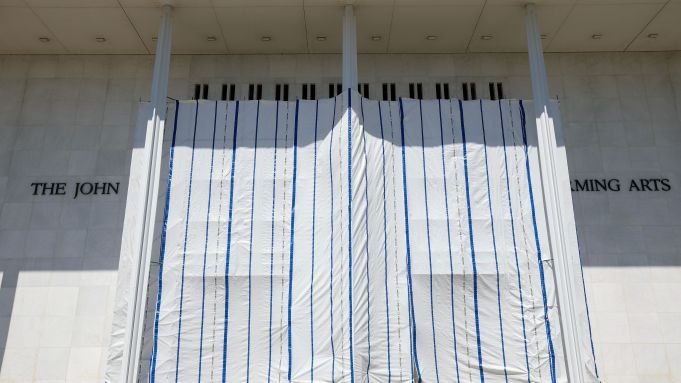
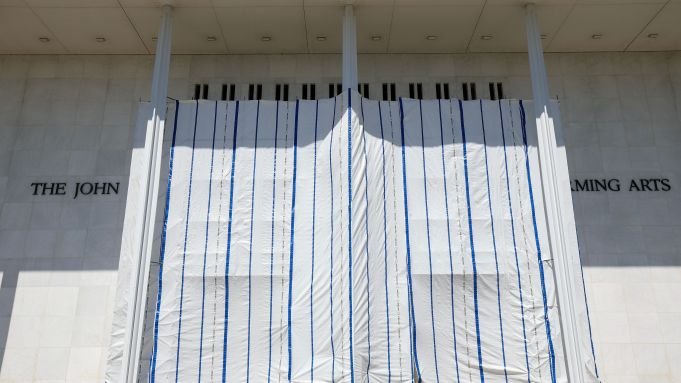
    The board voted to add Trump’s name to the center in December. But a federal judge ruled in May that only Congress could make such a change. The next month, a crew set up scaffolding to remove lettering with Trump’s name, but a tarp has concealed the remaining letter, with the original name of the complex, ever since. 

    Earlier on Thursday, the board approved a plan in which the main complex would be shuttered but a newer extension, called The Reach, would still offer limited programming and as a memorial to John F. Kennedy, according to a source familiar with the deliberations.

    The board will still have to submit its actions to U.S. District Judge Christopher Cooper, who previously ruled that the closure plan needed to consider other factors, including programming. Cooper wrote that the board was “derelict” and “based its decision on an insufficient, one-sided presentation of information and neglected to consider the full range of its statutory obligations and potential adverse consequences of closure on programming and memorial functions.” His ruling left open the possibility of closure, but only if the board conducted a more comprehensive analysis.

    The board considered two options, according to The Washington Post: The two-year closure plan, and another plan that would have left the main building partially open for four years but take longer and be costlier.

    Congress appropriated $257 million in last year’s One Big Beautiful Bill Act for Kennedy Center repairs and renovations. In February, Trump announced the plan to close the complex during the overhaul, and the board, in which he leads as chairman, endorsed the proposal the next month. But Beatty sued the center over the name change and the closure, arguing that it failed to fully account for the impact on programming, among other things. The plan also was approved amid declining attendance and a number of artists pulling out of shows after the name change. 

    In a statement after the board meeting, Beatty said, “This morning’s decision to close the Center and the surprise agenda item to put Donald Trump’s name back on the building was more of the same. This latest development is a transparent effort to circumvent the Court’s ruling, and flies in the face of the statutes that Congress passed. I will continue to fight for this treasured national monument.”

    Her legal team said that the board’s vote “appears to directly flout” the Kennedy Center statute, which prohibits “memorials or plaques in the nature of memorials” with limited exceptions.

    Her attorneys, Norm Eisen and Nathaniel Zelinsky, said in a statement that the vote was “more of the same, and a show of blatant disrespect to the courts. The court already ruled against the board when it bowed to Trump’s demands. Now, the defendants must answer for their actions—again—in court.”

    The center is appealing the judge’s ruling. In the meantime, Cooper has ordered a status update on the center’s plans for construction and future operations by next week, as well as on the purpose for the tarp at the front of the complex.

    A Kennedy Center spokesperson did not immediately return a request for comment. The New York Times first reported on the board votes.

    The center’s final large events ended in early July, the original target date for closure, but there have been smaller performances at The Reach, which opened in 2019 as a major expansion on the complex’s south side.

  • Trump-Controlled Kennedy Center Board Votes Again To Close Main Performing Arts Complex For Renovations

    Trump-Controlled Kennedy Center Board Votes Again To Close Main Performing Arts Complex For Renovations

    The Trump-controlled Kennedy Center board voted once again to close the arts institution for renovations, after a judge rejected a previous move to shutter the complex because it did not fully consider the scope of options and impacts.

    At a meeting on Thursday, the board approved a plan in which the main complex would be shuttered but a newer extension, called The Reach, would still offer limited programming and as a memorial to John F. Kennedy, according to a source familiar with the deliberations.

    The board will still have to submit its action to U.S. District Judge Christopher Cooper, who previously ruled that the closure plan needed to consider other factors, including programming. Cooper wrote that the board was “derelict” and “based its decision on an insufficient, one-sided presentation of information and neglected to consider the full range of its statutory obligations and potential adverse consequences of closure on programming and memorial functions.” His ruling left open the possibility of closure, but only if the board conducted a more comprehensive analysis.

    In the same ruling, the judge ruled that the board overstepped its authority by adding Trump’s name to the center, ordering that it be taken down from its facade, website and other materials. A crew removed the lettering from the front of the complex in an overnight operation in June, but left up a tarp that now conceals much of the original name, The John F. Kennedy Memorial Center for the Performing Arts.

    The center is appealing the judge’s ruling.

    The New York Times first reported on the board vote.

    Congress appropriated $257 million in the One Big Beautiful Bill Act for Kennedy Center repairs and renovations. In February, Trump announced the plan to close the complex during the overhaul, and the board, in which he leads as chairman, endorsed the proposal the next month. But Rep. Joyce Beatty (D-OH) sued the center over the name change and the closure, arguing that it failed to fully account for the impact on programming, among other things. The plan also was approved amid declining attendance and a number of artists pulling out of shows after the name change.

    The judge has ordered a status update on the center’s plans for construction and future operations by next week, as well as on the purpose for the tarp at the front of the complex.

    The center’s final large events ended in early July, the original target date for closure, but there have been smaller performances at The Reach, which opened in 2019 as a major expansion on the complex’s south side.

    More to come.

  • Karoline Leavitt To Leave Role As Trump’s White House Press Secretary

    Karoline Leavitt To Leave Role As Trump’s White House Press Secretary

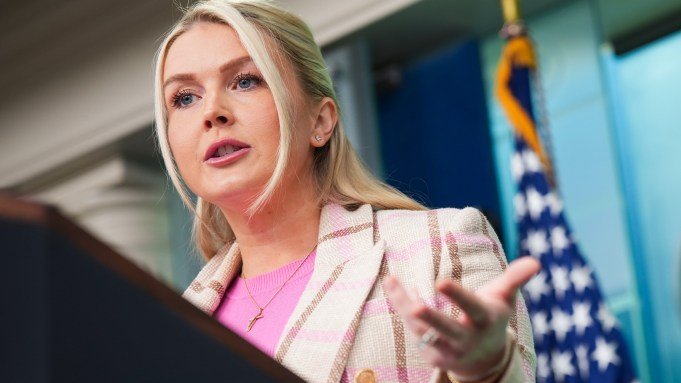
    Karoline Leavitt plans to exit her role as White House press secretary at the end of the month, President Donald Trump announced on Wednesday.

    Leavitt is leaving to spend more time with her family, Trump said. She gave birth to a daughter in May, her second child.

    Trump posted on Truth Social, “Our wonderful White House Press Secretary, and one of my most trusted aides, Karoline Leavitt, will be departing her role at the end of the month so she can spend more time with her beautiful young children and family, a decision I totally understand and respect! Karoline will now be one of my top outside advisors, and an influential voice within the Republican Party, as we work to defy History, and conclusively win the Midterm Elections.

    He added, “Karoline has been a real leader in the White House, and has done a phenomenal job fighting for Justice, Liberty, and Freedom, since 2018, including our Historic Re-Election Campaign of 2024. Karoline has been one of the best White House Press Secretaries in the History of the Office. Thank you, Karoline, for a job well done!”

    Leavitt wrote in a post on X, “The truth is since returning to the White House after the birth of my daughter, I have felt in my heart that I cannot be the best mom my two young children deserve while devoting the constant time, energy, and attention required of the White House Press Secretary — and that is why I have ultimately made the bittersweet decision to depart the White House and embark on a new chapter in my life.”

    Leavitt has served as press secretary since the start of Trump’s second term, typically holding weekly press briefings that have at times been confrontational with the press corps. She frequently criticized the media in her opening statements, while zealously defending the president and his record and attacking Democrats.

    That was evident in her message on X, in which she thanked Trump for “entrusting me with the distinct privilege of speaking on his behalf at the White House podium. I have spoken with great pride about the many historic accomplishments of this Administration, and I have relished holding the liberal media accountable and ensuring the American people hear the truth about President Trump’s successes.” She also warned that the country was “facing an existential threat from an increasingly extremist Democrat Party that seeks to destroy everything great about America.”

    No successor has been named. When she was on maternity leave, various administration figures including Vice President JD Vance, Secretary of State Marco Rubio and Treasury Secretary Scott Bessent led the briefings.

    Trump himself has answered questions from the media in Oval Office availabilities or on his way to Marine One, and has taken calls directly from reporters who have his personal cell phone number.

    Leavitt. 28, is the youngest person to serve as press secretary. She served as an assistant press secretary in the first term, made an unsuccessful bid for Congress and served as press secretary in the 2024 campaign.

    During her tenure, the White House seized control of the make up of the press pool from the White House Correspondents’ Association, a private group of journalists who had for years assigned reporters to the daily task. The administration also barred the Associated Press from the pool after the news service did not switch references after Trump changed the name of the Gulf of Mexico to the Gulf of America. A federal judge ruled that the restrictions on the AP violated the First Amendment; an appellate decision is pending.