Category: News

  • Walid Khalidi, historian of the Palestinian cause, dies aged 100

    Walid Khalidi, historian of the Palestinian cause, dies aged 100

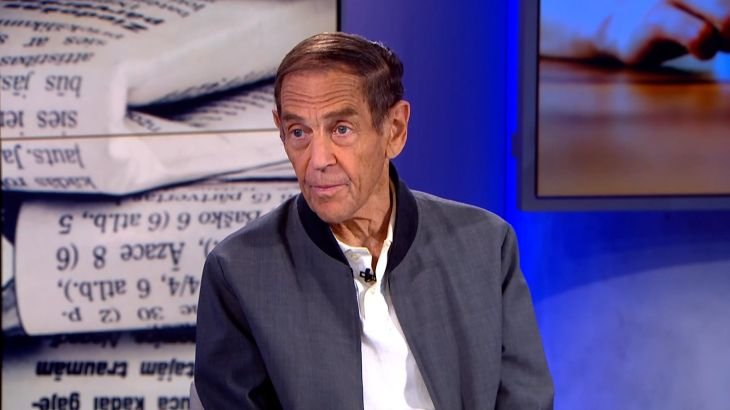
    Walid Khalidi, the venerated Palestinian historian whose research helped document the Nakba and shaped generations of scholarship on Palestine, has died aged 100.

    Khalidi, dubbed “the historian of the Palestinian cause”, passed away on Sunday in Massachusetts in the United States, according to an obituary issued by the Institute for Palestine Studies (IPS) – the research centre that he co-founded in 1963.

    Recommended Stories

    list of 4 itemsend of list

    Following the news, tributes from scholars, diplomats and Palestinian officials flooded social media, with Husam Zomlot, the Palestinian ambassador to the United Kingdom, calling Khalidi “a national treasure, a guardian of memory, and a mentor to generations” in a post on X.

    Born in Jerusalem in 1925 into a prominent intellectual family, Khalidi received his early education in Ramallah before attending St George’s School in Jerusalem.

    He later graduated from the University of Oxford in 1951 and went on to enjoy an illustrious academic career, teaching political studies at the American University of Beirut until 1982, before becoming a research fellow at Harvard University’s Center for International Affairs.

    Chronicling the Nakba

    Khalidi was perhaps best known for his meticulous documentation of the destruction of Palestinian villages during the Nakba (“catastrophe”), the ethnic cleansing of Palestine by Zionist militias in 1948.

    His landmark book All That Remains, published in 1992, catalogued how more than 400 Palestinian villages were destroyed or depopulated during the first Arab-Israeli war and combined historical research, maps and testimonies to reconstruct the lives of communities that had disappeared.

    The IPS described Khalidi as a “pioneer in uncovering many long-concealed features that explained how the Zionist movement succeeded in occupying Palestine in 1948”, adding that in the 1960s, he was the first to reveal “its master plan for the occupation of Palestine and the expulsion of its people, known as ‘Plan Dalet’”.

    Another major work by Khalidi, Before Their Diaspora, used archival photographs to document Palestinian society before 1948, offering a rare visual record of daily life in cities and villages across the country.

    INTERACTIVE - Israel Palestine land Nakba 1948-1720674812
    (Al Jazeera)

    Academic and diplomatic roles

    After a period teaching at Oxford, Khalidi spent decades at the American University of Beirut, and co-founded the Institute for Palestine Studies, which grew into one of the leading research organisations dedicated to Palestinian history, politics, and society.

    Khalidi later served as a research fellow at Harvard’s Center for International Affairs, lectured at institutions including Princeton University in the US, and was elected a fellow of the American Academy of Arts and Sciences.

    Beyond academia, he also played a role in Palestinian diplomacy.

    After the 1967 war, which later became known as the Naksa, in which Israel seized the West Bank, East Jerusalem, Gaza, the Syrian Golan Heights and Egypt’s Sinai Peninsula, Khalidi moved towards diplomacy.

    He served as an adviser to the Iraqi delegation to the United Nations, later joined an Arab Summit delegation to the British government in 1983, and, in the mid-1980s, served as a special adviser to the Arab League secretary-general.

    He was also part of the joint Jordanian-Palestinian delegation to the 1991 Madrid peace conference.

    Khalidi was a proponent of a two-state solution, writing in Foreign Affairs in 1988 that a Palestinian state within the 1967 borders in “peaceful coexistence alongside Israel” was “the only conceptual candidate for a historical compromise of this century-old conflict”.

    Khalidi is ‘synonymous with his beloved homeland’

    Tributes from Palestinian officials and scholars highlighted Khalidi’s role in shaping the historical understanding of Palestine.

    Khalil Jahshan, the executive director of the Arab Center Washington DC, said in a post on X  that Khalidi’s name was “synonymous with his beloved homeland, Palestine” as he offered  “heartfelt condolences to his family, to the people of Palestine, and to all who knew him”.

    The Institute for Palestine Studies described Khalidi as one of the most prominent historians of Palestine and said his work helped build the foundation for modern scholarship on Palestine.

    Jehad Abusalim, policy analyst and author of Light in Gaza, wrote on X that Khalidi had “dedicated his life to preserving Palestinian history”, adding that “his scholarship and research are a foundation that generations will continue to build on”.

    For many historians, Khalidi’s legacy lies not only in his own scholarship, but also in the institutions he helped build and the generations of students and researchers he mentored.

    At a time when much of Palestine’s historical record risked being scattered or lost, Khalidi devoted his career to documenting it.

    His work ensured that the history of Palestinian society before and after 1948 would remain part of the global historical record.

  • We, the American people, have had enough of endless wars

    We, the American people, have had enough of endless wars

    The United States has once again been dragged into a catastrophic war in the Middle East. The US military is now attacking Iran not because our nation faces an imminent threat but because the Israeli government has long sought confrontation with Tehran and has finally found a willing partner in Washington.

    This war is unnecessary, unjustified, unconstitutional, in violation of international law and entirely against the will of the American public.

    Under the constitution, the power to declare war rests with Congress, not the president. Therefore, President Donald Trump’s decision to launch air strikes and pursue regime change in another country without congressional authorisation is illegal. It echoes the darkest chapters of post-9/11 American foreign policy when fear and deception were used to rush our nation into disastrous wars, the price of which we are still paying today.

    On the global scale, attacking a sovereign nation – or as wanted war criminal Israeli Prime Minister Benjamin Netanyahu calls it, launching a “preemptive strike” – without an imminent threat violates the United Nations Charter and fundamental principles of international law. The bombing campaign – which is taking place during the Islamic holy month of Ramadan, a time of increased spirituality and reflection – has already stained our national conscience.

    On the first day of the war, a US air strike killed about 165 schoolgirls in the city of Minab. American weapons have once again made us complicit in the killing of children abroad.

    And for what?

    We are told this is about “security”. We are told this is about stopping Iran’s nuclear ambitions. But we’ve heard this before. For more than 30 years, Netanyahu has insisted that Iran is “weeks away” from a nuclear bomb. Those weeks have stretched into decades. Fear has been recycled as policy.

    Let’s also be honest about something else: Iran, with all its objectionable and often detrimental regional ambitions, is not an imminent military threat to the United States. The American public understands this. Poll after poll shows Americans are weary of endless wars in the Middle East. Our communities want investments in healthcare, education, infrastructure and job creation – not another trillion-dollar conflict that sends our soldiers into harm’s way and destabilises yet another region.

    So why is an American president who campaigned on “America First” governing as if he embraces “Israel First”? Why are American troops, American tax dollars and American credibility being placed on the line to fulfil the longstanding ambitions of a foreign government?

    This is not a healthy alliance. It is a toxic dynamic in which the United States provides money, weapons, diplomatic cover and unconditional political support while being dragged into wars that make us less safe.

    We are told this war is about human rights. About women’s rights. But bombs do not liberate people. Air strikes do not advance democracy. Slaughtering schoolgirls is not “feminist” foreign policy.

    If human rights were truly the concern, our government would not selectively apply them based on geopolitical convenience. Our own ally, Israel, is engaged in a genocide that has killed and wounded more than 200,000 Palestinians, most of them civilians. Not funding that mass murder of children would have been a good start for our humanitarian concerns.

    And Americans are right to ask these questions. At a time when transparency and accountability are demanded at home, especially as it pertains to the release of the Jeffrey Epstein files, why are we instead being thrust into another foreign war? The American people deserve honesty, not distraction.

    This war will not bring stability. It will inflame the region, harm civilians, endanger US soldiers and potentially trigger a wider conflict with global consequences. It risks American lives and American security for objectives that do not serve the American public.

    Congress had a chance to uphold its constitutional responsibility and stop unauthorised military escalation but failed to pass the war powers resolution sponsored by Representatives Thomas Massie and Ro Khanna. This vote reflects the strong influence of the Israeli lobbying group AIPAC and its money along with a troubling unwillingness by some lawmakers to stand up to powerful lobbying interests and unchecked executive power.

    Congress, especially those members who claim to oppose endless wars, must continue pursuing every available avenue to reassert its authority and prevent further escalation; the stakes are far too high for elected officials to remain silent.

    The American people do not want this war. It is time for our government to serve them, not the agenda of a foreign leader desperate to cling to power and evade accountability.

    The views expressed in this article are the author’s own and do not necessarily reflect Al Jazeera’s editorial stance.

  • Trump vows control over Iran leaders as officials seek to calm oil concerns

    Trump vows control over Iran leaders as officials seek to calm oil concerns

    United States President Donald Trump has again promised to exert influence over who is selected as Iran’s next Supreme Leader, saying that, without Washington’s approval, whoever is picked for the role is “not going to last long”.

    The statement on Sunday came just hours after a member of Iran’s Assembly of Experts said the clerical body had selected the replacement for Ayatollah Ali Khamenei, who was killed in the hours after the US and Israel launched the war with Iran on February 28.

    Recommended Stories

    list of 3 itemsend of list

    “He’s going to have to get approval from us,” Trump told ABC News, referring to a new supreme leader. “If he doesn’t get approval from us, he’s not going to last long.”

    Trump added that he didn’t want future administrations to have “to go back” in the years ahead, an apparent reference to future military action.

    “I don’t want people to have to go back in five years and have to do the same thing again, or worse, let them have a nuclear weapon,” he said.

    Officials in Iran, which has launched retaliatory attacks across the Middle East, have repeatedly rejected the notion of Washington asserting influence over the selection.

    Earlier on Sunday, Iranian Foreign Minister Abbas Aragchi again vowed “we will allow nobody to interfere in our domestic affairs”.

    “This is up to the Iranian people to elect their new leader,” he said, adding that Iranians had elected the Assembly of Experts, which will select the next supreme leader.

    Oman says nuclear talks were ‘making progress’

    Trump’s comments came as the war entered its ninth day, with the death toll in Iran rising to 1,332, with at least 11 killed across the Gulf, 11 killed in Israel, and six US soldiers killed to date.

    The US president has offered shifting justifications for the war, repeatedly pointing to Iran’s nuclear ambitions, its ballistic missile programme, as well as the totality of Iran’s actions in the region since the 1979 Islamic Revolution.

    Critics, including the majority of Democratic US lawmakers, have said Trump has provided scant evidence to prove Iran posed an immediate threat.

    On Sunday, Oman Foreign Minister Badr Albusaidi, who had been overseeing indirect US-Iran talks on Iran’s nuclear programme, again rejected US officials’ claims that Tehran had not entered into the negotiations in good faith.

    Speaking during a ministerial meeting of the Arab League, Albusaidi said diplomatic initiatives seeking a “fair and honourable solution were making progress” when the US-Israeli attacks began.

    He further warned that the region is facing “a dangerous turning point” as fighting escalates.

    ‘Short-term disruption’

    Attacks from both sides appeared to have widened, with the US and Israel for the first time striking oil storage and refining facilities in Tehran, and Iran launching more strikes across the Gulf, including a drone attack that caused material damage to a desalination plant in Bahrain.

    Both Bloomberg and Axios news have reported that the US and Israel have considered a special ground operation to seize Iran’s enriched uranium, with Israeli Ambassador to the US Yechiel Leiter telling CBS’s Face the Nation news programme that securing the nuclear fuel is “on our radar screen and we’re going to take care of it”.

    For their part, top Trump administration officials spent Sunday seeking to alleviate concerns over the war’s knock-on effects on global oil and gas prices.

    Rapidly rising prices represent a particular political vulnerability for Trump as his Republican Party faces legislative midterm elections in November.

    Speaking to Fox News, White House spokesperson Karoline Leavitt said the administration was responding to what she called a “short-term disruption”.

    She said the administration was “tapping into our newfound market in Venezuela”, referring to access US companies had gained to the South American country’s oil industry in the wake of the January 3 US abduction of Venezuelan leader Nicolas Maduro.

    Energy experts have said that rebuilding Venezuela’s oil industry would likely be a multi-year process, and have questioned what immediate impact it could have in offsetting current shortages.

    Speaking on CBS’s Face the Nation, Energy Secretary Chris Wright also maintained that the war would not drag on and that any economic fallout would be fleeting.

    Trump, who came into office vowing to end so-called “endless wars”, has said the operations against Iran could last “four to five weeks”, but he also said the conflict has “no time limit”.

    Wright pointed to “a temporary period of elevated energy prices”, but denied there was an energy shortage “at all in the Western Hemisphere”.

    He also underscored that the US has 400 million gallons of oil in the strategic oil reserves and the administration is “more than happy to use that if it’s needed”.

    “What you want is emotional reactions and fear that this is a long-term war,” Wright said. “This is not a long-term war; it’s a temporary movement.”

  • Why international law is still the world’s best defence

    Why international law is still the world’s best defence

    Conceived in the long shadow of global devastation, the post–World War II order was constructed -imperfect yet purposeful – to shield humanity from a similar catastrophe.

    In 1943, as the tides of battle in World War II began to turn in favour of the Allied powers, United States President Franklin D Roosevelt warned: “Unless the peace that follows recognises that the whole world is one neighbourhood, and does justice to the whole human race, the germs of another world war will remain as a constant threat to mankind.”

    Today, that coveted peace is increasingly fragile.

    The post-war architecture conceived to avert great-power conflict, institutionalise interstate cooperation, reduce hot wars, and entrench human rights within binding international law is now under acute pressures. It faces a combustible mix of resurgent ultranationalism, hyperintensified zero-sum strategic rivalries and hegemonic power plays, the fragmentation of longstanding alliances, and the brazen repudiation of established norms.

    Multilateral institutions that once underwrote stability are increasingly marginalised or instrumentalised in the service of Machiavellian politics. Foundational treaties are hollowed out or breached outright, compliance regimes weakened, and enforcement mechanisms rendered inert—leaving the post-war international system exposed to the very coercive power politics it was designed to contain.

    The result is a palpable drift towards an unchecked “force-based order”, under which might displaces right, and power eclipses principle.

    International orders do not suddenly unravel because of political declarations broadcast at podiums, nor because of the conduct of aberrant outliers. They collapse when those collectively entrusted with their stewardship neglect to properly defend them – when resolve gives way to timidity, principle is bartered for political expedience, and moral clarity is supplanted by double standards.

    Unless the international community acts with resolve to defend and modernise the international order – fortifying rather than constraining it, including by making it more representative and meaningfully inclusive – the global system will drift toward a far more volatile and perilous disequilibrium.

    The United Nations charter – one of the central instruments of the post-war legal infrastructure – is under threat. The charter enshrines the bedrock rule of the modern international order that no state may threaten or use force except in self-defence or with UN Security Council authorisation.

    That peremptory norm – the foundation of the collective security architecture – is now visibly fraying. As raw power eclipses legal restraint, and the silence or equivocation of the many emboldens the few, the prohibition on the illegal use of force risks sliding from binding law into empty rhetoric.

    Almost overnight, the threat of force – and even unilateral military action undertaken without legal authorisation or meaningful deliberation – has begun to crystallise into a disturbing new normal. This accelerating erosion of established norms is not a passing anomaly; it is a structural shift with profound implications for international peace and security.

    Institutions of international law, which have played a decisive role in preventing conflict and advancing accountability are also threatened.

    The International Court of Justice – the UN’s highest judicial body – has successfully adjudicated numerous interstate disputes, demonstrating the power of legal mechanisms over hard power and military confrontation.

    Efforts to hold perpetrators of atrocities to account – from Nuremberg to the creation of UN ad hoc tribunals – paved the way for the International Criminal Court (ICC). Its creation in 2002 sent a powerful message that mass atrocities as merely politics by other means must no longer receive a pass, that perpetrators must be held accountable, and that impunity can no longer be tolerated. The historic cultivation of these norms may be considered a crowning achievement as this normative transformation has not only awakened humanity’s consciousness regarding atrocities, but has also reshaped expectations of accountability for such grave crimes, and recast the very narrative and language with which we confront these vital questions.

    And yet, those very powers that once shaped, and at least on the surface, nurtured these norms and institutions of international justice, now blatantly erode their integrity—whether by defiance, selective invocation, or politicisation. Thus, the edifice of collective restraint trembles, vulnerable to the machinations of those who prize unbridled power above principle.

    To be sure, such regression diminishes the security and prosperity of all participants in the international system, irrespective of their size or influence.

    Yet another grave assault on the very foundation of human rights advocacy lies in the entrenched “culture” of convenient indignation and performative empathy by states and self-serving and ideologically inclined actors alike.

    Such expedient outrage and hollow sympathy erode the credibility of the pursuit of justice, undermining the universality of dignity for which we strive.

    International law cannot be invoked à la carte, nor enforced with expedient selectivity.

    Perhaps the greatest threat to international justice is not just outright opposition from ill-wishers but indifference and arbitrary application. The contrasting global reactions to different theatres of conflict in the past decade alone lay bare the hypocrisy that undermines faith in the universality and effectiveness of international law.

    When our compassion is contingent upon political expedience, convenience or dictated by the fleeting spotlight of media attention or social media clickbait, we betray the fundamental, universal principle at the heart of human dignity.

    Just as questionable are those who conveniently brandish the language of human rights not as “the equal and inalienable rights of all members of the human family”, but as a tactical instrument of lawfare deployed against political adversaries. Such deceptive tactics not only trivialise the suffering of victims but can also fuel and perpetuate the very conditions that enable even graver human rights abuses. Indeed, ancient wisdom bears counsel: “beware of false prophets, who come to you in sheep’s clothing, but inwardly they are ravenous wolves”. In this environment, smaller states and middle powers, in particular, cannot afford passivity. They must coordinate with strategic clarity and act with resolve to defend and reinforce a rules-based global system anchored in real and principled commitment to international law and the peaceful settlement of disputes.

    Perspective is important. The Western world, even when considered as a whole, comprises about 11 to 15 percent of the global population; the remaining 85 to 89 percent of humanity resides beyond it.

    In a century increasingly defined by multipolarity, the convergent interests of the so-called Global North and Global South in safeguarding peace and stability within – and one hopes beyond – their respective spheres of influence must rise above the complacencies and double standards that have long underwritten the status quo.

    True advocacy demands courage – to uphold and apply the law equally and impartially, even when doing so is uncomfortable, unpopular, or personally costly. It is the discipline to defend rights not only when they align with powerful interests, or “tribal” and prevailing sentiments but wherever justice demands it.

    The legitimacy and potency of international justice are also fundamentally anchored in ethical leadership and an unwavering fidelity to principle. It is incumbent upon the stewards of international institutions, courts and tribunals to embody integrity, impartiality, and steadfast dedication to their mandates. When these ethical foundations are shaken or compromised, the repercussions are deep and lasting: public confidence disintegrates, victims suffer renewed injustice, adversaries are emboldened, and the quest for justice is dealt a blow. The character and courage of those at the helm are not mere virtues, but the cornerstone upon which the entire edifice of international justice stands.

    This is our clarion call: should we permit the foundations of international law to erode—whether through selective justice, passive indifference, or the cynical calculus of unprincipled politics—the world would slip once more into the shadows of anarchy and chaos.

    We cannot yield to a world order defined by unchecked aggression, the erosion of sovereign borders under predation, and the unravelling of hard-won international norms. To acquiesce to such decline is to legitimise disorder as a governing principle, invite instability, normalise coercion, and accelerate a descent into systematic violence.

    The cost would be borne by societies worldwide, in shattered security, fractured institutions, and immeasurable human suffering.

    It is our shared responsibility to avert this regression.

    By steadfastly upholding international law, nations around the world do more than safeguard their own futures; they erect barriers against the reckless impulses of would-be aggressors, protecting all – including the aggressors themselves – from the dire consequences of unfettered conflict.

    Indifference is not an option. Wilful blindness is complicity.

    In standing in firm defence of international law, we are not only enforcing norms – we are shaping the trajectory of our civilisation and honouring the enduring promise of humanity itself.

    The rule of law is one of humanity’s quiet triumph – a beacon guiding our gradual rise from unbridled brute force towards greater order, justice, and civilisation.

    We must never allow the law to fall silent, for it stands as humanity’s foremost defender.

    The views expressed in this article are the author’s own and do not necessarily reflect Al Jazeera’s editorial stance.

  • Why are Iranian leaders sending mixed messages on Gulf attacks?

    Why are Iranian leaders sending mixed messages on Gulf attacks?

    Iranian President Masoud Pezeshkian has offered an apology to neighbouring countries that have been subjected to Tehran’s retaliatory strikes since the United States and Israel launched a military offensive on the country.

    But Iran’s powerful Islamic Revolutionary Guard Corps (IRGC) expressed its disapproval of the president’s remarks on Saturday, warning neighbouring countries that Tehran would continue attacks if US and Israel used their territory to attack Iran.

    Recommended Stories

    list of 3 itemsend of list

    Iranian Foreign Minister Abbas Araghchi said Tehran is not going to stop attacks while Mohammad-Bagher Ghalibaf, speaker of Iran’s parliament, underscored Tehran’s right to self-defence.

    Iran’s leadership has been sending mixed messages about its attacks on neighbouring countries in the Gulf region. On Saturday and Sunday, more Iranian strikes were reported. On Saturday, Kuwait, Qatar, Saudi Arabia and the United Arab Emirates said they were attacked.

    So why is Iran sending mixed messages to Gulf countries? How should its statements be interpreted?

    What have Iranian leaders said?

    In a recorded message on Saturday, Pezeshkian pledged to halt attacks against neighbouring countries unless an attack on Iran originated from their soil.

    “I personally apologise to neighbouring countries that were attacked by Iran. Our commanders, leaders and loved ones lost their lives due to the brutal aggression that took place, and our armed forces are heroes who gave their lives to defend our territorial integrity,” he said without specifying which countries he was referring to.

    “We didn’t intend to violate neighbouring countries’ [territory]. As I have said many times, they are our brothers. We stand with these ones we love in the region,” he added.

    Shortly after Pezeshkian’s apology, the IRGC weighed in and said the armed forces of Iran “once again declare that they respect the interests and national sovereignty of neighbouring countries and, up to this point, have committed no aggression against them”.

    “However, should the previous hostile actions continue, all military bases and interests of criminal America and the fake Zionist regime on land, at sea, and in the air across the region will be considered primary targets and will come under the powerful and crushing strikes of the mighty armed forces of the Islamic Republic of Iran,” an IRGC statement added.

    Pezeshkian later clarified on X that Iran had not in fact attacked any of its neighbours but rather “targeted US military bases, facilities, and installations in the region”.

    Late on Saturday, the secretary of the Supreme National Security Council of Iran, Ali Larijani, echoed the IRGC’s message and said: “When the enemy attacks us from bases in the region, we respond – and we will continue to respond.”

    “This is our right and a standing policy. Regional countries must either prevent the US from using their territory against Iran, or we will have no choice but to do it ourselves,” he added.

    On Sunday morning with attacks across the Gulf continuing, Pezeshkian said his remarks on Saturday were misinterpreted by “the ⁠enemy that seeks to sow division ⁠with neighbours”.

    According to Iranian state media, the president reiterated that Iran wants good relations with “the brotherly neighbouring countries” but has been forced to respond to attacks coming from the territories of other countries.

    He stressed, however, that this response does not mean there is a dispute with those countries.

    “Iran stands strong against those who attack it and will respond with strength,” he said.

    Iran’s Ministry of Foreign Affairs also issued a statement on Sunday emphasising “that Iran’s defensive operations against US military bases and installations in the region should by no means be construed as enmity or hostility towards the countries of the region”.

    Khalid al-Jaber, executive director of the Middle East Council on Global Affairs in Doha, says different Iranian officials have sent several “contradictory” messages to countries in the region.

    “We don’t know which one is true. We don’t think now, in war, that Iran is going to stop attacking some infrastructure in the Gulf,” al-Jaber told Al Jazeera, citing the attack on the water desalination plant in Bahrain a proof of that.

    “Since the attack on Ayatollah Khamenei, it seems like there is no institute or a person or leadership we can talk to, or we can make a deal with, to try to understand what their perspective is, what their point of view is,” he said.

    How should Iran’s messages be interpreted?

    According to Al Jazeera’s Resul Serdar, Pezeshkian’s apology was overtaken by the Revolutionary Guard’s dominance.

    “Political figures in Iran are responsible for running state affairs and nonstrategic affairs. But when it comes to strategic affairs, such as the country’s foreign and security policies, politicians don’t have a say, including the president, who, according to the constitution, is the number two in charge. This is a very well-known fact in Iran,” Serdar said.

    The centre of power lies with the office of the supreme leader and with the IRGC, even during peacetime, he added.

    On Sunday, Serdar said Iranians were interpreting Pezeshkian’s statement that his remarks had been misconstrued as one not meant for Gulf countries but instead for Azerbaijan and Turkiye.

    “Azerbaijan because of the ethnic tensions. There are tens of thousands of Azeri [people] living in Iran, so an attack on them could backfire, and for Turkiye, it is a NATO member,” he said.

    Azerbaijan has sought Iran’s apology after a drone attack targeted its autonomous Nakhchivan exclave on Thursday. Tehran, however, has insisted that it was not behind the attack.

    On Wednesday, Turkiye’s Ministry of National Defence said a ⁠ballistic missile fired from ⁠Iran towards Turkish airspace had been intercepted and destroyed by NATO. But Iran’s ⁠armed forces have also denied firing ⁠any missile towards Turkish territory.

    Ali Vaez, director of the Iran project at the International Crisis Group, told Al Jazeera that Pezeshkian’s occasional off-key remarks have underscored his limited political instincts and experience in navigating high-stakes moments.

    “But in wartime, rhetorical missteps by civilian officials are ultimately beside the point: The only voice that truly matters is the IRGC’s,” he added.

    How has the Gulf reacted?

    After an apology and threats from Iranian officials, strikes on countries across the Gulf have continued.

    On Sunday, an Iranian drone attack caused material damage to a water desalination plant in Bahrain, its Ministry of Interior said.

    That came a day after Araghchi said the US attacked a desalination plant on Qeshm Island off southern Iran, setting a “precedent”. There has been no immediate comment from Iran since Bahrain’s statement. A majority of Gulf countries depend largely on desalinated water for their inhabitants’ consumption.

    Also on Saturday, Qatar, Kuwait and the UAE reported incoming missiles and drones in their territories. On Sunday, Kuwait said two Ministry of Interior personnel were killed while on duty and attacks on its international airport and social security office caused fires.

    Saudi Arabia said Sunday that an attack on Riyadh’s diplomatic quarter was foiled and several drones were downed in its airspace.

    On Sunday, the Gulf Cooperation Council said Iran’s continued attacks against Bahrain and Kuwait are “dangerous acts of aggression” that threaten regional security and stability. The bloc comprises Bahrain, Kuwait, Oman, Qatar, Saudi Arabia and the UAE.

    So far, countries in the Gulf have intercepted and destroyed most of the Iranian missiles and drones but have not yet launched strikes against Tehran.

    Vaez told Al Jazeera that the Gulf states can certainly retaliate but that is likely to lead to even more aggressive Iranian retaliation.

    “Siding with Israel to bomb another Muslim state would also entail political consequences for the Gulf states,” he added.

    How has the US reacted?

    After the Iranian president’s apology on Saturday, US President Donald Trump said in a post on his social media platform, Truth Social, that Iran has surrendered to its neighbours.

    “Iran is no longer the ‘Bully of the Middle East,’ they are, instead, ‘THE LOSER OF THE MIDDLE EAST,’ and will be for many decades until they surrender or, more likely, completely collapse!” Trump posted.

    “Siding with Israel to bomb another muslim state would also entail political consequences for the Gulf states,” he added.

    In an interview with Al Jazeera on Saturday, Hamidreza Gholamzadeh, director of the Iranian think tank Diplo House, said Trump’s interpretation of Pezeshkian’s comments as a “surrender” is “totally false”.

    Gholamzadeh said Iran is asking its neighbours “that they stop cooperating with the United States or the Israeli regime and do not allow them to use their land or their airspace to attack Iran”, describing the request as something “very normal” and “legal”.

  • Iran war: What is happening on day nine of US-Israel attacks?

    Iran war: What is happening on day nine of US-Israel attacks?

    The US and Israel continue to strike Iran, hitting oil storage depots and refining facilities for the first time.

    The United States and Israel are continuing large-scale strikes on Iran, including an attack on an oil depot on Saturday, as the conflict has widened to include the Gulf region as well as Lebanon and Iraq.

    Iran has said the US will pay for waging war and continued its retaliatory strikes on Israel and US military assets in Kuwait, Qatar, Saudi Arabia and the United Arab Emirates, despite Iranian President Masoud Pezeshkian promising on Saturday to halt attacks on Gulf states as long as their territories were not used to attack Iran.

    Here is where things stand on day nine of the war:

    In Iran

    • Military attacks and rising casualties: The US and Israel have continued large-scale strikes on Iran and struck oil storage depots and refining facilities for the first time in the country. Late on Saturday, local media captured footage of a massive fire raging at the Shehran oil depot on the outskirts of Tehran. The Israeli military claimed responsibility for striking fuel storage and related sites it alleges are affiliated with the Iranian armed forces. At least 1,332 people have been killed since Israel and the US launched attacks on February 28.
    • US demands: President Donald Trump continued with his demand for an “unconditional surrender” from Iran. Late on Saturday, he stated that the war would continue for “a little while” but stressed that Washington was not looking “to settle with Tehran”.
    • Maritime threats and movements: The Iranian military confirmed that the Strait of Hormuz remains open, but it explicitly stated that it would target any US or Israeli ships attempting to pass through. On Saturday, when asked by journalists about the lack of traffic through the strait, Trump said it was the choice of the ships and claimed that Washington has “wiped out” Iran’s navy.
    • Relations with neighbours: President Masoud Pezeshkian reiterated that Tehran wants good relations with the brotherly neighbouring countries, stating that the enemy is trying to create divisions. Pezeshkian said his remarks were “misinterpreted by the ⁠enemy that seeks to sow division ⁠with neighbours”, state TV reported on Sunday. His comments came as countries across the Gulf region reported drone strikes from Iran.
    • Iran’s new leadership: Ayatollah Mohammad-Mahdi Mirbagheri, a member of Iran’s Assembly of Experts, hinted that a decision on a successor to the slain Supreme Leader Ayatollah Ali Khamenei was near. In a video posted by the Fars news agency on Telegram, Mirbagheri said “great efforts to determine the leadership” had been made and that “a decisive and unanimous opinion” had been reached.
    • War crimes: Human Rights Watch said the attack on a primary school in southern Iran that killed at least 160 people, many of them schoolchildren, should be investigated as a war crime. Al Jazeera’s investigation has also found that the targeting of the school was likely “deliberate”, while The New York Times reported that the strike may have been carried out by the US.
    • Intelligence report: A report conducted by the US National Intelligence Council found that a “large-scale” US-led assault on Iran was unlikely to topple the country’s government, according to The Washington Post. The report also described the prospect of Iran’s fragmented opposition taking control of the country as “unlikely”.
    • Oil trade: The war has roiled global markets, and oil prices have hit multiyear highs, with the Strait of Hormuz effectively shut. In one week of the war, Brent crude oil price climbed 27 percent, the biggest weekly gain since the COVID-19 pandemic in 2020.

    In Gulf nations

    • Bahrain: An Iranian drone attack caused material damage to a water desalination plant in Bahrain, the country’s Ministry of Interior said. This comes a day after Iranian Foreign Minister Abbas Araghchi said the US attacked a freshwater desalination plant on Qeshm Island in southern Iran, setting a “precedent”. There was no immediate comment from Iran following Bahrain’s statement. The majority of the Gulf countries largely depend on desalinated water for their inhabitants’ consumption.
    • Qatar, Kuwait and the UAE: The three countries reported incoming missiles and drones in their territories, despite the Iranian president’s assurance of no attacks on neighbouring countries. Kuwait said two border security personnel were killed while on duty, and said attacks on its international airport and social security office also caused fires.
    • UAE: The death toll from Iran’s attacks on the United Arab Emirates has risen to four, according to a statement from the Gulf country’s defence ministry.
    • Saudi Arabia: It said an attack on Riyadh’s diplomatic quarter was foiled and several drones were downed in its airspace.
    • Gulf Cooperation Council: The GCC said Iran’s continued attacks against Bahrain and Kuwait are “dangerous acts of aggression” that threaten regional security and stability. The bloc comprises Bahrain, Kuwait, Oman, Qatar, Saudi Arabia and the United Arab Emirates.
    • Aviation and evacuation updates: Following significant regional airspace closures and flight cancellations, Qatar’s Hamad international airport partially resumed air navigation via dedicated “emergency routes”. Qatar Airways operated special flights from London, Paris, Madrid, Rome, Frankfurt and Bangkok to Doha on Sunday. According to the airport’s website, all of those flights landed safely.

    In Israel

    • Iranian strikes: The Israeli military said Iran launched several missiles towards Israel. Air raid sirens were activated in southern Israel, including in the Negev Desert.
    • Iran’s Islamic Revolutionary Guard Corps (IRGC) described the latest attack as the “27th wave of Operation True Promise”.

    In the US

    • Timeline of the war: President  Trump said the war would continue for “a little” while, and that it was going “unbelievably good” for the US military. The White House has said the campaign may last four to six weeks.
    • US casualties: The caskets of the six American service members killed in the retaliatory Iranian strikes against the US arrived in the US. Trump presided over the arrival ceremony of the slain soldiers as commander-in-chief of the US military. He described their deaths as a “very sad day” for the Americans.
    • Pentagon chief threat: US Defense Secretary Pete Hegseth issued a new threat to Iran. “If you kill Americans, if you threaten Americans anywhere on earth, we will hunt you down without apology and without hesitation, and we will kill you,” he said on X.
    • Nuclear stockpile: Axios reported that the US and Israel have discussed the possibility of deploying special forces to seize Iran’s stockpile of highly enriched uranium. The news outlet said the mission would likely take place “at a later stage” of the war.

    In Lebanon, Iraq

    • Israeli forces bombed a hotel in downtown Beirut, killing at least four people and wounding 10 others. The Israeli military said it struck “key commanders in the Quds Force’s Lebanon Corps” who were operating in Beirut.
    • Early on Sunday, Israel carried out a raid on the southern suburbs of the Lebanese capital.
    • Israel threatened the residents of Arnoun, Yohmor, Zrariyeh East and Zrariyeh West villages in southern Lebanon with an imminent attack, ordering them to flee north of Nabatieh governorate immediately.
    • Hezbollah said it targeted Israeli forces in the town of Marba in southern Lebanon.
    • Growing numbers of residents have fled areas, including Tyre and Beirut’s southern suburb of Dahiyeh. Schools in Beirut are now being used as shelters.
    • Kurdish Peshmerga forces shot down a drone over the Kurdish area of Sulaimaniyah in northern Iraq amid a series of aerial attacks on the region, according to news outlet Rudaw.
    • Trump said he did not want to make the war “more complex than it already is” by allowing the Kurds to join the war. Earlier, multiple publications had reported that Trump was in active talks with Iranian and Iraqi Kurdish groups, and that Washington had hoped to use them to spur a popular uprising.
    • Iraqi Brigadier General Haider al-Kharki has said neither Iraqi forces nor members of the regional Kurdish Peshmerga forces have crossed into Iran since the US-Israel war on the country started.
  • Trump says US does not need UK’s aircraft carriers for Iran war

    Trump says US does not need UK’s aircraft carriers for Iran war

    United States President Donald Trump has posted on social media that he does not need the United Kingdom to deploy aircraft carriers to the Middle East, amid the ongoing war with Iran.

    Saturday’s post on Truth Social follows a statement from the UK’s Ministry of Defence that one of its two flagship aircraft carriers, the HMS Prince of Wales, has been placed on “high readiness”.

    Recommended Stories

    list of 3 itemsend of list

    “The United Kingdom, our once Great Ally, maybe the Greatest of them all, is finally giving serious thought to sending two aircraft carriers to the Middle East,” Trump wrote.

    “That’s OK, Prime Minister Starmer, we don’t need them any longer — But we will remember. We don’t need people that join Wars after we’ve already won!”

    The post, with its reference to the UK as a “once great ally”, signals a deepening rift between the two countries that has emerged since Trump returned to office last year.

    The divide appears to have deepened over the past week, as the US and Israel continue to hammer Iran as part of a war they launched on February 28.

    The conflict has sparked fears across the Middle East, as retaliatory strikes from Tehran target US allies across the region.

    Already, an estimated 1,332 people have been killed in Iran, and the US has confirmed the deaths of six of its service members. More deaths have been reported in countries like Lebanon, Kuwait, the United Arab Emirates and Iraq.

    The UK government has increased its involvement in the war on Iran, widely considered illegal under international law.

    The UK Defence Ministry, for instance, said on Saturday that the government of Prime Minister Keir Starmer had allowed the US to use its military bases for what it termed “limited defensive purposes”.

    The bases include RAF Fairford in Gloucestershire and the Diego Garcia site in the Chagos Islands, located in the Indian Ocean. Initially, there had been reports that Starmer had blocked the US use of the bases.

    In the immediate aftermath of the initial US-Israeli strike, Starmer appeared to blanche at the prospect of joining the war.

    He and the leaders of France and Germany issued a joint statement, underscoring that any actions they might take would be defensive in nature.

    “We will take steps to defend our interests and those of our allies in the region, potentially through enabling necessary and proportionate defensive action to destroy Iran’s capability to fire missiles and drones at their source,” the joint statement said.

    “We have agreed to work together with the US and allies in the region on this matter.”

    But Starmer has had to push back on domestic criticism both for and against joining the war.

    On Monday, he told the UK Parliament, “We are not joining the US and Israeli offensive strikes”, citing the need to protect “Britain’s national interest” and “British lives”.

    The war in Iran remains largely unpopular in the UK. The polling firm Survation conducted a survey over the last week of 1,045 British adults, in which 43 percent of respondents called the war not justifiable.

    When asked if they supported Starmer’s initial decision not to allow the US to use UK bases, 56 percent of respondents approved. Only 27 percent said it was the wrong choice.

    Thousands of protesters gathered outside the US Embassy in London on Saturday to call for an end to the ballooning conflict.

    The US president, meanwhile, has upped his criticism of Starmer over the past week, further fraying relations with the UK government.

    On March 3, for instance, Trump held an Oval Office meeting with German Chancellor Friedrich Merz, in which he said repeatedly he was “not happy with the UK”.

    Of Starmer, Trump said, “This is not Winston Churchill that we’re dealing with.”

    Trump has long admired Churchill, and last year installed a bust of the late UK wartime leader in the Oval Office, just as he had during his first term.

    By contrast, Trump has issued a flood of criticism against Starmer, particularly for his 2024 decision to transfer control of the Chagos Islands to Mauritius.

    The transfer came after the International Court of Justice found the UK acted unlawfully in 1965 by separating the islands from Mauritius to create a separate colony.

    The deal with Mauritius allows the US and the UK to maintain a military base on Diego Garcia, part of the archipelago.

    However, Trump has repeatedly slammed the transfer, writing on social media that “giving away extremely important land is an act of GREAT STUPIDITY”.

    Tensions between the US and UK also rose in January after Trump told Fox News that NATO allies had “stayed a little off the front lines” during the US war in Afghanistan.

    Starmer had responded that he found Trump’s comments “to be insulting and frankly appalling”.

    The Trump administration has signalled it is pivoting away from its traditional European allies in favour of more politically aligned countries.

    At a summit on Saturday with right-wing Latin American leaders, US Secretary of State Marco Rubio appeared to praise the attendees while casting shade on other allies.

    “At a time when we have learned that, oftentimes, an ally, when you need them, maybe may not be there for you, these are countries that have been there for us,” Rubio told the summit.

  • Tornadoes across central United States kill at least eight people

    Tornadoes across central United States kill at least eight people

    Tornadoes leave behind destruction in states of Oklahoma and Michigan, and authorities say more extreme weather is ahead.

    At least eight people have been killed as tornadoes lash the states of Michigan and Oklahoma in the central United States, with authorities warning that more storms are expected.

    Authorities on Saturday said that four people were killed in southern Michigan and four in Oklahoma, though the death toll could still rise as rescue workers assess the damage.

    Recommended Stories

    list of 3 itemsend of list

    The storms carved a path of rubble, downed power lines and damaged property in the region on Friday, with local media footage showing destroyed cars and buildings in the aftermath.

    The National Weather Service said that thunderstorms and flash flooding are expected from the Great Lakes to Texas, with a smaller chance of additional tornadoes in the hours ahead.

    The Branch County Sheriff’s Office in Michigan said that three people were killed and 12 were injured in the Union Lake area near Union City.

    About 81 kilometres (50 miles) southwest of Union Lake, Cass County officials also reported one death and numerous injuries after a tornado touched down there as well.

    a building damaged by a tornadoe
    The First Congregational Church in Union City, Michigan, was left heavily damaged following a tornado that hit several cities in rural southwest Michigan on March 7 [Bill Pugliano/Getty Images/AFP]

    “Emergency Management personnel will be conducting damage assessments in the affected area as required by the State of Michigan,” the local sheriff’s office said.

    At least two people were reported killed by a tornado in the town of Beggs, located in Okmulgee County in Oklahoma, according to a law enforcement statement.

    State Governor Kevin Stitt also said in a social media post that two people, a mother and a daughter, were killed in Major County on Friday.

    “I declared a state of emergency for Alfalfa, Creek, Grant, Major, Okmulgee, Rogers, Tulsa, and Wagoner counties to ensure Oklahomans have the support and resources they need after last night’s storms,” Stitt wrote on social media on Saturday.

  • Cuba announces fifth death after shootout with Florida-tagged speedboat

    Cuba announces fifth death after shootout with Florida-tagged speedboat

    The government in Havana has claimed that the 10 people on board the speedboat had planned to unleash terrorism in Cuba.

    The government of Cuba has announced that a fifth person died as a consequence of a fatal shootout last month involving a Florida-flagged speedboat that allegedly opened fire on soldiers off the island nation’s north coast.

    The island’s Ministry of Interior said late on Thursday in a statement that Roberto Alvarez Avila died on March 4 as a result of his injuries.

    Recommended Stories

    list of 3 itemsend of list

    It added that the remaining injured detainees “continue to receive specialised medical care according to their health status”.

    On February 26, authorities in Cuba said that Cuban soldiers confronted a speedboat carrying 10 people as the vessel approached the island and opened fire on the troops.

    They said the passengers were armed Cubans living in the United States who were trying to infiltrate the island and “unleash terrorism”. Cuba said its soldiers killed four people and wounded six others.

    “The statements made by the detainees themselves, together with a series of investigative procedures, reinforce the evidence against them,” the Cuban Interior Ministry said in its statement.

    It added that “new elements are being obtained that establish the involvement of other individuals based in the US”.

    Earlier this week, Cuba said it had filed terrorism charges against six suspects who were on the speedboat. The government also unveiled items it claimed to have found on the boat, including a dozen high-powered weapons, more than 12,800 pieces of ammunition and 11 pistols.

    Cuban authorities have provided few details about the shooting, but they said the boat was roughly 1.6 kilometres (1 mile) northeast of Cayo Falcones, off the country’s north coast.

    They also provided the boat’s registration number, but The Associated Press news agency was unable to readily verify the details because boat registrations are not public in the state of Florida.

    The shooting threatened to increase tensions between US President Donald Trump and Cuban authorities.

    The island’s economy was, until recently, largely kept economically afloat by Venezuela’s oil, which is now in doubt after a US military operation abducted and deposed former Venezuelan President Nicolas Maduro.

  • Iran’s legal case for striking the Gulf collapses under scrutiny

    Iran’s legal case for striking the Gulf collapses under scrutiny

    The Gulf states have spent years trying to broker peace between Iran and the West: Qatar brokered nuclear talks, Oman provided back-channel diplomacy, and Saudi Arabia maintained direct dialogue with Iran through 2024 and into 2025. Iran attacked them anyway. The idea that the Gulf states have a responsibility, a moral one, to protect Iran from the consequences of its actions because of good neighbourliness is now grotesque in context. Iran did not return good neighbourliness. Iran returned ballistic missiles.

    Iran’s position is based on three propositions. First, that Iran acted in lawful self-defence pursuant to Article 51 of the UN Charter; that host countries relinquished territorial sovereignty by allowing US military bases on their territory; and that the definition of aggression in Resolution 3314 justifies the attack on those bases as lawful military objectives. Each of these propositions is legally flawed, factually skewed, and tactically wrong. Collectively, they add up to a legal argument that, if accepted, would ensure that the Gulf is permanently destabilised, the basic principles of international law are destroyed, and, in a curious twist, the very security threats that Iran is reacting to are reinforced.

    The UN Charter, in Article 51, permits the use of force only in self-defence against an “armed attack”, and this term is not defined by reference to the state invoking it. The International Court of Justice, in cases such as Military and Paramilitary Activities in and against Nicaragua (Nicaragua v. United States) (1986) and Oil Platforms (Iran v. United States) (2003), has interpreted the requirement of an “armed attack” under Article 51 of the UN Charter restrictively. The Court distinguished between the most grave forms of the use of force, which qualify as armed attacks triggering the right of self-defence, and less grave uses of force that do not. Accordingly, not every use of force, such as minor incidents or limited military activities, amounts to an armed attack. In this light, the mere presence of foreign military bases in Gulf states, maintained for decades under defence agreements with host governments, would not in itself constitute an armed attack against Iran.

    Necessity and proportionality are also part of customary international law, requiring that self-defence be necessary and proportional. Iran has not demonstrated either. Targeting the territory of other sovereign Arab states in response to the policy decisions of the United States is neither necessary, since diplomatic and United Nations avenues are still available, nor proportional, since it imposes military consequences on states that are not a party to any conflict with Iran.

    Critically, Article 51 also has a mandatory procedural element, in that any state employing self-defence is immediately required to notify the Security Council. Iran has consistently evaded this requirement in each of its escalatory actions. While this may seem to be a minor element, it is in fact the means by which the international community is able to verify and check self-defence claims. A state that evades this requirement is not employing Article 51. It is exploiting the language of Article 51.

    Iran’s reading of Resolution 3314 is a fundamental distortion

    The provision of Article 3(f) of the Annex to United Nations General Assembly Resolution 3314 (XXIX) (1974) states that an act of aggression includes the “action of a State in allowing its territory, which it has placed at the disposal of another State, to be used by that other State for perpetrating an act of aggression against a third State”. Iran could rely on this provision to hold the Gulf states that host United States military bases liable for any act of aggression committed from their territories against Iran. Nevertheless, the mere presence of military bases is not sufficient to hold them to be lawful military objectives; this will depend on their actual contribution to military activities against Iran based on the rules of international humanitarian law.

    Thus, such an Iranian reading would be wrong on three distinct legal grounds.

    First, Resolution 3314 is definitional in nature. The resolution was adopted to assist the Security Council in determining when aggression has taken place, not to confer upon states the unilateral power to punish states deemed to have committed aggression through the use of force. The resolution itself, in Article 2, asserts the power of the Security Council to make the determination of what constitutes aggression. The self-application of Article 3(f) of the resolution is therefore bypassed altogether.

    Second, Article 3(f) speaks of the active launching of an attack, not the passive hosting of a military base. The legal distinction is fundamental. A state, in signing a defence treaty with another and hosting the latter’s troops on its soil, is engaging in a measure of sovereignty. A state, actively launching, coordinating, or enabling military strikes against a third party, is engaged in a different matter altogether. Iran has not credibly shown this latter case. The presence of US troops or bases in the Gulf has been a fact for decades, and this has not constituted armed aggression against Iran under any legal standard.

    Third, even if Article 3(f) were applicable, the appropriate course would be to bring the matter to the Security Council, not to launch unilateral military strikes. General Assembly resolutions do not override the Charter. Iran cannot rely upon a non-binding resolution defining terms to override the Chapter VII requirements for the use of force or the clear criteria of Article 51.

    Sovereignty cannot be dictated by a neighbour’s strategic preferences

    Iran, in invoking the principle of good neighbourliness, asks the Arab Gulf states to deny the United States basing rights. Good neighbourliness is a two-way principle, and it does not allow for interference in the internal affairs of other states, certainly not interference in the decisions of other states simply because they are deemed inconvenient to the interfering state. All UN states possess the inherent right to conclude defence treaties with whomever they choose, and this is so regardless of the opinion of their neighbours.

    The asymmetry of Iran’s position is striking and self-disqualifying. Iran itself has active military relationships with Russia and China. Iran arms, finances, trains, and supports the activities of non-state military actors in Lebanon, Syria, Iraq, and Yemen. The Islamic Revolutionary Guard Corps Quds Force operates openly in various states, and this has been extensively documented in United Nations Panels of Experts reports, as well as other international monitoring reports. According to the standards that Iran applies to the Gulf states, any state that hosts the activities of the IRGC, the transfer of Iranian arms, or the coordination of Iranian proxies on its soil would be engaging in aggression against third parties. Iran will not accept this principle when it is applied to itself. A legal principle that is unacceptable to the party to whom it would be applied is not a legal principle at all; it is a political tool.

    A doctrine that defeats Iran’s own strategic interests

    From the perspective of international relations theory, Iran’s position follows the logic of offensive realism, which seeks to remove the external balancing architecture of regional neighbours by claiming it to be hostile in nature. However, this approach is empirically self-defeating.

    Under balance of threat theory, states react to offensive capability, geographic proximity, and aggressive intentions. Iran’s doctrine, in asserting the right to strike any state that hosts forces it perceives as a threat, drives each and every threat variable to maximum levels for each and every state in the region. The obvious consequence, evident in the data, is that the states in the region and external powers are becoming more, rather than less, securely integrated. The Fifth Fleet’s permanent base in Bahrain, the UAE’s negotiations over F-35s, Saudi Arabia’s deployments of THAADs, and Qatar’s expansion of the Al Udeid base are reactions to Iran’s escalation, not causes of it.

    From the perspective of constructivism, the legitimacy of a legal argument is also partly based on the normative credibility of the state that presents the argument. The record of Iran’s compliance with IAEA regulations, including the enrichment of uranium to a purity level of 60 percent or more in 2023–2024, interference with inspections, the removal of monitoring cameras, and the overall violation of the non-proliferation regime, has undermined the credibility of the state significantly. A state that is itself a violator of the legal regime cannot claim the role of a law-abiding state seeking protection under the norms of the legal regime.

    Iran’s legal rationale was always theoretically wrong. What has occurred since February 28, 2026, has made Iran’s actions morally and politically wrong. Iran did not simply target US military assets. The reality of the situation is now documented and undeniable. Ballistic missiles and drones were launched against Gulf states in the opening days of the conflict. This marked the first time one actor had simultaneously attacked all six GCC states. Iran escalated its attacks in deliberate stages. Day 1: Iranian missiles were fired against military bases. Day 2: Iranian missiles were fired against civilian infrastructure and airports. Day 3: Iranian missiles were fired against the energy sector. Days 3 and 4: The US Embassy in Riyadh was attacked by Iran. International airports in Dubai, Abu Dhabi, and Kuwait were attacked by Iranian missiles, resulting in the suspension of flights throughout the region. Videos from Bahrain documented an Iranian Shahed drone attacking an apartment building. This is not self-defence. This is the collective punishment of sovereign nations that went to extraordinary lengths to avoid the conflict.

    The rationale provided by Iran falls flat when one considers the actions Iran itself took. Its doctrine held that only targets involved in the preparation or launch of an attack against Iran were legitimate targets. Civilian airports are not military bases. Hotels in Palm Jumeirah are not military command centres. An apartment complex in Manama is not a weapons storage facility. By Iran’s own stated legal rationale, none of these targets was legitimate, yet they were attacked. This was not a legal doctrine at all; it was a pretext for coercion, and the conduct of war revealed this to be the case.

    The views expressed in this article are the author’s own and do not necessarily reflect Al Jazeera’s editorial stance.