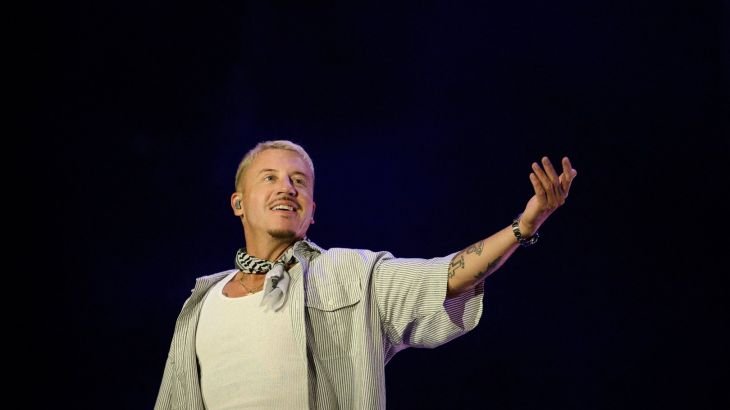
US rapper Macklemore is facing backlash from pro-Israel groups after saying ‘Free Palestine’ while opening for Ed Sheeran at a concert in New Jersey. The Israeli-American Council is petitioning for him to be dropped from the rest of the tour.
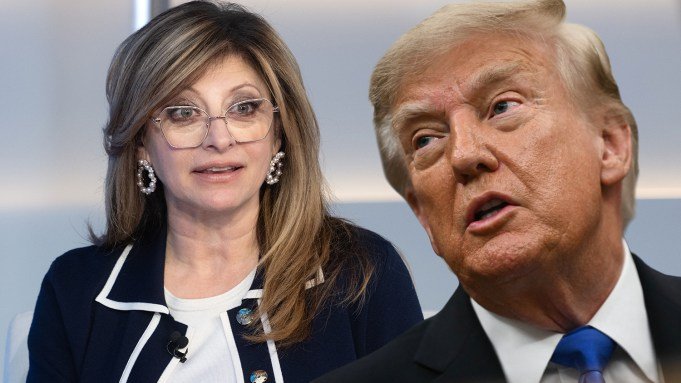
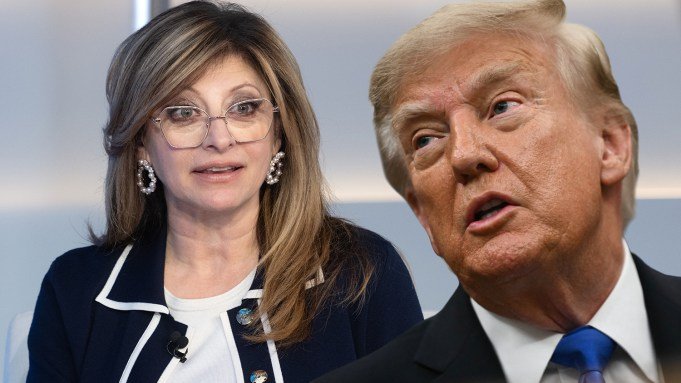
The assertions come Friday despite Bartiromo’s Hollywood attorney Bryan Freedman insisting the veteran Wall Street anchor is still “an employee” of Fox and threatening legal action. Adding to the burgeoning media mess surrounding the so-called “Money Honey,” Donald Trump had thrown serious shade on Fox for taking good pal Bartiromo off the air.
That shade could set the stage for yet another showdown between Trump and his once favorite media buddies at the Murdoch-ruled Fox.
“I can’t believe Maria Bartiromo is no longer going to have her great show(s) on FoxNews/Business,” Trump, a frequent Bartiromo guest, posted Thursday night, about 12 hours after Fox announced “effective today” that the Mornings With Maria host was out. “Three different shows, always number one. Maria is a total professional, and a true warrior. Her fans, of which there are many, will not be happy. God bless you, Maria!”
Bartiromo hadn’t been on the air for almost a month, with Deadline confirming that Fox brass had enough of the MAGA-friendly Bartiromo after they learned she passed corporate-guidance missives to the White House in recent months. However, carving her own way at Fox Business and Fox News for more than a decade, those communications were just the latest minefield that Fox execs feared could blow up in everyone’s faces.
“Her indiscretion was just the latest in a series of self-inflicted wounds,” a cable news insider says of Bartiromo and her close ties with Trump. “This has been a concern for a while, Maria being too cozy with the White House. She crossed a line, and she’s suffered the consequences.”
Weary of addressing allegations of similar conduct over the years by Sean Hannity and other Fox hosts, or Bartiromo’s contract specifics, the source added: “She’s no longer with Fox. Take that for what it is.”
Deadline hears that while there may be “technical truth” to Freedman’s remarks today that Bartiromo still works at Fox because of contracts and other paperwork, she is not returning to her Fox Business or Fox News roles — full stop.
Long a passionate defender of POTUS and offering him a platform over the years, Bartiromo’s apparent sharing of internal edicts with Trump administration officials, first reported by Status, made her pink-slipping inevitable.
Digging a little deeper and a few years back, the seeds of Bartiromo’s downfall were evident if you connect the red string.
In April 2023, Fox agreed to pay $787 million to settle a lawsuit filed by Dominion Voting Systems, one of the technology firms singled out in Fox’s coverage of the 2020 election results. Citied in volumes of court filings and the high-stakes trial that had just begun when Fox settled, Bartiromo was one of the main hosts on Fox promoting the false claims of irregularities with the election Trump lost and Joe Biden won. At the time, the top-rated Tucker Carlson was pulled off the air at Fox in a move that resulted in a Freedman-handled legal dust-up between Carlson and the media company.
No word from ex-Apprentice host Trump if Bartiromo is in the running to be the new White House Press Secretary, but sharp-elbowed lawyer Freedman says his client actually isn’t looking for a new job because she still has her old one.
“For many years, Maria Bartiromo hosted three number one rated television shows on Fox channels,” Freedman said Friday, as my colleague Dade Hayes noted earlier. “She has been, without question, one of the hardest working journalists throughout her award winning career.”
The lawyer for the likes of Carlson and Megyn Kelly, as well as Don Lemon, then unsheathed the knife that may lead to a bloody affair down the line.
“The irresponsible reports that have been published stating that Maria Bartiromo was fired or is no longer an employee of Fox are absolutely and unequivocally false,” Freedman said. “Make no mistake, we have the receipts and witnesses and they will come out whether through the courthouse or otherwise. Those reporting her firing or the incredulous facts supporting that fiction have exhibited a complete and utter reckless disregard for the truth.”
When Deadline asked Fox for a response to Freedman’s statement about his client’s employment situation, the company said: “the release speaks for itself.” The White House did not respond to Deadline’s request for comment.
A U.S. military dog named Valor was honored at the Pentagon for surviving a suicide bombing and saving 47 soldiers in 2023.
Rating:
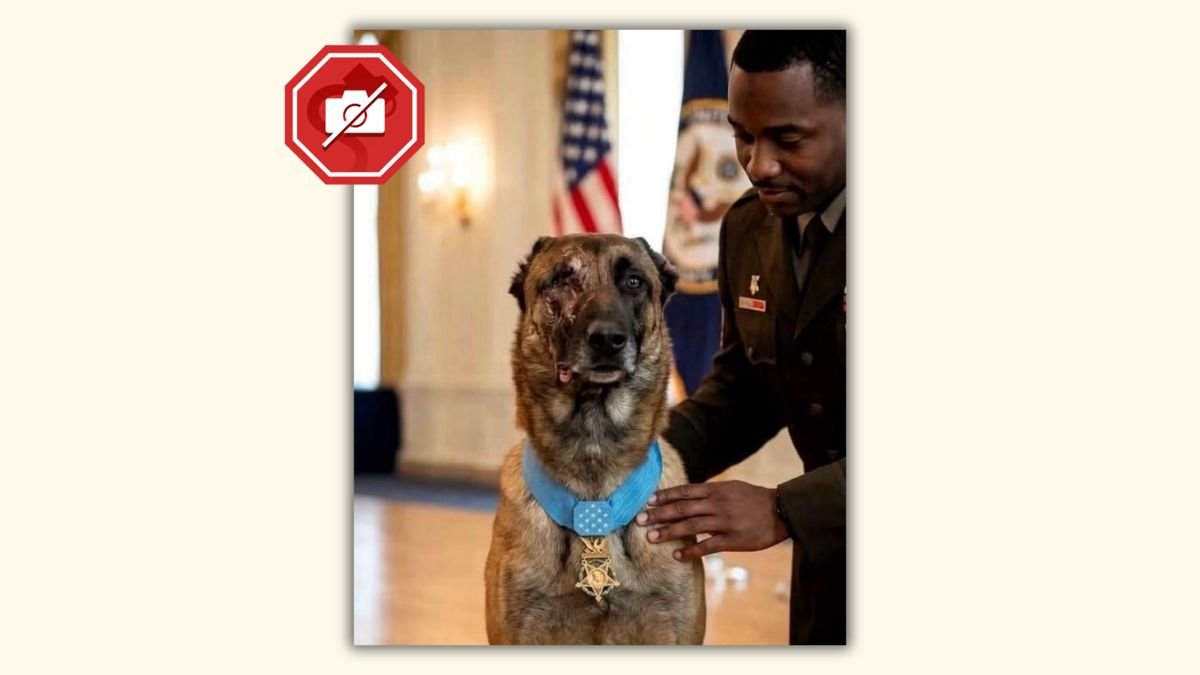
In 2026, people online repeatedly shared a tale framed as a true story about a heroic dog receiving an award for its military service at the Pentagon. For example, one Facebook post (archived) included an image depicting a dog with the right side of its face scarred — apparently K9 Valor — receiving the Congressional Medal of Honor.
The text of the post read:
This is K9 Valor. He saved 47 soldiers. He survived a suicide bomber, then went on to stop three more, fighting tooth against knife. In the end, he placed himself between an explosion and his handler.
The blast shattered half his face. He lost his left eye and ear. He was flown to Germany, where surgeons worked to rebuild his jaw.
At the Pentagon, he was honored with a standing ovation that lasted over eight minutes.
A version of the story shared on LinkedIn (archived) went into more detail than the others. That post described the dog, K9 Valor, being wounded by a suicide bomber at Kabul International Airport on Aug. 26, 2021. Even after being injured, Valor supposedly warned soldiers of a second bomb just in time for them to avoid the blast, and then charged and kill three insurgents trying to shoot wounded survivors. According to the post, Valor became the first dog to receive the Congressional Medal of Honor in May 2023.
This story, however, was fabricated out of whole cloth. There is no evidence of a K9 Valor present at the Kabul Airport suicide bombing or of a dog being awarded the Congressional Medal of Honor. Therefore, we’ve rated this claim as false.
Since even the less detailed versions of the claim shared an image of a dog receiving the Congressional Medal of Honor, Snopes first searched if a “Valor” or any other dog has received the medal. The Congressional Medal of Honor can be identified by its light blue ribbon with 13 stars and the unique design of the medal itself.
A blog post from the Congressional Medal of Honor Society said it welcomed just two new members to its ranks in 2023. Neither received the award in May and both were humans.
The organization Animals in War and Peace awards service animals medals for their duty, often in war. While many of its recipients are Belgian Malinois dogs like Valor apparently is, none of the organization’s award recipients have stories about suffering wounds from one bombing and immediately saving soldiers from a second. Its award ceremonies typically occur in March, not May, and at the U.S. Capitol, not the Pentagon.
Immediately after the suicide bombing at Kabul International Airport, U.S. officials reportedly believed a second bombing occurred nearby. The U.S. Department of Defense clarified the following day that it no longer believed there was a second explosion, and instead the attack was carried out by a single suicide bomber.
That would mean the events as described in the LinkedIn post couldn’t have happened, since there was no second bomb from which to save 47 soldiers.
Snopes has sent U.S. Central Command an email asking whether any dog with a similar story to the one here was present at the 2021 Kabul bombing. We will update this story if and when we receive a reply.
Images show signs of AI generation
The images shared with the posts showed signs of being generated or edited using artificial intelligence tools.
Some readers may have already noticed one piece of evidence: Even though the posts say Valor lost his left eye, the dog in the image used in the Facebook post above appears to be missing its right eye.
In another version of that same image, an insignia that doesn’t match any used in the U.S. military is visible on the arm of the service member’s jacket. His insignia shows four evenly spaced chevrons pointing up, but across the U.S. military the fourth line in insignias are separated from the others by a space and curve downward.
A Google SynthID check, a tool that checks for hidden watermarks Google AI adds to images and video, found that all or part of that image was edited or generated by Google AI.
Additionally, various posts used AI-generated images of different dogs that are supposedly K9 Valor. For example, the more detailed story from the LinkedIn post included an image of a different dog with both ears still present, despite Valor allegedly having lost his left ear. Again, a Google SynthID check found that the image was edited or generated by Google AI.
Snopes previously reported on this claim in June and July 2026. We’re reporting on it again due to continued interest in the claim.
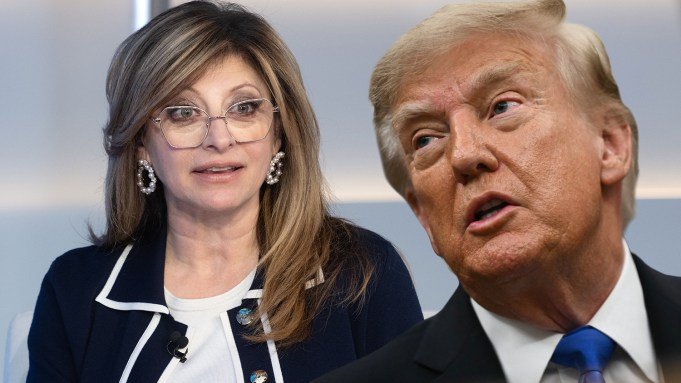
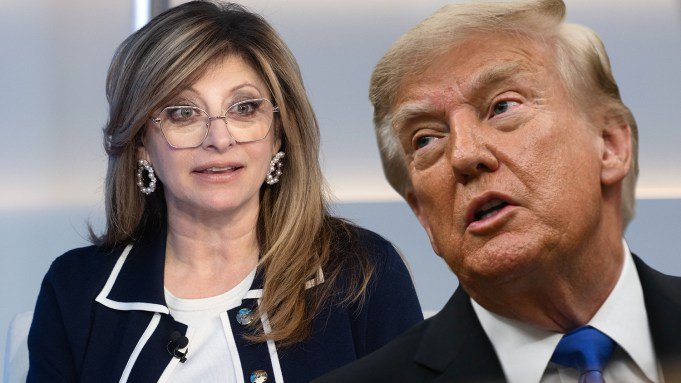
The assertions come Friday despite Bartiromo’s Hollywood attorney Bryan Freedman insisting the veteran Wall Street anchor is still “an employee” of Fox and threatening legal action. Adding to the burgeoning media mess surrounding the so-called “Money Honey,” Donald Trump had thrown serious shade on Fox for taking good pal Bartiromo off the air.
That shade could set the stage for yet another showdown between Trump and his once favorite media buddies at the Murdoch-ruled Fox.
“I can’t believe Maria Bartiromo is no longer going to have her great show(s) on FoxNews/Business,” Trump, a frequent Bartiromo guest, posted Thursday night, about 12 hours after Fox announced “effective today” that the Mornings With Maria host was out. “Three different shows, always number one. Maria is a total professional, and a true warrior. Her fans, of which there are many, will not be happy. God bless you, Maria!”
Bartiromo hadn’t been on the air for almost a month, with Deadline confirming that Fox brass had enough of the MAGA-friendly Bartiromo after they learned she passed corporate-guidance missives to the White House in recent months. However, carving her own way at Fox Business and Fox News for more than a decade, those communications were just the latest minefield that Fox execs feared could blow up in everyone’s faces.
“Her indiscretion was just the latest in a series of self-inflicted wounds,” a cable news insider says of Bartiromo and her close ties with Trump. “This has been a concern for a while, Maria being too cozy with the White House. She crossed a line, and she’s suffered the consequences.”
Weary of addressing allegations of similar conduct over the years by Sean Hannity and other Fox hosts, or Bartiromo’s contract specifics, the source added: “She’s no longer with Fox. Take that for what it is.”
Deadline hears that while there may be “technical truth” to Freedman’s remarks today that Bartiromo still works at Fox because of contracts and other paperwork, she is not returning to her Fox Business or Fox News roles — full stop.
Long a passionate defender of POTUS and offering him a platform over the years, Bartiromo’s apparent sharing of internal edicts with Trump administration officials, first reported by Status, made her pink-slipping inevitable.
Digging a little deeper and a few years back, the seeds of Bartiromo’s downfall were evident if you connect the red string.
In April 2023, Fox agreed to pay $787 million to settle a lawsuit filed by Dominion Voting Systems, one of the technology firms singled out in Fox’s coverage of the 2020 election results. Citied in volumes of court filings and the high-stakes trial that had just begun when Fox settled, Bartiromo was one of the main hosts on Fox promoting the false claims of irregularities with the election Trump lost and Joe Biden won. At the time, the top-rated Tucker Carlson was pulled off the air at Fox in a move that resulted in a Freedman-handled legal dust-up between Carlson and the media company.
No word from ex-Apprentice host Trump if Bartiromo is in the running to be the new White House Press Secretary, but sharp-elbowed lawyer Freedman says his client actually isn’t looking for a new job because she still has her old one.
“For many years, Maria Bartiromo hosted three number one rated television shows on Fox channels,” Freedman said Friday, as my colleague Dade Hayes noted earlier. “She has been, without question, one of the hardest working journalists throughout her award winning career.”
The lawyer for the likes of Carlson and Megyn Kelly, as well as Don Lemon, then unsheathed the knife that may lead to a bloody affair down the line.
“The irresponsible reports that have been published stating that Maria Bartiromo was fired or is no longer an employee of Fox are absolutely and unequivocally false,” Freedman said. “Make no mistake, we have the receipts and witnesses and they will come out whether through the courthouse or otherwise. Those reporting her firing or the incredulous facts supporting that fiction have exhibited a complete and utter reckless disregard for the truth.”
When Deadline asked Fox for a response to Freedman’s statement about his client’s employment situation, the company said: “the release speaks for itself.” The White House did not respond to Deadline’s request for comment.
The assertions come Friday despite Bartiromo’s Hollywood attorney Bryan Freedman insisting the veteran Wall Street anchor is still “an employee” of Fox and threatening legal action. Adding to the burgeoning media mess surrounding the so-called “Money Honey,” Donald Trump had thrown serious shade on Fox for taking good pal Bartiromo off the air.
That shade could set the stage for yet another showdown between Trump and his once favorite media buddies at the Murdoch-ruled Fox.
“I can’t believe Maria Bartiromo is no longer going to have her great show(s) on FoxNews/Business,” Trump, a frequent Bartiromo guest, posted Thursday night, about 12 hours after Fox announced “effective today” that the Mornings With Maria host was out. “Three different shows, always number one. Maria is a total professional, and a true warrior. Her fans, of which there are many, will not be happy. God bless you, Maria!”
Bartiromo hadn’t been on the air for almost a month, with Deadline confirming that Fox brass had enough of the MAGA-friendly Bartiromo after they learned she passed corporate-guidance missives to the White House in recent months. However, carving her own way at Fox Business and Fox News for more than a decade, those communications were just the latest minefield that Fox execs feared could blow up in everyone’s faces.
“Her indiscretion was just the latest in a series of self-inflicted wounds,” a cable news insider says of Bartiromo and her close ties with Trump. “This has been a concern for a while, Maria being too cozy with the White House. She crossed a line, and she’s suffered the consequences.”
Weary of addressing allegations of similar conduct over the years by Sean Hannity and other Fox hosts, or Bartiromo’s contract specifics, the source added: “She’s no longer with Fox. Take that for what it is.”
Deadline hears that while there may be “technical truth” to Freedman’s remarks today that Bartiromo still works at Fox because of contracts and other paperwork, she is not returning to her Fox Business or Fox News roles — full stop.
Long a passionate defender of POTUS and offering him a platform over the years, Bartiromo’s apparent sharing of internal edicts with Trump administration officials, first reported by Status, made her pink-slipping inevitable.
Digging a little deeper and a few years back, the seeds of Bartiromo’s downfall were evident if you connect the red string.
In April 2023, Fox agreed to pay $787 million to settle a lawsuit filed by Dominion Voting Systems, one of the technology firms singled out in Fox’s coverage of the 2020 election results. Citied in volumes of court filings and the high-stakes trial that had just begun when Fox settled, Bartiromo was one of the main hosts on Fox promoting the false claims of irregularities with the election Trump lost and Joe Biden won. At the time, the top-rated Tucker Carlson was pulled off the air at Fox in a move that resulted in a Freedman-handled legal dust-up between Carlson and the media company.
No word from ex-Apprentice host Trump if Bartiromo is in the running to be the new White House Press Secretary, but sharp-elbowed lawyer Freedman says his client actually isn’t looking for a new job because she still has her old one.
“For many years, Maria Bartiromo hosted three number one rated television shows on Fox channels,” Freedman said Friday, as my colleague Dade Hayes noted earlier. “She has been, without question, one of the hardest working journalists throughout her award winning career.”
The lawyer for the likes of Carlson and Megyn Kelly, as well as Don Lemon, then unsheathed the knife that may lead to a bloody affair down the line.
“The irresponsible reports that have been published stating that Maria Bartiromo was fired or is no longer an employee of Fox are absolutely and unequivocally false,” Freedman said. “Make no mistake, we have the receipts and witnesses and they will come out whether through the courthouse or otherwise. Those reporting her firing or the incredulous facts supporting that fiction have exhibited a complete and utter reckless disregard for the truth.”
When Deadline asked Fox for a response to Freedman’s statement about his client’s employment situation, the company said: “the release speaks for itself.” The White House did not respond to Deadline’s request for comment.
The assertions come Friday despite Bartiromo’s Hollywood attorney Bryan Freedman insisting the veteran Wall Street anchor is still “an employee” of Fox and threatening legal action. Adding to the burgeoning media mess surrounding the so-called “Money Honey,” Donald Trump had thrown serious shade on Fox for taking good pal Bartiromo off the air.
That shade could set the stage for yet another showdown between Trump and his once favorite media buddies at the Murdoch-ruled Fox.
“I can’t believe Maria Bartiromo is no longer going to have her great show(s) on FoxNews/Business,” Trump, a frequent Bartiromo guest, posted Thursday night, about 12 hours after Fox announced “effective today” that the Mornings With Maria host was out. “Three different shows, always number one. Maria is a total professional, and a true warrior. Her fans, of which there are many, will not be happy. God bless you, Maria!”
Bartiromo hadn’t been on the air for almost a month, with Deadline confirming that Fox brass had enough of the MAGA-friendly Bartiromo after they learned she passed corporate-guidance missives to the White House in recent months. However, carving her own way at Fox Business and Fox News for more than a decade, those communications were just the latest minefield that Fox execs feared could blow up in everyone’s faces.
“Her indiscretion was just the latest in a series of self-inflicted wounds,” a cable news insider says of Bartiromo and her close ties with Trump. “This has been a concern for a while, Maria being too cozy with the White House. She crossed a line, and she’s suffered the consequences.”
Weary of addressing allegations of similar conduct over the years by Sean Hannity and other Fox hosts, or Bartiromo’s contract specifics, the source added: “She’s no longer with Fox. Take that for what it is.”
Deadline hears that while there may be “technical truth” to Freedman’s remarks today that Bartiromo still works at Fox because of contracts and other paperwork, she is not returning to her Fox Business or Fox News roles — full stop.
Long a passionate defender of POTUS and offering him a platform over the years, Bartiromo’s apparent sharing of internal edicts with Trump administration officials, first reported by Status, made her pink-slipping inevitable.
Digging a little deeper and a few years back, the seeds of Bartiromo’s downfall were evident if you connect the red string.
In April 2023, Fox agreed to pay $787 million to settle a lawsuit filed by Dominion Voting Systems, one of the technology firms singled out in Fox’s coverage of the 2020 election results. Citied in volumes of court filings and the high-stakes trial that had just begun when Fox settled, Bartiromo was one of the main hosts on Fox promoting the false claims of irregularities with the election Trump lost and Joe Biden won. At the time, the top-rated Tucker Carlson was pulled off the air at Fox in a move that resulted in a Freedman-handled legal dust-up between Carlson and the media company.
No word from ex-Apprentice host Trump if Bartiromo is in the running to be the new White House Press Secretary, but sharp-elbowed lawyer Freedman says his client actually isn’t looking for a new job because she still has her old one.
“For many years, Maria Bartiromo hosted three number one rated television shows on Fox channels,” Freedman said Friday, as my colleague Dade Hayes noted earlier. “She has been, without question, one of the hardest working journalists throughout her award winning career.”
The lawyer for the likes of Carlson and Megyn Kelly, as well as Don Lemon, then unsheathed the knife that may lead to a bloody affair down the line.
“The irresponsible reports that have been published stating that Maria Bartiromo was fired or is no longer an employee of Fox are absolutely and unequivocally false,” Freedman said. “Make no mistake, we have the receipts and witnesses and they will come out whether through the courthouse or otherwise. Those reporting her firing or the incredulous facts supporting that fiction have exhibited a complete and utter reckless disregard for the truth.”
When Deadline asked Fox for a response to Freedman’s statement about his client’s employment situation, the company said: “the release speaks for itself.” The White House did not respond to Deadline’s request for comment.
Christensen, Laerke. ‘Did RFK Jr. Claim Children Circumcised Early Had “double” Rate of Autism Tied to Tylenol Use?’ Snopes, 29 May 2026, https://www.snopes.com//fact-check/rfk-jr-autism-circumcision-tylenol/.
Kasprak, Alex. ‘FACT CHECK: Would Breaking a Vaccine Vial Necessitate Evacuating a Building?’ Snopes, 15 May 2017, https://www.snopes.com//fact-check/vaccine-vial-evacuating-building/.
New item…
Rascouët-Paz, Anna. ‘RFK Jr. Repeats False Claim That MMR Vaccine Contains Fetal Tissue’. Snopes, 31 Aug. 2026, https://www.snopes.com//fact-check/rfk-mmr-vaccine-fetal-tissue/.
New item…
Rascouët-Paz, Anna. ‘Yes, RFK Jr. Said Autistic Children Will Never Pay Taxes, Hold a Job, Play Baseball or Write a Poem’. Snopes, 18 Apr. 2025, https://www.snopes.com//fact-check/quote-rfk-jr-autistic-kids/.
Robert F. Kennedy Jr. Articles | Snopes.Com. https://www.snopes.com/tag/robert-f-kennedy-jr/?pagenum=1. Accessed 2 Sept. 2026.
Wazer, Caroline. ‘RFK Jr. Has Suggested Vaccines Caused 1918 Spanish Flu Pandemic at Least Twice’. Snopes, 1 Apr. 2025, https://www.snopes.com//news/2025/04/01/rfk-vaccine-spanish-flu-pandemic/.
Humanitarian official Athena Rayburn dissects the Israeli tactics making life ‘untenable’ for millions of Palestinians.
In this episode, Athena Rayburn, the executive director of the Association of International Development Agencies, describes what daily life has become in the occupied West Bank and the Gaza Strip.
In Gaza, more than two million Palestinians have been corralled into about 104sq km (40sq miles), where Israeli forces consistently bomb them. Basic human requirements like clean water, food, electricity, medicine and durable shelter are hard to come by, with Israel imposing severe restrictions on humanitarian aid and groups. The United States-backed Board of Peace touts progress, but Rayburn tells host Steve Clemons that the situation on the ground has become “untenable and catastrophic”.
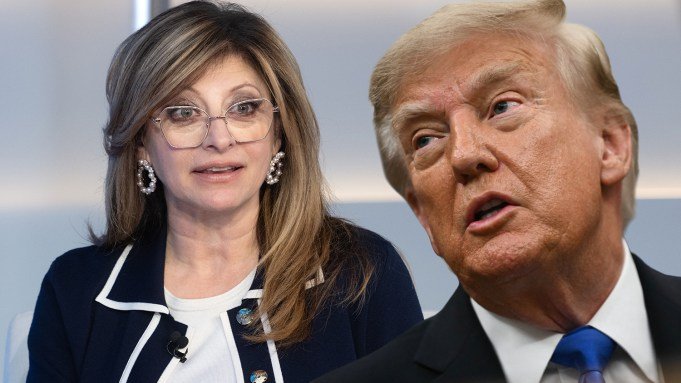
The assertions come Friday despite Bartiromo’s Hollywood attorney Bryan Freedman insisting the veteran Wall Street anchor is still “an employee” of Fox and threatening legal action. Adding to the burgeoning media mess surrounding the so-called “Money Honey,” Donald Trump had thrown serious shade on Fox for taking good pal Bartiromo off the air.
That shade could set the stage for yet another showdown between Trump and his once favorite media buddies at the Murdoch-ruled Fox.
“I can’t believe Maria Bartiromo is no longer going to have her great show(s) on FoxNews/Business,” Trump, a frequent Bartiromo guest, posted Thursday night, about 12 hours after Fox announced “effective today” that the Mornings With Maria host was out. “Three different shows, always number one. Maria is a total professional, and a true warrior. Her fans, of which there are many, will not be happy. God bless you, Maria!”
Bartiromo hadn’t been on the air for almost a month, with Deadline confirming that Fox brass had enough of the MAGA-friendly Bartiromo after they learned she passed corporate-guidance missives to the White House in recent months. However, carving her own way at Fox Business and Fox News for more than a decade, those communications were just the latest minefield that Fox execs feared could blow up in everyone’s faces.
“Her indiscretion was just the latest in a series of self-inflicted wounds,” a cable news insider says of Bartiromo and her close ties with Trump. “This has been a concern for a while, Maria being too cozy with the White House. She crossed a line, and she’s suffered the consequences.”
Weary of addressing allegations of similar conduct over the years by Sean Hannity and other Fox hosts, or Bartiromo’s contract specifics, the source added: “She’s no longer with Fox. Take that for what it is.”
Deadline hears that while there may be “technical truth” to Freedman’s remarks today that Bartiromo still works at Fox because of contracts and other paperwork, she is not returning to her Fox Business or Fox News roles — full stop.
Long a passionate defender of POTUS and offering him a platform over the years, Bartiromo’s apparent sharing of internal edicts with Trump administration officials, first reported by Status, made her pink-slipping inevitable.
Digging a little deeper and a few years back, the seeds of Bartiromo’s downfall were evident if you connect the red string.
In April 2023, Fox agreed to pay $787 million to settle a lawsuit filed by Dominion Voting Systems, one of the technology firms singled out in Fox’s coverage of the 2020 election results. Citied in volumes of court filings and the high-stakes trial that had just begun when Fox settled, Bartiromo was one of the main hosts on Fox promoting the false claims of irregularities with the election Trump lost and Joe Biden won. At the time, the top-rated Tucker Carlson was pulled off the air at Fox in a move that resulted in a Freedman-handled legal dust-up between Carlson and the media company.
No word from ex-Apprentice host Trump if Bartiromo is in the running to be the new White House Press Secretary, but sharp-elbowed lawyer Freedman says his client actually isn’t looking for a new job because she still has her old one.
“For many years, Maria Bartiromo hosted three number one rated television shows on Fox channels,” Freedman said Friday, as my colleague Dade Hayes noted earlier. “She has been, without question, one of the hardest working journalists throughout her award winning career.”
The lawyer for the likes of Carlson and Megyn Kelly, as well as Don Lemon, then unsheathed the knife that may lead to a bloody affair down the line.
“The irresponsible reports that have been published stating that Maria Bartiromo was fired or is no longer an employee of Fox are absolutely and unequivocally false,” Freedman said. “Make no mistake, we have the receipts and witnesses and they will come out whether through the courthouse or otherwise. Those reporting her firing or the incredulous facts supporting that fiction have exhibited a complete and utter reckless disregard for the truth.”
When Deadline asked Fox for a response to Freedman’s statement about his client’s employment situation, the company said: “the release speaks for itself.” The White House did not respond to Deadline’s request for comment.
Video captured the moment an Amazon Prime plane overran a runway in Miami and crash landed, skidding into a carpark at the airport. At least five people were killed.