Category: News

  • Top ministers quit after Peru’s president postpones F-16 fighter jet deal

    Top ministers quit after Peru’s president postpones F-16 fighter jet deal

    Two cabinet-level ministers in Peru have resigned after interim President Jose Maria Balcazar announced he would defer a decision to buy F-16 fighter jets from the United States company Lockheed Martin.

    Defence Minister Carlos Diaz and Foreign Minister Hugo de Zela cited their opposition to the move in their resignation letters on Wednesday.

    Recommended Stories

    list of 3 itemsend of list

    “A strategic decision has been taken in the area of national security with which I have a fundamental disagreement,” Diaz wrote.

    The fighter jets have long been a source of controversy in Peru, where critics have questioned whether the purchase is a sign of deference to US President Donald Trump.

    Last week, the left-wing Balcazar — Peru’s ninth president in a decade — announced he would leave the decision about whether to invest $3.5bn in the purchase to the country’s next elected leader.

    Balcazar himself had only been in office since February, selected by Congress to replace the latest in a string of impeached presidents.

    Last week, he abruptly cancelled a signing ceremony for the F-16 deal, which would have seen an initial batch of 12 new planes added to Peru’s ageing air force. The country aims to acquire 24 jets overall.

    Balcazar explained he was not pulling out of the deal, but that he felt the next presidential administration should be involved in making such a hefty financial commitment.

    “For us to commit such a large sum of money to the incoming government would be a poor practice for a transitional government,” Balcazar said at the time.

    “We remain firm in respecting all agreements that may have been reached at the level of the armed forces, or in this case, with the relevant ministry of the air force, to carry out the corresponding negotiations.”

    His decision, however, was met with pushback, both domestically and from the US. The US ambassador to Peru, Bernie Navarro, responded on April 17 with a warning posted on social media.

    “If you deal with the U.S. in bad faith and undermine U.S. interests, rest assured, I, on behalf of
    [President] Trump and his administration, will use every available tool to protect and promote the prosperity and security of the United States and our region,” Navarro wrote.

    Critics of the deal, however, have argued that Peru has received more competitive offers from French and Swedish aircraft makers like Dassault Aviation and Saab AB, respectively.

    But Navarro on Wednesday denied that the US had been outcompeted. In a statement, he wrote that the “bid was made at a high level of competitiveness” and called the plane fleet “the most technically advanced fighter jets ever built”.

    He also denounced the delay as an unreasonable stoppage on a deal he characterised as already signed.

    “In planning the delivery of a product of this calibre, there is no such thing as an inconsequential delay,” he wrote.

    “Every delay results in significant costs. The same package cannot be available in a couple of months, or even weeks.”

    The decision to spend the $3.5bn on 24 fighter jets was made in 2024 under former President Dina Boluarte. The purchase was to be financed by $2bn in domestic borrowing in 2025 and $1.5bn in 2026.

    In September, the US Department of Defense approved a potential sale of F-16s to Peru.

    But Boluarte was removed from office in October, and her successor, Jose Jeri, lasted just four months in office before he too was impeached.

    The instability in Peru’s presidency comes at a time when the Trump administration is seeking greater influence over Latin America, as part of what the US president has called his “Donroe Doctrine”.

    Already, the Trump administration has pushed Peru to distance itself from Chinese investment. In February, for instance, it publicly protested against Chinese ownership in the Pacific port of Chancay.

    “Peru could be powerless to oversee Chancay, one of its largest ports, which is under the jurisdiction of predatory Chinese owners,” the Trump administration wrote in a social media post.

    “We support Peru’s sovereign right to oversee critical infrastructure in its own territory. Let this be a cautionary tale for the region and the world: cheap Chinese money costs sovereignty.”

    Just this week, one of Trump’s allies, Representative Maria Elvira Salazar, warned that the Chinese-owned port was a danger to the US.

    “That’s a direct threat in our hemisphere, right in the country of Peru,” she told a congressional committee. “For that reason, the new Peruvian government, which will be elected next June, must take it back.”

    She added that, if the Peruvian government responded accordingly, “the United States will help them under the Trump administration”.

    The country, however, is enmeshed in a messy presidential race replete with vote-counting delays and accusations of malpractice.

    Election experts have said there is no evidence of voter fraud. But the slow vote count has left the race’s outcome undetermined, more than a week after the ballots were cast on April 12.

    Right-wing leader and former First Lady Keiko Fujimori is all but assured of progressing to a run-off in June. But who will join her is uncertain.

    Left-wing Congress member Roberto Sanchez is currently in the lead in the race for second place, with 12 percent of the votes tallied, but far-right candidate Rafael Lopez Aliaga, a former mayor, is close behind with 11.9 percent. Lopez Aliaga has been a vocal supporter of the Trump administration.

    The final vote count for the first round of the election is expected to be delivered in May.

    Traditionally, Peru’s new president should be sworn in on July 28, the country’s independence day.

  • Trump calls Virginia election ‘rigged’ after redistricting referendum

    Trump calls Virginia election ‘rigged’ after redistricting referendum

    United States President Donald Trump has claimed that the Virginia election was “rigged”, without providing evidence, after voters narrowly approved a referendum to redraw the state’s congressional map.

    With most ballots counted on Tuesday, the measure passed by a slim margin, 51.45 percent voting in favour and 48.55 percent against, a result that could significantly reshape Virginia’s representation in the US House of Representatives and potentially benefit Democrats.

    Recommended Stories

    list of 1 itemend of list

    Trump’s comments came after the result on Wednesday, with the outcome expected to face legal challenges.

    “A RIGGED ELECTION TOOK PLACE LAST NIGHT IN THE GREAT COMMONWEALTH OF VIRGINIA!” Trump wrote in a post on TruthSocial.

    “All day long Republicans were winning, the Spirit was unbelievable, until the very end when, of course, there was a massive ‘Mail In Ballot Drop!’ Where have I heard that before – And the Democrats eked out another Crooked Victory! Six to five goes to ten to one, and yet the Presidential Election in November was very close to a 50-50 split,” he continued.

    Trump has made similar claims without evidence since the 2020 presidential election, when he lost to Joe Biden. Courts and election officials have confirmed the results.

    Part of a broader political battle

    The Virginia result is being closely watched nationally, as both Democrats and Republicans seek to shape congressional maps before the upcoming midterm elections.

    Redistricting – the process of drawing electoral boundaries – can directly influence which party wins seats in the US House.

    Democrats have framed the move as a way to counter Republican-led efforts in other states to redraw maps in their favour. Republicans, meanwhile, argue the process in Virginia raises concerns about fairness and transparency.

    The result could still face legal scrutiny. Courts are expected to review challenges to the referendum’s introduction and wording to determine whether it was clear to voters.

    Opponents argue the measure may not have followed proper procedures and that the ballot language could have been misleading.

    Virginia’s Supreme Court previously allowed the vote to proceed but indicated it could revisit these issues if the measure passed, leaving the outcome uncertain.

    Trump also criticised the referendum wording, saying he “had no idea what … they were talking about” and urging courts to intervene.

    Redistricting usually follows the national census every 10 years, but Trump last year urged Republican-led states to redraw maps mid-decade to protect the party’s fragile House majority. That triggered a tit-for-tat contest as both parties raced to squeeze out an extra advantage before November.

    Control of the US House depends on winning at least 218 seats, the simple majority needed in the 435-member chamber.

    “Democrats are on the cusp of the magic number of 218 in our ratings,” Kyle Kondik, managing editor at Sabato’s Crystal Ball at the University of Virginia Center for Politics, said in a statement sent to Al Jazeera.

    “However, there are other dominoes that might fall on redistricting, most notably in Florida, where Republicans are meeting in a special legislative session next week and may try to squeeze additional seats out of that state,”  he added.

    Democratic-backed organisations invested heavily in the contest, turning it into one of the costliest battles over electoral maps in the US.

    Spending on both sides has approached $100m, with a large share coming from so-called “dark money” groups, nonprofit entities that can channel significant funds into political campaigns without revealing their donors.

    Virginia election results
    Virginia election results
  • Prediction market Kalshi docks three US candidates for betting on own races

    Prediction market Kalshi docks three US candidates for betting on own races

    The penalties come amid calls for greater oversight, as the company pledges to proactively police ‘insider trading’ on its platforms.

    Predictive market platform Kalshi has punished three unnamed United States political candidates for taking part in “insider trading” by betting on their own campaigns.

    In a statement on Wednesday, Kalshi explained that it had taken the enforcement action after launching a new raft of safeguards.

    Recommended Stories

    list of 3 itemsend of list

    Concerns had been raised over the lack of regulations in online betting, amid an explosion in popularity for prediction market platforms. The sites allow people to place bets on an array of cultural, sporting, political and geopolitical events.

    “Just like in traditional financial markets, bad actors will try to cheat,” Kalshi said in a statement, adding that the three cases “are an example of how developing proactive engineering solutions can help identify illicit trading activity”.

    The first instance Kalshi identified involved a candidate in the Democratic primary for Minnesota’s 2nd congressional district. The statement did not identify which candidate it had penalised from the five-way primary, which will be held on August 11.

    Kalshi said the candidate “traded a small amount on the outcome of his own election”. He subsequently paid a $539.85 fine and was suspended from the platform for five years.

    A second case concerned a candidate in the Republican primary for Texas’s 21st congressional district, which former professional baseball player Mark Teixeira won in early April.

    Like the earlier case, Kalshi did not identify which of the three Republican candidates had placed a “fairly small” bet on the outcome of his own election. The individual was made to pay a $784.20 fine and was suspended for five years from the platform.

    A third case involved the Democratic primary for Virginia’s US Senate election. Four candidates are currently running in the race, including incumbent Senator Mark Warner, with the vote set for August 4.

    Kalshi did not identify the candidate in question but said he “traded in two markets related to his campaign”, the first concerning wagers about who would run for public office in 2026.

    The candidate “placed a trade on himself in this market”, Kalshi said.

    “Then, once the trader announced himself as a candidate for the Democratic Primary election for Virginia US Senate, he again traded on his own candidacy.”

    Kalshi added that the candidate stopped responding to contacts from the company and was given a five-year suspension and a fine of $6,229.30.

    Calls for oversight

    Platforms like Kalshi and its top rival, Polymarket, have expanded rapidly in recent years, raising concerns over the potential for insider trading.

    Those concerns were piqued most recently amid the US-Israel war on Iran, which has seen instances of bets surging ahead of government actions that should otherwise be shrouded in secrecy.

    In one example, 150 new accounts appeared on Polymarket ahead of the initial US-Israeli strikes on February 28, according to Senator Chris Murphy and Representative Greg Casar, who introduced legislation for more oversight in March.

    At least 109 of the new accounts made more than $10,000 in betting on the prospect of the US and Israel striking Iran. One account banked more than half a million dollars.

    Speaking at a news conference in March, Murphy charged that the insider information was coming from the administration of US President Donald Trump.

    “It seems pretty clear what happened. People inside the White House, or those close to the White House with knowledge of the attack that was imminent, cashed in,” Murphy said.

    Prediction market platforms are regulated in the US by the federal Commodity Futures Trading Commission (CFTC), but several states have said they should also be regulated under local gambling laws.

    In March, Arizona became the first state to file criminal charges against Kalshi for allegedly operating an illegal gambling operation.

  • US suspect accused of stealing Kristi Noem’s purse sentenced to three years

    US suspect accused of stealing Kristi Noem’s purse sentenced to three years

    President Trump has used incidents of crime to justify an ongoing National Guard deployment to the capital, Washington, DC.

    A United States district court has sentenced a Chilean man to three years in prison for stealing a handbag last year belonging to then-Homeland Security Secretary Kristi Noem.

    On Wednesday, the administration of President Donald Trump added that the suspect, 50-year-old Mario Bustamante Leiva, would also be subject to deportation after his time behind bars.

    Recommended Stories

    list of 3 itemsend of list

    “Bustamante Leiva came to Washington illegally to prey on citizens of the District. He methodically targeted women at restaurants, stealing their purses, and monetizing the stolen cards within minutes,” US Attorney Jeanine Pirro said in a statement.

    “His pattern of theft ends here. He will serve his prison term and be deported.”

    The bag-snatching case raised concerns last year about the efficacy of Noem’s Secret Service protection, as agents had been guarding the cabinet secretary on the night of the theft.

    The Trump administration has also used the case as an example to justify its deportation push, as well as its military-led crackdown on crime in Washington, DC.

    According to prosecutors, Bustamante Leiva was one of two suspects who were caught on surveillance camera stealing purses in Washington, DC, in April 2025.

    His co-defendant, Cristian Montecino-Sanzana, reportedly joined him for the first documented theft on April 12. He has been sentenced to 13 months behind bars and three years of supervised release, but he too faces deportation.

    Bustamante Leiva was also accused of a second theft on April 17 at the Westin Hotel in Washington, DC. In both cases, the stolen credit cards were later used at a grocery store to purchase gift cards.

    The case involving Noem came on April 20, as the Homeland Security secretary dined with her family at Capital Burger.

    “Surveillance cameras recorded Bustamente Leiva repeatedly looking down toward Noem’s purse before bending down and snatching it,” a statement from the US Justice Department reads. “Noem’s purse contained several credit cards and about $3,000 in cash.”

    Bustamente Leiva was ultimately charged with three counts of wire fraud and one count of first-degree theft.

    Last year, Trump initiated a series of National Guard deployments around the country on the premise of safeguarding immigration agents and tamping down crime.

    In August, that campaign came to Washington, DC, which Trump described as overwhelmed with crime. Official data at the time, however, put violent crime in the city at a 30-year low.

    “Citizens, tourists, and staff alike are unable to live peacefully in the Nation’s capital, which is under siege from violent crime,” Trump wrote in an executive order on August 11.

    As part of his order, he deployed thousands of National Guard troops to patrol the capital to address what he described as a “crime emergency”.

    While court cases forced Trump to remove National Guard members from other parts of the country, the military has remained on the streets of Washington, DC, in part because of the Home Rule Act, which gives the federal government greater power over the capital.

    But there are limits. Federal law otherwise largely forbids the military from serving as civilian law enforcement, so the troops cannot make arrests.

    Roughly 2,500 troops remain in the capital to support local law enforcement. It is unclear when their deployment might end.

    Noem, meanwhile, was fired as Homeland Security secretary on March 5, amid growing scrutiny of her government spending and her controversial immigration enforcement efforts in places like Minnesota.

    She has since been reassigned to the Shield of the Americas, Trump’s initiative to encourage Latin American leaders to reject Chinese influence in their countries and use heavy force to stop crime.

  • Trump calls for Republicans to unify around budget reconciliation push

    Trump calls for Republicans to unify around budget reconciliation push

    Budget reconciliation would allow conservative lawmakers to bypass Democratic opposition in the US Senate with a simple majority.

    United States President Donald Trump has called on Republican lawmakers to push through legislation to fund immigration enforcement through a process known as budget reconciliation.

    That procedure would allow them to sidestep opposition from the Democratic Party, which has refused to approve such spending until immigration practices are reformed.

    Recommended Stories

    list of 3 itemsend of list

    In a social media post on Wednesday, Trump said that conservatives must “unify” behind the reconciliation push to end the current deadlock.

    “Senate Majority Leader John Thune, and Senator Lindsey Graham, have taken a critical first step to passing another Reconciliation Bill to fund our Great Border Patrol and ICE [Immigration and Customs Enforcement] Agents,” Trump wrote.

    “Republicans must stick together and UNIFY to get this done, and to keep America safe — something which the Democrats don’t care about.”

    A partial government shutdown has affected the Department of Homeland Security (DHS) since mid-February, with previous efforts to break the impasse proving unsuccessful.

    DHS oversees multiple agencies, including the Transportation Safety Administration (TSA) and the Federal Emergency Management Agency (FEMA).

    But the opposition has been focused on blocking funding for two agencies in particular: ICE and Customs and Border Protection (CBP).

    Democrats have refused to support further spending for those agencies without reforms, following the fatal shootings of Alex Pretti and Renee Nicole Good by federal agents in January, during an immigration crackdown in Minneapolis.

    Such reforms would include requirements for immigration agents to clearly identify themselves and avoid racial profiling.

    Republicans, however, have rejected those demands. The right-wing party holds a small majority in both the House of Representatives and Senate, and it is now seeking to use budget reconciliation to bypass the Democratic opposition.

    Budget reconciliation is a fast-track process wherein Congressional committees are tasked with crafting legislation to meet certain spending targets.

    Those bills are then allowed to pass the 100-seat Senate with a simple majority, rather than the 60 votes ordinarily needed to bypass a filibuster, but they must abide by certain limitations.

    On Tuesday, in a vote of 52 to 46, the Senate approved a motion to start a budget reconciliation process that paves the way for funding ICE and CBP through budget reconciliation.

    Senator Lindsey Graham called the vote a “significant step” in a social media post, adding that the effort would aim to “fully fund Border Patrol and ICE for the rest of the Trump presidency!”

    “It’s not my preference,” Republican Senate Majority Leader John Thune said on Tuesday. “But it is reality.”

    Democratic Senate Minority Leader Chuck Schumer called the effort a “partisan sideshow” that would direct money towards immigration enforcement, “without putting any restraints on these rogue agencies’ rampant violence in our streets”.

    Budget reconciliation was previously used by Republican lawmakers to pass Trump’s landmark tax and spending package without any Democratic votes last year.

  • Warner Bros and Paramount merger could reshape US media landscape

    Warner Bros and Paramount merger could reshape US media landscape

    On Thursday, Warner Bros Discovery shareholders are set to vote on a merger that could dramatically reshape the United States media landscape — combining the company with Paramount Skydance.

    The deal, which still needs to be approved by federal regulators, would place two of the nation’s largest news organisations – CBS News and CNN – under one roof.

    Recommended Stories

    list of 4 itemsend of list

    Earlier this month, the independent proxy investor advisory Glass Lewis urged investors to vote in favour of the merger.

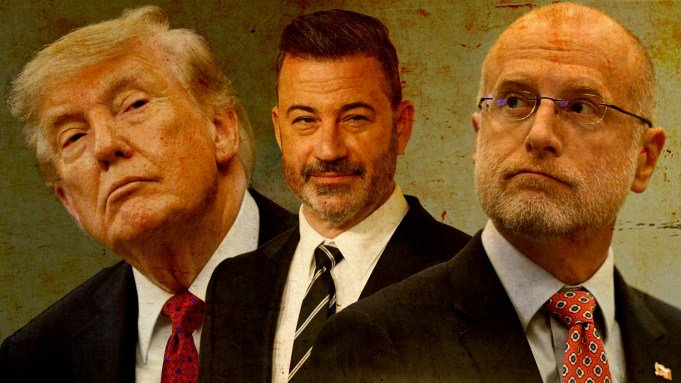
    Paramount Skydance is led by David Ellison, the son of Oracle co-founder Larry Ellison, who is a key ally of US President Donald Trump. Under Ellison’s leadership, the network has already taken steps, critics say, to appease Trump.

    Those moves include appointing conservative opinion writer Bari Weiss, who has no prior television experience, to lead the storied broadcast network; installing Ken Weinstein, a former Trump administration appointee, as an ombudsman tasked with policing bias; and delaying or spiking stories critical of the administration – including the delay of publishing a story on CECOT, the notorious El Salvadorian mega prison to which the Trump administration deported Venezuelan migrants. Sharyn Alfonsi, the reporter who covered the story, called that move a “political” choice.


    Interactive_Media_Corporations_US_March17_2026-1774009588


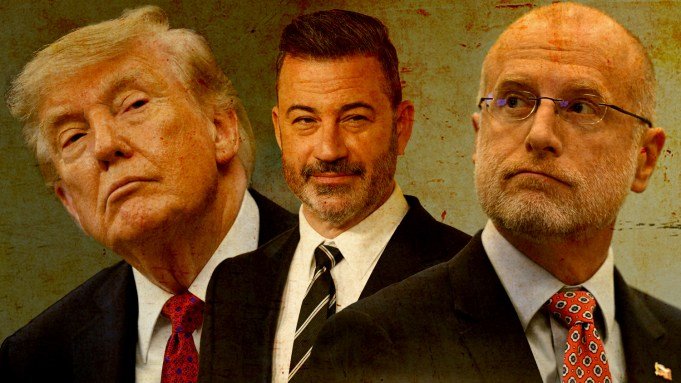
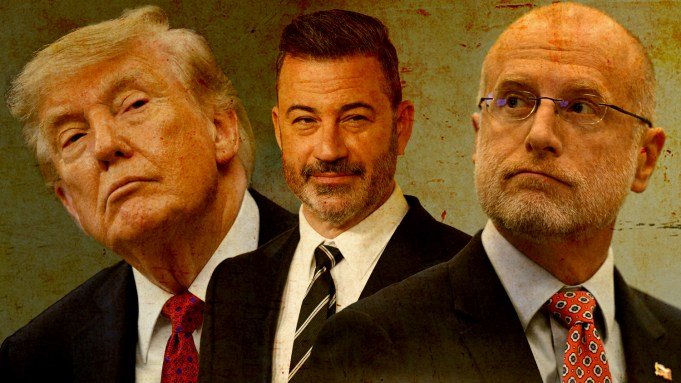
    But the deal has faced continued regulatory scrutiny. Last month, Democratic US Senator Cory Booker of New Jersey called Federal Communications Commission Chair Brendan Carr to investigate foreign investment in the merger, which includes the sovereign wealth funds of Saudi Arabia, Qatar, and the United Arab Emirates as well as investment from China.

    Across the pond, the Competition and Markets Authority (CMA), Britain’s antitrust watchdog, is set to launch an investigation into the looming deal, Reuters news agency reported.

    Even before the merger, some longtime reporters, including justice correspondent Scott McFarlane, have been “disillusioned with the overall direction” at CBS under the direction of Ellison and Weiss and moved on, industry trade publication Status reported.

    Amid other major changes at the network, CBS announced last month that it would cease operations for CBS News Radio, which represents 6 percent of its workforce.

    If the merger proceeds, CNN would fall under the same corporate umbrella. CNN, viewed by Trump as overly critical, has frequently been a target of his attacks. Ellison has reportedly promised Trump “sweeping changes” at the network if the deal is completed.

    CNN has long been the middle-of-the-road network, compared to MS Now, formerly known as MSNBC, on the left and Fox News, which caters to the right.

    Internally at CNN, the looming merger is fuelling concern about what the future of the network looks like, with reports that staffers were “shaken” by the possibility of the Ellisons running the cable network.


    Last month, Paramount’s Ellison appeared on CNBC to quell concerns that CNN’s editorial stance would change under him, saying that editorial independence “needs to be maintained”, adding in the interview that “it’s maintained at CBS”, a claim refuted by press freedom experts.

    “Ellison has already shown his cards when it comes to editorial independence and has zero credibility on the issue,” Seth Stern, director of advocacy at the Freedom of the Press Foundation, told Al Jazeera.

    “Ellison may not turn CNN into Fox News overnight and may even still let CNN reporters criticise Trump at times. But it’s a virtual certainty that when his business interests are at stake, Trump will be given a seat at the editor’s desk.”

    Emerging partisan bias

    These concerns are underscored by a comparable merger happening in the local news ecosystem, where partisan bias is generally less overt.

    The merger in question is between two of the largest local affiliate operators in the US — Nexstar and Tegna. Mirroring concerns about the possible merger between CNN and CBS News’s parent companies, the combined Tegna and Nexstar could consolidate and limit access to differing viewpoints, especially as this merger would reach 80 percent of TV households across key US markets.

    While individual networks, including ABC, CBS, NBC and FOX, have their own editorial stances, local news stations affiliated with them do not necessarily share those.

    There are roughly 250 ABC-affiliated news stations in the US, but only eight of them are actually operated by ABC’s parent company, Disney. This is comparable across other networks. CBS only operates 17 of its stations. Fox operates 29, NBC operates 11, but they all have affiliated stations in more than 200 markets.

    The companies that operate affiliated stations that are not owned and operated by networks include Sinclair, Tegna and Nexstar as well as their competitors, including Gray Media, Scripps, Hearst TV, Allen Media Group and Graham Media.

    Under this model, a TV station produces its own content including news programming tailored to its local audience. It then licenses national network content to fill the rest of its schedule, such as national newscasts, talk shows, sitcoms, sports, and other programming. The station and the network share the advertising revenue.

    For networks, this arrangement allows them to reach audiences across the country without owning broadcast infrastructure in every market. For local affiliates, it provides access to higher-profile programming that attracts larger audiences and supports stronger advertising revenue.

    Historically, local news operators did not take part in the partisan media ecosystem. But that has started to shift, starting with right-leaning Sinclair Broadcast Group, which owns stations in 85 different markets, including the ABC station in Washington, DC and the NBC station in Providence, Rhode Island.

    In 2018, the company gained notoriety for its right-wing stance and for forcing anchors across all of its markets to read a script pushing Trump’s talking points on the state of the US media, using the same script across nearly 200 stations.

    Now Nexstar, which operates its own cable network called NewsNation, and which was originally positioned as unbiased, is staffed up with former Fox personalities and trending right, Status reported.

    Limited news options for local consumers

    Mergers of local news operators have faced antitrust scrutiny in the past. In 2018, the US Federal Communications Commission (FCC) effectively blocked a looming merger between Tribune Media and Sinclair — the then-largest affiliate operator in the US — by sending it into a lengthy regulatory review, and called for the companies to divest in stations they owned.


    Instead, Tribune pulled out of the deal, only to later merge with Nexstar to make the largest operator, bypassing Sinclair.

    The $6.2bn Tegna-Nexstar merger was approved by shareholders in November and has the blessing of the US president.

    “We need more competition against THE ENEMY, the Fake News National TV Networks”, Trump said in a post on Truth Social, his social media platform, in February.

    In March, eight state attorneys general, including those for New York, California, Illinois, North Carolina and Virginia, filed a lawsuit to block the merger. The next day, the FCC approved the merger. In response, the coalition of state AGs filed an emergency motion to stop it.

    Carr, the FCC chairman, who would otherwise be involved in the regulatory scrutiny of a deal like this, reposted Trump’s Truth Social post on X.

    The deal is currently on hold as a federal judge in California issued a temporary restraining order to block the merger while it considers the antitrust lawsuit.

  • Iran blames Trump’s blockade for diplomatic impasse as fragile truce holds

    Iran blames Trump’s blockade for diplomatic impasse as fragile truce holds

    Iranian officials have blamed the United States for the impasse in the negotiations and the continued closure of the Strait of Hormuz, stressing that Tehran will not submit to “bullying” by Washington.

    Parliament Speaker Mohammad Bagher Ghalibaf said on Wednesday that there can be no full ceasefire between the two countries if the US naval blockade on Iranian ports persists.

    Recommended Stories

    list of 3 itemsend of list

    In his first comment since President Donald Trump announced he would extend the US-Iran truce, Ghalibaf, one of Iran’s lead negotiators, suggested that Tehran will not capitulate to Washington’s demands because of the siege.

    “A complete ceasefire only makes sense if it is not violated by the maritime blockade and the hostage-taking of the world’s economy, and if the Zionist warmongering across all fronts is halted,” Ghalibaf wrote on X.

    “Reopening the Strait of Hormuz is impossible with such a flagrant breach of the ceasefire,” he added, saying that the US and Israel “did not achieve their goals through military aggression, nor will they through bullying”.

    Iranian President Masoud Pezeshkian echoed that position, stressing that diplomacy, not pressure, was necessary for peace talks.

    “The Islamic Republic of Iran has welcomed dialogue and agreement and continues to do so,” he said in a social media post, addressing the US and Israel.

    “Breach of commitments, blockade and threats are main obstacles to genuine negotiations. World sees your endless hypocritical rhetoric and contradiction between claims and actions.”

    Although both countries have said they are ready to return to war, the ceasefire has so far appeared to hold on Wednesday, the day its initial two-week period expired.

    Truce extension

    The ceasefire’s extension came only a day earlier, after it became apparent that Iranian officials would not attend talks scheduled in Pakistan in protest against the US blockade.

    Amir-Saeid Iravani, Iran’s ambassador to the United Nations, said that breaking the siege is a necessary condition for the negotiations to proceed.

    Asked whether the relative calm of the truce will continue, Iravani told reporters, “We have not initiated the military aggression. They initiated the war against us, and we are ready. If they want to sit at the table and discuss and find a political solution, they will find us ready.”

    Trump did not set a deadline for the extended ceasefire to expire, but he suggested on Tuesday that the naval siege on Iran would continue to serve as leverage for future talks.

    “People approached me four days ago, saying, ‘Sir, Iran wants to open up the Strait, immediately.’ But if we do that, there can never be a Deal with Iran, unless we blow up the rest of their Country, their leaders included,” the US president wrote in a social media post.

    On Wednesday, White House spokeswoman Karoline Leavitt dismissed media reports claiming that Trump had set a specific deadline of three to five dies for the truce, emphasising that the US president alone decides on the timetable of the war.

    Leavitt added that Trump is “satisfied” with the blockade and its effects on the Iranian economy.

    “He understands that Iran is in a very week position, and the cards are in President Trump’s hand right now,” she told reporters.

    Hours before the extension of the ceasefire on Tuesday, Trump had said that he opposed lengthening the truce, and he warned Iran that time is running out before the US launches a huge attack on its infrastructure.

    Subsequently, he agreed to hold off the strikes at the request of Pakistani mediators.

    ‘No war, no peace’

    With the blockade still in place and no new date set for the talks, there are concerns that the fighting could resume at any moment.

    Reporting from Tehran, Al Jazeera correspondent Ali Hashem said Iran is experiencing a “situation of no war, no peace”.

    “Sanctions are still there. The blockade is there. No one can plan for the next week or the week after. Businesses are just waiting to see how this war is going to end,” Hashem said.

    The US and Israel launched the war against Iran on February 28, killing hundreds of civilians and several top officials, including Supreme Leader Ali Khamenei.

    Tehran responded with missile and drone attacks against Israel and US assets across the entire region. Iran also closed the Strait of Hormuz, sending oil prices soaring.

    Iran agreed to re-open the waterway as part of the two-week truce that came into effect on April 8, but it ultimately kept the waterway closed in response to Israel’s refusal to include Lebanon in the ceasefire.

    That was a condition originally stipulated in the deal announced by Pakistan.

    After a 10-day ceasefire was announced in Lebanon last week, Iran said the Hormuz Strait would re-open, but it shut down the waterway again after Trump said the US naval blockade against the country would persist.

    The US military has seized one Iranian vessel during the siege.

    For its part, Iran’s Islamic Revolutionary Guard Corps (IRGC) captured two foreign commercial ships in the Strait of Hormuz on Wednesday, saying they violated maritime regulations.

    Trump claims Iran executions halted

    Despite the rising tensions, Trump said on Wednesday that he “appreciates” that Iran halted the execution of female dissidents at his request.

    The US president had shared photos of eight alleged detainees in Iran a day earlier, claiming that they were set to be killed.

    “I have just been informed that the eight women protestors who were going to be executed tonight in Iran will no longer be killed. Four will be released immediately, and four will be sentenced to one month in prison,” Trump wrote on his Truth Social platform on Wednesday.

    “I very much appreciate that Iran, and its leaders, respected my request, as President of the United States, and terminated the planned execution.”

    Later in the day, the White House dismissed US media reports saying that Iran still has significant military capabilities.

    “Iran’s defense industrial base was almost completely destroyed,” Leavitt wrote on the social media platform X.

    “Iran’s ability to build and stockpile ballistic missiles and long-range drones has been set back by years. The vast majority of Iran’s ballistic missiles, launcher vehicles, and long-range attack drones were destroyed.”

    Iran was able to launch missile attacks against Israel daily throughout the war.

  • Iran says ‘fully prepared’ for football team’s World Cup participation

    Iran says ‘fully prepared’ for football team’s World Cup participation

    Tehran says all necessary arrangements has been made for participation in the tournament cohosted by the US.

    Iran says that the country’s institutions are fully prepared for its national football team’s participation in the 2026 FIFA World Cup in the United States, Canada and Mexico.

    In a statement made to state broadcaster IRIB, government spokesperson Fatemeh Mohajerani said on Wednesday that the Ministry of Youth and Sports ensured all necessary arrangements for the team’s effective participation in the tournament.

    Recommended Stories

    list of 4 itemsend of list

    She also said the preparations were made under the directive of the sport minister, with a focus on providing the required facilities for a successful performance.

    FIFA President Gianni Infantino said on April 16 that Iran is expected to participate in the upcoming World Cup, taking place from June 11 to July 19, noting that the team has qualified and expressed its willingness to compete despite the ongoing US-Israeli war on Iran.

    “But Iran has to come, they represent their people, they have qualified, the players want to play,” he said of the Iranian team’s upcoming matches scheduled in the United States in June.

    “Sports should be outside of politics,” Infantino said.

    Group matches in the US

    US President Donald Trump said in March that while Iran’s team would be welcome at the tournament, he questioned whether it would be appropriate for them to attend, citing concerns over their “life and safety”.

    Iran is scheduled to play its three Group G matches in the United States – two in Los Angeles, one in Seattle – with their base for the tournament in Tucson, Arizona.

    Iran’s participation in the global tournament being cohosted by the three North American countries had been thrown into doubt by the conflict launched by the United States and Israel on February 28.

    Iran raised the prospect of a “boycott” of the competition before asking FIFA to move its matches from the United States to Mexico, a request the world governing body rejected.

    After several weeks of air strikes on Iran and Iranian reprisals against Israel and other countries in the region, a fragile truce came into effect on April 8.

    The announcement of the two-week ceasefire was followed by rare direct talks in Islamabad on April 11–12, which ended without an agreement. The ceasefire was later extended by the US as diplomatic efforts continue.

    The World Cup, the first to feature 48 teams, starts on June 11.

  • Blockchain billionaire Sun takes Trump family’s crypto firm to court

    Blockchain billionaire Sun takes Trump family’s crypto firm to court

    In the lawsuit Sun alleged that World Liberty illegally froze his holdings of tokens issued by the company.

    Crypto entrepreneur Justin Sun has sued World Liberty Financial, the digital currency venture cofounded by United States President Donald Trump and his sons, alleging that World Liberty illegally froze his holdings of tokens issued by the company.

    Sun alleged in the lawsuit, filed in a federal court in California on Tuesday, that World Liberty secretly installed tools to prevent the sale of his tokens after they became tradable in September 2025. The lawsuit also alleges that World Liberty threatened to “burn” – or permanently delete – his holdings, even while they were in Sun’s digital wallet.

    Recommended Stories

    list of 4 itemsend of list

    Sun, the Hong Kong-based founder of the Tron cryptocurrency, bought $45m of WLFI tokens – some 3 billion – and was later awarded a further 1 billion tokens after being named as an adviser to World Liberty, the lawsuit said.

    Sun’s portfolio of 4 billion WLFI tokens is worth roughly $320m, according to a Reuters news agency calculation based on the latest WLFI price.

    World Liberty Financial declined to comment on the lawsuit. A spokesperson for the company had told Reuters earlier this week that Sun “is not an advisor at World Liberty Financial, and he has never held an operational role in the company”.

    The White House did not immediately respond to a request for comment.

    World Liberty is the most prominent of several lucrative crypto businesses cofounded or controlled by the Trump family, which has already made more than $1bn from World Liberty, according to a Reuters analysis. World Liberty’s bylaws state that 75 percent of the revenue from WLFI token sales is routed to the Trumps.

    World Liberty is under increasing scrutiny from some of its investors, who have complained for months about what they describe as the company’s lack of transparency, centralised governance structure and failure to respond to community complaints.

    In the lawsuit, Sun described himself as “one of World Liberty’s anchor investors”.

    World Liberty’s structure means that the WLFI tokens Sun bought in 2024 are not equivalent to standard company shares. The tokens do not carry ownership in the company, and holders are not entitled to dividends, although they do gain a limited say in the company’s governance.

    Souring relationship

    The lawsuit caps a dramatic deterioration of relations between Sun and World Liberty.

    In September, Sun claimed that the company had frozen his token holdings, and earlier this month, he alleged in a post on social media platform X that World Liberty had secretly embedded what he described as a “backdoor blacklisting function” in the blockchain-based contracts used for the tokens.

    That gave World Liberty “unilateral power” to “freeze, restrict, and effectively confiscate the property rights” of token holders without cause or recourse, Sun wrote on X.

    World Liberty at that time responded to Sun’s allegations with a post on X that said: “We have the contracts. We have the ⁠evidence. We have the truth. See you in court pal.”

    The lawsuit said Sun “has long been [and remains] an ardent supporter of President Trump and the Trump family”.

    Frozen out

    The lawsuit alleges that World Liberty representatives “repeatedly contacted and pressured” Sun to invest additional capital in the venture between April and July 2025, including requests to commit to acquiring $200m in a separate World Liberty stablecoin token and to acquire an equity stake in the company.

    Sun said in a post on X on Wednesday that he had “tried in good faith” to resolve his complaints with World Liberty, adding that its team “refused my requests to unfreeze my tokens and restore my rights as a token holder”.

    A measure proposed by the company last week would restrict early investors holding a combined 17 billion tokens from being able to trade all of their tokens until 2030, a year after the president is scheduled to leave office.

    Sun said he “strongly opposes” the new governance proposal, but could not vote on it as World Liberty had frozen his early investor tokens.

    Sun has also invested heavily in Trump’s so-called meme coin.

    Trump has launched a slate of crypto-friendly policies since returning to the White House in January 2025.

    In March, the Securities and Exchange Commission settled a 2023 lawsuit against Sun for $10m. The lawsuit had alleged fraud, selling unregistered crypto securities and hiding payments to celebrities to promote his products. Sun made no admission of wrongdoing.

  • Trump calls Iran’s leadership ‘fractured’. Is it, and who’s in charge?

    Trump calls Iran’s leadership ‘fractured’. Is it, and who’s in charge?

    United States President Donald Trump has described the Iranian leadership as “seriously fractured” as he announced an extension to a ceasefire.

    Trump said on Tuesday that the ceasefire would be extended to allow more time for negotiations and appeared to be suggesting that Iran’s leadership is in disarray.

    Recommended Stories

    list of 3 itemsend of list

    He added that the US naval blockade on the Strait of Hormuz and Iranian ports would remain in place.

    Three weeks ago, Trump claimed the US military campaign had succeeded in its goal of forcing a change in Iran’s government and the US was now dealing with “a whole new set of people” in charge of the country.

    On April 11, Iran sent a delegation led by parliament Speaker Mohammad Bagher Ghalibaf to Pakistan’s capital, Islamabad, to begin talks with the US.

    So is Iran’s government “fractured”? We take a look at the key Iranian stakeholders and power centres in Iran and how their approach to US negotiations may differ.

    Who are the key figures in Iran, and are they ‘fractured’ over talks with the US?

    Supreme Leader Mojtaba Khamenei

    Khamenei is the second son of former Supreme Leader Ali Khamenei, who was killed in US-Israeli air strikes on Tehran on the first day of the war on February 28. Mojtaba Khamenei was selected as Iran’s new supreme leader on March 8, according to state media reports.

    The 56-year old has never run for office or been elected but has for decades been a highly influential figure in the inner circle of his father, cultivating deep ties with the the Islamic Revolutionary Guard Corps (IRGC).

    Observers said the younger Khamenei’s ascension is a clear sign that more hardline factions in Iran’s establishment have retained power and could indicate that the government has little desire to agree to a deal or negotiations with the US in the short term.

    Since his ascension, however, Mojtaba Khamenei has not been seen in public. On March 13, US Secretary of Defense Pete Hegseth claimed Iran’s new supreme leader had been wounded in US-Israeli strikes.

    An April 11, a Reuters news agency report that quoted three people close to the supreme leader’s inner circle said Khamenei was still recovering from severe facial and leg injuries suffered in the air strike that killed his father. The sources were quoted as saying he was taking part in meetings with senior officials through audioconferencing.

    Al Jazeera could not independently verify these claims.

    According to state media reports, Khamenei has been active in making decisions on the war.

    In a message read on Iranian state TV on April 18, Khamenei warned that the Iranian navy was ready to inflict “new bitter defeats” on the US and Israel as tensions escalated in the Strait of Hormuz.

    Parliamentary Speaker Mohammad Bagher Ghalibaf

    Ghalibaf, 64, has served as Iran’s parliamentary speaker since 2020.

    He was commander of the IRGC air force from 1997 to 2000. After that, he served as the country’s police chief. From 2005 to 2017, he was the mayor of Tehran.

    Ghalibaf stood in elections for president in 2005, 2013, 2017 and 2024. He withdrew his bid for president before the election in 2017 when Hassan Rouhani won a second term.

    Last month in the early days of the US-Israel war on Iran, it was suggested that Ghalibaf was the Trump administration’s “pick” to lead the country after the war ended. He has also been the main Iranian official leading negotiations with Washington since they began on April 11 in Pakistan.

    In an overnight post on X on Tuesday, Ghalibaf wrote that Iran is “prepared to reveal new cards on the battlefield” after Trump threatened Tehran with “problems like they’ve never seen before” if the two-week ceasefire ended this week without a deal.

    Ghalibaf expressed anger at Trump for “imposing a siege and violating the ceasefire”.

    “We do not accept negotiations under the shadow of threats, and in the past two weeks, we have prepared to reveal new cards on the battlefield,” he said.

    The ceasefire was supposed to have ended on Wednesday, but shortly before its expiration, Trump extended it until Iran “can come up with a unified proposal”.

    Within Iran, however, Ghalibaf’s willingness to engage in negotiations with the US has been criticised by some people who have accused him of “betrayal”.

    According to a report on Monday by the Iran International TV channel, some critics of Ghalibaf have said on social media platforms in Iran that the parliamentary speaker’s suggestion that peace talks with the US were progressing was “worrying”.

    “There is no good in negotiation except harm,” one critic said.

    But Ghalibaf has defended undertaking negotiations with the US. In a televised interview on Saturday, he said diplomacy does not mean “a withdrawal from Iran’s demands” but is a way to “consolidate military gains and translate them into political outcomes and lasting peace”.

    Islamic Revolutionary Guard Corps

    Iran’s military power structure is often described as opaque and complex.

    The nation operates parallel armies, multiple intelligence services and layered command structures, all of which answer directly to the supreme leader, who serves as the commander in chief of all the armed forces.

    The parallel armies comprise the Artesh, Iran’s regular army, which is responsible for territorial defence, defence of Iran’s airspace and conventional warfare, and the IRGC, whose role goes beyond defence and includes protecting Iran’s political structure.

    The IRGC also controls Iran’s airspace and drone arsenal, which has become the backbone of Iran’s deterrence strategy against attacks by Israel and the US.

    After the US and Israel struck Iran and killed Ali Khamenei, the IRGC promised revenge and launched what it called “the heaviest offensive operations in the history of the armed forces of the Islamic Republic against occupied lands [a reference to Israel] and the bases of American terrorists”. Since then, it has struck US military assets and infrastructure across the Gulf region.

    Some experts said Iranian officials negotiating with the US are more closely aligned with the IRGC than other leaders and groups.

    In an interview with Al Jazeera on March 25, Babak Vahdad, a political analyst specialising in Iran, noted that Iran’s appointment of Mohammad Bagher Zolghadr as secretary of Iran’s Supreme National Security Council suggested Iranian negotiations would become more tightly aligned with the IRGC’s priorities. Zolghadr is a former IRGC commander and has been secretary of the advisory Expediency Council since 2023.

    But Javad Heiran-Nia, who directs the Persian Gulf Studies Group at the Center for Scientific Research and Middle East Strategic Studies in Iran, said a divide between the IRGC and Iran’s negotiating team was plain to see.

    Iran has attacked three cargo ships in the Strait of Hormuz since Trump announced the ceasefire on April 6 and said the US naval blockade will remain.

    “The attack on tankers during the ceasefire demonstrates the IRGC’s dominance over the diplomatic team and its disregard for their positions,” he told Al Jazeera.

    IRGC
    IRGC members attend an exercise in southern Iran on February 16, 2026 [Handout/IRGC via West Asia News Agency and Reuters]

    Paydari Front

    Heiran-Nia pointed to the role of the Paydari Front (Steadfastness Front), whose members are hardliners within Iran’s political structure who are deeply committed to preserving the original principles of the 1979 Islamic revolution and the absolute power of the supreme leader. This group, he said, has been using the negotiations to cement its position within the power structure and among its support base.

    He added that the Paydari Front has also been questioning the negotiations.

    “In Iran’s current political climate, various groups are trying to raise their weight, both within the power structure and in public opinion. Of course, the Paydari Front’s efforts are more meaningful in relation to their own support base rather than trying to influence other segments of society because their hardline approach holds no appeal for other social classes,” he said.

    The influence this group could have over the progress of talks is debatable, however, he added.

    “If a deal is reached, it will likely have a sovereign character. The establishment will impose its own narrative, and the IRGC will accept it. In the meantime, the hardliners will attack the administration of [President] Masoud Pezeshkian and Mohammad Bagher Ghalibaf over the deal. However, it is unlikely that this will spread to the decision-making body of the establishment,” he added.