In September 2026, Japan officially banned Israeli tourists from entering the country.
Rating:
In September 2026, a claim spread online that Japan had banned Israeli tourists from entering the country.
The rumor circulated amid reports of demonstrations outside the Israeli Embassy in Tokyo to protest Israel’s military action in Gaza and demand the expulsion of Israel’s newly designated ambassador to Japan, Emmanuel Navon.
Social media users claimed Japan had ordered the entry ban of Israeli tourists across multiple platforms, including Facebook and X, where one post (archived) received more than 1.3 million views, as of this writing. The caption read: “BREAKING: Japan has officially banned Israeli tourists from entering the country.”
(X user @X_Global_tv.)
It’s unclear precisely where the rumor originated, but we found no evidence that Japan made any such announcement banning Israeli tourists. As of this writing, Japan-Israel relations remain mutually positive — the announcement pages for neither the Japanese embassy in Israel (archived) nor the Israeli embassy in Japan (archived) contained any indication that tourism was blocked.
We reached out to both embassies seeking comment and will update this story if we receive a response.
Japan’s list of countries whose citizens do not need visas for short-stay visits included Israel, as of this writing (archived).
The rumor may have spread in part due to September 2026 protests against Israel by Japanese demonstrators. According to Arab News Japan, one of the groups that organized the protest, Network Against Japan Arms Trade, called for the arrest of Israeli Prime Minister Benjamin Netanyahu and called on the Japanese government to close the embassy. “The Israeli ambassador to Japan has changed, and a new ambassador has taken up the post, so we came here today [Sept. 8] to make our voice heard that we wanted our government to expel him,” the group reportedly said at the protest.
In sum, there was no evidence Japan officially banned Israeli tourists from entering the country. The rumor’s origins are murky. As of this writing, both nations’ embassies indicate mutually-positive relations and Japan’s list of countries it does not require short-term tourists to get a visa includes Israel.
Sources
Embassy of Japan in Israel. https://www.israel.emb-japan.go.jp/itprtop_en/index.html.
Home | Ministry of Foreign Affairs. https://embassies.gov.il/japan/en. Accessed 25 Sept. 2026.
Japan, Arab News. Hundreds Protest in Tokyo, Demanding Closure of Israeli Embassy and Expulsion of Ambassador. 13 Sept. 2026, https://www.arabnews.jp/en/japan/hundreds-protest-in-tokyo-demanding-closure-of-israeli-embassy-and-expulsion-of-ambassador-3000109.
Marcus, Lilit. ‘Japanese Hotel Accused of Canceling Israeli Guest’s Reservation Because of “War Crimes”‘. CNN, 24 June 2024, https://www.cnn.com/2024/06/24/travel/japanese-hotel-accused-canceling-israeli-guest-reservation-war-crimes-hnk.
Ministry of Foreign Affairs of Japan. Visa-Exempt Countries and Regions (Short-Term Stays). https://www.mofa.go.jp/mofaj/toko/visa/tanki/novisa.html.
‘日本がイスラエル人観光客の入国を禁止? そのような事実はない【ファクトチェック】’. 日本ファクトチェックセンター (JFC), 30 July 2026, https://www.factcheckcenter.jp/fact-check/international/japan-has-not-banned-israeli-tourists-entry/.
In September 2026, King Charles III of England and Queen Camilla announced they would divorce after the discovery of a “secret dossier” that revealed she planned to ruin the legacy of the royal family.
Rating:
In September 2026, numerous YouTube videos claimed King Charles III and Queen Camilla were divorcing after he discovered a “secret dossier” that revealed she planned to ruin the reputation of the British royal family.
For example, one YouTube channel named Vintage Expose posted multiple videos featuring the assertion. One of the post’s captions began, “The Midnight Separation: King Charles Ends 20-Year Marriage After Camilla’s Secret Dossier Exposed.”
At least one Snopes reader contacted us to ask whether the rumor is true.
While one video’s description claimed it was “based on verified palace insider accounts, intelligence briefings, constitutional dockets, and confidential testimonies,” Snopes found no evidence the reporting was accurate or authentic. The videos were also generated using artificial intelligence tools.
Therefore, we’ve rated the claim false.
We first used DuckDuckGo, Google and Yahoo to search for phrases like “King Charles Queen Camilla Divorce” to uncover any actual reporting on the claim.
The members of the British royal family are some of the most scrutinized individuals in the world and the British press covers them constantly. If the events described had actually occurred, journalists with reputable news outlets like the BBC would have documented them. That was not the case.
Claims that King Charles and Queen Camilla have divorced or are no longer living together pop up frequently. Search results found several unreliable sources making the claim.
But it was not possible to locate any examples of credible outlets reporting on the alleged divorce, nor to find a news update on the official royal household website. The website features a page for Camilla, as of this writing, and the BBC reported that she joined Charles to watch the Highland Games in Scotland in early September.
Snopes contacted Buckingham Palace for comment on the rumor but had not heard back at the time of publication. We also attempted to contact the Vintage Expose YouTube channel that spread the claim but were unable to get in touch.
There are similarities between this rumor and a claim Snopes fact-checked in August 2025 that suggested Camilla had been caught stealing royal jewelry and cheating, for which she was allegedly thrown out of Buckingham Palace. That claim, like this one, spread through AI-generated videos on YouTube.
There are three main pieces of evidence we used to conclude the YouTube videos were AI-generated.
First, Vintage Expose posts 20-minute videos three or four times every day, all making allegations of scandal within the royal family. That prolific output is unlikely to be the work of a human but very doable for AI.
Second, the videos contain language more typical of fiction writing than journalistic reporting. That tonal difference is commonplace in AI-generated content.
Finally, the particular synthetic text-to-speech model in many of the videos spreading the claim has been around for a while and is relatively common. It is the same one used in TikTok comedian @offlainnn’s series of “Scariest Stories” videos. It uses several unusual inflections and has a slight background “hiss” associated with older AI models.
From mass walkouts and heated exchanges to protests, this year’s UN General Assembly produced no shortage of memorable moments. But beneath the spectacle, the event was marked by deep divisions over the Gaza genocide and the war on Iran.
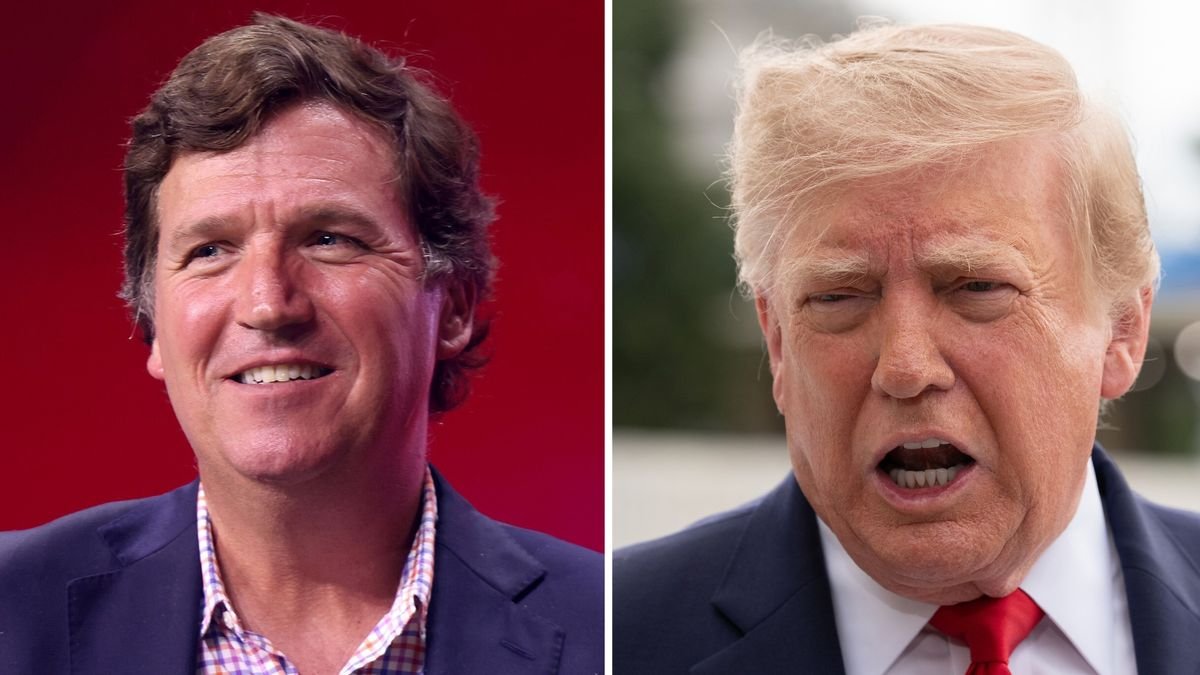
The claim that U.S. President Donald Trump dismissed conservative pundit Tucker Carlson’s concerns about starting the Iran war during a February 2026 conversation by saying “we all die anyway” is unrated.
The rumor stems from an NPR interview with Carlson released in late September. In it, Carlson said that days before the joint U.S.-Israel attack that began the war, Trump told Carlson that his concerns were justified but ultimately didn’t matter.
We have not rated this claim because there is no evidence beyond Carlson’s reported recollections that would allow us to confirm or disprove the president’s words.
The White House neither confirmed nor denied Carlson’s claims. Spokesperson Davis Ingle told Snopes over email, “Tucker Carlson is a whiny turncoat who dramatically overestimates his influence and relevance.” Snopes will update this report if, or when, additional information surfaces.
In September 2026, a claim spread online (archived) that U.S. President Donald Trump dismissed conservative pundit Tucker Carlson’s concerns about starting the Iran war in early 2026 by saying, “We all die anyway.”.
Snopes readers asked whether Trump said these exact words, as well as whether such a discussion between Carlson and Trump took place during the lead-up to the Iran war.
Did Tucker Carlson speak privately with Trump about the war with Iran that had not been started yet? Further, did Trump admit that there was no nuclear threat? And did Trump say, “We all have to die sometime”
Carlson claimed to have had this conversation with Trump just days before the U.S. and Israel started the Iran war with an attack that killed Iran’s supreme leader on Feb. 28, 2026. However, Trump has not confirmed or denied that such a conversation took place. As such, we leave this claim unrated.
The White House neither confirmed nor denied Carlson’s claims. Spokesperson Davis Ingle told Snopes over email, “President Trump is committed to ensuring that Iran can never have a nuclear weapon. Meanwhile, Tucker Carlson is a whiny turncoat who dramatically overestimates his influence and relevance.”
In an interview with NPR, released on Sept. 24, 2026, Carlson said he had disagreed with Trump about starting the Iran war (emphasis ours):
I said to Trump four days before the war started, “If you do this, the United States will be kicked out of the Gulf, the American empire will begin to collapse, your legacy will be destroyed, along with your party, and a lot of people are going to die.”
… But then I said [to Trump], “This war is not about Iran’s nuclear program, which you told me and the world that you eliminated back in last summer in June. This war is being pushed by Israel with three aims. One, its own regional hegemony. Take Iran off the map. They don’t have freedom of movement as long as Iran is a regional power. Two, diminishing the power of the GCC, the six Gulf states which are a rival to Israel and are becoming this kind of Switzerland of the Middle East. And that’s bad for Israeli interests. And three, getting the US out of the Middle East because we constrain their ambitions, getting our bases out, destroying our bases. Israel wants our bases out of the Middle East.”
I said this to Trump, to his face in the Oval Office, days before the war began. And he looked at me and said, “Yes, you’re right. But in the end, we all die anyway. So it doesn’t matter.” That’s exactly what he said. “In the end, we all die anyway.”
And I said to him, shocked, “But what about our kids, and our grandkids, and our country? And he goes “Aaah.”
… I don’t know, he didn’t respond. That’s a verbatim exchange … as God watches I said that, okay?
Carlson added that Trump “should have been removed from office for threatening first-use nuclear strike.” Carlson also said Israel “caused” Trump to carry out the war on Iran. Carlson makes the first part of the above statement at the 19:52 mark and then at the 27:10 in the video available on NPR’s website:
Carlson was correct that Trump had previously said Iran’s nuclear program had been eliminated. In June 2025, the Trump administration launched airstrikes against Iran’s nuclear facilities, later claiming that they were “obliterated”. By February 2026, the Trump administration and Israel launched more attacks on Iran.
Without confirmation from the White House that this exchange occurred as Carlson described it, we are unable to definitively verify it ourselves. The White House did not address our specific questions. They also reportedly did not address NPR’s, instead directing the news organization to Trump’s Truth Social post from April 2026 in which he called Carlson and other pundits “stupid people” who want Iran to have a nuclear weapon.
Carlson, once a prominent Trump ally, now vociferously disagrees with the president on the war against Iran and said he deeply regrets his old support for Trump.
For further reading, Snopes has reported on numerous claims about Carlson.
Rumors spread widely in September 2026 about the details of a lawsuit that alleged seven male students at Cornell University drugged and raped a 20-year-old female student in 2024.
In particular, social media users shared a claim that some of the accused students were allowed to write essays in lieu of punishment.
Cornell said the essay claim was false, but Snopes was unable to independently verify that, nor what specific punitive measures were or were not given to the male students.
Snopes readers also sought information about why no one had faced criminal charges. After the lawsuit was filed, the Tompkins County district attorney issued a statement saying that he was reopening the investigation and explaining what had led his office to close it in the first place.
Snopes has reached out to multiple parties involved in the case and will update this report if we learn more.
Rumors swirled online in September 2026 that a lawsuit brought against an Ivy League university and seven of its male students alleged the seven drugged and raped a 20-year-old female student in October 2024.
The story spread rapidly on social media along with the claim that the college in question, Cornell University, located in Ithaca, New York, gave some of the accused students an opportunity to write essays in order to mitigate their punishment.
The popularity of these rumors led to an influx of email in the Snopes inbox, seeking clarity on the sequence of events, whether the claim the male students were allowed to write essays in lieu of punishment was true and why no one was charged with a crime.
Cornell University said the essay claim was false, but Snopes was unable to independently verify that, nor what specific punitive measures were or were not doled out. Here’s a breakdown of what we know:
The ‘Jane Doe’ lawsuit
According to the lawsuit (embedded below) filed Sept. 14, 2026, on behalf of the plaintiff, identified only as Jane Doe, the drugging and multiple assaults occurred in the early hours of Oct. 20, 2024, at the Delta Xi chapter of the Chi Phi fraternity. Full details of the alleged assault are available within the 101-page document.
In addition to its complaints of sexual assault, sexual battery and intentional infliction of emotion distress, the lawsuit contained accusations of breach of contract, violations of New York state human rights laws and negligence by multiple parties.
The lawsuit named seven male students as defendants: Matthew Ingalls, Johnathan Newell, Winston Lee, Gillio Lopes, Diego Sarabia, Scott Norris and Scott Kretzschmar.
It also named Cornell University; unspecified Cornell faculty members, board members and alumni; the national Delta Xi fraternity, its Chi Phi chapter and the chapter president; the national sorority that Jane Doe belonged to, Delta Delta Delta, and its Alpha Beta chapter; and an Ithaca bar that allegedly served the plaintiff alcohol despite the fact, according to the lawsuit, that she appeared visibly intoxicated and was under the legal drinking age.
As restitution, the plaintiff sought unspecified compensatory and punitive damages.
The lawsuit also included an alleged photo of a Snapchat exchange between the fraternity members involved (Page 27 of the PDF below) that appeared to occur as the alleged assault was taking place at 1:42 a.m. Oct. 20, 2024, “claiming there was ‘free p****’ upstairs.” Five of the seven male students named in the lawsuit appeared in the screenshot.
Editor’s note: The following document contains graphic descriptions that some readers may find upsetting.
Timeline of events
The lawsuit said Jane Doe reported the incident “on or about” Nov. 8, 2024, to the Cornell University Police Department, the school’s private police force.
The same day, the school’s student-run independent newspaper, The Cornell Daily Sun, reported that “an individual reported being sexually assaulted by several males and coerced into consuming ketamine and other drugs,” which resulted in the temporary suspension of the two frat houses located on the block in question, Chi Phi and Lambda Chi Alpha.
The student newspaper didn’t receive confirmation of which frat house was ultimately being investigated at the time of publication, but did report receiving no response from Chi Phi, while the president of Lambda Chi Alpha said, “We don’t have any knowledge of the situation.”
Cornell posted a statement on Nov. 26, 2024, confirming that Chi Phi’s Delta Xi chapter was under a temporary suspension issued Nov. 8, 2024, for “alleged violations of the Student Code of Conduct.”
The statement continued, “In addition, late last week, interim measures in the form of temporary suspensions were issued for a number of students to protect the immediate physical health and safety of all students.”
The lawsuit alleged that in addition to the temporary suspensions, the male students were “afforded the opportunity to mitigate their conduct by submitting essays,” which appeared to be the first mention of the purported essays speculated about in online rumors.
The lawsuit said Cornell’s Title IX office “conducted numerous (at least twelve) hearings” regarding Jane Doe’s allegations during May 2025 before ending the investigation.
On Nov. 4, 2025, Cornell released a statement on its biannual survey of sexual assault and related misconduct and admitted the survey showed “increased prevalence of sexual misconduct” and “harassment and stalking trends” on campus.
In a report dated March 10, 2026, the task force gave its recommendations for updating the school’s guidance on preventing sexual assaults on campus, but it was unknown how much, if any, has been implemented as official policy.
The task force said it “reviewed existing data, policies, and programs; identified peers with best practices; and gathered information and insights from members of the Cornell community. Based on this process, we developed a series of recommendations.”
The extended news coverage of the case fed online rumors, which included graphic depictions of the alleged abuse, the identities of the alleged perpetrators and the claim about essays written to mitigate punitive measures.
On Sept. 28, 2026, Tompkins County’s district attorney, Matthew Van Houten, posted a statement announcing he would reopen the criminal case and offering a lengthy explanation as to why no charges were filed in 2024. In sum, Van Houten asserted that the details of the statement given by Jane Doe to the college’s police in November 2024 did not indicate criminal activity.
Van Houton wrote:
Jane Doe’s sworn statement in November of 2024 did not allege that she was drugged against her will or gang raped. On the contrary, Jane Doe’s statement described her participation in drug use and sexual conduct as voluntary, conscious, and consensual. My office obviously did not and could not have based our November 2024 decision on the allegations in a civil lawsuit that would not be filed until nearly two years later. Furthermore, I have never been contacted by Jane Doe’s attorneys. Not to inform me the original statement was inaccurate and not to ask me to reconsider our decision. Rather, I reached out to Jane Doe’s attorneys after the lawsuit was filed to understand the discrepancy between the original statement and the lawsuit’s allegations and the proper path forward in light of the lawsuit’s allegations.
At the time, Van Houton said, his office “confirmed with CUPD that criminal charges were not appropriate based on Jane Doe’s statement.”
However, he wrote that he decided to revisit the case after considering the details in the lawsuit and the subsequent urging of the community. “I have already begun that process, starting with our conversation with Jane Doe and her attorneys. Once we determine the appropriate charges, the case will be prosecuted in the most objective and impartial means available – by testimony to the Tompkins County Grand Jury.”
Van Houton further stated that should the grand jury “indict any or all of the individuals involved, this office will prosecute the charges zealously and to the fullest extent of the law.”
Cornell responded to Van Houton the same day with a statement saying the university supported the reopening of the case, but claimed that “any suggestion that the university did not impose consequential punishments for those involved is false.” Cornell said the fraternity in question remained closed after its temporary closure in 2024 and was barred from the campus.
The university’s statement went on:
Cornell also conducted a thorough Title IX investigation, which is separate from a criminal proceeding, over the course of several months. During that investigation, temporary suspensions and other restrictive measures were used. After investigation, and pursuant to federal law, the matter was sent to a hearing where a panel of trained faculty and staff heard evidence over multiple days. The complainant and respondents had the opportunity to testify and present evidence. At its conclusion, the hearing panel issued a range of sanctions, which included expulsions and suspensions from Cornell. None of the individuals charged were offered the opportunity to write essays as a sole consequence of their involvement.
Snopes reached out to Cornell University, the Ithaca Police Department and Chi Phi fraternity for further details about any ongoing criminal investigation and specific punitive measures taken against the accused. We will update this story if we learn more.
Elon Musk’s SpaceX’s next-generation Starship rocket reached orbit for the first time despite an unexpected engine shutdown mid-flight on Monday. But it exploded in a ball of flames when it touched down in a controlled landing over the Pacific Ocean.
The official poverty rate in the U.S. hit an all-time historical low in 2025.
Rating:
Context
According to the U.S. Census Bureau, the 2025 official poverty rate was the lowest since records began in 1959. The bureau also publishes a supplemental poverty measure rate. The 2025 supplemental poverty rate was not the lowest since records began in 2009.
A claim (archived) circulated online in September 2026 that the poverty rate in the U.S. hit an all-time low in 2025.
The claim came from a video that socialmedia users (archived, archived) said showed Trump saying the U.S. had “the best poverty numbers ever in the history of our country.”
For example, one X user shared the video with a transcription that read, “Trump: ‘We have the best, uhh, I guess you could say poverty. They talk poverty. We have the best poverty numbers ever in the history of our country.’”
According to a video posted on the White House YouTube channel, Trump did make the statement (time code 00:37) in question while talking to reporters on Sept. 27, 2026.
Trump’s full comment about poverty in the U.S. read:
We have the best, I guess you could say poverty, they talk poverty. We have the best poverty numbers ever in the history of our country. In other words, there’s less poverty now than at any time in the history of our country.
The statement is true according to the official poverty measure rate, one of two poverty rates published annually by the U.S. Census Bureau.
A White House Press Office spokesperson confirmed to Snopes via email on Sept. 28 that Trump was referring to a Sept. 16, 2026, report by the Census Bureau that found the official poverty measure rate in 2025 was 10.2%, which is the lowest rate since records began in 1959.
The official poverty rate of 10.2% in 2025 was lower than the previous all-time low of 10.5% in 2019. The Census Bureau’s annual poverty reports cover calendar years, meaning the 2025 report covered the first 11 months (and 10 days) of Trump’s second presidency.
The bureau calculates official poverty measures by comparing a family’s income to the poverty threshold for its size. For example, the bureau considers a family of four with two children under the age of 18 to be below the poverty threshold if that family’s pre-tax income is below $32,649 per year (Page 11).
The bureau sets the thresholds using the Consumer Price Index for All Urban Consumers, which tracks price changes for many household goods and utilities. Family income includes cash benefits like Social Security or child support but excludes non-cash benefits like food stamps (Page 17).
An official poverty measure rate of 10.2% means that in 2025, for every 100 people in the U.S., 10.2 people fell below the poverty threshold the bureau determined for their family size. (In this case, it might be easier to think of the poverty rate as 51 people in every 500 falling below the poverty threshold, as people of course cannot be divided into parts of a whole.)
Census Bureau tracks 2 different rates of poverty
Besides the official poverty measure rate, the bureau also tracks what it calls the supplemental poverty measure rate. According to that second measurement, poverty rates had not seen meaningful changes between 2024 and 2025 and were not at an all-time low in 2025.
The supplemental poverty measure considers more factors than the official poverty measure when determining whether an individual or family falls below the poverty threshold. The bureau wrote in its 2025 report on poverty that (Page 3):
The SPM includes noncash benefits, accounts for income and payroll taxes, subtracts other necessary expenses, uses a more inclusive resource sharing unit, and accounts for geographic differences in housing costs.
The 2025 poverty report found that the supplemental poverty measure rate in 2025 was 13.1%, “not statistically different” from 2024.
A graph within the report (Figure 4, Page 6) showed that the supplemental poverty measure had generally trended downwards from 15.1% since records began in 2009 until it hit an all-time low of 7.8% in 2021. The supplemental poverty measure rate then rose to 12% by 2022 and 13.1% by 2024.
Social media users frequently attribute all manner of quotes to the president, not all of them correctly. For further reading, Snopes previously debunked a collection of fake Trump quotes.
A bill to establish a 20% federal film and TV tax credit has added eight new co-sponsors in the Senate, a boost to the legislation as backers pin their hopes on passage during Congress’ lame duck session.
Sen. John Cornyn (R-TX), Sen. Steve Daines (R-MT), Sen. Andy Kim (D-NJ), Sen. Bernie Moreno (R-OH), Sen. Alex Padilla (D-CA), Sen. Tim Sheehy (R-MT), Sen. Mark Warner (D-VA) and Sen. Raphael Warnock (D-GA) have signed on to the bill, called the Motion Picture, Television and Entertainment Revitalization Act. Sen. Adam Schiff (D-CA) and Sen. Tim Scott (R-SC) introduced the bill in the Senate last week, concurrently with a House version that also has a slate of bipartisan supporters.
Related Stories
The bill has the support of President Donald Trump, who urged lawmakers to establish such a credit in a Truth Social post late last month.
The credit would be available to projects with a minimum spend of $1 million and with at least 75% of the principal photography days occurring in the U.S. There also are additional 5% bonus credits for productions in rural opportunity zones and disaster recovery areas, as well as to independent productions and multi-state producers. Bonuses also are available to producers who bring production back to the U.S. in a measurable way. The incentive also will be a supplement to state credits.
With the House out until the midterms and the Senate leaving this week, the bill won’t advance before the November election. But backers are aiming for later in the year, perhaps as an attachment to year-end spending legislation.
This article looks into the unproven claim that an alleged Reddit post from the r/Advice subreddit tells an authentic story about Immigration and Customs Enforcement agents detaining a U.S. citizen’s Indian wife.
In September 2026, users shared screenshots of the purported Reddit post on Instagram, Reddit and Threads. The text in the story largely lacks key identifying details.
At the time of publication, the Reddit account for u/Significant-Lake8126, the user who supposedly posted the story, displays the message, “This account has been banned.” It was therefore impossible to confirm the veracity of the alleged post.
Searches located a Jan. 15, 2026, Facebook post as the oldest known screenshot of the purported Reddit post. Those same searches found numerous stories of immigration agents reportedly detaining or deporting Indian-origin women. None of these appear to match the details in the alleged story.
Snopes contacted ICE, Reddit and the moderators of the r/Advice subreddit for comment. We will update this article if we receive further information.
In late September 2026, people shared a screenshot purportedly showing a Reddit post, titled, “ICE has detained my Indian wife.” According to the alleged post, a U.S.-born citizen who voted for President Donald Trump said Immigration and Customs Enforcement agents detained their wife several years after the couple’s U.S. marriage.
Social media users shared screengrabs of the post — attributed to an account with the handle u/Significant-Lake8126 — on Instagram (archived), Reddit (archived) and Threads (archived).
(@radical.rachelvr/Threads)
The purported Reddit post reads as follows:
Ice has detained my Indian wife.
I am a US born citizen, my wife is from India. I met her back in 2018 while traveling in Asia. We legally married here in the US in 2022. But yesterday, for some reason, ICE detained my wife. They don’t answer my calls, nor want to give any reason as for why they detained her. We are legally married, so I have no idea why. I’m actually scared for her.
I even voted for Trump, I voted republican for a better economy, for them to take care of the criminals and ILLEGALS in our streets, NOT for them to take my wife away. I am so f*in sorry for voting for him.
What can I do? Why are they doing this??
Snopes received reader mail asking whether the post, if real, featured an authentic story. One reader asked, “Is this true?”
In sum, it was not possible to locate credible information about the supposed post or the alleged detainment story. The purported screenshot does not show any obvious signs of fakery, though it also does not provide any key identifying information beyond the pair’s ethnicity, when they met and the year they got married. As such, it was not possible to rate this unproven claim.
Snopes emailed ICE and Reddit, and also messaged the r/Advice subreddit’s moderators. In our messages to Reddit and the subreddit’s moderators, we requested any details, such as a link, that might help us at least confirm the user truly shared the post. Regarding the authenticity of the story itself, bearing in mind the lack of key identifying details, we asked ICE whether officials recalled seeing the post circulating online in 2025 or 2026 and internally had discussions about which detained person it may have been referencing. We will update this article if we receive further information.
As of this writing, Reddit has removed (archived) a user with the handle u/Significant-Lake8126. The account’s main page reads, “This account has been banned.” The page does not show any past content. It was therefore not possible to confirm the veracity of the alleged post.
Searches of Bing, DuckDuckGo, Google, X and Yahoo failed to locate any additional identifiable information about this rumor. The searches uncovered numerous stories about immigration agents reportedly detaining or deporting Indian-origin women, though none appear to match the details of the claim. Extensive searches of website-archiving tools Internet Archive Wayback Machine and archive.today also found no records of the supposed old Reddit post.
A reverse image search revealed that the oldest known iteration of the screenshot of the alleged Reddit post was uploaded to Facebook (archived) on Jan. 15, 2026. That Facebook user told us via Messenger that he found the image elsewhere on Facebook and did not capture the screengrab himself.
For further reading, Snopes previously reported on whether a video truly shows Black children protecting their Latino neighbors from an ICE officer.
Sources
Anonymous participant. “Need Help. My Wife Crossed Border from Canada, She Is Indian Citizen…” Facebook, Immigration USA Asylum Seeker, 22 Aug. 2026, https://www.facebook.com/groups/402434537227767/?multi_permalinks=2484595325678334&hoisted_section_header_type=recently_seen.
ET Online. “Indian-Origin Woman, Living in US since 1994, Detained by ICE from Green Card Interview.” The Economic Times, 16 Dec. 2025, https://economictimes.indiatimes.com/nri/latest-updates/indian-origin-woman-living-in-us-since-1994-detained-by-ice-from-green-card-interview/articleshow/125998125.cms.
Mollan, Cherylann. “Woman, 73, Deported by ICE to India after Three Decades in US.” BBC News, 26 Sept. 2026, https://www.bbc.com/news/articles/c0jqvz24llyo.
Padhiana, Kultaran Singh. “Punjabi Woman with Son in US Army Held by ICE for Deportation.” Facebook, 16 Apr. 2026, https://www.facebook.com/Kultarn/posts/pfbid02sHyLP3K9yWG7CRNrnMoDzQgZi6M5FsVyFWxJugD6EoMX1NYFFQUxwnwESsUjQs6tl.
Former U.S. Rep. Liz Cheney, a Wyoming Republican, is getting a divorce because of an affair with Rep. Jamie Raskin, a Maryland Democrat.
Rating:
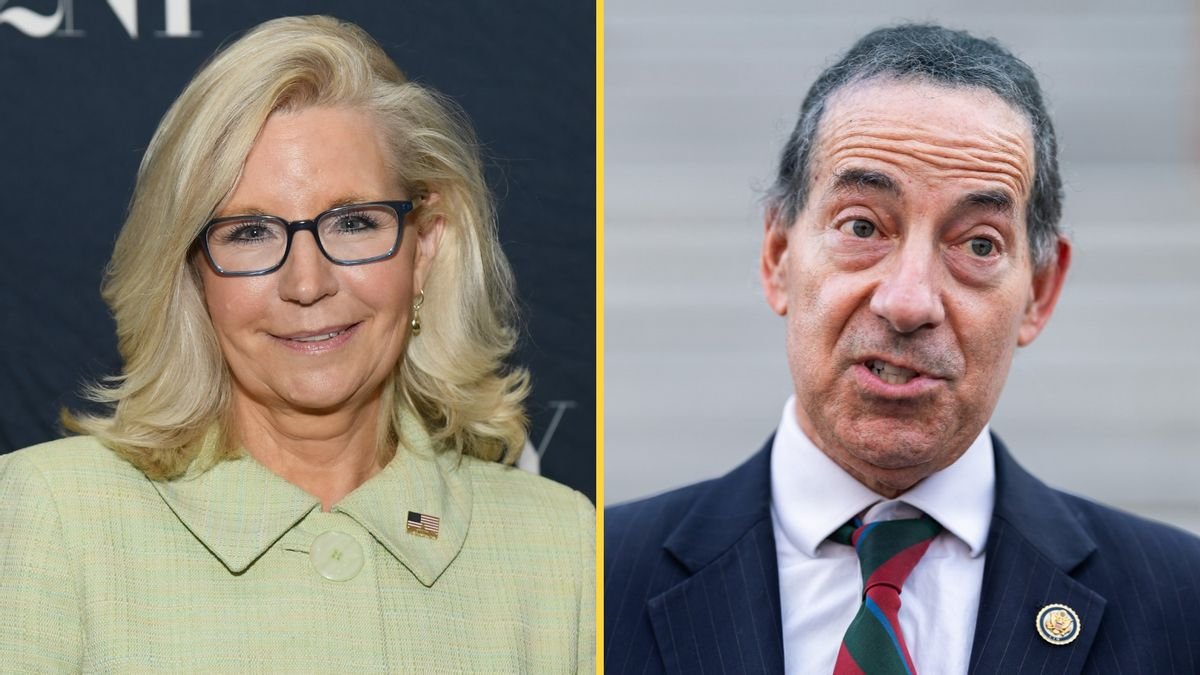
In 2026, a rumor spread that former Republican U.S. Rep. Liz Cheney was getting a divorce because of her supposed affair with Rep. Jamie Raskin, a Maryland Democrat.
The story spread on X and Facebook (screenshot). The claims referenced Cheney and Raskin serving together on the House committee that investigated the Jan. 6, 2021, Capitol riot.
(X user Larry Dean)
Some users seemed to interpret the rumor about the alleged affair as true. Snopes readers contacted us to investigate its legitimacy.
This rumor originated as a satirical post (screenshot) from a Facebook account called America’s Last Line of Defense. Snopes has debunkedhundreds of fake posts from this account, which describes itself as “certified trollery and propaganda for cash.”
“Nothing on this page is real,” the account’s description reads. America’s Last Line of Defense included the above tagline on the image attached to its post about Cheney, as well as a credit that read, “ALLOD SATIRE.” The post then spread to X without that image and context.
The header of the America’s Last Line of Defense Facebook page is a screenshot of a community note that says it “was created by the well known internet troll Christopher Blair aka Busta Troll.”
“It was created to monetize content from gullible MAGA and right-wing Facebook users,” the community note said.
No evidence Liz Cheney is getting divorce
The posts circulating online claim there are public documents in lawsuits that indicate Cheney is getting a divorce. If that were the case, journalists with reputable news outlets would have widely reported on those documents. Searches using DuckDuckGo, Google and Yahoo returned no evidence of that. (Yahoo’s AI overview, however, cited the Facebook post to claim that Cheney was reportedly having an affair with Raskin, which is a good example of why AI tools are not trustworthy fact-checkers.)
There does not appear to be an official online website to search for divorce cases in Wyoming, the state Cheney used to represent and where she reportedly married her husband, Philip Perry.
Snopes has previously debunked other claims related to Cheney — the daughter of former Vice President Dick Cheney — including a false rumor that she wrote a letter urging the Democratic Party to fight U.S. President Donald Trump’s “authoritarian machine.”