TikTok has settled and agreed to pay the US state of Alabama at least $100 million dollars days before a teen addiction trial was set to begin. TikTok is the latest social media giant to face legal challenges over its handling of teenage addiction concerns.
Israeli Prime Minister Benjamin Netanyahu said Hamas’ Oct. 7, 2023, attack on Israel “is equal to 40,000 innocent Americans slaughtered in less than 24 hours. That’s 16 times 9/11. Sixteen 9/11s that occurred not very far from here.”
Rating:
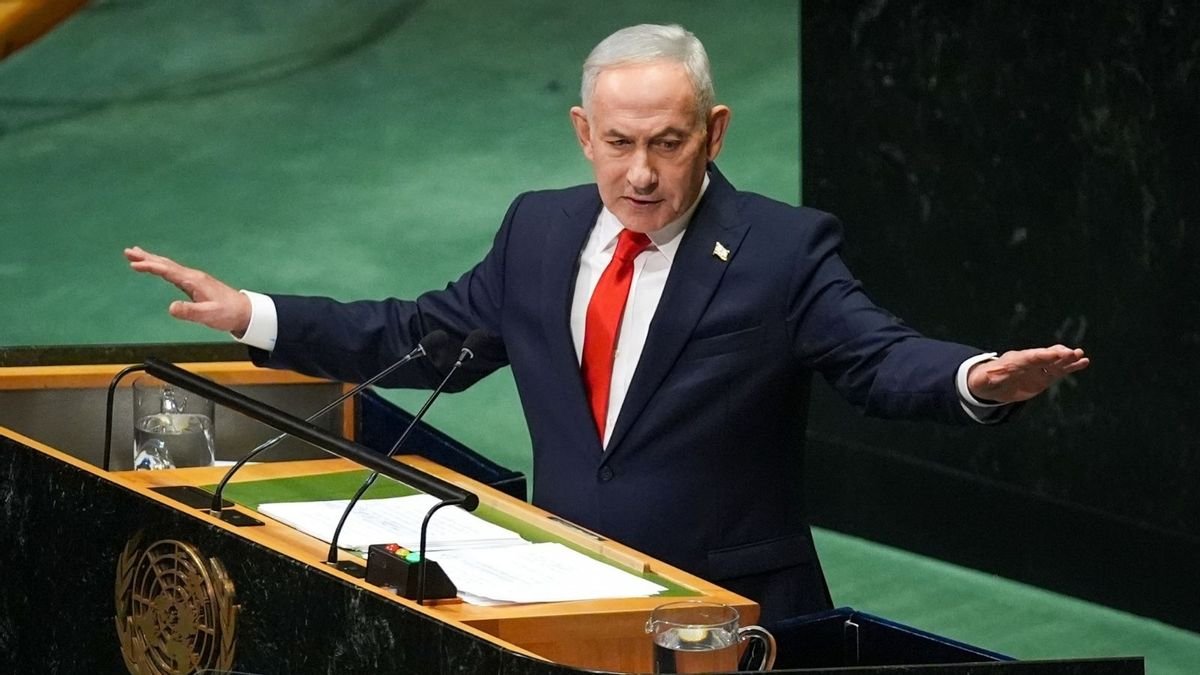
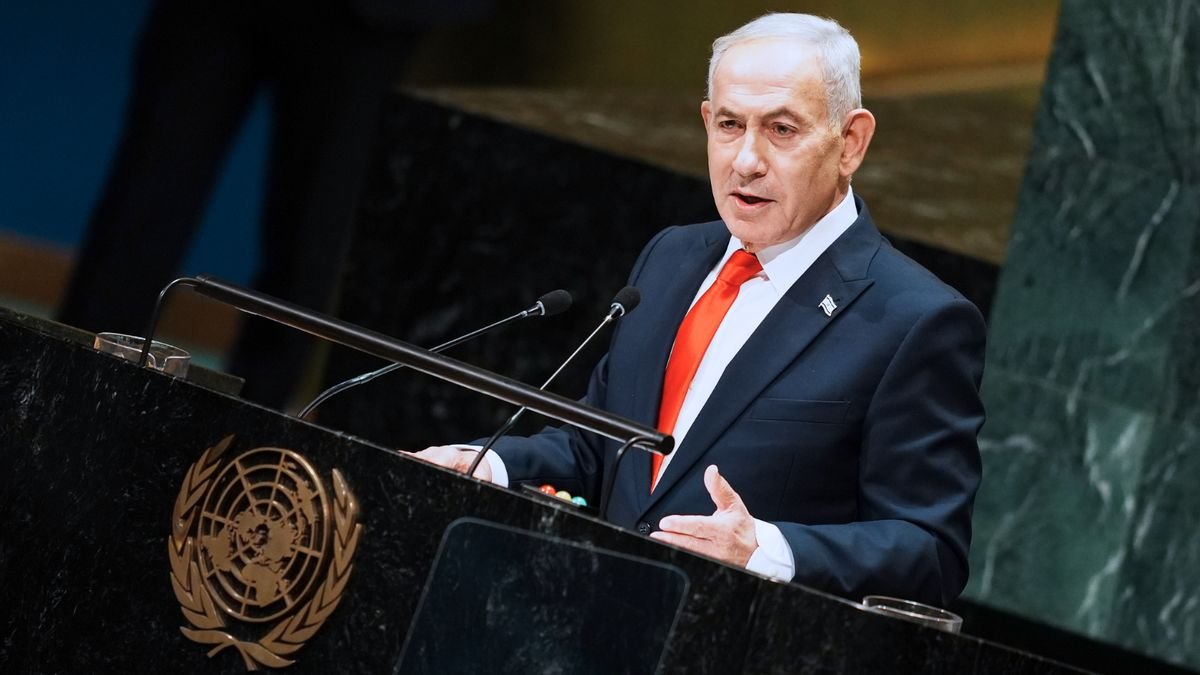
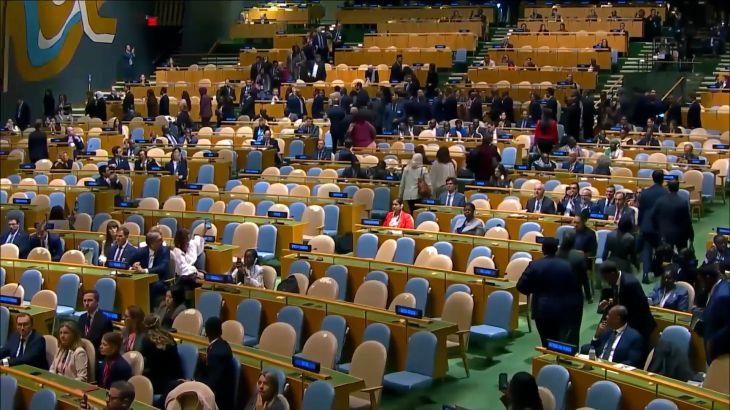
On Sept. 24, 2026, Israeli Prime Minister Benjamin Netanyahu addressed the United Nations General Assembly, where many delegates walked out at the beginning of his speech. Following his speech, many people online attributed various quotes to Netanyahu, with some claiming he said Hamas’ Oct. 7, 2023, attack on Israel, was equivalent to “sixteen 9/11s.”
According to numerous posts shared on Instagram (archived), X and Facebook, Netanyahu said the Oct. 7 attacks were “equal to 40,000 innocent Americans slaughtered in less than 24 hours. That’s 16 times 9/11 — 16 9/11s.”
The quote was correctly attributed to Netanyahu. He was comparing the number of Israeli casualties in the Oct. 7 attacks to 9/11 deaths relative to both countries’ populations.
During his speech, Netanyahu referred to the number of people killed in Hamas’ attack on Israel before drawing the comparison to the 9/11 terrorist attacks. He said (emphasis ours):
These Hamas monsters, they slaughtered Holocaust survivors. They burned babies alive in front of their parents. They beheaded our men. They brutally raped our women and then they murdered them.
Altogether, they slaughtered 1,200 Israelis that day.
I want to give you an idea of what this means for a country of 10 million. Proportionately, this is equal to 40,000 innocent Americans slaughtered in less than 24 hours. That’s 16 times 9/11. Sixteen 9/11s that occurred not very far from here.
Netanyahu said the above at the 11:28 mark in the video below:
New York City Mayor Zohran Mamdani did not address the 9/11 comparison, but accused Netanyahu of repeating “baseless lies meant to sanitize his genocide of Palestinians,” the New York Times reported.
As Netanyahu approached the stage for his speech, a mixture of boos and cheers erupted and many delegates staged a mass walkout. Netanyahu defended Israel’s attack on Iran and denied accusations of committing genocide in Gaza.
Palestinian President Mahmoud Abbas delivered a prerecorded speech as the United States denied him a visa to attend the UNGA. Abbas said Palestinians were living through one of the most dangerous periods in their history and that Israel was engaging in “killing, destruction, starvation, attempts at displacement, as well as a genocidal war that has created an unprecedented humanitarian catastrophe.” He called Israel’s actions a “malicious colonial scheme aimed at making the lives of Palestinians more difficult in their homeland and forcing them to leave it.”
Deng, Rae. “8 Rumors We’ve Investigated about Benjamin Netanyahu.” Snopes, 26 June 2025, https://www.snopes.com//collections/benjamin-netanyahu-rumors-collection/. Accessed 25 Sept. 2026.
“‘Do Not Allow Another Nakba’, Mahmoud Abbas Warns in UN Speech.” Middle East Eye, https://www.middleeasteye.net/news/do-not-allow-another-nakba-mahmoud-abbas-warns-unga-speech. Accessed 25 Sept. 2026.
“Israel’s Policies Threaten ‘Very Existence’ of Palestinians, Abbas Tells UN.” Al Jazeera, https://www.aljazeera.com/news/2026/9/24/israels-policies-threaten-very-existence-of-palestinians-abbas-tells-un. Accessed 25 Sept. 2026.
“LIVE: Israel PM Netanyahu Speech at UN General Assembly 2026 (Full) .” YouTube, Associated Press, 24 Sept. 2026, https://www.youtube.com/watch?v=yGGRNErktOs. Accessed 25 Sept. 2026.
“PM Netanyahu’s Speech at the United Nations General Assembly 2026.” Prime Minister’s Office Israel, 24 Sept. 2026, https://www.gov.il/en/pages/event-un240926. Accessed 25 Sept. 2026.
Stack, Liam. “Mamdani Accuses Netanyahu of Spreading ‘Baseless Lies’ After U.N. Speech.” The New York Times, 24 Sept. 2026, https://www.nytimes.com/2026/09/24/nyregion/netanyahu-mamdani-un-speech.html. Accessed 25 Sept. 2026.
“WATCH: Israeli Prime Minister Netanyahu Addresses 2026 UN General Assembly.” PBS, Sept. 24, 2026, https://www.pbs.org/newshour/world/watch-israeli-prime-minister-netanyahu-addresses-2026-un-general-assembly. Accessed 25 Sept. 2026.
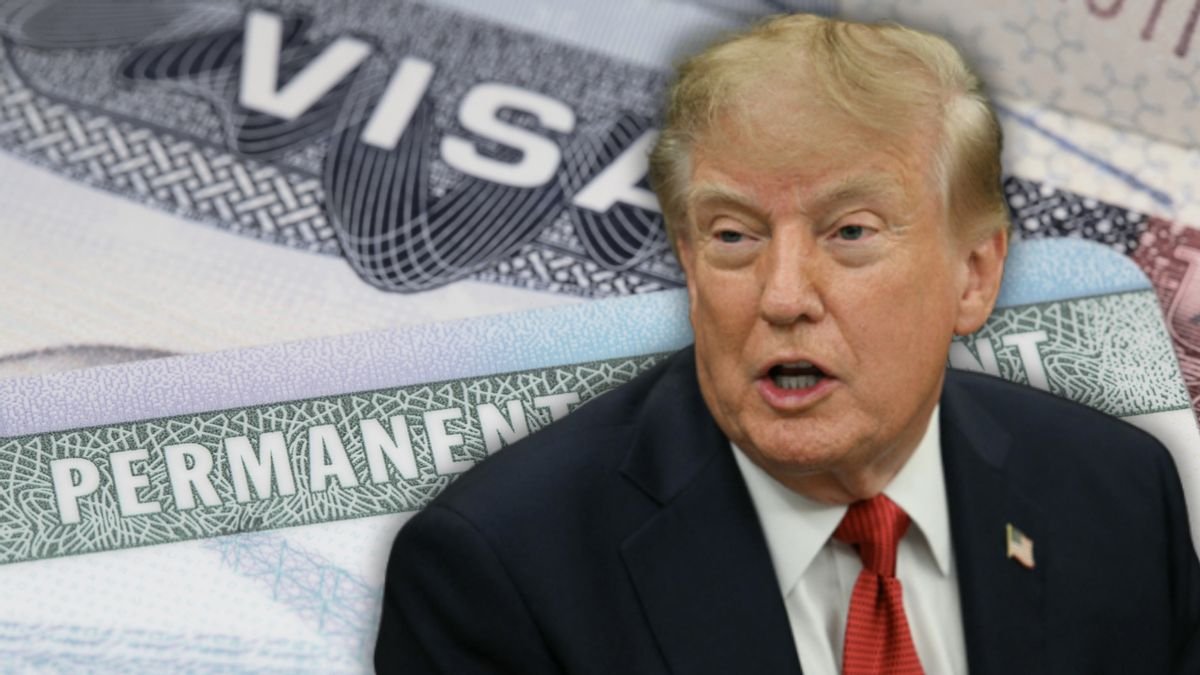
A rumor spread in September 2026 that U.S. President Donald Trump was set to save the country billions of dollars by invoking a supposedly “long-unenforced” law to deny certain immigrants entry into the country. According to the claim, Trump was enforcing a provision to bar access to anyone who is a “convict, lunatic, idiot, or any person unable to take care of themselves without becoming a public charge.”
The claim referred to the Immigration Act of 1882, which indeed prohibits certain immigrants from entering the country or obtaining green cards if federal authorities consider them to be a “public charge” based on their use of government benefits. That provision has existed since the act’s conception and includes the alleged phrasing about “convicts” and “lunatics” verbatim.
Trump was not invoking a “long-unenforced law,” but his administration in September 2026 announced it was changing how it interprets that “public charge” section of the Immigration Act of 1882 to further restrict who can enter the country or receive permanent residency. Previously, the government only considered cash assistance and long-term institutionalization as reasons a person could be denied under the public charge rule.
Under the Trump administratin’s new rule, which went into effect on Sept. 18, 2026, the Department of Homeland Security removed those previous guidelines and designated immigration officers to use their own judgment to determine who constitutes as a “public charge.”
DHS estimates the change will save federal and state governments $13.05 billion in benefit payments, though it’s unclear how, exactly, the agency came up with that number.
Immigration experts and some Trump critics say the department is not fairly considering the possible economic impact of people forgoing benefits out of fears of being deemed a “public charge” and thus denied certain legal immigration statuses.
A group of Democratic-led cities and states have filed two separate lawsuits challenging the rule. The courts haven’t yet made a decision in those cases, meaning it’s unclear if the rule will get overturned.
In sum, while the gist of the claim has some truth, the rumor misinterprets a September 2026 policy change by the Trump administration and misleadingly estimates possible savings when the real dollar amount is unknown.
A rumor spread in September 2026 that U.S. President Donald Trump was on track to save the United States billions of dollars by invoking a supposedly unenforced law to deny certain immigrants entry into the country.
Social media posts (archived) claimed that Trump was beginning to enforce the Immigration Act of 1882, which denies entry to anyone who is a “convict, lunatic, idiot, or any person unable to take care of themselves without becoming a public charge.” These posts alleged the enforcement measures were expected to kick 5.6 million migrants off government welfare programs and save the U.S. government $13 billion a year.
The claim was misleading for multiple reasons.
Trump was not “invoking a long-unenforced law.” Rather, his administration changed the government’s interpretation of the Immigration Act of 1882’s “public charge” language to further restrict which immigrants can enter the country or receive permanent residency. The new rule, which went into effect on Sept. 18, 2026, applies to immigrants based on their use of public benefits.
It’s true the Department of Homeland Security estimated the policy change will save federal and state governments $13.05 billion per year, supposedly affecting an estimated 1.3 million individuals, not 5.6 million. (It’s possible the “5.6 million” number in social media posts originated from a misreading of an analysis about the rule’s impact on Medicaid and the Children’s Health Insurance Program.)
However, the true impact of the rule is unknown.
Most noncitizens who do not have permanent resident status are not eligible for many federal assistance programs, which means the rule generally targets people seeking green cards for permanent residency.
Immigration and family policy experts fear the change could have far-reaching consequences for immigrant families and local communities. A group of Democratic-led cities and states have filed two separate lawsuits against the rule, arguing it will drive up administrative costs, change states’ funding for public benefits and pressure people into forgoing legal access to benefits.
We asked for the DHS’ response to those accusations, and we await a reply. Because the courts have not yet ruled in those cases as of this writing, it’s unclear if the administration’s interpretation of the Immigration Act of 1882 is lawful and the DHS can fully implement it.
Considering that major unknown, we did not put a rating on this claim.
Here’s what you should know.
The definition and history of ‘public charge’
The Immigration Act’s “public charge” rule only impacts a portion of immigrants attempting to enter the country using certain legal pathways.
According to U.S. Citizenship and Immigration Services, the rule largely doesn’t apply to immigrants who apply for green cards due to a humanitarian status like asylum. Meanwhile, it does apply to immigrants who are relatives of U.S. citizens, employed in the country and working with the American military, among others.
The U.S. government previously stated that immigrants in the latter groups can be denied entry or legal permanent residency based on certain guidelines to determine whether they are a “public charge” — a label based on people’s use of government assistance or the perceived possibility they’ll need it in the future.
When Congress first used the term “public charge” in the Immigration Act of 1882, many social safety net programs that exist today were not around, as Kunal Parker, a historian at the University of Miami School of Law, told NPR in 2019.
In turn, federal officials have reconsidered how to enforce and define the 1882 provision.
In 1999, a memo by the Department of Justice formally defined “public charge” as a person “primarily dependent on the government for subsistence,” as demonstrated by their use of public cash assistance, like Supplemental Security Income through Social Security, or long-term institutionalization at the government’s expense. (See Page 1, under “Definition of ‘Public Charge,’” in the memo.)
The memo stated: “Officers should not place any weight on the receipt of non-cash public benefits (other than institutionalization) or the receipt of cash benefits for purposes other than for income maintenance.”
That meant immigration officers could not consider benefits like Medicaid, food stamps and free or reduced school lunches as disqualifying factors for green cards (unless the person was in, or likely to need, a public institution for long-term care).
In 2019, the first Trump administration issued a new rule that redefined “public charge” to include immigrants who receive “one or more public benefits,” including some types of Medicaid, housing assistance and other non-cash benefits, “for more than 12 months” in total within any 36-month period.
The courts struck down that rule after a lengthy legal battle.
In 2022, former President Joe Biden issued a new policy that closely aligned with the 1999 memo’s definition of “public charge.”
Trump admin’s 2026 rule
In July 2026, the Trump administration announced its new rule that rescinded Biden’s 2022 guidelines. The new rule eliminated “public charge regulations in their entirety” to give “broad discretionary authority to officers,” as outlined by the government’s Federal Register.
“DHS is restoring the basic principle that immigrants must be able to support themselves,” DHS said in a statement on X. “We are reaffirming the requirement of self-reliance, protecting public resources, and ending policies that encouraged dependency on hard-working American taxpayers.”
In other words, the Trump administration removed the existing guidelines to determine whether someone is a “public charge” and instead told immigration officers to use their own judgment to determine who gets the label. Here’s an excerpt from the DHS rule:
While officers will not have a list of “excluded” benefits to consider, officers will have the authority and discretion to consider all circumstances surrounding receipt of any one or more public benefits and determine whether the alien is inadmissible as likely at any time to become a public charge taking into account the statutory factors and applicable precedent. The receipt of public benefits is but one consideration in the totality of the circumstances.
The Trump administration’s full July rule is available on the government’s Federal Register website. Under “Purpose of the Regulatory Action,” DHS states that officers may consider an immigrant’s use of “means-tested public benefits” (public benefits based on a person’s need for them); “any other individualized case-specific factors and circumstances,” and “any empirical data relevant to an alien’s self-sufficiency.”
“Using good judgment and discretion, officers will more accurately assess an alien’s likelihood at any time of becoming a public charge, in the totality of the circumstances, as Congress intended,” the rule says.
According to the DHS rule, officers will not consider benefits used by an applicant’s household members, including non-relative dependents. However, officers will consider the applicant’s “financial status” that led to a household member” needing to apply for or receive those benefits.”
The rule’s potential impact
Given how vague and open-ended the 2026 rule is, it’s difficult to estimate its future impact.
The $13 billion estimation in savings originated from the DHS rule in the Federal Register:
DHS estimates that the total reduction in transfer payments from the Federal and State governments could be approximately $13.05 billion annually due to disenrollment or forgone enrollment in public benefits programs by members of households that include aliens who may be receiving public benefits.
In other words, the $13 billion number is an estimate of how much money the government would no longer be handing out via public benefits, either due to people unenrolling or forgoing signing up all together.
It’s unclear how, exactly, the DHS calculated the estimated savings. We asked for the department to explain its math in our interview request for this story, and we will update this report if we hear back.
However, that prediction does not account for several factors, such as the economy’s loss in workers with fewer people being allowed to enter or live in the country.
A group of Democratic-led states, including California and New York, argued in a lawsuit filed Sept. 14 that the rule could harm local communities and economies (see Page 4):
States will lose federal funding due to disenrollment in state programs, and public agencies will face substantial administrative costs as they attempt to mitigate confusion and fear. As households forgo their legal access to benefits—such as preventative healthcare, nutritional assistance, and school lunch—public health, local economies, public education, and public safety will suffer. The [DHS rule] will increase the prevalence of disease, drive up the costs of medical care, and increase poverty.
On the same day, Democratic-led cities including New York City, Chicago and San Francisco, similarly filed a seperate lawsuit challenging what they described as the federal government’s attempt to deny green cards and visas to certain immigrants “without clear definitions or meaningful guardrails.”
In the Federal Register documentation, DHS said the rule could impact state and local economies but attempting to quantify that impact is challenging due to “limited data and uncertainty” regarding how people might react to the rule.
Opponents fear downstream effects
Immigration experts and some Trump critics worry the new rule could have far-reaching consequences for immigrant communities. For example, families with children who are citizens but have immigrant parents may suffer if the parents choose to forego benefits out of fear of running afoul to the “public charge” rule.
After the first Trump administration announced changing the provision in 2019, a survey from the Urban Institute, a research nonprofit, found that one in seven adults in immigrant families reported avoiding public benefit programs in 2018 “out of fear of risking future green card status.”
Other research at that time predicted additional challenges for families impacted by the rule, like limited economic mobility, as well as downstream job cuts and other negative impacts on the economy.
“The biggest impact of the first Trump administration’s public charge policy was to terrify families out of using public benefits they were eligible for, including for their U.S. citizen children, because they were afraid of falling afoul of the rule,” wrote Dara Lind of the American Immigration Council, a nonprofit advocating for immigrant rights.
“Even though the new [2026] policy isn’t the same as the old one, the fear of a new public-charge rule could be so powerful that it has the same effect,” Lind said in July.
In the Federal Register documentation, the DHS said the change “may negatively impact the health and education opportunities for children,” including those who are citizens. However, the agency believes that impact “is outweighed by compelling legal and policy reasons,” such as “better ensuring self-sufficiency.”
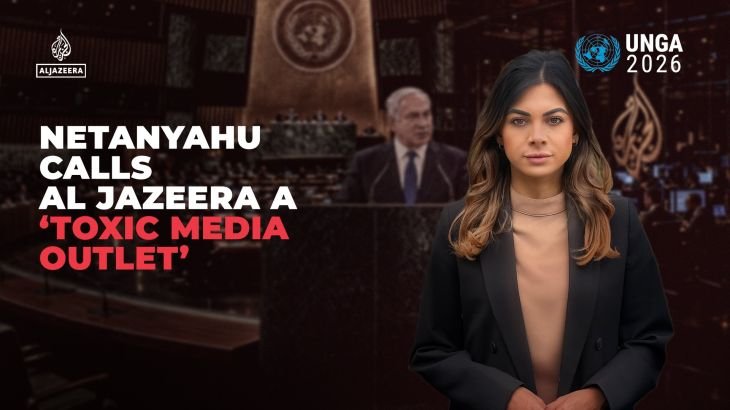
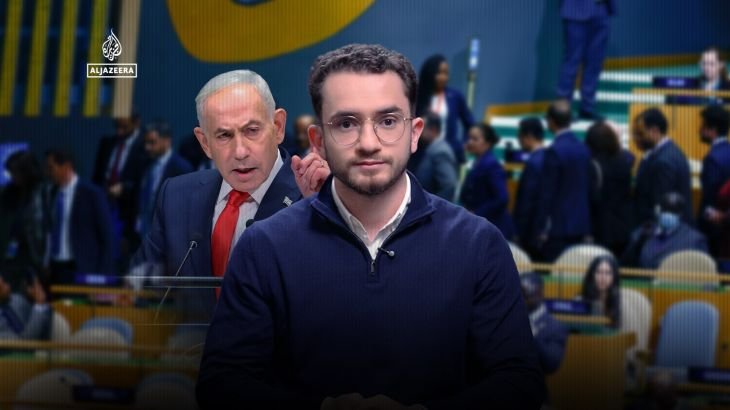
Israeli Prime Minister Benjamin Netanyahu called Al Jazeera a “toxic media outlet” and described the media as an “eighth front” in Israel’s war. But Israel has killed Palestinian journalists, shut down Al Jazeera’s operations and restricted media access to Gaza. Al Jazeera’s Noor Wazwaz explains.
Following Israeli Prime Minister Benjamin Netanyahu’s speech at the United Nations General Assembly on Sept. 24, 2026, social media users shared a clip purportedly showing him saying “America deserved 9/11” as he shook his finger in the air.
The clip was authentic, meaning it wasn’t generated with artificial intelligence or digitally altered.
A longer video of Netanyahu’s speech, however, showed he was not expressing his personal belief but rather quoting the left-leaning influencer Hasan Piker. Piker truly made that statement during a live stream in 2019.
Several userson X made the claim (archived), expressing disbelief using a supposed video clip of the speech of Netanyahu saying “America deserved 9/11” as he shook his finger in the air.
While the clip was authentic, meaning not generated with artificial intelligence or digitally altered, it omits critical context from Netanyahu’s full remarks. He was not expressing his personal belief when he said those words. A longer video showed he was quoting Hasan Piker, a left-leaning influencer, who did say “America deserved 9/11” during a livestream in 2019. We’ve left this claim unrated to account for those nuances.
At the 27:10 mark in the video, Netanyahu addressed New York Mayor Zohran Mamdani, saying Mamdani was antisemitic and he and Piker were friends. As he did so, he quoted Piker (emphasis ours):
So to all those that are spreading these lies about my country and about our brave soldiers, whether they sit in this hall or in the office of the antisemitic mayor of New York, I say this: Shame on you. Shame on you for distorting the facts. Shame on you for inverting victim and aggressor. Shame on you for spitting in the face of truth.
Mr. Mamdani, since you were elected mayor of this city, many Jews no longer feel safe in New York. They talk to me. They tell me, “This isn’t the city we remember. It changed so quickly.”
Now it’s no wonder. You praise criminals convicted of supporting Hamas. You count as friends people like Hasan Piker, who said “America deserved 9/11. America deserved 9/11.” Some friends you have.
You invite into your home a Palestinian journalist who filmed Hamas terrorists beating and torturing Israeli hostages, and later admitted that he refused to publish the videos in order to protect, you guessed it, the terrorists. Your wife liked a post praising the Oct. 7 massacre. She liked another post saying Tel Aviv shouldn’t exist.
It is true that Piker said these words in August 2019 while live-streaming on Twitch:
“America deserved 9/11, dude,” he said. “F*** it. I’m saying it.”
For further reading, this is not the first time Snopes has investigated claims attributing this quote to someone other than Piker. In August 2026, we found U.S. Senate candidate Abdul El-Sayed, a Michigan Democrat, hadn’t expressed the belief that the U.S. deserved 9/11.
The U.S. was the only opposing nation when the United Nations passed a resolution by a vote of 37-1 to promote women’s equality.
Rating:
What’s True
The U.S. was the only nation to vote against the U.N. Commission on the Status of Women’s agreed conclusions during the commission’s 70th session in March 2026. Thirty-seven nations voted in favor of the agreed conclusions.
What’s False
Agreed conclusions are recommendations for member states to work towards. They are not the same as U.N. resolutions. Also, while the claim circulated widely during the September 2026 81st session of the U.N. General Assembly, the vote in question occurred during a different session months earlier.
In September 2026, as delegations gathered for the 81st session of the United Nations General Assembly in New York City, a claim (archived) circulated online that the U.S. was the only opposing nation when the U.N. passed a resolution by a vote of 37-1 to promote women’s equality.
One Facebook user who shared the claim wrote, “The UN passed a resolution by a vote of 37-1 promoting women’s equality. The one opposing vote… the United States. Remember this.”
The claim also circulated on X (archived) and Threads (archived). Snopes readers contacted us, asking if the claim was true.
The claim was mostly true, but posts were misleading in two important ways. First, the vote in question did not take place in September 2026 but months earlier, in March. Second, the vote in question was not a resolution but a different type of procedure called an agreed conclusion.
In March 2026, the U.S. was the only opposing party in a 37-1 vote to adopt the U.N. Commission on the Status of Women’s agreed conclusions for its 70th session.
The CSW exists to promote “gender equality, the rights and the empowerment of women.” The U.S. opposed its agreed conclusions, meaning recommendations for member states to work towards, that sought to ensure and strengthen access to justice for women and girls.
Agreed conclusions are not the same as U.N. resolutions, which are “formal expressions of the opinion or will of UN organs.” The CSW also adopts resolutions in a separate process from agreed conclusions.
What the US voted against
The agreed conclusions for the CSW’s 70th session were titled, “Ensuring and strengthening access to justice for all women and girls, including by promoting inclusive and equitable legal systems, eliminating discriminatory laws, policies and practices, and addressing structural barriers.”
The document “urged” governments and other bodies to take a series of actions to “strengthen access to justice for all women and girls by 2030, while recognizing the specific needs of women and girls” (Page 3).
The document included broad, wide-ranging recommendations, such as (Page 3):
(b) Take all measures necessary to ensure that every woman and girl can seek and obtain an effective remedy from competent, independent and impartial justice institutions when their rights are violated, without discrimination of any kind;
It also included more specific obligations, such as (Page 6):
(r) Ensure universal access to sexual and reproductive health and reproductive rights as agreed in accordance with the Programme of Action of the International Conference on Population and Development and the Beijing Platform for Action and the outcome documents of their review conferences;
According to the U.N.’s live coverage of the March 9 discussion and vote on the agreed conclusions, the U.S. delegation voted against the document in part because of its language about access to sexual and reproductive health.
U.N. Ambassador Dan Negrea said at the time that his delegation could not support a text that included:
… ambiguous language promoting gender ideology, vague unqualified commitments to sexual and reproductive health that can be interpreted as implying abortion rights, censorship language or broad language on regulation of AI.
Two months before the 70th session of the CSW, in January 2026, U.S. President Donald Trump withdrew the U.S. from U.N. Women, the CSW’s parent entity, through an executive order.
Negrea noted this withdrawal during the CSW session, saying that the U.S. thought U.N. Women “engaged in recklessly promoting gender ideology and abortion.”
The U.N. reported that the agreed conclusions passed by 37-1. The U.S. was the only opposing vote and six countries abstained.
Later on in the CSW session, the U.S. did vote against a resolution, titled, “Women, the girl child and HIV and AIDS” that called upon governments to “intensify efforts to reduce the particularly high levels of HIV infection among women and girls” (Page 4).
Forty-three nations voted in favor of the resolution and the U.S. was the only nation to vote against it. The U.N. representative for the U.S. reportedly voted against the resolution due to concerns about “terms and formulations relating to sexual and reproductive health.”
For further reading, Snopes has previously reported on other claims about the United Nations.
Sources
‘Commission on the Status of Women’. UN Women – Headquarters, https://www.unwomen.org/en/how-we-work/commission-on-the-status-of-women. Accessed 25 Sept. 2026.
Dag Hammarskjöld Library. Research Guides: About UN Documents: Resolutions & Decisions. Research guide. United Nations. Dag Hammarskjöld Library, https://research.un.org/en/docs/resolutions. Accessed 25 Sept. 2026.
‘Ensuring and Strengthening Access to Justice for All Women and Girls, Including by Promoting Inclusive and Equitable Legal Systems, Eliminating Discriminatory Laws, Policies and Practices, and Addressing Structural Barriers’. United Nations Economic and Social Council , 8 Mar. 2026, https://docs.un.org/en/E/CN.6/2026/L.2.
LIVE Blog – 70th Session of the Commission on the Status of Women | UN Meetings Coverage and Press Releases. 19 Mar. 2026, https://press.un.org/en/csw70.
‘Outcomes’. UN Women – Headquarters, https://www.unwomen.org/en/csw/outcomes. Accessed 25 Sept. 2026.
Presidential Memoranda. ‘Withdrawing the United States from International Organizations, Conventions, and Treaties That Are Contrary to the Interests of the United States’. The White House, 7 Jan. 2026, https://www.whitehouse.gov/presidential-actions/2026/01/withdrawing-the-united-states-from-international-organizations-conventions-and-treaties-that-are-contrary-to-the-interests-of-the-united-states/.
‘Women, the Girl Child and HIV and AIDS ‘. United Nations Economic and Social Council, 11 Mar. 2026, https://docs.un.org/en/E/CN.6/2026/L.3.
A photograph taken in September 2026 authentically shows U.S. President Donald Trump and first lady Melania Trump staring at the camera and frowning.
Rating:
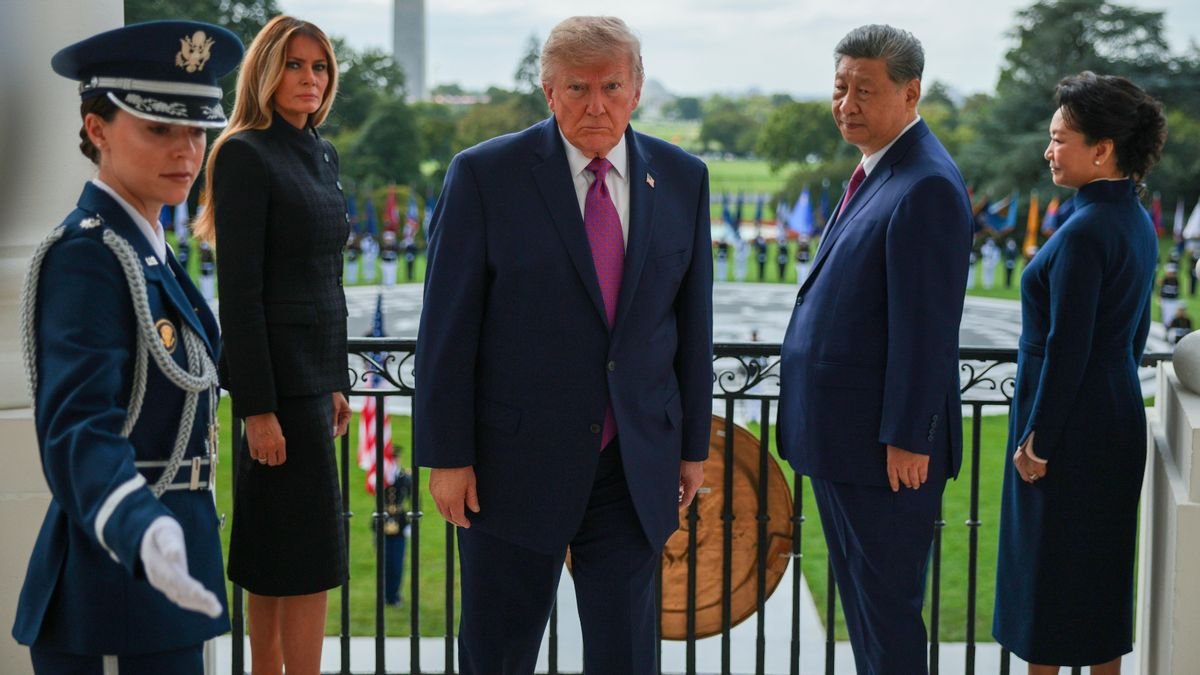
In September 2026, some people on social media shared an image that appeared to show U.S. President Donald Trump and first lady Melania Trump frowning as they stared into the camera lens.
For example, one X post (archived) said of the image, “For just a moment, the world saw their true nature. This is a real photo.”
The image is authentic, though cropped. The original photo, which includes Chinese President Xi Jinping and first lady Peng Liyuan during their state visit to the U.S., was taken on Sept. 24, 2026 by Getty photographer Chip Somodevilla. We were unable to find any verifiable information as to why the Trumps were frowning at that moment.
The caption of Somodevilla’s photo reads:
A military aide, U.S. first lady Melania Trump, U.S. President Donald Trump, President of China Xi Jinping, and first lady of China Peng Liyuan depart a balcony after watching a Silent Drill Platoon Review at the White House on September 24, 2026 in Washington, DC. President Trump is hosting President Xi for a three-day state visit to Washington, DC where the leaders are expected to discuss trade practices, artificial intelligence and furthering ‘strategic stability’ between their countries.
An almost identical photo taken by Reuters photographer Evan Vucci is featured on Reuters Connect, Reuters’ licensable photo repository. That caption is less specific than the Getty caption, instead reading, “President Trump, first lady Melania Trump and Chinese President Xi Jinping after watching a military demonstration from a balcony of the White House in Washington, September 24.”
Reuters Connect also offers two other, more zoomed-out versions of the same photo. These versions photo match Somodevilla’s Getty photo by including Jinping’s wife, Peng Liyuan, on the far right of the same balcony.
The four can be seen watching the referenced military demonstration in another Reuters photo.
The Associated Press’ own photo repository has photos from just before and about the same time as the Getty and Reuters photos were taken. One shows Melania Trump still looking at Jinping, while the other has both Trumps looking just past the camera, similar to the Reuters photo.
Somodevilla apparently shot another photo a couple of seconds after his first one. In that photo, the Trumps’ frowns are less pronounced than in the photo that spread on social media.
Israeli Prime Minister Benjamin Netanyahu’s speech at the UNGA was filled with bold claims about Israel’s policies. But as delegates walked out and with Israeli elections weeks away, was his real audience at the UN, or back home?
Dozens of countries’ delegations walked out of or were absent for Israeli Prime Minister Benjamin Netanyahu’s UN General Assembly speech in protest over Israel’s war in Gaza. Here’s which countries’ seats were visibly empty — and which delegations remained.
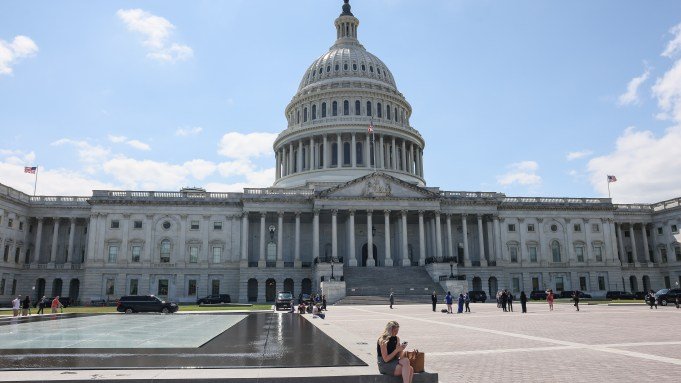
UPDATED: House and Senate lawmakers are again turning their attention to major anti-piracy legislation, introducing a bill in which content owners can seek a court order to require that internet providers prevent access to foreign digital piracy sites.
The , or DEFEND IP Act, was introduced by lawmakers of both parties in Congress on Thursday. Key sponsors include Rep. Zoe Lofgren (D-CA) and Rep. Ben Cline (R-VA) in the House, and Sen. Thom Tillis (R-NC), Sen. Chris Coons (D-DE), Sen. Marsha Blackburn (R-TN) and Sen. Adam Schiff in the Senate.
The legislation would leave it to a judge to decide whether a a site should be designated as one dedicated to foreign digital piracy, with such an order subject to renewal after 360 days. The bill defines such as site as one that has “no commercially significant purpose or use other than committing a violation of copyright.” The bill also applies to transmission of live events from foreign locations that violate copyright.
After that designation, content owners could then seek a further order to prevent, or block, access to the site. Per the legislation, the order would “direct service providers to take reasonable measures to prevent users in the United States from using the system or network of those service providers to access the foreign digital piracy site.” The bill sets out a series of criteria, including that such measures would not interfere with access to legal content at other online locations, and that it would be “technically feasible and effective.” Those seeking such orders would have to show that they are “likely to suffer irreparable harm” from the piracy.
It’s been nearly 15 years since the entertainment industry sought passage of a previous effort to curb access to online piracy, with the Stop Online Piracy Act, or SOPA. That generated a backlash, with Google and other tech giants opposed, and Wikipedia and others staging a daylong “blackout.” The bill was sidelined, and left lawmakers shellshocked at the scale of the outcry.
For years since then, with many on Capitol Hill skittish, the entertainment industry instead set its sites on voluntary commitments from those in the internet ecosystem.
Circumstances have changed. Since then, tech has seen its own backlash against it, albeit little significant legislation has passed Congress. Supporters of site-blocking measures, meanwhile, have pointed to its use in almost 60 countries.
Backers of the DEFEND IP Act noted that the bill differs from past legislation. It does not mandate specific technical measures for preventing access, leaving it up to internet providers to take “reasonable measures.” The bill also contains legal immunity for ISPs, and applies to large-scale foreign sites.
Still, after the DEFEND IP Act was introduced, the Common Sense Copyright Coalition, which AT&T, Charter, Comcast, Cox and Verizon, expressed its opposition.
A spokesperson for the group said the legislation “would impose substantial new responsibilities on broadband providers without adequately addressing the legal and operational risks they create, including threats to lawful content online. This is particularly troubling given the Supreme Court’s unanimous decision in Cox v Sony this year that rejected holding an ISP broadly liable for copyright infringement occurring over its network.”
In Cox vs. Sony, the Supreme Court ruled in March that an ISPs was not liable “for merely providing a service to the general public with knowledge that it will be used by some to infringe copyrights.”
Among other things, the argued that piracy sites can still put up “mirror sites” and users can turn to VPNs. They also expressed concerns over the live event provision, arguing that it is based on “predicted infringement.”
Yet after years of calls for tech and ISPs to take a greater responsibility to curb infringement, the legislation would be a new tool for studios, producers and other content creators to curb piracy.
In a statement, Lofgren said that foreign piracy operations “exploit a loophole in our law, hurting workers and businesses in California and across the country while putting consumers at risk.” She called the bill a “smart, targeted approach to crack down on foreign piracy while protecting Americans’ free speech and access to a free and open internet.”
Tillis said, “Foreign piracy continues to threaten American creators, putting well-paying jobs at risk, while exposing consumers to malware, identity theft, and other serious online harms.” He called the bill “a targeted, commonsense tool to shut down these foreign, criminal operations at the source while protecting lawful speech and due process.”