Category: News

  • ‘I want the truth’: NY governor appoints prosecutor in Cornell rape case

    ‘I want the truth’: NY governor appoints prosecutor in Cornell rape case

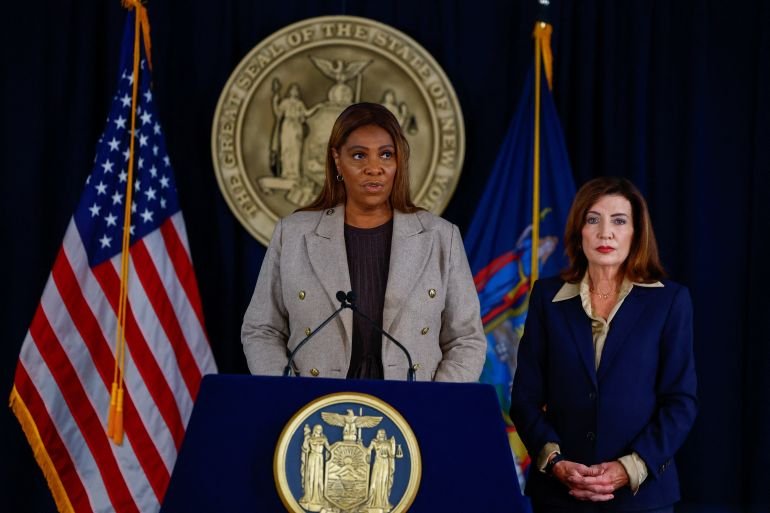
    New York Governor Kathy Hochul has appointed state Attorney General Letitia James as a special prosecutor to investigate an alleged gang rape at Cornell University, saying newly released information had undermined her confidence in the local prosecutor’s handling of the case.

    In a news conference on Friday, Hochul said that the woman who reported the alleged assault had been failed by institutions responsible for protecting her, including Cornell University Police and the Tompkins County district attorney’s office.

    Recommended Stories

    list of 1 itemend of list

    “In what world does the district attorney not even interview her, or anyone else involved, or even request the full transcript?” Hochul asked at the news conference. “And I want the truth. I think every parent in this state, every New Yorker wants the truth in this case.”

    Hochul signed an executive order on Thursday requiring the attorney general to investigate the alleged October 2024 assault. If warranted, evidence will be presented to a grand jury and the case prosecuted.

    The order states the Tompkins County district attorney declined to prosecute the case in November 2024 without speaking to Jane Doe and relied, at least in part, on information from a Cornell police statement that omitted her assertion that she had been sexually assaulted.

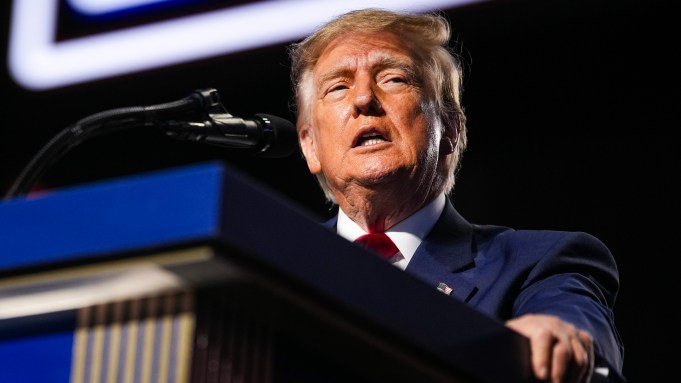
    On Friday in a post on social media, United States President Donald Trump decried Hochul’s decision to have James, who he claimed was “corrupt”, oversee the “highly controversial” case.

    The appointment of James means the state attorney general’s office, rather than the county district attorney, will now control the criminal investigation.

    ITHACA, NEW YORK - SEPTEMBER 30: Students walk past Cornell Police headquarters on the Cornell University campus on September 30, 2026, in Ithaca, New York. The New York state attorney general has announced a review of the university’s initial response to allegations by a former Cornell student that she was raped at a campus fraternity in 2024. The student, who is being identified only as Jane Doe, has alleged she was drugged and gang-raped inside the Chi Phi fraternity house on October 19, 2024. Spencer Platt/Getty Images/AFP (Photo by SPENCER PLATT / GETTY IMAGES NORTH AMERICA / Getty Images via AFP)
    The New York state attorney general has announced a review of the university’s initial response to allegations by a former Cornell student that she was raped at a campus fraternity in 2024 [File: Spencer Platt/AFP]

    Questions over the 2024 investigation

    Prosecutors initially closed the case without criminal charges in 2024. Tompkins County District Attorney Matthew Van Houten reopened the investigation on Monday, after Jane Doe filed a civil lawsuit accusing seven members of the Chi Phi fraternity of sexually assaulting her.

    Van Houten has defended his original decision, saying in a September 28 statement that prosecutors reviewed a six-page sworn statement the woman gave Cornell police in November 2024.

    He said the statement did not allege that she had been drugged against her will, and described her participation in sexual conduct as voluntary and consensual. He said multiple prosecutors and investigators reviewed the statement and concluded that, as presented, the facts did not establish a crime under New York law.

    The governor, however, said the full account given to police was not conveyed to prosecutors. She cited reports that Jane Doe told investigators she was “100% confident” she had been raped.

    Cornell has said its police department provided prosecutors with the evidence it had gathered, including a Snapchat screenshot, and that the university separately investigated the allegations through its disciplinary process. Cornell said sanctions imposed after that process included expulsions and suspensions.

    Cornell has also said it is conducting an independent review of how it handled the allegations.

    The Cornell case has renewed debate over New York’s definition of incapacity to consent. Under current state law, a person is considered “mentally incapacitated” when drugs or alcohol are given to someone without consent.

    A state bill introduced in June would extend the provision to cases in which a victim voluntarily consumed alcohol or drugs but became so intoxicated that they were temporarily unable to control their conduct, if the accused knew or reasonably should have known of the victim’s condition.

    The legislation has gained renewed attention following the Cornell allegations. Lawmakers said on Thursday that the case highlighted what they described as a gap in the state’s current law.

    “If someone is too intoxicated to consent, it should not matter whether they chose to use drugs or alcohol,” Hochul said at Friday’s news conference. “Voluntary intoxication is not a licence for sexual assault or gang rape, period.”

    Lindsey Boylan, a New York City Council candidate and the first woman to accuse former Governor Andrew Cuomo of sexual harassment publicly, said Hochul should use the moment to push for broader legislative change.

    “I expect to see her follow through with not just supporting the independent investigation, but also changing the state laws,” Boylan said. “That is what I’m expecting her to do now, and I think that is what every survivor is expecting her to do now.”

  • California leads lawsuit against Trump fuel efficiency standards rollback

    California leads lawsuit against Trump fuel efficiency standards rollback

    Lawsuit alleges NHTSA contravenes its congressional mandate to set fuel-economy standards at ‘maximum feasible’ .

    Twenty-six states, including California and New York, have filed a lawsuit against United States President Donald Trump’s administration after the US Department of Transportation lowered fuel economy standards for petrol-powered vehicles.

    The lawsuit, filed on Friday, challenges the Department of Transportation’s rollback of fuel economy standards to a fleet average fuel economy of 34.9 miles (56km) per gallon (3.78 litres) by model year 2031. Under the administration of former President Joe Biden, fuel economy standards were set at 50.4 miles (81km) per gallon by model year 2031.

    Recommended Stories

    list of 4 itemsend of list

    California Attorney General Rob Bonta, who is leading the lawsuit, argued that the Trump administration improperly changed how federal regulators calculate fuel economy standards.

    The National Highway Traffic Safety Administration (NHTSA) bases standards on technological improvements that could make petrol-powered vehicles more efficient. To do that, it first models the current fleet’s performance and then considers what additional actions manufacturers could take to improve their fuel economy in future model years above that.

    In past standards, including during the first Trump administration, NHTSA’s baseline fleet included the millions of electric vehicles that already run on US roads.

    Bonta said the Transportation Department change ignores the existing slate of EVs, which makes it easier to justify weaker standards for petrol-powered vehicles, and called the approach “flawed” and “dramatically distorted”.

    The lawsuit also alleges that NHTSA’s new rule is contrary to law and that NHTSA contravenes its mandate from Congress to set fuel-economy standards at their “maximum feasible” level.

    The Transportation Department has said the change could save American taxpayers $138bn over the next five years.

    “The president started a war that has created volatility in oil markets, disrupted global energy supplies, and left families and businesses paying the price at the pump. Yet, the Trump administration is attempting to gut fuel economy standards and force Americans to spend billions more on gas while poisoning the air in our communities,” Attorney General Bonta said in a statement.

    The rollback was applauded by car makers.

    “We welcome the Administration’s efforts to reset the CAFE [Corporate Average Fuel Economy] regulations to more achievable targets that are better aligned with market realities,” said Shane Karr, senior vice president of public affairs at Stellantis North America.

    Second lawsuit

    The litigation by the states came in tandem with a second lawsuit filed on Friday by progressive and climate groups, including the Environmental Defense Fund and Public Citizen.

    “Trump’s lawless push to roll back key safeguards on fuel economy will pollute our air, and line the pockets of oil and auto CEOs. We are confident of stopping Trump’s CAFE standards rollback,” Robert Weissman, co-president of Public Citizen said in a statement announcing the lawsuit, which was filed in a federal court in Washington DC.

    Auto stocks were trending downward throughout the day, with Ford, General Motors and Toyota closing down around 1 percent. Stellantis fell more than 6 percent amid reports of slumping sales.

  • Iraq grants Iranian airlines 40 daily Najaf flights after US exemption

    Iraq grants Iranian airlines 40 daily Najaf flights after US exemption

    Mahan Air is excluded from the agreement as Baghdad says Washington granted its request for a waiver.

    Iraq has agreed to let Iranian airlines, except Mahan Air, operate up to 40 flights a day to and from Najaf International Airport, saying the United States granted an exemption from its sanctions.

    Prime Minister Ali al-Zaidi’s office announced the agreement on Friday, a day after Tehran urged Baghdad to lift restrictions that it said hurt pilgrims, patients, students and business.

    Recommended Stories

    list of 2 itemsend of list

    The deal eases the links between the two Shia-majority neighbours since Washington sanctioned Iran’s aviation sector last month.

    Al-Zaidi welcomed the “positive response shown by the US government to Iraq’s efforts and its cooperation in granting the necessary exemption”, the statement from his office said.

    “Air travel does not merely represent transportation between two airports, but rather a bridge of communication between peoples,” it added.

    Separately, Iraq’s Foreign Minister Fuad Hussein said the return of flights supports an Iraqi-US partnership premised on mutual respect.

    Hussein also welcomed what he described as US understanding of the importance of respecting religious freedom and facilitating access for visitors to holy sites.

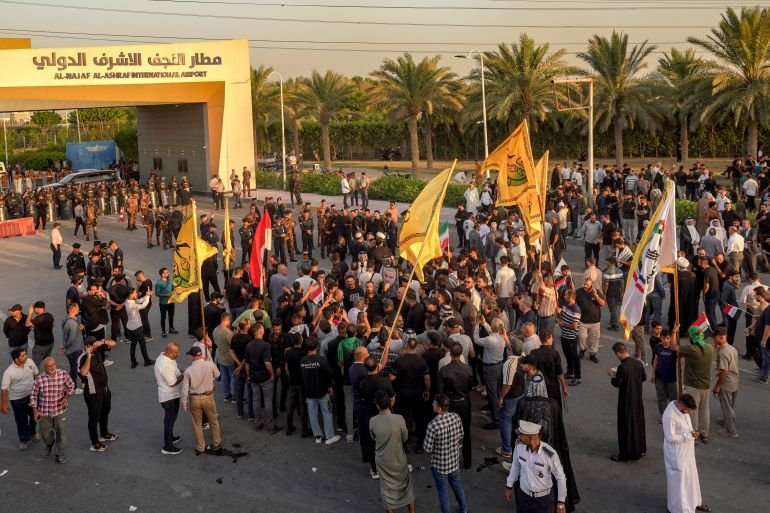
    Security personnel stand guard as demonstrators gather outside the Al-Najaf Al-Ashraf International Airport in Najaf on September 28, 2026, demanding the facility to be reopened for flights from Iran.
    Security personnel stand guard as demonstrators gather outside the Al-Najaf Al-Ashraf International Airport in Najaf, demanding the facility to be reopened for flights from Iran [AFP]

    Flights suspended

    The US Treasury announced sanctions on September 8 against 36 entities linked to Iran’s aviation sector.

    Foreign ground-handling companies then refused to service Iranian aircraft for fear of falling foul of US sanctions, and flights stopped at four Iraqi airports.

    Soon after, Iraq’s government held direct talks with Washington, seeking an exemption.

    Iraq’s ambassador to Tehran, Yasser al-Hajjaj, told Iran’s IRNA news agency that Baghdad had not ordered the halt in flights. The suspension also led to demonstrations outside Najaf airport and in Nasiriya, Karbala and Amarah, according to Iran’s Press TV.

    Najaf is the main destination for Iranian flights in Iraq. Flights to and from the city carry Iraqi Shia Muslim pilgrims to Iran’s holy cities or Iranians visiting sacred sites in Iraq.

    Iran’s ambassador to Baghdad, Mohammad Kazem al-Sadegh, told the Iranian news agency ISNA that there were “roughly 25 daily flights from Iran to Najaf and about 15 flights to Baghdad” before the ban.

    “Around 12,000 to 13,000 people travel between Iran and Iraq and vice versa on Iranian airlines, which is not a small number,” he added.

    In a statement shared on Thursday, Iran’s Foreign Ministry said that Washington’s “illegal and inhumane” extraterritorial enforcement of sanctions was disrupting Iran’s trade and air transport.

    Restrictions remain

    Flights between Najaf and Iran restarted late on Monday, according to the Iraqi News Agency.

    However, flights with Iran are still suspended at Baghdad, Erbil and Sulaimaniyah airports, forcing passengers into land journeys of at least 12 hours and disrupting pilgrim traffic.

    Al Jazeera has not verified the exemption with representatives in Washington.

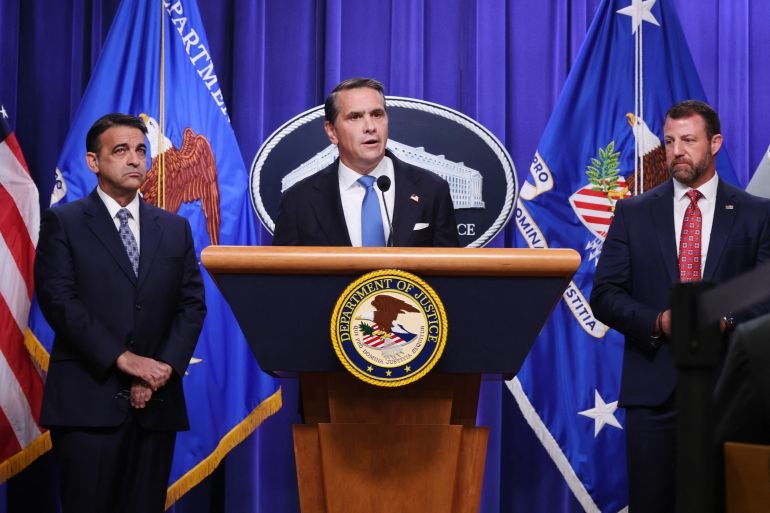
  • DOJ Argues CNN & Other Outlets Can Be Banned From White House If Trump Determines They Didn’t Meet “Minimum Requirements Of Professionalism”

    DOJ Argues CNN & Other Outlets Can Be Banned From White House If Trump Determines They Didn’t Meet “Minimum Requirements Of Professionalism”

    The Justice Department argued that Donald Trump can legally ban CNN, MS NOW and Politico from the White House because he determined that they didn’t meet the “minimum requirements of professionalism.”

    Last month, a federal judge granted the three outlets a temporary restraining order that forced the White House to reinstate dozens of their reporters’ hard passes. The outlets are now asking the judge to extend that 14-day order for a longer term via a preliminary injunction, claiming that Trump’s ban is a violation of their First and Fifth amendment rights.

    U.S. District Judge Timothy Kelly, a Trump appointee, has said that he is bound by the precedent set in In a 1977 D.C. Circuit opinion, Sherrill vs. Knight, in which the judges ruled that “the protection afforded newsgathering under the First Amendment guarantee of freedom of the press requires that this access not be denied arbitrarily or for less than compelling reasons.”

    In a court filing on Friday, the DOJ claimed that the Sherrill case still would allow for the president to restrict the three outlets from accessing the White House grounds because the White House has a “compelling interest.”

    The DOJ lawyers claimed that the Sherrill decision does not “prevent the President from concluding that bona fide journalists would identify sources instead of relying on anonymous sources, commit to factual accuracy, and provide the White House an opportunity to comment, rather than ‘perform their duties in a way that … interfere[s] with the White House’s daily operations.’ …At a bare minimum, it is a significant violation of decorum to publish classified and sensitive national security information.”

    The news outlets’ legal team has rejected that assertion, writing in a filing earlier this week that Trump’s “statements also make clear he implemented the ban to coerce more favorable coverage from CNN, MS NOW, and Politico, and to deter other journalists and news organizations from newsgathering and reporting that the President might view as negative. And his administration has continued to retaliate against Plaintiffs even after the temporary restraining order, only underscoring that Defendants’ motive is to punish and chill journalism they dislike.”

    Even as access to the White House grounds has been reinstated, the White House has continued to restrict CNN from coverage of TV pool assignments, including travel with Trump on Air Force One.

    The outlets’ lawyers, led by Theodore Boutrous Jr., also noted that Trump and other White House officials “overlooked that the First Amendment protects reporting on matters affecting national security.”

    Kelly has set a hearing for Thursday on the news outlets’ motion for a preliminary injunction.

    In granting a TRO, Kelly concluded that the White House failed to provide due process to the news outlets.

    The DOJ has pointed to letters sent to the outlets as evidence that they were given due process. But those letters were sent on Sept. 22, four days after Trump’s ban was started.

    The judge also has noted that some of the objectionable stories cited by the DOJ do not have to do with national security. Kelly wrote in his order that “even the justifications provided to Plaintiffs after this case was filed are ambiguous about the true purpose of the revocations: while Defendants’ letters to Plaintiffs mention national security concerns, they purport to identify reporting that ‘threatened national security and/or spread falsehoods’ leaving open the possibility that all the stories fall into the later bucket, rather than the former.”

  • Pentagon’s new Office of Religious Affairs under Hegseth: What we know

    Pentagon’s new Office of Religious Affairs under Hegseth: What we know

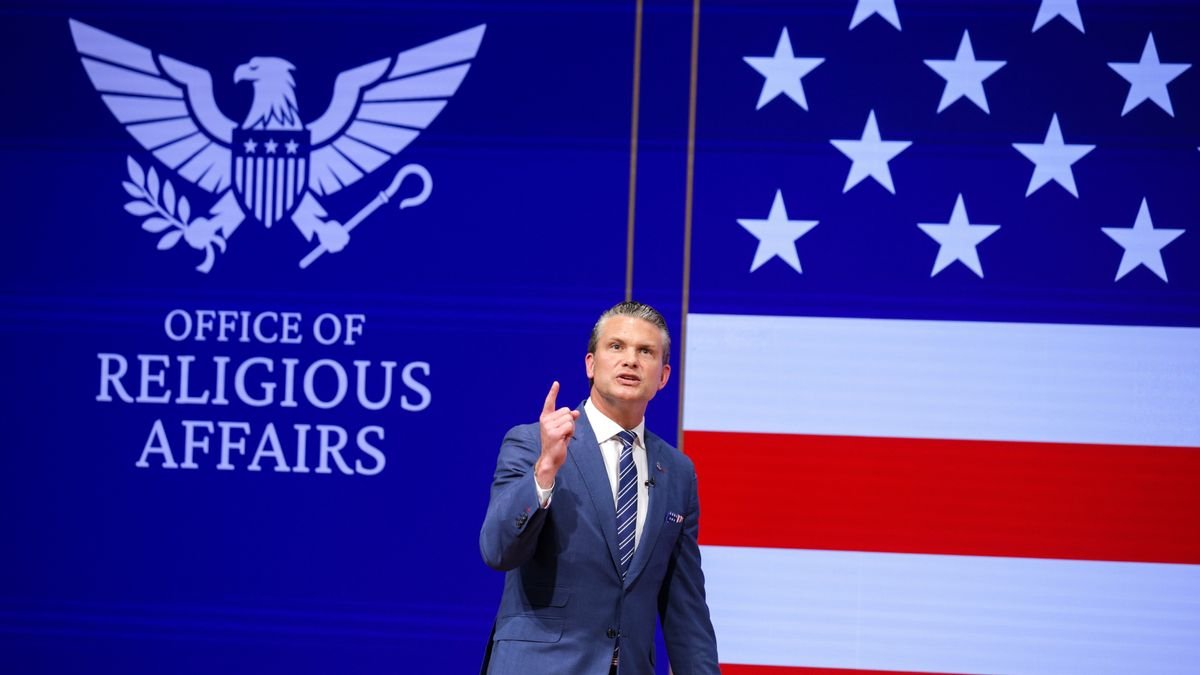
    • U.S. Secretary of Defense Pete Hegseth announced the creation of an Office of Religious Affairs at the Department of Defense on Sept. 30, 2026, during a speech he called the “State of the Force” address.
    • Hegseth suggested the Office of Religious Affairs would address urgent spiritual needs among the troops, which he said had long been neglected. He said the office would report directly to him and that budgets would be guaranteed both for chaplaincy and infrastructure, such as “base chapels.”
    • Hegseth said that “less than 5% of our force identifies as non-religious,” without citing his source for the number. A 2019 congressional report found that while 2.3% of the force identified as agnostic or atheist, the affiliation of 24.4% of active duty personnel fell under “Other/Unclassified/Unknown.”
    • Snopes will update this report if, or when, additional information surfaces. We have reached out to the DOD to ask what concrete actions the office will take. We also reached out to the American Humanist Association and are waiting for responses.

    In October 2026, a rumor spread that U.S. Secretary of Defense Pete Hegseth had announced the creation of an Office of Religious Affairs at the Pentagon.

    The claim spread on social media, including X. One X post included a video of Hegseth speaking on a stage with a U.S. flag background (archived):

    “Today, at my direction, I am establishing the Office of Religious Affairs,” Hegseth says in the video. “Starting today, and for secretaries of war after me, the Office of Religious Affairs will report straight to the top. No staff filters. No bureaucratic dilution. A direct line to the secretary.”

    Meanwhile, several Snopes readers searched the website seeking more information about the supposed Office of Religious Affairs.

    It is true that on Sept. 30, 2026, Hegseth gave a speech he called the “State of the Force” address. In this speech, he said he had ordered the creation of an office dedicated to religious affairs, which Department of Defense spokesperson Sean Parnell confirmed in an X post (archived):

    We reached out to the DOD seeking more details about the initiative and will update this story if we learn more.

    Here’s what we know about the new DOD office so far:

    Office of Religious Affairs

    In his speech, Hegseth said the initiative would address what he described as long-neglected spiritual needs among the troops (starting around the 50:25 mark of the DOD’s recording of the speech):

    After describing how significant the loss of a religious community could be for military personnel assigned to a new location or deployed abroad, Hegseth said that “political correctness and secular humanism” had allowed budgets for religious support to dwindle and infrastructure such as “base chapels” to go into disarray.

    Religious diversity in the force

    Hegseth said that “less than 5% of our force identifies as non-religious,” without citing his source for the number. A 2019 congressional report found that while 2.3% of the force identified as agnostic or atheist, the affiliation of 24.4% of active duty personnel fell under “Other/Unclassified/Unknown” (PDF Page 51). 

    Meanwhile, the Military Association of Atheists and Freethinkers, an organization that advocates for nonreligious military members but is not associated with the DOD, said 2.05% of the force identified as “Humanists” in 2018 (Humanism is a non-theistic belief; Humanists believe in a moral and ethical code without believing in God). That report also said the chaplaincy did not represent the religious diversity of the military, with an overrepresentation of evangelistic Christians, when only 13.31% of the troops identified as such.

    We reached out to the MAAF for comment on the creation of the office. A spokesperson told us the group was in the process of dissolving and directed us to the American Humanist Association, a nonprofit that advocates for secular humanism. We will update this story if the AHA returns our request for a statement on the possible impact of the creation of the office on nonreligious service members.

    In May 2026, the DOD released a list of recognized religions in a memorandum signed by Undersecretary of Defense for Personnel and Readiness Anthony Tata. The memo included 31 religions, down from 211, according to Military.com, the news outlet dedicated to reporting on the U.S. Military. Twenty-two of those 31 were Christian denominations.

    Hegseth then announced the creation of the Office of Religious Affairs, designed to report directly to him in the Pentagon organizational chart. In his announcement, he said (around 52:32 of the video embedded above):

    This won’t be a paper pushing shop. It will have real teeth. It will protect budgets, demand infrastructure, and strengthen religious support. The experts, our chaplains, will finally have an advocate at the highest levels. Policy and resources will serve the mission, not smother the mission. 

    ‘Spiritual readiness’ and ‘spiritual resilience’

    A memo issued on the same day confirmed the creation of the office. It read, in part:

    The Department of War is committed to fulfilling its duty to support the Department’s Service members, their families, and the Department’s civilian personnel in the free exercise of religion as protected by the Constitution of the United States and applicable Federal law. While the Department accomplishes this mission primarily through the chaplaincies of the Military Departments established under title 10, U.S. Code, the establishment of the ORA will ensure resources are adequately provided and, where necessary, policy is properly aligned to prioritize the free exercise of religion and the spiritual readiness across the Total Force.

    Still, Hegseth’s memo said, this effort to support the spirituality of military personnel should not “be construed to compel religious participation or to diminish the free exercise rights of any Service member, civilian employee, or family member of any faith or no faith.” 

    The memo also said the new office had 90 days to present a plan of action to rebuild the spiritual force of the military:

    Within 90 days of the date of this memorandum, the Secretaries of the Military Departments, in coordination with their respective Chiefs of Chaplains, will submit to the Director a comprehensive baseline report of all unfunded and underfunded religious affairs requirements, including, but not limited to, delivery ofreligious ministry, facilities and infrastructure, logistics, chaplain-led programs, chapel youth programs, faith-based homeschool support for military families, programs related to suicide reduction, and contracted services from faith-based non-Federal entities; research, technology, and analytical tools to support spiritual fitness, spiritual readiness, and spiritual resilience; chaplain in-service procurement programs, chaplain and religious support team training and education. 

    For further reading, Snopes examined another announcement Hegseth made that day, the launch of “Project Meridian,” set to study the “future of warfare.”

  • Was Christa Pike’s execution team all women? We investigated

    Was Christa Pike’s execution team all women? We investigated

    • The claim that an all-female team led the botched execution of the Tennessee death row inmate Christa Pike on Sept. 30, 2026, is still under investigation.
    • Pike was taken to a hospital after she appeared to survive receiving two doses of the sedative pentobarbital.
    • While Pike’s lawyer later appeared to confirm that Pike’s reported request for an all-female team to administer her lethal injection had been fulfilled, local media reported that a male doctor had administered Pike’s injections or overseen the attempted execution.
    • Because of the lack of confirmation from official sources to settle those conflicting claims, we could not determine whether the team that attempted to carry out Pike’s execution was all female. Therefore, we leave this claim unrated.
    • Snopes will update this report if additional information surfaces. We contacted the local media outlets that reported the presence of a male doctor at Pike’s execution and await replies to our queries.

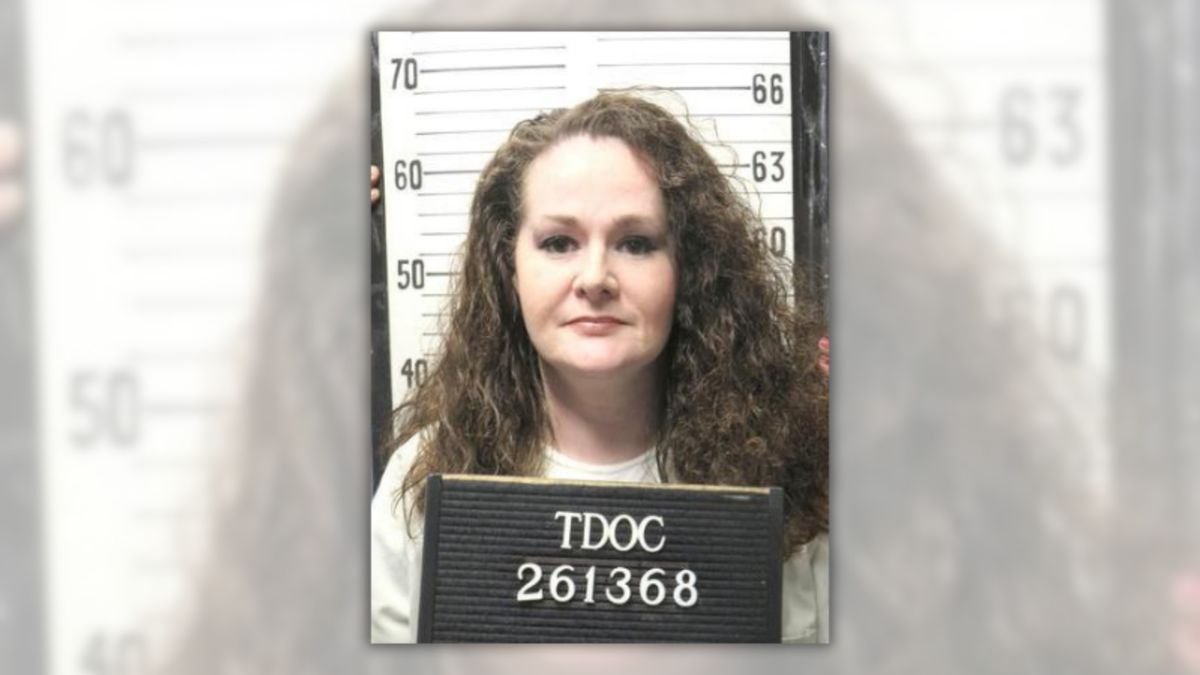
    In early October 2026, after the Tennessee Department of Correction failed to execute death row inmate Christa Pike on Sept. 30, 2026, a claim circulated online that Pike’s execution team had been all female. 

    Pike was convicted of first-degree murder and sentenced to death in 1996 for the killing of her Jobs Corp training program classmate, 19-year-old Colleen Slemmer. She also was convicted of attempted first-degree murder in 2001 after attacking another inmate.

    The department halted Pike’s execution in the evening of Sept. 30 after she appeared to survive receiving two doses of the sedative pentobarbital. Pike was taken to a hospital and her lawyers said on Oct. 1 that she was in critical condition, The Associated Press reported.

    Some social media users appeared to suggest that there was a connection between the failed execution and the alleged all-female lethal injection team. One X user wrote (archived), “I’m just going to say it, I think that the all-female execution team botched this on purpose.”

    The claim also circulated elsewhere on X (archived). Snopes readers searched our site for more information about the rumor.

    At the time of this writing, conflicting claims circulated about whether an all-female team had carried out Pike’s botched execution.

    Speaking at a news conference after the execution attempt, Pike’s lawyer Randy Spivey appeared to confirm that her execution team had all been women by saying that the team he saw at the execution was “consistent” with a reported request Pike made for an all-female team.

    However, local media in Tennessee reported that Dr. Mark Fowler, a man who also was involved in the botched execution of Tony Carruthers in Tennessee in May 2026, administered the lethal injections or “oversaw” Pike’s attempted execution.

    When reached by Snopes via phone on Oct. 2, Fowler would not comment on whether he was involved in Pike’s attempted execution. The Tennessee Department of Correction also declined to comment on whether Pike had an all-female execution team.

    Given the lack of confirmation from official sources to settle conflicting claims, we leave this claim unrated.

    The Tennessee Department of Correction had not confirmed at the time of this writing exactly what led to the failure to execute Pike. Therefore, it was impossible to say whether an all-female team affected the outcome of the execution.

    Snopes contacted reporters for WSMV and WVLT, the two local news stations that reported Fowler’s apparent involvement in Pike’s attempted execution, to ask how they knew Fowler was present. We also contacted lawyers for Pike for the latest update on her health and case. We await replies to our queries.

    The New York Post reported in September 2026 that Pike had requested an all-female execution team “citing past sexual abuse.” Pike reportedly also said that if her request was not possible she would prefer to be executed by hanging.

    Snopes contacted lawyers for Pike to access a copy of this reported request and await a reply. Spivey appeared to acknowledge the existence of the request when he responded to a question about it during a news conference (archived) after the failed execution (at 33:41):

    MODERATOR: We have a question from Heather Derell. Was she granted the all-female execution staff she requested?

    SPIVEY: I want to be careful with that because I understand the rules around identifying that, and I will say that I think what TDOC has said is that they would make every effort to comply with that, and what I saw was consistent with that.

    At a news conference on Oct. 1, Tennessee Gov. Bill Lee said (at 0:54, archived) he had called for a “thorough and comprehensive and third-party review and investigation into the protocol” at the execution attempt. Lee also said that the state’s last planned execution of the year would not take place while that investigation was ongoing.

    Pike appealed to Lee for clemency and to have her death sentence converted to life in prison without the possibility of parole on Sept. 14. Lee rejected that appeal on Sept. 28.

    Sources

    ‘Christa Pike Requests Clemency Ahead of September 30 Execution Date; Experts’ Amicus Brief Points to “Substantial Risk” of Re-Traumatization’. Death Penalty Information Center, https://deathpenaltyinfo.org/christa-pike-requests-clemency-ahead-of-september-30-execution-date-experts-amicus-brief-points-to-substantial-risk-of-re-traumatization. Accessed 2 Oct. 2026.

    Cohen, Li. ‘Christa Pike Live Updates: What to Know as She Remains in “Critical Condition” after Failed Execution and Her ‘grotesque’ 1995 Torture, Murder of Classmate’. Https://Www.Wsmv.Com, 1 Oct. 2026, https://www.wsmv.com/2026/10/01/christa-pike-live-updates-what-know-she-remains-critical-condition-after-failed-execution-her-grotesque-1995-torture-murder-classmate/.

    COLLINS, JEFFREY. ‘What to Know about Christa Pike and Her Failed Lethal Injection Execution Attempt in Tennessee’. The Associated Press, 2 Oct. 2026, https://apnews.com/article/tennessee-execution-what-to-know-christa-pike-8a834e15b8f2d5397b7620bc33d0ec10.

    Death Row Inmate Christa Pike Petitions Clemency Ahead Sept. 30 Execution Date. 26 Sept. 2026, https://nypost.com/2026/09/26/us-news/death-row-inmate-christa-pike-petitions-clemency-ahead-sept-30-execution-date/.

    ‘Governor Bill Lee Denies Clemency for Christa Pike, Refusing to Stop Tennessee’s First Execution of a Woman in More Than 200 Years’. Death Penalty Information Center, https://deathpenaltyinfo.org/governor-bill-lee-denies-clemency-for-christa-pike-refusing-to-stop-tennessees-first-execution-of-a-woman-in-more-than-200-years. Accessed 2 Oct. 2026.

    Hale, Steven. ‘Tennessee Doctor Was Unable to Facilitate Lethal Injection’. Nashville Banner, 22 May 2026, https://nashvillebanner.com/2026/05/22/tony-carruthers-lethal-injection-doctor-qualifications/.

    Morgan-Rumsey, Camruinn, and Kassidy Brown. ‘Doctor Involved in Tony Carruthers’ Botched Execution Administered Christa Pike’s Lethal Injection — and She’s Still Alive’. Https://Www.Wvlt.Tv, 1 Oct. 2026, https://www.wvlt.tv/2026/10/01/doctor-involved-tony-carruthers-botched-execution-administered-christa-pikes-lethal-injection-shes-still-alive/.

    ‘Pentobarbital, the Drug Used in Tennessee’s Failed Execution, Has Come under Past Scrutiny’. The Associated Press, 1 Oct. 2026, https://apnews.com/article/pentobarbital-tennessee-execution-pike-9b160ff13c3d26942d19c02e53baa4ed.

    WBIR Channel 10. ‘LIVE | Christa Pike’s Attorneys Hold Press Conference after Her Failed Execution Attempt’. Youtube, 1 Oct. 2026, https://www.youtube.com/live/3yTHDrphcpY?t=2021s.

    Women on Death Row. https://www.tn.gov/correction/about-us/executions/women-on-death-row.html. Accessed 2 Oct. 2026.

    WVLT News. ‘Gov. Lee Halts Tennessee Executions After Christa Pike Attempt Fails’. YouTube, 1 Oct. 2026, https://www.youtube.com/watch?v=zaSAzt5UkWI&t=54s.
     

  • What has happened to ‘Cornell 7’ after lawsuit accused them of rape?

    What has happened to ‘Cornell 7’ after lawsuit accused them of rape?

    • The claim that male students who were accused of raping a female student at Cornell University were fired from their jobs or expelled from Cornell is still under investigation. 
    • Snopes readers asked us to determine what happened to each of the seven accused, including whether the university penalized them or their employers fired them. 
    • A spokesperson for Cornell said via email that the university issued suspensions for some students and expelled others but did not specify which students received which penalties. Cornell did not respond to our specific questions about each student. 
    • Using the university database, social media posts, a lawyer’s statements and college news reporting, Snopes was able to determine that at least one of the accused was still a student on campus. Three others were alumni at the time of the September 2026 lawsuit, while the remainder have an undetermined status at the university. 
    • Snopes has also reached out to most of the accused students using emails from the college database. We will update this report if we get more information. 

    In September 2026, a lawsuit brought against Cornell University and seven of its male students alleged the men drugged and raped a 20-year-old female student in October 2024. The story spread online along with claims that the accused students faced little or no consequences, though some allegedly lost their jobs or were expelled.

    As Snopes previously reported, the lawsuit named seven male students as defendants: Matthew Ingalls, Johnathan Newell, Winston Lee, Gillio Lopes, Diego Sarabia, Scott Norris and Scott Kretzschmar. According to the lawsuit — filed on behalf of the plaintiff, identified only as Jane Doe, on Sept. 14 — the drugging and multiple assaults occurred the night of Oct. 19, 2024, into the early hours of Oct. 20 at the Xi chapter of the Chi Phi fraternity. 

    According to Doe’s lawsuit, Cornell temporarily suspended the accused students on Nov. 8, 2024, (Page 29) but they were given the opportunity to mitigate their conduct by writing an essay to the university. Cornell has denied that the students only had to write essays as a disciplinary measure. 

    Posts on X, Facebook and Instagram claimed two of the accused students, Sarabia and Ingalls, lost their jobs at Wells Fargo and Data Annotation Tech, respectively. Jane Doe’s attorney also reportedly claimed two of the students were expelled from the university, without naming them. 

    Snopes emailed a spokesperson for Cornell University to determine the enrollment status of each of the accused students. The university declined to respond to specific questions about the accused, directing us to its official statement. The statement says that students were expelled and/or suspended but would not identify which students:

    Temporary suspensions and other restrictive measures were issued when the conduct was reported. Chi Phi, Xi Chapter was closed in 2024 and remains barred from campus. Following the university’s Title IX investigation, sanctions including expulsions and suspensions were issued by a hearing panel comprising trained faculty and staff. Federal privacy law prohibits Cornell from disclosing specific information regarding individual students, and the university is therefore unable to make a public statement regarding any other disciplinary response. 

    Below we break down everything we know about the education and employment status of each of the seven accused students. We will update this story as we learn more.

    Diego Sarabia

    Student newspaper The Cornell Daily Sun and Cornell’s online directory say Sarabia is an alumnus from the class of 2025. 

    Gossip outlet TMZ reported, citing anonymous sources, that Sarabia is no longer employed at a Wells Fargo bank branch in Charlotte, North Carolina. It was not possible to independently verify this ourselves. According to the report, Sarabia had worked at the branch since 2022. Wells Fargo has not publicly commented on the story as of this writing. 

    Snopes has contacted several Wells Fargo representatives to learn more about Sarabia’s role, employment status and the circumstances around his alleged termination. The company has not responded to our queries. 

    Snopes has also reached out to Sarabia through an email address in the student directory.

    Matthew Ingalls

    On Sept. 30, Data Annotation Tech responded to the claim that it had employed one of the accused. The company, which hires independent contractors to train artificial intelligence models, said on Instagram (archived) that one of the accused was blocked from its platform in May 2024, long before the lawsuit. 

    According to its Instagram post, which does not name Ingalls, the claim that the company employed one of the accused is “incorrect.” It continues, “He has had no access to our platform or our company at any point since then.”

    We contacted Data Annotation Tech to learn more about whether Ingalls, specifically, had ever been a contractor or employee there. 

    The Daily Sun reported that Ingalls was a member of the class of 2027. Cornell’s online database initially listed Ingalls as a student but his college affiliation as “not applicable.” When Snopes returned to the directory on Oct. 2, his name had been removed.

    Snopes has reached out to Ingalls through an email address in the student directory. 

    Gillio Lopes

    The Daily Sun reported that Lopes was a member of the class of 2027 and was still listed in the directory as a student in the College of Arts and Sciences. Snopes was unable to confirm the directory listing.

    Footage shared online purported to show a woman confronting Lopes on Cornell’s campus in late September 2026. Lopes’ lawyer confirmed the veracity of the footage to TMZ, saying:

    What has emerged today only reinforces how dangerous it is to rush to judgment. The contemporaneous texts and other evidence now being reported show a far more complicated and evolving factual picture than the one initially presented to the public.

    […]

    Due process exists for precisely this reason. Publicity is not evidence. Repetition is not proof. An accusation cannot be allowed to become its own proof. He is entitled to have the evidence tested through the legal process—not by headlines, social media, or people confronting him in public or threatening his family.

    Snopes has reached out to Lopes’ lawyer, Andrew Miltenberg, to learn more. 

    Winston Lee

    The Daily Sun reported that Lee was a member of the class of 2027 and was still listed in the directory as a student in the College of Arts and Sciences.

    Some social media users claimed (archived) Lee was still on campus and had changed his name to Jay Lee. As of this writing, Snopes was unable to independently verify this claim.

    Snopes was unable to determine Lee’s status via the student directory or to find contact information for him. 

    Scott Kretzschmar

    The Daily Sun reported that Kretzschmar is an alumnus from the class of 2026. When Snopes first looked at the student directory, it listed him as a student, but his college affiliation was “not applicable.” When Snopes returned to the directory on Oct. 2, his name had been removed.

    Snopes has reached out to Kretzschmar through an email address in the student directory. 

    Johnathan Newell

    The Daily Sun reported that Newell was a member of the class of 2027. When Snopes first looked at the student directory, it listed a “Jonathan Newell” (with a different spelling) as a student, but his college affiliation was “not applicable.” When Snopes went back to the directory on Oct. 2, there was no record of a Johnathan or Jonathan Newell.

    Snopes has reached out to Newell through an email address in the student directory. 

    Scott Norris 

    The Daily Sun reported that Norris is an alumnus from the class of 2026. Cornell’s online database initially listed him as a student but his college affiliation as “not applicable.”  When Snopes returned to the directory on Oct. 2, his name had been removed. 

    Snopes has reached out to Norris through an email address in the student directory. 

    For further reading, Snopes has reported on what we know about several claims surrounding the “Cornell 7” lawsuit, including a rumor that the Ivy League had dropped Cornell. 

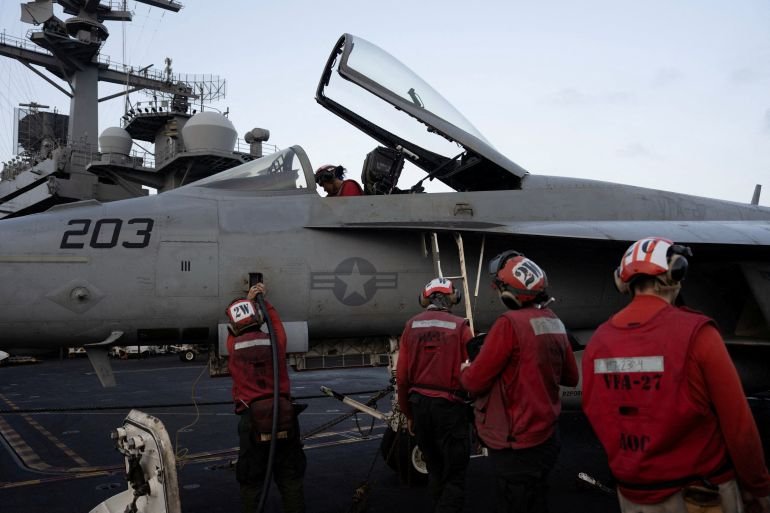
  • US to send third aircraft carrier towards Iran: US official to Al Jazeera

    US to send third aircraft carrier towards Iran: US official to Al Jazeera

    Massive US military deployment in the Middle East includes 50,000 troops, F-35s and Marines to pressure Tehran.

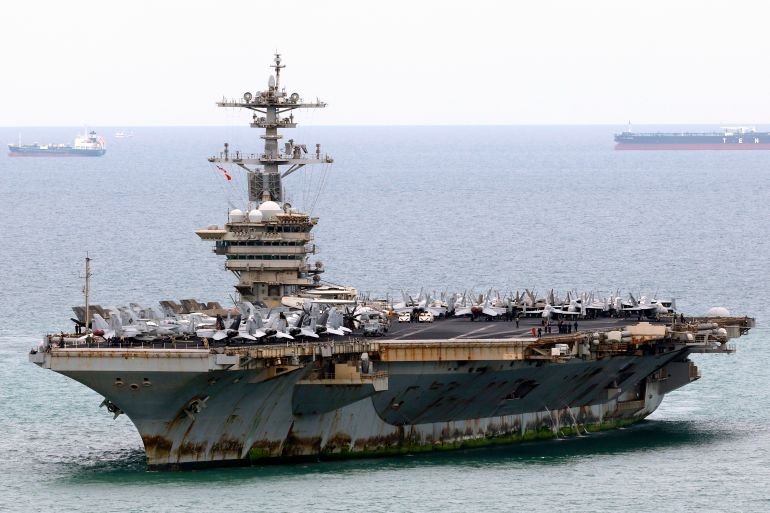
    The United States is deploying a third US aircraft carrier to the waters around Iran, a US official told Al Jazeera, as the war enters its eighth month and both sides weigh escalation and diplomatic engagement.

    The official told Al Jazeera that the USS Theodore Roosevelt carrier strike group left its San Diego base on Sunday, bound for the region, followed a day later by the Makin Island Marine Expeditionary Force, carrying more than 2,000 Marines.

    Recommended Stories

    list of 3 itemsend of list

    By the end of November, the official said, three aircraft carriers and two amphibious landing groups will be positioned around Iran.

    The official said the concentration of force would hand President Donald Trump a wider menu of options if he decides to act.

    Al Jazeera’s Tanya Noury, reporting from Washington, said the new deployment includes thousands of troops and extra air power, including F-35 fighter jets, layered on top of the roughly 50,000 US service members already stationed in the region.

    The goal, Noury said, citing sources inside the Pentagon and White House, is to keep military options “on the table” for Trump regardless of how diplomacy unfolds, with the Pentagon not planning to withdraw any assets even if an agreement with Iran is reached. Defense Secretary Pete Hegseth has said forces are “ready to go” should Trump order new strikes.

    Trump himself has kept the threat alive in public. He told Fox News he believes the US is “going to win the war” with Iran “very soon”, while suggesting in other remarks that a return to military action “is possible” but something he would rather not spell out before November’s midterm elections.

    Washington has paired the show of force with new economic pressure, sanctioning Iran’s rail and automotive conglomerates this week, as the Treasury Department called the new measures an effort to drain what remains of Tehran’s revenue.

    Diplomatic track

    Parallel to the military build-up, Iran has pushed a seven-day roadmap, conveyed through Qatar, that would see it reopen the Strait of Hormuz and resume nuclear talks in exchange for an end to the US naval blockade, sanctions relief and a regional ceasefire covering Lebanon and Yemen.

    The plan was then rejected by Trump.

    US Ambassador to the UN Mike Waltz told NBC the plan’s demand for frozen funds and sanctions relief was non-negotiable, noting “these aren’t just the United States’ sanctions … these are global sanctions”, and pointing to seven UN Security Council resolutions against an Iranian nuclear weapons programme.

    Iran’s response, in the meantime, has been similarly two-pronged.

    Foreign Minister Abbas Araghchi told NBC that Tehran was “fully prepared” to resume the war, before writing on X that “we did not come to New York to sell a war. We came to forge peace.”

    Analysts say the mixed signals are deliberate.

    Abas Aslani of the Center for Middle East Strategic Studies said the dispute has shifted from whether to negotiate to “who is going to abandon the primary leverage first”, while former US ambassador Richard Schmierer said Trump is caught between delaying past the midterms and the political cost of offering concessions that mirror a June deal he was already criticised for.

    Nearly 70 percent of Americans now say the war has not been worth fighting, according to a new AP-NORC poll, with Trump brushing off the slide in his approval ratings by insisting “the pollsters are corrupt”.

  • Miami judge rules federal noncitizen voting law violates US Constitution

    Miami judge rules federal noncitizen voting law violates US Constitution

    Judge Leibowitz’s decision underscores state jurisdiction over voter qualifications, limiting federal actions.

    A United States federal judge has ruled that a law criminalising voting by noncitizens is unconstitutional, dealing a setback for President Donald Trump’s administration as it cracks down on alleged election fraud ahead of November’s midterm elections.

    US District Judge David Leibowitz in Miami dismissed a federal case on Thursday against Chelsea Cox, a Florida resident originally from Jamaica who had been charged in October 2025 with illegally voting in the 2020 presidential election.

    Recommended Stories

    list of 3 itemsend of list

    Leibowitz, who was nominated to the bench by former Democratic President Joe Biden, found that under the US Constitution, only individual states, not the US Congress, have the authority to set voter qualifications.

    Since every state already requires US citizenship to vote, he wrote, it is up to Florida, not the Department of Justice, to prosecute Cox for breaking that rule. “Florida can and does,” he wrote, noting the state already has its own laws against the conduct Cox is accused of.

    The ruling applies only to Cox’s case and it does not bind judges elsewhere, though about 45 similar cases remain pending nationwide. At least four other defendants have raised the same constitutional challenge.

    Court filings show Cox entered the US as a tourist in 1999, overstayed her visa, and later used a fraudulent birth certificate from the US Virgin Islands, a US territory in the Caribbean, to obtain a Florida driver’s licence and register to vote in 2012.

    Trump has falsely claimed that noncitizen voting, which is already illegal and rare, cost him the 2020 election, and has cast it as part of a broader effort by Democrats to dilute Republican support.

    The Department of Justice has charged at least 60 people with the offence since Trump returned to office in January 2025.

    Among 129 people charged with “voting by an alien” since 2021, none was accused of conspiring to sway an election, backing a candidate, or being paid to vote, according to Reuters. Most were found to be lawful permanent residents who had registered by mistake or on the incorrect advice of an election worker or government clerk.

    Cox’s lawyer, Bruce Udolf, welcomed the ruling and said he hoped authorities would not now seek to deport her, citing her declining health conditions.

  • New aircraft carrier, 10,000 US troops: Is the Iran war about to escalate?

    New aircraft carrier, 10,000 US troops: Is the Iran war about to escalate?

    The United States is deploying a third aircraft carrier strike group to waters in the Middle East close to Iran, a US official has told Al Jazeera, as the war enters its eighth month and both sides weigh escalation and diplomatic engagement.

    Thousands more troops are also on their way to the region, just a month before November US midterm elections, which could see US President Donald Trump’s Republican Party hit hard by his handling of the war, which is deeply unpopular in the US.

    Recommended Stories

    list of 3 itemsend of list

    We look at what the latest troop deployment means and whether it signals a coming escalation in the war on Iran:

    What troops and military equipment have been deployed?

    A US official told Al Jazeera that the USS Theodore Roosevelt carrier strike group left its San Diego base on Sunday, bound for the region, followed a day later by the Makin Island Marine Expeditionary Unit (MEU), which is carrying more than 2,000 Marines.

    The Wall Street Journal reported that the strike group and naval deployments could involve an additional 9,000 to 10,000 US troops in total, including sailors and Marines assigned to the carrier strike group and other ships.

    By the end of November, the official said, three aircraft carriers and two amphibious landing groups will be positioned near Iran.

    The official said the concentration of force would hand President Donald Trump a wider menu of options if he decides to act.

    Al Jazeera’s Tanya Noury, reporting from Washington, said the new deployment, which includes F-35 fighter jets, will add to the roughly 50,000 US service members already stationed in the region.

    The goal, Noury said, quoting sources inside the Pentagon and White House, is to keep military options “on the table” for Trump regardless of how diplomacy unfolds. The Pentagon is not currently planning to withdraw any assets even if an agreement with Iran is reached.

    Defense Secretary Pete Hegseth has said forces are “ready to go” should Trump order new attacks.

    What forces does the US already have in the Middle East?

    The US has stationed troops and military assets at bases in the Middle East for decades.

    According to the Council on Foreign Relations, the US operates from a broad network of military sites, both permanent and temporary, across at least 19 locations in the region.

    Of these, eight are permanent bases, located in Bahrain, Egypt, Iraq, Jordan, Kuwait, Qatar, Saudi Arabia and the United Arab Emirates.

    The US’s first deployment of soldiers in the Middle East took place in July 1958, when combat troops were sent to Beirut during the Lebanon crisis. At its height, there were almost 15,000 Marines and soldiers in Lebanon.

    As of mid-2025, there were 40,000 to 50,000 US soldiers stationed around the Middle East, comprising personnel stationed in both large, permanent bases and smaller forward sites across the region.

    Trump has been beefing up the US military presence in the Middle East since the start of this year, initially sending warships, including the USS Abraham Lincoln aircraft carrier, to the Arabian Sea.

    INTERACTIVE - US Military presence in the Middle East June 2026 - JUL30, 2026-1785419231

    What military assets and troops did the US send ahead of the war?

    According to open source intelligence analysts and military flight-tracking data, the US has deployed more than 120 aircraft to the region since early February. This is the biggest surge in US airpower in the Middle East since the 2003 Iraq War.

    Reported deployments include E-3 Sentry Airborne Warning and Control System (AWACS) aircraft, F-35 stealth strike fighters and F-22 air superiority jets alongside F-15 and F-16 fighter aircraft. Flight-tracking data showed many of these planes departing bases in the US and Europe, supported by cargo aircraft and aerial refuelling tankers, a sign of sustained operational planning rather than routine rotations, military analysts said.

    In March, the Pentagon also ordered additional US forces to the Gulf.

    The reinforcements consisted of three distinct formations, each with a different origin, route and timeline.

    The first was the Tripoli Amphibious Ready Group, centred around the America-class assault ship USS Tripoli and the 31st Marine Expeditionary Unit (MEU).

    The second was the Boxer Amphibious Ready Group, built around the Wasp-class assault ship USS Boxer and the 11th MEU, based in Southern California in the US.

    Together, these two Marine groups have added 4,500 Marines and sailors in the region.

    The third was a contingent of about 2,000 soldiers from the 82nd Airborne Division’s Immediate Response Force, based at Fort Bragg, North Carolina. The airborne infantry division is focused on parachute assaults.

    In total, nearly 7,000 additional soldiers have already been deployed to the Middle East since the war on Iran began.

    What does the latest deployment signal?

    While it is not clear if the new troop deployment signals an escalation in the war, in an interview with Time magazine published on Thursday, Trump suggested that it is “possible” he could ramp up bombing Iran after the midterm elections.

    When asked by Time for further details, Trump said: “I can’t tell you that because look, you know, you’re asking, where are you going to bomb?”

    Some analysts have suggested that sending more troops to the region could be Washington’s negotiating technique with Iran.

    Last week, Iran sent a new proposal to reopen the Strait of Hormuz within seven days, subject to certain conditions it wants the US to meet, including the lifting of sanctions, unfreezing Iranian assets and guaranteeing an end to strikes.

    However, the Trump administration rejected the proposal. Analysts say the US wants other issues, such as Iran’s nuclear programme, to be discussed before it agrees to any terms.

    In his Time interview, Trump said that he had rejected the latest ceasefire proposal from Iran because it included “things” he “wouldn’t have approved a year ago” and  “wouldn’t have today”.

    Washington has paired the show of force towards Iran with economic pressure, sanctioning Iran’s rail and automotive conglomerates this week, as the Treasury Department called the new measures an effort to drain what remains of Tehran’s revenue. Last month, the US unveiled sweeping new sanctions on Iran, as well as on other countries which trade with it.

    What stage are diplomatic efforts at?

    Indirect peace talks conducted between the US and Iran via mediators have been continuing without any breakthroughs.

    At talks held on the sidelines of the United National General Assembly (UNGA) in New York last month and mediated by Qatar, the opening of the Strait of Hormuz remained a sticky subject.

    At the talks, Iran pushed a seven-day roadmap, conveyed through Qatar, that would see it reopen the Strait of Hormuz and resume nuclear talks in exchange for an end to the US naval blockade, sanctions relief and a regional ceasefire covering Lebanon and Yemen.

    The plan was rejected by Trump.

    US ambassador to the UN Mike Waltz told NBC the plan’s demand for frozen funds and sanctions relief was non-negotiable, noting “these aren’t just the United States’ sanctions … these are global sanctions”, and pointing to seven UN Security Council resolutions against an Iranian nuclear weapons programme.

    In response, Iran’s Foreign Minister Abbas Araghchi told NBC that Tehran was “fully prepared” to resume the war, before writing on X that “we did not come to New York to sell a war. We came to forge peace.”

    Late on Thursday, Trump warned Iran that the current confrontation will end “very soon”, threatening severe consequences if Tehran fails to reach a deal with Washington.

    Speaking at a Peterbilt Motors plant in Denton, Texas, Trump said Iran will either “do something very proper and smart, or they won’t be around very long”.

    He also questioned whether Iran can be trusted to honour any agreement, saying: “When I make a deal with this company, you’re going to honour it. When you make a deal with them, it’s very possible that they won’t honour it.”