Category: News

  • What is Starshield, and who limited Ukraine’s access to it?

    What is Starshield, and who limited Ukraine’s access to it?

    Ukraine’s military Starshield satellite connection has been restored, a Ukrainian Ministry of Defence source says, just days after the United States reportedly restricted the service.

    The Reuters news agency, quoting a source, reported that Kyiv is still seeking clarifications from Starshield’s parent company, SpaceX, as to why its service was disrupted between Tuesday and Wednesday.

    Recommended Stories

    list of 4 itemsend of list

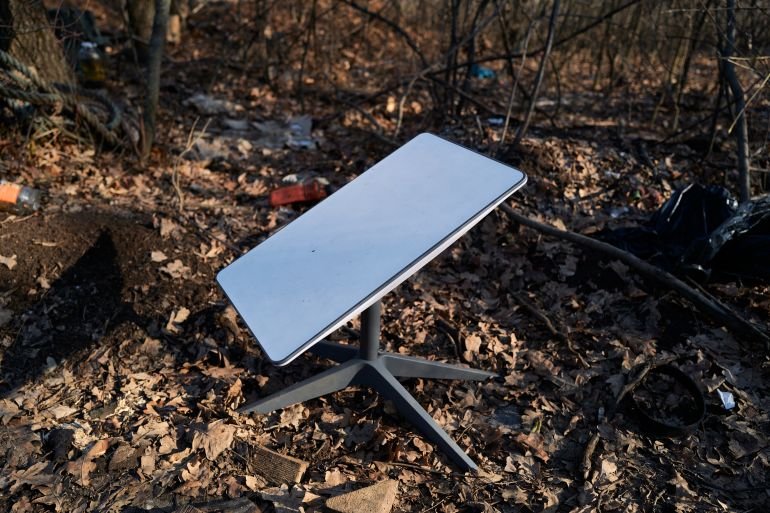
    Ukraine relies on Starshield, the military-grade version of SpaceX’s internet service, Starlink, to provide intelligence amid its war with Russia.

    SpaceX CEO Elon Musk has denied the company’s involvement and suggested only the US government could have disrupted it, despite President Donald Trump’s insistence that Washington is still sharing intelligence with Kyiv.

    Here’s what we know:

    Residents collect things from a house destroyed in a Russian air strike, on the outskirts of Dnipro, Ukraine, October 15, 2026 [Reuters]
    Residents collect things from a house destroyed in a Russian air strike, on the outskirts of Dnipro, Ukraine, October 15, 2026 [Reuters]

    What is Starshield?

    Starshield is a sister service to Starlink, an array of 11,000 satellites placed by SpaceX into Earth’s low orbit to provide high-speed internet connectivity even in remote areas.

    Starshield, launched in 2022 and provided to the US government, is designed for military use as it allows for deeper encryption to process sensitive information. SpaceX says it is primarily used by US defence agencies and other “government partners”.

    Ukraine’s military relies on Starshield, especially to guide its drones, on which it relies heavily to attack Russia.

    What happened to Ukraine’s access to Starshield?

    On Tuesday, Ukrainian defence officials said they had lost access to important satellite-based communications and that the disruptions had affected military missions. This came in the wake of heavy Russian strikes, which hit the country with more than 100 drones and five ballistic missiles, for which Ukraine said it had received no prior warning.

    “Intelligence on Russian ballistic missile launches helps save lives, and this is one of the most critical issues. This is precisely what helps prevent people from being killed – when there is an early warning about ballistic missiles,” President Volodymyr Zelenskyy wrote on X. “Regarding this strike, unfortunately, there was no warning from partners.”

    Serhiy Beskrestnov, a defence adviser to Zelenskyy, posted on Telegram that SpaceX had also “implemented a speed limit” on Starlink terminals, capping internet speeds at 100mph (160km/h).

    That meant any drones or missiles flying at more than 100mph lost their guidance connection.

    “Our armed forces did not receive a warning about these restrictions, and this led to the failure of a number of missions,” he said, adding that this was clearly “related to the current political situation”.

    Officials said the restrictions also reduced capabilities for front-line logistics, reconnaissance and relaying signals.

    Who controls Starshield?

    On Wednesday, Musk denied any involvement in the incident, insisting that the service is “controlled by the US government”.

    Responding to a post on X by Ukraine’s former Defence Minister Mykhailo Fedorov, who said the speed limits were being lifted and demanded unrestricted internet speed, Musk wrote, “Starshield systems are owned and controlled by the US government.”

    “Any limits on speed or usage are decided by the US military and ultimately POTUS,” he said, referring to the US president.

    Musk further clarified that Starlink is for “civilian or defensive activities and cannot be used for offensive military action, as doing so would be inappropriate for a commercial company” – an apparent attempt to differentiate it from Starshield, which Kyiv also deploys but is not allowed to use for offensive operations.

    Last year, Starlink cut off access for Russian troops who were covertly using the service on the battlefront in Ukraine.

    Is Musk supportive of Ukraine?

    The SpaceX boss has shown an active interest in the Russia-Ukraine war since it began, but has not been particularly favourable towards Kyiv. In 2022 – just after Russia invaded Ukraine – he proposed a “peace plan” under which Kyiv would end its claim to Russia-occupied Crimea and would drop hopes for joining NATO. Zelenskyy criticised Musk’s comments, and tensions between the two have remained.

    On Sunday, the billionaire, who is also the CEO of Tesla and owns X, said Zelenskyy “has gone too far”, in a response to Trump’s comments that the Ukrainian president should leave office.

    On Wednesday, Musk appeared to blame Zelenskyy for deaths in the war. “And so the slaughter continues,” he wrote on X. “Time for Zelensky to go.”

    Does Ukraine blame the US for restricting intelligence?

    Ukrainian officials have complained that the country received no warning in advance of Russian ballistic missile strikes on Tuesday and Wednesday. Usually, the US provides crucial early-warning alerts that allow Kyiv to issue evacuation orders.

    Zelenskyy said in an interview with the Financial Times on Thursday that US military officials had earlier warned Kyiv that Washington would block intelligence unless attacks on Russian energy infrastructure stop.

    The Ukrainian leader added that he did not accept suggestions that the Starshield incident could have been a glitch. “It was not a technical problem; it was the will,” he said.

    Why might the US restrict intelligence from Ukraine?

    Tensions between Kyiv and Washington have been building since Trump took office last year over a host of issues, including weapons transfers and the US’s increasing closeness to Russia.

    In recent weeks, Washington has pressured Ukraine to stop attacks on Russian oil refineries to allow more oil into global markets. In particular, Trump has sought to blame Ukrainian attacks on Russian diesel facilities for the rising price of the fuel globally ahead of November midterm elections.

    Trump said last week he had agreed to a deal with President Vladimir Putin to release Russian diesel stocks into the US and global markets, despite existing sanctions on Russian oil.

    Zelenskyy criticised the move and said it would embolden Putin.

    Over the weekend, Trump unilaterally announced an “energy ceasefire” between Russia and Ukraine, apparently without consulting Zelenskyy, who told reporters the deal was “news to me”. Russia also did not confirm it. Angered, Trump called for Ukraine to replace its president and blamed Ukraine’s attacks on Russian oil infrastructure for global energy disruptions.

    Ukraine said it had, in fact, refrained from attacking Russian refineries and would continue to do so if Russia did the same. However, Russian strikes have continued. On Wednesday, Zelenskyy said strikes on Ukraine’s energy infrastructure had caused blackouts affecting 600,000 people.

    “We’re done,” the Ukrainian president said in the FT interview, confirming that Kyiv had subsequently resumed attacking Russia’s oil infrastructure.
  • Al Jazeera probe exposes fake viewing numbers for Israeli counter-film

    Al Jazeera probe exposes fake viewing numbers for Israeli counter-film

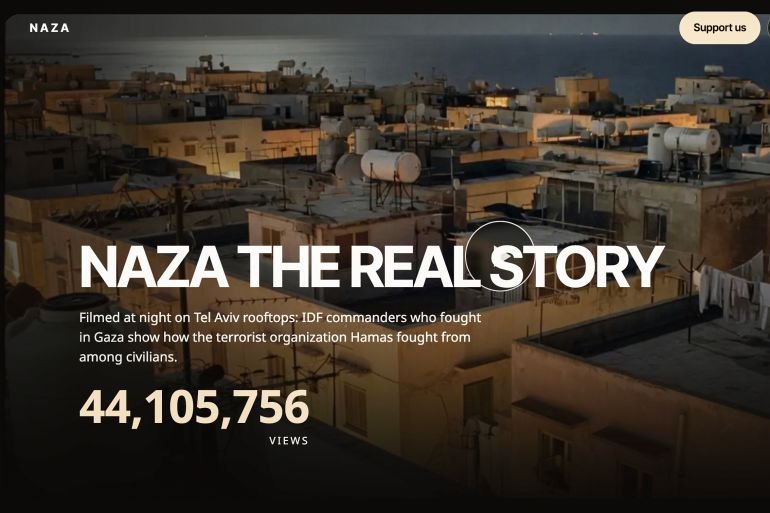
    An Al Jazeera investigation has exposed holes in claims that an Israeli counter-film to the acclaimed documentary NAZA achieved more than 44 million views. By examining domain registries, web archives, source code, and three independent traffic tools, the investigation exposed the fabricated numbers adopted by official Israeli entities to promote the film.

    The original award-winning film, NAZA, draws on testimony from 24 unnamed Israeli military whistleblowers, accusing the army of using artificial intelligence-powered targeting systems to kill numerous civilians in Gaza. The documentary takes its name from the Israeli military term for civilian casualties expected in air strikes. After winning the special jury prize at the Venice International Film Festival and receiving a historic 25-minute standing ovation, the film was scheduled to screen in 56 countries.

    Official backlash

    The success of the original documentary triggered a political storm in Israel. Prime Minister Benjamin Netanyahu demanded that the chief of general staff, the head of the Shin Bet, and the attorney general launch a comprehensive investigation into the participants and prosecute them for information security violations.

    The film’s directors, Yuval Abraham and Rachel Szor, were accused of treason, and Netanyahu and Culture Minister Miki Zohar threatened to revoke their Israeli citizenship.

    Network of domains

    To counter the film’s global resonance, opponents created a counter-film. On September 16, just days after NAZA premiered, the domain nazadocumentary.com was registered via Cloudflare, with the owner’s details hidden.

    The Internet Archive’s Wayback Machine revealed the site initially disguised itself as the official NAZA website, listing the directors’ names and information on screenings and press. However, it described the film as exposing the systems behind the calculated mass killing of terrorists in Gaza. By September 30, this deceptive page vanished, replaced by a new title, “NAZA: The Real Story”.

    The individuals behind the 49-minute counter-film are Ariel Averbuch, Roy Danino, and Hagai Gutman, who claimed the work was self-funded. Later, two more domains, whatisnaza.com and watchnaza.com, were registered to redirect users to the counter-film.

    The fake counter

    By the morning of October 14, the nazadocumentary.com website’s counter displayed 43,758,421 views, without disclosing the source of the number or how it was calculated.

    Public platforms told a drastically different story. The full 49-minute version of the film on its official YouTube channel had not exceeded 130,000 views by the same date. This means the website’s counter displayed roughly 336 times the actual viewership. The YouTube channel had fewer than 2,000 subscribers, and the film’s account on X had only 170 followers.

    Independent traffic analysis platforms confirmed the discrepancy. The US-based platform Semrush estimated the site’s total visits by October 8 at about half a million. Israeli-founded Similarweb estimated only 326 visits for September. Furthermore, the film’s domains were absent from the Tranco list of the world’s top one million visited domains.

    Data from the web analytics platform Semrush shows that 80 percent of the website's initial visits originated from Israel. [Semrush]
    Data from the web analytics platform Semrush shows that 80 percent of the website’s initial visits originated from Israel. [Semrush]
    Semrush analytics reveal that direct links were the primary traffic source for the Israeli counter-film's website in October. [Semrush]
    Semrush analytics reveal that direct links were the primary traffic source for the Israeli counter-film’s website in October. [Semrush]

    Discrepancies and code

    An examination of the page’s source code revealed that the element displaying the huge number was internally tagged as “visitors” but displayed to users as “views”. The number is delivered directly from the site’s server, making its calculation method invisible from the outside. Upon opening the page, the counter begins at 97 percent of its value and counts up for three seconds, creating the illusion of a live counter.

    Additionally, the site collects actual viewing data without publishing it, sending a “watch-tracker” file after about 25 seconds of video playback to identify the viewing session and parts watched, leaving it unknown whether the counter is based on this data.

    Despite the seemingly fabricated metrics, official Israeli accounts spearheaded the promotion of the counter-film. The Israeli Embassy in Washington promoted it on October 3 on social media.

    Tzipi Hotovely, head of Israel’s National Public Diplomacy Directorate, awarded the three creators certificates of recognition for countering the original film. Hotovely said the film had garnered tens of millions of views, transforming an unsupported, fabricated number into an official talking point.

    This elaborate digital campaign unfolds against the backdrop of Israel’s genocidal war on Gaza, which began in October 2023. Since the conflict started, Israel has killed at least 74,000 Palestinians, including at least 21,000 children, according to Gaza’s Ministry of Health.

  • Police arrest US teen in alleged Illinois Hindu temple mass shooting plot

    Police arrest US teen in alleged Illinois Hindu temple mass shooting plot

    Coworker alerted police after receiving disturbing messages from 19-year-old suspect.

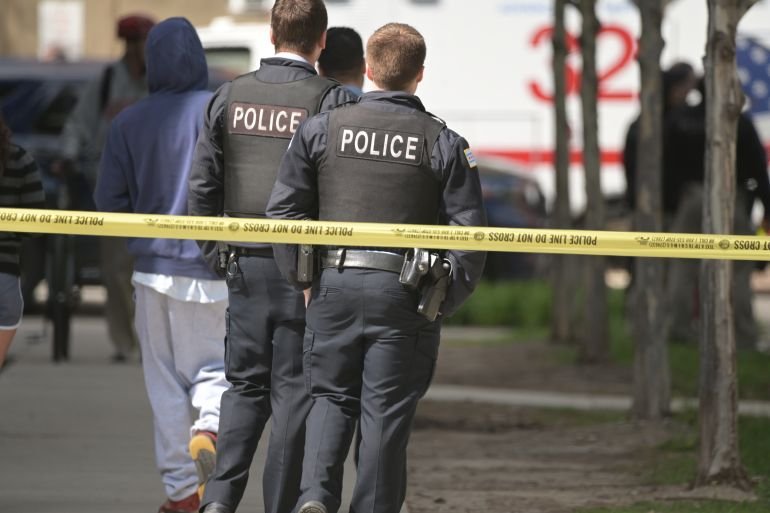
    A ‌teenager arrested in a Chicago suburb had shared a document expressing ⁠white supremacist ⁠views and outlined an alleged plan to carry out a mass shooting, potentially targeting a Hindu place of worship, police in the US state of Illinois have said.

    Alexandros Paporakis, 19, of Palatine, was arrested on Sunday after an individual reported receiving concerning electronic communications from him, Palatine police said on Wednesday. It was not ⁠immediately clear whether he had legal representation.

    Recommended Stories

    list of 3 itemsend of list

    Detectives searched Paporakis’s home and recovered a rifle, multiple loaded rifle magazines and hundreds of additional rounds of rifle ammunition.

    “Among the recovered items was a tactical vest containing body armor and a patch displaying imagery associated with white supremacist extremism,” a police statement said.

    Paporakis’s coworker reportedly told police that he openly identified himself as a white supremacist at work and said he “couldn’t wait” to kill Indian people, according to prosecutors from the Cook County State’s Attorney’s office.

    Detectives recovered a document called “Why I fought: A.K.A.: (Aurora Shooter’s Manifesto)” which had sentiments expressing white supremacist and extremist ideologies, referencing violence towards South Asians, specifically Indians.

    Authorities believed Paporakis was planning to carry out his attack on Sunday, possibly targeting a Hindu temple in Aurora, 40 miles (65km) southwest of Palatine.

    “However, the specific intended location has not been confirmed and remains under ⁠investigation,” the police said, adding the FBI was assisting in the probe.

    Police said Paporakis is facing felony charges of “making a terrorist threat” and possessing an unlawful weapon.

    The suspect appeared for a detention hearing on Wednesday and his next court appearance is scheduled for the end of October.

    Human rights advocates said hate against South Asians has surged in the United States in recent years due to rising anti-immigration policies and a rise in white supremacist ideology.

  • CNN And Google To Partner On AI “Experimental Features”

    CNN And Google To Partner On AI “Experimental Features”

    CNN said that it had reached a multi-year partnership with Google to experiment with AI products using the network’s content.

    The network “will provide enhanced content rights enabling experimental features in Google products to help explore how generative AI can further drive engaged audiences across CNN’s journalism,” per an announcement.

    The terms of the agreement were not announced, but CNN said that it was in line with its AI strategy “that ensures the safeguarding of its intellectual property.”

    Sam Felix, senior vice president of strategic partnerships and business development, said in a statement,

    “With this partnership we’re unlocking new pathways for audiences to access CNN’s unparalleled journalism while being compensated for the delivery and use of our unique intellectual property in connection with AI products.”

  • Kenya confirms 2nd case of Ebola in relative of patient who died earlier this month

    Kenya confirms 2nd case of Ebola in relative of patient who died earlier this month

    Text to Speech Icon

    Listen to this article

    Estimated 2 minutes

    The audio version of this article is generated by AI-based technology. Mispronunciations can occur. We are working with our partners to continually review and improve the results.

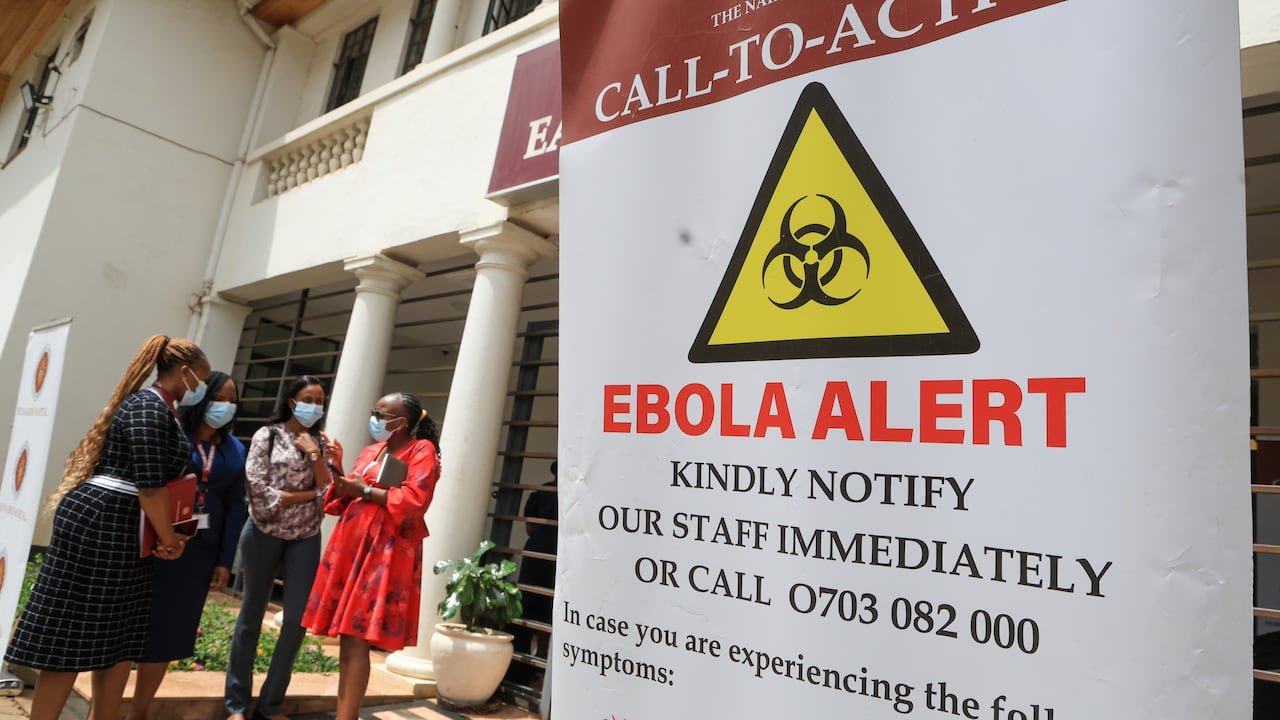
    Kenya’s Health Ministry confirmed the country’s second Ebola case Wednesday, saying a relative of the man who died two days after arriving from Congo had tested positive while in quarantine.

    The ministry said the 39-year-old man had been identified as a close relative of Kenya’s first Ebola case and developed symptoms Tuesday.

    The first patient, a 40-year-old Kenyan, had been living in Congo, where he fell ill and was treated at two health facilities. He travelled through three Ebola-affected provinces before leaving the country and arriving in neighbouring Uganda on Oct. 1. He flew to Kenya, where a relative picked him up at the airport and drove him to a hospital. He began receiving treatment and tested positive for Ebola on Oct. 5. He died that day.

    Health officials identified about 128 contacts linked to the first case, and placed 108 of them in quarantine. Five of the contacts are outside Kenya, and authorities in those countries have been notified, according to Kenya’s Ministry of Health.

    The second patient was among those quarantined. The Health Ministry said early detection of the infection “improves his chances of recovery.”

    The ministry said the two cases were linked and there was “no evidence of spread in the community.”

    Kenya has tightened screening at border crossings and airports since detecting its first Ebola case and urged the public to take precautions and report suspected infections through an emergency hotline.

  • White House spokesperson Katie Zacharia’s law career faces scrutiny

    White House spokesperson Katie Zacharia’s law career faces scrutiny

    Katie Zacharia, the new White House press secretary under United States President Donald Trump, has drawn increasing criticism over claims about her professional background.

    On Wednesday, a public accountability nonprofit filed a complaint with the State Bar of California over Zacharia’s repeated claims that she was a lawyer.

    Recommended Stories

    list of 3 itemsend of list

    If made falsely, such a claim is a crime in the state. According to Zacharia’s LinkedIn profile, she received a degree from the Pepperdine Caruso School of Law in 2011, but critics have questioned whether she received a licence to practise law, as she has suggested.

    “Ms. Zacharia has represented herself as a lawyer repeatedly to buttress her reputation and credibility as a television legal commentator and now as the White House spokesperson,” Michelle Kuppersmith, the head of the Washington, DC-based Campaign for Accountability, said in a statement. “Yet it seems it was all a lie.”

    Her organisation filed the complaint with California’s bar office, a regulatory agency that oversees the licensing of lawyers.

    “In California, calling yourself a lawyer without a license isn’t puffery; it’s a crime,” Kuppersmith said.

    “The State Bar should investigate whether Ms. Zacharia has misled the public about her credentials and hold her accountable if she has.”

    Zacharia, a commentator who has appeared frequently on Fox News and Newsmax, began her term as White House press secretary on Tuesday.

    In a news briefing that day, she seemed to falter and speak haltingly, sometimes having to repeat herself.

    Her appearance was brief, lasting under 15 minutes. She spent much of her time at the podium thanking Trump for the opportunity and reading from a prepared statement.

    “I have wanted to work for him for a very long time,” Zacharia said.

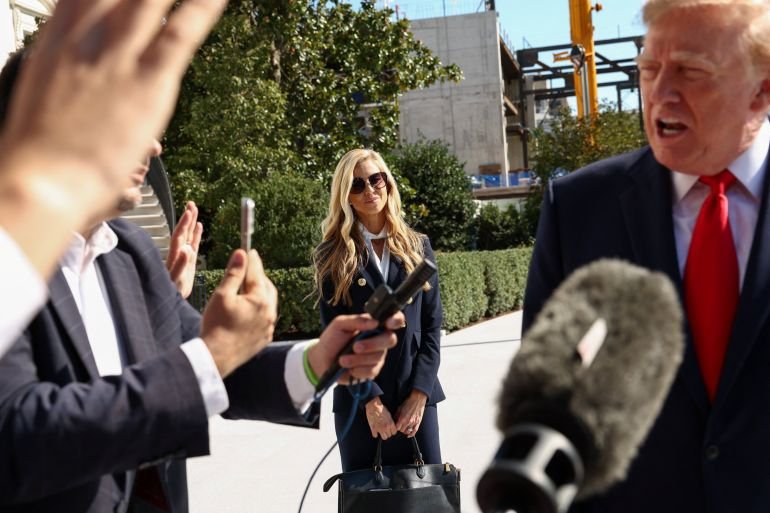
    Later, she joined Trump outside the White House to speak further with reporters. When asked where she had passed the bar exam, Zacharia replied, “When I moved to China.”

    The response was an apparent reference to a three-year stint in which she claims she worked at a law firm in Beijing.

    A biography on the website for the pro-Trump women’s organisation Trumpettes USA Inc says she “served as outside counsel” for the World Bank and International Finance Corporation while in Beijing.

    Her LinkedIn profile, meanwhile, indicates Zacharia served as an associate at the Zhong Lun Law Firm in Beijing from 2011 to 2013. More recently, from 2024 to 2025, it lists her as general counsel for Fix California, a voter rights group started by a Trump administration official.

    On her Instagram profile, Zacharia describes herself as a “Wife, Mom, & Lawyer”.

    But Zacharia’s assertion that she passed the bar in China has fuelled media scrutiny. China’s equivalent of the bar exam, the notoriously difficult National Unified Legal Professional Qualification Examination, can only be taken by Chinese citizens.

    China has, on rare occasion, allowed foreigners to practise law in the country if they have several years of experience in their home countries first.

    But that does not appear to be the case for Zacharia. According to media reports, Zacharia has not been found to be licensed as a lawyer in any state in the US.

    In a statement to The Associated Press, Zacharia responded to the scrutiny by saying, “I practice international transaction law, with all the appropriate credentials.”

    Since Trump’s return to office for a second term, Zacharia has spent several months as a communications adviser at the Department of Homeland Security.

    Since June, she has also worked as the senior communications adviser at the Trump Media and Technology Group, which owns the Truth Social platform.

  • OpenAI bugging suspect allegedly booked one-way trip to Saudi Arabia

    OpenAI bugging suspect allegedly booked one-way trip to Saudi Arabia

    Saudi national Abdulrahman Alfozan was due to fly to Saudi Arabia on October 12, US prosecutors say in a court filing.

    The Saudi national accused of bugging OpenAI’s headquarters booked a one-way flight to Saudi Arabia before his arrest, US prosecutors have alleged.

    Abdulrahman Alfozan, a former OpenAI engineer, had been scheduled to fly to Saudi Arabia with his wife and another family member on October 12, prosecutors said in a court filing unsealed on Wednesday.

    Recommended Stories

    list of 4 itemsend of list

    The FBI arrested Alfozan, who worked at OpenAI for about 15 months until his termination last week, on October 9, after OpenAI personnel reported the discovery of a hidden listening device in a conference room at the company’s San Francisco headquarters.

    Alfozan, 35, has been charged with “using or endeavoring to use an electronic, mechanical, or other device to intercept oral communications”.

    The offence carries a maximum punishment of five years in prison and a $250,000 fine.

    Prosecutors disclosed the alleged flight booking to a judge on October 8 in a motion seeking to seal the criminal complaint against Alfozan, arguing he had the “means – and will have an incentive – to flee” the United States.

    William Pernik, Alfozan’s lawyer, said he and his client planned to contest the criminal allegations and his client’s ongoing detention in court.

    “We trust that the American justice system will treat our client fairly, despite the narrative painted in the media at this time,” Pernik told Al Jazeera.

    “Our client is a well regarded professional with long standing ties to the community,” Pernik added.

    “He is presumed innocent and is entitled to fair treatment and due process of law. The emphasis on his national origin and therefore suggestions of lack of trustworthiness or flight risk harken back to dark chapters of our nation’s history that we intend to fight fully.”

    Alfozan’s arrest has shone a spotlight on concerns that frontier tech firms are a target for spying and industrial espionage amid the global race to gain an upper hand in AI.

    Before joining OpenAI in July last year, Alfozan worked as a systems engineer at Meta and interned at Microsoft, according to a LinkedIn profile in his name.

    Alfozan is also listed as a venture partner at Raed Ventures, a Riyadh-based venture capital firm whose other partners include Prince Khalid bin Bader al Saud, a member of the Saudi royal family.

    In a statement announcing Alfozan’s appointment in February 2025, Raed Ventures described the engineer as “a seasoned professional with extensive experience in tech startups” and said his role would involve “identifying promising investment opportunities and supporting startups on their journey toward growth and success”.

  • G20 finance ministers, central bankers gather amid fallout from Iran war

    G20 finance ministers, central bankers gather amid fallout from Iran war

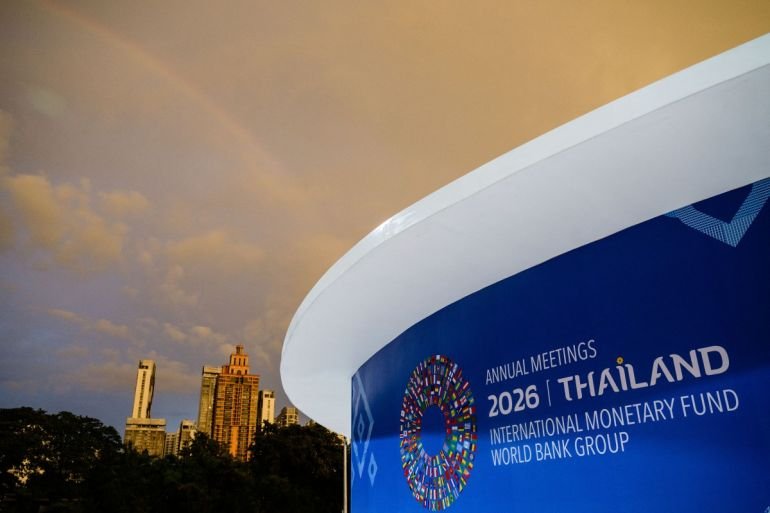
    The G20 finance ministers and central bank governors are gathering in Bangkok, Thailand, on Thursday amid an uncertain global outlook shaped by the US-Israel war on Iran.

    The meetings are being held in conjunction with the annual meetings of the International Monetary Fund (IMF) and the World Bank, taking place in the Thai capital from October 12 to October 18.

    Recommended Stories

    list of 4 itemsend of list

    Here are some of the key details about the meetings:

    What are the G20, the IMF and the World Bank?

    The G20 is an economic forum comprising 19 large economies, including the United States, China, the United Kingdom, Australia, Brazil, India, Japan, Indonesia and Saudi Arabia, as well as the European Union and the African Union.

    The grouping has an annually rotating presidency, currently held by the US.

    Together, the G20 countries account for about 85 percent of global gross domestic product (GDP) and three-quarters of global trade.

    The G20 was established in 1999 as a forum for finance ministers and central bank governors to address shared economic concerns in the wake of the Asian Financial Crisis, before expanding into a broader forum for national leaders.

    The IMF, based in Washington, DC, is an international financial institution that promotes international cooperation on monetary policy, trade and economic growth.

    Its membership includes all but a handful of the world’s sovereign states, including North Korea, Cuba, the Vatican City and Monaco.

    The World Bank, also based in Washington, DC, primarily serves as a provider of loans and grants to developing countries. It has 189 member countries.

    The IMF and the World Bank were created at the 1944 Bretton Woods conference in the US, convened by the Allied Powers to establish the contours of the post-World War II international financial order.

    Who will be attending the meetings?

    Most finance ministers and central bank governors of the G20 will be in Bangkok, along with IMF Managing Director Kristalina Georgieva and World Bank Group President Ajay Banga.

    US Treasury Secretary Scott Bessent will be a notable absence from the gatherings, as the top economic official of the world’s biggest economy and G20 chair.

    US officials have cited “domestic engagements” for Bessent’s decision to skip the events, at which Washington will be represented by Deputy Secretary Francis Brooke and Undersecretary for International Affairs Erin Browne.

    The G20 meeting, one of several gatherings of the group’s finance ministers each year, will help shape the agenda for the headline leaders’ summit in Miami, Florida, taking place on December 14-15.

    What is on the agenda?

    The economic fallout from the US-Israel war on Iran is expected to dominate discussions.

    Attacks across the Middle East have upended economic activity across the region, while disruption to shipping in the Strait of Hormuz has driven a surge in energy prices worldwide.

    Crude oil prices have exceeded $100 a barrel for much of the past eight months, placing a strain on government coffers and household budgets, particularly in the Gulf region and the rest of Asia.

    In advance of the meeting, Australia’s Treasurer Jim Chalmers MP said he would use the discussions to call for an end to the conflicts in the Middle East and the reopening of the Strait of Hormuz “because that’s what the global economy desperately needs”.

    “The war in the Middle East is having a devastating economic impact and is pushing up fuel prices, inflation and interest rates around the world,” Chalmers said in a statement.

    Other issues likely to feature on the agenda include the ballooning debt levels of many countries, which exceed 100 percent of GDP in the US, Canada, Japan, Italy and France.

    In a speech on Wednesday, Georgieva warned that mounting debt posed a threat to the global economy and that there was no “magic” formula that would allow governments to avoid tax hikes or spending cuts.

    G20 members will also bring more specific individual concerns to the table based on their economic and geopolitical priorities.

    The US, for example, has repeatedly expressed concern about “global imbalances”, a veiled reference to China’s state-driven industrial model that has allowed Chinese exporters to flood overseas markets with cheap goods.

    US President Donald Trump has long claimed that China’s large trade surplus, which stood at a cumulative $938bn in September, proves that international trade is stacked against US manufacturers.

    In a statement addressed to the IMF on Wednesday, Bessent called for action to address mismatched trade balances.

    “This especially includes strengthening its analysis and engagement on the role non-market policies and practices and exchange rates play in driving external imbalances,” Bessent said.

    “Policymakers around the world are having difficult discussions about how to sustain market-based systems amid distortionary policies from some economies that skew competition and hurt employment.”

    Divisions and competing interests cloud the prospects for coordination, however.

    At the last meeting of G20 finance ministers in Asheville, North Carolina, US, held on August 31 and September 1, member countries failed to issue a joint communique after China objected to language to do with trade.

  • Donald Trump Says Execution Of Fort Hood Shooter Will Not Be Livestreamed

    Donald Trump Says Execution Of Fort Hood Shooter Will Not Be Livestreamed

    Donald Trump has reversed the Pentagon‘s plans to livestream the December execution of Nidal Malik Hasan, convicted of killing 13 and injuring dozens of others in a shooting rampage at Fort Hood.

    Trump posted on Truth Social on Thursday, “I think streaming the execution for all to see might have been a strong deterrent for the World to witness how America deals with Terrorists and SCUM like Hasan but, many very good and well meaning people would rather not watch him die, through streaming, or through any other visual device. He will die, as scheduled, by firing squad, but this event will not be streamed.”

    When the Pentagon announced plans last week to stream the execution, it drew an immediate outcry, including from a number of religious groups and from politicians on the right and left. Trump indicated he was reconsidering the plan in comments to reporters this week.

    Had the administration followed through, it’s unlikely any of the major networks would have carried it. There also was some question of whether such an event would have been allowed on platforms like YouTube, given its terms of service.

    Trump wrote that “the execution may be viewed in person by the immediate families of the victims, if they so choose. They deserve to witness JUSTICE!”

    The execution by firing squad is scheduled for December 3.

    Archbishop Paul Coakley, president of the U.S. Conference of Catholic Bishops, called the plans to live stream the execution “a barbaric promotion of a culture of death.”

  • Comcast Gave $7.5 Million To Help Fund Donald Trump’s White House Ballroom, New Report Reveals

    Comcast Gave $7.5 Million To Help Fund Donald Trump’s White House Ballroom, New Report Reveals

    Comcast gave $7.5 million to help Donald Trump fund a new White House ballroom, but the donation was well below that of an array of other contributions from major tech companies like Apple and Amazon, according to a new report.

    The Washington Post obtained a list of all major donors to the project. The White House had previously disclosed a list of donors, including Comcast, but did not include the amounts.

    The top contributors included Nvidia and Apple, which each gave $25 million, as did the Adelson Family Foundation and the Charlie Ergen household and donor advised fund, per the Post. Another $22 million came from Google’s settlement of Trump’s lawsuit after YouTube suspended his account in the wake of the January 6th attack on the Capitol. The Laura and Isaac Perlmutter Foundation gave $20.27 million. Ike Perlmutter, the former CEO of Marvel Entertainment, is a longtime supporter of the president. Amazon gave $5 million, per the report.

    Outside of Comcast, no other major media companies were listed as contributors of $100,000 or more.

    A Comcast spokesperson did not immediately respond to a request for comment.

    The total donations reached almost $330 million. It’s unclear how expensive the ballroom will end up costing, as previous reports have put the figure up to $500 million.

    A federal judge ruled earlier this year that ballroom construction had to stop because Congress first had to approve it. U.S. District Judge Richard Leon did allow for building of an underground bunker to continue.

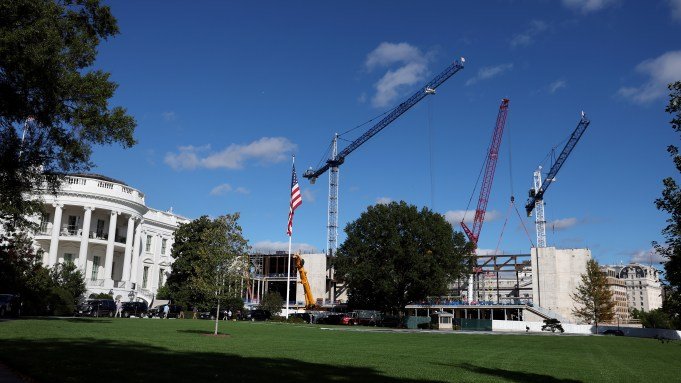
    The Supreme Court, however, has allowed the ballroom to proceed as the case moves through lower courts. That may make the situation moot, as construction of the ballroom, replacing the East Wing of the White House, is well underway, with the framing of the structure visibly rising on the White House grounds.