Category: News

  • Trump administration sues California over noncitizens on voter rolls

    Trump administration sues California over noncitizens on voter rolls

    The administration of United States President Donald Trump has sued the state of California after the state missed a deadline to review a list of registered noncitizen voters sent to officials.

    In the lawsuit, filed on Thursday in a US District Court in California, Department of Justice (DOJ) officials asked the court to prevent the state from counting mail-in ballots from voters on a list shared with the state that it said contained 20,000 noncitizens. The agency said it had attempted to “work collaboratively” with California to identify noncitizens registered to vote in the state, but “California made no serious effort to do so”.

    Recommended Stories

    list of 3 itemsend of list

    The move follows a 48-hour deadline the DOJ gave California in letters sent to officials in several counties in the state on Tuesday, threatening further action if they did not review lists of allegedly ineligible voters the agency said it had shared.

    California Secretary of State Shirley Weber, the top state official tasked with administering elections, responded to the letters, saying in a three-page letter that she wanted to “set the record straight” on events that transpired since July. The senior California official maintains that the administration is demanding “unprecedented measures that threaten thousands of Californians’ right to vote, based on unverifiable information or methodology that you still fail to explain or provide”.

    Weber said she was informed that the lists provided to local officials include the names of roughly 20,000 individuals. Weber said no list was ever sent to her office. The department previously said it suspected “thousands” of registered voters of being noncitizens, and a lawsuit filed earlier Thursday by the Justice Department put the number at “tens of thousands”.

    “Despite failing to send the list of alleged non-citizens to my office, you demand that we request transmittal of the list, review and confirm the citizenship status of each of the approximately 20,000 individuals on the list on the eve of an election and within a mere 48 hours,” she wrote. “This is an emergency of the DOJ’s creation.”

    In a statement on Wednesday, election officials in Los Angeles County, one of the county offices that received the ultimatum from the DOJ, pointed out the threat was issued just 21 days before midterm elections. The county statement said it had received a thumb drive with the letter and a handwritten note with what appeared to be a password, but it would not attempt to access the drive because “we do not consider the device a secure medium”.

    The county office said maintaining accurate voter lists was “a fundamental responsibility for our office” and that state laws clearly require that removing individuals be “based on verifiable information”.

    Trump has repeatedly levelled the false claim that large numbers of noncitizens, who are legally not eligible to vote in federal elections, are casting ballots in Democratic-led states, including in California. State officials, including in California, have said the number of such voters is negligible and that the scale of the problem does not warrant intervention just weeks before elections, scheduled for November 3.

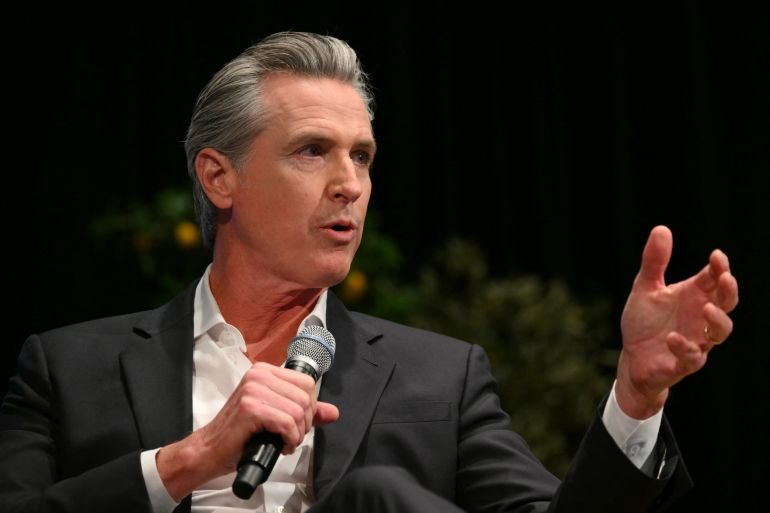
    California Governor Gavin Newsom has sharply rebuked the DOJ lawsuit against his state, calling it a “sad, desperate attempt by” Trump to “suppress California voters just three weeks before Election Day”.

    “Courts have made clear the federal government has no role in running state elections,” Newsom said in a statement. “We will defend free and fair elections in the Golden State and call out every authoritarian attempt to undermine our democracy.”

    Trump has long falsely claimed that noncitizen voting cost him the 2020 election, blaming it on Democrats, despite the issue being a very rare occurrence.

    Courts have pushed back on Trump

    Earlier this month, a federal judge in Florida ruled that a federal law criminalising voting by noncitizens was unconstitutional, delivering a major setback for Trump administration efforts to pursue such cases against individuals.

    The court ruled that, under the US Constitution, only individual states have the authority to set voter qualifications, and that each one had already criminalised such voting by anyone who was not a citizen. Thus, it was up to the state to prosecute such individuals. The DOJ has at least 45 such cases pending nationwide, where the accused could now raise the same objection brought up in the Florida ruling.

    Another federal judge ruled this month that the DOJ unlawfully sought state voter rolls for cross-checking them against a controversial federal immigration database to identify ineligible voters. The Trump administration has often touted the Systematic Alien Verification for Entitlements (SAVE) database, but numerous reports have found it inaccurate and capable of flagging citizens as noncitizens. Forcing states to use such a database would be unconstitutional, the judge said.

    In September, the US Supreme Court rejected a Trump administration effort to restrict mail-in ballots for the November 3 elections, which Trump argued were especially susceptible to misuse by noncitizens because states were failing to verify who was sending them.

    Two dozen states, led by Democrats, filed lawsuits against the Trump administration over attempts to limit mail-in voting, including an executive order directing federal agencies such as the US Postal Service not to handle mail-in ballots without verifying the eligibility of those casting them.

    According to the Election Assistance Commission, a bipartisan government agency, around 30 percent of all ballots cast in the 2024 elections were sent by mail. Mail-in ballots are even more widely used in many western states such as California.
  • Three children, one teacher killed in Oregon school shooting

    Three children, one teacher killed in Oregon school shooting

    The police chief in Bend, Oregon, identified the shooter as a 16-year-old who was killed by a bystander at the school.

    At least four people have been killed in a shooting at an elementary school in Oregon, part of the northwestern United States, according to local law enforcement.

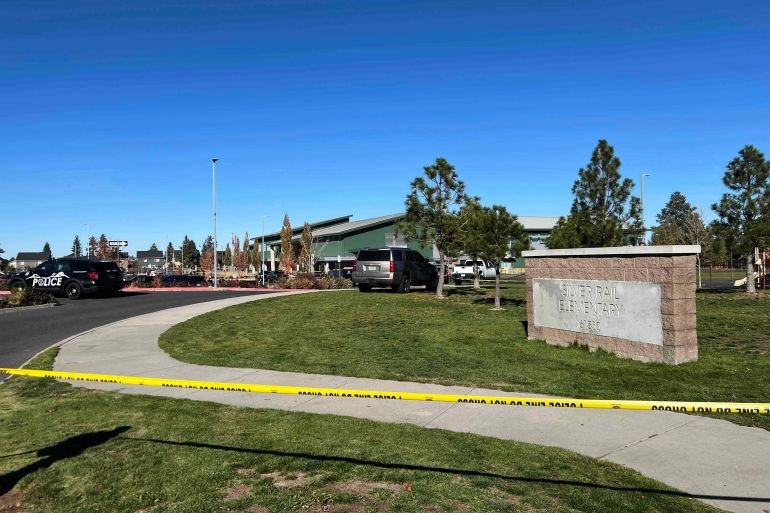
    The shooting on Thursday took place at Silver Rail Elementary School in the city of Bend, about 160 kilometres (100 miles) southeast of Portland.

    Recommended Stories

    list of 3 itemsend of list

    Three children were among the dead: they were aged five, eight and 11, according to Bend Police Chief Mike Krantz. A teacher was also killed.

    In addition, a seven-year-old child and a 54-year-old teacher were transported to St Charles Medical Center in Bend with critical injuries.

    In an afternoon news conference, Krantz identified the alleged shooter as a 16-year-old Bend resident, who was killed at the scene. The suspect has yet to be named.

    “What the initial investigation is showing is that the shooter had forced their way into the school by shooting at locked doors,” Krantz said. He added that investigators were still determining whether the suspect had attended the school at any point.

    Emergency services began receiving calls for help around 12:59pm local time (19:59 GMT), with “dozens” of additional calls in the ensuing minutes.

    The first call, Krantz explained, came from “a person in a vehicle who reported being shot at multiple times by a person with a long gun”. The elementary school went into lockdown at 1:01pm (20:01 GMT), and officers arrived on the scene shortly thereafter.

    “Moments later, an officer reported that a suspect had been shot by a community member who had seen the suspect enter the school and pursued him into the school and engaged him,” Krantz said.

    “Our officers entered the building and confirmed the suspect was dead. They cleared the school to ensure there were no additional threats and then rendered emergency aid to the victims.”

    He emphasised that the police investigation was ongoing and further information would be released to the public in the coming days.

    The families of the victims have been notified of the attack. Police evacuated each room in the school, and students and staff were transported by bus to a nearby church where they could be reunited with their loved ones.

    “This is the kind of thing we never want to see happen in Bend. It’s devastating,” said Sheila Miller, the communications manager for the Bend Police Department, on Thursday.

    Kash Patel, the director of the Federal Bureau of Investigation (FBI), said in a post on social media that the agency was on the scene assisting local law enforcement in the investigation.

    “We will make every resource they need available,” he wrote.

    Oregon Governor Tina Kotek called on Oregonians to come together to support each other through their grief.

    “All Oregonians mourn this loss today. This is a horrible day. No parent should have to have this kind of day, and no community should have to live through this kind of day,” Kotek said.

    She also addressed the unnamed bystander who confronted the shooter. “To the community member who heroically intervened to stop further loss of life, your actions carry a heavy emotional burden, and I just want you to know that my thoughts are with you as well.”

    Jeff Merkley, who represents Oregon in the US Senate, was among the political leaders to offer condolences in the wake of the shooting.

    “My heart is with the Bend community and all of the students and families affected. No one should have to fear violence at school,” he wrote in a post on the social media platform X.

    The Gun Violence Archive, which tracks shootings across the US, has documented 369 mass shootings in 2026 so far, defined as incidents where there were four or more victims injured or killed, not including the suspect.

    The violence prevention group Everytown for Gun Safety has counted at least 100 incidents of gunfire on school grounds in the US this year. Thirty-four people have died as a result.

  • Russia-Ukraine war: 30 claims we’ve investigated over the years

    Russia-Ukraine war: 30 claims we’ve investigated over the years

    Lindsey Graham, Richard Blumenthal didn’t spend $800K on hotels during Kyiv visit. We crunched the numbers

    Read More

  • Ahead of US midterms, voters are frustrated with Trump, want change: Poll

    Ahead of US midterms, voters are frustrated with Trump, want change: Poll

    Widespread voter disillusionment and pocketbook anxieties set a volatile stage for the GOP weeks before election night.

    Voter sentiment across the United States is increasingly negative towards US President Donald Trump’s domestic and foreign policies, according to a new Associated Press-NORC Center for Public Affairs Research poll.

    In the closing weeks before the November 3 US congressional midterm elections, 80 percent of Americans polled said the country needs substantial change or “complete and total upheaval” in how it is run, according to the survey of over 1,100 US adults released on Thursday.

    Democrats and independents are much more likely than Republicans to want a total overhaul of the country’s direction, the survey found, but even Republican voters are still looking for some change. Slightly fewer than half, 45 percent, want substantial change, while 13 percent are seeking upheaval.

    The results point to a pervasive appetite for legislative realignment that poses a risk to the Republican Party’s power as it looks to keep control of both houses of the US Congress.

    Fuelled by soaring living costs, everyday economics is driving a majority of the electorate, with 85 percent of respondents saying the economy is one of the most significant issues in weighing their vote in the upcoming election. About eight in 10 registered voters disapprove of how Trump is handling the cost of living, and about three-quarters disapprove of his performance on the economy.

    Only about one-third of registered voters overall have a “very” or “somewhat” favourable view of the Republican president, and a similar share approve of his performance as president.

    More voters want Democrats to win control of Congress and have a more negative view of Republicans.

    Immigration and crime rates are also top concerns for some voters, according to the survey results, with 45 percent of voters identifying them as top priorities, though the two issues are prioritised disproportionately by Republican voters who reference them more frequently than Democrats. Conversely, Democratic voters are more prone to name healthcare as their top priority.

    Emerging cultural and technological concerns drew less immediate alarm across the board: 35 percent of voters ranked artificial intelligence as a substantial issue, while transgender issues sit significantly lower at 12 percent.

    Healthcare is also considered a top issue for 69 percent of voters, while 64 percent cite the war on Iran as top-of-mind.

    Despite their grievances, a majority of voters across both major American parties still value civic engagement.

    About two-thirds of registered voters in the survey say it’s “extremely” important to vote in the upcoming election, while about two in 10 say it’s “very” important. Seventy-five percent of Democratic voters view it as “extremely” important, compared to roughly 60 percent of Republican respondents.

  • Trump ramps up third-country US deportations despite global rights outcry

    Trump ramps up third-country US deportations despite global rights outcry

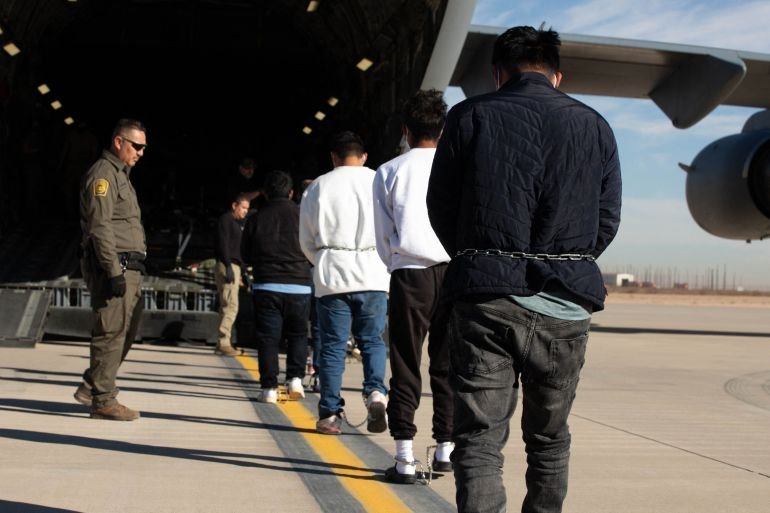
    United States immigration authorities have dramatically stepped up detentions and deportations since January 2025, when Donald Trump became president.

    Trump campaigned on a pledge to implement the “largest deportation operation in American history”. Officers with the Department of Homeland Security, the agency tasked with the crackdown, now make thousands of arrests a day across the country.

    That includes people who are seeking asylum in the US, who are supposed to be given a chance to explain dangers they might face in their home country. And US law and international treaties, like the United Nations Convention Against Torture, prohibit authorities from deporting someone to any country in which they will be persecuted or tortured.

    Many of those being detained in the US immigration crackdown say they are at risk of being hurt or killed if they return to their native countries, so the Trump administration has looked for alternative places to deport them, including places someone might have no cultural or legal ties to.

    Third-country deportations, as the practice is known, have been criticised by the US as well as global rights groups like Amnesty International and Human Rights Watch, as well as the UN.

    Critics of the practice say some of the countries taking in the deportees have a record of human rights abuses themselves, or are so dangerous that the US government tells its own citizens not to travel there. They also say there is little to ensure these third countries will give deportees a fair hearing on their cases for asylum, and in the end might send them back to their native countries to face persecution there.

    Third-country deportations are not new, but rights groups say they were extremely rare before the Trump administration, and have never been used by the US at the scale they are now. Those being sent to other countries, rights groups say, would not have been deported without their consent. Some US courts have said the practice is illegal, but the US Supreme Court has allowed it to continue, including in a ruling in September.

    Experts at the UN have said the practice was leading to a “cascade of human rights violations” across the globe, threatening to undo norms around how refugees and asylum seekers are treated.

    A closer look at the third-country deportations

    Rights groups have tried to tally forcible third-country deportations, and according to the nonprofits Refugees International and Human Rights First, more than 25,000 people have been subject to forcible third-country deportations so far, based on media reports and information from attorneys.

    The Department of Homeland Security’s own data includes more than 16,000 cases of third-country deportations since Trump came into office in January 2025 and August 2026, the latest month for which data is available. The data, provided to the Deportation Data Project based at the University of California, Berkeley and the University of California, Los Angeles and analysed by Al Jazeera, is likely an undercount.

    Deportations to these countries need the approval of authorities there, so the Trump administration has sought to make agreements, or reach informal understandings on how to send deportees to a growing list of countries.

    Interactive_ThirdCountry_deportations_US_Sept21_2026-01-1791891416

    Some countries have agreed to keep deportees in prisons, like El Salvador and Eswatini.

    Others have agreed to hold deportees temporarily, with some signing Asylum Cooperative Agreements with the US, or “Safe Third Country Agreements”, which allow deportees to pursue asylum claims in a third country that has agreed to host them.

    According to rights groups Refugees International and Human Rights First, many of those deported have no idea where they are being sent, and end up finding themselves in countries where they do not speak the language and have little cultural understanding. Some don’t even have any documents like passports or identification cards, making it difficult to live there.

    The list of countries people are being deported to has grown as the US offers financial aid, or business or visa concessions, in exchange for countries taking in third-country nationals the Trump administration wants to remove.

    Liberia has agreed to take up to 1,200 deportees, for instance. The Trump administration at one point said it would extend the validity of certain visas for Liberians from 12 to 36 months, and has committed $124m for the country’s health services.

    In Cameroon, which agreed to take third-country nationals from the US in December 2025, the Trump administration has pledged to give $30m for the UN’s refugee work there, and $400m over the coming years for the country’s health services.

  • Venezuela’s Maduro pleads not guilty to US conspiracy to torture charges

    Venezuela’s Maduro pleads not guilty to US conspiracy to torture charges

    Maduro and wife appear in New York City court after new ‘conspiracy to commit torture’ charges.

    Venezuela’s Nicolas Maduro and his wife Cilia Flores have pleaded not guilty to new charges of ‘conspiracy to commit torture’, which were unsealed last week.

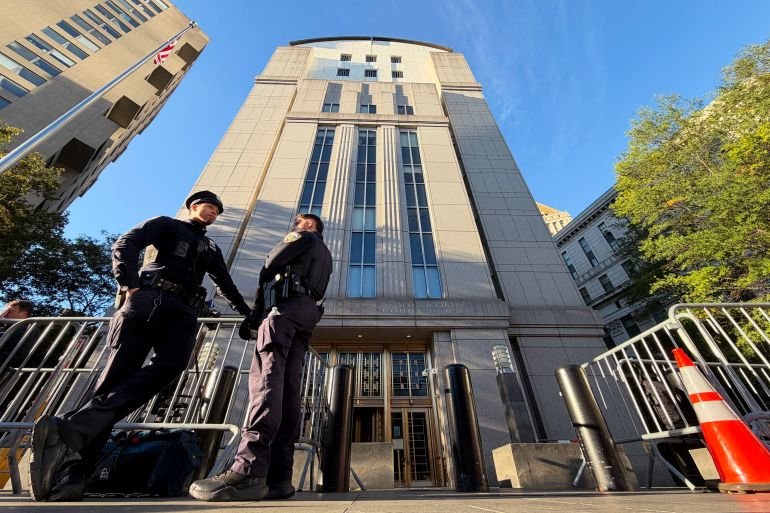
    Maduro and Flores appeared in a New York City courtroom on Thursday after being abducted from Caracas in a United States military operation in January.

    Recommended Stories

    list of 3 itemsend of list

    The pair had previously pleaded not guilty to several other charges, including narco-terrorism, cocaine importation conspiracy and possession of machineguns and destructive devices.

    “I reject this document in its entirety,” Maduro said during the appearance on Thursday.

    Flores, meanwhile, said she was “completely innocent”.

    “I am not guilty,” she said.

    US Attorney Jamie McDonald said last week that the couple had for more than two decades “engaged in a conspiracy to commit torture, including the torture of United States citizens, in addition to the narcotics trafficking and weapons offences already charged”.

    The new indictment said that Maduro and Flores oversaw a system of torture, arbitrary detention, and violence as a means to target “individuals viewed as disloyal or a threat to their illegal narcotics activity” as well as a “means of repression against the political opposition”.

    It pointed to several instances where Maduro and Flores are alleged to have  specifically identified individuals to be targeted, asked for updates on the torture, or suggested techniques.

    In one instance in 2014, Maduro urged his enforcers to work harder to extract information from detained military personnel, according to the indictment.

    “Squeeze them harder,” he allegedly said. In another, Maduro is accused of suggesting sleep deprivation and pouring water on detainees.

    Abuses committed under Maduro’s rule included beatings, electrocutions and threatening family members of detainees, the indictment said. US prosecutors did not accuse Maduro or Flores of directly taking part in the torture.

    Maduro became president of Venezuela in 2013, and his re-elections, most recently in 2024, have been repeatedly contested by opposition figures and outside monitors.

    Interim President Delcy Rodriguez, Maduro’s vice president, has led the country since Maduro’s abduction in January.

    She had initially decried the US action as “illegal, illegitimate kidnapping”.

    However, she has since remained close to the Trump administration, including overseeing efforts to open the country’s state-owned oil industry to foreign companies.

    During his initial hearing in January, Maduro also said he had been “kidnapped” by the US military.

    “I am innocent. I am not guilty. I am a decent man. I am still president of my country,” Maduro said then, adding that he had been “kidnapped”.

    Both Maduro and Flores have sought to have the charges against them dismissed, maintaining they have immunity as president and first lady of a sovereign country.

  • FIFA President Infantino apologises to council but critics remain unhappy

    FIFA President Infantino apologises to council but critics remain unhappy

    FIFA council meeting lasts over three hours as President Gianni Infantino apologies to members, but critics want more.

    Gianni Infantino apologised to his toughest critics but provided no new details or documents on FIFA issues that most concern them at a showdown meeting of its ruling council on Thursday.

    No documents about the $4.2bn World Cup sell-off plan he launched and dropped in July. No details about the Folarin Balogun red-card case at the World Cup and how US President Donald Trump intervened to help the national team forward.

    Recommended Stories

    list of 4 itemsend of list

    World football’s ruling body FIFA will, however, review whether to continue awarding the peace prize that was created to be given to Trump in December.

    Pressed by European football officials for written evidence about his secretive private equity plan for the World Cup that provoked a global rift, Infantino asked them to submit written questions, FIFA Vice President Debbie Hewitt said after the three-and-a-half-hour meeting.

    “The man has to answer those questions. If he doesn’t answer those questions, no, he is not fit to be the FIFA president,” said Hewitt, who leads the English Football Association.

    European football’s ruling body UEFA is leading attempts to remove Infantino before or at the FIFA presidential election in March and heard little to change that view Thursday.

    “No satisfactory answers were provided,” said German football chief Bernd Neuendorf, one of eight UEFA delegates in the 37-member FIFA Council that Infantino chairs. It had not met since Infantino provoked the crisis.

    “We need a person of integrity, someone who can be expected to restore the reputation of the association, which has undoubtedly been lost,” Neuendorf told reporters.

    Infantino did start the meeting by apologising to his council colleagues for blindsiding them and creating a furore over his private investor plan with venture capitalist Joshua Kushner that was revealed in media reports nine days after the World Cup final in July.

    “He said that with some contrition,” Hewitt said.

    UEFA also has asked courts in the United States for the right to get evidence for a criminal complaint against Infantino in Switzerland. The court filings allege possible mismanagement of FIFA finances in the value he put on the intended subsidiary running tournament commercial rights.

    It was to be at least 20 percent owned by investors led by Joshua Kushner, the brother of Trump’s son-in-law and envoy Jared Kushner.

  • Why are eight US states suing OpenAI?

    Why are eight US states suing OpenAI?

    Eight US states have filed the most significant coordinated state action against tech giant OpenAI, adding to a wave of legal challenges that the firm is facing as it prepares for a public listing.

    Recent legal and regulatory challenges have highlighted concerns about how AI chatbots and social media platforms are used and triggered discussions on policies for identifying and addressing user conversations that threaten violence.

    Recommended Stories

    list of 3 itemsend of list

    Calls have been growing for AI companies to be held accountable for the impact of their digital platforms on users, specifically children, who are particularly susceptible to addiction and other harms.

    Florida filed the first lawsuit in June, alleging that the platform has harmed children by enabling information to be gathered by school shooters, providing access to guidance on self-harm and using addictive algorithms to keep young ‌users hooked.

    It cited a shooting at Florida State University in Tallahassee in April 2025, when a 20-year-old gunman shot dead two adults and wounded five others. According to the lawsuit, gunman Phoenix Ikner consulted OpenAI’s ChatGPT programme about what type of weapon and ammunition to use and at what time campus would be busiest.

    On Wednesday, attorneys general from eight states – Iowa, Kansas, Arizona, Arkansas, Idaho, Montana, Nebraska and West ⁠Virginia – said they had also sued OpenAI in courts across the country.

    They all claim ChatGPT has caused harm to their residents, alleging the chatbot has coached its users – including teenagers – to harm themselves or others.

    Iowa Attorney General Brenna Bird said in a statement that OpenAI was “hurting kids and they are lying to Iowans.”

    “OpenAI claims ChatGPT is safe while it’s giving dangerous medical advice, encouraging people to hurt others, and coaching people to commit suicide—all while pretending to be their fake friend,” she said.

    West Virginia Attorney General JB McCuskey said the chatbot lacks adequate safeguards for sensitive conversations involving suicide, school shootings and self-harm. “We must do all we can to protect kids,” McCuskey said.

    What are the allegations?

    The legal action alleges that ChatGPT has been designed to be “agreeable and engaging to earn ⁠the trust of users”. In doing so, it reinforces delusions, encourages dangerous behaviour and assists users in planning violence like mass shootings.

    Additionally, the suits accuse OpenAI of violating state consumer protection laws by misleading users about ‌the ⁠safety of their AI tool, which in fact poses a danger to the health of the states’ residents.

    The states are seeking orders forcing OpenAI to make substantial changes to how ChatGPT works, as well as measures barring the company ⁠from developing AI models that can improve themselves until it can ensure those models are aligned with human values.

    Nebraska Attorney General Mike Hilgers said the lawsuit “simply holds OpenAI to the same standards under Nebraska law as any other company”.

    How has OpenAI responded?

    OpenAI spokesperson Drew Pusateri gave a statement to the media, saying that the company has “built industry-leading age-specific protections into our product that many other AI products lack”.

    “While no system can be perfect, we’ll continue to work with experts to inform our work and build additional safeguards, such as the parental controls, break reminders and age-appropriate model protections that exist today,” Pusateri said.

    “We’re committed to working with states on advancing pragmatic AI policies that apply to the entire AI industry, not just one company.”

    What other lawsuits is the tech giant facing?

    OpenAI is also facing dozens of lawsuits by private plaintiffs alleging ChatGPT helped users plan mass shootings or other violence.

    A mother, whose two children use the chatbot, ‌alleged in a proposed class action lawsuit filed on Tuesday in San Francisco federal court that OpenAI illegally profits from the personal information and data that minors share with ChatGPT.

    The lawsuit claims the chatbot is designed to collect data and information from minors, ⁠which is then used to train OpenAI’s AI models. Minors can’t consent to the use of their data under California law.

    In July, a Florida pastor sued OpenAI and its chief executive, Sam Altman, claiming ChatGPT’s inaccurate medical advice kept him from seeking treatment for recurrent dizzy spells, ‌leading him to suffer a pulmonary embolism that nearly killed him.

    OpenAI is also facing a series of lawsuits over its failure to alert authorities to threats made on ChatGPT in advance of one of the worst mass shootings in Canada’s history.

    The province of British Columbia filed a lawsuit against OpenAI in a California court in September, seven months after 18-year-old Jesse Van Rootselaar shot eight people in the small Canadian town of Tumbler Ridge, including his mother and half-brother, before dying by suicide.

    The lawsuit alleges that OpenAI had failed to notify authorities about concerning user interactions on ChatGPT, accusing the company of “aiding and abetting a mass shooting”.

    Victims of that shooting and their families filed 30 lawsuits against OpenAI in the Northern District of California in the San Francisco division at the start of September, alleging that “ChatGPT played a role in the mass shooting and OpenAI could have, and should have, prevented it”.

    OpenAI said it had flagged a ChatGPT account linked to Van Rootselaar for abuse eight months before the shooting, and deactivated it, but did not alert police at the time because the user’s content “did not meet the higher threshold required for referral” – meaning the company did not believe it indicated a credible, imminent risk of a plan for violent acts.

  • A new Medicare season begins, but some shifts will arrive in 2027

    WASHINGTON — Open enrollment for Medicare plans begins Thursday and enrollees will face a slew of changes that go into effect in 2027.

    During the enrollment period, which ends Dec. 7, people will have the opportunity to choose between traditional Medicare and privately run Medicare Advantage plans in their area, as well as prescription drug plans. Those changes go into effect on Jan. 1.

    Open enrollment also comes as inflation adds pressure on seniors whose healthcare costs have risen and as midterm elections are weeks away. Voters have consistently said cost-of-living is a major concern headed into the elections.

    The Medicare enrollment period also comes as the Social Security Administration announced Wednesday that the annual cost-of-living adjustment for older adults and people with disabilities will go up by 3.6% beginning in 2027, which translates to $75 extra per month for the nearly 72 million people who receive monthly Social Security benefits and about 7.3 million beneficiaries who get Supplemental Security Income.

    New changes to Medicare coming in 2027 include higher Part D out-of-pocket caps, the end of temporary federal Part D premium subsidies, and new drug price negotiations.

    Here are a few of the biggest changes:

    The cap on annual out-of-pocket expenses for Medicare Part D drugs will increase to $2,400, up from $2,100 in 2026, and the standard deductible will increase from $615 to $700.

    The temporary Part D premium subsidy will also end early.

    The Trump administration concludes at year’s end a temporary Medicare Part D subsidy program that has helped offset premiums.

    It was initially implemented by former President Joe Biden’s administration in 2024 to lower patients’ Medicare Part D prescription drug costs in response to effects of the 2022 Inflation Reduction Act.

    The Centers for Medicare & Medicaid Services has projected only modest price increases for most people. CMS did not respond to an Associated Press request for comment.

    New Medicare-negotiated prices, part of a Biden-era law that allows the haggling for Medicare, will go into effect for 15 drugs, including weight-loss and diabetes medications Ozempic, Rybelsus and Wegovy.

    Additionally, Trelegy Ellipta, Xtandi, Pomalyst, Ibrance, Ofev, Linzess, Calquence, Austedo/Austedo XR, Breo Ellipta, Tradjenta, Xifaxan, Vraylar, Janumet/Janumet XR, and Otezla will be covered by Medicare as of Jan. 1.

    CMS expects the change to lower prescription drug coverage for people enrolled in Medicare by $685 million in 2027.

    AARP’s Executive Vice President and Chief Advocacy Officer Nancy LeaMond said in a statement that “higher healthcare costs are making it harder for older Americans to afford the care they need.”

    “It’s more important than ever to shop around, compare your options, and choose the coverage that’s best for you,” she said.

    Along with the changes, President Donald Trump in recent weeks made a series of promises to Medicare enrollees and retirees.

    Last week, Trump said his administration will make one-time payments of $90 per person in October to help more than 20 million Medicare enrollees — or less than one third of enrollees — pay for their Part B premiums. It will cost about $2 billion.

    Not eligible are roughly 35 million Medicare Advantage enrollees, millions of other people with disabilities and low-income Medicare recipients.

    According to the CMS website, eligible beneficiaries will receive one $90 rebate this month, with most getting a direct deposit. Others will receive a paper check from the Treasury Department later in October.

    Trump also announced recently that roughly 1 million people would get rebate checks of $500 for Affordable Care Act premiums.

  • Trump says Fort Hood US shooter execution will not be livestreamed

    Trump says Fort Hood US shooter execution will not be livestreamed

    US president reverses Pentagon’s plan to publicly stream execution of Nidal Malik Hasan after outcry.

    United States President Donald Trump has said that the execution of a man who killed several military personnel at the Fort Hood military base in 2009 will not be livestreamed.

    The statement on Thursday represented a reversal for the administration, with the Pentagon saying last week the execution would be livestreamed and Trump saying he “absolutely” supported the plan. The public killing would have been the first of its kind in the US since 1936, with successive administrations criticising foreign governments for conducting such executions.

    Recommended Stories

    list of 3 itemsend of list

    In his post, Trump called the convicted gunman, Nidal Malik Hasan, a “very bad and evil man”. He also accused the administration of former President Barack Obama of an “intelligence failure” ahead of the attack in Texas, which killed 13.

    “With all of that being said, I think streaming the execution for all to see might have been a strong deterrent for the World to witness how America deals with Terrorists and SCUM like Hasan but, many very good and well meaning people would rather not watch him die, through streaming, or through any other visual device,” the US president wrote.

    “He will die, as scheduled, by firing squad, but this event will not be streamed,” Trump said, adding that immediate family members of victims would be able to view the execution.

    US Secretary of Defense Pete Hegseth had announced last week that the execution would be “public”.

    “Because people need to understand that there’s serious consequences for these types of things,” Hegseth said in an interview with right-wing media figure Jack Posobiec.

    He added that the execution would take place on December 3 at 1pm US Central Time (18:00 GMT), the same time that the 2009 shooting took place.

    The announcement was met with condemnation from some lawmakers, including members of Trump’s own Republican Party.

    In a post on X, Republican Senator Johyn Curtis warned that “a civilization erodes when it cultivates an appetite for executions as a form of entertainment”.

    Trump’s own vice president, JD Vance, had earlier downplayed the likelihood the plans for a public execution would proceed, saying he would not watch if they did.

    Some experts have said livestreaming the killing could violate domestic US law that prevents the transmission of obscene, indecent, or graphic material. They have argued it would be impossible to ensure minors were not able to access the livestream.

    Critics have also questioned Hegseth’s claim that a public execution would serve as a deterrent, instead risking glorifying the attacker and inspiring copycats.

    The US public also widely opposes the public execution, according to a ABC News-Washington Post-Ipsos poll released on Thursday.

    Just 18 percent of respondents said the execution should be livestreamed, with 80 percent saying it should not be.