Category: Entertainment

  • George Clooney Defends Mark Ruffalo’s ‘Ability to Speak Freely’ About Paramount-Warner Bros. Deal and Doesn’t See How the Merger ‘Financially Ends Up Making Sense’

    George Clooney Defends Mark Ruffalo’s ‘Ability to Speak Freely’ About Paramount-Warner Bros. Deal and Doesn’t See How the Merger ‘Financially Ends Up Making Sense’

    Life really does imitate art.

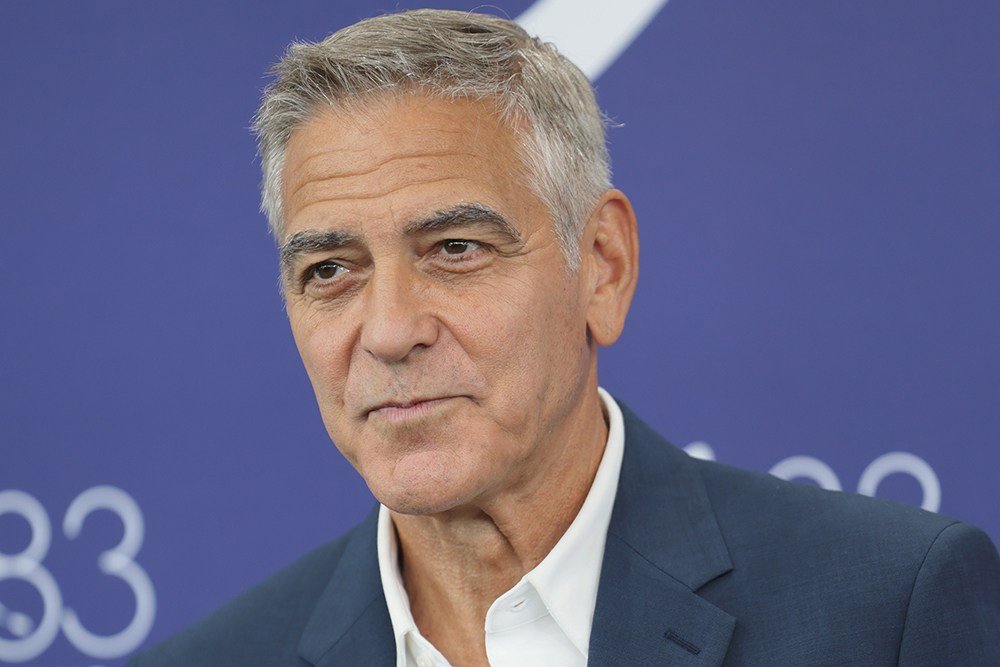
    George Clooney attended last year’s Venice Film Festival with “Jay Kelly,” a comedic drama in which he portrayed an aging A-lister who travels to Italy to receive a life achievement award. Now the actor is getting a real Venetian tribute, accepting the Golden Lion for Lifetime Achievement Award on the festival’s opening day.

    Before his big honor, Clooney sat for a press conference on Wednesday morning and addressed a range of topics, including the fraught state of politics in America, the rise of artificial intelligence and Paramount’s ongoing attempt to merge with Warner Bros. He also defended Mark Ruffalo, who was accused by Paramount of “antisemitic tropes” after the Marvel star attacked the deal over its potential consequences for Hollywood and accused the Ellison family of being complicit in the “genocide” against Palestinians. David Ellison is the CEO of Paramount Skydance.

    “I support Mark Ruffalo’s ability to speak freely,” Clooney said. “It’s ridiculous. We’re not going to ban speech. I believe in free speech even when I completely disagree with it. That’s important. In fact, it’s part of how democracy works.”

    Clooney called the pending merger “a complicated thing” and suggested he “doesn’t know how it works out.”

    “I don’t see how the merger financially ends up making sense for the people who are trying to do it. We’ll see. I worry when a big company swallows up another company,” he said. “I always worry whenever big companies are consolidating because it means a lot of people are going to lose their jobs.”

    On the topic of AI, Clooney predicted that it’s “going to be a very big part of this industry” and worries that “it’s going to hurt us in a lot of ways.” He expressed a concerned about the complications that AI will pose for actors, cracking that “I would like to avoid being in a tampon commercial 20 years after I’m dead.”

    Clooney was also probed about the state of journalism, having directed 2005’s “Good Night, and Good Luck,” a drama about the conflict between the veteran CBS reporter Edward R. Murrow and Senator Joseph McCarthy. Clooney also earning a Tony nomination for his Broadway debut in “Good Night, and Good Luck,” a play based on his film.

    “The state of journalism is in question. The richest people in the world are owning the Washington Post and Twitter, and that is a concern,” he said, referring to Jeff Bezos and Elon Musk. Yet Clooney remains optimistic. “There’s a lot of room for great journalists. I do believe that information will find it’s way out.”

    Clooney has a long history with the Venice Film Festival, having first attended with 1998’s Steven Soderbergh’s ”Out of Sight” and returning many times over the years with movies such as 2005’s “Good Night, and Good Luck,” 2007’s “Michael Clayton,” 2013’s “Gravity,” 2017’s “Suburbicon,” 2024’s “Wolfs” and 2025’s “Jay Kelly.” Clooney was a particularly welcomed presence at this year’s press conference after he missed the press conference for “Jay Kelly” because he was diagnosed with a sinus infection.

    Clooney joked that he’s been getting nostalgic has he prepares to receive a career honor.

    “I’m 65 years old — everything is melancholy,” he said. “You brush your teeth and you’re like, ‘My teeth used to be so much better…’”

    One of Hollywood’s biggest stars, Clooney’s influence spans television and film, starting with his breakout role on “ER” and continuing with films such as “Syriana,” “O Brother Where Art Thou,” “Up in the Air” and the “Oceans” trilogy. Although he’s directed several films, Clooney says he’s stepped back as a filmmaker to focus on acting.

    “The reason is because I have two 9-year-old kids — in order to spend time with them,” Clooney said. “If I act in a movie, it’s three months. When I direct a movie, it’s a year. And I cant do that anymore. I can’t pull the kids out of school anymore. I’m happy to doing this, being an actor again. It’s fun. I’m a character actor now.”

    Clooney teased that he’s excited for one upcoming project — a new “Oceans” heist with Brad Pitt and Matt Damon. “I would do anything with them,” he said. “As soon as we get our schedules to work, we’re going to film.”
  • A Family and Country Are in Crisis in ‘Our Share of Sand’ (Exclusive Venice Clip)

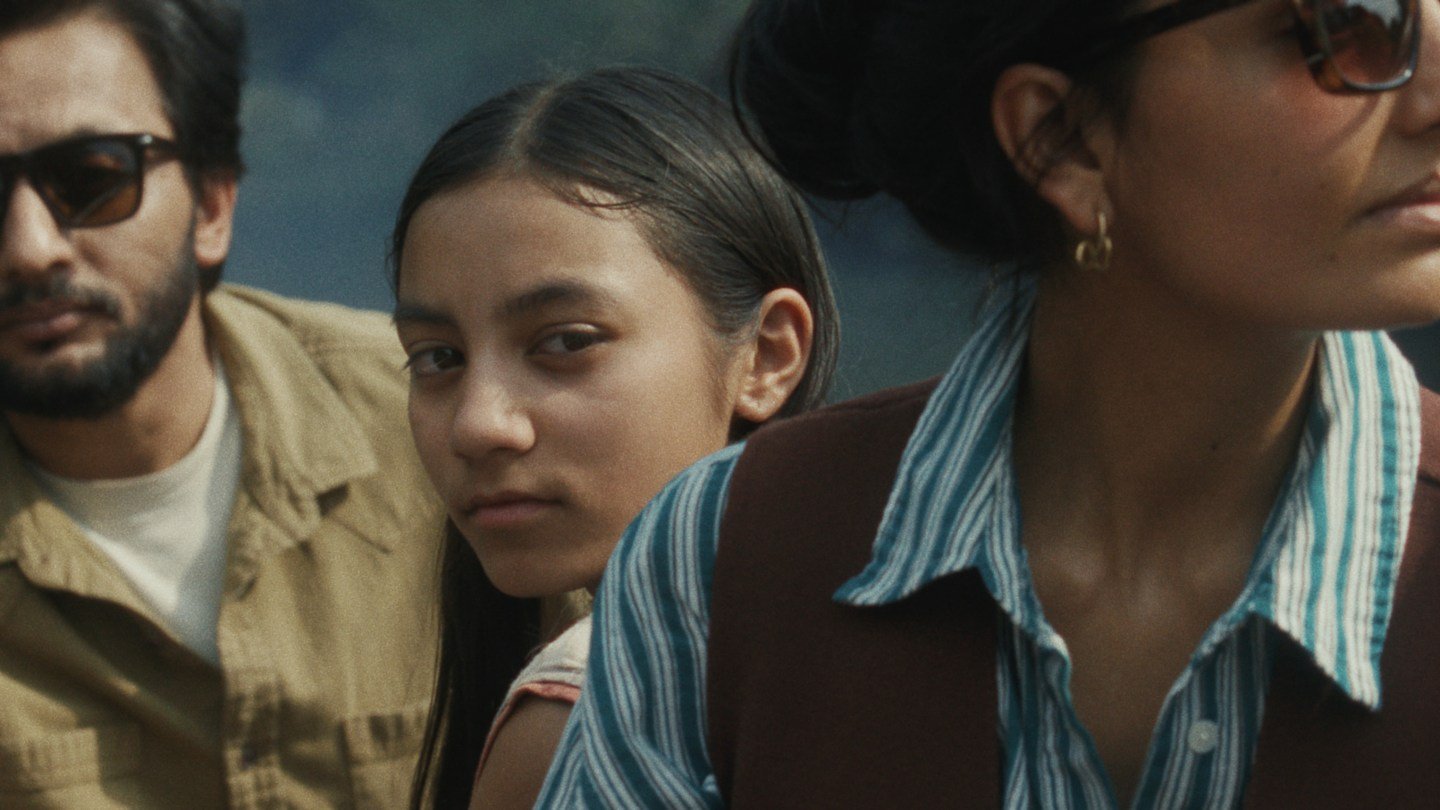
    A Family and Country Are in Crisis in ‘Our Share of Sand’ (Exclusive Venice Clip)

    The Hollywood Reporter can debut the first clip from Our Share of Sand, the debut feature from writer-director Shalini Adnani, ahead of its world premiere in Critics’ Week at the Venice Film Festival.

    The 95-minute drama, set against India’s sand mining crisis, follows 12-year-old Maya (newcomer Maya Mehta) as she returns to India with her mother to reunite with her estranged father, a sand mining businessman, and forms a bond with Kiran, a young worker.

    After an accident, a police investigation turns Maya into a key witness, with her father relying on her to absolve him. As her mother unravels, Maya uncovers a pattern of silence and exploitation that leads her to confront her father’s deception and her family’s complicity.

    Adnani has said the title is rooted in the sand mining crisis in India, where extraction of river sand has accelerated erosion and contributed to flooding. “Sand, in this world, is currency — and many people are unaware that we are running out of it, and that its extraction is causing land erosion worldwide,” she writes in the film’s production notes.

    In the clip, Maya questions her father’s view of what holds their family together. “We are family. We are connected by blood,” he tells her. “Is that what you think connects us?” she replies, before naming what she believes actually binds them: “The house, money.”

    Mehta, making her screen debut, stars alongside Mohammad Zeeshan Ayyub (Article 15, Jogi, Raanjhanaa) as Rohan and Ellora Torchia (Midsommar, Ali & Ava, House of the Dragon) as Priti, with Krish Raj More as Kiran, Ravi Patil as Dadya and Jyoti Dogra as Art.

    Adnani is a Chilean-born, Indian-origin writer-director based in London. Her short film White Ant premiered at Sundance, was longlisted for a BIFA, won Best UK Short at Raindance in 2023 and was acquired by Canal+. She is a London Film School and Berlinale Talents alumna.

    Our Share of Sand is produced by Sara Bonakdar for Fifth Mirror Pictures, with Alan McAlex, Balthazar de Ganay, Giorgos Karnavas and Michael Graf also producing. Developed with Film4 and the BFI, the UK-Greek co-production was shot in India, co-produced with Karnavas’ Heretic and made in association with McAlex’s Suitable Pictures (Santosh, Sister Midnight). Global Constellation is handling international sales.

    Check out the clip of Our Share of Sand below.

  • Maggie Gyllenhaal Takes on Venice Film Festival’s Lack of Women in Competition: “There’s a Systemic Problem”

    Maggie Gyllenhaal Takes on Venice Film Festival’s Lack of Women in Competition: “There’s a Systemic Problem”

    Politics and the underrepresentation of women at the world’s major film festivals became the breakout topic of conversation at this year’s Venice jury press conference, with Maggie Gyllenhaal stating that she believes “there’s a systemic problem” behind the fact that the world’s oldest cinema showcase has just two titles directed by women in its main competition this year. 

    “It’s much harder for women to get their films financed,” said Gyllenhaal, the festival’s competition jury president this year, when asked about the dearth of women in Venice’s selection. “Also, could it be possible that the things that women, having had a different experience of being alive in the world, want to make movies about are not always deemed high art?”

    “I really am walking in with a question as to why there are so few women in the main competition,” she later added.

    This year’s competition has drawn scrutiny for its stark gender imbalance. Just one of the original list of 20 Golden Lion contenders — May el-Toukhy’s Woman Unknown — is directed by a woman, down from six female-directed competition titles last year. The festival later added to the competition with the Gaza documentary NAZA, co-directed by Yuval Abraham and Rachel Szor, bringing the total to two. Venice artistic director Alberto Barbera acknowledged the disparity when announcing the lineup, calling it a recent low for the festival.

    But Gyllenhaal also tipped her hat to Venice for selecting her as the event’s jury chief this year. “Alberto and Julia asking me to be the head of the main jury competition — after the two films in particular that I have made — is a very important thing to consider, too,” she said.

    Gyllenhaal’s jury includes Tunisian filmmaker Kaouther Ben Hania, whose acclaimed Palestinian drama The Voice of Hind Rajab won last year’s Silver Lion Grand Jury Prize; Oscar-winning composer Daniel Blumberg; film scholar Francesco Casetti; French director Xavier Giannoli; Afghan filmmaker Shahrbanoo Sadat; and Hong Kong filmmaking legend Johnnie To. 

    Together they will select the Golden Lion winner and Venice’s other main competition prizes from a field that includes Danny Boyle’s Rupert Murdoch drama Ink, Robert Pattinson thriller Primetime, Martin McDonagh’s Wild Horse Nine, Korean auteur Lee Chang-dong’s much-anticipated return Possible Love and NAZA, among others.

    Gyllenhaal has a significant history with Venice. Her 2021 feature directing debut, The Lost Daughter, premiered in competition on the Lido and earned her the festival’s best screenplay prize before going on to receive three Oscar nominations. She also has a project in Venice this year. Her Marilyn Monroe-inspired advertorial short Flesh Impact, starring Dakota Johnson, Ellen Burstyn and Peter Sarsgaard, will screen out of competition later in the event.

    The press conference proceeded after some confusion during the weekend over whether the jury’s meeting with the media — a staple of all major film festivals — would take place at all. Venice organizers stated on Saturday that the jury presser might be scrapped due to a “scheduling conflict” involving a jury member; but by Sunday, the festival said a solution had been found, and the briefing would be held as usual. 

    The brief interregnum stirred industry speculation about the role politics might play at the 83rd edition, as various global conflicts — the war in Gaza, Russia’s invasion of Ukraine, and the U.S.-Iran war — loom in the background of the world’s oldest film festival. Festival chief Barbera has described this year’s lineup as the “most political” of recent years. 

    Venice’s blue-chip festival peers, meanwhile, showed earlier this year the two directions a major cultural event might take amid this globally fraught moment. In February, the Berlin festival became engulfed by political discord and social media point-scoring after jury president Wim Wenders told reporters during the opening press conference that filmmakers “have to stay out of politics.” But the Cannes Film Festival later went ahead in May with plenty of carefully calibrated political statements from filmmakers but notably less acrimony. 

    Gyllenhaal was asked near the outset of the Venice press conference whether she feels filmmakers have a responsibility to be political amid the world’s current challenges. 

    “We could say, ‘How are we possibly here talking about movies right now, when the world is in a state of emergency?’” she replied. “To me, the answer has something to do with empathy. I think that film allows an opening into an opportunity to find empathy inside of ourselves. Personally, I don’t believe that there is any subject or any filmmaker that shouldn’t be heard. I think we can challenge ourselves to hear stories about the most corrupt, the most perverse people, because it opens up the opportunity to find empathy for those people — and even to look at the ways in which we might have a little bad guy inside us, a little perversity inside us, a little corruption inside us, fight it as we might.”

    She added: “I think that if movies really are an honest look into other people’s experience, then they are fundamentally, unavoidably political, as well as a lot of other things.”

    The 83rd edition of the Venice Film Festival officially opens Wednesday evening on the Lido with a ceremony that will fete George Clooney with a Golden Lion for lifetime achievement and conclude with the world premiere of Boyle’s Ink, starring Jack O’Connell, Guy Pearce, and Claire Foy. The festival concludes with an awards ceremony on Sept. 12.  

  • Forget the Red Carpet — Venice’s Real Stars Are in the Documentaries This Year

    Forget the Red Carpet — Venice’s Real Stars Are in the Documentaries This Year

    Some of the biggest stars at this year’s Venice Film Festival won’t be the famous faces walking the red carpet, but the wildly high-profile subjects of documentaries that range from intoxicating to grippingly urgent.

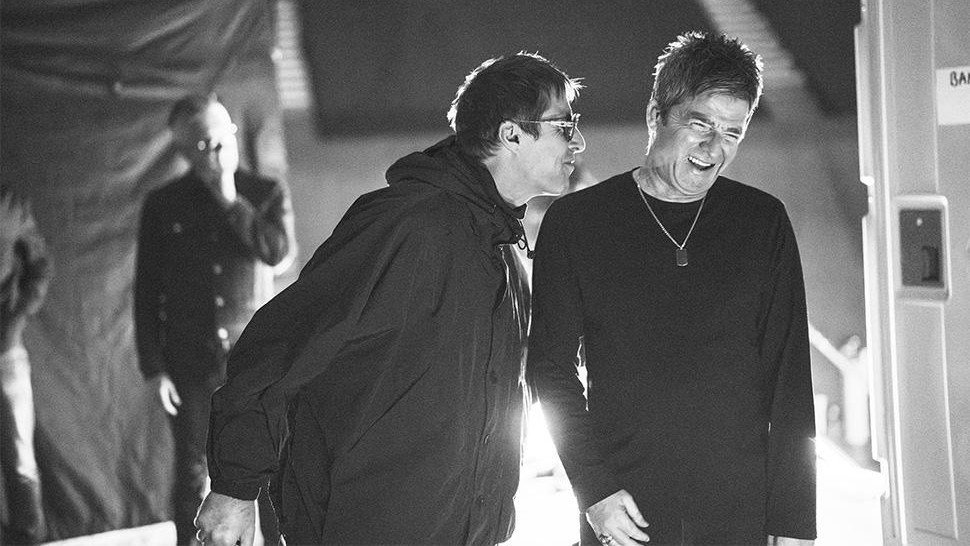
    From Oscar winner Alex Gibney‘s 4-hour dissection of Elon Musk and Disney’s intimate Oasis reunion movie to NAZA, the politically charged documentary about “Israel’s calculated mass killing of Palestinian civilians in Gaza,” and the ICE documentary They’re Here from Laura Poitras (another Oscar winner) — many of this year’s must-see movies on the Lido are clearly nonfiction. And, arguably, the biggest star who may or may not walk Venice’s red carpet — aside from Noel and Liam Gallagher — will likely do so on behalf of a documentary. Noted architecture superfan Brad Pitt recently became an executive producer of Wim Wenders’ 14-year-in-the-making documentary portrait of Peter Zumthor, the Swiss visionary behind the sprawling new Los Angeles County Museum of Art — another gem among Venice’s stacked 2026 documentary lineup.

    “It’s a phenomenal year for docs at Venice, and I think this will be one of the big stories of this edition,” says Emilie Spiegel, who co-heads Cinetic Marketing, a prestige publicity agency that represents an outsized swath of every fall’s awards favorites. “To have the oldest festival in the world so clearly state that documentary is cinema, and that some of the most exciting work is happening there, is really significant. Amid budget contractions and studio consolidation, I also think it’s optimistic and savvy of Venice to be championing nonfiction right now.”

    For breadth, depth, diversity and pedigree, Venice has clearly emerged as the preeminent platform for high-end nonfiction filmmaking among the world’s top festivals. While Cannes has been far more sporadic in its support of the form, and Berlin tends to offer quantity at the expense of quality, Venice has consistently brought the bangers — and the 2026 selection looks to be among its best yet.
    Two-time Oscar winner Barbara Kopple is back with Union Town, a cinéma vérité portrait of New York delivery workers taking on some of the world’s most powerful corporations; Free Solo Oscar winners Jimmy Chin and Elizabeth Chai Vasarhelyi return to extreme sporting terrain with Everest: The Other Side, about a pair of mountaineers’ audacious attempt to climb and ski the north face of the world’s tallest mountain; The Truffle Hunters duo Michael Dweck and Gregory Kershaw decamp to French wine country for an infectiously romantic and richly informative romp in Burgundy; and Takashi Miike, after more than 100 films and three decades spent gleefully jumping around genres, makes his first documentary with Shumei: The Living Legacy of Kabuki, filmed over more than three years with rare access to the inner sanctum of Japan’s traditional Kabuki theater world.

    ‘Musk,’ courtesy of Venice Film Festival

    Courtesy of the Venice Film Festival

    Elsewhere, Julia Loktev follows her epic portrait of independent Russian journalists with My Undesirable Friends: Part II – Exile, another nearly six-hour immersion; Russell Crowe turns the camera on himself and his globe-trotting rock band for what Venice chief Alberto Barbera has called the star’s “most personal” film. And that’s before factoring in Erik Shirai’s Sumo: Spirit Weighs Nothing, which promises rare access inside another of Japan’s most famously guarded traditions; Robert Greene’s Too Much Sugar, a strikingly original doc about fatherhood and masculinity; or Mariano Llinás’ three-part, more-than-five-hour biography of Jorge Luis Borges.

    The festival has even built its embrace of docs more firmly into its structure this year, with a new dedicated “Film on Films” strand, where Luca Guadagnino’s gargantuan, seven-hour-plus meditation on the great Bernardo Bertolucci sits alongside Sophie Fiennes and Slavoj Zizek’s The Pervert’s Guide to Utopias, a tribute to the cult of Seijun Suzuki, and more.

    Documentary filmmaking’s presence at Venice stretches back to the festival’s very first edition in 1932, when Joris Ivens and Mannus Franken’s 12-minute Dutch avant-garde documentary Rain (or Regen) screened on the closing night of the inaugural edition. But it wasn’t until the Barbera era that nonfiction filmmaking would vie for — and swiftly win — the festival’s signature honor. Shortly after taking the reins as artistic director of the festival for the second time in 2012, Barbera put two documentaries in the festival’s main competition for the first time in 2013 — Errol Morris’ The Unknown Known and Gianfranco Rosi’s Sacro GRA — and the latter promptly won the Golden Lion. The space and prominence Barbera has accorded to nonfiction has only grown in the years since.

    “Perhaps this is not the result of a deliberate strategic choice, but rather the consequence of the fact that, year after year, we receive a growing number of submissions in the documentary genre, whose significance — both from an aesthetic standpoint and in terms of its ability to offer a representation of and contribute to our understanding of the major issues of our time — is perhaps unprecedented,” Barbera explains. “My impression is that the financial resources available for making documentaries have increased, as a result of growing demand from streaming platforms but also increased interest from the public, which is now much more willing to watch nonfiction films of good quality.”

    ‘From Inside Out: The Architecture of Peter Zumthor,’ courtesy of Venice Film Festival

    Road Movies

    In docs as well as fictional filmmaking, Venice has also staked out a commendably independent-minded stance over recent years when it comes to films that tackle conflict and fraught social issues.

    “I believe Venice is one of the very few international cultural platforms that has the ability to invite filmmakers with very different — or even opposite — political positions and cultural points of view, and put their work in conversation,” says Ukrainian director and producer Alexander Rodnyansky, who is known for his work with Russian auteur Andrey Zvyagintsev and last year directed and premiered the searingly personal documentary Notes from a True Criminal in Venice. Rodnyansky notes the sober-mindedness Venice has shown in screening bold Ukrainian and Palestinian films — such as The Voice of Hind Rajab in 2025 and the Gaza docs NAZA and Ahmed Hassouna’s Citizen Osama this year — as well as works by freethinking Russian and Israeli filmmakers, without succumbing to the blanket bans that some have called for on films and filmmakers from those countries. “Of course, state propaganda should have no place, but real independent-minded filmmaking should be welcomed wherever it comes from,” he says.

    Rodnyansky is producer of Israeli documentarian Amos Gitai’s The Road to Jericho, a journey from Jerusalem to Jericho that visits the country’s threatened Bedouin community while reflecting on the Israeli-Palestinian peace process. The film will premiere in Venice’s out-of-competition nonfiction section. “As you understand, it’s not an easy time for Israeli filmmakers right now. They’re having a very hard time getting their movies accepted by the major festivals, regardless of what they might believe,” Rodnyansky says.

    “These are turbulent times, and a festival should try to reflect the polarization of the societies we observe and continue the conversation using artistic means,” he adds. “It’s a very simple mission, and I think Barbera inherited that legacy and has continued to enrich it in a brilliant way.”

  • Trisha Krishnan Toplines Panorama Studios’ First Tamil Film, a Psychological Horror Shot in London (EXCLUSIVE)

    Trisha Krishnan Toplines Panorama Studios’ First Tamil Film, a Psychological Horror Shot in London (EXCLUSIVE)

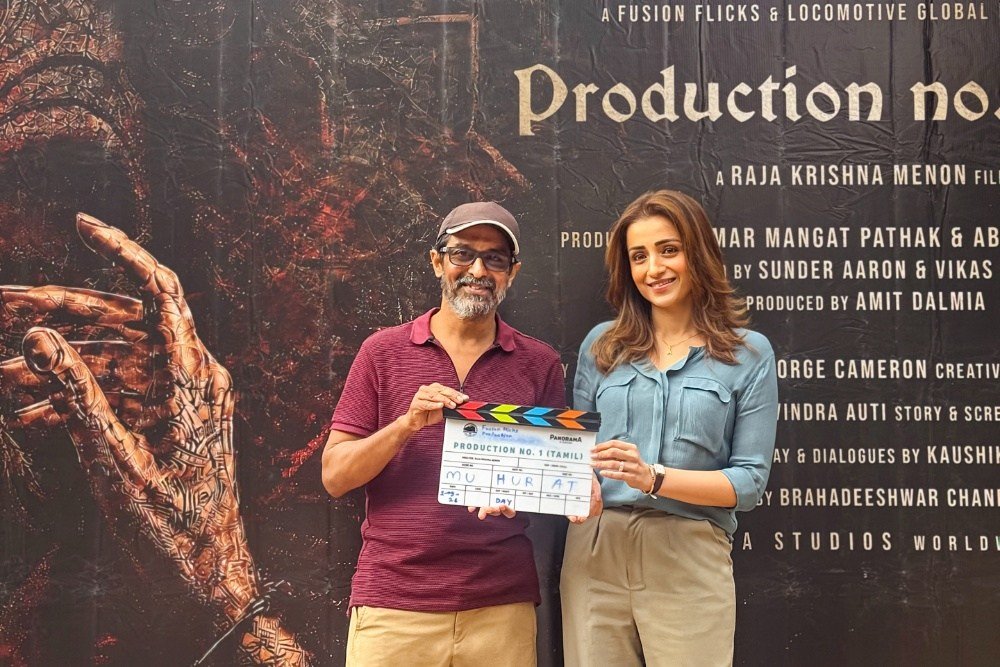
    Indian star Trisha Krishnan is leading Panorama Studios‘ first Tamil-language production, a psychological horror directed by Raja Krishna Menon. Radhika Sarathkumar and Aparna Balamurali co-star in the yet-to-be-titled film, which has begun principal photography in London.

    The film is presented by Panorama Studios in association with Locomotive Global and credited as a Fusion Flicks and Locomotive Global production. Producer credits go to Kumar Mangat Pathak, Abhishek Pathak, Sunder Aaron, Vikas Sharma and Amit Dalmia, while Rajesh Menon and George Cameron serve as co-producers and Abhinav Mehrotra as creative producer.

    Krishnan is known for roles in “96,” “Vinnaithaandi Varuvaayaa,” “Ghilli” and “Ponniyin Selvan.” Sarathkumar has appeared in “Kizhakku Cheemaiyile,” “Pasumpon,” “Thanga Magan” and “Theri.” Balamurali’s credits include “SooraraiPottru,” “Maheshinte Prathikaaram” and “8 Thottakkal.”

    Menon, whose credits include “Airlift,” “Chef” and “Pippa,” is making his first foray into psychological horror with the project.

    Kumar Mangat Pathak, founder and chair of Panorama Studios, said, “Tamil cinema has always been a space for bold, original and culturally rooted storytelling, and we wanted our first Tamil production to reflect exactly that spirit. This is a genre film with a very intriguing world at its core, and Raja has brought a distinctive vision to it. We are delighted to partner with such talented collaborators and are confident that this film will offer audiences a fresh cinematic experience.”

    Menon added, “Someone once quite aptly called me ‘genre agnostic’, and this film is another exploration in that journey. This is a story that is a first for me in many ways – my first film in Tamil, my first psychological horror, and my first story centred entirely around women. Adding to that is the privilege of working with Trisha Krishnan, Radhika ma’am, Aparna Balamurali, the wonderful cast and a fantastic crew. It makes this journey all the more exciting. Panorama Studios and Kumar Mangat ji have been incredibly supportive of my creative process, while Vikas and Sunder from Locomotive Global share the same commitment to telling the story the way it should be told, without compromising on anything. I couldn’t have asked for a better set of people to take this new journey with.”

    Sunder Aaron, managing partner and producer, and Vikas Sharma, producer, at Locomotive Global, said in a joint statement, “At Locomotive Global, we are drawn to stories that transcend borders while remaining rooted in powerful human emotion. We were immediately drawn to the world of this Tamil-language psychological horror, with its mystery, atmosphere, emotional depth and sustained tension. Shot in London and led by an exceptional cast including Trisha Krishnan, Radhika Ma’am and Aparna Balamurali, the film marks an exciting step in our growing pipeline of elevated horror projects. Bringing together Raja Krishna Menon, Kumar Ji and Panorama Studios on a project with such a distinctive voice makes this a particularly meaningful collaboration for us. We look forward to taking this unique film to audiences.”

    The Tamil film adds to Panorama Studios’ expanding presence in South Indian cinema, following its Malayalam productions “Anomie,” “Unmadham” and “Tiki Taka.” Two more Malayalam titles, “Production No. 4” and “Munpe,” starring Tovino Thomas, are shooting at present, and the studio has also struck collaborations with Malayalam industry figures including Fahadh Faasil.

    Further details about the film, including its title, are expected in due course.

  • Bill Simmons Says “I Learned My Lesson” After Admitting to Proxy Betting on Fanduel in Podcast Interview

    Bill Simmons Says “I Learned My Lesson” After Admitting to Proxy Betting on Fanduel in Podcast Interview

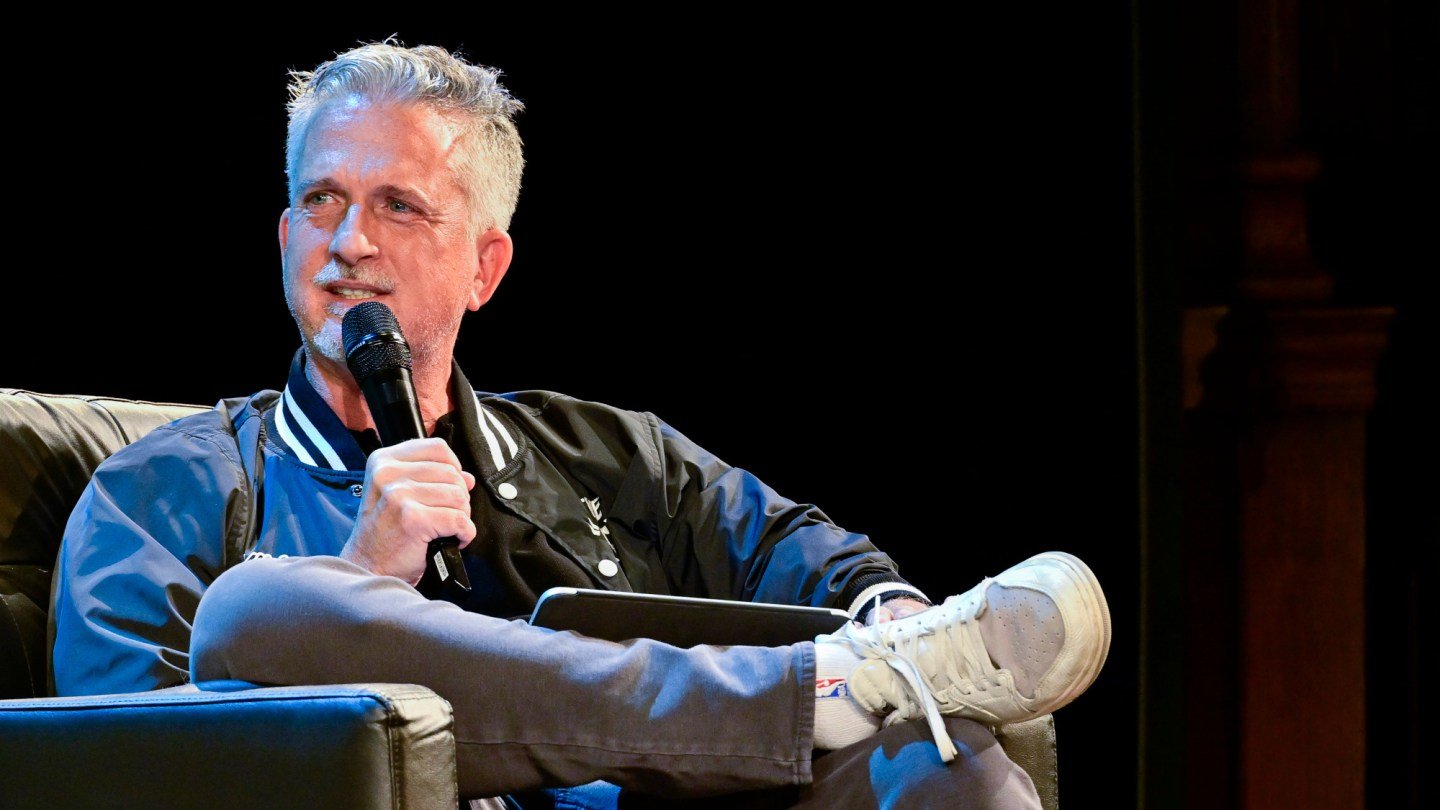
    Podcast host and head of talk at Spotify Bill Simmons acknowledged that he used his daughter’s boyfriend to place some proxy sports bets on Fanduel while he was in California, where online sports betting is not legal.

    On his podcast Tuesday, Simmons addressed the issue, which came up in an unrelated conversation on his podcast over the weekend.

    “I talked about how I got my daughter’s boyfriend to place some some bets for me in Massachusetts because I was in L.A. I did not know about the proxy rules,” Simmons said Tuesday. “Yeah, there’s some real rules with this stuff, and they’ve ruled that they not only are the bets going to be voided — and I learned my lesson, apparently proxy betting, not allowed. I actually thought it was, but that’s fine — and now my daughter has to break up with a boyfriend. That was the other thing. No, I’m kidding. They’re gonna stay together. But yeah, I did learn [that you’re] not allowed to do that. So all those bets went out the window.”

    The issue blew up earlier this week after listeners flagged the comments by Simmons, pointing out that Fanduel is a major sponsor of his Ringer podcast network. The sports betting company tells The Hollywood Reporter that when it learned of the comments it took action.

    “We became aware of the issue and handled it consistent with our Terms and Conditions and Massachusetts Gaming Commission regulations, including reporting the matter to the MGC, voiding the bets, and actioning the account,” a Fanduel spokesperson says.

    Likewise, the Massachusetts Gaming Commission is looking into the matter, given that the proxy bets were made in that state.

    “The Commission is aware of the comments made on the Bill Simmons Podcast and staff are currently reviewing the matter,” says MGC spokesperson Thomas Mills.

    It isn’t clear what could come of that investigation, but the comments by Simmons Tuesday evening suggest that he is apologetic and looking to move on.

    Simmons is not only one of the most influential podcast hosts in America, but one of the most powerful podcast executives, thanks to his perch at Spotify.

  • Julianne Moore to Receive Zurich Film Festival’s Golden Icon Award

    Julianne Moore to Receive Zurich Film Festival’s Golden Icon Award

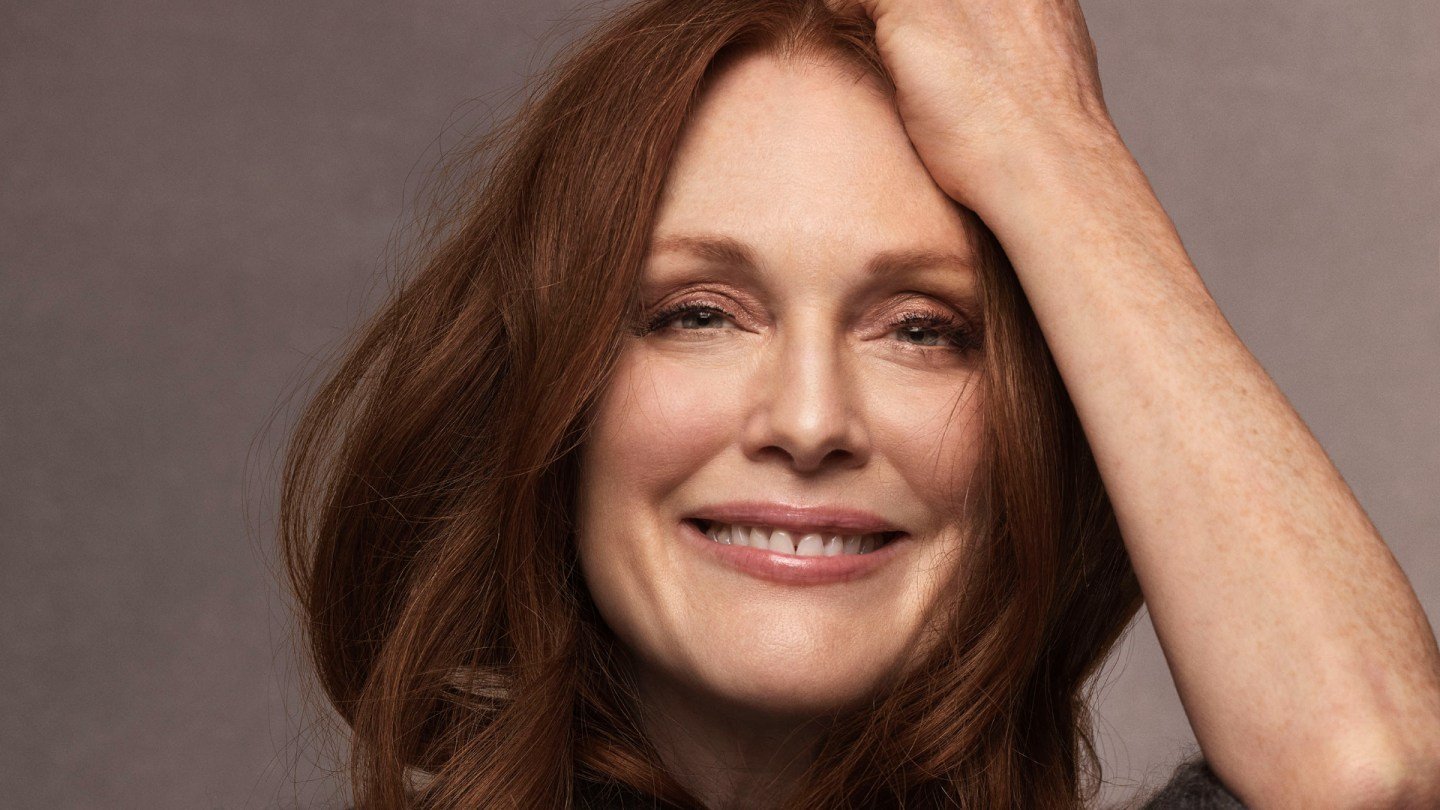
    Julianne Moore is set to be honored with the Golden Icon Award at the 22nd Zurich Film Festival.

    The U.S. actress will accept the accolade alongside Jesse Eisenberg, who directs her in his latest feature The Debut, a musical-comedy co-starring Paul Giamatti.

    Over a career now spanning more than three decades, Moore has worked with some of the most distinguished directors in contemporary cinema including Robert Altman (Short Cuts), Paul Thomas Anderson (Boogie Nights, Magnolia), brothers Joel and Ethan Coen (The Big Lebowski) and Todd Haynes (Safe, Far From Heaven, May December).

    At this year’s Zurich Film Fest, Moore will be given the lifetime achievement award in recognition for her career and recent starring role in The Debut, which is screening at the festival. The movie follows Mona Friedman (Moore), who is cast in a bit part at a small community theater and transforms from a shy, unassuming housewife into a zealous method actor willing to do anything to protect the artistic integrity of her marginal role — even if it means waging war against the show’s domineering director (Giamatti).

    “Julianne Moore is one of the outstanding character actresses of American cinema,” said Christian Jungen, CEO of the Zurich Film Festival. “She possesses remarkable versatility and, time and again, manages to captivate us with her intense portrayals of the characters she plays. No matter which film we see her in, we find ourselves rooting for her characters.”

    “In the wonderful film The Debut, she delivers a brilliant performance as a woman who realizes it’s not too late to fulfill her deeply personal dream: becoming an actress,” he continued. “It is Julianne Moore’s love letter to her own profession — and thus the perfect film with which to thank her, with our Golden Icon Award, for so many wonderful cinematic experiences.”

    Among Moore’s best-known performances are Still Alice, for which she won an Oscar, as well as The Hours and The Kids Are All Right. Recent credits include Apple TV’s Echo Valley, Pedro Almodovar’s The Room Next Door and Netflix limited series Sirens. Next year, she will return to the stage to star in the title role of the Off-Broadway play Faydra. Beyond her acting, Moore is a New York Times bestselling children’s author of the Freckleface Strawberry series and the founding chair of Everytown for Gun Safety’s Creative Council, where she advocates for ending gun violence in America.

    Past recipients of Zurich’s Golden Icon Award include Kate Winslet, Sylvester Stallone, and Sharon Stone. The 22nd edition runs Sep. 24-Oct. 4.

  • ‘The Runner’ Review: Gal Gadot Is a Mother on a Rescue Mission in an Energetic but Uninspired Amazon Thriller

    ‘The Runner’ Review: Gal Gadot Is a Mother on a Rescue Mission in an Energetic but Uninspired Amazon Thriller

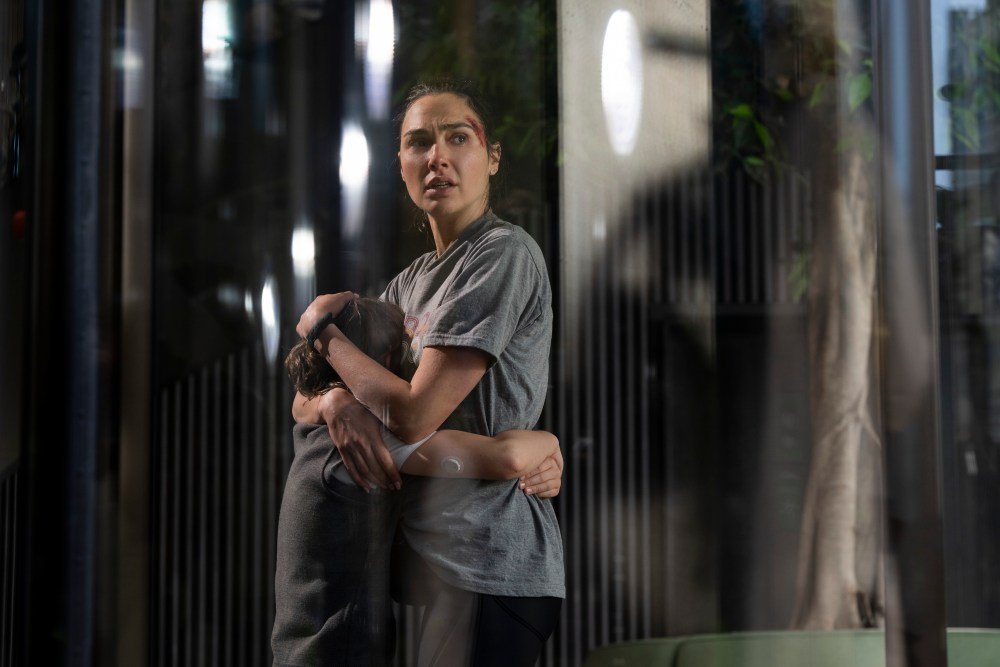
    A frantic journey across London on foot provides a lot of exercise for Gal Gadot, but not much reward for viewers, in “The Runner.” Hardly the first thriller centering on an exceptionally action-ready parent surmounting various obstacles to rescue an imperiled child from some diabolical abductor, and surely not the last, this Prime Original has energy — but lacks the strong suspense or novelty necessary to elevate an overfamiliar concept. It premieres on the platform September 2.

    An opening montage finds the historic metropolis full of people lost in their own individual worlds, digitally connected yet oblivious to the offscreen reality around them. This visual motif is so pervasive throughout, you might wonder if the filmmakers somehow think it’s a startling insight — rather than one more way in which the movie fails to find any fresh ideas, or revivify old ones. 

    Maia Marten (Gadot) is an emigre single mother packing her approximately eight-year-old son Noah (Rory Wilmot, also in the forthcoming “Harry Potter” HBO series) off to school before her own big day. A lawyer with a top firm, she’s on the team prosecuting a notorious crime boss for the murder of two women, and today is the day their heavily guarded star witness (Phoenix Di Sebastiani) will testify. 

    We have already noticed, though Maia has not, that her phone has been hacked by some outside player. She figures that out soon enough, however, when she’s just commenced her pre-work morning run —receiving a call from her son’s phone, only it’s not Noah on the line. Instead, it’s a sneeringly in-control adult male voice (Damian Lewis), who’s apparently been spying on the small family for a while. Not only does he know all about them and their daily habits, he’s already whisked the too-trusting boy from school grounds. 

    This unnamed caller, who can track Maia’s every move through her phone, has a straightforward if thorny demand: She must use her security clearance to access and kill the witness before his court appearance. She only has an hour to get that done, as the perp has ensured her diabetic son’s life will hang in the balance for that long, and no longer. Meanwhile, the onetime track champion must race across the city, dodging slow pedestrians, getting hit by the occasional vehicle, soliciting no help from police or anyone else — “or he dies.”

    Mark Gibson’s screenplay is brisk but routine. Its attempts at providing psychological depth are often painfully on-the-nose, as when Maia announces, “I’m going to give those murdered women a voice in front of the jury,” or our voice-only villain snarls, “Is that why you became a lawyer, to exert your will over violent men?” (He also periodically mutters, “Tick, tick, tick,” as if otherwise we might forget she’s on urgent deadline.) An eventual big twist feels too trickily over-contrived to impress, or convince.

    Director Kevin Macdonald (“The Last King of Scotland,” “The Mauritanian”) can’t be accused of sleeping on the job, though this material probably wasn’t his ideal choice. He crowds the film with hyperbolic visual and editorial gimmicks, pouring on so much eyeblink local color as Maia crosses London that at times “The Runner” resembles one of those “A Day In The Life Of…” coffee-table books where photographers offer a random panoply of human experience. (Five years ago Macdonald directed “Life In A Day 2020,” their documentary-feature equivalent.) But none of that filigree does much to heighten tension. If anything, it distracts from what ought to be a pulse-pounding watch, instead making it occasionally seem like a glorified tourist advert. While the result is not dull, it achieves little real emotional or visceral punch.

    Nor is Gadot a performer inclined to lend much more than athleticism to a role that could use some warmth and idiosyncrasy to color its rather generic action-hero gist. Lewis, glimpsed onscreen just in the last lap, likewise digs into the most predictable aspects of an uninspired part. 

    “The Runner’s” slick design and technical contributions do not transcend the outward packaging for a potboiler with scant substance beneath. Not much helping is Tom Hodge’s score, the percussive thrust of which sounds mostly driven by bongoes. An attempt to lend this enterprise flippant retro cool by bookending two golden Blondie oldies (“Heart of Glass,” “Hanging on the Telephone”) only underlines its overall dearth of personality. 

  • Venice First Look: Toni Servillo Meets His Match in Mario Martone’s ‘Scherzetto’

    Venice First Look: Toni Servillo Meets His Match in Mario Martone’s ‘Scherzetto’

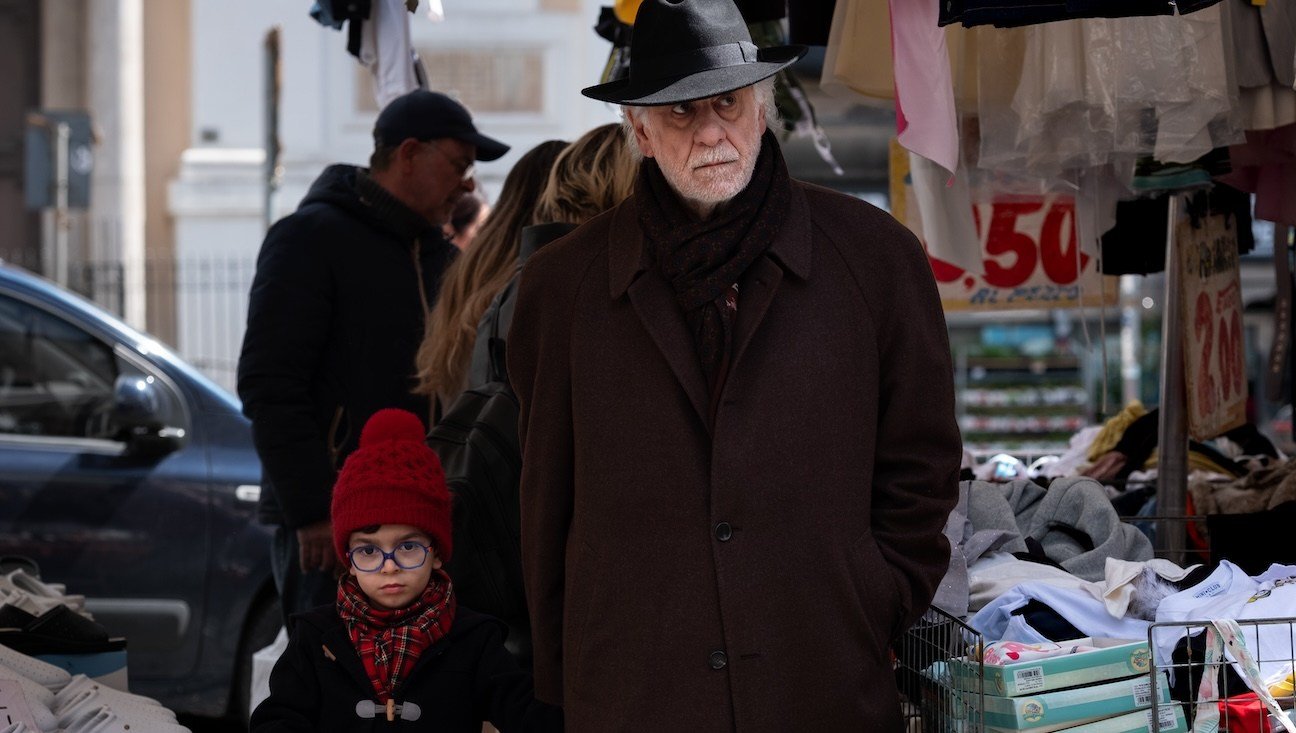
    A mordant Toni Servillo may have met his match in this exclusive early image from Scherzetto, director Mario Martone’s feature adaptation of an Italian novel of the same name by author Domenico Starnone. 

    In an inspired bit of casting, Italian screen legend Servillo stars in Scherzetto as Daniele, a renowned illustrator whose life of elegant solitude is abruptly turned upside down when he’s called on to look after his wildly imaginative and unruly five-year-old grandson. Daniele reluctantly returns to his childhood home in Naples, where his daughter has asked him to care for Mario while she and her husband are away. Confined together in the apartment, grandfather and grandson enter into an escalating battle of wills that forces Daniele to reckon with the ghosts of his own childhood and family history.

    Scherzetto will premiere out of competition at the Venice Film Festival on Sept 10. The project’s sales agent, Rai Cinema, shared a first-look still (above) with The Hollywood Reporter shortly before the festival’s opening. 

    Toni Servillo in Scherzetto as Daniele.

    A Lido regular and pillar of contemporary Italian cinema and theater generally, Martone made his feature debut with Death of a Neapolitan Mathematician, which won Venice’s grand jury prize in 1992. His last feature at the festival was the 2021 competition entry Qui rido io, another collaboration with Servillo. For his part, Servillo, a lion of the Italian stage and screen, arrives back in Venice just one year after winning the festival’s Volpi Cup for best actor for his performance in Paolo Sorrentino’s La Grazia. 

    “Two characters at opposite ends of life, a family situation that is often comic, a single setting, and ghosts,” Martone says of Scherzetto‘s premise. “As I worked on the film, my own ghosts also began to emerge, difficult to keep at bay, and I started chasing them with the camera.”

    “For Toni Servillo, too, I don’t think this was simply a matter of playing a role,” Martone adds. “It was an immersion into unknown territory, dominated by the presence of a five-year-old who, every day, could have told us: ‘Enough, I’m bored!’” 

    Five-year-old Lorenzo Perrotta co-stars as Mario, with Serena Rossi as Daniele’s daughter Betta, Leonardo Lidi as her husband Saverio and Gianluca Di Gennaro and Giovanni Ludeno also in the cast. Martone co-wrote the screenplay with longtime collaborator Ippolita di Majo. Mad Entertainment produced with Rai Cinema, in association with EDI Effetti Digitali Italiani and Picomedia.

    Scherzetto premieres out of competition in Venice on Sept. 10. Rai Cinema International Distribution is handling world sales, with 01 Distribution releasing the film in Italy.

  • Martin Scorsese Mentee Celina Murga Preps Next Pic, ‘The Rehearsals’

    Martin Scorsese Mentee Celina Murga Preps Next Pic, ‘The Rehearsals’

    Among the 15 projects participating in the upcoming San Sebastián Europe-Latin America Co-Production Forum is “The Rehearsals” (“Los Ensayos”) by Argentina’s Celina Murga, best known for her Martin Scorsese-executive produced dramas ‘The Freshly Cut Grass’ and ‘The Third Side of the River’ and of course, her career-launching 2003 debut, “Ana and the Others.”

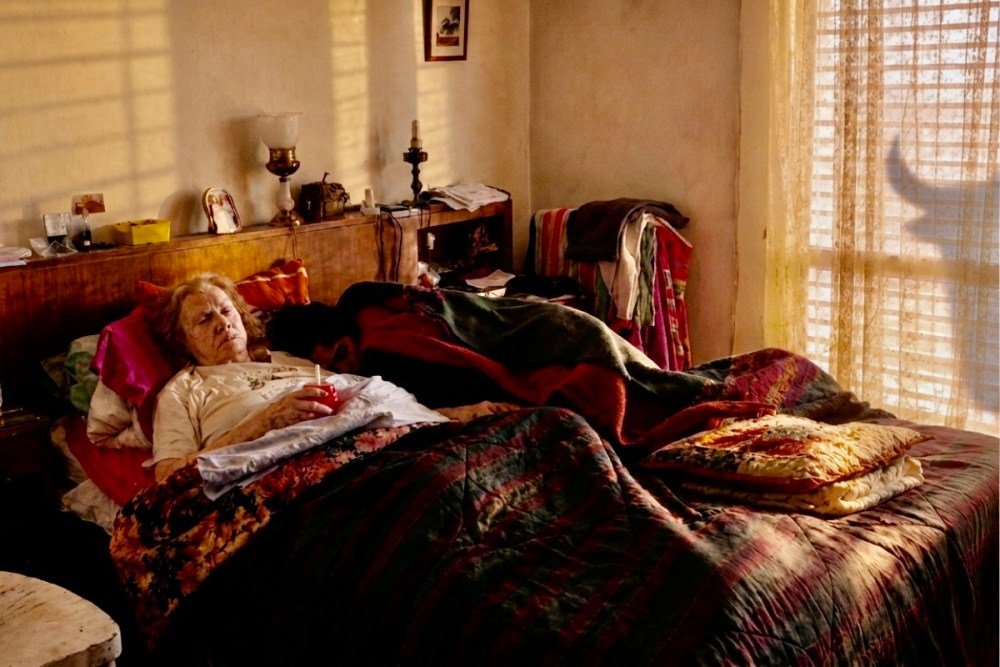
    Based on various short stories by Japanese-Argentine author Alejandra Kamiya, “The Rehearsals” follows Eva, nearly 50, who goes along with her 80-year-old mother, a now retired prominent doctor facing the onset of Alzheimer’s. Eva’s family home is also shared by her teenage son and younger sister, who share in caregiving duties. Between small celebrations, hospital visits and disagreements about how to care for her, a mysterious presence of bulls begins to surround the house. Weaving everyday reality with the fantastic, the film explores vulnerability and how caring for someone can also bring love, connection and a renewed sense of life.

    “The film reflects on the way our society looks at aging, deterioration and death. We live in a culture that rewards youth and productivity, making aging bodies and slowing time increasingly invisible. Yet confronting mortality can also open new forms of intimacy and a renewed perception of vitality. ‘The Rehearsals’ was born from the desire to make these experiences visible and to ask what we lose when we deny our finite condition,” Murga told Variety.

    She plans to shoot the film in Uruguay by 2028 and will make use of its newly introduced audiovisual tax credit on up to 30% of eligible expenditures in the country.

    Currently consolidating its international co-production and financing structure, the project counts on Uruguay-based Alterna Media, which will lead the local production. Alterna Media’s Maria Laura Berch, Joaquin Romero Vercellino and Lucia Vela serve as executive producers.

    Founded by Berch and Romero, Alterna Media’s credits include “La noche sin mi,” co-produced with Tarea Fina and winner of the Best First Feature award at Argentina’s Premios Sur and “El mensaje,” winner of the Silver Bear at the Berlinale. This year, Alterna Media presented “La de Punta Carretas,” a series directed by César Charlone and Fernando Meirelles, at the Berlinale, in co-production with Federation and Ojo Films.

    The Europe-Latin America Co-Production Forum will take place over Sept 21 – 23 during the 74th San Sebastian Film Festival.

    Murga expands on her latest project and how Scorsese impacted her work:

    Martin Scorsese chose to mentor you and executive produced “The Third Side of the River” and your last film to date, “The Freshly Cut Grass.” Are you still in touch with him? How has that experience shaped you and your filmmaking?

    Yes, we have stayed in touch. In fact, he attended the Tribeca presentation of ‘The Freshly Cut Grass.’ He has a deep understanding of the challenges of making films in different parts of the world, particularly for women filmmakers. He is always attentive to what I’m doing – he emails me to ask about my projects and suggest new ones.

    I value not only his place as an emblematic director in the history of world cinema, but also his human commitment and his profound understanding of cinema’s power within individual cultures and across the world.

    That is what I treasure most from the experience, beyond the specific technical aspects I was able to observe while watching him work on set: a sense of mission, of why we make films and what they can mean and of how deeply that purpose can inspire others.

    You say “The Rehearsals” is based on short stories by author Alejandra Kamiya.  Did you mean you combined several stories into one? What drew you to these stories?

    I combined several stories. The main one, ‘The Rehearsals,’ comes from ‘The Patience of Water Over Every Stone,’ but I also drew characters and situations from other stories in that book and from ‘The Fallen Trees Are Also the Forest.’ I was deeply struck by how these stories explore themes that interest me: the ambiguous, tense relationship between parents and children; humanity’s profound connection to nature; death as an inevitable part of life and the passage of time. I was also drawn to a narrative style that subtly shifts reality toward the fantastic. This coexistence of the everyday and the extraordinary suggested to me a cinematic way of approaching death – not as a spectacular intrusion, but as a presence that slowly infiltrates daily life.

    Will the story be set in Argentina but shot in Uruguay because of its new tax credit? I assume that many Argentine filmmakers are going to Uruguay and elsewhere given the lack of state support in Argentina.

    The story is set in Entre Ríos, Argentina, although its landscape and cultural context could naturally exist on the Uruguayan side of the river as well. Since the film is being produced by the Uruguayan company Alterna Media, Uruguay’s current audiovisual incentives have been an important factor in making the production possible. Beyond the economic dimension, however, there is a strong cultural and geographical connection between Entre Ríos and Paysandú that makes this collaboration especially meaningful to the project.

    The current context is also encouraging us to think about film production in more regional terms. Uruguay has created a dynamic environment for audiovisual projects and we see these opportunities not as a replacement for Argentine production, but as a way to strengthen connections between filmmakers and producers on both sides of the river.I imagine the story unfolding in an emotionally essential territory for me: my home province of Entre Ríos, Argentina. Uruguay shares the same river border and I have always felt a very organic connection between the two.

    The project also grew from my desire to work with Alterna Media’s María Laura Berch, with whom I have collaborated since my second film, ‘Una Semana Solos.’

    What themes are you exploring in this project? Are there themes you have always gravitated to throughout your career?

    The heart of ‘The Rehearsals’ is not Alzheimer’s itself, but care as an everyday practice and as an experience of accepting the cycles of life. The film follows a daughter trying to accompany her mother through her final stage, navigating the challenge of remaining close without denying the loss or imposing a particular way of experiencing it.

    Through a restrained approach, I want the cinematic gaze itself to become an ethical question: How can we look at someone experiencing deterioration without reducing them to their fragility? How can we approach vulnerability without turning it into spectacle? The film seeks to hold that tension through a deeply human perspective, where observing can also become an act of care.

    The film also reflects on how our society views aging, deterioration and death. We live in a culture that privileges youth, productivity and autonomy, while rendering aging bodies and slower forms of existence increasingly invisible. Old age has a political dimension that is rarely acknowledged: it confronts us with our finitude and with the fact that neither technology nor the market can buy permanence.

    I want to make a film rooted in affection, far from both condescension and the aestheticization of suffering– a sensitive, human portrait centered on relationships, shared time, and our ability to accompany one another. More than a film about Alzheimer’s or death, I want ‘The Rehearsals’ to be, above all, a film about love.