During the production of Michael Mann’s Ferrari in Modena, Patrick Dempsey called down to chef Jessica Rosval at Casa Maria Luigia around midnight with one question: “What are we having for dinner?” Pizza followed, served by the pool. That collision of major celebrity, fast cars and delicious food makes Emilia-Romagna the ideal post-Venice pitstop for auto-film lovers.
Ferrari, Maserati and Lamborghini have home bases within roughly an hour’s drive of one another, and the films about their founders returned to the same cities and countryside. Mann’s Ferrari, which premiered at Venice in 2023, was filmed largely in Modena. Bobby Moresco shot parts of Lamborghini: The Man Behind the Legend around Bologna and Pieve di Cento, then returned to Bologna and Modena for Maserati: The Brothers, starring Al Pacino and Anthony Hopkins. Producer Andrea Iervolino connects all three films.
From Venezia Santa Lucia, a high-speed train reaches Bologna in about 90 minutes. Begin at the Fountain of Neptune, whose trident inspired the emblem Mario Maserati designed for the company, first used in 1926. Stay at I Portici Hotel Bologna, a short walk from Bologna Centrale, inside the historic Maccaferri Palace. Its Michelin-starred restaurant occupies the restored Eden Theater, an 1899 café-chantant with its intact Liberty-style frescoes.
The Automobili Lamborghini Museum in Sant’Agata Bolognese is about 40 minutes away. Its collection ranges from the Miura and Countach to contemporary hybrids, while VIP tours take visitors onto the production lines. Ferruccio Lamborghini grew up in nearby Renazzo, and Bologna and Pieve di Cento supplied locations for Moresco’s film.
In Modena, check into Casa Maria Luigia, Massimo Bottura and Lara Gilmore’s country house and a discreet base during the filming of Ferrari. Bottura says the movie’s stars stayed there and later shared photos of Adam Driver, Penélope Cruz and others at the property. His relationship with Ferrari began long before Hollywood arrived. As boys, he and his brother heard the cars at Modena’s circuit on the way to school and climbed a wall to watch. “If I pick Ferrari, it’s because I grew up with that,” he says.
Guests can play records from Bottura’s collection of thousands of albums, find snacks and desserts in the communal kitchen, take a Pasta Studio class ending in a shared lunch and explore the garage “toy chest.” The estate acetaia holds more than 1,400 barrels, while breakfast is designed to recall the Christmas mornings of Bottura’s childhood. “We call it casa because it’s home,” he says.
At the Museo Enzo Ferrari, The Greatest Hits — Music Legends and Their Ferraris brings together Herbert von Karajan’s 250 GT Lusso, Eric Clapton’s one-off SP12, J Balvin’s 512 TR and Swizz Beatz’s SF90 XX. It runs through Feb. 16, 2027.
The Umberto Panini Maserati Collection unites both obsessions on the Hombre dairy farm, where historic Trident cars share the grounds with Parmigiano Reggiano production. End in the Castelvetro hills at Cleto Chiarli, the family winery founded in 1860, for a tour and tasting devoted to the region’s Lambrusco.
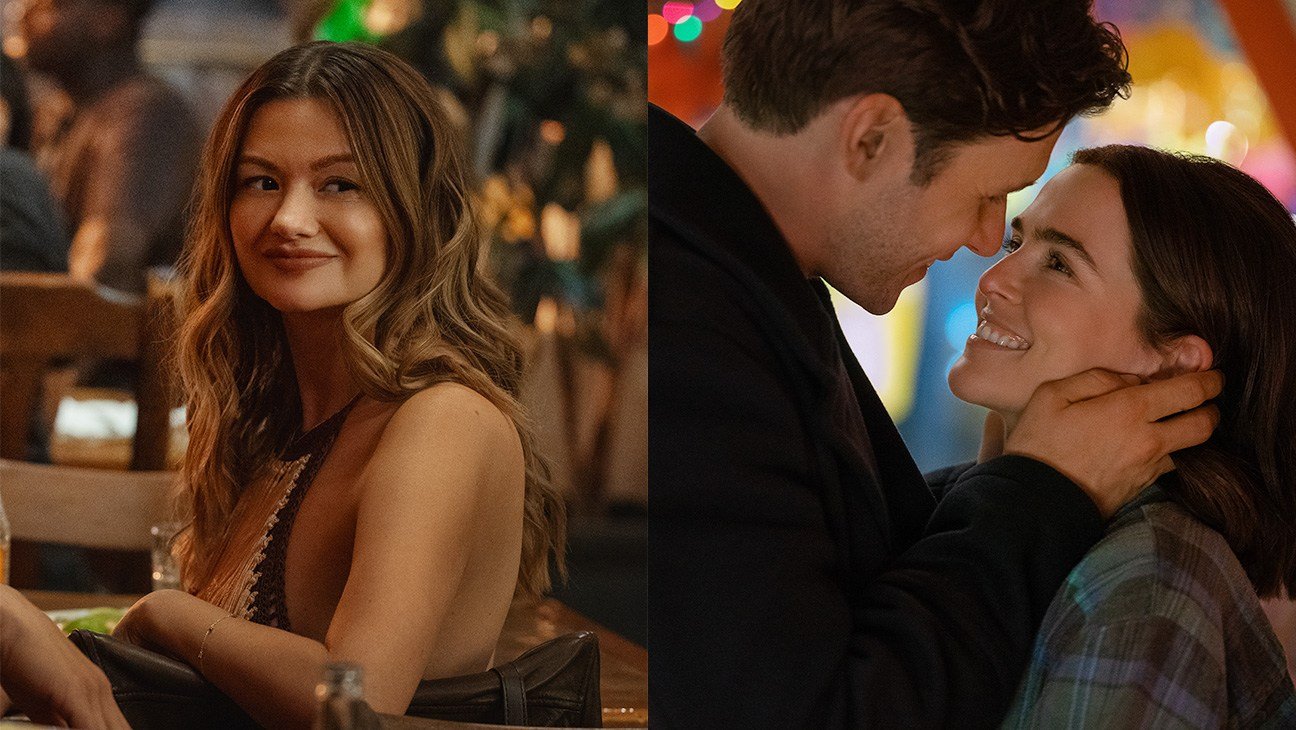
“It’s been a dream come true,” says Voicemails for Isabelledirector Leah McKendrick of her summer. In June, her film premiered on Netflix, causing a slew of social media posts showing people emotional over the romantic comedy and dancing along to Robyn’s “Dancing On My Own.”
McKendrick, who’d been working on the film for several years, always believed in the film but wasn’t expecting so many people to connect with her. Her producers were always confident the movie would defy the odds. And it did. Now, months after the film premiered, it’s still holding strong.
Despite her belief in the material, McKendrick always had a seed of doubt that people just wouldn’t get it. “There always is a little of that worry and it is a trust fall,” she tells The Hollywood Reporter on a recent Zoom. Thankfully, as evidenced by TikToks of fans crying as they watched the film, people did get it.
Below, McKendrick speaks with THR about the film’s success, how she’s dealt with the reactions and how validating it’s all been.
What has the response been like?
It’s everything that I hoped it would be and more. As you prepare to release a movie that’s so personal to you, you dare not dream this big because you want to keep the relationship to your work pure. You try not to put too much emphasis on outside reaction. If you can just find your people and your weirdos, that will be enough. This isn’t my first movie, and I feel like in my previous films, I managed to find that little core group of people, and that has always been enough for me. But to have a film that connects on this scale was a totally new experience. They tell you how hard it is to receive criticism, but nobody tells you how hard it is to receive praise.
What have people been saying?
[I got] so many DMs and so much love. Honestly, my favorite part is probably the dance going viral because that’s something that I very much manifested, it was not accidental. That was always the goal. We reverse engineered it to make it something that you could learn at home, something that was fun, something that two little girls could have made up in their bedroom. It’s actually not that easy, I will tell you. It looks easier than it is. It took me a long time to learn it.
Was there anything that surprised you of the reaction?
I didn’t know people were going to cry like that.
Really?
Yeah. I knew that I cried every time I saw it. Este [Haim] and Amanda [Yamate], my composers, were some of the first people that got brought in to see it that weren’t editing it and on set with us. I knew that it was very emotional for them. But again, I’m like, that’s because we’re all weirdos. These are the core people that are connected to the film because we’re making it together. We did do a test screening and a bunch of people were leaving the theater crying. All the videos, that trend that started, “Here’s me before watching Voicemails for Isabelle, and then here’s me after.” I did not expect that.
How did that feel?
I love to cry. I’m such a crybaby about everything. I’m an artist, so I cry when I’m writing my scripts. I cry when I’m shooting my films. I cry when I’m on screen. I’m just a crier. It seemed like America really needed to cry. The world really needed to cry. I got a lot of DMs of people saying that they had lost somebody and that they hadn’t cried about it until my movie and that the movie somehow offered some sort of release or catharsis. I don’t know what could be better than that.
This seems like a personal story. Is it validating that so many people felt the way they did about the movie?
I do believe that humans respond to specificity, even if it’s not their own experience. Humans respond to something that feels real and authentic, whether or not they can relate in their own life to that exact experience. I’ve found that as an audience member, I’m interested in people’s stories. Wherever they are in the world, whatever their upbringing is, I am fascinated by that and humans and whatever their journey is. I’m not interested in slop. I’m not interested in corporate advertising to me through a narrative filmmaking. I’m interested in human stories, so I think I learned that at some point along the line that the truer I was to myself, the truer it would feel to audiences.
But there is always that sneaking suspicion that no one is going to get it. There always is a little of that worry and it is a trust fall, I guess. The more people that join you in the fight — whether it be your producers, your studio executives, your actors, your HODs, your composers, everybody, the artists, musicians that gave me their songs — and hop on the ship, the stronger you feel. The more confident you feel. But it does just begin with me and my laptop getting weird in a corner and semi sure that no one is going to get it.
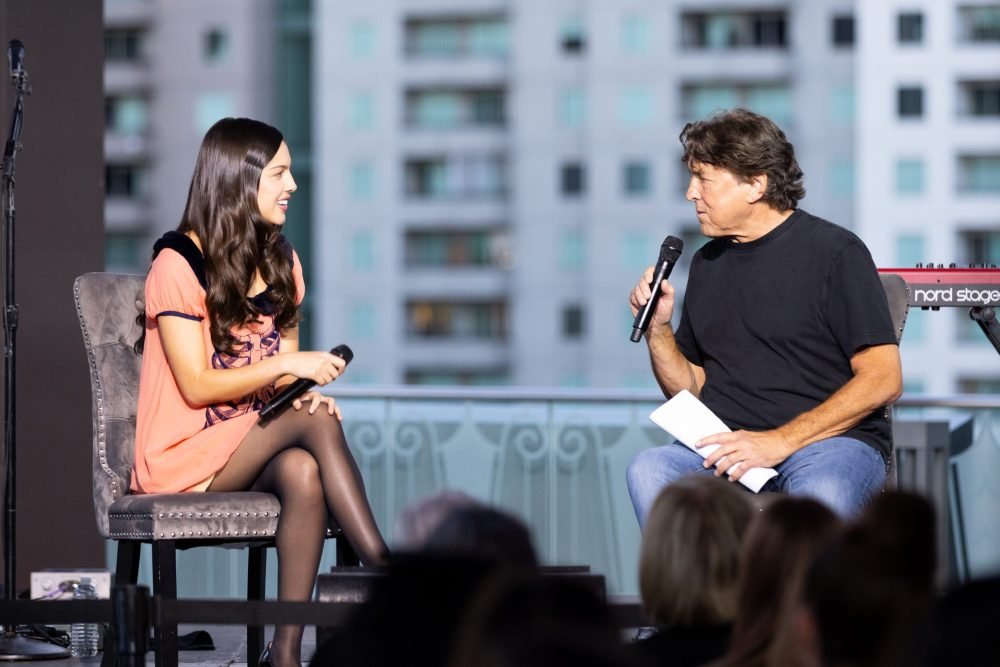
Filmmaker Cameron Crowe has biopics on the brain, being in late-stage development on his long-planned Joni Mitchell movie, the casting of which is still unknown. So he used his Q&A with Olivia Rodrigo Tuesday night at the Grammy Museum to ask her about casting thoughts — not for his own film, but for a theoretical one about her.
“In the biopic, in the kind of Broadway musical version of this album,” Crowe asked, “who plays you?”
“Well, you’re directing it,” the pop superstar answered, to audience cheers. “I don’t know who plays me… Sometimes I see a picture of Monica Barbaro, and I’m like, ‘Ooh, that’s a picture of me! Oh, no, that’s Monica.’ So, maybe her.”
“Good choice,” Crowe responded. “But then, there’s also you.”
“Yeah, I could do it,” Rodrigo responded, before passing the buck: “I mean, you’re directing it. You have to cast it.”
Even if she’s an old soul, a biopic about the 23-year-old is something that’s unlikely to happen any year or decade soon, but in the theoretical world where it could happen this early, there’s little doubt that it would be a very bankable box-office attraction. Rodrigo — who is just a few days out from having successfully organized and presided over her own music festival, Daisy Chain Fields — is easily one of the most popular figures in pop music. One of the most respected, too, with her third album, “You Seem Pretty Sad for a Girl So in Love,” being one of 2026’s best-reviewed albums, on top of its preordained bestseller status. She’s going to need some kind of fall before she’s eligible for a movie’s rise-and-fall-and-rise storyline, but right now there are no blips in sight.
The small audience that gathered on the rooftop of the Grammy Museum for a conversation and acoustic performance shared a sense they’d won the pop lottery this week, sitting among an audience of about 200, instead of among the 45,000 who’d just attended Daisy Chain Fields (which had proven a pretty tough ticket itself, being an instant sellout). In the back of the outdoor room, meanwhile, were a couple of dozen noticeably older industry-fan types, some of whom will surely be shortly casting preliminary ballots for the Grammys, where Rodrigo is expected to enjoy a high profile this year.
Olivia Rodrigo attends Olivia Rodrigo exhibit and program at Grammy Museum on September 1, 2026 in Los Angeles, California. (Photo by Alison Buck/Getty Images for The Recording Academy)
Getty Images for The Recording Academy
In her roughly half-hour performance with the acoustic guitarist and pianist from her all-female band providing the accompaniment, Rodrigo sang versions of the recent album’s “Drop Dead,” “Stupid Song,” “Maggots for Brains,” “Less” and “The Cure,” all of which — not to foster any FOMO — even more stirring than their full-band versions in Irvine three nights earlier. (Actually, “Less” didn’t get sung at Daisy Chain. With it being acknowledged by Rodrigo as the saddest song on the album, and quietest too, it’ll be interesting to see whether it gets picked up for her soon-to-launch arena tour or left out.)
Prior to that mini-set, Rodrigo sat for 33 minutes of questions from Crowe, resuming his intermittent music-journo career, and praising the singer as ” someone who really knows how to use her popularity well. She truly makes the future even better than the best of the past.”
When Crowe asked how she was feeling coming out of her big weekend, Rodrigo, who is nothing if not professsional and polite to a fault, backtracked to explain that “I run this festival called Daisy Chain Fields,” as if there was anyone on the roof who hadn’t been there or tried. “Oh my gosh, I am on cloud nine, I’m so happy,” she exulted. Asked in a card submitted from the audience for favorite memories of the day, Rodrigo said, “Oh my gosh, so many. There’s images of girls braiding each other’s hair. There were girls at the Bikini Kill set that were singing along to every single lyric of ‘Rebel Girl.’ They were like 7 years old. It was incredible.”
Inevitably she got to the charity component, where $20 million was raised for 10 organizations partially or entirely benefitting women and girls. “This one’s kind of sad but really moving. One of the organizations that Daisy Chain benefited is National Domestic Workers Alliance, which is basically nannies and house cleaners, and they try to provide services and help them have a living wage. It’s just this really beautiful organization. I was watching this video of the founder, Ai-jen Poo, talking to one of the girls who had come who’d been a caretaker for her dad since she was 15, and she said that she always felt kind of alone in that job, and it’s obviously very hard and heavy. She came to Daisy Chain and started reading about all these stories of other domestic workers that National Domestic Workers Association was working with, and she said that it made her feel less alone. I think that that was the most beautiful story, and that was exactly kind of what I was hoping would come out of Daisy Chain — that girls could come there and feel like they were a part of a community, and know that people are out there that really care about them… To make someone feel less alone in the world, that’s some goodness out there.”
Olivia Rodrigo attends Olivia Rodrigo exhibit and program at Grammy Museum on September 01, 2026 in Los Angeles, California. (Photo by Alison Buck/Getty Images for The Recording Academy)
Getty Images for The Recording Academy
Crowe mentioned Daisy Chain coming to a close with Stevie Nicks joining Rodrigo for a final duet. “It’s amazing that you guys chose ‘Landslide’ and were able to make it your own. I was lucky enough to write about them when I was just starting at Rolling Stone, and they had just finished the ‘Rumours’ album, and they were all kind of together realizing that they had put that drama from their lives into all these songs, and now it was present for everybody to know. And I think it felt like the rawness that they put into making it was now no longer theirs; it belonged to everybody. You’ve written so beautifully about your feelings, and impulses that you’ve had, and you put them out there for people in a generous way. I wonder sometimes if you think, ‘Wow, I’ve been really honest with people.’ That’s a badge of honor, really, isn’t it?”
“You know, it is kind of a weird job description, to just air so many of your personal grievances on such a large scale,” the singer responded. “But I don’t know; I just love writing songs. It is truly my therapy; I don’t know what I would do if I didn’t have that outlet. Most songs for me just come from a really personal place, and I’m just writing them to see how I feel, and because I love writing them. I only start to think about them being out in the world after the fact — that’s when it sets in.”
One tie-in for Rodrigo’s night at the museum was it being the eve of a exhibit opening Wednesday — but on view to the Tuesday night audience as a preview — dedicated solely to sets and artifacts from her music video for the song “The Cure.” (Solely for now, anyhow; the Grammy Museum is promising an expansion of the exhibit that will incorporate other aspects of her career coming some time this fall.)
“It’s my favorite song on the record. It might be my favorite song I’ve ever made,” she told the audience. “And it might be my favorite video I’ve ever made. We worked really hard on that video. We were really excited about having everything be really tactile and practical. So everything that you’ll see in the exhibit is handmade. It’s cardboard; it’s yarn. It’s made by artists and they put maybe even 1,000 hours of work into it. I think today there’s so much digital stuff, and it was really nice to have something that was really tactile. It felt really fresh and inspiring. So now you can go walk through the exhibit, which is so cool. I just walked through it for the first time, and I’m wearing my skeleton dress in honor of the little X-ray machine” that was in the hospital-themed video and is now on exhibit for a fan photo opp.
Olivia Rodrigo attends Olivia Rodrigo exhibit and program at Grammy Museum on September 01, 2026 in Los Angeles, California. (Photo by Alison Buck/Getty Images for The Recording Academy)
Getty Images for The Recording Academy
She addressed the conceptual nature of the recent album, which devotes its first half to the rise of a relationship and the second half to its fall, apparently reflecting real life circumstances during its making. “There’s this Fiona Apple quote where someone’s like, ‘Is it really hard to write these happy songs?’ And she’s like, ‘Well, yeah. If I’m having a good time, why would I stop what I’m doing and go sit down at the piano?’ Which I think is kind of true. But that was sort of the nexus of ‘You Seem Pretty Sad for a Girl So In Love’: I really wanted to challenge myself to write from a place of more positivity and a happier version of a romantic relationship. It kind of took a turn in the middle, but we’ll get to that later.” (Unfortunately for inquring minds, they did not get to that later, at least not directly.)
“I think that’s why it’s called ‘You Seem Pretty Sad for a Girl So In Love,’” she continued, “because over the course of trying to write these love songs, I very quickly realized that what made my favorite love songs so moving is that there was a bit of melancholy in them, or a bit of fragility or something broken in the love song. Like, I think the Cure does a really good job at that” — by which she meant the band, not her own song of that same name. “One of my favorite songs ever is ‘Love Song’: ‘However far away, I will always love you. However long I stay, I will always love you.’ It’s so heartbreaking because it’s kind of sad and fearful. So it was songs like that that taught me about grounding love songs in something sort of broken, and that was sort of the whole exercise of the album was me trying to toe that line.”
Rodrigo talked at length about the most ebullient song in the early part of the album, “Stupid Song.” She noted that “I wrote some of the lyrics, uh, about Steve and Miranda from ‘Sex and the City’,” but mostly it was personal.
“I wrote that song (after) I flew from London to New York, and I was really jet lagged. I woke up at 4:30 in the morning, wide awake, and I couldn’t fall asleep. And I walked around New York City. I was living in Greenwich Village at the time. I felt a little funny walking outside. Sometimes people take pictures, and I always felt a little anxious. But at 5 in the morning, I was walking around and nobody knew who I was. There was nobody on the streets, and I literally was just doing twirls on the sidewalk. I felt so free. And then this guy came up to me, and I was like, ‘Oh, he’s gonna ask for a picture.’ And he’s like, ‘You are so beautiful. Can I take you out on a date?’ And I was like, ‘No, but this is the best day ever!’ Oh my God, I was so happy. I was twirling around the sidewalks, and I went home and I sat down at my piano and I wrote that song. So I think that it has some of that element of freedom and New York vibes. It was a good feeling. I tried to bottle it.”
Yet that single was also the most extenuated song on the latest album, after the initial burst of joy. “‘Stupid Song,’ I swear to God, we were working on for a year and a half. It was such a hard one to pull off. We just kept editing production and melodies, and we didn’t finish it until maybe one week before we had to turn the album in. But I’m really happy with where it ended up, so it was worth it.”
Olivia Rodrigo and Cameron Crowe attend Olivia Rodrigo exhibit and program at Grammy Museum on September 1, 2026 in Los Angeles, California. (Photo by Alison Buck/Getty Images for The Recording Academy)
Getty Images for The Recording Academy
There were goofy moments, she recalled, explaining how she and co-writer/producer Dan Nigro do overlapping comical character voices when they get to gang vocals. On the more serious side, Rodrigo admitted her long TV resume has affected how she is able to get her most sincere vocals, counterintuitive as that may seem.
“I was a child actor when I was younger, and so I’m very used to being in front of a camera. And so sometimes when I’m not giving an emotional enough performance, Dan (Nigro) will actually just set up the camera on his phone and film me, and I’ll always do a better job, for whatever reason. Muscle memory, I guess.”
Sometimes the emotions in the songs reach demographics beyond the ones she’s imagining when the records come out. Talking again about Daisy Chain, she said, “I think just being able to play a show and see young people in the audience and hopefully provide a space where they know that their feelings and their experiences are really important is very moving to me. … But I also think it teaches me that music is the great equalizer, too. I mean, even beyond younger people in the audience, it teaches me that we’re so much more alike than we are different. Even with a song like ‘Driver’s License,’ to this day I’ll meet a 50-year-old dad from Omaha, Nebraska who’s like, ‘When I went through my divorce, that’s exactly how I felt.’ And I’m like, ‘Whoa. Our lives are so different!’ But at our core we’re all the same and we all experience these feelings of insecurity and heartbreak and love, and I think music is the most distilled form of that.”
Olivia Rodrigo speaks on stage during Olivia Rodrigo exhibit and program at Grammy Museum on September 1, 2026 in Los Angeles, California. (Photo by Alison Buck/Getty Images for The Recording Academy)
Getty Images for The Recording Academy
Moving on to the performance segment, Rodrigo explained where she got the title for “Maggots for Brains.” “The idea for this song (came when) I was walking through a record shop and I saw a magazine that was called Maggot Brain. Interesting choice of words, ‘maggot brain.’ And so I wrote it down in my phone and when it came time to write the song, it came to memory.” Left unknown was whether she was made aware Maggot Brain is Jack White’s magazine, or that it took its title from a famous 1970s Funkadelic instrumental, but in any case, it’s a breakthrough to have the insects finally inspire actual lyrics.
The delicate “Less” may have been the high point of her Grammy Museum set, whether or not there’s an attempt to try to have it fulfill that role again in 18,000-seaters when her tour starts Sept. 25 in Connecticut. “This is known within my inner circle as the saddest song on the record,” she acknowledged. “Making this album, I was really interested in the gray areas of love. Not only the breakup song and love song, but the stuff that’s in between them. So this song was kind of about that, and it’s about how you could be breaking up with someone but still have really fond feelings for them at the end of the day and still love them. So, it’s a pretty sad one.”
Olivia Rodrigo performs on stage during Olivia Rodrigo exhibit and program at Grammy Museum on September 1, 2026 in Los Angeles, California. (Photo by Alison Buck/Getty Images for The Recording Academy)
Getty Images for The Recording Academy
Regardless of how many cameras were rolling, her actorly intensity was ramped up for a seemingly deeply felt performance of “The Cure” to wrap up the evening — including a high note added to the song’s climax that hasn’t been heard in previous readings of the song. And, although there’s been some speculation about which hit Rodrigo might submit for the Grammys, her talk about this song made it sound pretty certain it’s what she wants to emphasize.
“Like I was saying before, it’s my favorite song on the record, so I saved it for last for you guys — I just love this song so much,” she said. “It feels so me, and I think it’s a thesis statement of ‘You Seem Pretty Sad for a Girl So in Love.’ It’s basically about this realization that I had that none of these external factors will fix problems that you have within, as cheesy as that sounds. You think that being in a perfect relationship or getting a new job or falling in love for the first time, it’ll suddenly make you feel better about yourself, and the song is about the pretty solemn realization that that is not true. And in fact, sometimes I think falling in love can actually make these issues in yourself even clearer to you, which is a really kind of curious, interesting part about falling in love.”
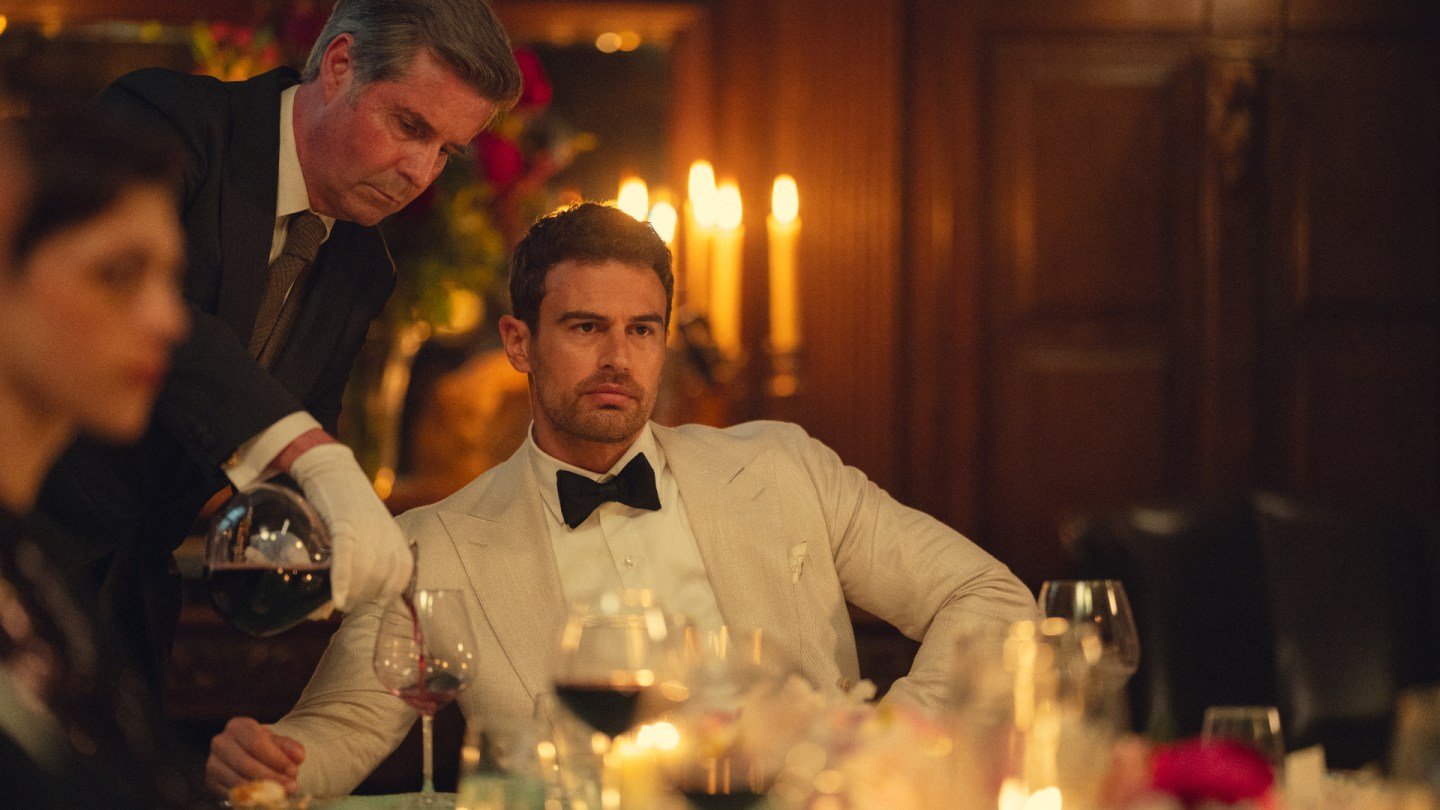
The Gentlemen star Theo James is throwing cold water on reports of Meghan Markle joining the Netflix crime drama’s cast — yet is still leaving the door open to the possibility.
After a flurry of speculative stories that Markle was in talks for the show’s third season amid her move with Prince Harry back to the U.K., James dismissed the idea of the former Suits star appearing in the series.
In an interview with Town & Country, James was asked about “a certain ex-royal” joining the show.
“Yes, Fergie is joining,” James quipped. “She’ll be playing my love interest.”
But he then added, “No, I think [reports of Markle joining the show] was mainly a lot of hot air.”
“At the moment, we’re just trying to get as many eyes on season two, and then season three will happen soon,” the actor continued.
Then James did the thing that keeps such speculation kicking — he left himself some wiggle room.
“In terms of the minutiae, I mean, it’s still very much up in the air,” he added.
That “up in the air” phrase echoes the cryptic response Netflix’s scripted chief in the U.K., Manda Levin, gave when asked about the Markle casting rumors at the Edinburgh TV Festival last month.
“All bets are off,” she said.
Drama, uncertainty and conflicting media reports… in a story involving Meghan Markle? Yes, we’re all just as surprised as you are.
In the meantime, the Guy Ritchie series is returning for its second season on Sept. 3, and has certainly received a massive boost in publicity thanks to the will-she-or-won’t-she of it all.
The new season’s official description: “It’s been one year since Eddie and Susie (Kaya Scodelario) joined forces to work together in Bobby’s (Ray Winstone) criminal empire overseas. As they drive to expand their enterprise, the decisions Bobby is making seem to be increasingly unsound. Now Eddie and Susie must decide whether to take action or risk losing it all, but unfettered ambition never ends well.”
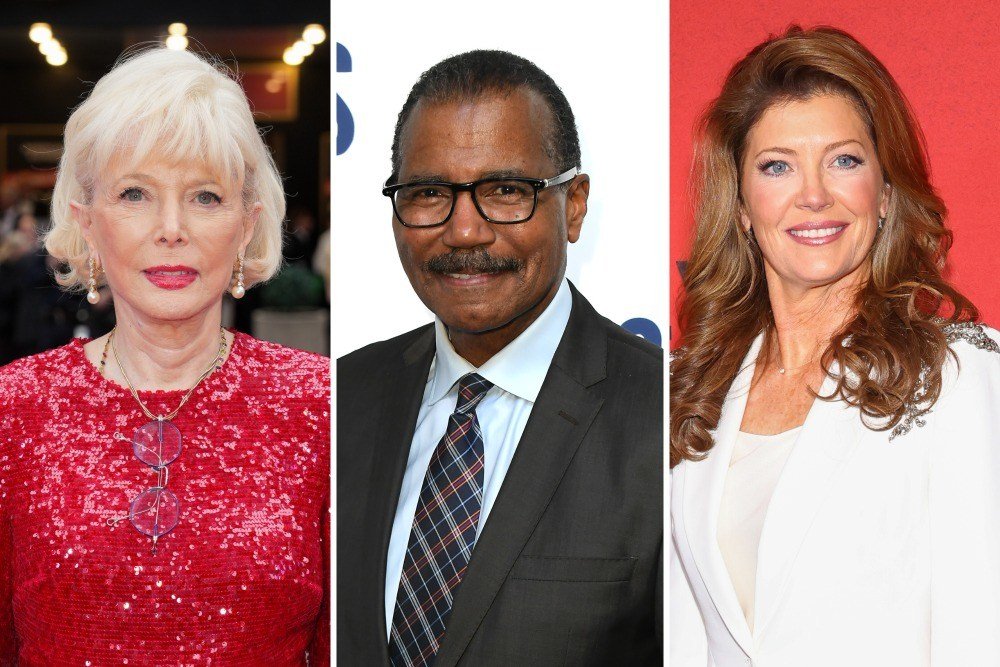
To be sure, “60 Minutes” has tangled with corporate attorneys, politicians and other challenging subjects. But the program has never had to grapple with its own internal processes being undermined from within. When Weiss cut former executive producer Tanya Simon, executive editor Draggan Mahialvich, and Sharyn Alfoni and Cecelia Vega (with Scott Pelley exiled later), she did so at a critical moment (Anderson Cooper in February announced he would step away from the program after nearly two decades, marking another reduction in veteran staff). Most of the show’s personalities try to have a produced story on an evergreen topic like health, science or culture in the can before taking a vacation in July. This year, according to people familiar with the program, much of that work wasn’t approved, and therefore was not filed in timely fashion.
Now Nick Bilton, the new executive producer, could be left with less room to maneuver as “60 Minutes” prepares for its 59th season, slated to start Sunday, September 13 — a few weeks earlier than the norm.
“Generally, the show has about a dozen or so evergreens in the bank by the season premiere. The expectation is, every producer should have one piece produced — one piece approved and in the bank — with a second one in production by the season premiere in September,” says one former longtime “60 Minutes” producer. Those stories will serve the show well as it steers into a new cycle. “The most critical and most demanding part of the year is from the end of August until the end of March, basically the NFL season into March Madness. It’s nonstop. Three new, fully vetted, 13-minute pieces each — minidocumentaries, really — week after week for months. The math is crushing. The deadlines are punishing.”
The start of the new “60” season will serve as a real-time test. Segments from the newsmagazine that have had time to marinate are proven to be appetizing. But what of stuff that is served, like most TV-news programming, fresher from the grill?
Bilton has approved more than three dozen stories, according to a person familiar with the matter, with each in various stages of production, which include research, shooting, writing and more. This person says more than a dozen stories are in the editing process, either being screened or being prepared for screening.. Bilton wants to continue and augment the show’s tradition of investigative reporting, this person says, and also sees an opportunity for “60” to weigh in heavily on the effects of AI on the world and all facets of society, much in the way “60 Minutes” featured coverage of the Vietnam War or the tobacco industry in decades past. More decisions tied to senior leadership are expected to be unveiled in days to come.
Still, “60 Minutes” has its own way of ticking, according to people familiar with the show, and it’s not easy to get into gear.
A lot is at stake for Weiss, Bilton, CBS News and corporate overseers at Paramount Skydance as the show moves toward what may be its most unusual season yet. While Weiss and others at CBS News think “60 Minutes” needs to do more to appeal to digital audiences and employs too many producers working on too few stories, the simple fact of the matter is that the program is the jewel of the CBS network. “This is the biggest challenge that ’60 Minutes’ faces,” says Ben Bogardus, chairman of the journalism department at Quinnipiac University in Hamden, CT. “The producers need to find a way to reach younger viewers where and when they consume news and information, but at the same time not turn away older viewers who still make up most of the show’s audience.”
That crowd helps bring ad dollars to Paramount’s coffers. “60 Minutes” snared $67.2 million in ad revenue in 2025, according to Guideline, a tracker of ad spending. And the audience for the program rose 9% during its most recent season — no small feat in the streaming era.
Also of note: “60 Minutes” serves as a conduit that brings audiences from CBS’ Sunday NFL showcase into its primetime lineup. Any decrease in ratings this season would undermine the luster of NFL games at a time when the league is already holding preliminary discussions with Paramount about the possibility of renewing the company’s current rights deal.
That’s a lot to put in the hands of less experienced personnel. The program has been holding talks with new producer candidates during the summer, even as correspondents are supposed to be filing new stories — all adding elements of potential disorder to the show’s off-season operations. Bilton is relying heavily on Maria Gavrilovic, a longtime producer who worked extensively with Pelley, and who has been elevated to a senior role, as well as dozens of longtime staffers familiar with the ways of the show, says the person familiar with the show’s work over the summer. He is also working to find ways to make “60 Minutes” more relevant to a generation of news aficionados who might be more interested in podcasts and newsletters, this person says, and is examining ways to update internal proceses. Viewers should not see shocking changes to the look and feel of the program, this person says, but may notice what were described as “gentle” tweaks to its presence on air.
CBS News declined to make producers or executives available for comment.
The looming season debut is just the latest in what has been a surreal string of events surrounding the newsmagazine. The show was turned into a bargaining chip between Paramount’s previous managers and the Trump administration, which leveraged a $16 million settlement to President Donald Trump to end what had been viewed in many legal circles as a flimsy lawsuit tied to a pre-Election Day interview between Bill Whitaker, a “60 Minutes” correspondent, and former U.S. Vice President Kamala Harris. Paramount made the deal as it sought to complete its sale to Skydance.
As a result, two senior CBS News executives — Bill Owens, the former executive producer of “60 Minutes,” and Wendy McMahon, the former CEO of CBS News, local stations and syndication — suggested in remarks that they could no longer push back against corporate mandates they felt would weaken the newsroom. Both left CBS News last year.
There is a lot of skepticism about how well the staff can proceed in weeks to come. When former “60 Minutes” executive producers like Jeff Fager or Owens “had to crash a story in the middle of the season, it took everything they had to keep the show on the rails,” says one person familiar with the workings of the show. “I have no idea how this team is equipped to do something like that.”
Having a broad array of stories at the ready can only help. “Every Sunday, you want a mix — a hard-hitting lead, an international story, a lighter feature. The idea is, if some viewers aren’t interested in the piece about climate change or the war in Ukraine, they’ll stick around for the profile of Christopher Nolan or Lady Gaga. That kind of variety only works if you’ve got a bank to draw from,” says the former producer. Besides, there can often be an emergency need for a back-up story, particularly if a subject backs out of a timely report or a story that was supposed to be ready requires last-minute changes. “It doesn’t happen every week, but it’s not a hypothetical either.”
For decades, “60 Minutes” personnel have been steeped in the ways of the program. Getting a segment on air “is a whole gauntlet,” the former producer recalls, involving meticulous research and rounds of scripting. Stories also go through multiple screenings with the staff. “Sometimes it gets heated — loud arguments, especially in the old days, people practically ready to throw a phone across the room. But everyone wants the same thing in the end: making the story better. And that just takes time,” the former producer says. “It takes time to get there.”
The off-season interruptions will take a toll, says the former producer. “With thin experience at the top and no real bank of stories to fall back on, the staff is going to have to work like hell just to get the show on the air every week. And they’ll be doing it in an atmosphere where a lot of people still feel underappreciated and still haven’t gotten over how badly Tanya and Draggan were treated,” this person says. “The producers’ professionalism will carry them forward. But that’s a lot to ask of people.”
Other media moguls have sought to update beloved journalism properties by weaning them away from long-held traditions. After Rupert Murodch’s News Corp. snatched The Wall Street Journal away from its longtime owners, the Bancroft family, in 2008, Robert Thomson, named to lead the paper, famously complained that its signature front-page “leders” took too long to produce. Many of the pieces, Thomson joked, had “the gestation of a llama.” The Wall Street Journal of 2026 features a wider array shorter stories along with snappier headlines, but in some cases, critics would argue, less depth.
The debate may be moot. News Corp. in August said its Dow Jones segment, which contains The Journal, saw revenue increase by 7%, driven by circulation, subscriptions and advertising.
But discussion continues. Both Stahl and Whitaker at a recent party held for Tanya Simon, the former executive producer, were heard acknowledging their trepidation about staying with the show, according to people who were present at the event. Even so, Whitaker, whose remarks were previously reported by the media newsletter Status, indicated he intended to do his best to stick to “60” traditions. And Stahl has been hard at work, according to one of the people familiar with the show.
Some news aficionados may watch new episodes to see how their efforts hold up. “Initially, the television versions of stories will probably look more or less the same, in order to avoid alienating the program’s audience with jarring changes,” says Bogardus. “But viewers may start to notice an increased presence on social media, with vertical-video versions of stories that play well on Instagram and TikTok, audio and video podcast versions of interviews that are longer and less edited than the ones used in the TV broadcasts, more on-demand streaming options online and on YouTube, and stories told about topics that interest a younger audience, instead of the generally older demographic that is still loyal to the over-the-air version of the show.”
The facts are in: At summer’s end, “60 Minutes” has no time left for immediate self-improvement, and a season of shows that need to be filled.
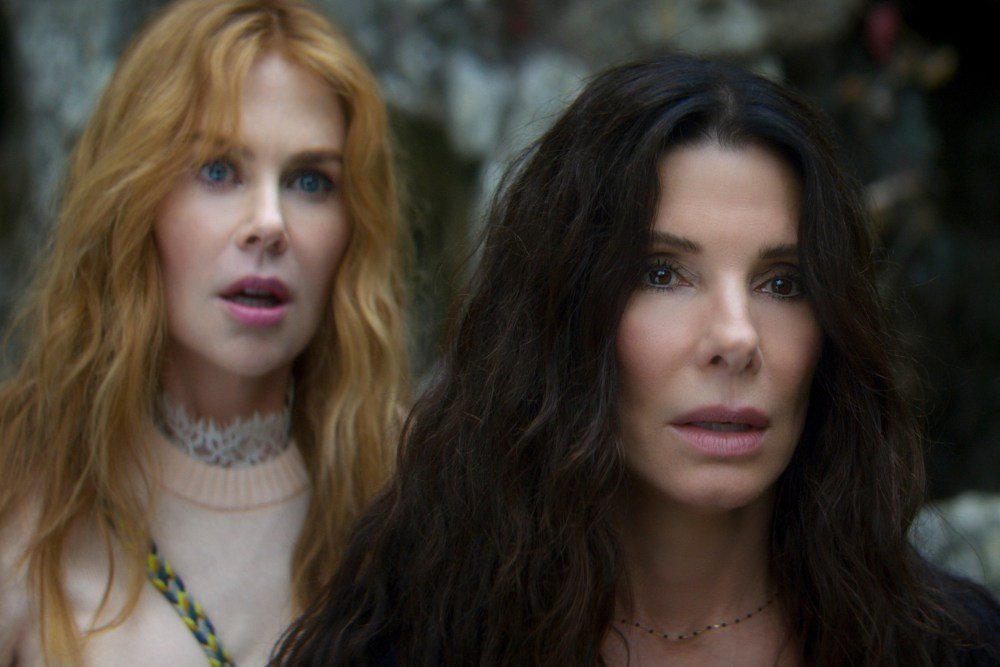
Evan Rachel Wood appeared to shade her original “Practical Magic” co-stars Nicole Kidman and Sandra Bullock by revealing in an Instagram story (via Entertainment Weekly) that no one involved in the 1998 cult classic reached out to her when she was not invited back to return for this year’s “Practical Magic 2.” Wood starred as Bullock’s daughter Kylie in the original. Joey King takes over the role in the sequel and, according to Wood, was the only person to reach out.
“I really appreciated Joey King reaching out to me because no one who worked on the original film did. She’s a sweetheart,” Wood shared on Instagram.
King told The Hollywood Reporter at the “Practical Magic 2” premiere in Los Angeles that she had a “lovely” conversation with Wood about taking over her original role, adding: “I just was so appreciative of the support that she showed to me and to the rest of the cast. She is so talented and so beautiful and she made this role so special when she was a young girl. I feel so grateful to be able to play Kylie at this age but I love Evan so much and I’m so appreciative of her kind words and the exchange that her and I shared.”
In the 1998 movie, Wood and Alexandra Artrip played Kylie and Antonia Owens, the daughters of Sandra Bullock’s Sally. In the sequel, Artrip is replaced by “Game of Thrones” favorite Maisie Williams. The sequel is adapted from “The Book of Magic” by Alice Hoffman, a sequel to her own novel “Practical Magic,” which inspired the first film.
“Practical Magic 2” is directed by Susanne Bier, who previously worked with Kidman on the HBO limited series “The Undoing.” The filmmaker spoke to Variety at the sequel’s Los Angeles premiere (see video below) about not asking Wood to reprise the role of Kylie.
“It was not a personal thing,” Bier said. “The kids in the story are right out of college, so it wasn’t really a question. We had to recast.”
Wood told “Entertainment Tonight” earlier this summer that it was “sad” not to be asked back for “Practical Magic 2” because “we bonded with that cast so much as children, and so to miss out on the opportunity to look at that cast and look at that house as an adult and see the history in our eyes, it’s something that can’t be faked. I’m sad that doesn’t get to exist, especially for the fans.”
“I read the book and it seems like they’re not following the book,” Wood added. “I think in the book it would have made sense to bring me back; I think in the way they’re redoing it and approaching it, it didn’t make sense.”
Last year on Instagram, Wood revealed that she “offered my services” to appear in “Practical Magic 2,” adding: “Even if it was one scene or one line. I was told they are re-casting. I am sorry to disappoint the fans. It was not in my control or my choice. I would have happily rejoined my sisters.”
“Practical Magic 2” opens in theaters Sept. 10 from Warner Bros.
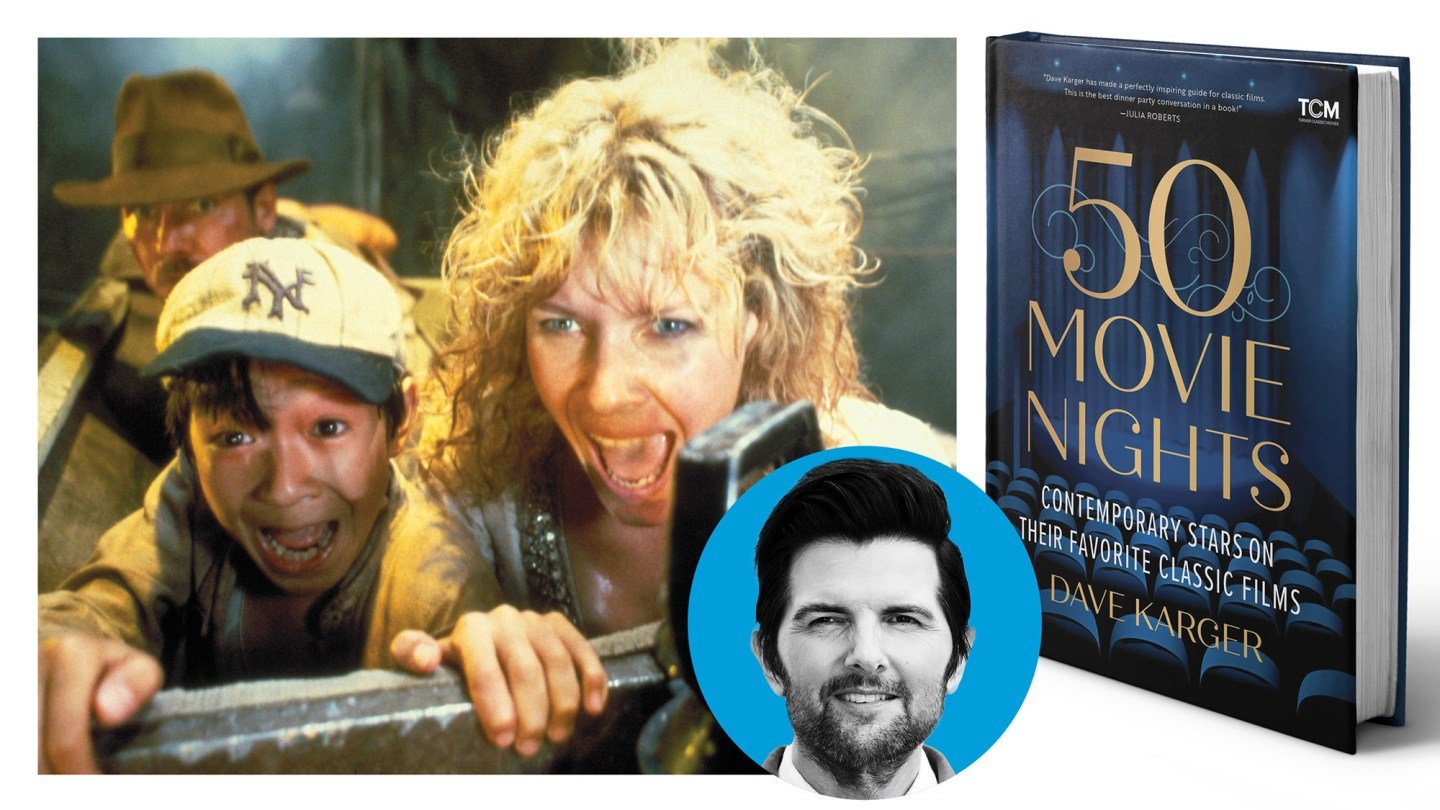
Matthew Broderick picked Dog Day Afternoon, Sarah Jessica Parker went with The Way We Were. And Adam Scott? For some cockamamie reason, he chose Indiana Jones and the Temple of Doom. Yes, the one with the chilled monkey brains.
If Dave Karger’s new book, 50 Movie Nights, proves anything, it’s that Hollywood stars can be just as head-scratchingly inexplicable in their favorite movie choices as the rest of us.
“It’s the movie that speaks to you, that you feel a connection to, not necessarily the best movie,” the TCM host explains the premise of his latest tome, a collection of interviews in which 50 stars pick the one classic film that means the most to them. Of course, many made unassailable choices. Scarlett Johansson picked Easter Parade. Andy Cohen went with Almost Famous.
Others, though…
“There were several choices that took me by surprise,” says Karger, whose previous book, 50 Oscar Nights, had stars reminiscing about their Academy Award wins. “I thought Laura Linney was going to choose A Woman Under the Influence or something like that. But she chose Slap Shot, a very profane ’70s ice hockey movie with Paul Newman.”
Karger’s own choice seems almost as random: Children of a Lesser God. “Do I think it’s the best movie of all time? No,” he admits. “But it’s a movie that speaks to me because of when I saw it and how I related to it.”
Which still doesn’t explain Adam Scott and the monkey brains.
***
Also in Rambling Reporter:
Diane Warren finally won something — a silent auction to adopt a runaway swine that somehow ended up stranded in West Hollywood; Anna Wintour‘s latest Met Gala mess.
This story appeared in the Sept. 2 issue of The Hollywood Reporter magazine. Click here to subscribe.
Just weeks ago, he was homeless, wandering aimlessly through the mean streets of West Hollywood. Then, somebody pointed a camera at him and he became an overnight sensation, with hundreds of thousands of fans watching his videos. Now he lives on a 7-acre ranch in Malibu, where he’s fed gourmet salads, enjoys the company of a colorful new social circle and has even landed an invite to the Oscars.
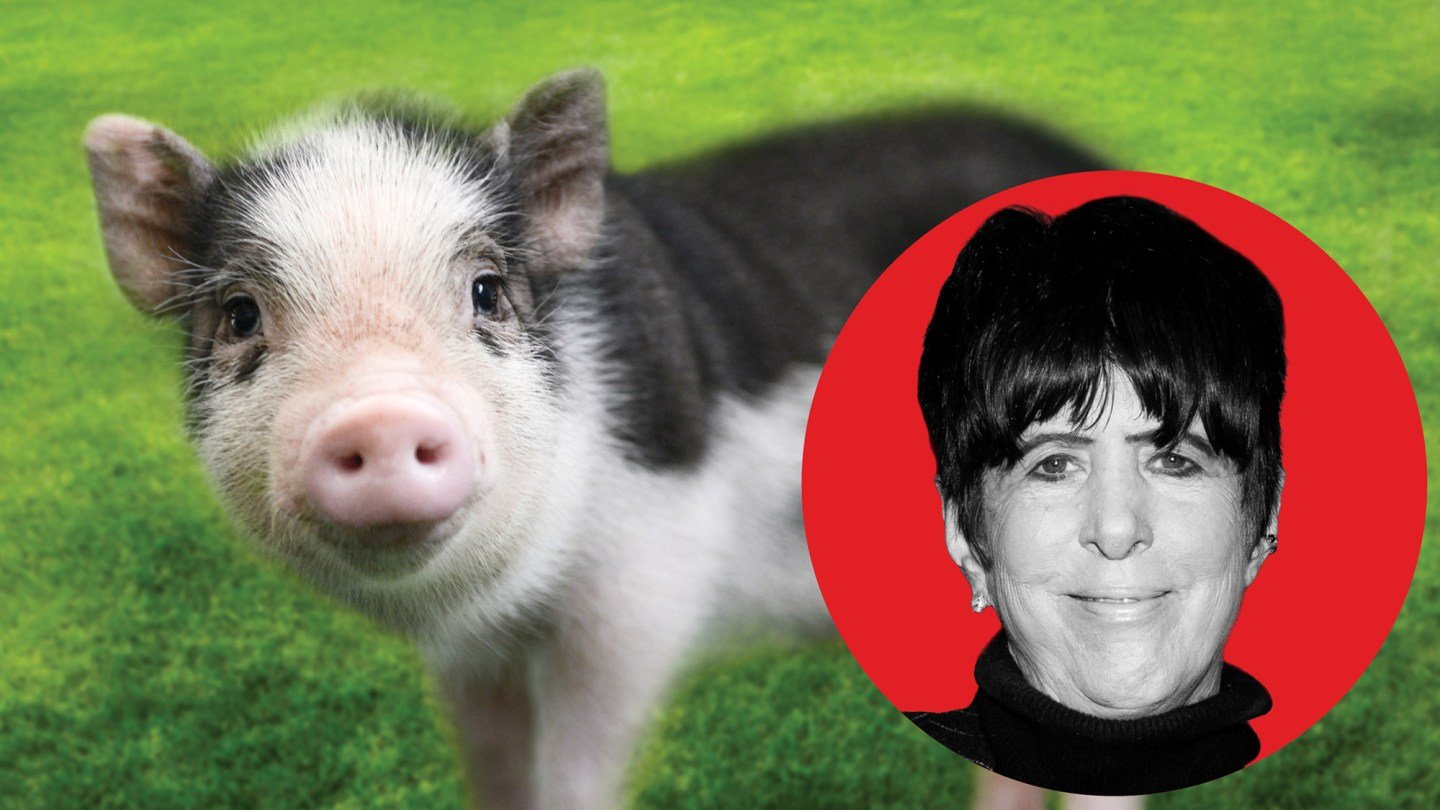
Just another typical Hollywood success story — except this one happens to be about a 17-pound baby pig that got adopted by Diane Warren.
Last month, when video of a runaway piglet tearing down Hayworth Avenue and through the alleys near Canter’s Deli hit social media, the internet went nuts. One TikTok of the scrappy piggy dodging cars and darting between would-be animal rescuers’ legs racked up nearly a half million views.
Ultimately, Wilbur — as the internet named him — was taken into custody at the West Los Angeles Animal Shelter. Nobody came to claim him, so five days later, on Aug. 20, the shelter held a silent auction. All prospective adopters were required to do was show up in person with a credit card, a winning bid and proof of a legally permissible place to keep a barnyard animal.
Four people turned up, including one sent by a certain frequently Oscar-nominated songwriter with a history for rescuing animals. “A few years back, I saved a cow that escaped from a slaughterhouse, so people kept sending me the footage of Wilbur,” Warren says. “So, I told my friend Marcia Zwilling — who runs my rescue ranch — ‘We’ve got to save Wilbur.’ And she went and got him.”
Warren won’t say how much she paid, but it’s clear no expense is being spared on Wilbur’s pampered new lifestyle on Warren’s Malibu spread, which he shares with a slew of goats, donkeys, ducks and other creatures.
“He’s having a great time,” Warren says. “He’s like a celebrity. He eats better than I do. Maybe he’ll come to the Academy Awards with me.” Not that she’s expecting to win any.
“I’ve lost 17 Oscars,” she notes. “But I won a pig.”
Starz released the trailer for “S.W.A.T. Exiles” series, which premieres Sept. 25. New episodes air weekly on Fridays.
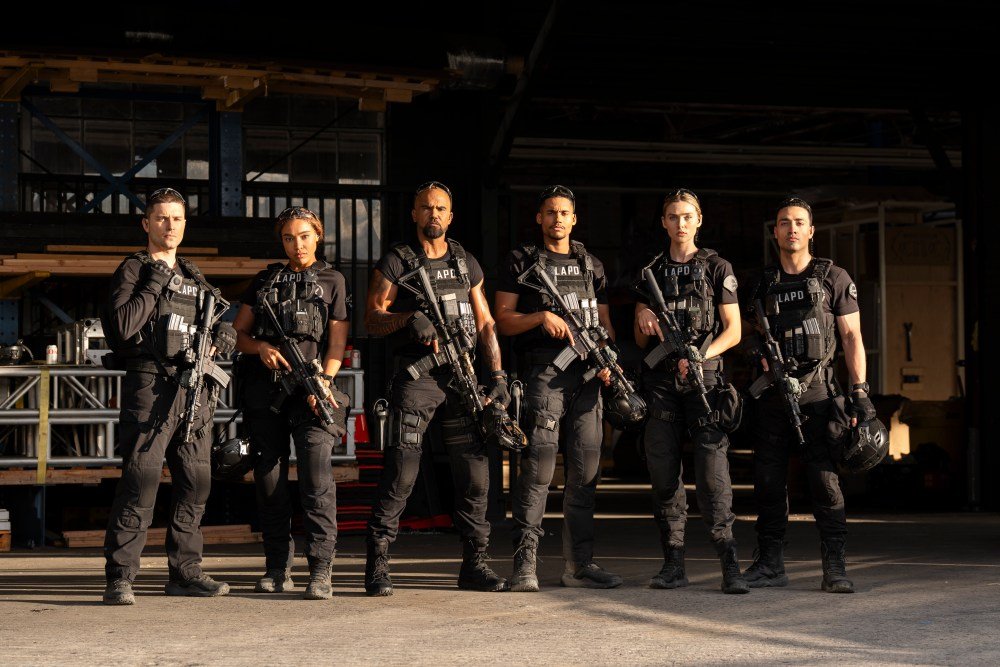
A spin-off of the hit show “S.W.A.T.,” the new series sees Shemar Moore reprise his role as LAPD S.W.A.T. Sergeant Daniel “Hondo” Harrelson. After a botched raid ends in a death, Hondo must walk away. His old commanding officer, Robert Hicks (Patrick St. Esprit), offers him a chance to create a new S.W.A.T. unit built from LA’s most talented rejects.
Joining the squad of rejects are gun-show influencer Sammy Bishop (Lucy Barrett), socially awkward tactical savant Ethan Cole (Freddy Miyares), the guarded Cassidy Reed (Zyra Gorecki), wildcard Jude Callan (Ronen Rubinstein) and ambitious Malik Anderson (Adain Bradley). Original cast members Jay Harrington and David Lim also make their return.
As the Exiles begin taking on volatile threats in Los Angeles, Hondo begins to uncover a threat from within: someone inside the unit has been feeding information to outside interests.
The “S.W.A.T.” reboot premiered on CBS in 2017. The show was originally canceled after its sixth season, but eventually brought back for what was meant to be its seventh and final season. The show returned for an eighth season and was canceled again.
After that, Sony Pictures TV decided to commission the spinoff, “S.W.A.T. Exiles,” without a network partner — but with the assumption that the show’s fan base would eventually line up international partners.
In the U.S. that eventually meant Starz, where it joins the pay cabler’s 2026 programming slate, which also features the recently debuted “Fightland,” the “Power” franchise and the third season of “P-Valley,” which premieres later this year.
Jason Ning serves as showrunner and executive producer, alongside Moore, Neal H. Moritz, Pavun Shetty, James Scura and Jon Cowan.
If anybody out there in Hollywood happens to be working on a Devil Wears Prada 3 script, have we got a plotline for you.
It’s got an imperious but struggling magazine editrix. A billionaire fashion heiress. A disgraced British designer attempting an outlandish comeback. And, best of all, a wildly extravagant ballroom scene bound to go spectacularly wrong.
The Miranda Priestly character, of course, is Condé Nast creative director Anna Wintour, who lately seems to be stepping on one rake after another as she stumbles toward next year’s Met Gala. After last May’s fiasco — sanitation workers are still scraping away those “Boycott the Bezos Met Gala” posters anti-Amazon protesters plastered around midtown and the Upper East Side — Wintour, 76, promised to scale things back: a smaller guest list, less ostentatious excess and, ideally, fewer demonstrators lunging at attendees on the red carpet.
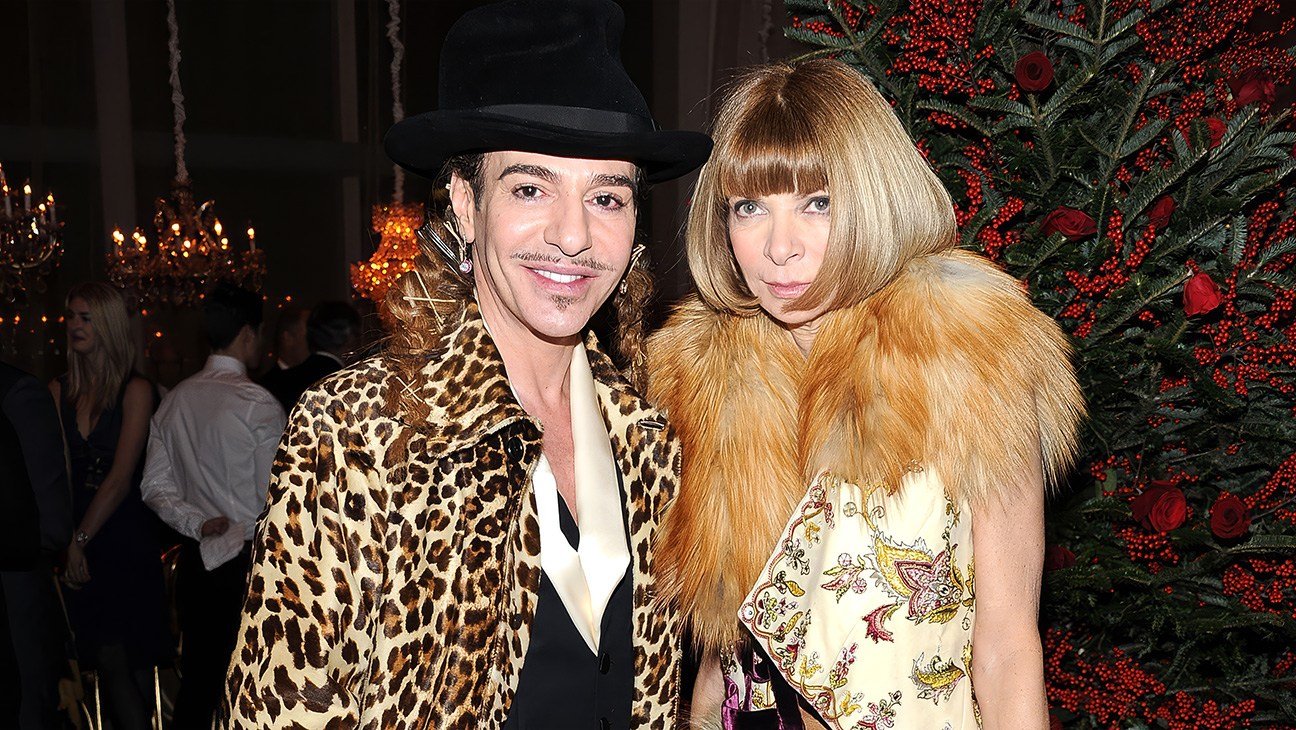
Then, bafflingly, she went and picked John Galliano as the 2027 Gala’s centerpiece. You know, the flamboyant 65-year-old designer who made Dior the most histrionic house in fashion — in 2004, he sent models down a runway dressed as towering Egyptian pharaohs — until he got fired and canceled in 2011 for an antisemitic and racist tirade in a Paris café so vile, even France considered it a hate crime.
Big shocker, Wintour’s pick did not last long. On Aug. 31, after mounting pressure from Jewish groups, Met donors and New York politicians, Galliano announced on Instagram that “with great sadness” he had decided it was “best” for the Costume Institute if his celebration “did not take place at this time.”
But here’s where things get even stickier for Wintour. Galliano’s current gig is at Zara, the fast-fashion behemoth where he’s been charged with “reauthoring” some of the brand’s signature looks. And while nothing has been announced, well-placed fashion sources tell Rambling that Zara was lining up to be one of the financial sponsors for next year’s ball. (Amazon, unsurprisingly, is skipping 2027.)
Zara hasn’t responded to THR‘s request for comment — Gala sponsorships traditionally aren’t announced until late fall — but there are breadcrumbs. For one thing, there’s that conspicuous six-page feature on Zara chair Marta Ortega Pérez — the 42-year-old daughter of 90-year-old founder Amancio Ortega — in Vogue‘s September issue. Granted, Pérez isn’t an unworthy profile subject, but six pages is an awful lot of Vogue for a fashion executive — a few Annie Leibovitz portraits shy of first-lady treatment.
If Zara really was planning to help pay for next year’s Gala, it may be another rake in Wintour’s face. It’s hard to imagine the company sticking around after its headline designer has been booted from the party. So who will be writing the checks for Gala 2027? Will there even be one?
All the Met will say is that plans “will be announced at a later date.”
This story appeared in the Sept. 2 issue of The Hollywood Reporter magazine. Click here to subscribe.