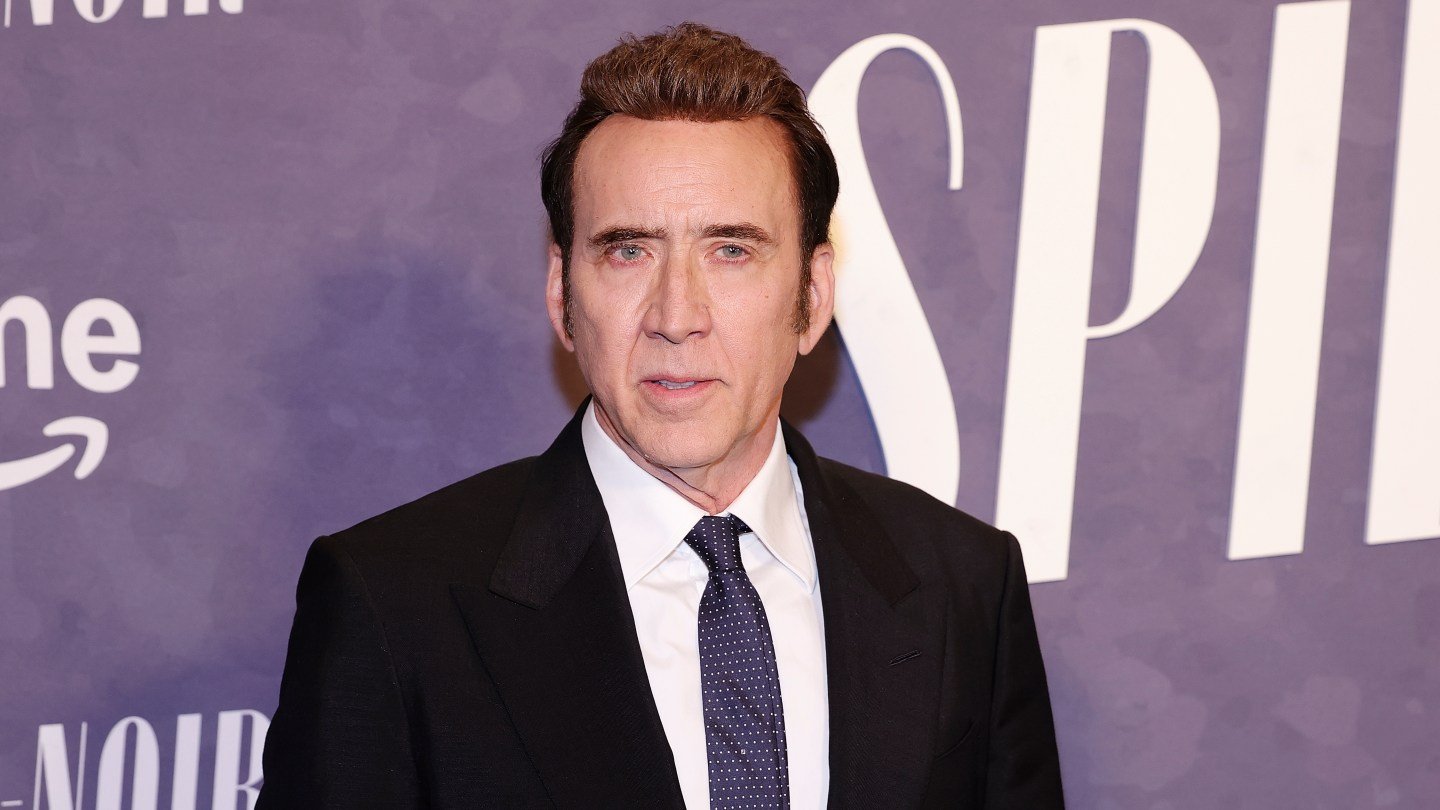
An oceanfront mansion in Malibu, reportedly linked to Oscar-winning actor Nicolas Cage, was damaged by a massive sinkhole on Tuesday morning amid coastal erosion.
Fire officials told ABC7 that crews were dispatched to the home in the 31600 block of Sea Level Drive at around 5:45 a.m. following reports of a suspected gas main break. At the scene, the driveway of Cage’s home was collapsed after erosion appeared to have washed away the ground beneath it.
The erosion broke a water line and a gas line, authorities told ABC7, leading the Southern California Gas Company to shut off the gas Tuesday morning.
“The City’s Building Safety Division and Southern California Gas Company are working to assess the situation. At this time, the City red tagged five homes (prohibited entry). The City’s Building Safety Division and Southern California Gas Company will continue to assess the situation to determine safety concerns for the surrounding area, and will provide updates as they become available,” the City of Malibu wrote on social media Tuesday.
An evacuation order was later issued by officials for the affected properties.
This aerial view shows a sinkhole on a street and driveway of a seaside home affected by large swells produced by Hurricane Marie in Malibu on Sept. 8, 2026.
David Swanson / AFP via Getty Images
Over the weekend, the remnants of Hurricane Marie have been impacting Southern California, bringing high surf and flooding to the coast.
The Hollywood Reporter reached out to Cage’s rep but did not hear back at the time of publication.
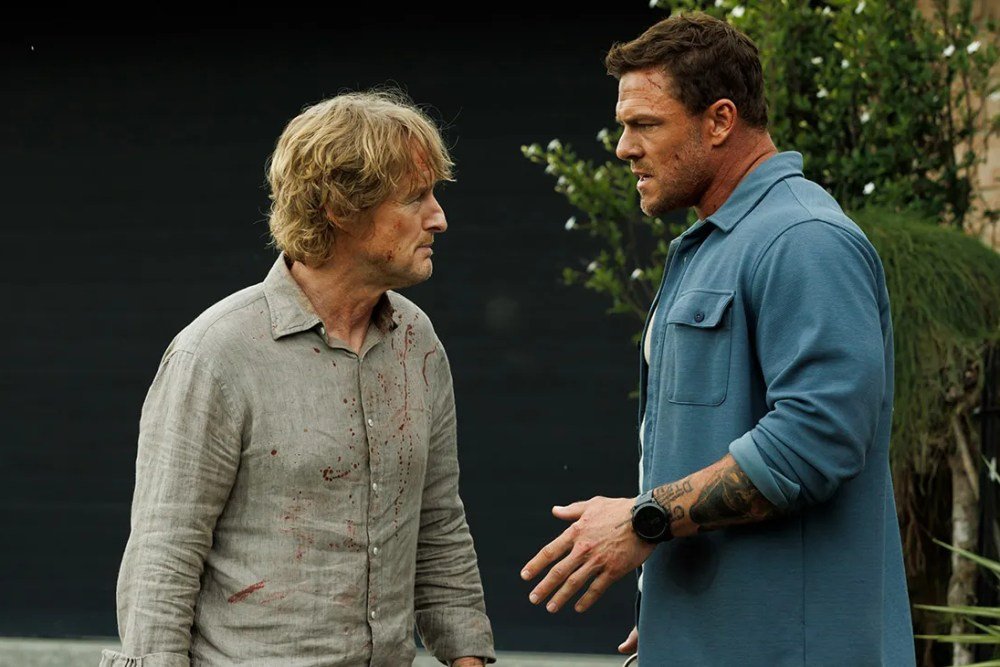
Are movie stars okay? Between the recent explosion of celebrity spokesperson roles (such as Ben Affleck finally doing Aflac commercials) and a steady growth in star-driven straight-to-streaming fare, actors the general public would consider “successful” seem to be hustling for work — any work — harder than ever. Owen Wilson, for example, has recently appeared in a big-budget Disney movie (“Haunted Mansion”), played a high-profile character within the Marvel Cinematic Universe, and is soon set to return to his scene-stealing role in the “Fockers” franchise. So why is he in Angel Studios’ “Runner?”
Truth be told, Scott Waugh’s action thriller, co-starring Alan Ritchson (“Reacher”), is actually pretty entertaining, with the good sense to clock in at an efficient 98 minutes. But there’s something dispiriting about the middle-tier existence of a skillful meat-and-potatoes crowdpleaser like this, which is neither polished enough to hold up against proper studio fare, nor scrappy enough to thrive as Roger Corman-style exploitation. Supported by Waugh’s muscular direction, Wilson and Ritchson work well together in a chase film whose thinly sketched premise barely sustains its wall-to-wall action sequences.
Ritchson plays Hank Malone, a “big American war hero” turned courier in Brisbane, Australia who just collected his AA coin for a year of sobriety and is teaching himself French in his late daughter’s honor. When his employer gives him a short-term job, picking up a donated liver being transported from the U.S., Hank gets more than he bargained for when the organ shows up under the arm of Ben Bishop (Wilson), a chatty messenger determined to accompany it to its final destination.
With a limited amount of time before the organ loses its viability, Ben directs Hank to drive directly to a Gold Coast hospital about an hour away, where anxious mother Kate (Leila George) awaits the liver for her sick daughter Ellie (Scarlett Crabtree). But after spotting a motorcade of black-clad vehicles creeping through city traffic after their car, Hank gathers that another party that considers the organ valuable. What he soon discovers is that the other party is led by Damian Zaldívar (Rodrigo Santoro), the ruthless son of a drug lord (Cecilia Toussaint) who also needs the liver to stay alive, and has instructed Damian to kill anyone who interferes with him obtaining it.
Starring and co-produced by Ritchson, “Runner” is really a showcase for him, a talented actor with real screen presence who hasn’t demonstrated a ton of versatility, but has been on the cusp of stardom for several years. This doesn’t feel likely to bump him up to the big leagues — it barely feels like a movie made for theaters — but the most complimentary comparison to make is that it feels like his version of “The Rundown,” Dwayne Johnson’s underappreciated 2003 star vehicle from when he was still The Rock. In both cases, the characters at least initially try to avoid violence, and harbor aspirations more personal than pummelling opponents ad nauseam. Even without a tearful backstory that parallels the circumstances of Hank’s current assignment with an almost cartoonish precision, Ritchson makes Hank likable with a performance that’s thoughtful, human and drily funny.
Opposite Ritchson in full “butterscotch stallion” mode is Wilson, testing Ben’s likability with a motor-mouthed performance he’s given a few dozen times. Whether the actor is improvising or sticking closely to the script by Miles Hubley and Tommy White, Wilson’s talent and experience maintain the charm of a character who practically talks nonstop but in other hands could simply be obnoxious. In the buddy-movie “action guy-funny guy” formula, Wilson makes Ritchson’s half of that balance a little less lopsided, enabling the audience to enjoy the duo’s frantic, noble determination to deliver the organ, even amidst chaotic violence that will likely be the reason that many see the film.
Waugh, named a 2012 Director to Watch by Variety, last helmed the dismal “Expend4bles.” He redeems himself with this project, perhaps because he’s serving the needs of only two main actors and not a smorgasbord of stars, but he’s clear in delivering what this film needs to accomplish. Sure, it’s simplistic and frequently silly, but most of the laughs are intentional, and the action is sturdy and exciting.
Even so, you feel like corners have been cut. Is this the first production in history unable to license “Spirit in the Sky”? Norman Greenbaum’s ubiquitous 1969 single isn’t the only song replaced by a cover or soundalike. The setting of Brisbane serves no purpose other than to highlight what must have been significant tax incentives. And the moving backgrounds outside the windows of every conveyance on screen needed at least one more visual effects pass. Sadly, that’s the stuff that makes all the good work done elsewhere seem chintzy or inadequate.
Perhaps ironically, the actors are clearly having fun, which can elevate even the cheapest-looking entertainment to classic status. This clunky vehicle doesn’t transcend its limitations — Wilson and Ritchson’s efforts are the duct tape holding it together — but it’s much better than anyone could have expected. It even makes you want to see them together on screen again in something a bit slicker and more sophisticated. That’s probably the opposite feeling that the film’s producers would like to elicit, but “Runner” is precisely the kind of for-hire work that proves its stars deserve better.
Netflix is heading to Texas, circa the 19th century, for its latest literary adaptation.
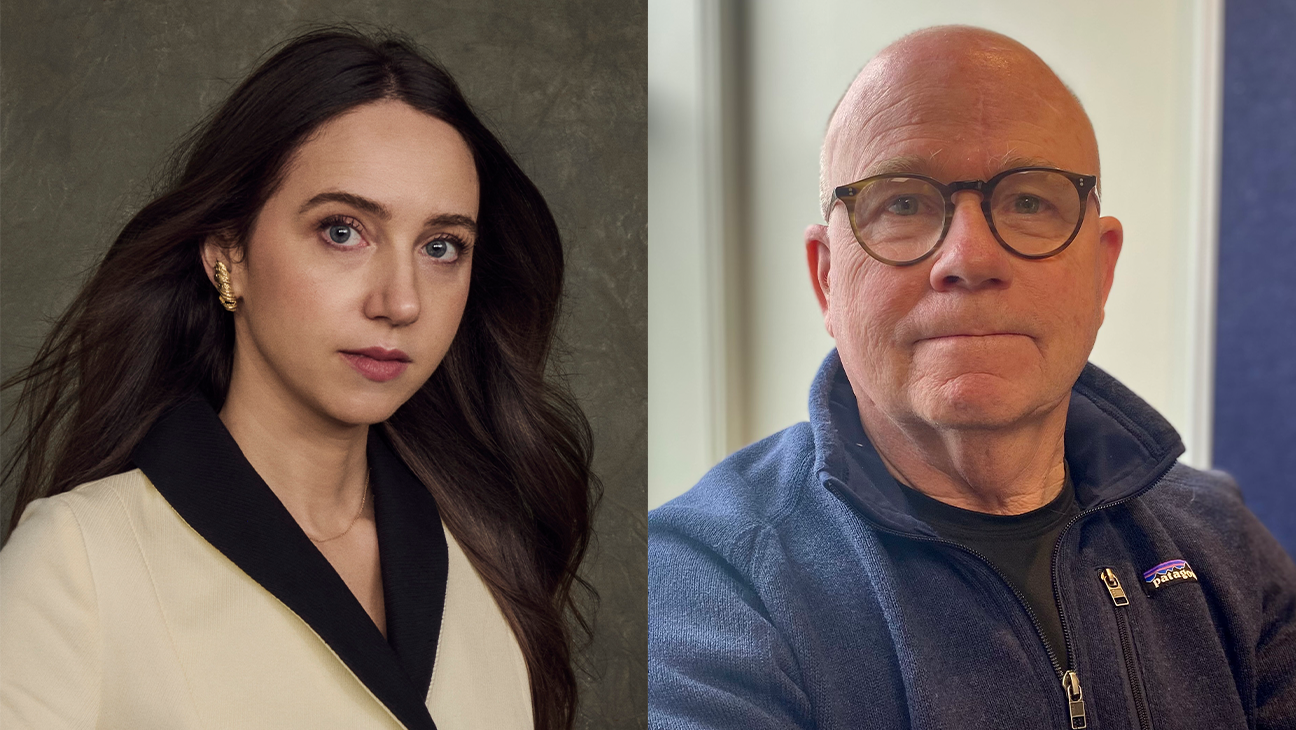
The streamer has given a straight-to-series order for a new adaptation of Larry McMurtry’s Lonesome Dove. The drama comes from Teton Ridge Entertainment — which owns the rights to McMurtry’s book and its follow-up novels — and co-showrunners Zoe Kazan and Jeb Stuart. Kazan and Stuart recently wrapped Netflix’s East of Eden limited series, based on John Steinbeck’s novel.
“After our singular experience on East of Eden, we are thrilled to be teaming with Netflix again, along with Teton Ridge Entertainment, to bring Larry McMurtry’s western classic to life,” Kazan and Stuart said in a statement. “We come to this material with love and respect, and can’t wait to hit the trail with Gus and Call and the rest of these beloved characters.”
Published in 1985, Lonesome Dove was a huge bestseller for McMurtry. It was previously adapted for an Emmy-winning 1989 CBS miniseries starring Robert Duvall and Tommy Lee Jones.
“Lonesome Dove is one of the great American stories, and there was no question we wanted to follow Zoe and Jeb wherever they went next,” said Jinny Howe, Netflix’s head of scripted series for the U.S. and Canada. “After East of Eden, we know exactly what they’re capable of — the depth of character, the sweep of place, the emotional precision. This material deserves that level of care. In their hands, it’s going to be something extraordinary. We’re excited to partner with Teton Ridge to bring this legendary story to life.”
Added Teton Ridge president Jillian Share, “Lonesome Dove is the kind of story that only comes along once in a generation. Its characters, scope and deeply human portrait of the American West have made it an enduring classic, and we see an extraordinary opportunity to bring Larry McMurtry’s world to a new generation of audiences. We’re thrilled to partner with Netflix and for Zoe and Jeb to reimagine this landmark story while preserving the heart and spirit that have made Lonesome Dove so beloved.”
Lonesome Dove is set in the 1870s and centers on former Texas Rangers Gus McCrae and Woodrow Call. The logline for the series reads, “McCrae and Call renew their spirit of adventure as they face an uncertain future, embarking on one final, perilous cattle drive from the Rio Grande to the untamed wilderness of Montana in pursuit of a dream that they have perhaps already outlived. They lead an unforgettable cast of characters across the American west in this sweeping odyssey defined by unrequited longing, unbreakable friendship, brutal frontier justice, and an unwavering pursuit of a meaningful life.”
Kazan and Stuart are executive producing the series with Thomas Tull, Share and Jen Gorton of Teton Ridge Entertainment, Jon Jashni, Diana Ossana, and Curtis McMurtry for the McMurtry Estate. Teton Ridge acquired rights to the four novels in McMurtry’s series last year — the other are Streets of Laredo, Dead Man’s Walk and Comanche Moon — with plans to adapt all four.
“All of a Sudden” (France, Japan, Germany, Belgium) and “Elephants in the Fog” (Nepal, Germany, Brazil, France, Norway) are both nominated for best film, best director and best performance. Hamaguchi and Shah face off in the director race against Sompot Chidgasornpongse for “9 Temples to Heaven,” Aung Phyoe for “Fruit Gathering” and Jennifer Peedom for “Tenzing.”
Three more films round out the best film category with two nominations apiece: Shahrbanoo Sadat’s “No Good Men” (Germany, France, Norway, Denmark, Afghanistan), also up for best performance; Levan Koguashvili’s “Guria” (Georgia, Switzerland, Luxembourg, Bulgaria, Türkiye, U.K., Norway, Saudi Arabia), also nominated for best cinematography; and Chidgasornpongse’s “9 Temples to Heaven” (Thailand, Singapore, France, Norway, China, Hong Kong, Indonesia, Qatar).
APSA also recognizes best screenplay, best cinematography, best youth film, best animated film and best documentary film, with best performance remaining an ungendered category.
According to the Academy, 69% of directors with nominated films are presenting their first or second feature, a trend most pronounced in the youth and animation races: all five best youth film nominees are helmed by first-time directors, and every best animated film contender comes from a first- or second-time filmmaker.
The lineup also highlighted several cross-border pairings, including Virginie Efira and Okamoto Tao, jointly nominated for best performance for “All of a Sudden,” and Ervin Han and Raúl García, the Singaporean and Spanish directing duo behind best animated film contender “The Violinist.”
Tracey Vieira, chair of the Asia Pacific Screen Academy, said: “When you look across this year’s nominations, what really stands out is the level of collaboration behind these films. We are seeing filmmakers and creative teams from countries across the Asia Pacific working together, and in many cases partnering with countries well beyond the region, to bring these stories to the screen.”
Three projects backed by the MPA APSA Academy Film Fund earned nominations this year: “9 Temples to Heaven,” funded in 2021; Sara Ishaq’s “The Station” (Yemen, Jordan, France, Germany, Netherlands, Norway, Qatar), funded in 2019; and Anthony Chen’s “We Are All Strangers” (Singapore), funded in 2023. Submissions for this year’s fund remain open through Sept. 25.
Mandy Walker ASC ACS, the APSA international jury president, said: “Watching and celebrating movies from other cultures only enriches our own experiences and views of the world. I have the honor to be heading the International Jury this year to recognize the achievements of these talented filmmakers.”
The Asia Pacific Screen Forum will run Oct. 28–30 on the Gold Coast ahead of the awards ceremony, with sessions on financing, distribution and cross-border collaboration alongside a masterclass with Walker. Gold Coast Mayor Tom Tate said: “The Gold Coast is proud to be a creative crossroads for the Asia Pacific, and APSA is a big part of that story.”
FULL LIST OF APSA 2026 NOMINEES:
BEST FILM “All of a Sudden” (France, Japan, Germany, Belgium), directed by Hamaguchi Ryusuke “Elephants in the Fog” (Nepal, Germany, Brazil, France, Norway), directed by Abinash Bikram Shah “No Good Men” (Germany, France, Norway, Denmark, Afghanistan), directed by Shahrbanoo Sadat “Guria” (Georgia, Switzerland, Luxembourg, Bulgaria, Türkiye, U.K., Norway, Saudi Arabia), directed by Levan Koguashvili “9 Temples to Heaven” (Thailand, Singapore, France, Norway, China, Hong Kong, Indonesia, Qatar), directed by Sompot Chidgasornpongse
BEST YOUTH FILM “Big Girls Don’t Cry” (New Zealand), directed by Paloma Schneideman “Don’t Tell Mother” (India, Australia), directed by Anoop Lokkur “En Route To” (Republic of Korea), directed by Yoo Jaein “Funky Freaky Freaks” (Republic of Korea), directed by Han Chang-lok “Our Share of Sand” (India, U.K., Greece), directed by Shalini Adnani
BEST ANIMATED FILM “Light Pillar” (China), directed by Xu Zao “Magic Atlas” (Singapore), directed by Sun Xun “A Mighty Adventure” (Taiwan, Malaysia, Hong Kong), directed by Toe Yuen “The Violinist” (Singapore, Spain, Italy), directed by Ervin Han, Raúl García “Zsazsa Zaturnnah” (Philippines, France), directed by Avid Liongoren
BEST DOCUMENTARY FILM “32 Meters” (Iran, Türkiye, Qatar), directed by Morteza Atabaki “Colors of White Rock” (France, Mongolia), directed by Khoroldorj Choijoovanchig “Baby Jackfruit Baby Guava” (Vietnam, Republic of Korea), directed by Nhật Quang Nông “One in a Million” (U.K., U.S.), directed by Itab Azzam, Jack MacInness “Rehearsals for a Revolution” (Czech Republic, Spain), directed by Pegah Ahangarani
BEST DIRECTOR Hamaguchi Ryusuke, “All of a Sudden” (France, Japan, Germany, Belgium) Abinash Bikram Shah, “Elephants in the Fog” (Nepal, Germany, Brazil, France, Norway) Sompot Chidgasornpongse, “9 Temples to Heaven” (Thailand, Singapore, France, Norway, China, Hong Kong, Indonesia, Qatar) Jennifer Peedom, “Tenzing” (U.S., Australia) Aung Phyoe, “Fruit Gathering” (Myanmar, Czech Republic, France)
BEST SCREENPLAY Ghasideh Golmakani, “Head to Head” (Iran, Germany) Yashasvi Juyal and Ankit Thapa, “The Ink Stained Hand and the Missing Thumb” (India, U.S., Saudi Arabia) Mohammed Hammad, “Safe Exit” (Egypt, Libya, Tunisia, Qatar, Germany) Sara Ishaq and Nadia Eliewat, “The Station” (Yemen, Jordan, France, Germany, Netherlands, Norway, Qatar) Rakan Mayasi, “Yesterday the Eye Didn’t Sleep” (Belgium, Lebanon, Palestine, Qatar, Saudi Arabia)
BEST CINEMATOGRAPHY Batara Goempar, “Four Seasons in Java” (Indonesia, France, Netherlands, Norway, Poland, Saudi Arabia, Singapore) Nguyễn Vinh Phúc, “Hearing” (Vietnam, Singapore, Norway, France, Indonesia, Saudi Arabia, Cambodia, Thailand, Taiwan) Gigi Samsonadze and Giorgi Shvelidze, “Guria” (Georgia, Switzerland, Luxembourg, Bulgaria, Türkiye, U.K., Norway, Saudi Arabia) Warwick Thornton, “Wolfram” (Australia) Emo Weemhoff, “The Burning Giants” (Thailand, Singapore, France, Netherlands)
BEST PERFORMANCE Virginie Efira and Okamoto Tao, “All of a Sudden” (France, Japan, Germany, Belgium) Anwar Hashimi, “No Good Men” (Germany, France, Norway, Denmark, Afghanistan) Pushpa Thing Lama, “Elephants in the Fog” (Nepal, Germany, Brazil, France, Norway) Ghassan Saad, “Pipes” (Lebanon, Qatar, Saudi Arabia) Yeo Yann Yann, “We Are All Strangers” (Singapore)
The vital act of storytelling drives Casey Affleck’s “Company.” Knowing those stories and the people in them also passes on lessons learned involving grief, regret and forgiveness. The film premieres in competition at Venice.
“Company” stars Nick Nolte, Adelaide Clemens, Ben Mendelsohn, Scoot McNairy, Emily Alyn Lind, Caylee Cowan and Atticus Affleck. The film jumps between 1975, 1953 and 1903, connected by stories in each era. Much of the film involves just two actors in a shot, or one actor in a beautifully composed shot. “When Casey sets up the camera, you know by the angles that he’s shooting from that it’s going to be much more intimate,” says Nolte.
Nolte’s Tom is an old man living alone. It’s winter, and he sees a young woman passed out on the snow outside his isolated cabin. He brings Alice (Cowan) in, warms her up and she tells him a story about a couple living in a cabin quite like his in 1903.
“It was the script, and it was so delicate,” Nolte says of what drew him to the project. “It had these silences and gaps, and the storytelling was obvious. I just found that intriguing. It wasn’t like any script that normally comes in. You know, it was one of those special ones.”
Nolte didn’t want to play Tom as necessarily a hermit, though, as we do discover his story as the film unspools. “I looked at him as somebody that wanted to not be with humanity in general. He was a reclusive, and he lived in isolation, and he’d probably be a trapper.”
Affleck’s direction is quite intentional, with each scene meticulously framed and lit, allowing stillness to permeate. Nolte’s expressive eyes and face do a lot of the work in each scene as Alice talks. “It was really about listening, just really listening to the story,” he says.
In the 1903 segment, Clemens and McNairy play a couple on an isolated farm, who, like Tom, find and rescue a young person from the snow. Caleb (Atticus Affleck) intrigues Rebecca (Clemens), as he brags about his world travels and personal philosophy with a familiar mix of confidence and insecurity — she’s wary, and his presence creates delicious tension.
“As I’ve gotten older, and I’ve worked more in the industry, I’ve started to learn the power of a two shot, and I’ve also started to learn that you need really skilled professionals to execute that in a powerful way,” she says. “You need an incredible cinematographer who we have on this film, Marcell Rév — everything was so beautiful.”
Clemens says that working with Casey is “what you dream of” because he is an Oscar-winning actor himself.
“Directors will often do a two shot, but then they’ll cover it as well. But if you have two actors who are in an environment where they’re supported, then you can have a really powerful scene, and you can see our whole bodies,” Clemens says of the framing, noting that she and her colleagues had to use their whole bodies. “We tell this whole story from the shins up. It wouldn’t be executed in the way it was if we didn’t have Casey trusting us.”
Clemens brought a “Buddha-like” demeanor and maternal depth and empathy to Rebecca, whereas Atticus Affleck had to leave everyone wondering about his truth. Clemens says that while he was well-prepared for the film, and “rehearsed intensely,” his performance was natural and “didn’t feel like a performance … He was amazing.”
Have some people in Hollywood figured out how to continue to spotlight Hollywood’s greats? “I’m 86, and real limited in the kind of roles I can play now, but I find that without the work, there just isn’t any reason to keep on going,” says Nolte, who has more projects on deck. “You know your creativity is tied into it, and as long as I’m physically capable, I encourage them to consider me. I haven’t thought about retiring.”
Paramount is continuing to press a dozen states led by California and the Writers Guild of America to bear the costs of the hold up caused by their lawsuits challenging the $111 billion megamerger.
The studio has asked for a $1.88 billion bond to cover losses if it wins the cases. In July, U.S. District Judge Araceli Martínez-Olguín temporarily halted the deal and scheduled a trial for March, months past its target closing date of late September.
There will be major financial repercussions for the delay. Under the agreement, Warners shareholders are owed roughly $650 million per quarter or $6.9 million per day if the merger hasn’t closed by Oct. 1. The bond represents the maximum payout to investors, plus legal fees.
The states and WGA have pushed back on the demand, arguing that Paramount proposed the fee in a bid to win support from shareholders, who were weighing a rival bid from Netflix at the time. The studio “now wishes to offload that responsibility,” stated a filing from California Attorney General Rob Bonta last month.
In a brief filed on Tuesday, Paramount says that the states are obligated to post the bond under antitrust laws and federal procedures governing injunctions. It claims the delay is a “serious injury at a time when studios are already being squeezed out by streaming megaliths like Netflix and Amazon and other big tech companies who have entered the competition.”
Across the litigation, Paramount has emphasized hefty losses associated with the court holding up the merger, pointing to missed opportunities to ramp-up investment in production and rising financing costs.
“Paramount simply asks that Plaintiffs honor what the Clayton Act requires: A bond that will compensate Paramount for the damage it will suffer if the injunction proves improvidently granted, i.e., if Paramount ultimately prevails in the litigation and was therefore wrongly prevented from consummating the merger now, as it is prepared to do,” writes Danielle Sassoon, a lawyer for the studio, in the filing.
A legal sticking point in the back-and-forth over the bond: The states have argued that the court never issued an injunction, which would render Paramount ineligible for a bond, since the studio voluntarily agreed not to close the deal under a joint stipulation. Paramount pushes back on the framing, calling the argument disingenuous.
Historically, courts have side-eyed issuing massive bonds in merger cases, particularly when the government challenges the deal. The judge overseeing the Nexstar-Tegna merger, for example, issued one for $10,000 after the TV giant asked for $150 million.
Regulators across 69 countries have cleared the merger. The lawsuits from the states and WGA are the only barriers keeping the company from closing.
“But for these lawsuits, the transaction is now otherwise ready to close, and the resulting costs of delay are substantial and quantifiable,” said a Paramount spokesperson.
“If plaintiffs insist that this transaction is paused during the pendency of their lawsuit, they must accept the financial consequences if their challenge ultimately fails,” the spokesperson added. “Paramount agreed to delay closing to facilitate a prompt resolution of the case, while expressly preserving its legal rights and we continue to honor that agreement.”
The TV viewing options for science fiction fans in the fall of 1966 were limited, but not nonexistent. Lost in Space was starting its second season on CBS, and Voyage to the Bottom of the Sea was heading into its third on ABC. The producer of both of those, Irwin Allen, also had The Time Tunnel debuting on ABC.
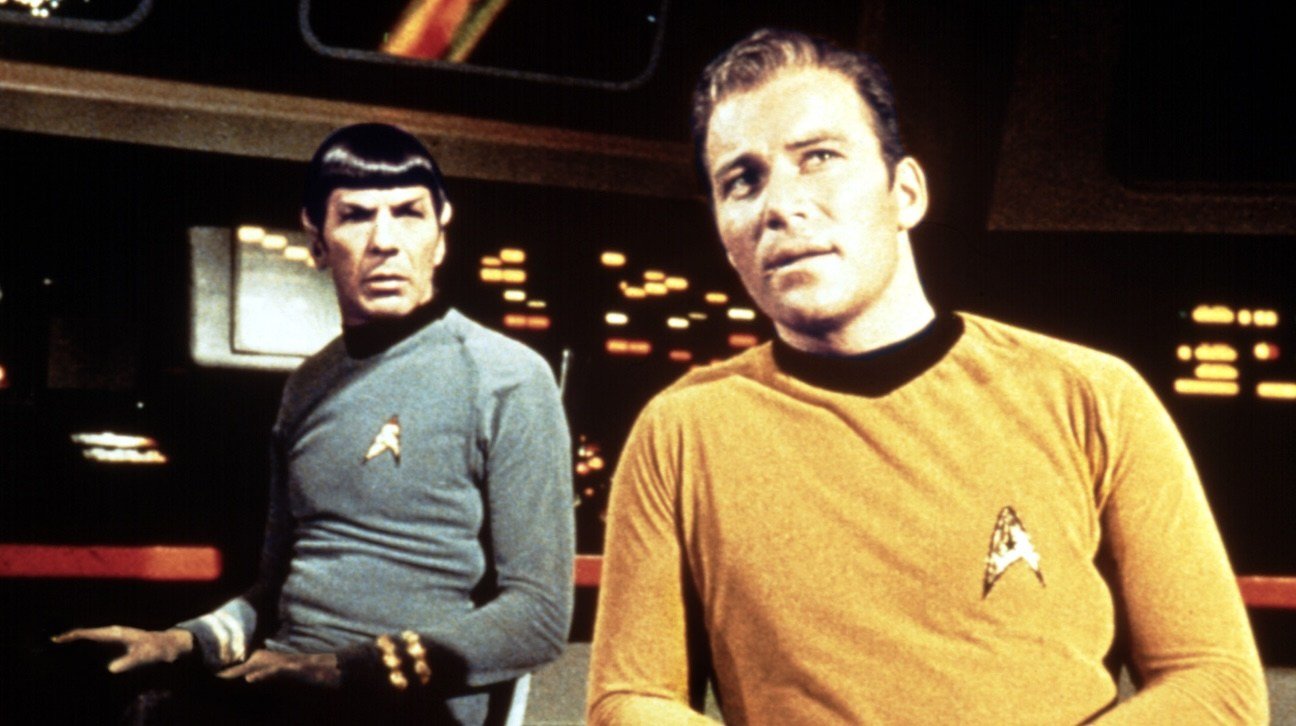
None of those shows would last beyond 1968. Nor did any of them give rise to an enduring, beloved TV and movie franchise like the other new sci-fi series that fall, Star Trek. Gene Roddenberry’s series debuted 60 years ago, airing from 8:30-9:30 p.m. ET/PT Sept. 8, 1966, on NBC.
With that in mind, I decided to watch the first episode ever aired (the original series streams on Paramount+). It’s … fine, but it only hints at some of the reasons why it would become one of the most enduring franchises in American pop culture history.
The episode that aired on Sept. 8, 1966, was called “The Man Trap.” It was the sixth episode of Star Trek to be filmed, meaning that NBC decided to air episodes out of their production order (a pattern that would repeat itself many times in the future, on shows ranging from Homicide: Life on the Street to Freaks and Geeks to Firefly). Star Trek wasn’t heavily serialized — few shows were back then — but airing this episode first has the effect of dropping viewers into the show with little beyond William Shatner‘s opening credits narration to set the scene.
(The show’s first pilot, “The Cage,” never aired in its original form during the series, but a lot of it was repurposed for a later episode, “The Menagerie.” The second pilot, “Where No Man Has Gone Before,” aired two weeks after “The Man Trap.”)
The plot (60-year-old spoilers, I guess) involves a shape-shifting alien who has assumed the form of an archaeologist’s wife on an otherwise desolate planet. The Enterprise crew is sent there to perform an annual health checkup on the couple, but the archaeologist, Professor Crater, is weirdly resistant to letting Dr. McCoy (DeForest Kelley) examine her. At first it seems that’s because the (human) wife and McCoy had had a relationship years earlier, but right off the bat the audience knows something is up: The woman’s appearance is different to each member of the crew, with some clever editing helping to sell the illusion.
The alien needs salt to survive, and the couple’s supply is running low, so the alien drains all of it from a poor Enterprise crew member’s body, and then a couple more who are beamed down later. It assumes the form of one of the dead crewmen and beams aboard, taking on several other people’s forms before it’s finally found out and McCoy reluctantly sets his phaser to kill, still clinging to the notion that the alien is his former love.
It’s a pretty simple story, and though several largely anonymous crew members (none of whom, contra the show’s eventual trope, wears a red shirt) perish, the stakes are low compared to what would come in later episodes and seasons. There’s no B- or C-story to speak of.
What “The Man Trap” does offer is an introduction to most of the characters who would become key parts of Star Trek in the years to come. James Doohan’s Scotty is absent, but Kirk (Shatner), Spock (Leonard Nimoy), McCoy, Uhura (Nichelle Nichols) and Sulu (George Takei) all have several key scenes, along with Grace Lee Whitney as Yeoman Janice Rand (who was written out partway through the first season). Walter Koenig’s Chekhov would join in the second season. Nichols is saddled with what’s closest to an exposition dump as Uhura tries to make small talk with Spock, only to hit a Vulcan wall, and then is shocked when he doesn’t react to the first crewman’s death (“My demonstration of concern will not change what has happened,” he replies).
The planet where Crater and the alien reside is very obviously a soundstage — something that’s probably more noticeable watching on a big high-definition set now than it was on a tube TV then — but episode takes viewers to a number of locations onboard the Enterprise, not just the bridge and transporter room. There’s even a tracking shot as Kirk walks down a corridor and into an elevator; it’s not a consequential scene, but it jumped out at me considering how static the camera is in the rest of the show (and in most other series of that era).
The Hollywood Reporter’s perfunctory (and somewhat condescending) review of the Star Trek premiere notes that the show features “quite a bit of suspense and tricks with gadgets that will please the sci-fi buffs no end” and concludes that it “should be a winner.” Ratings-wise, that didn’t turn out to be the case: Star Trek was what we’d now call a bubble show for all three of its seasons, and NBC canceled it in 1969. That was nowhere near the end of the story, obviously.
“The Man Trap” was a sturdy enough first episode, but it didn’t really hint at the creative leaps Star Trek would take in the course of its original run — ranging from “The Trouble with Tribbles” to “The City on the Edge of Forever.” Nor did anyone know at the time how deep a connection Trek fans would forge with the series. That as much as anything helped keep Star Trek alive through the 1970s. Star Trek: The Motion Picture‘s release in 1979 charted a new course for the franchise, which has continued through more than 20 series and films. Roddenberry’s optimistic vision of the future hasn’t necessarily played out in our present, but the appeal of that idea is still awfully strong six decades later.
Members of Congress are drafting legislation that would create a 20% federal film and TV incentive — with bonuses that could bring it as high as 30% — after President Trump endorsed the idea last week.
The bill is expected to be introduced this month, and perhaps as soon as the end of next week, according to sources familiar with the process. Rep. Nathaniel Moran, a Republican from East Texas, is working on the bill with Rep. Linda Sanchez, a Democrat from Whittier, Calif. Both serve on the House Ways and Means Committee, which is responsible for tax legislation.
Rep. Laura Friedman, a Democrat from Burbank, Calif., has also been working with Rep. Brian Jack, a Republican from the Atlanta suburbs, on the bipartisan effort.
For the last year, the Motion Picture Association and entertainment unions have been advocating for an incentive that would compete with generous subsidies from the U.K., Canada, Australia and scores of other countries. Trump threw his weight behind the idea in a Truth Social post on Aug. 31, a development expected to unlock Republican support on Capitol Hill.
The draft legislation broadly aligns with the MPA’s request. The bill would offer a base credit of 20% of all labor costs, both below-the-line and above-the-line. A wide range of productions would be eligible, including reality TV and animation in addition to films and scripted TV shows, according to sources familiar with the legislation. It would not include news or sports broadcasts.
The bill would also include four “uplifts” meant to attract political support. According to a source, the bill would allow producers to claim an additional five percent if they meet one of these four criteria:
film in a rural opportunity zone
make an independent production
bring a certain amount of filming back to the U.S. from abroad
spend at least $10 million in 10 different states in a year
Producers could claim up to two of those uplifts, for a maximum of 30%. The federal tax credit would stack on top of state incentives, meaning that productions could see a total subsidy of 60% or more depending on where they film.
Supporters have argued that the incentive will not just help Los Angeles and New York — where the bulk of production takes place — but will also boost rural areas that currently have little filming and little or no state tax incentive.
The hope is that spreading production around will broaden support, much the way the state incentives in California and New York attracted votes from rural lawmakers by offering a bonus for filming outside of Los Angeles and New York City, respectively.
California lawmakers have also pushed for a bonus for any production in an area that was recently declared a federal disaster zone. (All of Los Angeles County would qualify due to the 2025 fires.) That is not included in the latest draft.
The tax credit could be used to offset federal income tax, or be sold to another taxpayer to offset their tax liability. It would not be refundable.
The bill has yet to go to the Joint Committee on Taxation, which will get a score on how much it would cost — though it is safe to say it will run into the billions of dollars. In his post last week, Trump argued that the cost would be “made up tenfold by the money pouring into the Treasury’s coffers.”
The MPA is expected to issue a report in the coming weeks that would expound on that claim, arguing that production creates a ripple effect that benefits the local economy.
Some supporters of the measure are optimistic about getting it through Congress as part of a tax bill during the lame duck session after the November election, though it may be more likely to happen next year.
“I would be very happy for it to happen in the lame duck,” Friedman said in an interview last week. “I can’t promise that’s possible. We’re going to try not only to get this done quickly, but to have all our ducks in a row.”
Friedman said that the discussions took on a new momentum after Trump got involved.
“I can’t tell you the number of texts that have come in from people who have offered to help,” she said.
She declined to discuss the specifics of the legislation, but said she is working to build a coalition across the country behind the idea.
“Everyone in every state loves movies and television,” she said. “Everyone benefits by this product being made here.”
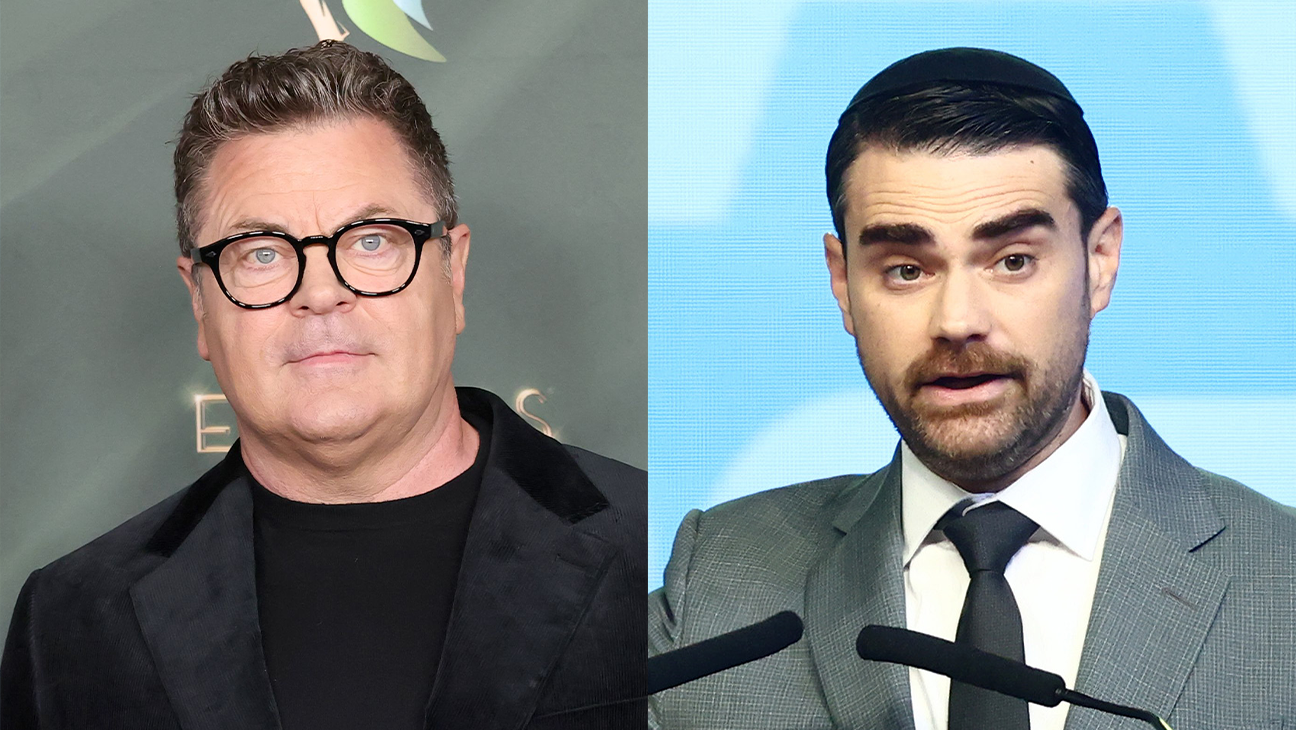
Nick Offerman is slamming Ben Shapiro for his “rampant homophobia” after the Daily Wire co-founder and political commenter criticized the actor’s gay role in The Last of Us.
During a recent appearance on the Talk Easy With Sam Fragoso podcast, host Sam Fragoso showed Offerman a clip of Shapiro attempting to recap his character’s storyline in HBO’s apocalyptic drama and calling him a “gay Ron Swanson,” referencing Offerman’s iconic Parks and Recreation character.
“So the entire plot of the episode is that Nick Offerman, but he actually plays Ron Swanson, but Ron Swanson who likes to nail dudes. So Ron Swanson, a libertarian who hates the government and lives in his basement and is a prepper, but also is gay,” Shapiro said during an episode of The Ben Shapiro Show. “Ron Swanson during the zombie apocalypse, he’s having himself a grand old time. For some reason, his town is completely not hit by any of the zombies at all. It’s like completely left alone. So he goes out and gets all these resources, and then he builds a nice fence around his place, and he sets up all of these booby traps. So if anybody shows up, whether they’re raiders, whether they’re zombies, they’re going to get killed. And then somehow another dude ends up falling into one of his traps and they meet and they bang and they end up becoming a couple.”
“It’s complete with sex scenes and the whole thing. The entire episode has no zombies, no real threat, and it is about two gay dudes who meet and have a relationship, in which one grows strawberries for the other, and then they die. But not being killed by zombies or under threat,” Shapiro added. “One dies; he gets cancer and he decides to essentially euthanize himself and gay Ron Swanson decides that he is also going to commit suicide at the same time because of Romeo and Juliet, or Romeo and Romeo in this particular case.”
Offerman, clearly shocked, said in response, “Holy shit… that’s crazy.”
“That’s the most Ben Shapiro I’ve ever seen, and there’s a very good reason for that. I mean, I don’t know what to say. I’m embarrassed for his reading comprehension. I think he got eight things wrong in his recap, besides his rampant homophobia,” the Voicemails for Isabelle actor continued. “That was insane.”
“That’s like a Joe Rogan clip or something that’s just so dumb and so wrong. But then it’s really upsetting to understand how powerful that probably is and how many people it’s reached and would be in agreement with it. They’d be like, ‘Oh no, not Ron Swanson,’ or whatever agreement they would have,” Offerman added.
In season one, episode three of The Last of Us, titled “Long, Long Time,” the show paused on the main storyline. Instead, the episode centered on a 20-year romance between Offerman’s character Bill, a paranoid survivalist, and an outsider named Frank (Murray Bartlett).
On my last morning in Telluride, halfway through breakfast at Butcher & Baker, Kenneth Branagh stopped at the table on his way to a Q&A for “Into the Breach,” the National Theatre documentary he produced. He had a story. A night earlier, he’d ridden the gondola up in pitch darkness with Willem Dafoe, Tom Hiddleston and Andrew Scott — four of the best actors alive, each with a film at the festival, sealed in one cable car with nothing to look at and nothing to do but talk. All anyone could hear was Dafoe. Branagh, laughing, called it “the wisdom of Willem.” A voice in the dark, no face attached.
I half-believed it until a few hours later, waiting out my flight at Montrose, when I ran into Hiddleston on his way back to the U.K. He told the same story, unprompted.
That’s the festival. The Telluriders have gone home, Venice wraps in a few days and we came down the mountain knowing more about this Oscar race than we did going up. Christopher Nolan’s mythological epic “The Odyssey” is still the one to beat. It won’t be a cakewalk. Here’s what else I carried down.
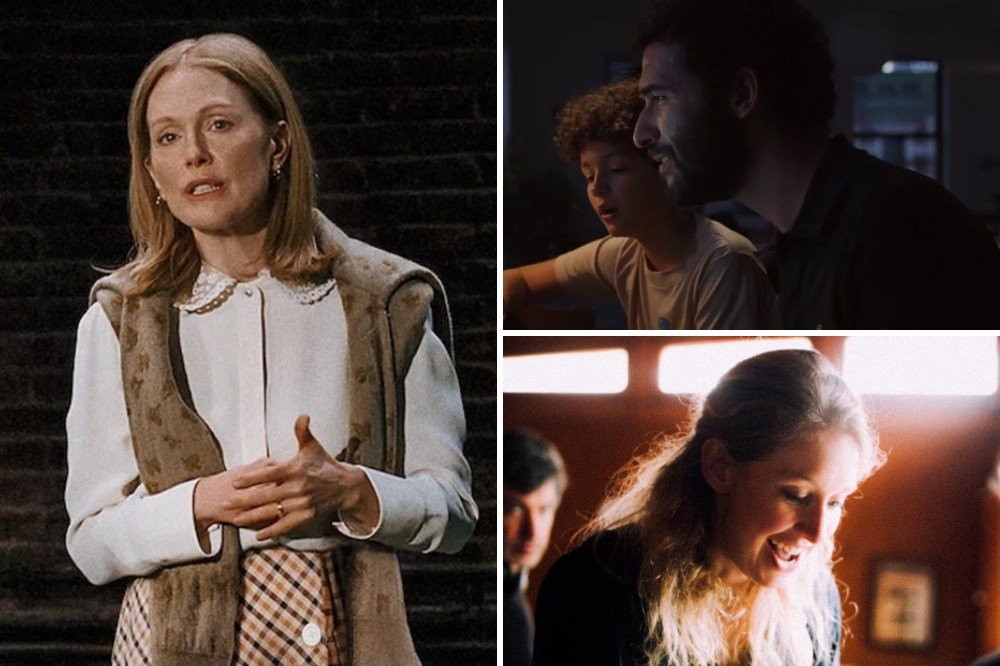
“The Debut” handed Julianne Moore and Paul Giamatti their moment.
Jesse Eisenberg’s third feature behind the camera premiered Saturday night. By the next day, it was the hottest ticket in town. “The Debut” drops Moore’s Mona, a meek suburban homemaker who lands a bit part in a community theater musical, into the front of the best actress race. It’s the funniest, warmest thing she’s done in years. Giamatti, whom Eisenberg calls his “favorite actor,” plays the tyrant director shaping her. During one rehearsal scene between them — a master-class, no other word for it — the Telluride crowd applauded in the middle of the movie. You rarely see that happen once at a festival. It happened again before the credits.
Moore already has an Oscar for “Still Alice,” and she’s the one to beat. Giamatti is the sentimental story coming up underneath: twice nominated for “Cinderella Man” and “The Holdovers,” never a winner and here he is doing the loosest work of his late career in a supporting turn built to be embraced. Eisenberg wrote seven songs for the fictional show. The one they’ll push is “This City May Have Chewed Me Up (But It Hasn’t Spit Me Out),” which Moore performs, and it’s headed for a best original song campaign.
The festival’s best-kept secret came Sunday night, when ticket holders filed into the Werner Herzog Theatre with their phones locked away for “You Can See Everything,” the Elizabeth Holmes documentary Fielder co-directed with Lance Oppenheim, whose narrative feature “Primetime” premiered in Venice a day earlier. Holmes invites Fielder and his skeptical crew to film her in the 34 days before she reports to prison. The shoot spirals into a three-year descent. Portions are recreated with an A-list actor who is eligible for Oscar attention, though not SAG.
Now comes the hard part, which is the documentary branch, which has never embraced this kind of nonfiction filmmaking. Voters who prize the observational and the sincere tend to bristle at a movie where the filmmaker is this present and this implicated. The circus around Fielder guarantees the kind of coverage most nonfiction contenders would trade a lung for. Whether the branch rewards it is the whole question. Nobody has made a movie quite like this. Almost nobody has won an Oscar for one.
Jordan Firstman in “Club Kid”
A24
“Club Kid” has a real play for the old guard.
Jordan Firstman’s directorial debut had its North American premiere Friday, and its trajectory keeps getting more serious than anyone bet on. Firstman writes, directs and stars as Peter, a washed-up New York party promoter whose life on the dance floor stops cold when the 10-year-old son he never knew about (British newcomer Reggie Absolom) turns up at his door.
Strip away the club scene and the online-comedian brand, and you have a classically built story about a man child being handed a kid. I expected that this would struggle to appeal to the older industry demographic. I was wrong. In fact, it seems to register incredibly well with older Academy voters, at least the ones I chatted with on the mountain.
Veteran actor Colleen Camp, who first came to the festival in 1977, made the case for the film’s tonal control better than any campaign deck could. “I always say, always hire somebody funny to do something dramatic, because you’ll get so many interesting things,” she said at the post-screening Q&A. “And what he [Firstman] did in this movie is even in the most dramatic moments, they’re brilliantly ironic and they’re funny.”
Firstman described how his script reversed course on him over two years of writing. “I started the script from kind of a cynical place of looking around at the scene and just not feeling good about it — looking at the excessive drug use and the sex, and being a part of it and feeling bad about myself and feeling bad about my community,” he said. “What happened was that making this film in the community — we shot at real parties, in the queer spaces in New York — my empathy really opened up in the production of the film.” That shift is on the screen, and it’s what voters will feel without necessarily being able to name it.
By the end of the panel, it came down to one word, spoken loudly by Firstman: “love.”
“La Bola Negra”
‘La Bola Negra’ Carla Oset/Netflix
“La Bola Negra” commands the room.
Respect is the currency at that altitude, and Los Javis have it. Javier Calvo and Javier Ambrossi arrived off a Cannes run that ended with the directing prize, and the Telluride word-of-mouth only got louder. Chris Pine, Sofia Coppola, Rian Johnson and their Netflix stablemate Danny Boyle (“Ink”) all turned up for the screening.
Shot on 35 mm and inspired by the unfinished Federico García Lorca work of the same name, “La Bola Negra” moves across 1932, 1937 and 2017, tracing three generations of gay men through nearly a century of Spanish history.
A subtitled Netflix title the festival can’t stop buzzing about is exactly where you want to be heading into the international feature race, and the streamer is hunting well beyond that category. And even though stars Guitarricadelafuente and Penélope Cruz weren’t on the mountain, the film played so well, it shows it can exist in the awards echo chamber, without them (which says a lot).
“Wild Horse Nine”
Searchlight Pictures
“Wild Horse Nine” made the two-stop drop look easy.
Of the titles that ran the Venice-to-Telluride relay this year, Martin McDonagh’s landed with the most confidence. Searchlight Pictures’ “Wild Horse Nine” bowed in Venice competition on Sept. 3 to a 13-minute standing ovation, the Lido’s first real roar of the fall. Two days later, it turned up as Telluride’s surprise patron screening, timed to John Malkovich’s Silver Medallion tribute.
Malkovich was the biggest takeaway. Twice nominated and never a winner, he called the script the kind you see “every 25 years.” The double premiere vaulted him near the front of best actor, trailing only Matt Damon in “The Odyssey” and another Telluride player, Andrew Scott in “Elsinore.” Sam Rockwell, who won supporting actor for his last McDonagh outing, is back in that conversation, with the open question of whether Steve Buscemi joins him.
Kate O’Flynn, Paul Jesson and Marion Bailey in “Tender Loving Care”
Thin Man Films Ltd and Bleecker Street
“Tender Loving Care” is Mike Leigh in a minor key, and it wrecks you anyway.
If this is the last Mike Leigh film, and the final shot plays like a man who knows it might be, it’s a hell of a way to leave. “Tender Loving Care” follows two social workers and was built the usual Leigh way: no script, no plot, just months of assembling people until they exist.
Marion Bailey, who plays Birdie, figured out the assignment before the assignment existed. “I could see as he was going through, he was crossing off people and I thought, what’s the sort of person he’s looking for? And then it dawned on me — he’s looking for someone who has a sense of humor,” she said. “The ones he was crossing off my list were people who don’t have a sense of humor.” Then she added the part only a Leigh veteran gets to add: “You get a call from Mike to say, ‘Do you want to come on board? I don’t know what the part will be. I’m not sure how it’ll work out, but would you like to do it?’ Yes, please. You don’t even stop to think about it.”
The film’s dedication to Dick Pope hangs over it, and longtime producer Georgina Lowe explained how the succession happened. Lucy, who came up under Pope as a camera trainee on “Meantime” and operated on “Hard Truths,” took over the cinematography after a British Society of Cinematographers function where Pope received a posthumous lifetime achievement award. “I don’t think Mike heard this, but Pat turned to Lucy and said, ‘You should shoot the next one,’” Lowe said. “Simultaneously, Mike had thought that. It just made total sense.”
Paul Jesson gave the film its thesis in a single line, asking what a movie about caring for people means right now. “It’s also a good antidote to a world which, by and large, is being run by bullies and thugs,” he said. “The state of the world at the moment is pretty terrifying, really. A lot of people try to close their eyes, cover their ears and get on with their own private lives. And it’s hard to know what to do apart from that, other than look after the people they’re close to.” That’s the movie, and the campaign.
Andrew Scott in “Elsinore”
Anthony Dickenson
Everybody wrote a love letter to acting this year.
Step back from the horse race and the weekend had a through-line: acting itself, in films made largely by and for the people who do it. Two of the marquee titles orbit the same building. “Elsinore” is Andrew Scott as Ian Charleson in the last year of his life, holding on long enough to play Hamlet at London’s National Theatre. “Into the Breach,” the documentary Branagh produced, tells the story of that same theater, with Judi Dench, Anthony Hopkins, Gary Oldman and Ian McKellen around a table sorting out what the stage cost them and what it gave back. One film stages a great actor’s final bow. The other rounds up living legends to explain why it mattered.
“The Debut” is the same subject from the bottom of the ladder: Moore as a suburban nobody who discovers, in a community theater musical, that performing might be the truest thing she’s ever done and nearly comes apart proving it. A drama, a doc and a comedy, all circling what it costs to disappear into someone else.
The actors branch is the largest bloc in the Academy, and nothing moves a room of performers like a film that treats performance as life or death. Telluride just handed them three.
The gondola is the place to get honest polls.
Nothing tells you how ticket holders are responding to a movie like a gondola ride to or from the Chuck Jones Theatre. On a ride up Sunday morning, you get to listen to the festival unfiltered, which, of course, came with the secret screening speculation that swung from a Frank Ocean project to the eventual Fielder documentary. But then you get to hear about people’s reactions to the Bill Gates talk at Elks Park that half the car caught the tail end of, and the running argument over which “Martin McDonagh is the real Martin McDonagh.” (Whatever that means?)
One producer I chatted with had the most useful read of the weekend on “La Bola Negra,” which he claimed everyone kept calling too long. “I felt that it was long, but I was never bored,” he said. “I was pretty engaged. It felt pretty robust the whole time.” That distinction can matter most. It’s not about whether voters check their watches, but whether they mind. Turns out they don’t.
However, he was less forgiving elsewhere about “Fjord,” Cristian Mungiu’s Romanian Palme d’Or winner. “I didn’t think there was any character work between the two of them [Sebastian Stan and Renate Reinsve]. I didn’t get their relationship at all,” he said. “They got these incredible actors and it didn’t just match. I wanted to hear more about their beliefs. I wanted to get more into it, be challenged more. It left me a little cold.”
Interestingly, I spoke to someone else immediately after getting off the gondola who said “Fjord” is the best thing they’ve seen this year.
The pendulum can swing rapidly between voters and titles.
Other notes from the mountain
Stephen Beresford, who wrote “Elsinore,” lost his passport and couldn’t make it to Telluride. That didn’t stop his leading man from having a moment.
Andrew Scott had company for that reaction. After the screening, Oprah Winfrey, a Telluride regular this year behind Chai Vasarhelyi and Jimmy Chin’s “Everest: The Other Side,” found Scott outside and cried in his arms. If you want to know how a movie is landing on the mountain, watch for who’s weeping in the lobby or outside.
(That’s also “A Long Winter” writer and director Andrew Haigh weeping alongside them)
Winfrey also threw a party, and by the chatter, all anyone could talk about was who got the invite, who didn’t and how you could possibly get one. Spoiler alert: I wasn’t one of them.