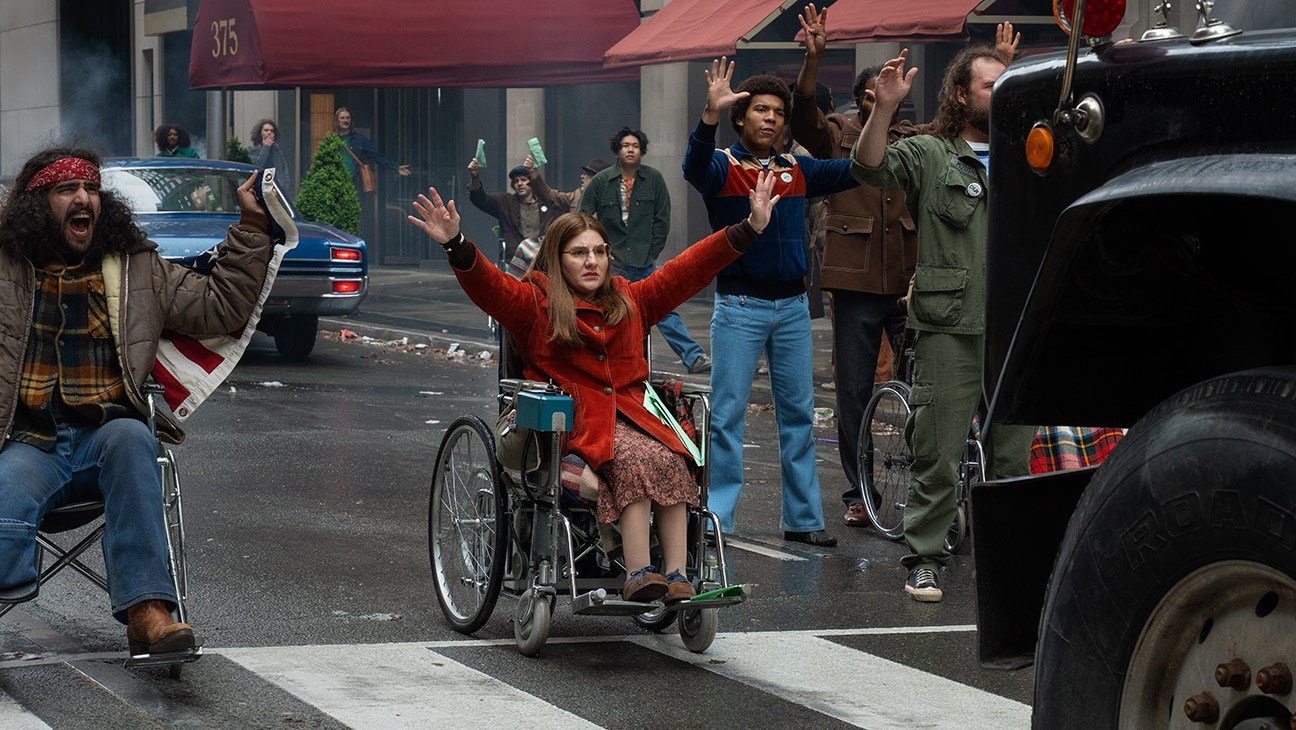
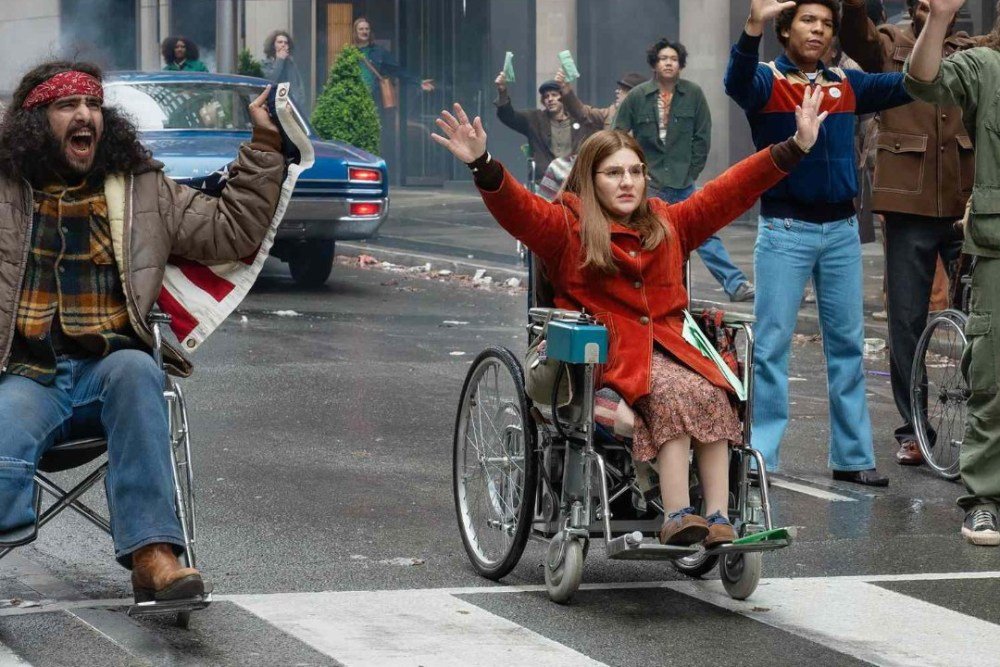
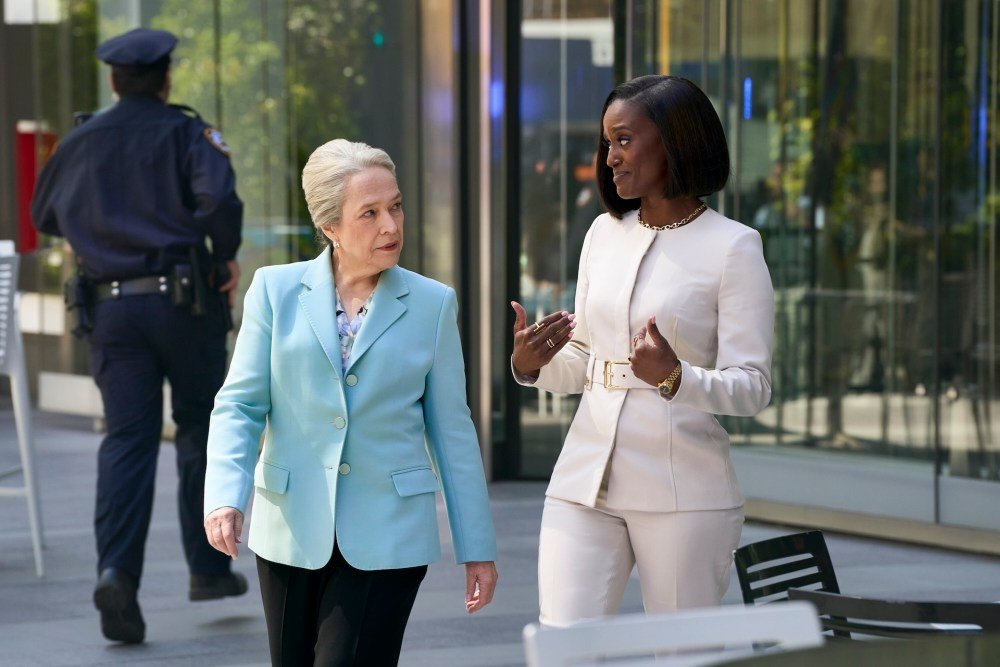
In the first and best of many late ‘70s needle drops that punctuate Being Heumann, the punchy guitar groove of Iggy Pop’s “The Passenger” starts out over a close-up of wheels turning on pavement before the camera pulls back to take in disability rights activist Judy Heumann, maneuvering her wheelchair around crowded city streets and refusing to be intimidated even when a bus driver is bearing down on her with his hand clamped on the vehicle’s horn.
As played here with an iron will and a take-charge attitude by British actress Ruth Madeley, Judy is a tenacious figure with uncommon gumption. But all the pluck and determination etched across her face don’t obscure the point of the opening sequence — to encapsulate the enormous challenges faced by people with disabilities in places with inadequate concern for accessibility.
Being Heumann
The Bottom Line
Earnest but effective.
Venue: Toronto International Film Festival (Gala Presentations — Opening Night) Release date: Friday, Nov. 6 (streaming Nov. 13) Cast: Ruth Madeley, Mark Ruffalo, Dylan O’Brien, Madeline Delp, Roberta Colindrez, Jon Beavers, Antwan Tolliver, Ray Fisher, Andrew Pilkington, Michael Patrick Thornton, Russell Harvard, Daniel Durant Director: Siân Heder Screenwriters: Siân Heder, Rebekah Taussig
2 hours 7 minutes
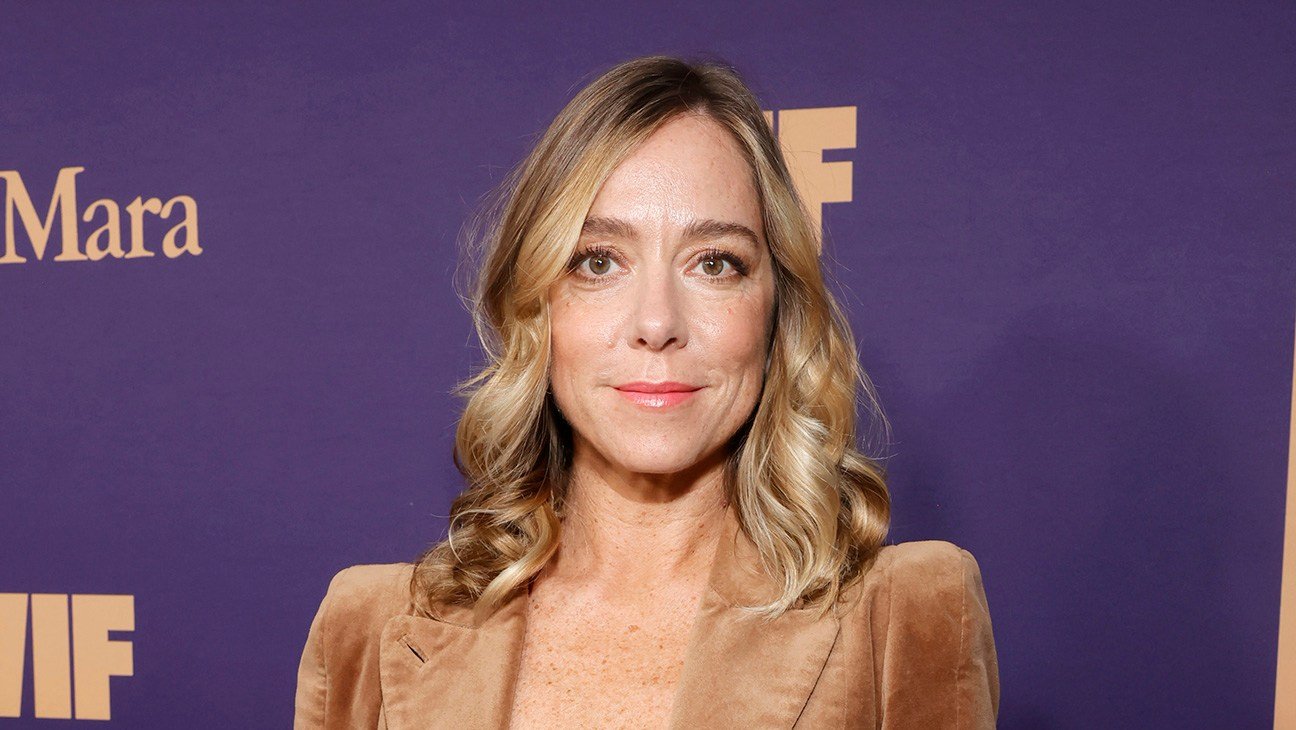
The first feature from director Siân Heder since her coming-of-age drama CODA went all the way from Sundance to a best picture win at the 2022 Oscars, Being Heumann follows a similar inspirational playbook, albeit lifted from a chapter in the American civil rights annals rather than drawing on real-life experiences to craft a fictional narrative. As with CODA, in which Heder cast deaf actors as deaf characters, the new film’s winning hand is the use of actors with disabilities to play the ragtag coalition led by Heumann in 1977 in what became the longest occupation of a federal building in U.S. history.
Previously covered in the Oscar-nominated 2020 documentary Crip Camp, the 504 sit-in took its name from that section of the Rehabilitation Act of 1973, the first U.S. federal civil rights protection for people with disabilities. Given that four years had passed since the signing of the bill but zero government action had been taken to put it into practice, Heumann spontaneously led a large group of fellow protesters when she stormed the San Francisco office of the U.S. Department of Health, Education and Welfare. The sit-in lasted an unprecedented 28 days.
People who have seen Crip Camp might not gain a ton of new insights here, but Heder and co-writer Rebekah Taussig deserve credit for telling the story in an easily digestible, emotionally effective way that stands to reach a wider audience when it debuts Nov. 13 on Apple TV, after opening a week earlier in theaters.
Even if it sometimes has the feel of an old-school issues-driven TV movie, Being Heumann asks and answers questions that remain amply relevant today, about whether protests and collective action still matter. Where it will be most illuminating is in opening the public’s eyes to the basic human rights systematically denied people with disabilities before legal protections were put in place. The Trump administration’s efforts to weaken those protections adds timeliness to Heder’s film.
The depiction of courage, commitment and cooperation is stirring stuff, with people from across the disability spectrum — blind and deaf Americans as well as wheelchair users — overcoming heated in-fighting and political bullying tactics, banding together to galvanize change that would benefit millions.
Some of the most moving sections are the testimonies of the activists when they finally get face time with government reps, detailing the years in which they were denied schooling and declined jobs for which they were eminently qualified. Perhaps the saddest note is the mention of countless people with no access to assistance, ensuring their invisibility by keeping them confined to their homes.
The chief antagonist standing in the way of long-delayed regulations is HEW Secretary Joseph Califano (Mark Ruffalo, doing a somewhat buffoonish impersonation), who argued that the $2.4 billion in taxpayer dollars it would take to implement the regulations required a more extensive review. On the supportive side is Democratic Congressman George Miller (Rob Delaney) and local TV news reporter Evan White (Dylan O’Brien), whose coverage gets picked up by national news networks, much of it filmed while he is embedded with activists in the occupied San Francisco building. Both Delaney and O’Brien sport fabulous ‘70s staches the size of caterpillars.
Heder and Taussig are careful not to make Miller and White — and ultimately Califano when he caves in to pressure and signs — into ableist saviors. The backbone of the film is very clearly the coalition led by Heumann, who frequently rubs fellow activists the wrong way — “I’m not an asshole. I’m just from Brooklyn,” she protests at one point — but is fully acknowledged as the driving force they need.
Among the key people involved in the occupation is Kitty Cone (Madeline Delp), whose insistence on civility prompts Judy to call her a Pollyanna; their friendship evolves in fits and starts with a lovely payoff in the closing scenes.
Antwan Tolliver has strong moments as Brad Lomax, a member of the Black Panthers with multiple sclerosis, who calls in reinforcements from the party to deliver food in a memorable scene. And Andrew Pilkington injects welcome humor into his portrayal of Hale Zukas, a pioneer in the Berkeley movement for independent living, who communicates with a pointer antenna attached to his head and an alphabet board — these were the days before smart tablets. “Disability is not a tragedy,” Hale writes, putting a key theme into words. “It’s a tremendous hassle.”
Among the allies, handsome military vet Jim Pechin (Jon Beavers) and out-and-proud lesbian Joni Breves (Roberta Colindrez) make warm impressions, both of them attracted to Judy’s “radical crip” energy. It’s a little obvious, but lobbing in the raucous Ramones classic “Judy Is a Punk” gives an extra kick to a breakthrough moment, and the wonderful Madeley earns it.
The dramatic momentum flags a little as the sit-in goes from days to weeks and the film nudges past the two-hour mark. But the characters and the disabled actors playing them are so engaging in their unbroken perseverance and their levity even in the face of harsh setbacks — a late-night raid by cops is especially hair-raising — that it’s impossible not to keep rooting for them. Their irrepressible joy is a tonic, and every sit-in should have a “sex tent” made of protest banners and American flags.
New Zealand’s Black Mandala has acquired worldwide sales rights to three horror films from Anatomica Films: “Within Madness,” “Vessel” and “The Thirteenth Gate.”
J. M. Stelly wrote and directed all three, producing alongside Johnny Stassi through the Anatomica Films label.
Stelly and Black Mandala co-founder Michael Kraetzer negotiated the agreement on Anatomica Films’ behalf.
“Within Madness” draws on true events, tracing the fallout after filmmaker Mark Chapel and collaborator Donovan Summers are arrested. Investigators searching the case turn up human remains, execution tapes, Polaroids and film canisters cataloging years of violence. The evidence centers on “The Sacrament of Bondage,” a film capturing Summers’ spiral into brutality and his earliest killings. Prison interviews and recovered footage slowly reveal how deeply entangled the two men had become in their shared madness. Jared Bankens, Matt Story, Keegan Macy and Jamie Nipe star.
“Vessel” follows Joseph, a pastor whose faith crumbles after his wife, Mary, goes missing and their unborn child is lost. Retracing the days leading up to her disappearance, Joseph experiences past and present blurring together, while escalating disturbances in their home point to something far more sinister than grief. What starts as a portrait of grief ultimately reveals an entity trying to cross into the world through human suffering. Keegan Macy, Jamie Nipe and Dane Rhodes are featured.
“The Thirteenth Gate” centers on investigator Nathan Hale, who regains consciousness inside a derelict industrial complex without knowing how he got there. While hunting for his missing wife, Marissa, Hale is dragged through an escalating nightmare of environments that loop, warp and rebuild themselves from his own memories and trauma. Behind the ordeal is an enigmatic figure called M, orchestrating an occult ritual designed to unlock thirteen gates into the ethereal plane. The deeper Hale goes into the labyrinth, the harder it becomes to separate physical reality from memory and constructed experience. The film moves like an immersive, POV-driven psychological horror trip that blends body horror, occult mythology and science-fiction touches. Jeff Pearson, Jamie Nipe and Keegan Macy round out the cast.
“We’re incredibly happy to be working with such an outstanding and unique filmmaking talent and look forward to building the international success of these very special titles together,” Kraetzer said. He added that each film carries its own distinctive atmosphere, vision and identity, calling the collaboration a chance to work with bold, original filmmaking that he believes can connect with genre audiences, festivals, platforms and buyers around the world.
“We’re proud to welcome ‘Vessel,’ ‘Within Madness’ and ‘The Thirteenth Gate’ to the Black Mandala lineup,” he said, “and are very much looking forward to presenting these films internationally, building their worldwide audience, and developing a successful long-term collaboration with the filmmaker.”
Stelly said he was pleased to have Black Mandala representing the films, noting that “these intensely personal projects each explore horror from a very different perspective.” He pointed to Black Mandala’s track record building an international presence around bold genre filmmaking and said he is looking forward to working with the company’s team to bring the films to audiences around the world.
“Within Madness” will be the first of the three to go before buyers, launching sales at the Toronto Film Festival market before all three titles are pitched to buyers at AFM.
Paris-based international sales company Reel Suspects has boarded worldwide sales on Chinese filmmaker Ah Biao’s feature debut “Border” (“Bian Jing”), which will world premiere in the official selection of the San Sebastián Film Festival, where it competes for the Golden Shell.
The cast includes Zheyan Li, Feng Qi, Sanming Han, Gang Zheng and Tao Guo, in a Hong Kong-U.S.-South Korea-Japan co-production.
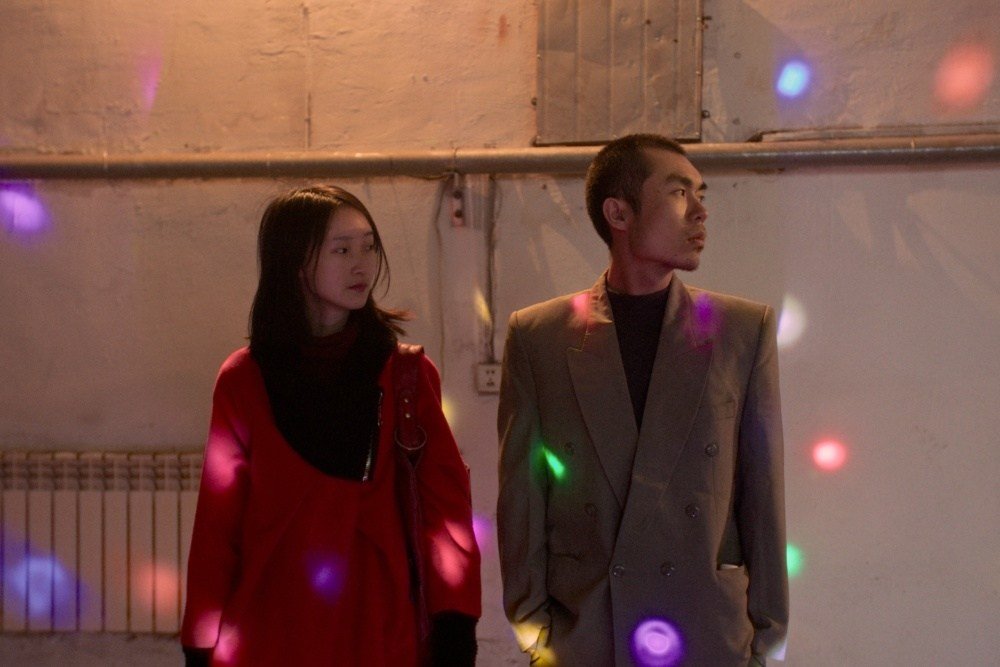
The story centers on an impoverished young miner living a muted existence in a remote town where emotional reticence is the norm among men. A mysterious young woman disrupts his routine, awakening a curiosity he thought long dormant. Drawn to follow her into unfamiliar territory, he abandons the familiar comforts of his old life, not realizing she is hiding something about who she really is.
“We’re thrilled to bring ‘Border’ to audiences at San Sebastián and to see the film presented in official competition,” said Matteo Lovadina, Reel Suspects CEO. “Ah Biao is a remarkable new voice with a distinctive cinematic vision, and we believe this is the beginning of a very exciting journey for him. He is undoubtedly a filmmaker to watch, and we’re delighted to be introducing his work to international audiences at such an important moment in his career. ‘Border’ presents a distinctive cinematic aesthetic rooted in Eastern experience. Through image, sound, performance and space, it draws on the language of cinema itself to explore the existential struggles of human experience. Its strikingly fresh audiovisual expression reveals another dimension of contemporary Chinese-language cinema.”
Ah Biao, who was born in Shanxi, China, and is now based in Bangkok, works as a director, screenwriter and cinematographer. “Border” is his first feature, placing him in San Sebastián’s main competition lineup alongside veteran directors Mike Leigh, Pablo Larraín, Nicole Garcia and Yeşim Ustaoğlu.
Borderless Films produced “Border,” with Jenny Man Wu as producer alongside fellow producers Lili Tong, Tyler Hill and Xue Ma. “For us, bringing a fully independently produced first feature to San Sebastián’s official competition is especially meaningful,” said producer Jenny Man Wu. “The film was carried forward by a deeply committed team who believed in Ah Biao’s vision and found ways to sustain it at every stage of its production.”
The film also figures among 24 titles in the running for this year’s Sebastiane Award, an honor Basque LGBTIQA+ association Gehitu gives to the film judged the strongest portrayal of queer lives and experiences.
Lovadina launched Reel Suspects in 2005 as a Paris-based boutique sales outfit specializing in independent film and up-and-coming directors, building an international reputation for elevated-genre fare alongside a roster of acclaimed first features and established names. The company’s current slate also includes Israel Cárdenas and Laura Amelia Guzmán’s “Interior Apartement Dia” and Zoe Berriatúa’s “Buffet Libre.”
“Being Heumann” opens on a New York sidewalk that doesn’t allow Judy Heumann to climb it. There’s no curb cut or ramp. Just a woman and her wheelchair. Director Siân Heder holds on it — and then Judy gives the middle finger. And it immediately hooks the viewer in for the ride.
At least that was the case for the audience inside Roy Thomson Hall, who sat with rapt attention as Heder’s film opened the 51st Toronto International Film Festival on Thursday night. The film is Heder’s first since “CODA,” the Sundance sensation which went on to win the best picture Oscar, a first for Apple Original Films and any streaming company. It chronicles the true story of how Heumann and her motley crew of activists fought for equal rights by waging a 28-day sit-in protest that helped pave the way for the Americans with Disabilities Act.
”I don’t want to make a biopic about you. I want to make ‘Dog Day Afternoon’ with disabled people,” Heder said she told Heumann when she pitched herself to direct the project.
After the screening — which ran with open captions, ASL interpreters and live captioning for the onstage portions — Heder sat for a Q&A with her actors to discuss how they made the film and her critical decision to cast actors with disabilities. Heder’s choice created a massive opportunity for actors like Madeley who has been a wheelchair user since birth.
Madeley already idolized Heumann, known as the “Mother of the Disability Movement” — “She was funny. She was fierce. She was cheeky. She was naughty. She was sexy,” Madeley pointed out.
“That is a gift for any actor to be able to play with all of those different things,” Madeleu continued. “But that was a challenge as well, and I knew the pressure that so many disabled people are waiting to see a character like this on the big screen, myself included.”
The British actress — a BAFTA nominee for “Don’t Take My Baby,” and familiar to others from “Doctor Who” — has been very good in things you may have missed. Here she is the whole ballgame, and she plays Heumann without a single note of the saintly patience that biopics tend to hand their disabled subjects. Madeley’s Judy is funny, tactical, horny and even a little bit of an asshole sometimes. She is passionate about the right things and furious in a way that keeps finding new gears.
The movie also shows what Heder can do with real money behind her. “CODA” was a small film about a small town, shot at the scale its budget allowed and beloved for its intimacy. “Being Heumann” is a period piece with a sprawling cast — the activists’ 28-day occupation of the San Francisco Federal Building, the longest occupation of a federal building in U.S. history, was staged with hundreds of people. From there, they bring their fight to Washington, D.C. and, finally, to secretary Joseph Califano’s front door. Apple funded the film, and Heder makes the leap look easy. Give a good director resources and you find out what she was doing without them.
The ensemble around Madeley — Michael Patrick Thornton, Russell Harvard, Daniel Durant and a deep bench of disabled performers who describe themselves in the film as “radical crips” — is cast with an authenticity most productions still treat as a “nice-to-have.”
“As disabled kids, you grow up being told like there’s this ceiling that’s made of vibranium that’s always hanging over you, and no matter what you do, you’re not going to be able to break out of this box, and confined to trying to do whatever society thinks that you can do,” said Charlie Rush-Reese, a blind performer who makes his acting debut in the film. “Being part of this project really not only inspired me to continue to chase my dreams and know that event a black kids in Minnesota can grow up to be in a movie like this, but … that [it] would inspire other disabled people to go out and chase their dreams.”
Oscar nominee Mark Ruffalo, a decade after he brought “Spotlight” to Toronto, plays the bureaucrat stalling on Section 504 of the Rehabilitation Act with the weary decency of a man who thinks the math is on his side. While he doesn’t have the role or screen time needed to propel his way into the supporting actor race, if the film gets big enough, you can never count him out.
Dylan O’Brien, Rob Delaney and Ray Fisher round out the cast.
“My first thought when I signed up for the project was, ‘This would be such a fucking punk rock summer to be a part of,’” said O’Brien, who plays a local reporter who embeds himself with the activists and publicizes their efforts. But, making the movie was more meaningful than he anticipated. “Evan did not necessarily realize how galvanized he would be along with them, and that reflects my experience.”
The film allows Heder to do something American movies rarely do. Without spoiling where the film goes, “Being Heumann” treats its disabled characters as full romantic and sexual beings: for example, there’s an intimate scene between a disabled performer and a nondisabled one that is played for tenderness and desire, not a learning lesson.
Moreover, the film reinforces that that disability rights movement was never just about ramps and regulations for one community. It is, and has always been, about seeing this minority group as people who have the right to be wanted and not as a set of limitations someone else can see from across a room.
The ultimate result is, plainly, a crowd-pleaser — the good kind — engineered by someone who knows the difference between manipulating its audience and bringing genuine care and heart to a story. It’s funny while also being inspiring, and specific without being alienating. That matters this weekend for one concrete reason and that’s the People’s Choice Award. Toronto’s audience vote carries more Oscar-season weight than any jury prize, and the pipeline is well-worn — “Nomadland,” “Green Book,” “12 Years a Slave.” If “Being Heumann” takes it, the conversation changes overnight from “Will it play?” to “How far can it go?”
In the Oscars landscape, we can see a few possibilities.
Madeley belongs in the best actress discussion, and a win in Toronto would strengthen her position there. Screenplay is alive as well — Heder and Rebekah Taussig wrote from Heumann’s memoir, “Being Heumann: An Unrepentant Memoir of a Disability Rights Activist and Heder already owns an adapted screenplay Oscar for “CODA.”
The film is a natural for the Academy’s casting category, given the scale and integrity of the ensemble Heder assembled. Add in production design with a 1977 New York, San Francisco and Washington, all rebuilt with period specificity.
And best picture is not out of reach for a movie made by an Oscar-winning director, backed by the studio that won the category the last time she showed up at the big show.
The campaign won’t have to manufacture that poignancy. The real Heumann died in 2023, having spent a lifetime making the country hold a door it kept trying to close. That message could be a strong factor.
”Being Heumann” debuts in theaters on Nov. 6 before streaming on Apple TV.
CBS Studios has filed a motion in Los Angeles Superior Court under the anti-SLAPP statute to strike a lawsuit filed earlier this summer by former “Matlock” writer John Lowe. The CBS Studios filing included multiple declarations disputing his allegations against three of the show’s executive producers.
Lowe’s suit against CBS Studios, showrunner Jennie Snyder Urman and executive producers Nicki Renna and Jeffrey Lieber alleged that “racially stereotyped comments about his body and genitalia” were made toward him and other Black cast and crew members, creating a “hostile work environment.”
In its filing, the studio threw its full support behind Urman, Renna and Lieber, while countering many of Lowe’s allegations. Lowe’s attorney Ron Zambrano told Variety that they had not yet been served the motion yet, so he couldn’t comment on the specifics, while writing, “But I am confident we will successfully oppose the motion as the complaint was drafted with that possibility in mind.”
“We take allegations of discrimination and harassment very seriously,” a CBS Studios spokesperson said. “Today, with the filing of our motion to strike, we took our first step toward challenging the baseless complaint filed by former ‘Matlock’ writer John Lowe. As stated in the motion and following a thorough investigation, we are confident that Lowe’s accusations are demonstrably inaccurate and maliciously fabricated, and will not allow them to go unchallenged.
“False allegations are deeply damaging, both to those wrongly accused, and to anyone with a serious and legitimate claim of discrimination,” the spokesperson added. “We stand firmly behind our producers and look forward to the truth coming to light.”
In his lawsuit, Lowe — who worked on “Matlock” from October 2023 to July 2024 (as CBS Studios noted, not in 2025, as Lowe’s complaint stated) — claimed he was terminated from his position as a form of retaliation, as it came two weeks after reporting an alleged incident in which Urman referred to Juneteenth as “Coonteenth.”
In declarations, Urman, Renna, Lieber and other witnesses disputed this, and said that Urman “never used that word (and) did not say it to Ms. Renna, to Lowe, or to anyone else.”
Lowe had also in his complaint detailed an alleged incident claiming that Urman brought in her dog to the writers’ room, “citing that her children ‘didn’t like the aesthetic’ — referring to the dog’s black color.” He claimed he was coerced into taking the dog for nearly a year, while other staff were present, a move he felt “was racially motivated and designed to single him out for humiliation based on his race, not for any creative or production reason.”
In declaration, Urman, Renna and Lieber said it wasn’t Urman’s dog, nor did she place it on Lowe’s lap or comment on the dog’s appearance, nor was she present when Lowe asked to adopt the dog.
As for Lowe’s claims that Renna said Black cast member Eme Ikwuakor “can barely read” and allegedly called Lowe late at night and said she “was in bed wearing only her underwear,” the producers said in their declarations that Lowe made it up.
And regarding Lowe’s allegations of sexually charged comments, the producers declared that “Lowe’s sexuality or his sex life was never questioned, nor was his body ever commented on.”
Meanwhile, in her declaration, Urman said that in January 2026 — 18 months after his departure from “Matlock” — Lowe sent an email to Urman demanding $10,000. Urman said she reported the email to the company’s HR representative, and that Lowe’s first complaint to the company’s HR representative came after that demand for $10,000 and after Urman had contacted HR about it.
Back in June, CBS Studios said it had investigated the allegations and didn’t find any merit to them: “We are committed to maintaining a safe and respectful environment for everyone and take all workplace complaints seriously,” a company spokesperson said at the time. “In this instance, a thorough investigation was completed, and we were unable to find support for his allegations. We look forward to vigorously defending this lawsuit.”
At the same time, Lowe’s attorney, Ron Zambrano, sent this statement: “There is no excuse for this blatant racism and harassment. CBS should be ashamed for allowing it, and the ‘Matlock’ showrunner and producers should be held accountable. Mr. Lowe was subjected to degrading and unlawful conduct. He deserved to be treated with dignity and respect, as everyone should expect in the workplace, not subjected to these outrageous and illegal racial slurs and sexual harassment without any connection to his work on the show.”
In the filing, CBS Studios said Lowe’s complaint was “filled with fabrications and outright lies that it resembles a grotesque work of fiction more than a court pleading. Lowe was never subjected to race or sex harassment as he claims, and as this case progresses, Defendants are confident that Plaintiff’s malicious and unsupported attacks will be publicly exposed for what they are: retaliation by a desperate man who was not renewed as a writer because his performance deficiencies detrimentally impacted CBS’ ability to convey the messages it desired.”
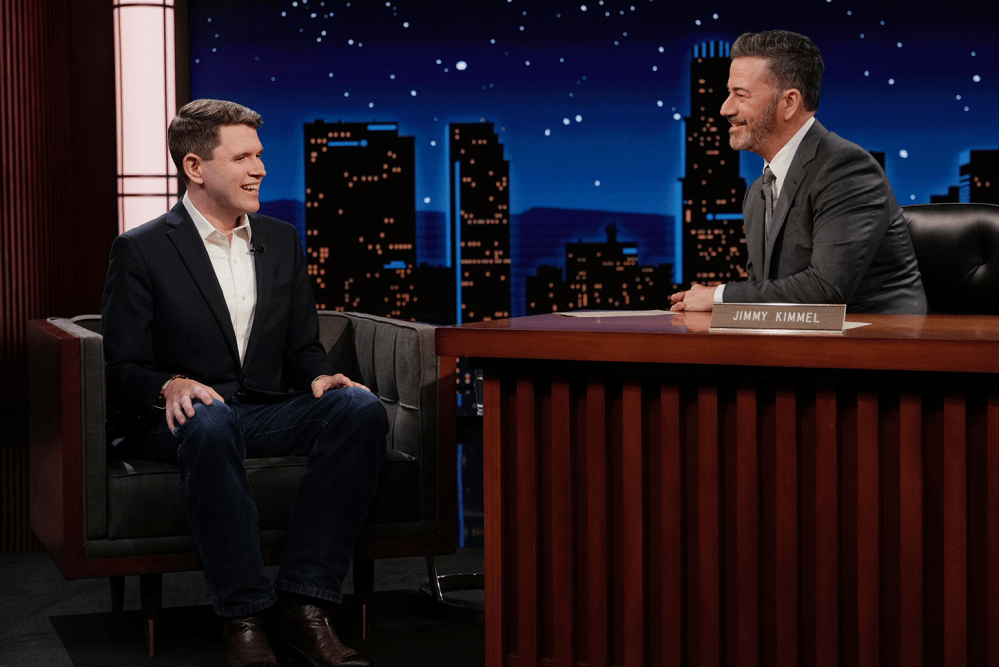
Jimmy Kimmel turned to YouTube on Thursday night to house his interview with Texas Democratic Senate candidate James Talarico — in light of fears that the FCC would punish ABC stations for running the chat.
“What are they so scared of you?” Kimmel asked the candidate. Said Talarico: “Well, they’re worried that we’re going to win this race in Texas. But we are the underdogs until the last vote is counted. We’re not just going up against the most corrupt politician in Texas. We’re going up against this entire corrupt system.”
Among the topics that Kimmel and Talarico discussed were him not taking money from corporate PACs, Trump’s relationship with Talarico’s opponent (Ken Paxton), the GOP attempting to suppress voting and how the teachings of Jesus had been corrupted by the MAGA movement.
“Scripture tells us that you can’t love God and hate other people,” Talarico said. “You can’t love God and abuse the immigrant. You can’t love God and oppress the poor. You can’t love God and bully the outcast … I was brought up to believe that in the face of a neighbor, we glimpse the face of God. Matthew 25 tells us Christians exactly how we’re going to be judged and how we’re going to be saved by feeding the hungry, by healing the sick, by welcoming the stranger.
“I often wonder what would Jesus do if he visited the U.S. Senate. I think he would tell the senators on the floor, ‘Depart from me, for I was hungry and you cut my food assistance. I was sick and you kicked me off Medicaid. I was a stranger and you deported me and my family.’ And then I think he would flip over those fancy desks on the floor of the U.S. Senate and demand that we take care of all of our neighbors, especially the least of these.”
Talarico also addressed the fact that his opponent, Paxton, was previously impeached by his fellow Republicans for bribery. “Ken Paxton gets rich on the public’s dime, and then he refuses to answer basic questions about that corruption,” Talarico said. “I mean, literally, any time someone asks him a hard question, he runs away. You can watch these videos of people asking him about his 15 homes, asking him about the THC ban in Texas, and he gets this terrified look on his face, and he just walks the other way. When I get hard questions on the campaign trail, I answer them, and that’s exactly what we should expect from our public officials in a democracy.”
On his actual ABC broadcast monologue Thursday, Kimmel told the audience that “this is — the show you’re watching — this is an unusual program for us because in a few minutes, I’m going to interview James Talarico — the Democratic nominee for U.S. Senate in Texas. But you’re not going to see it.”
Kimmel announced on his show Wednesday night that his interview with Talarico would not air on ABC and would instead be posted to YouTube, citing concerns about the FCC, which has previously threatened ABC station licenses and played a key role in Kimmel’s brief suspension in 2025.
“Out of consideration for our local stations, especially our ABC affiliates in Texas who would have to deal with this nonsense, my interview tomorrow with James Talarico will not air on television,” Kimmel said. “It will be posted on YouTube instead. It will not be on TV.”
He expanded on the reason in his Thursday monologue: “I mentioned last night, this interview will not be televised because of threats from the FCC, led by Commissioner Brendan Carr, who says we do not have the right to interview whichever candidates we want to interview. Which is something we’ve been doing for twenty-plus years.
“This is yet another attack on free speech, something that has become all too familiar for us here at the show for us in the country,” Kimmel added. “The FCC wants to make it impossible for me to interview candidates by requiring that I interview every candidate on the ballot who asks for equal time. So not only would I have to interview James Talarico as a Republican opponent, Ken Paxton — which, by the way, I would love to do, call me. I have many questions for you. Our affiliates in Texas would have to give equal time to as many candidates as there are on the ballot, and there’s about 10 candidates on the ballot. But the White House, once again, is claiming that what I’m saying, which is clearly true, is not true.
“It’d be great news if we could do this the easy way instead of the hard way. That would be terrific.”
Asked by MS NOW about the interview before it was posted to YouTube, Talarico said he was “still hopeful” it would air on ABC. He called the FCC’s threats “the most dangerous form of cancel culture,” saying, “People at the top, powerful politicians, powerful media executives, censoring what we watch, what we read, what we say. And that, again, should be a concern to everyone who believes in the First Amendment and believes in the freedom of speech.”
It’s not the first time a late-night show has preempted an interview with the Texas Senate candidate. In February, Stephen Colbert said CBS executives pulled his interview with Talarico from the air over concerns about violating the FCC’s “equal time” rule, which requires broadcast stations to give equal time to political candidates when they appear on-air. While there are exemptions to the rule, Trump’s FCC chief Brendan Carr has been aggressive about clamping down on broadcast programs perceived as liberal. (The government agency is currently in a dispute with ABC’s “The View” and, in 2024, went after “Saturday Night Live” over a brief cameo by Kamala Harris.)
Ultimately, Colbert put his Talarico interview on YouTube, with the clip garnering 9.5 million views. The Talarico campaign raised $2.5 million in the 24 hours after Colbert revealed he was barred from airing the interview.
Here’s Kimmel’s interview with Talarico, posted Thursday night on YouTube:
Art helped us process 9/11 in so many ways right after the attacks. But for me the breakthrough wouldn’t come for nearly five years, at a midtown Manhattan movie theater.
The Tribeca Film Festival had decided in 2006 to open with a premiere of Paul Greengrass’ United 93, despite puzzling murmurs of “too soon.” (Is there a reverse statute of limitations for when artists can make sense of trauma?) Tribeca organizers — Robert De Niro, producing partner Jane Rosenthal and the rest of the staff of the healing-minded Manhattan film gathering — invited not only Greengrass and the many terrific workaday actors featured in the film but the family members of the victims and heroes of that titular flight’s hijacking.
Covering the event for my employer at the time, I approached the old Ziegfeld Theater with a mix of curiosity and anxiety. I had lived through 9/11 — watched the towers burn from a downtown apartment window, stood in Union Square as people streamed in soot-filled and shell-shocked. Was a movie recalling, let alone reclaiming, that day what I needed?
I couldn’t have been ready for what followed. The answer was a resounding yes, in ways impossible to anticipate.
I felt it immediately, stepping on to the red carpet, as it were, with the family members clearly eager to share with me or anyone who would listen their memories of those who died. I wouldn’t call them happy or even content, but a certain relief seemed to light their eyes as they opened themselves up, for the first time or maybe the 500th time, to talk about the men, women and children who died on that plane as a sidewalk-full of reporters eagerly listened.
The movie of course was dramatically effective, cinema at its urgent finest. Greengrass bringing us along, gently holding our hands from the early moments of Tuesday-morning banality, to the terror upon the realization of what was happening, to the activation that something had forever changed — a metaphor in celluloid for what we all went through in the lead-up to and aftermath of that incogitable day. Sitting through the film I couldn’t believe what the director and his cast had achieved — couldn’t believe that something that lived so abstractly in our minds could so viscerally be created in front of our eyes.
And then, the film’s ending — the plane spins down, the screen goes dark, the sound stops. In any other theater the room would have fallen into a reverent silence. But the room wasn’t silent. It was filled with wailing. Waves and waves of wailing.
I was sitting in the main section of that grand 20th-century palace, the loge right behind me. The family members were mainly sitting in that loge. When the movie ended they let out the most heartfelt, soulful, painful cries, each of them with their own rhythm and cadence, all combining into a tragic cacophony that, if I’m being honest, I still hear in my nightmares. Just the loudest crying and sobbing you’ve ever heard, coming from dozens and dozens of people, cascading like a surging river, unending, unavoidable.
As the cries washed over me and everyone else who didn’t lose people on that day, they bridged a gap, between the victims and the onlookers, bringing all of us in the latter group into their grief in a way that I have never been brought into another’s grief before. It hit me then what Greengrass had done — he hadn’t just re-created a terrible event. He had given victims a chance to see their family members one last time. While we were watching a movie, they were watching their loved ones eat, talk, live, fight and, yes, die. (One compelling moment, in a darkly comic way, arrived in a crowded restroom after the screening when an actor who played a hijacker came face to face with a family member. You could feel the room bubble with tension — it was only a second of silence but it felt like an hour — until the family member put his hand gently on the actor’s shoulder and said “you were very brave.”)
And then it hit me what Tribeca had done too: Invited all of these family members to experience that last-glimpse together. To turn private mourning into public bonding.
The moment stands out as one of defining cultural experiences of my life. And it stands as a defining cultural experience of the Tribeca Film Festival, which like the tragedy that spawned it marks its 25th year in 2026.
A lot of the talk about art “helping us heal” can feel hollow. The only thing that truly makes us heal is time, and maybe therapy. But Tribeca’s stated goal of using art to ease the pain of a city and a nation landed as genuine that springtime day. And, frankly, on many other days.
Founded — as the new Matt Tyrnauer documentary Tribeca 25 dropping on Netflix Friday shows — in the months after the attacks by De Niro, Rosenthal and Rosenthal’s then-husband Craig Hatkoff, the Tribeca Film Festival soon became more than just a one-off benefit. It became, as Graydon Carter says in the film, part of the cultural calendar of the city. (You can watch an exclusive clip of the movie below.)
From the Nelson Mandela and Bill Clinton appearances at the first edition to Nas, George Harrison, Aretha Franklin and other performers taking the stage in later years, Tribeca has turned into a curious kind of mainstay — like downtown itself, always changing, sometimes for the better, sometimes for the less-better, but somehow still here and strong all those planned obituaries later. (After a somewhat odd period owned by James Dolan, Tribeca for the past seven years has been owned by James Murdoch’s investment group.)
No one would accuse Tribeca of hewing closely to a single identity. Over its quarter-century it has sometimes lurched between indie films and studio movies (did a festival really need a Spider-Man 3 premiere?); between feature discoveries (the enduring gem City Island) and features you’ll never hear about again; between worthy docs and foreign films ((Taxi to the Dark Side, early Asghar Farhadi) and too many authorized-celebrity nonfiction boondoggles to count. Not to mention the cool if unruly experiments in VR, multimedia and, this year, AI.
This wasn’t all of the festival’s doing; Sundance and SXSW usually had first looks at the best of the indie film crop, forcing Tribeca to other pastures. But that kind of ecumenism, whether born of ideology or necessity, is exactly what makes Tribeca keep on, the let’s-just-try-it-what-the-hell-ism. Film people sometimes like to shade the gathering, but New Yorkers rarely do, and I find that telling: faced with tragedy, residents of this city simply want to get together and talk about something in front of them, whether that something is joyous or odd or even just re-lives the worst day of their lives. Like the city after that terrible day, simply being together is enough.
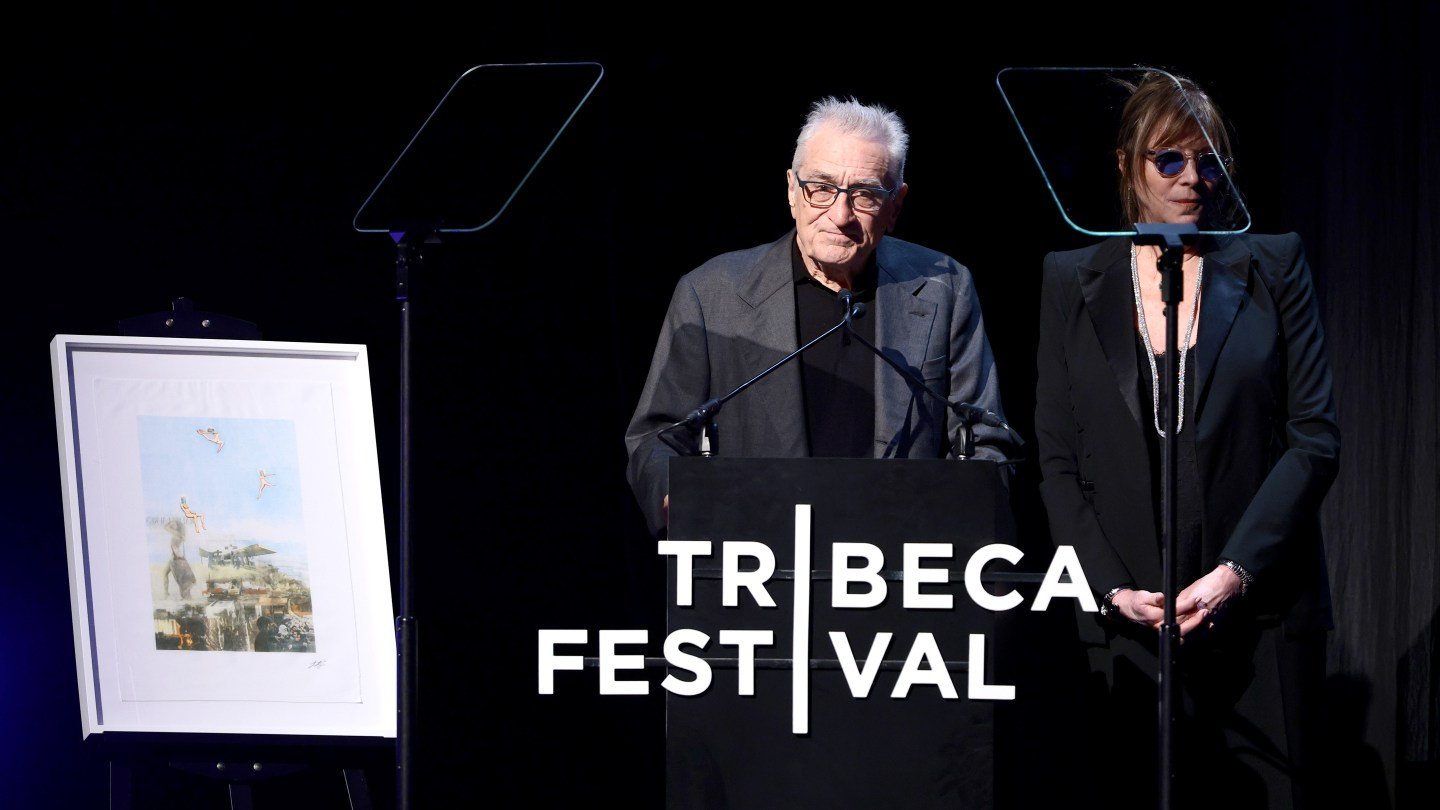
To mark the 25th anniversary of 9/11 and the release of the doc, I sat down this week with De Niro and Rosenthal at CBS News headquarters in midtown Manhattan (fresh off a Gayle King hit) to talk to them about 9/11, the anniversary and the festival’s place in both.
Let’s talk about that night of the United 93 premiere, which was unlike anything I’ve ever felt in a movie theater. How did it play for you guys?
Jane Rosenthal: It was very special and one of the highlights of the past 25 years. You have to remember that the Shanksville [PA] families haven’t already felt like they were included as much as some the others. So we were just trying to give them a community, a place where they can come together and remember.
The tone of it feels so hard to strike — is this a celebration? A commemoration? A memorial? Almost, perhaps, like a microcosm of the festival itself.
JR: We had a lot of questions about how to do it. Like, would we have a red carpet? Who would we invite? It’s really uncharted territory. But I think in the end we got it right and it was one of the most special moments in the history of the festival.
Bob did that moment stand out to you? Or is there another that really embodies Tribeca in your mind?
Robert De Niro: It’s hard to pick one. But I do remember that first year, right when we started, standing on the roof [at Tribeca headquarters and De Niro offices on 375 Greenwich] and looking down and seeing thousands of people coming out and thinking “we really have something.” We had no idea if it would work. And then I’m thinking “downtown can come back.” I don’t know if anything will compare to that feeling.
Jane, creating something out of nothing seems hard for anyone with a film-festival dream, let alone in a place that was the site of a major terrorist attack with nothing but rubble and rescue workers around. What was the scale of the challenge?
JR: It really did seem impossible. I mean, we were walking into movie theaters with hazmat suits because they were telling us it was unsafe. We really didn’t know if anyone would come. And winging it doesn’t really begin to describe it. George Lucas had a new Star Wars movie coming out. Bob walks into my office and says, “George tells me the movie won’t be ready in time.” And I said “maybe we just push the festival back? It’s not like anyone is waiting for it.” So that’s what we did. We had no rules, no business plan. We just knew we needed to do something.
RDN: New York seemed stuck. Downtown seemed dead. The only thing we could do is try to change that.
JR: It’s a feeling about being part of a community. That’s what they were trying to take away with the attacks. So that’s what we tried to bring back.
Bob you talk movingly in the film about your experiences on the day. We all had them but to think that a celebrity was basically feeling what we all were feeling brings a strange kind of comfort.
RDN: It was surreal. I was supposed to go to California later that day. I was coming back from a meeting in Midtown and my son called me in the car and said a plane hit the Twin Towers. Then he called me again and said another plane hit. I get to my office, which is nine blocks north of the Towers. I have a big picture window and saw them burning. Then they just pancaked down.
That’s one of the most striking moments in the movie, where you say that even though you watched it out the window with your own eyes you didn’t believe it. I think a lot of us felt that way.
RDN: I couldn’t believe what I was seeing — I had to watch CNN just to confirm it, as strange as that sounds. Right at the moment it felt like nothing could ever go on as usual. “We are in the middle of an apocalypse,” I kept thinking.
There’s been some stir in recent days here in New York about whether Mayor Zohran Mamdani should attend the memorial, a protest movement led by Rudy Giuliani, George Pataki, former FDNY commissioner Thomas von Essen and a few families, because — as they see it — he’s had associations with people who minimized the tragedy. Do you think he should be there?
RDN: I don’t see why he shouldn’t come. He’s the mayor. I haven’t heard him say or do anything yet that would disqualify him from being there. Maybe I’m naive but you have to give the guy a chance. He’s not a part of what happened.
Do you understand why families of victims would find it problematic or does the logic not track for you?
RDN: [pauses to think] I understand their pain but I still think he should be there.
JR: I think this stems from tension he’s had with the fire department and the comments about defund the police, which I don’t think he really meant.
RDN: Well he did say it. And of course it’s ridiculous. You can’t defund the police. It’s not going to happen. But I still think he should be at the memorial.
JR: He should use it as a baton to unite the city.
RDN: As a bridge.
Speaking of partisan politics, you’ve been outspoken on Trump…
RDN: We have to stop him. It’s insane. We have to send people to voting booths and make sure they can go in. Just watch to keep them safe. It’s crazy we’re here but this is where we are. We have to protect our elections.
As we speak Alex Gibney’s Elon Musk documentary is premiering in Venice. One of the things it’s about is how Musk himself could put his thumb on the scale with the election.
RDN: He’s a monster. I don’t know how else to say it. So many of the tech barons. They were supposed to be helping us and now look at what they’ve done to us. And they’re doing things not to other countries but here, in America, to America, in our own backyard. It’s unbelievable.
You’ve actually had a very interesting relationship with tech and deepfakes as an actor; Marty used it in a groundbreaking way to de-age you in The Irishman. That was more than seven years ago. Do you like where AI has gone?
RDN: I have a lot of concerns about where it’s gone. Where it’s going. I did that thing at CAA — The Vault (a partnership between the agency and YouTube to give performers more agency over their likeness). I have control over my image now. You need my consent. If you do it right and I’m involved I don’t think I’d have a problem with it. But a lot of it is not that. It’s things I’d never say.
JR: I think The Vault is very good but we have a long way to go to get control.
RDN: You know every year Apple asks me to take a picture and then they’ll give me an iPhone if I do. And I’m never doing that; I’m not going to help them sell their technology. I always say no. I’m very polite about it. But they know.
Before we break, I have to ask: what does the future of Tribeca look like — what do you think will be said about it after the next 25 years?
RDN: Well I won’t be here for that. Maybe you will.
You’re saying you don’t think Bryan Johnson can give you immortality and you can be here that way?
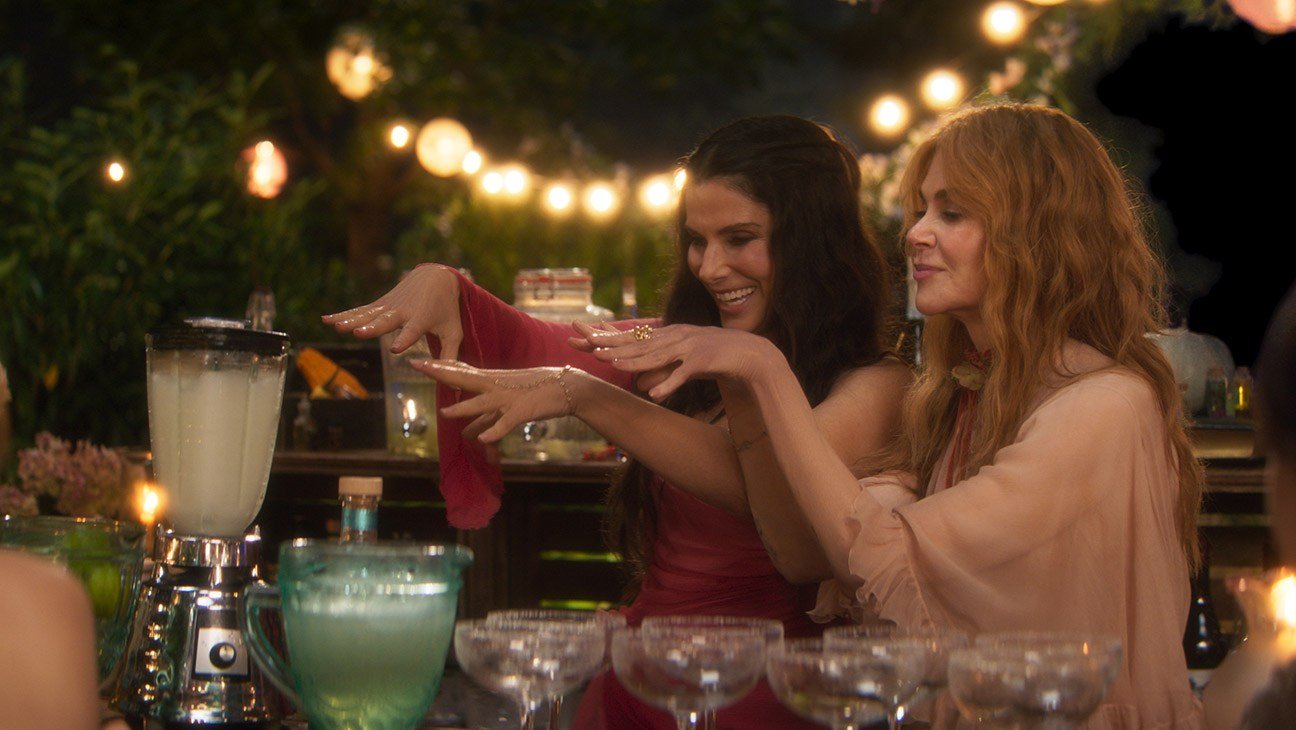
Warner Bros. Pictures‘ Practical Magic 2 debuts in over 4,000 theaters and arrives 28 years after Sandra Bullock and Nicole Kidman originated their roles as the Owens sisters in the first film. The studio projects director Susanne Bier‘s feature to gross between $30 million and $35 million from North America in its opening weekend, with an additional $18 million to $23 million overseas.
The initial movie collected a total of $46 million domestically from its theatrical run that began Oct. 16, 1998, meaning that the sequel has a chance to surpass this in its debut frame. Adapting the work of author Alice Hoffman, Practical Magic 2 centers on witches Sally (Bullock) and Gillian (Kidman), who aim to break the curse that has prevented their family members from finding love. Joey King, Maisie Williams and Lee Pace round out the cast.
Critics have not felt the film’s magic, as the sequel holds a 36 percent approval rating on Rotten Tomatoes. In her review for The Hollywood Reporter, critic Angie Han wrote that the movie “works better the less you look for any sense of logic, and the more you just lean into the transient joys of watching these [two] actresses bounce off each other.”
Sony Pictures’ Spider-Man: Brand New Day has led the domestic box office for six consecutive weeks, but that streak will come to an end this weekend.
Still, the Tom Holland-led film that hails from Marvel Studios continues to make its mark, as the record-setting movie is on its way to becoming the top title on the all-time North American chart. The feature is expected to soon surpass the $936 million domestic total for 2015’s Star Wars: Episode VII — The Force Awakens, which should happen either this weekend or the following one.
Also opening this weekend are Angel’s Runner, starring Alan Ritchson and Owen Wilson; Focus Features’ Andrew Garfield-led The Uprising; and Inaugural’s The Fix, with Liam Neeson and Zachary Levi.
Oscar-winning CODA director Sian Heder argues Being Heumann, her new film about disability rights that opened the 51st Toronto International Film Festival, is timely because “collective action matters.”
“We are living in a time when a lot of groups of people are getting left behind,” Heder told festivalgoers at the Roy Thomson Hall on Thursday night. “The rights that many people fought for in the 1970s are under threat, and it is easy to feel helpless,” she added before a local audience showing a groundswell of patriotism amid Donald Trump’s cross-border trade and tariffs war with Canada.
“I have been out on street with a cardboard sign many times this year, and thought does this even matter, does this protest matter. There’s so many battles on so many battles, it’s hard to know where to fight,” Heder said. She spoke to introduce Being Heumann, her Ruth Madeley-starring drama about protest leader Judy Heumman, who led a historic 1977 campaign that launched the disability-rights revolution in the U.S., which eventually led to the Americans With Disabilities Act.
“This film is what happens when people refused to be invisible,” Heder added before a post-premiere Q&A saw her bring onto the stage her cast of disability actors that played disabled people in her crowd-pleasing movie for Apple Original Films.
Madely said she was inspired by the opportunity to bring Judy Heumann’s ferocity and humor to the big screen.“Thank you for so much for trusting me with something so huge,” Madeley also told Heder after being offered her dream role.
Toronto Mayor Olivia Chow was also in attendance to help open the 2026 edition of TIFF. Chow didn’t name Trump directly, but pointed to the U.S. president recently renaming one of the Great Lakes on the U.S.-Canadian border as “Lake America” amid stalled efforts to negotiate a new cross-border trade deal.
“I am pleased to say our magnificent waterfront will always be Lake Ontario,” Chow said to loud applause. Trump’s trade war with Canada is expected to overshadow TIFF as around two-thirds of Canadian film and TV series exports go to the U.S. market, even as Canadians consume a host of Hollywood film and TV content north of the U.S. border.
It’s a somewhat telling coincidence that “Stuffed,” a very peculiar new vehicle for Jodie Comer, is premiering at the same edition of Toronto as “Prima Facie,” the film adaptation of the stage hit that won the Liverpudlian actor a Tony last year, but with Cynthia Erivo taking over her role for the screen. “Prima Facie” could have given Comer a chance to dazzle a wider audience with what we already knew she could do; “Stuffed” will delight and/or bewilder a smaller one with what we definitely didn’t, namely Broadway-level musical emoting in a macabre pop-opera about a romance unfolding through the art of taxidermy. She scores points for risk-taking, then, but she also just scores: A high-wire high-concept piece like this stands or falls by the conviction that the actors bring to it, and Comer plays it from the gut.
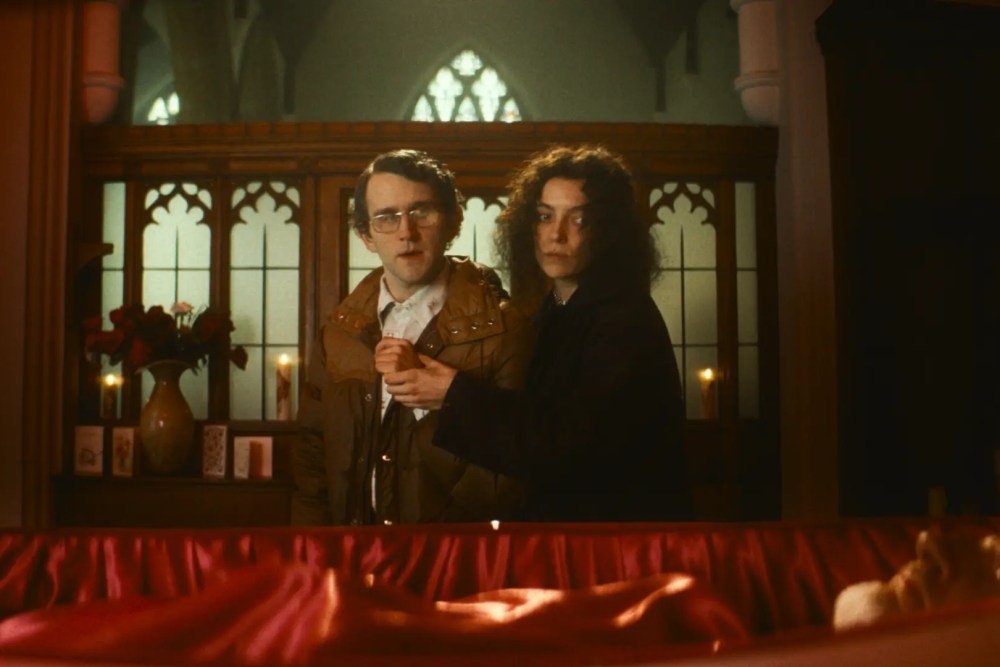
So, for that matter, does Harry Melling — an actor who, following last year’s sub-dom romcom of sorts “Pillion,” seems to be making unlikely British indie love stories his niche. Which makes sense, given that he’s a pretty unlikely leading man: His slightly crumpled face, with its resting expression of forlorn, puppyish vulnerability, carries much of the comedy and the tragedy in Theo Rhys‘ endearingly bizarre debut feature, adapted and expanded from his BAFTA-nominated short of the same name. It’s those disarranged features and disconsolate mien that make his character, friendless factory drone Bernie, a figure of fascination for hermetic amateur taxidermist Araminta (Comer); she likes them so much, in fact, that she’d like to fix them in place forever.
In its briefest form, the logline for “Stuffed” promises body horror of the most morbid order: A woman obsessed with the idea of forever preserving a human body advertises for a volunteer to be killed and made into a fleshly artwork; a man who feels invisible while he’s alive steps forward, believing that once he’s stuffed, he’ll finally be seen. David Cronenberg could have done something vividly disturbing and intimately sensual with this idea, but it’s unlikely the result would have landed anywhere in the ballpark of “sweet” — which Rhys’ film, against substantial odds, actually is, even as its atmosphere of fetid physical and psychological decay turns the stomach a little.
If making the whole enterprise a musical sounds like something of a tongue-in-cheek stunt, meanwhile, that’s reckoning without the plaintive lyricism of writer-composer Joss Holden-Rea’s songcraft, which feels heavily indebted to the earnest modern school of Broadway balladry. The score could use a few more hummable tunes, but its sincerity is welcome in a film so rooted in extreme strangeness that it needs to dial down the quirk factor in at least a couple of areas.
Indeed, “Stuffed” takes some time to find a happy medium between the violent eccentricity of its premise and its potential for positively baroque levels of British tweeness. Its opening passages lean in the latter direction, outlining Bernie’s humdrum existence (complete with perfectly banal job in a sandwich factory) with fairytale-style naïveté to match his unworldly outlook, not to mention a hint of Wes Anderson stylization in the superb production design by Beck Rainford (“Ray and Liz,” “Club Zero”), albeit with a thrift-store scruffiness and perennially overcast backdrop to suit the film’s working-class Northern setting. (Rainford also provides ample sight gags for any viewers still tickled by the “bad taxidermy” meme that ruled the web a few years back.)
Once we getting into the more granular details of these people’s lives, however, they start ringing a little more true — and so in turn does the film. A socially awkward introvert devoted to the single mother who, it seems, raised him well into adulthood, Bernie is now returning her care as she slips into dementia — but when she stops recognizing him, it’s as if his sole connection with another human being has been snuffed out. Araminta, it gradually emerges, has a different backstory behind her withdrawal from the world, though her introversion is of a more confidently, creatively aloof variety. When Bernie responds to her ad, he’s astonished that someone so interesting and witchily beautiful should have designs on his body, even if those designs involve formaldehyde: She practically flatters him into a death wish.
Yet the more time they spend together, mapping out their exact plans for his demise and preservation, the more they appear to be peas in one very lonely pod, and mutual intrigue turns to affection. Where does that leave the gruesome project that binds them together? Rhys and Holden-Rea’s script — deftly and quite knottily expanded from the story’s shorter format — takes the central relationship through stages that nod, by turns, to the odd-couple romanticism of Richard Curtis and the knife-twisting adult storytelling of Roald Dahl, with a final dose of Shakespearean fatalism for good measure.
None of which would convince if Comer and Melling weren’t so honestly committed to the bit. Both quite capable singers, they’re alive to the kitsch excesses of the film’s horror, melodrama and musicality, not to mention Holly Rebecca’s suitably mothballed costumes. But they play it just straight enough too: Together, they find a deep, calcified sadness to these oddballs, a desperate need to do something, anything extraordinary, and, finally, a giddy flicker of empathetic self-recognition in each other. It’s that sadness, and that relief, that ultimately dignifies them and their demented mission — and that makes “Stuffed” a more poignant ode to human embalming than anyone might have thought possible.