Category: Entertainment

  • After Taylor Frankie Paul’s ‘Bachelorette’ Scandal, ‘The Secret Lives of Mormon Wives’ Just Isn’t Fun Anymore

    After Taylor Frankie Paul’s ‘Bachelorette’ Scandal, ‘The Secret Lives of Mormon Wives’ Just Isn’t Fun Anymore

    SPOILER WARNING: The following story contains plot details from Season 5 of “The Secret Lives of Mormon Wives.”

    From its very first moments, “The Secret Lives of Mormon Wives” has been inextricable from the toxic entanglement between #MomTok influencer Taylor Frankie Paul and her on-again, off-again boyfriend Dakota Mortensen. Two years ago, the show began with a violent encounter between the pair as captured on police officers’ body cameras. (The incident resulted in Paul’s arrest and subsequent guilty plea for aggravated assault.) Then, earlier this year, a planned season of “The Bachelorette” starring Paul — a bit of crossover corporate synergy between ABC and “Mormon Wives” streamer Hulu, both owned by Disney — was canceled after more graphic, harrowing footage of the same fight was leaked to TMZ.

    Paul’s new venture may have been scuttled, but her flagship star vehicle remains intact. This week, “Mormon Wives” returned for an abridged Season 5, almost entirely filmed before production went on hiatus in March amid Paul’s public relations furor. The new information revealed in the five episodes is minimal. We learn the eventual winner of the final rose on the unaired “Bachelorette” season, making it even less likely the competition will ever see the light of day. We also learn how irrelevant the victor’s identity is, because Paul slept with Mortensen again the very night she returned from filming. Paul and Mortensen, by her own admission, have “an addiction” to one another and their toxic relationship. Most pairings formed during the “Bachelor” franchise don’t last; Paul’s was doomed before it even began.

    But watching Season 5, something else becomes clear: “Mormon Wives” itself has a seemingly unbreakable dependence on the Paul-Mortensen saga, a tragedy that’s at once the show’s driving force and its greatest liability. What has already incurred a quite literal cost to ABC is now exacting a more metaphorical toll on the hit reality show, which is being swallowed whole by its most volatile element. In the season’s closing minutes, cast member Mikayla Matthews expresses her amazement that the friend group known as #MomTok has mutated from a source of “empowerment” into something much darker. Yet viewers have watched this process unfold in almost real time, making it anything but mysterious. Paul and Mortensen can’t quit each other, “Mormon Wives” can’t quit Paul — and the ensuing tragedy has turned what was once an addictive work of pop sociology into a grim spectacle that’s the opposite of fun. 

    Season 5 makes some token attempts at milking other sources of intrigue, like a half-hearted conflict between “Dancing With the Stars” alumni Jennifer Affleck and Whitney Leavitt or Jessi Draper’s recovery from what she characterizes as excessive plastic surgery. Paul and Mortensen are nevertheless inescapable — partly because the exes are trapped in an endless cycle, and partly because their dynamic is echoed in so many other pairs within the cast. No one sinks to the same depths as Mortensen, who claims to have sent Paul a sex tape of himself with another woman and, it’s strongly implied, likely weaponized the TMZ footage in retaliation for Paul drawing a boundary. In context, however, the couple comes off less like an exception and more like a tone-setter for a larger study in cautionary romantic tales.

    Affleck’s husband Zak, arguably the show’s secondary antagonist, complains about his wife wanting to pose for Sports Illustrated even as her fame allows him to drop out of medical school and drive a CyberTruck. Miranda Hope’s ex-husband Chase McWhorter, fresh off a DUI, clearly yearns to be on camera and is duly rewarded for his confrontational stunts. Layla Taylor dates McWhorter’s brother Mason, showering him with gifts and vacations while he’s unable to return the favor.

    “Mormon Wives” has always held interest for how the cast’s lucrative internet fame — which predates, though is accelerated by, the show — inverts the traditional gender dynamics instilled by their religion. But five seasons in, that fascination has curdled into discomfort. “Mormon Wives” isn’t just depicting unhealthy partnerships; in many cases, it’s exacerbating them, creating a perverse incentive for malcontents like McWhorter to stick around in return for exposure that’s still conditional on the women in their lives. In some cases, this tension exists among the women themselves: Paul has the most followers of anyone in the cast, and Draper expresses concern fans will inevitably take her side against her well-meaning friends.

    Unlike the stars of “The Real Housewives of Salt Lake City,” the other reality smash set in the same area, the “Mormon Wives” are much younger and remain more entrenched in the Mormon community. Where Housewives like Heather Gay have proudly emancipated themselves from their marriages and the social expectations that came with them, the “Mormon Wives” feel like they’re still mired in the worst heterosexuality has to offer. (Though Layla Taylor has recently shared that she’s now dating a woman.) Paul and Mortensen, who she often refers to as her “baby daddy,” are in some ways far from traditional matrimony. They’re still stuck performing their dysfunction in public — a process that’s gone on so long it feels irresponsible to keep centering. But if “Mormon Wives” isn’t about terrible men exploiting women, what is it about? That’s one question among many for an upcoming spinoff set in Orange County to answer.

    The only way to win this game, it seems, is not to play. Following her Broadway debut as Roxie Hart in “Chicago,” Leavitt announced her plans to leave the cast after Season 5.  But even before her official exit, Leavitt already feels physically and emotionally distant. Well-spoken and level-headed, she’s almost unrecognizable from the volatile villain she came off as in Season 1. She’s also barely willing to engage with Affleck, whose issues with Leavitt have the subtext of Affleck’s less successful music career. (I have little faith the flamingo-inspired single “Pink Back” will be Affleck’s breakout.) Whatever issues Affleck claims to have with Leavitt’s behavior, she seems more jealous that Leavitt was able to leverage her talents into an escape hatch, leaving Affleck to share such dire sentiments as “I feel like Zak doesn’t understand me.” The “Mormon Wives” may have a sincere belief in religious concepts like Heaven, but for now, the show feels more like purgatory.

  • ‘Back to Buenos Aires’ Review: Marco Bechis’ Return to the Screen Covers Similar Ground to Earlier Works but is Only Fitfully Effective

    ‘Back to Buenos Aires’ Review: Marco Bechis’ Return to the Screen Covers Similar Ground to Earlier Works but is Only Fitfully Effective

    The return of Marco Bechis to filmmaking after 10 years is a welcome surprise, and the terrain he covers in “Back to Buenos Aires” is a familiar one for the veteran Chilean-Italian director who himself was caught up in the nightmare of Argentina’s military dictatorship. Set in the present, with frequent flashbacks, the film tells the story of an Italian doctor involved in Argentina’s resistance in the 1970s who reluctantly goes back to the country to give testimony about his three-plus years in the Garage Olimpo concentration camp. Stylistically looking like an uneasy hybrid between horror and film noir, Bechis’ return fails to satisfy on multiple levels, including the emotional one, though there are a few memorable scenes and the crux of the tale is potent.

    It’s no coincidence, of course, that the prison where Mariano Guerra (Adriano Giannini) was held, Garage Olimpo, is also the name of Bechis’ 1999 film. “Back to Buenos Aires,” however, is a very different movie, less visceral and more hallucinogenic, but also less gripping. It’s a film that tries to come to terms with survival guilt, avoiding pat judgments but hinting rather too strongly at the possibility of redemption through confession. Pervaded by silences that mirror the decades of silence that allowed war criminals to walk among us, the story unfolds through a back-and-forth of past and present, keeping pace with the revelations and Mariano’s increasingly fraught state.

    Multiple messages on Mariano’s answering machine in Italy ask him to return to Buenos Aires to testify, but he keeps ignoring them, incapable of coming to grips with his Argentine past. The pressure is building, making him more and more edgy, until he finally agrees to go — cue a stunning sequence of shots filmed from his plane seat. Once landed, he and other witnesses pile into a van, but recognition doesn’t lead to conversation, which Mariano avoids at all costs. (One can’t help compare the loquacious Iranian survivors in “It Was Just an Accident” with the nearly mute Argentines here.) Housed in what looks like an old-fashioned congress center, the group take meals together but barely talk, for doing so would force them to revisit the trauma of the past as well as confront their own actions while in prison.

    Even before we know the details, it’s clear that Mariano’s resistance to testifying springs from the shame of collaboration. That guilt, eating away at him for decades, comes boiling to the surface when he’s visited by Evelyn (Veronica Gerez, in a poorly written role), the daughter of a woman who disappeared during the dictatorship. He rejects her request for information about her mother, though not convincingly since his nerves are so shot he can barely avoid trembling. Even when the lawyer (Marcelo Chaparro) for those testifying has him look through photos to see if he can identify some of the people who ran Garage Olimpo, he feebly claims not to recognize anyone.

    Bechis plays with the claustrophobia of the congress center as well as the courthouse, both locations lit with a deadening flatness that contrasts sharply with the few outdoor scenes, especially when Mariano spies a short, balding man leaving the courthouse and, in great agitation, follows him to the hospital where he works. It comes as no great surprise that Dr. K (Adrian Fondari), as he was known in Garage Olimpo, was Mariano’s chief tormentor, the man who wore down his will to such a degree that he became a passive collaborator when so many other prisoners were killed.

    Bechis accompanies these scenes with flashbacks to when medical student Mariano (Eduardo Hoy) was working for the Resistance together with Muneca (Olivia Nuss), whose daughter Evelyn is the woman in the present putting pressure on him to reveal what he knows about her mother’s disappearance. The scene where Muneca is taken away is one of the most effective in the film, especially when it melds past and present. This shift between the two time periods creates an effective dialogue as we learn what actually happened in the prison, less graphically represented than in “Garage Olimpo” but still conveying the brutality inside.

    Back in the present, the testimony of Amalia Mendez (Ana Celentano), her dignity unbowed as she recounts the sexual assaults she endured, helps to center the film at a moment when it really requires a strong, articulate voice. Mariano is just too shaky, his trauma too much on the surface, making us question how he ever remained a functional doctor. Multiple elements in “Back to Buenos Aires” don’t quite come together, starting with the peculiar mise-en-scène, which evokes horror movies — empty dully lit corridors, eerie silences, isolated characters — and film noir with shadows cast by old-fashioned blinds and lots of cigarettes. Flashback sequences are inevitably given a very brown tone, since no evocation of the 1970s would be considered believable unless brown predominates.

  • Court to Hold Paramount-Warner Bros. Settlement Conference in Late October

    Court to Hold Paramount-Warner Bros. Settlement Conference in Late October

    A court will hold a two-day settlement conference in the Paramount-Warner Bros. antitrust case in late October.

    The conference is a standard part of civil procedure and does not indicate whether a deal is in the offing. A magistrate judge, Thomas Hixson, has been tasked with overseeing the settlement discussions and to determine whether it will be possible to avoid a trial, which is scheduled for next March in Oakland.

    Paramount has been pushing for a deal with California Attorney General Rob Bonta, and has been hoping to get it done before Oct. 1. That’s the date that it will begin paying a $7 million daily “ticking fee” to Warner Bros. shareholders.

    Bonta, in turn, has said he is open to a settlement but only if it includes “robust structural remedies” — that is, presumably, spinning off a significant chunk of the combined assets.

    California and 11 other states allege that the $111 billion merger will illegally reduce competition in the theatrical and basic cable markets, and Bonta has been looking for terms that would address concerns in both markets.

    Bonta’s office was set to have settlement discussions with Paramount on Aug. 24, but Bonta canceled the talks the night before, accusing Paramount of leaking details to the press. Paramount denied it, and has since been somewhat quieter about exerting pressure on Bonta to make a deal.

    At a scheduling conference on Friday, the parties were ordered to submit dates by next Tuesday that will work for in-person discussions at the end of October.

    A settlement could come through the court-supervised process or outside of it. So setting the court settlement conference for late October does not foreclose the possibility of an earlier deal.

    Paramount has entered into a stipulation agreeing not to close the transaction until after the trial, which is set for March 2. However, the company subsequently asked a court to require the plaintiffs to put up a $1.88 billion bond to cover the costs of a delay in case the deal is approved.

    A hearing on that request is set for Sept. 24. The states have argued that Paramount is seeking to renege the agreement it made to hold off on closing with no bond.

  • TIFF Flashback: Naomi Watts Cruised Into Toronto via ‘Mulholland’

    TIFF Flashback: Naomi Watts Cruised Into Toronto via ‘Mulholland’

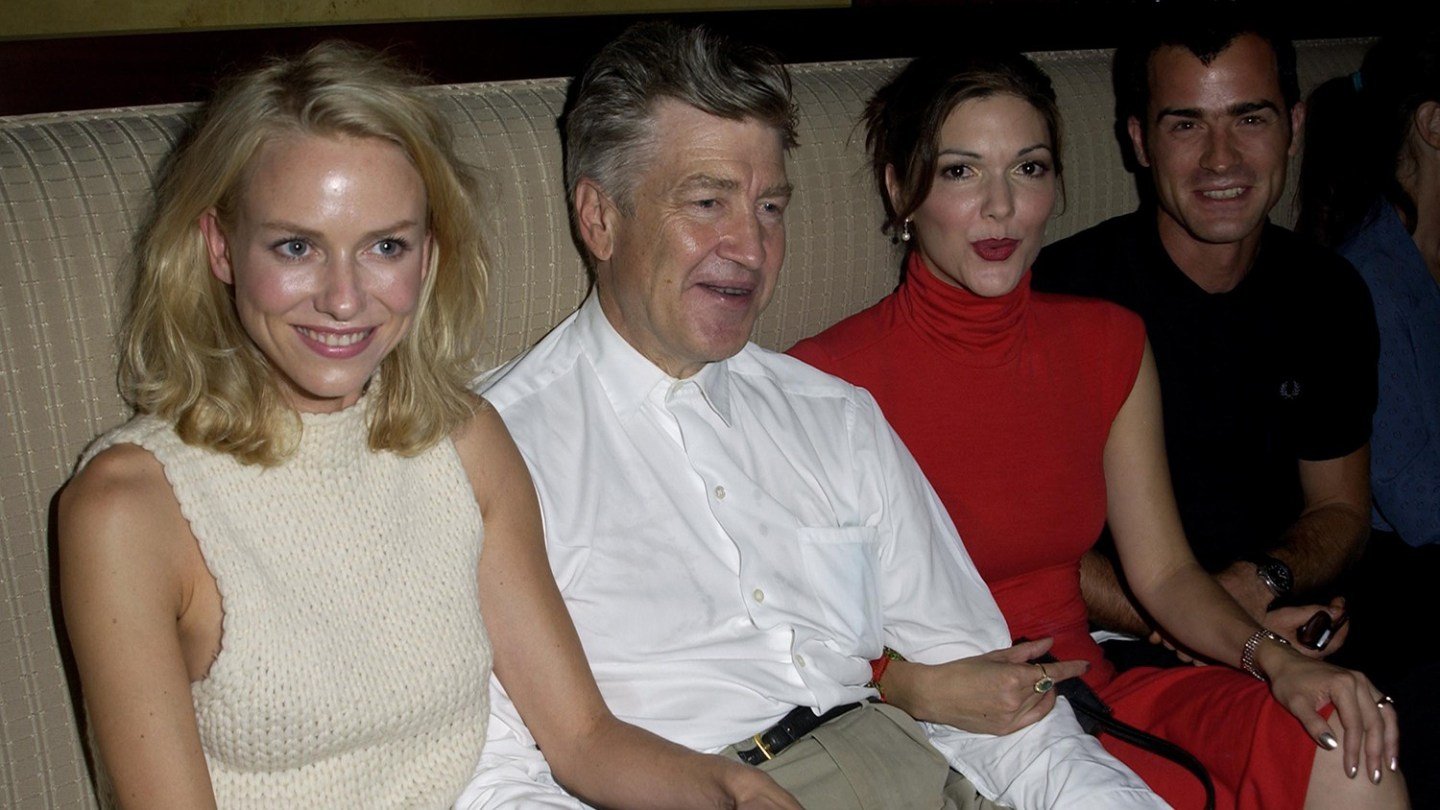
    When Naomi Watts arrived at the 26th Toronto International Film Festival 25 years ago to promote Mulholland Drive, she had every reason to relax in expectation of a warm reception for the film. It had already had its world premiere at Cannes, where Lynch was named best director and THR critic Kirk Honeycutt wrote of Watts and co-star Laura Herring: “About two-thirds of the way through, Lynch turns the story upside down with the two actresses playing either different characters or, perhaps, their real personalities. Their two performances are … remarkable — so multi-faceted and contradictory.” 

    Still, Watts, who played a young actress new to Los Angeles as well as her mysterious doppelgänger, insisted she wasn’t letting the acclaim go to her head during her visit to Toronto. Speaking with the New York Times, she said, “If there are two words that are most overused in Hollywood, they are ‘Get ready.’ I’ve heard that three times now, first after I made Tank Girl in 1995, then after I did some television stuff, and now with Mulholland Drive. Everybody is coming up saying: ‘Get ready. Your life is about to change.’ … I’m not going to get too excited until it really happens.” She continued, “What this year has done is to put me in a position where I have some freedom of choice and some good projects to choose from. I don’t need to get ready. … I’ve been ready.’’

    If her dual role in Mulholland Drive was an early indication of Watts’ range, that talent will be further underscored at this year’s festival, where she’s starring in two very different films. In Ben Shirinian’s period thriller The Housewife, she’ll appear as a very proper New York City woman whose husband may be a Nazi in hiding. And in Cody Fern’s family drama Closing Night, she’ll be seen as an emotionally fragile woman dealing with her movie-star sister, played by Sarah Paulson. 

  • Do images show former NFL star Clay Matthews after plastic surgery?

    Do images show former NFL star Clay Matthews after plastic surgery?

    Claim:

    Photos published in early September 2026 authentically show former NFL linebacker Clay Matthews after extensive plastic surgery.

    Rating:

    False

    Context

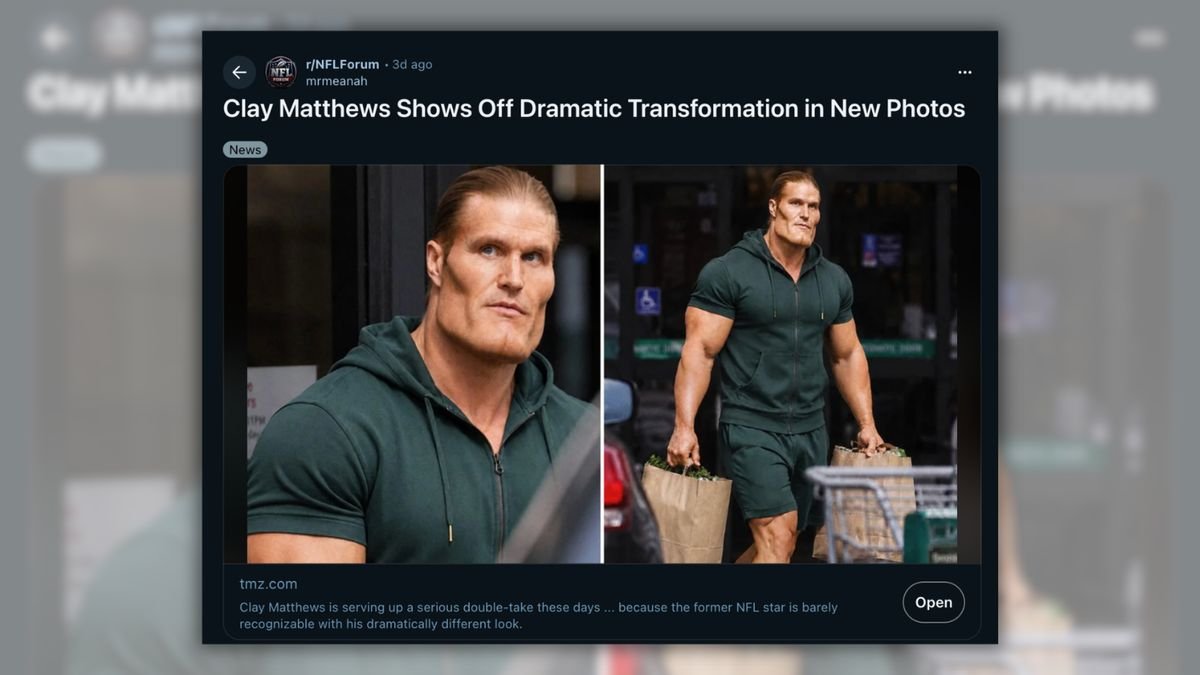
    It is unclear whether TMZ’s photos of Matthews with an enlarged chin and jawline and bulging muscles are authentic, meaning not generated or edited using artificial intelligence software. However, Matthews later told the outlet his look in the pictures was a result of prosthetics for an ad campaign, not plastic surgery.

    In early September 2026, alleged photos circulated online purportedly showing former NFL linebacker Clay Matthews after extensive plastic surgery.

    One X user who shared the images, which showed Matthews with an enlarged chin and jawline, bulging arm and leg muscles and loading bags into a car, wrote (archived): “TRENDING: Packers legend Clay Matthews was spotted out grabbing groceries, looking VERY different after getting some work done. An absolutely shocking transformation.”

    (X)

    The pictures, originally published by celebrity magazine TMZ, also circulated on Facebook, Instagram and Reddit, where social media users discussed whether they were real.

    It is unclear whether TMZ’s images of Matthews are authentic, meaning not generated or edited using artificial intelligence software. Pangram, a highly regarded artificial intelligence detector, determined that several images from TMZ’s gallery were “fully AI.” Such tools are fallible though and should not be entirely relied upon for answers to media’s authenticity. 

    Regardless, TMZ’s images do not show Matthews after plastic surgery. Therefore, we rate this claim false.

    The outlet reported on Sept. 9, 2026 (archived), that Matthews had prosthetics fitted for an ad campaign for a sports betting platform that created the look seen in TMZ’s pictures. That sports betting platform sponsored that TMZ article. It was not possible to independently confirm whether the outlet’s images of Matthews were staged as part of the platform’s advertising campaign. Snopes contacted TMZ to ask about the authenticity of its images and await a reply.

    The TMZ article features a video of Matthews saying it took four hours to fit the prosthetics, which another video (archived) posted to the former Green Bay Packers linebacker’s Facebook page shows also included his calves. The sports betting platform Matthews advertised for when he wore the prosthetics also posted a video on X (archived) that shows them being fitted to the former NFL star’s face.

    Given that Matthews did wear the prosthetics in question, it is likely that TMZ’s images of him are authentic.

    The prosthetics’ cartoonishly enlarged jawline and muscles played on the “looksmaxxing” trend that the Merriam-Webster dictionary defines as “efforts, sometimes extreme, young men take to look more attractive.”

    For further reading, Snopes has previously investigated a number of other rumors about the NFL.

    Sources

    ‘Clay Matthews Looks Unrecognizable After Dramatic Transformation’. TMZ, https://www.tmz.com/photos/2026/09/08/clay-matthews-looks-unrecognizable-dramatic-transformation/. Accessed 11 Sept. 2026.

    ‘Looksmaxxing’. Merriam-Webster, https://www.merriam-webster.com/slang/looksmaxxing.

    Pandell, Lexi. ‘Pangram Has Emerged as the Gold Standard of AI Detection. Should You Trust It?’ Wired, 2 Sept. 2026. www.wired.com, https://www.wired.com/story/pangram-has-emerged-as-the-gold-standard-of-ai-detection/.

    Pohl, Makenzie. ‘Pangram Review: Is It the Best AI Detector in 2026?’ Siege Media, 3 Sept. 2026, https://www.siegemedia.com/creation/pangram-review.

    Staff, T. M. Z. ‘Clay Matthews Shows Off Dramatic Transformation in New Photos’. TMZ, 8 Sept. 2026, https://www.tmz.com/2026/09/08/clay-matthews-dramatic-new-look-transformation/.

    T. M. Z. Staff. ‘Clay Matthews Reveals the Truth Behind His Looksmaxxing Transformation’. TMZ, 9 Sept. 2026, https://www.tmz.com/2026/09/09/clay-matthews-explains-his-new-look/.
     

  • CBS Argues First Amendment Protections in Bid to Dismiss ‘Matlock’ Writer Lawsuit Over Allegedly Racist Comments

    CBS Argues First Amendment Protections in Bid to Dismiss ‘Matlock’ Writer Lawsuit Over Allegedly Racist Comments

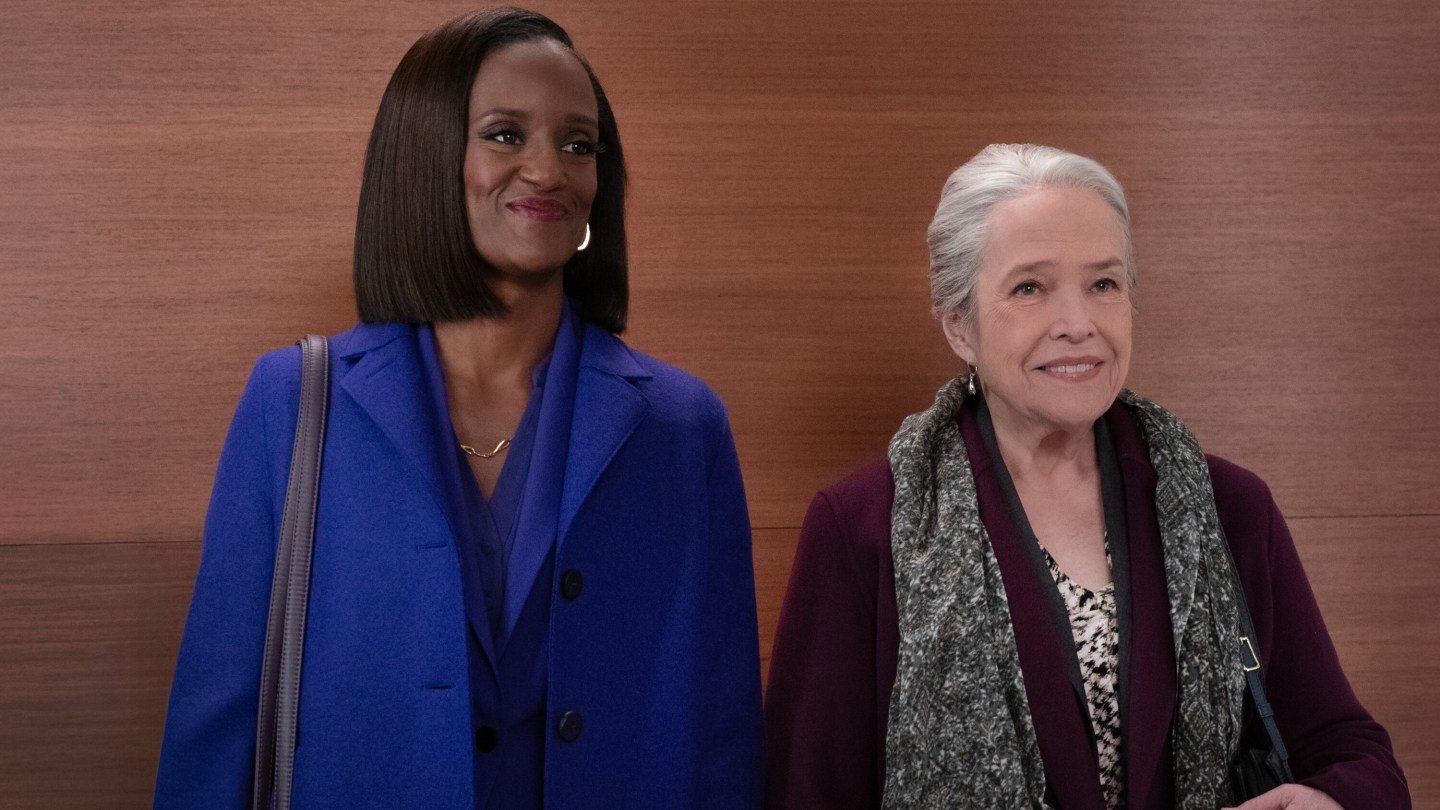
    CBS Television Studios is claiming First Amendment protections in a bid to dismiss some claims in a lawsuit from a writer on Matlock, who accused the show’s top brass of directing disparaging racial and sexual comments at him and other Black cast and crew members.

    The writer, John Lowe, accused Matlock‘s showrunner and executive producers of creating a hostile work environment “permeated by sexually explicit and discriminatory conduct.” He was allegedly terminated after allegedly reporting an incident in which his supervisor referred to Juneteenth as “Coonteenth.”

    In a statement, a CBS Studios spokesperson said the company is “confident that Lowe’s accusations are demonstrably inaccurate and maliciously fabricated” and that it “will not allow them to go unchallenged.”

    “False allegations are deeply damaging, both to those wrongly accused, and to anyone with a serious and legitimate claim of discrimination,” the statement added. “We stand firmly behind our producers and look forward to the truth coming to light.”

    On Friday, CBS moved to toss the complaint under a California law that allows for the early dismissal of claims intended to chill free speech. The thrust of its argument: Its decision to cease using employing Lowe, who alleged retaliatory termination, as a writer is a creative choice protected by the First Amendment. It stressed that he wasn’t actually terminated but rather that it declined to extend his contract, which guaranteed 20 weeks and then continued week-to-week at CBS’ discretion.

    “A writer who is performing well and having a positive impact on the scripts may be extended, while a writer who is not performing well is generally let go earlier,” wrote Adam Levin, a lawyer for CBS, in the motion. “Those judgments are creative, because the composition of the room determines the content of the scripts that are shot for exhibition to the public.”

    CBS extensively detailed Lowe’s shortcomings in the writers’ room. Some alleged examples: He failed to follow writing assignments; his outlines failed to incorporate notes and didn’t capture the show’s tone; and he came to set late and left during shooting.

    In a court declaration, executive producer Nicki Renna said she reviewed an outline Lowe delivered and concluded the flashbacks he wrote “did not work” and “another scene did not make sense.” His performance issues were extensively documented with human resources, according to the motion.

    Matlock showrunner Jennie Snyder Urman, in another court declaration, also said the claim she called Juneteenth “Coonteenth” was “made up” by Lowe.

  • ‘Human Centipede’ Director Tom Six Addresses Career Collapse, Impending Death: “These Are My Final Words” (Exclusive)

    ‘Human Centipede’ Director Tom Six Addresses Career Collapse, Impending Death: “These Are My Final Words” (Exclusive)

    Between 2009 and 2015, Dutch filmmaker Tom Six gained unexpected global fame with The Human Centipede trilogy, a cult film franchise that infiltrated pop culture and far transcended the film’s actual viewership powered by the explosion of meme culture. Talk show hosts used the title and concept as a punchline, to the knowing, “we’re all in on the sick joke” laughter of the studio and home audiences. Beavis and Butt-Head and the South Park kids riffed on it. The eccentric cult auteur from the Netherlands had improbably created a 21st century myth.

    For years, Six’s follow-up to The Human Centipede was much anticipated by a global fan base. And he knew the stakes. So, when he announced in 2019 that he had completed what he promised to be an even more transgressive feature, The Onania Club, everyone — especially him — assumed that finding a distributor would be a trivial matter. After all, IFC had taken a gamble with Centipede and its success had proven that the world was hungry for Six’s signature blend of anarchic social satire, grand guignol extreme imagery and dark gallows humor. His work was exactly the kind of psychotronic exploitation that End Stage Capitalism seemed to be asking for: the perfect midnight movies for brains soiled by endless Epstein headlines.

    But then everything went from bad to worse, for Six and for The Onania Club. The film follows a circle of wealthy Los Angeles women who can only be aroused by the suffering of others, and who require increasingly extreme exposure to it. Think The Real Housewives of Beverly Hills by way of Brian Yuzna’s 1980s body-horror satire Society, arriving at the height of the Epstein cultural moment.

    Presented with Onania, former and prospective distributors kept telling him that “the market had changed” since the triumph of the Centipede. For seven years, Onania has sat in Six’s Amsterdam vault, unseen by anyone bar a few critics and influencers who were shown a rough cut in hopes of drumming up distribution support. A brief trailer exists somewhere in the netherworlds of the Internet. 

    Meanwhile, the 53-year-old Six has been battling multiple sclerosis, a debilitating, incurable disease that worsened during his professional ordeal. The director blames the stress he endured over the market censorship of his would-be magnum opus for accelerating his physical deterioration and speaks throughout the documentary and this interview as a man with very little time left.

    Although MS is not generally understood as a terminal illness, life expectancy can be shortened through complications rather than the disease itself. Six, however, wants his final artistic act to be the narration of what he calls his own impending end. Whether clear-eyed self-assessment or final performance is for the audience — his witness — to decide.

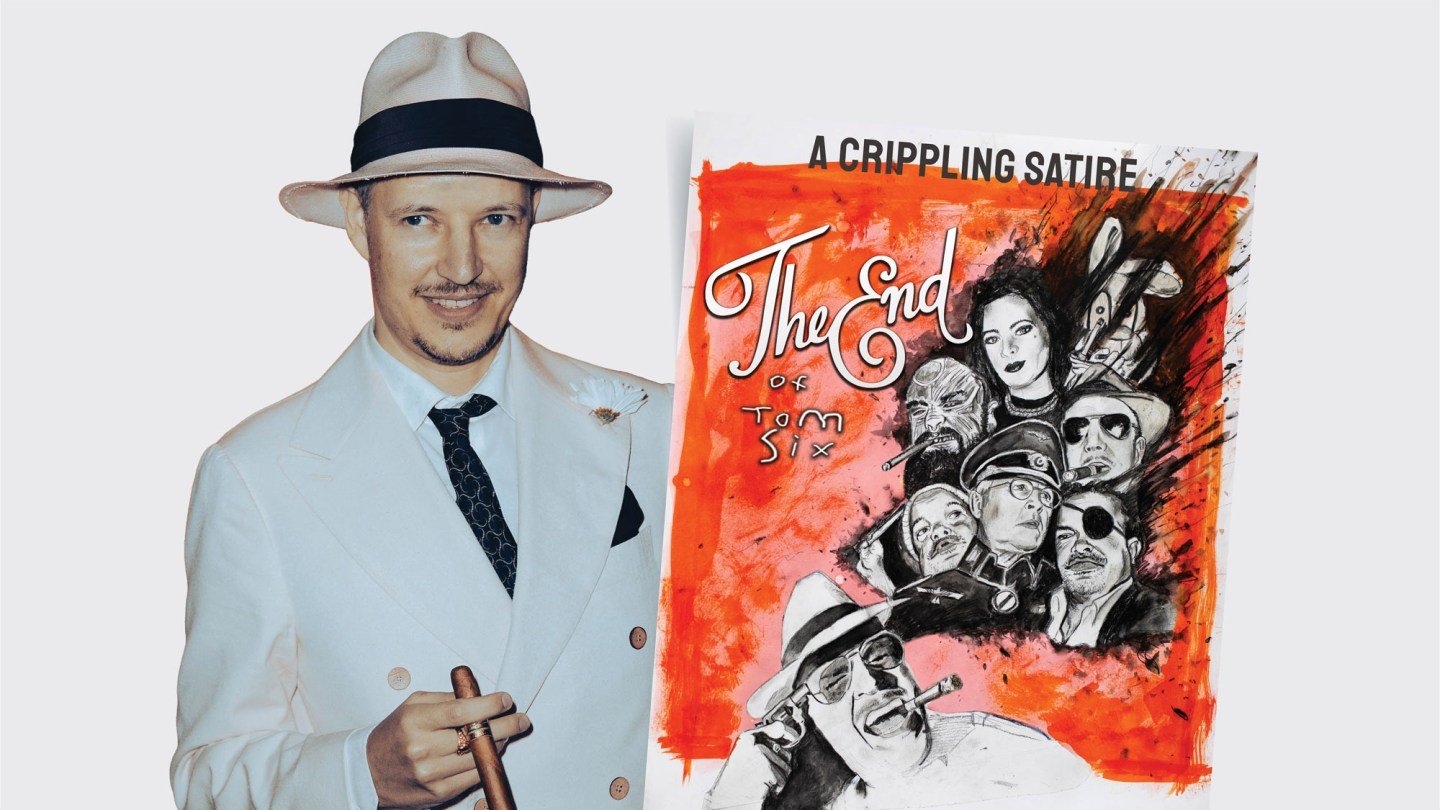
    Over the past year, Six completed a self-made, black-and-white documentary called The End of Tom Six,created from a recumbent position on his antique opium bed. The whole sordid tale is there, chronicled by Six with the same macabre sensibilities that catapulted him to worldwide fame.

    The End of Tom Six is being distributed by Six and his partner, Maartje Willems, through YouTube, preceded by a “pay what you feel like” menu of darkly humorous options (“$20: Really enjoyed your misery, thank you.”).

    The Onania Club is still seeking professional distribution.

    Tom Six granted an exclusive interview to The Hollywood Reporter to reflect on his current situation, and what he thinks that means for the state of cinema and culture. He dictated his answers to Willems earlier this month, as he reports being “dizzy from the heavy medication and in a lot of pain and in a way worse condition than as I appeared in the doc.”

    “I can’t type anymore because my hands are on fire,” he added. “These are my final words, the only interview about The End of Tom Six and the very last interview I’ll ever do. Why? In the documentary I said everything there is to say.”

    “What is the best thing about knowing you will die soon?” Six reflected. “You have nothing left to lose and you don’t have to hold back.”

    The documentary shows Six tormented by faceless distributors (he has chosen to not name any of them, as he thinks the issue is not personal but systemic) who repeat, “The market has changed, sorry.”

    “Film distribution today has become about: does the film have the right message, will it scare anyone off, does it send the wrong signal? Will our company look bad if we release it?” Six says, comparing the situation to two decades ago. “They are afraid of the backlash, the hashtag uprisings and digital pitchforks. If a filmmaker — one who has already created a pop culture phenomenon — literally gives his life for his film, wouldn’t they realize that they’re dealing with something truly unique and at least consider releasing it? Then they would have a hit and I can rest in peace.”

    He has been making this argument for at least five years — he said much the same thing to Vice in 2021, two years into the search for a distributor — though he now claims to detect movement. “Audiences are getting fed up with being force-fed all that political correctness and crave challenging movies. They are getting louder and the industry is starting to notice but very slowly. One distributor has to become the hero that leads the rest. But it has to be soon or it will be too late for me.”

    The combative vocabulary — bravery in the face of official cowardice, standing up against hidden agendas pushing conformity, a digital world of angry global villagers armed with social-media pitchforks — runs through the documentary and through this interview. Never mind that in 2026 that point of view is the house style of the most-downloaded podcasts in America, the presidential X feed, and many of the “disruptive” policies endorsed by the party currently running all three branches of the federal government. The film stubbornly presents Six as a lone dissident, even if his brand of dissent is currently very much en vogue and in power.

    On the one hand, The End of Tom Six is a personal documentary about the feelings one artist has about his struggle (Six in raconteur mode shares, “My life was reduced to one obsession: selling The Onania Club,” and promises to display “my complete downfall in glorious 4K”). But it is also about a larger cultural point, one that goes beyond Tom Six and Onania. Six posits that “The market has changed” is less an excuse than “a fucking agenda” and “an industry code word for woke cowardice.”

    “Woke is the biggest enemy of art,” Six declares, and the Onania situation is “the same reason why bold cinema is dying.” Six sees the personal, the professional and the cultural issues all intertwined as part of a life-destroying whole.

    Was his original intent with The End of Tom Six to make something personal or something more like a manifesto about society at large, or was it a combination of both?

    “One caused the other,” he states. “My personal deterioration due to the MS is inseparable from being unable to sell The Onania Club, which, in the end, proved to be a lethal and highly entertaining combination for a documentary. [The End of Tom Six] is a satire on the current agendas, political correctness and also on indie filmmaking itself. The [character of the] Censor Nazi represents all forms of censorship and political correctness, and the other characters are my take on inclusivity.”

    Decadence is the documentary’s organizing aesthetic. Six is introduced in a louche Den of Decadent, name checks Oscar Wilde and Gabriele D’Annunzio and describes himself as “decaying in style.” It is a considerably more flattering frame than the alternative, which is a sick man in a bedroom in Amsterdam who cannot sell his movie.

    “From a young age,” he tells THR, “I’ve always had a certain life philosophy: Life is a short, sadistic joke and I always wanted a larger-than-life existence. Give it all till the guillotine will fall. I hate mediocrity. I hate bourgeois conventionality and in the decadents of the 19th-century […] I found kindred spirits. They lived life with intensity, style and excess but they knew it came at a high cost. All decadents end up in ruins.”

    The End of Tom Six also plays with stereotypes and tropes of classic Hollywood film directors, those dictatorial, imposing colossi like Preminger, Lang, Huston, Ford, Welles, etc., but here reduced to raging impotently against the Cinema Machine from an antique opium smoker’s bed.

    “I jokingly call myself a film dictator because I do everything myself,” Six explains. “I don’t think making movies is a democracy. Someone has to have the final vision and the balls to protect it. Hollywood directors from the 1940s and 1950s were the ultimate caricatures of film directors, real authority figures, and some even dressed like dictators with their puffy pants, military high boots and even batons. I find that darkly funny. Today’s filmmakers look like accountants and don’t have those big personalities anymore. And they are afraid to say the wrong things.

    “My personality is not an act. This is who I am. I have always worn light colored (linen) suits and (Panama) hats,” Six says. “My grandfather was my hero and my father figure and he always wore a suit and hat. Now I wear silk pajamas because any other fabric is too painful on my skin. I have smoked cigars since I was 16 years old. I think I was born in the wrong time period. I have a bad case of nostalgia. I miss the rebels. There aren’t many left, if any. There is no outrage, no eccentricity. It is all so dull and restrained. That’s not for me. I feel like I don’t belong here anymore.”

    The assumption that the world will eventually watch — and love — The Onania Club, but that its visionary will no longer be around to enjoy the praise is part of the black comedy of The End of Tom Six. After all, Warner Bros. Clockwork is currently promoting the impending re-release of Ken Russell’s long-lost controversial nuns-in-heat masterpiece The Devils with a large marketing campaign. Pasolini’s taboo-busting Salò — feared and loathed since its 1975 premiere as a compendium of degeneracy — is in the Criterion Collection and accessible to every movie lover at home with a Criterion Channel subscription. Does Six think the system is only kind to mavericks, visionaries and cult auteurs after they’ve passed on and several decades have gone by? Will Onania be revived with a large marketing campaign by a future Meta-Palantir-Paramount-LVMH studio around 2086?

    “100 percent” he replies. “I have always said that. Long after I am dead, they will celebrate The Onania Club for the powerful, sharp satire it is and my balls to create it.”

    The obvious problem, which the documentary never quite confronts, is that we have to take Six’s word for the revolutionary nature of his film. The Onania Club has been seen by a handful of critics and industry people in a rough cut and by almost no one else. The distributors who passed may have passed for the reasons Six says they did. They may also have decided it wasn’t good, a possibility the film treats as unthinkable. But there’s some meaningful evidence that Six may be right: John Waters, one of the few who saw an earlier cut of it, named The Onania Club to his Artforum 2021 best films list.

    Six returns to the subject of Hollywood itself, declaring Tinseltown as plagued by “the most dangerous combination: intelligence, creativity and unlimited money.”

    “It’s the perfect pressure cooker for that kind of decadent, detached excess. The city itself becomes a part of the satire,” he says. “If I was going to tell a story about rich women needing more and more misery to get aroused by, it needed to be set in Hollywood.”

    “I think many artists that push boundaries are misunderstood at first because they are too far ahead. People simply don’t get it yet. And after they’re gone, suddenly they become the hero. Pasolini’s work can be celebrated safely now because they are accepted films from the past. Nobody is in trouble if they say they love Salò. But if I [created] Salò now, nobody would want to touch it. It is so hypocritical. Many distributors proudly state that they celebrate bold and boundary-pushing cinema but if you give them actual boundary-pushing cinema now, they ignore it. So yes, the pattern feels cyclical.”

    Commenters online, rallying behind the #ReleaseTheOnaniaClub hashtag, keep asking Six why he doesn’t crowdfund the distribution among his worldwide fanbase.

    “Crowdfunding is good for when you need funding to make the movie itself,” he explains. “It doesn’t work with distribution. For that you need a professional distribution company with a good track record that has experience, the resources, the reach and the infrastructure. People who know the deals, the theaters, streaming services, the press and have a marketing team to reach the audience. When we finished The End of Tom Six, we approached many distributors. Only two responded with rejections and nobody actually watched it. It felt like the same hell all over again but with my declining health, I couldn’t fight that fight anymore. So we decided to release it on YouTube and give people the choice of paying what they want with a darkly funny menu. The documentary was very low-budget so the financial risk was low. The response to the film has been amazing. People love it, call it a masterpiece but only a small percentage actually pays anything. It only confirms what I already knew: you need a proper distribution partner.”

    Born in 1973, Six is very much peak Gen X, and his fanbase skews heavily toward Gen X and Millennial men — the demographic for whom this particular countercultural pose has become the ruling culture. The documentary goes further than mere anti-woke grievance-airing, though. The insistently anti-elite auteur uses the exact vocabulary of the base that currently backs the people in power: “plandemic,” “New World Order,” adrenochrome conspiracies. Six describes himself as an “out of the box” thinker, but many of these ideas are the box right now.

    In a move that would please fellow “woke culture” critic Bret Easton Ellis — who famously called the second Centipede “the grossest movie ever made” on Twitter early on, fueling the trilogy’s notoriety — Six steers away from probing that contradiction.

    “The problem of these times is that everyone wants to make everything political,” he replies. “Every opinion lands you in a certain corner. It is very narrow-minded wanting to put everything and everyone in boxes. I am my own, unique, creative person and I don’t belong in any box or to any group. I am a lone wolf and the most open-minded guy you will ever meet. I don’t care about politics. I fight what hurts me and what is the enemy of art. Whether that is a left or right standpoint is not interesting.

    “Woke started out as a positive thing but it grew into a monster. It has turned into restrictions, checklists, finger-pointing, virtue signaling and excluding anyone that doesn’t agree with it, which is comically ironic. It doesn’t do inclusivity justice at all. I have always been inclusive in my films. I love all birds of paradise. I never needed an obligatory checklist for that.”

    The documentary spells out The Onania Club‘s main theme as “Schadenfreude,” defined as “enjoying others’ misery.” But the same definition could also be applied to Six’s Human Centipede fans (they are deriving pleasure from depictions of suffering) and could also serve as a pitch for The End of Tom Six and its unflinching depiction of career tragedy amidst body decay. Are all these forms of Schadenfreude an auteurial signature for Six’s whole career?

    “Schopenhauer said: ‘Schadenfreude is devilish’,” he replies. “It is a part of human evil, which all my movies are about, on different levels. Schadenfreude is the most disgusting kind of evil. It fascinates me, because everyone enjoys the misery of others to some degree. Tabloids, clickbait headlines, the car crash on the other side of the road. A celebrity has cancer and it’s filed under entertainment news.

    “I like to hand people a mirror and watch them get uncomfortable, that is my kind of Schadenfreude. In the documentary I split myself into two characters — the duality of man. I am both the suffering object and the director that pushes for the misery because he knows that it sells. He calls it: elevated exploitation. People don’t want to watch a pure success story. They prefer the misery so they feel a little bit better about theirs. I don’t mind; it is just human nature so I give people what they want.

    “My current situation has not really changed that outlook. Being in pain constantly and having to deal with my decline has only confirmed what I already thought: Life is a sadistic joke and the universe is completely indifferent about our existence.

    “I was born to make movies. Creating this documentary has literally kept me alive. Now there is nothing left but to stare in the abyss, knowing my end is near.”
  • Na Hong-Jin, Lav Diaz, Bertrand Mandico, Rintaro Headline Busan Master Class Lineup

    Na Hong-Jin, Lav Diaz, Bertrand Mandico, Rintaro Headline Busan Master Class Lineup

    The 31st Busan International Film Festival (BIFF) has unveiled the lineup for its Master Class, Cine Class and Special Talk programs.

    Master Class brings together four directors reflecting on their creative work. Na Hong-Jin, who drew global attention this year with “Hope,” will discuss the roots of his creative vision. Filipino auteur Lav Diaz and French director Bertrand Mandico, known for his distinctive visual style, round out the international side of the lineup. Japanese animation veteran Rintaro, director of “Galaxy Express 999” (1979) and “Metropolis” (2001), returns to Korea for the first time in 17 years.

    Cine Class, which launched last year, gathers six creators from different corners of the industry. Zhang Lu, winner of the Busan Award for Best Film at BIFF 2025 for “Gloaming in Luomu,” opens the program with reflections on cinema and life. Documentary filmmaker Seifollah Samadian will speak about his three-decade friendship with the late Iranian director Abbas Kiarostami. Judith Godrèche, whose public disclosures about abuse in the French film industry broke a long-standing silence and opened new space for women’s stories on screen, joins the lineup alongside producer Billy Acumen, whose credits include the “Roundup” franchise and “The King’s Warden” (2026). Director Bi Gan, recognized for his dreamlike visual approach since his debut, and actor Shim Eun-kyung, reflecting on a career that has crossed genres and borders, complete the session.

    Special Talk rounds out the programming with three conversations. Producer Kim Tae-ho, who recently moved into film acquisition and distribution, will appear alongside a screening of “Mother Mary” (2026). Ann Hui, this year’s Camellia Award recipient, will look back on her career in cinema. Film critic Jung Sung-il will lead a session tied to the Ahn Sung-ki tribute program, following a screening of “Festival” (1996), examining Korean film history through the late actor’s career.

    The 31st Busan International Film Festival will run Oct. 6-15 at the Busan Cinema Center and venues throughout Busan, with the 21st Asian Contents & Film Market held Oct. 10-13.

  • ‘Being Heumann’ Review: Siân Heder’s Drama About the Fight for Disability Rights Strikes Familiar Notes but Gets the Inspirational Uplift Job Done

    ‘Being Heumann’ Review: Siân Heder’s Drama About the Fight for Disability Rights Strikes Familiar Notes but Gets the Inspirational Uplift Job Done

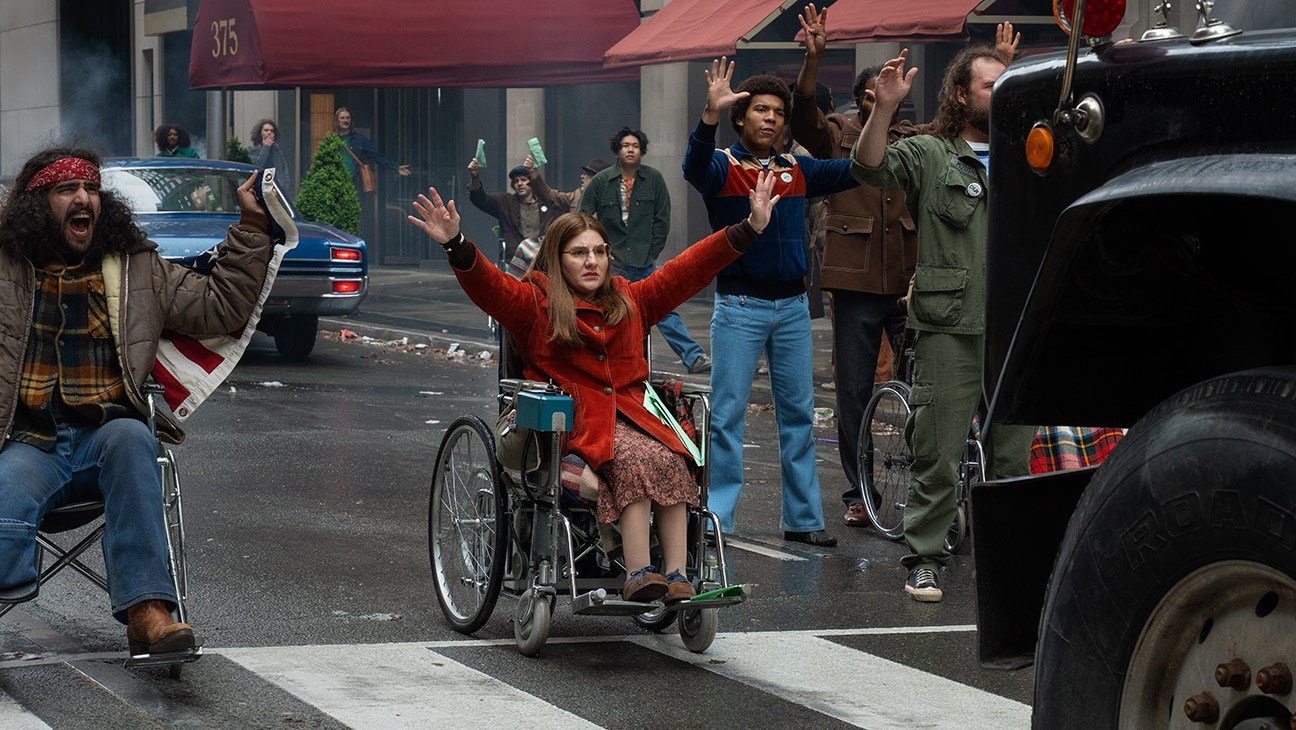
    In the first and best of many late ‘70s needle drops that punctuate Being Heumann, the punchy guitar groove of Iggy Pop’s “The Passenger” starts out over a close-up of wheels turning on pavement before the camera pulls back to take in disability rights activist Judy Heumann, maneuvering her wheelchair around crowded city streets and refusing to be intimidated even when a bus driver is bearing down on her with his hand clamped on the vehicle’s horn. 

    As played here with an iron will and a take-charge attitude by British actress Ruth Madeley, Judy is a tenacious figure with uncommon gumption. But all the pluck and determination etched across her face don’t obscure the point of the opening sequence — to encapsulate the enormous challenges faced by people with disabilities in places with inadequate concern for accessibility.

    Being Heumann

    The Bottom Line

    Earnest but effective.

    Venue: Toronto International Film Festival (Gala Presentations — Opening Night)
    Release date: Friday, Nov. 6 (streaming Nov. 13)
    Cast: Ruth Madeley, Mark Ruffalo, Dylan O’Brien, Madeline Delp, Roberta Colindrez, Jon Beavers, Antwan Tolliver, Ray Fisher, Andrew Pilkington, Michael Patrick Thornton, Russell Harvard, Daniel Durant
    Director: Siân Heder
    Screenwriters: Siân Heder, Rebekah Taussig

    2 hours 7 minutes

    The first feature from director Siân Heder since her coming-of-age drama CODA went all the way from Sundance to a best picture win at the 2022 Oscars, Being Heumann follows a similar inspirational playbook, albeit lifted from a chapter in the American civil rights annals rather than drawing on real-life experiences to craft a fictional narrative. As with CODA, in which Heder cast deaf actors as deaf characters, the new film’s winning hand is the use of actors with disabilities to play the ragtag coalition led by Heumann in 1977 in what became the longest occupation of a federal building in U.S. history.

    Previously covered in the Oscar-nominated 2020 documentary Crip Camp, the 504 sit-in took its name from that section of the Rehabilitation Act of 1973, the first U.S. federal civil rights protection for people with disabilities. Given that four years had passed since the signing of the bill but zero government action had been taken to put it into practice, Heumann spontaneously led a large group of fellow protesters when she stormed the San Francisco office of the U.S. Department of Health, Education and Welfare. The sit-in lasted an unprecedented 28 days.

    People who have seen Crip Camp might not gain a ton of new insights here, but Heder and co-writer Rebekah Taussig deserve credit for telling the story in an easily digestible, emotionally effective way that stands to reach a wider audience when it debuts Nov. 13 on Apple TV, after opening a week earlier in theaters.

    Even if it sometimes has the feel of an old-school issues-driven TV movie, Being Heumann asks and answers questions that remain amply relevant today, about whether protests and collective action still matter. Where it will be most illuminating is in opening the public’s eyes to the basic human rights systematically denied people with disabilities before legal protections were put in place. The Trump administration’s efforts to weaken those protections adds timeliness to Heder’s film.

    The depiction of courage, commitment and cooperation is stirring stuff, with people from across the disability spectrum — blind and deaf Americans as well as wheelchair users — overcoming heated in-fighting and political bullying tactics, banding together to galvanize change that would benefit millions.

    Some of the most moving sections are the testimonies of the activists when they finally get face time with government reps, detailing the years in which they were denied schooling and declined jobs for which they were eminently qualified. Perhaps the saddest note is the mention of countless people with no access to assistance, ensuring their invisibility by keeping them confined to their homes.

    The chief antagonist standing in the way of long-delayed regulations is HEW Secretary Joseph Califano (Mark Ruffalo, doing a somewhat buffoonish impersonation), who argued that the $2.4 billion in taxpayer dollars it would take to implement the regulations required a more extensive review. On the supportive side is Democratic Congressman George Miller (Rob Delaney) and local TV news reporter Evan White (Dylan O’Brien), whose coverage gets picked up by national news networks, much of it filmed while he is embedded with activists in the occupied San Francisco building. Both Delaney and O’Brien sport fabulous ‘70s staches the size of caterpillars.

    Heder and Taussig are careful not to make Miller and White — and ultimately Califano when he caves in to pressure and signs — into ableist saviors. The backbone of the film is very clearly the coalition led by Heumann, who frequently rubs fellow activists the wrong way — “I’m not an asshole. I’m just from Brooklyn,” she protests at one point — but is fully acknowledged as the driving force they need.

    Among the key people involved in the occupation is Kitty Cone (Madeline Delp), whose insistence on civility prompts Judy to call her a Pollyanna; their friendship evolves in fits and starts with a lovely payoff in the closing scenes.

    Antwan Tolliver has strong moments as Brad Lomax, a member of the Black Panthers with multiple sclerosis, who calls in reinforcements from the party to deliver food in a memorable scene. And Andrew Pilkington injects welcome humor into his portrayal of Hale Zukas, a pioneer in the Berkeley movement for independent living, who communicates with a pointer antenna attached to his head and an alphabet board — these were the days before smart tablets. “Disability is not a tragedy,” Hale writes, putting a key theme into words. “It’s a tremendous hassle.”

    Among the allies, handsome military vet Jim Pechin (Jon Beavers) and out-and-proud lesbian Joni Breves (Roberta Colindrez) make warm impressions, both of them attracted to Judy’s “radical crip” energy. It’s a little obvious, but lobbing in the raucous Ramones classic “Judy Is a Punk” gives an extra kick to a breakthrough moment, and the wonderful Madeley earns it.

    The dramatic momentum flags a little as the sit-in goes from days to weeks and the film nudges past the two-hour mark. But the characters and the disabled actors playing them are so engaging in their unbroken perseverance and their levity even in the face of harsh setbacks — a late-night raid by cops is especially hair-raising — that it’s impossible not to keep rooting for them. Their irrepressible joy is a tonic, and every sit-in should have a “sex tent” made of protest banners and American flags.

  • J. M. Stelly’s Anatomica Films Taps Black Mandala for Global Sales on Horror Trio (EXCLUSIVE)

    J. M. Stelly’s Anatomica Films Taps Black Mandala for Global Sales on Horror Trio (EXCLUSIVE)

    New Zealand’s Black Mandala has acquired worldwide sales rights to three horror films from Anatomica Films: “Within Madness,” “Vessel” and “The Thirteenth Gate.”

    J. M. Stelly wrote and directed all three, producing alongside Johnny Stassi through the Anatomica Films label.

    Stelly and Black Mandala co-founder Michael Kraetzer negotiated the agreement on Anatomica Films’ behalf.

    “Within Madness” draws on true events, tracing the fallout after filmmaker Mark Chapel and collaborator Donovan Summers are arrested. Investigators searching the case turn up human remains, execution tapes, Polaroids and film canisters cataloging years of violence. The evidence centers on “The Sacrament of Bondage,” a film capturing Summers’ spiral into brutality and his earliest killings. Prison interviews and recovered footage slowly reveal how deeply entangled the two men had become in their shared madness. Jared Bankens, Matt Story, Keegan Macy and Jamie Nipe star.

    “Vessel” follows Joseph, a pastor whose faith crumbles after his wife, Mary, goes missing and their unborn child is lost. Retracing the days leading up to her disappearance, Joseph experiences past and present blurring together, while escalating disturbances in their home point to something far more sinister than grief. What starts as a portrait of grief ultimately reveals an entity trying to cross into the world through human suffering. Keegan Macy, Jamie Nipe and Dane Rhodes are featured.

    “The Thirteenth Gate” centers on investigator Nathan Hale, who regains consciousness inside a derelict industrial complex without knowing how he got there. While hunting for his missing wife, Marissa, Hale is dragged through an escalating nightmare of environments that loop, warp and rebuild themselves from his own memories and trauma. Behind the ordeal is an enigmatic figure called M, orchestrating an occult ritual designed to unlock thirteen gates into the ethereal plane. The deeper Hale goes into the labyrinth, the harder it becomes to separate physical reality from memory and constructed experience. The film moves like an immersive, POV-driven psychological horror trip that blends body horror, occult mythology and science-fiction touches. Jeff Pearson, Jamie Nipe and Keegan Macy round out the cast.

    “We’re incredibly happy to be working with such an outstanding and unique filmmaking talent and look forward to building the international success of these very special titles together,” Kraetzer said. He added that each film carries its own distinctive atmosphere, vision and identity, calling the collaboration a chance to work with bold, original filmmaking that he believes can connect with genre audiences, festivals, platforms and buyers around the world.

    “We’re proud to welcome ‘Vessel,’ ‘Within Madness’ and ‘The Thirteenth Gate’ to the Black Mandala lineup,” he said, “and are very much looking forward to presenting these films internationally, building their worldwide audience, and developing a successful long-term collaboration with the filmmaker.”

    Stelly said he was pleased to have Black Mandala representing the films, noting that “these intensely personal projects each explore horror from a very different perspective.” He pointed to Black Mandala’s track record building an international presence around bold genre filmmaking and said he is looking forward to working with the company’s team to bring the films to audiences around the world.

    “Within Madness” will be the first of the three to go before buyers, launching sales at the Toronto Film Festival market before all three titles are pitched to buyers at AFM.

    Stelly is represented by Zero Gravity Management.