Category: Entertainment

  • Broadway Cancels a Second Day of Shows Due to Blizzard

    Broadway Cancels a Second Day of Shows Due to Blizzard

    Broadway has canceled all Feb. 23 performances amid blizzard conditions in New York City. 

    The cancellation of Feb. 23 performances comes after Broadway theater owners and producers also canceled all evening shows Feb. 22. The matinee performances Sunday went on as scheduled. 

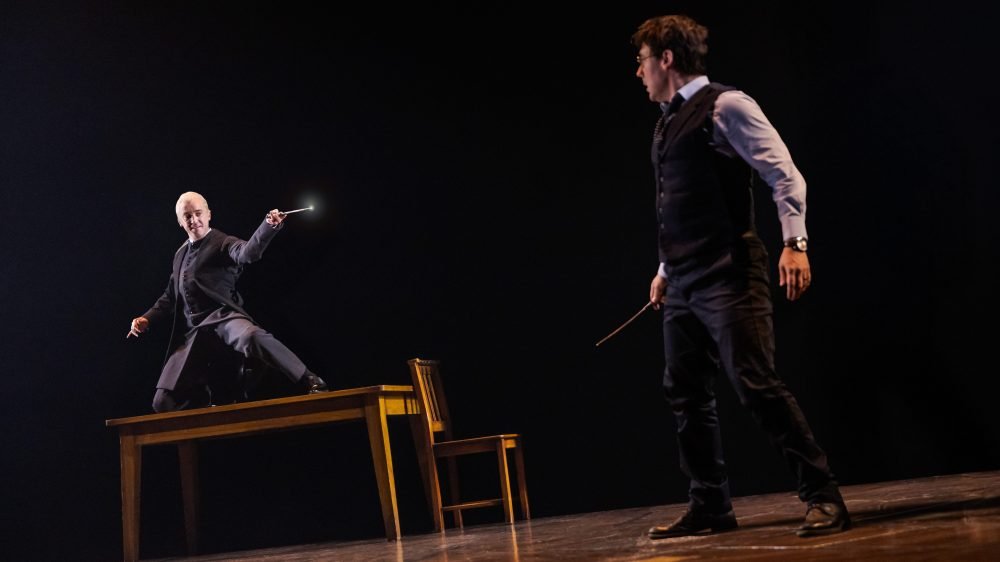
    Many productions traditionally do not have Monday night performances on the schedule. However, productions such as The Great Gatsby, Chicago, Harry Potter and the Cursed Child and Six will cancel their Feb. 23 shows. Every Brilliant Thing, the one-man show starring Daniel Radcliffe, will also have a canceled show Feb. 23 after beginning previews two days before. 

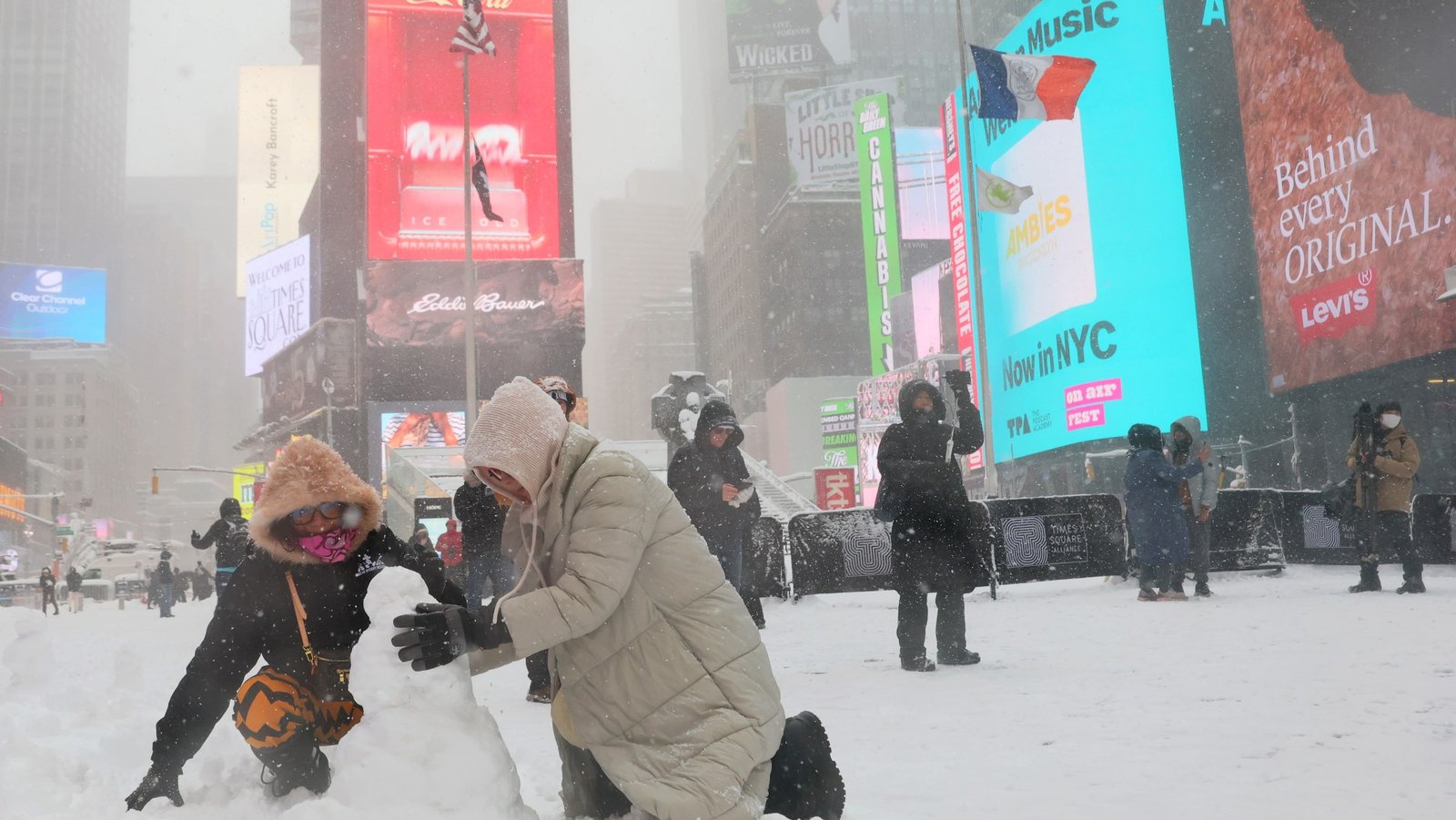
    The move comes as New York City has received 16 to 19 inches of snow across the city and New York remains under a state of emergency due to the snowfall and high winds The snow is expected to continue until at least 8 p.m., with 40 mph winds and 1.5-2.5 more inches expected. New York City Mayor Zohran Mamdani lifted a travel ban that had been in place since Sunday evening, but a hazardous travel advisory remains for the city. Travel bans in surrounding counties still remain. 

    “Due to the continuing impacts from the blizzard and local travel restrictions still in place, Broadway theatre owners and producers have come to the consensus that performances tonight (Monday, February 23) will be canceled,” the Broadway League said in a statement. 

    The move to cancel Broadway shows is rare, as it can lead to hundreds of thousands of dollars in lost revenue for each production. However, Broadway faced an uproar from cast and crew members about a month ago, when New York City was under a state of emergency due to snow, but there was no industrywide cancellation of shows. 

  • Tourette’s Campaigner John Davidson Says He Is “Deeply Mortified” If Anyone Considers “Involuntary Tics to Be Intentional” After BAFTA Backlash

    Tourette’s Campaigner John Davidson Says He Is “Deeply Mortified” If Anyone Considers “Involuntary Tics to Be Intentional” After BAFTA Backlash

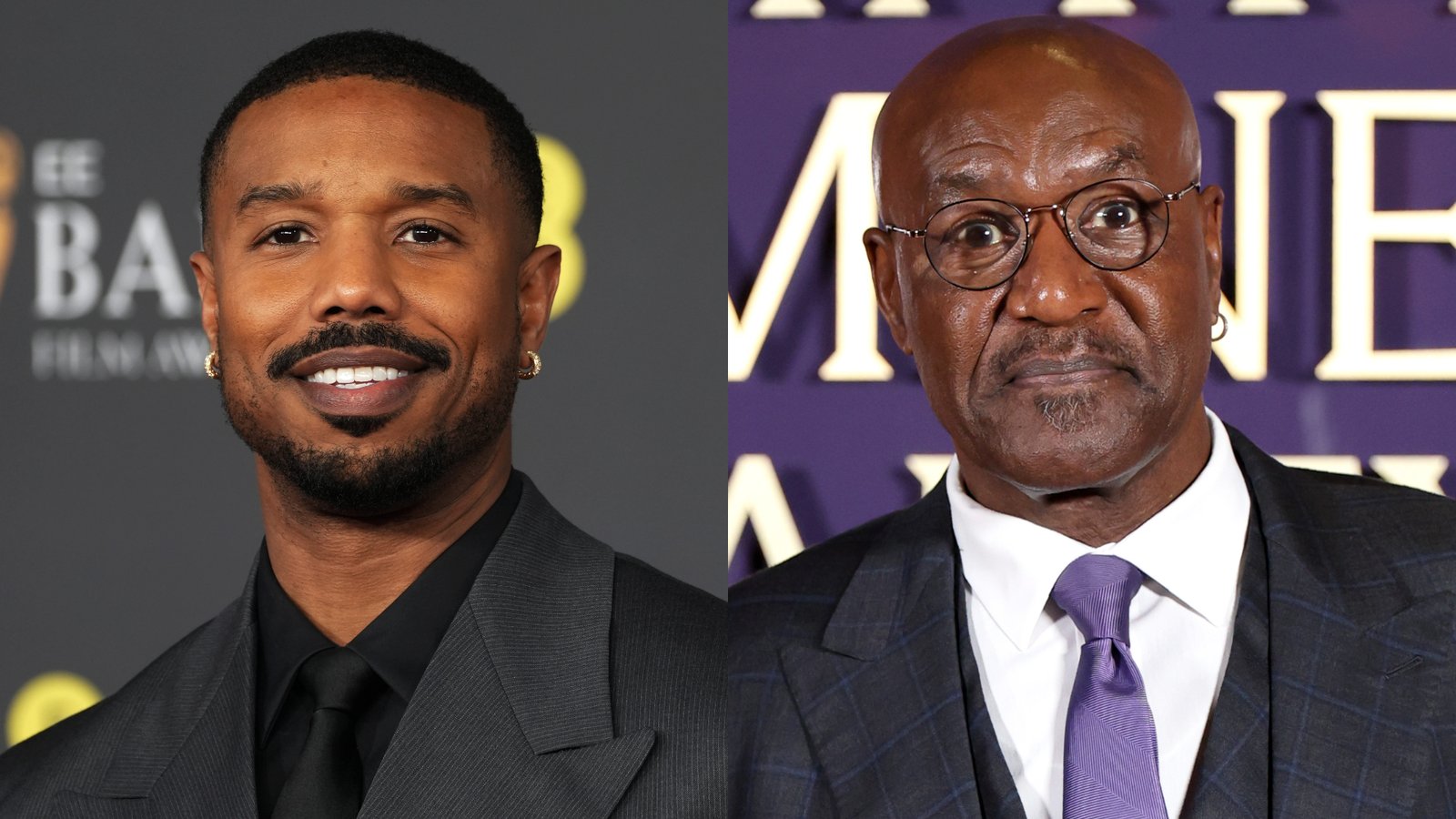
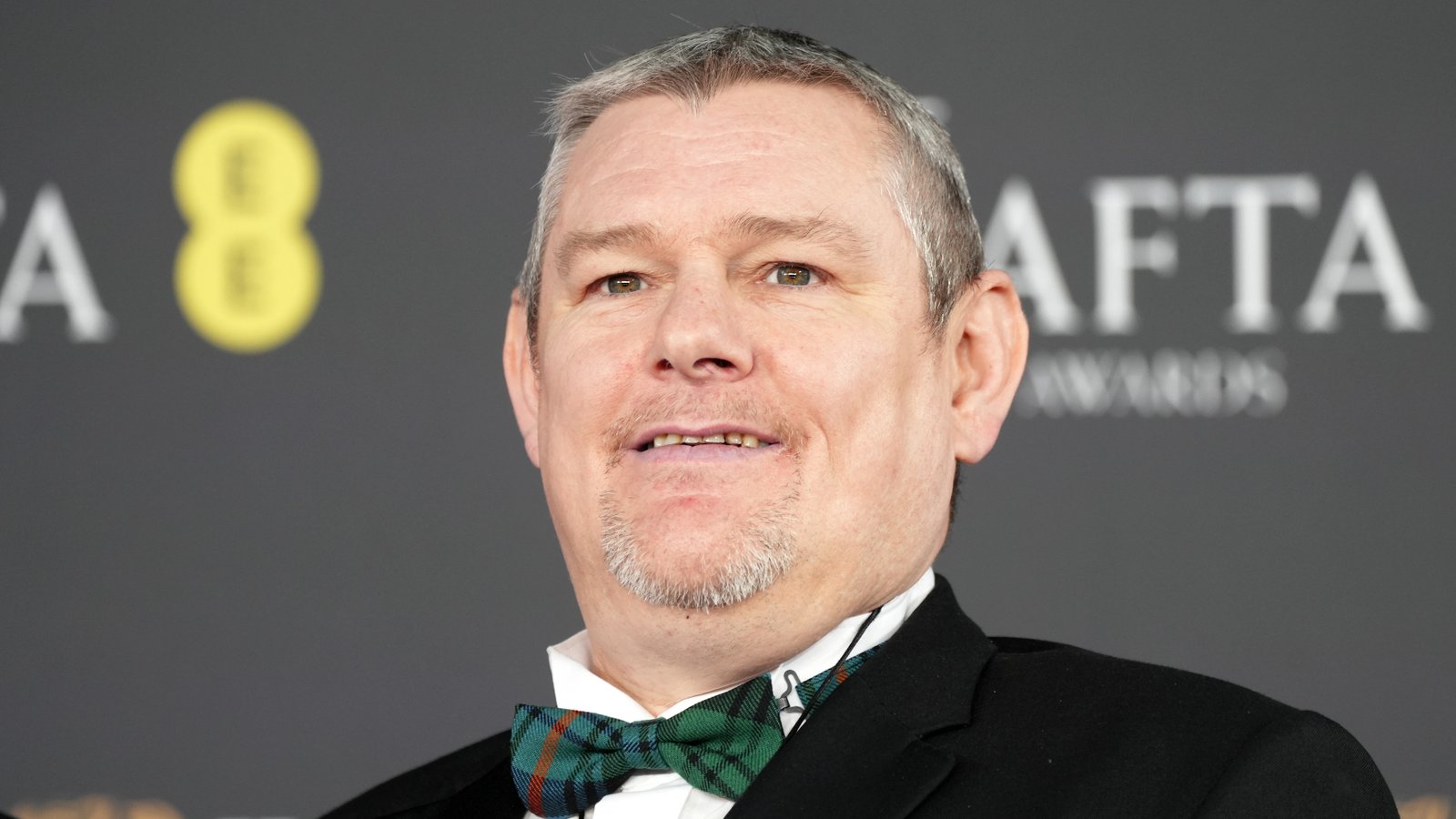
    John Davidson, the Tourette’s campaigner at the center of the BAFTA Film Awards backlash, has released a statement after shouting a racial slur at presenters Michael B. Jordan and Delroy Lindo during the ceremony.

    “I can only add that I am and always have been deeply mortified if anyone considers my involuntary tics to be intentional or to carry any meaning,” said Davidson, whose life inspired the BAFTA-nominated I Swear. He was in attendance as an executive producer on the film, which won star Robert Aramayo the best actor BAFTA in quite the upset.

    “I wanted to thank BAFTA and everyone involved in the awards last night for their support and understanding and inviting me to attend the broadcast,” continued Davidson. “I appreciated the announcement to the auditorium in advance of the recording, warning everyone that my tics are involuntary and are not a reflection of my personal beliefs. I was heartened by the round of applause that followed this announcement and felt welcomed and understood in an environment that would normally be impossible for me.”

    “I was in attendance to celebrate the film of my life, I Swear, which more than any film or TV documentary, explains the origins, condition, traits and manifestations of Tourette Syndrome. I have spent my life trying to support and empower the Tourette’s community and to teach empathy, kindness and understanding from others and I will continue to do so. I chose to leave the auditorium early into the ceremony as I was aware of the distress my tics were causing.”

    Tourette’s is a condition characterized by sudden, involuntary, and repetitive movements or sounds, called “tics.” They can manifest as loud swearing or other outbursts, which BAFTA attendees were warned about ahead of the show Sunday night, and prior to Davidson’s leaving the ceremony.

    Davidson’s statement follows BAFTA’s formal apology to Jordan and Lindo. “Our guests heard very offensive language that carries incomparable trauma and pain for so many,” that statement began. “We want to acknowledge the harm this has caused, address what happened and apologise to all… We would like to thank [Davidson] for his dignity and consideration of others, on what should have been a night of celebration for him,” BAFTA added.

    U.K. charity Tourette’s Action also took to Instagram in defence of the activist, maintaining that his statements are “not a reflection of a person’s beliefs, intentions, or character.”

    “We are incredibly proud of John and everyone involved in I Swear following last night’s BAFTA Awards,” the post began. “The film has already raised so much awareness about Tourette syndrome and the daily reality faced by those living with the condition. The impact it has had on audiences, families, and those within the Tourette’s community is huge, and we could not be more grateful for the support the film continues to receive.”

    “This moment reflects exactly what I Swear shows so openly: the isolation, misunderstanding, and emotional weight that so often accompany this condition. People with Tourette’s manage their physical and social environments and symptoms on a constant basis. The price of being misunderstood is increased isolation, risk of anxiety and depression and death by suicide… We hope that those commenting will take the time to watch the film, learn about Tourette’s, and understand the experiences behind moments like these. Education is key, and compassion makes a world of difference.”

  • ‘My Father’s Shadow’ Director Akinola Davies Jr. on His BAFTA Win and ‘Free Palestine’ Moment That Was Cut From Broadcast of Speech: ‘It Was Important for Me to Say That in a Room Full of Artists’

    ‘My Father’s Shadow’ Director Akinola Davies Jr. on His BAFTA Win and ‘Free Palestine’ Moment That Was Cut From Broadcast of Speech: ‘It Was Important for Me to Say That in a Room Full of Artists’

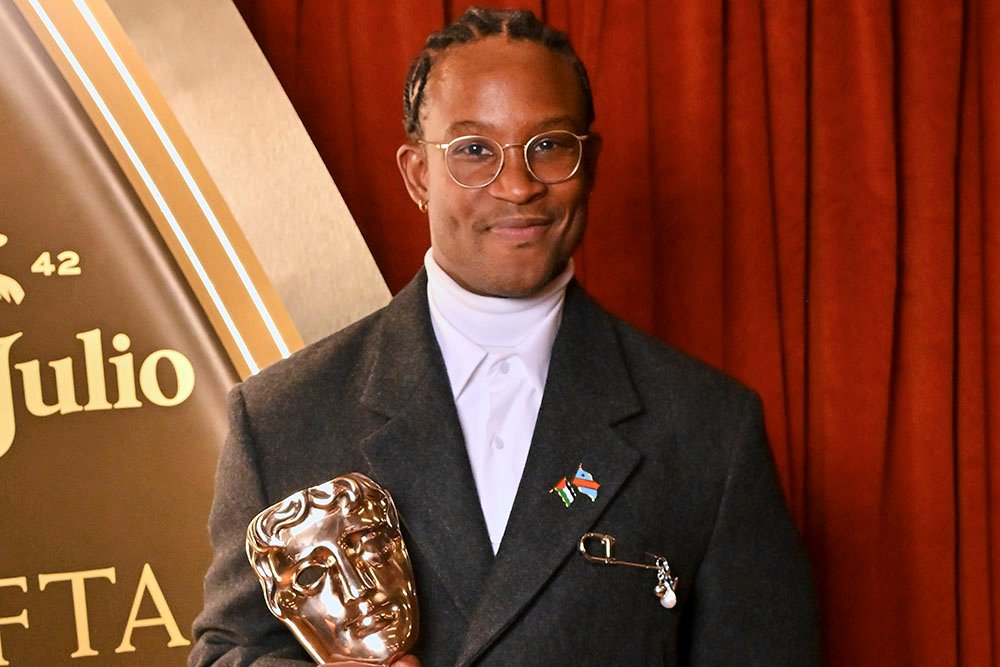
    After winning the BAFTA Film Award for outstanding debut by a British writer, director or producer for “My Father’s Shadow” on Sunday night, Akinola Davies Jr. decided to speak up about Palestine.

    The critically acclaimed first feature from the British-Nigerian filmmaker — who sported pins of the Palestine and Democratic Republic of Congo flags to the ceremony — follows two brothers who attend a family reunion in Lagos during the 1993 Nigerian election and witness their father’s daily struggles. Raised between London and Lagos himself, Davies Jr. felt compelled to highlight the importance of immigrant stories in his speech.

    “To the economic migrant, the conflict migrant, those under occupation, dictatorship, persecution and those experiencing genocide, you matter and your stories matter more than ever,” Davies Jr. said on stage, standing alongside his brother and co-writer Wale Davies. “Your dreams are an act of resistance. To those watching at home, archive your loved ones, archive your stories yesterday, today and forever. For Nigeria, for London, Congo, Sudan, free Palestine. Thank you.”

    However, that part of Davies Jr.’s speech did not make it into the tape-delayed BBC broadcast of the BAFTAs, which is always cut down from three hours to two. This caused outrage late Sunday night and Monday morning, especially since a racial slur shouted by Tourette’s campaigner and subject of the nominated film “I Swear” John Davidson — who experiences involuntary tics including swearing — was left in and not removed until Monday afternoon.

    In a statement on Davies Jr.’s speech being edited, the BBC said: “The live event is three hours and it has to be reduced to two hours for its on-air slot. The same happened to other speeches made during the night and all edits were made to ensure the program was delivered to time. All winners’ speeches will be available to watch via BAFTA’s YouTube channel.”

    Speaking to Variety on Monday after his BAFTA win, Davies Jr. acknowledges that edits had to be made to the broadcast but says “it’s a shame” that the last part of his speech was cut. However, he’s still proud to have used his moment in the spotlight to give a voice to those without one.

    “It was really important in the moment for me to say that in a room full of artists, because we have an opportunity to influence people because they watch our films,” he says.

    Plus, Davies Jr. got to meet the team behind Gaza drama “The Voice of Hind Rajab” — which lost to Joachim Trier’s “Sentimental Value” for best non-English film — who thanked him for his words. “That was really beautiful that, even though they didn’t win an award, someone still advocated for what they’re going through,” he adds.

    Below, Davies Jr. speaks more about winning his first BAFTA, showing solidarity with Palestine and what his next project might be.

    “My Father’s Shadow.”

    Congrats on your first BAFTA. What does the award mean to you and how did you feel when your name was called last night?

    I wasn’t really anticipating the win, if I’m honest. Obviously it’s the one you want to win, but I just tried to get my mind in a space where I was going to enjoy the occasion for what it is. And thankfully, I wrote something down so we weren’t awestruck when we got on stage, but I was obviously really nervous. It just means a lot to everyone below the line, Ṣọpẹ́ [Dìrísù], the two Egbo brothers Godwin and Marvellous, my brother, my producers, all the execs — everyone who has been part of our journey for the last 15-16 years or so to get to this point. And I’m just really proud of the team because it takes a village, and I think everybody in that village is equally as entitled to that victory as we are.

    You ended your speech with “free Palestine.” Why was it important for you to use your platform to say that?

    I guess I’m just very aware of what it means to have privilege, and I think it’s something that I always try and acknowledge. My mom always used to say, “There’s a lot of people worse off than you, so you should be really appreciative of what you have.” And I don’t think it really dawned on me until I became more of an adult that to be able to live in the bodies we have, to live in the societies we live in is a real privilege that a lot of people on this planet aren’t afforded. And wherein being someone from an ethnic background who has had a country that’s been torn apart by civil war and genocide, I think it’s really important to acknowledge that because the more we can talk about these things, the more you can offer people understanding and an opportunity to heal. What’s happening in the Congo, Sudan, Palestine, Ukraine, loads of different countries, it’s really important to show solidarity with because in cinema, we always come to talking about those stories after the fact. So I think it’s important to name it while things are still ongoing.

    Wha was your reaction to the broadcast cutting out the “free Palestine” portion of your speech?

    I think it’s probably common knowledge that things have to be edited down for TV versions, so I guess those are the choices that they decided to make. I think it was really important in the moment for me to say that in a room full of artists, because we have an opportunity to influence people because they watch our films. I can’t really speak for the BBC and the choices they make — obviously, BBC Films supported my film so I can only vouch for people within the institution that I know and care about and love. I do think it’s a shame, because we’ve protested for the last three or four years trying to show solidarity with the people of Palestine, we’ve had some of the largest political solidarity demonstrations in the U.K. So I don’t think what I’m saying is new, but again, I’m not the institution so I don’t get to make those decisions.

    People have been outraged that your speech was edited, but a racial slur shouted by Tourette’s activist John Davidson was left in until Monday afternoon. What are your thoughts on that?

    It’s unfortunate because I think what the BAFTAs were trying to do [was] celebrate diversity. I think “I Swear” is one of the outstanding films [of the year], and obviously Robert Aramayo also gave a speech talking about what it’s like [for Davidson] to live with Tourette’s and a lot of his prompts are things that he can’t control. Whilst it’s incredibly hurtful to still have to be on the biggest stage and be a person of color and hear a racial slur, I do think there’s a means to mitigate that, which they tried to do as best as possible in the room with the host saying that what [Davidson] said was out of his control. For all intents and purposes, I know what we’re speaking about was really sad, but I think a lot of people in that room last night were very proud of what the BAFTAs accomplished in terms of the acknowledgement of our work.

    On a lighter note, is there anyone you got to meet or interact with last night that excited you?

    I was really struck by the team behind “The Voice of Hind Rajab.” I met Hind Rajab’s mother and they were all very proud of the fact that we showed solidarity with Palestine and we took pictures together and spoke a little bit. That was really beautiful that, even though they didn’t win an award, someone still advocated for what they’re going through. Joachim Trier was also really complimentary and we exchanged a few messages, and Chloé Zhao and Lynne Ramsay. Me and Ryan Coogler realized we had the same haircut and the same patterns in our hair. It was a cool night, man.

    Do you know where you’re going to keep your trophy?

    At the moment, it’s just in my flat. I do a lot of mentoring, so I think I’m going to take the trophy around and show it to a lot of young filmmakers so they can all take a picture with the BAFTA. Again, it’s not just for me. The award is really for the whole creative community here in London and in Nigeria, people who a lot of the time are just working with no praise and no acclaim and very little resources and are just very supportive of each other. And eventually, it’s going to find its way to Nigeria. I think my brother is giving his to my niece, and so mine is probably going to be shared with all my nephews.

    What’s next for you?

    I’ve had a documentary in the works that we need to get back to. My editor who worked on “My Father’s Shadow” is working on it, and we got some really exciting execs on it as well. It’s also about similar themes to “My Father’s Shadow” — it’s almost like a part B but in a documentary form. And then my brother and I are going to go on a writing trip and try and put something together, a first draft of what would be the next project. But I’m just really excited to keep promoting “My Father’s Shadow,” because we’ve got the French release on March 25, the Spanish release on March 5 and a Brazilian release in early to mid April. So that’s a lot on my plate for the time being, for sure.

    This interview has been edited and condensed for clarity and length.

  • Searchlight Pictures Signs First-Look Deal With Cate Blanchett’s Dirty Films

    Searchlight Pictures Signs First-Look Deal With Cate Blanchett’s Dirty Films

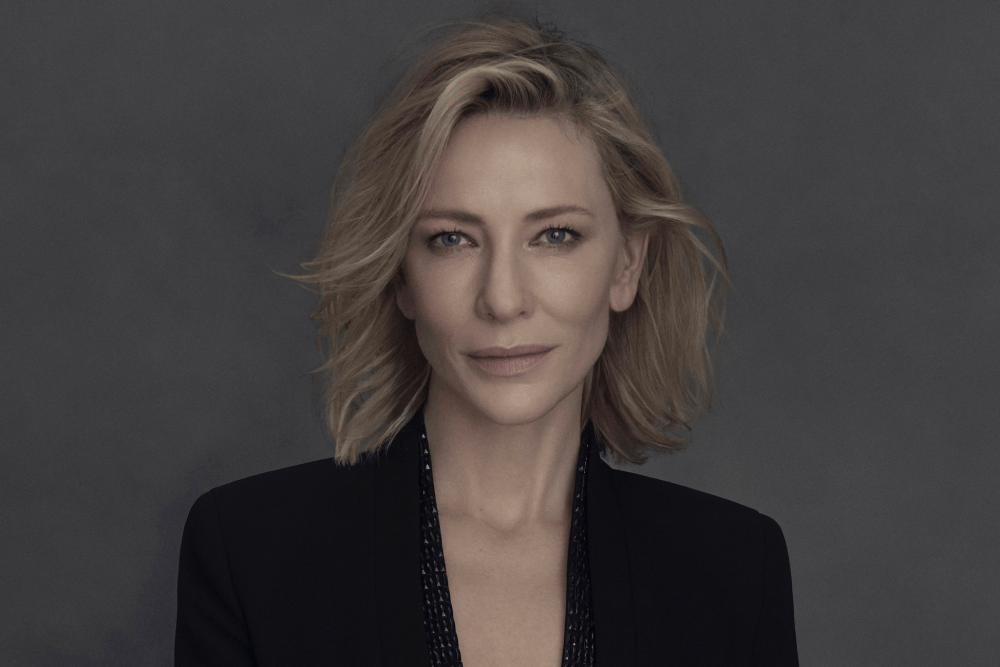
    Searchlight Pictures has signed a first-look film and television deal with Cate Blanchett, Andrew Upton and Coco Francini’s Dirty Films. Under the pact, the specialty studio will develop and produce feature-length motion pictures with the production company, as well as series for streaming under Searchlight Television.

    “Dirty Films has consistently championed distinctive voices and ambitious storytelling,” said Matthew Greenfield, president of Searchlight Pictures, in a statement. “Cate, Andrew and Coco are singular creative partners and we’re thrilled to continue our commitment to filmmaker-driven cinema with this collaboration.”

    Dirty Films’ Blanchett, Upton and Francini added, “We are honored to partner with Searchlight Pictures, whose passion for cinema and deeply collaborative ethos align seamlessly with our own. Together with Matthew Greenfield and his exceptional team, we look forward to championing bold, entertaining, and provocative storytelling across film and television for audiences worldwide.”

    Blanchett made her international feature debut, “Paradise Road,” with Searchlight. She has previously appeared in such Searchlight releases as Guillermo del Toro’s “Nightmare Alley” and Richard Eyre’s “Notes on a Scandal,” for which she was nominated for an Oscar. Blanchett has earned two Academy Awards and her credits include “Blue Jasmine,” “The Aviator,” “Carol” and “Tár.” Searchlight Pictures and Dirty Films recently wrapped production on Alice Birch‘s “Sweetsick.” It marks Birch’s directorial debut and stars Blanchett.

    The first look deal was negotiated by Paul Hoffman for Searchlight Pictures. CAA represented Dirty Films in the talks.

    Dirty Films recently wrapped Jenny Suen’s “Peaches” and the Zellner Brother’s “Alpha Gang.” Recent credits include Warwick Thornton’s “The New Boy,” Christos Nikou’s “Fingernails,” as well as the award-winning podcast “Climate of Change” and the VR interactive experience “Evolver.”

  • Dr. Peter Attia Exits as CBS News Contributor Following Epstein Controversy As Paramount Skydance Makes New Pitch for Warner

    Dr. Peter Attia Exits as CBS News Contributor Following Epstein Controversy As Paramount Skydance Makes New Pitch for Warner

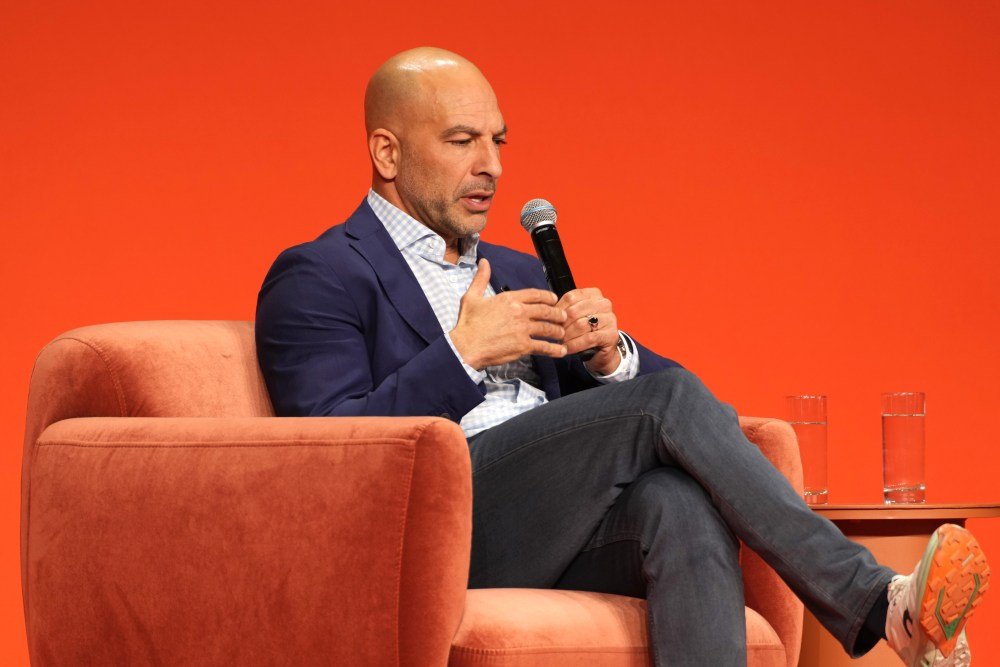
    Longevity guru Peter Attia is out as a contributor at CBS News well before he really even offer any analysis or hot takes.

    Attia, who was recently named to a list of new contributors at CBS News under Bari Weiss, the Paramount Skydance unit’s editor in chief, will leave the role, according to a person familiar with the matter. The information was disclosed to bookers in an email, this person says.

    CBS News declined to make executives available for comment.

    Attia had come under fire Peter Attia is coming under fire after the latest raft of documents from the Jeffrey Epstein files includes more than 1,700 mentions and evidence of a friendly relationship with the wealthy convicted sex offender who died in prison in 2019.

    Attia had come under fire Peter Attia is coming under fire after the latest raft of documents from the Jeffrey Epstein files includes more than 1,700 mentions and evidence of a friendly relationship with the wealthy convicted sex offender who died in prison in 2019. The correspondence made clear that Attia maintained a relationship with Epstein long after the financier faced sex trafficking and prostitution charges. “I go into JE withdrawal when I don’t see him.,” reads a line from Attia to Lesley Groff, who was an Epstein assistant. The remark, found in a January 2016 email, spurred negative reaction on social media.

    News of his exit surfaced as Paramount Skydance is expected to make a new offer for Warner Bros. Discovery, and is the latest in a series of talent tangles the company has faced in recent days. Last week, Anderson Cooper opted to leave his long-running role with “60 Minutes,” citing a desire to spend more time on his duties at CNN and with his young children. Stephen Colbert last week on “The Late Show” told viewers he had been pressed by Paramount attorneys not to show an interview he conducted with . Democratic Texas Senate candidate James Talarico should not run on CBS, due to concerns it would run afoul of new guidance from the Trump administration that would hold talk shows to what is known as TV’s “equal time” rule, which requires broadcast networks and radio stations to give equal time to candidates in an election after one has made an appearance.

    More to come…

  • Music Industry Moves: Shaboozey Signs With Empire Publishing; Suno Names Jeremy Sirota Chief Commercial Officer

    Music Industry Moves: Shaboozey Signs With Empire Publishing; Suno Names Jeremy Sirota Chief Commercial Officer

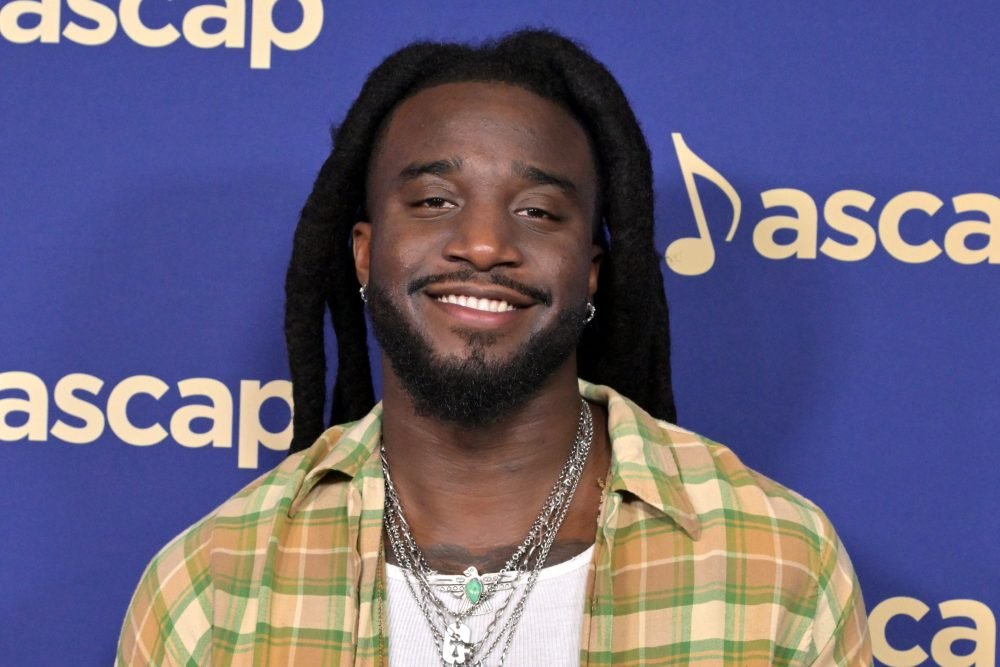
    Empire Publishing, the publishing division of the independent powerhouse music company of the same name, has entered a new agreement with Grammy-winning singer-songwriter Shaboozey, who is also on the Empire label. His track record of course includes the RIAA-Diamond certified hit “A Bar Song (Tipsy)” and the gold album “Where I’ve Been, Isn’t Where I’m Going.”

    The Empire publishing team is led by newly appointed president Vinny Kumar, who helped secure the deal alongside SVP of A&R Eric Hurt, who signed Shaboozey to Empire’s label in 2021.

    “We’re thrilled to expand our partnership with Shaboozey in this publishing deal,” says Hurt. “As great of an artist as Shaboozey is, he’s equally as talented as a songwriter; constantly striving to write the most compelling, story-driven songs that reach a broad and diverse audience.”

    Kumar added, “The creative foundation of Shaboozey’s success is his writing, which sits at the center of one of the most significant chart achievements in recent memory. We’re proud to partner with him on the publishing side as he continues to make history.”

    Jared Cotter, Shaboozey’s co-manager and Range Media Managing Partner, added: “We couldn’t be happier to double down on the mutual commitment between Shaboozey and Empire. They have been integral partners in Shaboozey’s success on the record side and I have no doubt we will say the same in the publishing business as well.”

    + Generative-AI company Suno has named former Merlin CEO Jeremy Sirota as its chief commercial officer, it announced Monday morning. In the role, Sirota will lead Suno’s commercial strategy, music industry relationships, platform partnerships, and enterprise solutions and will report directly to CEO Mikey Shulman.

    During his six years as CEO of Merlin, the digital music licensing partner for independent music labels and distributors, Sirota scaled annual revenue from $900 million to $1.8 billion while rebuilding its technology infrastructure and expanding its data and licensing capabilities. He led licensing agreements with major technology platforms including Apple, Deezer, Meta, Spotify, Twitch and YouTube among others. He also negotiated Merlin’s early AI partnerships.

    Prior to Merlin, Sirota held business development, strategy and operational roles at Meta on the music team, was a senior record executive at Warner Music Group, and served as a technology lawyer at Morrison Foerster, where he did licensing work for entertainment companies and advised on intellectual property matters.

    “Jeremy is a rare leader who has spent his career working to improve every side of the music business – for fans, artists, music rightsholders, and platforms,” said Shulman, co-founder and CEO of Suno. “What truly sets him apart is his ability to build what doesn’t yet exist, finding opportunity where others see obstacles and bringing all sides with him. That mindset will help craft a better future of music for all, and I couldn’t be more excited to have him join Suno.”

    Suno recently announced a partnership with Warner Music Group and last fall, it launched what it claims is the the first generative audio workstation, Suno Studio, which blends pro-grade multi-track editing with AI stem generation.

    + Sony Music Publishing has promoted Greg Prata to chief financial officer, effective March 31. He will continue to be based out of the company’s New York office and will report to SMP chairman & CEO Jon Platt.

    In his new role, Prata will oversee all aspects of Sony Music Publishing’s financial operations globally, including reporting, accounting, budget, administration and IT. He succeeds Tom Kelly, who recently announced his upcoming retirement from his position as CFO, after a 35-year career.

    Platt said, “Greg has been a trusted leader on our team, and I’m pleased to see him step into the CFO role as we advance our next stage of growth. At the same time, we thank Tom for his remarkable tenure. His leadership has helped drive our success and set a high bar for excellence that Greg will continue to build upon.”

    Prata joined Sony in 2012 as senior VP of financial planning & analysis, following his time at EMI. In 2019, he was promoted to executive VP of finance & corporate strategy. Prior to his roles at Sony Music Publishing and EMI, Prata spent over a decade in private equity and investment banking.

    + Patron Saints of Music, the custom music house behind Bravo’s “Below Deck” and others, has named Allie Moskovits head of sync & business development. In this newly created role, Moskovits will lead sync strategy for Patron Saints’ expanding catalog to drive business across TV, film, advertising, gaming, and emerging media. She will also focus on developing new artists and songs to diversify the catalog and expand the company’s footprint beyond unscripted television.

    + Culture Wave, a Los Angeles–based, “rock-forward” artist management company operating in partnership with Red Light Management, has expanded in several areas.

    Artist managers Ryan Cunningham and Mike Bingham of Polarizer Management have joined Culture Wave, bringing their rosters into the company’s management division. Cunningham represents the Armed, Prostitute, Trauma Ray, Patrick Shiroishi, Truck Violence, Jodi, while Bingham joins with Trauma Ray, Spiritual Cramp and Agriculture. Cunningham will remain in his role at Biz 3 Publicity where he’s been a publicist for 12 years.

    The company also announces the promotion of Rachel Hacken to artist manager, transitioning from day-to-day support for Jason Mageau’s roster. Hacken now manages Kittie, Gore., Thousand Below, and Holy Wars; as well as:

    Alana Lopez joins as touring & logistics manager, supporting Jason Mageau’s roster and Culture Wave artists; Madison Stern joins as day-to-day manager for Andrew Jarrin; Ana Garcia joins as digital marketing coordinator; Erin Carignan joins as day-to-day manager for Ryan Cunningham; Joey Mullen joins as co-manager for the band Agriculture with Bingham.
  • Broadway to Remain Closed on Monday Due to New York City Blizzard

    Broadway to Remain Closed on Monday Due to New York City Blizzard

    Broadway will remain closed on Monday amid the major winter storm that brought heavy snowfall to New York City.

    It’s the second consecutive evening of closures after venues on the Great White Way (a particularly apt nickname for the theater district during a blizzard) dimmed their lights early on Sunday in an effort to curb travel ahead of the dangerous weather conditions. Sunday afternoon matinees — with curtain times of 3 p.m. or earlier — proceeded as scheduled.

    Monday is traditionally a dark day for Broadway, providing a period of respite for performers after packed weekend schedules. Only five productions — “Harry Potter and the Cursed Child,” “Chicago,” “Every Brilliant Thing” with Daniel Radcliffe, “The Great Gatsby” and “Six” — will be affected by Monday evening’s closures.

    “Due to the continuing impacts from the blizzard and local travel restrictions still in place, Broadway theatre owners and producers have come to the consensus that performances tonight (Monday, February 23) will be canceled,” the Broadway League, which represents theater owners and producers, said in a statement.

    Closures on Broadway are rare given the enormous costs associated with missing a performance. However, New York City has received over a foot of snow and remains under a state of emergency due to intense snowfall and powerful winds. Blizzard conditions are expected to continue through Monday night.

  • BAFTA Apologizes “Unreservedly” to Michael B. Jordan, Delroy Lindo After Tourette’s Outburst: “We Want to Acknowledge the Harm This Has Caused”

    BAFTA Apologizes “Unreservedly” to Michael B. Jordan, Delroy Lindo After Tourette’s Outburst: “We Want to Acknowledge the Harm This Has Caused”

    BAFTA has released a full apology after a man with Tourette’s shouted a racial slur at Michael B. Jordan and Delroy Lindo while they presented the award for best visual effects on Sunday night.

    “Our guests heard very offensive language that carries incomparable trauma and pain for so many,” the statement began. “We want to acknowledge the harm this has caused, address what happened and apologise to all.”

    Headlines from Britain’s biggest night for film have focused on the painful moment that a Tourette’s campaigner, John Davidson, was heard shouting the N-word at Sinners twosome Michael B. Jordan and Delroy Lindo as they took to the stage to present the BAFTA Film Award. The BBC apologized for the “strong and offensive language” and for not cutting the racial slur from its final broadcast, which aired on a two-hour delay.

    Davidson is the inspiration behind Kirk Jones’ BAFTA-nominated I Swear. It follows a man, played by Robert Aramayo — who, in a real upset, took home best actor for his performance in the film over the likes of Leonardo DiCaprio and Timothee Chalamet — through his struggle growing up with Tourette’s syndrome. The condition is characterized by sudden, involuntary, and repetitive movements or sounds, called “tics.” They can manifest as loud swearing or other outbursts, which BAFTA attendees were warned about ahead of the show Sunday night.

    The Scotsman left the room around 25 minutes into the show (of his own accord, The Hollywood Reporter understands), after various outbursts, including the slur and “Shut the fuck up” when BAFTA chair Sara Putt made her introductory remarks. The Hollywood Reporter took a deep dive into how the events unfolded on the night here.

    Following a swathe of online backlash over Davidson’s outbursts and negative press attention surrounding the neurological condition, U.K. charity Tourette’s Action issued a statement on Instagram in defence of the activist, maintaining that his statements are “not a reflection of a person’s beliefs, intentions, or character.” They wrote: “The backlash from certain parts of the media has been extremely saddening, particularly given how hard John works to raise awareness and understanding.”

    And after hours of silence through Monday, BAFTA asked THR to run their statement on the matter in full. See below.

    At the BAFTA Film Awards last night, our guests heard very offensive language that carries incomparable trauma and pain for so many. We want to acknowledge the harm this has caused, address what happened and apologise to all.

    One of our guests, John Davidson MBE, has Tourette Syndrome and has devoted his life to educating and campaigning for better understanding of this condition. Tourette Syndrome causes involuntary verbal tics, that the individual has no control over.  Such tics are in no way a reflection of an individual’s beliefs and are not intentional. John Davidson is an executive producer of the BAFTA nominated film, I Swear, which is based on his life experience. 

    We take the duty of care to all our guests very seriously and start from a position of inclusion.  We took measures to make those in attendance aware of the tics, announcing to the audience before the ceremony began, and throughout, that John was in the room and that they may hear strong language, involuntary noises or movements during the ceremony.   

    Early in the ceremony a loud tic in the form of a profoundly offensive term was heard by many people in the room. Michael B Jordan and Delroy Lindo were on stage at the time, and we apologise unreservedly to them, and to all those impacted. We would like to thank Michael and Delroy for their incredible dignity and professionalism.  

    During the ceremony, John chose to leave the auditorium and watch the rest of the ceremony from a screen, and we would like to thank him for his dignity and consideration of others, on what should have been a night of celebration for him. 

    We take full responsibility for putting our guests in a very difficult situation and we apologise to all.  We will learn from this, and keep inclusion at the core of all we do, maintaining our belief in film and storytelling as a critical conduit for compassion and empathy. 

  • Political Backlash After Pro-Palestine Comments at Berlin Awards Ceremony

    Political Backlash After Pro-Palestine Comments at Berlin Awards Ceremony

    Onstage comments at this year’s Berlinale awards ceremony, which saw filmmakers call out the German and Israeli governments for the “genocide in Gaza,” have drawn a political backlash in Germany.

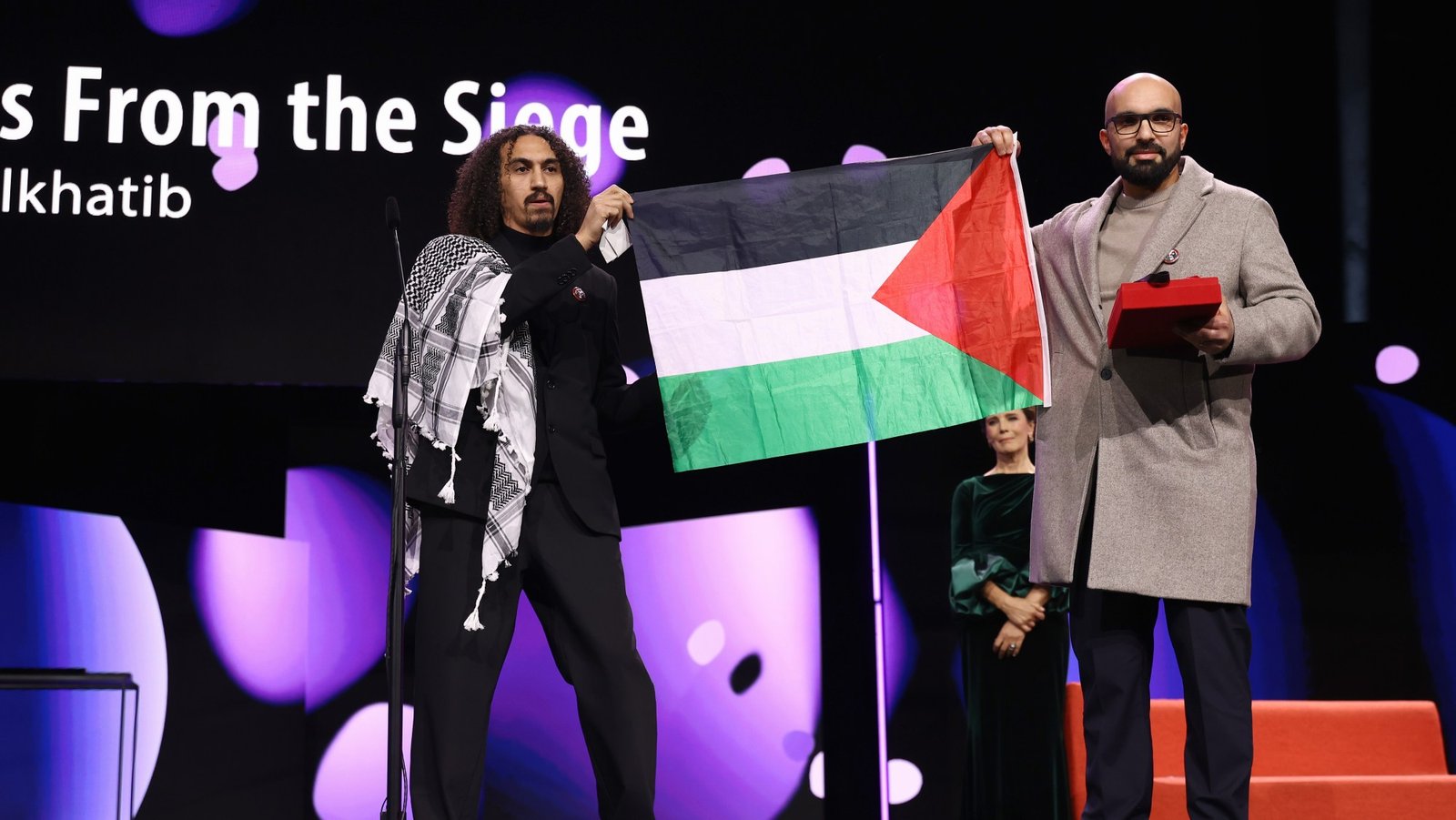
    Syrian-Palestinian director Abdallah Al-Khatib, winner of the Berlinale Perspectives section for his drama Chronicles of a Siege, said the current German government were “partners in the genocide in Gaza by Israel” and noted that “the long awaited day is coming, and when people ask you what happened, tell them: Palestine remembers. We will remember everyone who stood with us, and we will remember everyone who stood against us, against our right to live with dignity, or who choose silence or choose to be silent.”

    The comments prompted German environment minister Carsten Schneider to leave the gala in protest. In a statement, a spokesperson of the minister said Schneider “considers these statements unacceptable and therefore left the event during the speech.”

    Chronicles of a Siege is an episodic drama following the stories of a Palestinian population under siege amid the ruins of a destroyed city. The city is never named but it bears a strong resemblance to Gaza.

    Lebanese director Marie-Rose Osta, whose film Someday a Child won the Golden Bear for best short film, also used the stage for a political statement, denouncing Israeli bombings in her home country and what she described as a “collapse of international law” in the region.

    “In reality children in Gaza, in all of Palestine and in my Lebanon do not have superpowers to protect them from Israeli bombs,” she said. “No child should need superpowers to survive a genocide empowered by veto powers and the collapse of international law. … If this Golden Bear means anything, let it mean that Lebanese and Palestinian children are not negotiable,” she said.

    Conservative politicians took to the tabloids and social media to snap back at the directors and the Berlinale for giving them the platform.

    On X, Alexander Hoffmann, a parliamentarian for the conservative Christian Social Union party, called out what he termed the “disgusting scenes” at the awards ceremony, filled with “absolutely unacceptable…accusations of genocide, antisemitic outbursts and threats against Germany.” In his post, he said the ceremony underscored “the need to take a clear stance and classify antisemitism as particularly serious form of incitement to hatred. Whether in public, at events or online: there must be no platform for Israel haters.”

    Speaking to German tabloid Bild, Berlin mayor Kai Wegner said the awards ceremony was “misused for political destruction,” depriving many artists “of their unique moment of recognition for their work.” He claimed that those expressing pro-Palestinian views at the festival, “who present themselves here as pro-Palestinian activists are not concerned with human rights. They are not concerned with dialogue, peace or nuanced criticism. They are solely concerned with hatred of Israel.”

    Discussions about Israeli actions are particularly sensitive in Germany, which sees a historic responsibility to support Israel because of the legacy of the Nazi Holocaust. Following the Oct. 7, 2023 attacks on Israel by Hamas, that killed more than 1,200 people with more than 250 taken as hostages, the German government said Israel has a right to self-defense. Germany has continued to sell weapons to Israel throughout the conflict, though German Chancellor Friedrich Merz did pause approvals for new exports briefly, between August and November of last year, citing concerns German-made weapons could be used in Gaza.

    Merz has also criticized Israeli military action in Gaza, which has resulted in the killing of more than 70,000 people. A study published in the Lancet Global Health medical journal puts the death toll at more than 75,000, with women, children and elderly people among the majority of those killed.

    “Some people told me, maybe you have to be careful before you say what I want to say now, because you are a refugee in Germany, and there are so many red lines. But I don’t care. I care about my people, about Palestine,” said Al-Khatib at the Berlinale ceremony, raising a Palestinian flag at the end of his speech.

    The Berlin festival saw similar onstage proclamations and experienced a similar political backlash two years ago, when the Israeli-Palestinian documentary No Other Land won both the audience award and the best documentary prize. The film, which went on to win the best documentary feature Oscar, chronicles Israeli settler violence against Palestinians in the West Bank. In his acceptance speech, No Other Land‘s Israeli co-director Yuval Abraham called out what he termed the “apartheid” system in his home country, drawing outrage and accusations of “antisemitism” from (mostly conservative, mostly Christian) politicians in Germany.

    This year’s Berlinale was political from start to finish. Jury president Wim Wenders became the target of online outrage after saying, in response to a press conference question on Gaza, that filmmakers “have to stay out of politics.”

    At the awards ceremony on Saturday, Wenders tried to strike a conciliatory tone, saying the disputes were largely do to an “artificial discrepancy” between “the language of cinema,” which he described as “empathetic,” and the “effective” language of social media. “Activists are fighting, mainly on the internet, for humanitarian causes, namely the dignity and protection of human life. These are our causes as well, as the Berlinale films clearly show,” said Wenders. Speaking to the activists, he added “Most of us filmmakers applaud you. All of us applaud you. You do necessary and courageous work. But does it need to be in competition with us? Do our languages need to clash?”

    Contacted by The Hollywood Reporter, the Berlinale said it would respond on Tuesday.

  • Bérénice Bejo, Léa Drucker and Swann Arlaud Among 4,000 French Actors Slamming AI as a ‘Devouring Hydra’ Engaged in ‘Organized Plundering’

    Bérénice Bejo, Léa Drucker and Swann Arlaud Among 4,000 French Actors Slamming AI as a ‘Devouring Hydra’ Engaged in ‘Organized Plundering’

    Berenice Bejo, the Oscar-nominated of “The Artist,” Swan Arlaud (“Anatomy of a Fall”) and Lea Drucker (“Case 137”) are among the 4,000 French actors who have signed a vitriolic open letter denouncing what they describe as as an “organized plundering” of AI tools and are calling for urgent political action.

    Backed by Adami, the collective management organization for performers’ rights, the petition states that the industry has already been struggling with unauthorized voice cloning, image scraping and undervalued AI licensing deals for some time.

    “This tool, extraordinarily valuable for certain professions, is also a devouring hydra for the artists that we are,” says the letter. The signatories also pointing out that this “systematic plundering is not a fantasy — it is happening here and now;” citing a recent anecdote of an actor who was recently offered just €250 to authorize the use of his image by AI for a new advertising campaign for a major French company, replacing two full days of filming.

    Unauthorized voice cloning is also becoming increasingly widespread and has already prompted some to take legal action. Earlier this month, eight French dubbers of Hollywood stars, including Julia Roberts and Richard Gere, as well as animated characters such as Buzz Lightyear, issued a formal notice to a pair of AI companies, VoiceDub and Fish Audio, to demand that they remove all cloning models exploiting their voices from their platforms within eight days, claiming €20,000 in damages.

    The letter (unveiled by French newspaper Le Parisien today) emphasizes that many lesser-established actors, often lacking leverage, feel pressured to sign contracts granting AI rights, “despite the risks to their image and their future.” As such, French actors demand “guarantees that no artist will be forced to give up their digital identity.”

    The actors’ lobbying push comes as the European Union is in the process of rolling out its landmark AI Act, which sets transparency requirements on generative AI systems.

    The legislation, however, does not yet create a clear regime specifically addressing performers’ likenesses, biometric data or voice cloning. As such, French performers are urging French lawmakers to adopt stronger national measures so that “AI can coexist with the work of artists and respect for copyright and related rights.”

    Here’s the full open letter:

    On February 26, the Olympia will host the 51st César Awards ceremony. This unmissable event will be an opportunity to celebrate a rich artistic year and laugh at the witty remarks of Benjamin Lavernhe, master of ceremonies for this edition.

    But there is one subject that we, as actors and actresses, do not want to joke about. With our minds turned to the future of cinema, we are facing a profound change in our profession since the arrival of Artificial Intelligence. This tool, which is extraordinarily valuable for certain professions, is also a devouring hydra for artists like us.

    Not a week goes by without an artist warning about the brutal competition that AI poses to their work. Just recently, an actor was offered a contract to use his image by AI for the creation of a new commercial for a major French group, simply replacing two days of filming. A Faustian pact… paid 250 euros! The cloning of actors’ voices without their permission is becoming commonplace. Complaints have been filed again recently. The work of an actor or actress is then reduced to their personal attributes alone: a voice, a face.

    This systematic plundering is not a fantasy, it is happening here and now. It is unbearable, and it is happening right before our eyes. And sometimes it is hundreds of less established artists, who often cannot afford to turn down a contract, who give up their rights to AI, despite the risks to their image and their future. Beyond employment, it is the nature of the creation we want that is at stake.
    If the public and professionals are concerned and unanimous, the only possible response today lies with politicians. There is an urgent need to create a legal framework so that AI can coexist with the work of artists and respect for copyright and related rights. Recent legislative initiatives show that parliamentarians are becoming aware of the issue. We call on the entire political class to quickly address the issue of respecting artists’ rights in the face of this unregulated innovation.
    French cinema has always been able to embrace technological revolutions to fuel creativity while respecting the role of the artist.

    We, as actors and actresses, are now urgently calling for ambitious regulations that will enable France to embrace this digital shift without sacrificing either its cultural heritage or the performers who embody it.