Live Nation is looking to delay its impending monopoly trial against the Department of Justice, according to documents the company filed on Sunday. The ticketing giant is arguing that the trial shouldn’t start until appeals it has filed over Feb. 18’s ruling to proceed with the trial are resolved.
Live Nation filed a motion for an Interlocutory appeal on Sunday looking to reverse some of the initial rulings from last week’s hearing, which the company argues would “dramatically change and substantially narrow the upcoming jury trial.”
Specifically, Live Nation is appealing regarding the court’s decision that the Justice Department and state plaintiffs “do not need evidence of actual price discrimination to prove their alleged targeted customer markets in this actual monopolization case.” The company is also seeking to address that the plaintiffs “can proceed with a tying claim without a properly defined market for the tied product.”
“If either or both legal questions were decided the other way, the nature and scope of the upcoming trial would fundamentally change: Of the three sets of claims this Court identified as proceeding to trial after summary judgment, the first two would be effectively eliminated,” Live Nation said. “The Court should not empanel a jury to try a complex, month-long case when that trial (at least as currently envisioned) may well prove wholly unnecessary.”
Live Nation concluded the court should “stay proceedings in this matter pending resolution of the appeal.”
Live Nation’s motion comes a bit over a week before the trial is set to begin on March 2. Last week, the court dismissed Live Nation’s motion to dismiss the case outright, though Live Nation did manage to narrow the case as Judge Arun Subramanian decided to dismiss some claims that Live Nation monopolizes promotion and bookings.
The DOJ first filed its much anticipated suit against Live Nation in 2024, calling to break up the eponymous concert promotion giant and Ticketmaster, the industry’s largest primary ticket provider, which would undo a merger the Justice Department itself had allowed over a decade ago. The DOJ argued that Live Nation uses its vertically-integrated business to crush competitors, further claiming that rival venue management business Oak View Group helped coerce venues into signing deals with Ticketmaster. Live Nation has consistently denied the allegations.
The case’s status has been a subject of significant conversation in the industry in recent weeks after assistant attorney general Gail Slater stepped down from her post earlier this month following reports that Live Nation had been negotiating settlement talks with other Trump political allies. Slater tweeted a congratulatory message to the DOJ last week after the court’s ruling kept the case alive.
The motion could also help Live Nation buy more time if it is still looking to reach a settlement. Even if the federal case ends in a settlement, the company would still have to face the case from the individual states. For now, the federal suit is still on the docket to go to trial.
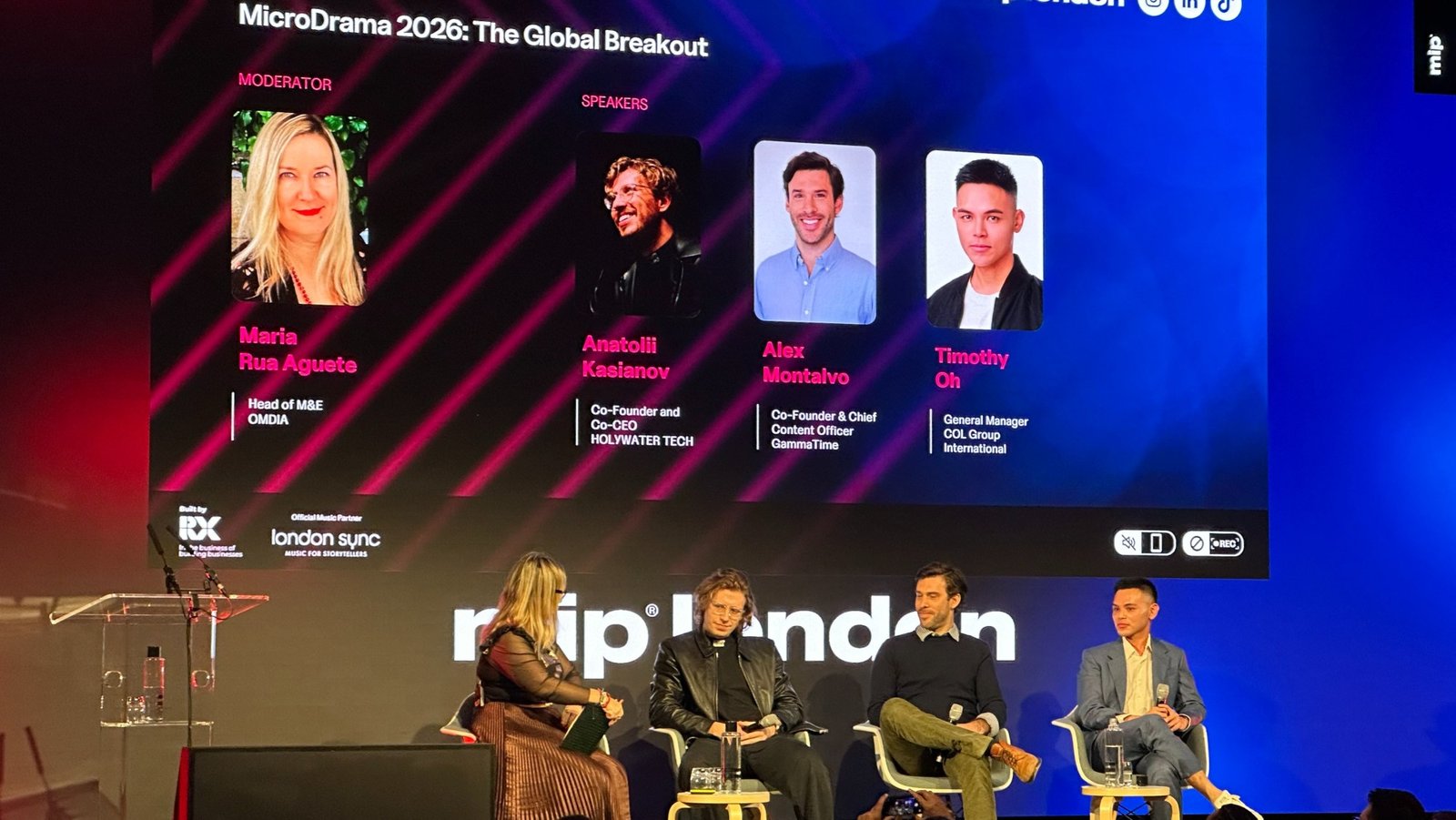
The global rise of microdramas, shortform vertical storytelling for the mobile generation, was in focus during a crowded panel session at MIP London on Monday. Among the topics of debate was a lack of big stars among casts, the growth outlook and the benefit of being able to watch microdramas in one of the most private spaces.
Sensor Tower’s annual report on the state of mobile recently highlighted that video streaming app downloads increasedglobally by nearly 39 percent in 2025, while their revenue increased nearly 18 percent. The gains were driven by short drama app downloads, which grew more than 100 percent over 2024, while traditional streaming app downloads fell by more than four percent.
Panel moderator Maria Rua Aguete, head of media & entertainment at intelligence and data firm Omdia, also highlighted on Monday that microdramas already account for $11.1 billion in global revenue, including $3.5 billion in advertising revenue.
Alex Montalvo, co-founder and chief content officer of GammaTime, a Hollywood-backed premium microdrama platform, was asked if vertical content wasn’t mostly bad. “I would beg to differ,” he replied. “This is a brand new medium,” and programming was continuously evolving. The firm’s genres and storytelling have continued to expand, he added.
After showing a sizzle reel of key short series, he said: “You can see, we’re already offering a wider range of options for consumers: true crime, thrillers, romance stories. We’re also finding early success in partnering with some of the most successful people in, dare I say, traditional Hollywood and bringing them into our ecosystem. As you saw on the screen, four of our projects were created and written by Anthony E. Zuiker, who is the creator of CSI.” Indeed, the platform showcases his thriller The Temptress, sex-crime drama Lust Cop, romantic series The Road Between Us and thriller series Kill Switch.
Concluded Montalvo: “We are adapting high-end IP, and it’s only just the beginning of the types of partnerships that we’re striking.”
The former executive of Warner Bros. Discovery and Jeffrey Katzenberg’s shortform mobile content service Quibi, which abruptly shuttered in 2020, was also asked why Quibi failed. “We probably were early,” he offered.
Anatolii Kasianov, co-founder and chief technology officer of Holywater Tech, the company previously known as Holywater until its recent acquisition of visual effects company Jeynixa, which specializes in facial animation, face replacement, de-aging and lip-sync work, also spoke on the panel. The European startup’s platforms include microdrama service My Drama and ad-supported streaming service Freebits.
He said the Jeynixa deal was designed to help the firm “disrupt how content is made [and] not only in vertical.”
Asked about how Holywater has attracted investment from the likes of Fox, Kasianov said: “We built this kind of IP incubation where we [take] hundreds of best performing, best selling books, then we transfer them into verticals and they already have an existing audience.”
He added: “We also recently signed, exclusively, Dhar Mann. He’s one of the biggest creators, I think second after MrBeast.”
Why have women been the core audience for microdramas? “I think that’s how the niche originated,” he offered. “It came from adaptations of books and performed very well, so it just started from this genre that was underrepresented, I think it’s already, on our platform, moving towards male as well.”
Tim Oh, general manager of COL Group International, where he oversees the likes of international operations, IP licensing and global expansion of the company’s microdrama and shortform content businesses, was asked about opportunities in the space for owners of existing intellectual property (IP). He said they should look at extensions of their franchises and “tell them in the microdrama space.” In fact, has team has been in talks with IP owners for “microdrama versions” of their brands that would come in a “quite tactical” way.
But Oh shared that so far, his firm has not looked to get Hollywood stars to act in its short dramas, sharing about acting talent: “We don’t cast famous actors at this point because [for audiences, watching is about] a fantasy.” And stars may distract from that.
So, is microdrama a fad or the future, the MIP London panelists were asked. “Is it a hype? Is it a fad? Yes, but at the same time, it is here to stay,” Oh offered. “Candy Crush was the biggest game at one point. People are still playing it, but there are a million other mobile games that have come out.”
He predicted a similar future for the microdrama space. “It is going to change, and it’s going to change very quickly,” Oh said. “The vertical format or short attention span is not going to change. You’re able to watch a microdrama on the way to work on the tube, walking back. It would be so hard to watch a full-length series of 40 minutes and finish it, but you get paid off and satisfied [with a microdrama].”
Oh saved one key benefit of shortform mobile content for last, sharing: “I can watch this on the toilet.”
The players of Survivor50 haven’t set foot on the beach yet, but many already know who they want out. As the landmark season approaches — with its Wednesday premiere date (8 p.m. on CBS/Paramount+) — returning contestants aren’t waiting to size each other up. They’re identifying threats, predicting alliances and comparing reputations.
The Hollywood Reporter spoke with all 24 castaways and posed one pointed question: Which player concerns you most because their game doesn’t align with yours? Their answers reveal the rivalries, suspicions and strategic fault lines forming long before the game begins.
***
Christian Hubicki: I have a hypothesis as to how this cast was put together and what everyone’s role are on the season from a Survivor standpoint. I think there are basically four categories of players divided among the 24 people. That’s six people — three men, three women. What are those four roles and what does this mean in terms of who I’m targeting?
One role: challenge beasts. You can think of those off the top of your head: You got you Joe, your Ozzy, your Jonathan Young. Those are your three men. You got your Tiff, your Chrissy, and your Stephenie, those are your women. Chrissy got four immunity challenge wins. These are what people are known for, in part, from their seasons.
Another category: witty confessionalists who are reliable narrators to tell the story. You wonder, where do I fall in these categories? That’s me, Mike White, that’s Rick. You got Aubry, Kamilla and Emily Flippen for the women. So I’m seeing these trios. This season is cast in trios, three tribes of eight.
Another category: drama. You can imagine who is drama. That’s your Coach, that’s your Q, that’s your Angelina and, in my opinion, Jenna Lewis. And our two unknown mystery 49ers. That’s where they sit. I would go so far as to say while I don’t know why the Rizgod walks among us, I believe the reason is he’s cocky drama. I think that’s why he’s here. I don’t know much about Savannah, perhaps someone who will stir the pot and not take nonsense from people.
Which leaves the final category: the threats, the people who do not stand out in any of these other categories. They are relatable people who are very good at this game. That makes them the most dangerous and with me. Charlie is a Harvard educated lawyer who runs marathons who’s charming, handsome and delightful. I stand out way too much against that.
These six — Charlie, Kyle, Colby, Genevieve, Dee, Cirie — are the people who are on this island because they are well-equipped to win.
Cirie Fields: Joe and Kyle. My history has shown that alpha men are, for some reason, quick to target me and usually afraid of me. They don’t have to be, but it’s usually a certain type. Aras [Baskauskas] was an alpha man, but a warmer alpha man. When I played with Colby in Heroes vs Villains, he wouldn’t even look in my direction. I’m waving, doing back flips and everything. He would not look at me.
Mike White: It’s hard to know off the bat, you have to vibe people out. But I feel that some people might feel like, “What’s this guy doing here?” Or think of me as a wild card. Some people might be trophy hunting, and I’d be a good head to put on the mantle. So maybe a guy like Charlie, who seems like he thinks he’s the smartest guy in the room — I could see him trying to go for me.
Charlie Davis: The people I’m most concerned about are the old schoolers who are more about honor and integrity — they keep it simple, build an alliance and never turn on players. I think they’ll be out here hunting anyone who gives them the vibe of a strategist or a nerd. People in that bunch might be Colby or Coach. Although I don’t know about Coach. He might be a different brand.
Jonathan Young: I don’t know anything about Taylor Swift, I’m not a Swiftie and while I think Charlie’s a great game player, we don’t have a lot in common. Cirie scares me because she’s so good. She’s like a mom out here. Everybody respects Cirie, but I think everybody fears Cirie.
Kyle Fraser: Charlie played a similar game to me in a lot of ways. He was a template for me and able to put his ego aside and hide in plain sight when he was clearly a great player. So he scares me because I think he can spot what I’m doing. Dee is scary; she can see BS really easily. The season 49 people concern me for a different reason, I just don’t have game tape on them.
Tiffany Ervin: Charlie probably concerns me most only because he’s played with me. He’s seen me play and knows how my mind works, he has intel on me. But also he’s one of those people that’s not a big, flashy, neon sign threat who could go undetected for a while. Q also has that same intel but doesn’t approach things in the most rational way, so people may not take his word at face value the way they would Charlie’s.
Dee Valladares: Rick Devens is smirking at everybody. It’s too much for my liking. He co-hosted the On Fire podcast with Jeff, he was the first one. But there can only be one co-host. Bye Rick, bye Charlie. Q concerns me a little bit just because he’s so chaotic. It’s going to be interesting to play with him. I feel like he’s going to drive me crazy, but I feel like we’re going to have a lot of fun. He’s kinda goofy and I want to play this game with goofy people.
Rick Devens: I hope that Aubry isn’t spreading the gospel of “watch out for Rick.” It’s been long enough that I don’t think people are thinking about me. I wouldn’t be surprised if some people here hadn’t watched my season. I didn’t have anyone in mind coming in but there are people around Ponderosa I’m not getting much of a vibe from, like Q. I’m not sure Q wants to play with me or has any idea who I am. But I don’t care because I kinda want to play with Q, he’s my son’s favorite player so that’s my in.
Quintavius “Q” Burdette: If you’ve ever sat at the end, whether you’ve won, lost or whatever, if you’ve ever pleaded your case at the end, I don’t want to work with you long term. I want you out of the game. You’re not going to get a second shot at either winning or a shot at redemption. It’s not going to happen on my watch.
Colby Donaldson: I think Kamilla played an incredible game with Kyle. She could be a huge threat in this game. Angelina, without a question, is a big threat. And believe it or not, a guy that concerns me is Q and I can’t quite put my finger on it. I watched him play and there were some things he did during his season that I think make him a question mark. I’m going to enjoy competing with him because he’s clearly good at challenges, but I don’t trust Q at all. In fact, there’s no way in the world I would put myself in a position where I had to rely on him.
Angelina Keeley: I’ve never met him and I could be wrong but I heard through the grapevine that Colby said, “Angelina, that girl seems like she’s chaotic.” Am I a little chaotic? Yeah, fair. But it’s not a good thing to say to someone else before we come out to Fiji. It’s season 50 — not season five. It’s been awhile for some of these folks. So we’ll see what happens.
Aubry Bracco: I’m a little worried about Genevieve. I want to play like Genevieve, I have so much respect for her as a player but she scares me. She can be a little savage in the game. I also think Chrissy can be a little bit savage, like smile and stab you in the back. I’m a little worried about both of them.
Jenna Lewis-Dougherty: Cirie is the biggest threat out here. Everybody in the world loves Cirie. I don’t know Cirie, but I know that I like Cirie when I watch Cirie. Take Cirie out, that’s gotta be number one. I would also say that Jonathan is a pretty big threat as is Joe and Kyle, who has won. Dee, another winner, is also a big threat but not as big as Kyle only because he has two people he worked with from his season.
Joe Hunter: Genevieve combined with Aubry and Emily. I’m just naming them because of how strategic they are. They’re brilliant players, and Charlie too. They’re all extremely strategic and that is dangerous as they know how to adapt to what’s in front of them.
Genevieve Mushaluk: I just saw, like we all did, season 48 where Joe in particular ran a strength and integrity alliance. I’m not really known for my physical strength, and integrity is open to interpretation. Would you think of Genevieve and think, “Yeah, strength and integrity?” Probably not. You might think resilience, you might think calculated, you might think independent. Joe didn’t lead an alliance with any of those names in the title. So I’m worried about maybe not meshing with him or not being a part of his plans or how he wants to play the game.
Emily Flippen: A lot of the big, burly dudes concern me a little bit. We’ve seen it in season 48 with the Joes of the world and the big, strong guy alliance. I look at somebody like Jonathan who’s obviously physically fit and is a physical asset to his tribe. These people tend to be protected early when I’m not and tend to want to keep other big threats around. So if I’m on a tribe with these big, buff guys I’m probably going to have a hard time not just associating with them on a physical level but on a personal level as well. I don’t know if we have a lot in common and that scares me a little bit.
Ozzy Lusth: One of the people who concerns me the most is Joe. He seems like a really loyal standup guy, and he’s a huge challenge threat. You also have Q and Kyle, who won his season. And you have Jonathan, Tiffany and Stefanie LaGrossa. She was the original, amazing physical threat. I used to have a huge crush on her. It’s just insane to be playing with some of these legends, like Colby Donaldson, the original Survivor heartthrob. There are some big, big physical threats out there.
Benjamin “Coach” Wade: I don’t get a good vibe from the two season 49 players. I don’t know them but I’m having flashbacks of Russell [Hantz] and how he came into Heroes vs Villains and nobody knew how he played and he lied to us. I have a fear of the two new players because they know all of us, and none of us know how they play.
Chrissy Hofbeck: Who concerns me because I think his game is a lot like mine is Christian. Not only is he charming and you want to be around him but darn it, he’s smart. He’s a person who I think will play a similar game to me, so that worries me. I have this feeling that Ozzy just won’t like me that much. Maybe that’s my season 35 fears coming back, he’s a cool kid and I’m not a cool kid. But maybe this season isn’t really full of cool kids anyway.
Kamilla Karthigesu: I think Genevieve’s game will clash with mine pretty badly. She’s a known flip flopper, she’s good at lying and she was part of so many blindsides on her season, which is scary. I don’t want another person out there good at lying because I could be lied to. Also, I’m pretty sure I saw her crush a puzzle in 47, and I don’t want puzzle competition.
Stephenie LaGrossa Kendrick: Kamilla concerns me a lot. She prides herself on lying and likes to lie. Although I loved Kamilla and Kyle as a viewer, great gameplay. She is one of those people that can be 20 minutes behind in a challenge and if there’s a puzzle in the end, she’s going to blow you away. She is going to be a huge threat.
Rizo Velovic: There are a lot of people in their 50s, 40s and late 30s. I have to be more cognizant of older players like Stephenie, Cirie, Jenna Lewis. I want to make sure that I don’t come off as this bratty, young, cocky guy and be somebody more endearing who they want to work with because I remind them of their child. While I want to work with old school players, I think my personality fits better in the New Era and I want to make sure I don’t come across as something I’m not to these old school people.
Savannah Louie: A lot of these New Era people, especially the ones who are really social, are the ones who concern me the most. You have three people from season 48 here: Kyle, Joe and Kamilla. That’s a scary group. You have people like Dee and Emily and Genevieve who, while they didn’t all play together, probably bonded at Survivor events. Q, Tiffany and Charlie all played together. Who knows what’s going on in their DMs? A lot of the New Era people created these tight bonds, which may become alliances. I think maybe some of the old school players might be open to working with someone who’s a little less certain, being me.
***
Survivor 50 aires new episodes Wednesday at 8 p.m. on CBS, streaming on Paramount+. See how the cast is divided into their tribes here.
Per its title, the NBC sitcom “The Fall and Rise of Reggie Dinkins” is a comeback story, but it’s also a reunion. Comedian Tracy Morgan has produced a wide-ranging body of work since his breakout on “Saturday Night Live” at the turn of the millennium — and, more dramatically, since sustaining severe injuries in a New Jersey traffic collision in 2014. But his most iconic role remains, if not himself, then a part directly adjacent to his own persona: Tracy Jordan, the chaotic yet lovable co-lead of Tina Fey’s meta entertainment satire “30 Rock.” For seven seasons, Morgan balanced deep-cut cultural references and cracks about corporate mergers with a needed dose of anarchy, while Fey and her writers formed a knack for channeling Morgan’s ebullient energy into absurd, instantly iconic bits like “Werewolf Bar Mitzvah” or the concept of an EGOT.
“Reggie Dinkins” is co-created by Robert Carlock and Sam Means, two longtime staples of the broader universe one could call Feyworld. (Fey herself serves as an executive producer, as does Morgan.) Carlock has worked with Fey since their time at “SNL,” where they also overlapped with Morgan; Means did stints on “Unbreakable Kimmy Schmidt” and “Great News” in addition to “30 Rock”; more familiar names, like “Girls5Eva” creator Meredith Scardino, pop up in the credits as the 10-episode first season moves briskly along. Although Fey’s TV adaptation of Alan Alda’s “The Four Seasons” broke from these shows’ otherwise consistent MO with decidedly mixed results, “Reggie Dinkins” is a return to form, both in style and quality. That’s great news for viewers, but also for Morgan, who finally gets a character equal to Tracy Jordan in channeling his particular charisma. And this time, his name — or rather, Reggie’s — is on the door.
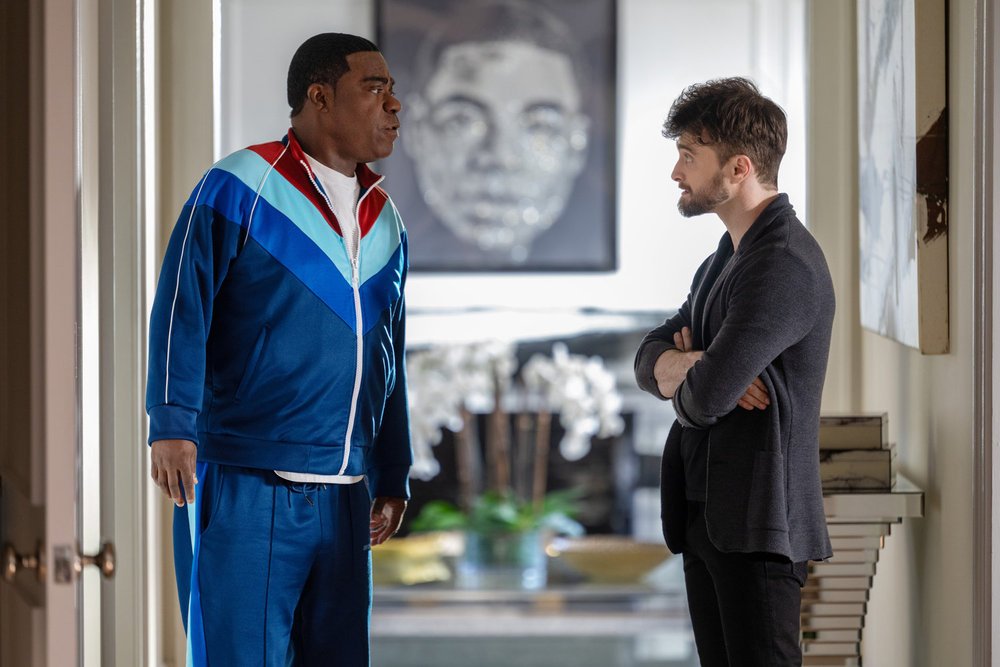
Like many single-camera network comedies, “Reggie Dinkins” is a mockumentary. But unlike many shows that use the framing device as a given in a post-“The Office” world without an in-text explanation of the project in progress, á la “Modern Family” or “Abbott Elementary,” “Reggie Dinkins” makes filmmaking part of the plot. (As well as the TV trend: one character says he’s been practicing his Jim Halpert face for mugging to the camera.) Morgan’s Reggie Dinkins is a former NFL star who ended his career — and lost the New York Jets the Super Bowl — by betting on his own games, an act he likens to working for tips. Thanks to Reggie’s ex-wife and current business manager Monica (Erika Alexander, a seasoned pro playing a seasoned pro), Reggie is just fine financially. But he wants his legacy to be more than his mistakes, so he hires Oscar-winning documentarian Arthur Tobin (Daniel Radcliffe, who seems to have taken a liking to TV comedy after “Miracle Workers”) to make a movie about his quest to join the league’s Hall of Fame.
Arthur himself has fallen on hard times, taking a day job at the University of Maryland Center for Documentary, MMA and Pornography after a public meltdown on a commercial set and making Reggie’s story something he can relate to. In its premiere, “Reggie Dinkins” lightly pokes fun at the kind of feather-light, celebrity-commissioned films Arthur feels he’s demeaning himself to direct, with Reggie spouting platitudes like “a son is just a homie you make” while refusing to open up about his actual feelings. And to the extent that “Reggie Dinkins” is conceptually flawed, it’s that the show falls into this trap a bit itself. Emphasizing Reggie’s financial security, good relationship with his teenage son Carmelo (Jalyn Hall) and the mutual respect between Monica and Reggie’s young influencer fiancée Brina (Precious Way, hilarious) makes the setup gentle to a fault, sanding down potential edges and giving away opportunities to dig into topical issues like CTE, athletes’ post-retirement security and the new ubiquity of sports gambling. Based on “Reggie Dinkins,” you’d never know that Reggie’s life-altering scandal is now dangerously close to the new norm.
But there are also benefits to this trade-off, chief among them a cast with chemistry in spades and a proudly goofy, punchline-a-minute pace that’s like a balm to those of us who love the Fey-Carlock oeuvre, even deep cuts like the Peacock revival of “Saved by the Bell.” With his dweeby air, pretensions and position at the helm of an active production, Arthur is the Liz Lemon of this setup, but with the emphases reversed. “Reggie Dinkins” takes evident pleasure in tossing Radcliffe curveballs like belting out the Beatles, dressing in full camouflage so Arthur can embed himself and being insulted as an “Elijah Wood lookin’ ass bitch,” all of which the actor — now 15 years into building his post-Potter image as a game, adventurous performer — handles capably. As Arthur’s muse, Morgan naturally gives Reggie a sweetness and naiveté that makes his redemption easy to root for, even with questionable logic like “Fools run errands all the time; that’s why Wawa sells sushi!” He’s good enough to make you wish “Reggie Dinkins” would test its hero’s likability a bit more, if only because Morgan is clearly up to the challenge.
Despite the long shadows of Tracy, Liz and even Michael Sheen’s stuffy Brit Wesley Snipes, “Reggie Dinkins” is not merely a collection of reheated tropes from its creative teams’ back catalog. (Though to call Brina, who happily plugs a Takis-Tampax collab and threatens to go on a trashy reality show called “Engagement Peninsula” when Reggie drags his feet on wedding planning, the show’s Jenna Maroney is to pay her the highest of compliments.) Alexander’s warmth and evident savvy make her a welcome addition to the repertory company, while Bobby Moynihan plays Reggie’s best friend, roommate and former teammate Rusty with full-body commitment to the gloriously stupid bit. Literally: the oafish Rusty gets himself stuck in a washing machine, a predicament in which the rigorously ethical Arthur refuses to intervene.
Watching “Reggie Dinkins” cohere into an ensemble, you can feel the show swap out the trenchant questions about celebrity and storytelling raised by its pilot for the comforting consistency of a ragtag gang scrambling to stay afloat, but never at true risk of sinking. Should the show become a long-running concern, such points of emphasis will justify themselves. More seasons would also provide an opportunity to fill in the gaps. Once he’s risen from the ashes, maybe Reggie Dinkins can finally have it all.
The first two episodes of “The Fall and Rise of Reggie Dinkins” will air on NBC on Feb. 23 at 8 p.m. ET, with remaining episodes airing weekly on Mondays at 8:30pm ET and streaming the next day on Peacock.
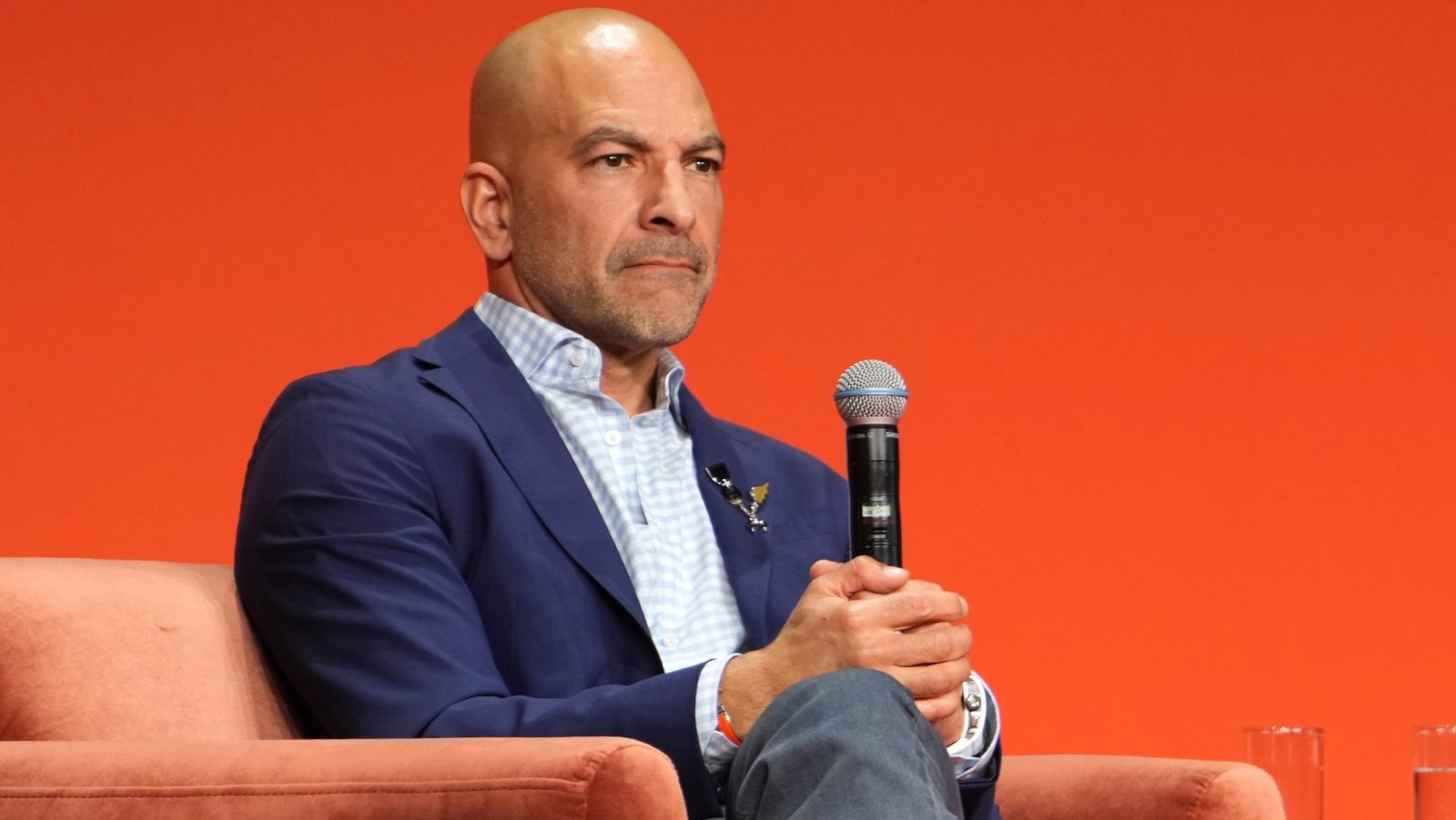
Longevity guru Dr. Peter Attia is stepping aside as a contributor to CBS News, after correspondence between Jeffrey Epstein and the researcher and health media personality came to light in the release of the Epstein Files from the Department of Justice.
CBS News staff were informed of the decision Monday in a note from the network’s booking department, The Hollywood Reporter has learned. Attia told CBS that he would be resigning effective immediately.
Attia was one of a number of high-profile contributors that CBS News editor-in-chief Bari Weiss brought on as part of her planned overhaul of the network news division, seeking to bring more voices into CBS’ linear and digital coverage.
Shortly after that announcement, however, the embarrassing exchanges were released by the DOJ, many of which contained crude banter. CBS subsequently pulled a rerun of a 60 Minutes segment that featured Attia.
That said, Attia had been expected to remain a contributor to the network, with Weiss being a critic of so-called “cancel culture.” Of course, the Epstein emails damaged his reputation even if he personally did not engage in or know about any criminal activity, as Attia wrote in a note he sent to his team and his patients.
“I apologize and regret putting myself in a position where emails, some of them embarrassing, tasteless, and indefensible, are now public, and that is on me,” Attia added. “I accept that reality and the humiliation that comes with it.”
Attia’s name appears some 1,700 times in the 3 million Epstein documents released on Jan. 30. The bulk of the emails between Attia and Epstein are from the mid-2010s — after Epstein was convicted (in 2008) on a Florida charge of soliciting prostitution from someone under 18, but before a 2018 Miami Herald exposé on a host of allegations against Epstein and his second arrest in 2019.
The health and longevity researcher and author is one of many people with connections to Hollywood and the media business who were found to have known Epstein.
Once the domain of film students and YouTubers, crowdfunding an independent movie has now reached the upper echelons of Silicon Valley and American politics.
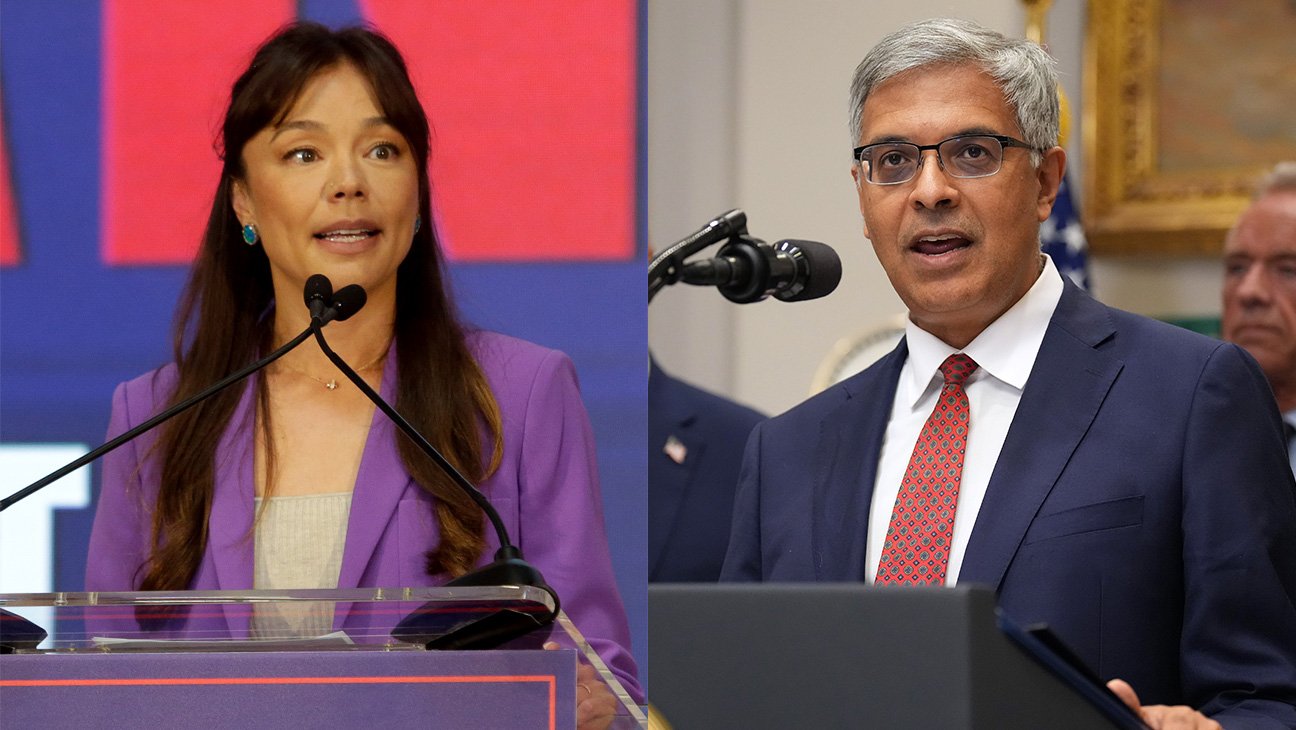
Nicole Shanahan, Robert F. Kennedy Jr’s running mate in the 2024 presidential campaign, is attached as an executive producer on a feature film project that is being billed as a COVID-set satirical comedy. The project, titled The Rash, will center on a character, a public-health professor, inspired by Jay Bhattacharya, the current National Institutes of Health Director under RFK Jr., who was an outspoken critic of the COVID-19 pandemic shutdown and later vaccination efforts.
Leading the apparent financing efforts is The Brownstone Institute, the Texas-based nonprofit founded by libertarian thinker Jeffrey Tucker, which was itself founded in response to the government’s handling of the COVID-19 pandemic and subsequent policy decisions. For its part, Brownstone notes that it is “well-positioned to be a fiscal sponsor of this effort” because the project “exists squarely within the purview of our mission.”
The announcement on Brownstone’s website says the story will take place during a health problem “that captures the public mind with contagious fear and loathing.” It continues: “This rash – real, imagined, or created – is viewed as a financial opportunity by dominant institutions on the cultural landscape. Among them is a pharmaceutical company with an off-the-shelf product called Zenvidia that seems to address the rash by making people forget all about it (with major side effects). Hilarity ensues as a Stanford public-health professor speaks out against the mania.”
Walter Kirn — the novelist behind the book Up in the Air, which later became the George Clooney-starring movie — is writing the screenplay. Kirn, himself a COVID policy skeptic, has already spent hours with Bhattacharya for research. Shanahan, who became a reported billionaire following her divorce from Google’s Sergey Brin, will exec produce with her partner Jacob Strumwasser.
There is a pitch deck and sizzle reel available via Brownstone’s announcement for interested investors. Wag the Dog, Thank You for Smoking and Dr. Strangelove are all listed as references for the project.
According to the pitch deck, The Rash has a prospective budget of nearly $6 million.
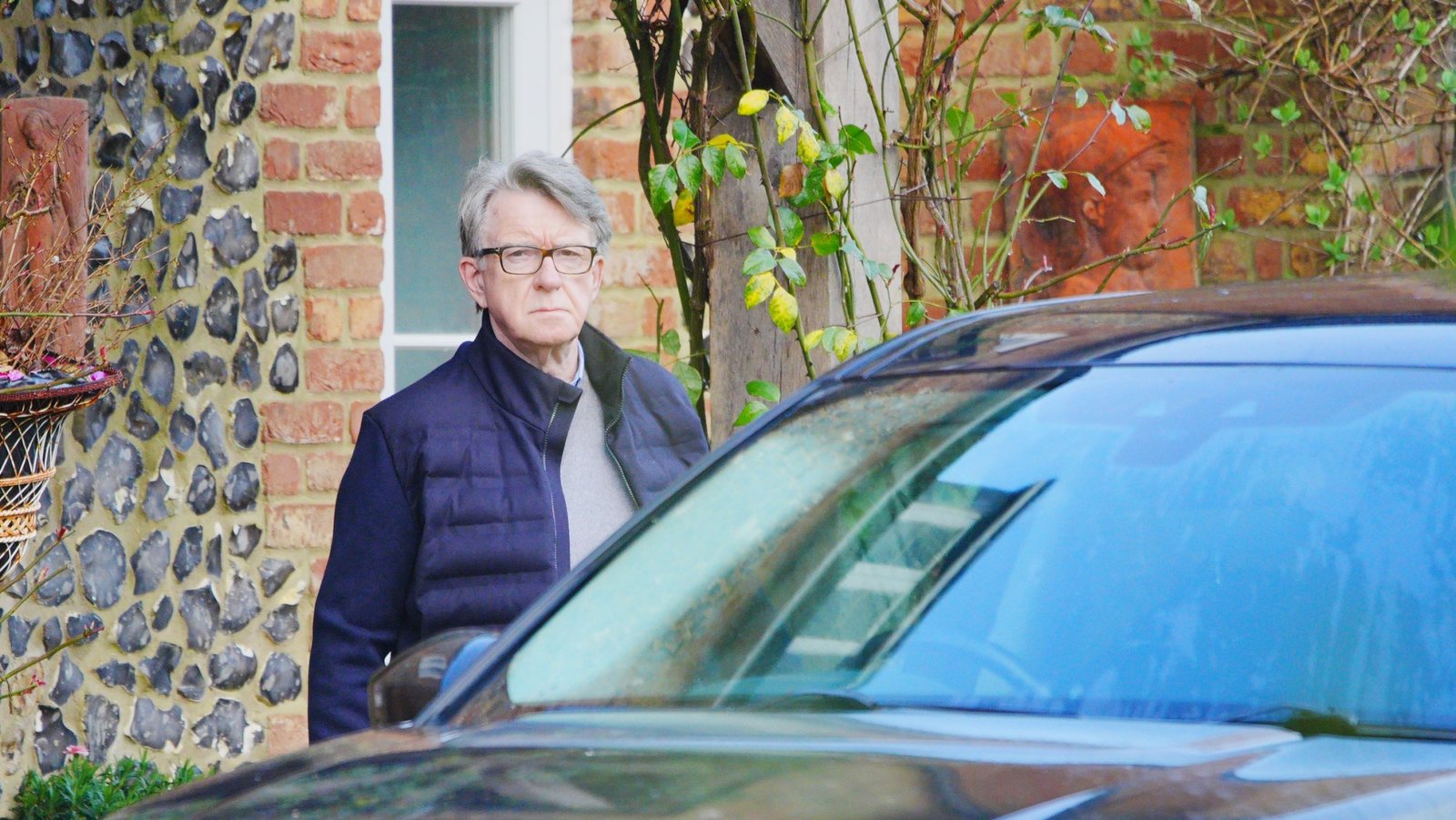
Peter Mandelson, a former U.K. ambassador to the United States, has been arrested in London over a criminal investigation into alleged ties to convicted sex offender Jeffrey Epstein.
“Officers have arrested a 72-year-old man on suspicion of misconduct in public office,” a Metropolitan Police spokesperson said in a statement on Monday, without naming Mandelson directly as is typical with arrests. The high profile British politician was taken to an undisclosed London police station for questioning over the alleged sharing of confidential material with Epstein, the statement added. It’s understood the arrest was made by the Met Police’s Specialist Crime Directorate.
His resignation in Sept. 2025 as British ambassador to the U.S. followed Mandelson’s name appearing in a release at the time of so-called Epstein files. Mandelson is considered an elder statesman of the governing Labour Party in the UK and has denied any criminal wrongdoing in his relationship with Epstein.
His arrest comes after Andrew Mountbatten-Windsor, son of the late Queen Elizabeth II and brother to King Charles III, was also arrested in the U.K. and later released after being held in custody over the same allegations of misconduct in public office.
“The force launched an investigation into the ex-Labor minister on 3 February over allegations he passed market-sensitive government information to convicted sex offender Jeffrey Epstein,” the Met Police statement added about the investigation into Mandelson on Monday.
British police said they conducted searches of two properties belonging to the well-known British politician in the county of Wiltshire and London. “We are not able to provide further information at this stage to prevent prejudicing the integrity of the investigation,” the Met Police added about the active legal proceedings being brought against Mandelson.
Mandelson came under an investigation by the Met Police over the alleged passing of market-sensitive information to Epstein when he was the U.K. government’s business secretary during the 2008 financial crisis. Mandelson was also a close political advisor for former British prime minister Tony Blair.
Jeffrey Epstein’s private island was filled with over-the-top amenities. A helipad for quick escapes. Its own dock for visiting yachts. Guest villas and swimming pools and an exclusive stretch of beach — not to mention that creepy dentist chair that nobody’s been able to explain. But it turns out there was one luxury indulgence he was never able to acquire: his own Imax theater.
According to emails that Rambling has unearthed from the Epstein files, the late billionaire sex criminal was drawing up plans to install a jumbo-screen theater on his Caribbean property. “We are pleased to provide this proposal for the following work, best described as 6 seat IMAX Theater for the Little Saint James residence in the US Virgin Islands,” reads one 2014 email from a New York-based company called House Systems, which goes on to describe “dual-projection 4K 3D technology,” “immersive surround sound” and “luxury automated seating.” The price tag: a cool $2.25 million.
Epstein didn’t close the deal, but he clearly couldn’t get the idea out of his head. Four years later, in 2018, he corresponded with a different Imax representative, this one offering a similar setup (including a “3 year VIP customer support line” with “24/7 365 service support”) for $2.3 million.
“IMAX is going to do a few drawings for us (got them included for free in proposal) that we can pass on to architects/contractors if we do design build,” the rep promised. Not long after, an email arrived with blueprints for the theater — schematics that included a 600-inch screen and two rows of three oversized seats. But less than a year later, Epstein was arrested. The theater was never built.
***
Also in Rambling Reporter:
Sheriff Chris Nanos doesn’t just run the police department investigating Nancy Guthrie’s disappearance — he’s the brains behind A&E’s reality cop show ‘Desert Law.’ And a thorn in the side of right-wing media.
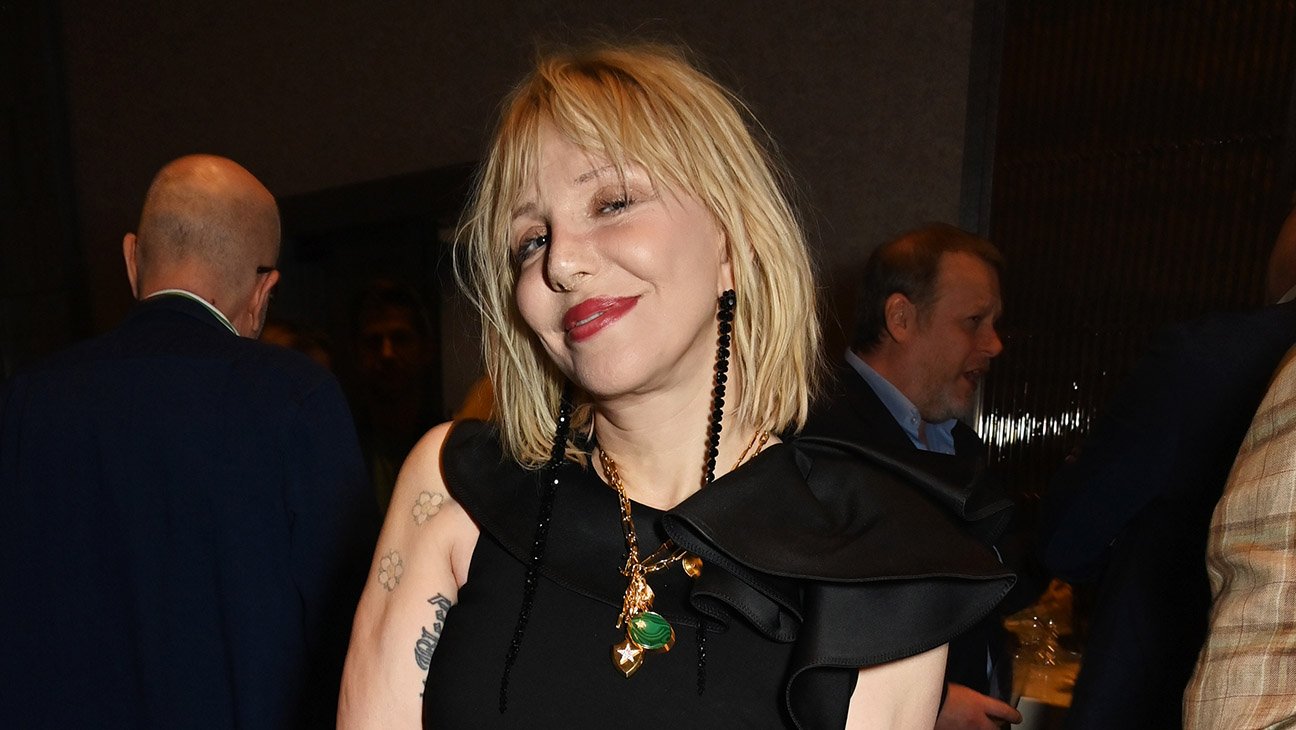
There’s a moment in Courtney Love’s new documentary, Antiheroine, when she declares that “no one gets to tell my story but me.” Apparently, though, that story remains very much a work in progress.
The doc — a candid stroll through her tumultuous life, from marriage to Kurt Cobain and their shared heroin addictions to tabloid infamy, sobriety and the mounting of what she describes as a final album — premiered at Sundance to rave reviews. “An overdue reaffirmation of Love’s place in rock history,” gushed THR’s David Rooney.
Love herself, however, was a surprise no-show at the Eccles. A rep said at the time she “couldn’t make it.”
Within hours of the screening, though, Love surfaced in Los Angeles, checking in to the Chateau Marmont and wiping her Instagram before refilling it with a flurry of posts: a haircut with Sally Hershberger, dinner at Vespertine, a screening of Wuthering Heights at the TCL Chinese Theatre. Notably absent from her feed? Any promotion of the film that had just debuted in Park City.
So, what exactly is going on? A source reveals to Rambling that Love has been telling friends she’s unhappy with the movie and wants to recut it with new material, which is supposedly why she left her home in London and returned to L.A. But her manager — Crush founder Jonathan Daniel — disputes that framing. “The cut that went to Sundance was never intended as final,” he insists. “It’s actually the first edit of the film. We were surprised and flattered that they wanted to screen it, so we approved it being shown even though it was not finished.”
All of which leaves Antiheroine in the unusual position of being both a Sundance hit and, apparently, a rough cut. “Courtney will always be unfiltered and may speak out of turn,” Daniel says, “but I can assure you she’s dedicated to finishing the doc and then promoting it when it’s out.”
***
Also in Rambling Reporter:
Sheriff Chris Nanos doesn’t just run the police department investigating Nancy Guthrie’s disappearance — he’s the brains behind A&E’s reality cop show ‘Desert Law.’ And a thorn in the side of right-wing media.
A look at the one luxury indulgence Jeffrey Epstein was never able to acquire: his own Imax theater.
This story appeared in the Feb. 23 issue of The Hollywood Reporter magazine. Click here to subscribe.
If the briefings in the Nancy Guthrie kidnapping case sometimes feel like reality TV, that’s because — in a way — they sort of are.
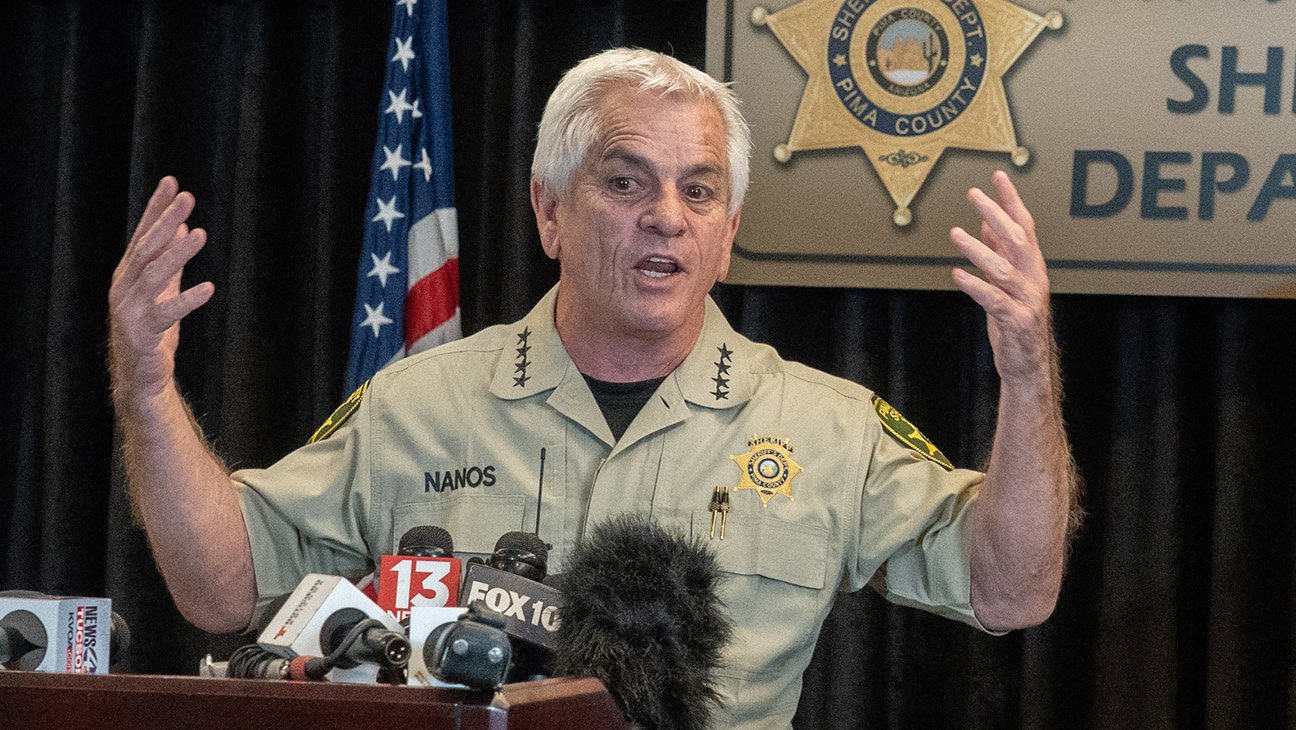
The man fielding questions at all those press conferences, Sheriff Chris Nanos, doesn’t just run the local police department that’s been investigating the disappearance of Savannah Guthrie’s mother — he’s the off-camera production partner for Desert Law, the A&E docuseries that follows Nanos’ deputies as they patrol more than 9,000 square miles of arid Arizona terrain. “Immersed in the pressure and danger of policing the desert night,” the show’s promo copy describes it, “the series captures a world where the spirit of the Old West still lingers and the fight for order never ends.”
Nanos himself doesn’t appear in the show — his choice, according to sources close to the series. But that could change next year — although those same sources say the possibility of the kidnapping becoming part of the plotline for season two has not yet been discussed. Still, over these past few weeks, since Nancy Guthrie’s disappearance, Nanos hasn’t exactly been shy when it comes to news cameras.
After initially holding joint press conferences with the FBI, he has recently shifted to a series of more personal, one-on-one interviews — a strategy that has occasionally led to awkward exchanges, particularly while conversing with conservative outlets.
“Let’s just say he did not put out the welcome mat,” Newsmax’s John Huddy tweeted after his Feb. 18 sit-down with Nanos, during which the sheriff, a Democrat, brushed off what he sees as politically motivated criticism. “This isn’t an election campaign — that’s three years down the road.” Nanos’ Feb. 17 appearance with NewsNation’s Brian Entin wasn’t any friendlier. On his YouTube recap, Entin described the pre-interview moment when Nanos set the tone: “You have questions for me,” Nanos told him, “and I have questions for you.”
Of course, the stakes remain deadly serious: An 84-year-old woman is still missing. But when a sheriff whose department headlines a reality show finds himself sparring with reporters on MAGA platforms, it definitely feels like an unscripted star may have just been born.